I write southern historical fiction, local history, and I've written a devotional book. The two novels I'm writing are set in Virginia and the Carolinas in the 1760s. My weekly blog started out to follow my journey as a writer and a reader, but in 2025 it has been greatly expanded to include current events and politics in the United States as I see our democracy under attack from within. The political science major in me cannot sit idly by and remain silent.
I could not get excited about writing about the August 12, 1898 US annexation of Hawaii for today’s blog post. (I could get excited about Hawaii’s statehood, which happened in my childhood, but its annexation as a territory? Not so much.)
I couldn’t muster the energy to do enough research to write 500 or 1,000 words about the annexation of Hawaii, and I doubted if my blog readers were interested enough to read about it. (If I’m wrong, feel free to look it up.)
In the big scheme of things, the events of the week of August 6-15, 1945 were more momentous than what happened about Hawaii in 1898.
It occurred to me that the 79th anniversaries of the bombing of Hiroshima on August 6, the bombing of Nagasaki on August 9, and the surrender of Japan on August 15, 1945 have barely been mentioned in the United States this week.
The famous bomb dome in Hiroshima.
Photo by Griffin Quinn on Unsplash
I watch some programming on a TV station in Tokyo. The news and other programming are available via the public TV system here in metro Charlotte. The dates of the atomic bombs are marked in Japan with solemn government-sponsored gatherings and, no doubt, by many private gatherings and individuals.
The horror is remembered by the Japanese people, but the overriding theme of the coverage I have seen over the last week is peace. The Japanese people know first-hand the horrors of nuclear war, and they are adamant that such weapons should never be used again.
Nagasaki Atomic Bomb Museum
Photo by Roméo A. on Unsplash
The dropping of those atomic bombs were horrific events in which hundreds of thousands of innocent people were killed, maimed, severely burned, orphaned, or doomed for various health maladies for the rest of their lives.
It has been said that those bombs resulted in the almost immediate surrender of Japan, thus ending World War II and ultimately saving more lives than they took. I guess we will never know the truth of that reasoning and justification.
I imagine the people who are old enough to remember the events of that week – whether they live in Japan, the United States, or other countries involved in the war in the Pacific Theater — are puzzled over the fact that the world is taking little notice of this week’s 79th anniversaries.
Photo by Sunguk Kim on Unsplash
I suppose there will come a time when September 11 will be just another day in the United States. The Americans who were young children or who were born after September 11, 2001, cannot possibly think of that day the way it is forever etched in my memory.
Life goes on. Events are forgotten. To those of us born after 1945, that year seems like ancient history. That’s just human nature. I was born in the United States in 1953, so I grew up with no concept of what life was like during World War II. But that does not excuse me if I don’t stop and think about the events of 79 years ago.
I owe it to my parents, my aunts and uncles, and even my oldest first cousins – all of whom are dead – to remember the sacrifices they made during World War II, their military service, their work to help build military planes, and their courage to hold things together on the home front – all while not knowing when or how the war would end and not knowing which of their loved ones or friends would not come home.
Since my blog post last Monday
I am feeling better than when I penned my August 5 blog post. I was discouraged by an illness which has taken much from me. However, I have been bolstered by the outpouring of concern I have received from many of my readers. Each day has been better than the one before. I’ve even been able to listen to an entire novel and enjoy it!
Thank you for your support and encouraging words. I always come out of these slumps and return to my “normal,” but each time I experience a relapse I can’t help but wonder if I will come out of it.
Since my last blog post
I hope you got a chance to read my reblogging on Friday of a blog post about Elizabeth Graffreau’s new book, Simple Pleasures: Haiku from the Place Just Right. It was my first attempt at reblogging.
Until my next blog post
Take a few minutes to think about the events of this week in 1945. Let’s continue to give diplomacy and peace a chance.
Peace Memorial Park in Hiroshima
Photo by sabari nathan on Unsplash
I hope you have a good book to read. I am easing back into reading this month, for which I am grateful.
March brought a return of cooler weather than we had in February in North Carolina. It also brought a stack of good books. I blogged about some of them last Monday (Some March Reading), and today I’m blogging about the rest of those that I read last month.
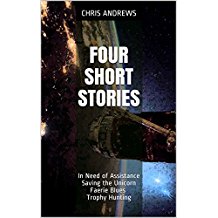
Four Short Stories: In Need of Assistance, Saving the Unicorn, Faerie Blues, and Trophy Hunting, by Chris Andrews
Four Short Stories: In Need of Assistance, Saving the Unicorn, Faerie Blues, and Trophy Hunting — by Chris Andrews
Science fiction and fantasy are not my reading genres of choice, but Chris Andrews and I connected with each other in the blogosphere as two struggling writers. (Actually, I’m struggling. I’m not so sure about Chris.) We live in different hemispheres but I have learned a great deal from him about writing. He recently published an e-book of four short stories and I was eager to read them.
“In Need of Assistance” leads off the short story collection. Well written and suspenseful, this person (me) who never reads sci-fi got pulled into the story and thought it ended too soon. In other words, I wanted to know what happened next.
The second story in this e-book is “Saving the Unicorn.” It is about a magician who travels 4,000 years back in time to free the last unicorn…. or is it?
“Faerie Blues” is the third story in Chris’ book. The identity of the faerie is a surprise.
The fourth and last story in the book is “Trophy Hunting.” This story is survival of the fittest with a twist.
Following the four short stories are the first seven chapters of Chris’ novel, Divine Prey, which is due for release in May 2018.
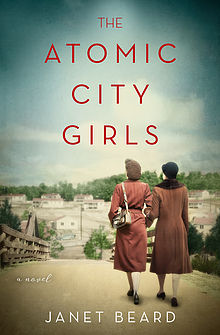
The Atomic City Girls, by Janet Beard
The Atomic City Girls, by Janet Beard
This historical novel was inspired by the creation of Oak Ridge, Tennessee during World War II and the top-secret work carried on there in the development of the atomic bomb.
Ms. Beard invented characters from all walks of like and guides the reader to like most of them and identify with them as much as is possible for we who live in a different time. I liked that she included the black people as well as the white people who lived and worked at Oak Ridge because, as much as they had in common, their housing and treatment by the US Army was quite different. It was in the racially segregated South and the book stands as witness to the prejudice and unequal treatment that existed legally at that time.
The author included not only Christians but an atheist and a Jewish physicist. This book’s cast of characters runs the gamut from redneck bigot to the Jewish scientist whose family had surely died in Germany during the War. True to the history of the facility at Oak Ridge, some characters are poorly educated while others are highly educated, but the emphasis is on the everyday people who worked there and did not know what they were working on.
Ms. Beard follows each character and through them she allows the reader to experience World War II on the home front in the USA and through the stress and struggles of the people who worked in complete secrecy at Oak Ridge. She brings to life the inevitable inner conflicts experienced by some of the scientists who worked there and at Los Alamos, New Mexico as they were simultaneously excited by the physics of the atomic bomb and yet horrified by the realities of what the unleashing of such a weapon would mean and the suffering it would cause for thousands of innocent people.
I never had really thought about how conflicted some of those scientists must have felt. I’d also never given much thought to how many thousands of people worked at Oak Ridge and the majority not knowing they were working on developing an atomic bomb until the day the first one was dropped on Hiroshima.
Need to Know, by Karen Cleveland
Need to Know, by Karen Cleveland
This is a debut novel by Karen Cleveland. It has received rave reviews from highly-respected authors, so I was eager to read this espionage thriller. After having read it, all I can say is, “Wow!”
Written by a former CIA analyst, this novel has a female CIA analyst working in a division studying Russia and looking for Russian sleeper cells in the USA. I don’t want to spoil the story for you, so I’ll just say her marriage and work ethic are tested to the limit.
This novel will make you wonder who you can trust. It is the story of betrayal on many levels, and it will keep you turning pages and wishing you didn’t have to stop to eat, sleep, or work. If you like to read espionage thrillers, you will love this book.
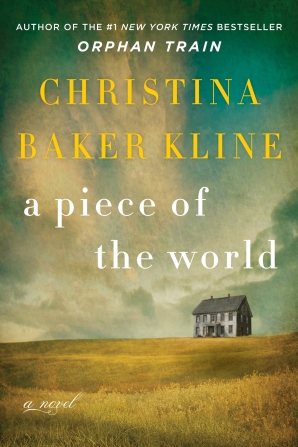
A Piece of the World, by Kristina Baker Kline
A Piece of the World, by Christina Baker Kline
We’re all familiar with Andrew Wyeth’s most famous painting, “Kristina’s World.” This historical novel is based on the imaginary life of the woman lying in a semi-prone position in the grass on the hillside below the house in that painting.
The author, who also wrote The Orphan Train, did a beautiful job developing the characters in A Piece of the World. They were so believable, the reader will forget the book is fiction. The woman in the painting, Kristina, becomes increasingly disabled due to an unknown condition affecting her legs. She lives in the grey clapboard house on the hill as depicted in the painting. Unable and unwilling to empathize with their daughter, Kristina’s parents do little to try to get her help.
Drawn to the feel and essence of the old house, Andrew, the son of artist N.C. Wyeth comes and asks if he can paint. He sketches and paints Kristina’s brother, but the brother has little patience for posing so Kristina becomes his most consistent model. He continues his work for years.
Kristina falls in love, but is it with Andrew? I’ll leave that for you to discover if you choose to read the book.
Another Ocean to Cross, by Ann Griffin
Another Ocean to Cross, by Ann Griffin
After reading Ann Griffin’s guest blog post on Writers in the Storm about how to or how not to use family history in your fiction (http://writersinthestormblog.com/2017/12/writing-fiction-using-family-history/), I pre-ordered her debut historical novel, Another Ocean to Cross. I followed her blog and she, subsequently, followed mine.
In Another Ocean to Cross, Ann Griffin weaves a compelling story about 18-year-old Renata Lowenthal, a Jewish woman desperate to escape Germany in 1938 as Hitler makes life ever-more tenuous for the Jewish population. Renata is an artist and her gentile boyfriend is in the military. He has to leave Munich, but he is smuggling Renata’s renderings of the Third Reich’s mistreatment of Jews to journalists in Switzerland.
No matter what the world throws at Renata, she meets the challenge.
The descriptions in this book are vivid and draw on all the senses. Being about the Jews who escaped to Egypt, this book enlightened me about an aspect of World War II that I hadn’t known much about.
Renata struggles to convince her parents that it is imperative that they get out of Germany and try to get to Palestine before it’s too late to escape. The tale Ms. Griffin spins will keep you turning the pages of this book and staying up at night to read just one more chapter. I will not give more details because you will want to read this novel and I don’t want to take away any suspense for you. It will take you and Renata to some surprising locations.
Reading Like a Writer: A Guide for People Who Love Books and for Those Who Want to Write Them, by Francine Prose
In case your eyes have glazed over, I’ll save my comments about this book until next Monday’s blog post.
Since my last blog post
I have continued to read about writing and study areas I need help with. I have worked on my outline for The Spanish Coin, the working title for what I hope will be my first novel.
One of my readers reported difficulty in getting my comments section below to work. If you have trouble with it, too, please send me a message through the contact form/newsletter sign-up sheet below. I’m sorry for any inconvenience.
My blog steadily attracts more readers and followers, which is gratifying. One new reader and follower, Neil, also signed up for my sometime-in-the-future newsletters. Thank you, Neil.
Until my next blog post
I hope you have a good book to read. I’m reading The Last Child, by John Hart, so I’ll be ready to read The Hush in a few weeks.
If you’re a writer, I hope you have productive writing time
If you haven’t signed up for my sometime-in-the-future newsletters, please do so by completing the form below.





 Janet's Writing Blog