Three of the Six Books I Read in March 2024

The first Monday of the month seems to roll around faster and faster, and it’s time for me to blog about all or some of the books I read the preceding month. Today’s post is about three of the six books I read in March. I plan to blog about the other three on April 15.

I started last month reading an incredible and much-anticipated novel. Would the rest of the books I read in March measure up to the bar set by Kristin Hannah?

Read on to find out.

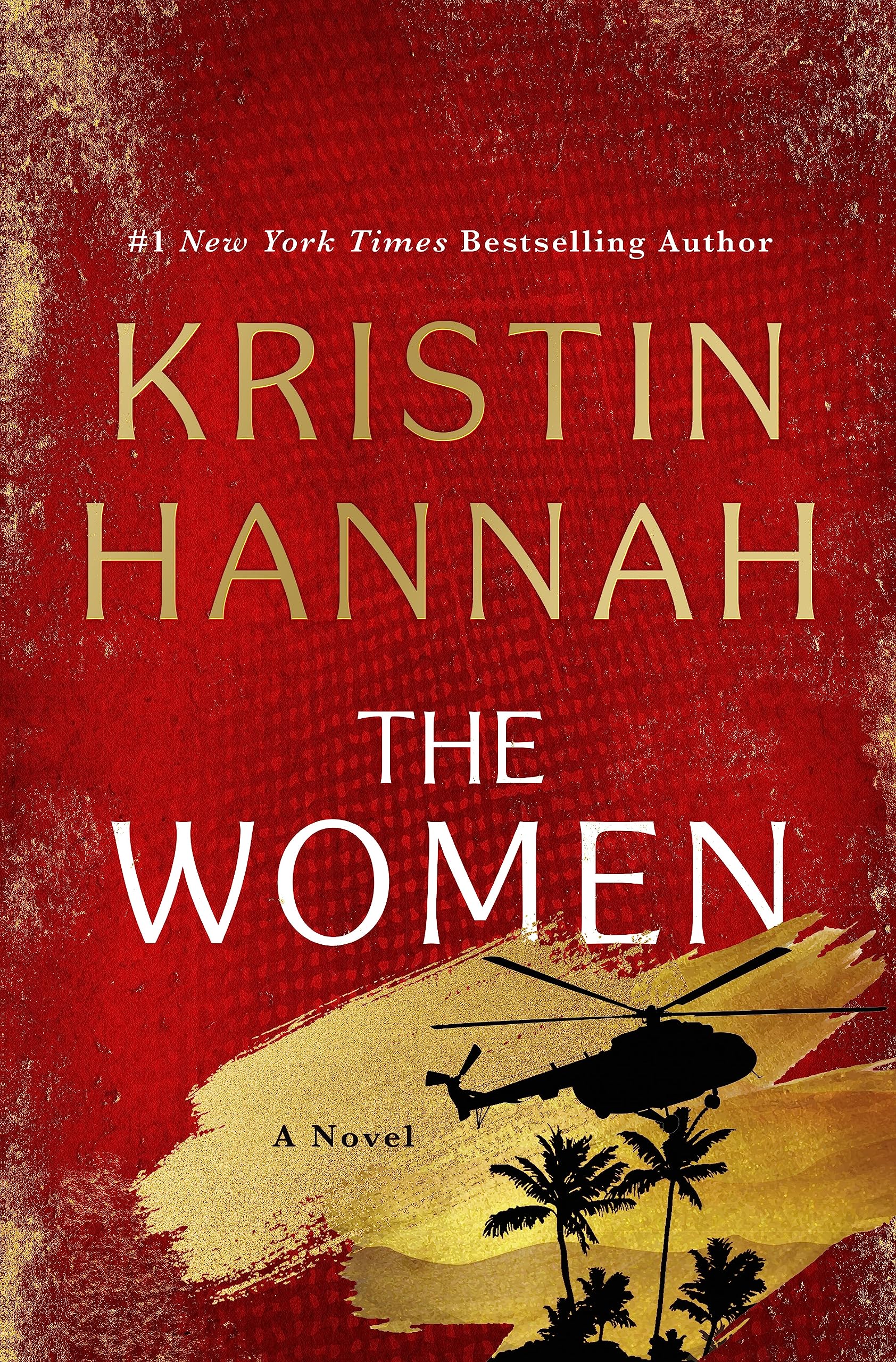
The Women, by Kristin Hannah
The Women, by Kristin Hannah

I got on the waitlist for this novel as soon as it showed up in the Charlotte-Mecklenburg Public Library online catalog. That was months ago. Last time I checked on Friday evening, there were 4,314 people on that waitlist for the 873 copies in multiple formats. It seems to grow longer each day, so I was fortunate to get to read it soon after it was released.

Unless you live under a rock or have absolutely no interest in historical fiction, you probably know that The Women is about the American women who served in the military in-country (Vietnam) during the Vietnam War. That’s all I knew about it until I really got into the 468-page novel.

I don’t recall the last time I was so affected by a novel. Ms. Hannah writes in a way that puts the reader inside the main character, Frankie, a US Army nurse. This book grabbed me by the throat. I felt like I was right there in a US Army hospital or MASH unit during the war. It brought back memories of watching the news reports of the war on TV every night in my teenage and college years. The names of places and battles I had not thought about in decades were suddenly fresh again.

The book starts out to follow this young nurse throughout her tour of duty. I don’t want to give anything away, but I want to share that it also follows her return to the United States. These were the days of a lot of anti-war protests and the Vietnam veterans did not receive a hero’s welcome when they came home. To compound that situation, people repeatedly told Frankie she wasn’t a veteran because “there weren’t any women in Vietnam.”

Frankie went through loss after loss. Every time I thought things were finally going to go well for her, she suffered another setback.

This is an amazingly well-researched and well-written novel. Ms. Hannah’s descriptions of unspeakable combat injuries and the overwhelming number of severely injured soldiers and civilians the doctors and nurses had to deal with will take your breath away.

It seems impossible to me that the 1960s and early 1970s now qualify for historical fiction. It’s the first time I’ve been so taken aback by reading an historical novel set in my lifetime.

I especially recommend this novel to anyone with a romanticized concept of war.

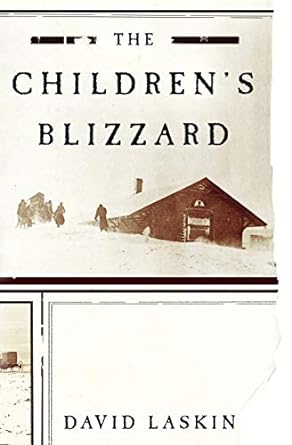
The Children’s Blizzard, by David Laskin
The Children’s Blizzard,
by David Laskin

I mentioned this book on my blog on March 11, 2024 (#OnThisDay: The Blizzard of 1888) but saved the details for today. This is a nonfiction book that reads like a novel. I love this kind of creative nonfiction!

The book emphasizes the fact that the temperatures were unseasonably warm on the morning the blizzard hit, so the school children had not worn their heaviest winter clothes. That fact put them at greater risk than on a normal January day.

I will quote a little from the prologue to give you the flavor of David Laskin’s writing style.

“On January 12, 1888, a blizzard broke over the center of the North American continent. Out of nowhere, a soot gray cloud appeared over the northwest horizon. The air grew still for a long, eerie measure, then the sky began to roar and a wall of ice dust blasted the prairie. Every crevice, every gap and orifice instantly filled with shattered crystals, blinding, smothering, suffocating, burying anything exposed to the wind. The cold front raced down the undefended grasslands like a crack unstoppable army. Montana fell before dawn; North Dakota went while farmers were out doing their early morning chores; South Dakota, during morning recess; Nebraska as school clocks rounded toward dismissal. In three minutes, the front subtracted 18 degrees from the air’s temperature…. Before midnight, windchills were down to 40 below zero…. By morning… hundreds of people lay dead…, many of them children who had fled – or been dismissed from – country schools….”

In the early pages of the book, the author explains that many of the people affected by this storm were immigrants from eastern Europe. They had taken advantage of the Homestead Act, which gave each one 160 acres of land in the region in exchange for a small filing fee and a promise to farm their land for five years. This was a recipe for every family to be isolated and children to have to walk miles to the nearest one-room school.

Much to my surprise, there was a national weather service in 1888. It was attached to the US Army. Such things as barometric pressure, wind speed, and temperatures were recorded and tracked, but this storm out-paced the warning system of flags emblazoned with a single black square and the telegraph system. I dare say it was a monstrous storm moving with such speed that it would challenge 2024 technology to sufficiently warn the populous.

The book gives details about specific families and individuals in the early chapters and then moves into how each one was affected by the storm.

The details of how individual school teachers – many of whom were scarcely older than their students – were faced with impossible decisions of whether to keep their students in the school houses where they were at risk of freezing to death or to send the children out to walk home at the risk of freezing to death.

The individual stories Mr. Laskin shares in this book are powerfully written and show us feats of heroism by children and adults alike. It was a mix of quick thinking and sheer luck that saved the ones who survived. Many survivors lost limbs to frostbite. Many who survived hypothermia succumbed to the warming of their bodies after being rescued.

The author weaves in details of how weather systems are created and how they interact with each other, as well as interesting details of the process the human body goes through when subjected to various temperatures that take the body below 95 degrees F.

People whose ancestors lived in the Great Plains states in January 1888 still tell the stories about this storm. It was interviews and family records that enabled Mr. Laskin to include such details in his book.

This is the first book by David Laskin that I have read. I will definitely look for his other books.

The Wisdom of Trees: Mysteries, Magic, and Medicine, by Jane Gifford
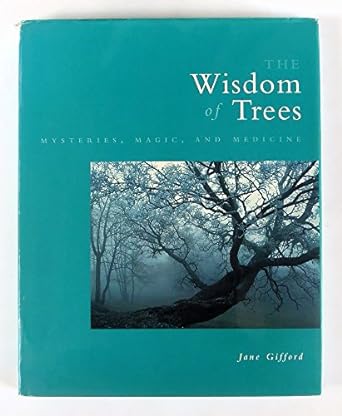
The Wisdom of Trees,
by Jane Gifford

I happened upon this book at the public library. The title caught my eye. Trees fascinate me. I am intrigued by the different properties each species has. Since I am writing historical fiction set in the backcountry of Virginia and the Carolinas in the 1700s, I need some knowledge of trees and how they were used by pioneers.

My Morrison ancestors worked with trees a lot and were, no doubt, very knowledgeable about which trees were best used for what purpose. My grandfather had a sawmill. My father enjoyed woodworking and made some beautiful furniture.

Unfortunately, I was not interested in the properties of trees until recent years, so I have had to read and take notes about things my ancestors just knew. It was a necessity for pioneers, farmers, sawmillers, and woodworkers to know about trees. At a glance, my father could identify any tree by its leaf or its bark and any piece of lumber by its color, grain, or fragrance.

I have only recently been able to identify an ash tree, and there are many on our property. My newfound interest in ash trees is a result of many of them succumbing to the invasive emerald ash borer that was introduced from its native range in Asia. This is a costly loss to our environment.

Ash trees were so plentiful here 100 years ago that there was a factory in Harrisburg, North Carolina that made baseball bats and spokes for wagon wheels. (I write about that in Harrisburg, Did You Know? Cabarrus History, Book 2, which is available from Amazon and at Second Look Books in Harrisburg.)

Back to The Wisdom of Trees: Mysteries, Magic, and Medicine, by Jane Gifford… in the words from page six: “This book celebrates the enormous cultural and medicinal value of the trees most familiar to modern-day Europe from the point of view of our Celtic ancestors.” It goes into some history of the Druids, poets in Ireland, and the basic Celtic tree alphabet. In other words, the book was not what I thought it was going to be. Only a few species of trees were addressed, and some of them are not found in North Carolina.

For the information the book covered, it is probably a good resource. I’m not sure I learned anything that will help me in writing historical fiction set in North Carolina.

Since my last blog post

I attended a book discussion at the public library in Harrisburg. Homegoing, by Yaa Gyasi was selected as this year’s “Big Read” by the National Endowment of the Arts (NEA). I have not finished reading the novel, but I thoroughly enjoyed the group discussion. The library branch manager had listened to the book and said the recording was outstanding.
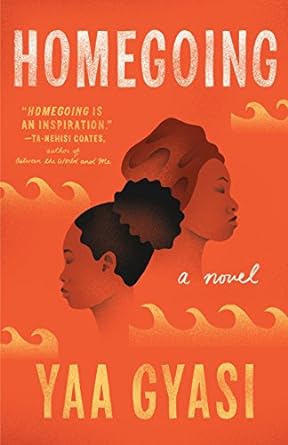
Homegoing, by Yaa Gyasi

Until my next blog post

Read a good book or two.

Support your local public library and independent bookstore.

Check with your local public library system to see if it is offering special programming in conjunction with the NEA’s “Big Read.”

Remember the people of Ukraine.

Janet

You Need to Read These Books!

I had another good month of reading in May. I’m on a roll for 2017! If I were a faster reader, I could devour more books. In the meantime, though, I’ll enjoy as many as I can.

A Man Called Ove, by Fredrik Backman

I’m running out of superlatives for the books I’ve read this year. I kept hearing about A Man Called Ove, by Fredrik Backman, so I got on the waitlist for it at the public library. It’s a popular book, so it took a while for my name to gravitate to the top of the list.

a-man-called-ove-9781476738024_lg

I thoroughly enjoyed this book. At times outrageously funny and at times heartwarming and touching, it held my interest from start to finish. Ove is a 59-year-old man. I could see my father, my brother, and even myself in him. I could see myself in his late wife when he recalled how it drove him up the wall because she delighted in planning the details of a trip to the extreme. That’s me! Thank goodness I have a sense of humor! Poor Ove is at odds with the world and having trouble keeping up with the modern world. For the most part, he’s not even trying to keep up.

The author, Fredrik Backman, is from Sweden, where his books have gained much acclaim. I am amazed at how well the humor in this book translated so well from Swedish into English. Although I don’t speak or read Swedish, I don’t believe the book lost anything in the translation. I look forward to reading Mr. Backman’s other books.

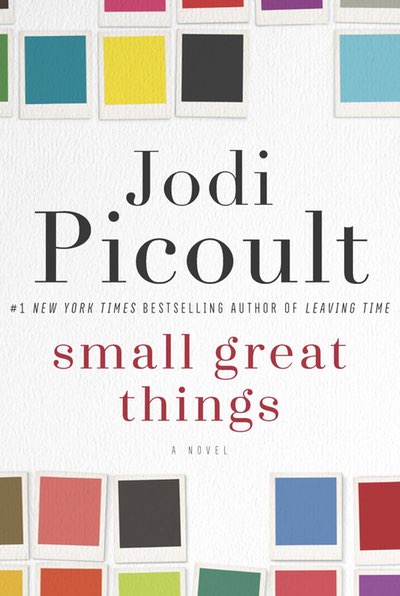
Small Great Things, by Jodi Picoult

Maybe it’s because Mother’s Day was approaching when I was reading this book, or maybe the sentence would have struck me like a ton of bricks any time of the year. Ms. Picoult has an uncommon gift when it comes to writing. Her books tackle some of the most heart-wrenching issues of our day, and she has a wonderful way with words.

small-great-things-hc-400w

I featured the following sentence in my Being the Balloon blog post on May 5, 2017:

“What it’s like to be the balloon, when someone lets go of the string.”   – from Small Great Things, by Jodi Picoult

The context of that sentence is that Ruth, the protagonist who is a seasoned labor and delivery nurse, a mother, and the widow of an American soldier killed in Afghanistan, reacts to the death of her mother with, “What it’s like to be the balloon, when someone lets go of the string.”

I highly recommend Small Great Things. In it, Ms. Picoult takes on the issue of race in America, and she has an uncanny talent for getting inside the skin of individuals from one end of that spectrum to the other in Small Great Things. The line that I focused on from the book in my blog on May 5 speaks to the humanity of us all.

In a nutshell, Small Great Things is about an African-American nurse in Connecticut who is barred from caring for the newborn infant of a white supremacist couple. Author Jodi Picoult masterfully writes from the point-of-view of the nurse, the white-supremacist father, and the white lawyer who defends the nurse. There is an explosive trial during which all kinds of raw emotions erupt. I think we all can learn some life lessons by reading and pondering Small Great Things, by Jodi Picoult!

The Hidden Life of Trees, by Peter Wohlleben

I kept hearing good things about this book, which had been translated into English from its original German. I finally got it from the public library, but with too many other books to read and a lot I was trying to learn about the craft or writing. Therefore, I only got 40% of the book read before I had to return it to the library for the next person on the wait list. I will definitely check it out again so I can finish it.

index

The Hidden Life of Trees:  How They Feel, How They Communicate – Discoveries from a Secret World might not appeal to everyone, but I thought it was very interesting. That might be because I grew up and again live out in the country. My parents instilled an appreciation and respect for trees in us. We have a variety of trees in our yard – dogwood, pine, ash, poplar, cedar, several varieties of oak, mulberry, sycamore, black walnut, sweet gum, holly, persimmon, and maple.

I thought I knew a lot about trees until I started reading Peter Wohlleben’s book. I now know that there’s a whole world out there I can’t see or hear. The book explains how certain tree species work together and how other tree species work against one another. It talks about how trees pump water out of the ground. It talks a lot about fungi and how fungal networks underground help trees in numerous ways. It really is quite fascinating!

The Nightingale, by Kristin Hannah

I highly recommend The Nightingale, by Kristin Hannah. It is a historical novel about two sisters in France during the German occupation in World War II. The sisters cope with the occupation and resulting cruelties of war very differently.

Nightingale-PB-658

One sister joins the French Resistance and risks her life helping shot down Allied airmen across the Pyrennes and into Spain. The other sister’s nerves and wits are pushed to the limits as two German officers are billeted in her home. The book was inspired by a 19-year-old Belgian woman, Andrée De Jongh, who created an escape route out of Nazi-occupied France.

This book will pull on all your emotions. When the characters are cold and hungry – which was most of the time – you will feel cold and hungry, although I’m certain that I truly can’t imagine the level of hunger or fear the people who lived through the ordeal actually endured.

When we study World War II or hear stories about it, the emphasis is almost always on the battles. The Nightingale gives a paints a picture of life on the home front in France. It was this month’s book for discussion by Rocky River Readers Book Club. Everyone at our meeting had only praise for the book – how much it taught us and how well-written it was.

Homegoing, by Yaa Gyasi

This historical novel is Yaa Gyasi’s debut as a fiction writer. It is different from any novel I’ve ever read. It is set in Africa. As part of my 2017 Reading Challenge I wanted to read a book set on each of the continents this year, so I was drawn to this novel. Unfortunately, I couldn’t finish reading it before it was due at the public library.

9781101971062

Each chapter is about a different member of this family. It is about family ties and the horrible conditions in the slave trade. It puts a human face on slavery – a subject we tend to think of in terms of numbers and not the families that were torn apart in Africa. If I get a chance, I’d like to check this book out again.

The Tea Girl of Hummingbird Lane, by Lisa See

Like Homegoing and The Hidden Life of Trees, I didn’t get to finish reading The Tea Girl of Hummingbird Lane before it had to be returned to the library. I couldn’t renew any of the three books because there were people on the wait list. The part of The Tea Girl of Hummingbird Lane that I got read was fascinating in how it shed light on some of the superstitions held by the Chinese. I had no idea!

51nbXr3ZbXL._SY346_

The novel follows a young Chinese girl who is painfully aware from birth that she is not valued because she is female. Her family has to walk for hours to pick tea leaves for a meager amount of income. It is a difficult life. Her mother is the local midwife and she tells her daughter that she must follow in her footsteps in that occupation.

There is a ray of hope, though, because the girl’s teacher tells her that she can leave the harsh mountain environment and make something of herself. I look forward to checking the book out again in order to see how her life turns out!

Until my next blog post

I hope you have a good book to read. I have come to the conclusion this week that I am trying to read too many books and not spending enough time on my writing. My goal in June is to strike a happy medium.

If you’re a writer, I hope you have productive writing time. I’m writing bios of my characters in the “new and improved” The Spanish Coin.

Janet

A Different Perspective on Storytelling

I read a guest blog post by storyteller E.M. Welsh on May 8, 2017. It was posted on Kristen Kieffer’s Well-Storied.com blog [https://www.well-storied.com] and addressed writer’s ego. I was interested in the topic, so I read the entire blog post. The post prompted me to go to Ms. Welsh’s website. I signed up for her weekly e-mails because what she had written gave me a different perspective on storytelling.

A-Different-Perspective

Quoting from an e-mail I received from E.M. Welsh a few minutes later:

“You might think you know what a “storyteller” is, but over at emwelsh.com we have a different idea about the definition, and that idea is the core of my website.

“A storyteller is someone who loves storytelling in all forms. This means not just novel writing, like what Kristen [Kieffer] teaches, but screenwriting, playwriting, and even video game writing as well.

Ms. Welsh continued, “Because of this love of all mediums, the storyteller always thinks in terms of what they can do to tell the best story possible, not to do what is considered comfortable. So, if that means writing a screenplay instead of a novel, even though they’re more familiar with prose, they’ll do it if it means telling a better story.”

I must admit that, although I wrote two historical plays for my church’s 250th anniversary in 2001, since then I have thought of myself as an aspiring novelist. Ms. Welsh’s e-mail statements and additional information on her website and in her free downloadables made me stop and consider how limiting that mindset (the “aspiring novelist” one) can be.

In a nutshell

Ms. Welsh’s theory is that the story dictates the format. I had never looked at it that way, so it is interesting and enlightening to consider. What this boils down to is the fact that the story is the important thing. Not the writer, but the story.

The story tells the writer whether it is a novel, a screenplay, a play, or a video game.

Looking at a story from this perspective is both challenging and freeing for a writer.

Am I writing because I want to be a writer, or am I writing because I am a writer?

In other words, am I in love with the dream of what it would be like to see my name as author of a book, or am I compelled to write because that is what I am driven to do?

Kristen Kieffer and E.M. Welsh warn us not to let ego get in the way of writing.

Until my next blog post

I hope you have a good book to read. I finished reading The Nightingale, by Kristin Hannah (excellent!) and am currently reading Homegoing, by Yaa  Gyasi.

If you’re a writer, I hope you have productive writing time.

Janet