I write southern historical fiction, local history, and I've written a devotional book. The two novels I'm writing are set in Virginia and the Carolinas in the 1760s. My weekly blog started out to follow my journey as a writer and a reader, but in 2025 it has been greatly expanded to include current events and politics in the United States as I see our democracy under attack from within. The political science major in me cannot sit idly by and remain silent.
It is not coincidentally that Freedom of Information Day in the United States falls on the birthday of James Madison. Madison, along with being the fourth U.S. President, is known as “the Father of the U.S. Constitution.” He earned that moniker for his part in drafting the Constitution and the Bill of Rights (the first ten amendments to the Constitution.)
President Madison was born 275 years ago today on March 16, 1751.
Photo credit: Aaron Burden on unsplash.com
The Freedom of Information Day was designated by the U.S. Congress in 1986 on the 20th anniversary of the Freedom of Information Act (FOIA). The Freedom of Information Act gave citizens (and the press) permission to see government records. It encourages us to hold our government accountable and to seek and share information.
As the methods of gathering and storing information continually evolve, the FOIA and its interpretation will, no doubt, evolve. After all, in 1966 at the creation of the Freedom of Information Act, technological capabilities like artificial intelligence were things of science fiction.
Codified at 5 U.S.C.§ 552, the Freedom of Information Act spells out the types of records that can be accessed, as well as the procedure for requesting access along with nine exemptions to protect sensitive information. Those nine exemptions include things like national security, personal privacy, and matters of a law enforcement nature.
It is thanks to the Freedom of Information Act that journalists and news agency are guaranteed access to certain government papers and documents so on this Freedom of Information Day do not take that for granted.
It is thanks to the Freedom of Information Act that the heavily redacted Epstein files have been partially released. I hope the Freedom of Information Act will soon make it possible for the files to be released with only the names of the victims redacted. Somehow, these men must be held accountable for their pedophilia.
Janet
The government should be afraid of its citizens, not the other way around.
This is a timely anniversary date that landed in my lap!
The US Supreme Court heard the arguments for the Marbury v. Madison case on February 11, 1803, and handed down its decision 222 years ago today on February 24, 1803. That’s a quick turn around compared to today’s Supreme Court!
The US Supreme Court Building. (Photo by Tim Mossholder on Unsplash.)
It isn’t often that one hears a reference made to this US Supreme Court case, but a news commentator on TV mentioned it just 11 days ago and another one mentioned it four or five days ago. I chose Marbury v. Madison for today’s blog post when I created my 2025 editorial calendar last year. Talk about serendipity! Little did I know last fall what a place we would be politically today.
In a nutshell,Marbury v. Madison established the right of the courts to determine constitutionality of the actions of the Executive and Legislative branches of government in the United States.
The three branches of the federal government are equal; however, the Judicial branch has the authority to rein in the other two branches when they take actions deemed to be in conflict with the United States Constitution.
And image of what balance looks like. (Photo by Christophe Hautier on Unsplash.)
Until January 20, 2025, I took Marbury v. Madison for granted. I will never take it for granted again.
When I started writing today’s post a week ago, I copied what the National Archives website said about Marbury v. Madison and saved it as a Word document in case the National Archives website disappeared. (The USAID website disappeared for a while before being moved to the US State Department website. Incidentally, as I wrote this paragraph on Friday afternoon, a judge ruled that the Trump Administration can proceed to dismantle USAID.) Trump fired the National Archivist about 10 days ago. We historians fear that he or Elon will torch the National Archives. That’s one way to erase history, but I digress. (It is a real fear, though.)
Back to Marbury v. Madison
Quoting the National Archives website (https://www.archives.gov/milestone-documents/marbury-v-madison) because I cannot state the case’s background any better: “In 1801, outgoing President John Adams had issued William Marbury a commission as justice of the peace — but the new Secretary of State, James Madison, refused to deliver it. Marbury then sued to obtain it. With his decision in Marbury v. Madison, Chief Justice John Marshall established the principle of judicial review, an important addition to the system of “checks and balances” created to prevent any one branch of the Federal Government from becoming too powerful.”
US National Archives, Washington, DC. (Photo by Juliana Uribbe on Unsplash.)
Also, quoting from the National Archives website: “‘A Law repugnant to the Constitution is void.’ With these words written by Chief Justice Marshall, the Supreme Court for the first time declared unconstitutional a law passed by Congress and signed by the President.”
I think some folks living and working on Pennsylvania Avenue in Washington, D.C. need to read up on this. We now have a US President who wrote on social media nine days ago, “He who saves his Country does not violate any Law.” It’s up for debate whether he is doing anything to save our country, but the frightening thing is that he has put in writing that he is above the law.
He also said that when it comes to agencies of the Executive Branch only he and the US Attorney General can interpret laws. That might be in conflict with the principle established by Marbury v. Madison.
It is the US Supreme Court that will ultimately decide if the US President does anything that is unconstitutional.
The US Constitution gave the President the power to veto an act of Congress and appoint federal judges with the advice and consent of the US Senate, and it gave Congress the power to impeach the President or a judge. The powers of the Supreme Court were not spelled out in such detail. When Marbury v. Madison came along in 1803, Chief Justice Marshall – who strongly believed that the Supreme Court was equal in power to the Executive and Legislative branches – led the court in seizing the opportunity to establish the principle of Judicial Review.
The US Supreme Court’s authority to declare federal or state laws unconstitutional has never been seriously challenged. I hope that will still be true in 2029.
In case you’re wondering what happened to William Marbury…
With the decision made in the Marbury v. Madison case, the Secretary of State was directed to deliver to William Marbury his commission as a justice of the peace for the county of Washington, in the District of Columbia.
In the big scheme of things, I wonder if the parties involved in this case had any idea going into it that it was destined to be a landmark decision.
In conclusion
I still have freedom of speech and I will continue to use my blog as a platform to share my opinions and my research into the US. Constitution. Those of you who have been reading my blog for more than 10 years know that is nothing new. I just feel more compelled now to blog about the US Constitution.
Preamble to the Constitution of the United States of America
My college major was political science, and I regret that I only took one Constitutional Law course. In fact, I was so intimidated by the subject that I procrastinated taking the required course until my final quarter. (The university was on the quarter system then instead of the semester system.)
As it turned out, the course was fascinating and I wished I’d taken it earlier so I would have had time to take more constitutional law courses. I readily admit that one constitutional law course does not a constitutional law expert make, but I’m trying to shine a light on the document.
Hurricane Helene Update
As of Friday, 155 roads in North Carolina are still closed due to Hurricane Helene, including Interstate 40 near the Tennessee line. That is a decrease of 14 in the last week, inspite of snow and some sub-zero wind chills. This week’s count consists of 1 interstate highway (I-40), 11 US highways, 17 state highways, and 126 state roads. (To give some perspective, it has now been five months since the hurricane.)
I failed to report in last Monday’s blog post that Eric Church’s foundation, Chief Cares, has purchased land in Avery County, NC and hopes to place 40 modular homes to house families that lost their homes due to Hurricane Helene. A road must be built and water and sewer lines installed. Church and his foundation hope to secure land in adjoining counties so they can provide more housing for hurricane victims. Church and fellow-country music singer Luke Combs organized and spearheaded a concert at Bank of America Stadium in Charlotte last October to raise money for hurricane relief.
The work of Brother Wolf Animal Rescue and The21st Century Packhorse Librarian continue and will appreciate your support for the foreseeable future.
Jake Jarvis of Precision Grading in Saluda continues to work in the area every day free-of-charge with his heavy earth-moving equipment. He has built bridges, reconstructed driveways and private roads, and excavated places for homes to be rebuilt. The last couple of weeks have been challenging due to ice, snow, and high winds.
Until my next blog post
I hope you have a good book to read. Next Monday I plan to blog about the books I’ve read in February.
Value your freedoms, family, and friends.
Remember the people of Ukraine and western North Carolina.
There’s probably a limited audience to be reeled in by the title of today’s blog post, but I couldn’t think of a more creative way that might trick some unsuspecting readers to dive in.
If US Constitutional History is not your cup of tea, please visit my blog again next week. I’m not sure what the topic will be, but I’ll try to avoid the US Constitution.
You might recall that I mentioned the 17th Amendment to the Constitution of the United States in my May 31, 2021 blog post because I’d read that it was ratified on May 31, 1913. After discovering that it was actually ratified on April 8, 1913, I had to come up with another topic for May 31. I’ll explain the confusion somewhere below.
Here we go…
Thank goodness for the 17th Amendment to the Constitution of the United States of America!
Even though I majored in political science in college, if asked out of the blue what the 17th Amendment to the U.S. Constitution was about, I’d be hard-pressed to give you the correct answer.
Photo credit: Anthony Garand on unsplash.com
The 17th Amendment, in a nutshell
The 17th Amendment to the Constitution of the United States mandates that the two Senators from each state “shall be” elected by the people of each respective state. It also states that U.S. Senators shall serve six-year terms and each Senator shall have one vote.
What about before the 17th Amendment?
The 17th Amendment was passed by Congress on May 13, 1912. Prior to the amendment’s ratification on April 8, 1913, each state’s U.S. Senators were chosen by the state legislatures. Whoa! Let that sink in for a minute! I shudder to think about the possibilities.
Living in the state of North Carolina, I tremble to think about who the NC General Assembly would have chosen for the US Senate, especially over the last decade or more. Granted, the general populous has rarely elected the people I would have preferred for these offices since Senator Sam Ervin died, but at least a fair and open election gives the citizens some measure of confidence in the people we send to Washington, DC. What they do after they get there is a whole other story. But I digress.
The reasoning behind the way it was before 1913
The framers of the United States Constitution weren’t sure the average citizen was smart enough to vote. They formed our government as a democracy, yet the white men who were in charge in our country’s infancy didn’t completely trust the general populous to elect the right people.
Come to think of it, the white men in charge in Washington, DC and in many state legislatures today don’t trust us to “vote right” either. It seems like we would’ve made more progress than this in more than 200 years, but I digress again.
The framers of the Constitution wanted the United States Senate to be a check on the masses. James Madison assured the attendees of the Constitutional Convention that cooler heads would prevail in the Senate than in the House of Representatives where representatives were elected by popular vote of the people. (Well, not really “the people,” for you could only vote then if you were a white male who owned some real estate. The Electoral College was also instituted as a buffer between the people and the US President. But that’s a topic for another day.)
The reasoning behind having the state legislatures elect US Senators was that the senators would be insulated from public opinion. To borrow a question from Dr. Phil McGraw, “How’s that workin’ for ya?”
I was eager to see what their study found. My hunch was that the election of US Senators was viciously fought over in the state legislatures and the said elections, no doubt, took up weeks and weeks of the legislatures’ time.
Unfortunately, it would have cost me $15 to gain access to the study, so I’ll just give you this quote from the article’s abstract: “We find significant evidence that under the indirect electoral mechanism, Senate elections were contentious, and winning majority control of the state legislature did not always ensure an easy electoral process. Specifically, the breakdown of caucus nominating processes, the size of majority coalitions, and whether the incumbent senator was running for reelection each exerted an effect on the probability of conflict in the indirect election process.”
Point of confusion
In my opening remarks, I promised to explain the confusion over the date of the 17th Amendment’s ratification. It was ratified on April 8, 1913, when the Connecticut legislature approved it. With Connecticut’s vote, three-fourths of the state legislatures had approved it. That met the requirement for an amendment’s ratification. It was not until May 31, 1913, that Secretary of State William Jennings Bryan officially announced the ratification in writing. Some sources have picked up that date as the date of ratification.
More than a century later, that’s probably all we need to know. This blog post probably already falls into the category of “too much information” for many of you, so I’ll just leave it at that.
Since my last blog post
I’ve been busy working on my novel. The working title is still either The Spanish Coin or The Doubloon. Unless I self-publish it, I won’t get to choose the title. The manuscript stands at just over 91,000 words. That number fluctuates from day-to-day as I make changes.
I’m re-reading World of Toil and Strife: Community Transformation in Backcountry South Carolina, 1750-1805, by Peter N. Moore. As more of it “soaks in,” I’m making some changes in my novel manuscript – changes that should result in a richer story and an additional layer of setting authenticity.
Until my next blog post
I hope you have a good book to read. I’m reading When Ghosts Come Home, by Wiley Cash. I’m trying to finish reading it by tomorrow night, so I can write about it in my blog post next Monday.
I’m also still making my way through The Silk Roads: A New History of the World, by Peter Frankopan. It’s not a book one can rush through. At least, I can’t.
Note: Get Ready! December is Read a New Book Month!
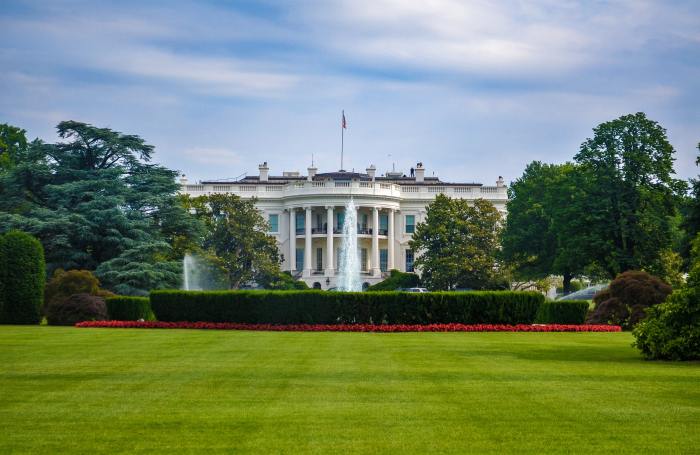
My blog post on June 22, 2020 (#OnThisDay: The Chesapeake – Leopard Affair off Virginia, 1807) was about a naval incident that was a cog in the wheel of events that resulted in the War of 1812. One of the most famous events of that three-year war between the United States and Great Britain was the British invasion of Washington, DC and the burning of the White House on August 24, 1814.
Left behind in Washington City
United States First Lady Dolley Madison showed what she was made of on that day. Her husband, President James Madison left Washington City to join General Winder. Before leaving, he asked Dolley if she would be all right there until his return. She assured him that all was well and she wasn’t afraid. He instructed her to take care of the public and private Cabinet papers, the Cabinet being the Secretary of State and other federal department heads.
That’s not how things played out, though, and Dolley became a bit of a hero on that August day 206 years ago. It turned out that the British troops were much closer to the capital city than the president had thought. When President Madison realized the imminent danger posed by the British troops, he wrote to Dolley twice in pencil that she should get out of Washington as soon as possible.
Dolley filled trunk after trunk with government papers, sacrificing the Madison family possessions in order to save important documents. People all around her were fleeing for their lives. As she wrote in a letter to her sister, Anna, “even Colonel C with his hundred, who were stationed as a guard in this enclosure” fled.
Photo by David Everett Strickler on unsplash.com
A faithful servant, French John, offered to “spike the cannon at the gate, and lay a train of powder, which would blow up the British should they enter the house.” Dolley declined to take him up on his offer of defending the White House.
The Battle of Bladensburg
At sunrise the next morning, Dolley looked through her spyglass in all directions, watching for her husband to appear. He didn’t come. In the early afternoon she could hear the cannons firing as the British defeated the Americans at the Battle of Bladensburg. By mid-afternoon she had procured another wagon and “filled it with plate and the most valuable portable articles belonging to the house.” That wagon was dispatched to the Bank of Maryland for safe keeping.
Gilbert Stuart’s Portrait of George Washington
Dolley was urged to get in a carriage and leave immediately, but she still refused to leave the White House without Gilbert Stuart’s portrait of George Washington. It turned out that the frame was bolted to the wall, so it was not just a matter of taking it down. To save time, the canvas was cut out of the frame, rolled up, and saved by Dolley Madison. She went down in history for her heroics of August 24, 1814.
The Burning of Washington City
As the British troops entered the capital city, they torched one government office after another until finally reaching the White House. Some sources say the soldiers feasted on a meal prepared for 40 guests at the grand dining table before setting fire to the house; but that seems a little far-fetched since there was no one remaining there to prepare food and Dolley Madison had fled with the china.
It was surely a day and night of terror for any Washington residents who dared to stay behind. When the sun rose the next morning, the Capitol Building, the White House, and every other building of importance lay in smoking ruins.
Dolley Madison’s Background and Legacy
Growing up in North Carolina, I wasn’t taught much about the War of 1812 when I was in school. The battles all took place north of our state. It just wasn’t emphasized when I came along. If one of my social studies teachers had related the above story with energy and enthusiasm, it would have made the War of 1812 much more memorable and relatable than a recitation of battles and dates.
Dolley Madison is also remembered for making a conscious effort to invite guests from both political parties to social functions at the White House. The term “bipartisanism” had not yet been coined when she worked to do all she could to encourage cooperation between the political parties.
Dolley Payne Madison was born to Quaker parents in Guilford County, North Carolina in 1768. Her family moved to Philadelphia when she was 15 years old. She married John Todd, a Quaker lawyer, and they had two children; however, Mr. Todd and the younger of their sons died during a yellow fever outbreak in 1793.
At that time, Philadelphia was the nation’s capital. Dolley was an attractive young widow. Senator Aaron Burr introduced her to then Congressman James Madison. She married Madison after a brief courtship.
James Madison was an Episcopalian. Dolley converted to his faith and abandoned her Quaker upbringing and manner of dress. The Madisons lived at Montpelier, the family plantation in Virginia before moving to Washington, DC in order for James to be President Thomas Jefferson’s Secretary of State. It seems that Dolley happily fell right into the Washington social scene.
Since President Jefferson was not married, Dolley Madison served as the unofficial First Lady. It was she who got to make many decisions about the furnishings of the newly-constructed White House. James Madison was elected US President in 1808. Although much-revered as the “Father of the US Constitution,” he was 17 years Dolley’s senior and his terseness was in great contrast to the vivacious Dolley.
At the end of President Madison’s second term, he and Dolley returned to Montpelier. They lived there until his death in 1836. Dolley then moved back to the social life in Washington, DC, where she died in 1849.
Since my last blog post
Life has thrown a few curves at me since last Monday. It seems in the coming days I’ll learn how to care for a diabetic dog. My work on my scenic or step plot outline got hijacked, but I’ll get back to it.
Until my next blog post
I hope you have a good book to read. My mind has been pulled in more than a few directions, making it difficult for me to concentrate on reading. I still have a couple of books I want to finish, though, by the end of the month.
If you’re a writer or other artist, I hope you have quality creative time.
Be safe. Be well. Wear a mask. It’s not a sacrifice in the big scheme of things.
In doing the research necessary to refresh my memory enough to write today’s blog post, I discovered just how close the United States came to failing in the 1780s. As a younger student of history, I didn’t grasp the fragility and gravity of the situation. In an effort to stabilize and save the new nation, a constitutional convention was called for in the spring of 1787. Today’s blog post will attempt to give you an idea about what necessitated that convention which opened 233 years ago today.
It was a contentious time. It was a time of trial and error as the former colonists, who had just won a war for independence from Great Britain against all odds, faced the difficult work of creating a nation and there was no guide book for them to follow.
The Articles of Confederation
The Continental Congress agreed on “Articles of Confederation” in November 1777. The document formed more of an alliance than a nation. The Articles gave Congress the power to wage war, conduct diplomacy, and arbitrate disputes between the various states. Each state had one delegate. Going to war required nine of the 13 votes in favor. All 13 states had to ratify the Articles of Confederation in order for them to go into effect. Any amendments also required unanimous votes.
Congress could not, under the Articles of Confederation, enact laws. In fact, it had to rely on the states to recruit soldiers for the Continental Army. States were free to regulate trade and enact laws and the Congress had no power over them.
State boundaries needed to be established and states needed the authority to maintain authority within those boundaries. The Articles of Confederation left too much to chance and interpretation.
How could the 13 states go about forming a union with only the Articles of Confederation holding them together? They feared creating a Congress strong enough to interfere with issues within the individual states. After all, they knew what life was like under a strong central government. In today’s vernacular, they would have said, “Been there. Done that.” They knew what they didn’t want in a national government, but it wasn’t easy to agree on what they wanted or needed.
Photo by Juliana Kozoski on Unsplash
Small states wanted a federal government that could control westward expansion. They feared that, without a strong central government, states like Virginia and New York would prosper financially from selling their western lands and, therefore, become more solvent and more attractive to settlers than the smaller states.
Virginia and New York eventually relinquished their claims on “western lands.” That was enough to persuade Maryland to ratify the Articles of Confederation on February 2, 1781 –finally making ratification of the Articles unanimous and complete.
Territories
To begin to address the problems associated with western expansion, Congress started establishing temporary territories that could later become states. I’ll get into some of the details of how that was carried out in a blog post planned for July 13, 2020 on the anniversary of the adoption of the third Northwest Ordinance in 1787.
State Constitutions
By the end of 1776, 10 states had adopted constitutions. Connecticut and Rhode Island still operated under their charters. Massachusetts didn’t adopt a state constitution until 1780.
Most of the state constitutions began with a stated bill of rights. A free press, freedom of religion, the right to petition, trial by jury, and due process under the law were the items most states included in their constitutions. Most of them made it clear that the people wouldn’t stand for hereditary offices. In other words, there would be no American aristocracies.
In reaction to the royal governors the states’ residents had suffered under, the state constitutions limited executive power. They limited who could vote: only white men who owned enough property to support a family. It was believed if a man had a landlord, he would not be free to vote his own mind. Several states restricted those men who could serve in their legislatures to the very wealthy.
After the Revolutionary War
Although the Americans won the war for independence, they had paid a big price in deaths and the economy. The new country had no silver or gold mines to back an economy. Fortunately, many British and other European merchants offered American businessmen credit because they were eager to reestablish trade with their former clients. However, the British blocked America from trading with the West Indies. That restriction was instrumental in plunging American merchants into debt in the years after the war.
Photo by Ibrahim Rifath on Unsplash
A recession followed the war while the new country tried to get on its feet. There were economic inequalities between the “haves” and the “have-nots,” so not much has changed in two and half centuries.
Frustration increased as states racked up debt and taxed citizens. In Massachusetts, South Carolina, and New Hampshire farmers began to mobilize much as the Regulators had prior to the revolution. They went so far as to block county courts from meeting so farm foreclosures could not be processed. Some states chose to forgive debts in an attempt to avoid armed conflict. Seven of the 13 states started printing paper money.
Conservatives started having misgivings about the outcome of the war. They saw many states as being too democratic, and they started calling for a Constitutional Convention.
James Madison’s input
James Madison was turned to for advice. He had studied state governments and concluded a popular majority could govern every bit as tyrannically as a monarch. He said that the rich minority should be protected from the poorer majority.
Conventional wisdom of the day was that a republic had to be small so representatives could really know their constituents. Madison bucked that theory. To quote from Pulitzer Prize winning historian Alan Taylor’s book, American Revolutions: A Continental History, 1750-1804, Madison thought that if voters had a larger population from which to elect their leaders, “the purest and noblest characters” would be elected to office. (I wonder if he would still hold to that belief today.)
Madison met with Alexander Hamilton and 10 other “nationalists” in September 1786 to draft an appeal to Congress to call for a constitutional convention. Congress wanted the Articles of Confederation to remain but agreed to call a convention to write amendments. Congress also stipulated that the amendments would have to be approved by Congress and each state legislature.
The nationalists feared that the country would plunge into anarchy and the result would either be a monarch or a splintering of states into several confederations.
What happened 233 years ago today?
A Constitutional Convention was scheduled to open on May 25, 1787 in Philadelphia with the purpose of revising and strengthening the Articles of Confederation. However, what happened over the next four months was the drafting of the United States Constitution.
Every state except Rhode Island sent delegations to the convention. James Madison convinced George Washington that he should attend as a Virginia delegate. As a group, the 55 delegates were elitists. More than half of them held college degrees. More than half of them owned slaves. None represented the populist views of the farmers and other citizens of modest means.
Independence Hall in Philadelphia, PA. Photo by Alejandro Barba on Unsplash
The convention was held in what is now known as Independence Hall. On the first day, George Washington was unanimously elected to preside over the group. The doors and windows were kept shut and they agreed to a strict code of secrecy. No outsiders were allowed inside.
What transpired over the next four months?
Delegates came and went as the weeks went by. In fact, all 55 were never in attendance at the same time. Though multiple delegates came from each state, each state was allowed only one vote. Just as seems to be the rule instead of the exception with American politicians in 2020, they talked a good talk about “the common good,” but they all fought for their own state’s interests.
“The Virginia Plan” was presented on May 29. It called for a bicameral legislature with both houses having a number of representatives based on population. It called for a powerful national government with an executive branch and a judicial branch in addition to the legislative branch. Smaller states didn’t like the Virginia Plan.
The “New Jersey Plan” was presented in mid-June. Under that plan, there would be only one legislative body and much of the government would continue as it was under the Articles of Confederation.
Believing both plans were weak, Alexander Hamilton presented is own plan on June 18 in a five-hour harangue. He maintained that Great Britain had the best government in the world and that America should copy it. Under Hamilton’s plan, the electoral college would elect the president and senators and they would serve for life! Only the House of Representatives would be elected by popular vote of the people. Congress would not have the power to override a presidential veto. All state governors would be appointed by the national government.
For the next month, the delegates debated the Virginia Plan and the New Jersey Plan, not thinking the majority of citizens would accept the British model championed by Alexander Hamilton. They were essentially deadlocked until Benjamin Franklin and the Connecticut delegation presented a plan whereby there would be a bicameral legislature. Each state would have equal representation in the Senate, but representation in the House would be based on population. That compromise plan was adopted on July 16 by a vote of five to four. The Massachusetts delegation could not agree on which way to vote.
The following day, July 17, seven of 10 delegations voted against Hamilton’s idea that the national government should be able to veto state laws. They also voted to prohibit states from issuing paper money.
Another point of contention for the convention was slavery. Slaves made up about four percent of the population of northern states and about 40 percent of the population of Southern states. Southern delegates wanted a national government strong enough to protect their property rights but not strong enough to emancipate slaves.
Photo by Hussain Badshah on Unsplash
Since virtually all the delegates regarded blacks as inferior to whites, the debates came down more to regional interests than the morality of slavery. The compromise that was struck was the “three-fifths clause” which said that three-fifths of slaves would count in the allocation of congressional seats and presidential electors. In essence, it meant that a slave was considered to be only three-fifths of a person.
In August, 1787, as the hot and humid Philadelphia summer dragged on, there was heated debate over the future of the slave trade. The Georgia and South Carolina delegates wanted to continue to bring slaves from Africa, but the upper-southern states had more slaves than they needed. They wanted to be able to sell their slaves to planters in the Lower South when the African slave trade ended.
But the South Carolina and Georgia delegates valued continued slave trade more than they valued the national union. They threatened to pull out of the convention. By doing so, they called the bluff of Northern delegates who prospered from the slave trade through their shipping and shipbuilding interests. The Northern delegates wanted the national government to enact “navigation acts” that would favor northern vessels over foreign ones and would increase shipping costs for Southerners.
Slave-holding states lobbied for a fugitive-slave clause under which northern states were required to return runaway slaves to their owners. Euphemisms were used in the constitution they were drawing up in order to avoid using the words “slaves” or “slavery.”
The United States Constitution, therefore, protected slavery through the three-fifths clause, the “fugitive-slave clause, and by approving the slave trade for an additional 20 years. These compromises proved to be short-sighted. They appeared necessary to preserve the union, but they set the United States on a long-term racial division that still exists 233 years later.
The convention spent more time figuring out the national legislative branch than it did the executive branch. It was assumed that George Washington would be the first U.S. President, so the constitution created a strong executive. Both houses of Congress would need a two-thirds majority vote to override a Presidential veto. The president and vice-president would be elected to four-year terms and could be reelected indefinitely. State legislatures would choose the electoral college and that group would elect the president and vice-president.
Not much time was spent on the judicial branch. A Supreme Court would be created and Congress would have the power to create courts that would serve subordinately to it. It was made clear that state laws and courts would be trumped by U.S. laws, treaties, and the U.S. Constitution.
US Constitution signed on September 17, 1787
After numerous heated debates, 39 of the 42 delegates who had hung in there that long, signed the Constitution on September 17, 1787. The governor of Virginia refused to sign it. Fellow-Virginian George Mason said he’d rather chop off his hand than sign it. Alexander Hamilton wasn’t pleased with the final document, but he signed it because he feared the alternative was anarchy.
As difficult as the convention had been, the hard work lay ahead as each state had to ratify the Constitution. It would take a year to accomplish that, but that is a story for another day and another blog post.
Since my last blog post
I’ve spent more time reading nonfiction than fiction. My brain is tired. I’m listening to Long Bright River, by Liz Moore.
Until my next blog post
I look forward to concentrating on reading fiction in the coming days.
I hope you have a good book to read.
If you’re a writer or other artist, I hope you have quality creative time.
Thank you for taking time to read my long blog post today. It was longer than I wanted it to be, but I concluded that anyone truly interested in the topic would read it and anyone not interested in the topic wouldn’t read it no matter how short or long it was. I hope I judged correctly.
Let’s continue the conversation
What jumped out at you in today’s blog post? What surprised you?
Occasionally, I blog about an event associated with that particular day. Did you know that March 16 is Freedom of Information Day in the United States? Neither did I; however, I believe it should be a national holiday.
In light of the current political climate in America, I want to shout from the rooftops about freedom of information today!
Why March 16th?
James Madison was mentioned repeatedly during the recent presidential impeachment hearings held by the U.S. Senate. James Madison is revered as the “Father of the U.S. Constitution.” He advocated for openness in government. He insisted the government must have no secrets from the people. How radical was that? He drafted the U.S. Constitution and the U.S. Bill of Rights.
Photo by David Beale on Unsplash
James Madison was born on March 16, 1751. Hence, March 16 was chosen in 1966 to be celebrated as Freedom of Information Day. It’s unfortunate that the day itself gets no attention. We seldom hear anything about the Freedom of Information Act except when its implementation is being questioned by a news agency.
History of the Freedom of Information Act
The Freedom of Information Act was enacted on July 4, 1966 and went into effect a year later. This law declares that every person has the right to access all federal agency (Executive Branch) records not protected from disclosure by on of nine exemptions or exclusions. Those exemptions include things like national security, personnel records, trade secrets, and geological and geophysical information (including maps) related to wells. Although President Lyndon B. Johnson had misgivings about the Act, he signed it into law.
It is interesting to note that the original act was replaced just one month before it’s 1967 effective date. Also, it was amended in 1974. Those amendments strengthened an individual’s right to see federal records about himself and provided a path by which the individual can get their personal records corrected. Furthermore, the 1974 amendments give an individual the right to sue the government for violating the Freedom of Information Act.
Subsequent amendments
Amendments to the Government in the Sunshine Act in 1976 spelled out Freedom of Information Act exemptions in greater detail. President Ronald Reagan issued an Executive Order in 1982 that permitted broader interpretation of the exemption regarding national security.
Between 1995 and 1999, President Bill Clinton issued executive directives that allowed the release of classified national security records that are more than 25 years old.
The Electronic Freedom of Information Act amendments in 1996 made adjustments to the way in which electronic records are kept by the federal government.
The Freedom of Information Act has continued to be a political football in the 21st century. By an Executive Order issued by President George W. Bush, the records of former U.S. presidents were protected in 2002. The 2202 Order was revoked by President Barack Obama on the day after his inauguration in 2009.
The future of the Freedom of Information Act
And so it goes. The Freedom of Information Act continues to be amended through new Acts and Executive Orders. It will, no doubt, remain a fluid law that will be amended and re-interpreted for the remainder of the years the United States of America exists as a country. Its scope will continue to be challenged in U.S. Supreme Court cases and by lawmakers and presidents.
Since my last blog post
Since my blog last Monday, the corona virus COVID-19 has been declared a pandemic. Sadly, the United States has fallen far behind in preparing for and testing for the virus. This is due to the negligence of the Trump Administration, but now is not the time for finger pointing. Now is the time to start playing catch-up and learn from the current president’s mistakes.
My thoughts are with people around the world who have been infected by COVID-19 and their caregivers.
My fractured tibial plateau continues to heal, and I continue treatment for a pulmonary embolism.
Until my next blog post
Above all, try to stay well. Take reasonable precautions to guard yourself and those around you from the flu and COVID-19.
I hope you have a good book to read. I’ve suspended the requests for a dozen or more books from the public library to try to keep germs from other library patrons out of my house. This is when e-books can really be a blessing — and perhaps a lifesaver, so take advantage of those free e-books from your local public library system.
If you’re a writer or other artist, I hope you have productive creative time. My mind is a little scattered just now due to health concerns, but when I can concentrate I’m trying to work on future blog posts and historical short stories.
Thank you for reading my blog. You could have spent the last few minutes doing something else, but you chose to read my blog.
Let’s continue the conversation
Did you know there was a Freedom of Information Act in the United States? Have you had any personal experience with the Freedom of Information Act?
What about in your country? Does it have such an act to protect an individual’s information held by the government?














 Janet's Writing Blog