This Week in History: 1945

I could not get excited about writing about the August 12, 1898 US annexation of Hawaii for today’s blog post. (I could get excited about Hawaii’s statehood, which happened in my childhood, but its annexation as a territory? Not so much.)

I couldn’t muster the energy to do enough research to write 500 or 1,000 words about the annexation of Hawaii, and I doubted if my blog readers were interested enough to read about it. (If I’m wrong, feel free to look it up.)

In the big scheme of things, the events of the week of August 6-15, 1945 were more momentous than what happened about Hawaii in 1898.

It occurred to me that the 79th anniversaries of the bombing of Hiroshima on August 6, the bombing of Nagasaki on August 9, and the surrender of Japan on August 15, 1945 have barely been mentioned in the United States this week.

The famous bomb dome in Hiroshima. Photo by Griffin Quinn on Unsplash

I watch some programming on a TV station in Tokyo. The news and other programming are available via the public TV system here in metro Charlotte. The dates of the atomic bombs are marked in Japan with solemn government-sponsored gatherings and, no doubt, by many private gatherings and individuals.

The horror is remembered by the Japanese people, but the overriding theme of the coverage I have seen over the last week is peace. The Japanese people know first-hand the horrors of nuclear war, and they are adamant that such weapons should never be used again.

Nagasaki Atomic Bomb Museum Photo by Roméo A. on Unsplash

The dropping of those atomic bombs were horrific events in which hundreds of thousands of innocent people were killed, maimed, severely burned, orphaned, or doomed for various health maladies for the rest of their lives.

It has been said that those bombs resulted in the almost immediate surrender of Japan, thus ending World War II and ultimately saving more lives than they took. I guess we will never know the truth of that reasoning and justification.

I imagine the people who are old enough to remember the events of that week – whether they live in Japan, the United States, or other countries involved in the war in the Pacific Theater — are puzzled over the fact that the world is taking little notice of this week’s 79th anniversaries.

Photo by Sunguk Kim on Unsplash

I suppose there will come a time when September 11 will be just another day in the United States. The Americans who were young children or who were born after September 11, 2001, cannot possibly think of that day the way it is forever etched in my memory.

Life goes on. Events are forgotten. To those of us born after 1945, that year seems like ancient history. That’s just human nature. I was born in the United States in 1953, so I grew up with no concept of what life was like during World War II. But that does not excuse me if I don’t stop and think about the events of 79 years ago.

I owe it to my parents, my aunts and uncles, and even my oldest first cousins – all of whom are dead – to remember the sacrifices they made during World War II, their military service, their work to help build military planes, and their courage to hold things together on the home front – all while not knowing when or how the war would end and not knowing which of their loved ones or friends would not come home.

Since my blog post last Monday

I am feeling better than when I penned my August 5 blog post. I was discouraged by an illness which has taken much from me. However, I have been bolstered by the outpouring of concern I have received from many of my readers. Each day has been better than the one before. I’ve even been able to listen to an entire novel and enjoy it!

Thank you for your support and encouraging words. I always come out of these slumps and return to my “normal,” but each time I experience a relapse I can’t help but wonder if I will come out of it.

Since my last blog post

I hope you got a chance to read my reblogging on Friday of a blog post about Elizabeth Graffreau’s new book, Simple Pleasures: Haiku from the Place Just Right. It was my first attempt at reblogging.

Until my next blog post

Take a few minutes to think about the events of this week in 1945. Let’s continue to give diplomacy and peace a chance.

Peace Memorial Park in Hiroshima Photo by sabari nathan on Unsplash

I hope you have a good book to read. I am easing back into reading this month, for which I am grateful.

Remember the people of Ukraine.

Janet

5 Books I Didn’t Finish Reading in December 2021

I set out to blog about Thomas Paine’s pamphlet, “Common Sense,” which was published on this date in 1776. Common sense seems to be in short supply these days, so I thought the topic was appropriate; however, I opted for another topic.

Last week’s blog post was about the books I read in December. Today I’ll tell you about the books I attempted to read last month but, for various reasons, didn’t finish. The problem was me, so I wanted to share my thoughts about them. You might find a gem among them that you’ll enjoy reading.

Having Chronic Fatigue Syndrome, I find mental work just as tiring as physical activity. I quite honestly ran out of mental energy by the last week of December and had to face the facts of my circumstances.

I trudged to the public library and returned a tote bag full of books.


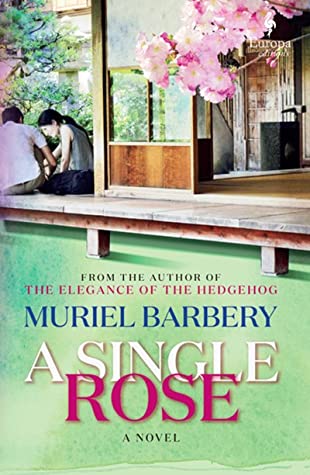
A Single Rose, by Muriel Barbery and translated from French by Alison Anderson

A Single Rose, by Muriel Barbery

I have fellow blogger Davida Chazan of Israel to thank for bringing this author and novella to my attention. She reviewed this book in her “The Chocolate Lady” blog post on September 14, 2021.

Ms. Barbery’s exquisite prose immediately immerses the reader in the beauty of Japan. It begins with a field of 1,000 peonies. Since the peony is one of my favorite flowers, I was hooked.

Rose is approaching her fortieth birthday when a lawyer summons her to Kyoto for the reading of her father’s will. She and her father have been estranged for many years, so Rose goes with many feelings of emptiness and foreboding.

However, her father has left an itinerary for his assistant to guide Rose through. The journey laid out by her father leads her to meet various people in his life and Rose comes to capture some of what she has missed out on due to the estrangement.

As Ms. Chazan wrote in her blog post (and I couldn’t have said it better,) the descriptive prose is written in a “sparse, yet extremely evocative style.”

I had to keep reminding myself that this was an English translation of a book originally written in French. I can’t read the original language, but it appears to me that the translator, Alison Anderson, did a meticulous job. The prose is extraordinary.

As with a few other books I wanted to read last month, I didn’t get to finish this one.

If you’d like to read Ms. Chazan’s full blogpost about this novella, here’s the link: https://tcl-bookreviews.com/2021/09/14/among-the-flowers-2/.


The Dictionary of Lost Words, by Pip Williams

The Dictionary of Lost Words, by Pip Williams

This historical novel is about the compilation of the first edition of the Oxford English Dictionary and how dictionaries have historically been compiled by men. I don’t mean to throw all men “under the bus,” but it is something to consider. Men determined which words should be included in dictionaries and men determined their meanings.

The Dictionary of Lost Words, by Pip Williams sheds light on how the Oxford English Dictionary was compiled around the turn of the 20th century by a handful of men who worked in a shed. Esme was a little girl who sat under their work table and gathered slips of paper the men let fall to the floor – sometimes on purpose and sometimes by accident. Esme started collecting those slips of paper – those words – in secret and hiding them in a box owned by her household’s bondsmaid.

The book follows Esme from early childhood through early adulthood as she decides to make her own dictionary – a dictionary of lost words.

Spending too much time reading other books meant I didn’t finish reading The Dictionary of Lost Words before it disappeared from my Kindle and went back to that great library in cyberspace.

Reviews I’ve read have pointed out that the first third of the book moves rather slowly. I agree with that, as we follow Esme day in and day out as she goes to the shed – called the Scriptorium – to sit under the table. She eventually is old enough to be trusted with running errands to a library and to the press. She wants to know how books are physically made but finds that this isn’t work girls are supposed to be interested in.

That notion connects directly to the overall message of the novel. It’s the belief by men 100 years ago that women just weren’t cut out to be interested in or have the mental ability to work in many occupations. What a waste over the thousands of years of history! It boggles the mind, and it infuriates me that there are people – both men and women – who still hold to those misguided beliefs.

Don’t get me started!


The Stranger in the Lifeboat, by Mitch Albom

The Stranger in the Lifeboat, by Mitch Albom

I’ve enjoyed several of Mitch Albom’s books, but this one just didn’t make sense to me. Perhaps I’m just dense. I just made it through the first couple of chapters.


Go Tell the Bees That I Am Gone, by Diana Gabaldon

Go Tell the Bees That I Am Gone, by Diana Gabaldon

Whether it’s due to my Chronic Fatigue Syndrome, my habit of trying to read too many books, the season of the year, or whatever… I just couldn’t read this 900-page novel. I love the Outlander series by Diana Gabaldon, but I had to throw in the towel after reading the first 200 pages of Go Tell the Bees That I Am Gone.

It was me, not the book. I tried listening to it on CD, but my hearing problems made it too difficult to follow the accents. I checked out the book from the public library and started over. I was really drawn in by the continuing story of Jamie and Claire, but my eyes started to rebel. Life is too short.

I guess I’ll have to wait until the TV series catches up with the book.


Call Us What We Carry, by Amanda Gorman

Call Us What We Carry, by Amanda Gorman

I admit I’m not a big poetry reader. I wanted to like this book of poetry by Amanda Gorman after being impressed with her at the Inauguration of President Joe Biden; however, I just couldn’t get into it on the written page.


Since my last blog post

I’ve attempted to organize myself week-by-week to get some projects completed in 2022. I’m a list maker, so doing such a thing gives me a sense of accomplishment. Now, if I can only stick to this plan….

A few months ago, I paid a few dollars for InfoStack 4.0. It includes many online writing classes and writing webinars. Over the weekend, I finally got around to listening to the 3.5-hour webinar about writing a book series. It was fantastic and now I’m brainstorming using my novel-in-progress as the second book in a series. I don’t know if I can pull this off, but I won’t know until I try.


Until my next blog post

I hope you have a good book to read. I’m giving When Ghosts Come Home, by Wiley Cash another chance. This time, it’s in large print. Also, I have Peter Frankopan’s The Silk Roads: A New History of the World from the library on my Kindle.

The risk of catching Covid-19 has me more or less hibernating again (or should I say still?) The pandemic seems to never end, but I believe better days lie ahead.

Janet

Some March Reading

I usually wait until the first Monday of the next month to blog about books I read this month, but I’ve read so many good books in March I decided to split them up between today’s blog and my April 2, 2018 blog post.

The Great Alone, by Kristin Hannah

After reading Kristin Hannah’s best-selling novel, The Nightingale, last year, I eagerly awaited the release of The Great Alone. What a masterpiece! I don’t want to spoil the story for you if you haven’t read it.

9780312577230
The Great Alone, by Kristin Hannah

I’ll just state the basic description – that it is the story of a troubled Vietnam War veteran and POW survivor who took his wife and daughter to Alaska to escape the craziness he saw in life in the lower 48 states.

Ill-prepared for life in the wilds of Alaska, things went from bad to worse for the family. Domestic abuse is a thread that weaves throughout the novel. Can love outlast the horrors this family lives with?

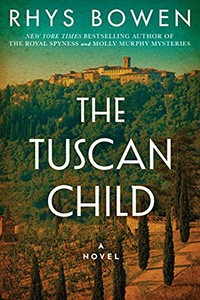
The Tuscan Child, by Rhys Bowen

This historical novel alternated between World War II and 1973. After the death of her father, 25-year-old Joanna travels from London to a remote village in Tuscany where her father’s fighter plane was shot down in 1944.

tuscanchild-200
The Tuscan Child, by Rhys Bowen

Since her father’s death, Joanna has found an undeliverable and returned-to-send letter he wrote to an Italian woman named Sofia. In the letter, he references “our beautiful baby boy” who is hidden away where no one but he and Sofia can find him.

Joanna had no knowledge of this woman named Sofia until discovering the letter in her father’s belongings after his death. Who was Sofia, and is “our beautiful baby boy” a half-brother Joanna knows nothing about?

White Chrysanthemum, by Mary Lynn Bracht

This historical novel was a difficult read for me because the subject matter was so bleak, violent, and sad; however, I’m glad I read it. I learned a great deal of history.

9780735214439
White Chrysanthemum, by Mary Lynn Bracht

White Chrysanthemum is about man’s inhumanity to man – or more specifically, man’s inhumanity to woman. The novel was inspired by the plight of Korean girls and young women who were abducted by the occupying Japanese soldiers during World War II. The girls and young women were physically- and sexually-abused and were forced to be “comfort women” for the Japanese soldiers.

This is also a story of the human spirit and what it is able to endure due to the innate will to live. It is also about the love two sisters share for each other and how they long to be reunited.

It is not for the faint of heart, but I recommend it to anyone who wants to have a better understanding of the early- to mid-20th century history of Korean-Japanese relations. As recently as 2015, the treatment of Korean girls and women by Japanese soldiers from the late 1930s through the Second World War was being swept under the rug.

In 2015, the governments of Japan and South Korea agreed “to remove the Statue of Peace [in Seoul] and never speak of the ‘comfort women’ again” according to the timeline in the back of Mary Lynn Bracht’s book. Thanks to her novel, a whole new generation will learn about his piece of history.

The Nordic Theory of Everything: In Search of a Better Life, by Anu Partanen

I checked this book out because the title intrigued me. The author grew up in Finland but moved to the USA as a young adult. This book is her perspective on the social and governmental differences between the two countries.

NordicTheoryofEverything-bookimage
The Nordic Theory of Everything: In Search of a Better Life, by Anu Partanen

The prologue was interesting in that Ms. Partanen expressed her surprise in finding that Americans are less free and independent than the people of her home country. Her opinion is that

  1. the fact that most Americans’ health care is dependent upon their employer, we in the USA are tied to our jobs;
  2. Americans are sometimes forced to stay in unhappy marriages because the income tax laws are written to reward couples filing jointly;
  3. the tax laws in America encourage young adults to depend upon their parents for paying for college and supporting them financially in other ways past the age of 18; and
  4. the policies of the US government saddle parents with too much expense in the raising of children and saddle too many middle-age adults with the financial burden of caring for their elderly parents.


Ms. Partanen boiled all this down to what she calls The Nordic Theory of Love.

My brief summary doesn’t do justice to this 450-page book, but maybe I have piqued your interest. I enjoyed a couple of days’ break from reading depressing World War II novels, but about halfway through Ms. Partanen’s book I decided I’d rather read fiction. Some short stories and novels were vying for my attention.

Since my last blog post

I’ve worked on letters to send to 40 bookstores to encourage them to place spring orders for my 2014 vintage postcard book, The Blue Ridge Mountains of North Carolina, I’ve done a lot of reading, and I’ve studied book marketing and writing in deep point-of-view.

Until my next blog post

If you haven’t already signed up for my sometime-in-the-future newsletters, please fill out the form below.

I hope you have a good book to read. I’m reading A Piece of the World, by Christina Baker Kline. Perhaps you’ll want to read one of the books I wrote about today.

If you’re a writer, I hope you have quality writing time.

Janet

Go back

Your message has been sent

Warning
Warning
Warning
Warning
Warning

Warning.