#OnThisDay: 19th Amendment, 1920

I have heard it said that the 19th Amendment “gave” women the right to vote. The verb “gave” or “gives” is a slap in the face of all the women (and men) who risked their lives to have the right to vote.
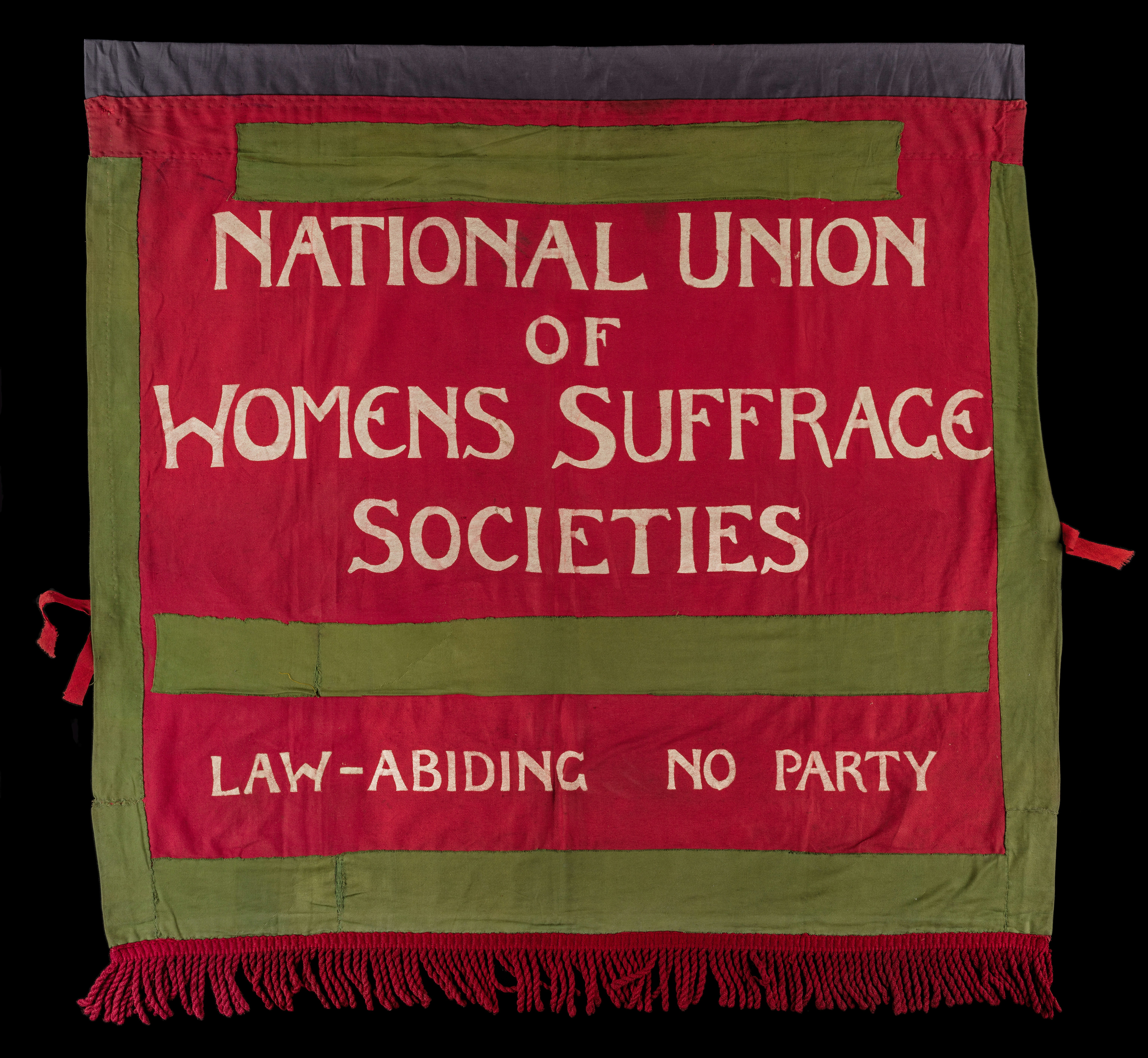
Photo by LSE Library on Unsplash

It would be tantamount to saying that black people in the United States were “given” civil rights in the 1960s. No, they earned every one of those rights. The word “give” in all its tenses and forms insinuates that rights were bestowed as a gift. Nothing could be further from the truth.

In July, I read an excellent little book, Roses and Radicals: The Epic Story of How American Women Won the Right to Vote, by Susan Zimet. I told you a little bit about it in my August 4, 2026 blog post, Books I read (or attempted to read) in July 2026. I urge you to read that book.

Photo of front cover of Roses and Radicals with the head of the Statue of Liberty under the title.
Roses and Radicals, by Susan Zimet

The road to women securing the right to vote in the United States started before the nation’s founding. In 1776, Abigail Adams famously told her husband, John Adams, to “remember the ladies” as the Declaration of Independence was being contemplated and written.

Of course, John Adams did not take her pleas to heart (and probably paid for his foolishness in various ways for the rest of his life.) The Declaration of Independence states that “all men were created equal.” Today, we (well, most of us) take that to mean “all people were created equal,” but women were technically and deliberately left out of the Declaration. But I digress

As is told in Roses and Radicals, it took women down a very long and winding road to secure the right to vote. There were women’s rights conventions and campaigns throughout the decades from 1840 until the 19th Amendment was finally made part of the U.S. Constitution in 1920.

Women were beaten and arrested for marching in the streets and simply for standing beside streets to protest the lawful discrimination that was holding them back from being all they could be. They had to fight for education, not just the right to vote.

That story cannot be condensed into a blog post. There’s just too much history – too much history that was never included in a single history textbook I ever read – for me to do it justice here.

It is an unbelievable story, akin to the story of how many centuries it took for people of color to get rights equal to their white counterparts in the United States. There is still racial discrimination that flies under the radar of the law. We see it every day. We also still see blatant racism in Trump wanting to plaster his name (no doubt, in giant gold letters) on the aircraft carrier that was already designated to be named in honor of World War II hero Mr. Doris Miller. Mr. Miller just happened to be black. His story of heroism during the Japanese attack on Pearl Harbor is extraordinary. Trump, on the other hand, dodged the draft because he claimed to have bone spurs.

Back to the 19th Amendment…

Those of us born after 1920 cannot fully appreciate the sacrifices made by women (and by people of color) to try to get the right to vote in this country.
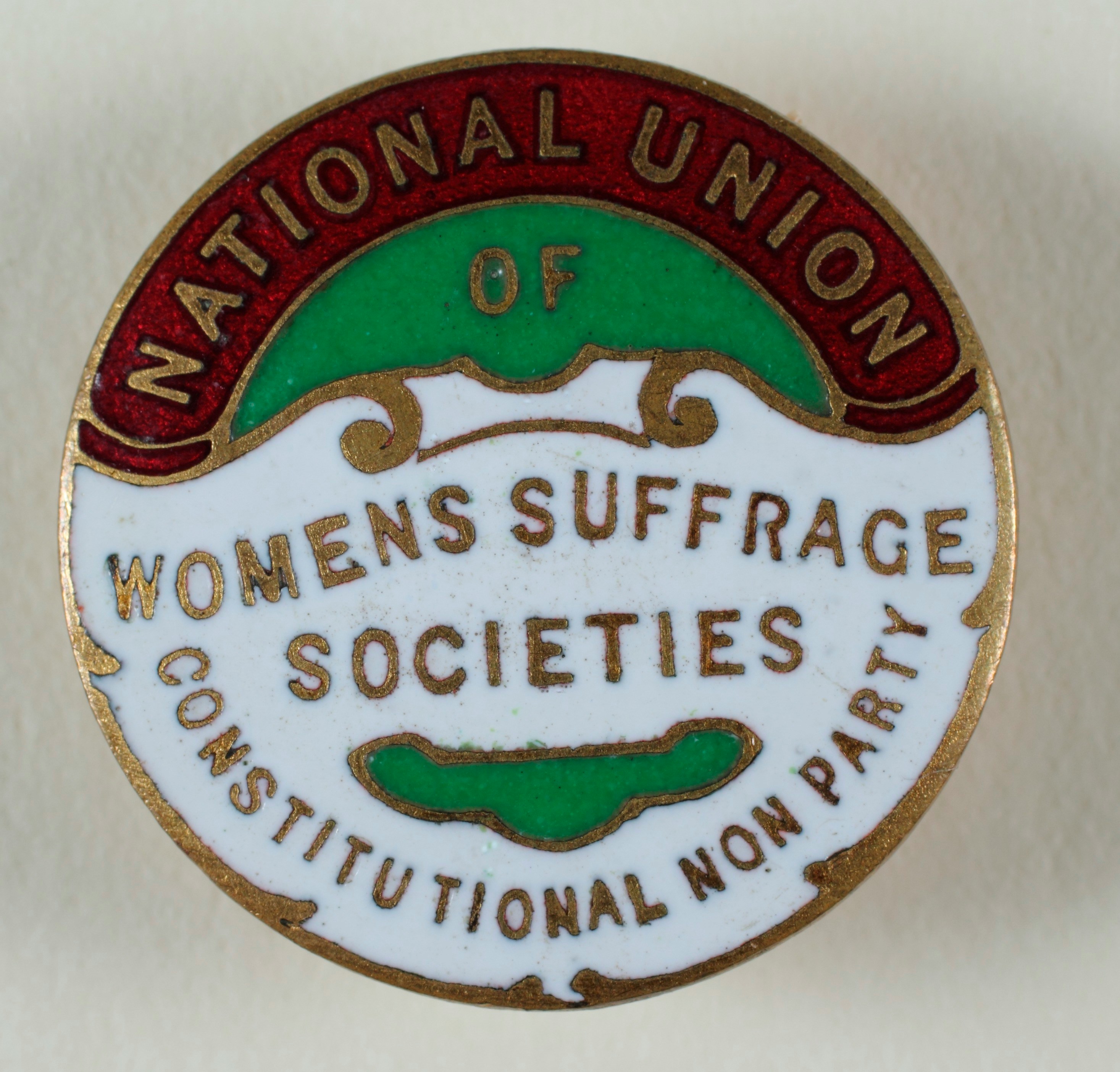
Photo by LSE Library on Unsplash

It astounds me to think that when my mother was born in 1912, women did not have the right to vote! The 19th Amendment to the U.S. Constitution was not ratified until 1920. That’s just 33 years before I was born! I simply cannot get my head around that fact. To put that 33 years in perspective, 33 years ago today it was 1993!

And now, in 2026 in the U.S. we have people in positions of power, including the U.S. President, who are pushing for a so-called SAVE America Act which will make it more difficult for married women in our country to vote. It goes well beyond “voter ID.” A married woman – or anyone whose name today does not match their birth certificate – will be required to produce documentation of every name change they’ve had.

This is primarily targeting married women, regardless of what supporters of the Act claim. It is an alleged solution to a problem that does not exist: voter fraud.

Don’t be fooled! The real crime is voter suppression.

Janet

Never take your right to vote for granted!

Books I Read in March 2026 & National Literature Month

April is National Literature Month in the United States. Maybe I’ll get to read more books this month than I did in March of any of the recent previous months. Writing this blog almost every day along with other things pressing on my time and energy have left little time for reading for pleasure.

In the more than ten years that I’ve been blogging, I have traditionally blogged on the first Monday or around the first day of the month about the books I read the previous month. That has not been the case over the last year or so, but maybe I will get back into that rhythm this year… or eventually. I miss having time to read.

Photo by Susan Q Yin on Unsplash

I read one very small book and part of another book in March. Perhaps what I have to say about them will giver you the incentive to read them.

The Greatest Sentence Ever Written, by Walter Isaacson, is a tiny book with great importance during our country’s 250th birthday this year. Walter Isaacson has done extensive research and written many books about individuals who played instrumental roles in the formation of the United States. It was only natural for him to write a book about the second sentence of the Declaration of Independence:

“We hold these truths to be self-evident, that all men are created equal, that they are endowed by their Creator with certain unalienable Rights, that among these are Life, Liberty and the pursuit of Happiness.”

Isaacson takes that sentence and breaks it down by word and phrase to address their meanings and how those particular words made it into the final draft of the Declaration of Independence.

He states in the first chapter, that “We the people” “is as profound as it is simple. Our governance is based not on the divine right of kings or the power imposed by emperors and conquerors. It is based on a compact, a social contract, that we the people have entered into.”

That early sentence in the chapter titled, “We,” sets the tone for the 67-page book. “We the people” is also the opening phrase in the United States Constitution.

Being a wordsmith of sorts and a political science major in college, I especially enjoyed how Isaacson brought in details about Benjamin Franklin’s input and editing recommendations of Thomas Jefferson’s early drafts of the Declaration of Independence. Both men were learned and very specific in word choice.

Both men were well-read and students of philosophy. They drew on the theories they had read about humanity and governance.

For instance, Jefferson had written “sacred and undeniable” but Franklin insisted that “self-evident” was a more accurate description of our rights. Franklin had become a close acquaintance of Scottish philosopher David Hume. Hume’s theory, known as “Hume’s fork” maintained that there are two types of truths. One is dependent upon empirical evidence and observations (such as, New York is bigger than Philadelphia), while the other type of truth is just true. Such truths are not contingent upon physical evidence or observations. An example is “All bachelors are unmarried.”

Franklin held that our rights are self-evident. They are not based on information that must be gathered and analyzed.

Another interesting tidbit was that Jefferson wrote that we are endowed by our Creator with certain “inalienable rights,” but when John Adams copied from Jefferson’s document, he changed “inalienable” to “unalienable” and that’s the way it was approved on July 4, 1776. No wonder I get confused sometimes over which word ended up in the document!

There is really no difference between “inalienable” and “unalienable.” Perhaps it was a case of personal preference… or an error in copying.

A book that I started reading for book club in March was Where the Rivers Merge, by Mary Alice Monroe. Time ran out, as it often does, and I did not finish reading it before the club met for discussion on March 22. I hope to read it in its entirety before the book club reads its sequel perhaps in 2027. The sequel has not been published, but book club members said it is being written.

Mary Alice Monroe knows the ACE (Ashepoo, Combahee and Edisto) Basin area of coastal South Carolina very well. The story in Where the Rivers Merge is anchored in that location and it is a deep love and respect for that physical environment that is the heart of this book about a family whose members have varying degrees of appreciation for the place and differing ideas about its worth.

The ACE Basin is a large undeveloped estuary in Colleton, Charles, and Beaufort counties in South Carolina on the Atlantic coast. In addition to being an author, Ms. Monroe is very interested in conservation and the environment.

Happy reading during this National Literature Month!

Janet

The government should be afraid of its citizens, not the other way around.

9 Little-Known Facts about the Declaration of Independence

Since Independence Day in the United States falls on a Monday this year, I thought it only fitting to blog about it today. Next Monday, I’ll do my usual first-Monday-of-the-month blog about the books I read the previous month.

In an effort to take a slightly different approach to today’s topic, I decided to write about a few of the little-known facts about the Declaration of Independence.

Photo credit: Tim Mossholder on unsplash.com

1. The Declaration of Independence wasn’t signed on July 4, 1776. The Second Continental Congress voted on it on July 4, but it would be August 2 before most delegates signed it. One reason for the delay was that it took two weeks for the document to be written in a clear handwriting on a piece of parchment.

2. Five men – including Thomas Jefferson, John Adams, and Benjamin Franklin — were given the task of overseeing the reproduction of the document. The copies were printed by John Dunlap in his Philadelphia print shop and distributed to each of the 13 American colonies. Of the perhaps hundreds of copies printed at that time, only 26 remain.

3. When a copy of the Declaration of Independence reach New York City, George Washington read it aloud from in front of City Hall. That was on July 9. Before the day was over, a riot of sorts broke out and resulted in the tearing down of a statue of King George III. (That 4,000-pound statue was sent up the East River before British troops in New York harbor could stop them. It was eventually melted down and turned into 42,000 musket balls for the Continental Army.)

4. Richard Stockton, one of the Declaration signers from New Jersey, was captured by the British on November 30, 1776. For months, he was mistreated and nearly starved until he broke down and recanted. He swore his allegiance to King George III and was subsequently released. (He took an oath of loyalty to New Jersey in December 1777.)

5. In 1989, a man in Philadelphia purchased a picture frame for $4.00 at a flea market. Much to his surprise, in the back of the frame was an original John Dunlap Broadside of the Declaration of Independence! It was sold to TV producer Norman Lear in 2000 for $8.1 million.

6. In 2009, an original John Dunlap copy of the Declaration was found in a box of papers the British captured from the Americans during the Revolutionary War. It has since found a home at the National Archives in Washington, DC.

7. Just two or three weeks after the Japanese attack on Pearl Harbor on December 7, 1941, the Declaration of Independence and the United States Constitution were moved from the National Archives in Washington, DC to Fort Knox in Kentucky. The Declaration was encased in 150 pounds of protective material to ensure its transport by train from Washington to St. Louis. From St. Louis, it was taken by the 13th Armored Division of the U.S. Army to Fort Knox. Those documents were returned to the National Archives late in 1944.

8. Two signers of the Declaration of Independence were just 26 years old. They were Thomas Lynch, Jr. and Edward Rutledge, both of South Carolina.

9. The University of Virginia owns two rare copies of an early printing of the Declaration of Independence. One of those possibly belonged to George Washington. After Washington died in 1799, Tobias Lear (I wonder if he’s an ancestor of Norman Lear?) who was a personal secretary of Washington’s in his later years, is thought to have stolen some of Mr. Washington’s papers.


On this 4th of July, I wish all Americans at home and abroad a Happy Independence Day! On this 246th anniversary of the creation of the Declaration of Independence, this experiment in democracy is under attack from within the nation.

The Declaration of Independence and the U.S. Constitution held fast and survived the attempted coup on January 6, 2021, but there are those within our country’s borders who still believe “the big lie.” They proved on January 6, 2021 that they are willing to trample on the very ideals and human rights verbalized in those documents. Democracy is far more fragile than any of us realized until that infamous day.

The men who signed the Declaration of Independence (and the women in their families!) were willing to risk their reputations, their earthly possessions, and their very lives. The least we can do 246 years later is to stand up against our country’s enemies – both foreign and domestic — by letting our voices be heard in the public arena and, most importantly, at the polls.

Be sure to vote in all elections. You owe it to future generations. Otherwise, they might not have the luxury of voting, and July 4 could just become an insignificant average day for them. Don’t let that happen.

Happy 4th of July!

Photo credit: Jim Strasma on unsplash.com

Janet

P.S.   Remember the people of Ukraine and the people of Uvalde, Texas.