
It was on April 6, 1917, that the United States entered World War I. As with World War II, the United States was slow to enter the fray. The war had begun in the summer of 1914. By the time the war ended in 1919, 28 nations on five continents were involved. The United States tried to remain neutral.
In my blog post today, I offer a condensed and simplified explanation of the timing and reasons why the United States eventually got involved in World War I.
When the war broke out in Europe, President Woodrow Wilson asked Americans to be “impartial in thought as well as action.” That was not easy for the 32 million Americans who were born in Europe or were first-generation children of immigrants.
Neutrality gave the United States an economic advantage as it could continue to trade with countries on both sides of the war. But as time progressed, a naval blockade of the North Atlantic by Great Britain and Germany’s retaliation with submarines made trade increasingly difficult.
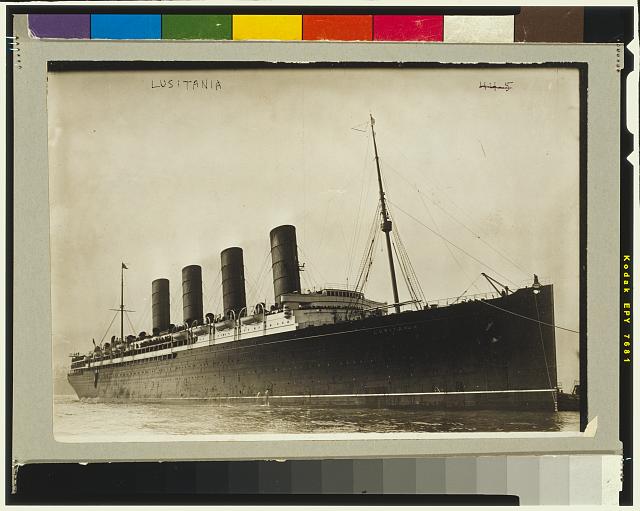
On May 7, 1915, Germany torpedoed the British Cunard ocean liner Lusitania, and 128 American passengers were killed. Germany promised to stop putting Americans in harm’s way on the seas to try to gain America’s favor. The Sussex Pledge, made in May 1916 after Germany torpedoed the French ship Sussex on March 24, 1916, injuring several Americans, held for a while.
President Wilson tried to broker peace negotiations in 1915 and 1916, to no avail, as he proposed “peace without victory.” On January 31, 1917, Germany announced it was renewing total submarine warfare against merchant shipping around Great Britain and in the Mediterranean Sea. Germany thought this would bring the defeat of Great Britain and its Allies before the United States could respond.
Wilson, however, used a 1797 statute that allowed the U.S. President to arm the merchant fleet.
The last straw for the United States was when British intelligence intercepted a message, which became known as the Zimmerman note, in which German foreign secretary Arthur Zimmerman proposed that Mexico should join Germany if the United States joined the war on the side of the Allies.
The deal Germany offered Mexico was that it would help Mexico regain what had become New Mexico, Texas, and Arizona in the United States! The Zimmerman Note also suggested that Japan should join Germany and the Central Powers in the war.
President Wilson called on Congress to convene in a special session on April 2, 1917. The House of Representatives approved a resolution to enter the war on April 4, and the Senate followed suit on April 6, thus entering the United States into World War I on the side of Great Britain and the Allies.
Let this be a history lesson for leaders within the government of the United States of America for how, step-by-step, world wars begin.
Hurricane Helene Recovery Update
It has been a month or so since I gave an update on Hurricane Helene recovery in North Carolina. Yes, even though that hurricane blasted through the mountains in western North Carolina more than 18 months ago, recovery continues.
NC Landslide Mapping: WCNC TV Channel 36 in Charlotte did a news segment on March 9, 2026 about NC Landslide Mapping. This is an early warning system for landslide alerts. In 2011, due to state budget restraints, the program was stopped. Although restarted in 2018, some counties in the mountainous western part of NC are not mapped.
The remaining counties need to be mapped and the counties already done need to be updated since the numerous landslides due to Hurricane Helene. Geologists map prior landslides because prior landslides predict future landslides – not when they will happen, but that they will happen. People can look at the data to help them make more informed decisions before purchasing land. NC will have a Landslide Awareness Week this summer.
Lake Lure, NC: During Hurricane Helene, Lake Lure (the lake itself, from which the Town of Lake Lure takes its name) was filled with storm debris. The recovery process has been overwhelming and tedious, but 18 months after the historic flooding caused by Helene, the lake is on the verge of reopening. Quoting from The Town of Lake Lure Facebook page from March 25, 2026: “The Town of Lake Lure, NC is pleased to report that the lake level has reached approximately 986.2 feet Mean Sea Level (MSL)—just 4.3 feet below full pond (990.5 MSL). These photos highlight the steady progression of refilling the lake, captured from the east edge of Morse Park facing the main channel.

“Crews from the North Carolina State Mission Assigned Recovery Task (SMART) Program continue working around the lake, removing remaining debris and helping restore the shoreline. To date, they have cleared more than 800 cubic yards of debris, and their efforts are ongoing.
“Additionally, work is taking place at the Washburn Marina – rebuilding the floating boardwalk and marina docks, constructing the marina tour boat docks, and fueling station, and building a new marina building to serve the public.
“These final steps mark meaningful progress as we move closer to reopening Lake Lure.”
US-64: On March 31, it was reported that one lane of US-64 is now open between Chimney Rock and Bat Cave, NC. It is hoped that the new highway, much of which had to literally be rebuilt along a new route after Hurricane Helene’s record-setting rainfall moved the Rocky Broad River, will be open by Memorial Day.
Restoration of The Blue Ridge Parkway in North Carolina continues, with completion scheduled for late in 2026. Heavy construction equipment will be traveling on open sections of the Parkway between US-70 at Asheville (Milepost 382.5) and Mount Mitchell State Park (NC-128 at Milepost 355.3) to access landslide repair locations beginning today, April 6, 2026. Motorists should expect delays behind slow-moving heavy construction vehicles.
Visitors to hiking trails along the Parkway are advised to continue to use caution as all restoration work has not been completed.
Rebuilding of Interstate 40: It goes without saying that the rebuilding of I-40 in North Carolina in the Pigeon River Gorge just east of the Tennessee line is an ongoing project of massive proportions. Portions of the highway collapsed, and some sections completely disappeared during Hurricane Helene in September 2024. Since March 1, 2025, there is just one lane open in each direction with a speed limit of 35 miles per hour. The latest estimates I’ve heard indicate completion of the project in late 2028.
Janet
The government should be afraid of its citizens, not the other way around.

 Janet's Writing Blog