I write southern historical fiction, local history, and I've written a devotional book. The two novels I'm writing are set in Virginia and the Carolinas in the 1760s. My weekly blog started out to follow my journey as a writer and a reader, but in 2025 it has been greatly expanded to include current events and politics in the United States as I see our democracy under attack from within. The political science major in me cannot sit idly by and remain silent.
Just when we thought things couldn’t get worse…. last Friday morning came along.
Around midnight last Thursday night, Trump posted photos of former President Barack Obama and former First Lady Michelle Obama on his Truth Social (an oxymoron if there ever was one!) page with their heads superimposed on the bodies of apes.
I’m white, but even I recognize that dog whistle!
Before you Trump worshippers start attacking me, I know it is possible that Trump himself did not post that abhorrent photo on the Truth Social account that bears his name; however, he is ultimately responsible for everything that is posted on said account. Period. Full stop. No ifs, ands, or buts. He is responsible even though he will never own up to any of his responsibilities.
We’ve been subjected to various explanations from Trump and his highly-paid, snarky staff. We’ve been told he didn’t see it. We’ve been told it was funny. Karoline Leavitt, Trump’s spokesperson was so entertained by the incident that she could hardly control her giggles while pointing out that there was nothing wrong with it… it was all from “The Lion King”… and, after all, former Vice President Kamala Harris was portrayed as a turtle. The Vice President Kamala Harris tidbit offered by Ms. Leavitt was supposed to make us feel better?
It’s beside the point that there weren’t any apes in “The Lion King.” I really wish everyone associated with the making of “The Lion King” would sue Trump for copyright infringement. He loves lawsuits.
We were told that it was all just in good fun… that Trump was the King of the Jungle and all Democrats are supposed to bow down to him because we are lesser animals.
We were told that an unnamed member of Trump’s staff “accidentally posted” the picture of the Obamas as apes. How does one “accidentally” post something on the social media account of the President of the United States?
How does one “accidentally” post photographs of former President Barack Obama and former First Lady Michelle Obama portrayed as apes… well… anywhere? Did the unnamed Trump staffer accidentally create the image? Did he or she accidentally come across it while looking for disrespectful fake images of our black former President and First Lady?
Trump said he will not apologize because, “I didn’t make a mistake.”
I beg to differ. Did he not make a mistake when he hired the staffer who has permission to post on the president’s social media account? Did he not make mistake when he gave another human being permission to post to his social media account?
We were told that no harm was done, because it only took the White House staff 12 hours to remove the post. We are supposed to believe that no one working in the White House can figure out how to take down a social media post in less than 12 hours?
No, my friends. All of us are not stupid. All of us did not vote for this. All of us are not all right with this blatant display of racism.
Forget about the fact that the posting of this image was extremely childish. Forget the claim that it was all in good fun. Forget the claim that the rest of the post was serious and truthful.
When you get right down to it, this was nothing but blatant racism put on a social media platform for all the world to see, and there was absolutely nothing accidental about it.
If you can excuse any part of this horrific display of hate, then you are part of the problem. Go ahead and circle the Republican wagons. Go ahead and claim that somehow this makes America Great Again. You are only fooling yourself.
I hope I live long enough to see the day when this sham of a presidential administration is over. I hope I will be here to help pick up the pieces and reinstate the Constitution of the United States of America. I hope I live long enough to see evangelical Christians have a Paul on the Road to Damascus conversion experience and accept the fact that there is nothing Christian about this President whom they adore.
I am sick and tired of the excuses Trump’s followers and supporters give us no matter what he says or does. I’m beyond sick and tired of seeing his staff members wearing cross necklaces when the truth is not in them.
I’m sick and tired of everything about Donald Trump and his ilk.
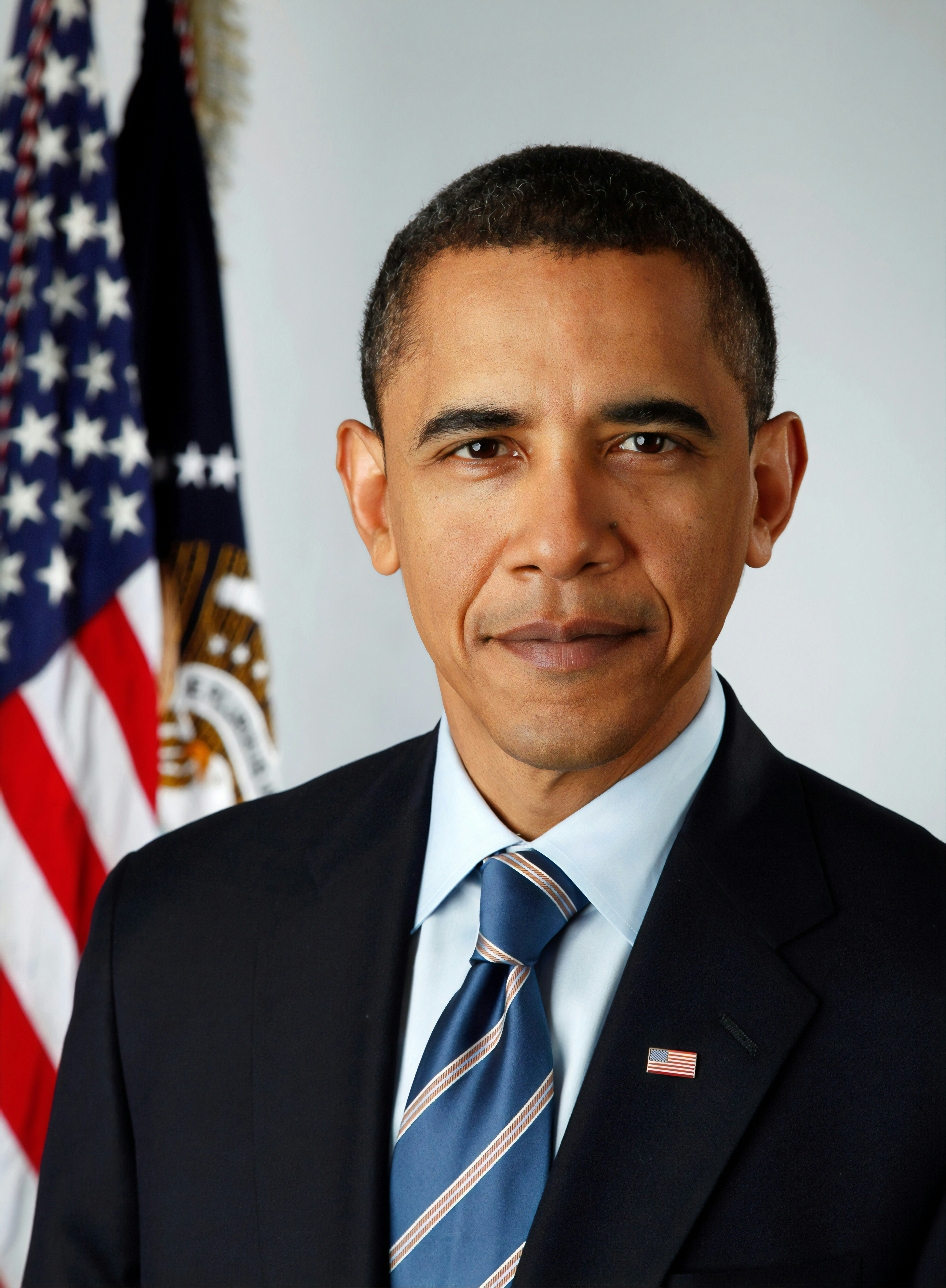
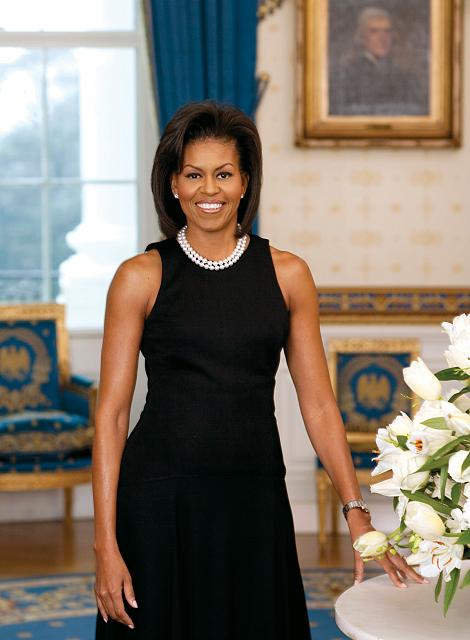
This is what real class and integrity (two things Donald Trump will never have!) look like:
Former U.S. President Barack Obama Photo credit: Library of Congress
Former U.S. First Lady Michelle Obama Photo credit: Library of Congress
Janet
The government should be afraid of its citizens, not the other way around
I would love to rant about the 90,000-square-foot $200 million gold ballroom that is to replace the East Wing of the White House beginning in September, but I won’t chase that rabbit today. I had already planned to write about artificial intelligence (AI) and copyright infringement today.
Photo by Igor Omilaev on Unsplash
I hate to have to “beat a dead horse,” as the saying goes, but AI is on my mind. I’m just a novice author, but this hits home.
What could Mark Twain possibly have to do with AI? Trust me. I’ll get to that.
I’m just small potatoes in the big scheme of things in the publishing industry, but even some of the most famous authors are being taken advantage of my AI.
David Baldacci
I will mention David Baldacci as an example. Many of you are, no doubt, fans of his novels.
Baldacci has testified before a Congressional committee because even he has been victimized by AI.
You can tout the wonders and benefits of AI all day long, but when it steals your intellectual property, you might change your tune.
Baldacci said to that Congressional committee, “I truly felt like someone had backed up a truck to my imagination and stolen everything I’d ever created.”
Along comes the U.S. Department of Homeland Security
The Trump Administration has a long track record of using intellectual property without the creator’s permission. They use music without permission and First Lady Melania Trump gave a speech that was almost verbatim a speech First Lady Michelle Obama had given.
The latest incident occurred on July 1, 2025, when the U.S. Department of Homeland Security posted a painting by the late Christian artist, Thomas Kinkade on X without his estate’s permission.
The Kinkade Family Foundation has asked Homeland Security to take the image down from X.
Furthermore, his estate says, “At The Kinkade Family Foundation, we strongly condemn the sentiment expressed in the post and the deplorable actions that DHS continues to carry out,” Kinkade’s family wrote, “Like many of you, we were deeply troubled to see this image used to promote division and xenophobia associated with the ideals of DHS, as this is antithetical to our mission.”
When will the Trump Administration learn that everything in the world does not belong to them?
Pending AI Court Cases
As of July 25, 2025, there were 29 “literary works” ongoing cases before the federal courts. Other AI cases before the federal courts were 11 “visual works” cases, five “musical works” cases, three “sound recording” cases, one “audiovisual” case, and one “computer program” case about copyright infringement.
Wise words on the subject from Mark Twain
You might be asking, “How could Mark Twain have said anything about AI?”
Artificial Intelligence was pure science fiction in Mark Twain’s day – if it was even fanaticized at all, but he said something about a machine writing a story. It precisely captures my feelings about AI and literature.
Photo of Samuel Clemmons (a.k.a. Mark Twain) from Library of Congress
I just happened to be reading “How to Tell a Story,” by Mark Twain Tuesday afternoon. (Disclaimer: Mark Twain has been one of my favorite authors since I was in elementary school.)
The point of Twain’s essay is the oral telling of a story and not the writing of one, but I think his main point applies perfectly to the conflict in 2025 between the creative writing by a human and the collection of words generated by AI.
Twain begins this essay with the words, “I do not claim that I can tell a story as it ought to be told. I only claim to know how a story ought to be told, for I have been almost daily in the company of the most expert story-tellers for many years.”
He goes on to say that there are various kinds of stories but the only one that is difficult to write or tell is the humorous one. He maintains that, “The humorous story is American, the comic story is English, the witty story is French. The humorous story depends for its effect upon the manner of the telling; the comic story and the witty story upon the matter.”
Twain explains that the humorous story meanders before getting to the point and, in fact, might have no point other than to entertain. On the other hand, he says the comic and witty stories “must be brief and end with a point.”
He says, “The humorous story is strictly a work of art – high and delicate art – and only an artist can tell it; but no art is necessary in telling the comic and the witty story; anybody can do it. The art of telling a humorous story – understand, I mean by word of mouth, not print – was created in America, and has remained at home.”
I won’t go into Twain’s detailed description of how a humorous story is told, for that would take you down a rabbit hole and distract you from the point of my blog post.
Suffice it to say that Twain claims that an American storyteller meanders and gives the impression that he or she is not even aware that the story is funny, while the teller of the comic or witty story across the pond not only tells the audience in the beginning that they are going to tell a comic or witty story but also starts to laugh at the punch line before they even reach it. Twain says, “It is a pathetic thing to see.”
In “How to Tell a Story,” Twain relates a story about a wounded soldier. First, he presents it in the straight forward way the story teller in England, France, Germany, or Italy would tell it.
Then, he tells it like someone in America would tell it in a simple and innocent yet sincere way by going off track and possibly adding details that were not in the original or are not necessary to the story.
Twain says, “This is art and fine and beautiful, and only a master can compass it; but a machine could tell the other story.”
Until my next blog post
I hope you have a good book to read.
Remember the people of Ukraine, the starving children in Gaza, and the people in western North Carolina who are still recovering from Hurricane Helene.
April was a busy month, but I found time to read a variety of books. As is my habit, I’ll take the opportunity of the first Monday in May to blog about what I read in April. I hope you’ll find a book or two of interest.
Time’s Undoing, by Cheryl A. Head
Time’s Undoing, by Cheryl A. Head
This new novel alternates between the mysterious death of Robert Lee Harrington in 1929 and his journalist great-granddaughter’s persistent search for answers in 2019. I don’t usually enjoy novels written in alternating timelines, but this one worked.
Mr. Harrington is a master craftsman in carpentry in Birmingham, Alabama in 1929. A Black man, he is seen as too flamboyant by the white population. He takes pride in his work and his nice car. He presses his luck and, when he is in the wrong place at the wrong time, things go terribly wrong.
Harrington’s great-granddaughter, Meghan McKenzie, comes along 90 years later. She’s a reporter for the Detroit Free Press. In conjunction with working on a Black Lives Matter report, Ms. McKenzie decides to go to Birmingham to try to uncover the details of her great-grandfather’s death.
The danger McKenzie is in escalates the closer she gets to the ugly truth.
To be honest, I bristled two or three times when McKenzie made blanket statements about white southerners. I was, in fact, tempted early on to stop reading the book; however, I’m glad I stuck with it. Perspective is everything, and I can’t expect the young black reporter from Detroit to see things the way I do.
In fact, it would be unrealistic. I think it’s human nature for us to make blanket statements about people who don’t look like we look or who live in different regions (or countries) from where we live. Assumptions are made about the South and white southerners. Likewise, southerners make assumptions about people who live in other parts of the country.
The deeper I got into the novel, the more I was drawn into the characters and the story. I’m not a fast reader, but I read the second half of the book in two days because I couldn’t wait to see what McKenzie would find out and if she would survive to tell her great-grandfather’s story.
Code Name Sapphire, by Pam Jenoff
Code Name Sapphire, by Pam Jenoff
In this historical novel, Pam Jenoff pulls bits and pieces from World War II history in Europe and weaves a story that will keep you on the edge3 of your seat.
Micheline heads the fictitious Sapphire Line in the resistance in Belgium. The network, whose mission is to get downed Allied airmen safely o9ut of German-occupied Belgium, is loosely based on or inspired by such real operations as the Comet Line.
Micheline’s brother, Matteo, is heavily involved in the Sapphire Line. He is still in love with a woman from his past. Will they reconnect even during the war?
Hannah is a Jew who escaped from Nazi-occupied Belgium once, but the ship she is on with other refugees is turned away from the harbor in Havana. Is she returned to Belgium? Does she work with the Sapphire Line? Does she make Matteo forget about his long-lost love?
Lily is Hannah’s cousin. Lily is the only family Hannah has to turn to for help while she tries to figure out how to escape to America.
But, as in all good fiction, nothing goes as planned. Everything that can go wrong seems to go wrong.
Who will betray friends or relatives? Who will survive? You just might be surprised!
The Last Carolina Girl, by Meagan Church
The Last Carolina Girl, by Meagan Church
The author of this novel is an editor I found last October on Reedsy.com. Being from North Carolina, the title grabbed my attention. I pre-ordered the book to help support this author. The book was released on March 7, 2023, but I didn’t get a chance to read it until April.
(Rule #1 for supporting a new book: Review it as soon as it is released to boost sales and attention for the book. The first 30 days after a book’s release is the most important time to support it and its author as far as the Amazon algorithms are concerned.) My apologies to Meagan Church for missing this window of opportunity. I really need to do better.
Back to the book… Leah Payne is a 14-year-old orphan from Supply in Brunswick County, North Carolina. The neighborhood couple who take her in try to do the best thing for her… or do they? Arrangements are made and she is taken to Matthews in Mecklenburg County, North Carolina. She dreams of a foster family there who will love her, perhaps even provide for her a bed and bedroom of her own.
But when she arrives in Matthews in 1936, she doesn’t receive the welcome she is expecting.
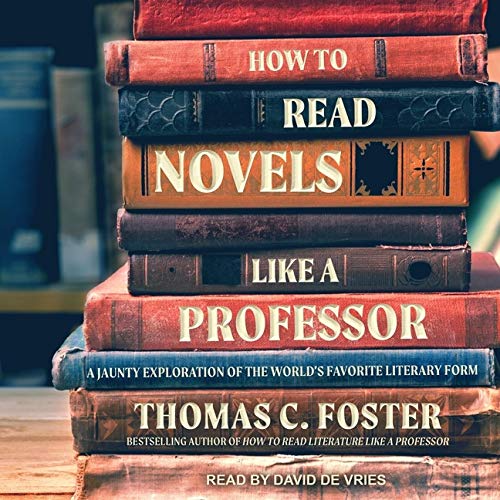
How to Read Novels Like a Professor: A Jaunty Exploration of the World’s Favorite Literary Form, by Thomas C. Foster
How to Read Novels Like a Professor, by Thomas C. Foster
The title intrigued me. As I read the first four chapters, I took some notes. There were a number of succinct statements about writing.
There was insight about how important the first sentence, first page, and first chapter are if an author wants to snag the interest of a reader.
The author set forth some humorous “laws” of writing, including “The Law of Bogus Locales,” “The Law of Look Who’s Talking,” and “The Law of Narrative Unreliability.”
Another example is “The Law of the Conservation of Character” which the author explained as “Thou shalt not burden the punter with needless character development.” He went on to translate that as follows: “If fiction writers are any good, they only tell you as much as you absolutely need to know.”
By the time I’d read the first half of the book, I found myself skipping pages. I decided it’s just possible that I don’t want to read novels like a professor. I want to read them as a reader.
The Light We Carry: Overcoming in Uncertain Times, by Michelle Obama
The Light We Carry, by Michelle Obama
I listened to this book on CD. It was read by the author, which made it extra enjoyable. This is a book of common sense and encouragement. Mrs. Obama talks about her childhood and how her parents instilled in her and her brother the merit in hard work and the value of a dollar. They instilled in the two children the value of standing up for yourself and your beliefs. She talks about the value of friendships and family. Those are the important things in life. She talks about always trying her best and often being criticized and misconstrued.
People who don’t approve of President and Mrs. Obama probably wouldn’t like this book, but they probably wouldn’t bother to read it. That would be their loss. I found the content of the book to be honest and uplifting. Hearing Mrs. Obama read it herself was a bonus.
Other books I read in April
I read Natural Color, by Sasha Duerras part of my research so I can write authentic historical fiction. I might have the main character in The Heirloom know a bit about using items in nature to dye fibers, yarn, or fabric.
Writing Short Stories to Promote Your Novels, by Rayne Hall struck a chord with me. If you’re writing a novel, too, then you might want to take a look at this book. In a nutshell, it takes you through a step-by-step model to assess the kind of book you’re writing. Then you brainstorm for ideas of a short story or multiple short stories you can write that have a connection to your novel. By publishing those short stories, you not only introduce your potential novel readers to your style of writing and your genre, you can also introduce them to one or more of the characters in your novel. It really got the gears in my head turning!
How to Find Book Reviewers: How to Get Reviews the Easy Way, by Werner Stejskal gave me some ideas for finding book reviewers I’ve not stumbled upon yet. I tend to shy away from book titles that include the word “easy,” but I decided to read this one.
Book Review Banzai: The Unknown Author’s Ultimate Guide to Getting Amazon Reviews, by Jason Ladd, Julie Gwinn, and Tom Morkes. Are you picking up on a pattern here? Book reviews on Amazon are extremely important, especially for authors just arriving on the literary scene. (Hint, Hint!)
Since my last blog post
Amid some fairly substantial computer problems, my sister and I took a trip to beautiful Asheville, North Carolina. I wrote all about it in my May newsletter. A highlight for me was visiting Hart Square Village in Vale, North Carolina. The village is a source of inspiration for my historical fiction writing.
That’s just a little of what you’re missing if you haven’t subscribed to my mailing list/newsletter. Here’s the link to my website where you can subscribe: https://janetmorrisonbooks.com/subscribe/. I plan to send out an e-newsletter every other month.
Until my next blog post
I’ll try to do a better job of writing book reviews on Amazon and Goodreads.com.
I hope you have a good book to read. Perhaps one of the books I read last month has piqued your interest.
Wherever you live, you’re probably experiencing a change of seasons. Here in North Carolina, we’re entering my favorite time of the year – seasonal allergies and all!





 Janet's Writing Blog