Lessons in Civics

It is not humanly possible for one person to keep up with more than a fraction of the bad things that have happened this week to the American way of life. I have blogged the last two days about the demise of freedom of speech under the Trump Administration.

I will just mention three other items of concern from the last seven days.

NATO, tariffs, Russia

Trump went on a rant on social media on Saturday morning in which he laid out how he is going to blackmail all the other NATO countries into not buying any oil from Russia. He said when they all agree to that, he will in turn place sanctions on Russia.

What a lame way to announce he has no intentions of sanctioning Russia! Any former U.S. President would not have had to wait on all other NATO nations to act before he could put tariffs on Russia.

U.S. Department of Education

One of the main things Trump ran on last year was the elimination of the U.S. Department of Education. It is ironic that the more department employees they fire, the more new ideas they come up with for new programs.

Photo of a stack of books with a red apple on top, with pencils lying beside the books and ABC blocks.
Photo by Element5 Digital on Unsplash

The illustrious U.S. Secretary of Education Linda McMahon announced a new idea this week. Since her background is in the wrestling industry, I really doubt it was her idea. I think any thinking person can figure out the source of the new plans she announced on Wednesday.

McMahon said not enough young Americans love America because they don’t have any knowledge of America. (That’s a paraphrase, but you get the point.) To remedy this, the U.S. Department of Education (I guess until it no longer exists, if we can trust Trump to eliminate it) is partnering with 40 conservative organizations to create The America 250 Civics Education Coalition.

Someone apparently slipped up and told McMahon that 2026 will be the 250th birthday of the United States of America. Who knew! She is scrambling as 2025 comes to an end to teach every American student some civics next year.

The Administration that has pledged to root out all vestiges of wokeness and all vestiges of indoctrination is now partnering with the most politically and religiously conservative organizations in the country (including Turning Point USA, Turning Point Education, Hillsdale College, the America First Policy Institute, and The Heritage Foundation) to “encourage” all students in the United States from elementary school through higher education to learn about “American history, values, and geography with an unbiased approach.”

I’m trying to get my head around how one would teach geography in a biased way. I thought geography was factual. Oh, I just smacked my forehead. I just remember that I was told for 72 years that the Gulf of Mexico was the Gulf of Mexico, but President Trump renamed it this year to the Gulf of America. I guess teaching children and college students that it is the Gulf of Mexico is now considered “biased.”

I don’t want to beat a dead horse over this, so I will just leave you with a quote from Linda McMahon. Keep in mind that she is the U.S. Secretary of Education. She said the following on Wednesday in an interview with Marisa Schultz, news editor for the Washington Examiner:

          “”I mean, when you have high school students that don’t know you know what those three departments of our government are for heaven sakes, they don’t know what even that you have to register to vote in different states. I mean, it is appalling the lack of knowledge that many of our students have. And so one of my initiatives is to make sure that patriotic education, even though the Department of Education does not control curriculum, we don’t hire teachers, we don’t buy books, we don’t do any of that. But let’s encourage, if we can.”

          Two things jumped out at me from that quote: (1) The U.S. Secretary of Education thinks we have three “departments” in the U.S. Government and (2) The U.S. Secretary of Education has trouble forming a complete sentence.

          We are doomed.

Don’t get me wrong. I’m all for the teaching of civics in our schools, but I’m not in favor of a lopsided, skewed right-wing white Christian view of government, history, and geography being taught.

          There is no courage, bravery, or integrity in our corporate institutions. There is no courage, bravery, or integrity in our three branches of government.

          By the way, Secretary McMahon, we have three branches of government, not three departments of government. Maybe you aren’t the best person to be in charge of the teaching of civics in our country. Just sayin’.

Trump and his entourage are royally treated by the King Charles

There were more cringe-worthy photographs and quotes from Trump’s trip to London this week. I cringed to see how inappropriately the First Lady and the White House Press Secretary were dressed for dinner on Wednesday night, but I also cringed to see how King Charles kowtowed to Trump.

The British Royal Family sets the bar high for decorum, and Trump trips over that bar every time he goes across the pond.

With the demise of free speech in America this week, I admit I did not pay much attention to Trump’s trip, but I understand that he announced in front of God and everybody that he was the first United States President to be invited to Great Britain.

Does he not remember that he was invited there in 2018? Is he so ignorant of history that he does not know that numerous United States Presidents have been invited to Great Britain over the centuries?

It is just one more in a long line of indications that everything is all about him. I’m hard pressed to think of anyone in the history of the world who had a bigger or more fragile ego than Donald John Trump, Sr.

What struck me this week above everything else about Trump’s trip to England was that not only do citizens of Great Britain have more freedom than American citizens to protest the U.S. President, but the press there has more freedom to ask the U.S. President pointed questions than American reporters and journalists. That alone should be what Americans are taking away from the trip.

Let that sink in.

Janet

#OnThisDay: Berlin Airlift, 1948

When I read that today was the 76th anniversary of the Berlin Airlift, I must admit my mind was a little short on details. One of the perks of writing this blog is that I get to study events in history and then share what I have learned.

Three of my last four blog posts have been light-hearted as I regaled you with details of my recent trip to the Outer Banks of North Carolina. It was a fun trip and I enjoyed sharing my memories and photographs with you; however, it is time for me to return to real life with my blog and other aspects of my life.

I learned a lot about the Berlin Airlift so I could blog about it today. If you, like me, were born after 1948, you maybe never studied mid-20th century history when you were in school.

Background

At the Potsdam Conference at the end of World War II, it was agreed that Germany would be divided into four parts for the country’s transition into a post-war economy and government. The United States, Great Britain, France, and the Soviet Union were designated to occupy the four sectors. The city of Berlin, which sits in the center of Germany, was also divided into four sectors with the same plan for occupation.

The Russian sector covered the eastern half of Berlin and the other three countries split up the western half.

Under the plan, it was the responsibility of the Allied countries to support the German people in their designated sectors with food, medical supplies, and fuel until Germany could recover from its defeat in the war.

Berlin was in the middle of the Soviet-controlled sector of the country. In hindsight it is easy for me to see that this situation had trouble written all over it, but I must be reminded that the Soviet Union, France, Great Britain, and the United States were allies in World War II. That is difficult to get my mind around, since I grew up during the so-called “Cold War” of the 1950s and 1960s.

The straw that broke the camel’s back

The United States, Great Britain, and France introduced a new currency – the Deutschmark – in an effort to revive the German economy. The Soviet Union balked at the proposal because it wanted to continue to bring Germany to its knees.

In response to the monetary proposal made by the Western Allies, the Soviet Union imposed a blockade of Berlin on June 24, 1948 after giving the Western Allies just 24 hours’ notice.

It was on that day, 76 years ago today, that the roads and waterways into Berlin were closed to American, British, and French access.

The Soviets wanted to starve West Berliners and through the very threat of starvation wanted to force West Berliners into coming across to the Soviet side.

Photo by Marisol Benitez on Unsplash.

The blockade meant that the Western Allies could no longer bring supplies in via roads or the rivers. For a while, East and West Berliners could freely move from one sector to another. Many of them needed to travel into the opposing sector for jobs.

But in October 1948 new regulations prohibited free movement. Seventy-one roadblocks were set up and everyone wishing to cross into or out of the Soviet-occupied sector was searched.

The solution

The solution to the Soviet-imposed blockade was the Berlin Airlift. The Germans called it Luftbrücke which translates into English as “airbridge.”

I have found conflicting statistics about the Berlin Airlift, which lasted until the blockade was lifted on May 12, 1949. Allied planes were constantly landing around-the-clock at airfields in Berlin. One source said it was every three minutes, and another source said at its busiest a plane was landing every 45 seconds.

Photo by Christina Sicoli on Unsplash

It was described as a constant noise, but it was a noise that reminded Berliners that they had not been abandoned by the United States, Great Britain, or France when the Soviet Union left them out to dry. They were not at the mercy of the Soviet Union.

It is said that the airlift brought more than food, medical supplies, and fuel into Berlin. Perhaps most importantly, it brought Berliners hope. The Berliners did not just sit idly by waiting for help. More than 10,000 of them worked at the airfields in various support positions to keep the airlift running as smoothly as possible.

The North Atlantic Treaty Organization (NATO) was created on April 4, 1949, which sent a strong message to the Soviet Union and, no doubt, prompted an end to the blockade five weeks later.

After the Berlin Airlift

West Germany was established as a democratic state two weeks after the end of the Berlin Airlift. Soon thereafter, East Germany was created.

For those of you too young to remember and who have not studied post-World War II world history, West Germany continued to exist as a free country and East Germany existed as a communist country until the reunification of Germany on October 3, 1990.

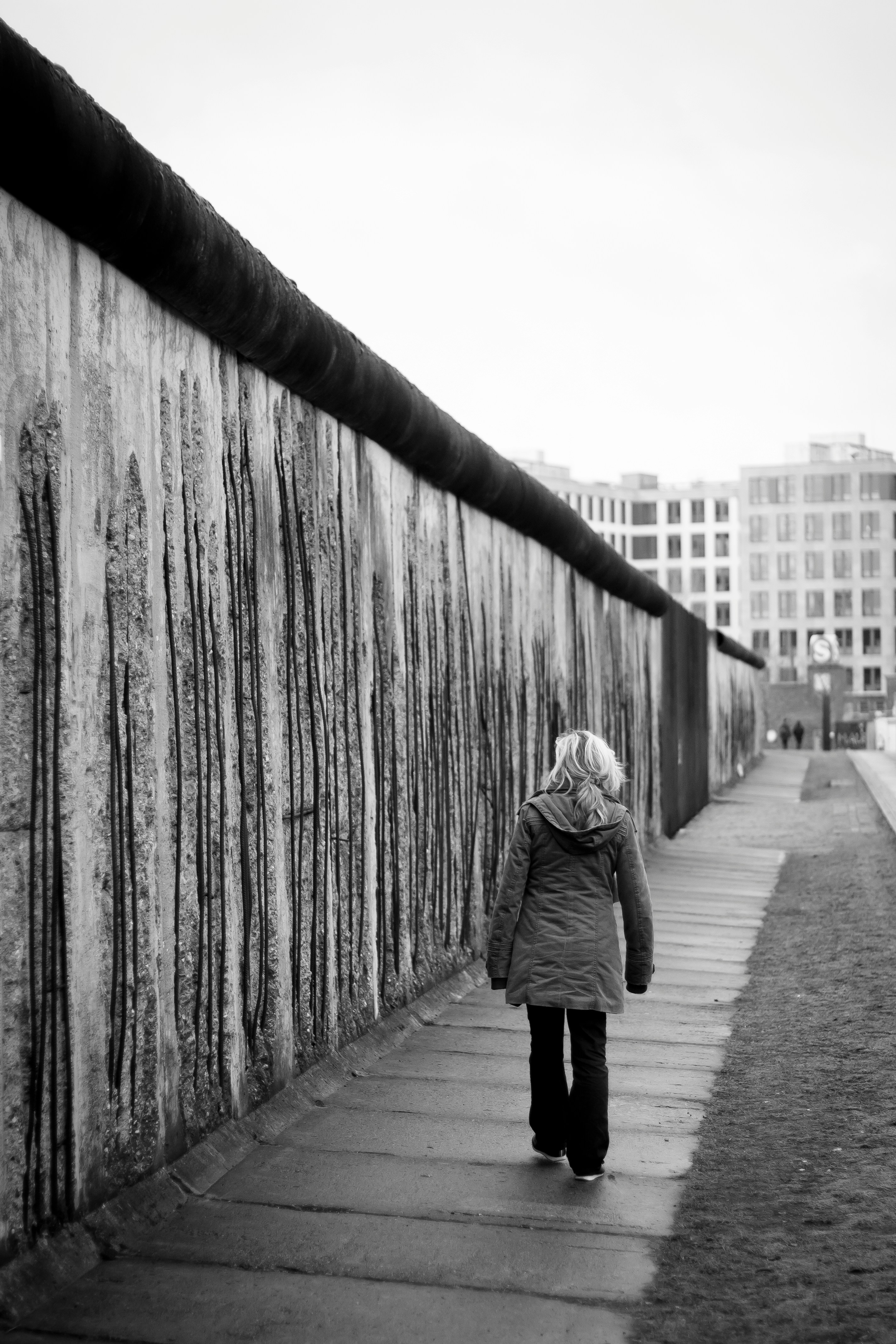
East Germany had to put a stop to East Germans fleeing to West Berlin. The Berlin Wall went up literally overnight on August 12, 1961 and encircled West Berlin until 1989. Overnight tens of thousands of West Berliners lost their jobs in East Berlin because the wall could not be crossed.

A small section of the Berlin Wall. Photo by Immo Wegmann on Unsplash.

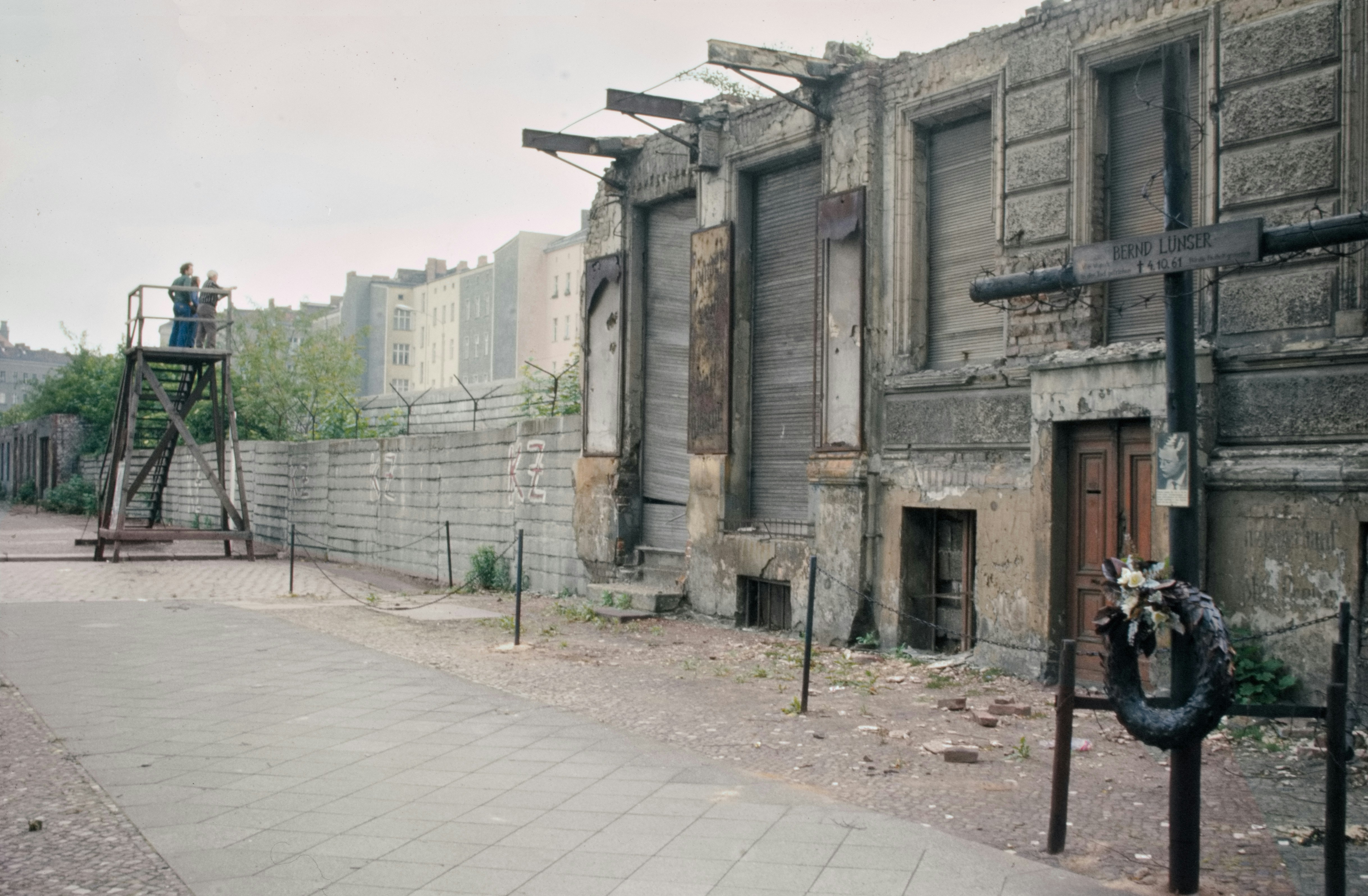
The Berlin Wall was a series of concentric barriers – a concrete wall with guard towers, anti-vehicle trenches, beds of nails and barbed wire. It was rare for anyone to successfully cross the wall. At least 171 people were killed trying to escape East Berlin.

The Berlin Wall. Photo by Tomas Val on Unsplash.

The tearing down of the Berlin Wall

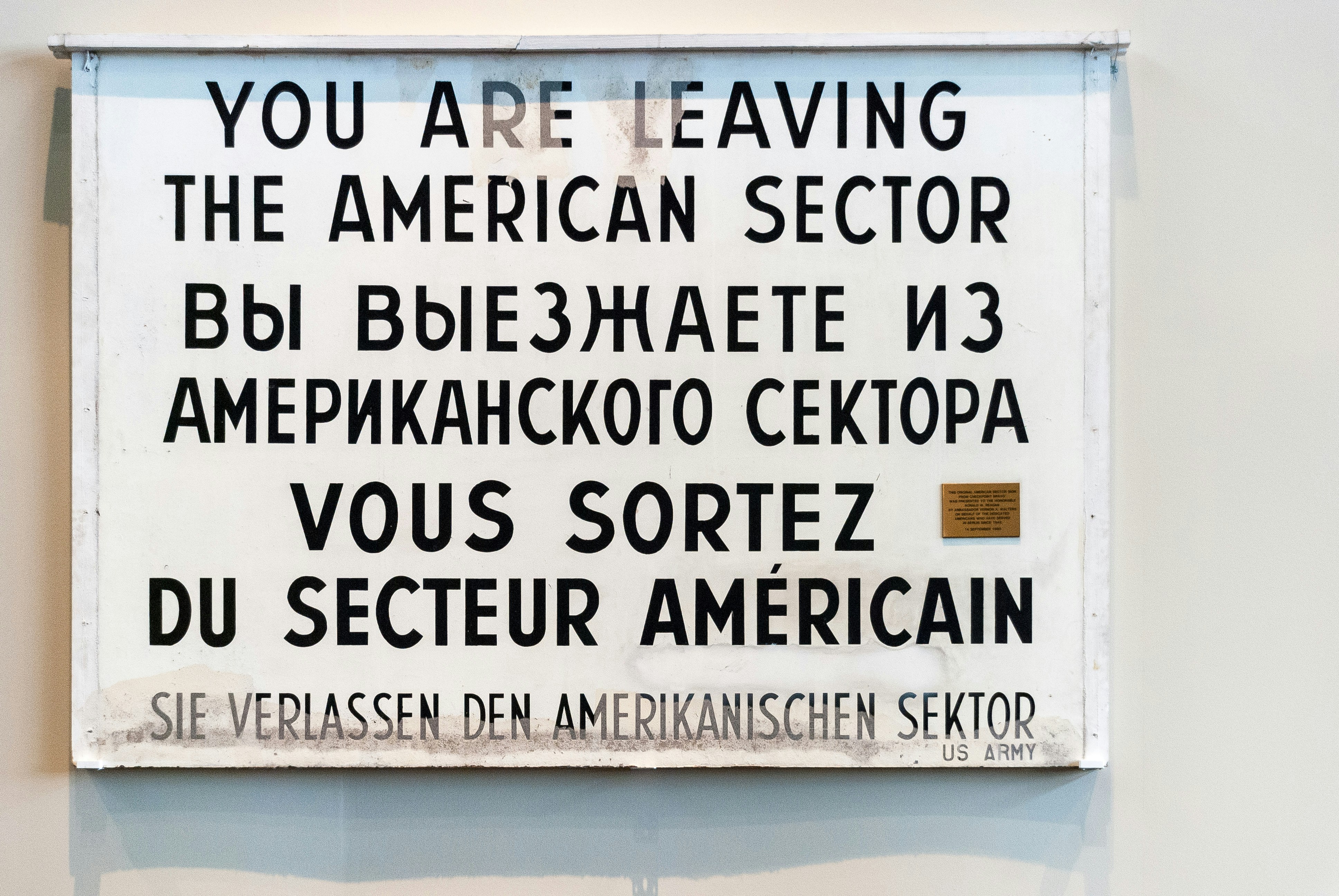
Sign at “Checkpoint Charlie” in Berlin. Photo by Etienne Girardet on Unsplash.

On November 9, 1989 the East German Community Party announced new policies regarding border crossings and the gates were opened.

People took picks and hammers and started tearing down the concrete wall. Bulldozers pushed down sections of the wall until it was gone.

After 44 years, Berlin once again became one city. And Germany was finally once again one sovereign country.

In conclusion

This is a condensed version of what happened and all sources do not agree on every date. If you wish to do your own research, there are many books that offer the details and idiosyncrasies of the airlift. Check the public library and the internet for a list of reputable sources.

Until my next blog post

Thank you for taking the time to read my blog today.

My next blog post will be on July 1. June just flew by!

I hope you have a good book to read – one that you don’t want to put down!

Value the time you have with friends and family.

Remember the people of Ukraine.

Janet

#OnThisDay: Explosion Aboard Steamship, 1844

Sometimes it angers me that the history classes I sat through as a child and teen didn’t include little bits of information like I’m sharing with you today. Instead of memorizing names of general and battles and dates, how much more interesting class would have been if we’d been told stories like this one.

Knowing this story could have served as an example to students of how history can turn on a dime. I’d like to think students learned that last week when Russia invaded Ukraine without provocation.

The incident I write about today brings to mind the following for each of us to think about: If not for ___(you fill in the blank)____, then ___(you fill in the blank)____ wouldn’t have happened OR would have happened.

The 1840s USS Princeton

I don’t recall ever hearing about the USS Princeton until recently, and I wouldn’t have heard of it then if I hadn’t been looking for a topic for #OnThisDay for my blog.

There have been a series of US Naval vessels christened with the name USS Princeton. The one I write about today, as you can see from my blog post title, was the one built in the early 1840s. It was a state-of-the-art warship powered by coal-produced steam. It was built in Philadelphia and was best-known for its two 12-inch cannons/carronades, called “The Oregon” and “The Peacemaker.”

“The Oregon” was of revolutionary design, made of wrought iron, and manufactured in England. It was designed by John Ericsson, a Swede who later designed the Monitor of American Civil War fame.

“The Peacemaker” was manufactured in New York under the partial supervision of Captain Robert Stockton, a political supporter of US President John Tyler. It’s thought that it was believed and claimed to be comparable to “The Oregon,” but there were design differences and short cuts were taken in The Peacemaker’s testing. This was a recipe for disaster, and that’s what happened on the Potomac River on February 28, 1844.

Let’s set the stage

The state of politics in the United States in 1844 contributed to the inevitable disaster. William Henry Harrison was elected US President in 1840, but he died in 1841 only a month after his inauguration. John Tyler being the US Vice President, assumed the office of President. It was the first time in American history that a president died in office and was replaced by the vice president. Tyler had been a Democrat, but he was elected as a Whig. Soon after he assumed office, he openly disagreed with the Whig Party over economic policy, and the Whigs kicked him out of the party. The Democrats didn’t want him back, so he became a US President without a political party.

Tyler wanted to be reelected President in the 1844 election. He thought by running on a promise to annex the Republic of Texas into the United States would win him the election. Mexico and Great Britain opposed the idea.

To ward off foreign opposition to that annexation, Tyler ordered the construction of the USS Princeton. Most warships in the world at that time were sailing ships or steamships with fuel limitations. The USS Princeton was designed with a collapsible smokestack, allowing it to also navigate as a sailing ship. A hybrid in the 1840s! It’s engine and propeller system were below the water line, making it less vulnerable to enemy attack than ships propelled by paddlewheel.

Back on the scene to partially supervised the construction of the warship, Captain Stockton bragged about the ship’s prowess, calling it “invincible.” He thought by bringing the ship to Washington, DC and entertaining politicians, he’d get the money to build more ships.

What happened on February 28, 1844

An afternoon excursion from Washington, DC on the Potomac River was planned for February 28, 1844. President Tyler (who had no Vice-President), members of Congress along with their wives, and some Cabinet members were wined and dined on the ship and were scheduled to witness the fire power of the ship during three demonstrations.

It was Stockton’s decision to fire “The Peacemaker” for all three demonstrations. After two successful firings, a third was launched in honor of George Washington. On that third firing, “The Peacemaker” exploded, sending its parts – some weighing in excess of a ton – flying across the deck. Eight people were killed and more than two dozen were injured.

Secretary of State Abel Upshur and Secretary of the Navy Thomas Gilmer were killed. If President Tyler had not been unexpectedly detained on the stairs below deck, he undoubtedly would have been standing with them.

The hole in the US Constitution

What happened in US Presidential succession in the 1840s should have been remedied posthaste. It was the first time a Vice President had to step up and into the Presidency due to the death of a President; however, we know from history it was not the last time.

It would be 1967, four years after the assassination of President John F. Kennedy, before the Twenty-Fifth Amendment to the US Constitution would provide a process through which a Vice President would be replaced in the event of the vacancy of that office.

If President Tyler had been killed in the explosion on the Princeton, the president pro tem of the US Senate, Willie Mangum – a North Carolinian who had been one of the founders of the Whig Party – would have become US President. Among other things, Mangum was an avowed opponent of the annexation of the Republic of Texas.

This fact alone brings us back to the fill-in-the-blanks line from the third paragraph of this blog post: If not for ___(you fill in the blank)____, then ___(you fill in the blank)____ wouldn’t have happened OR would have happened.

If you’d like to learn more

If you want to learn more about the USS Princeton of 1844, I recommend https://historynewsnetwork.org/article/181834, by Stan Haynes, published on November 21, 2021. Also, https://military-history.fandom.com/wiki/USS_Princeton_(1843). I drew information from both of these online resources which include more detail than I shared in my post today. In addition, I understand that Stan Haynes has written a historical novel, And Tyler No More, which includes this tragic incident.

Since my last blog post

Our world has changed forever. NATO is being tested like no other time since its inception. No one knows what the future holds for Ukraine, Europe, and the rest of the world. I believe in His perfect wisdom, God doesn’t allow us to know the future.

Until my next blog post

I hope you have a good book to read and time for a creative outlet.

It’s been an unsettling week in our world since last Monday, to say the least. No one knows what this week holds. My heart goes out to the people of Ukraine who are suffering so. May the world continue to condemn Vladimir Putin for his unprovoked invasion of Ukraine.

Thank you for taking the time to read my blog.

Janet