Clean energy backlash on a state level

I started writing this blog post almost exactly a year ago, when it looked like a law was going to change in North Carolina. NC House Bill 729 is still being debated, and it is a direct result of Donald Trump’s hatred of solar power.
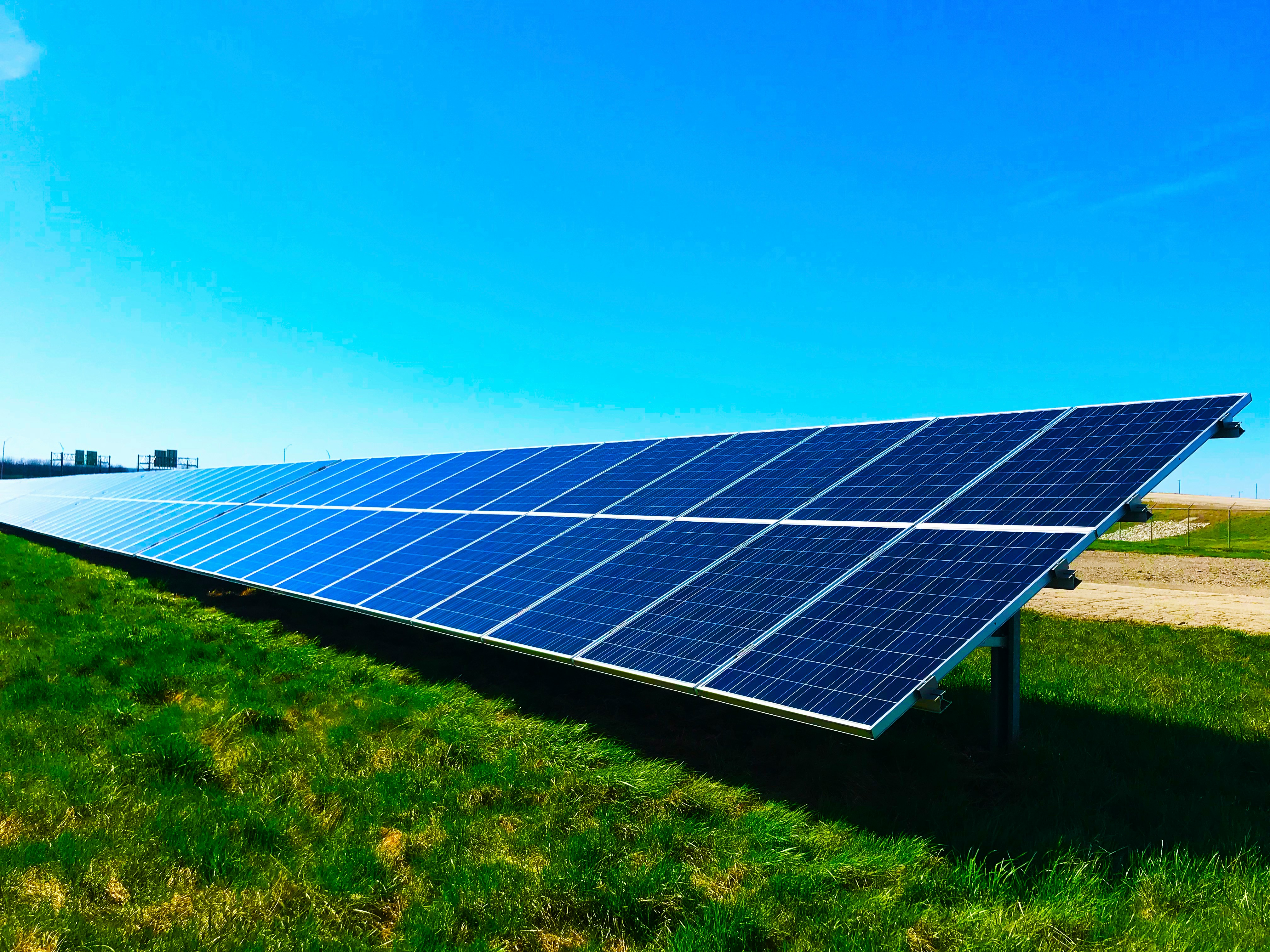
Photo by Chelsea on Unsplash

The state legislature in North Carolina is known for quietly doing its work and voting on legislation under the cover of darkness. You know, those wee hours of the night when most taxpayers are asleep. That’s not a good thing.

Being in the Metro Charlotte TV news region and not in the Raleigh-Durham-Chapel Hill TV broadcast region puts me at a disadvantage when it comes to keeping up with bills under consideration in Raleigh.

That’s the way state legislators like it, since the center of power has always been in the eastern part of the state due to how the colony was settled in the early 1700s.

But that’s not the point of my blog post today. I offer today’s post as an example of how the Trump anti-clean energy policies can and have sifted down to the state level. If your state legislature hasn’t jumped on the bandwagon, just wait!

I was pleased to see WSOC-TV in Charlotte report this particular bill. Michelle Alfini pinned the station’s online report on this. Joe Bruno does a yeoman’s job reporting on the General Assembly, though based in Charlotte.

I lived in Raleigh for two years. The difference in news coverage of the state legislature there and in Charlotte is like night and day. The TV stations in Charlotte pretty much ignore what’s happening in the state capital some 125 miles away, and the media in Raleigh ignore what’s happening in the state’s largest city. It’s a tug-of-war as old as colonial North Carolina. But I digress.

The Farmland Protection Bill (NC House Bill 729)

The Farmland Protection Bill is slowly moving through committees in the North Carolina State House. It was introduced on April 30, 2025. That’s not a typo. It was introduced more than a year ago and was supposed to take effect on July 1, 2025.

It has a nice ring to it, doesn’t it? The Farmland Protection Bill. Who among us wouldn’t want to protect farmland? (Except real estate developers and state legislators!)

Photo by Iga Palacz on Unsplash

But this bill is the undoing of earlier legislation that gave farmers income options when it was becoming more and more difficult for them to make ends meet.

It’s sort of like the Farm Bill under consideration in the U.S. House of Representatives. The name of the bill sounds like a good thing, but in the fine print it decreases money for SNAP (i.e., food for children and poor people.) That’s a topic for a different blog post.

NC House Bill 729 is a case of the North Carolina General Assembly – if the bill is passed – pulling the rug out from under farmers effective July 1, 2026.

It seems there are some members of the NC House of Representatives who are alarmed that too much of the state’s farmland is disappearing. Instead of blaming the real threats – urban development approved by local government boards and councils like a bunch of drunken sailors and the challenges that small farmers face as their profits cannot keep pace with their expenses – the NC House of Representatives has chosen to blame solar energy.

It’s a bill right out of the Trump playbook

The original bill, as reported in May 2025, would have repealed an 80% tax abatement on utility scale solar projects over a four-year period. At the end of four years, farmers who had invested in solar energy generation projects on their land would no longer receive a tax break.

After a full year of haggling and working its way through committees, the current substitute bill under consideration as of April 30, 2026, gives farmers a sliding scale of tax abatements per year until it is repealed – completely disappears – in 2029.

As reported by WSOC-TV last May, “Stakeholders with the sustainable energy industry and farmers who have chosen to lease to solar companies expressed their concerns that the bill would unfairly penalize a single industry for farmland loss, which occurs primarily through housing development, while interfering with agreements property owners and solar companies entered in good faith.”

We aren’t talking about huge solar farms here. We’re talking about farmers who own 100 acres of land who signed on to put a few feet of solar panels on their land. There’s one just up the road from my house.

Legislators are touting this bill as a windfall for local governments because counties are poised to receive a huge property tax increase from the affected farmers.

It is, apparently, beside the point that the North Carolina Sustainable Energy Association reported in 2022 that solar energy apparatus only covered 0.28% of agricultural land in the state.

NC Secretary of Agriculture Steve Troxler supports the bill, as does the North Carolina Farm Bureau; however, having come from a family of small farms, I tend to identify with the individual farmers who took advantage of a way to survive financially a few years ago and are now facing the repeal of the program and income they have come to depend on.

The May 2025 WSOC-TV report highlights the following example:

“Joel Olsen, who runs an agrivoltaics facility in Montgomery County that Channel 9 visited earlier this month, spoke at the committee hearing, taking issue with the idea that he is not paying his fair share in taxes.”

Mr. Olsen said, “When I bought the land, we paid $972 a year in property taxes,” he said. “Once we completed the solar farm, we paid three years of back taxes. We paid 100% of the real property taxes, and we paid over $100,000 in personal property taxes.”

The report stated, “He said he built his solar project with agriculture in mind, with sheep grazing alongside the panels. Olsen said this bill and rhetoric pitting solar against farming doesn’t take farms like his into account.”

Photo by Sam Carter on Unsplash

In conclusion

I admit that I don’t know the minute details of the history of this issue, but it sems to me that a compromise could be worked out so there’s not an “either/or” outcome.

It seems to me that solar energy panels and farming could co-exist, but politicians had to get involved and ruin a thing that appeared to be working well.

At a time now in May 2026 when farmers in North Carolina are battling drought conditions and skyrocketing costs for diesel fuel and fertilizer due to Trump’s short-sighted war with Iran, perhaps this is not a good time for the legislators to remove an optional stream of income some of them had taken advantage of under the law. Perhaps legislators will remember this is an election year and put the Farmland Protection Bill on the back burner or in the trash can.

If you wish to read the current wording in NC Bill 729 or keep up with its status, you can do so by visiting https://webservices.ncleg.gov/ViewBillDocument/2025/5298/0/H729-PCS30424-TQxf-20.

Janet Morrison

The government should be afraid of its citizens, not the other way around.

What do you know about the 17th Amendment?

There’s probably a limited audience to be reeled in by the title of today’s blog post, but I couldn’t think of a more creative way that might trick some unsuspecting readers to dive in.

If US Constitutional History is not your cup of tea, please visit my blog again next week. I’m not sure what the topic will be, but I’ll try to avoid the US Constitution.

You might recall that I mentioned the 17th Amendment to the Constitution of the United States in my May 31, 2021 blog post because I’d read that it was ratified on May 31, 1913. After discovering that it was actually ratified on April 8, 1913, I had to come up with another topic for May 31. I’ll explain the confusion somewhere below.

Here we go…

Thank goodness for the 17th Amendment to the Constitution of the United States of America!

Even though I majored in political science in college, if asked out of the blue what the 17th Amendment to the U.S. Constitution was about, I’d be hard-pressed to give you the correct answer.

Photo credit: Anthony Garand on unsplash.com

The 17th Amendment, in a nutshell

The 17th Amendment to the Constitution of the United States mandates that the two Senators from each state “shall be” elected by the people of each respective state. It also states that U.S. Senators shall serve six-year terms and each Senator shall have one vote.

What about before the 17th Amendment?

The 17th Amendment was passed by Congress on May 13, 1912. Prior to the amendment’s ratification on April 8, 1913, each state’s U.S. Senators were chosen by the state legislatures. Whoa! Let that sink in for a minute! I shudder to think about the possibilities.

Living in the state of North Carolina, I tremble to think about who the NC General Assembly would have chosen for the US Senate, especially over the last decade or more. Granted, the general populous has rarely elected the people I would have preferred for these offices since Senator Sam Ervin died, but at least a fair and open election gives the citizens some measure of confidence in the people we send to Washington, DC. What they do after they get there is a whole other story. But I digress.

The reasoning behind the way it was before 1913

The framers of the United States Constitution weren’t sure the average citizen was smart enough to vote. They formed our government as a democracy, yet the white men who were in charge in our country’s infancy didn’t completely trust the general populous to elect the right people.

Come to think of it, the white men in charge in Washington, DC and in many state legislatures today don’t trust us to “vote right” either. It seems like we would’ve made more progress than this in more than 200 years, but I digress again.

The framers of the Constitution wanted the United States Senate to be a check on the masses. James Madison assured the attendees of the Constitutional Convention that cooler heads would prevail in the Senate than in the House of Representatives where representatives were elected by popular vote of the people. (Well, not really “the people,” for you could only vote then if you were a white male who owned some real estate. The Electoral College was also instituted as a buffer between the people and the US President. But that’s a topic for another day.)

The reasoning behind having the state legislatures elect US Senators was that the senators would be insulated from public opinion. To borrow a question from Dr. Phil McGraw, “How’s that workin’ for ya?”

An examination of Senatorial elections, 1871-1913

The political scientist in me found a study online of how the system worked from 1871 until 1913. Written by Wendy J. Schiller, Charles Stewart III, and Benjamin Xiong for The University of Chicago Press Journals, their article, “U.S. Senate Elections before the 17th Amendment: Political Party Cohesion and Conflict, 1871-1913,” can be found at U.S. Senate Elections before the 17th Amendment: Political Party Cohesion and Conflict 1871–1913 | The Journal of Politics: Vol 75, No 3 (uchicago.edu). (If this link doesn’t work, please do a search for the article.)

I was eager to see what their study found. My hunch was that the election of US Senators was viciously fought over in the state legislatures and the said elections, no doubt, took up weeks and weeks of the legislatures’ time.

Unfortunately, it would have cost me $15 to gain access to the study, so I’ll just give you this quote from the article’s abstract: “We find significant evidence that under the indirect electoral mechanism, Senate elections were contentious, and winning majority control of the state legislature did not always ensure an easy electoral process. Specifically, the breakdown of caucus nominating processes, the size of majority coalitions, and whether the incumbent senator was running for reelection each exerted an effect on the probability of conflict in the indirect election process.”

Point of confusion

In my opening remarks, I promised to explain the confusion over the date of the 17th Amendment’s ratification. It was ratified on April 8, 1913, when the Connecticut legislature approved it. With Connecticut’s vote, three-fourths of the state legislatures had approved it. That met the requirement for an amendment’s ratification. It was not until May 31, 1913, that Secretary of State William Jennings Bryan officially announced the ratification in writing. Some sources have picked up that date as the date of ratification.

More than a century later, that’s probably all we need to know. This blog post probably already falls into the category of “too much information” for many of you, so I’ll just leave it at that.

Since my last blog post

I’ve been busy working on my novel. The working title is still either The Spanish Coin or The Doubloon. Unless I self-publish it, I won’t get to choose the title. The manuscript stands at just over 91,000 words. That number fluctuates from day-to-day as I make changes.

I’m re-reading World of Toil and Strife: Community Transformation in Backcountry South Carolina, 1750-1805, by Peter N. Moore. As more of it “soaks in,” I’m making some changes in my novel manuscript – changes that should result in a richer story and an additional layer of setting authenticity.

Until my next blog post

I hope you have a good book to read. I’m reading When Ghosts Come Home, by Wiley Cash. I’m trying to finish reading it by tomorrow night, so I can write about it in my blog post next Monday.

I’m also still making my way through The Silk Roads: A New History of the World, by Peter Frankopan. It’s not a book one can rush through. At least, I can’t.

Note: Get Ready! December is Read a New Book Month!

Thanks for reading my blog today.

Janet