No place for a preacher’s son!

For today’s blog post, I’m taking advantage of a local history column I wrote for Harrisburg Horizons newspaper on August 23, 2006.

If you enjoy this post, you might enjoy the books in which I published the local history column articles I wrote from 2006 through 2012, Harrisburg, Did You Know? Cabarrus History, Book 1 and Harrisburg, Did You Know? Cabarrus History, Book 2. The story I’m sharing today is found in Book 1.
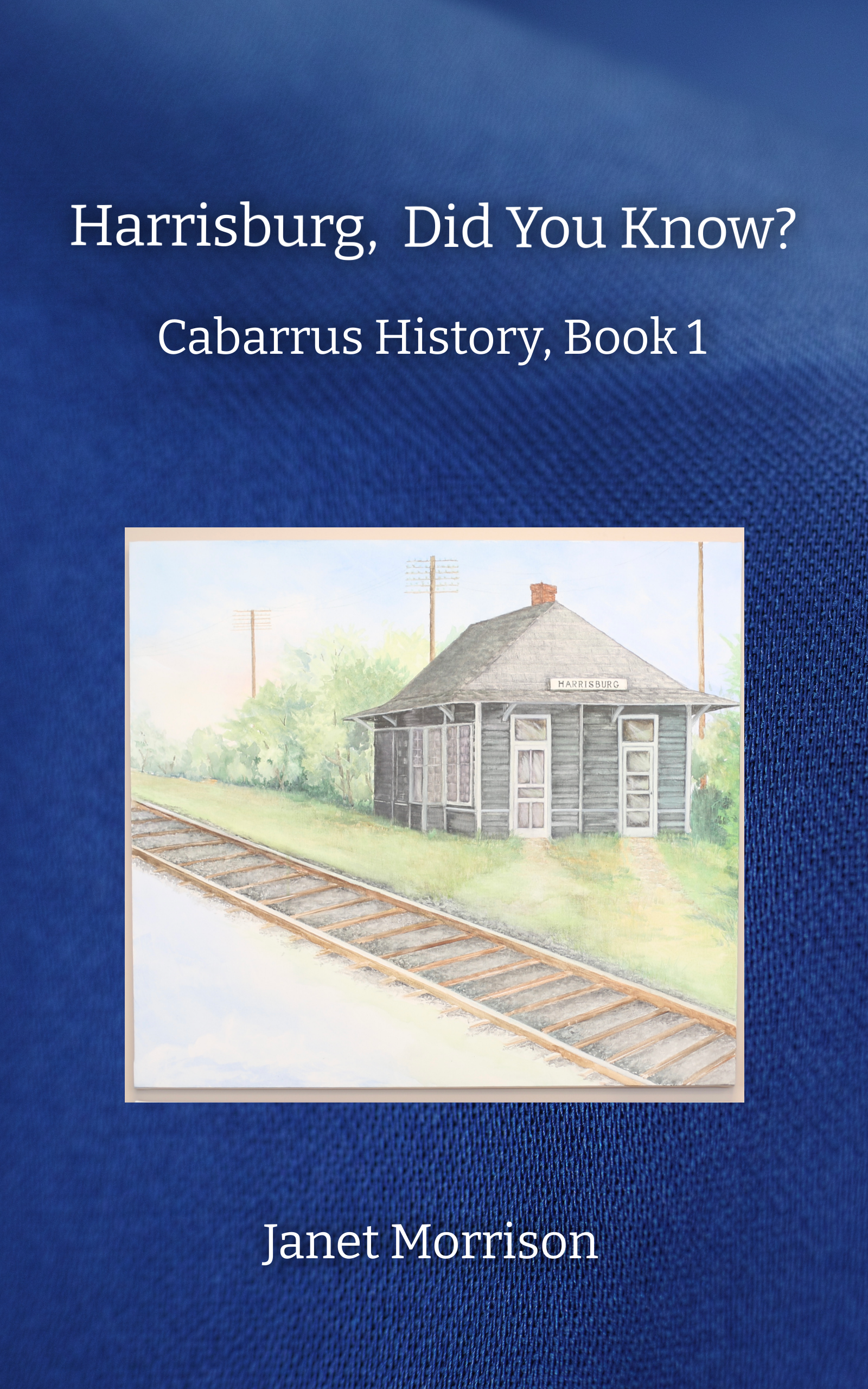
Photo of the front cover of Harrisburg, Did You Know? Cabarrus History, Book 1, by Janet Morrison
Harrisburg, Did You Know? Cabarrus History, Book 1,
by Janet Morrison

Photo of front cover of Harrisburg, Did You Know? Cabarrus History, Book 2, by Janet Morrison
Harrisburg, Did You Know? Cabarrus History, Book 2,
by Janet Morrison

The articles I wrote for the newspaper came primarily from the history of Township One in Cabarrus County, North Carolina, but many topics would be of general interest to anyone who enjoys reading about history. They are specific to Cabarrus County, yet many of them are indicative of life in rural and small-town America since the 1700s.

My books are available at Second Look Books in Harrisburg, NC and on Amazon.

Sit back, and prepare to be transported to a simpler time in the 1870s.


“Pioneer Mills: No Place For a Preacher’s Son”

Did you know that there is a written account of a child’s memories of the Harrisburg area in the 1870s?

The Rev. Joseph B. Mack came from Charleston, South Carolina in 1871 to be the pastor of Rocky River Presbyterian Church. When he and his family arrived, the manse the congregation was building for his family to live in was not completed.

Church member Robert Harvey Morrison moved his own family into a tenant house and gave the new minister’s family his home in the Pioneer Mills community. Pioneer Mills was a gold-mining boom town in the early- to mid-19th century. It was apparently still a rip-roarin’ place in 1871.

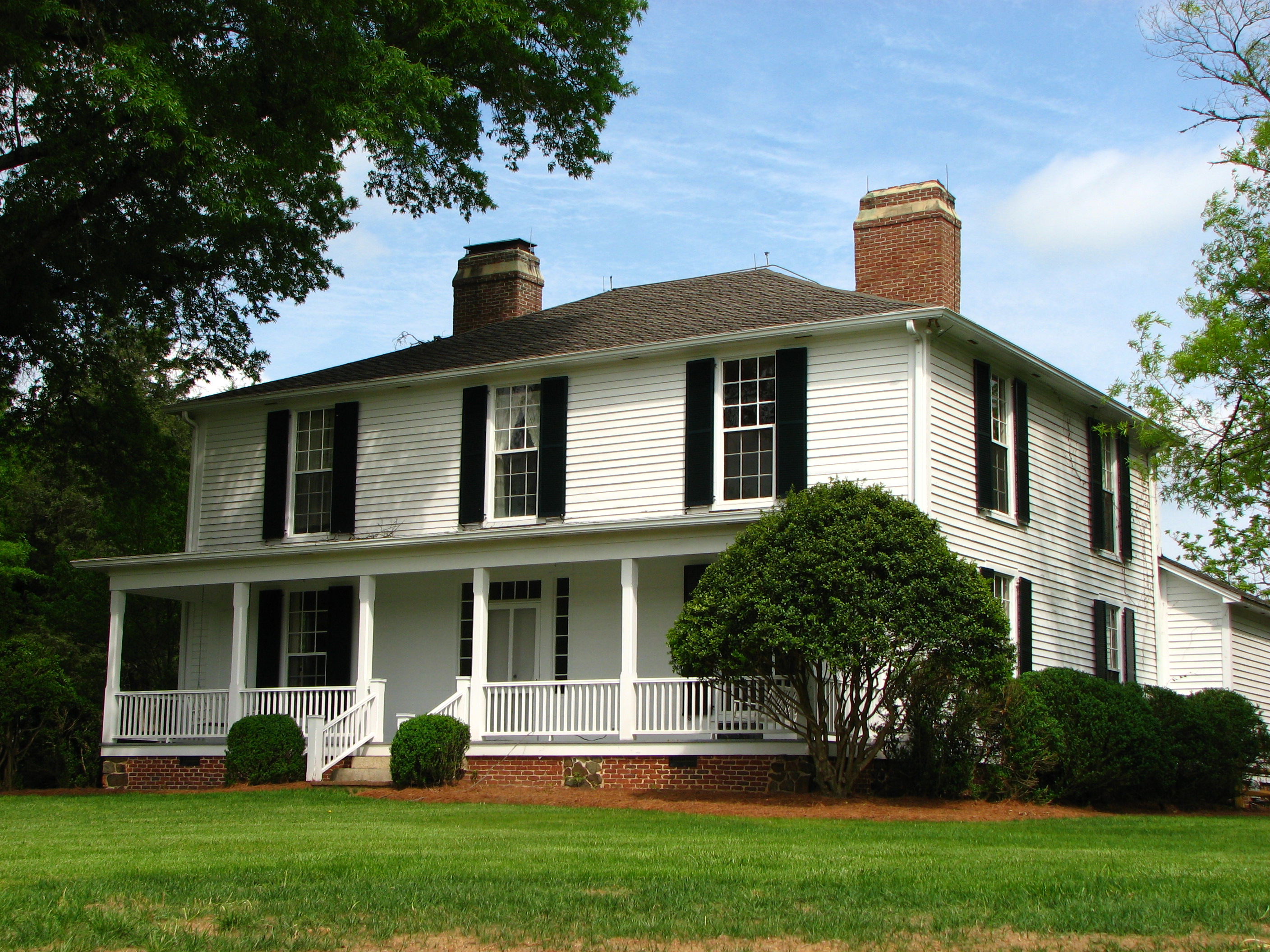
Photo of the Robert Harvey Morrison House in Pioneer Mills Community in Cabarrus County, NC
Robert Harvey Morrison House

A special homecoming was held at the church on August 12, 1912. Rev. Mack’s son, Dr. William Mack, was unable to attend. He sent his regrets from New York and put some of his childhood memories on paper. Fortunately for us, his letter to homecoming master of ceremonies Mr. Morrison Caldwell was printed in the Concord newspapers the following week.

Dr. Mack wrote, “My first Rocky River recollection is getting off the train at Harris Depot and going in the dark to the home of Uncle Solomon Harris.” I don’t believe Dr. Mack was related to Mr. Harris. This was probably a term of endearment and respect.

He continued, “There we met Ed and ‘Little Jim’ (to distinguish him from ‘Big Jim,’ the son of Mr. McKamie Harris.) Uncle Solomon had the biggest fire-place I ever saw; it seemed as big as a barn door.

“Shortly afterwards we went to Pioneer Mills…. There… was the old Gold mine, Barnhardt’s store and McAnulty’s shoemaker shop…. While there I decided to become either a merchant or shoemaker, for Barnhardt’s store and McAnulty’s shop kindled young ambitions; better to ‘keep store’ or ‘mend shoes,’ than as a preacher’s son to be moving around from place to place.

“But Pioneer Mills was ‘no place for a preacher’s son.’ Soon we moved again; this time to the brand new brick parsonage, close by the church. We used to go to church in a big closed carriage drawn by two mules; now, every Sunday, we walked to church, going down a steep hill, across a branch, and through the grove to the famous old house of worship.”

Dr. Mack’s letter also read, “Those were happy years; happy in springtime with its apple blossoms, song birds, morning-glories and Tish McKinley’s Sassafras tea; happy in the summertime with its blackberries and plums, its bob-whites in the wheat fields, its lightning and thunder storms, its bare-footed boys and girls, and its bitter quinine to keep off third-day chills; happy in the autumntime, with its white fields of unpicked cotton and its beautiful trees with leaves of myriad hues; and happy in the wintertime, with its snows, its big hickory back-logs, its boys in boots red-topped and toes brass-tipped, its red-cheeked girls in wraps and ‘choke rags,’ and its Christmas Holidays and turkeys.”

Dr. Mack’s colorful memories paint an idyllic picture of life in Township #1 in the early 1870s. Will the children of 2006 have equally as wonderful memories?

(Published in Harrisburg Horizons newspaper, August 23, 2006.)

Resources: The Presbyterian Congregation on Rocky River, by Thomas Hugh Spence, Jr., 1954; The Concord Daily Tribune, August 16, 1912; and The Concord Times, August 19, 1912.


Hurricane Helene Update

As of Friday, of the 1,468 road closures in North Carolina due to Hurricane Helene last September, 33 are still closed and 39 have partial access. Interstate 40 near the Tennessee line will be limited to one lane traffic in each direction with a 35 mile-per-hour speed limit for the foreseeable future.

On a happy note, on Friday, a 38-mile stretch of the Blue Ridge Parkway opened from Asheville to Graveyard Fields and Mount Pisgah! This is south of Asheville.


Hurricane Erin

On the other end of the state, Hurricane Erin skirted the Outer Banks of North Carolina last week, dumping tons of sand and water on NC Highway 12. NC-12 is the only highway connecting Hatteras Island to the islands to the north. Crews are working to reopen the highway as soon as possible as the summer tourist season is winding down.

Janet

Do you associate volcanoes with North Carolina?

Now that I have your attention… today’s blog post is about ancient history. This is one of the topics I wrote about in Harrisburg, Did You Know? Cabarrus History, Book 2.

Photo of a volcano by Guille Pozzi on Unsplash.com.
Photo by guille pozzi on Unsplash

Harrisburg, North Carolina sits inside a 22-mile syenite or ring dike. One can get a feel for it from several high points in the area, such as when traveling south from Concord on US-29 near the intersection with Union Cemetery Road. It’s like looking across a gigantic bowl.

Another possible place from which to catch a glimpse of the “bowl” is on NC-49 southbound after you pass Old Charlotte Road. The Charlotte downtown skyline is visible briefly from that location as well as the one referenced above on US-29.

Harrisburg, Did You Know? Cabarrus History, Book 2, by Janet Morrison

What, you may ask, is a syenite or ring dike? I’m no expert on volcanology, but my understanding is that it is a circular dike around a volcano.

According to 2001 Encyclopedia of Earthquakes and Volcanoes, by David Ritchie and Alexander E. Gates, Ph.D.:

“If magma is removed from the magma chamber beneath a volcano, it can undergo caldera collapse. The volcano and the area around it collapse because they are no longer being held up by the liquid. A series of concentric faults and cracks develop around the collapsing volcano. As they do, magma will squeeze up around the cracks and faults forming ring dikes.”

I’ll take their word for it.

In 1966, U.S. Geological Survey geologist Harry E. LeGrand and Henry Bell III led a scientific excursion in Cabarrus County to study our ring dike and other interesting rock and mineral deposits in the county.

You might be able to access a pdf of “Guidebook of Excursion in Cabarrus County, North Carolina, October 22-23,1966” by going to https://www.carolinageologicalsociety.org. Search for “1960s Field Trip Guidebooks” and then scroll down to find that particular guidebook.

The Harrisburg area has experienced a population explosion since 1966. The landmarks noted in the 1966 guidebook are either gone or more difficult to locate today. The concentric rings that were reportedly visible from the air in 1960 by R.G. Ray might not still be intact.

If you’d like to know more about this topic, the 1849 meteorite; Harrisburg’s first organized housing and business development of 100 years ago; the Morrison-Sims Store and Old Post Office; the flood of 1886, the Piedmont Area Development Association (P.A.D.A) of the 1960s; earthquakes that have been felt here; McCachren’s Store; Rocky River bridges in the 1870s; the Sauline Players; a tribute to George L. Govan; Rocky River Academy; the Rocky River Presbyterian Church’s fourth sanctuary which was completed in 1861; a 1777 estate sale; Hugh Smith Pharr and his mill; a 1907 attempted train robbery; 1816 – the year without a summer;

Also: items such as milk, apples, and dry cleaning that were all delivered to homes in the mid-1900s; Blume’s Store; high-speed trains; the boundaries of Township 1; early Harrisburg education; Pharr Grist Mill on Back Creek; how electricity came to Harrisburg; a 1912 church homecoming; Pioneer Mills Gold Mine and Community; a fellow named Collett Leventhorpe; a 1911-1912 debating society; and the tenth anniversary of the Harrisburg Branch of the Cabarrus County Public Library system… please purchase Harrisburg, Did You Know? Cabarrus History, Book 2.

The book also contains nearly 150 pages of my research notes on subjects I didn’t get to write about when I wrote a local history newspaper column from 2006-2012.

Harrisburg, Did You Know? Cabarrus History, Book 1 and Book 2 are available in paperback at Second Look Books, 4519 School House Commons in Harrisburg, NC.

Second Look Books, 4519 School House Commons, Harrisburg, NC

They are also available in paperback and e-Book from Amazon at https://www.amazon.com/dp/B0BW2QMLHC/.

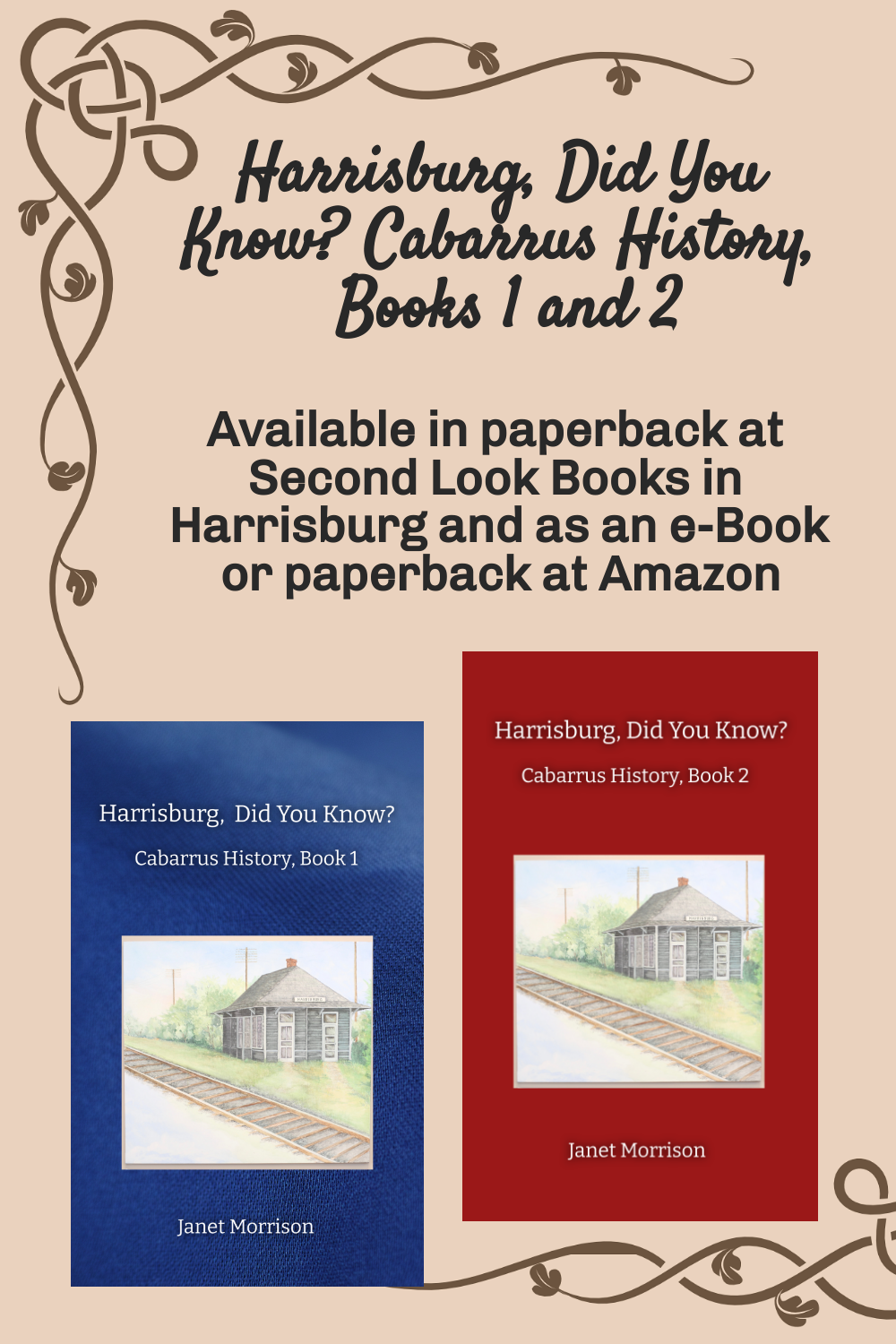
An infographic ad for Harrisburg, Did You Know? Cabarrus History, Books 1 and 2

Until my next blog post

I hope you have a good book to read.

I hope you get to spend quality time with friends and family.

Remember the people of Ukraine.

Janet

P.S. Please visit https://www.janetmorrisonbooks.com and subscribe to my e-Newsletter. Next issue due out the first week of January!

Local History is Revealed in National Archives Holdings

The first documented gold discovery in the United States was here in present-day Cabarrus County, North Carolina in 1799. The discovery by a little boy playing in Little Meadow Creek led to gold fever in the area. Numerous gold mines were dug and mined to various levels of success.

In fact, there was enough gold found in the southern piedmont of North Carolina that a branch of the United States Mint was built in Charlotte in 1836 and 1837. It opened for the production of gold coins in 1837.

A trip to the National Archives at Atlanta (which is in the Atlanta suburb of Morrow, Georgia) a few years ago gave me the opportunity to look at ledger books from the Mint in Charlotte. Within those pages I recognized names from my community.

Register of Gold – Branch Mint – Charlotte

I’m blogging about some of that information today to give you an example of the type of documented local history I included in Harrisburg, Did You Know? Cabarrus History, Book 2. Although the book (and Harrisburg, Did You Know? Cabarrus History, Book 1) concentrate on Harrisburg, both books do include articles about other communities in Township One.

One of the communities rich in history in the township is Pioneer Mills. Little more than a quiet crossroads now, it was a center of activity in the mid-1800s after the discovery of gold and the opening of Pioneer Mills Gold Mine.

I recognized names such as John C. Barnhardt from the Pioneer Mills community as taking 123 ounces of amalgam to the Charlotte Mint on August 31, 1843, for which he was paid $2,340.33. That was no small sum of money in 1843!

Robert Harvey Morrison, on whose land the Pioneer Mills Gold Mine was located, was paid more than $4,000 for the gold bars and amalgam he took to the Mint from late in 1846 into early 1850.

Other names I recognized in the Mint ledgers included two other Barnhardts,  Robert R. King, three men with the surname Treloar, and R.B. Northrop.

Comparing US Census records, Charlotte Mint records, and various years of Branson Business Directories helped me get a better idea of what the Pioneer Mills Community must have looked like 150 to 180 years ago. There was a general store, a dry goods store, a blacksmith, a school, and a post office, In 1869, Pioneer Mills Community had three physicians.

Gold mining brought people from Canada, Great Britain, and New York to Pioneer Mills. Gold mining, no doubt, brought some undesirable people into the community, which led the wife of the pastor of Rocky River Presbyterian Church to say in the early 1870s that Pioneer Mills “is no place for a preacher’s son!”

If you’d like to read more about the history and people of Cabarrus County, North Carolina, you might enjoy Harrisburg, Did You Know? Cabarrus History, Books 1 and 2. They are available in paperback at Second Look Books in Harrisburg and in paperback and for Kindle from Amazon.

By the way, you can visit the research room at the National Archives at Atlanta (in Morrow, Georgia) by appointment only. Visit the website for more information:  https://www.archives.gov/atlanta.

Until my next blog post

I hope you have a good book to read.

I hope you spend time with family and good friends.

And, as always, remember the people of Ukraine and count your blessings.

Thank you for taking the time to read my blog.

Janet

No Place for Preacher’s Son?

Today’s blog post is an edited local history newspaper column I wrote for the August 23, 2006 edition of Harrisburg Horizons newspaper, Harrisburg, North Carolina. Appearing in the newspaper as “Pioneer Mills:  No Place for a Preacher’s Son,” it paints a picture of the Rocky River and Pioneer Mills communities in Cabarrus County in the 1870s.

Manse wasn’t ready!

The Rev. Joseph B. Mack came from Charleston, South Carolina in 1871 to be the pastor of Rocky River Presbyterian Church. When he and his family arrived, the manse the congregation was building for his family to live in was not completed.

Church members Robert Harvey Morrison and his wife, the former Mary Ann Stuart, moved their family into a tenant house and gave the new minister’s family their home in the Pioneer Mills community. This was no small sacrifice because the manse was not completed until 1873! The Morrisons’s two youngest children, an 18-year-old daughter and a 16-year-old son were still in the household, and Mr. and Mrs. Morrison were in their 50s.

Robert Harvey Morrison House
Robert Harvey Morrison Home, built circa 1846. (Photograph taken by Janet Morrison, May 3, 2008.)

The Robert Harvey Morrison home was built as early as 1846 when he inherited the land from his father. The house and its numerous out-buildings have been on the National Register of Historic Places since 1990.

In case you’re wondering

Robert Harvey Morrison was a relative of mine but not a direct ancestor. In the 1800s my part of the family didn’t live in grand houses like the one pictured. Gold was never found on the property my part of the family owned. There was a gold mine on the land that Robert Harvey Morrison inherited from his father.

Pioneer Mills was a gold-mining boom town in the early- to mid-19th century. It was apparently still a rip-roarin’ place in 1871.

Dr. William Mack’s memories in 1912

A special homecoming was held at the church on August 12, 1912. Rev. Mack’s son, Dr. William Mack, was unable to attend. He sent his regrets from New York and put some of his childhood memories on paper. Fortunately for us, his letter to homecoming master of ceremonies Mr. Morrison Caldwell was printed in the Concord newspapers the following week.

Dr. Mack wrote, “My first Rocky River recollection is of getting off the train at Harris Depot [now, Harrisburg, NC] and going in the dark to the home of Uncle Solomon Harris.” I don’t believe Dr. Mack was related to Mr. Harris. This was probably a term of endearment and respect.

He continued, “There we met Ed and ‘Little Jim’ (to distinguish him from ‘Big Jim,’ the son of Mr. McKamie Harris.) Uncle Solomon had the biggest fire-place I ever saw; it seemed as big as a barn door.

“Shortly afterwards we went to Pioneer Mills….  There… was the old Gold mine, Barnhardt’s store and McAnulty’s shoemaker shop…. While there I decided to become either a merchant or shoemaker, for Barnhardt’s store and McAnulty’s shop kindled young ambitions; better to ‘keep store’ or ‘mend shoes,’ than as a preacher’s son to be moving around from place to place.

“But Pioneer Mills was ‘no place for a preacher’s son.’ Soon we moved again; this time to the brand new brick parsonage, close by the church. We used to go to church in a big closed carriage drawn by two mules; now, every Sunday, we walked to church, going down a steep hill, across a branch, and through the grove to the famous old house of worship.”

Dr. Mack’s letter also read, “Those were happy years; happy in springtime with its apple blossoms, song birds, morning-glories and Tish McKinley’s Sassafras tea; happy in the summertime, with its blackberries and plums, its bob-whites in the wheat fields, its lightning and thunder storms, its bare-footed boys and girls, and its bitter quinine to keep off third-day chills; happy in the autumn time, with its white fields of unpicked cotton and its beautiful trees with leaves of myriad hues; and happy in the wintertime, with its snows, its big hickory back-logs, its boys in boots red-topped and toes brass-tipped, its red-cheeked girls in wraps and ‘choke rags,’ and its Christmas Holidays and turkeys.”

Dr. Mack’s colorful memories paint an idyllic picture of life in Township One in Cabarrus County in the early 1870s. I hope the children growing up here in the 21st century will have equally-as-fond memories of this place.

My sources

My sources for this blog post were the following:  The Presbyterian Congregation on Rocky River, by Thomas Hugh Spence, Jr, 1954; The Concord Daily Tribune, August 16, 1912; The Concord Times, August 19, 1912; http://www.hpo.ncdcr.gov/nr/CA0498.pdf (photocopy of the National Register of Historic Places Registration Form for Robert Harvey Morrison Farm and Pioneer Mills Gold Mine); and Descendants of James & Jennet Morrison of Rocky River, by Alice Marie Morrison and Janet Sue Morrison.

Until my next blog post

Please share this or any of my other blog posts on social media by using the buttons below. Thank you!

I hope you have a good book to read. If you’re a writer, I hope you have productive writing time.

Janet