I write southern historical fiction, local history, and I've written a devotional book. The two novels I'm writing are set in Virginia and the Carolinas in the 1760s. My weekly blog started out to follow my journey as a writer and a reader, but in 2025 it has been greatly expanded to include current events and politics in the United States as I see our democracy under attack from within. The political science major in me cannot sit idly by and remain silent.
My question for you today is, “How do you decide what to read next?”
Is it FOMO (fear of missing out)? Do you scan the NY Times Bestseller List every week and take your reading cues from it? Do you just read books in a certain genre and never dip your toes in something different to shake things up? For instance, instead of just reading western romance novels, do you ever check out a science fiction book from the library?
Photo by Susan Q Yin on Unsplash.
Do you gravitate to the “New Releases” section in your public library? Do you pick up a free copy of Book Page at the public library each month to learn about new books? Do you ask a librarian for recommendations? Do you and your friends tell each other about books you or they have enjoyed?
I recently divided my to-be-read (TBR) list into four categories: books about the craft of writing; books I need to read for historical research to enhance my historical fiction writing, novels and short story collections; fiction; and nonfiction books of general interest.
I listed the books in each category in the order in which I want or need to read them.
This was no easy task. There are more than 300 books on my TBR. Chances are, I won’t get to read all of them. You see, I add titles to my TBR faster than I can read the books already on the list. I console myself by thinking it’s a nice “problem” to have.
Everyone has preferences
I must admit, I don’t care for sappy romance, science fiction, horror, or fantasy, but I’ll march in the street to defend your right to read those genres. My “go to” genre is historical fiction – especially set in colonial and revolutionary America, but I also enjoy World War II historical fiction, some thrillers, and an occasional memoir.
I enjoy following a number of book review bloggers. I often learn of new authors or books that have slipped in under my radar.
More and more, I’m becoming a fan of certain authors. I try to stay on top of when their next novels will be published. Armed with that information, I get on the waitlist at the public library for those books as soon as they show up in the system’s online catalog.
The authors I tend to look for (in no particular order) include Sally Hepworth, Vicki Lane, Lelah Chini, Isabel Allende, Anna Jean Mayhew, Pam Jenoff, Diane Chamberlain, John Grisham, Kathleen Grissom, Kelly Rimmer, Mark de Castrique, Annette Saunooke Clapsaddle, Susan Meissner, Erik Larson, Barbara Kyle, Lisa Wingate, Anne Weisgarber, Aimie K. Runyan, John Hart, Jennifer Ryan, Kristin Hannah, Andrew Gross, Ann Patchett, Heather Morris, Mark Sullivan, Wiley Cash, Kathy Reichs, Jennifer Chiaverini, V.S. Alexander, Jodi Picoult, Kate Quinn, Ron Rash, Jamie Ford, Leah Weiss, and Kelly Mustian.
Whew! That’s 35, or about 25 more than I would have guessed! I’m sure I’ve left others off my list. Some authors come and go from my list.
Are any of those 35 names on your list of favorites?
Who are your favorite authors?
What’s your favorite genre?
Back to my original question
How do you decide what to read next? Is it based on the cover, an author you’ve read and liked before, the blurb on the back of the book, a positive review you read, the genre, or something else?
I’d like to hear your thoughts on this.
Since my last blog post
I’ve had a productive week. I haven’t put many words on paper, but I have done some on-site historical research for the historical novel I’m writing. Be sure to subscribe to my e-Newsletter if you want to read about where I went and why.
Until my next blog post
If you are going to be in the Charlotte area between 2:00 and 4:00 next Saturday afternoon, November 4, please drop by Second Look Books at 4519 School House Commons in Harrisburg for our Meet & Greet highlighting The Aunts in the Kitchen: Southern Family Recipes.
I hope you have access to so many good books that you don’t have time to read all of them.
My November e-Newsletter will be sent via email in a couple of days. If you have not subscribed to it, please do so by visiting https://www.janetmorrisonbooks.com and clicking on the “Subscribe” button. Just for subscribing, you’ll receive a downloadable e-copy of my American historical short story, “Slip Sliding Away.”
Make time for friends and relatives, even if you don’t agree with them about politics.
Remember the brave people of Ukraine as a cold winter is racing toward them and the innocent people in the Middle East. People in both these areas are the victims of dictators and terrorists.
And, of course, remember the people of Maine in light of last week’s mass shooting. When will the elected officials in the US learn that most Americans want tighter gun regulations? When is enough, enough?
On the heels of reading seven books in June, I took a step back in July and “only” read five books. I’d let the pressure of reading books so I could blog about them get too much of a hold on my life. That’s why I planned to not read as much in July. That didn’t work out very well, but I did start taking a closer look at the types of books I was reading and wanted or needed to read.
If you read my August blog posts, you know there wasn’t a fluffy beach read in the bunch. In fact, there wasn’t a novel in the five, and they were all about serious and sobering topics.
Photo credit: John Mark Smith on unsplash.com
September and October came along and most of my reading was dictated by the writing course I was taking. For two months, I read what I had to read or needed to read. It didn’t leave any time to read what I wanted to read, although I did start reading The Silk Roads: A New History of the World, by Peter Frankopan. It’s not a book that can be read quickly.
Reading is important for a writer; however, writing needs to be more of a focus for me now. I’ve procrastinated and let reading take too much of my time the last couple of years. I don’t regret reading any of the books I read, but I’ll never finish writing my novel at this rate!
What would make me happy?
About six weeks ago, I took time to discern what will make me happy. The things I came up with were (1) to work on my book; (2) to work on my genealogy; and (3) to get back to sewing and quilting. I haven’t sewn in going on two years now. I hope I can remember how to turn on the sewing machine. I have tubs of fabric that need to be turned into gifts or quilts and other household items.
The fourth item on my list is to get back to playing the mountain dulcimer. I should play it every day. I haven’t touched it in months. I hope my muscle memory kicks in when I take it out of its case today. I’m not very good at it. The reasons for that are (1) I’m not musically-talented and (2) I don’t put much time into it.
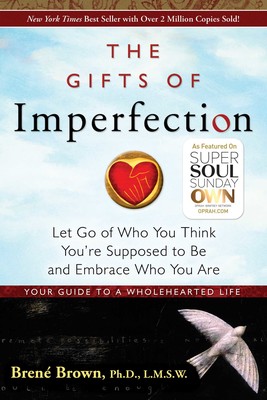
The Gifts of Imperfection, by Dr. Brene Brown
I recently reread The Gifts of Imperfection, by Brené Brown. It reminded me not to be so hard on myself and not to worry about what other people think of me. I listened to her book, Rising Strong, and it inspired me to be brave. That’s what finally prompted me to hire a professional editor to critique the first 50 pages of my novel. (See my July 12, 2021 blog post, 4 Other Books I Read in June 2021 and my July 26, 2021 blog post, How My First 50 Pages Stood up for Critique.)
Her post sort of dovetailed with what I was writing four months ago that ended up being postponed until today. She looked at her list of dreams from a view of practicality. I didn’t have to consciously do that when I made my list because it’s not my nature to dream about doing or having things I can’t afford or don’t have the health to do.
Taking stock on this milestone year
I graduated from high school 50 years ago. There. I’ve said it. Do the math. Yes, I’m 68 years old.
Photo credit: Zoltan Tasi on unsplash.com
There’s something jolting about admitting I graduated from high school 50 years ago. I don’t know what it is about those anniversary years that end in a zero. I was not prompted to take stock of my life last year, 49 years after my graduation.
Our 50-year high school reunion was planned for last month but had to be postponed until sometime next year due to the Covid-19 pandemic.
I was in a class of 191. At least 33 of my classmates have died. Talk about a sobering thought! More than one of those were special, lifelong friends of mine.
Assessing my blog topics
Once in a while, I need to take a step back and evaluate my life – how I’m spending my time, what I’m accomplishing, what I’m doing to benefit others, and what I’m doing to improve myself. This is one of those times, so please bear with me.
This is supposed to be my writing blog. My reading is important and integral to my writing; however, since the Covid-19 pandemic started, I haven’t written much about my journey as a writer until this summer when I decided to get the first 50 pages of my novel manuscript critiqued by an editor.
A blog is supposed to serve a purpose. It’s supposed to benefit the reader. I hope my continued journey as a writer will serve as fodder for my future blog posts and those posts will enlighten or entertain you in some way. Otherwise, you don’t have any reason to keep reading my blog.
No pressure there!
Photo credit: Daniel Thomas on unsplash.com
There are many things I enjoy about blogging. Over the years, I’ve developed friendly relationships with a few readers. They live all around the world. Many of them have opened my eyes to things I didn’t know. They’ve helped me understand different perspectives. They have enriched my life. I will never meet them except via the internet.
People in 20 countries visited my blog the last week in October. Since I started my blog, people in 144 countries and territories have looked at it. That is surprising, gratifying, and a bit scary.
I never know what’s going to strike a chord with readers. When I have a reader from China or some countries in Africa, it especially catches my attention and I feel a heightened sense of responsibility.
I appreciate your taking time to read my blog. I’ll try not to let you down.
Since my last blog post
Here in North Carolina, we raced right through autumn last week and jumped into winter. There was snow in the higher mountains in the state and our county had a freeze warning. It just doesn’t seem quite right to have a freeze warning before having a frost warning, but that’s life in North Carolina.
Photo credit: Janet Morrison
I’m still decluttering my home in hopes of making space for more creativity and less stress.
Until my next blog post
Have you assessed your life lately? What would make you happy? What’s missing in your life? What are you waiting for?
When April ended last Thursday, I was surprised to find that I’d read seven books during the month. Whether it was a result of the pandemic or the tedium of the last weeks of the 13 weeks I couldn’t walk, I don’t know. I just know I couldn’t seem to concentrate to read or listen to much fiction. I had better luck reading nonfiction books.
If you’ve read my blog for a while, you know that I get most of my books from the public library. The public libraries here closed suddenly in mid-March. Some books I wanted to read were not available from the public library in downloadable form. Waitlists for e-books filled up quickly as people realized it would be weeks or months before they could once again check out physical books.
What I discovered last month was that, in addition to reading books about the craft of writing, it was a good time to tackle my to-be-read (TBR) list. That list is made up of several hundred books I didn’t read when they were published. Some of the books on the list are books I realized months or years after their publication that I had become interested in them.
I read seven books in April. Here are my thoughts about them.
Sycamore Row, by John Grisham
I finally got around to listening to Sycamore Row, by John Grisham. What a treat! It was entertaining and funny.
Sycamore Row, by John Grisham
This book takes us back to the fictional Ford County, Mississippi that Mr. Grisham first wrote about in A Time to Kill. Sycamore Row is a story of inheritance, family greed, a non-relative who inherits everything in Seth Hubbard’s will, and some questionable lawyers. Everyone in town gets interested after it is revealed that Mr. Hubbard’s estate exceeded $20 million.
The path to justice in Sycamore Row runs from Mississippi to Alaska and back to Mississippi. There are surprised witnesses and in the end the reader learns the significance of the sycamore tree.
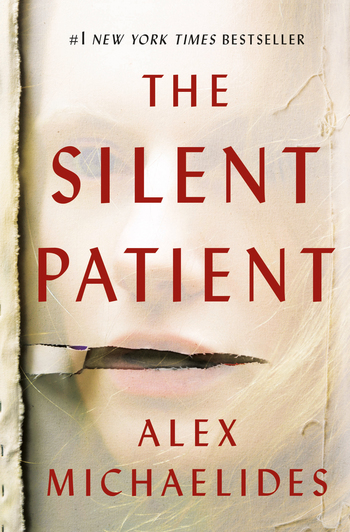
The Silent Patient, by Alex Michaelides
The Silent Patient, by Alex Michaelides had been on my to-be-read (TBR) list since I heard all the hype about it when it was published last year. This was reinforced when the movie adaptation was publicized. Yet, I didn’t read it until a couple of weeks ago. Or, rather, I listened to it. I regretted not reading it earlier.
The Silent Patient, by Alex Michaelides
The silent patient is Alicia, who murdered her husband, Gabriel, and immediately stopped talking. The narrator throughout most of the novel is Theo, a psychoanalyst who sets out to help Alicia.
In the midst of Theo’s quest to get Alicia to talk – and ultimately, to tell why she killed her husband, Theo discovers vulgar emails his wife of nearly nine years has exchanged with another man.
The Silent Patient was Alex Michaelides’ debut novel. This psychological thriller will keep you turning pages (or speeding up the rate at which the audiobook is being read to you.”
Alicia is a famous artist in London. Her new-found notoriety as a killer makes the price of her paintings skyrocket as she is safely tucked away in a secure facility being analyzed. As the story unfolds, the focus transitions from Alicia to Theo himself and his psychological state. He visits his former therapist, Ruth, who guides Theo through his own feelings of inadequacy. She encourages him to leave his wife.
Then Alicia becomes the temporary narrator in Part 2, Chapter 13. She reveals how much she hates the rifle Gabriel inherited from his father. She describes the days leading up to her shooting Gabriel five times.
A new twist to the story is revealed. At this point, you’re only halfway through The Silent Patient. A lot is packed in this book of only 336 pages (or less than nine hours of listening.)
In case you haven’t read it, I won’t spoil the rest of the story for you.
Everything Happens for a Reason: And Other Lies I’ve Loved, by Kate Bowler
I read a little about this book online and immediately got on the waitlist for the ebook at the public library.
The author, Kate Bowler, was raised an Anabaptist in a section of Manitoba, Canada containing numerous Mennonite communities. She learned early on that Jesus lived and taught the virtues of a simple life. Around the age of 18, Ms. Bowler started hearing about the “prosperity gospel” that many televangelists were preaching. It seemed that everyone was being attracted to this new idea that Jesus wants His followers to be wealthy.
Ms. Bowler describes the “prosperity gospel” as follows: “The prosperity gospel is a theodicy, an explanation for the problem of evil. It is an answer to the questions that take our lives apart: Why do some people get healed and some don’t?….The prosperity gospel looks at the world as it is and promises a solution.”
In her mid-twenties, Ms. Bowler interviewed “the prosperity gospel’s celebrities” and then wrote a history of the movement. What she found was that the prosperity gospel encourages its leaders to buy private jets and mansions. What she also found were people seeking a way to escape the lives they were living. Some wanted the high life, but most wanted relief from some kind of pain.
Something else Ms. Bowler found was that a part of her sought an escape, even as she cringed at the guarantees the prosperity gospel made. She came to believe God would make a way for her and hardships would merely be detours; however, she no longer believes that.
As a new mother, Ms. Bowler was diagnosed with cancer, and she was told, “Everything happens for a reason” and “God is writing a better story” until she didn’t want to hear it again. It made her feel like everyone had a theory about why she had cancer.
“I wish this were a different kind of story. But this is a book about befores and afters and how people in the midst of pain make up their minds about the eternal questions: Why? Why is this happening to me? What could I have done differently? Does everything actually happen for a reason? If I accept that what is happening is something I cannot change, can I learn how to let go?” – Kate Bowler
I sort of got mired down in the details in rest of the book and eventually lost interest in finishing it. I could not identify with all her “Why me?” thoughts and questions. I’ve had my share of physical problems, but I’ve never asked God, “Why me?” I tend to think, “Why not me?” Jesus never promised us a perfect life. He promised to be with us throughout our lives, no matter what happens.
Kate Bowler teaches at the Duke Divinity School.
The Whistler, by John Grisham
In my blog post on April 6, 2020, https://janetswritingblog.com/2020/04/06/eight-books-i-read-in-march-2020/ , I said, “A John Grisham novel has never disappointed me.” That statement probably still holds. I listened to The Whistler in April, but I didn’t get “into” it like I have the other Grisham books I’ve read. Let’s just say it was probably my fault and not Mr. Grisham’s.
The Whistler, by John Grisham
Much of April I seemed weighed down mentally by all the news about the coronavirus-19 pandemic. Many days I had trouble concentrating enough to read. I was trying to listen to The Whistler during one of those reading slumps. I would probably enjoy it more if I read it or listened to it during normal times.
Revolutionary Characters: What Made The Founders Different, by Gordon S. Wood
I minored in history in college, and this book reminded me of a history text book. In other words, it told me more than I wanted to know about each of the men the author sees as founders of America. Each chapter was about a different man, and one of them surprised me. I would have liked the book better if Mr. Wood had included several women.
Revolutionary Characters: What Made The Founders Different, by Gordon S. Wood
I’m planning to write a blog post on June 29 about some of the founders of America, so I’ll save my other comments about this book until that time.
I won’t hold you in suspense until then, though. The founder I was surprised to find on Mr. Wood’s list of eight men was Aaron Burr.
Stay tuned for more on this topic in a couple of months, just before the 4th of July.
Writing Vivid Settings: Professional Techniques for Fiction Authors, by Rayne Hall
I’m sure many of you couldn’t care less about the techniques fiction authors use to write vivid settings. If you’re a fiction fan, you just want the settings in the books you read to be so vivid that they put you there.
I took copious notes from this book, and I believe I learned more than a few things that will improve my writing skills. The book addresses ways to include all the senses in one’s writing, varying sentence structure, using weather for intensity, light to set mood, and detail for realism – but not too much detail, and using similes for world building – but not too many of them. The book gets into deep point-of-view, opening scenes, fight scenes, scary scenes, love scenes, night scenes, indoor scenes word choice, and research.
I highly recommend this book for anyone learning to write fiction.
Fiction Pacing: Professional Techniques for Fiction Authors, by Rayne Hall
I also found this book by Rayne Hall to be helpful. In it, she addresses varying the pace throughout a novel. She writes about how the length of sentences and paragraphs can either speed up the action or slow it down. Even word length enters into that, along with how to craft dialogue.
The book talks about how to use (and not use) techniques like flashbacks and memories, euphonics, strong verbs, and descriptions to control the pace in fiction.
Ms. Hall has written numerous writing craft books and I look forward to reading more of them.
Since my last blog post
X-rays last week showed good healing of my fractured tibial plateau so, after 13 long weeks, I was finally allowed to start putting some weight on my right leg. I feel like I’d been set free! I can now go anywhere my walker and I can go. I haven’t tried steps yet! It’s great to be able to go outside, even if we are still under a state-at-home order in North Carolina. I’m thrilled just to be able to walk outside!
Until my next blog post
Read a good book, if you have the luxury of time and concentration. I’m currently listening to A Conspiracy of Bones, by Kathy Reichs.
Be creative. If you are a writer or other artist, I hope you have productive creative time.
Stay safe and well. Listen to the medical professionals. We’re all in this together. The life you safe might be mine!
Let’s continue the conversation
If you’ve read The Whistler, by John Grisham, what did you think about it? What have you read lately that you would recommend to the rest of us? Have you supported an independent bookstore recently? If you want to give a shout-out to an independent bookstore, feel free to do so in the comments below or the comments on my Facebook page when I post this blog post later today.
Personal experience tells me it is a rare novel that will hold my attention well enough to be listened to instead of being read in printed form. I came to that conclusion as I wrote my September 2, 2019 blog post. In case you missed it, I wrote about two books I read in August and the audio book I stopped listening to at the halfway point. Here’s a link to that post: https://janetswritingblog.com/2019/09/02/3-5-of-the-5-5-books-i-read-in-august-2019/.
I’ve come to
the conclusion that, second to the quality of the writing itself, the verbal
delivery of the audio book professional reader is of utmost importance. If I
start to listen to a book but find the voice of the reader to be irritating or
the volume of the reader’s voice is all over the place, I can’t continue to
listen. I’m hearing-impaired, so I appreciate a steady volume on TV, the radio,
music, and audio books.
We all learn
in different ways, and I think my own non-scientific experiment in reading vs.
listening demonstrates that fact. Taking that train of thought another step
tells me that the same is surely true for children and how they learn. For
children who have trouble reading, what if their textbooks could be available
in audio? It seems to me this is worth a try.
Today’s blog
post is the third in a series of posts I’ve written or plan to write about
specific steps a novelist should take in the process of taking a manuscript on
the journey from rough draft to publication.
Here are the links to the earlier blog posts in my #FixYourNovel series:
In case you’re wondering, yes, “listenability” is a real word. I thought I’d coined a new word, but then I found it in the dictionary. What I mean by “listenability” is this: Does this book give the same depth of reading experience in audio form as it does in printed format?
With what I recently learned about the difference in reading
a book and listening to a book, I need to look at the hook and scene and
chapter beginnings in the novel I’m writing to see if they work well for the
book listener. This prompted me to do a little research.
She read my May 13 blog post and took time to respond to my
invitation for my blog readers to give me feedback on the opening line of my
novel manuscript. I was thrilled to hear from her, as she graciously gave me
specific advice about the sentence I’d written.
Ms. Horn recommended that, with audio in mind, I consider
breaking up the sentence. She pointed out that breaking up the sentence into
two or more sentences would help the reader to “see” each part of it. To
refresh your memory, here’s the way I had written the opening of my manuscript
as referenced in my May 13, 2019 blog post:
“Sarah McCorkle dropped her sewing basket
at the sight of her husband lying face down between the stone hearth and his
desk, sending thread, needles, and thimbles crashing and scattering on the wide
planks of the pine floor.”
Ms. Horn told me that it would be easier for the reader to “see” each part of that sentence if I broke it down as if in camera shots. She also gave me a link to another post on her website to reinforce this recommendation: https://www.method-writing.com/camera-shots-advanced-fiction-technique/. She even suggested I try performing the opening of my manuscript. (Watch out, Hollywood, here I come!)
Research
statistics
Sandra Beckwith’s August 21, 2019 blog post, “5 Way to Make Your Book Relevant to the Media” on the Build Book Buzz website (https://buildbookbuzz.com/5-ways-to-make-your-book-relevant-to-the-media/) included a link to an April 24, 2019 press release by Michele Cobb, Executive Director of Audio Publishers Association.
That press release reported that a 2019 survey conducted by
Audio Publishers Association and The Infinite Dial Survey by Edison Research
and Triton Digital found that 50% of Americans 12 years old or older have
listened to an audiobook.
This growing trend is partially due to the advances in technology which have enabled publishers to distribute books in numerous formats. We’ve gone from the founding of the company Books on Tape in 1975 to people in 2019 being able to listen to books wirelessly on various electronic devices. (That probably sounds like a long time to you, but those 44 years have flown by for me. I graduated from college in 1975.)
Chad R. Allen’s writing advice
In an email named “My Top
Piece of Writing Advice” on August 7, 2019, Chad R. Allen stated that his top
piece of advice for writing is to “be concrete.” The email focused on a third
way to look at a novel’s manuscript: “Is
it filmable? If a piece of writing is filmable, you can be sure it’s concrete.”
Mr. Allen is a writer, editor, speaker, and writing coach. He compared types of writing to a pyramid. Abstract writing (writing that “doesn’t show or engage the imagination”) is at the top. He wrote, “The bottom of the pyramid is concrete writing. It shows or illustrates. It does engage the imagination; it helps me to see (or hear or smell or taste or touch) something.”
My favorite of the points
Mr. Allen made in his email are the following:
“The best communicators (I think this is probably true of
speakers and writers) push as much of their content to the bottom of the
pyramid as possible.”
“But more often than not the way to
engage readers and hold their interest is to invite them into a scene.”
“Your job as a writer is to create an experience the reader
doesn’t want to quit. Often the best way to do that is with concrete writing.”
Mr. Allen gives the
following examples of concrete writing:
stories, metaphors, illustrations, dialogue, images, and sensory writing
(writing that engages the five senses.)
That brings us back to Mr.
Allen’s statement, “Is it filmable? If a piece of writing is filmable, you can
be sure it’s concrete.”
I don’t want to steal all
Mr. Allen’s thunder, but he made numerous good points in his email that I want
to hold onto.
He related an example from Natalie
Goldberg’s Writing Down the Bones
in which she wrote about enjoying a story someone told her. When she repeated
the story to her friends, they found it boring. She later realized that the
difference was that she was telling the story from the outside. Her friend had
told her the story from the inside out.
Mr. Allen
wrote in his email, “In other words, get
into the narrative. Write it from the inside so that others can experience
it with you. Don’t just convey information. Get into it and invite readers to
get into it with you.”
Chad Allen offered incredible advice in
his August 7, 2019 email to me, including the following: “Do a story/image audit of a given chapter.
Note the places where you go on for a while without a story or image or sound,
and try to find ways to add them in. Even better: replace the non-narrative
material with narrative material.
“If you’re writing history, instead of
recounting facts, try imagining a scene and bringing us into it. David McCullough
and Jeff Shaara have made a career of this.
“Ask yourself, ‘Is there a way to
unpack this principle with a story or metaphor or illustration?’ A metaphor or
image can do a lot of work for you.
“As you shape your content to be more and more concrete,
you’ll be creating an experience that readers relish.”
As I continue to evaluate every scene in my manuscript for The Doubloon, I think about how each one would come across on the written page and how it would sound if in an audio recording.
Here’s another possibility: podcast your blog or your book. I haven’t ventured into the world of podcasting, but here’s an interesting and encouraging article presented by Nina Amir and written by Jay Artale about using a podcast as a way to market your book or get your blog out to people who prefer audio content to the written word: https://howtoblogabook.com/free-podcast-share-book-blog-content/. There is much to consider, but Ms. Artale makes it sound like it’s not as difficult as I thought. There are free software programs to get you started. It’s something for bloggers to consider.
Since my last blog post
Last week I had the good fortune of listening to a virtual summit for authors. It was hosted by Tara R. Alemany of Emerald Lake Books (https://emeraldlakebooks.com/) and Mark Gerber of Emerald Lake Books. It was free! All I had to do was sign in on my computer, listen, and take notes. Each weekday there were four sessions on a wide range of topics of interest to writers.
In addition, on Tuesday, I listened to a free webinar hosted by Author Accelerator (https://www.authoraccelerator.com/.) It highlighted OneStopForWriters.com’s “Character Development Tool.” (A subscription is required in order to access OneStopForWriters.com’s resources.)
Many of the features of the “Character Development Tool” duplicate some of the processes I’ve already gone through on the historical novel I’m writing, but I can see it could potentially help me make sure my protagonist has an arc. Look for more on that in my blog post about Characterization, tentatively scheduled for November 11, 2019.
After five consecutive days of
listening to and watching the virtual summit and Tuesday’s webinar, I thought
my brain might explode. That didn’t happen until Saturday, when my computer
refused to let me download photographs from my hard drive to my blog.
A blogger should always have a “Plan B,” and that’s where I had to go this weekend. Today’s blog post was partially written and planned for a few weeks from now. I pulled it out and prepared it for today. As I write this, I’m unable to insert photo from my hard drive into my WordPress.com blog post. I’ve read that a blog should have at least one image, but this one will not. It’s not from my lack of trying.
The reason I had to go with “Plan B” is
that today’s scheduled blog post was “Great Smoky Mountains, Revisited – Part 1,”
and it was going to include numerous photographs. I hope to use it next Monday,
if I can get the bugs worked out of my computer.
Until my next blog post
I hope you have a good book to read.
I’m reading The Turn of the Key, by
Ruth Ware.
If you’re a writer, I hope you have
quality writing time.
Thank you for reading my blog. You
could have spent the last few minutes doing something else, but you chose to
read my blog.
Let’s continue the conversation
Would you
rather listen to or read a book? Would you rather listen to a podcast of a blog
or read the blog?
Everyone needs self-discipline, and
most of us learn it from an early age. Daily schedules must be met even by
infants. At my age, one would think self-discipline would no longer be an
issue.
I’m in awe of writers who also have
full-time jobs. They have to be intentional in finding time to write. When I
hear a writer say she gets up two hours earlier than is otherwise necessary
every morning in order to write, I’m blown away. I’m not a morning person and
the thoughts of getting up two hours earlier than necessary send shivers down
my spine. Plus, there’s no way I could write a complete sentence in the early
morning hours. My hat’s off to each and every writer who has to do this.
Being retired, I have “all the time
in the world.” For that, I am the envy of every working person. If I only had
“all the energy in the world” or the energy of an average child or teen, I’d be
living in a perfect bubble.
Deadlines
Photo by Tim Gouw on Unsplash
I’ve always been motivated by
deadlines. I finished term papers the night before they were due. I tend to
finish (or not finish!) reading library books the night before they’re due.
Self-imposed deadlines don’t usually work for me.
Every time I’ve tried to work out a
writing schedule on paper, I’ve had limited success. I tend to over-schedule my
days. Now that I have the freedom to do as I please, I want to do it all. I
can’t do it all, and that’s a lesson I’m trying to learn. Everything takes
longer than I think it will take.
Is writing my job?
Photo by LinkedIn Sales Navigator on Unsplash
Everything I’ve read about writing
and self-discipline says a writer must have it. Without self-discipline, the
writing won’t get done. I’ve read that I must treat my writing like it’s my
job. I’ve taken these adages as truth, but I’m here today to rock the boat.
I never had a job I truly enjoyed,
so the word “job” carries negative connotations for me. I love to write and I
enjoy doing the research historical fiction calls for. When my writing or
research becomes a job, I’ll probably lose interest and move on to something
else. The problem with that is: I can’t imagine not writing.
Self-discipline tips
I’m probably the last person who
needs to give others self-discipline tips or advice; however, I can’t be the
only person out there with the same or similar roadblocks. Illness happens, and
age slows most of us down.
Trouble with self-discipline and
things I’m feeling pressured to work on:
1. Writing Time
2. Building My
Writer’s/Author’s Platform
3. Sleep
4. Reading Time
5. Weight
All five things I listed above require self-discipline. What I’m seeking is a balance of self-discipline and self-love. I must love myself and like myself before I can find productive self-discipline. What part does motivation play? If I’m happy with myself, I’ll be more productive.
Making time to write
Photo by Hope House Press – Leather Diary Studio on Unsplash
Instead of scheduling writing time
each day, I think I’ll write better quality prose if I give myself the freedom
to write when the mental and physical energy come together. That might not
happen every day. Criticizing myself on the days those don’t come together is
not productive. Most days I’m in a brain fog, and there’s no point forcing
creativity.
Making time to build a writer’s
platform
I’m taking an online course about
building a writer’s platform. I’ve learned that I’m doing some things right,
but there are many things I need to start doing. It seems overwhelming, but I’m
learning a lot about what an author needs to include in his or her website and
blog.
Photo by Jamie Street on Unsplash
I have a couple more weeks to complete
the course. It will take longer than that to implement all the things I’ve
learned. What I’m trying to learn is to not be too hard on myself about the
things I don’t get done. Again, that’s not productive. I need to concentrate on
what I do accomplish.
If you want to know more about the course I’m taking, here’s a link: https://www.wow-womenonwriting.com/. Click on “Classes” and then scroll down. The course I’m taking is Karen Cioffi’s “Build Your Author/Writer Platform.” It’s offered again in September and November.
Sleep
I have a medical condition that mess up my circadian rhythm. After 32 years of wrecked sleep, I’m going to a sleep coach. She’s helping me get on a regular sleep schedule.
Photo by Alexandra Gorn on Unsplash
The process involves getting a
certain amount of full-spectrum sunlight for at least 30 minutes in the morning
and in the evening, eating meals and carbohydrate snacks at prescribed
intervals, dimming the lights and not sitting near the TV for three hours
before bedtime, not looking at an electronic screen for two hours before going
to bed, getting up and going to bed at the same time every day, and turning the
lights out at an appointed time to make my bedroom so dark I literally can’t
see my hand in front of my face.
Not looking at my computer or my
tablet for two hours before bedtime and getting up at the same time every
morning have been the most difficult facets for me.
As of last week, I’m supposed to
drastically curtail my “to do” list and allow myself more time to accomplish
each task. You see, each thing I’m feeling pressured about relates to getting
my sleep regulated. Getting my sleep regulated will give me the opportunity to
have a better quality of life and will make it easier for me to do the things I
want to do.
Making time to read
Photo by Glen Noble on Unsplash
In order to be a good writer, I need
to be an avid reader. For a couple of months now, I can’t seem to set aside
enough time to read what I want to read, or I fall asleep with the book or
e-reader in my hands. (Those “dim lighting for three hours before bedtime” and
“no electronics for two hours before bedtime” rules aren’t helping!)
Since I report on my blog the books I’ve read, my reading is in some ways becoming a job. I don’t want to feel that way about reading, so I might lighten up on my TBR (To Be Read) list. If the books on my TBR were gathered together instead of just being a list, they would probably look something like the above photo!
Weight
Photo by i yunmai on Unsplash
I need to lose weight. I’m trying to limit myself to 1,200 calories each day. Most days I’ve succeeded, but I’ve only just begun. Counting calories is a time-consuming endeavor, but I need to do this before things get out-of-control.
Until my next blog post
The Spies of Shilling Lane, by Jennifer Ryan
I hope you have a good book to read or listen to. I’m listening to The Spies of Shilling Lane, by Jennifer Ryan.
My reading was haphazard in May, to say the least. I read
snippets of several books here and there. I read three books, listened to one
book, and read 35% of another one before it had to go back to the public
library. I’m having some issues with my computer, but here goes.
The First Conspiracy: The Secret Plot to Kill George Washington, by Brad Meltzer and Josh Mensch
The First Conspiracy: The Secret Plot to Kill George Washington, by Brad Meltzer and Josh Mensch
I love
learning things, and it’s amazing how much I don’t know at my age. One thing I
learned from this book seems so basic I’m embarrassed to admit I didn’t know
it. In my history studies I didn’t learn that the Continental Congress created
the Continental Army in 1775. In my mind, I assumed the Continental Army was
formed after the signing of the Declaration of Independence in 1776.
The First Conspiracy: The Secret Plot to Kill George Washington, by Brad Meltzer and Josh Mensch is
almost a day-by-day telling of American Revolutionary history with focus on the
little known facts of the things that happened in the shadows – behind the
scenes. I minored in history in college, but I didn’t know about the conspiracy
to kill George Washington as Commander of the Continental Army.
Most of what I knew about William Tryon was how he robbed the citizens of North Carolina blind to build “Tryon Palace” in New Bern, North Carolina while he served as the colony’s governor. I knew he left that position to take the more lucrative office of governor of the New York colony.
One thing I
learned from The First Conspiracy was
how Tryon was ruthless in his dealings with the rebels in New York and how he
continued on that mission even after taking refuge in a British ship in New
York Harbor.
An amusing
part of the book was the description of the arrest and questioning of the four
men who had decided to print paper currency in secret for the colonies. They
hadn’t agreed on an alibi, so each one had a different explanation than the
others and, of course, one denied having any knowledge of the printing press in
the attic.
I’d read
about 70% of the book before it had to be returned to the public library
because another patron was waiting for it. I’ll check in out again later in
order to read the rest of the story.
The Waxhaws, by Louise Pettus, assisted by Nancy Crockett
The Waxhaws, by Louise Pettus with Nancy Crockett
I wish I’d known in 1983 to purchase a copy of this book
when it was published. Now, if you can find a copy to buy, it will likely cost
you more than $150. I was delighted to find a circulating library copy in May,
and I devoured the content.
This book, more than anything else I’ve read, helped me get
a feel for life in The Waxhaws just south of the North Carolina-South Carolina
border in colonial times. I hope I’m able to communicate that sense of place
and time in my historical novel, The
Doubloon, which primarily takes place in that Carolina backcountry
settlement in 1769-70.
Anyone interested in day-to-day life in colonial America
owes Louise Pettus and Nancy Crockett a debt of gratitude for all the South
Carolina history they preserved and shared with each other and their readers.
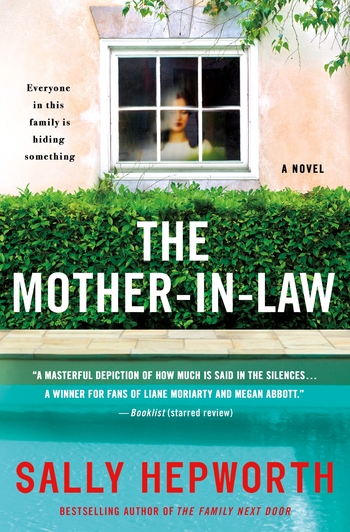
The Mother-in-Law, by Sally Hepworth
The Mother-in-Law, by Sally Hepworth
I’ve become
a fan of Sally Hepworth’s novels, so I got on the wait list for her latest book
as soon as it showed up on the “on order” list on the public library’s online
catalog. I’ve read all her novels except The
Secrets of Midwives.
This novel
will keep you guessing “who dunnit.” Everyone seems to have issues with the
mother-in-law. Her daughter-in-law tells this story. She has issues with her
mother-in-law. So does her husband, his sister, his sister’s husband. It seems
like most people who come in contact with the mother-in-law have a hard time
dealing with her quirks and aloofness.
There is a
totally different side the mother-in-law shows the people she helps through her
volunteerism, though. It’s difficult for her family members to understand this
part of her life because it seems out-of-character.
As the
reader begins to learn the mother-in-law’s backstory, he or she will understand
what made her the way she is or was. She’s found dead in her home. Who killed
her? You might be surprised.
The Personal
Philosophies of Remarkable Men and Women, edited by Jay Allison and Dan Gediman
in association with NPR (National Public Radio)
I listened to this book. It contains “This I Believe” essays
written by people from all walks of life. Some are or were famous, others I had
not heard of. Among those whose essays are in this current audio collection are
Helen Keller, John McCain, Oscar Hammerstein II, William O. Douglas, Albert
Einstein, Leonard Bernstein, Martha Graham, John Updike, Carl Sandburg, Jackie
Robinson, Eleanor Roosevelt, Gloria Steinem, Colin Powell, Helen Hays, and Bill
Gates.
The Afterword by Dan Gediman gives the history of This I
Believe. The original book contained 100 essays and was done by legendary
journalist Edward R. Murrow. The first of the essays was broadcast on radio on
Easter Sunday in 1949.
In a nutshell, the This I Believe essays are supposed to be
about “the guiding beliefs by which they live their lives.” They are short,
being about five minutes long.
One of the goals of the This I Believe organization is “to
facilitate a higher standard of public discourse.”
If you wish to know more about this international
organization, visit
Stony the Road:
Reconstruction, White Supremacy, and the Rise of Jim Crow, by Henry Louis Gates, Jr.
Stony the Road: Reconstruction, White Supremacy, and The Rise of Jim Crow, by Henry Louis Gates, Jr.
I learned a lot from this book. I knew I would. Henry Louis
Gates, Jr. is an icon when it comes to history. I only had time to read the
first two chapters of Stony the Road:
Reconstruction, White Supremacy, and the Rise of Jim Crow, before it
disappeared from my Kindle and went back to the public library. (Don’t worry. I
immediately got back on the wait list for it so I can continue reading it.)
Look for my blog post next Monday about the important lesson
I learned as a writer while reading Stony
the Road. It wasn’t a lack of interest that caused me to read only two
chapters. It was a case of “too many books, so little time” and the fact that I
dedicated most of my time to writing instead of reading in May.
Since my last blog
post
Since last Monday’s blog post, we jumped right over spring
and went into summer. Last week it was 95 degrees on five days and 94 on the
other two. According to the calendar, summer begins in three weeks. We have
gone from too much rain to no rain in about three weeks. I’d rather have heat
and drought than flooding or tornadoes like they’re having in the central part
of the US, so I’m not complaining.
I got some good feedback about last Monday’s blog post.
Thank you, Jules Horne and all the others who took the time to comment on here
and on my Facebook pages.
Until my next blog
post
A couple of weeks ago I read that a blogger should use
second person point-of-view instead of first person. There are too many rules. I’ll
try to do better in the future.
If you’re a writer, I hope you have quality writing time and your projects
are moving right along.
Thank you for reading my blog. You could have spent the last few minutes
doing something else, but you chose to read my blog.
Let’s continue the
conversation
Have you read any of these books? If so, please share your
thoughts below. What are you reading?
It’s important for a writer to do a lot of
reading; however, I wonder if I’ve taken that to the extreme. The other day I
realized I was using my stack of library books as an excuse not to work on my
novel.
Most of my writing the last couple of years was
for my blog. I aspire to be a novelist. For that to happen, I have to put in
the time that first book requires.
“H” is
for Historical Fiction
If you’ve followed my blog since April 10, 2017 [https://janetswritingblog.com/2017/04/10/h-is-for-historical-fiction/ ] you know that I had finished the first draft of a historical novel when I discovered a fact that prompted me to make major changes in that 96,000-word manuscript. In fact, I concluded that I had to start over.
I hit a brick wall! (Photo by Janet Morrison)
Here are three key paragraphs from my April
10, 2017 blog post:
“One of my dreams is to write a
historical novel. The historian in me struggles with the fiction in historical
fiction. The writer in me wishes I could run fast and loose with the facts.
“Over the weekend, I did a lot of
reading on the subject in preparation for writing today’s blog post. In the
process, I found some information that shed more light on the historical event
that serves as the basis for the novel manuscript I’ve been working on for the
last decade or so.
“The combination of the new
information I found about that event when paired with some of the reading I did
yesterday about the craft of writing historical fiction made my head spin. The
combination of the two, in fact, has convinced me that I must start over writing
my novel. Yes, you read that correctly. I must start over.”
Where I went from there
I changed the location, the year, and the
characters from the original story. Although much of the plot could remain
intact, the necessity of starting over and getting my head around a new
location when I thought I was getting close to trying to get the novel
published took the wind out of my sails.
I tried to see it as an opportunity. The
reality was two years of procrastination.
Common sense told me it would be a challenge
to start writing “page 1” again, but I didn’t fully grasp how difficult the
rewrite would be until I found myself unable to sit down to do the work. What
I’ve learned over the last 24 months is – at least for me – writing is
fun/enjoyable work but the idea of rewriting
a full-length novel is gut wrenching.
In terms of production, my journey as a
fiction writer has been abysmal the last two years. I continued to study the
art and craft of writing, and I know I benefited from those studies. I benefit
from reading good fiction, but it is time for me to stop writing about writing
and get back to the actual work of writing.
The following words from my April 10, 2017
blog post haunt me today, since I have not had the grit I needed in order to
follow through:
“I’m certainly not the first writer
who never got her first novel published. There are numerous stories about first
manuscripts being lost. Some succumbed to fire, while others were mistakenly
left on a train and were never seen again. Many first manuscripts get rejected
so many times by publishers that the writer eventually puts it away and moves
on to another novel. Most writers have had to start over. That is what I will
do, and I believe the end product will be better than The Spanish Coin
manuscript.”
My April 10, 2017 blog post was a
pep talk for myself, but it didn’t work.
Since
my last blog post
I’m weary of making excuses – and maybe
that’s what it took for me to finally start rewriting The Spanish Coin in earnest last week. I wasn’t satisfied with the
new location for the rewrite. I threw caution to the wind on Thursday and took
the story back to its original location. I’m familiar enough with The Waxhaws
section in present-day Lancaster County, South Carolina, that I think I can
make it work.
The true story that inspired my original
manuscript is my inspiration for the new story. The year is probably 1767
instead of 1771. There is still a mysterious murder, but the victim is now a
fictitious character.
I changed the working title from The Spanish Coin to The Doubloon. New title, new story.
Photo by Aaron Burden on Unsplash
Since Thursday, I’ve written 14,000 words. The
monkey is off my back! I’ll report my progress in my blog posts on Mondays, so
you can hold me accountable.
Until
my next blog post
I hope you have a good book to read.
I just finished listening to The Island
of Sea Women, by Lisa See. It’s a historical novel about an island off
Korea where the women have an incredible ability to dive in the ocean and
harvest specific fish and other sea life. I’m eager to start reading Tomorrow’s Bread, by Anna Jean Mayhew as
soon as it is released tomorrow!
If you’re a writer, I hope you have
quality writing time. If you, too, are facing a novel rewrite, I wish you the
stamina it takes to see the job through.
Thank you for reading my blog. You
could have spent the last few minutes doing something else, but you chose to
read my blog.
Look for my #TwoForTuesday blog post
tomorrow: My Two Favorite Unsung Female
Heroes.
Let’s
continue the conversation
I always welcome your comments. I
appreciate your moral support and constructive criticism.
Books can entertain, educate, or even change one’s thinking.
When I looked back over the list of the 56 books I read in 2018, I was amazed at the variety and the things I learned. I learned some history while I was entertained, and I hope I learned something about writing. Several of the books changed my thinking. You can’t ask a book to give you more than that.
The
books that entertained, educated, or changed me or my thinking in 2018 are
listed here in alphabetical order by author.
Fascism: A Warning, by Madeleine
Korbel Albright
The
Taster, by V.S. Alexander
The
Atomic City Girls, by Janet Beard
White
Chrysanthemum,
by Mary Lynn Bracht
Climbing
Over Grit, by Laleh Chini and Abnoos Mosleh-Shirazi
Another
Ocean to Cross, by Ann Griffin
Sea
Prayer, by Khaled Hosseini
The
Tattooist of Auschwitz, by Heather Morris
A
Bigger Table: Building Messy, Authentic,
and Hopeful Spiritual Community, by John Pavlovitz
Fighting
to Win: Samurai Techniques For Your Work
and Life, by David J. Rogers
The
Broken Girls, by Simone St. James
Undaunted: Surviving Jonestown, Summoning Courage, and
Fighting Back, by Jackie Speier
I have heard from a number of you since then. You have
offered encouragement and helped prop me up. Knowing I have blog readers in
quite a few countries from around the world in addition to those in the US who
cared enough to take time to leave comments has boosted my morale and helped me
to determine that I must continue to work on that historical novel I’ve worked
on off and on for a decade.
Even if there are days I can only write for 15
minutes, then that’s what I’ll do in 2019. Slowly but surely, I will finish
writing that book!
At Home on the Kazakh Steppe: A Peace Corps Memoir, by Janet Givens
I hope you have a good book to read. I’m reading At Home on the Kazakh Steppe: A Peace Corps Memoir, by Janet Givens.
I’m thoroughly enjoying it. You can check out her website at
https://janetgivens.com/.
If
you’re a writer, I hope you have productive writing
time.
Thank you for reading my blog. You could have spent the last few minutes doing something else, but you chose to read my blog. I appreciate it and I welcome your comments.
Let’s
continue the conversation.
What are some of the books that educated you or
changed your life or your thinking?
I read an interesting mix of books in September. I thought about just blogging about the novels I read but decided to include the nonfiction books, too.
The Death of Mrs. Westaway, by Ruth Ware
The Death of Mrs. Westaway, by Ruth Ware
This book really kept me guessing! Harriet “Hal” receives a letter requesting her attendance at the funeral and reading of the will of her grandmother. Or is Mrs. Westaway her grandmother? Hal’s mother is dead, so she can’t ask her. Or was the woman who raised Hal really her mother?
Hal has never heard of Mrs. Westaway, but she could really use some inheritance money. Off she goes to meet this family she’s never known to try to be their long-lost relative long enough to grab her inheritance and run. That’s just the beginning. Sound like a novel you’d enjoy?
Ruth Ware is also the author of The Woman in Cabin 10, which I read last year and blogged about on October 4, 2016: What I read in September.
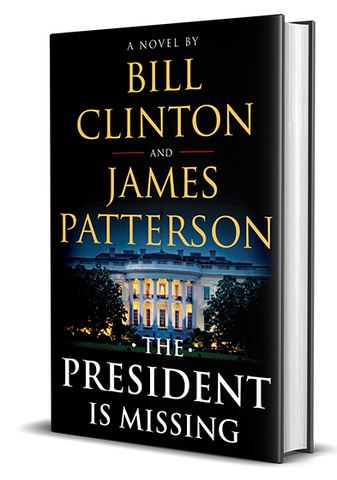
The President is Missing, by Bill Clinton and James Patterson
The President is Missing, by Bill Clinton and James Patterson
Right off the bat, I’ll say I thoroughly enjoyed this book. I’d never read a book by James Patterson, so I thought this one would be a good first selection. It did not disappoint.
The premise of the book turned out not to be what I was expecting. The book kept me on the edge of my seat – which isn’t easy for a 500+ page book. Since I am technologically challenged, the story grabbed me by the throat and wouldn’t let me go. I’m not going to ask anyone how plausible the story line is because I’d just as soon not know the answer. If it’s possible, there’s nothing I can do to stop it.
If you enjoy a thriller with non-stop action, you’ll like The President is Missing. If you aren’t a fan of former US President Bill Clinton, do yourself a favor. Forget he was the co-author and enjoy the book.
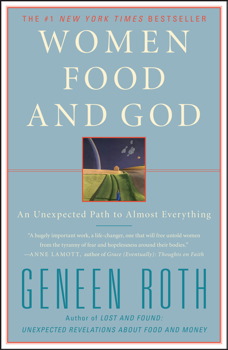
Women, Food and God: An Unexpected Path to Almost Everything, by Geneen Roth
Women, Food and God, by Geneen Roth
I went into this book not knowing what to expect. Now that I’ve read it — well, more than half of it, — I don’t know what to say.
Don’t quote me on this, but I think the takeaway I was supposed to get is that it’s not about the food. If you over eat it’s because you’re trying to fill a void in your life. The deeper the book got into meditation and analyzing yourself, the more my mind drifted to other things. Things like, “What’s for supper?”
One thing I found in the book more than once was the recommendation to only eat when you’re hungry and to eat what you want to eat. I have tried to be more cognizant of eating when I’m hungry and not just because the clock tells me it’s time to eat.
If you’ve read the book, I’m interested in knowing what you thought of it. Maybe I missed something critical and life changing.
The Harvard Medical School Guide to A Good Night’s Sleep, by Lawrence Epstein, M.D. with Steven Mardon
The Harvard Medical School Guide to A Good Night’s Sleep, by Lawrence Epstein, M.D. with Steven Mardon
I see you rolling your eyes. You’re saying, “You’ve got to be kidding!” I’m not kidding. I read the book. It includes many recommendations, depending on what your sleep problem is. There were five categories. The problem was that I checked off three.
That led to some confusion over which path I should follow to help with my sleep. For instance, for one of my problems it recommends that I stay on a daily schedule, including eating meals at the same time every day. So much for Ms. Roth’s recommendation to only eat when I’m hungry!
I have instituted some of the general sleep hygiene guidelines. One recommendation is to cover all the lights from electronic equipment in the bedroom. I now have a box over the light on my TV converter box, a dark blue washcloth over my clock radio, and business cards propped up over the green light on the side of my hearing aid Dry & Store.
I’m doing better about going to bed at a regular time. I no longer watch TV in bed. (The box over the converter box helped take care of that!) I listen to soft instrumental music when I go to bed. I try not to look at a computer screen for two hours before I go to bed. I try not to eat anything for two hours before bed.
After following these basic guidelines for a few weeks, I will probably have to see a sleep coach for additional instructions. With chronic fatigue syndrome, my circadian rhythm is off by four to six hours. After dealing with this for 31 years, I’m tired fighting it, and I don’t know what a sleep specialist can do about it. Time and a few appointments with a sleep coach will tell.
Snap, by Belinda Bauer
I read the first four or five chapters of this thriller before I had to return it to the public library. The first three chapters really had my attention. Then, it took a turn and I wondered if I’d missed something.
I’m interested enough in the characters to try to read it again. Have you read it? What did you think about it?
Since my last blog post
I’ve been following the United States Senate Judiciary Committee hearings about the confirmation of Brett Kavanaugh for appointment to the United States Supreme Court. The political science student in me just can’t help herself. The hearings became quite explosive on Thursday and Friday. This promises to be another interesting week. I’m seriously considering not looking at Facebook again until the current crisis ends.
I’m trying to follow the news of the recovery after Hurricane Florence in eastern North Carolina and South Carolina, but the news is getting more difficult to access as politics and other topics are taking the spotlight.
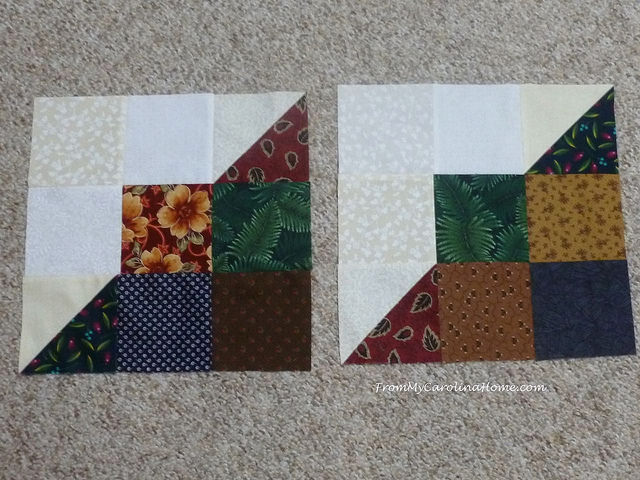
If you sew or quilt, a blogger I follow has launched a project to make quilts for the people affected by Hurricane Florence. If you’re interested or know someone who might be, you can learn about the project at https://frommycarolinahome.com/2018/09/26/carolina-hurricane-quilts/. Links to instructions and all the information you need can be found on Carole’s blog. I plan to try to make a few blocks to contribute to the project.
The news reports and photographs of the tsunami in Indonesia over the weekend are heart wrenching.
Until my next blog post
I hope you have a good book to read. I’m reading The Tattooist of Auschwitz, by Heather Morris. It’s based on a true story.
If you’re a writer, I hope you have productive writing time.
Thank you for reading my blog. You could have spent the last few minutes doing something else, but you chose to read my blog. I appreciate it! I welcome your comments.
Let’s continue the conversation. Have you read any of the books I mentioned in today’s blog post?
My first blog post of the month is usually about the books I read the previous month and sometimes a little about my writing. In recent months I’ve read so many books on occasion I’ve had to split the post in half. This is not the case today.
The Last Child, by John Hart
Knowing that John Hart’s sequel to The Last Child was being released, I got on the waitlist for the sequel at the public library and then hurriedly read The Last Child. It was awarded the Edgar Award in 2010 for Best Novel.
The Last Child was a good read. Mr. Hart made me really like the troubled 13-year-old boy, Johnny Merrimon, and the police detective, Clyde Hunt, who took a personal interest in Johnny and tried to guide him and keep him on the straight and narrow.
Johnny’s twin sister disappears and he takes it upon himself to find her. Everyone else thinks she’s dead, but Johnny is on a mission to find her when a second local girl disappears. Mr. Hart’s gift for descriptive writing puts the reader smack dab in the rural North Carolina setting of this book.
The Hush, by John Hart
I liked The Last Child. I liked the characters and I appreciated and enjoyed Mr. Hart’s writing style and talent. I couldn’t wait to get The Hush to see what happened to Johnny, Jack (Johnny’s friend), Detective Hunt, and Johnny’s mother ten years after The Last Child. I actually read 1bout 60 pages the first night I had it, but I struggled through the rest of the book.
It is my policy not to comment on books I read that I don’t like. I’m not a book reviewer. I just like to share books that I have enjoyed reading. The Hush, by John Hart just didn’t appeal to me. Since I’d enjoyed The Last Child and subsequently read its sequel, The Hush, I felt compelled to comment on it as well.
The writing was great, but mystical, paranormal stories just aren’t my cup of tea. I kept thinking the plot would move beyond the swamp which had bizarre effects on everyone who ventured into it, but it just got deeper into the weirdness. I read until the very end, but it was more work than pleasure. Again, I’m just not a fan of that type of book. Don’t judge it by me. You might like it.
The Family Next Door, by Sally Hepworth
The Family Next Door is the third of Sally Hepworth’s novels I’ve read. In case you missed them, here are the links to the blog posts in which I commented on The Mother’s Promise and The Things We Keep: What I Read in April (posted May 2, 2017) and You Must Read (Some of) These Books! (posted July 3, 2017).
The Family Next Door, by Sally Hepworth
Ms. Hepworth is from Australia and all her novels are set there. The Family Next Door is set in a neighborhood in Melbourne in which it is assumed every house will be bought and lived in by a young couple with children. When Isabelle, a single woman, moves in next door to Essie, she and all her neighbors speculate that Isabelle is a lesbian.
Since I am a single woman, this struck a nerve with me. Married people often assume that all single people are homosexuals. Another false assumption that many married women make – and which was demonstrated in this novel – is that all single women who are not lesbians are a threat to them because we want their husbands. This is also a myth.
Perhaps you can see why I was drawn into this book and had to keep reading to see how Isabelle’s life unfolded and what was going to happen to Essie and each of her neighbors. It turned out that each couple in the neighborhood harbored secrets. There wasn’t a perfect marriage in the bunch. I won’t spoil the book for you by telling you Isabelle’s story. I’ll just say there are some unexpected twists in the story.
Sally Hepworth’s 2019 novel is titled The Mother-in-Law. I’ve never had one of those, but you can be sure I’ll be on the waitlist for it at the public library as soon as it’s on order.
Until my next blog post
I hope you have a good book to read. I’m reading Divine Prey Noramgaell Saga Book 1), by Chris Andrews. Chris writes fantasy, which is another genre out of my comfort zone; however, Chris has been so generous with his writing advice that I really want to read his book. It’s his debut novel. If you’re a fan of fantasy, please look for it. Like Sally Hepworth, Chris lives in Australia. His book and several collections of his short stories are available from Amazon.
If you’re a writer, I hope you have quality writing time.
Feel free to share my blog posts on Twitter, Pinterest, Facebook, or with your friends via email.
Thank you for reading my blog! What book are you reading? Do you ever read something out of your comfort zone? If so, how did it make you feel? Perhaps you discovered a new favorite genre you didn’t expect. Or perhaps it turned you off to all reading for a while. Share you experience below in the comments section.














 Janet's Writing Blog