I write southern historical fiction, local history, and I've written a devotional book. The two novels I'm writing are set in Virginia and the Carolinas in the 1760s. My weekly blog started out to follow my journey as a writer and a reader, but in 2025 it has been greatly expanded to include current events and politics in the United States as I see our democracy under attack from within. The political science major in me cannot sit idly by and remain silent.
Calling all historical fiction fans: I need your help with something!
I mentioned in May 1, 2023 blog post, Some of the Books I Read in April 2023 that I was toying with the idea of writing some historical short stories related to the historical novel I’m working on. I’d read that suggestion in Writing Short Stories to Promote Your Novels, by Rayne Hall as a way to create interest in the characters in one’s novel before that book’s publication.
Since I need to grow my mailing list greatly before I publish the novel, it appears I’ll have plenty of time to write a few short stories. The process should produce various benefits to me and my potential readers.
Photo by Aaron Burden on Unsplash
In addition to my novel readers getting a head start in learning about some of the book’s characters and the 18th century world in which they live, such writing will help me flesh out the characters and get better acquainted with them. You and I can both get a good grasp on what makes them tick.
I’ve been brainstorming ideas for the stories. If it all works out like I envision, I will self-publish the stories in an ebook collection. My timeline is written in pencil with a big eraser nearby. If nothing else in the last year of self-publishing two local history books and trying to self-publish a family cookbook, I’ve learned that flexibility is a necessity.
Readers, what do you think? If you’re a fan of historical fiction, let me know what you think of this project. Would you enjoy getting acquainted with some of the characters in my novel(s) and the world in which they live in the 1760s and 1770s before getting to read the novel(s)?
Characters such as Elizabeth Steele who had tavern in Salisbury, North Carolina? George, who was a slave in The Waxhaws in South Carolina? Oliver McNair, who was educated at the College of William and Mary in Williamsburg, Virginia, and ended up in The Waxhaws? Betty Jackson’s story of family obligations in The Waxhaws?
Would you be interested in reading such short stories while I continue to work on my novels?
In the meantime… if you haven’t subscribed to my newsletter yet, please visit my website at https://www.janetmorrisonbooks.com and click on the “subscribe” button. In return, you’ll receive a free downloadable copy of my first historical short story, “Slip Sliding Away” and you’ll receive my e-newsletter every other month. Do it right now!
Since my last blog post
My research last week for my historical fiction writing focused on how food was cooked in the southern colonies in the 1760s and 1770s. I have a growing appreciation for how time consuming it was to prepare a meal then.
A funny thing happened to me at the public library the other day. I had been given some soft mountain mint and was eager to find a book with good information about how to root it. I typed, “how to grow mint” in the library system’s search engine. The response I received was, “Nothing found for how to grow mint. Did you mean ‘how to grow marijuana’? View 13 results.” It’s sort of a sad commentary that the system has no books about how to grow mint, but 13 books on how to grow marijuana. a sign of the times, I suppose. (Before you try to enlighten me, yes, the library had plenty of books about growing herbs. I just started by looking for one specifically about mint.)
Until my next blog post
Take time on this Memorial Day in the United States to remember and give thanks for those who gave their lives in the military service of our country.
I hope you have a great book to read.
Take time to enjoy friends and family.
Remember the people of Ukraine.
Don’t forget to give me some feedback about my short story plan!
I meant it was time to take all the steps it takes to
get a novel published. There are many additional steps. I am, no doubt, blissfully
unaware of some of them. Today I’ve listed many of the individual things that
need to be done when polishing a novel manuscript. I’m sharing it here in case
it will help someone else who is just starting out.
Steps
to polish a novel manuscript
Most of the items I list below apply no matter what genre your novel is, but several of them are specific to writing historical fiction. Photo by Kaitlyn Baker on Unsplash
Photo by Kaitlyn Baker on Unsplash
I don’t have all the answers. In fact, I have more
questions than answers, but I’m learning every step of the way.
Things
I’ve done since last Monday’s blog post include the following:
Moved the inciting event from page 45 to page 28 and made necessary scene adjustments due to that change in timing;
Changed several character’s surnames so they won’t be mistaken for persons who lived in The Waxhaws, the Rocky River Settlement, and Salisbury in the 1760s;
What’s left to do? Plenty! I need to:
Read entire manuscript aloud to make sure it flows naturally, makes sense, has the right amount of backstory, doesn’t have information dumps, and doesn’t have plot holes;
Characterization: Are the characters distinguishable, what are their motives, and are their arcs in the right places?
Check Point-of-View in every scene;
Tweak Scene Plot Outline;
Consider hiring a Scene Outline Critiquer;
Take professional editor’s recommendation into consideration and make those changes;
Authentic Details: Add details where needed to make sure the reader will feel like they are in The Waxhaws, the Rocky River Settlement, and Salisbury in 1769-1770;
Photo by Glenn Carstens-Peters on Unsplash
Backstory: Have I included just enough, too little, or too much?
Dialogue: Have I used words not in usage in 1769?
Narrative and Dialogue: Have I used any words too often?
Fine tune every sentence, paragraph, scene, and chapter, checking for things like cause and effect, strong verbs; use of passive voice; character act first, then speak; and the overuse of adverbs;
Check spelling;
Check all punctuation — the most difficult task for me; and
Read through the novel aloud again. Have I told a good story?
After
I do everything I can
After I do everything I can do to make the manuscript the best it can be, there is still hard work to be done. I’ll list some of those in a blog post seven or eight months from now. I’ll know more from experience by then.
Meanwhile
I need to continue to build my writer’s platform.
That’s one thing this blog is doing for me. Along the way, I hope my blog
readers will discern the kind of writer I am.
The
road to publication
It is
daunting road that lies ahead and there will probably be some potholes and
detours along the way.I’ve
worked on this historical novel manuscript for something like 15 years. I’ve
lost track of time and can’t say with certainty when I started working on it.
Until recently, I referred to it as The Spanish Coin. In an effort to give
it a two-word title, I changed the working title to The Doubloon. If I’m fortunate to get it published by a publisher,
as opposed to myself, I will lose control of the title. I’m trying not to get
too attached to either working title.
#FixYourNovel
In the coming months I plan to address these steps
writers should take as they work their way through the novel writing and
traditional novel publishing process. From time-to-time, I will blog about the
steps I listed above in blog posts titled “FixYourNovel #_,” and that’s “#” in
the pre-Twitter numeric.
Look for the first installment in my “#FixYourNovel” blog
series next Monday: Read entire novel
manuscript aloud.
Do I have the audacity to write about how a writer goes
about “fixing” his or her novel? Only time will tell.
Photo by Hello I’m Nik on Unsplash
Perhaps I
can help someone out there who is also writing a debut novel, and some of the
process might be of interest to those of you who like to read fiction. If my
blog readers start dropping like flies, I’ll know you’re not interested.
Until
my next blog post
I’ll read my manuscript out loud and see what it
sounds like from start to finish.
Let’s
continue the conversation
When you read a blog written in first person point-of-view, do you feel like you’re being talked “at” or not? Do you feel more included when you read a blog written in second person? Does it depend on the topic? Have you ever thought about it?
January is over, so it’s time for me to “fess up” about how I spent the month. Perhaps a better way to say that is “what I accomplished.” In my January 8, 2018 blog post (2018 Reading, Writing, & Living Plans) I felt I needed to be accountable to my blog readers. In order to do that, I said I’d set monthly writing goals. For January, I set a modest goal of adding 2,000 to the scenic plot outline for my historical novel, The Spanish Coin.
My writing
For starters, I failed miserably on reaching my 2,000-word goal. What I did, though, was brainstorm about story location. I continue to wrestle with what direction to take in re-writing my historical novel manuscript. The working title remains The Spanish Coin.
Historical novel progress
In January I settled on a location for the story. At least, I hope I will not change from this latest locale. I did some 1700s research on the place and worked on the story’s timeline. Location plays an important role in historical fiction. The era for the novel is the 1760’s, which is a decade earlier than my original plan.
Spanish Coin location reveal
Curious about the story’s setting? The Camden District of South Carolina. Choosing a location for the story has freed me to proceed with the outline.
Goal for February
I tend to write detailed outlines, so I’ll go out on a limb and set a goal of 6,000 words for February.
My reading
I got my concentration back and had fun reading in January. I read what I wanted to read instead of tying myself down to any particular reading challenge.
That said, I picked up the rules for the 2018 reading challenges for the public libraries in Harrisburg and Mint Hill (I couldn’t help myself!), but I don’t plan to let them dictate what I read. With 500+ books on my “want to read” list, though, I might meet those two challenges without really trying. Incidentally, even though I read seven books in January, my “want to read” list had a net gain of 39. I realize this is not sustainable. I would have to be a speed reader and live to be a centenarian to finish my ever-growing list.
52 Small Changes: One Year to a Happier, Healthier You, by Brett Blumenthal
The book title says it all. I took note of the suggested change for each week. This week seems like a good week to start, since I didn’t begin in January. This week’s small change: Drink enough water to stay hydrated. I’m told I should drink approximately 80 ounces of water every day. Since I normally drink less than half that amount, this constitutes more than a “small” change for me.
The Rooster Bar, by John Grisham
This latest John Grisham novel took a little different tack from his earlier books in that The Rooster Bar is about a group of law school dropouts practicing law without licenses. I found it to be more humorous than other Grisham novels I’ve read, but it was still full of suspense.
Perennial Seller: The Art of Making and Marketing Work that Lasts, by Ryan Holiday
I blogged about this book on January 22, 2018, so I direct you to that blog post if you missed it: (Works That Last.)
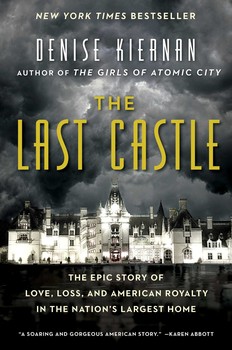
The Last Castle: The Epic Story of Love, Loss, and American Royalty in the Nation’s Largest Home, by Denise Kiernan
The Last Castle, by Denise Kiernan
I’ve been reading so many novels the last couple of years that I’d forgotten how long nonfiction book titles tend to be. Or maybe it’s just the three I read in January.
I thoroughly enjoyed reading this book about the Vanderbilt family and the Biltmore Estate. Living in North Carolina, I have toured the Biltmore House four times. The first time was on a sixth grade field trip. Motion sickness on the bus as it wound around the endless curves on old US-74 east of Asheville is my main memory from that day, but I digress.
My other visits to the Biltmore Estate have been very enjoyable. Reading this book made me want to plan another trip to Asheville and tour the mansion again. It is a delightful book.
Before We Were Yours, by Lisa Wingate
Before We Were Yours, by Lisa Wingate
This novel was inspired by the shocking history of the Tennessee Children’s Home Society during the first half of the 20th century. It is a gripping story and is expertly written. It is not a happy read, but I highly recommend this book.
The King of Lies, by John Hart
This was the January book choice of the Rocky River Readers Book Club. The novel is set in Salisbury, North Carolina, so I was familiar with some of the streets and buildings referenced in the book. It’s fun sometimes to read a book set in a location you have visited.
I though Mr. Hart could have omitted some of the “woe is me” theme in the first third of the book. The narrator’s whining about the wealthy people in this small town got old after a while. If you’ll hang in there, though, you’ll probably get so involved in trying to identify the killer that you’ll get to the point you can’t put the book down. You’ll think several times that you’ve figured out the villain’s identity but, chances are, you haven’t.
Nightwoods, by Charles Frazier
This novel has been on my “to read” list for several years, so I felt a sense of accomplishment when I finally read it. It is set in the mountains in western North Carolina.
Nightwoods is a tale about a woman who unexpectedly “inherits” her deceased sister’s twin boy and girl. The children give their aunt/new mother a challenge every day – and then her late sister’s widowed husband/killer comes to try to get the large sum of money he thinks the children took with them. The children are wild and uncommunicative. Add to that the fact that the aunt has no idea why her ne’er do well ex-brother-in-law has suddenly shown an interest in his children and has come to hunt them down.
What about December?
I just remembered that I never did blog about the books I read in December. They were a mixed bag of novels: The Quantum Spy, by David Ignatius; Hardcore Twenty-Four, by Janet Evanovich; and The Secret, Book and Scone Society, by Ellery Adams.
David Ignatius’s political thrillers never disappoint me. The Quantum Spy was no exception.
The last two Stephanie Plum novels by Janet Evanovich disappointed me. I used to eagerly await her annual next installment of these funny novels, but “Twenty-Three” and “Twenty-Four” were too predictable.
The Ellery Adams novel is an entertaining read about four women who want to form a friendship, but each one is required to reveal a secret about herself before they can truly trust one another.
Until my next blog post
I hope you have a good book to read. I’m reading Fighting to Win: Samurai Techniques for Your Work and Life, by my fellow-blogger David J. Rogers; The Salt House, by Lisa Duffy, which was recommended by my friend Karen; Beartown, by Frekrik Backman, which is the February pick for The Apostrophe S Coffee Chat online book community; and The Woman in the Window, by A.J. Finn. That’s about one book too many for me to read at the same time, but they are different enough that I’m not getting the story lines confused.
If you’re a writer, I hope you have productive writing time.
If you subscribed to my mailing list last week, you renewed my faith in mankind. Thank you, Vicki, Colby, Katrina, and Glen!
In case you haven’t signed up for my mailing list, you have another opportunity to do so using the fill-in form below. I appreciate it!
If you follow my blog, bless you! If you follow my blog, you know that, among other things, I share my rocky journey into the world of social media. If you’re in the same boat, I hope you have found some information in my blog that was new and helpful to you.
Today’s post deviates from my plan to share a piece of my history writing. On Friday, I plan to post an article I wrote in 2007 about an 1897 head-on collision between two trains in Harrisburg, NC. Today I share my thoughts about five areas of social media that have come to my attention over the weekend.
Contact form on my blog
I was so proud on Friday that I’d figured out how to insert a comment form within the body of my blog. So far, that form has been a total flop. No one used it. If it was used, it didn’t work. I won’t try that again unless or until I learn how to benefit from it.
Quora
I mentioned Quora.com in my blog post on January 27, 2017, 3 Things to Try on Social Media in January , http://wp.me/pL80d-tt) and I’ve played around some with it some. Over the weekend, I found a 6-minute February 10, 2017 podcast offered for free on http://mschool.growtheverywhere.libsynpro.com/how-to-attract-9000-visitors-a-month-from-quora-ep-194 that/which gave several suggestions for those of us who are still trying to figure out how to best utilize Quora – or, more specifically, trying to determine if it is even a good tool for us or not. My problem is that I’m far removed from my college studies of political science to address most of the questions that come up in that area and I don’t feel qualified to answer questions about writing until I’ve gotten my first novel published. Bottom line: I’m leaving my options open with Quora as I continue to find my niche.
I can’t afford full access to statista.com, but this bit of free information was helpful. These stats are not specific to fans of historical fiction, but I enjoy using Pinterest and it is beneficial to know what age people use it the most. It’s a piece of the puzzle.
I learned from Pinterest Analytics that I average having 13,440 views per month, but only 174 of them were engaged in my content. My most popular pin in the last 30 days was Chimney Tops Hike in Great Smoky Mountains National Park. In fact, three of my most popular pins were from my Great Smoky Mountains board. I originally set up that board (and the Blue Ridge Mountains board) to help draw attention to my vintage postcard book, The Blue Ridge Mountains of North Carolina. If this book sounds interesting to you, you can purchase in paperback or for Kindle on amazon.com.
I read another WordPress.com blogger’s post pertaining to historical fiction writers. https://kmguerin.wordpress.com/2016/07/18/social-media-for-historical-fiction-writers-part-4-facebook/https://kmguerin.wordpress.com/2016/07/18/social-media-for-historical-fiction-writers-part-4-facebook/ gave a good suggestion: Find a trending topic or article related to the time period you are writing about and post it. I have a board on Pinterest, “Novel in Progress: The Spanish Coin,” in which I pin photos and information pertinent to 1771 in the Waxhaws area in present-day Lancaster County, SC, as well as the Rocky River Presbyterian Church community in present-day Cabarrus County, NC (part of Mecklenburg County in 1771), and Salisbury, NC. These are the three geographic locations in my novel. I have 69 pins and 24 followers on that board as of February 20, 2017. I need to attract more people to that Pinterest board. I invite you to visit me on Pinterest by clicking on the Pinterest icon in my blog’s sidebar. Pin this blog post to one of your Pinterest boards by clicking on the Pinterest icon below.
Reading Medieval historical fiction author K.M. Guerin’s July 18, 2016 Time-Worn Pages blog post, https://kmguerin.wordpress.com/2016/07/18/social-media-for-historical-fiction-writers-part-4-facebook/http://www.socialmediaexaminer.com/how-to-get-more-pinterest-followers/ tipped me off to the fact that I was giving my blog readers a way to pin my posts to their Pinterest boards or share a link to my blog posts to their Facebook pages, but I did not provide a way for them to connect with me on social media. The proverbial lightbulb finally came on, folks! I’ve said it before, and I’ll say it again: I am not technologically savvy. What I’ve learned, I’ve had to dig up myself. I suppose that’s the best way to learn something new, but it surely is tedious. I read the above link to socialmediaexaminer.com on February 18, 2017 and worked until I figured out how to add “Follow me on Social Media” buttons in my blog’s sidebar. You wouldn’t believe what a sense of accomplishment that gave me!
LinkedIn and Instagram
I also picked up some ideas from reading a February 29, 2016 blog post by Jessica Lawlor on The Write Site. (https://thewritelife.com/quick-social-media-tips-for-writers-part-2) You can follow Jessica Lawlor on Twitter @jesslaw.) My takeaways: (1) Republish some of my blog posts on LinkedIn; and (2) Instagram is a platform where I can build my brand and community, and I should refer to the link to my website or blog as found in my profile (i.e., using the words “Link in profile” somewhere in my post) because LinkedIn only allows accounts to display one link. I haven’t given up on LinkedIn, and I haven’t tried Instagram.
Until my next blog post
I hope you have a good book to read. If you’re a writer, I hope you have productive writing time.







 Janet's Writing Blog