I write southern historical fiction, local history, and I've written a devotional book. The two novels I'm writing are set in Virginia and the Carolinas in the 1760s. My weekly blog started out to follow my journey as a writer and a reader, but in 2025 it has been greatly expanded to include current events and politics in the United States as I see our democracy under attack from within. The political science major in me cannot sit idly by and remain silent.
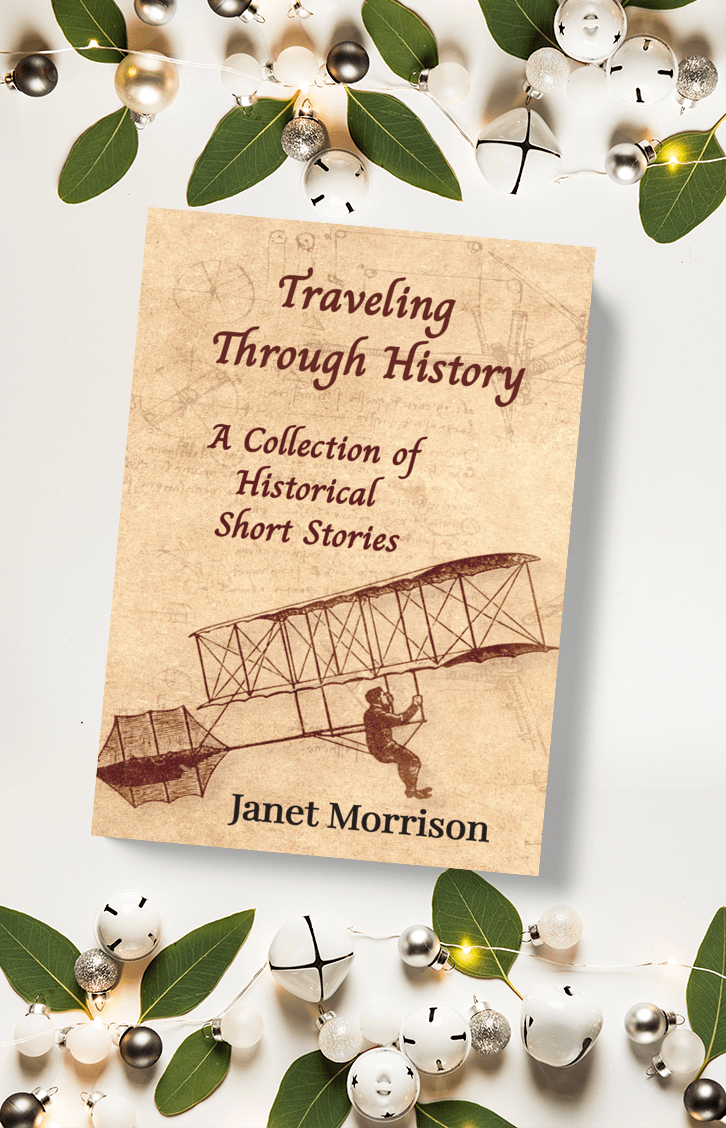
Today I am introducing you to the main character in “You Couldn’t Help But Like Bob,” the second story in my new book, Traveling Through History: A Collection of Historical Short Stories.
Genealogy has been a hobby of mine since I was a young adult. Robert Dooling is the most colorful of my ancestors that I have found so far. He immigrated from Ireland to America in the early 1700s and settled in Virginia.
Some people would be embarrassed at discovering one of their great-great-great-great-great-grandfathers was on the wrong side of the law in Colonial Virginia, but that just made Robert Dooling that much more interesting to me. To my way of thinking, that’s a lot better than just knowing an ancestor’s birth and death dates.
I devoured the colonial court records, eagerly searching for every tidbit or reference to Robert. As far as I know, he never did anything too serious. Perhaps his worst offence was “abusing” a Justice of the Peace. (I’m not clear on what constituted “abusing” a Justice of the Peace in Tappahannock, Virginia in the early 18th century.
I had fun creating a fictional story about this man I only know on paper, but his blood runs through my veins and I’m grateful to know more about him than just his name.
Here are the opening lines in the story:
“You couldn’t help but like Bob. Unless he owed you money. Unless you were a Justice of the Peace in Essex County, Virginia in the early 1700s.
“Even so, you just couldn’t help but like Bob.
“To say Bob was irritating would be an understatement, but you couldn’t stay made at him for long. Unless he owned you money or tobacco. Unless you were a Justice of the Peace, tired of seeing him dragged into your court room.”
I hope you will enjoy reading the story as much as I enjoyed writing it.
After you read “You Couldn’t Help But Like Bob” in Traveling Through History: A Collection of Historical Short Stories, you’ll know more about him. I hope you will like him, too!
I am thrilled to announce that my book, I Need The Light! 26 Weekly Devotionals to Help You Through Winter is now available!
I Need The Light! 26 Weekly Devotionals to Help You Through Winter, by Janet Morrison
Even if you love the fall and winter, I think you will benefit from reading this book.
Why I Wrote I Need The Light!
I wrote it from a place of physical challenges in cold weather, so I think people who have such illnesses and conditions as Seasonal Affective Disorder, Fibromyalgia, and Chronic Fatigue Syndrome/Myalgic Encephalomyelitis will be able to identify.
I settled on writing 26 weekly devotionals because with the onset of fall, I start dreading winter. Seasonal Affective Disorder affects me half the year.
What Does the Title I Need The Light! Mean?
To help me combat the symptoms of Seasonal Affective Disorder and sleep problems, my former physician’s assistant told me that I needed to get out in the natural light early every morning. I needed natural sunlight.
I’m not a morning person, so I had to force myself out of bed and outdoors in the morning – even in cold weather. As I walked, I repeated in my head the words, “I need the light. I need the light. I need the light. I need the light.” On about the fifth repetition, I had an epiphany: I realized I also needed The Light – Jesus Christ – “The Light of the World.”
I’ve been a Christian all my life, so it wasn’t a new concept for me that I needed Jesus Christ in all aspects of my life, but the sudden connection between “the light” and “The Light” was startling! It was then and there that God planted the idea in my mind and heart to write a book about the light and The Light.
That day, I started looking for all the references to light and The Light in the Bible.
Format of I Need The Light!’
Each week’s devotional follows this basic pattern:
The week’s Scripture reference is stated.
“Setting the Stage” in which I give a little background for that Scripture.
The week’s Scripture is then presented from The Message, The Good News Bible, The Living Bible, The New Oxford Annotated Bible (New Revised Standard Version), and TouchPoint Bible. The second week has the bonus of including the Bible verse from my great-great-grandmother’s 1849 The Psalms of David in Metre.
Insight from a Bible commentary, such as the series by Rev. William Barclay.
“My Thoughts” – Then, I usually share my thoughts about the Scripture.
“Remember” – one sentence of encouragement to ponder.
“Thought Pattern Interrupter” – One sentence to help you put a positive spin on that week.
“Activity Suggestion” – An activity you might choose to do that week to get you out of your own head/situation.
“Comfort Recipe” – A recipe that I consider a fall or winter “comfort food” from my own experience.
How to Use I Need The Light!
Readers are encouraged to read the devotional book as they choose. You don’t have to read it over a 26-week period. And each week, you can read the entire chapter in one sitting, or you can string it out over the week. It’s totally up to you to read the book in the way that best helps you.
Where to Find I Need the Light!
If you think I Need The Light! 26 Weekly Devotionals to Help You Through Winter would help you, or if you know someone who might benefit from the book, it can be purchased at your favorite independent bookstore. If you don’t find it there, please ask them to order the book from IngramSpark.
The book is available in paperback and as an e-book.
Click on “Read more” under the photo of the book cover.
At the end of the book’s description there, click on the BookShop.org buy button, which takes you to BookShop.org (a site that supports independent bookstores throughout the U.S.)
Put my book in your basket.
Select the independent bookstore you wish to support.
Place your order and have the satisfaction of knowing you are supporting an independent bookstore!
So far, Second Look Books in Harrisburg, NC; Blue Ridge Books in Waynesville, NC; and Highland Books in Brevard, NC have been very supportive of my book so I’ll give them a shout-out.
Available for your cell!
The book is also available on Amazon and from Barnes & Noble.
Here’s a Sneak Peek at I Need The Light!
From Week 12, here’s the “Setting the stage” introduction to that week’s devotional about the Parable of the Lost Coin:
“In Halley’s Bible Handbook, Henry H. Halley describes the fifteenth chapter of Luke as ‘the calm before the storm’ in Luke 14. In the fourteenth chapter of Luke, Jesus doesn’t beat around the bush as He talks about the price people will pay for following Him. He goes on to explain that He must be first in our lives. We must love Him more than we love anyone else. It’s enough to make a person question the wisdom of following Jesus!
“But then we come to Luke 15. It is a beautiful chapter about the tender, forgiving grace of Jesus. The chapter includes the Parable of the Lost Sheep, the Parable of the Prodigal Son, and the passage we’re looking at this week: The Parable of the Lost Coin.”
Does this sound like something you or a friend would like to read?
I wrote I Need The Light! 26 Weekly Devotionals to Help You Through Winter in a conversational tone as I imagined I was talking one-on-one with a good friend. If this approach to the Bible appeals to you, I hope you will look for my book.
I’m not an “in your face” kind of Christian. I’m a lifelong Presbyterian, so I’m not going to scare you into being a Christian. That’s not the Presbyterian way!
Even if fall and winter are your favorite seasons of the year, I believe you will find something of benefit in my 188-page devotional book.
I invite you to look for it!
If you read it and like it, your rating and/or brief review on such sites as Goodreads.com and Amazon will be greatly appreciated.
Now that I have your attention… today’s blog post is about ancient history. This is one of the topics I wrote about in Harrisburg, Did You Know? Cabarrus History, Book 2.
Photo by guille pozzi on Unsplash
Harrisburg, North Carolina sits inside a 22-mile syenite or ring dike. One can get a feel for it from several high points in the area, such as when traveling south from Concord on US-29 near the intersection with Union Cemetery Road. It’s like looking across a gigantic bowl.
Another possible place from which to catch a glimpse of the “bowl” is on NC-49 southbound after you pass Old Charlotte Road. The Charlotte downtown skyline is visible briefly from that location as well as the one referenced above on US-29.
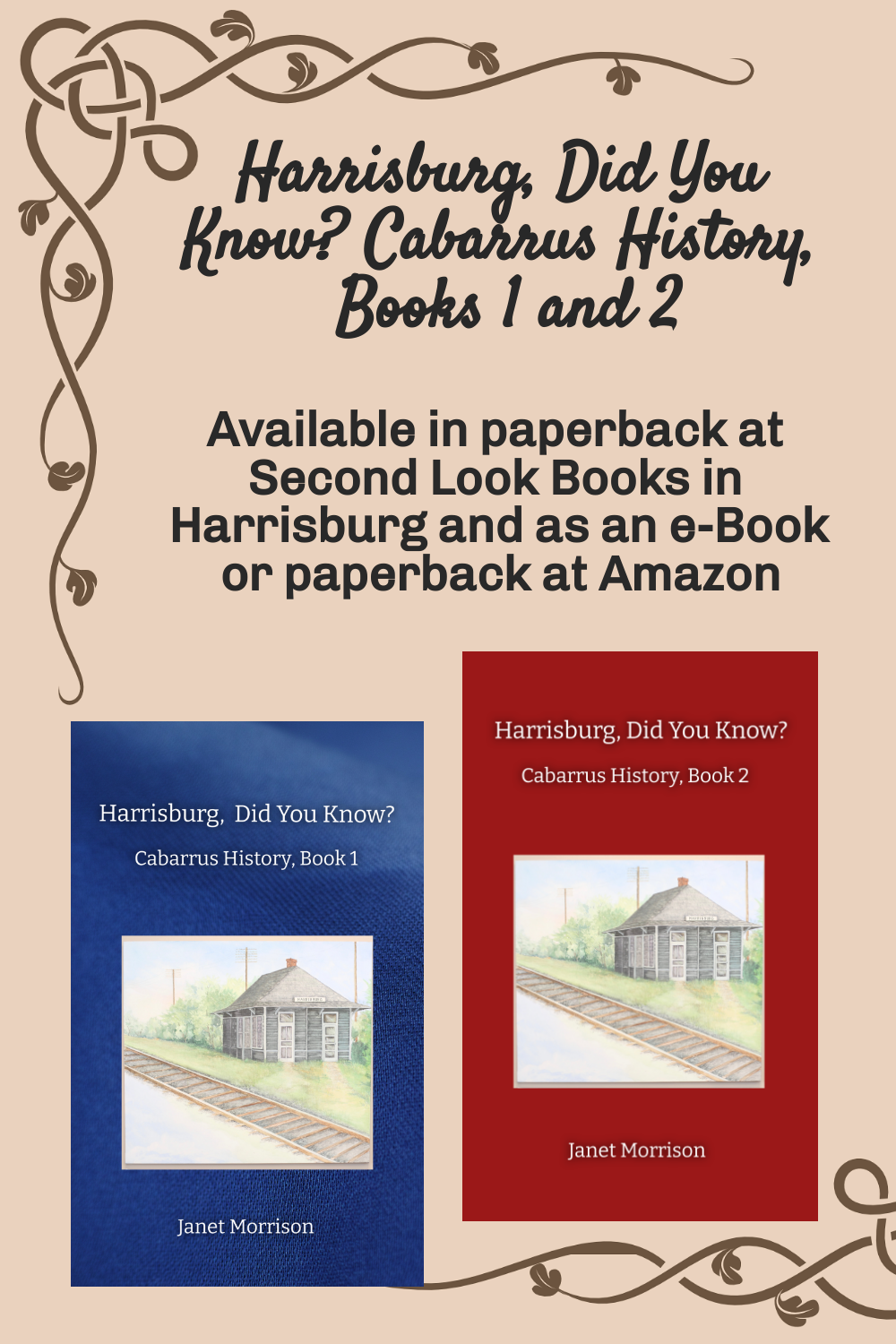
Harrisburg, Did You Know? Cabarrus History, Book 2, by Janet Morrison
What, you may ask, is a syenite or ring dike? I’m no expert on volcanology, but my understanding is that it is a circular dike around a volcano.
According to 2001 Encyclopedia of Earthquakes and Volcanoes, by David Ritchie and Alexander E. Gates, Ph.D.:
“If magma is removed from the magma chamber beneath a volcano, it can undergo caldera collapse. The volcano and the area around it collapse because they are no longer being held up by the liquid. A series of concentric faults and cracks develop around the collapsing volcano. As they do, magma will squeeze up around the cracks and faults forming ring dikes.”
I’ll take their word for it.
In 1966, U.S. Geological Survey geologist Harry E. LeGrand and Henry Bell III led a scientific excursion in Cabarrus County to study our ring dike and other interesting rock and mineral deposits in the county.
You might be able to access a pdf of “Guidebook of Excursion in Cabarrus County, North Carolina, October 22-23,1966” by going to https://www.carolinageologicalsociety.org. Search for “1960s Field Trip Guidebooks” and then scroll down to find that particular guidebook.
The Harrisburg area has experienced a population explosion since 1966. The landmarks noted in the 1966 guidebook are either gone or more difficult to locate today. The concentric rings that were reportedly visible from the air in 1960 by R.G. Ray might not still be intact.
If you’d like to know more about this topic, the 1849 meteorite; Harrisburg’s first organized housing and business development of 100 years ago; the Morrison-Sims Store and Old Post Office; the flood of 1886, the Piedmont Area Development Association (P.A.D.A) of the 1960s; earthquakes that have been felt here; McCachren’s Store; Rocky River bridges in the 1870s; the Sauline Players; a tribute to George L. Govan; Rocky River Academy; the Rocky River Presbyterian Church’s fourth sanctuary which was completed in 1861; a 1777 estate sale; Hugh Smith Pharr and his mill; a 1907 attempted train robbery; 1816 – the year without a summer;
Also: items such as milk, apples, and dry cleaning that were all delivered to homes in the mid-1900s; Blume’s Store; high-speed trains; the boundaries of Township 1; early Harrisburg education; Pharr Grist Mill on Back Creek; how electricity came to Harrisburg; a 1912 church homecoming; Pioneer Mills Gold Mine and Community; a fellow named Collett Leventhorpe; a 1911-1912 debating society; and the tenth anniversary of the Harrisburg Branch of the Cabarrus County Public Library system… please purchase Harrisburg, Did You Know? Cabarrus History, Book 2.
The book also contains nearly 150 pages of my research notes on subjects I didn’t get to write about when I wrote a local history newspaper column from 2006-2012.
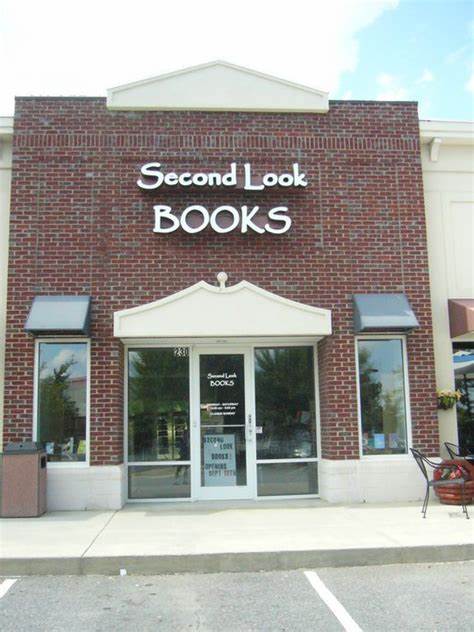
Harrisburg, Did You Know? Cabarrus History, Book 1 and Book 2 are available in paperback at Second Look Books, 4519 School House Commons in Harrisburg, NC.
Second Look Books, 4519 School House Commons, Harrisburg, NC
Being the first Monday in November, it’s time for me to blog about some of the books I read in October. Although October seemed to fly by, it also seems like a long time since I listened to the first book on my reading list for the month. Time is a steady yet elusive thing.
The First Ladies, by Marie Benedict and Victoria Christopher Murray
The First Ladies, by Marie Benedict and Victoria Christopher Murray
I liked the format of this novel, as it alternated telling the story of the friendship of Eleanor Roosevelt and Mrs. Mary McLeod Bethune. Thoroughly researched by the two authors who teamed up for this joint writing project, the book tells about many of the behind-the-scenes events, conflicts, and efforts to fight racism in the United States during the first half of the 20th century.
I listened to the book on CD. I only got midway through disc 7 of 12 before I decided I knew the jest of the story and had too many other books vying for my attention for me to finish this novel. The writing is engaging and the personalities of the two protagonists shine through on every page. It was just a little long for my liking just now.
I was glad that Mrs. Mary McLeod Bethune voiced that she had found racial discrimination in the northern states and not just in the southern states. It was obvious that Eleanor Roosevelt relegated the sin of racial discrimination to southern democrats. Mrs. Roosevelt’s presumption is a fallacy that still thrives in the United States today.
I was delighted that Mrs. Bethune’s college education at Scotia Seminary in Concord, North Carolina was mentioned at least twice in the first half of the book. Now Barber-Scotia College, the historically black college is on the verge of extinction as it has lost its accreditation and most of its students. Founded in 1867, it was the first historically black institution of higher education for women.
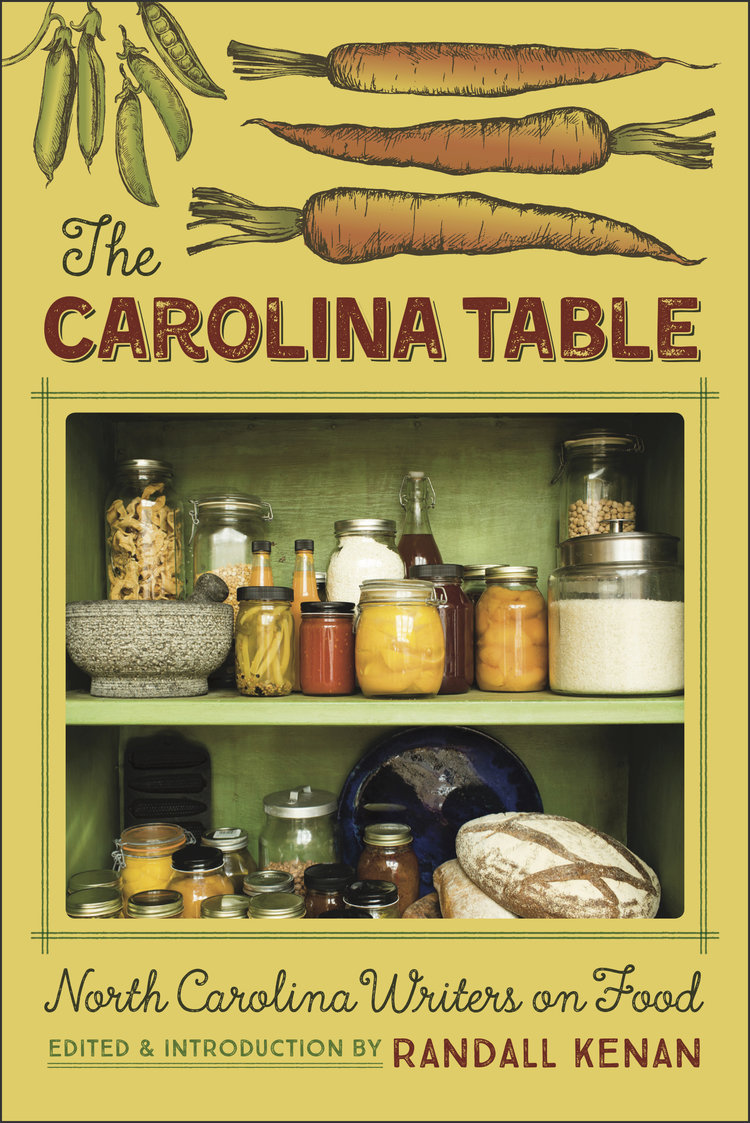
The Carolina Table: North Carolina Writers on Food
The Carolina Table: North Carolina Writers on Food, edited and introduction by Randall Kenan
This is a fun little 180-page book edited by Randall Kenan in which 32 writers with a connection to North Carolina wrote about their memories of food. Some wrote about a particular recipe they recalled from childhood, while others wrote about family traditions associated with a particular dish.
I enjoyed being able to pick up this book and read a story or two at a time when my reading time was limited.
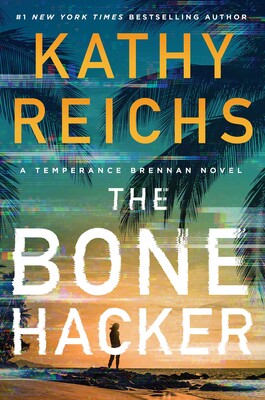
The Bone Hacker: A Temperance Brennan Novel, by Kathy Reichs
The Bone Hacker: A Temperance Brennan Novel, by Kathy Reichs
The Bone Hacker is Kathy Reichs’ latest novel in the Temperance Brennan Series. This one is set on the islands of Turks and Caicos instead of the forensic anthropologist’s usual locations in Charlotte or Montreal. I sort of missed the familiarity of specific places and streets in Charlotte but, on the other hand, it was interesting to vicariously visit a very different setting.
I didn’t get into this story as much as I usually do with Kathy Reichs’ books, but I think I was just distracted by too many projects. I don’t want to leave a negative perception of the book.
Sold, by Patricia McCormick
Sold, by Patricia McCormick
I read one other book in October, but it deserves its own blog post. I plan to write about Sold, by Patricia McCormick next Monday.
Since my last blog post
I sent out my latest e-newsletter on November 2. You should have received it via email if you subscribed to it through my website (https://janetmorrisonbooks.com) before November 1.
If you have not subscribed, you missed reading about my “field trip” to Kings Mountain National Military Park, Kings Mountains State Park, and the cemetery at Bethany Associate Reformed Presbyterian Church near Clover, South Carolina. I love it when family history and American history are woven together!
Second Look Books in Harrisburg, NC hosted a Meet & Greet for my sister and me on Saturday afternoon. We got to chat with several long-time friends and we met two distant cousins. One of them came all the way from Winston-Salem just to meet us and thank us or the Morrison genealogy book, The Descendants of Robert & Sarah Morrison of Rocky River, we published in 1996! What a pleasant surprise!
Until my next blog post
Keep reading! Let children see you reading so they’ll see it as a pleasurable activity.
Value time with friends and family. A visit from cousins who live in New York City was wonderful yesterday. We picked up where we left off in July.
Remember the brave people of Ukraine and the people in the Middle East who are suffering due to terrorists.
My question for you today is, “How do you decide what to read next?”
Is it FOMO (fear of missing out)? Do you scan the NY Times Bestseller List every week and take your reading cues from it? Do you just read books in a certain genre and never dip your toes in something different to shake things up? For instance, instead of just reading western romance novels, do you ever check out a science fiction book from the library?
Photo by Susan Q Yin on Unsplash.
Do you gravitate to the “New Releases” section in your public library? Do you pick up a free copy of Book Page at the public library each month to learn about new books? Do you ask a librarian for recommendations? Do you and your friends tell each other about books you or they have enjoyed?
I recently divided my to-be-read (TBR) list into four categories: books about the craft of writing; books I need to read for historical research to enhance my historical fiction writing, novels and short story collections; fiction; and nonfiction books of general interest.
I listed the books in each category in the order in which I want or need to read them.
This was no easy task. There are more than 300 books on my TBR. Chances are, I won’t get to read all of them. You see, I add titles to my TBR faster than I can read the books already on the list. I console myself by thinking it’s a nice “problem” to have.
Everyone has preferences
I must admit, I don’t care for sappy romance, science fiction, horror, or fantasy, but I’ll march in the street to defend your right to read those genres. My “go to” genre is historical fiction – especially set in colonial and revolutionary America, but I also enjoy World War II historical fiction, some thrillers, and an occasional memoir.
I enjoy following a number of book review bloggers. I often learn of new authors or books that have slipped in under my radar.
More and more, I’m becoming a fan of certain authors. I try to stay on top of when their next novels will be published. Armed with that information, I get on the waitlist at the public library for those books as soon as they show up in the system’s online catalog.
The authors I tend to look for (in no particular order) include Sally Hepworth, Vicki Lane, Lelah Chini, Isabel Allende, Anna Jean Mayhew, Pam Jenoff, Diane Chamberlain, John Grisham, Kathleen Grissom, Kelly Rimmer, Mark de Castrique, Annette Saunooke Clapsaddle, Susan Meissner, Erik Larson, Barbara Kyle, Lisa Wingate, Anne Weisgarber, Aimie K. Runyan, John Hart, Jennifer Ryan, Kristin Hannah, Andrew Gross, Ann Patchett, Heather Morris, Mark Sullivan, Wiley Cash, Kathy Reichs, Jennifer Chiaverini, V.S. Alexander, Jodi Picoult, Kate Quinn, Ron Rash, Jamie Ford, Leah Weiss, and Kelly Mustian.
Whew! That’s 35, or about 25 more than I would have guessed! I’m sure I’ve left others off my list. Some authors come and go from my list.
Are any of those 35 names on your list of favorites?
Who are your favorite authors?
What’s your favorite genre?
Back to my original question
How do you decide what to read next? Is it based on the cover, an author you’ve read and liked before, the blurb on the back of the book, a positive review you read, the genre, or something else?
I’d like to hear your thoughts on this.
Since my last blog post
I’ve had a productive week. I haven’t put many words on paper, but I have done some on-site historical research for the historical novel I’m writing. Be sure to subscribe to my e-Newsletter if you want to read about where I went and why.
Until my next blog post
If you are going to be in the Charlotte area between 2:00 and 4:00 next Saturday afternoon, November 4, please drop by Second Look Books at 4519 School House Commons in Harrisburg for our Meet & Greet highlighting The Aunts in the Kitchen: Southern Family Recipes.
I hope you have access to so many good books that you don’t have time to read all of them.
My November e-Newsletter will be sent via email in a couple of days. If you have not subscribed to it, please do so by visiting https://www.janetmorrisonbooks.com and clicking on the “Subscribe” button. Just for subscribing, you’ll receive a downloadable e-copy of my American historical short story, “Slip Sliding Away.”
Make time for friends and relatives, even if you don’t agree with them about politics.
Remember the brave people of Ukraine as a cold winter is racing toward them and the innocent people in the Middle East. People in both these areas are the victims of dictators and terrorists.
And, of course, remember the people of Maine in light of last week’s mass shooting. When will the elected officials in the US learn that most Americans want tighter gun regulations? When is enough, enough?
You will recall from my blog post last Monday that Second Look Books in Harrisburg, NC was hosting a “Meet & Greet” for me on Saturday afternoon. I tend to see the glass half-empty or sometimes completely empty. Try as I might, I tend to expect the worst. The worst rarely happens, but I’m not to be deterred in my expectations.
I approached the Meet & Greet” with a fear that no one would come. After creating an “event” on Facebook last week and sending it out as an invitation to several hundred people, I only received “coming” responses from four people. One of them was driving an hour to get here and I was afraid she would regret making that effort if she came and the event was a big flop.
As usual, I had it all wrong. Lots of people came! Six of my classmates from high school came. I’ve known two of them since the first grade, but we hadn’t seen each other in years. Four of the classmates were there at the same time, so we had a mini-reunion.
A number of friends I know from church came. Others came who I’d never met, so I now have some new friends. Various people shared their memories of Harrisburg. Ours is a fast-growing and fast-changing small town. It was barely a village from I was born. The roads and schools can’t keep up with the growth.
Many of the changes are good, but most of us on Saturday were glad we grew up when we did – back when everybody knew everybody and traffic was nonexistent. We talked about how we used to have to drive five miles or more to a grocery store and now we have a multitude of supermarkets to choose from.
My books displayed just inside the front door on the Local Authors shelf!
It was a privilege to write the local history newspaper column for six and a half years. It was indeed a privilege to interview so many older residents and write down their experiences and memories. Having those 175 newspaper articles in book form now is a dream come true.
It was gratifying on Saturday to see and hear how excited and appreciative others are that I wrote the articles and that things finally fell into place for me to publish them in book form: Harrisburg, Did You Know? Cabarrus History, Book 1 and Harrisburg, Did You Know? Cabarrus History, Book 2.
Who knows? Maybe Saturday’s event was just the impetus I needed to nudge me to get back to work on my novel! A few short days ago, I was disillusioned. I was ready to give up on it. Dear friends and new friends gave me a real boost on Saturday. I’m ready to continue now!
Until my next blog post
I hope you have a good book to read. If you need some suggestions, I know of a couple of local history books I’d recommend.
Take time to nurture friendships.
Remember the people of Ukraine, Nashville, Louisville, Fort Lauderdale, and Dadeville. There are lots of hurting people out there.
Where? Second Look Books, 4519 School House Commons in Harrisburg
When? Saturday, April 15, 2023
What Time? 2:00 – 4:00 p.m.
Second Look Books, 4519 School House Commons, Harrisburg, NC
Copies of Harrisburg, Did You Know? Cabarrus History, Book 1 and Book 2 have arrived and been autographed.
Photocopies of my 11×14-inch “Harrisburg in the 1900s” two-map sets have been made.
Business cards and bookmarks are printed.
Saturday, April 15 is the big day for my Meet & Greet at Second Look Books in Harrisburg, North Carolina! I’ll be there from 2:00 p.m. until 4:00 p.m.
Please drop by, even if you’ve already purchased both books.
The bookmarks and Harrisburg maps are free while supplies last.
What maps?
I drew the maps based on detailed memories that Mr. Ira Lee Taylor shared with me while I was writing the “Did You Know? local history column for Harrisburg Horizons newspaper (2006-2012.)
One map covers from along NC-49 to Back Creek. The other map covers from Back Creek to Reedy Creek and where McKee Creek flows into Reedy Creek.
Mr. Taylor told me where such things as the telephone switchboard, spoke factory, two cotton gins, railroad houses, corn fields, cotton fields, and livery stable were in the early 1900s.
He told me where the various stores and post offices were. Being the town’s only mail carrier for several decades, he knew where everybody lived, so I included much of that information The map show where the roads were (and were not) before the coming of the high-speed rail.
In case you arrived in Harrisburg after the two-story red brick old Harrisburg School was torn down, this set of maps will show you the layout of the school grounds. The school property is where School House Commons Shopping Center is now.
The maps also show the locations of the Oak Grove Rosenwald School and the Bellefonte Rosenwald School that you read about in Harrisburg, Did You Know? Cabarrus History, Book 1.
Some things you’ll learn about in my two books
There are stories of local heroism from 1771 and the detailed memories of a World War II US Army veteran who told me about his training for D-Day through to the end of the war.
There are stories about the original Hickory Ridge School, which was a one-room school on Hickory Ridge Road.
There are stories about the Rosenwald Schools that served the black students in the early 1900s.
There are stories about the man from Russia (actually, Ukraine) who settled in Harrisburg in the 1920s to practice medicine until his death in 1960. He was a country doctor who made house calls
There are stories about the construction of the Charlotte Motor Speedway and the first World 600 Race when the track was in such bad shape that chunks of asphalt broke the windshields out of some of the race cars.
There is information about the 22-mile syenite ring-dike that Harrisburg sits in. It’s what remains of an ancient volcano.
Until my next blog post
Remember the people of Ukraine – where Dr. Nicholas E. Lubchenko was born and lived until young adulthood.
I hope to see you on Saturday!
In case you don’t have a good book to read, please consider purchasing my local history books. They’re available in paperback at Second Look Books. They’re also available in paperback and for Kindle from Amazon.
Even if you don’t live or have never lived in Harrisburg, North Carolina, I think you’ll find some interesting stories that you can probably relate to if you are of a certain age. And if you a child, teen, or young adult I think you’ll find it interesting to read about how life used to be in our sleepy little farm village of a couple hundred people in the early 1900s that has grown to nearly 20,000 people in 2023.
What? Author Meet & Greet
Where? Second Look Books, 4519 School House Commons in Harrisburg
After reading three good historical novels in February, I was disappointed that I didn’t get to read as much in March. That’s just the way it goes. As I try to do every month when I blog about the books I read the previous month, I repeat that I am not a book reviewer. I merely like to share with you what I read. Perhaps your interest will be piqued and you’ll decide to read some of the books I’ve enjoyed.
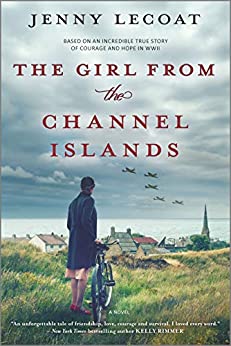
The Girl From the Channel Islands, by Jenny Lecoat
The Girl From the Channel Islands, by Jenny Lecoat
I listened to this historical novel on CD borrowed from the public library. I enjoy listening to a disc late at night, even though I have to deal with an occasional scratch on the disc which causes me to miss bits of the story.
Hedy Bercu, the protagonist in this novel, flees Austria in 1938 to escape the Nazis. She thinks she’ll be safe in Great Britain’s Channel Islands but, as World War II drags on and the islands are occupied by Germany, Hedy lives in constant fear that the wrong people will discover that she is Jewish.
The author, Jenny Lecoat, was born in the Channel Islands 16 years after some members of her family were deported by the Nazis and taken to concentration camps due to their resistance activities. This is Ms. Lecoat’s debut novel. I look forward to reading whatever she has in store for us next.
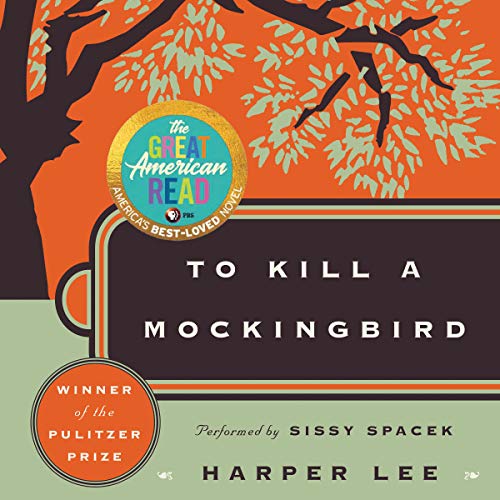
To Kill a Mockingbird, by Harper Lee
To Kill a Mockingbird, by Harper Lee
Although Banned Books Weeks is six months away, the increasing attacks on books in the United States prompted me to reread Harper Lee’s masterpiece. Instead of reading it in printed form this time, I decided to listen to Sissy Spacek’s performing of it on CD. I haven’t quite finished it, but I decided to include it in today’s post so The Girl From the Channel Islands wouldn’t have to stand alone.
It baffles me why people in 2023 want to ban To Kill a Mockingbird from school and public library shelves because it portrays the discrimination black people suffered in the 1920s or 1930s and, because at the same time, it portrays a white lawyer defending a black man who has been wrongfully arrested and charged.
I am against all book banning. One only needs to look at what happened in Germany in the 1930s to see what the results are.
If you don’t want your child to read a certain book, that’s your prerogative; however, you don’t have the right to dictate what anyone other than yourself and your children read.
Just because you are offended by a word in a book doesn’t make it a bad book. If you think you can erase the history of slavery, prejudice, and civil war in the United States by removing those references from books, you are mistaken.
If you think by removing sex education from school curriculum you will end all teen pregnancies, you’re only fooling yourself.
People who are afraid of knowledge and try to force their fears on the masses are the most dangerous people in the world.
Since my last blog post
I’ve tried to start overcoming the toll the challenges of the last eight months have taken on my limited energy. Getting my two local history books published and working toward the publication of a family cookbook have been fun, challenging, frustrating, draining, and rewarding — all at the same time. April 25 will mark the 36th anniversary of when I first became ill with Chronic Fatigue Syndrome. Please don’t laugh. It’s a real illness. I have pushed myself too much since last July to accomplish some long-term dreams to get my local history writings published, and now I’m paying the price.
I’ll continue to push myself because that’s what I do and I don’t know how to live otherwise; however, in the coming weeks I’ll try to be a little kinder to myself and take some time to smell the roses.
Until my next blog post
I’ll start preparing for my Author Meet & Greet scheduled for April 15 at Second Look Books in Harrisburg, North Carolina.
I’ll reevaluate the family cookbook my sister and I have compiled. I’ve encountered a problem in the formatting for a paperback edition, so it might just be an e-book. That would be disappointing.
I hope you have a good book to read. If you’ve purchased Harrisburg, Did You Know? Cabarrus History, Book 1 and Book 2, I hope you’re enjoying them.
If you’ve subscribed to my newsletter and, therefore, downloaded a free copy of my southern historical short story, “Slip Sliding Away,” I hope you’ve enjoyed that small sample of my fiction writing.
Remember the three children and three adults murdered in that private school in Nashville, Tennessee. Remember how your local, state, and national politicians vote on assault-style weapons designed for war when the next election rolls around.
I majored in political science in college, but I’d be hard pressed off the top of my head to tell you what the 24th Amendment to the United States Constitution is about. Its ratification was completed on January 23, 1964 when South Dakota became the 38th state to ratify it. The 59th anniversary of its ratification prompted me to blog about the amendment today.
What the 24th Amendment prohibits
It prohibits the United States Congress and any state in the union from basing a person’s right to vote for US President, US Vice President, US Senate, or US House of Representatives in a primary or other election based on the payment of any tax.
Photo by The New York Public Library on Unsplash
Why the 24th Amendment came about
In the late 1890s and until just after the turn of the 20th century, former Confederate States adopted so-called poll taxes. The laws varied from state to state, but they were created as a way to prevent many black people and poor white people from voting. This was a way the states circumvented the 15th Amendment to the US Constitution, which prohibits a person being prevented from voting based on “race, color, or previous condition of servitude.” The 15th Amendment said nothing about taxes.
The constitutionality of poll taxes was upheld by the US Supreme Court in Breedlove v. Suttles in 1937. In that case, Nolan Breedlove, a 28-year-old white man refused to pay the $1.00 per year poll tax in Georgia. By not paying the poll tax, Mr. Breedlove was not allowed to register to vote in any election in the state.
Mr. Breedlove filed a lawsuit against Mr. T. Earl Suttles, the Fulton County, Georgia Tax Collector, arguing that the poll tax was in violation of the 14th and 19th Amendments to the US Constitution. Hence, the name of the US Supreme Court case. The Breedlove v. Suttles decision was eventually overturned, but the case serves as an example of the US Supreme Court making wrong decisions sometimes
The Breedlove v. Suttles decision was unanimous! The Court concluded that the “privilege of voting is not derived from the United States, but is conferred by the state, and, save as restrained by the Fifteenth and Nineteenth Amendments and other provisions of the Federal Constitution, the state may condition suffrage as it deems appropriate.”
It was a case, like we’ve seen in other cases as recently as 2022, where the US Supreme Court took the easy way out and clung to the “states’ rights” doctrine.
How the 24th Amendment became the law of the land
After decades of some politicians ignoring the issue of poll taxes and a few politicians pushing for the abolishment of such taxes, Congress finally proposed the 24th Amendment at the prompting of President John F. Kennedy. The amendment was submitted to the states on September 24, 1962 after a vote of 295 to 86 in the US House of Representatives and a vote of 77 to 16 in the US Senate.
Illinois was the first state to ratify the amendment in November 1962 and South Dakota was the 38th state to ratify it on January 23, 1964. That 38th vote was all that was needed.
The aftermath of ratification of the 24th Amendment
Some states were slow to ratify the amendment even after its national ratification was final in 1964. Some states were slow to amend their constitutions to be in compliance with the federal amendment. Always looking for ways to get around the law, some states continued to require racial minority citizens to pass senseless tests in order to earn the right to vote.
People who want to keep other US citizens from voting have turned to more subtle (and some not-so-subtle) forms of voter intimidation. They’ve felt emboldened over the last seven years and the pendulum is swinging toward bolder attempts to scare certain people away from the voting booth. This is an attack on our democracy.
Our democracy depends on each of us defending the right of all citizens to vote.
Since my last blog post
As my new website has transitioned from the design phase to the development phase, I continued to write new content for the site.
It seemed like I had to learn some new technology every day. There is still more I will have to learn. I hope this is good for my brain cells. It isn’t good for my emotional stability or my disposition.
It’s been gratifying to see how well received my local history book, Harrisburg, Did You Know? Cabarrus History, Book 1 has been on Amazon and in the local bookstore, Second Look Books. Thank you to everyone who has purchased it! Don’t be shy about rating it or even leaving a short review of it on Amazon!
My sister and I took a much-needed break on Saturday afternoon and went to see the movie, “A Man Called Otto.” Tom Hanks was perfect in the role of Otto. The movie is based on the book, A Man Called Ove, by Fredrik Backman. I read the book back in 2017 and I’ve remembered it ever since. Here’s the link my June 2, 2017 blog post in which I wrote about the book: You Need to Read These Books! I recommend the book and the movie.
Until my next blog post
I hope you have a good book to read. While you’re at it, please read one for me. I haven’t had much time to read lately.
Did you ever see the Sauline Players perform? Chances are you did if you went to school in the piedmont of North Carolina in the early- to mid-1900s.
As I write that, though, it occurs to me that I don’t know if they performed at the schools for black children. I hope they did, for their performances were a real treasure for those of us who lived in rural areas and didn’t have easy access to live theatrical performances.
Two of the 91 local history articles in my new book, Harrisburg, Did You Know? Cabarrus History, Book 1, are about the Sauline Players. I’ll share some highlights from those articles in today’s blog post.
When I researched the Sauline Players for Harrisburg Horizons newspaper in 2011, I was surprised to learn that the theatrical troupe was based in the small Gaston County town of Belmont, North Carolina. I have fond memories of their performances in the auditorium at Harrisburg High School in the early 1960s when I was in elementary school.
In 2010, I learned that Joseph Sauline was with another traveling acting troupe in Charlotte in the 1920s when that company went broke. Not to be outdone, Mr. Sauline stayed in the area and organized his own acting group — the Sauline Players.
An online search in 2010 led me to a Sauline Players listing on the acting resume of Ms. Joan McCrea. I was able to get in touch with her agent, who in turn gave Ms. McCrea my contact information. Imagine my surprise one day when I answered the phone and found actress Joan McCrea in Los Angeles on the other end of the line!
The ensuing correspondence with Ms. McCrea turned my single newspaper article about the Sauline Players into a two-part series.
If you want to know more about the Sauline Players and other local history articles I wrote for Harrisburg Horizons newspaper, look for my book, Harrisburg, Did You Know? Cabarrus History, Book 1.
Harrisburg, Did You Know? Cabarrus History, Book 1, by Janet Morrison
Where to purchase Harrisburg, Did You Know? Cabarrus History, Book 1
Paperback available at Second Look Books, 4519 School House Commons, Harrisburg, NC
My book received a lot of positive and well-placed publicity last week. The proprietor of Second Look Books in Harrisburg tells me sales have been brisk.
I took a long enough break from formatting Harrisburg, Did You Know? Cabarrus History, Book 2 to design the cover for the paperback. Then, it was back to formatting. I’m pleased to have the cover designed so I could mark that task off my to-do list.
Until my next blog post
I hope you have a good book to read. I’m reading a couple of books now. It’ll be interesting to see how many I get read in January.












 Janet's Writing Blog