
With President Trump still bombing boats in international waters in the Atlantic and Pacific Oceans and sending an aircraft carrier to the coast of Venezuela, it was difficult to settle on a topic for today’s blog post.
I decided to blog about President Theodore Roosevelt’s interest in conservation on the 167th anniversary of his birth. You’ll see why later in this post.
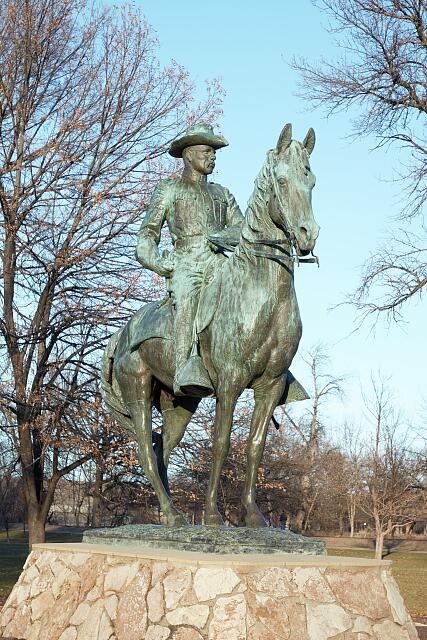
United States President Theodore “Teddy” Roosevelt was born on October 27, 1858 in New York City. He and his first wife, Alice Hathaway Lee, had a daughter named Alice.
His wife and his mother both died on the same day in 1884, and he went to his ranch in the Badlands of the Dakota Territory to grieve for two years. He hunted big game and drove cattle.
He returned to New York, married Edith Kermit Crow, and they had five children together. Roosevelt began his political career being elected mayor of New York City in 1886. He became well-connected in the Republican Party and was appointed Secretary of the Navy.
He left his post to become a colonel in the First U.S. Volunteer Cavalry, famously known as the “Rough Riders.” He led the Rough Riders in the Battle of San Juan in Cuba during the Spanish-American War.
After the war, Roosevelt was elected Governor of New York. He was selected to be William McKinley’s Vice-Presidential running mate. McKinley became U.S. President in 1900.
When President McKinley was assassinated on September 6, 1901, Theodore Roosevelt became the U.S. President.
The main thing Roosevelt is remembered for, in addition to being a “Rough Rider,” was his conservation efforts. During his time in office, he set aside nearly 200 million acres of land for national forests, reserves, and wildlife refuges.
Unfortunately, he wanted Native Americans removed from many of their ancestral territories to create those preserved lands. Some 86 million acres of Native American tribal land became national forests.
He was re-elected U.S. President in 1904.
Since Theodore Roosevelt is remembered for his conservation efforts, it is only right to also blog today about current U.S. President Donald Trump’s efforts to destroy the environment.
Arctic National Wildlife Refuge
On Friday, the Trump Administration announced that the Arctic National Wildlife Refuge in Alaska is now open for drilling.
This is what https://www.fws.gov/refuge/arctic said about the Refuge on Oct. 24, 2025. The website had not been updated due to the federal government shutdown, so I decided to cut and paste the following before someone decides to update it and replace all the positive details with glowing descriptions of Trump’s famous mindset of “drill, baby, drill!”:
“Arctic National Wildlife Refuge sustains people, wildlife, and fish in the northeastern corner of Alaska, a vast landscape of rich cultural traditions and thriving ecological diversity. It is located on the traditional homelands of the Iñupiat and Gwichʼin peoples.
“Approximately the size of South Carolina, the refuge has no roads or facilities. The lands and waters are a critical home to migratory and resident wildlife, have unique recreational values, and contain the largest designated Wilderness within the National Wildlife Refuge System. Many people may know of the refuge by an abbreviation: ANWR (pronounced an-whar). The full name reminds us that the refuge is part of our national heritage, designated for wildlife conservation.
“A trip to Arctic National Wildlife Refuge can be an inspiring, life-changing experience. Whether you want to photograph, fish, hunt, challenge yourself with travel in the backcountry, or just spend quiet time in an immense and humbling landscape, this is a truly remarkable place.
“All refuge lands are open to the public, and there are no visitor fees or specific entry points. Visitors plan and arrange their own transportation, trip locations, and itineraries; careful preparation, and self-reliance are a must. There are no roads, established trails, or facilities of any type within the refuge’s 19 million acres. Most bring their own food and gear, and access the refuge by air taxi, flying in from nearby communities. First-time visitors may wish to participate in a guided trip. Even experienced visitors may wish to use the support of commercial recreational services (see Tours for information about authorized recreational guides, hunting guides, and air taxi operators). Although there is no cell phone coverage, satellite phones do work in many areas. Explore the Activities section and see Rules and Policies for additional helpful trip planning information.”
The underlined words are clickable on the website and there is also an interactive map.
I decided to cut and paste so much of the description because it will never be that way again.
With oil drilling taking place all over the place, areas will be closed to the public.
With drilling taking place all over the place, it will no longer be a safe refuge for the amazing wildlife of Alaska.
Shame on Donald Trump and his minions!
I naively thought that once a piece of land was designated as a national park, national forest, national seashore, national wildlife refuge, etc., it was safe from a future President destroying it. Of course, I also thought the East Wing of the White House was safe from destruction by a U.S. President.
Janet


 Janet's Writing Blog