Books I read (or attempted to read) in July 2026

I guess I was in worse shape in June and early July than I realized. I have stated in at least one blog that I enjoyed the novels I read in June because I hadn’t read a novel since January. I was surprised a couple of weeks ago to find a list of the books I read in May: The Creek, The Crone, and The Crow, by Leah Weiss; The Immigrant and the Outlaw, by Joy Neal Kidney; and The Astral Library, by Kate Quinn. It had slipped my mind that I enjoyed all three of those books in May, so I apologize to the three authors for my memory failure.

After having a very good month of reading in June, I had high hopes for July, but sometimes our reading experiences don’t meet our expectations on all counts. July turned out to be a mixed bag.

The River Knows My Name, by Kelly Mustian

Photo of a front book cover for The River Knows My Name, by Kelly Mustian. a blue river flowing between walls of bright green trees.
The River Knows My Name,
by Kelly Mustian

After reading The Girls in the Stilt House, Kelly Mustian’s debut novel in 2021, I kept hoping she would write another historical novel. She came through for us last year with The River Knows My Name. I finally got around to reading it in July.

As the blurb on Amazon states, it is “a haunting Southern story about memory, family secrets, and fierce and fragile love.” Set in the early 1930s in Mississippi and 1971 in North Carolina and Mississippi, Mustian has woven a story of intrigue, family loss and love, and how one decision can affect generations to come.

Why did Evie appear at Nell’s house when they were young children and Evie never left? What did Evie’s hidden birth certificate reveal?

This is a dual timeline novel, which you know is not my favorite format, but I stayed with it because the characters and the plot drew me in from the beginning. Mustian did a masterful job of telling a complicated story of secrets, the passage of time, “where there’s a will there’s a way” perseverance, the love a mother has for her child, and how family isn’t necessarily based on biology.

I highly recommend The River Knows My Name, and I hope Kelly Mustian will gift historical novel fans with many more novels.

John of John, by Douglas Stuart
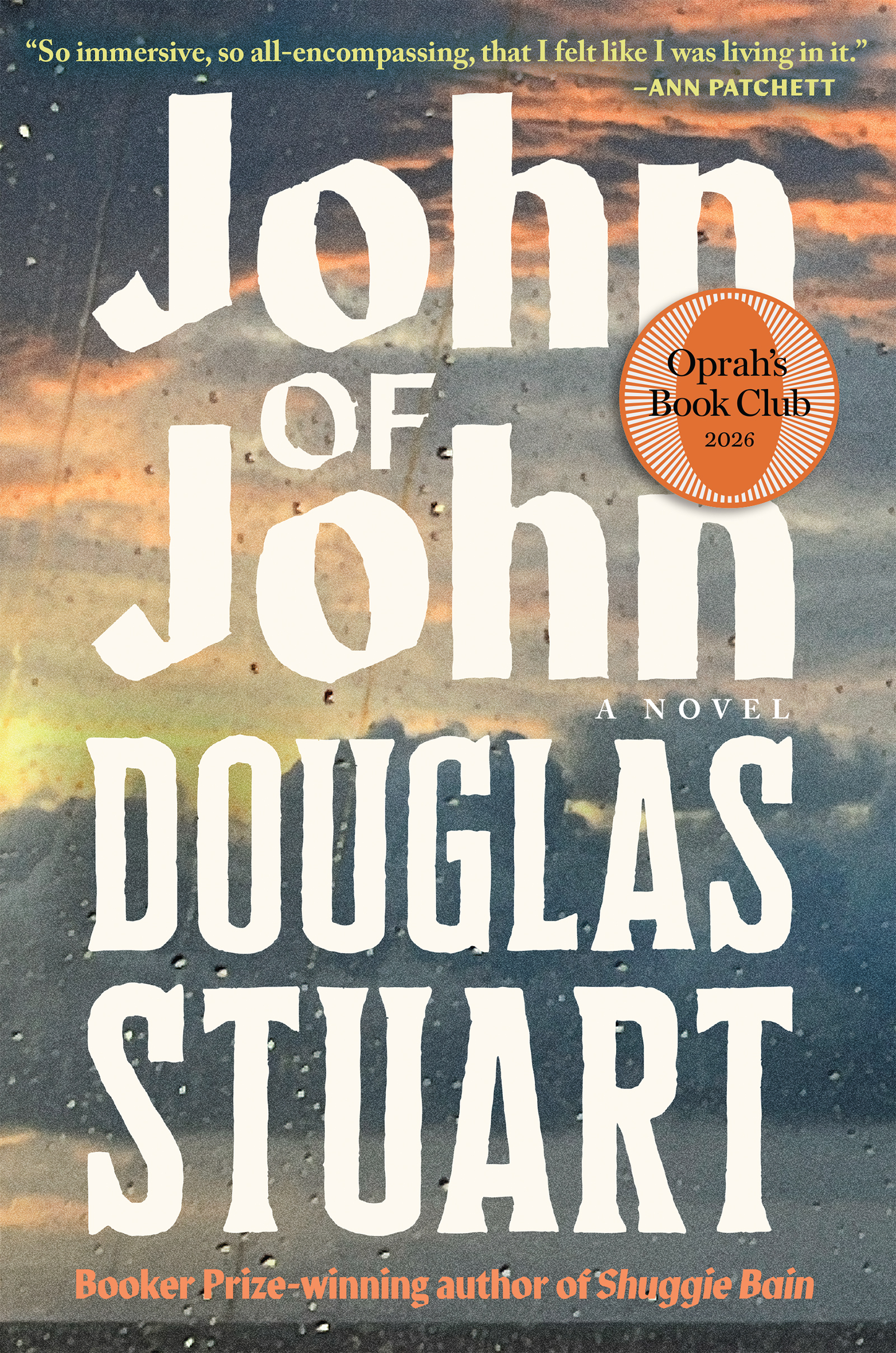
Photo of the front cover of John of John, by Douglas Stuart. Title and author name are in large print in front of a sunset background.
John of John, by Douglas Stuart

After watching an online interview of Douglas Stuart, I eagerly awaited my name reaching the top of the waitlist for John of John at the public library.

I have had the privilege of visiting the Outer Hebrides of Scotland. I have spent some time on the Isle of Lewis and visited the Isle of Harris. They are wild and stark and incredibly beautiful!

John of John, by Douglas Stuart is set on Harris. The author does a great job of giving you the setting. The moon-like starkness, the incessant wind coming off the Atlantic, the sometimes-rough ferry crossing of The Minch – the body of water between the mainland and the Outer Hebrides. The houses, the crofts, the weavers of Harris Tweed (which is also made in cottages on Lewis), the single-track roads, the sheep, the Gaelic native language, and the conservatism of the Free Presbyterian denomination (which is quite different from the Church of Scotland) are all brought to light in this novel.

The setting is almost a character in the book because to give the landscape and climate justice, one has to be immersed in it to truly appreciate the story.

The protagonist is John MacLeod, son of John MacLeod, son of Iain (John in Gaelic), son of Iain MacLeod. Young John has left the island to go to art school. He has gotten caught up in the fast life (life everywhere is “fast” compared to life in the Outer Hebrides) in Edinburgh. His father calls him home to care for his ailing maternal grandmother.

The younger John is not keen on the idea. The life he has lived on the mainland as a gay young man will surely upset his devout Free Presbyterian father to the point that he expects his father will disown him. How long can he keep his homosexuality a secret from his father.

But his father also has a secret.

If you are sensitive to “F-bombs,” you might not enjoy this book. I accepted them as apparently being part of the homosexual scene in which the younger John lived. Not that all homosexuals casually use this language, but it was part of the make up of the younger John – probably as part of his rebellion against the strict religious home in which he had been raised.

I tired of the story after 150 pages. There were other books I wanted to read, so I returned John of John to the public library. Kudos to the author for transporting me to the Outer Hebrides for a few hours.

Roses and Radicals: The Epic Story of How American Women Won the Right to Vote, by Susan Zimet

Photo of front cover of Roses and Radicals with the head of the Statue of Liberty under the title.

This book caught my eye when I was at the public library the week of July 4th. It was part of a display the librarians had assembled of books pertaining to the 250th birthday of the United States Declaration of Independence and related patriotic books and history books.

The book prompted me to pause and contemplate the incredible sacrifices the women (and a few men) made throughout the first fourteen decades of our country’s history to work toward the passage of a Constitutional Amendment that would make it unlawful for any state in the union to prohibit anyone from voting based on their sex.

I will write more about the 19th Amendment to the United States Constitution in my blog post on August 26 – the 126th anniversary of the ratification of that amendment.

Roses and Radicals is a relatively small book of barely 150 pages, including the bibliography and index. I thought it would be a quick read.

Sprinkled throughout the book are sidebar-like sections within chapters that tell the stories of individual including Susan B. Anthony, Elizabeth Cady Stanton, Anne Marbury Hutchinson, Lucretia Mott, Mary Wollstonecraft, Sisters Sarah and Angelina Grimké, Sojourner Truth, Lucy Stone, Victoria Woodhull, Matilda Joslyn Gage, Ida B. Wells, and Edith Wilson. A book could be written about each on of them.

Roses and Radicals begins with the World Anti-Slavery Convention in London in 1840. Elizabeth Cady Stanton accompanied her husband, who was a convention delegate. But her story began when she was five years old and her last brother died. Her father said to her, “Oh my daughter, I wish you were a boy.”

In response to that remark, she was determined to be the son her father had lost. That path served to show her how difficult it would be for a woman to fulfill the burden her father had placed on her because women were so restricted by law and society norms. Fathers held legal rights over daughters and husbands held legal rights over their wives and children.

But, getting back to the anti-slavery convention in 1840… The wives of delegates and the women delegates were not allowed on the main floor. They were relegated to a balcony. The women were so incensed that they began laying plans during the convention. If people from around the world could meet to work for the abolition of the slavery of Africans, the women concluded that they could organize themselves and fight for the rights of women.

The book tells how each of the women I named in an above paragraph worked for the equality of women, women’s rights in the eyes of the law in the United States, and ultimately for women to have the right to vote. It gives little-known details of how women worked behind-the-scenes as well as marching in the streets to secure women the right to vote.

Janet

Too many books. Not enough time. Not enough bookcases. Never take your right to read – or your right to vote — for granted.

3 Historical Novels I Read in June 2021

I read a bunch of good books in June, so without any delay I’ll jump right in to tell you what I thought of three of them.


The Girls in the Stilt House, by Kelly Mustian

The Girls in the Stilt House, by Kelly Mustian

I hardly know what to say about this debut historical novel by Kelly Mustian, a native of Mississippi. Wow! What a great book!

I’ll be careful not to give away anything about the plot. Ada is a white teen. Matilda is a black teen just a little older than Ada. They both live along the Natchez Trace in Mississippi in the early 1920s. When the book begins, they don’t know each other.

A string of ill-fated events throw the girls together in the stilt shack Ada lives in on the swamp. Both of them have secrets, some of which they don’t learn about one another until near the end of the book.

This book will keep you turning pages and yearning for Ada and Matilda to get the opportunities they deserve to have better lives. Ms. Mustian is a true wordsmith. She writes beautifully and even weaves a touch of humor here and there in this book of tragedies. She carefully crafted every sentence. I can’t wait to see what she writes for us next!


The Elephant of Belfast, by S. Kirk Walsh

The Elephant of Belfast, by S. Kirk Walsh

The Elephant of Belfast, by S. Kirk Walsh was inspired by true events in Belfast during the early days of World War II.

Denise Weston Austin was one of the first female zookeepers at the Belfast Zoo. Ms. Austin took a baby elephant named Sheila out of the zoo so she could escape being killed when the Ireland government ordered the zoo animals to be killed after Germany started bombing Belfast.

Government officials feared that if the zoo enclosures were damaged in future bombings, the animals could escape and pose a threat to local residents. Ms. Austin took the elephant to her home north of Belfast!

Author Sheila Kirk Walsh took that information and more historical facts and wove a fascinating novel about a fictional character – Hettie Quin — based on Denise Weston Austin and Violet – the name of the elephant in the book.

It was a frightening time with much death and destruction in Belfast. Ms. Walsh drew on her own experience in Manhattan on 9/11 to bring to this novel a feeling of insecurity and not knowing what might happen next.

There is depth to this novel, as Hettie Quin loses much that is near and dear to her. She not only saves Violet, Violet saves her.

Charlotte McCurry read the book for the CD edition. Her lovely Irish brogue added an air of authenticity to the story.

My apologies to Ms. Walsh. I was unable to capture a clear photograph of the book.


The Library of Legends, by Janie Chang

The Library of Legends, by Janie Chang

The premise of this novel enticed me to check it out. It’s based on a real event. In 1937, during the Second Sino-China War, university students and faculty members took 500-year-old Chinese writings (“the Library of Legends”) more than 1,000 miles on foot in an effort to save them from the bombings of the major cities by the Japanese. The premise intrigued me.

What I didn’t know, was that these ancient writings were just that: legends. Some of those legends are interwoven into the book. While that fantasy element appeals to some readers, it doesn’t especially appeal to me. I’m just not a fan of fantasy novels.

That said, I enjoyed the parts of the book that described the actual arduous journey taken by a group from one university, but I found myself skipping the pages about the legends. Halfway through the book, I stopped to read reviews of the novel. Some reviewers loved it because it is a combination historical novel/fantasy novel, while others disliked it for that very reason. I’m afraid I fall into that second camp.

It is said that China was fighting two wars at the same time. They were fighting Japan and they were fighting to keep communism out of their country. The communist influence is brought out in the book.

It was definitely worth my while to read as much of this book as I did. I learned something about Chinese history. It amazes me that university students and faculty members walked more than 1,000 miles in order to save some of the most treasured Chinese writings. I had no idea!

Until my next blog post

I hope you have a good book to read. Remember – you don’t have to finish reading a book just because you started reading it. That’s been a difficult lesson for me to learn. I don’t know why. That lesson finally became real to me last month when I was able to walk away from The Library of Legends, by Janie Chang. I had learned what I was meant to learn from it.

I’m listening to Caste: The Origins of Our Discontent, by Isabel Wilkerson. I highly recommend it!

Caste: The Origins of Our Discontents, by Isabel Wilkerson

I hope you enjoy your vocation or your retirement, and that you have time to enjoy a hobby.

Janet

What’s Juneteenth and Why Did I Just Hear About It?

I had planned to blog about this being the 234th anniversary of the ratification of the United States Constitution today, but some of my #OnThisDay blog posts have not gone over very well. 

U.S. President Joe Biden signed Juneteenth into law as a federal holiday last week. It was celebrated on Saturday, June 19 as an official holiday for the first time. This seemed like a more timely topic than the ratification of the United States Constitution.


When I heard of Juneteenth

I’m not sure, but I think last year was the first I’d heard of Juneteenth. Or maybe it was mentioned on a news broadcast a year or two before that. The first time I heard of it is immaterial. My point is that I was approximately 65 years old when I first heard of the celebration, and that is inexcusable.

In order to understand the significance of Juneteenth, one must know about the Emancipation Proclamation.


What the Emancipation Proclamation Did and Didn’t Do

U.S. President Abraham Lincoln issued the Emancipation Proclamation on January 1, 1863. In part, it declared “that all persons held as slaves” within the rebellious states “are, and henceforward shall be free.”

Word of the freeing of the slaves spread slowly. Communication was much different in 1863 than in 2021. Plus, the Confederate States of America did not recognize Abraham Lincoln as their president.

The Emancipation Proclamation was limited in ways that are often glossed over. It only applied to the states that had seceded from the United States. That meant that slavery was still legal in the border states. Southern secessionist states that had come under Northern control by January 1, 1863, were also exempt. Additionally, the freedom of the slaves depended upon the eventual military victory of the United States over the Confederacy.

The Emancipation Proclamation gave the Northern troops and citizens an added incentive for victory over the South. As Northern troops advanced, the freedom of slaves expanded. The Proclamation also made it possible for black men to join the United States Army and Navy.


What is Juneteenth?

I’m ill-equipped to explain Juneteenth, but this is what I’ve learned so far…

Federal troops reached Galveston, Texas on June 19, 1865, and made it known to slaves there that President Lincoln had declared them free on January 1, 1863 – some two-and-a-half years earlier.

Since June 19, 1866, June 19 has been celebrated as Freedom Day, Emancipation Day, Juneteenth Independence Day, and Juneteenth by black Americans. Most of their white counterparts, though, remained ignorant of the date’s significance until very recent history.

I don’t recall the mention of June 19, 1865 or Juneteenth in any history text book I ever had in elementary school, high school, or college.

Why is that?

The answer is simple. History books have always been written by white men. (I started to say “white people,” but “white men” seemed more accurate. I don’t remember ever having a history textbook written by a woman.)

That’s why the American populous has not been taught about the accomplishments of black Americans. It’s why it is now necessary for us to have Black History Month in February.


Where do we go from here?

Photo credit: Logan Weaver on unsplash.com

As long as black and brown Americans are by in large excluded from the decision-making process (such as voter suppression) and are elected to public office in miniscule numbers compared to their proportion of the population, the entire population will suffer. We’ll continue to just learn the history of white America. We’ll all suffer because the talents and ideas of black and brown Americans will be excluded from the workings of government and business.

It’s not enough not to be a racist. We must strive to be anti-racists. And beyond that, those of us who are white need to take anti-racism a step further. We need to be allies. That means when we’re in a situation where someone says something derogatory about people of another race, it is incumbent upon us to speak up against such talk. We need to have the courage to speak up for our fellow human beings who are being maligned.

Our silence is not only complacency, it signals our agreement, compliance, and acquiescence.

Our silence will convict us.

Instead of making snide remarks or having malevolent thoughts about the new Juneteenth holiday, let’s embrace it and learn from it.


Since my last blog post

Our almost-13-year-old rescue dog is hanging in there. The week before last, he spent four days in the hospital due to erratic glucose levels. He’s a diabetic. We’re starting to understand how sick he can become in just a matter of minutes.


Until my next blog post

I hope you have a good book to read. Among other things, I’m reading The Girls in the Stilt House, a debut novel by Kelly Mustian. She really has a talent for painting pictures with words.

Those of you living in the northern hemisphere, I hope you have a pleasant summer. Those of you living in the southern hemisphere, I don’t envy you. You know I’m not fond of cold weather.

Wherever you live, make the most of this week. I intend to get back to work on my historical novel.

Janet