H is for Historical Fiction

This is the eighth day of the 2017 A to Z Blog Challenge, so I am writing a blog post that has something to do with the letter, “H.” I chose a topic I enjoy and one about which I try to learn more every day.

One of my dreams is to write a historical novel. The historian in me struggles with the fiction in historical fiction. The writer in me wishes I could run fast and loose with the facts.

Over the weekend, I did a lot of reading on the subject in preparation for writing today’s blog post. In the process, I found some information that shed more light on the historical event that serves as the basis for the novel manuscript I’ve been working on for the last decade or so.

The combination of the new information I found about that event when paired with some of the reading I did yesterday about the craft of writing historical fiction made my head spin. The combination of the two, in fact, has convinced me that I must start over writing my novel. Yes, you read that correctly. I must start over.

When I mapped out my topics for this A to Z Blog Challenge two or three weeks ago, I thought “H” was a no-brainer. I could write about historical fiction. Today’s post would be one of the easier ones of the 26 letters of the alphabet. That’s laughable now, except I don’t feel much like laughing.

I won’t see The Spanish Coin in print. Not in its present form. Probably not in any form or with that title. I will, however, be able to use parts of it and characters from it.

None of my research has been in vain. Nor has any of my writing. Any time spent writing is beneficial. Writing is an exercise of “muscles” in the brain. Like any other muscles in the body, if not used they weaken and eventually cease to work.

The bad news is that I have to start over. The good news is that I get to start over. Today I get a fresh start.

I’m certainly not the first writer who never got her first novel published. There are numerous stories about first manuscripts being lost. Some succumbed to fire, while others were mistakenly left on a train and were never seen again. Many first manuscripts get rejected so many times by publishers that the writer eventually puts it away and moves on to another novel. Most writers have had to start over. That is what I will do, and I believe the end product will be better than The Spanish Coin manuscript.

Historians, as a rule, look at historical fiction with disdain. I want to be a historical novelist whose work is respected even by historians. Something I learned from historical fiction author Sharyn McCrumb and from author James Alexander Thom is that historical fiction can be just as — or even more — accurate than a history textbook.

History contains many errors because each person sees the same incident differently or remembers it differently. History textbooks contain errors and are biased depending on the agenda of the writer(s), the publisher, or the state school board or local school’s decision makers selecting the curriculum. History books are usually written by someone on the winning side of a war. The viewpoint of the losing side is rarely given or, if it is, it is what the winner thinks the loser thought or believed.

James Alexander Thom quotes author Lucia Robson in his book, The Art and Craft of Writing Historical Fiction as he wrote the following:

“Lucia Robson’s facts can be trusted if, say, you’re a teacher assigning her novels as supplemental reading in a history class. ‘Researching as meticulously as a historian is not an obligation but a necessity,’ she tells me. ‘But I research differently from most historians. I’m look for details of daily life of the period that might not be important to someone tightly focused on certain events and individuals. Novelists do take conscious liberties by depicting not only what people did but trying to explain why they did it.’”

writing~~element3

Mr. Thom also wrote in that same book about writing historical fiction:

“To be really good historical novelists, though (and that’s what I want us to be), we have to take our obligation to historical truth just as seriously as the historians do theirs.”

He also wrote,

“But here’s the key:  Whether your historical story is ancient or recent history, what you want to do is re-create it in full – live, colorful, smelly, noisy, savory, painful, repugnant, scary, all the ways it actually was – and then set the reader down smack in the midst of it.”

Many years ago, I read Follow the River, by James Alexander Thom. His writing was so good that I felt like I was in the story. I felt like I was Mary Ingles, the main character.

If I’m going to write historical fiction, this is my challenge: Get all the facts right, as far as research makes that possible, and flavor the story with believable dialogue and enough authentic background to make my reader feel like he or she is there.

The story I want to write takes place in the Carolina backcountry in 1771. In order to take my reader there, I must go there. I must be there.

Until my next blog post

Please hang in there with me. I’ve always thought of my blog as a way to take readers along on my journey as a writer. The road is not straight. It contains many curves, hill, and potholes. Yesterday I ran up on an unexpected detour.

As a traveler, I don’t like detours. I’m the type person who drives other people crazy. I map out the entire trip in advance. I have a daily itinerary planned. I leave little time for serendipity. That’s the way I plan vacations and yet, when I look back on the best trips of my life, it is the ones that weren’t so rigidly planned that I enjoyed the most.

Fasten your seatbelts, because this writer’s journey just got a lot more exciting and uncertain!

Janet

Save

D is for Dialect

On this fourth day of the 2017 A to Z Blog Challenge, I’m supposed to write about something related to the letter “D.” Staying in my usual theme of writing, I chose the word, DIALECT.

18th century African slave dialect

Dialect is something I’ve had to address in my The Spanish Coin manuscript. One of the main characters and one of the minor characters are slaves in South Carolina in 1771. Another character is a free woman of color living in the community.

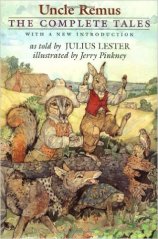
Dialect can be overdone. As a novice writer, that’s a fair assessment of where I was. I had those two slaves dropping the “g” at the end of every gerund. I gradually realized that they sounded like Uncle Remus or worse.

51lDQwc6GfL._SX329_BO1,204,203,200_

I grew up in the 1950s loving Uncle Remus stories, but writing a novel in the 21st century and assigning a speech pattern to that extreme is just wrong on so many levels.

Being a beginning writer, though, perhaps I had to go through many stages with the slaves’ dialect. I gradually changed dialectal words to today’s language – or to the standard language of the time and place. (The “find and replace” feature on the computer became my best friend.)

Beowulf

Even if it weren’t offensive to overuse dialect in a novel, it would be exhausting to the writer and the reader. It would be something akin to having to read Beowulf as it was originally written in Old English. I had to read Beowulf in high school, and I think I’d rather have a root canal than have to read it again. (My apologies to the late Mrs. Estelle Cline, my senior English teacher.)

index

Foreign accents

A consideration related to having a character speaking in dialect is having one speaking with a foreign accent. Since most of the characters in The Spanish Coin are Scottish or Irish immigrants, they use some words that we no longer use in America or they have ways of pronouncing words that differ from my 2017 pronunciation in North Carolina. For instance, the word “wee” is still very much used in Scotland and would have been used by Scottish immigrants and probably by one or two more generations, whereas today in America we use the word “little.” Having a character in The Spanish Coin say “wee” is a way I chose to remind the reader that a particular character is a native of Scotland.

Another character in The Spanish Coin is a French immigrant. There are a few French words he says when he cannot think of or doesn’t know the English word he needs to use. Perhaps I watch too many cooking shows on TV, but in my mind the Frenchman is my book sounds just like Jacques Pepin.

Jacques-Pepin

Until my next blog post tomorrow

I hope you have a good book to read. If you’re a writer, I hope you have productive writing time.

Janet


C is for Characterization

This is the third day of the 2017 A to Z Blog Challenge, so today’s post must have something to do with the letter “C.” Thinking in the realm of writing fiction, I settled on the word CHARACTERIZATION.

Characterization can be shown through narrative, dialogue, action, and reaction. All four should be used by a writer.

There are many things for a fiction writer to keep in mind in creating and fleshing out characters. My writing mentor from Queens University of Charlotte, Judy Simpson, said, “Don’t begin writing your story until you know all of the major characters.” I can’t remember if I followed that advice when I started writing The Spanish Coin manuscript 10 or more years ago. (There! I’ve said it! This has been a labor of love that I have worked on in spurts and fits, sometimes not touching it for more than a year at a time.) But I digress.

The famous mantra of writing instructors comes into play in characterization:  Show, don’t tell. Don’t tell the reader about a character. Reveal character details through what they say, how they say it, and what they do or don’t do.

Even though the writer might have in her notes a driver’s license description of each character (e.g., black male, brown eyes, black hair, six feet tall, 180 pounds) that is usually not the best way to introduce a character to your reader. Let those details (or just the ones that are pertinent) come out gradually and in subtle ways.

Every character has strengths and weaknesses. A “goody-two-shoes” character is boring and, let’s face it, offensive and irritating. Likewise, even the most heinous villain probably has some redeeming value.

Characters unnecessary to the story should be omitted. Related to that, a writer should not include minor characters early on in a novel because the reader might be misled and lose interest.

There is also the matter of choosing names for all the characters. Writing instructors caution beginning writers not to give two characters in the same short story or novel names that are similar. For instance, you might not want a Phil and a Phyllis in the same book.

I have struggled over the name of a free woman of color in The Spanish Coin. She was Rachel for a long time because I think Rachel is a beautiful name and it conjures up an image of a strong and elegant woman in my mind. I changed her name to Clarissa in honor of a woman of color who made a great impression on me while I was writing local history articles for a newspaper a decade ago. It will be interesting to see what the character’s name turns out to be in the final product.

Another consideration that must be taken into account, especially when writing historical fiction, is that the writer must make sure to give characters names appropriate to the time and place. For instance, you won’t find a Tammy or a Kevin in The Spanish Coin because those names were not used in 1771 in the Carolina backcountry.

Each character should have at least one distinguishing characteristic in order to help set an image in the reader’s mind. A character could have a foreign accent, a disfiguring physical feature, a hearing problem, a lisp, a limp, an annoying laugh, a mental illness, or a word or phrase that no one else says.

Who knew there were so many things to think about when giving a fictitious character a name?

Until my next blog post tomorrow

I hope you have a good book to read. (I seem to always have too many on my bedside table! One night they’re going to topple over and give me a concussion.) If you’re a writer, I hope you have quality writing time.

Janet

2017 A to Z Challenge Badge
Blogging from A to Z Challenge Badge 2017

B is for Background

On this second day of the 2017 A to Z Blog Challenge, my blog post is supposed to have something to do with the letter, “B.” I was tempted to write about blogging, but I’ve had that as my topic several times lately. I decided to write about BACKGROUND and what it means in fiction.

Foundations in Fiction

My first thought was to see what my fiction writing instructor in the Continuing Education Department at Queens University of Charlotte, Judith H. Simpson, had to say about background in her book, Foundations in Fiction.

Judy Simpson's book cover 002

Although background and setting are often used interchangeably, Judy chose to address them separately. Whereas setting is physical location, background is the story’s environment. Of background, Judy wrote in her book, “It is not the physical place but something more than that. It can be the hero’s job.”

Examples of background

Many popular authors use a background for their novels that becomes part of their brand. Janet Evanovich’s Stephanie Plum novels are set in New Jersey, but the background is bounty hunting — albeit of the bumbling variety. Tony Hillerman used Indian reservations for background in his Leaphorn and Chee series. Margaret Truman used iconic locations in Washington, DC in her murder mysteries, and Amy Clipston uses the Amish culture as the background in her fiction.

I enjoy reading and writing historical fiction. The historical fiction writer must create physical setting, create story background, and recreate a past culture, according to Judy Simpson. That last aspect — recreation of a past culture — is what gives historical fiction authenticity.

The writer of historical fiction must do extensive research in order to write believable characters. The novel manuscript I’m writing is set in the Carolina backcountry in 1771. People dressed and lived differently in 1771 than how we dress and live in that same geographical location in 2017. The culture, values, and accepted societal mores were different in 1771 than they are in 2017.

The writer of good historical fiction “must know the history of the period you are using; you must understand the social structure of this society; you must know how they lived, what they wore, what they ate, their monetary system, their transportation system, their social events, their daily lives,” according to Judy’s book. If you make an error, one or more readers will delight in bringing that mistake to your attention.

In writing my The Spanish Coin manuscript, I have done extensive research. The fear of making a mistake has paralyzed me sometimes. If I wait until my research is complete and my writing is perfect, though, my novel will never be published. At some point in the next 12 months, I need to conclude that it is as good as I can make it, push to get it published, and get back to writing the sequel.

The Flavor of Historical Fiction

Judy Simpson wrote the following in Foundations in Fiction and I try to keep her words in mind as I work on my book:

“Remember that what makes a historical novel different is the flavor, the sense of time and place of a long ago era. When the reader finishes the book, they should feel as if they were there, as if they really know what it would be like to live then. You have to capture the essence of that time and each period has its own flavor. Only you, the writer, can open the gate to that era for the reader.”

Until my next blog post tomorrow

I hope you have a good book to read. (As I was writing this last night, I was still reading The Heavens May Fall, by Allen Eskens.) If you’re a writer, I hope you have quality writing time.

Janet

5 things I learned about Social Media this weekend

If you follow my blog, bless you! If you follow my blog, you know that, among other things, I share my rocky journey into the world of social media. If you’re in the same boat, I hope you have found some information in my blog that was new and helpful to you.

Today’s post deviates from my plan to share a piece of my history writing. On Friday, I plan to post an article I wrote in 2007 about an 1897 head-on collision between two trains in Harrisburg, NC. Today I share my thoughts about five areas of social media that have come to my attention over the weekend.

Contact form on my blog

I was so proud on Friday that I’d figured out how to insert a comment form within the body of my blog. So far, that form has been a total flop. No one used it. If it was used, it didn’t work. I won’t try that again unless or until I learn how to benefit from it.

Quora

I mentioned Quora.com in my blog post on January 27, 2017, 3 Things to Try on Social Media in January , http://wp.me/pL80d-tt) and I’ve played around some with it some. Over the weekend, I found a 6-minute February 10, 2017 podcast offered for free on http://mschool.growtheverywhere.libsynpro.com/how-to-attract-9000-visitors-a-month-from-quora-ep-194 that/which gave several suggestions for those of us who are still trying to figure out how to best utilize Quora – or, more specifically, trying to determine if it is even a good tool for us or not. My problem is that I’m far removed from my college studies of political science to address most of the questions that come up in that area and I don’t feel qualified to answer questions about writing until I’ve gotten my first novel published. Bottom line:  I’m leaving my options open with Quora as I continue to find my niche.

Pinterest

On Saturday afternoon I finally got serious about trying to figure out where historical fiction fans hang out on social media. Finding https://www.statista.com/statistics/246183/share-of-us-internet-users-who-use-pinterest-by-age-group/ was helpful in a round-a-bout way since it presents the statistics for Pinterest users in 2016. Here’s the age breakdown:

36% 18-29 years old

34% 30-49 years old

28% 50-64 years old

16% 65 or older

I can’t afford full access to statista.com, but this bit of free information was helpful. These stats are not specific to fans of historical fiction, but I enjoy using Pinterest and it is beneficial to know what age people use it the most. It’s a piece of the puzzle.

I learned from Pinterest Analytics that I average having 13,440 views per month, but only 174 of them were engaged in my content. My most popular pin in the last 30 days was Chimney Tops Hike in Great Smoky Mountains National Park. In fact, three of my most popular pins were from my Great Smoky Mountains board. I originally set up that board (and the Blue Ridge Mountains board) to help draw attention to my vintage postcard book, The Blue Ridge Mountains of North Carolina. If this book sounds interesting to you, you can purchase in paperback or for Kindle on amazon.com.

I read another WordPress.com blogger’s post pertaining to historical fiction writers. https://kmguerin.wordpress.com/2016/07/18/social-media-for-historical-fiction-writers-part-4-facebook/https://kmguerin.wordpress.com/2016/07/18/social-media-for-historical-fiction-writers-part-4-facebook/ gave a good suggestion:  Find a trending topic or article related to the time period you are writing about and post it. I have a board on Pinterest, “Novel in Progress:  The Spanish Coin,” in which I pin photos and information pertinent to 1771 in the Waxhaws area in present-day Lancaster County, SC, as well as the Rocky River Presbyterian Church community in present-day Cabarrus County, NC (part of Mecklenburg County in 1771), and Salisbury, NC. These are the three geographic locations in my novel. I have 69 pins and 24 followers on that board as of February 20, 2017. I need to attract more people to that Pinterest board. I invite you to visit me on Pinterest by clicking on the Pinterest icon in my blog’s sidebar. Pin this blog post to one of your Pinterest boards by clicking on the Pinterest icon below.

Reading Medieval historical fiction author K.M. Guerin’s July 18, 2016 Time-Worn Pages blog post, https://kmguerin.wordpress.com/2016/07/18/social-media-for-historical-fiction-writers-part-4-facebook/http://www.socialmediaexaminer.com/how-to-get-more-pinterest-followers/ tipped me off to the fact that I was giving my blog readers a way to pin my posts to their Pinterest boards or share a link to my blog posts to their Facebook pages, but I did not provide a way for them to connect with me on social media. The proverbial lightbulb finally came on, folks!  I’ve said it before, and I’ll say it again:  I am not technologically savvy. What I’ve learned, I’ve had to dig up myself. I suppose that’s the best way to learn something new, but it surely is tedious. I read the above link to socialmediaexaminer.com on February 18, 2017 and worked until I figured out how to add “Follow me on Social Media” buttons in my blog’s sidebar. You wouldn’t believe what a sense of accomplishment that gave me!

LinkedIn and Instagram

I also picked up some ideas from reading a February 29, 2016 blog post by Jessica Lawlor on The Write Site. (https://thewritelife.com/quick-social-media-tips-for-writers-part-2) You can follow Jessica Lawlor on Twitter @jesslaw.) My takeaways:  (1) Republish some of my blog posts on LinkedIn; and (2) Instagram is a platform where I can build my brand and community, and I should refer to the link to my website or blog as found in my profile (i.e., using the words “Link in profile” somewhere in my post) because LinkedIn only allows accounts to display one link. I haven’t given up on LinkedIn, and I haven’t tried Instagram.

Until my next blog post

I hope you have a good book to read. If you’re a writer, I hope you have productive writing time.

Janet

What is a logline, and why do I need one?

I’m still learning the terminology used in the publishing business. The publishing business is changing every day, so I’ll always be playing catch up.

Sell Your Story in a Single Sentence

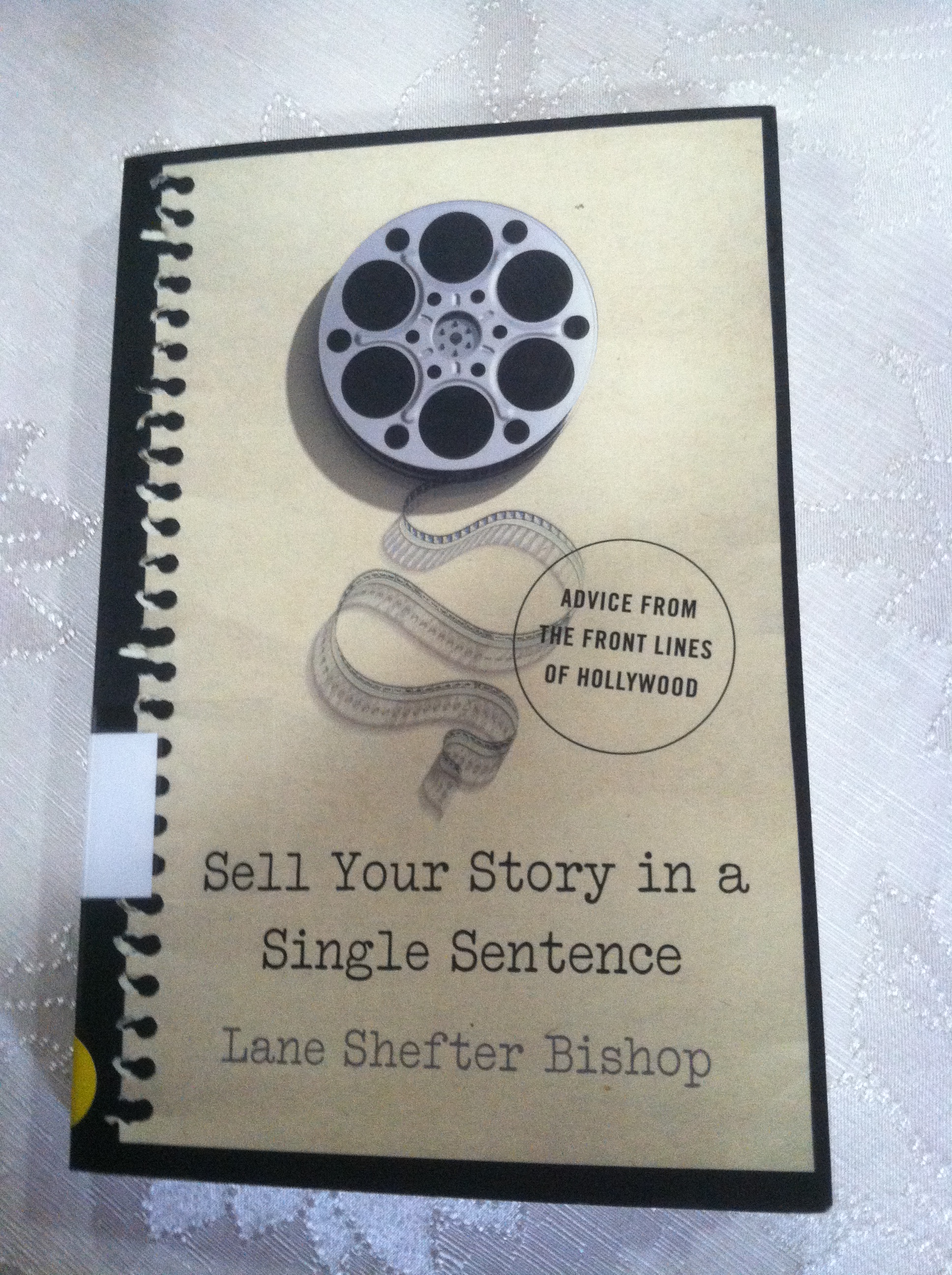
A library book caught my attention last week, so I checked it out. Sell Your Story in a Single Sentence, by Lane Shefter Bishop turned out to be one of the most helpful writing books I’ve read. Perhaps I feel that way because it was timely. It would have been even more beneficial if I could have read it a decade ago before I started writing my southern historical novel manuscript with the working title, The Spanish Coin. (Since Ms. Bishop published the book in 2016, that would have been impossible — but you get my point.)

Sell Your Story in a Single Sentence, by Lane Shefter Bishop
Sell Your Story in a Single  Sentence, by Lane Shefter   Bishop                                                                                                                         

Speaking of getting to the point . . .

Sell Your Story in a Single Sentence is an excellent “how to” book about the process of writing a logline. A logline is a single sentence that identifies a story’s protagonist, what the protagonist wants, and what’s at stake. Sounds easy?  Actually, it’s quite a process that involves many revisions and lots of rewriting.

When to write your logline

If I had known to create a logline before writing my novel’s manuscript, it would have helped me focus. Writing the logline after the fact, though, will help me evaluate my 97,000-word manuscript. I’ll have to make the best of having the cart before the horse. Next time I write a book, I’ll know to start with the logline.

Why do I need a logline?

I need a logline so I can precisely answer the question, “What’s your book about?” I will also need it to open my query letters to prospective literary agents or publishers. In that respect, the logline is like the “hook” or first line of a novel. If well written, it grabs the agent’s attention and makes him want to hear more. Ultimately, it makes a literary agent want to read my manuscript — or not read it.

My logline for The Spanish Coin

The following sentence is my logline in progress for The Spanish Coin:

When a widow is accused of her husband’s murder in the Carolina backcountry in 1771, she will stop at nothing to save herself and her unborn child.

Until my next blog post . . .

I hope you have a good book to read. If you’re a writer, I hope you have quality writing time.

Janet

P.S. Does my logline make you want to read The Spanish Coin? I would love to have your comments!

Save

Character Arc Development & The Spanish Coin

I’ve been reading about character arc and how to develop it. This has made me reflect on my 95,000-word historical fiction manuscript.

The Spanish Coin

The working title for my novel is The Spanish Coin. It begins with a dead body. The main character is Nancy. There is a cast of characters, some of whom support Nancy and one who sets out to ruin her. The story is set in South Carolina in 1771.

The main plot is about determining who murdered the local pastor. Was it Nancy?

There is a subplot about a black male slave and a free black woman. Their story runs throughout the book.

There is a subplot about Nancy’s friend, Betty, and a stranger who visits the community.

The Betrayal

Then there is the sequel that I’ve plotted out. Its working title is The Betrayal. In fact, I’ve outlined what appears to be three books to follow the story I started in The Spanish Coin. I’ve been working on this series for more than a decade, but first I need to get The Spanish Coin published.

Character Arc

There are three types of character arc, according to author and blogger K.M. Weiland:  positive, flat, and negative. As I understand it,  a positive character arc is one in which the character changes for the better or perhaps discovers she or he is stronger than they’d thought. A flat arc is one in which characters take on the world or the problem the world throws at them, but they aren’t changed inside or not changed much. Negative arcs are sometimes found when the character deals with failure.

My reading this week has brought to my attention how much my character development in The Spanish Coin sets the ground work for any books that might follow. Since I only planned to write one book, I did not have in mind how character development in The Spanish Coin would influence the plotting of sequels. I got so involved with the main and secondary characters that I wanted to know what happened to them. So far, I have an 11,000-word outline.

I need to review The Spanish Coin manuscript to look for changes I need to make regarding character development and character arc in light of my plan to continue some of the characters’s stories in additional books. With that accomplished, I need to stop procrastinating and hire an editor to evaluate the manuscript.

Until my next blog post in a few days, I hope you have a good book to read. If you are a writer, I hope you have productive writing time.

Janet

Writing Plan of Action Update

My “Writing Plan of Action – Revised June 15, 2015” sort of fell through the cracks. In fact, I soon forgot all about it! In my own defense, we remodeled our kitchen last summer. If you’ve ever lived through a kitchen remodeling project, you will remember how all-consuming that is.

Refresher on June 2015 Plan

Something reminded me on Monday that I had a writing plan. I was shocked to read that my last revision to it was made more than 14 months ago. In a nutshell, here is that old plan: Schedule book signings/author events; blog every five days or so; look for writing contests to enter or magazine articles to write; edit my historical novel manuscript (The Spanish Coin) one day every week; and start in earnest to find a literary agent.

I have failed on all counts.

Progress made on novel manuscript

I recently got back to work on The Spanish Coin after a strange year with many distractions.

Sometimes I think I read too many “How To” books about writing and don’t spend enough time writing. For instance, I read a recommendation that my characters’ thoughts should be italicized. After going back through the first 15 chapters doing that, I read a more convincing recommendation that thoughts should be blended into a novel through characters’ voices. The reasoning was that italics pull the reader out of the story. I went back through chapters 1 through 15 and converted the italicized thoughts into a more blended format. Then, I converted thoughts in chapters 16 through 20 from “she thought/he thought” to a blended format. I hope I got it right!

My Writing Plan of Action – Revised August 25, 2016

  • Hire a professional to evaluate my The Spanish Coin manuscript;
  • Edit manuscript in light of that evaluation;
  • Continue to blog every Friday;
  • Get back to work on a sequel to The Spanish Coin (tentatively titled The Banjo); and
  • Seek representation by a literary agent or self-publish.

Let’s hope I am more successful following my new plan than I was my old one!

Janet


Online sites for writers

Today’s post is about a half dozen websites for writers that I discovered this week. I do not endorse any of the websites. I’m merely sharing the sites with those of you who are writers and, in some cases, commenting on my first impressions of the sites.

Online-Utility.org

Online-Utility.org is a free online tool. It measures readability and calculates the grade level at which one could read your text with ease. It also instantaneously lists every sentence in your text that “it” suggests you “rewrite to improve readability.” I was stunned at the number of sentences this tool listed that needed my attention in the first 100 pages of my novel manuscript; however, the website description admits that “In general, these tests penalize writers for polysyllabic words and long, complex sentences.” After quickly perusing the Online-Utility.org list of my sentences that needed attention, I concluded that the great majority of my words had more than one syllable and I am guilty of writing a complex sentence on occasion. I am attempting to write fiction for adults. I concluded that this free online tool better serves someone who is writing for young children or new readers of the English language.

thewritingpractice.com

I also happened upon thewritingpractice. The site has articles about the craft of writing. I will definitely visit that website again.

Writers’ Village University

Another website is that of Writer’s Village University. This site offers college-level classes for its members. I have found few reviews of this site on objective websites but many posts from people asking if anyone has used it. The Writer’s Village University website lists numerous glowing remarks from students, but I find it suspect that there is not one single mediocre or negative review. The writing groups aspect of the website might be its best member benefit. The sites lacks sufficient course descriptions for me to join with confidence. I welcome feedback from any current or former members of the website.

inkandquills.com and The Spanish Coin

As energy allows, I continue to edit my historical novel manuscript I’m calling The Spanish Coin. I was up to chapter 16 of 20 putting my characters’ thoughts in italics when a couple of days ago I read Kaitlin Hillerich’s article titled “How to Write Your Character’s Thoughts” on inkandquills.com. Ms. Hillerich says putting thoughts in italics or using speech tags creates “a barrier between the character and the reader.” She sees thoughts in italics as an interruption by the writer. Ms. Hillerich recommends that the writer lets the character convey his or his thoughts with their own voice. In other words, you can stay in third person point of view but write so it seems like the character is the narrator. This approach makes sense to me, so I will start once more on the first page of my novel’s manuscript, remove the thoughts in italics, and try to accomplish what Ms. Hillerich recommends. I hope my next step after that will be getting a professional to critique my 95,852-word manuscript. If I keep reading “how to write” articles and blogs, I’ll never get The Spanish Coin published. I think I sub-consciously procrastinate because I dread getting umpteen rejection letters from literary agents.

jamigold.com

One website leads to another when I get online. I often start out on Pinterest.com and find many websites about writing. I do not read paranormal fiction, but I recently discovered the jamigold.com website about paranormal writing. I was pleasantly surprised to find a plethora of helpful blog posts there for any writer. Some posts are about self-publishing. There is a new blog series about planning your newsletter. There are posts about how to keep readers and types of extra content you might want to consider including on your website.

Janice Hardy’s Fiction University

The Jami Gold website led me to blog.janicehardy.com — Janice Hardy’s Fiction University. The site contains more than 1,000 articles about writing. Whew! I don’t know where to begin.

No wonder I haven’t finished editing my novel. I spend too much time reading about writing and not enough time writing. And did I mention I’m a procrastinator?

Feel free to tweet about my blog, pin my posts on one of your Pinterest boards, and tell your friends to visit my blog and my website, janetmorrisonbooks.com. Until my next post, I wish you a good book to read and productive writing time for those of you who are writers.

Should I Self-Publish My Novel?

I have always wanted my historical novel, The Spanish Coin, to be published by a publishing house. That desire was based on my thinking that would be a stamp of approval for my writing skills. Being published by a publishing house would validate me as an author.

My thoughts have changed recently. The publishing business is changing so fast that self-publishing is becoming more acceptable. I’m not getting any younger, the road to securing the services of a literary agent and eventually (maybe) getting my manuscript picked up by a publisher, and something like 18 months later seeing the book in print make me rethink things.

My main reason for writing is not to make money; however, reaching the point where my income from writing escalates from the Internal Revenue Service categorizing it as a “hobby” to recognizing it as my profession would be rewarding. The royalties earned by self-publishing appear to far exceed those paid by publishing houses.

I write because I’m compelled to do so. As a child, I kept diaries. Diaries in the early 1960s only provided a space approximately one inch by three inches for each day’s comments. I quickly outgrew that format and took to using notebook paper. That way I could write as much as I wanted to each day. I kept such a journal during middle and high school, some during college, and sporadically throughout my adult life. It always surprises me when I hear someone say they don’t like to write. I can’t imagine!

The fact that the self-published author has to do his own marketing is often labeled a detriment when writers list the pros and cons of that route, but the other side of the coin is that the author has full control over getting the word out about his book. Although my vintage postcard book, The Blue Ridge Mountains of North Carolina, was published by a history book publisher, most of the marketing of the book fell on my shoulders.

The more I read about self-publishing, the more I think it just might be the way for me to go. Before I make that decision, though, I must do some research to determine how readers of historical fiction prefer their books. Do they prefer e-books or traditional books? If they prefer e-books, I must research all my self-publishing options — which already seems like comparing apples to oranges — so I can make an educated decision.

Like so many facets of the business of writing, sorting through all the options of publishing can feel overwhelming. For now, I need to concentrate on finishing The Spanish Coin and getting it professionally edited.

I plan to blog about my progress on my novel the end of every month.

Janet