An Historical & Current Look at “America First”

It is sad that many Americans do not know history. I blame the results of the 2024 US Presidential election on that along with today’s popular mindset that is only concerned with how something affects “me” instead of being concerned with “the common good.”

Photo by Kyle Glenn on Unsplash

A policy of isolationism has never turned out well for the United States, and I doubt it will as we find ourselves in a true global economy in which no country can thrive in isolation.

Donald Trump campaigned for President on an America First agenda. That apparently sounded good to half the population. The picture he painted of America First did not include alienating the allies we’ve had for our entire 248-year history. It did not include turning our backs on Ukraine and embracing Vladimir Putin. Trump so successfully sold half the voters a bill of goods that they find themselves unable to admit they were hoodwinked. They cannot admit they made a grave mistake in the voting booth.

They interpreted “America First” as an idyllic country in which we would literally build walls instead of bridges, we would have cheap eggs and cheap gasoline, we would not be bothered by having under-paid migrants picking our fruits and vegetables, we would not be bothered with immigrants cleaning our hotel rooms or cutting our grass, and we would not have to compete with highly-qualified foreigners for jobs we have not prepared ourselves to assume.

It is a fact that Americans already have cheap gasoline compared to such places as Great Britain. As the “Bird Flu” continues to spread, we already look back on $4.00-a-dozen eggs as “the good old days.” And how many of us are lining up to make the beds and clean the toilets in hotels for $7.25-an-hour?

Much of America finds itself in an “us versus them” mentality. It is a mindset based in a belief that anyone who doesn’t look and talk like I do doesn’t have the right to live… not a right to live in the United States, at least. When I voiced my political views on social media in January, one commenter told me I should find another country to live in.

I was fortunate to have been born in the United States. I did nothing to deserve that. My immigrant ancestors came here in the 1700s and — fortunately for me — were not deported by the Native Americans who had been living here for thousands of years.

By merely being born in the United States I am the recipient of blessings and opportunities about which the majority of people in the world can only dream.

Photo of the Statue of Liberty with the New York City skyline in the background
Photo by Priyanka Puvvada on Unsplash

Don’t get me wrong… illegal immigration into the United States needs to be addressed, but the mistakes of the past have turned Americans into an “us versus them” mentality in which the “us” no longer view “them” as human beings. The dehumanization of people leads to hate and violence.

It is tragic that we now have a President who repeatedly tells us that we are victims, suckers, and losers being taken advantage of by other countries.


“What’s the history of “America First?” you may ask.

Former Secretary of State, the late Madeleine Korbel Albright, explained it well in her book, Fascism: A Warning, in 2018, so I will quote some of what she wrote:

“America First is a slogan with a past. Founded in 1940, the America First Committee (AFC) brought together pacifists, isolationists, and Nazi sympathizers to fight against the country’s prospective entry into World War II. The AFC opposed creation of the Selective Service and also a Roosevelt initiative known as Lend-Lease, to keep the British in food and arms as they struggled to survive the German onslaught. Within twelve months of its founding, the committee had built a membership of more than 800,000 and attracted support from across the political spectrum – corporate tycoons and Socialists alike.”

Photo of a barbed wire fence at a Nazi concentration camp during World War II
Fence at a Nazi concentration camp. (Photo by Darshan Gajara on Unsplash.)

Albright also wrote, “Four days after the Japanese attack on Pearl Harbor, Hitler declared war on the United States. The AFC soon disbanded and, in the intervening decades, its name has carried a stigma of naivete and moral blindness. Now ‘America First’ is back – but what does it mean?”

Donald Trump stated at an assembly of the United Nations that every country should put its interests first. But Albright maintains, “What the assertion ignores is the stake that all countries have in the fates of others.”


My thoughts

I started Janet’s Writing Blog more than a decade ago. Until recently, I planned to basically blog about my journey as a writer and my journey as a reader. As time passed and I wanted to establish my credibility as a writer of history and historical fiction, I began to blog about historical events and documents, usually on anniversary dates.

I did not plan, intend, or want to turn my blog into a political platform. I still do not want to do that, but I find myself in a situation in which I cannot avoid it. I must live with myself. I cannot have this public platform and pretend that everything in our country and world are going well.

Writers are cautioned against being too political, but aren’t writers, teachers, and scientists the first groups and individuals fascist governments go after? I don’t want to turn my blog into nothing but a political sounding board; however, I will not sit idly by while our government is dismantled.

Until the day that I am silenced, I will continue to voice my opinions and speak out against injustices. I will come down on the side of the United States Constitution, and I will come down on the side of the downtrodden. My Presbyterian faith instructs me to do so.

The growing mindset in the United States is “us” versus “them.” I think the 2024 Presidential Election bears that out. In the words of Secretary Albright, “To reduce the sum of our existence to a competitive struggle for advantage among more than two hundred nations is not clear-eyed but myopic. People and nations compete, but that is not all that they do.”

Photo of a painting of the western hemisphere.
Photo by Elena Mozhvilo on Unsplash

We have just experienced a week of whiplash caused by the policies, pronouncements, Executive Orders, and constantly changing mind of Donald Trump. One day we have tariffs, the next day we don’t, but the next day we do, and no one knows – apparently, not even Trump – whether they’re on or off later today, much less tomorrow.

The words of Trump supporters that “we need a businessman in the White House” echo in my head. Being a student of government and political science, I bristled at that mindset when it was first voiced and I continue to bristle and cringe at it today.

If this is the way businesses operate, I don’t think our democracy (or any democracy) can afford it. I know a democracy cannot afford this in a constitutional way – in a “this is what we stand for” way.

When facing excessive debt, do businesses fire all their employees only to try to locate and rehire the good ones later? Do businesses issue blanket lies in writing about the performance of the employees they fire or layoff in mass reorganizations in order to make it more difficult for them to find new jobs?

Oops! We didn’t mean to fire the air traffic controllers. We didn’t mean to fire the people who safeguard our nuclear stockpiles. We just meant to fire the scientists working on cures for cancer, the people who are trained to fight wildfires, the people who work at the Veterans Administration and the VA hospitals, and the people who make sure we have clean air to breathe, clean water to drink, and safe food to eat.

We just meant to cancel classes at the National Fire Academy in Emmitsburg, Maryland, the premier fire academy in the US where firefighters from all over the nation come for special training. (Too bad for the firefighters who had already bought their plane tickets, etc. for the new round of classes that were scheduled to begin this week.)

We just meant to traumatize the millions of disabled and elderly citizens who rely on Social Security. After all, we must find the money somewhere to give the millionaires and billionaires more tax breaks.

To me, that’s a sign of insanity, but I did not major in business administration in college. I majored in political science and my graduate degree is in public administration.

The government is not supposed to be a profit-making entity. It is service oriented. The government does not manufacture things. It contracts with private companies (and billionaires like Elon Musk) for those things. If the federal government is “getting ripped off” as Trump says, perhaps someone needs to take a look at federal contracts with private companies and see where the waste is.

Photo of a contract marked with a "sign here" sticky note
Photo by Kelly Sikkema on Unsplash

When I worked in government, I was required to recommend to the elected governing body that a contract be given to the lowest bidder unless the lowest bidder was deemed unable to fulfill the contract and accomplish the work as specified. If we think the federal government is paying too much for water faucets or whatever, perhaps the fault likes with the private company selling us those faucets.

If contracts are being issued to the highest bidder because an elected official has a personal relationship or a financial relationship with that bidder, perhaps the elected official needs to be impeached. And the bidder attempting to defraud the government (i.e., the American people) needs to be exposed.

In the Gettysburg Address on November 19, 1863, President Abraham Lincoln reminded us that in the United States of America we have a government of the people, by the people, and for the people. It is time for we, the people, to remind all three branches of the federal government of that.

Photo of the tops of three heads: a blonde, a brown, and a black haired and skinned group of people
Photo by Clarissa Watson on Unsplash

We are the government. We, the people, are not the enemy of the government. A free press is not the enemy of the people.


Until my next blog post

It is tempting during these uncertain and chaotic times to withdraw and stop listening to or reading the news; however, it is more important than ever that we pay attention. We need to stay as informed as possible about what is happening in and to our government. We need to get our information from a wide range of reliable sources.

I deleted my weekly western North Carolina Hurricane Helene Update today due to the length of my blog post. It should return next week.

I hope you have a good book to read. I have several going now, as usual. Regardless of your political leanings, I encourage you to read Fascism: A Warning, by Madeleine Korbel Albright.

Remember the people of Ukraine and western North Carolina.

Janet

The Amazing Dr. Nicholas E. Lubchenko

Plan A:  The Ida Nicholson

I wanted to blog about the sinking of the Ida Nicholson, a schooner that sank off Ocracoke Island, North Carolina in 1870, but I was unable to find sufficient information about the incident. It was hauling 101,600 of the one million bricks needed for the construction of the Hatteras Lighthouse when it went down in a gale in the infamous “Graveyard of the Atlantic.” The entire cargo was lost.


Plan B: My chance to introduce you to Dr. Nicholas E. Lubchenko

The amazing Dr. Nicholas E. Lubchenko was a topic I kept on the backburner to use when I didn’t have another blog subject calling my name. Today is that day!

In case you’ve wondered why I end my blog posts by asking you to remember the people of Ukraine, in addition to my heartfelt belief that Ukraine deserves to remain an independent nation, it is my small way of honoring the memory of a country doctor who served so many in my community for decades, regardless of their ability to pay the small fee he charged.

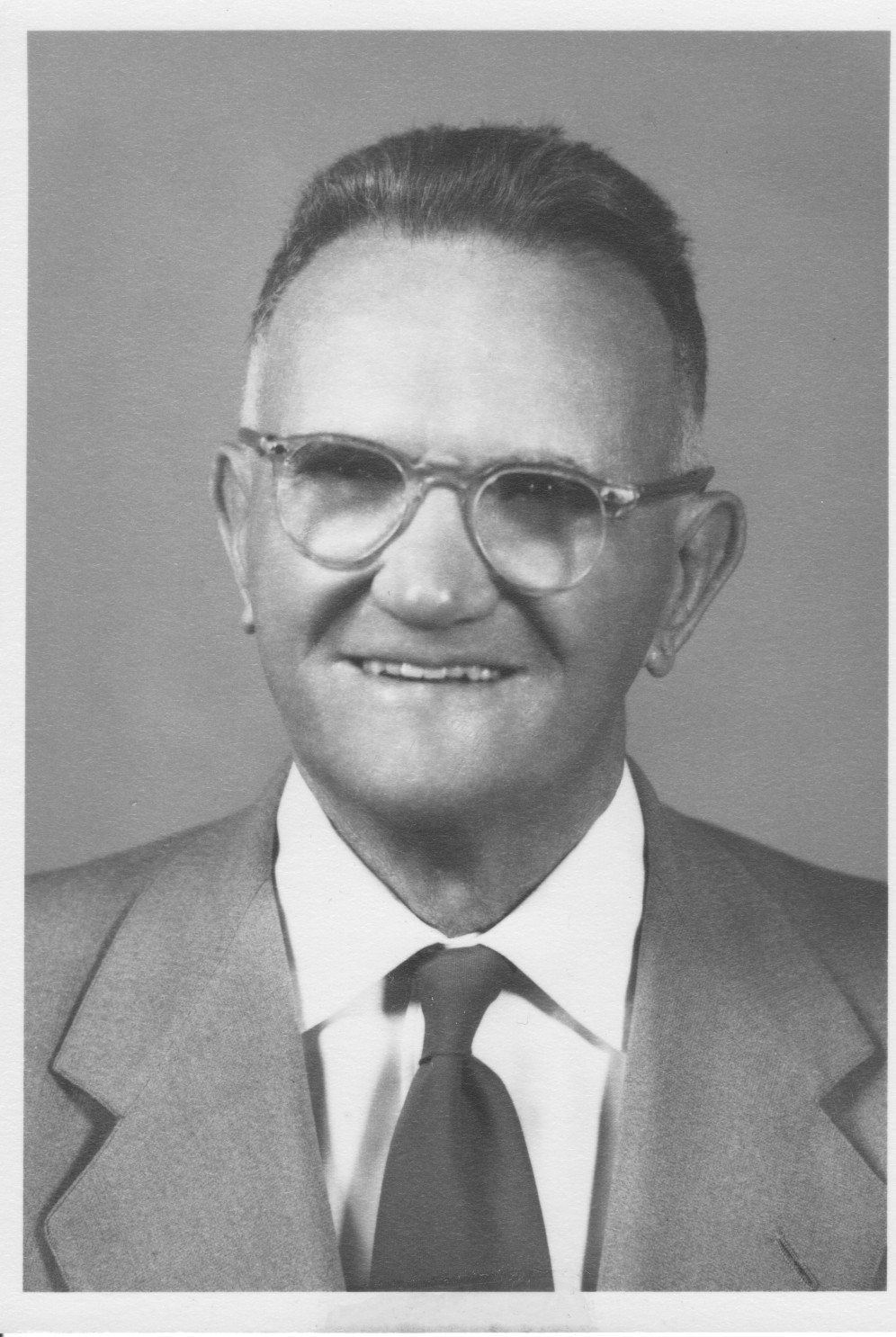
A black and white photo of Dr. Nicholas E. Lubchenko
Dr. Nicholas E. Lubchenko

Those are Dr. Lubchenko’s people in Ukraine, and they yearn to remain a free nation not under the thumb of Vladimir Putin.


Dr. Lubchenko’s Early Years, Military, and Medical School

Nicholas E. Lubchenko was born in Bulai, Zerkov, near Kiev, Russia (now, Ukraine) in 1882. One of ten children of a leather worker, he graduated from an agricultural college in Kharkov. Kharkov, Ukraine is familiar to us now since Russia’s invasion of Ukraine and the ongoing war.

By 1906, Lubchenko was in the Russian army. His dream was to get to America, which he called “the greatest country in the world.” He concluded that if he did not escape from the army, he would never make it to America.

Quoting from my book, Harrisburg, Did You Know? Cabarrus History, Book 1: “One day in 1906, while still in the arm, he walked out of Russia and crossed into Austria, with a ‘samovar (a Russian urn with a spigot made for boiling water for tea) under his arm and one change of clothing.’ He could speak French and German but not English.

“He got a job working on a ship bound for New Orleans. After he arrived in America in November of 1906, an eastern Louisiana family helped him until he saved enough money to travel to South Carolina where his brother, Alexis, lived.”

He worked on a cotton farm in Ridgeway, South Carolina, saved his money, and after five years was able to borrow money to attend the North Carolina Medical College in Charlotte, NC. He had $69 when he arrived in Charlotte.

He put himself through medical school by working for various doctors in his spare time. During World War I, the North Carolina and Virginia Medical Schools had to merge due to the economy, so Lubchenko moved to Richmond, Virginia, and graduated in 1915.


Dr. Lubchenko’s Medical Career

Dr. Lubchenko served as a medical officer in the Merchant Marine on a transport ship in World War I and then started his medical practice in Newell, NC. He married a nurse from Cabarrus County, NC.

During the 1918-1919 Spanish Influenza Epidemic, Dr. Lubchenko made house calls from morning and into the night.

Dr. Lubchenko became a naturalized American citizen on April 2, 1923. He moved his family to Anson County, NC, but then they moved to Harrisburg and he resumed serving the people of eastern Mecklenburg County and western Cabarrus County.

He tried unsuccessfully to enlist in the US Army when World War II started, but age and the vital medical service he was rendering in the Harrisburg area prevented that. It is said that he stayed angry about that for a long time.

Dr. Lubchenko operated his medical practice out of his home in Harrisburg, NC, but the majority of his work was probably done through house calls. He practiced medicine in Harrisburg until his death in 1960.


Dr. Lubchenko, the Humanitarian

In a 1989 newspaper interview, one of the Lubchenkos’ daughters said he did not send bills to his patients. As stated in my book, “She quoted him as saying, ‘If they don’t want to pay, they won’t. If they do, they will, and if they want to pay and couldn’t, it would embarrass them.’” A 1944 ledger indicates that his usual charge for services was $3.00.

In addition to being a physician around the clock, 365 days a year, Dr. Lubchenko loved his adopted community and worked  to make life better for the residents. Harrisburg was a small community of just 300 people in 1950, but Dr. Lubchenko wanted the best for the wider community.

He donated the land for and was the driving force in establishing the Harrisburg Volunteer Fire Department in 1954. It was the first volunteer fire department in Cabarrus County and served a wide area. For instance, we lived five miles from Harrisburg, but my father was a charter member of the fire department.

In 1955, Dr. Lubchenko helped organize a post of the Ground Observer Corps in Harrisburg. These were the days of the Cold War before radar was in place to detect enemy aircraft.


Reflections

As a child, I was scared of Dr. Lubchenko. I could not understand his heavy Russian accent and he was somewhat gruff. It was only as an adult, many years after his death, that I gained a true appreciation for him.

Although Harrisburg started growing rapidly a few years after Dr. Lubchenko’s death, it would be 30 years before the town had another doctor. His death left a great void in the wider Harrisburg community.

You can read all about Dr. Lubchenko, his medical practice, his house, the Harrisburg Volunteer Fire Department, the Ground Observer Corps, and many other aspects of local history in Harrisburg, Did You Know? Cabarrus History, Book 1. The book is available in paperback at Second Look Books in Harrisburg and in paperback and as an e-book from Amazon.com. (By the way, Harrisburg, Did You Know? Cabarrus History, Book 2 is also available.)


Hurricane Helene Update

As of Friday, 169 roads in North Carolina are still closed due to Hurricane Helene, including Interstate 40 near the Tennessee line. That count consists of 1 interstate, 11 US highways, 20 state highways, and 137 state roads. That’s a decrease of two roads over the report two weeks ago. More heavy rain, wind, and icy conditions hit over the weekend with more of the same predicted for midweek. Repairs are made slow under such conditions.

There has been some good news about I-40. It is thought that by March 1 one lane of I-40 in both directions will open. The speed limit will be 40 mph on that stretch just east of the TN-NC line. I have not read whether commercial vehicles will be allowed, but my hunch is that they won’t.

News about the Blue Ridge Parkway in North Carolina is not good. The flooding and wind from Hurricane Helene last September caused 48 landslides in one 38-mile section of the parkway. There are no estimates for when those 38 miles will be completely rebuilt or if all of it can even be rebuilt. That section between Asheville and Linville will not reopen in 2025.


Until my next blog post

I believe most people want to see a peaceful end to the war in Ukraine, but I don’t want Ukraine to have to do all the compromising.

I hope you have a good book to read.

Remember the people of Ukraine and western North Carolina.

Janet
A Recent Attack on an Historical Novel

Here I go again, blogging about book banning. It’s too important to sweep under the rug.

Today’s blog post is longer than most of mine, but this is a topic that is near and dear to my heart. It is a topic that is indicative of the trouble our world is in today.

A small but vocal segment of our society believes it is wrong to teach young people about slavery, the Holocaust, or any part of history that makes them uneasy. They start by asking that books be removed from public school libraries and classrooms. They complain if certain books and plays written by Shakespeare are read in the classroom or assigned as required reading. Then they move on to public libraries. Then they start attacking authors and book publishers.

They believe that their freedom of speech trumps my freedom to read. They believe they have the right to deny you and me the right to read anything we want. Some of them don’t mind using violence to get their point across.

Photo by Kristina V on Unsplash

As I stated in an earlier blog post, they have the right to regulate what their own children read, but they don’t have the right to deny my great-nieces the right to read what they want and need to read.

Where does it end? Just look at 1930s Germany, if you want to know. Just look at countries where groups like the Taliban have gained political control.

It’s time for reasonable people to pay attention

I hear too many people say, “I never use the public library. I buy the books I want to read.” As a writer, I want people to purchase my books. I also want public libraries to purchase my books. But that’s not the point.

The point is that public libraries are integral to the very foundation of our country and our society. I read an article last week that quoted the American Library Association (ALA) as reporting that book challenging at public libraries in 2022 amounted to 16% of all book challenges in the United States, but in 2023 public libraries are receiving approximately 50% of the book challenges in the US.

Let that sink in. Also, let it sink in that the Proud Boys have disrupted reading hours at public libraries and librarians have received death threats. Is that what you want at your local public library?

Well-meaning, misguided people are taking away your right to read. Many of them are even doing it in the name of God. It makes them feel good to say that. It makes them feel good to say they’re doing it “to protect the children.”

I understand the need for age-appropriate books; however, today’s right-wing activists are hiding behind that political campaign sound bite and are using it to nitpick and challenge every book that comes down the pike. Their “holier than thou” attitude is wearing thin with me.

They’re on a mission to dumb us down, to dictate what we can and cannot have access to, to limit our intellectual potential. They are on a mission to erase the ugly and uncomfortable parts of our nation’s history.

Many historical novels have been challenged and banned in various places over the years, and it seems like all fiction is fair game for the book banners today. In my blog post today I highlight three historical novels that have been challenged and banned in various locations.

These three immediately came to mind

To Kill a Mockingbird, by Harper Lee
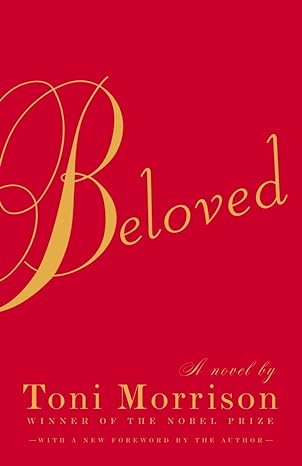
Beloved, by Toni Morrison
The Grapes of Wrath, by John Steinbeck

I have read each of those novels and not one of them warped my mind. Were you damaged by reading any of these novels? I doubt it. Were you moved to understand and see the world differently by reading these novels? Probably.

To Kill a Mockingbird teaches us about racial discrimination and injustice while also teaching us that Atticus Finch had integrity and maybe we should, too.

Beloved teaches us about the horrors of slavery and that the horrors did not end with the Civil War. It teaches us the lengths desperate people will go to prevent their children from being enslaved and living in horrible circumstances. That’s being demonstrated daily at the US-Mexican border.

The Grapes of Wrath teaches us what can happen after a decade of affluence and decadence and a time of drought as it illustrates a side of life during The Great Depression.

It’s one thing to read that thousands of people lost their farms and everything they had during the “Dust Bowl,” but it’s altogether different to read The Grapes of Wrath and live with the novel’s characters.

The Snow Forest, by Elizabeth Gilbert

In July of this year, an historical novel scheduled to be released in February 2024 was attacked on the author’s Goodreads account to the point that she chose to cancel its publication.

Elizabeth Gilbert, who wrote Eat, Pray, Love had written a novel set in Russia in the 1930s. With all the current interest in the war in Ukraine today, it would seem an opportune time to release a book set in 1930s Russia.

But author Elizabeth Gilbert learned that was not the case. She got so much blowback from her fans, that she pulled The Snow Forest even after some of her readers had pre-ordered the book. Her fans in Ukraine (or at least enough of them) said it was not the right time to release a book set in Russia. In response, the author suspended the publication of the book.

Author Alina Adams’s Thought on this

I read a blog post by author Alina Adams who was born in Odessa, Ukraine. Ms. Adams’ post maintains that historical fiction can make an important statement about the world and not just be a source of entertainment.

Ms. Adams wrote, “And as someone who loves to read historical fiction taking place all over the world in all sorts of different time periods, I am wary of a mindset which might lead to authors and publishers censoring themselves, shying away from setting stories in regions where there is ongoing political strife.”

In addition to specific examples of historical novels that have been challenged and banned, Ms. Adams’ blog post contained several succinct statements about the potential historical fiction holds, including the following: “Sometimes, historical fiction can tell a truth non-fiction isn’t equipped to deliver.” Also, “It doesn’t just make you think, it makes you feel. And it makes you empathize.”

My thoughts on this

Reading an historical novel might not change your political stance or religious beliefs but, if you give it a chance, it just might help you see the other side of an issue.

It might at least help you realize that people with views that oppose yours are not necessarily your enemies. They just might be human beings with a different perspective and life experience.

Please take a couple of minutes to read Alina Adams’ complete blog post from July 27, 2023 on M.K. Tod’s blog, A Writer of History: Why Historical Fiction Must Keep Tackling Controversial Topics | A Writer of History.

A quote from author Barbara Kyle

I printed this quote from Barbara Kyle and have it taped to my computer:

“The move to self-censorship for fear of ‘cultural appropriation’ is a sad state of affairs. Author Morgan Jones eloquently champions the opposite position: ‘Fiction remains the best means we have of finding connection where there seems to be none; and the novel, of all forms, encourages a search that’s deep and sustained. By reading (or writing) one, you’ve travelled somewhere else. You’ve moved, if only slightly, toward others. In a world that finds and increasingly exploits division and difference, this is an invaluable, precious exercise.”

Since my last blog post

Marie and I finished proofreading and creating the cover for our upcoming cookbook, The Aunts in the Kitchen: Southern Family Recipes. We submitted it to Amazon on Friday and requested a proof copy. It should arrive this week and, if we are pleased with it, we’ll give Amazon the go ahead to publish it. Look for an update and perhaps a cover reveal in next Monday’s blog post.

Until my next blog post

Be aware of what is going on in your community and state related to book challenges and book bannings. Speak up for books. Speak up for the freedom to read. Speak up for public libraries and librarians.

Have you ordered my American Revolution e-ghost story?  “Ghost of the Battle of Guilford Courthouse: An American Revolutionary War Ghost Story” is available from Amazon, along with my other books: https://www.amazon.com/dp/B0CH7JCP11/. It’s only available as an e-Booklet.

“Ghost of the Battle of Guilford Courthouse: An American Revolutionary War Ghost Story,” by Janet Morrison

If you don’t have a good book to read, visit your local public library. Or, from the comfort of your home, go to its website and search for books you would like to read or subjects you want to learn more about. You will be amazed at what is available at your fingertips!

Take time for friends and family.

Thank you for taking time to read this long blog post.

Remember the people of Ukraine, Maui, Libya,….

Janet

My Take on AI

I receive spam emails almost daily from people wanting to tell me how I can greatly improve my website by using Artificial Intelligence. Trust me. I will never let Artificial Intelligence write content on my website or write my blog posts. Furthermore, I will never let artificial intelligence write a short story or novel and then put my name on it as the author. 

Photo by Andrea De Santis on Unsplash

Here’s an example of the emails I receive offering to help me write: “I have just took an in depth look on your  janetmorrisonbooks.com for the current search visibility and saw that your website could use a boost. We will improve your ranks organically and safely, using state of the art AI and whitehat methods, while providing monthly reports and outstanding support.”

Yikes!

It took me a minute or two to get past, “I have just took…” so I could glance over the rest of the email. I continued to read out of curiosity to see if there were additional grammatical errors. The only thing that would have made this email worse would have been if it had gone on to say, “I had saw….”

Thank you, but I think I’ll just keep plodding along and doing my own writing.

Fortunately, almost 100% of such emails are identified as spam. They don’t clutter up my inbox, but I have to skim over the subject lines before I delete them from the spam box.

Writers Guild of America Strike

On April 18, 2023, the vast majority of members of the Writers Guild of America (WGA) voted to go on strike. Yay for them! They’re striking to get higher pay and guaranteed residuals from the streaming of the TV shows and movies they wrote. I applaud their courage in drawing attention to the way their work is undervalued. They’re being taken advantage of and this was their only choice after negotiations broke down.

Writers never have gotten the respect they deserve because their faces are what people see when they watch a TV show or movie. But make the actors ad lib and see how entertaining that is.

WGA members also don’t want their writing talents replaced by narrative and scripts being written by AI.

Granted, some shows I see advertised don’t appear to have any substance. Maybe the writers of such pitiful TV programming will find another way to make a living during the strike. They should.

Screen Actors Guild Strike

On July 13, 2023, members of the Screen Actors Guild in the United States voted to go on strike for several reasons. One of the reasons was they wanted better protection against AI. They don’t want their images to be hijacked and used in movies or videos without their permission. I’m glad to see the actors standing up against AI.

Another example of AI

I have a new email account with another company since the Windstream data breach fiasco around June 1. One thing I’ve noticed is that it tries to write email content for me. It’s very irritating. It starts throwing out the next three or four words it thinks I want to say. It’s worse than the words my iPhone thinks I want to say next when I’m texting.

The good things about AI

I would be remiss if I didn’t include the other side of the debate. The most promising thing about AI is the ability it will give researchers and medical professionals the ability to access information instantaneously that will potentially lead to new drugs and cures. Of course, how they will keep (or already are keeping) the hackers out of that process remains to be seen.

We all know there are unscrupulous people jumping on the bandwagon to perpetrate harm in other areas of our lives. The MOVEit and Windstream data breaches this summer are proof of that.

AI and the future of writing

Artificial Intelligence writing doctoral theses. Artificial Intelligence writing textbooks. Artificial Intelligence writing term papers. Artificial Intelligence writing essays for university applicants. Artificial Intelligence writing a novel.

Where will it end?

Worse than that, though

These are uncertain times and we haven’t even seen the tip of the iceberg. Just wait until the 2024 US Presidential Election campaign ads are running 24/7 on your TV and you will not be able to tell truth from fiction. You will see and hear candidates for political office doing and saying things they didn’t do and never said. It will all be smoke and mirrors and our very democracy will be at stake. That’s much more serious and dangerous than AI writing novels. It is our democracy being overcome by AI that should have every American’s attention.

Until my next blog post

I hope you’re reading a book that’s so good you didn’t want to put it down to read my blog post! But you did – so thank you! That book, no doubt, was written by a real human being who worked many years to learn and hone their craft so you could hold that book in your hand and be transported to another place and time.

Enjoy your friends and family, even if they don’t agree with you when it comes to politics.

Remember the people of Ukraine and the people on the island of Maui in Hawaii.

Janet

#Idiom: Pleased as Punch & #Idiom: Horse of a Different Color

It’s been a while since I blogged about an idiom, so I selected “Pleased as Punch” and “Horse of a Different Color” for today. Idioms come and go, usually without notice. Then, one day, you think about one and realize you haven’t heard it said in a long time. It’s probably been replaced by a new one.

“Pleased as Punch”

“Pleased as Punch” is a saying I heard growing up, but I can’t remember the last time I’ve heard it. It’s probably been decades. I had no idea how it came about. I thought it was just an example of alliteration that caught on as a saying.

I also didn’t know that “Punch” was supposed to be capitalized. Again, I thought it came about only because “Pleased” and “Punch” both started with the same, strong “P” sound. Shows what I knew.

I recently learned that this idiom dates back to the mid-1800s and the character named Punch in the Punch and Judy shows. According to The American Heritage dic-tion-ar-y of Idioms,by Christine Ammer, Punch “is always happy when his evil deeds succeed.” (Images of a smiling Donald J. Trump, Sr. come to mind.)

Now, I know, and so do you. File this tidbit away in case you’re ever a contestant on “Jeopardy” or “The Chase.”

“Horse of a Different Color”

Photo credit: Gene Devine on unsplash.com

This idiom popped into my head last week, and I realized I hadn’t heard it said in quite some time. Curious about its origins, I reached for my trusty reference book, The American Heritage dic-tion-ar-y of Idioms,by Christine Ammer, which I purchased for either fifty cents or a dollar several years ago when the public library was drastically weeding its collection.

The saying, “Horse of a Different Color” or “Horse of Another Color” means, “Another matter entirely, something else,” according to Ms. Ammer’s book.

She goes on to say that, “This term probably derives from a phrase coined by Shakespeare, who wrote, ‘a horse of that color’ (Twelfth Night, 2:3), meaning ‘the same matter’ rather than a different one. By the mid-1800s the term was used to point out difference rather than likeness.”

My conclusion

It seems we don’t hear as many idioms as we used to. Is that a result of the homogenization of American English? Society presses us to drop our regional accents. As a southerner, I’ve felt that, and it makes me sad. I think our regional differences in our speaking make the United States a more interesting place to live. I hate to see us losing those little differences. I hear it in the voices of my great-nieces who live in Georgia. My accent is much more southern than theirs even though they have lived in Georgia their entire lives. It makes me sad.

Since my last blog post

My blog post today is short and light-hearted because I’ve been spending every spare minute (when not reading!) to work on my family genealogy. My sister and I are working on a project that we want to finish this fall. Time is not on our side!

Until my next blog post

I hope you have one or more good books to read and a rewarding and relaxing hobby.

Make time to read and enjoy that hobby. And, by all means, make time to enjoy family and friends.

Remember the people of Ukraine and Uvalde, Texas.

Janet

Where do you stand on cursive writing?

As promised last week, today my blog is about the third book I read in March. It’s about the history of handwriting and the debate over whether children today should be taught cursive writing. I say, “Yes!” and I’ll explain why later.

Photo credit: Aaron Burden on unsplash.com

The History and Uncertain Future of Handwriting, by Anne Trubek

“Put your John Hancock here.” How many times have we of a certain age heard that? We, of course, immediately know that is a euphemism for our signature. But does a child of the 21st century know that? I understand that children today don’t have a clue what “clockwise” or “counterclockwise” mean. Yikes!

I discovered The History and Uncertain Future of Handwriting, by Anne Trubek while looking for a different book. I found this 154-page book fascinating and thought-provoking.

Trubek meticulously takes the reader on a journey through history. She shares facts about cuneiform and hieroglyphics. (Did you know that most cuneiform clay tablets can fit in your hand? In photographs, they look huge.) She explains how tedious and time-consuming it was for Sumerians to learn how to write and the hours people in ancient oral-based civilizations spent on memorization.

Egyptians invented writing on papyrus. When the Greeks adopted that practice, though, their papyrus was inferior and their scrolls were smaller. (Did you know that the size of ancient Greek scrolls has a bearing on literature today? For instance, the size of a scroll dictated the length of a play. Who knew?)

Socrates was anti-writing. He maintained that if people learned how to write, they’d lose their skill for remembering the spoken word. There’s probably some truth to that.

People in oral civilizations couldn’t look things up like we can today, so they developed elaborate mnemonics and also used additive structure (and… and… and) to help them remember important things. An example of this can be found in the Book of Genesis in The Bible: “In the beginning God created… and… and….”

It was the Romans who stopped using papyrus and started using parchment. Parchment made it easier to make books. Trubek says that bookstores had been established in Rome by the first century B.C.E. Take a moment to visualize that. It makes me smile.

Trubek talks about the development of the various scripts and the high-esteem held for scribes back in the day. She points out that the invention of the printing press put scribes out of business; however, the ones with good penmanship reinvented themselves and traveled around offering handwriting schools.

I’ve spent a lot of time reading handwritten documents from the 1700s and 1800s. I admire the elaborate and visually beautiful handwriting of the 1800s; however, it is sometimes difficult to decipher. One of the most interesting parts of Trubek’s book was about the evolution of handwriting in America in the 19th and early 20th centuries. Although I’ve admired the lovely handwriting of the 1800s, I’d never researched why and how it was replaced with our contemporary handwriting.

Briefly, Platt Rogers Spencer developed that flowing, fancy script we associate with the 1800s. (If you don’t know what I’m referring to, think about the Coca-Cola logo. That’s an example of Spencerian script.) Spencer proclaimed that having good penmanship was a sign that you were a Christian, educated, and a proper person. His students were advised to practice their penmanship six to twelve hours a day. (I’m sorry, Mr. Spencer, but life’s too short!)

Part of a page from my great-grandfather’s 1912 daybook

I’m reminded that in my great-grandfather’s daybooks from the 1890s and first decade of the 1900s, he occasionally mentioned that his children or grandchildren had gone to writing school that evening. That writing school was conducted at night in the Pine Hill one-room schoolhouse in Mecklenburg County, North Carolina. Notice the curly-ques Great-Grandpa made in his capital F and capital W. Also, he randomly capitalized words. I learned from Trubek’s book that such practice was part of the Spencerian script.

A.N. Palmer came along and made modifications to Spencerian script after he went to work for the Iowa Railroad and saw how time-consuming it was for the employees to record all the details required by industrialization. He removed all the curly-ques required by Spencerian script and made handwriting much easier after 1920.

Trubek’s book also covers such things as the collecting of autographs, which started in the mid-1800s, and graphology, which was started by a French priest in the 1800s.

The science of analyzing handwriting for evidentiary purposes in a court of law has had to evolve over the years. One used to be able to use the force one’s fingers used to press typewriter keys to prove who typed a document. The wear and tear on the parts of a typewriter could prove on which typewriter a document was created.

Photo credit: Csabi Elter

Consider that for a moment. I’m showing my age, but I learned to type on a manual typewriter. Now, the justice system is faced with determining the true identity of a person who electronically “signs” his or her name. How things have changed in the last 50 years!

When I think about handwriting and how people rarely hand write letters today, it makes me sad. Last year, my sister and I assisted a 97-year-old friend who wanted to preserve the letters he and his wife wrote to one another during the Korean War. What a treasure those letters are! We organized the letters in chronological order and placed them in archival binders. Hopefully, some of his descendants will see the value in those letters. When people go off to war now, they can telephone and text their loved ones. Few of those communications are saved for posterity.

In her book, Trubek points out that if a child isn’t taught cursive writing by the fourth grade, an important window of opportunity will close. She says that it is by that age that a typical child needs to master cursive in order for him or her to achieve cognitive automaticity.

Photo credit: Kelly Sikkema

Trubeck says if cursive isn’t mastered by then, the child will continue to struggle with handwriting. It will forever be a skill the person has trouble with because they didn’t learn it early enough for it to become something they can do without thinking about it. She says the “up” side of this is that this child might be able to type faster than someone who is better at handwriting.

To that, I would say it’s a big price to pay. This person might be able to get a higher-paying job later on, but what if he or she grows up and wants to do historical research for pay or for fun?

Photo credit: Alessio Fiorentino

Not being able to read handwritten primary sources will definitely be a drawback. There’s no substitute for primary sources in historical or genealogical research. In my own genealogical research I’ve found many instances where names in census and other records have been misread when they’ve been converted to typed records. When the typed copies are taken for fact, misinformation is perpetuated.

In the arena of the debate over teaching cursive or not, I still come down on the side of teaching it for the very reason I just gave.

Do you think children should be taught cursive?

I’d love to hear your thoughts on this and why you come down on one side or the other. Or, perhaps you don’t have an opinion.

For my readers in other English-speaking countries

Is there a debate about continuing to teach children cursive writing in other English-speaking countries aside from the United States?

Since my last blog post

I borrowed another book about handwriting from the public library. Power Penmanship: An Illustrated Guide to Enhancing Your Image Through the Art of Handwriting Style, by Janet Ernst, helped me address several (well, actually, six letters I’d gotten a bit sloppy in writing.)

I blame taking shorthand in high school for ruining my handwriting. Since that was 50 years ago, I decided it was time to stop making excuses and start making corrections. After spending just 10 minutes a day for six consecutive days, I was able to see some improvement. I think we never get too old to try to improve something about ourselves.

After much brainstorming about the opening scenes in the historical novel I’m writing, The Heirloom (working title), I have started working on a new plot angle. I’d hoped to switch gears from brainstorming to rewriting those opening scenes last week, but my Chronic Fatigue Syndrome (known as Myalgic Encephalomyelitis in the UK) relapse continued to drastically limit my work. When my energy level is this low, it’s tempting to stop trying to write; however, I was feeling a little better by the time the weekend rolled around. I’m back to work on The Heirloom as of Saturday. My journey as a writer surely is bumpy!

Until my next blog post

I hope you have the energy to do all the things you need or want to do.

Remember the people of Ukraine.

Janet

How much do you value your public library?

When I planned today’s topic, the war had not begun in Ukraine. When I wrote the rough draft, the people of Ukraine were not fleeing for their lives. What has happened in the last month put the topic of public libraries in a whole new light.

Kyiv, Ukraine before mid-February 2022. Photo credit: hristo sahatchiev on unsplash.com

National Public Radio (NPR) here in the United States reported this week that libraries in Ukraine are doing what libraries do. Just as historic statues are being sand-bagged and stained-glass windows in 13th century churches are being covered in metal shields, the library staffs and volunteers are working around the clock to save what they can. Irreplaceable library items and collections are being taken to other countries for safe keeping.

According to this NPR report, https://www.npr.org/2022/03/09/1085220209/ukraine-libraries-bomb-shelters, libraries there are offering classes on making camouflage and are serving as bomb shelters. It’s what libraries do when push comes to shove.

I can’t image living in such a situation as the Ukrainians are dealing with. A couple of months ago, they were working, playing, going to school, eating in restaurants, going shopping, and enjoying the benefits of libraries. Today they are fighting for their very lives and the survival of their democracy.

Lviv, Ukraine. Photo credit: Nataliia Kvitovska on unsplash.com

My library experience

It’s odd how some months I read quite a few books and some months I read only one or two. I couldn’t afford to purchase most of those books, so how did a I manage to read so much?

I have two free public library systems to thank for all of them. Before you say, “Public libraries aren’t free; I pay for those libraries and their books with my tax dollars,” I agree; however, regardless of your tax status or how much or how little you pay in taxes, you can use those libraries.

Harrisburg Branch of Cabarrus County Public Library System

In the big scheme of things, only a few of your tax dollars are earmarked for public libraries. When you want or need to use the vast resources of your public library, it doesn’t cost you one cent.

I have access to the public library system in the county in which I live. A few years ago, my sister and I paid $100 to have lifetime household access to the library system in the adjacent county in which we used to live. It’s the best $100 we ever spent. Some adjacent counties have reciprocal agreements. You might want to check into that.

If you despair of paying local property tax, just pretend that all your tax dollars go to support the public libraries in your city or county. When local government funds get tight, the library system is usually the first service to bite the dust.

We saw library hours drastically cut during The Great Recession, and it took longer for operations to get back to normal than it did for the doors to be locked almost overnight.

In my county, at least, each branch manager can tell you how many people come through the doors and how many books are checked out every month. The director of the public library system uses those statistics every May and June to prove to the county commissioners how important the library system is. The more the commissioners know how much the system is being used, the harder it will be for them to cut library budgets.

A library card is free. All you need is proof of residency to get one. The public library has computers for the public to use, newspapers for you to read, books in various formats for you to check out, magazines for you to read on-site and sometimes to check out, and music CDs for you to borrow.

Most public library branches offer programs for adults and children and classes you can take. For instance, a few years ago I took a free course about Excel at my local library. The library is also a good, safe, public place for your child to meet with a tutor.

I borrow e-books, borrow books on CD, download books on MP3, borrow large print books, and regular print books. I borrow past issues of magazines. I borrow music CDs. I attend programs and get to hear authors speak (or did before the pandemic.) There are reference books I can use on site. I can do research and read microfilmed records in the local history/genealogy room.

If your hobby is genealogy, but you prefer not to pay for a subscription to a service such as Ancestry.com, inquire about it at your local public library. The one in my town has an Ancestry.com membership that’s free to the public. Through it, you can access all US Census records that have been released as public information.

If you aren’t taking advantage of your local public library, please remedy that immediately! While you’re there, see if it has a copy of my book, The Blue Ridge Mountains of North Carolina, on the shelf. If it doesn’t, ask if it can be added to the collection. Did you know you can do that? You can inquire in person at your local branch or you can probably submit a request through your library’s website. There are no guarantees, but such requests will be given consideration by the library system’s administrators.

Free public libraries help to “level the playing field.” We need more of that in this time when the gap between “the haves” and “the have nots” seems to be widening.

Where else can you get all that and more?

Never, never, never take public libraries for granted!

Since my last blog post

Do you ever have one of those weeks when you feel like you were busy but when Friday rolls around you can’t remember anything you accomplished? That sounds like me last Friday when I sat down to type this paragraph.

I didn’t work on my novel like I should have or planned to do, but I made a lot of progress on the old graveyard photography project I mentioned in last Monday’s blog post.

I’ve also been taking pictures of items my sister and I have that belonged to our parents or grandparents. We’re adding them to a photo album we’ve dedicated to such items in which we write the history of each item so future generations that end up with them will know where they came from. It will be up to future generations to decide what to keep and what to discard, but at least they’ll know why each item held importance to us.

I also did some cross-stitching and college basketball watching. After all, it was the first week of “March Madness” in the United States.

Until my next blog post

Keep checking out library books! I hope you have a good one to read this week.

Find time for a hobby.

Read newspapers, listen to NPR, and watch reputable news broadcasts on TV. Don’t shy away from watching the news because “it’s all bad” or you “don’t want to see that.” You owe it to yourself and your fellow residents of your country and this world to keep up with current events.

I cringe every time someone tells me they don’t watch the news – like someone did last week. Just because you choose not to be aware of what’s happening doesn’t mean it’s not happening.

Janet

Using ALL your senses in your writing

One of my favorite quotes about writing is this one from Russian playwright and short story writer, Anton Pavlovich Chekhov: “Don’t tell me the moon is shining, show me the glint of light on broken glass.”

I included that quote when I touched on the topic of writing all the senses in my February 14, 2022, blog post, Can Movies Help You Write? Today I’m going a bit deeper into the subject.

As an aspiring novelist, I have a lot to learn. To try to remember all the things a scene needs to include can be overwhelming. It’s not enough to stay in the head of your point-of-view character at all times. It’s not enough to be cognizant of pacing. It’s not enough to remember to throw in a red herring once in a while or to vary the length of your sentences and paragraphs. It’s not enough to include all characters’ body language (but only what the point-of-view character notices.) A writer must also remember to include what the point-of-view character sees, hears, smells, tastes, and touches.

In addition, a writer today is told to keep in mind that today’s reader has a short attention span. If that’s true, I probably lost most of my audience midway through the previous paragraph.

For those of you still reading this blog post, I’ll continue. I say all this (1) to make fiction readers appreciate some of the work it takes to write a novel you’ll enjoy; and (2) to lead up to a recommended blog series you might benefit from if you’re studying the art and craft of writing.

In 2020, Joan Hall wrote a series of blog posts about using all the senses, including the 6th Sense, in your writing. Here are the links to Ms. Hall’s six blog posts about the senses:

Sight: Photo Credit: Davidson Luna on Unsplash.com

Post number one in Joan Hall’s Story Empire blog series about the senses: https://storyempirecom.wordpress.com/2020/02/14/using-the-five-senses-sight/.


Smell: Photo Credit: Motunrayo Babtunde on Unsplash.com

Post number two in Joan Hall’s Story Empire blog series about the senses: https://storyempirecom.wordpress.com/2020/02/26/using-the-five-senses-smell/.

Taste: Photo Credit: Engin Akyurt on Unsplash.com

Post number three in Joan Hall’s Story Empire blog series about the senses: https://storyempirecom.wordpress.com/2020/03/11/using-the-five-senses-taste/.

Sound: Photo Credit: Marcus Woodbridge on Unsplash.com

Post number four in Joan Hall’s Story Empire blog series about the senses: https://storyempirecom.wordpress.com/2020/03/27/using-the-five-senses-sound/.

Touch: Photo Credit: Jocelyn Morales on Unsplash.com

Post number five in Joan Hall’s Story Empire blog series about the senses: https://storyempirecom.wordpress.com/2020/04/13/using-the-five-senses-touch/.

I couldn’t find a photo to represent the Sixth Sense in the way I wanted to here, so use your own imagination for the sense of knowing in advance that something is going to happen. Have you experienced it? I have, and it can be unsettling.

Post number six in Joan Hall’s Story Empire blog series about the senses: https://storyempirecom.wordpress.com/2020/04/29/the-sixth-sense/.

I might be accused of cheating here by giving you the links to Joan Hall’s blog posts about writing the senses, but she’s far more experienced in writing and more knowledgeable of the subject than I.

The Internet has made it possible for writers to learn from others in ways that weren’t possible before the 1990s. It gives us a marvelous platform on which to share ideas and give each other feedback. I’ve learned a great deal from writers like Joan Hall through blog posts and online articles.

I hope you find Joan Hall’s blog series helpful if, like me, you’re learning to write. I started to say, “write fiction,” but creative nonfiction also entails using all the senses.

I felt vindicated when I read Ms. Hall’s article about the sixth sense, for I was already using it in my The Doubloon novel manuscript. I was pleased that I thought to do that before being told that I should consider it.


Since my last blog post

I took a short break from writing last week to work on a project I started 20 years ago for my church. It involves taking photographs of the grave markers in four of the church’s cemeteries. When a congregation has a 271-years history, it can end up with multiple cemeteries on the different sides of various creeks.

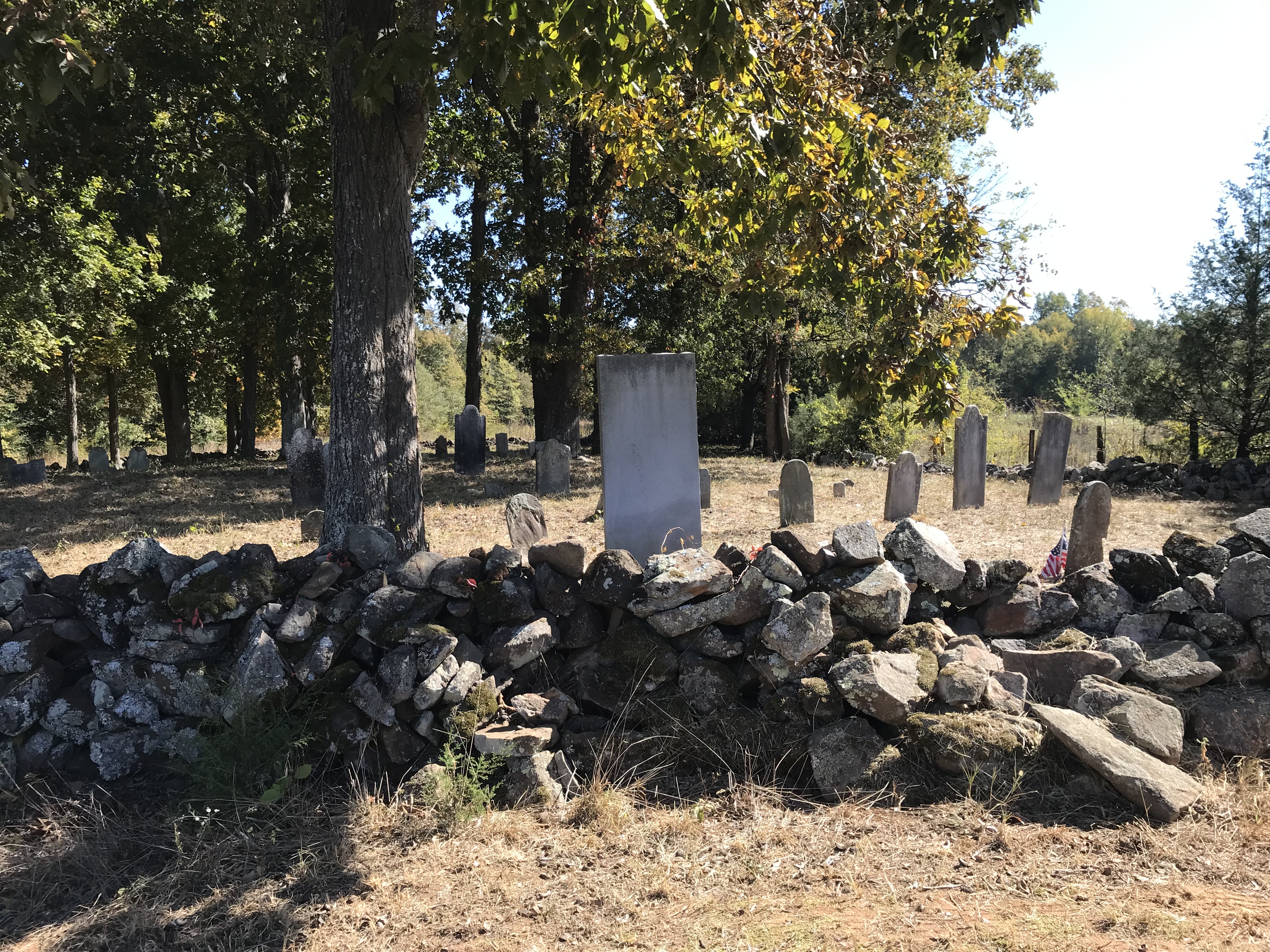
Old Rocky River Graveyard, October 2021

Digital photography allows me to read the inscription on many of the markers that cannot be read in person due to the ravages of time. March and October are the best months to take pictures in these rural cemeteries due to the angle of the sunlight and the number of large trees that surround and have grown up inside them. I’m taking advantage of the month of March to get back to a project I’ve neglected for a few years.

My project might sound morbid to some of you, but I don’t see it like that at all. Some of my immigrant ancestors are buried in each of the four cemeteries, so I feel like I’m honoring them in a small way by making a permanent record of the inscriptions on their grave markers.


Until my next blog post

I hope you have a good book to read — one that you can’t wait to get back to.

If you’re writing, painting, or endeavoring to do anything creative, I hope you produce some rewarding and satisfying work this week.

Stay safe and well. Please come back next week to see what my next blog post is about.

By the way, on Wednesday, pause to consider that it’s National Book Smuggler Day in Lithuania. Here’s the scoop:

In 1864, Russian authorities outlawed the printing of books using the Latin alphabet in Lithuania and tried to force the Cyrillic alphabet on Lithuanian speakers. A newspaperman, Jurgis Bielinis, created an underground network to get Lithuanian books smuggled into the country. Some who were caught were banished to Siberia or shot in the head. The ban lasted until 1904 but is still remembered on March 16, which is the date of Bielinis’ birth. You can find more about this online. It’s an inspiring bit of history I wasn’t aware of until recently.

There are two lessons we can learn from this: (1) The Russian government never stops being Russia; and (2) Regardless of what a book contains, it’s never a good idea to withhold access to it, for book banning and the banning of knowledge never have positive results.

May the free world continue to support the people of Ukraine.

Janet

Three Books Read in February 2022

If you’ve been following my blog lately, you know February was not an easy month for me. Various events cut into my reading time, but today I’m writing about the books I read during that short month of 28 days. They represent three different genres. That’s appropriate because my reading interests are all over the place.


Violeta, by Isabel Allende

Violeta, by Isabel Allende

Isabel Allende is becoming one of my favorite novelists. I listened to her latest novels, Violeta, on CD and thoroughly enjoyed it. I listened to the English translation of the Spanish original.

Violeta is written in the form of a letter to Violeta’s adult grandson and follows Violeta from her birth in 1920 during the Influenza Pandemic to the end of her life during the Covid-19 Pandemic. Born into a wealthy family, her father loses everything in the Great Depression which hits South America a little later than in the United States and Europe. The family loses their house and must move out into the hinterlands where they must adapt to life without luxuries such as electricity.

Woven into this story is a character who comes into Violeta’s life at an early age to serve as her English governess; however, it turns out the woman isn’t from England and isn’t at all what Violeta’s parents are expecting.

This is a delightful novel. Violeta would be a good Isabel Allende book for you to start with, if you’ve never read one of her novels. If you’ve read her other books, you know what a treat this one will be.


Our North Carolina Heritage, compiled by Charlotte Ivey Hastings, 1960

This book is well off the beaten path and one you probably can’t find. Just by happenstance, I purchased a copy dirt cheap at a public library used book sale several years ago. I added it to my to-be-read shelves and forgot about it.

I saw it on my bookshelf in February and decided to read it. It isn’t a history book that one can totally rely on for accuracy because it is a compilation of oral history stories. Many of them were written by junior high students.

However… (and that’s a huge HOWEVER), I found lots of little gems of North Carolina history in it that I’ve never seen or heard elsewhere. They are the bits of history that never made it into the history books but offer someone like me a jumping off point to do additional research.

One thing I was particularly glad to find was that the book gave information about a number of women and their bravery and contributions to the patriot cause in the American Revolution. Women have generally been omitted from the history books.

Here’s an example of something I don’t recall hearing or reading elsewhere: By the end of the 18th century, Jewish peddlers in North Carolina traded for eggs since they couldn’t easily come by Kosher meat.

The book reminds me of the series of local history books compiled in the 1960s by Mrs. Mabel Rumple Blume’s North Carolina history students at Harrisburg School in Harrisburg, NC. Every year for five or so years, Mrs. Blume’s students were sent out into the then rural Cabarrus County to interview the oldest residents to capture local history. The students won statewide first-place honors year after year for their books which covered general history, mail delivery and post offices, and grist mills. Much of that history would have been lost forever if not for Mrs. Blume and her students.

With that work in mind, I very much appreciated the contents of Our North Carolina Heritage. It made me sad that the Charlotte-Mecklenburg Public Library system had made the decision several years ago to weed the book from its collection and sell it for pennies. Sometimes people are put in positions of decision-making who don’t appreciate the true value of what they have.


The War of Art: Break Through the Blocks and Win Your Inner Creative Battles, by Steven Pressfield

This nonfiction book was recommended by Jane Friedman in her January 11, 2022 article, “To Everyone Who Wants Me to Read Their Writing and Tell Them What to Do.” Here’s the link: (To Everyone Who Wants Me to Read Their Writing and Tell Them What to Do | Jane Friedman Ms. Friedman has never steered me wrong, so I checked it out of the public library.

The book is divided into the following three parts: “Resistance ~ Defining the Enemy;” “Combating Resistance ~ Turning Pro;” and “Beyond Resistance ~ The Higher Realm.”

Part One explains that, “Resistance is the enemy within” when we attempt to do something worthwhile. Mr. Pressfield wrote that the rule of thumb for resistance is, “The more important a call or action is to our soul’s evolution, the more Resistance we will feel toward pursuing it.” We fear that inner resistance, but once we “Master that fear… we conquer resistance.”

Mr. Pressfield wrote that resistance is often manifested in the form of procrastination, which can become a habit.

In Part Two, Mr. Pressfield wrote that an artist must stop thinking of himself as an amateur and start seeing himself as a professional. He wrote, “A professional does not take failure (or success) personally.”

He also wrote, “A professional recognizes her limitations. She gets an agent, she gets a lawyer, she gets an accountant. She knows she can only be a professional at one thing.”

In Part Three, Mr. Pressfield wrote that we just do it. We do it every day. It’s work, and we do it. He also cautions artists from thinking of themselves in a hierarchy. In other words, art of all types is not a competition.


Since my last blog post

Every day has brought horrifying images of the suffering and destruction in Ukraine.

I’m disappointed that I didn’t receive an acknowledgement for some research advice I sought for the writing of my novel, but I won’t let that slow me down any longer. That’s life.

I got back to work on a project that relates to my church. I started it 20 years ago and it’s been on the back burner now for 15 years. I’ve been inventorying my unfinished projects lately. It’s overwhelming. I need to complete some, even if doing so cuts into my writing and reading time.


Until my next blog post

I hope you have a good book to read. I’m reading an interesting book about 1816 – known as “The Year Without a Summer.”

May the world continue to condemn Vladimir Putin for his unprovoked invasion of Ukraine.

Thank you for taking the time to read my blog.

Janet

#OnThisDay: Explosion Aboard Steamship, 1844

Sometimes it angers me that the history classes I sat through as a child and teen didn’t include little bits of information like I’m sharing with you today. Instead of memorizing names of general and battles and dates, how much more interesting class would have been if we’d been told stories like this one.

Knowing this story could have served as an example to students of how history can turn on a dime. I’d like to think students learned that last week when Russia invaded Ukraine without provocation.

The incident I write about today brings to mind the following for each of us to think about: If not for ___(you fill in the blank)____, then ___(you fill in the blank)____ wouldn’t have happened OR would have happened.

The 1840s USS Princeton

I don’t recall ever hearing about the USS Princeton until recently, and I wouldn’t have heard of it then if I hadn’t been looking for a topic for #OnThisDay for my blog.

There have been a series of US Naval vessels christened with the name USS Princeton. The one I write about today, as you can see from my blog post title, was the one built in the early 1840s. It was a state-of-the-art warship powered by coal-produced steam. It was built in Philadelphia and was best-known for its two 12-inch cannons/carronades, called “The Oregon” and “The Peacemaker.”

“The Oregon” was of revolutionary design, made of wrought iron, and manufactured in England. It was designed by John Ericsson, a Swede who later designed the Monitor of American Civil War fame.

“The Peacemaker” was manufactured in New York under the partial supervision of Captain Robert Stockton, a political supporter of US President John Tyler. It’s thought that it was believed and claimed to be comparable to “The Oregon,” but there were design differences and short cuts were taken in The Peacemaker’s testing. This was a recipe for disaster, and that’s what happened on the Potomac River on February 28, 1844.

Let’s set the stage

The state of politics in the United States in 1844 contributed to the inevitable disaster. William Henry Harrison was elected US President in 1840, but he died in 1841 only a month after his inauguration. John Tyler being the US Vice President, assumed the office of President. It was the first time in American history that a president died in office and was replaced by the vice president. Tyler had been a Democrat, but he was elected as a Whig. Soon after he assumed office, he openly disagreed with the Whig Party over economic policy, and the Whigs kicked him out of the party. The Democrats didn’t want him back, so he became a US President without a political party.

Tyler wanted to be reelected President in the 1844 election. He thought by running on a promise to annex the Republic of Texas into the United States would win him the election. Mexico and Great Britain opposed the idea.

To ward off foreign opposition to that annexation, Tyler ordered the construction of the USS Princeton. Most warships in the world at that time were sailing ships or steamships with fuel limitations. The USS Princeton was designed with a collapsible smokestack, allowing it to also navigate as a sailing ship. A hybrid in the 1840s! It’s engine and propeller system were below the water line, making it less vulnerable to enemy attack than ships propelled by paddlewheel.

Back on the scene to partially supervised the construction of the warship, Captain Stockton bragged about the ship’s prowess, calling it “invincible.” He thought by bringing the ship to Washington, DC and entertaining politicians, he’d get the money to build more ships.

What happened on February 28, 1844

An afternoon excursion from Washington, DC on the Potomac River was planned for February 28, 1844. President Tyler (who had no Vice-President), members of Congress along with their wives, and some Cabinet members were wined and dined on the ship and were scheduled to witness the fire power of the ship during three demonstrations.

It was Stockton’s decision to fire “The Peacemaker” for all three demonstrations. After two successful firings, a third was launched in honor of George Washington. On that third firing, “The Peacemaker” exploded, sending its parts – some weighing in excess of a ton – flying across the deck. Eight people were killed and more than two dozen were injured.

Secretary of State Abel Upshur and Secretary of the Navy Thomas Gilmer were killed. If President Tyler had not been unexpectedly detained on the stairs below deck, he undoubtedly would have been standing with them.

The hole in the US Constitution

What happened in US Presidential succession in the 1840s should have been remedied posthaste. It was the first time a Vice President had to step up and into the Presidency due to the death of a President; however, we know from history it was not the last time.

It would be 1967, four years after the assassination of President John F. Kennedy, before the Twenty-Fifth Amendment to the US Constitution would provide a process through which a Vice President would be replaced in the event of the vacancy of that office.

If President Tyler had been killed in the explosion on the Princeton, the president pro tem of the US Senate, Willie Mangum – a North Carolinian who had been one of the founders of the Whig Party – would have become US President. Among other things, Mangum was an avowed opponent of the annexation of the Republic of Texas.

This fact alone brings us back to the fill-in-the-blanks line from the third paragraph of this blog post: If not for ___(you fill in the blank)____, then ___(you fill in the blank)____ wouldn’t have happened OR would have happened.

If you’d like to learn more

If you want to learn more about the USS Princeton of 1844, I recommend https://historynewsnetwork.org/article/181834, by Stan Haynes, published on November 21, 2021. Also, https://military-history.fandom.com/wiki/USS_Princeton_(1843). I drew information from both of these online resources which include more detail than I shared in my post today. In addition, I understand that Stan Haynes has written a historical novel, And Tyler No More, which includes this tragic incident.

Since my last blog post

Our world has changed forever. NATO is being tested like no other time since its inception. No one knows what the future holds for Ukraine, Europe, and the rest of the world. I believe in His perfect wisdom, God doesn’t allow us to know the future.

Until my next blog post

I hope you have a good book to read and time for a creative outlet.

It’s been an unsettling week in our world since last Monday, to say the least. No one knows what this week holds. My heart goes out to the people of Ukraine who are suffering so. May the world continue to condemn Vladimir Putin for his unprovoked invasion of Ukraine.

Thank you for taking the time to read my blog.

Janet