Bibliophobia and Scriptophobia/Graphophobia

Before I jump into today’s topic, I’ll tell you what I went through in preparing a blog post for today.

You can’t always trust the printed word. I read in a book (not on the much-maligned internet) that the 17th Amendment to the Constitution of the United States was ratified on May 31, 1913. In fact, I wrote a 702-word blog post about it for today.

It turns out that it was ratified on April 8, 1913, and Secretary of State William Jennings Bryan officially announced its ratification on May 31, 1913.

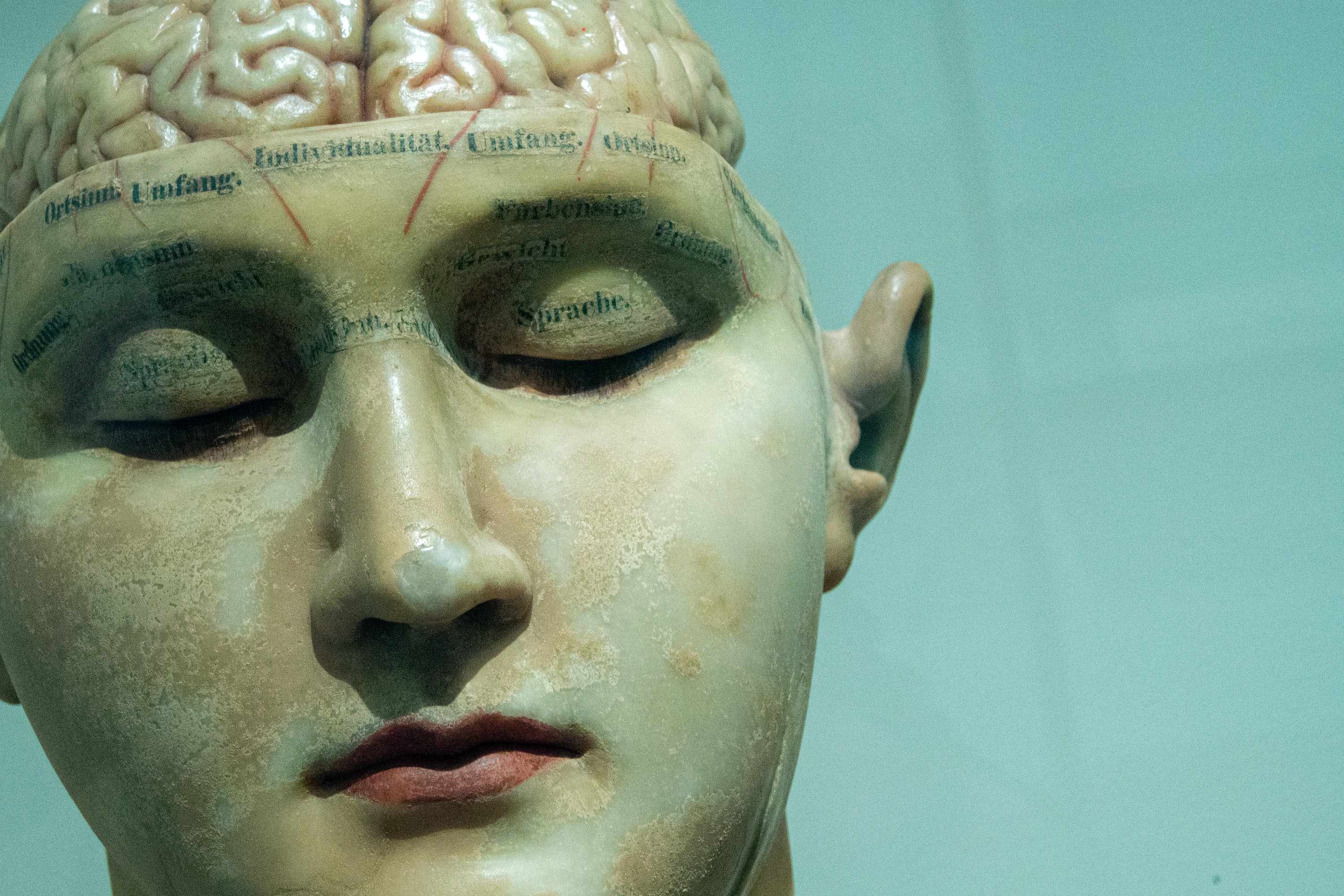
Photo credit: Anthony Garand on unsplash.com

“#OnThisDay: 17th Amendment’s Ratification Announced” just doesn’t have the same blog title punch as “#OnThisDay: 17th Amendment Ratified, 1913.” Upon discovering my mistake last Monday night, I had to find a new topic for today’s post.

For those of you who are dying to know all about the 17th Amendment, don’t worry. I saved that blog post on my computer and will use it some other time – perhaps when I’m in a bind and can’t think of a blog post topic. It will pop up when you least expect it.


What about today’s blog topic?

When I learn something new about reading or writing, I like to dig a little deeper and then write a blog post about it. If it’s news to me, perhaps it’s news to you, too. Let’s look into bibliophobia, scriptophobia, and graphophobia.


Bibliophobia

A few minutes after I discovered that my blog topic for today shouldn’t be the ratification of the 17th Amendment, my sister made me aware that reading is stressful for some people. We are both avid readers and were gobsmacked to learn this.

This is a real thing. Bibliophobia is a fear of books – and can be extended to a fear of reading or a fear of reading aloud in public. It probably affects more people than I can imagine.

Photo credit: Siora Photography on unsplash.com

The cause of bibliophobia is not certain, but it is thought that some people develop it after having an embarrassing experience when reading aloud. That negative experience is remembered by the brain and can come back when asked or told to read out loud in public again.

A person who has bibliophobia usually knows it is irrational to be afraid of books or afraid to read in public but is hard-pressed to do anything about it. The reaction this phobia causes can be both physical and psychological and be as severe as to cause panic attacks.


Scriptophobia or Graphophobia

Scriptophobia or Graphophobia is a fear of writing in public. I didn’t know this was a thing until I stumbled upon the words while researching bibliophobia. Ironically, I think I have it, at least to a degree.
Photo credit: Alvaro Serrano on unsplash.com

It makes me extremely uncomfortable for someone to watch me sign my name. This source of stress came to light in 2014 when my vintage postcard book, The Blue Ridge Mountains of North Carolina was published.

Photo credit: Marie Morrison

I had a book launch event and was thrilled when people lined up to buy my book and get me to autograph their copy. But as soon as the first person eagerly waited for me to sign their book, I nearly froze. I think that was the first time I realized I had a problem. I just didn’t know there was a name for it until last week.

When I have to sign a contract, application, or other such document, it is stressful because someone is usually watching me. I know this is irrational. Now that I know it has a name, I want to overcome it.


Treatment for Bibliophobia and Scriptophobia/Graphophobia

Recognizing you have such a phobia is Step One. Step Two is seeking treatment. According to what I’ve read this past week, cognitive behavior therapy and desensitization therapy are usually helpful in treating phobias like bibliophobia and scriptophobia.


Disclaimer

I am not a psychologist or a medical doctor, so the information in my blog post today is based entirely on sources I’ve read in the last week. The terms bibliophobia, scriptophobia, and graphophobia were new to me as of last Monday, and I just thought I’d blog a little about them today in case some of my blog readers weren’t familiar with the terms. If you have either of these two phobias, just know that there is help available. Perhaps I can get help to overcome my fear of signing my name in public before I have another book signing.


Since my last blog post

One of my great-nieces graduated from high school in Georgia on Thursday. I couldn’t be there in person, so I was delighted to be able to watch it live online. Two of my other great-nieces graduated from high school in past years. I couldn’t attend their commencement ceremonies either. Thanks to the expanded use of technology due to the Covid-19 pandemic, many people are enjoying the opportunity to watch such family milestones online. I hope school districts will continue to offer this service even after the pandemic is over.

Writing today’s blog post made me realize that we all have phobias. I not only fear writing my signature in front of someone, I also have a phone phobia. Email and texting have been a blessing for me.


Until my next blog post

I hope you have a good book to read. I finished listening to A Million Reasons Why, by Jessica Strawser on CD last night, and I’m reading The Library of Legends, by Janie Chang on my tablet.

I’ve admitted some very private things in this blog post. I don’t expect any of you to tell me about your phobias when you leave a reply, but it helps me to know and might help you to know that a lot of people have at least one irrational phobia. Stop being hard on yourself or other people about their phobias. Most people are trying hard in this life and are doing the best they can.

If you know someone with bibliophobia or scriptophobia/graphophobia to the point it disrupts their lives, please encourage them to seek treatment. It makes me sad to know that there are people so afraid to read in public that it causes them mental and physical distress.

Trust me — it was easier to write 700 words about the 17th Amendment to the US Constitution than it was to write what I’ve posted today.

Note:  Get ready! June starts tonight at midnight. June is Audiobook Appreciation Month. As I’ve found it more and more difficult to read books in regular-sized print, I’ve come to appreciate audiobooks. I didn’t see that coming any more than I saw the topic of today’s blog post coming!

Janet

What’s Your Earliest Memory? Here’s Mine.

Allen Rizzi writes a blog that I follow. His post on March 30, 2021 (https://wordpress.com/post/janetswritingblog.com/17269) struck a chord with me and got me thinking. I made note of it so I could consider using the idea in one of my blog posts. I didn’t want to just duplicate the essence of Mr. Rizzi’s blog post, so I waited until I could put my own spin on it.

Mr. Rizzi asked his readers to share their earliest memories. The comments he received were surprising to me, for one woman remembered some details of a stay with her grandparents when she was nine months old. A man remembered his first ride in an airplane at the age of two.

I was amazed at both of those responses. I can’t remember anything from those early ages. I tried to think what my earliest memory was, but I was stumped for a few minutes.

My earliest memory

After pondering the question for a few minutes, I realized my earliest memory is of my Grandpa Morrison. He was the only one of my grandparents still living when I was born. He died when I was three years, five months, one week old.

Grandpa was unwell and pretty much bedridden by the time I was born. But he still had his cane. He spent his daytime hours in what is or was called a daybed. He kept his cane at easy reach. He didn’t shave every day.

My memories of him are specific: He delighted in taking the back of my tender little hand and rubbing it up his stubbled cheek to make me laugh. When I got within reach of his wooden cane, he delighted in tapping me lightly in the stomach to make me laugh.

Evaluating my earliest memory

I know what Grandpa looked like because I’ve seen photographs of him, but I have no recollection of what he looked like. Read that sentence again. Do you understand what I’m saying?

Taking it a step further, do you know why that sentence describes a distinct difference in memory? I didn’t understand the difference until I read Remember: The Science of Memory and the Art of Forgetting, by Lisa Genova last week.

Dr.Genova is a neuroscientist and an excellent writer. She has to be an excellent writer if someone like me can understand what she’s trying to get across. Seriously. Understanding the intricacies of science was never my forte.

In her book, Dr. Genova explains how our brains create memories and store memories. She explains various types of memories: episodic, semantic, working, and “muscle” memory. She explains how working memory is able to retain a small number of items and for only 15 to 30 seconds.

Photo credit: David Matos on Unsplash.com

It was interesting for me to read in Dr. Genova’s book that the average age for one’s earliest episodic memory as an adult is three years old, so my memory of my grandfather was right on time.

Dr. Genova explains how we’re able to remember the details of an evening on the beach such as the smell of salt air, the name of the song playing, what we ate, and a child getting stung by a jellyfish. We remember that collection of details in an episodic memory; however, another person who was present on that same beach that same night might not remember what song was playing but they might remember there were mosquitoes. That’s because we each pay attention to different details.

The reason I remember my grandfather rubbing my tiny hand up he stubbled cheek and poking me gently in the stomach with his cane is probably because he did it repeatedly. It’s not that I remember “that time” he did it. I remember it because that’s the way in his bedridden state he was able to interact with me and the way it made me feel created a memory in my brain.

Grandpa couldn’t hold me on his lap. He couldn’t push me in a swing. He couldn’t play hide-and-seek with me. He did the two things he knew he could do that made me giggle. Once he did them once, he remembered they made me giggle. With that memory, he probably did those two things every time I visited him thereafter. In a fascinating way, his memory to do those things also prompted my brain to remember them. His memory of what made me laugh in turn made my brain create a memory.

One last word about my memories of my grandfather.

One of the last chapters in Dr. Genova’s book is about Alzheimer’s Disease. One point she makes about Alzheimer’s patients is that they might not remember for five minutes what you said to them, but they will remember how you made them feel. She refers to this as emotional memory.

I hope I’m not making an incorrect connection here – because my point has nothing to do with Alzheimer’s Disease — but this made me think about my memories of Grandpa Morrison. I don’t recollect what he looked like. I only know what he looked like from seeing photographs; however, I remember how he made me feel – even though I was only three years old when he died.

Back to Allen Rizzi’s blog post and my original question

Even after reading Dr. Genova’s book, I still marvel that a nine-month-old baby could years later remember her stay with her grandparents or that a two-year-old could remember an airplane ride, but I don’t doubt them because the brain is a complex and wondrous thing.

Photo credit: Robina Weermeijer on Unsplash.com

The more I learn about the brain, the more I’m in awe of it. To paraphrase something I heard Dr. Francis Collins, leader of the Human Genome Project and current Director of the National Institutes of Health, say in a speech at Queens University of Charlotte a few years ago: The more I learn about the human body, the more I’m convinced that there is a God who created it.

Since my last blog post

I have finished reading or continue to read a number of books. I’ll share with you more about Remember: The Science of Memory and the Art of Forgetting, by Lisa Genova, in my blog post on June 7 or June 14 when I tell you about all the books I read in May.

Thank you, Allen Rizzi for inspiring me to write today’s blog post.

Until my next blog post

I hope you have at least one good book to read. In her book, Dr. Genova says that one way we can try to avoid getting Alzheimer’s Disease (unless we’re predisposed due to our DNA) is to read books like hers that teach us new things.

Celebrate life and look for the positives. Look for the wildflowers! My yard and the open meadow across the road from my house are full of them!

Note: June is Audiobook Appreciation Month. If you’ve never listened to a book, try it. You might like it!

Janet

Opportunities to Hear Author Interviews

It occurred to me that some of you might not be aware of the multitude of opportunities online to hear and see authors being interviewed live online. I have found so many this spring that I created a calendar on which to pencil in the events so I won’t miss one.

Photo Credit: visuals on Unsplash.com

SIBA’S Reader Meet Writer Author Series

The Southern Independent Booksellers Alliance (SIBA) has many author interviews scheduled. In fact, they’re so prolific they’ve named the shows the Reader Meet Writer Author Series. They’re often publicized through the social media platforms of independent bookstores. They are free.

You just need to register through SIBA or your favorite independent bookstore’s website. Reminders are usually emailed to registrants the day of the interviews. Most are aired at 7pm on weeknights, but a few are during the day or on weekends.

Author Wiley Cash is the primary interviewer for the Reader Meet Writer Author Series. The SIBA Reader Meet Writer Author Series webpage is https://sibaweb.com/mpage/readermeetwriter, You can find past Reader Meet Writer Author Series interviews on YouTube.

Independent Bookstores’ Author Interviews

Look up the websites of various independent bookstores and check their events schedules. Then, sign up for their newsletters and/or their social media. You will then receive announcements of author interviews they’ve scheduled. As I write this, most of these are online-only events. It will be interesting to see how these events

Evolve as we come out of the Covid-19 pandemic. I hope even as in-store author events return, they will also be live-streamed so a greater audience can take advantage of them.

Friends and Fiction

I’ve mentioned this weekly Facebook Live group before, but it bears mentioning again. Friends and Fiction is a group of five authors (Mary Alice Monroe, Mary Kay Andrews, Kristin Harmel, Kristy Woodson Harvey, and Patti Callahan Henry) who meet virtually at 7:00 p.m. ET every Wednesday to discuss books and writing. They have a guest author almost every week.

You can find them on Facebook and join their page in order to get their occasional announcements. I look forward to this week’s segment because Pam Jenoff, one of my favorite authors, is the guest author.

You may recall that I blogged about Ms. Jenoff’s book The Orphan’s Tale on August 7, 2017 (Late July Reading)  and The Lost Girls of Paris on May 3, 2021 (5 Historical Novels I Read in April 2021.) I’m on the waitlist at the public library for her new historical novel, The Woman with the Blue Star.

Just announced: You can now find the Friends and Fiction interviews anywhere you listen to podcasts.

Author Websites and Their Social Media

Go to the websites of the authors that interest you, and click on “Events.” You’ll not only find information about any of their upcoming in-person appearances but also their virtual appearances. You can follow your favorite authors on social media and learn of their appearances that way, too.

Photo Credit: LinkedIn Sales Solutions on Unsplash.com

A Sampling of Authors I’m Hearing This Week

Yesterday I heard Dr. Jane Woodall in conversation with Peter Wohlleben (The Hidden Life of Trees and his new book, The Heartbeat of Trees) via Eventbrite, thanks to Tattered Cover Bookstore in Denver, Colorado. It was fantastic and inspiring! It was organized by the Miami Book Fair. I blogged about The Hidden Life of Trees on June 2, 2017 (You Need to Read These Books!) People all over the world took advantage of this event. They signed in from The Netherlands, Austria, South Africa, Germany, Canada, and the United States. (And those were just the comments I noticed in the chat sidebar.)

I signed up for a Virtual Lunch with Mary Adkins (Privilege) today at 12:30 p.m. ET through Hub City Books in Spartanburg, South Carolina. I haven’t read any of Ms. Adkins’ books, so I look forward to learning about her and hearing her speak. She’s an author and a book coach.

As I mentioned above, on Wednesday night I’ll get to hear Pam Jenoff thanks to Friends and Fiction on Facebook Live.

Thursday at 11:00 I’ve signed up to hear Susan Meissner. I blogged about The Last Year of the War in my March 8, 2021 blog (4 Books I Read in February 2021) and The Nature of Fragile Things in my May 3, 2021 blog (5 Historical Novels I Read in April 2021.) I thoroughly enjoyed both these historical novels and I look forward to hearing her speak for the first time. She’ll be live online at 11:00 a.m. ET thanks to the Warren County District Public Library in Ohio.

Mary Alice Monroe will be interviewed and live-streamed via Zoom on YouTube at 3:00 p.m. ET on Friday. I learned about this event through Tattered Cover Books in Denver, Colorado. I blogged about one of Ms. Monroe’s books, The Butterfly’s Daughter in my September 7, 2020 blog (Books Read in August 2020.) Her new novel is The Summer of Lost and Found.

Next week I’m signed up to listen to an event about diversity in books and the power of books via Zoom and sponsored by Room to Read.

My in-person social calendar is still sparse due to the pandemic, but my online social calendar is full. Some days I have to choose between two author events that are scheduled for the same time.

Since my last blog post

The Centers for Disease Control in Atlanta announced that those of us who are fortunate enough to have been fully vaccinated against Covid-19 can safely go without face masks indoors and outdoors, except when visiting a business or facility that still requires masks. It was great to go to church yesterday and not wear a mask. It’s wonderful to see others’ smiling faces once again. It was great and strange all at the same time.

Until my next blog post

I hope you have a good book to read. As usual, I have several books going. I’m reading several, listening to one on CD, and yesterday started listening to one on Playaway so I can “read” while I walk or do yardwork. And yes, sometimes the story lines get confused. Or maybe I’m the one who gets confused.

Remember: This is Get Caught Reading Month, so try to get caught reading this week.

Janet

4 Other Books I Read in April 2021

I read more books than usual last month. Today’s post is about the four books I read that were not historical fiction. If you missed my blog last Monday about the five historical novels I read in April, here’s the link to it: 5 Historical Novels I Read in April 2021.

Let’s jump right in!

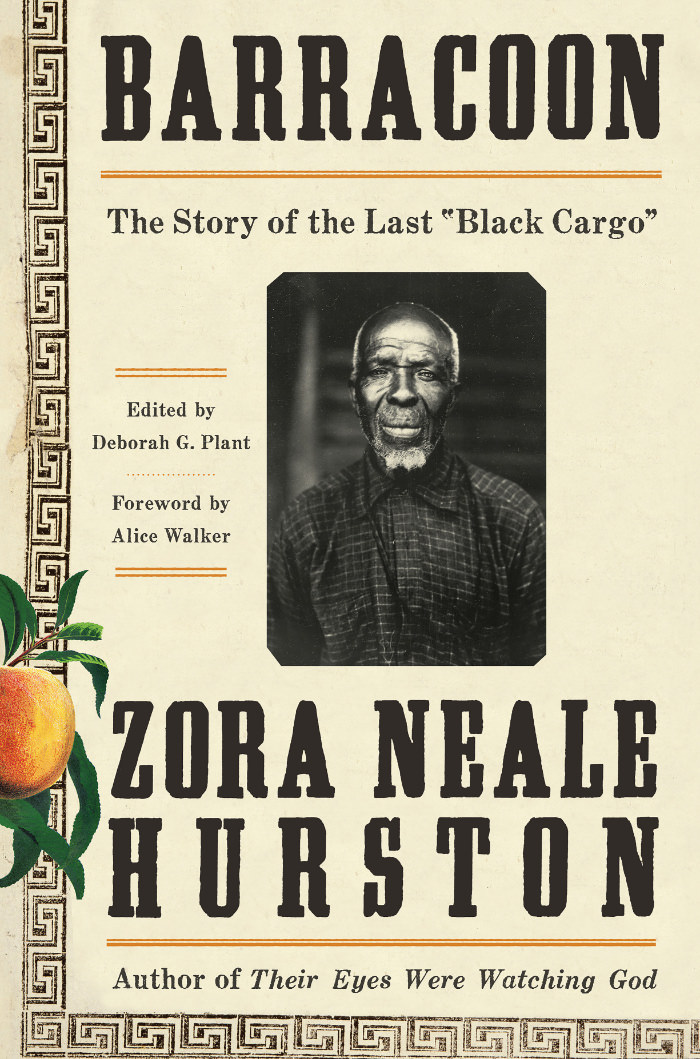
Barracoon: The Story of the Last “Black Cargo,” by Zora Neale Hurston

I’m not sure how this 2018 book escaped my attention for three years. I’m just glad I stumbled upon it recently.

Edited by Deborah G. Plant with a foreword by Alice Walker, Barracoon: The Story of the Last “Black Cargo,” is author and cultural anthropologist Zora Neale Hurston’s account of her numerous conversations with a man who was on the last slave ship from Africa to the United States.

Barracoon: The Story of the Last “Black Cargo,” by Zora Neale Hurston

Bringing slaves into the United States was made illegal in 1808; however, the trade was not completely stopped just by making a law. In 1859, two brothers originally from Maine and their business partner originally from Nova Scotia, illegally transported 130 African slaves from the coast of Nigeria to Mobile, Alabama on board a ship named Clotilde.  Barracoon: The Story of the Last “Black Cargo,” is the story of a 19-year-old man who was on that last slave ship to come to the United States.

The man’s name was Kossola, but his American name was Cudgo Lewis. Zora Neale Hurston found out about him, and a benefactor made it financially possible for her to go to Alabama for an extended time in order to meet Kossola and form a relationship of trust with him in order to hear and record his life story.

Kossola’s story of life in Africa, his capture, and his Middle Passage transport to Alabama is bone chilling. The details of how he was captured by the army of the king of Dahomey aligns with the historical record of that ruthless African king and his blood thirsty army of women and men.

What an amazing gift Ms. Hurston left for us! We are fortunate that Kossola lived long enough that Ms. Hurston was able to visit him a number of times over a three-month period in 1927 and put his words on paper. Publishers wanted Ms. Hurston to “correct” Kossola’s words to proper English, but she stood her ground and insisted that his words by pronunciation be preserved in the book.

I couldn’t help but think about the blog post I wrote two weeks ago (Censorship and Reader Sensitivities) and how appropriate I think it was for history’s sake for Kossola’s words to be recorded exactly how he said them.

There is an extensive appendix in the book. Included in it are a couple of children’s games from Africa, parables that are original with Kossola (from his own life experience), and various Bible stories told in Kossola’s own words.

There is also an extensive Afterword in the book about Ms. Hurston’s research and some debate about her motives and accuracy.  It seems that Kossola had become known as the last surviving slave from the last slave ship to America and there were others who wished to interview him. It was Zora Neale Hurston who was most successful in gaining his trust and recording his story. Ms. Hurston is remembered for his illustrious career as a social scientist, but she was just getting started in 1927.

Just As I Am, by Cicely Tyson

I got on the waitlist for Cicely Tyson’s memoir the minute I heard about it. The book was on order by the public library, so I had to wait a while for it. In the meantime, Ms. Tyson died at the age of 96. I’d been a fan of hers since her performance in the movie, Sounder, in 1972. I was blown away by her portrayal of Miss Janie Pittman in the TV film, The Autobiography of Miss Janie Pittman.

Just As I Am, by Cicely Tyson

Just As I Am was an interesting read. I learned about Ms. Tyson’s childhood in East Harlem, New York, and how her parents doted on her. She was their middle child, but she was born with a heart murmur that caused the doctor to predict she wouldn’t live more than three months. No wonder they treated her like a princess.

But there was a dark side to Ms. Tyson’s childhood. Her father was a womanizer. Her mother was a strict disciplinarian. Her parents had violent fights and Ms. Tyson was often caught in the middle.

Ms. Tyson had a sixth sense. Even as a child, she knew some events that were going to happen in the future because she could smell it (as was the case of a fire) or sense it in another way. Her mother was also blessed with a sixth sense, so the fact that Cicely had the gift was no big deal.

Early in the book, Ms. Tyson wrote about racial discrimination and our common humanity. It really struck a chord with me because I was reading that chapter the morning after the Zoom meeting of a group I’m in during which we had discussed racial prejudice and our common humanity. I couldn’t wait to tell the others in the group about the first chapter in Just As I Am.

She writes about what a rude awakening it was for her one day when she witnessed her mother and a group of other Black women on the street in New York City being looked up and down and evaluated by white people seeking a domestic laborer. It hit her as being no different from the way slaves were treated on the auction block a century earlier, and it made an impact on her life that she never forgot.

The 1920s and 1930s were her childhood and youth decades. What an interesting era! Although the Roaring 20s became the Great Depression in the 1930s, most people of color in the United States didn’t enjoy the abundance of the Wall Street in the 20s. And they had always been at an economic disadvantage, so the Great Depression wasn’t too much worse than what they were already experiencing.

It was in 1934 that the Federal Housing Administration instituted the practice of redlining to prohibit people of color from purchasing homes in middle class and wealthy neighborhoods. On the other hand, that era produced Black writers like W.E.B. DuBois, Zora Neale Hurston, and Langston Hughes. It was the age of jazz and the Harlem Renaissance.

On the flipside were the Scottsboro Boys in Alabama and the Tuskegee Syphilis Experiment from which the United States is stilling feeling ramifications and probably always will. That horrible experiment on Blacks today makes many people of color afraid to take the Covid-19 vaccine.

As you see, I could go on and on with examples of the backdrop of Ms. Tyson’s childhood, but perhaps you’d rather read the book for yourself.

Throughout the book, Ms. Tyson gives God credit for leading her. She speaks of an unflinching faith in God that sustained her from childhood until her last days. Events that others might have called coincidences, Ms. Tyson recognized as the hand of God working out her life’s journey. That’s how her modeling career came about, and that’s how her acting career fell into place without her even knowing that’s what she was meant to do.

This was an entertaining and enlightening read about a woman I have long appreciated as an actress without knowing anything about her background.

The Endless Sunset, by Laleh Chini

The Endless Sunset, by Laleh Chini

This most recent novel by Laleh Chini is about war and one young woman’s experience in Poland during World War II. It is written in person from that woman’s point-of-view. Hanna Przybylski reminisces about the lovely and peaceful city squares and bustling marketplaces in Warsaw of her growing-up years in the 1920s. Her mother was an artist. When her mother has a second child, a girl named Lena, when Hanna is 11 years old, they think their family and their lives are complete. The Great War was over and life is good.

Everything starts to unravel when Lena is a toddler and their mother dies. When the father remarries just three months after the mother’s death, Hanna’s life spirals downward. When Hanna is 16 years old, Germany started bombing Warsaw. World War II is beginning and will further disrupt Hanna’s life. What I’ve shared just covers the first 17% of the book.

What will become of Hanna and Lena? Will Hanna become responsible for more children than Lena? Will they flee Poland for a safer place? Will there be people to help them along the way? Will their father care what his daughters do? Did he and his second wife have children? Will Hanna survive World War II?

You’ll have to read The Endless Sunset to find out. The book is enriched by illustrations by Nihuel Navarro, whose website can be found at nihu.artstation.com.

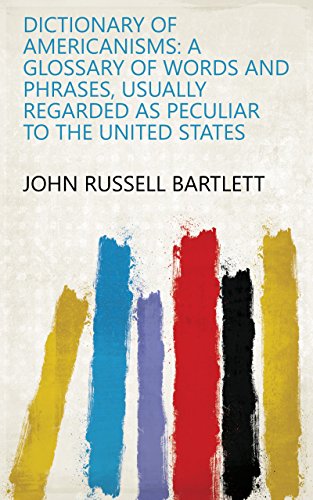
Dictionary of Americanisms (1848), by John Russell Bartlett

I was expecting this book to take the form of a dictionary; however, the majority of it is narrative.

Dictionary of Americanisms, by John Russell Bartlett

Near the end of this book there is a short section about some words that were “charged upon us as Americanism” but they are actually derived from English provinces. Examples are expect for suspect, reckon for think, and guess for suppose. These “Americanisms” come from Kent and Derbyshire in England.

The book continues with some words that were apparently Americanisms when the book was written in 1848, but they don’t make sense to me today. Among them are clever for good natured; desk for pulpit; and improve for occupy, or employ.

The book pays its respects to the clergy for starting and continuing to use solemnize for to make serious. Other Americanisms the writer didn’t appreciate at all included transpire for happen, and temper in the sense of passion or irritation.

Jumping on “educated men, and particularly … the clergy,” the writer bemoans the evolution of some nouns into verbs such as to fellowship, to eventuate, to doxologize, to happify, and to donate.

The author would, no doubt, be horrified at the evolution of American English since 1848. This book is proof that American English is forever changing. The words in common usage in 1848 that grated on the nerves of the dictionary author, have for the most part fallen by the wayside today.

By far, my favorite “new” word after reading this dictionary is happify!

Since my last blog post

I continue to have good books to read – in fact, more than I have time to read. I’m also doing some scrapbooking.

Until my next blog post

I hope you have at least one good book to read. Try to get caught reading, since May is Get Caught Reading Month!

If you don’t have a hobby, find one. It will enrich your life.

Note: In addition to being “Get Caught Reading Month,” May is Short Story Month.

Note: This is Reading is Fun Week.

Janet

5 Historical Novels I Read in April 2021

April brought me a boatload of good historical novels! I’m not sure what next month holds, but it will be difficult for May to match what I got to read in April. If you know me, you know that historical fiction is my preference in literature. It’s a joy when so many good new historical novels are released (or reach the top of my waitlist at the public library) at the same time.


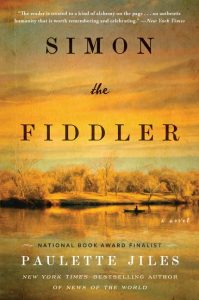
Simon the Fiddler by Paulette Jiles

You may recall that I read News of the World, by Paulette Jiles in October 2017 and blogged about it on November 6, 2017 in Some Good New Books. Also, I blogged about a favorite quote from that book on May 14, 2018 in The Lampasas County Asylum. Perhaps you’ve seen the movie that’s been made by the same name, News of the World, starring Tom Hanks. I haven’t seen it yet.

One of the things I like about Paulette Jiles’ writing is how she manages to sneak in bits of humor. Simon the Fiddler is by no means a comedy, yet Simon’s sense of humor comes through and makes him a very likeable fellow.

Simon the Fiddler, by Paulette Jiles

The story takes place at the end of the American Civil War. Simon has managed to escape being conscripted by the Confederate Army until a barroom brawl in Victoria, Texas in March 1865. His life of flitting around making somewhat of a living playing his fiddle is briefly interrupted by a stint in a Confederate regimental band.

After the war, Simon sets his sights on buying land in Texas, building a house, and settling down to create a family. Along the way he meets up with a variety of musicians and a beautiful young lady from Ireland whose life in America is so awful she wishes she’d never left her home country. She steals Simon’s heart.

Every time you think things can’t get worse for poor Simon, something worse happens. Such is the bedrock of fiction, and so goes this tale.

I invite you to come along for the ride with Simon, his companions, and the love of his life. Does he get what he’s been seeking all his life by the time you reach the last page of the book? You’ll have to read it for yourself to find out.

I enjoyed listening to Simon the Fiddler on CD. The professional reader is Grover Gardner.


Yellow Wife, by Sadeqa Johnson

Sadeqa Johnson was inspired to write this historical novel after learning about the life of Mary Lumpkin. Mary Lumpkin was a 12-year-old slave of Robert Lumpkin in Virginia. She bore him at least five children.

Ms. Johnson did extensive research into the lives of Robert Lumpkin and Mary Lumpkin and has woven a gripping novel that will keep you turning pages and yearning for something good to happen to Mary. The book contains many scenes of unthinkable beatings and the torture of slaves. Mr. Lumpkin owned a jail where slaves were sent for punishment, and Mr. Lumpkin delighted in inflicting that punishment. He absolutely delighted in it. I didn’t know that slave jails existed until I read this book.

Yellow Wife, by Sadeqa Johnson

Ms. Johnson put herself in the body of Mary Lumpkin and, thereby, puts the reader there, too. As much as is possible, Ms. Johnson helps us to put ourselves in the shoes of a slave woman who is at the mercy of her master and is put in an awkward position with her fellow slaves because she is seen as the favored one. All the while, her heart is broken because she can’t be with the man she truly loves and who truly loves her. For Mr. Lumpkin, Mary is a wife of convenience.

Yellow Wife is not a pleasant read, but it is based on a true story – one we as Americans should know about and not forget. It’s part of our history.


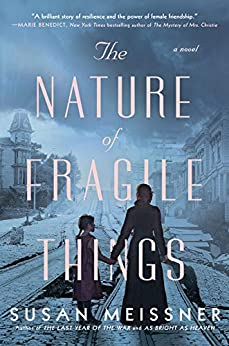
The Nature of Fragile Things, by Susan Meissner

I highly recommend this historical novel set in San Francisco in 1906 – the year of the Great San Francisco Earthquake.

Sophie lives in the north of Ireland and seeks a better life in America. She joins her brother in New York City, but he soon falls in love and moves to Canada. Sophie’s life as a single young female Irish immigrant in the big city leaves her desperate for a better life. She answers a mail-order bride ad and travels to San Francisco to marry a widower who has promised her a stable life and a ready-made family: a five-year-old daughter. Sophie’s dream has come true. She longs to be a mother, but she’s been told she can physically never have her own child.

From the beginning in San Francisco there are clues that her husband, Martin Hockings might not be all he’s cracked up to be on paper, but Sophie tries her best to adapt and be patient with him and his daughter, who won’t talk.

The Nature of Fragile Things, by Susan Meissner

From there, the book takes off in unexpected directions – and the earthquake hasn’t even occurred yet. Hold on for the ride as a pregnant stranger shows up at Sophie’s door one day asking for a Martin Hockings. Don’t jump to conclusions, though; it’s not what you’re thinking. Sophie’s life unravels quickly from this point. Her discoveries take her and Martin’s little girl through the harrowing earthquake and on a journey to Arizona see what they can find out about the girl’s dead mother.

I hope I haven’t told you too much. There are more secrets in this book than “all get out.”

(If the idiom, “all get out” leaves you scratching your head, please read my March 29, 2021 blog post for clarification: #Idiom: As All Get Out.)

If you are a fan of historical fiction, you’ll love The Nature of Fragile Things, by Susan Meissner!


The Lost Girls of Paris, by Pam Jenoff

I don’t know why it took me until now to read The Lost Girls of Paris, by Pam Jenoff. I added it to my To Be Read List after reading a good review of it on https://jennifertarheelreader.com/ way back in February 2019.

You might recall that I blogged about The Orphan’s Tale, by Pam Jenoff in my August 7, 2017 blog post, Late July Reading. I enjoyed that book, so that adds to the mystery of why I waited until last month to read The Lost Girls of Paris. Being historical fiction, Ms. Jenoff’s books are right down my alley.

The Lost Girls of Paris, by Pam Jenoff

The Lost Girls of Paris transports you to France in 1944. It’s about young women who volunteered to be radio operators behind enemy lines during World War II. Participants were carefully chosen and trained. They knew they were putting their lives on the line in the Allies’ attempt to defeat Nazi Germany.

A woman looks in an abandoned suitcase at Grand Central Station in New York City and discovers photographs of 12 women. She sets out on a mission to find the owner of the suitcase, and she wants to know something about the women in the photographs. Her research leads her to Washington, DC and on an on-the-ground search for the woman who trained and led the group.

There are twists, turns, courage, fear, loyalty, and betrayal in this novel that will keep you turning the pages.

By the way, Pam Jenoff has a new historical novel on the way: The Woman with the Blue Star is scheduled for release on May 4, 2021. I’m on the waitlist for it at the public library.


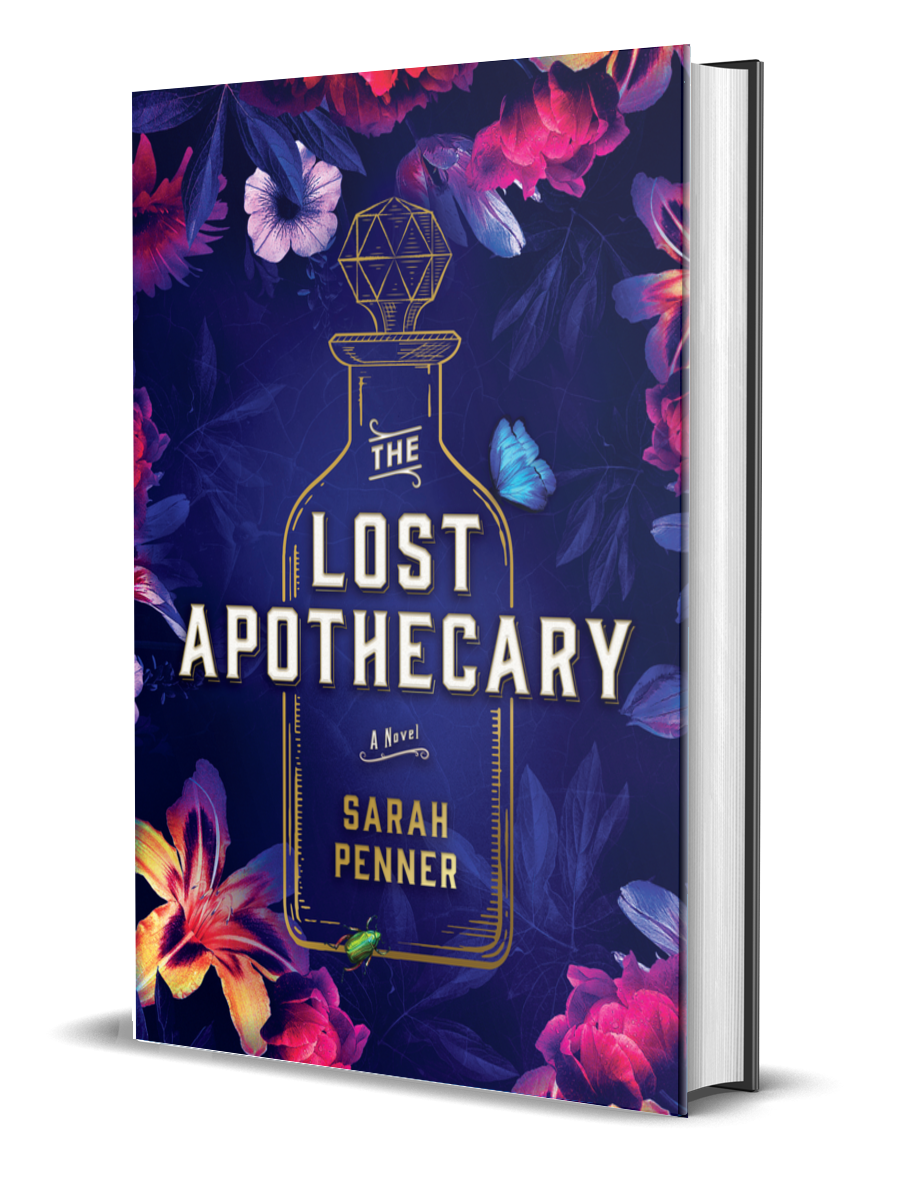
The Lost Apothecary, by Sarah Penner

I listened to The Lost Apothecary, by Sarah Penner on CD. I usually don’t enjoy novels that take two different timelines, but this one really held my interest. A secret apothecary in London in 1791 caters to women who need an herbal way to get rid of the oppressive men in their lives. An innocent mistake made by a 12-year-old girl who takes a serious interest in learning the apothecary trade turns the 18th century story on it’s head and threatens to be the end of the hidden business.

The Lost Apothecary, by Sarah Penner

In comes a present-day young woman, Caroline, from the United States. She has a variety of personal issues to sort out and, early in her visit to London finds an intriguing medicine bottle on the bank of the Thames. This launches Caroline on a mission to find out all she can about the apothecary whose stamp in on the bottle.

The novel is well-researched and is sure to be of interest to anyone with a curiosity about herbal remedies and herbal poisons used in secret in 18th century England.


Since my last blog post

I’ve been dealing with an allergic reaction to poison oak. It hasn’t been fun, but the prednisone injection is helping. I’d forgotten just how intense the itching sensation is once one is exposed to the innocent-looking plant.


Until my next blog post

I hope you have a good book or two to read this week. Maybe you’ll get to read one of the three books I wrote about today. Next Monday I’ll blog about the other books I read in April.

Make time to relax and enjoy a hobby.

Stay safe and well – and please wear a mask when necessary.

Note: May is Get Caught Reading Month! Have you been caught yet?

Janet