#OnThisDay: Explosion Aboard Steamship, 1844

Sometimes it angers me that the history classes I sat through as a child and teen didn’t include little bits of information like I’m sharing with you today. Instead of memorizing names of general and battles and dates, how much more interesting class would have been if we’d been told stories like this one.

Knowing this story could have served as an example to students of how history can turn on a dime. I’d like to think students learned that last week when Russia invaded Ukraine without provocation.

The incident I write about today brings to mind the following for each of us to think about: If not for ___(you fill in the blank)____, then ___(you fill in the blank)____ wouldn’t have happened OR would have happened.

The 1840s USS Princeton

I don’t recall ever hearing about the USS Princeton until recently, and I wouldn’t have heard of it then if I hadn’t been looking for a topic for #OnThisDay for my blog.

There have been a series of US Naval vessels christened with the name USS Princeton. The one I write about today, as you can see from my blog post title, was the one built in the early 1840s. It was a state-of-the-art warship powered by coal-produced steam. It was built in Philadelphia and was best-known for its two 12-inch cannons/carronades, called “The Oregon” and “The Peacemaker.”

“The Oregon” was of revolutionary design, made of wrought iron, and manufactured in England. It was designed by John Ericsson, a Swede who later designed the Monitor of American Civil War fame.

“The Peacemaker” was manufactured in New York under the partial supervision of Captain Robert Stockton, a political supporter of US President John Tyler. It’s thought that it was believed and claimed to be comparable to “The Oregon,” but there were design differences and short cuts were taken in The Peacemaker’s testing. This was a recipe for disaster, and that’s what happened on the Potomac River on February 28, 1844.

Let’s set the stage

The state of politics in the United States in 1844 contributed to the inevitable disaster. William Henry Harrison was elected US President in 1840, but he died in 1841 only a month after his inauguration. John Tyler being the US Vice President, assumed the office of President. It was the first time in American history that a president died in office and was replaced by the vice president. Tyler had been a Democrat, but he was elected as a Whig. Soon after he assumed office, he openly disagreed with the Whig Party over economic policy, and the Whigs kicked him out of the party. The Democrats didn’t want him back, so he became a US President without a political party.

Tyler wanted to be reelected President in the 1844 election. He thought by running on a promise to annex the Republic of Texas into the United States would win him the election. Mexico and Great Britain opposed the idea.

To ward off foreign opposition to that annexation, Tyler ordered the construction of the USS Princeton. Most warships in the world at that time were sailing ships or steamships with fuel limitations. The USS Princeton was designed with a collapsible smokestack, allowing it to also navigate as a sailing ship. A hybrid in the 1840s! It’s engine and propeller system were below the water line, making it less vulnerable to enemy attack than ships propelled by paddlewheel.

Back on the scene to partially supervised the construction of the warship, Captain Stockton bragged about the ship’s prowess, calling it “invincible.” He thought by bringing the ship to Washington, DC and entertaining politicians, he’d get the money to build more ships.

What happened on February 28, 1844

An afternoon excursion from Washington, DC on the Potomac River was planned for February 28, 1844. President Tyler (who had no Vice-President), members of Congress along with their wives, and some Cabinet members were wined and dined on the ship and were scheduled to witness the fire power of the ship during three demonstrations.

It was Stockton’s decision to fire “The Peacemaker” for all three demonstrations. After two successful firings, a third was launched in honor of George Washington. On that third firing, “The Peacemaker” exploded, sending its parts – some weighing in excess of a ton – flying across the deck. Eight people were killed and more than two dozen were injured.

Secretary of State Abel Upshur and Secretary of the Navy Thomas Gilmer were killed. If President Tyler had not been unexpectedly detained on the stairs below deck, he undoubtedly would have been standing with them.

The hole in the US Constitution

What happened in US Presidential succession in the 1840s should have been remedied posthaste. It was the first time a Vice President had to step up and into the Presidency due to the death of a President; however, we know from history it was not the last time.

It would be 1967, four years after the assassination of President John F. Kennedy, before the Twenty-Fifth Amendment to the US Constitution would provide a process through which a Vice President would be replaced in the event of the vacancy of that office.

If President Tyler had been killed in the explosion on the Princeton, the president pro tem of the US Senate, Willie Mangum – a North Carolinian who had been one of the founders of the Whig Party – would have become US President. Among other things, Mangum was an avowed opponent of the annexation of the Republic of Texas.

This fact alone brings us back to the fill-in-the-blanks line from the third paragraph of this blog post: If not for ___(you fill in the blank)____, then ___(you fill in the blank)____ wouldn’t have happened OR would have happened.

If you’d like to learn more

If you want to learn more about the USS Princeton of 1844, I recommend https://historynewsnetwork.org/article/181834, by Stan Haynes, published on November 21, 2021. Also, https://military-history.fandom.com/wiki/USS_Princeton_(1843). I drew information from both of these online resources which include more detail than I shared in my post today. In addition, I understand that Stan Haynes has written a historical novel, And Tyler No More, which includes this tragic incident.

Since my last blog post

Our world has changed forever. NATO is being tested like no other time since its inception. No one knows what the future holds for Ukraine, Europe, and the rest of the world. I believe in His perfect wisdom, God doesn’t allow us to know the future.

Until my next blog post

I hope you have a good book to read and time for a creative outlet.

It’s been an unsettling week in our world since last Monday, to say the least. No one knows what this week holds. My heart goes out to the people of Ukraine who are suffering so. May the world continue to condemn Vladimir Putin for his unprovoked invasion of Ukraine.

Thank you for taking the time to read my blog.

Janet

My Little White Dog

My little white dog died last Monday. He was the perfect dog for my sister and me, and we will forever miss him. It’s been a difficult week, but each day gets a little bit easier as we deal with our loss.

Those of you who are “dog people” understand. Those of you who aren’t, I can’t explain to you how sad it is to lose one.

Notice his Carolina Panthers pillow in the background.

He was a rescue dog, and we’ll never understand how his former family turned him out to fend for himself in a city until he was picked up by the county’s animal control personnel. He was rescued from the animal shelter by a dog rescue organization, and it was through that organization that this sweet little white dog adopted my sister and me.

He took us on as his project. I guess we were his “purpose.” He helped us do everything and was our constant companion and caregiver. I think he thought we were helpless, and that’s why it was so hard for him to let go last Monday afternoon.

He was so proud the day in 2014 when my vintage postcard book, The Blue Ridge Mountains of North Carolina arrived!

I tried to determine if the poem, “My Little White Dog,” by Nell Gay White was in the public domain, but I couldn’t find any information about Ms. White or her poem. I’m going out on a limb here and sharing that poem with you today. I copied it years ago because it touched my heart. I didn’t even have a little white dog at that time, but the one pictured in this blog post has given my sister and me joy every single day of the last eight and one-half years.


My Little White Dog, by Nell Gay White

“I wonder if Christ had a little white dog,

All curly and wooly like mine,

With two silly ears and a nose round and wet,

And two tender brown eyes that shine?

“I’m sure if he had, that little white dog

Knew right from the first he was God.

He needed no proof that Christ was divine –

But just worshipped the ground where he trod.

“I’m afraid that he hadn’t because I have read

That he prayed in the garden alone;

For all of his friends and disciples had fled

Even Peter, the one called a stone.

“And, Oh, I am sure that a little white dog

With a heart so tender and warm,

Would never have left him to suffer alone

But creeping right under his arm.

“Would have licked those dear fingers, in agony clasped,

And counting all favors but loss ,

When they took him away, would have trotted behind

And followed him quite to the Cross.”

Just chillin’ on the sofa


Until my next blog post

Take care of yourself.

Janet

Can Movies Help You Write?

This is a blog topic I’ve postponed numerous times since first reading about the theory more than three years ago. It’s time to address it, although I still have more questions than answers. Can a movie help you write?

Photo credit: Jon Tyson on unsplash.com

Kathryn Ramsperger wrote an article for the Southern Writers: Suite T blog on November 9, 2018: “Improve Your Story by Watching Movies.” I was intrigued by the title so much that I cut and pasted it and saved it on my computer.

Ms. Ramsperger is described online as being “a communications expert and intuitive life coach.” I’m not sure how one becomes a communications expert and I’m less sure what an intuitive life coach is, but her theory about movies made me stop and think. I’m a sucker for any article that claims it will improve my writing.

Photo credit: Katie Rodriguez on unsplash.com

In a nutshell, Ms. Ramsperger said a writer should notice how lighting, the set, and action are presented in a movie and then add sensory detail. She pointed out that the written word can convey things like smell better than a movie can. She said that studies show that a book can evoke empathy better than a movie can.

Ms. Ramsperger recommended that a writer watch a movie set in their genre and then add sensory detail to their work-in-progress.

I decided to give it a try. I write 18th century Southern historical fiction. I couldn’t find a movie that fit that description, so I thought back to the TV series, “Outlander.” I’ve watched all the episodes of this multi-year series. After reading the first four or five books in Diana Gabaldon’s Outlander series, I couldn’t wait for the TV version.

If you’re not familiar with Ms. Gabaldon’s Outlander books, I recommend them to you. You need to read them in chronological order, starting with Outlander, published in 1992. These books put you in 18th century Scotland and then 18th century North Carolina.

Although Ms. Gabaldon takes some creative license when it comes to the proximity of Cross Creek in present-day Cumberland County, North Carolina in the eastern part of the state to the mountains of western North Carolina, once I got past that I was able to finish reading A Breath of Snow and Ashes, published in 2008. It took me a while, but I’ve forgiven her.

Writers can learn from movies (and even television) how important covering all the senses can be. Just as an entire hour-long TV program can take place in the pouring rain, as a writer I need to remember to convey to my reader if it’s raining in a scene or chapter and that it either continues to rain or it stops. 

Photo credit: Filip Zrnzevic on unsplash.com

In the online writing course I recently took, I was told that I should think of a scene in my book like it’s a scene in a movie. That prompted me to think about the theory again.


Have movies helped my writing?

That’s hard to answer. I rarely see a movie. To give you an idea how often I go to a movie theater, the last movie I saw on the big screen was The King’s Speech in 2010. I’m. Not. Kidding.

The last movie I saw on TV was probably My Cousin Vinny. I’ve seen it several times, and it never ceases to crack me up.

I suppose movies have helped my writing just by the fact that I have seen movies. Not many, but some. I get the drama. I get the pacing. I get the body language. I get that the items in a shot usually only include enough to give the viewer a sense of setting. No need to clutter up a scene with a bunch of extraneous stuff unless it’s about a hoarder.

Photo credit: Andrew Haimerl (ANDREWNEF) on unsplash.com

I try to remember to have emotion in every scene I write. I don’t mean the screaming or sobbing kind of emotion. Emotion can be shown through a character’s body language and through what a character is thinking. A writer must keep in mind, among many other things, the following questions: What do I want my character to feel? What do I want my reader to feel?

Photo credit: Tengyart on unsplash.com

The following is a quote from Russian playwright and short fiction writer, Anton Pavlovich Chekhov, which I try to keep in mind as I write a scene: “Don’t tell me the moon is shining, show me the glint of light on broken glass.”


What about you?

If you’re a writer, have movies helped your writing? If so, how?


This leads me to other questions

How have movies and television shortened our attention spans? How has this influenced how much time we’re willing to give to the reading of a book?

Following that train of thought, how has the shortened attention span of readers influenced how books are written today?

I read just the other day that the advent of VHF tapes dictated that movies had to be shorter than they’d been in the past. Technology influenced the length of movies, and now movies are influencing how books are written.

Taste in books is ever-changing and always has been. Hemingway shook up the literary world that was used to flowery, long prose. Nothing stays the same for very long.

As an aspiring novelist, I’m told to write a scene as if it’s a scene in a movie because my potential reader will lose interest if I don’t. It’s probably true, but I don’t think it’s necessarily a good thing.

Can a movie help you write? I’m afraid my answer is, “Yes, but it can also limit you.”

I find something sad about the prospect of movies dictating how novels are written, especially if it’s simply because people’s attention spans have decreased.


Since my last blog post

Even as I continued my research into the Great Wagon Road and its offshoots in southern Virginia, I started writing the rough draft for the first book in what I hope will be a series of historical novels. With the working title The Heirloom, it will precede the second almost-finished book, The Doubloon. (These are working titles and will, no doubt, get changed unless I self-publish.)

The more I learn about the Great Wagon Road, the more I’m impressed with what my ancestors went through just to get from Pennsylvania to North Carolina in the 1700s. (Not to mention what they endured on ships crossing the Atlantic before that!)


Until my next blog post

I hope you have a good book to read and/or a good book to write.

Take time to enjoy family, friends, and a hobby.

Life is short!

Janet

Books Read in January 2022

I had the pleasure of reading a variety of books in January. Each one was interesting in its own way.

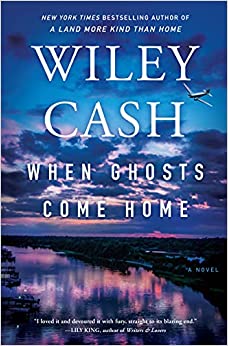
In my December 6, 2021 blog post, Books Read in November 2021, I made less-than-glowing remarks about Wiley Cash’s When Ghosts Come Home. I’m rectifying the situation today.

When Ghosts Come Home, by Wiley Cash

When Ghosts Come Home, by Wiley Cash

I owed it to myself and Wiley Cash to give this novel a second chance. I checked out the large print edition of the book from the public library in January and started reading it again. I’m so glad I did!

I think part of my problem in November was that I read the first chapter or two and didn’t get back to it for a week or so. Since the third chapter was about a new set of characters with no obvious connection to the characters in the first couple of chapters, the book sort of fell apart for me. I figured out the connection a little later, but by then I’d lost interest in the story.

Getting back to this novel in January was a real treat. I was able to give it enough attention in longer blocks of time to get into the storyline, make the connections, and care what happened to the characters.

I had to find out why Rodney Bellamy was at the airstrip that night. I had to find out what happened to Janelle’s kid brother, Jay. I had to know if Winston’s daughter, Colleen, was going to get her life back together after losing her baby. I had to find out how Winston, the county sheriff on the coast of North Carolina, got all the crimes and problems sorted out. I had to find out what part FBI Agent Tom Gross played in all this.

Determined to tie all the loose ends together, the end of the book kept me reading until 3:00 a.m. I’m back on track now with Wiley Cash and look forward to his next novel.

There is an element of racial tension woven throughout When Ghosts Come Home. The following is a very telling quote from the book. Ed Bellamy is referring to the white Marines he served alongside in Vietnam.

“But I knew something else my white buddies didn’t know: I knew what it meant to be hunted…. I still know what it means to be hunted. All these years later, we’re still being hunted.”

I’ve read all his earlier novels: A Land More Kind Than Home, The Dark Road to Mercy, and The Last Ballad.

I read A Land More Kind Than Home in 2015 before I started commenting other than mentioning the titles on my blog about the books I was reading.

In February 2016, I read The Dark Road to Mercy. Here’s the link to the blog post in which I commented on it: Some books I read in February

I commented on The Last Ballad in my blog post on November 6, 2017: Some Good New Books.


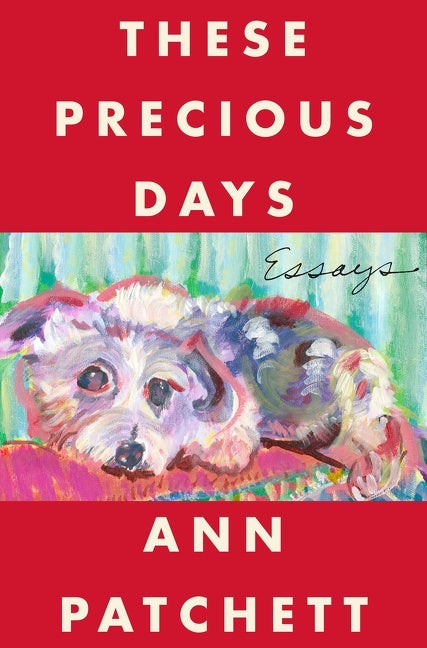
These Precious Days, by Ann Patchett

These Precious Days: Essays, by Ann Patchett

I was surprised when I looked back through my blog posts to find that this is the fifth Ann Patchett book I’ve read. I’ll give you the links to those earlier four blog posts in case you’d like to read what I had to say about her other books.

To refresh my memory and yours about the Ann Patchett books I’ve read, here are my nutshell descriptions and the links to the blog posts in which I wrote about them:

(1) The Getaway Car is a book in which Ms. Patchett humorously tells what she has learned about the craft and art of writing. What I read in February 2017

(2) State of Wonder is a novel set in Brazil. It involves a pharmaceutical firm in Minnesota and the jungle along the Amazon River. Some Great September Reads

(3) The Dutch House is about a dysfunctional family in which the mother leaves and never returns. There are many layers to this story and the house itself is as important as any character. I highly recommend you listen to the CD of this book which is read by Tom Hanks. I stretched my reading horizons in November

(4) Bel Canto is a novel based on the 1996 hostage situation at the home of an ambassador in Peru. Eight Books I Read in March 2020

(5) Commonwealth was a novel that didn’t grab my interest and I didn’t listen to all of it. It involved drunks at a christening party. I couldn’t identify with that. Books Read in May 2020

Ann Patchett is an essayist in addition to being a novelist. These formats take two different writing skills. She’s a master of both. I enjoyed listening to These Precious Days, which is a collection of essays. She reveals some of her past in an entertaining way and with humor. If you’re an Ann Patchett fan, you’ll love this book.

I connected with her on several levels in this book. We’re both writers, although she’s light years ahead of me. We both knit – or do so rarely and not as well as those knitting experts in Scotland. Neither of us have children to dote on or depend upon to help care for us in our dotage.

It is a book about friends and family and those ties that bind us and help us along through life’s ups and downs. It was one of those books that left me wanting more when it ended.


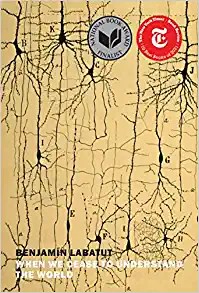
When We Cease to Understand the World, by Benjamin Labatut; translated from Spanish into English by Adrian Nathan West

When We Cease to Understand the World, by Benjamin Labatut

My cousin, Jerome Williams, recommended this book. I failed to have it on my to-be-read list, although it was shortlisted for the 2021 National Book Award for Translated Literature. The author, Benjamin Labatut, is Chilean.

This novel reads like a nonfiction book. In it, Señor Labatut writes about various scientists and mathematicians who have had to wrestle with the moral ramifications of their discoveries. In some cases, their discoveries were meant for good but have been used as weapons of mass destruction and untold suffering. Some of these men lost their minds or were mentally tormented by the ways in which their discoveries were used.

There are unexpected twists and turns as years and decades pass, and we’re left to wonder what great wonders and what horrific demented uses of those great wonders lie in the future.

Thanks for the recommendation, Jerome. You have good taste in literature.


The Silk Roads: A New History of the World, by Peter Frankopan

As I’ve mentioned before, this book isn’t a fast read. It’s a history book and it packs a tremendous amount of information and insight into its more than 600 pages. Trying to read the regular print edition was taxing on my eyes, so I got on the waitlist for the Kindle edition. I rose to the top of the list early in January and was eager to pick up where I’d left off in November.

Other books also reached the top of the library waitlists, though, and I was distracted. The Silk Road isn’t the kind of book you can read in snippets. I’ll keep reading it, probably throughout 2022.


Since my last blog post

I’ve been researching the Great Wagon Road and some of old trails associated with it. In case you’re interested in learning more about the Great Wagon Road, I recommend that you look at the PiedmontTrails.com website (https://piedmonttrails.com/) and look for Piedmont Trails on YouTube. Carol, who spearheads the Great Wagon Road Project, has lots of information that she freely shares. The Great Wagon Road Project is documenting the 800-mile wagon road that went from Pennsylvania to Augusta, Georgia in the 1700s and early 1800s.

I’m doing this research in conjunction with the historical novels I’m attempting to write. I had planned to start writing the rough draft of Book One with the working title The Heirloom, but there’s a technical issue with my computer regarding margins. I hesitate to start the rough draft until I can get my margins set at a reasonable setting. I’ve never had this problem before.

Until my next blog post

I hope you have a good book to read and a hobby to enjoy.

Stay safe and well.

Janet