Following up on last week’s blog post: Book Banning

I was gratified by the responses my blog post of last Monday received. Thank you to everyone who responded, and thank you to the ones of you who reblogged my post about book banning. In case you missed it, here’s the link: Book Banning is Democracy Banning!

In last week’s post I listed the 19 books that had been banned the week before by the school board in Hanover County, Virginia. I failed to list other books or tell you how you can find lists of other books that have been challenged in the United States.

You can simply put “Challenged Books” or “Banned Books” in your favorite online search engine. Or, you can look for reputable sites like the American Library Association’s website for intellectual freedom: https://www.ala.org/advocacy/bbooks/

Barnes and Noble has a list of more than 230 challenged books on its website at https://www.barnesandnoble.com/b/banned-books/_/N-rtm.

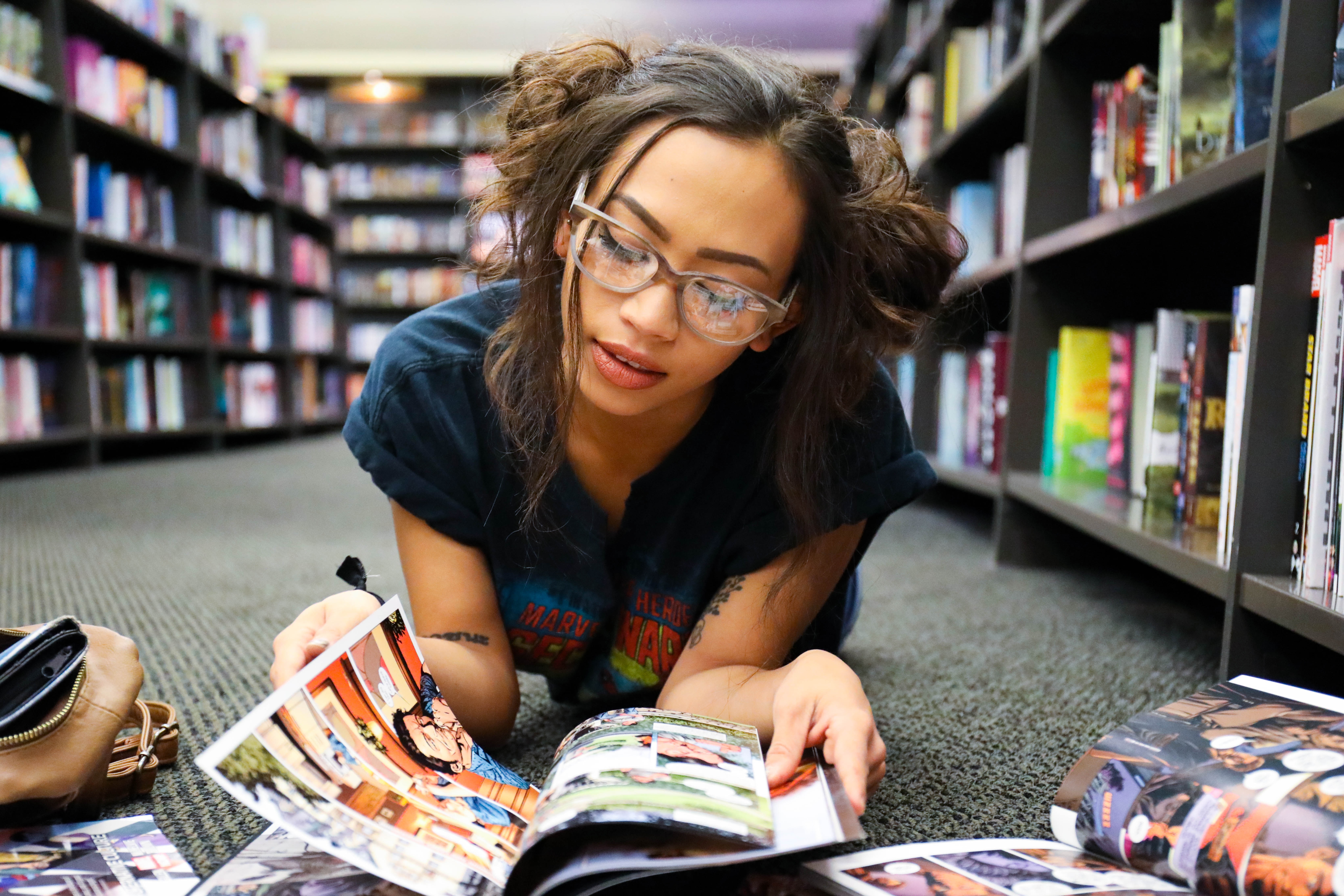
Imagine if these shelves were empty! (Photo by Rabie Madaci on Unsplash)

Let’s flood our public library systems and bookstores with requests for such books! Here’s a partial list. You might find many others when you do your own search. The following list of 101 books that have been challenged or banned somewhere in the United States is in no particular order.

Hunger Games, by Suzanne Collins

They Both Die at the End, by Adam Silvera

What I Know Now: Letters to My Younger Self, by Ellyn Spragins

The Giver, by Lois Lowry

1984, by George Orwell

The Great Gatsby, by F. Scott Fitzgerald

Fahrenheit 451, by Ray Bradbury

The Lord of the Flies, by William Golding

To Kill a Mockingbird, by Harper Lee

The Glass Castle, by Jeannette Walls

Harry Potter and the Sorcerer’s Stone, by J.K. Rowling

Maus I: A Survivor’s Tale: My Father Bleeds History, by Art Spiegelman

Where the Wild Things Are, by Maurice Sendak

How the Garcia Girls Lost Their Accents, by Julia Alvarez

New Kid, by Jerry Craft

Animal Farm, by George Orwell

The Kite Runner, by Khaled Hosseini

The Handmaid’s Tale, by Margaret Atwood

My Sister’s Keeper, by Jodi Picoult

The Dairy of a Young Girl, by Anne Frank

The Catcher in the Rye, by J.D. Salinger

The Bluest Eye, by Toni Morrison

The 1619 Project: A New Origin Story, by Nicole Hannah-Jones

Brave New World, by Aldous Huxley

The Hate U Give, by Angie Thomas and Amandla Stenberg

Of Mice and Men, by John Steinbeck

Lord of the Flies, by William Golding

This Book is Gay, by Juno Dawaon and David Levit

I Know Why the Caged Bird Sings, by Maya Angelou

Gender Queer: A Memoir, by Maia Kobabe

Hop on Pop, by Dr. Seuss

Their Eyes Were Watching God, by Zora Neale Hurston

How the Word is Passed, by Clint Smith

Twilight, by Stephanie Meye

Beloved, (a Pulitzer Prize Winner) by Toni Morrison

The Pillars of the Earth, by Ken Follett

Girl, Interrupted, by Susanna Kaysen

Where the Sidewalk Ends, by Shel Silverstein

The Grapes of Wrath, (a Pulitzer Prize Winner), by John Steinbeck

The Color Purple, by Alice Walker

Speak, by Laurie Halse Anderson

Slaughterhouse-Five, by Kurt Vonnegut

Lolita, by Vladimir Nabokov

The Absolutely True Diary of a Part-Time Indian, by Sherman Alexie

All American Boys, by Jason Reynolds and Brendan Kiely

The Autobiography of Malcolm X, as told to Alex Haley

A Farewell to Arms, by Ernest Hemingway

The Poet X, by Elizabeth Acevedo

Looking for Alaska, by John Green

Persepolis: The Story of a Childhood, by Margane Satrapi

Midnight in the Garden of Good and Evil, by John Berendt

Class Act: A Graphic Novel, by Jerry Craft

One Flew Over the Cuckoo’s Nest, by Ken Kesey

Monday’s Not Coming, by Tiffany D. Jackson

Fifty Shades of Grey, by E.L. James

The Other Wes Moore, by Wes Moore

Like Water for Chocolate, by Laura Esquivel

What If It’s Us, by Becky Albertalli and Adam Silvera

A Time to Kill, by John Grisham

A Lesson Before Dying, by Ernest J. Gaines

The Da Vinci Code, by Dan Brown

And Tango Makes Three, by Justin Richardson and Peter Parnell

Child of God, by Cormac McCarthy

Feed, by M.T. Anderson

A Separate Peace, by John Knowles

Stamped from the Beginning, by Ibram X. Kendi

Go Ask Alice, by Anonymous

Stranger in a Strange Land, by Robert A. Heinlein

Different Seasons, by Stephen King

For Whom the Bell Tolls, by Ernest Hemingway

The Lord of the Rings, by J.R.R. Tolkien

Native Son, by Richard Wright

Angela Davis: An Autobiography, by Angela Y. Davis

Skeleton Crew: Stories, by Stephen King

Thirteen Reasons Why, by Jay Asher

Stamped: Racism, Antiracism, and You: A Remix of the National Book Award-Winning Stamped from the Beginning, by Jason Reynolds and Ibram S. Kendi

Simon vs. the Homo Sapiens, by Becky Albertalli

All Boys Aren’t Blue: A Memoir, by George M. Johnson

The Red Badge of Courage, by Stephen Crane

Water for Elephants, by Sara Gruen

The Prince of Tides, by Pat Conroy

Tiger Eyes, by Judy Blume

Four Hundred Souls: A Community History of African America, 1719-2019, by Ibram X. Kendi, Keisha N. Blain

A Thousand Acres, a Pulitzer Prize Winner, by Jane Smiley

Kaffir Boy: The True Story of a Black Youth’s Coming of Age in Apartheid South Africa, by Mark Mathabane

Beach Music, by Pat Conroy

The Adventures of Huckleberry Finn, by Mark Twain

Blood in the Water: The Attica Prison Uprising of 1971 and Its Legacy, a Pulitzer Prize Winner, by Heather Ann Thompson

The Tenth Circle, by Jodi Picoult

The Jungle, by Upton Sinclair

Girl With the Blue Earring, by Tracy Chevalier

Catch-22, by Joseph Heller

Palestine, by Joe Sacco

Gone With the Wind, by Margaret Mitchell

Bridge to Terabithia, A Newberry Award Winner, by Katherine Peterson

The Sun Also Rises, by Ernest Hemingway

Addie on the Inside, by James Howe

Call of the Wild, by Jack London

Olive’s Ocean, a Newberry Honor Book, by Kevin Henkes

A Stone in My Hand, by Cathryn Clinton

Tilt, by Ellen Hopkins

How Often Are Books Challenged Where You Live?

There is an interactive map of the United States of the American Library Association’s website, https://www.ala.org/advocacy/bbooks/by-the-numbers. Hover the curser over a state to find basic information about book challenges in that state in 2022.

For instance, in my home state of North Carolina, there were 32 attempts to restrict access to books last year involving 167 titles. The most challenged book in North Carolina was Looking for Alaska, by John Green.

That map revealed some surprises. There were 45 attempts to restrict access to books in Massachusetts last year involving 57 books. In Michigan, the figures were 54 and 359. In Pennsylvania, 56 and 302. In Florida, 35 and 991. But Texas was at the top of the list (or bottom as the case may be) with 93 attempts to restrict access to books in 2022 involving a whopping 2,349 titles!

Photo by Enrique Macias on Unsplash

Different books are listed as the most-challenged book in the various states; however, Florida and Texas agree on The Bluest Eye, by Toni Morrison. I wrote about that book in my blog post last week. I want to say to the book challengers in Florida and Texas, “You’ve got to be kidding!”

If you want to read more about the topic of book banning…

Here’s the link to the website of PEN America. PEN America is made up of more than 7,500 novelists, journalists, nonfiction writers, editors, poets, essayists, playwrights, publishers, translators, agents, and other writing professionals, as well as devoted readers and supporters who join with them to carry out PEN America’s mission to protect free expression in the United States and around the world: https://pen.org/report/banned-in-the-usa-state-laws-supercharge-book-suppression-in-schools/.  

Until my next blog post

I hope you’re reading a book that someone has tried to get banned from a library. Let’s flood our public library systems and bookstores with requests for books that someone doesn’t want us to read!

I hope you make time for friends and family. Read to the children in your life and encourage them to read for fun.

Stop right now and visit my website (https://janetmorrisonbooks.com/) to subscribe to my newsletter. I took a special “field trip” to benefit my historical fiction writing on May 20. I’ll tell you all it in my July newsletter!

Just for signing up, you’ll receive a free downloadable copy of “Slip Sliding Away: A Southern Historical Short Story” to give you a taste of my fiction writing.

Remember the brave people of Ukraine.

Janet

Book Banning is Democracy Banning!

I’d planned to blog about flash fiction today but somehow in the big scheme of things, flash fiction doesn’t seem very important at the moment.

There are a number of trends in the United States that trouble me. The one I’m addressing today is book banning.

When you ban books, you are in fact banning democracy. You don’t see it that way, but you are. You are forcing your will on other people.

You do not have the right to tell anyone besides your minor children what they cannot read. Period.

You can try to force your fear of knowledge on your children until they are 18 years old.

I’m not talking about age appropriateness. I’m talking about banning books so they aren’t available to others in a library, classroom, or other place in which people go to find books.

What are you afraid of?

Are you afraid Little Johnny might find out that he’s not the center of the universe just because his skin is white? Are you afraid Little Mary might find out that there are people in the world whose skin color is different from hers?

Photo by Jason Leung on Unsplash

Are you afraid your teenage child who believes they were born in the wrong-gendered body might find out they are not alone in this world? They already know you have rejected them.

The case in Hanover County, Virginia

Every week I see a headline about another school board voting to ban books. The one I learned about last Thursday is Hanover County, Virginia.

I have visited Hanover County, Virginia. I thought it was beautiful area. In light of what the Hanover County Board of Education did last week, though, the physical beauty I remember about the area is now tarnished. I pity the children of that county, for their right to read is in serious danger has been taken away.

According to reports, the Hanover County, Virginia school board voted 5-2 on June 13, 2023 to adopt a new school library policy. If the reports I’ve read are accurate, the new policy gives board members full discretion over banning books from school libraries, classrooms, school buildings, or school divisions. I’m not sure what a school division is, but apparently it is a place where literature goes to hide.

Photo by Eliabe Costa on Unsplash

By majority vote, the Hanover County, Virginia board of education can remove books from the district’s schools without input from ANYONE. That includes you, parents. The parents who pushed the board to this point probably didn’t anticipate that they themselves would be taken out of the equation. My hunch is that they thought they’d have the inside track on future book bannings. That’s the way it usually works with narrow-minded anti-books people.

The Hanover County, Virginia board of education wasn’t satisfied to stop there. By a majority vote, the board can now dictate “any and all materials of its choosing in the library, classroom, school building(s) and or division.”

According to the Hanover Public Schools website, those school board members are not even elected by the citizens! They are appointed by the County Board of Supervisors. Those seven appointed individuals now have complete authority over every book that will be in your child’s school library and classroom in Hanover County.

How’s that working for you now in Hanover County?

Is that what you wanted?

I couldn’t help but notice the motto of Hanover Public Schools is: “Inspire. Empower. Lead.” What a sad joke that appears to be in light of last Tuesday’s book banning decision! Where is the inspiration?

And where on earth is there any empowerment in the Hanover Public School board’s decision? It seems to me the only people who have been empowered are the APPOINTED members of the school board. You didn’t get to elect them, Hanover County citizens… and you can’t vote against them because their names aren’t going to be on the ballot.

And as far as the “lead” part of the motto goes, this is what you call leadership?

On the Great Seal of the Hanover Public Schools it says, “A Tradition of Excellence.” Was your “tradition of excellence” formed by banning books? I doubt it.

During the same meeting the board voted to ban these 19 books. A Court of Mist and Fury, A Court of Silver Flames, All Boys Aren’t Blue, Choke, Flamer, Haunted, Identical, Let’s Talk About It, Looking for Alaska, Lucky, Me and Earl and the Dying Girl, Red Hood, The Bluest Eye, This Book is Gay, Sold, Tilt, Tricks, Water for Elephants, and Infandous.

Perhaps you’ve read some of those books. We read Water for Elephants, by Sara Gruenin the book club at our church. I don’t remember being scarred for life by it. I’ve also read The Bluest Eye, by Toni Morrison.

In The Bluest Eye, an 11-year-old girl of color struggles with society’s idea of beauty: blond hair and blue eyes. She prays for her eyes to turn blue so she will be considered beautiful.

The Bluest Eye was first published in 1970. The story is set in Lorrain, Ohio in 1941. The book has become a lightning rod for book banning. Reading it gave me some things to think about. It helped me to try to see the world through that 11-year-old girl’s brown eyes.

Photo by Joe Ciciarelli on Unsplash

We’ve come a long way in race relations since 1941. We’ve come a long way in race relations since 1970, when I was in high school. There is no societal benefit, though, in going backwards. There is no societal benefit in banning a book that presents a black child’s perspective on a world that doesn’t accept her humanity.

Why would the Hanover County, Virginia school board members be afraid to leave The Bluest Eye on a school library shelf? Fear.

Fear

Fear. It all comes down to fear.

What a horrible way to live a life… afraid. You ban books and you arm yourself to the teeth because you’re afraid. The most ironic and sad thing about it is that most people advocating for the banning of books today in the United States profess to be Christians.

Photo by M.T ElGassier on Unsplash

Where in the New Testament does it say that Jesus instructed His followers to hate others?

Where in the New Testament does it say that Jesus instructed His followers to live in fear?

Where in the New Testament does it say that Jesus instructed His followers to squelch knowledge?

If you think Jesus would spend His time and energy today banning books and persecuting people whose skin differed from his or who were struggling every day to try to figure out why something about their birth-assigned gender just doesn’t feel right, then you and I aren’t worshipping the same Jesus.

If you think Jesus loves you because you vote Republican and hates you because you vote Democrat, then you and I aren’t worshipping the same Jesus.

I don’t usually preach on my blog, but…

Jesus Christ encourages His followers to love one another… and I don’t think he meant for us ONLY to love the people we agree with. We don’t have to love the language other people use or the evil things they do, but Jesus urges us to love them because we are all creations of God.

One of the first songs I learned as a child, probably right after “Jesus Loves Me,” was “Jesus Loves the Little Children.” It goes something like this: Jesus loves the little children, all the children of the world:  red and yellow, black and white, they are precious in his sight. Jesus loves the little children of the world.

Photo by Joeyy Lee on Unsplash

I’ve tried to cling to those words my whole life. I believe we are all precious in God’s sight. I don’t think God wants us to hate other people. I don’t think God wants us to discriminate against other people based on color, gender, ethnicity, national origin, or any other “box” we tend to people “others” in.

I don’t think God wants us to squelch the opportunity or right other people have to read and learn and think about anything they want to read, learn, or think about.

I don’t understand why there’s an element in the United States today who think the best use of their time is to dictate what anyone else cannot read.

We don’t have to be comfortable with the message within a book, but in the United States of America we have we used to have the right to read.

Book banning is a very slippery slope. You don’t want a book in a school library? How long will it be before you don’t want it in the public library? How long will it be before you have a book burning… you know, like they had in Nazi Germany?

Photo by Brendan Stephens on Unsplash

How long will it be before you decide people of a different skin color don’t have the right to an education… you know like in the United States a century ago? How long until you start burning students alive in a school dormitory like happened at 11:30pm Friday, June 16, 2023 at Lhubiriha secondary school in Mpondwe, Uganda?

Photo by Megan Escobosa Photography on Unsplash

God gave us brains. I think He desires for us to use our brain power to do positive things, not to tear other people apart, but maybe that’s just my opinion.

What do you think?

Since my last blog post

I continue to be frustrated with cyberspace, but life goes on. There are many things more important than having access to Facebook or LinkedIn or Twitter.

Until my next blog post

I hope you have a good book to read – one that will take you away from the stresses in your life, entertain you, educate you, and give you a new perspective. Look for a book that will stretch your mind. Perhaps The Bluest Eye, by Toni Morrison.

Spend time with friends and family. Remember the treasure they are, even if they don’t agree with you about politics.

Remember the people of Ukraine.

Janet
The Other Two Books I Read in May 2023

I love the months in which I get to read so many books that it takes me more than one blog post to tell about them! May was one of those months. Today’s post is about the last two books I read in May. I hope at least one of them will appeal to you.


One Thought Scares Me, by Richard Dreyfuss

In One Thought Scares Me, Richard Dreyfuss presents his thoughts about how democracy has been eroded in the United States by the removal of the study of government (or civics) in our public schools. He pinpoints this quiet removal as happening 50 years ago, so it was after I graduated from high school.

One Thought Scares Me, by Richard Dreyfuss

I remember hearing a few years ago that in North Carolina the high school American History curriculum would begin with the Presidency of George Washington. I’ve wondered since then how the Presidency of George Washington would make any sense to a student who didn’t know that it followed an American Revolution.

If an American knows nothing about the Declaration of Independence – why it was written, who wrote it, when it was written, who we were declaring our independence from — and most importantly, how the signers of it risked their very lives by signing it – then they will not know what political conditions the early American settlers lived under.

If an American knows nothing about the American Revolution – why it happened, when it happened, who we were rebelling against, etc., then that American will not value what it means to be an American citizen. If they don’t know what those who came before us suffered through just to gain the right to vote, they will not value their right to vote. They will feel no obligation to vote.

If an American knows nothing about the Bill of Rights – why those ten rights were spelled out in the United States Constitution and what they are – then they won’t know when a US President or the US Congress or their State Legislature is taking away one or more of those rights.

If an American knows nothing about US history, they won’t know that July 4th is more than just a day off from work when you eat burgers and hotdogs and shoot off fireworks.

In order to be a good citizen of the United States of America, you must know the history of the country. As Mr. Dreyfuss points out in his book, it was the system of public education in the United States in the early 1800s that made it possible for every child to learn to read and write. It made it possible for every child to learn the Pledge of Allegiance, to learn about colonial times, to learn about the American Revolution, to learn about the ugliness of slavery, to learn about the Civil War, and to learn about all the wars American have fought around the world in the name of freedom.

My two-cents’ worth:  If you take that out of the public schools – and if you disrespect public education and public school educators the way the North Carolina General Assembly continues to do – then you lose the level playing field on which our country was built and you lose what binds us together as a nation.


Seeking the Historical Cook: Exploring Eighteenth-Century Southern Foodways, by Kay K. Moss

Reading this book after taking the Open Hearth Cooking Class at Hart Square Village on May 20 was very beneficial. The hands-on class was invaluable to me in writing historical fiction, and the book made a lot more sense to me having had the class.

Seeking the Historical Cook, by Kay K. Moss

The book covers how to interpret historical “receipts” as recipes were called in the American Colonial Era, and the importance of incorporating an 18th century mindset when using the old recipes. Ms. Moss and her books are a goldmine for anyone doing research on frontier life in the Carolinas.

This book is illustrated and very detailed in cooking instructions, including the importance of getting the hot coals just right and judging the heart, cooking/baking time, and always having hot water on-hand.


Cyberspace fiasco since my last blog post

To say it was a frustrating week would be an understatement. My email service was disrupted for about 24 hours Tuesday into Wednesday. My Facebook account was hacked on Thursday. My LinkedIn account was hacked on Saturday. My Evernote account was hacked on Sunday.

Would be writers like me are told we must have a vast social media presence if we want to ever get published. We must have followers in the thousands and tens of thousands.

After what I’ve been through over the last few days, I’ve decided to remove myself from Facebook, LinkedIn, and Evernote. Each of those accounts had unique passwords. It bothers me that hackers can take control of my stuff without any problem; however, when I try to get an account back I must provide all sorts of documentation to prove that I am me. Life is short. I don’t foresee ever having time again for Facebook, LinkedIn, or Evernote. I’ll miss some things about Facebook, but the other two won’t be missed at all. Just for good measure, I’ll no longer be on Twitter either. It was a hassle anyway. I won’t miss it a bit.

If not having 40,000 followers on Facebook, Twitter, LinkedIn, etc. means I’ll never get my novels published, I guess that’s the price I’ll pay.

If you receive notification via Facebook when I’ve posted a blog, you’ll no longer receive those notifications because as of last Thursday, I have no control over my Facebook account. In fact, you won’t be notified about today’s post. Someone else, apparently in Beijing, has control of my account now. Facebook indicated it would take them 48 hours to verify that I am Janet Morrison. It’s been longer than that, so I guess they’re still just playing games with the hacker in Beijing. I regret that I didn’t get to tell my acquaintances on Facebook goodbye.

My blog is protected through a whole different server, etc., so I plan to continue to blog every week and treasure the lifeline it has become.

I envy Harper Lee and her manual typewriter. She got to just hide away in Alabama and write To Kill a Mockingbird with no worries about cyberspace. There’s something appealing about that era.

Speaking of birds… the three neighborhood cats must have miserable home lives because they want to stay in our yard all the time stalking our wild birds. In my spare time last week, I had to construct a barricade to try to prevent the cats from getting to the nest of baby Carolina Wrens in the hanging basket on my porch.

Thank you for the feedback I continue to get since posting To Write or Not To Write Historical Short Stories? What do you think? on May 29. All opinions are welcome!


Until my next blog post

I hope you have at least one good novel or non-fiction book to entertain and educate you.

With the smoke from the wildfires in Canada dissipating, we on the east coast of the US look forward to clear skies and some sunshine.

In case you’re planning a trip to Great Smoky Mountains National Park, Cherokee, or the Blue Ridge Mountains this year, be sure to pick up a copy (paperback or for Kindle) of my vintage postcard book, The Blue Ridge Mountains of North Carolina. I packed as much natural history and human history into the postcard descriptions as Arcadia Publishing would allow. I think you’ll find it entertaining and painlessly educational.

The Blue Ridge Mountains of North Carolina, by Janet Morrison

Don’t forget the people of Ukraine. Believe me… I know my life — even with all my cyberspace problems — is easy compared to their suffering. I truly know that.

Janet

Three Books I Read in May 2023

I’ve already blogged about two of the books I read in May (The Bill of Obligations, by Richard Haass on May 8 and Why We Sleep: Unlocking the Power of Sleep and Dreams, by Matthew Walker, Ph.D. on May 22.) That leaves me five more books to blog about today and next Monday.

As I’ve said before, I’m not a book reviewer. I just enjoy sharing my thoughts and takeaways from some of the books I read. In doing so, I hope I’ll introduce you to a book or two you’d like to read.

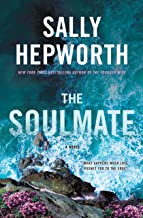
The Soulmate, by Sally Hepworth

If you follow my blog, you know I’m a fan of Sally Hepworth’s novels. She’s one author from whom I eagerly await her next release. Of course, then I’m sad because I know I’ll have to wait perhaps a year for her next book.

The Soulmate, by Sally Helpworth

I listened to The Soulmate on CD. Pippa, Gabe, and their two young daughters live on a cliff on the coast of Australia. Their backyard turns out to be a popular place for people to commit suicide, but Gabe has a gift for “talking people down.” But one day a woman is teetering at the edge of cliff and things go very, very wrong.

Who is the woman? Did she jump or did Gabe push her?

Over the course of the book, you learn how some of the characters know each other, unbeknownst to Pippa. Bipolar Disorder is a contributing factor in why one character behaves the way he does.

It is a story of loyalty, trust, turning a blind eye, what can happen when we aren’t honest with those we love, and how you can’t be responsible for a loved one’s actions – no matter how much you love them.

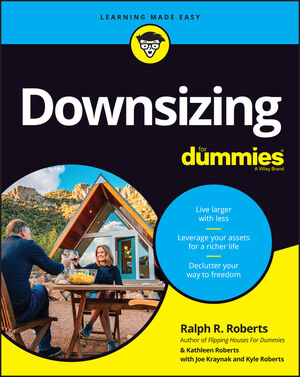
Downsizing for Dummies, by Ralph R. Roberts

Don’t laugh. If you’re fortunate to live long enough and accumulate enough stuff, this could happen to you. I read this book with my niece and nephew in mind. Someday they’re probably going to be left to pick up my pieces, and I want to make that task as painless and quick as possible.

Downsizing for Dummies, by Ralph R. Roberts

This book helps you evaluate your current situation and brainstorm about what kind of future you’d like to have if given that choice. Sometimes an illness or event can throw the best laid plans to the wind, but it’s best to have a plan in mind and make as many preparations as possible for the last phase of your life.

Readers of my blog will remember that I went through a decluttering phase last year. I had good intentions of continuing that process, but I gradually lost my enthusiasm. Hopefully, reading this book will be the impetus I need to get back on track getting rid of the things I no longer need – the things my niece and nephew shouldn’t have to deal with when I’m gone or incapacitated.

The book recommends that you take one room – or one closet – at a time and evaluate each item. Have separate boxes for “throw away,” “donate,” “sell,” and “give away.” Everything else (which theoretically will be very few things) fall into the “keep” category. They should be organized and put back in the closet or room.

I know… easier said than done. I was raised by parents who were young adults during The Great Depression, so I grew up with the mantra, “Don’t throw anything away because you never know when you might need it.” It was more an unspoken rather than a verbalized way of life, and it’s difficult to stop such old habits.

Downsizing for Dummies is really a common-sense book. It also contains some basic information about wills, trusts, and how long certain documents should be saved or how some of them can be scanned and stored in electronic form.

Secret Lives, by Mark de Castrique

Secret Lives, by Mark de Castrique

This is a spy thrilled by North Carolina author Mark de Castrique. In Secret Lives, Ethel Crestwater operates and boarding house that caters to government agents. One of her boarders, Jonathan, is murdered in her front yard.

Since 75-year-old Ethel has a background in spying, she jumps right in to solve the crime. Her sidekick is her double-cousin, Jesse, who attends college. His expertise is computers.

It turns out Bitcoins are involved and there’s a lot more going on than murder. No one is without suspicion. There are red herrings and it’s hard to tell the good guys from the bad guys.

Mr. de Castrique masterfully weaves the story and ties up all the loose ends.

Since my last blog post

In last Monday’s blog post, I asked for feedback about the possibility of my writing short stories about some of the characters in my planned historical novels. I appreciate all the feedback I received. It gave me some things to think about as I proceed with my plans. Thank you to each of you who responded on my blog and on Facebook.    

Until my next blog post

I hope you have lots of good books to read!

Spring weather is finally here in North Carolina! Enjoy the season, wherever you are.

Remember the people of Ukraine.

Janet