I write southern historical fiction, local history, and I've written a devotional book. The two novels I'm writing are set in Virginia and the Carolinas in the 1760s. My weekly blog started out to follow my journey as a writer and a reader, but in 2025 it has been greatly expanded to include current events and politics in the United States as I see our democracy under attack from within. The political science major in me cannot sit idly by and remain silent.
The year 2024 has been a difficult one for many people. It has been stressful for most of us, but I’m better off than a lot of people. Here’s a brief review of 2024 from my viewpoint in North Carolina.
Travel: My sister and I took advantage of the Covid-19 pandemic being over and vaccines continuing to be available – along with relatively good health – and we took trips to Great Smoky Mountains National Park and Cherokee in the western part of NC as well as a long-anticipated return trip to the Outer Banks of NC in the early part of the summer.
Welcome Sign at Great Smoky Mountains National Park
Black Bear, perhaps two years old, photographed in Great Smoky Mountains National Park
Elk, photographed in Great Smoky Mountains National Park
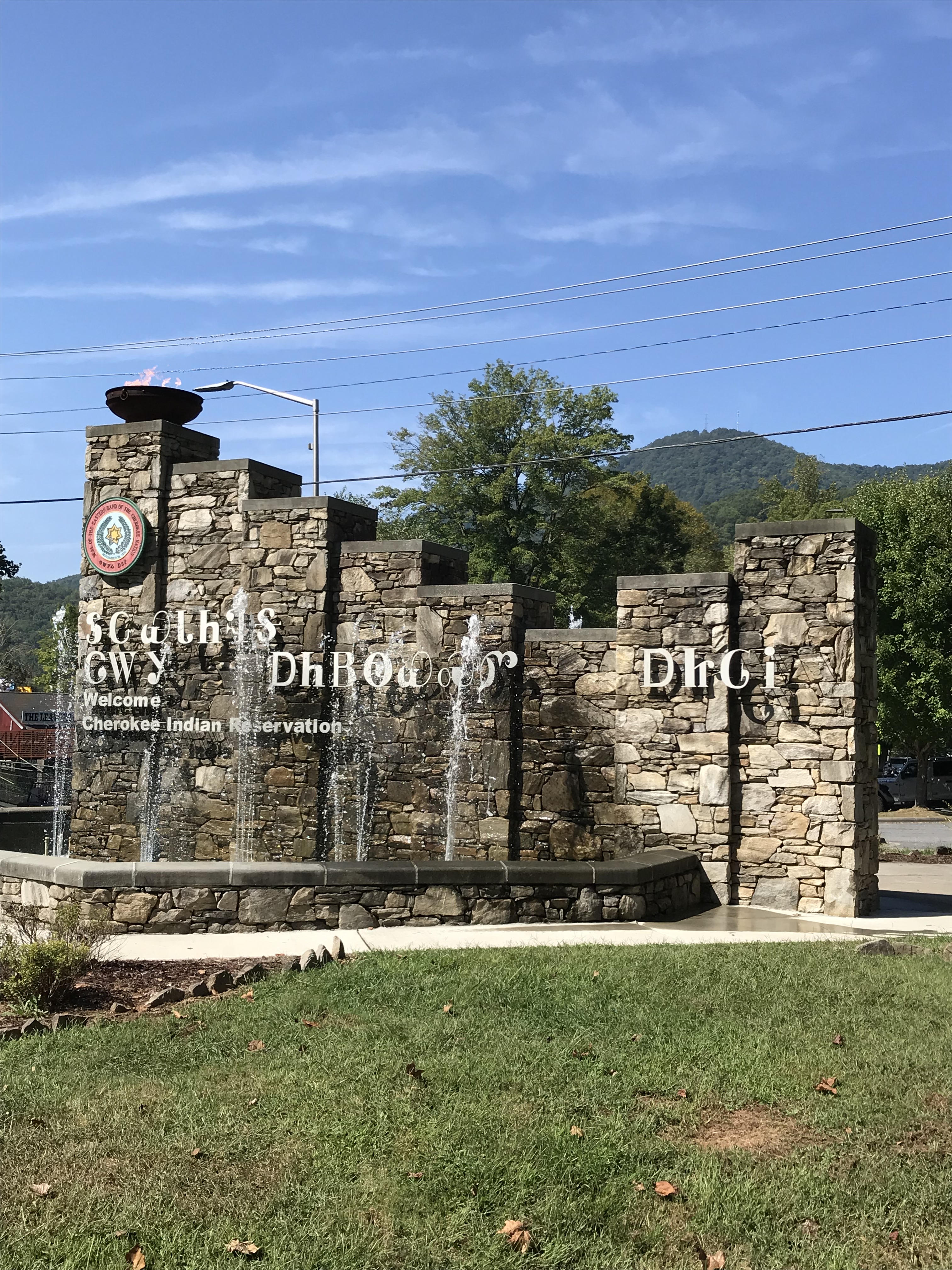
Welcome sign at Cherokee, NC
Welcome sign at Cape Hatteras National Seashore
We visited Boone and the campus of our alma mater, Appalachian State University, just two weeks before much of western NC was ravaged by Hurricane Helene. We continue to count our blessings that we did our traveling in the months and weeks before the hurricane.
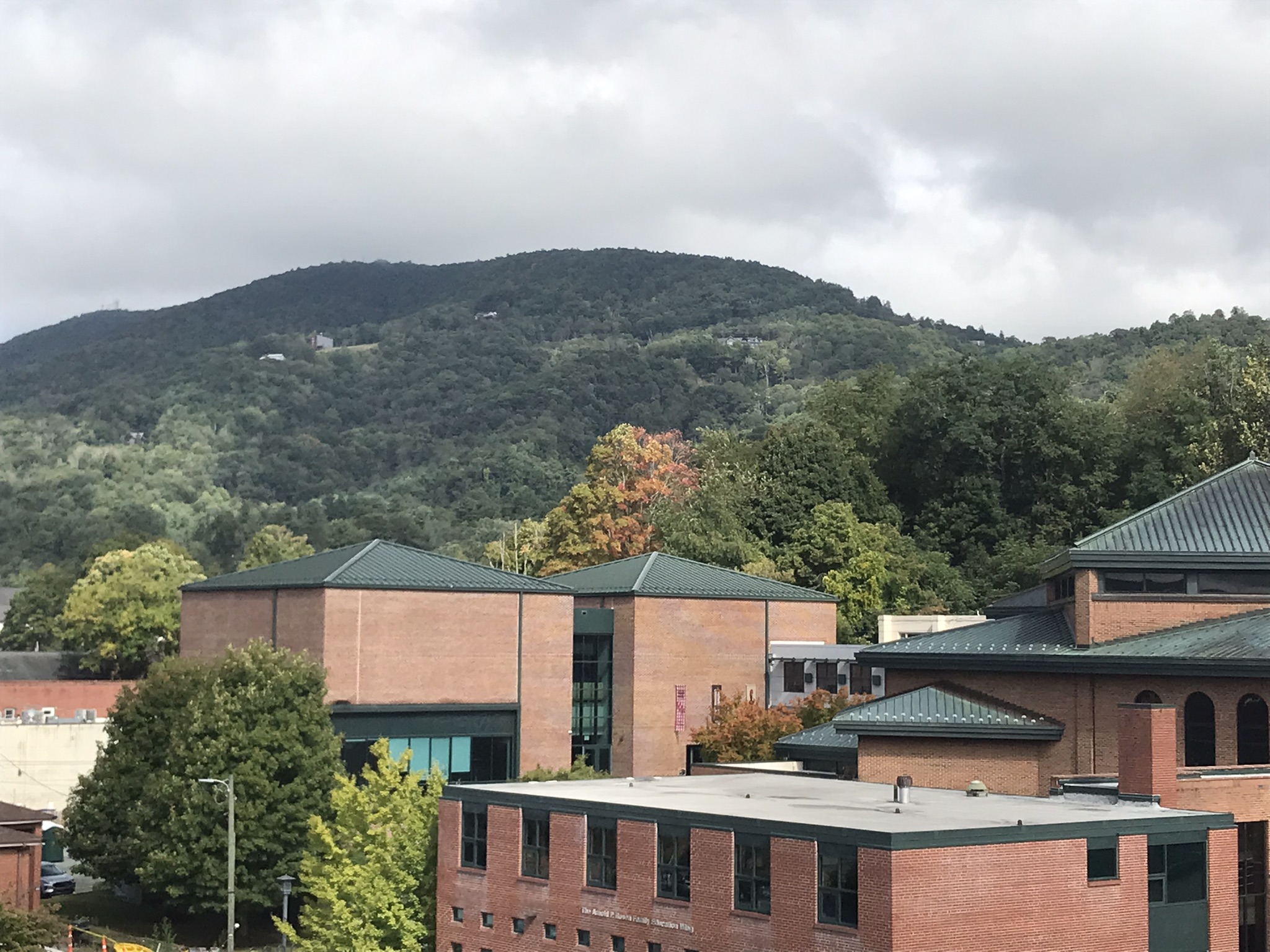
A view of Rich Mountain from the Appalachian State University campus
Hurricane Helene: September brought a “perfect storm” of days of heavy rain followed by Hurricane Helene to western North Carolina. It is the most destructive storm to hit the state in recorded history. The statistics and photographs are impossible to get one’s head around.
Of the 1,329 roads that were closed due to the flooding and landslides on September 25-26, 183 of them remain closed as of Friday, including Interstate 40 near the border with Tennessee.
I saw a video made on Wednesday of several miles of US-19 in Ramseytown, NC. You can’t even tell there was ever a road there, and it is unimaginable that the little Cane River running alongside it is capable of rising so high and doing so much damage.
Last week, 10,000 tulip bulbs were delivered to Swannanoa, NC – a gift from the head of a bulb company in The Netherlands. Next April, Swannanoa will look quite different than it has since September 25th!
A hint of what to expect in Swannanoa next spring!
Photo by Krystina Rogers on Unsplash
People from all over the US and world have pulled together to help western NC begin to recover from the September storm. I’ve tried to highlight examples in my weekly blog posts. I’m not equipped to show the full picture. I’ve merely tried to keep a light shining on the situation as it disappears from the news headlines.
US Presidential Election: We survived a US Presidential campaign that seemed to last for a decade. Now we’ll get to see if our democracy and our country’s long-standing ties with other countries will survive the results.
Award for my local history books: I received The North Carolina Society of Historians Journalism Award of Excellence for Harrisburg, Did You Know? Cabarrus History, Book 1 and Harrisburg, Did You Know? Cabarrus History, Book 2 in November.
My Writing: I’ve made a lot of progress over the last couple of months on my devotional book, I Need The Light: 26 Weekly Devotionals to Help You Through the Cold Months. Work continues on my historical novel with the working title The Heirloom. Stay tuned!
If you haven’t subscribed to my e-newsletter yet, please click on the “Subscribe” button on my website: https://www.janetmorrisonbooks.com. You’ll receive a free downloadable copy of my historical short story, “Slip Sliding Away” and my e-newsletters.
In November I changed my newsletter from a several-page every-other-month format to a short weekly email.
Social Media: Technology is still pulling me into the 21st century, but I’m kicking and screaming. My new endeavor this year was Instagram. I try to share quotes I like (many of them from books I’ve read), information about my website and blog, as well as publicity for my books. I’m trying not to not come across too salesy.
Until my next blog post
I hope you have a good book to read.
I hope you’ve had an enjoyable holiday season so far.
Remember the people of Ukraine and western North Carolina where it is mighty cold for the next several months.
In all the hustle and bustle of the holiday season, my prayer is that each of us will make room in our hearts for the Christ Child and other innocent refugee children just looking for a safe place to lay their heads.
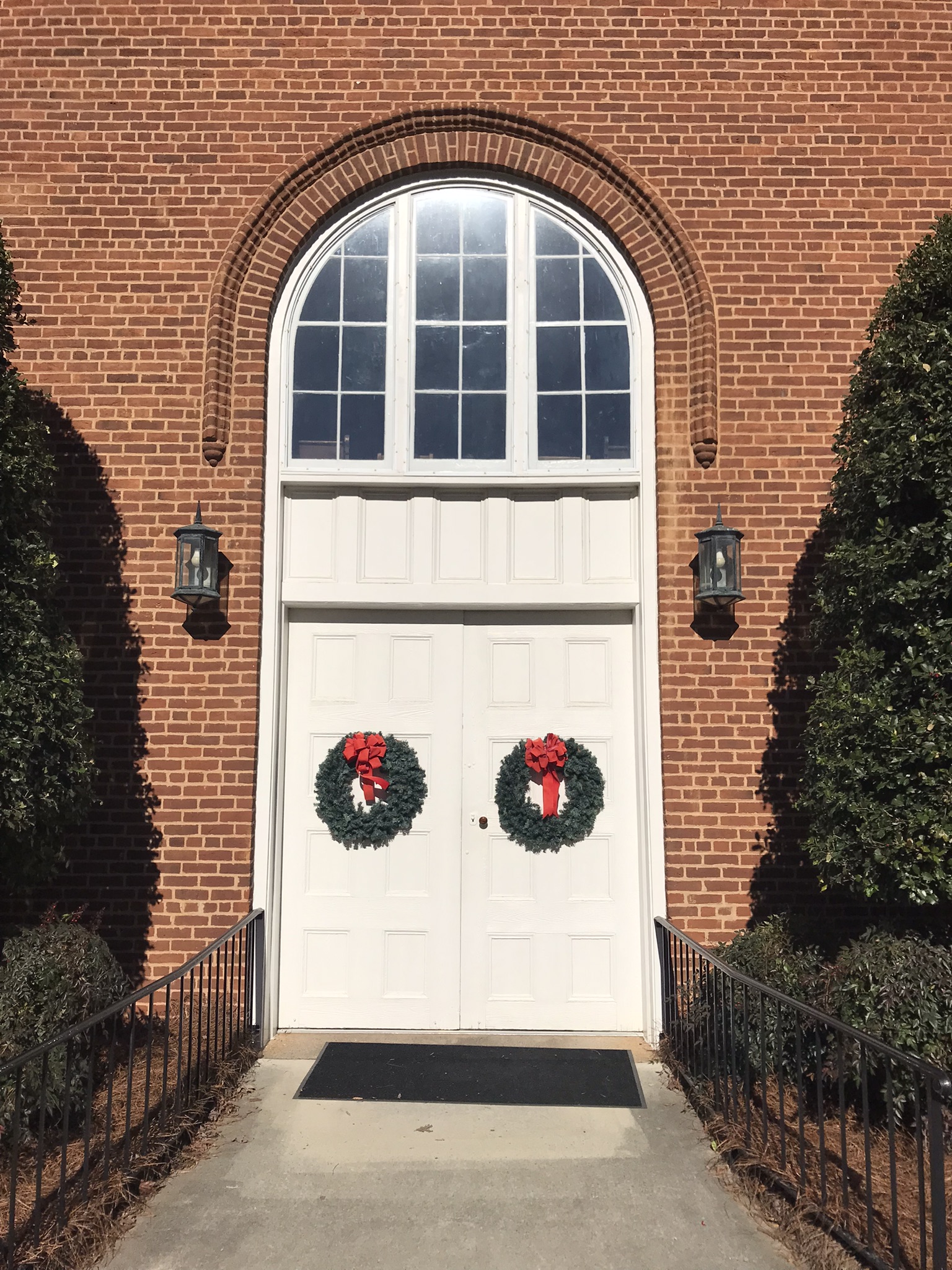
Entrance to the 163-year-old sanctuary of Rocky River Presbyterian Church in Cabarrus County, North Carolina, December 22, 2024
I wish you a Merry Christmas and a wonderful holiday season no matter what your religion is!
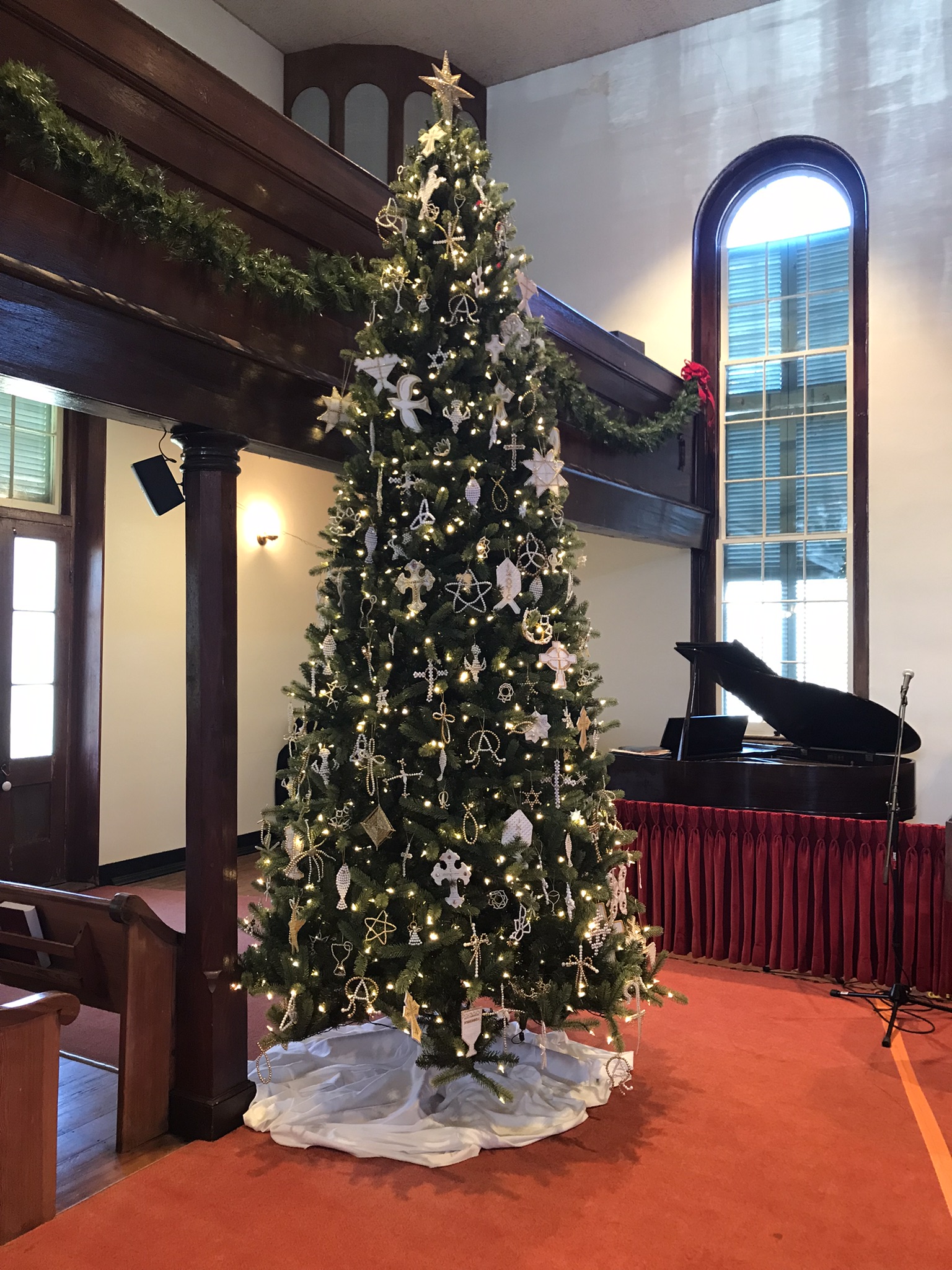
Chrismon Tree at Rocky River Presbyterian Church, December 22, 2024
A Hurricane Helene Update
Eighty-eight days after the storm hit western NC…
Roads: Interstate 40 is still closed near the TN line. Last week an additional part of the eastbound lanes collapsed due to a slide caused by wet conditions, freezing, and thawing. This is in an area prone to landslides ever since the interstate was built in 1966, but the washout in September was unprecedented.
Contractors have been working to open a seven-mile stretch of the westbound lanes of the interstate for two-way traffic and had hoped for that to happen the first week in January. Last week’s slide will delay that for a yet-to-be-determine amount of time.
The bridge on US-70 between Swannanoa and Asheville was completed last week, which was a quicker rebuild than had been expected.
As of Friday, of the 1,329 roads that were closed in September due to Hurricane Helene, 184 remain closed.
Blue Ridge Parkway: There is still no estimated date for all the parkway in NC to be reopened.
Housing: Statistics on housing are much harder to find than information from the NC Department of Transportation. From what I can gather – and this isn’t very reliable information – 5,000 families have opted to take FEMA funds to pay for hotel rooms and perhaps rental property. I cannot find a number for how many families and individuals opted for FEMA trailers, nor can I find records of how many people have been housed in tiny homes constructed by the Amish and other volunteers. There are lots of moving parts to this part of the recovery. Due to the terrain, many former homesites cannot safely accommodate a FEMA trailer.
Working in conjunction with BeLoved Asheville (https://www.belovedasheville.com/), Lowe’s Home Improvement, a dozen or so homebuilders (putting together some 400 volunteers), and NASCAR teams are working together to make tiny homes available for displaced residents. Lowe’s supplies the materials, the homebuilders supply the labor, and NASCAR teams furnish their haulers to deliver the tiny houses. The report I read indicated that 100 tiny houses have been/will soon be distributed in western NC by this particular effort.
Retail: The Walmart Supercenter in Boone partially reopened on Friday. The produce, meat, and bakery departments are still being closed. I mention that just as an example of how long recovery is taking even for huge businesses. Imagine how much longer it will take for many small businesses to recover… if they ever do.
Until my next blog post
I hope you have a good book to read and time to read it.
Don’t take friends and family for granted.
Remember the people of Ukraine and western North Carolina.
Janet
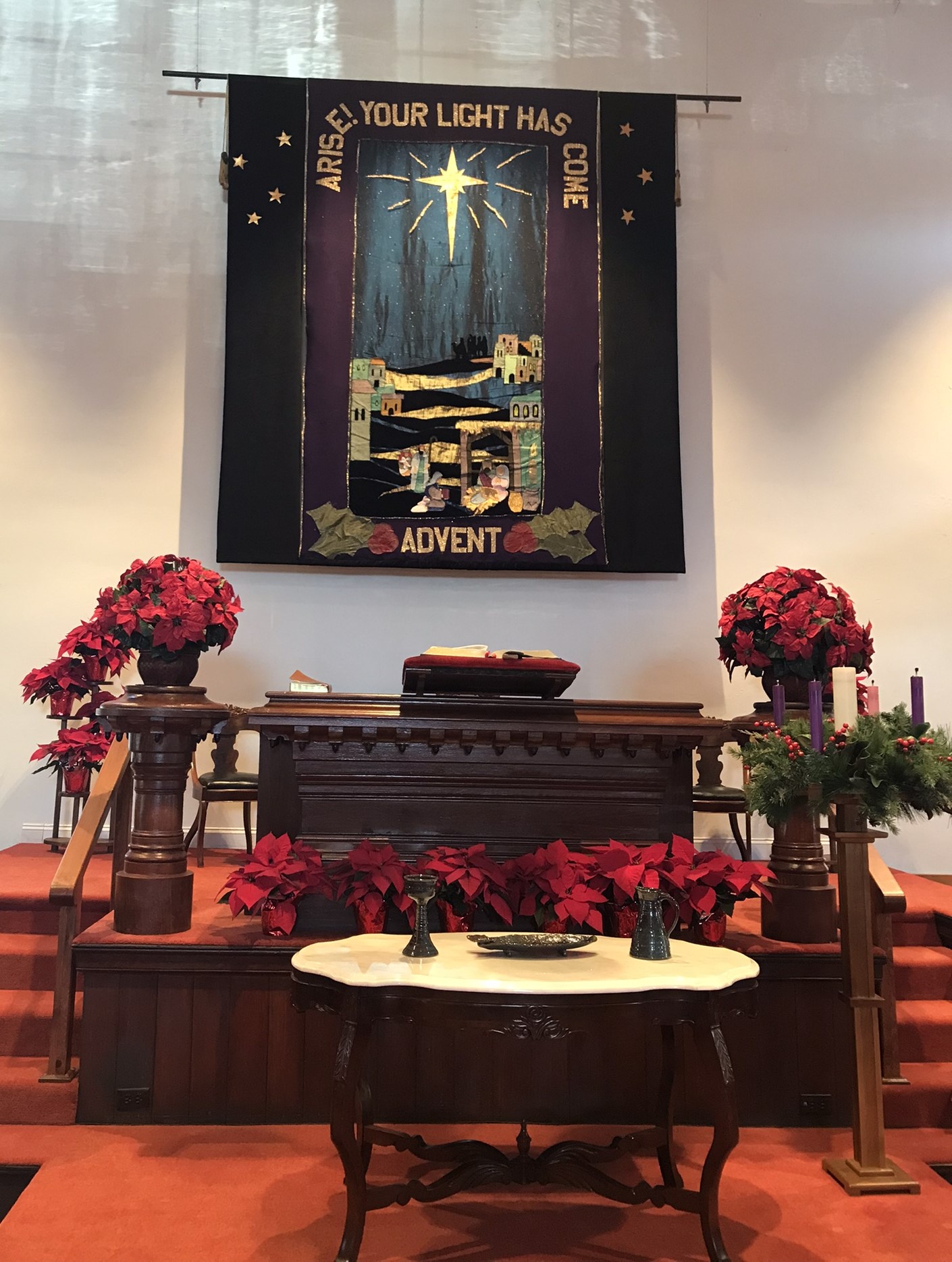
Communion Table, Advent Wreath, Pulpit, and Wall Hanging at Rocky River Presbyterian Church, December 22, 2024
Today is the 251st anniversary of the Boston Tea Party. If you’re like me, you will be surprised to read just how much tea ended up in Boston Harbor on December 16, 1773.
Photo by Tiffany Chan on Unsplash
A little background
Great Britain was in debt in the 1760s, so Parliament passed a succession of acts to inflict taxes on the American colonists to generate money for the British coffers.
Photo by Andrik Langfield on Unsplash
My ancestors in Scotland had been subjected to the Hearth Tax in the 1690s, so they were no strangers to the lengths Parliament would take to ring money out of its subjects. (In the 1690s in Scotland a person had to pay a tax “if smoke rose from their chimney.” Hence, it was called the Hearth Tax.) Forgive me if I’m not completely objective in writing about the Boston Tea Party.
The Stamp Act in 1765 began what became a domino effect until by the early 1770s the colonists were in an uproar over “taxation without representation.” Britain maintained that the taxes were fair exchange for the mother country’s fighting wars such as the French and Indian War to protect the colonists. (Actually, I think they were fighting to keep control over the thirteen colonies, but I digress.)
The “Boston Massacre” occurred on March 5, 1770 because residents did not appreciate the presence of British soldiers on their streets.
In other words, one thing led to another.
Fast forward to December 1773
On December 15, 1773, Dartmouth, a ship operated by the East India Company (a British company) was moored in Boston Harbor. It was known that the ship was laden with tea from China. Brits and British immigrants loved (and still love!) their tea. They were drinking more than one million pounds of tea every year, so the Tea Tax was a lucrative money-maker for Great Britain.
The colonists were no dummies. They started smuggling tea in from The Netherlands. In fact, did you know that John Hancock and Samuel Adams were in on it? (I don’t remember ever being taught that in school.)
Things were going well until the price of Dutch tea increased to the point that it was no cheaper than the tea being brought in by Great Britain with the tax included in the equation.
It was not just out of the goodness of their hearts or their dislike for taxation without representation that John Hancock and Samuel Adams objected to the tax on tea.
John Hancock had inherited his uncle’s shipping business. Samuel Adams was a provocateur. As a leader in the Sons of Liberty organization, he was more than a rabble-rouser; he was a serious political theorist. It was people like Adams who encouraged moderates to resist the British taxes. One source I read indicated that Adams might have helped plan the Boston Tea Party.
The Sons of Liberty protested the arrival of the East India Company’s ship, Dartmouth. It was soon joined by ships Beaver and Eleanor at Griffin’s Wharf in Boston Harbor. The tea they carried was from China, but the shipping costs and taxes would go to Great Britain.
A meeting was held at the Old South Meeting House where a vote decided that the ships would not be unloaded and the cargo would not be stored, sold, or used. When Governor Thomas Hutchison ordered the tea tariff to be paid and the tea to be unloaded, local residents refused to comply.
On the night of December 16, 1773, men disguised as Native Americans boarded the three ships and threw 342 chests of tea into the water. (My apologies to the Native Americans. It’s sad that more than once in the American Revolution the white guys chose to disguise themselves as Indians. It happened right here in Cabarrus County in 1771.)
Meanwhile, back in Boston… the men hacked into the chests to ensure the tea would mix with the water once thrown overboard. It took more than 100 men almost three hours to do the deed. More than 90,000 pounds of tea was dumped in Boston Harbor that night!
The moral of the story: Tariffs don’t always turn out the way politicians think they will. Just sayin’.
Hurricane Helene Update
Just to give you an idea about the recovery situation 81 days after the storm hit western NC…
Roads: Interstate 40 is still closed near the TN line. As of Friday, of the 1,329 roads that were closed in September due to Hurricane Helene, 189 remain closed. That’s down from 270 from a week ago!
Blue Ridge Parkway: There is still no estimated date for all the parkway in NC to be reopened.
Housing: Temporary housing from FEMA continues to arrive so displaced people can move out of hotels. The Amish continue to build tiny houses for the people who cannot yet move back into their homes. Individuals and companies have donated RVs and campers for the people needing housing. With more than 125,000 homes damaged or destroyed, the recovery will take years.
Lake Lure: The US Army Corps of Engineers, AshBritt Environmental, and local contractors continue to remove debris from the lake. A Colonel with the Army Corps of Engineers indicated on Saturday that their work will take more than six additional months. More than 17,143 cubic yards of debris have been removed from the lake, over 15,900 cubic yards of debris have been removed from the right-of-way, and more than 9,680 tons of sediment and silt have been removed from the town of Lake Lure. When all storm debris has been removed from the lake, sediment removal will begin.
Old Orchard Creek General Store: After being severely damaged by the flood, the Old Orchard Creek General Store reopened on Saturday! It is a landmark in the small town of Lansing in Ashe County, NC. Look for their website, and find them on Facebook and Instagram.
Help of all kinds has poured into western North Carolina from all over the United States. Thank you!
Until my next blog post
I hope you have a good book to read.
If you haven’t already done so, please visit https://www.janetmorrisonbooks.com and subscribe to my weekly email newsletter. You’ll receive a free downloadable copy of my historical short story, “Slip Sliding Away.”
Treasure your time with friends and family.
Remember the people of Ukraine and western North Carolina.
There are so many battles and skirmishes that were fought during the American Revolution that most of us have never heard of!
The blowing up of the King’s shipment of munitions in present-day Cabarrus County, North Carolina in May 1771 comes to mind. But that event has been blogged about here in Mays of the past and will, no doubt, show up on my blog in future May posts.
The little-known battle I blog about today is the Battle of Great Bridge which took place 249 years ago today in Virginia.
I’d never heard of it until I happened upon it in The American Book of Days, Fourth Edition, by Stephen G. Christianson. The day that reference book was weeded from the public library’s collection and sold for almost nothing was a profitable day for me. I have relied on this book for many of my #OnThisDay blog post ideas. I still question the wisdom of the library staff deciding this was not a useful book, but the public’s loss was my gain. But I digress.
Let’s move on now to the importance of the Battle of Great Bridge and some information about the free black man who displayed heroics in the battle.
Fearing a rebellion, Virginia’s Royal Governor, John Murray, the Earl of Dunmore, ordered the seizure of the gunpowder stored in Williamsburg. Word spread quickly and militias converged on the town. Lord Dunmore fled to Norfolk.
Great Bridge spanned the Elizabeth River, was the primary approach to Norfolk, and was surrounded by the Great Dismal Swamp. The swamp greatly limited accessibility to Norfolk.
Lord Dunmore ordered the construction of a stockade on the north side of the Great Bridge. Patriots grouped on the south side. Skirmishes ensued for days leading up to the battle.
Battle of Great Bridge
Although the Battle of Great Bridge lasted only a half hour on December 9, 1775, it was the first Patriot victory in the Revolutionary War.
It is said that this battle forced Lord Dunmore to leave Virginia along with his soldiers.
Four days after the battle, the Virginia Convention adopted a statement of independence.
Photo from a reenactment (obviously!) by British soldiers
Waves of British soldiers bore down on the Patriots. According to the website of the battle’s museum, https://gbbattlefield.org/learn-the-history, the patriots were joined by reinforcements and ordered to hold their fire until the British were within 50 yards.
Billy Flora
The website states, “It is historically significant to note that the last among the Patriots to retreat was Billy Flora, a free black man. Before retreating into the Patriot breastwork, he ran back to take up a plank of the bridge amid a shower of musket balls to slow the British advance.”
The significance of the Battle of Great Bridge
The museum’s website also states, “In winning the battle of Great Bridge on December 9, 1775, the Patriots effectively denied the British Norfolk, the finest seaport between New York and Charleston.”
How different the war might have unfolded if the British had captured the port at Norfolk!
Hurricane Helene Update on Western North Carolina
Just to give you an idea about the recovery situation 74 days after the storm hit western NC…
Roads: Interstate 40 is still closed near the TN line. As of Friday, of the 1,329 roads that were closed in September due to Hurricane Helene, 270 remain closed. In fact, that’s four more than indicated in last week’s NC Department of Transportation report. (Perhaps I miscalculated the total last week.)
Blue Ridge Parkway: There is still no estimated date for all the parkway in NC to be reopened.
A fresh fir Christmas Wreath from Avery County, NC: I was going to repeat the information I shared last week about a Christmas tree farm in western North Carolina, in case you missed my last blog post. I wanted you to have a chance to order a wreath or a tabletop Christmas tree from the Avery Family’s Trinity Tree Company in Newland, NC. HOWEVER… I have some great news! They have received so many orders they’ve had to shut down their online store! I’m so glad to get to end this week’s Hurricane Helene update on a good note!
The wreath my sister and I ordered was delivered nine days ago. It’s beautiful and smells great!
Here’s our wreath…
Our fir Christmas wreath from the Avery Family’s Trinity Tree Company, Newland, NC
(If you wish to still support the Avery Family as they are just two months into their years of recovering the family farm and business since they lost 60,000 trees to the hurricane, you can “order” a virtual tree or make a recovery gift on their website: https://www.averychristmastrees.com/. It takes about 15 years to grow a Christmas tree, so it will be long time before this family farm is back on its feet.
Since my last blog post
I continue to work on the devotional book and the historical novel I’m writing. I’m still adjusting to trying to post something on Instagram every day but Sundays. The world of social media is challenging and consumes more of my time than I’d like.
Photo by Alexander Shatov on Unsplash
Until my next blog post
Read something uplighting or enlightening every chance you get. Support your local public library and your local independent bookstore, if you’re fortunate enough to have either one.
This my 700th blog post! I started blogging in 2010 but didn’t begin to make much traction and attract views until 2017. Over the years I’ve played around with content and scheduling. Posting once-a-week works best for me.
The best part of blogging is the friends I’ve made from all around the world. It has also enabled me to connect with other writers, which has truly been a blessing.
Thank you for following my blog and encouraging me along my journey as a writer!
Since I did not finish reading any novels or nonfiction books of general interest in November, today I’m sharing some highlights from my April 25, 2022 blog post about the black architect who never got the credit he was due for designing the iconic buildings on the West Campus of Duke University.
Everyone reading my blog has probably heard of Duke University. It’s a world-renowned university located in Durham, North Carolina. You might not know of its meager beginnings, and you might not know that the architect responsible for its magnificent West Campus was a black man, Julian Francis Abele.
First, here’s a very brief early history of the university.
In 1838, a subscription-supported school called Brown’s Schoolhouse was established in the Randolph County community of Trinity. The school’s name changed a couple of times over the years but was settled as Trinity College in 1859.
In 1892, Trinity College moved to Durham, North Carolina. With heavy financial support from Washington Duke and Julian S. Carr – both Methodists – the name was changed to Duke on December 11, 1942. That was when James B. Duke, son of Washington Duke, established The Duke Endowment. It was a $40 million trust fund set up for its interest to be divided between various hospitals, orphanages, the Methodist Church, three colleges, and the university to be built around Trinity College. In today’s dollars, the $40 million endowment would be equivalent to more than $813 million. (That’s up from $630 million when I wrote the original blog post in the spring of 2022!)
But what did Julian Francis Abele have to do with this?
Julian Francis Abele was born April 30, 1881 in Philadelphia, Pennsylvania. In 1902, Abele was the first black graduate of the University of Pennsylvania School of Design. All four years of undergraduate school there, Abele worked in the mornings as a designer at the Louis Hickman Architectural Firm and took afternoon and evening classes at the university.
Horace Trumbauer, a nationally-recognized Philadelphia architect, hired Abele. He sent Abele to study abroad for three years. Upon returning from Europe in 1906, Abele joined Trumbauer’s firm and by 1909 had become the company’s chief designer. When Trumbauer died in 1938, Abele became head of the company.
The company designed numerous buildings in Philadelphia, a number of mansions in Newport and New York, and the Widener Memorial Library at Harvard University.
But my interest in writing about Julian Francis Abele today is his contributions to the gorgeous English Gothic and Georgian buildings at Duke University. Over the 30-year period of 1924 to 1954, he was the primary designer of the university’s West Campus.
If you’ve not had the pleasure of visiting Duke University…
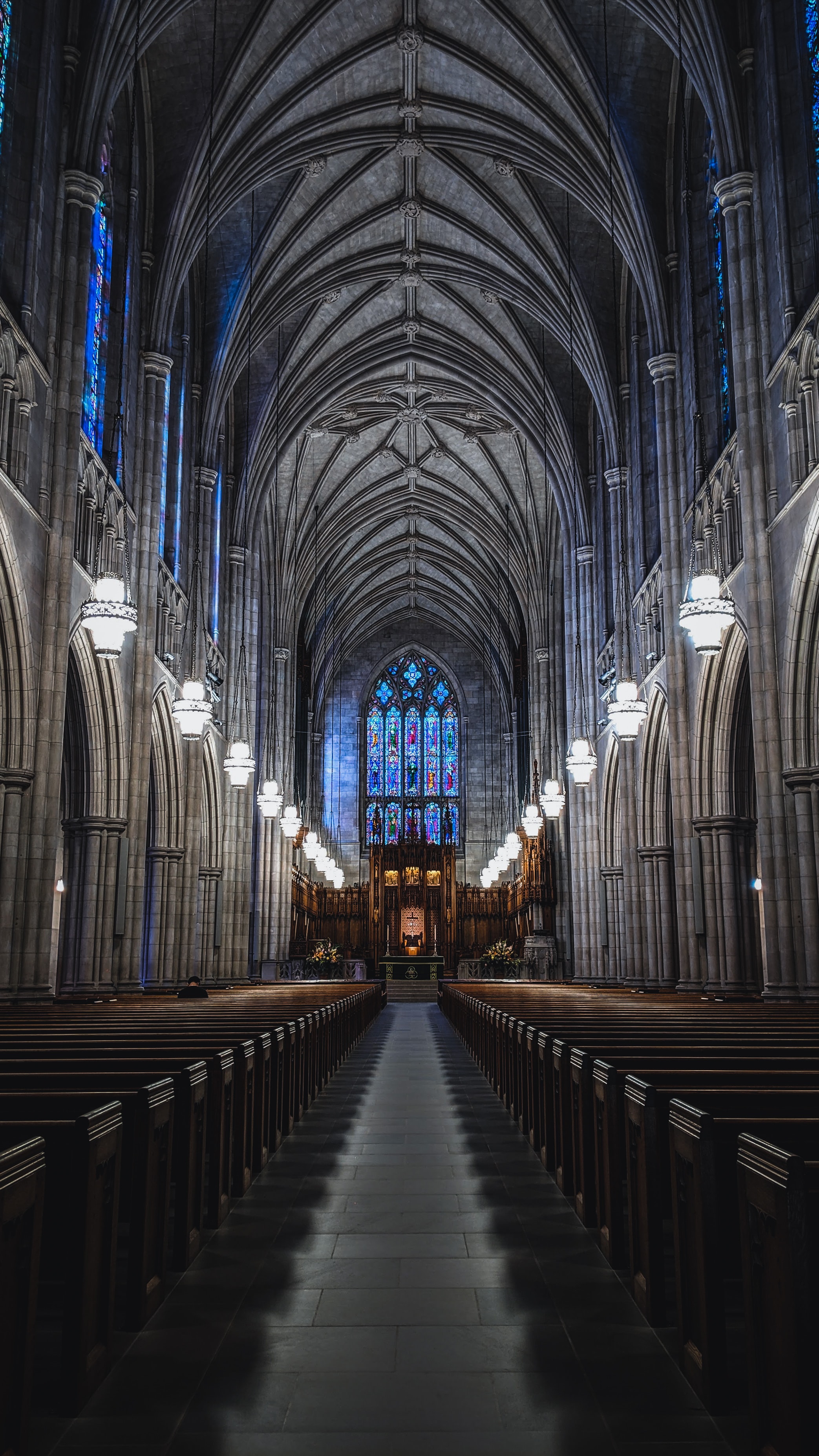
Photographs of the buildings on the Duke University campus don’t do justice to the beauty of the architecture. The centerpiece of the campus and grandest example of Julian Francis Abele’s work is Duke Chapel.
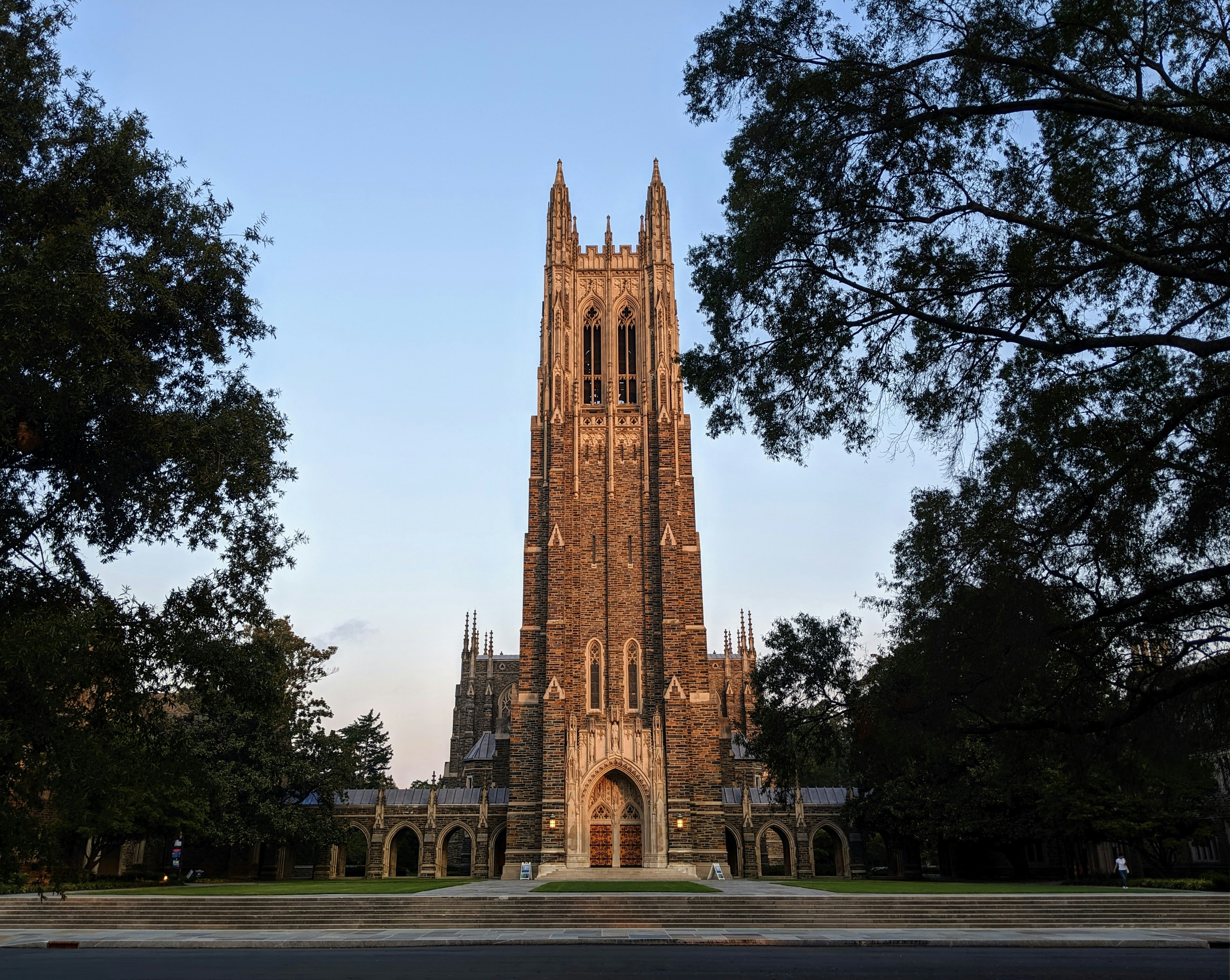
Duke Chapel, Duke University, Durham, North Carolina. Photo by Charles Givens on Unsplash
“Chapel” in this case is an understatement, for the chapel is more of a cathedral than a chapel in the common sense of the word. The chapel interior is 63 feet wide, 291 feet long, and the nave proper is 73 feet tall.
Standing on the highest point on the planned campus in 1925, James B. Duke said that it was on that place that the chapel should be built. It would be the highest point and the center of the campus. The cornerstone was laid in 1930, and it is said that students enjoyed watching the stone cutters and the progression of construction of the chapel over the next two years. Little did those white students know that the chief designer of the edifice was a black man.
Inside Duke Chapel. Photo credit: Chuck Givens on unsplash.com
In fact, it wasn’t until Julian Francis Abele’s granddaughter, Susan Cook, brought to public light in 1986 that a person of color had designed the magnificent focal point of the Duke campus. While students protested apartheid in South Africa, Susan Cook wrote a letter to the student newspaper to make it known that her grandfather had designed their beloved West Campus.
Portraits of Abele now hang in the main administration building on campus and in the Gothic Reading Room in Rubenstein Library alongside those of former Duke presidents and board chairs. In 2016, and the main quadrangle on campus, which stretches from the Clocktower Quad to the Davison Quad – and to the Chapel Quad – was named the Abele Quad.
As quoted from https://today.duke.edu/2016/03/abele, upon the naming of the Abele Quad in 2016, Duke University President Richard H. Brodhead said, “Julian Abele brought the idea of Duke University to life. It is an astonishing face that, in the deepest days of racial segregation, a black architect designed the beauty of this campus. Now, everyone who lives, works, studies and visits the heart of Duke’s campus will be reminded of Abele’s role in its creation.”
Shocking to our 21st century minds, is the fact that the racial prejudices of the early- and mid-20th century deterred Mr. Abele from visiting the Duke University campus to see his designs come to fruition and caused him not to be admitted to the American Institute of Architects until 1942.
Mr. Abele died in Philadelphia on April 23, 1950.
Visit Duke University in person or virtually
If you’re ever zipping along on Interstates 40 or 85 in Durham, take several hours to leave the hustle and bustle behind and visit the Duke University campus. Duke Chapel is open every day from 10:00 a.m. until 6:00 p.m. Stroll around the campus and be sure to visit the Sarah P. Duke Gardens. (Visit https://gardens.duke.edu/ for information about parking and what’s in bloom.)
December 2, 2024 Hurricane Helene Update on Western North Carolina
Just to give you an idea about the recovery situation 67 days after the storm hit western NC…
Housing: With more than 125,000 homes damaged or destroyed by the storm, recovery for those individuals and families will take years.
Roads: Interstate 40 is still closed near the TN line. Hopes are high that two lanes (one lane in each direction for non-commercial traffic) will be opened around the first of January through the Pigeon River Gorge. As of Friday, of the 1,329 roads that were closed in September due to Hurricane Helene, 266 remain closed.
Blue Ridge Parkway: There is still no estimated date for all the parkway in NC to be reopened. Some 140 miles of the parkway in NC remain closed due to damage sustained from Hurricane Helene. As usual during the winter months, additional sections of the road were closed this weekend and will continue to be closed from time to time due to snow and ice.
A fresh fir Christmas Wreath from Avery County, NC: Do you remember in my November 18, 2024 blog post (Some Things Aren’t Funny, & Hurricane Helene Update) in which I wrote about how one Christmas tree farm in western NC that lost 60,000 trees in the storm was making wreaths out of the tops of their trees whose lower branches were destroyed by Hurricane Helene?
The wreath my sister and I ordered was delivered on Saturday, and it is beautiful! I wish my blog had a way for me to convey the wonderful scent to you! Here’s their website, in case you want to place an order for a wreath or a virtual tree: https://www.averychristmastrees.com/
Here’s our wreath…
Our fir Christmas wreath from the Avery Family’s Trinity Tree Company, Newland, NC
Until my next blog post
I hope you have a good book to read and enough quiet time to read it.
Treasure your time with friends and family.
Remember the people of Ukraine; western NC; and Valencia, Spain.













 Janet's Writing Blog