
In yesterday’s blog post, I wrote about the passage of the 15th Amendment to the U.S. Constitution in 1870. It, on paper at least, gave black men in our country the right to vote.
Of course, voting was just one of the ways that people of color were discriminated against in the United States. Today’s post looks at a very important and impactful way in which one man set out to try to level the playing field when it came to education.
Julius Rosenwald was the president of Sears, Roebuck, and Company. Mr. Rosenwald, a white man of the Jewish faith, read Booker T. Washington’s autobiography, Up From Slavery, in 1910. The book opened Rosenwald’s eyes to the inequities between the education of white children and black children.
Rosenwald got involved financially and served on the Tuskegee Institute Board of Directors. In 1912, Rosenwald gave $25,000 to Tuskegee to help it build private schools for black children across the nation. Rosenwald gave his permission for $2,500 of that gift to be used to build five public schools for black children near Tuskegee, Alabama.
The idea and project grew perhaps beyond the two men’s imaginations or expectations. Over the next 30 years, 4,977 Rosenwald Schools, 217 homes for teachers, and 163 shop buildings were built in 15 states.
There were 787 Rosenwald schools built in North Carolina, which was more than in any other state. Eleven of them were here in Cabarrus County. Three of them were in the Harrisburg section of the county, and it is those schools – Bellefonte, Morehead, and Oak Grove – that I focused on in my three-part newspaper series in 2006, which I later published in Harrisburg, Did You Know? Cabarrus History, Book 1. I do not have a photograph of any of those schools.
I drove by the Bellefonte Rosenwald School many times, but I did not know it was a Rosenwald School. In fact, I had not heard of Rosenwald Schools until about 20 years ago. I did not know Bellefonte was a Rosenwald School until after it had been burned down for practice by the fire department. That whole story is a sad situation. People making those decisions had no idea the value of the building. I think the architect’s sketch and floor diagram below are the plans used in the construction of the Bellefonte Rosenwald School.
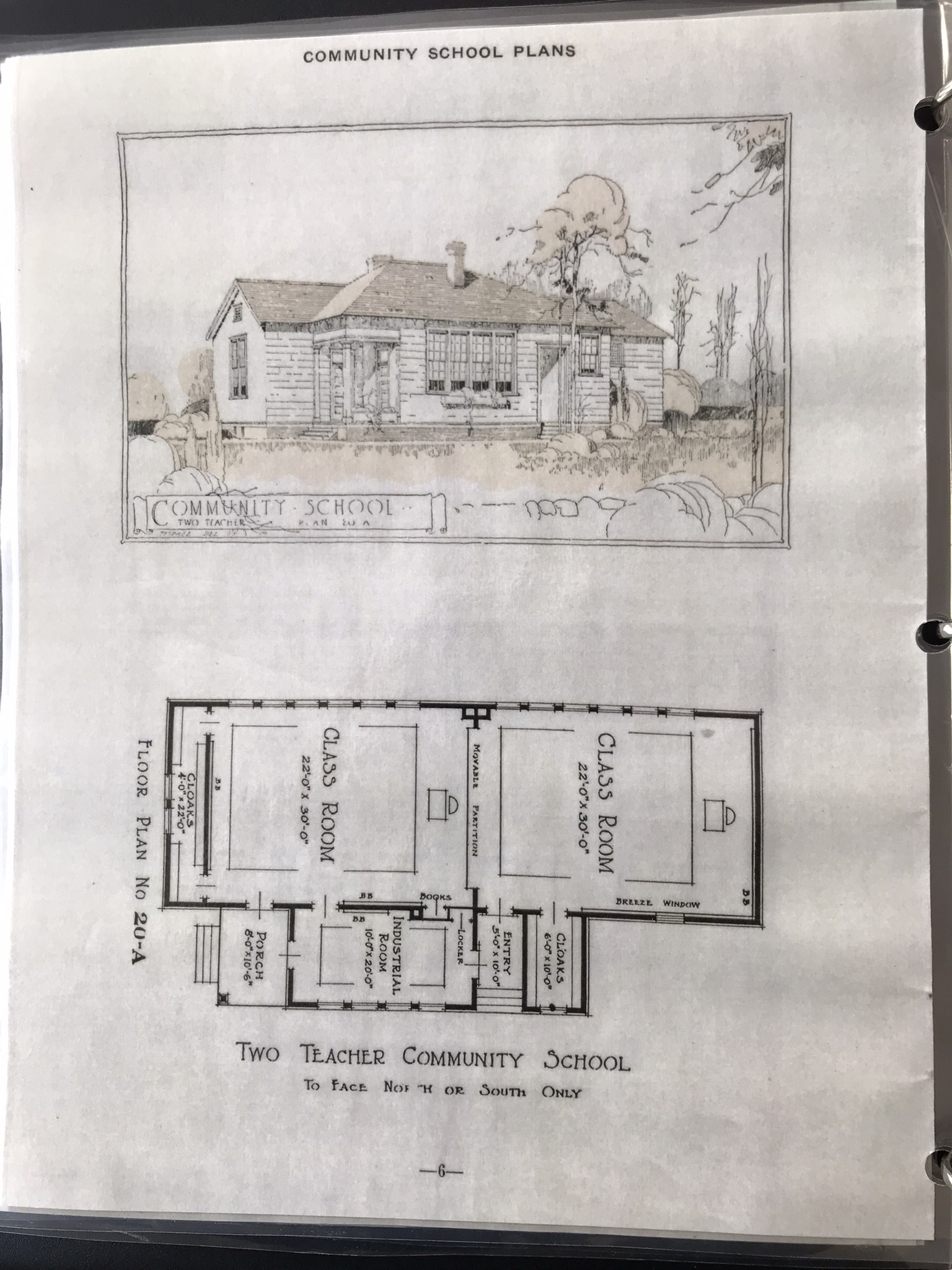
The Bellefonte Rosenwald School had two classrooms, whereas some of the schools had just one classroom. In 2023, the abandoned one-classroom Siloam (or Salome) Rosenwald School was moved from its original location in eastern Mecklenburg County, NC to the campus of the Charlotte Museum of History. It was restored and I took the photographs below in September 2024. (The museum’s website identifies it as Siloam School, but it was originally located on Salome School Road.)
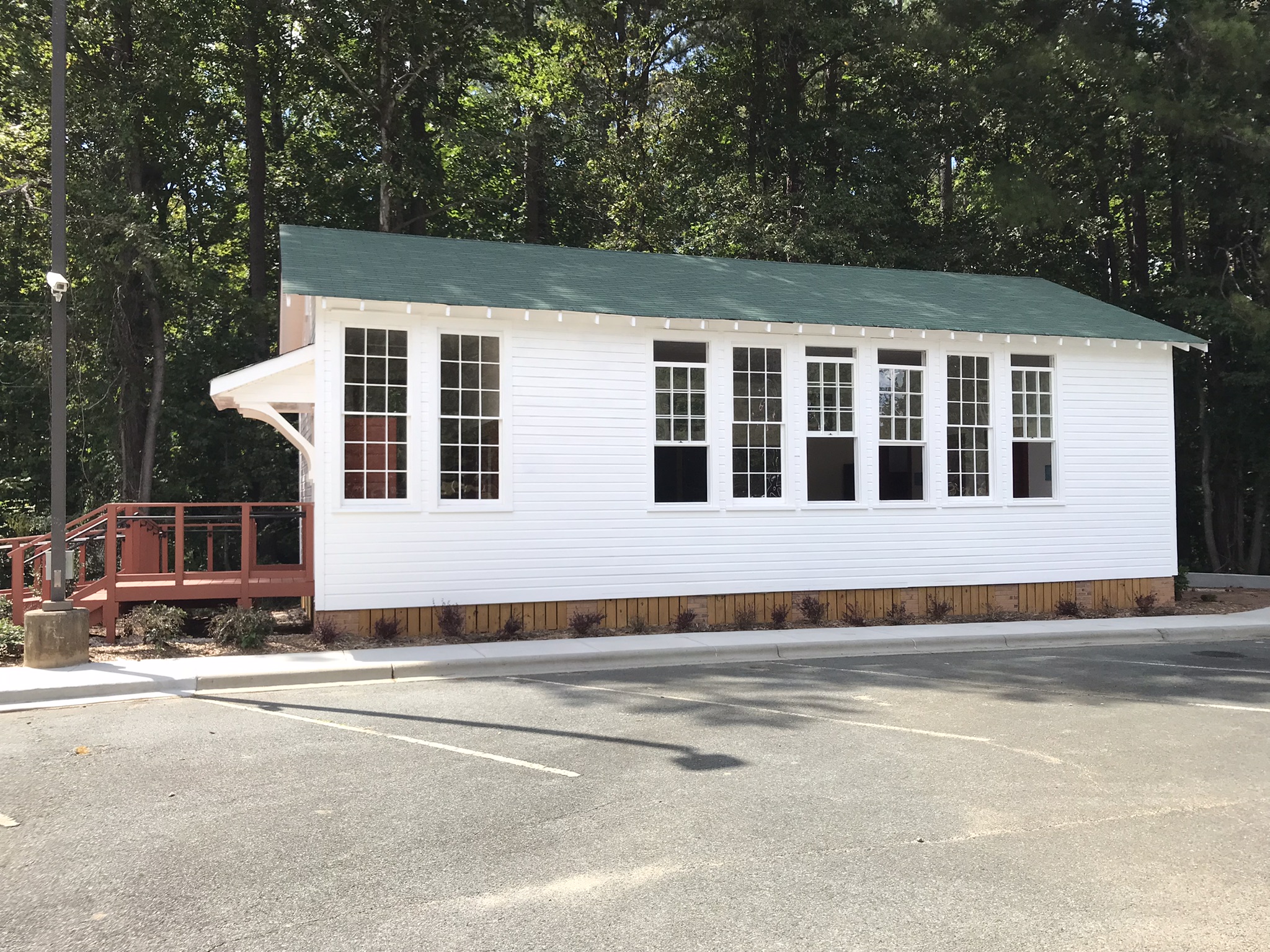
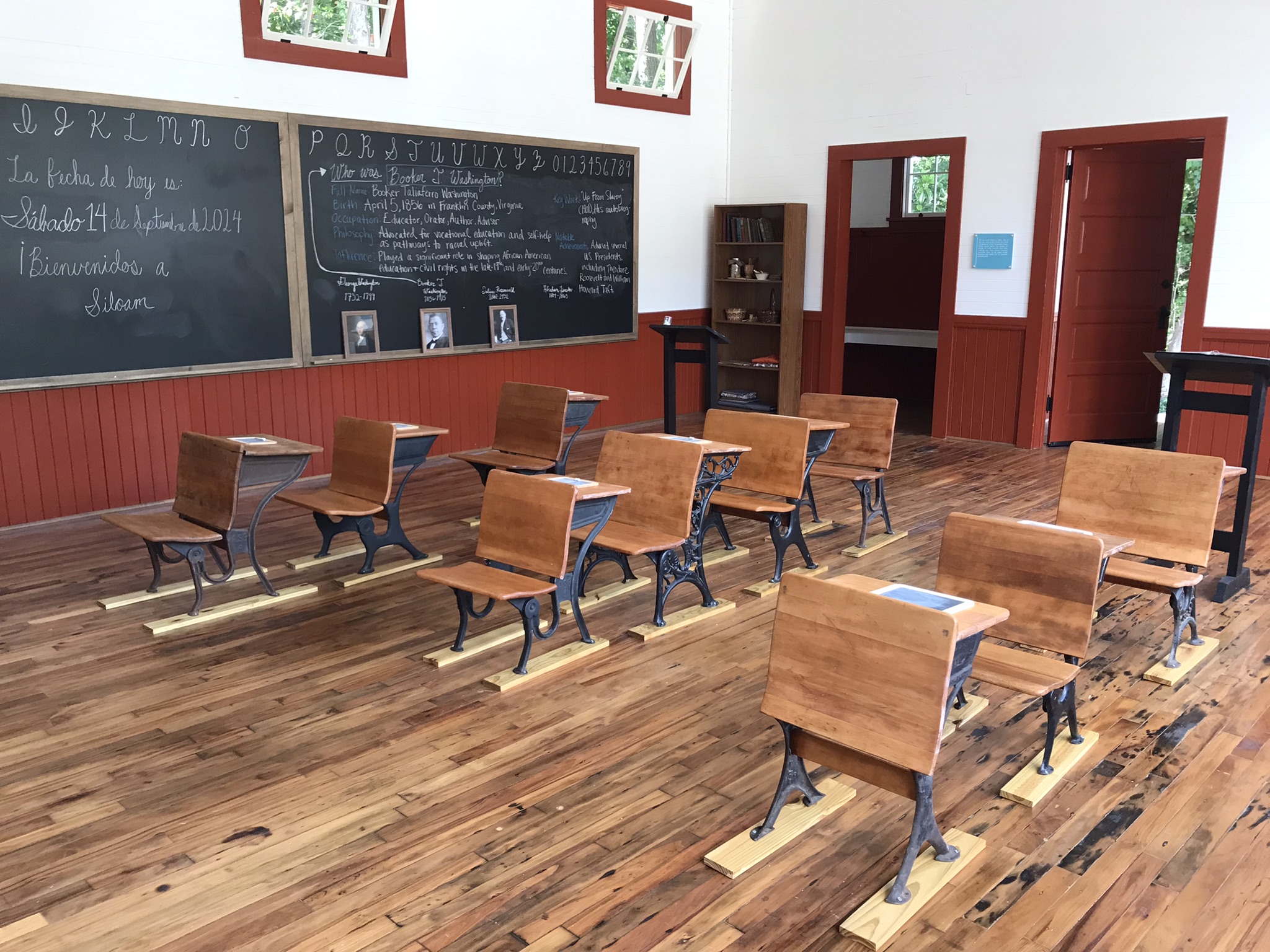
In 2006, I had the privilege of interviewing two women and one man, all in their 90s at the time, who had attended the three Rosenwald Schools in Harrisburg, NC. It was wonderful – and heartbreaking – to hear some of their memories of those days of racial segregation in our schools. I’m glad I talked to them when I did, for they are gone now. Much of their oral history would be gone with them, if I had not taken copious notes and published their memories.
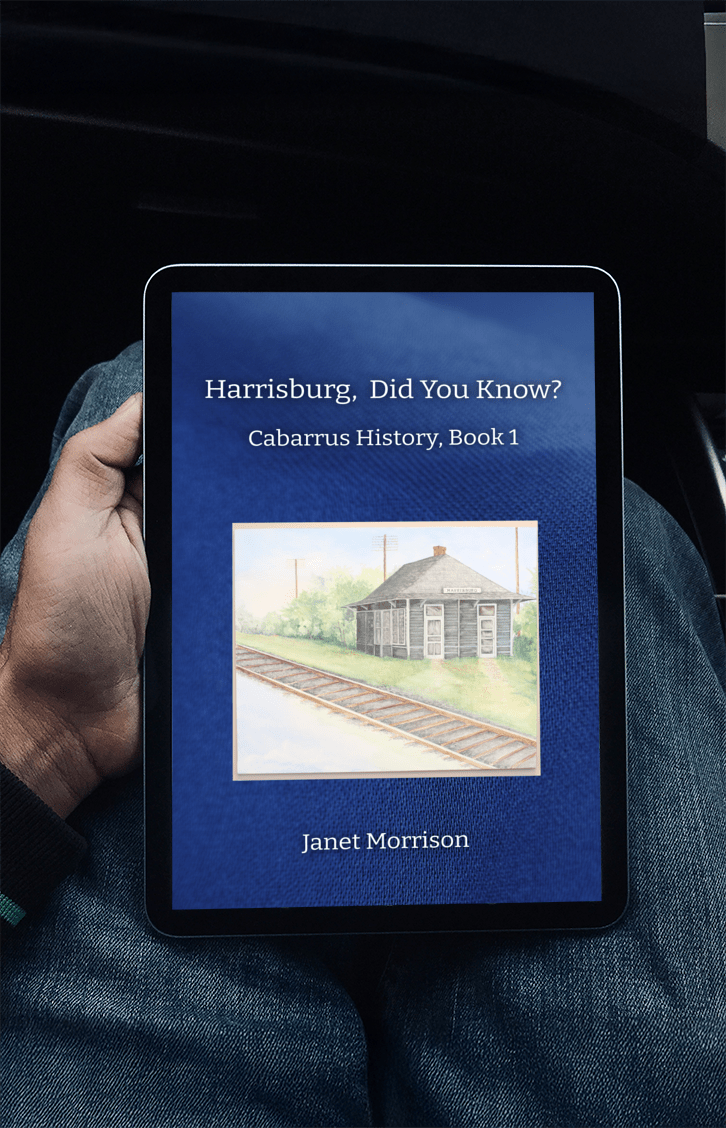
If you would like to read more about Rosenwald Schools in general, including how they were funded and supported by their communities, along with some details about the three located in the Harrisburg section of Cabarrus County, North Carolina, look for Harrisburg, Did You Know? Cabarrus History, Book 1 on Amazon in paperback and e-book and at Second Look Books in Harrisburg in paperback.
Janet
All history is local, but no history is just local.

 Janet's Writing Blog