Blowing up the King’s gunpowder in 1771

My blog today is about my favorite local history story. It was 254 years ago last Friday – May 2, 1771, that a group of teenage boys and young men from Rocky River Presbyterian Church in present-day Cabarrus County, North Carolina, decided to blow up a shipment of King George III’s gunpowder.

The Regulator Movement in Rowan and Alamance counties to our north was reaching a boiling point in April 1771. Word reached the settlement of Scottish immigrants at Rocky River that a shipment of gunpowder was coming from Charleston, South Carolina to Charlotte and on to Salisbury, North Carolina. That gunpowder was destined to be used to put down the Regulators.

The Regulator Movement never took hold in present-day Cabarrus County (which was part of Mecklenburg County), but there was a strong and growing anti-Royal government sentiment here. Destruction of that gunpowder shipment would be detrimental to the government.

Nine teenage boys and young men from Rocky River decided to take matters into their own hands. They found out the munitions wagon train of three wagons would camp for the night of May 2 at the muster grounds near or along the Great Wagon Road in what is now Concord, North Carolina.

They blackened their faces to disguise themselves and sworn an oath on a Bible that they would never tell what they were about to do and would never reveal the names of the participants. They set out for the militia muster grounds some nine miles away and surprised the teamsters and guards. They had no desire to harm those men, so they led them and their animals to a safe distance away.

The gunpowder and blankets were gathered into a pile, and a train of gunpowder was laid. James White, Jr., fired his pistol into the trail of gunpowder. The resulting explosion was heard some nine miles away in the vicinity of Rocky River Presbyterian Church. Some people thought it was thunder, while others thought it was an earthquake.

Photo by Vernon Raineil Cenzon on Unsplash

The nine perpetrators made their way home, cleaned themselves up, and said nothing about their overnight adventure.

The Battle of Alamance took place on May 6, 1771, and the Regulator Movement was effectively put down by the royal government. Governor William Tryon proclaimed on May 17, 1771, that he would pardon the rebels if they would turn themselves in by May 21.

That deadline was extended until May 30. Some of the perpetrators headed for Hillsborough to turn themselves in, but they were warned along the way that it was a trick. Governor Tryon planned to have them hanged. Some returned to the cane brakes of Reedy Creek, not far from the church, while others fled to Virginia and Georgia.

In a trail which began on May 30, 1771, twelve Regulators were found guilty of high treason. Six were hanged.

Perhaps news of that trial reached Rocky River or maybe half-brothers James Ashmore and Joshua Hadley simply feared that one of the other gunpowder perpetrators would disclose their identities. For whatever reason, Ashmore and Hadley went independently to tell Colonel Moses Alexander what they knew. Imagine their surprise when they ran into each other on Colonel Alexander’s front porch!

James Ashmore pushed his way into the Colonel’s house and told him he was ready to talk. He was taken to Charlotte on June 22, 1771, where he gave a sworn deposition before Thomas Polk, a Mecklenburg County Justice of the Peace.

Ashmore revealed the names of the other eight young men who had conspired and carried out the attack. The search for the men began in earnest. Several of them narrowly escaped capture, and their stories and more details of the progression of the case through the colony’s royal government at included in my book, Harrisburg, Did You Know? Cabarrus History, Book 1, which is available from Amazon in e-book and paperback and at Second Look Books in Harrisburg, NC.

William Tryon became Governor of New York and Josiah Martin was appointed Governor of North Carolina. Twenty-nine “inhabitants of Rocky River & Coddle Creek Settlement” (including my great-great-great-great-grandfather) signed a petition asking Governor Martin to pardon the perpetrators, but the request was denied.

Photo by Kate Remmer on Unsplash

For nearly a year, the women of Rocky River Presbyterian Church provided food and clothing for the perpetrators who hid in the cane brakes along Reedy Creek. Rev. Hezekiah James Balch prayed openly for the young men’s safety from the church’s pulpit. Their identities remained a well-kept secret.

The young men were fugitives until independence was declared. After the Mecklenburg Declaration of Independence was issued on May 20, 1775, followed by the Mecklenburg Resolves eleven days later, all county citizens were considered to be in rebellion.


Back to the present

Yesterday was “May Meeting” at my home church, Rocky River Presbyterian in Cabarrus County, North Carolina. It wasn’t a “meeting.” It was more like an annual homecoming. It dates back to 1757. It is held on the first Sunday in May. The 11:00 a.m. worship service includes The Lord’s Supper/communion.

After the worship service, we all gather around a long wire “table” for Dinner in the Grove except on the occasional year now like yesterday when it rains or has poured rain all night and we have to eat inside the fellowship hall. Everyone brings their best and favorite homemade dishes and it is the biggest feast you can imagine.

Imaging May Meeting 1771

The more I study and contemplate the blowing up of the King’s munitions wagon train by members of Rocky River Presbyterian Church on May 2, 1771, the more I try to travel back in my mind’s eye to May Meeting 1771.

Everyone for miles around knew that the King’s gunpowder had been blown up on Thursday night. Everyone probably had a pretty good idea who among them had participated in the act of civil disobedience.

I imagine the hushed conversations under the large oak, scalybark hickory, red cedar, and poplar trees in the former church grove a couple of miles from our present sanctuary where the congregation met in a log church.

Local people were, no doubt, coming to grips with which side they were going to attach their allegiances in the inevitable coming war. Most, as it turned out, would choose to be patriots. After all, they had left Scotland and some had left Ireland in search of a better life, and they were pretty sure the King of England was not offering them a better life. He was placing more and more taxes and tariffs on them.

On Sunday, May 5, 1771, I imagine individual men carefully approached one or two men they knew they could trust and then they made quiet comments about the gunpowder explosion while they roughed the hair on the heads of their little boys who were too young to know the gravity of the situation.

I imagine many of the individual women did the same with their trusted friends while they small daughters clung to their long skirts.

And I’m sure the teenagers huddled in their usual groups and talked about what had happened on Thursday night. There was, no doubt, speculation about which of their friends had taken part in the attack.

I can imagine them quietly calling the roll, so to speak, and speculating about why Robert Davis was not at church that day. Or why were Ben Cochran and Bob Caruthers in serious conversation away from the crowd? Had they taken part? How much trouble were they really in? What was going to happen to the boys and young men who were guilty? How would they be punished?


Hurricane Helene Update

As of Friday, 56 roads in North Carolina were still closed due to Hurricane Helene. That count included four US highways, four state highways, and 48 state roads.

This from https://governor.nc.gov/news/press-releases/2025/05/01/governor-stein-announces-55-million-grants-have-been-distributed-nearly-3000-western-north-carolina: “Governor Josh Stein announced that the Dogwood Health Trust, the Duke Endowment, and the State of North Carolina have distributed $55 million to 2,812 small businesses through the Western North Carolina Small Business Initiative. These grants are supporting western North Carolina businesses impacted by Hurricane Helene and bolstering regional economic recovery. More than 7,300 businesses applied.

“’These grants will go a long way in helping western North Carolina’s beloved small business owners keep their doors open after Helene,’” said Governor Josh Stein. “’But the volume of unfunded applications makes it crystal clear – more help is desperately needed. I’m ready to work with the legislature to deliver support for small businesses that power our mountain economy.’”

After being closed for seven months, Morse Park at Lake Lure, NC partially reopened last weekend. The 720-acre lake itself remains drained as storm debris, silt and sediment are still being removed.

The village of Chimney Rock, NC was nearly wiped off the face of the earth by Hurricane Helene. It had been hoped that the town and Chimney Rock State Park would open by Memorial Day, but that’s not going to be possible. The security checkpoint will continue until further notice. You must have a pass to enter and travel through the village on the temporary road. NCDOT is working on a temporary bridge in the village to help restore access to the state park. The park has not announced a reopening date. The notice I read last Wednesday night from the Village indicated that construction of a new US-64/US-74A/NC-9 has begun.


Until my next blog post

Get a good book to read.

Don’t forget the good people of Ukraine, Myanmar, and western North Carolina.

Janet

That’s a lot of Tea! Plus, a Hurricane Helene Update

Today is the 251st anniversary of the Boston Tea Party. If you’re like me, you will be surprised to read just how much tea ended up in Boston Harbor on December 16, 1773.

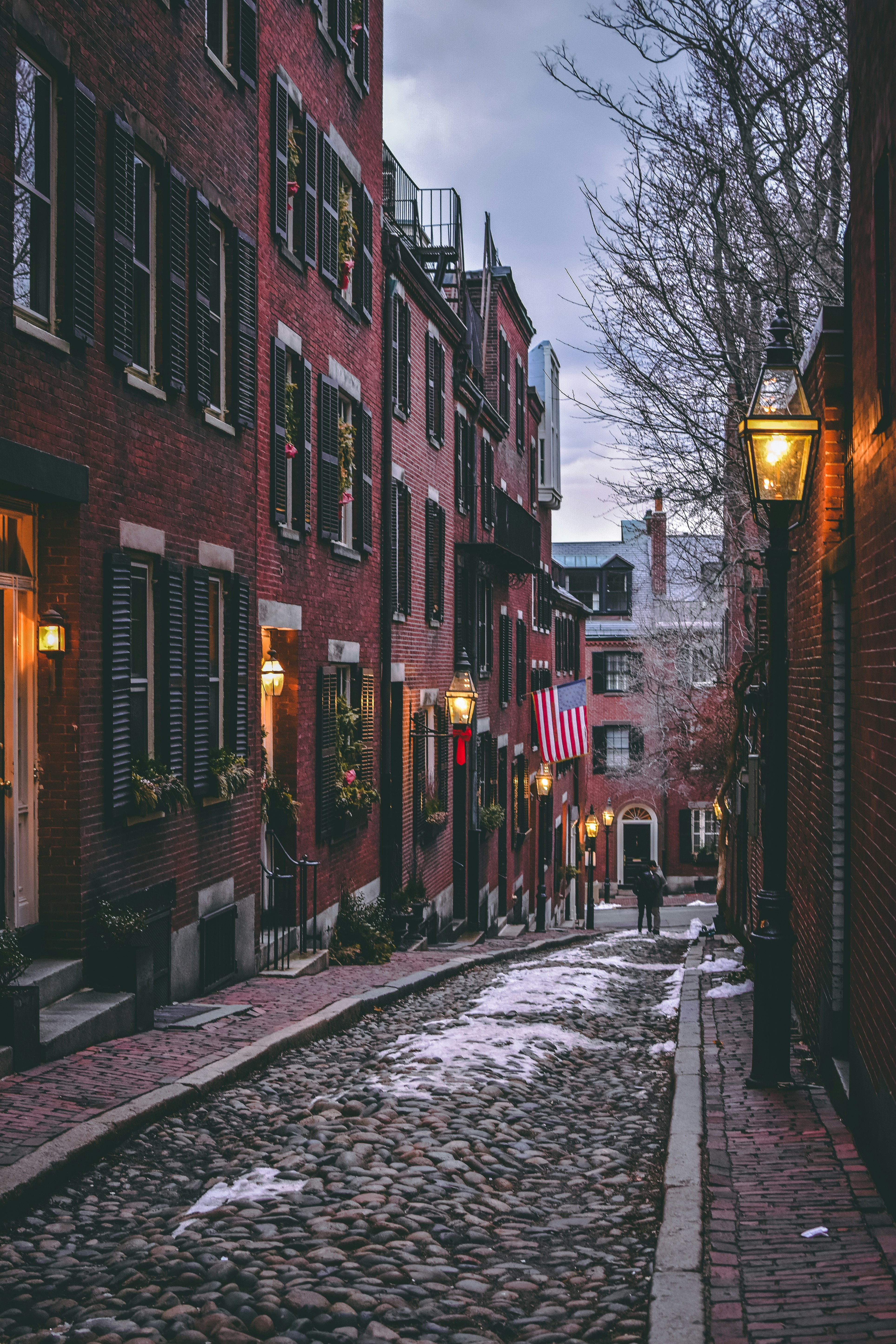
Photo of Acorn Street in Boston with brick sidewalks and cobblestone narrow street
Photo by Tiffany Chan on Unsplash

A little background

Great Britain was in debt in the 1760s, so Parliament passed a succession of acts to inflict taxes on the American colonists to generate money for the British coffers.

Photo of the tower on a castle with the Union Jack flying on a flagpole at the top.
Photo by Andrik Langfield on Unsplash

My ancestors in Scotland had been subjected to the Hearth Tax in the 1690s, so they were no strangers to the lengths Parliament would take to ring money out of its subjects. (In the 1690s in Scotland a person had to pay a tax “if smoke rose from their chimney.” Hence, it was called the Hearth Tax.) Forgive me if I’m not completely objective in writing about the Boston Tea Party.

The Stamp Act in 1765 began what became a domino effect until by the early 1770s the colonists were in an uproar over “taxation without representation.” Britain maintained that the taxes were fair exchange for the mother country’s fighting wars such as the French and Indian War to protect the colonists. (Actually, I think they were fighting to keep control over the thirteen colonies, but I digress.)

The “Boston Massacre” occurred on March 5, 1770 because residents did not appreciate the presence of British soldiers on their streets.

In other words, one thing led to another.

Fast forward to December 1773

On December 15, 1773, Dartmouth, a ship operated by the East India Company (a British company) was moored in Boston Harbor. It was known that the ship was laden with tea from China. Brits and British immigrants loved (and still love!) their tea. They were drinking more than one million pounds of tea every year, so the Tea Tax was a lucrative money-maker for Great Britain.

The colonists were no dummies. They started smuggling tea in from The Netherlands. In fact, did you know that John Hancock and Samuel Adams were in on it? (I don’t remember ever being taught that in school.)

Things were going well until the price of Dutch tea increased to the point that it was no cheaper than the tea being brought in by Great Britain with the tax included in the equation.

It was not just out of the goodness of their hearts or their dislike for taxation without representation that John Hancock and Samuel Adams objected to the tax on tea.

John Hancock had inherited his uncle’s shipping business. Samuel Adams was a provocateur. As a leader in the Sons of Liberty organization, he was more than a rabble-rouser; he was a serious political theorist. It was people like Adams who encouraged moderates to resist the British taxes. One source I read indicated that Adams might have helped plan the Boston Tea Party.

The Sons of Liberty protested the arrival of the East India Company’s ship, Dartmouth. It was soon joined by ships Beaver and Eleanor at Griffin’s Wharf in Boston Harbor. The tea they carried was from China, but the shipping costs and taxes would go to Great Britain.

A meeting was held at the Old South Meeting House where a vote decided that the ships would not be unloaded and the cargo would not be stored, sold, or used. When Governor Thomas Hutchison ordered the tea tariff to be paid and the tea to be unloaded, local residents refused to comply.

On the night of December 16, 1773, men disguised as Native Americans boarded the three ships and threw 342 chests of tea into the water. (My apologies to the Native Americans. It’s sad that more than once in the American Revolution the white guys chose to disguise themselves as Indians. It happened right here in Cabarrus County in 1771.)

Meanwhile, back in Boston… the men hacked into the chests to ensure the tea would mix with the water once thrown overboard. It took more than 100 men almost three hours to do the deed. More than 90,000 pounds of tea was dumped in Boston Harbor that night!

The moral of the story: Tariffs don’t always turn out the way politicians think they will. Just sayin’.

Hurricane Helene Update

Just to give you an idea about the recovery situation 81 days after the storm hit western NC…

Roads: Interstate 40 is still closed near the TN line. As of Friday, of the 1,329 roads that were closed in September due to Hurricane Helene, 189 remain closed. That’s down from 270 from a week ago!

Blue Ridge Parkway: There is still no estimated date for all the parkway in NC to be reopened.

Housing: Temporary housing from FEMA continues to arrive so displaced people can move out of hotels. The Amish continue to build tiny houses for the people who cannot yet move back into their homes. Individuals and companies have donated RVs and campers for the people needing housing. With more than 125,000 homes damaged or destroyed, the recovery will take years.

Books: The 21st Century Packhorse Librarian continues to collect new books to give away to the children and adults who lost all their books in the storm. Look for her on Facebook and Instagram. Here’s a good article about the founder, Kristin Turner: https://981theriver.com/news/228822-woman-brings-free-books-to-appalachia-as-modern-packhorse-librarian/.

Lake Lure: The US Army Corps of Engineers, AshBritt Environmental, and local contractors continue to remove debris from the lake. A Colonel with the Army Corps of Engineers indicated on Saturday that their work will take more than six additional months. More than 17,143 cubic yards of debris have been removed from the lake, over 15,900 cubic yards of debris have been removed from the right-of-way, and more than 9,680 tons of sediment and silt have been removed from the town of Lake Lure. When all storm debris has been removed from the lake, sediment removal will begin.

Old Orchard Creek General Store: After being severely damaged by the flood, the Old Orchard Creek General Store reopened on Saturday! It is a landmark in the small town of Lansing in Ashe County, NC. Look for their website, and find them on Facebook and Instagram.

Help of all kinds has poured into western North Carolina from all over the United States. Thank you!

Until my next blog post

I hope you have a good book to read.

If you haven’t already done so, please visit https://www.janetmorrisonbooks.com and subscribe to my weekly email newsletter. You’ll receive a free downloadable copy of my historical short story, “Slip Sliding Away.”

Treasure your time with friends and family.

Remember the people of Ukraine and western North Carolina.

Janet

#OnThisDay: Battle of Great Bridge, Virginia, 1775 & a Hurricane Helene Update

There are so many battles and skirmishes that were fought during the American Revolution that most of us have never heard of!

The blowing up of the King’s shipment of munitions in present-day Cabarrus County, North Carolina in May 1771 comes to mind. But that event has been blogged about here in Mays of the past and will, no doubt, show up on my blog in future May posts.

The little-known battle I blog about today is the Battle of Great Bridge which took place 249 years ago today in Virginia.

I’d never heard of it until I happened upon it in The American Book of Days, Fourth Edition, by Stephen G. Christianson. The day that reference book was weeded from the public library’s collection and sold for almost nothing was a profitable day for me. I have relied on this book for many of my #OnThisDay blog post ideas. I still question the wisdom of the library staff deciding this was not a useful book, but the public’s loss was my gain. But I digress.

Let’s move on now to the importance of the Battle of Great Bridge and some information about the free black man who displayed heroics in the battle.

A little backstory

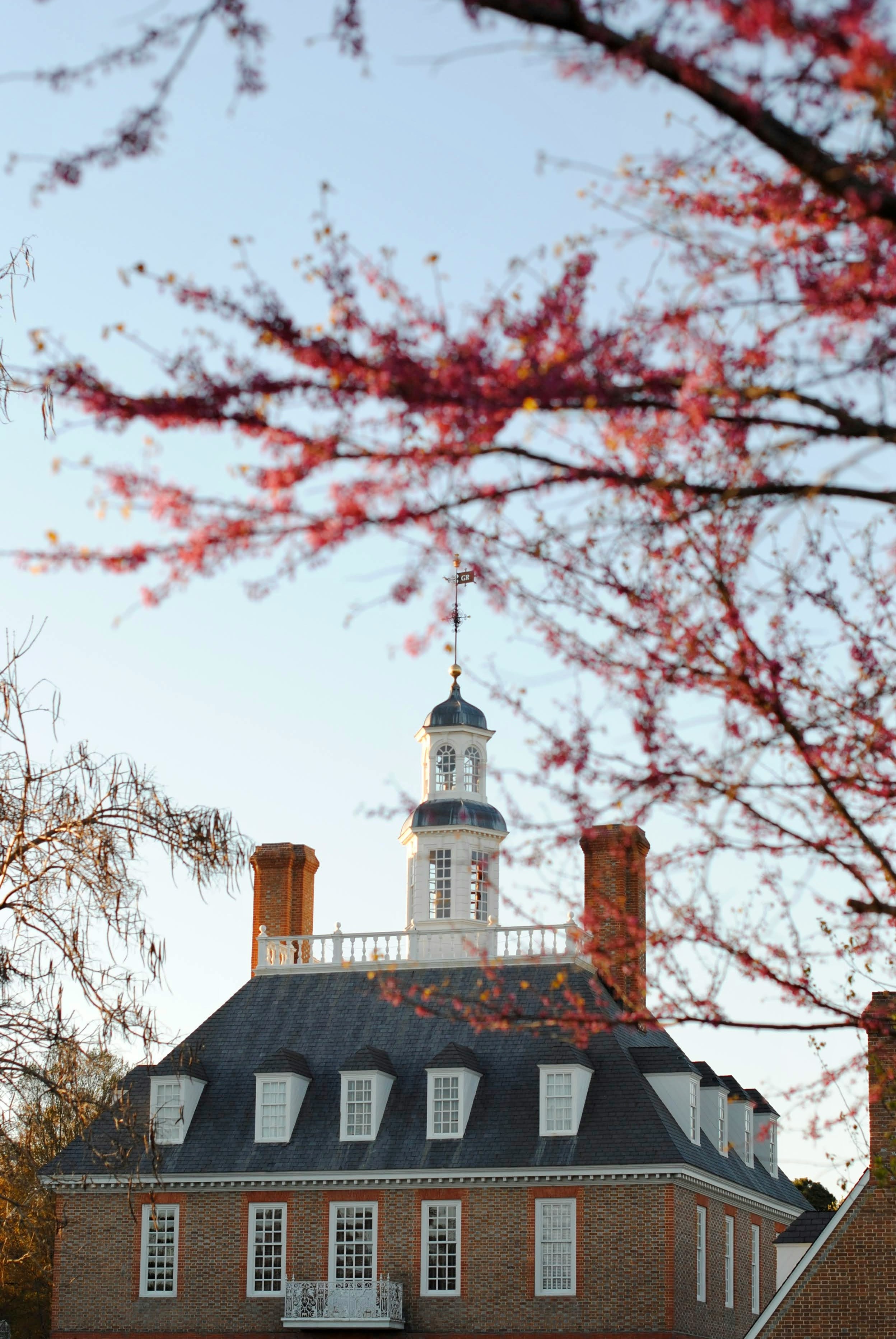
Governor’s Palace in Williamsburg, Virginia Photo by Michaela Murphy on Unsplash

Fearing a rebellion, Virginia’s Royal Governor, John Murray, the Earl of Dunmore, ordered the seizure of the gunpowder stored in Williamsburg. Word spread quickly and militias converged on the town. Lord Dunmore fled to Norfolk.

Great Bridge spanned the Elizabeth River, was the primary approach to Norfolk, and was surrounded by the Great Dismal Swamp. The swamp greatly limited accessibility to Norfolk.

Lord Dunmore ordered the construction of a stockade on the north side of the Great Bridge. Patriots grouped on the south side. Skirmishes ensued for days leading up to the battle.

Battle of Great Bridge

Although the Battle of Great Bridge lasted only a half hour on December 9, 1775, it was the first Patriot victory in the Revolutionary War.

It is said that this battle forced Lord Dunmore to leave Virginia along with his soldiers.

Four days after the battle, the Virginia Convention adopted a statement of independence.

Photo from a reenactment (obviously!) by British soldiers

Waves of British soldiers bore down on the Patriots. According to the website of the battle’s museum, https://gbbattlefield.org/learn-the-history, the patriots were joined by reinforcements and ordered to hold their fire until the British were within 50 yards.

Billy Flora

The website states, “It is historically significant to note that the last among the Patriots to retreat was Billy Flora, a free black man. Before retreating into the Patriot breastwork, he ran back to take up a plank of the bridge amid a shower of musket balls to slow the British advance.”

The significance of the Battle of Great Bridge

The museum’s website also states, “In winning the battle of Great Bridge on December 9, 1775, the Patriots effectively denied the British Norfolk, the finest seaport between New York and Charleston.”

How different the war might have unfolded if the British had captured the port at Norfolk!

Hurricane Helene Update on Western North Carolina

Just to give you an idea about the recovery situation 74 days after the storm hit western NC…

Roads: Interstate 40 is still closed near the TN line. As of Friday, of the 1,329 roads that were closed in September due to Hurricane Helene, 270 remain closed. In fact, that’s four more than indicated in last week’s NC Department of Transportation report. (Perhaps I miscalculated the total last week.)

Blue Ridge Parkway: There is still no estimated date for all the parkway in NC to be reopened.

A fresh fir Christmas Wreath from Avery County, NC: I was going to repeat the information I shared last week about a Christmas tree farm in western North Carolina, in case you missed my last blog post. I wanted you to have a chance to order a wreath or a tabletop Christmas tree from the Avery Family’s Trinity Tree Company in Newland, NC. HOWEVER… I have some great news! They have received so many orders they’ve had to shut down their online store! I’m so glad to get to end this week’s Hurricane Helene update on a good note!

The wreath my sister and I ordered was delivered nine days ago. It’s beautiful and smells great!

Here’s our wreath…

Our fir Christmas wreath from the Avery Family’s Trinity Tree Company, Newland, NC

(If you wish to still support the Avery Family as they are just two months into their years of recovering the family farm and business since they lost 60,000 trees to the hurricane, you can “order” a virtual tree or make a recovery gift on their website: https://www.averychristmastrees.com/. It takes about 15 years to grow a Christmas tree, so it will be long time before this family farm is back on its feet.

Since my last blog post

I continue to work on the devotional book and the historical novel I’m writing. I’m still adjusting to trying to post something on Instagram every day but Sundays. The world of social media is challenging and consumes more of my time than I’d like.

Photo of the Instagram icon image
Photo by Alexander Shatov on Unsplash

Until my next blog post

Read something uplighting or enlightening every chance you get. Support your local public library and your local independent bookstore, if you’re fortunate enough to have either one.

Subscribe to my weekly email newsletter at https://www.janetmorrisonbooks.com.

Treasure your time with friends and family.

Remember the people of Ukraine and western North Carolina.

Janet

#OnThisDay: Evacuation of British Troops from NYC, 1783 & a Hurricane Helene Update

When did the American Revolutionary War end?

It depends on how technical you want to be, and – like they say about real estate – it might depend on location, location, location.

Photo from Bookbrush.com

Dates of various events

In school we learned that it ended on October 19, 1781 with British General Charles Cornwallis’ surrender to General George Washington at Yorktown, Virginia.

We also learned that the Treaty of Paris was signed on September 3, 1783.

The treaty had to be ratified by Congress. That happened on January 14, 1784.

I never gave any thought about the logistics of the departure of British troops. Do you know when that happened?

November 25, 1783. It was 241 years ago today that the last British troops left the United States of America via New York City.

In school we tended to study the battles of the American Revolution but not the day in and day out of the war. New York City was occupied by British troops from September 1776 until November 25, 1783. That’s more than seven years! With the outcome of the war in question until 1781, those years of British occupation must have been nerve wracking for residents.

After the last of the British troops left, George Washington received a hero’s welcome in New York City. Four months later, the city was declared the capital of the new nation. It remained the capital until Philadelphia was chosen in 1790.

How would you answer?

If asked when the American Revolutionary War ended, which date would you think of?

October 19, 1781 – Cornwallis’ surrender

September 3, 1783 – Signing of the Treaty of Paris

November 25, 1783 – Departure of last British troops from the US

January 14, 1784 – Ratification of the Treaty of Paris by the US Congress

Location, location, location

I imagine most citizens considered the war over when Cornwallis surrendered, but the residents of New York City probably did not consider it over until the last of the British troops left.

This isn’t a quiz. It’s just something to think about.

Hurricane Helene Update on Western North Carolina

Just to give you an idea about the recovery situation 60 days after the storm hit western NC…

Roads: Of the 1,329 road closures due to Hurricane Helene, 1,076 are fully open as of Saturday. Interstate 40 is still closed near the TN line. It is hoped that two lanes – a lane for each direction – can be opened by January 1. It is my understanding that this will not be open for commercial traffic. Prior to Hurricane Helene, this nine-mile stretch of I-40 carried more than 7,600, trucks per day and more than 26,000 total vehicles per day.  

Water system in Asheville: The City of Asheville Water Resources serves about 160,000 people in Buncombe and Henderson counties. The Boil Water Notice was lifted last Monday! That is huge!

Photo of a glass of clear, clean water
Photo by engin akyurt on Unsplash

Blue Ridge Parkway: There is still no estimated date for all the parkway in NC to be reopened. It’s winter now and the first measurable snow of the season fell on Friday. For mile marker-to-mile marker closures, visit https://www.nps.gov/blri/planyourvisit/roadclosures.htm. For photographs of the damage and clean up along the parkway, visit https://www.nps.gov/blri/planyourvisit/hurricane-helene.htm.

Public School Systems: All the affected counties continue to struggle with bus routes due to so many road closures.

Baxter International in Marion: I mentioned weeks ago that this facility that makes 60% of the IVs used in the US was completely shut down by the flooding. They’re finally back in business! The first shipment of product left the business last Monday, and they hope to be back to full operation by the end of the year.

Until my next blog post

I hope you have at least one good book to read this week – and the time to read it.

Take time for friends and family. Brace yourself for Thanksgiving, if members of your family come from different political persuasions. Wouldn’t it be nice if politics could be put aside for just one day?

Remember the people of Ukraine; western NC; and Valencia, Spain.

Janet

#OnThisDay: Olive Branch Petition, 1775

On July 8, 1775, the Second Continental Congress adopted the so-called Olive Branch Petition as sort of a last-ditch effort to avoid war with Great Britain. It was written by John Dickinson of Pennsylvania. He hoped against hope that America would not break with its mother country.

Photo by Shahan Khan on Unsplash

The petition’s words were couched in language meant to convince King George III that the colonies did not want to break away but that Britain’s actions had forced her “still faithful Colonists” to arm themselves in self-defense. It mentions the “distress” the very thought of such a break was causing the colonists.

The petition ended with, “That your Majesty may enjoy long and prosperous reign, and that your descendants may govern your Dominions with honour to themselves and happiness to their subjects, is our sincere prayer.”

Photo by Donovan Reeves on Unsplash

This was just a scant three months after American militiamen had fought British troops at Lexington and Concord, Massachusetts. Colonists’ beef was primarily with Parliament. There was still hope among same of them that King George surely wanted only the best for his subjects – even those across the Atlantic.

On September 8, 1775, Richard Penn and Authur Lee, representing the Continental Congress, traveled to England to present the petition to King George III. But King George refused to accept the petition.

Photo by Mark Stuckey on Unsplash

When word came to the colonies that the king had refused to even receive the petition, the tide turned and the colonists realized the king did not have their best interest at heart.

Photo by Rusty Watson on Unsplash

The rest, as they say, is history.

Until my next blog post

I hope you are reading a good book.

Remember the people of Ukraine.

Janet

The Other Two Books I Read in May 2023

I love the months in which I get to read so many books that it takes me more than one blog post to tell about them! May was one of those months. Today’s post is about the last two books I read in May. I hope at least one of them will appeal to you.


One Thought Scares Me, by Richard Dreyfuss

In One Thought Scares Me, Richard Dreyfuss presents his thoughts about how democracy has been eroded in the United States by the removal of the study of government (or civics) in our public schools. He pinpoints this quiet removal as happening 50 years ago, so it was after I graduated from high school.

One Thought Scares Me, by Richard Dreyfuss

I remember hearing a few years ago that in North Carolina the high school American History curriculum would begin with the Presidency of George Washington. I’ve wondered since then how the Presidency of George Washington would make any sense to a student who didn’t know that it followed an American Revolution.

If an American knows nothing about the Declaration of Independence – why it was written, who wrote it, when it was written, who we were declaring our independence from — and most importantly, how the signers of it risked their very lives by signing it – then they will not know what political conditions the early American settlers lived under.

If an American knows nothing about the American Revolution – why it happened, when it happened, who we were rebelling against, etc., then that American will not value what it means to be an American citizen. If they don’t know what those who came before us suffered through just to gain the right to vote, they will not value their right to vote. They will feel no obligation to vote.

If an American knows nothing about the Bill of Rights – why those ten rights were spelled out in the United States Constitution and what they are – then they won’t know when a US President or the US Congress or their State Legislature is taking away one or more of those rights.

If an American knows nothing about US history, they won’t know that July 4th is more than just a day off from work when you eat burgers and hotdogs and shoot off fireworks.

In order to be a good citizen of the United States of America, you must know the history of the country. As Mr. Dreyfuss points out in his book, it was the system of public education in the United States in the early 1800s that made it possible for every child to learn to read and write. It made it possible for every child to learn the Pledge of Allegiance, to learn about colonial times, to learn about the American Revolution, to learn about the ugliness of slavery, to learn about the Civil War, and to learn about all the wars American have fought around the world in the name of freedom.

My two-cents’ worth:  If you take that out of the public schools – and if you disrespect public education and public school educators the way the North Carolina General Assembly continues to do – then you lose the level playing field on which our country was built and you lose what binds us together as a nation.


Seeking the Historical Cook: Exploring Eighteenth-Century Southern Foodways, by Kay K. Moss

Reading this book after taking the Open Hearth Cooking Class at Hart Square Village on May 20 was very beneficial. The hands-on class was invaluable to me in writing historical fiction, and the book made a lot more sense to me having had the class.

Seeking the Historical Cook, by Kay K. Moss

The book covers how to interpret historical “receipts” as recipes were called in the American Colonial Era, and the importance of incorporating an 18th century mindset when using the old recipes. Ms. Moss and her books are a goldmine for anyone doing research on frontier life in the Carolinas.

This book is illustrated and very detailed in cooking instructions, including the importance of getting the hot coals just right and judging the heart, cooking/baking time, and always having hot water on-hand.


Cyberspace fiasco since my last blog post

To say it was a frustrating week would be an understatement. My email service was disrupted for about 24 hours Tuesday into Wednesday. My Facebook account was hacked on Thursday. My LinkedIn account was hacked on Saturday. My Evernote account was hacked on Sunday.

Would be writers like me are told we must have a vast social media presence if we want to ever get published. We must have followers in the thousands and tens of thousands.

After what I’ve been through over the last few days, I’ve decided to remove myself from Facebook, LinkedIn, and Evernote. Each of those accounts had unique passwords. It bothers me that hackers can take control of my stuff without any problem; however, when I try to get an account back I must provide all sorts of documentation to prove that I am me. Life is short. I don’t foresee ever having time again for Facebook, LinkedIn, or Evernote. I’ll miss some things about Facebook, but the other two won’t be missed at all. Just for good measure, I’ll no longer be on Twitter either. It was a hassle anyway. I won’t miss it a bit.

If not having 40,000 followers on Facebook, Twitter, LinkedIn, etc. means I’ll never get my novels published, I guess that’s the price I’ll pay.

If you receive notification via Facebook when I’ve posted a blog, you’ll no longer receive those notifications because as of last Thursday, I have no control over my Facebook account. In fact, you won’t be notified about today’s post. Someone else, apparently in Beijing, has control of my account now. Facebook indicated it would take them 48 hours to verify that I am Janet Morrison. It’s been longer than that, so I guess they’re still just playing games with the hacker in Beijing. I regret that I didn’t get to tell my acquaintances on Facebook goodbye.

My blog is protected through a whole different server, etc., so I plan to continue to blog every week and treasure the lifeline it has become.

I envy Harper Lee and her manual typewriter. She got to just hide away in Alabama and write To Kill a Mockingbird with no worries about cyberspace. There’s something appealing about that era.

Speaking of birds… the three neighborhood cats must have miserable home lives because they want to stay in our yard all the time stalking our wild birds. In my spare time last week, I had to construct a barricade to try to prevent the cats from getting to the nest of baby Carolina Wrens in the hanging basket on my porch.

Thank you for the feedback I continue to get since posting To Write or Not To Write Historical Short Stories? What do you think? on May 29. All opinions are welcome!


Until my next blog post

I hope you have at least one good novel or non-fiction book to entertain and educate you.

With the smoke from the wildfires in Canada dissipating, we on the east coast of the US look forward to clear skies and some sunshine.

In case you’re planning a trip to Great Smoky Mountains National Park, Cherokee, or the Blue Ridge Mountains this year, be sure to pick up a copy (paperback or for Kindle) of my vintage postcard book, The Blue Ridge Mountains of North Carolina. I packed as much natural history and human history into the postcard descriptions as Arcadia Publishing would allow. I think you’ll find it entertaining and painlessly educational.

The Blue Ridge Mountains of North Carolina, by Janet Morrison
Don’t forget the people of Ukraine. Believe me… I know my life — even with all my cyberspace problems — is easy compared to their suffering. I truly know that.

Janet

To Write or Not To Write Historical Short Stories? What do you think?

Calling all historical fiction fans: I need your help with something!

I mentioned in May 1, 2023 blog post, Some of the Books I Read in April 2023 that I was toying with the idea of writing some historical short stories related to the historical novel I’m working on. I’d read that suggestion in Writing Short Stories to Promote Your Novels, by Rayne Hall as a way to create interest in the characters in one’s novel before that book’s publication.

Since I need to grow my mailing list greatly before I publish the novel, it appears I’ll have plenty of time to write a few short stories. The process should produce various benefits to me and my potential readers.

Photo by Aaron Burden on Unsplash

In addition to my novel readers getting a head start in learning about some of the book’s characters and the 18th century world in which they live, such writing will help me flesh out the characters and get better acquainted with them. You and I can both get a good grasp on what makes them tick.
I’ve been brainstorming ideas for the stories. If it all works out like I envision, I will self-publish the stories in an ebook collection. My timeline is written in pencil with a big eraser nearby. If nothing else in the last year of self-publishing two local history books and trying to self-publish a family cookbook, I’ve learned that flexibility is a necessity.

Readers, what do you think? If you’re a fan of historical fiction, let me know what you think of this project. Would you enjoy getting acquainted with some of the characters in my novel(s) and the world in which they live in the 1760s and 1770s before getting to read the novel(s)?

Characters such as Elizabeth Steele who had tavern in Salisbury, North Carolina? George, who was a slave in The Waxhaws in South Carolina? Oliver McNair, who was educated at the College of William and Mary in Williamsburg, Virginia, and ended up in The Waxhaws? Betty Jackson’s story of family obligations in The Waxhaws?

Would you be interested in reading such short stories while I continue to work on my novels?

In the meantime… if you haven’t subscribed to my newsletter yet, please visit my website at https://www.janetmorrisonbooks.com and click on the “subscribe” button. In return, you’ll receive a free downloadable copy of my first historical short story, “Slip Sliding Away” and you’ll receive my e-newsletter every other month. Do it right now!

Since my last blog post

My research last week for my historical fiction writing focused on how food was cooked in the southern colonies in the 1760s and 1770s. I have a growing appreciation for how time consuming it was to prepare a meal then.

A funny thing happened to me at the public library the other day. I had been given some soft mountain mint and was eager to find a book with good information about how to root it. I typed, “how to grow mint” in the library system’s search engine. The response I received was, “Nothing found for how to grow mint. Did you mean ‘how to grow marijuana’? View 13 results.” It’s sort of a sad commentary that the system has no books about how to grow mint, but 13 books on how to grow marijuana. a sign of the times, I suppose. (Before you try to enlighten me, yes, the library had plenty of books about growing herbs. I just started by looking for one specifically about mint.)

Until my next blog post

Take time on this Memorial Day in the United States to remember and give thanks for those who gave their lives in the military service of our country.

I hope you have a great book to read.

Take time to enjoy friends and family.

Remember the people of Ukraine.

Don’t forget to give me some feedback about my short story plan!

Janet

Mecklenburg Declaration of Independence, 1775

In case you think I’m spending too much time this month blogging about our local history, just keep in mind that May is an important month of historical events in Cabarrus County, North Carolina.

My May 2, 2022 blog post, __#OnThisDay: 251st Anniversary of 1771 Gunpowder Plot__ was about patriots’ blowing up the king’s munitions just off the Great Wagon Road in present-day Cabarrus County.

Today, my blog is about the Mecklenburg Declaration of Independence in 1775 while present-day Cabarrus County was part of Mecklenburg County and its citizens played just as important a role in the declaration as anyone living in what is present-day Mecklenburg County.

Friday, May 20, 2022 was the 247th anniversary of the signing of the Mecklenburg Declaration of Independence.

A recreation of the Mecklenburg Declaration of Independence.

But what about the 1775 Mecklenburg Declaration of Independence?

I blogged about the Mecklenburg Declaration of Independence on May 21, 2018. To refresh your memory, or to introduce you to the topic if you aren’t aware of it, the following nine paragraphs are reblogged from that post:

My immigrant ancestors were among the Scottish Presbyterian pioneers who settled old Mecklenburg County, North Carolina. Years of discontent in the American colonies were piled on top of the anti-British Crown feelings they brought with them across the Atlantic.

Weary of unfair taxes imposed by the Crown and the discrimination they were subjected to as Presbyterians slowly brought the settlers to the boiling point. An example of the persecution these Presbyterians felt were the Vestry and Marriage Acts of 1769. Those acts fined Presbyterian ministers who dared to conduct marriage ceremonies. Only Anglican marriages were recognized by the government.

In May of 1771 a group of young men from the Rocky River Presbyterian Church congregation in the part of Mecklenburg County that later became Cabarrus County, disguised themselves by blackening their faces and under the cover of darkness ambushed a shipment of Royal munitions traveling north on the Great Wagon Road. The supplies were destined for Rowan County to put down the Regulator Movement.

Blowing up three wagons loaded with gunpowder and other supplies, the teens and young men who perpetrated the deed were declared outlaws by the Royal Governor and had to go into hiding until May 20, 1775 when all the citizens of Mecklenburg County were declared to be rebels against the British Crown.

On May 20, 1775, the citizens of Mecklenburg County, North Carolina declared themselves to be free and independent of the rule of Great Britain. It was a sober and sobering declaration not entered into lightly. Those American patriots meant business, and they knew the risks they were taking.

Archibald McCurdy, an Elder in Rocky River Presbyterian Church, heard the document read from the steps of the log courthouse in Charlotte. When he got home, he and his wife, Maggie, listed everyone they knew of who could be trusted in the coming fight for American independence.

No original copies of the Mecklenburg Declaration of Independence survive today. The local copy was lost in a house fire at the home of one of the signers. The copy taken to the Continental Congress in Philadelphia by Captain James Jack on horseback was also lost. Later, signers of the document recreated it from memory.

Nevertheless, those of us who were raised on stories of the Mecklenburg Declaration of Independence and the brave souls who risked their lives to sign it know that the document was real. The blood of the American patriots still flows in our veins and their spirit of freedom still beats in our hearts.

Don’t mess with our freedom of the press, freedom of speech, freedom of religion, or our freedom of assembly!

Until my next blog post

I’m considering taking a week off from writing my blog, unless something interesting comes along and begs to be written. Next Monday, May 30, is Memorial Day in the United States of America. It is a day to remember all the men and women who have lost their lives while serving in the armed forces of the United States.

I hope you have a good book to read until I blog again on June 6.

Take time for a relaxing hobby and spend some time with friends and family.

Remember the people of Ukraine.

Janet

#OnThisDay: 251st Anniversary of 1771 Gunpowder Plot

When the first week of May rolls around every year, I’m reminded of a bold, dangerous, and exciting event in our local history in Cabarrus County, North Carolina. It dates back to the early days of the American Revolution. In fact, it predates the American Declaration of Independence by five years. Most Americans have never heard of it.

Gunpowder Shipment

As the Regulator Movement reached the boiling point in Alamance County, North Carolina in April 1771, word came to the Rocky River Community in present-day Cabarrus County (but then part of Mecklenburg County) that a shipment of gunpowder was on its way from Charleston, South Carolina to General Waddell in Salisbury (in Rowan County.)

Knowing that the gunpowder was destined to be used to put down the Regulator Movement in counties north of Mecklenburg, eight or nine youths and young men from the Rocky River Presbyterian congregation put their heads together and designed a plan to make sure the gunpowder never reached General Waddell.

While making plans in secret to intercept the gunpowder shipment, the young men took cover from a late April 1771 thunderstorm in the springhouse on the Andrew Logan farm near where Reedy Creek now passes under Lower Rocky River Road.

Photo credit: Jonas Kaiser on unsplash.com

Not all sources agree on the names or even the number of conspirators, but it is believed they were as follows, based on the sworn testimony of James Ashmore: James White, Jr.; John White, Jr.; William White; Robert (Bob) Caruthers (who was married to a sister of James White, Jr.); Robert Davis; Benjamin Cochran; William White (cousin of the other Whites and son of the “Widow White”); James Ashmore; and Joshua Hadley, a half-brother of James Ashmore.

Photo credit: Mick Haupt on unsplash.com

One source credits Joshua Hadley with producing a New Testament on which each one swore that if anyone should ever divulge their plot that a ball might be shot through his heart and his soul sent to the lowest hell. Furthermore, they swore that if one of them ever revealed the names of the participants, he might die where no one should see him and that he should be denied a Christian burial.

Meanwhile…

Three munitions wagons from Charleston arrived in Charlotte but, upon learning that the gunpowder was destined to be used to put down the Regulators in Alamance and Rowan counties, the teamsters refused to take the munitions any further. It is said that Militia Colonel Moses Alexander had difficulty securing volunteers to take the wagons on to Salisbury.

An informant took word to the conspirators at Rocky River that the wagons were in Charlotte and they would stop for the night at the muster grounds near the present-day intersection of US-29 and Poplar Tent Road in Concord. (Since US-29 essentially follows the route of The Great Wagon Road, that’s the route the wagons would have taken to Salisbury.)

Thursday, May 2, 1771

The conspirators met at the home of James White, Sr. They blackened their faces to disguise themselves and set out for the muster grounds. They cut across the county and sometime on the night of May 2, 1771, converged on Phifer’s old muster grounds.

Can’t you just image those teenage boys and young men nervously waiting from a vantage point near the muster grounds? Can’t you imagine their hearts pounding as they ran down the hill and approached the wagons?

It is thought that James White, Jr. was the ringleader. The signal was given! The band of patriots surprised the guards! One of the teamsters was James Caruthers. He recognized his brother, Bob, as one of the attackers. In a low voice he said, “You’ll rue this, Bob.”

“Hold your tongue, Jim,” came his brother’s reply.

The conspirators moved the guards and teamsters to safety. They emptied the wagons and put the gunpowder and blankets in a pile. A train of powder was laid. James White, Jr., fired his pistol into the train.

Photo credit: Cee on unsplash.com

The resulting explosion was heard nine miles away in the vicinity of Rocky River Presbyterian Church. Some people thought it was thunder, while others mistook it for an earthquake.

Photo credit: Andy Watkins on unsplash.com

It is said that James White, Jr. carried a scar for the rest of his life where a flying stave from one of the gunpowder barrels hit him above his eye and cut to the bone before he could run from the explosion.

Photo credit: Christopher Burns on unsplash.com

The conspirators got home the best way they could in the wee hours of Friday, May 3, cleaned themselves up, and said nothing of their overnight adventure.

The Consequences

The Battle of Alamance took place on May 16, 1771, and the Regulator Movement in North Carolina was effectively put down by the royal government. Gov. William Tryon proclaimed on May 17 that he would pardon the rebels if they would turn themselves in by May 21. Bad weather and other circumstances prompted Tryon to postpone the deadline.

Some of the Regulators were put on trial on May 30. The trial was expected to last three weeks. No doubt, news of all this was moving up and down the Great Wagon Road and the conspirators from Rocky River were anxiously awaiting the outcome.

Photo credit: Jon Toney on unsplash.com

Giving in to exhaustion, at one point some of the gunpowder conspirators set out for Hillsborough to take the governor up on his offer of pardon. Before they reached their destination, they were warned that it was a trick and were told the Governor Tryon intended to hang them. Some returned to the canebrakes of Reedy Creek, while others fled to Georgia and Virginia.

June 11, 1771

Governor Tryon proclaimed that he knew some of the rebels in the colony wanted to turn themselves in, so he extended the deadline by which they could do so to July 10, except for “all the Outlaws, the Prisoners, all those concerned in blowing up General Waddell’s Ammunition in Mecklenburg County” and sixteen named Regulators.

The Governor sensed that he was losing control of North Carolina. He wanted the young men who destroyed his gunpowder brought to justice, but he didn’t know who they were.

In mid- to late-June, the Regulators’ trial came to a close. Twelve Regulators were tried and found guilty of high treason. Six were hanged while the other six waited for the King to decide their fate.

Photo credit: Alireza Jalilian on unsplash.com

Perhaps word of the Regulator trial results reached Rocky River, or maybe James Ashmore and Joshua Hadley simply feared that one of the other conspirators would disclose their identities. For whatever reason, Ashmore and Hadley went independently to tell Colonel Moses Alexander (who lived on a plantation at the present-day site of Charlotte Motor Speedway) what they knew.

Imagine their surprise when they ran into each other on Colonel Alexander’s front porch!

The two half-brothers jockeyed for position. James Ashmore eventually pushed his way into the house and told Col. Alexander that he was ready to talk.

June 22, 1771

James Ashmore was taken to Charlotte, where he gave a sworn deposition before Thomas Polk, a Mecklenburg County Justice of the Peace. That’s when things went from bad to worse for the conspirators.

Photo credit: Alessio Fiorentino

In his deposition, Ashmore told Polk how the conspirators had met at Andrew Logan’s old plantation after James McCaul advertised a sale or something to be held there. It was there that James White, Jr. asked Ashmore if he would be interested in helping to blow up the gunpowder shipment.

Ashmore said in his deposition that he was asked in the planning stages if he thought there was any harm in blowing up the gunpowder. He said he didn’t see any harm in it. He said the next morning between ten and eleven o’clock he stopped working on his plantation and went three-quarters of a mile to look for his horses.

Photo credit: Aurelien Faux on unsplash.com

Ashmore claimed it was there that he met six men on the road “who in appearance resembled Indians.” One was either recognized or identified himself as James White, Jr. White persuaded Ashmore to come back and join them after taking his horses home and recruiting his half-brother, Joshua Hadley.

They joined the men later about a half-mile from the Ashmore home. It was at that point in the deposition that Ashmore named six men with whom he and Hadley assembled.

Ashmore’s deposition goes on to describe the attack on the munitions wagons and how the conspirators had been sworn to secrecy.

In hiding

Once the names were revealed, the search for the men began in earnest. As stated earlier, some escaped to Georgia and Virginia. Others hid the canebrakes of Reedy Creek in the vicinity of the bridge on present-day Lower Rocky River Road where the women of Rocky River Presbyterian Church took them food and clothing.

Photo credit: Gorrin Bel on unsplash.com

When in need of something, one of the young men would pop up in a ravine and whistle. Nearby resident of around 40 years of age, William Spears, would acknowledge the fugitive by removing his hat. He would then walk off in the opposite direction so he would not be seen as aiding the conspirators.

Agnes Spears, William’s wife, would then take them food. For nearly one year the women of Rocky River Presbyterian Church fed and concealed the young men who took refuge along the banks of Reedy Creek. The authorities would never think to question the women because they couldn’t imagine that the women of the community had anything to do with the plot or its aftermath.

Photo credit:

The Rev. Hezekiah James Balch openly prayed for the safety of the young men from the pulpit of Rocky River Presbyterian Church.

The participants in the gunpowder plot were fugitives until independence was declared. After the Mecklenburg Declaration of Independence was issued on May 20, 1775, all Mecklenburg County citizens were considered to be in rebellion. After the Declaration, the conspirators were finally able to move about as freely as anyone else and prepare to fight in the coming Revolutionary War.

When May 2 and July 4 roll around every year, think about those brave young men from Rocky River who risked their lives to help gain our freedom in America.

Since my last blog post

Is it me, or are the weeks just flying by? I’m hard-pressed to remember what I’ve done since last Monday. I just know I’ve been busy. I visited a bookstore in downtown Concord, North Carolina on Friday. More on that in next week’s blog post. I’ve done some reading and quite a bit of brainstorming over the plot of my novel-in-progress. I work out many of the plot twists and some of the dialog while on my daily walks.

Yesterday we celebrated “May Meeting” at Rocky River Presbyterian Church. The tradition started as early as 1757. On the first Sunday in May, present members of the congregation, others associated with the church throughout its history, and other visitors from the community gather for worship, the Lord’s Supper, and Dinner in the Grove. It’s been a mainstay in my life since 1953.

We had perfect weather for Dinner in the Grove. Everyone brings food and spreads it out on a long four-foot-wide wire “table” that’s put up just for such occasions. It’s fun to try a little bit of this and a little bit of that. Some people bring special dishes they’re known for. There’s always good food and fellowship as we all eat together. After having an abbreviated version during the Covid-19 pandemic, it was exciting this year to get back to the way it used to be.

Until my next blog post

My blog post next Monday will be about some of the books I read in April.

I hope you have at least one good book to read and a hobby to enjoy.

Remember the people of Ukraine.

Janet

Myths and Legends Day

Myths and Legends Day is an internationally-celebrated day on October 11 every year. Who knew? I’d never heard of it until this year.

I found it on a list of days.

This week seems to have more than its share of such days. Tomorrow wins the special day contest. It’s Cookbook Launch Day, Free Thought Day, and Old Farmers Day. My favorite thing to celebrate tomorrow, though, is International Moment of Frustration Scream Day.

International Moment of Frustration Scream Day

I think most of us could really get into International Moment of Frustration Scream Day during this pandemic. If I were a betting person, I’d bet money that there are some healthcare workers and teachers who could show us how to do it.

I wanted to scream when I learned that the local legend in Lancaster County, South Carolina around which I had written the first draft of a novel was just that. A legend. It makes for a wonderful story, but as with many yarns spun for 250 years, it’s just not true. At least, it’s not provable.

Nevertheless, I took a bit or that legend and something I saw years ago on a segment of the PBS TV series, “History Detectives,” and I’ve spun my own unique story. The working title is The Doubloon or The Spanish Coin and, if you and I live long enough, we’ll get to see it in print. Authors use the abbreviation WIP for Work in Progress. My novel is definitely a WIP.

Back to Myths and Legends Day

That brings me back to Myths and Legends Day. Look online and you can hardly find anything about it. Several websites actually use the same photograph to illustrate the day: children dressed as their favorite characters such as Superman, Robinhood, and several I can’t identify. It does sound like something fun for elementary students to celebrate and might even encourage some of them to read.

Paul Revere

One legend that came to my attention recently is the famous “midnight ride of Paul Revere.” It’s a wonderful story, and it’s true. The problem is, it’s not the whole story.

On the night of April 18, 1775, Paul Revere rode horseback through the northern Boston area to warn the Americans about the movement of British troops. I hate to burst your bubble, but he did not ride through the countryside shouting, “The British are coming! The British are coming!” I know. That’s what I’ve thought all my life, too.

Henry Wadsworth Longfellow’s poem, “Paul Revere’s Ride” has been memorized by many a school student. Paul Revere took on a superhuman aura. He did make that ride, and I don’t mean to take anything away from him; however, he’s not the only person to make such a dangerous journey.

William Dawes

William Dawes was also sent to ride that night to Lexington, Massachusetts to warn Samuel Adams and John Hancock that they were soon to be arrested. Also, his task was to alert the Minutemen that the British troops were on the move. Revere got to Lexington a half hour before Dawes. It’s thought that Revere had the faster horse. Also, Dawes was thrown by his horse as he and Revere headed on to Concord, Massachusetts, his horse escaped, and Dawes had to walk back to Lexington.

Samuel Prescott

Paul Revere recruited Samuel Prescott of Concord to meet him along the way since he was more familiar with the Concord area. He supposedly guided Revere through the darkness. When Revere, Dawes, and Prescott were met by British officers on the way to Concord, they split up and Prescott was the only one that made it all the way to Concord. Revere was captured.

Israel Bissell

Then, there was Israel Bissell. He rode 345 miles on the Old Post Road from Watertown, Massachusetts to Philadelphia to warn militia companies of British troop movements. He covered that amazing feat in four days and six hours. The horse he started out with died near Worchester, Massachusetts.

You think all that’s astounding and possibly news to you? Just wait.

What about Sybil Ludington?

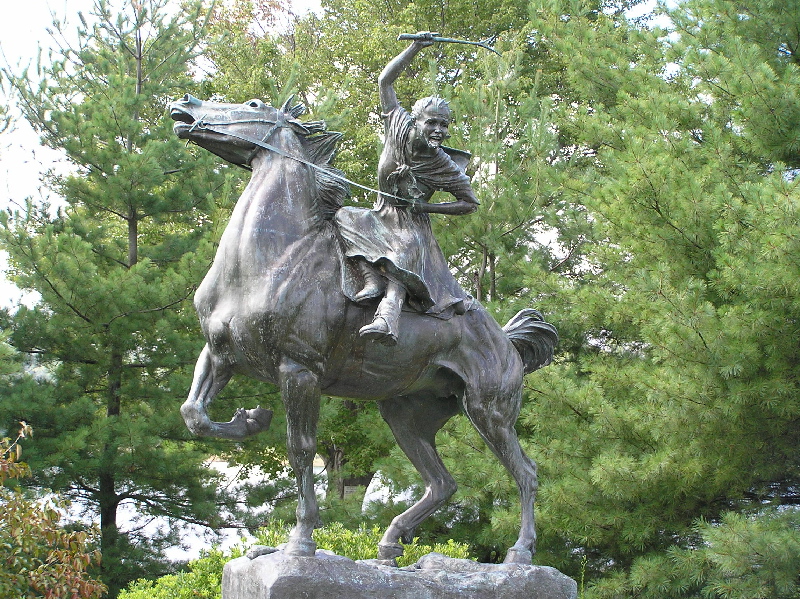
I wish I’d been told about Sybil Ludington when I was in school! Her journey was more than two years after that of the above four men, but she rode 40 miles (twice as far as Paul Revere) to alert the residents of Danbury, Connecticut that the British were approaching. She was all of 16 years old.

She made her roundtrip journey between 9:00 p.m. on April 26, 1777 and dawn the next morning. Unfortunately, the British had already torched Danbury. That doesn’t take anything away from her efforts, though. She was later commended by George Washington and this statue of her atop her horse is in Carmel, New York.

Statue of Sybil Ludington in Carmel, New York

“Remember the ladies” ~ Abigail Adams

I’m reminded of Abigail Adams’ often quoted excerpt from her March 31, 1776 letter to her husband, John Adams, as he was away at a meeting of the Continental Congress in Philadelphia helping to work out the details of the American Revolution:

 “I long to hear that you have declared an independency. And, by the way, in the new code of laws which I suppose it will be necessary for you to make, I desire you would remember the ladies and be more generous and favorable to them than your ancestors. Do not put such unlimited power into the hands of the husbands. Remember, all men would be tyrants if they could. If particular care and attention is not paid to the ladies, we are determined to foment a rebellion, and will not hold ourselves bound by any laws in which we have no voice or representation.”

Yes, indeed. Remember the ladies!

Since my last blog post

My reading list so far this month might raise some eyebrows and get me some attention from the police. In conjunction with the novel I’m writing, this month I’ve read a variety of forensics books.

Until my next blog post

Note: I drew heavily in my post today from the following website: https://www.constitutionfacts.com/us-declaration-of-independence/the-five-riders/. That’s where I also found the photo of the Sybil Ludington statue.

Don’t forget to celebrate International Moment of Frustration Scream Day tomorrow!

Janet