I write southern historical fiction, local history, and I've written a devotional book. The two novels I'm writing are set in Virginia and the Carolinas in the 1760s. My weekly blog started out to follow my journey as a writer and a reader, but in 2025 it has been greatly expanded to include current events and politics in the United States as I see our democracy under attack from within. The political science major in me cannot sit idly by and remain silent.
The fictional character I’m introducing to you today is George. He is a slave in South Carolina in the mid-1700s in the third story in Traveling Through History: A Collection of Historical Short Stories, “To Run of Not to Run.”
When you meet George, he is a young boy. He and his father, who was born in Senegal, have just been sold and are being taken from Camden to the Waxhaws.
Photo by Asso Myron on Unsplash
Here’s an excerpt from when George and his father are in the back of a wagon being taken to their new living situation in the Waxhaws:
“George sensed his father was tiring of his questions, so he shut his eyes tight and tried to turn off his mind. But the harder he tried not to think, the more questions flooded his head. The ones that kept crowding out all the others were ones he knew not to ask because he was afraid his papa did not know the answers. When will we see Mama again? When are we going to be free?“
You will follow George as he has a lot to learn and grows up fast. His new master’s son is about his age. Therein forms a dynamic that will ultimately be further developed in the historical novels I am planning and writing.
Remember George. He is a character who grew out of my imagination and has never let me go. I don’t think he will let you forget him either.
Getting into the skin, brain, and soul of a young boy with black skin who is living as a slave in America in the mid-1700s allowed me to stretch my imagination in ways that my other fictional characters did not.
Where to purchase Traveling Through History: A Collection of Historical Short Stories
You can find my new short story collection on Amazon in e-book and paperback. You can find the paperback at Second Look Books in Harrisburg, NC, or ask for it at your local independent bookstore.
Hurricane Helene Recovery Update
I haven’t offered a Hurricane Helene recovery update since my November 3 blog post.
As of Friday, December 5, 25 roads in North Carolina were still closed due to Hurricane Helene’s wind, flooding, and landslides on September 26, 2024. That is a decrease of six roads since a month ago. There are three U.S. highways, two State highways, and 20 state roads closed more than 14 months after the hurricane.
In Tennessee… as of Tuesday, December 2, U.S. 321in Elk Mills, in the Watauga Lake area, is officially reopened since being heavily damaged by the hurricane.
Sections of the Blue Ridge Parkway in North Carolina will remain closed until at least next fall, and I-40 at the Tennessee line will continue to be just two lanes at 35 miles-per-hour for a couple more years while five miles of the highway are being rebuilt in the Pigeon River Gorge.
The following success story was cut and pasted from a U.S. Forest Service – National Forests in North Carolina Facebook post on December 3, 2025: “Two decades ago, after Hurricane Frances and Ivan, our ecosystems team saw how erosion could unravel an entire ecosystem. Brady Dodd, hydrologist for the National Forests in North Carolina, developed and executed a plan to reshape eroded riverbanks, plant riparian flood resistant species and add erosion prevention structures. After Helene arrived, the banks held, and the water ran clear due to the work that had been done years prior. This story serves as a model to our forests as we continue to build resilience into each of our Helene recovery projects.”
We’ve gone from fall leaf season to snow ski season in western North Carolina since my last update. Be aware that you might run into a detour, and you can’t drive the full length of the Blue Ridge Parkway.
If you visit, please drop by Blue Ridge Books in Waynesville and Highland Books in Brevard. Tell them I sent you. They sell my books!
Francisco Bravo Cabrera graciously featured me and my new book, Traveling Through History: A Collection of Historical Short Stories on his e-zine in Spain (LatinosUSA (English Edition/Masticadores) this morning at 8:00 a.m. Madrid Time!
Francisco Bravo Cabrera is a bit of a Renaissance man. He is an artist, a poet, a writer, and a musician. He is based in Valencia, Spain, but has also lived in Miami, Florida. His blog, JaZzArt en Valencia, can be found at https://paintinginvalencia.com/, and his work can also be found on https://www.fineartamerica.com.
I cut and pasted Francisco’s magazine article about my new book below, but two of the photographs did not copy. Here’s the link, if you want to see the original for yourself: https://latinosenglishedition.wordpress.com/?p=8436.
New Historical Fiction by Janet Morrison (Editor Francisco Bravo Cabrera)
(Photo: Janet Morrison/provided by Janet Morrison)
As a big fan of history and novels, there is no genre that fascinates me more than «historical fiction,» therefore I would like to feature today a historical fiction writer from North Carolina (US), Janet Morrison, who has just released a new book, Traveling Through History: A Collection of Historical Short Stories. I am sure it can easily be found in Amazon or in your neighbourhood book store.
I have asked Janet to bring us a synopsis of the 13 stories included in the book. And although she thought it a bit tricky, I think she has covered them in a concise way.
Traveling Through History: A Collection of Historical Short Stories, by Janet Morrison, will transport you from 17th century Scotland to 20th century America! The more than one dozen short stories are set in Scotland, Pennsylvania, Maryland, Virginia, North Carolina, and South Carolina.
Each story includes author’s notes, so you will learn what inspired the story, how the story is based in history but is a work of fiction.
There are stories set in Colonial America and the American Revolutionary War Era. One story is the fictitious letter an American Civil War soldier wrote to his parents. Another story follows a slave who contemplates escaping. A couple of the stories are set in the southern Appalachian Mountains – one during a blizzard in the 1870s and involves a dog and a bear during The Great Depression. There is one ghost story. In another story, a girl in foster care discovers the dignity a suitcase can bring. The final story in the book is told by an old farmhouse that remembers the family it sheltered in the 1800s.
+++
Janet Morrison’s educational background is in political science and history. She has worked as a local government administrator, a travel agent, and a newspaper columnist. She enjoys writing historical fiction and local history at her home in North Carolina. Her vintage postcard book, The Blue Ridge Mountains of North Carolina was published in 2015. Since then, she has published two local history books, a devotional book, and a cookbook. Janet uses her blog, https://www.janetswritingblog. com, as a platform to write about the books she reads, events in history, and politics. The most rewarding thing about her blog is that it has made it possible for her to make friends around the world. When she has spare time, she loves researching her genealogy and learning to play the dulcimer. Be sure to visit https://www. janetmorrisonbooks.com to learn more about her books and to subscribe to her newsletter.
+++++
I would like to thank Janet so much for her participation in today’s episode and to remind her that she is welcome here any time. I am sure that we will all enjoy reading this historical fiction book as well as the other books she has written.
AND
If you are a writer, a poet or an artist (in any of the arts) and would like to appear in our magazine LatinosUSA (English Edition), please contact me, Francisco Bravo Cabrera, editor: ArribaPamplona@gmail.com
Today I am introducing you to the main character in “You Couldn’t Help But Like Bob,” the second story in my new book, Traveling Through History: A Collection of Historical Short Stories.
Genealogy has been a hobby of mine since I was a young adult. Robert Dooling is the most colorful of my ancestors that I have found so far. He immigrated from Ireland to America in the early 1700s and settled in Virginia.
Some people would be embarrassed at discovering one of their great-great-great-great-great-grandfathers was on the wrong side of the law in Colonial Virginia, but that just made Robert Dooling that much more interesting to me. To my way of thinking, that’s a lot better than just knowing an ancestor’s birth and death dates.
I devoured the colonial court records, eagerly searching for every tidbit or reference to Robert. As far as I know, he never did anything too serious. Perhaps his worst offence was “abusing” a Justice of the Peace. (I’m not clear on what constituted “abusing” a Justice of the Peace in Tappahannock, Virginia in the early 18th century.
I had fun creating a fictional story about this man I only know on paper, but his blood runs through my veins and I’m grateful to know more about him than just his name.
Here are the opening lines in the story:
“You couldn’t help but like Bob. Unless he owed you money. Unless you were a Justice of the Peace in Essex County, Virginia in the early 1700s.
“Even so, you just couldn’t help but like Bob.
“To say Bob was irritating would be an understatement, but you couldn’t stay made at him for long. Unless he owned you money or tobacco. Unless you were a Justice of the Peace, tired of seeing him dragged into your court room.”
I hope you will enjoy reading the story as much as I enjoyed writing it.
After you read “You Couldn’t Help But Like Bob” in Traveling Through History: A Collection of Historical Short Stories, you’ll know more about him. I hope you will like him, too!
Today I’m introducing you to what prompted me to write “The Tailor’s Shears,” the first story in my new book, Traveling Through History: A Collection of Historical Short Stories.
Photo by Matt Artz on Unsplash
This was a story I wrote in 2001 soon after I completed a fiction writing course in the Continuing Education Department at Queens University of Charlotte. I had edited it over the years as I learned more about the craft of writing fiction. The fact that I took a fiction writing course is in itself an interesting story.
I had never read a lot of fiction. I’d always read history books and probably didn’t read any fiction in college other than what was required in English classes. Being a political science major with a history minor, fiction wasn’t on my radar. Imagine my sister’s surprise (or should I say shock?) when I told her I was taking a course in fiction writing! Needless to say, I had a lot to learn.
Those of us who completed the course were given the opportunity to join Queens Writers Group. It was a congenial group with a range of talents. When it was decided we would self-publish a collection of short stories, I jumped in. Self-publishing and print-on-demand were new to all of us and to the world. We felt like we were trailblazers!
It was decided that each of us would write a story based on an item found in the castle keep at a fictitious Lochar Castle in Scotland. Each of us had to choose an item we wanted to write about. No other instructions were given.
In doing family research and visiting Scotland, I had learned about the Covenanters. I knew I wanted to work that into my story, and then I had to figure out the item I would write about. In a nutshell, the Covenanters were a group of Presbyterians in Scotland who signed the National Covenant in 1638 to affirm their opposition to the Stuart kings’ interference with the Presbyterian Church of Scotland. The signers and the people who agreed with them were Covenanters. Many of them were executed by the government.
I was fascinated by the sacrifices the Covenanters made, especially after seeing the plaque that marks the spot in The Grassmarket in the Old Town section of Edinburgh where many Covenanters were hanged for their religious beliefs. (See a photo at http://www.covenanter.org.uk/grassmarket.html.) I also visited Greyfriars Churchyard where the National Covenant was signed. Some of them signed their names in blood. It was all an eye-opening experience to learn that part of my Presbyterian background!
Somehow, with that history in my head, I decided to write about a tailor who was a Covenanter and it was his shears that would be found later in the Lochar Castle keep. The story is written from the point-of-view of Sir Iain Douglas, the patriarch of the Douglas Clan who lived in the castle at the time of the tailor’s shears ended up in the castle. In the story, Sir Iain shares his recollections of his tailor, Alexander Montgomery, and how Mr. Montgomery was persecuted for being a Covenanter.
Here’s an excerpt from the story:
“‘Just why is it the Covenanters cannae compromise and make peace with the King? Back forty years ago in my military days, I thought I had a fairly good idea of what the Covenanters stood for, but with the passage of time I have grown somewhat weary of it all and wonder if the present-day Covenanters even know what they’re fighting for or against.’
“Montgomery’s face turned red as a beetroot and his blue eyes blazed.”
I hope you will be transported back to the 17th century in Scotland as you read “The Tailor’s Shears” in Traveling Through History: A Collection of Historical Short Stories, by Janet Morrison. You can find my book on Amazon, if it is not available at your favorite independent bookstore.
Traveling Through History: A Collection of Historical Short Stories, by Janet Morrison
Sometimes the best-laid plans just don’t pan out. Such is life.
This is Janet’s Writing Blog, so today I start my post with a behind-the-scenes glimpse into my life this week as a self-published writer.
If you read my blog on Tuesday, Traveling Through History is released today!, you know I was celebrating the release of the e-version of my new book, Traveling Through History: A Collection of Historical Short Stories, but I mentioned that the paperback was not being released that day as planned.
Traveling Through History: A Collection of Historical Short Stories, by Janet Morrison
I thought I had everything in place for the paperback’s release worldwide by Ingram-Spark.
I sent handwritten notes to various independent bookstores along with a detailed information sheet about the book. I told them they would be able to order the book from Ingram-Spark and have it in stock in their stores on November 4 or very shortly thereafter.
The e-book is available – and I’m over the moon about that! But as of today, I still don’t know what the hold-up is for the paperback. Perhaps I will learn something today.
I decided to go ahead and self-publish the paperback on Amazon in the United States, and I expect it to be available here on November 11. I hope Ingram-Spark will release it for worldwide distribution next week – which will include Amazon in countries other than the U.S. — but that remains to be seen. Bookstores will not order it from Amazon. I needed Ingram-Spark for that.
Such is the life of a self-published author! This glitch is not the end of the world. It was just something I had hoped to get checked off my to-do list on November 4.
Thank you to those of you who have congratulated me on the release of the e-book. And a huge thanks to those of you who have purchased the book! I understand that Ingram-Spark has distributed the e-book to Amazon.UK, so I assume it is also available on the worldwide e-markets of Amazon.
Meanwhile, in Washington, DC…
The government shutdown continues as I write this on the night of November 6. One result of the shutdown is that the air traffic controllers and TSA agents who keep the flying public safe are not being paid. They are expected to show up for work and give their undivided attention to all the details their jobs entail… without pay.
To try to force Congress to do its job and pass a federal budget, the White House gave the airlines less than 24 hours’ notice that they had to start cancelling flights at the forty busiest airports in the country. A certain percentage of flights must be cancelled with each passing day beginning today.
But none of this will interfere with Trump’s weekly trip to play golf in Florida.
Since an alleged “businessman” is President of the United States, it baffles me that the order came from the White House (or what’s left of it) with no regard for the chaos such a sudden order will cause airlines, airports, passengers, and the employees of the airlines and airports.
It appears “President Marie Antoinette” knows no more about business than he knows about a democratic government. Throwing a Great Gatsby-themed party at his mansion in Florida last week while federal employees are not receiving paychecks is the height of being tone deaf. He is completely out-of-touch with the average American.
President Antoinette says commercial aviation in the U.S. is “100% safe,” even though air traffic controllers work without pay and some have had to take a second job and are working exhausted.
And why was a large “The Oval Office” sign installed at what’s left of the White House this week? Can President Antoinette not find his office?
Yesterday, the President announced that he will force the price of weight-loss drugs down because they are too expensive. Dr. Mehmet Oz, head of the Medicare and Medicaid programs announced that Americans will lose 135 billion pounds before the mid-term elections next November. I’m not good at math, but the population of the United States is around 343 million. That means every American would have to lose 394 pounds to make Dr. Oz’s statement true.
Something is very, very wrong in Washington, DC, and it is being denied by the members of Congress and by what’s left of the White House.
A cheaper Thanksgiving Dinner?
Trump and various Republicans in Congress have bragged this week that they talked to the CEO of Walmart and he told them that everyone’s Thanksgiving Dinner will be 20% cheaper this year than it was last year while Joe Biden was US President.
What Trump and none of the Republicans have explained is that the Walmart CEO based that on the fact that this year Walmart decreased the number of items it considers to be a Thanksgiving dinner. Slick move, Walmart!
Of course, Trump has changed the 20% to 25% because that is what he does. He exaggerates or decreases statistics in whichever way serves his purpose.
The Walmart CEO’s hocus-pocus with the facts has led many Republican lawmakers who have never set foot in the grocery store to announce that grocery prices have plummeted since Trump took office on January 20, 2025. They really do think American citizens are stupid and will believe the politicians instead of their own wallets.
Until my next blog post
I will be caring for my sister as she recovers from surgery over the coming weeks, so I might not blog as often as I have in the recent past. We expect everything to go smoothly, but I will have added responsibilities vying for my time and attention.
The time you take to read my rants and blog posts is appreciated more than you know. Your “likes” and comments are what keep me going.
The First Amendment to the Constitution of the United States of America
I’m grateful that I still have the freedom of speech guaranteed to me by the First Amendment of the U.S. Constitution. I am very aware that some of the people reading my blog in other countries cannot imagine having the freedoms we have in America. Even though our form of government is under attack from within, I believe there are enough of us who love democracy to save our country and put things right someday.
I am excited to tell you that my new book, Traveling Through History: A Collection of Historical Short Stories, will be released today as an e-book on Amazon! I thought the paperback would be released today, but there have been some bumps in the road over the last several days. I hope the paperback will be available in a few days.
Traveling Through History: A Collection of Historical Short Stories, by Janet Morrison
In a week or two, look for it at your favorite independent bookstore, such as Second Look Books in Harrisburg, NC. I will give shout-outs to other bookstores as they let me know they’ve ordered the book.
Here’s a list of the stories in Traveling Through History:
The Tailor’s Shears – A 1600s Scottish Story;
You Couldn’t Help But Like Bob – A Colonial Virginia Short Story;
To Run or Not to Run – George’s Story;
Making the Best of a Tragedy – Elizabeth Steele’s Story;
From Scotland to America – A 1762 Immigration Story;
Whom Can We Trust? – A Mecklenburg Declaration of Independence Short Story;
Go fight, Johnny! – A Story of a Battle of King’s Mountain Veteran;
A Letter from Sharpsburg – An American Civil War Letter;
Slip Sliding Away – A Southern Appalachian Short Story;
A Plott Hound Called Buddy – A Great Depression Era Southern Appalachian Short Story;
Secrets of a Foster Child – Dignity in a Simple Suitcase;
Ghost of the Battle of Guilford Courthouse – An American Revolutionary War Ghost Story; and
If This House Could Talk – Recollections of an Old Farmhouse.
Do some of these story titles pique your interest? I certainly hope they do!
Each story is followed by Author’s Notes that give you such information as background information, what inspired the story, and what’s truth and what’s fiction.
Traveling Through History: A Collection of Historical Short Stories is available for your Kindle from Amazon.
With the change of seasons to cool mornings, I’m trying to take some of my own advice and follow along in my new devotional book and its companion journal:
I Need The Light! 26 Weekly Devotionals to Help You Through Winter
I Need The Light! 26 Weekly Devotionals to Help You Through Winter, by Janet Morrison
And
I Need The Light! Companion Journal and Diary.
I Need The Light! Companion Journal and Diary, by Janet Morrison
In case you haven’t purchased your copies yet, here’s a sneak peek at Week 1
The Scripture for Week 1 is Genesis 1:1-5. It’s about God creating the Heavens and the Earth and light. By the power of His word – “Let there be light! – and there was light!
I can’t imagine life without light, which leads me to think that people who have been blind all their lives probably can’t imagine what light is.
Thos of us in the northern hemisphere are entering the time of the year when natural light and the warmth it brings is in short supply. Those of us with Seasonal Affective Disorder and Fibromyalgia are not fond of cold weather. In fact, it is difficult for me to enjoy the beauty of fall because I’m dreading winter.
I need the natural light to help set my circadian clock and combat the effects of Seasonal Affective Disorder, but I need Jesus Christ – The Light of the World! – for all aspects of my life. He is my Rock and my Salvation.
Look for my books on Amazon and Barnes & Noble. You should also be able to find them at your favorite independent bookstore, such as Second Look Books in Harrisburg, NC; Blue Ridge Books in Waynesville, NC; and Highland Books in Brevard, NC.
Some independent bookstores refuse to sell books that are self-published, but I know the three I listed above have ordered copies. Please support them!
Each week in my devotional book includes a recipe for a food that brings me comfort. Week 1 has my mother’s recipe for Drop Biscuits. Yum! I think I need to go to the kitchen right now and make biscuits!
When I planned my blog’s editorial calendar for 2025, I thought I would be writing today about the 233rd anniversary of the laying of the cornerstone of the White House.
I thought I would write about the construction of the White House; how it survived the flames at the hands of the British on August 24, 1814; and its current transformation during the Trump Administration.
That’s what I thought until Friday. So much happened on Friday, I decided to ditch my earlier plans and focus today on more pressing concerns. I also want to catch you up on some of my writing projects.
Ramifications of the federal government shutdown
Photo by the blowup on Unsplash
More than 4,000 federal government employees were fired on Friday by the Trump Administration as the White House continues to blame the Democrats for the shutdown. President Trump announced that the “layoffs” would be “in Democrat programs” and the Democrats need “a dose of its own medicine.”
I’ve always thought that federal programs were for all Americans, regardless of their political leanings or voter registration. In 2025, though, it appears that the programs and services provided by the federal government are being labeled as “Democrat” and “Republican.”
The ones seen by President Trump as being “Democrat” are now fair game for being slashed and the employees who implement those services will be fired.
I thought it was against federal law for government employees to be fired based solely on the existence of a government shutdown, but I guess I was misinformed.
As the federal government shutdown continued and neither side showed the will to compromise, we entered the weekend anticipating something we usually don’t see during a government shutdown: 1.3 members of our military not getting a paycheck on the 15th of the month. However, President Trump said on Saturday that he had found the money somewhere to pay the military.
Democrats in Congress attempted to bring a bill to a vote on Friday for the military to be paid, but Republicans blocked the vote. Speaker of the House Mike Johnson said the Republicans voted three weeks ago on the budget, which would have provided pay for the military. Johnson’s paycheck not being affected by the shutdown, he seemed unable to consider the hardship his actions/inactions would cause most military families.
The weekly newsletter I received from my U.S. Representative on Saturday plainly illustrates the standoff between the two political parties in the U.S. Congress. I will share that newsletter with you in tomorrow’s blog post as we sink deeper into this shutdown and all the uncertainties and hardship it causes.
The Nobel Prize for Peace
Photo by Sincerely Media on Unsplash
President Trump will whine about the Nobel Peace Prize for the rest of his life. He claims Maria Corina Machado, the Venezuelan woman who won it on Friday, called him that day and told him he “really deserved it.” He claims to have ended eight wars since January 20.
A detail that seemed to be missed by Trump was that nominations had to be submitted by January 31, 2025. That was just ten days into his second term. He has campaigned to receive the Nobel Prize all year. Most people who are awarded the prize don’t do that. Off the top of my head, I cannot think of anyone else who has openly begged for it.
True to form, a few days ahead of the announcement of the award, Trump said that it was rigged and he probably not receive it. After the announcement on Friday, Trump said that the Nobel Committee “put politics above peace” in awarding it to Maria Corina Machado. He also once again claimed that President Barack Obama received it “for doing nothing but destroying our country.”
Has anyone ever seen a 79-year-old be such a sore loser?
Qatari Air Force coming to Idaho
U.S. Secretary of Defense Pete Hegseth made a stunning announcement on Friday. He said that Qatar is going to build an air base at Mountain Home, Idaho. These was shocking, especially in light of the fact that in 2027 President Trump called Qatar “a big funder of terrorism.”
A few hours later, on Friday night, Hegseth had to clarify his announcement – which had been heard around the world. Actually, Qatar is NOT building an air base in Idaho or anywhere else in the United States. They will send fighter pilots to the U.S. Air Force Base in Idaho to train.
Whew! That’s a relief!
We knew there would have to be a payoff after Qatar gave Trump that $400 million plane that the U.S. taxpayers are paying $1 billion to rehabilitate so Trump can take it with him if he ever moves out of the White House. Perhaps this is the beginning of the payoff.
I don’t think Hegseth majored in communications in college.
President Trump’s semi-annual annual physical
Photo by shahreboye on Unsplash. (I tried to find a picture of an x-ray of a fist. That would have been more appropriate!)
President Trump had his second “annual” physical exam on Friday and was once again pronounced to be “in excellent health” even though he doesn’t appear to be and he doesn’t speak like a person in “excellent health.”
Additional tariffs on China
President Trump announced tariffs imposed on China amounting to 130%. Since most things American buy were manufactured in China, the coming months or years should be interesting.
I’m fortunate because I already have everything I need. I shouldn’t need to buy anything but food and medicine for the foreseeable future.
As an aside, I noticed last week that the cereal I often eat for breakfast came from Germany instead of Canada. It’s been coming from Canada for years. I’m still trying to figure out how it can be cost effective for a box of cereal to be shipped all the way across the Atlantic Ocean. Perhaps it is grown in Germany and packaged in the United States. It is a wheat product. I don’t have anything against Germany, but I’d prefer to get my wheat from farmers in the United States or Canada. It just makes more sense.
A Quote from Sunday
If I hadn’t heard it, I wouldn’t have believed it. The 4th Congressional District of Ohio must be so proud of their U.S. Representative, Jim Jordan. Yesterday on TV, Representative Jordan said, “I think the ICE agents are doing the Lord’s work.”
What a horrible thing to say about Jesus Christ!
The Christ that I worship would never condone masked men going around snatching people on the street or out of their beds in the middle of the night, pepper spraying a Presbyterian pastor who was praying for them and their detainees, detaining people for months on end, then deporting them (or not – perhaps just detaining them indefinitely) to random countries where they don’t speak the language.
I think Mr. Jordan needs to read the New Testament. He has been misinformed if he thinks ICE agents are doing “the Lord’s work.”
My writing projects
I continue to try to spread the word about my devotional book and the companion Journal and Diary on Pinterest, Facebook, and Instagram. I Need The Light! 26 Weekly Devotionals to Help You Through Winter AND I Need The Light! Companion Journal and Diary are available on Amazon and from your favorite bookstore. We need all the help we can get as we navigate the next six months.
I Need The Light! 26 Weekly Devotionals to Help You Through Winter, by Janet Morrison
I Need The Light! Companion Journal and Diary, by Janet Morrison
I edited several of the historical short stories I have written for my upcoming book: Traveling Through History: A Collection of Historical Short Stories. My sister and I are doing one more proofread. I created a bookmark for the book on Bookbrush.com. I also created an information sheet about it to distribute to independent bookstores and the public library system here in Cabarrus County.
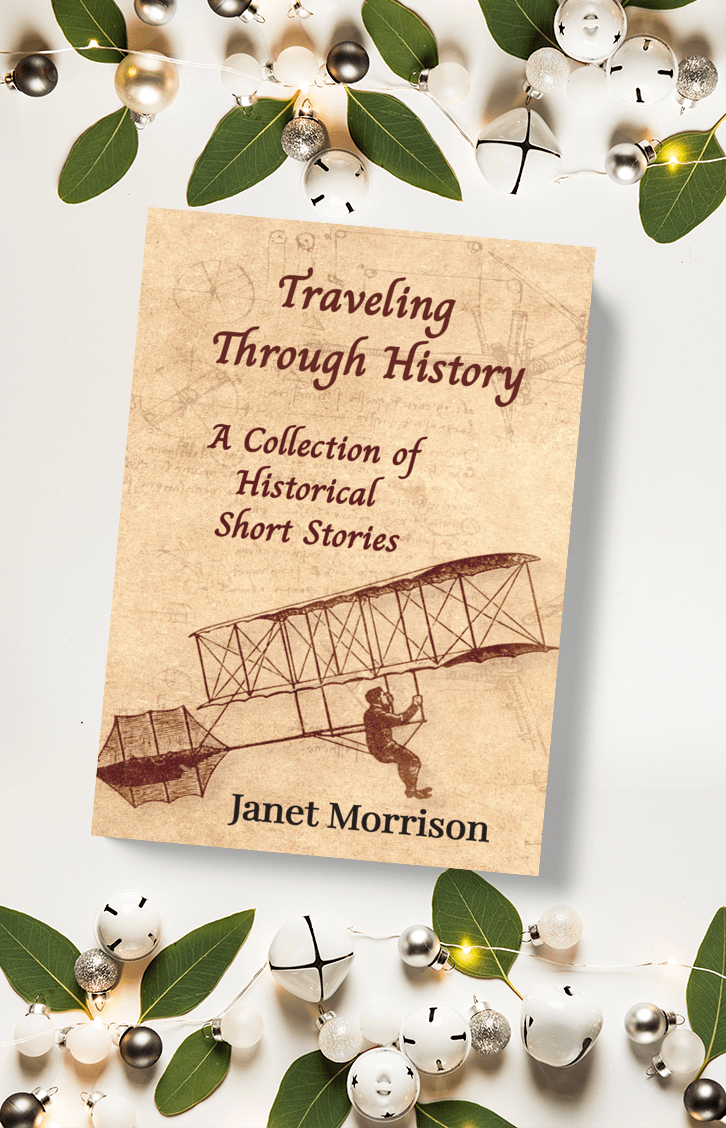
Want to see what part of the cover looks like?
Partial cover of Traveling Through History: A Collection of Historical Short Stories
I hope to have the book ready to self-publish through IngramSpark and Kindle Direct Publishing before the end of October, so stay tuned!
See – I don’t spend ALL my time tracking the political news. Each of us must find a way to put one foot in front of the other every single day as we navigate unchartered ground.
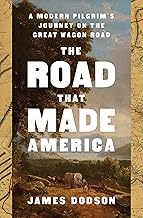
I only read one entire book in September. I pre-ordered it early in the summer and had great expectations that it would contain some information to supplement my research about the Great Wagon Road.
The Road That Made America: A Modern Pilgrim’s Journey on The Great Wagon Road, by James Dodson
The Road That Made America, by James Dodson
Perhaps I should have done more research into the book itself. It was not what I expected, but I read the entire book. I did not want to miss a morsel of new detail about the Great Wagon Road.
I will not write a review of this book, because it very well might be my fault that I expected too much from it. I know from experience that it is difficult to recover a high rating once someone has left a mediocre review.
For what Mr. Dodson set out to write, he did an excellent job. It just wasn’t what I hoped for or needed.
If you are looking for a travelogue that is about half set in Pennsylvania and pretty much peters out when he gets to the northern piedmont area in North Carolina, you would probably enjoy this book. The author tells where he ate, where he stayed, and who he met along the way. He met some old friends along the way and he gives background details of their years of friendship. There is an emphasis on the Civil War battlefields along or near The Great Wagon Road, so a Civil War buff would find that of interest.
It just wasn’t what I hoped would supplement my research for the historical novel series I’m writing.
My reading continues to suffer
I have been in a reading funk since January 20. Actually, it dates back to November 5, 2024. You can read between the lines and figure out why I have lost my desire to read. It is a sad and dangerous thing for a wannabe writer to stop reading.
My writing projects
This summer I finished writing and self-published I Need The Light! 26 Weekly Devotionals to Help You Through Winter and I Need The Light! Companion Journal and Diary. They are available on Amazon and you can look for them at your favorite bookstore.
If can even order the devotional book (and soon, the companion journal) from your favorite independent bookstore by going to https://www.janetmorrisonbooks.com, click on the book covers and place your order by using the Bookshop.org button.
I appreciate each of you who have ordered either or both books.
At the request of a distant cousin who is a very dedicated member of the Sons of the American Revolution, last week I set my short stories aside and wrote the honoring statements for four American Revolutionary War patriots and soldiers who are buried in Spears Graveyard of Rocky River Presbyterian Church in Cabarrus County, NC.
With that research and writing completed on Saturday evening, I turned my attention back to proofreading and editing my historical short stories. Stay turned for an announcement in a few weeks when I publish Traveling Through History: Historical Short Stories.
Hurricane Helene Update
As of Friday, 35 roads in North Carolina were still closed due to Hurricane Helene. That count included five US highways, two state highways, and 28 state roads, meaning three state roads opened last week.
Of course, sections of the Blue Ridge Parkway in North Carolina will remain closed for another year or more, and I-40 at the Tennessee line will continue to be just two lanes at 35 miles-per-hour for a couple more years while five miles of the highway are being rebuilt in the Pigeon River Gorge.
But western North Carolina is open for business and tourists this fall. Just be aware that you might run into a detour, and you can’t drive the full length of the Blue Ridge Parkway.
I’ve had a net loss of three of my 1,297 blog subscribers in the last two weeks. I don’t know why, but I have a hunch it is because I have either stepped on some toes with my criticisms of Trump, or perhaps the individuals who hit the “unsubscribe” button just did not want to read about Trump anymore.
I understand, if they left for either reason. If I thought Donald Trump hung the moon and the stars and was sent by God to save the United States, I wouldn’t want to read my blog either.
Photo by Kaitlyn Baker on Unsplash
If I’m on the verge of a nervous breakdown because of the rapid dismantling of democracy in the United States, I wouldn’t want to read my blog either.
I get it.
I don’t want to write about the Trump Administration every day. That’s why I took a break from it last week. I only blogged twice.
That break freed up time for me to work on the companion journal/diary I’m creating to go along with my I Need The Light! devotional book.
I Need The Light! 26 Weekly Devotionals to Help You Through Winter, by Janet Morrison
It gave me time to edit most of the historical short stories I plan to publish as a collection later this year.
Photo by Aaron Burden on Unsplash
I needed to take time to do those things for my mental and physical well-being. I hope to have more weeks in which I only blog a couple of times.
When I started blogging more than a decade ago, I was encouraged over every subscriber milestone. The numbers are not that important to me now, but I noticed I was on the verge of having 1,400 subscribers. Then, my numbers started going down. I needed to evaluate the situation and determine if I was doing something wrong.
I concluded that after a decade I have started fearlessly speaking my mind. Perhaps some of my subscribers liked the old me – the me who just blogged once-a-week about the craft of writing or the books I read. The old me struggled to think of something to blog about once-a-week.
But that’s not me anymore. I’m older, but not necessarily wiser. I’m in a place in my life’s journey where I am no longer afraid that I will offend someone who sees politics or other major issues differently than I do.
I am no longer afraid that if I blog about politics I will alienate someone who would have otherwise purchased one of my books.
I blog because it has become part of my identity. I blog because I am deeply concerned about what is happening to and in the government of the United States. I cannot turn my back on my political science degrees and my sense of patriotism.
But most of all, I blog because I thoroughly enjoy forming online relationships with other bloggers and subscribers. Readers and subscribers will come and go. Perhaps I’m finally finding my voice and my niche, and I no longer attempt to reach the masses.
What I write about will not and cannot appeal to everyone. That is a good lesson for me to remember when I publish a book!
Photo by Luis Morera on Unsplash
In conclusion, it’s not really about the numbers. It’s about the relationships I have made and will continue to make through my blog. If my subscribers dwindle down to 100, it won’t bother me now because I have come to understand that it’s just about the relationships and exchange of ideas.














 Janet's Writing Blog