Newspaper Columnists Day – and My Experiences

When I say it was a great privilege for me to get to write 175 local history articles for a free local weekly newspaper in Harrisburg, North Carolina for almost seven years, it is an understatement.

I was paid $25 per article, which in no way compensated me for my time and any skill I had to write the pieces. My true payment came in the form of new friendships I formed, old friendships that were renewed, the incredible amount of history I learned, and the confidence the experience gave me to think that perhaps I did have some potential as a writer.

Harrisburg Horizons (NC) newspaper banner

As a white woman in my 50s, I did not fully understand that it was partly my white privilege that opened many doors for me – and had opened doors for me my entire life. I was genuinely curious about the lives of the elderly black people who had lived their entire lives in the township in which I lived, but I will never be able to fully grasp what I was doing when I asked several of them individually to allow me into their homes to ask them some personal questions.

They had been born into a segregated society in the early years of the 20th century. I had been born into a segregated society in the early 1950s, but I was white. I could not identify with the challenges they had faced all their lives.

They opened up to me and told me things they maybe had never even told their children. I heard stories of discrimination that were mandated by law. What I did not hear from a single one of them was bitterness. That was the most impressive lesson I learned from my experience as a low-level newspaper columnist.

Getting to sit for hours with a veteran of World War II who was eager to share his memories was another experience I was honored to have while writing for Harrisburg Horizons newspaper. I got to hear first-hand the vivid memories he had while training for the D-Day invasion of France. It was from him I heard about the sights, sounds, and smells of D-Day. I heard about the relentless trudging along through non-stop war through the bloody beaches, the towns, the villages, the forests, and the farmlands of Europe.

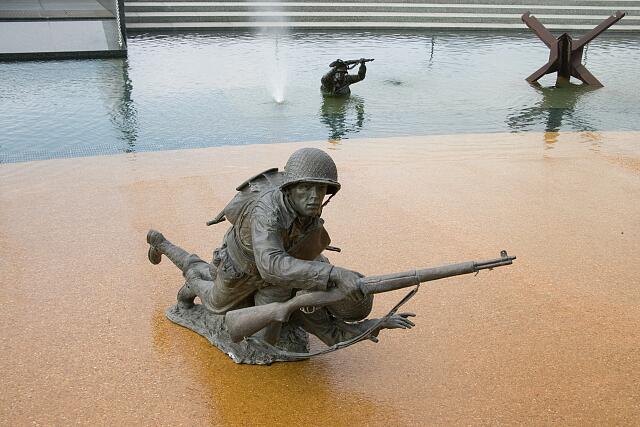
Photo from National D-Day Memorial in Bedford, Virginia. Photograph from Library of Congress website

A stark contrast between that war and the wars in the late 20th century and early 21st century is that the World War II soldiers were there for the duration of the war. There was no deployment with a pre-announced ending date. The only way they could communicate with their loved ones was through slow-moving letters.

I approached another local World War II veteran who was on the USS Missouri and witnessed Japan’s surrender to General MacArthur, but he was disinclined to speak of the war. I respected his wishes and never spoke to him about it again. Many combat veterans do not want to talk about their experiences and we should always respect their wishes.

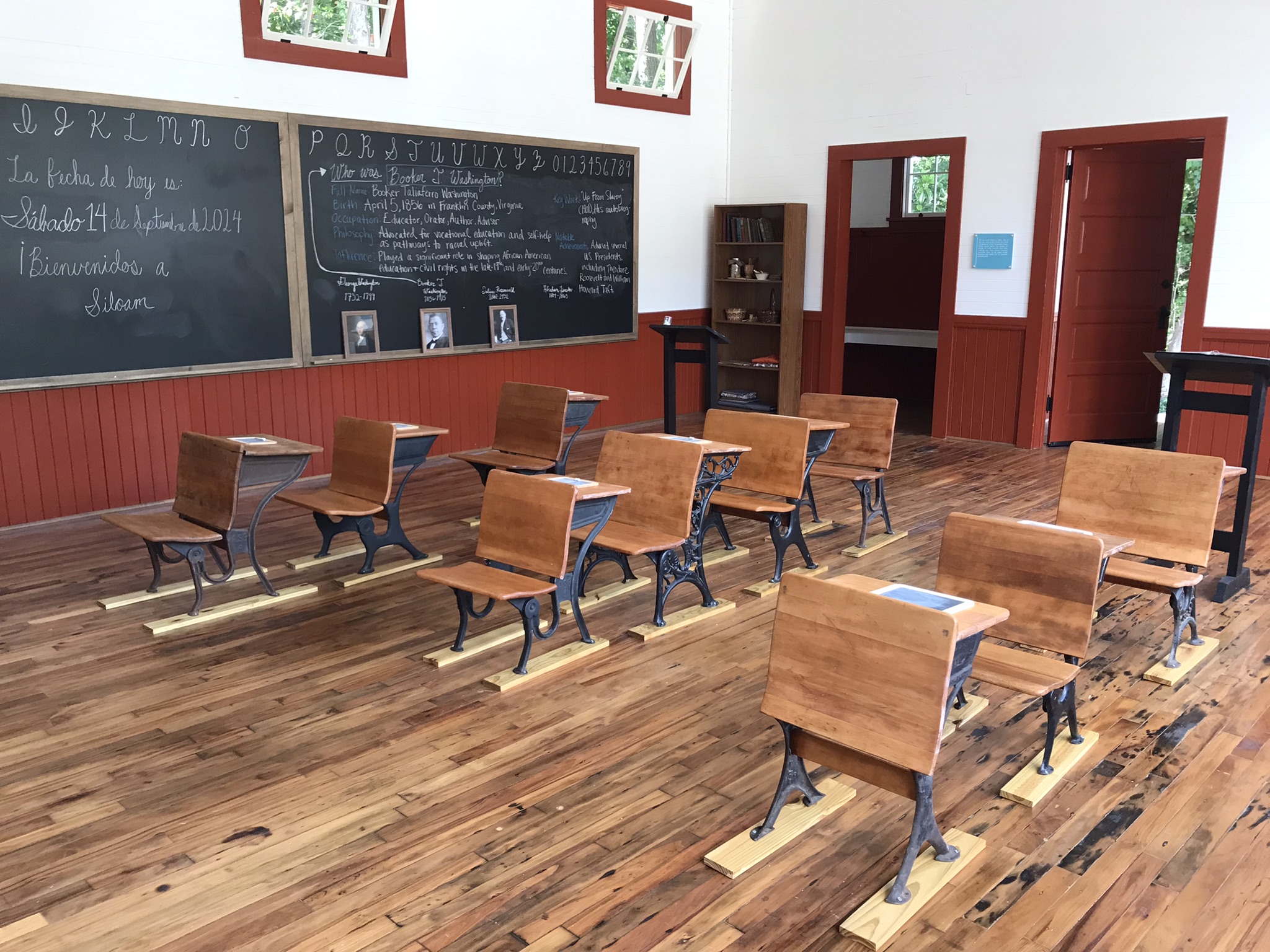
Many of the men and women I interviewed were parents of schoolmates of mine. I had known them to various degrees. I’d never met the mother of one of my black classmates until I went to interview her. She shared memories of attending a Rosenwald School.

Classroom in restored Siloam Rosenwald School in Charlotte, NC, 2024

The veteran of D-Day was my family’s mail carrier for decades, so I also got to interview him about his days as the only mail carrier for decades in the wider community. I only knew him as my mailman and Gail’s dad, so it was a revelation to learn that he had participated in the D-Day invasion, the Battle of the Bulge, Bastogne, the Huertgen Forest, … seeing General Dwight D. Eisenhower in person, etc.

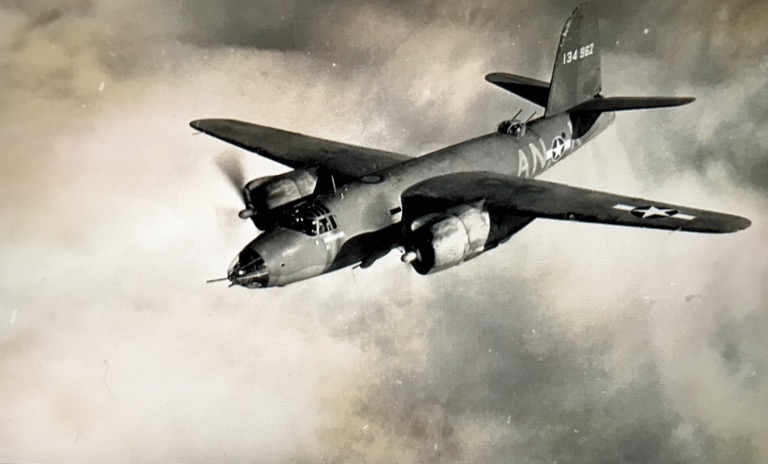
After I wrote about a fighter pilot from Harrisburg being killed when his plane was shot down over Buigny, France during World War II, I heard from a resident of Buigny. He sent me photographs of the village and the field where Carl Higgins’ plane crashed on March 5, 1944. The D-Day veteran I interviewed said, “Carl is my hero.”

The B-26 Marauder flown by Carl Higgins, Jr. of Harrisburg, NC.

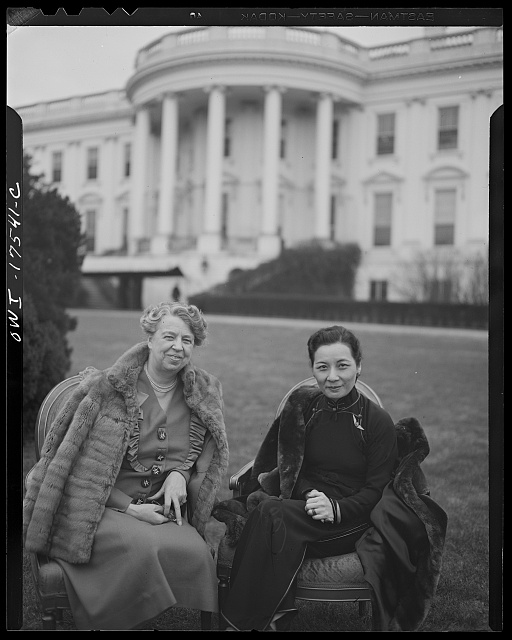
Later in his business life, the father of another of my classmates met Madame Chiang Kai-shek, wife of the Chairman of the National Government of the Republic of China. When he identified himself as being from Harrisburg, North Carolina, Madame Chiang immediately lit up and told that she remembered stopping at the depot in Harrisburg when she rode the train from Boston to Macon, Georgia to visit her sister!

First Lady Eleanor Roosevelt with Madame Chiang Kai-shek. Photo from Library of Congress website.

The father of another classmate regaled me with his memories of growing up very poor, his family moving from one farm to another as sharecroppers, his marriage to his childhood sweetheart in 1936, purchasing his first car – and being berated about that purchase by the farmer he was a sharecropper for, how he had to quit school when his older brother literally jumped a train in Harrisburg during the Great Depression and made his way to Washington, DC… and much more.

In addition to interviewing individuals, I spent hours at the public library reading old newspapers and some hand-written records on microfilm. Oh, the headaches and eye strain!

One of the unexpected gifts of writing the local history column was the vast amount of history – local and national – that I learned. I had proposed to the editor of the new (week old!) newspaper that I had an idea for a column: local history. I did so because I knew a lot of local history and I enjoyed writing.

I quickly learned that there was a massive amount of local history that I did not know. While pouring over microfilmed newspapers from the 1800s and early 1900s, I often happened upon a tidbit about an event, an organization, a government policy, a person about which I was unaware.

Examples of the things I learned by chance from those old newspapers and other resources are the meteorite that fell here in 1849, a man whose occupation in the 1880 U.S. census of Cabarrus County was listed as “witch doctor,” the evolution of information gathered over the years via the U.S. Census, a head-on collision of two trains in Harrisburg in 1897, the oldest woman in North Carolina died here in 1930 at the age of 112, and the Sauline Players whose performances I enjoyed in elementary school was a theatre troupe based here in North Carolina.

I got to correspond with a Hollywood actress, Joan McCrea, whose career started with the Sauline Players. After contacting her former agent, who contacted her current agent, Ms. McCrea called me! She gave me invaluable background and behind-the-scenes details about the Sauline Players. The two newspaper articles I wrote about the Sauline Players have garnered more response from readers here and online than any of the other columns I wrote.

Actress Joan McCrea, who got her start with the Sauline Players in North Carolina

I have just scratched the surface of my 175 newspaper articles in today’s post. When I say, “All history is local, but no history is just local,” I base that on my experience as a newspaper columnist. It was an almost seven-year writing gig that opened my eyes to delve deeper into the things I knew and to explore the new things I learned.

I count my stint as a small-time, small-town newspaper columnist as one of the highlights of my life.

If you would like to read more about the topics I’ve mentioned today and all the topics I did not mention, please look for my two books – Harrisburg, Did You Know? Cabarrus History, Book 1 and Harrisburg, Did You Know? Cabarrus History, Book 2 – on Amazon in paperback and e-book. If you live in the Charlotte area, you can find all my books in paperback at Second Look Books in Harrisburg.

Book 1 contains the first 91 newspaper columns I wrote. Book 2 contains not only the other 84 columns but also my research notes from the numerous topics I did not get to write about when Harrisburg Horizons newspaper ceased operation in 2012.

Happy reading!

Janet

All history is local, but no history is just local.

Remembering a Veteran of D-Day

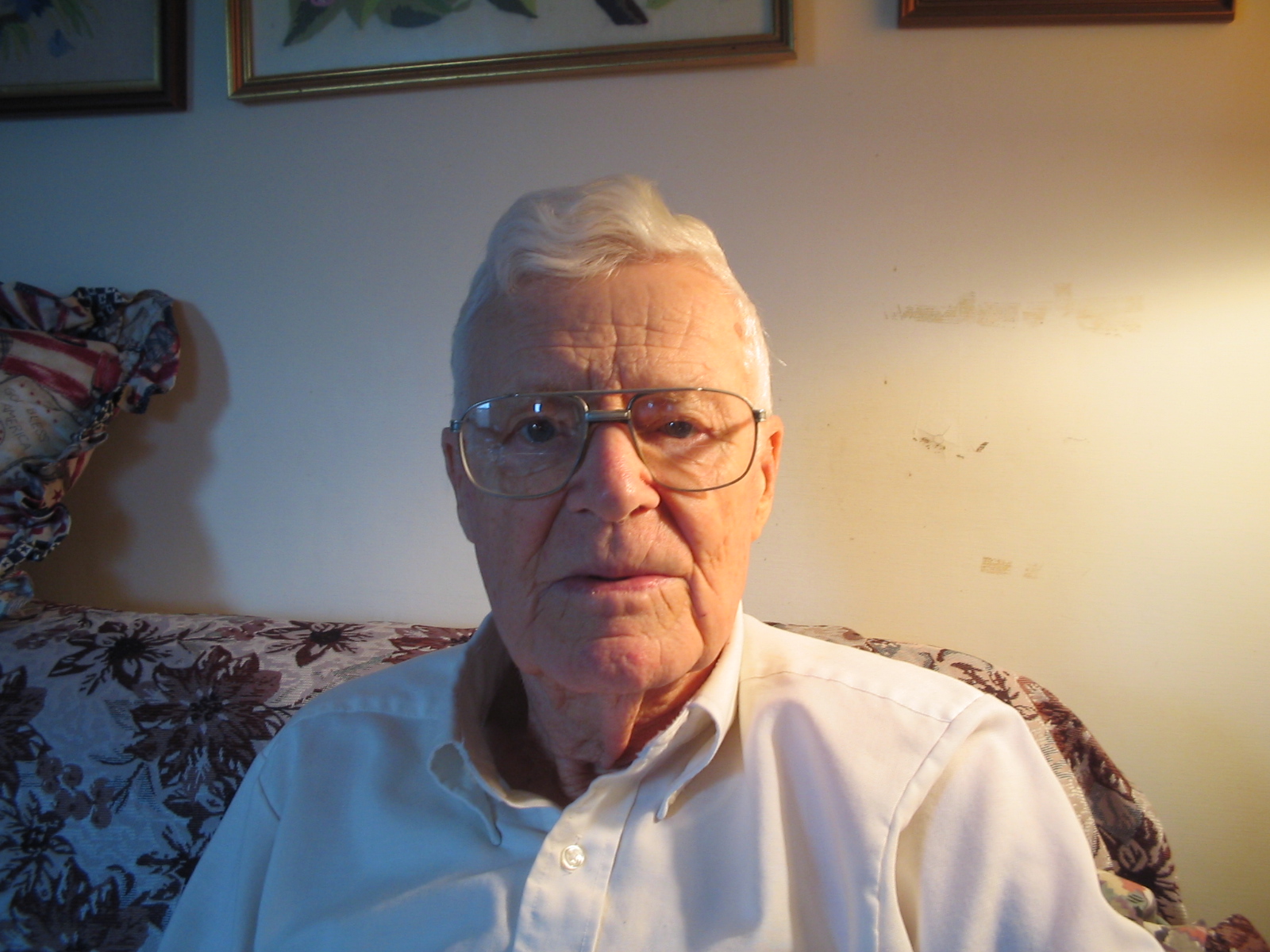
Mr. Ira Lee Taylor of Harrisburg, North Carolina, was an unassuming man. I grew up knowing him as my mailman and the father of a friend at school. It wasn’t until 2006, when I started writing a local history column for Harrisburg Horizons newspaper that I learned from another local World War II U.S. Army veteran that Mr. Taylor took part in the invasion of Normandy on D-Day.

That invasion took place 81 years ago today. Very few veterans are still here to tell their stories. Interviewing Mr. Taylor a number of times in the six years I wrote for the newspaper was one of the privileges of my life.

Instead of June 6, 1944, only being a date in a history book, it became a day of incredible heroism and sacrifice as I heard Mr. Taylor’s vivid memories of that day, the training in preparation for it, and the other battles he was in throughout the war in Europe.

Mr. Taylor served in the U.S. Army’s 4th Division. The entire 4th Division left New York City on four ships on January 19, 1944. About passing the Statue of Liberty, he said, “That was a beautiful thing. We said, ‘We don’t know whether we’ll ever see you again or not.’” Many of them never did.

More than one hundred other ships joined the 4th Division over the next three days. The Liberty Ships were carrying ammunition, food, and other supplies. He said the ships would scatter during the day, but at night they would close in almost touching each other. It took eleven days for them to cross the Atlantic and arrive in Liverpool, England.

They were transported by train from there to Devonshire, England, where they trained for the invasion of Normandy which was occupied and heavily fortified by the Germans.

He talked about how they meticulously prepared their trucks and other equipment so they would be sea worthy. They practiced loading everything up and going to the port of Plymouth. From there, they would sail down the English Channel to a place that was set up to look like “Utah Beach” in Normandy where they would train for the invasion.

Each time they set out, they didn’t know whether it was the real thing or another practice run. Of course, they did not know exactly what they were training for.

After months of planning and incredible secrecy, the invasion was scheduled for June 5, 1944. General Dwight D. Eisenhower knew he had a small window of opportunity before the moon would begin to wane.

No, June 5 is not a typo. That was set as the day for the invasion. The night before, Mr. Taylor said the troops were briefed. They were told, “The 4th Division will make the landing on D-Day. We’re sacrificing the 4th Division to make that landing. We anticipate eighty percent casualties. You’ll pass two islands in the Channel on the way – one’s Guernsey and the other one’s Jersey. You might hear some shooting and all, but don’t worry about it. That doesn’t concern you at all. Two other outfits are taking care of that.”

“The morning of June 5, the gate was locked with an MP guarding it. They wouldn’t let us out, and the boys started singing, ‘Don’t Fence Me In,’” Mr. Taylor said with a chuckle. But then the mood turned somber and they knew this was it.

Mr. Taylor’s outfit set out late on the evening of June 4. They got halfway across the English Channel and a huge storm came up. General Eisenhower was forced to call off the mission, but the invasion had to take place no later than June 6.

So Mr. Taylor’s outfit loaded up again on the night of June 5 before dark. He was on one of 499 ships that took part in the invasion.

Patton’s 3rd Division, the 90th Division, and the 4th Division were all lined up, but the 4th went out first because it was to hit the beach in the first wave.

If you’ve seen the movie, “Saving Private Ryan” or some war documentaries, you might have an inkling of an idea what the invasion was like, but I don’t think any of us can really grasp the horror of it. One thing a film doesn’t give you is the smell, but Mr. Taylor talked about the smell.

He talked about how special troops sneaked onto the Normandy coast before daybreak on June 6 and disarmed many of the mines on the beaches, right under the noses of the German soldiers. At the same time, glider troops were silently landing inland carrying tanks and infantrymen. The 82nd and 101st Airborne dropped ten miles inland, behind enemy lines.

Mr. Taylor talked about the four hundred light and heavy bombers that flew over them until six o’clock in the morning.

The 4th Division missed its target by about a mile, but started landing on Utah Beach at 6:30 a.m. on June 6, 1944.

Mr. Taylor talked about the mines and the iron crosses all over the beach as the Germans anticipated an invasion, the 50-caliber machine guns, the wounded soldiers being taken back to the Landing Ship, Tank (LST) he was on. It carried twenty tanks and 200 troops and doubled as a hospital.

Mr. Taylor was in many battles, including the Battle of the Bulge and the Battle of Huertgen Forest. He had majored in Forestry at North Carolina State University at Raleigh, so he had a particular appreciation for the Huertgen Forest of fir and pine trees, but it was there that the 4th Division lost half of its men and the forest was shattered in the fighting.

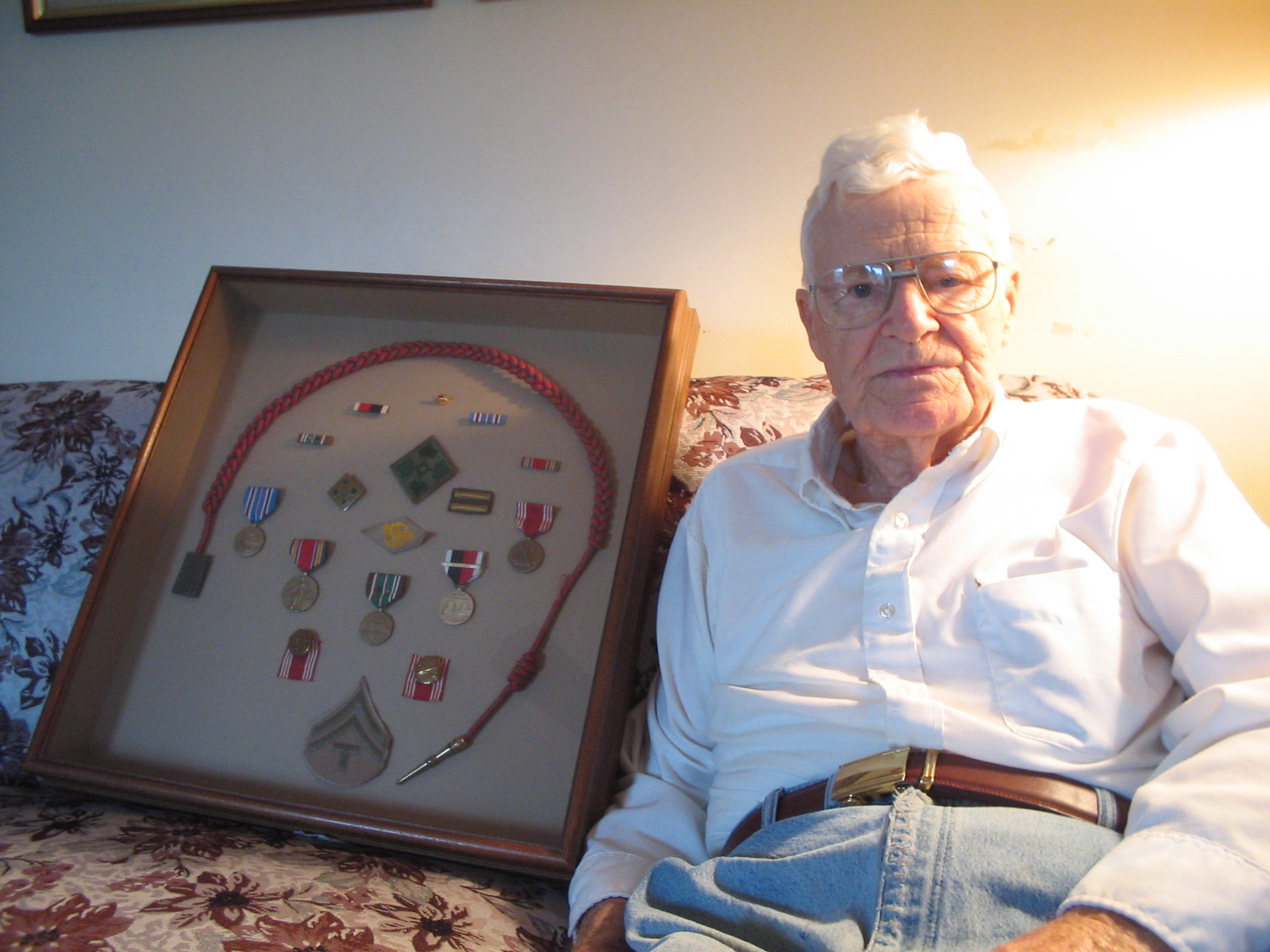
Photo of Mr. Ira Lee Taylor with his World War II medals in a frame on February 24, 2007.
Mr. Ira Lee Taylor with his World War II medals, February 24, 2007.

Needless to say, Mr. Taylor felt fortunate to survive the war. He came home, married his sweetheart, and got a job at the post office. Somehow, he put the horrors he had witnessed behind him, but in his later years he wanted to share his story. And I’m a better person for having interviewed him.

If you are interested in reading all of Mr. Taylor’s stories, my five-part newspaper series can be found in Harrisburg, Did You Know? Cabarrus History, Book 1, which is available in paperback at Second Look Books in Harrisburg and in paperback and e-book from Amazon (https://www.amazon.com/Harrisburg-Did-You-Know-Cabarrus-ebook/dp/B0BNK84LK1/). That book contains the first 91 articles I wrote for the newspaper.


Until my next blog post

Take some time today to think about the men who took part in the D-Day invasion. We owe them a debt of gratitude that we can never repay.

Janet

Book release & newspaper interview

What an exciting day! The Blue Ridge Mountains of North Carolina was released today by Arcadia Publishing and I had my first newspaper interview about the book!

Jesse Campbell of The Mountain Times in Boone interviewed me for an article to be published on August 28 in that weekly newspaper that covers Ashe, Avery and Watauga Counties. You can’t beat free publicity like that!

This morning I participated in the filming of a pilot for a TV series about single pastors. The interim pastor of Rocky River Presbyterian Church is the Rev. Eleanor Norman. She was chosen as one of several single pastors in the US for inclusion in the pilot. Some of us gathered this morning in the sanctuary to give Eleanor an audience for a Scripture reading, sermon, and other remarks as directed by the producer. It’s fun to do something out of the ordinary. My only other TV experience was being an extra in a funeral scene the first season of the TV series “Homeland.” The pilot filmed this morning will never air. It will only be used to try to sell the idea to a network.

I’m going to the monthly meeting of Rocky River Readers Book Club tonight at Rocky River Presbyterian Church for a discussion of I Am Malala, by Malala Yousafzai, the Pakistani teen who was shot in the face just for wanting an education. Attending the book club meeting will be the perfect way to end what has been quite a day.