#OnThisDay: Bill of Rights ratified in 1791

Today is Bill of Rights Day in the United States. The first ten amendments to the U.S. Constitution are known as the Bill of Rights. Those amendments were ratified on December 15, 1791, when nine of the 13 states in the union at that time voted for their adoption.

The U.S. Constitution is a living, breathing document. Even when it was written, many people knew it was inadequate for the new nation because it gave the national government too much power and gave individual citizens and states too little power.

In fact, the U.S. Constitution itself was not ratified (adopted by three-fourths of the states) until there were assurances that amendments were going to follow. The process, though, was not as simple as one might imagine.

For Americans in 2025, the first ten amendments to the Constitution are taken for granted. They make sense to us. They appear to us as a neat little package we easily call the Bill of Rights; however, did you know that when the first Congress of the United States convened on March 4, 1789, they considered 145 proposed amendments?

I would have loved to have been a fly on the wall in their meetings in New York City over the next six and a half months to hear the debates! Can you imagine?

On September 25, 1789, the Congress submitted 12 of those 145 amendments to the states for consideration. Ten of the 12 were approved by the required nine states over the next 27 months and the Bill of Rights became the law of the land on December 15, 1791.

I tried in vain to find a list of those 145 proposed amendments online this weekend. It would be interesting to know what they were about and why only 12 of them were submitted to the states for consideration.

Even without knowing what the other 133 proposed amendments addresses, I can safely say that our lives have been much simpler since 1791 with a ten-amendment Bill of Rights instead of a 145-amendment Bill of Rights!

The Bill of Rights, condensed version

The First Amendment guarantees us freedom of religion, speech, and the press.

The Second Amendment guarantees us the right to bear arms.

The Third Amendment guarantees that in a time of peace, no citizen will be required to house a soldier without their consent, nor during a time of war except as prescribed by the law.

The Fourth Amendment guarantees us to be secure against unreasonable searches and seizures. (Unfortunately, I do not believe ICE and the U.S. Border Patrol are currently being held to that.)

The Fifth Amendment is more complex than the first four. It addresses the protection of our rights to life, liberty, and property. It talks about indictments, military actions, double jeopardy, not having to testify against yourself, due process of law, and the taking of private property for public use without just compensation. (The “due process of law” clause has been ignored in some cases this year by the Trump Administration. We have not heard the last of this.)

The Sixth Amendment guarantees us a speedy public trial by an impartial jury in the jurisdiction in which the alleged crime was committed when we are accused of a crime. It also addresses the right to obtain witnesses and assistance of legal counsel for our defense.

The Seventh Amendment addresses our rights in civil cases.

The Eighth Amendment protects us from excessive bail, fines, and “cruel and unusual” punishment.

The Ninth Amendment protects us from being denied our rights or disparaged by the rights that other people have. Just because a right is not listed in the U.S. Constitution, it does not mean that we do not have that right or those rights. Just because a right is not mentioned in the Constitution, the government cannot infringe upon it.

The Tenth Amendment states that powers that are not specifically delegated to the federal government by the Constitution are, therefore, rights of the states or of the people.  

Just for fun, when did the Eleventh Amendment come along?

Thinking about the Bill of Rights today, I was curious to find out how long after December 15, 1791, was the Eleventh Amendment ratified and what is it about? We never hear anything about it.

In 1793, the U.S. Supreme Court ruled in Chisholm v. Georgia that individuals from one state could sue the government of another state. The Eleventh Amendment was ratified in 1795. It protects states from being sued by individuals from another state or country. It established the principle of state sovereign immunity.

How many amendments have been proposed since 1787?

Since the U.S. Constitution was written in 1787, approximately 11,985 amendments have been introduced in Congress. Most of them never made it off the floor of the U.S. House of Representatives or the floor of the Senate. Twenty-seven amendments to the Constitution have been ratified.

Janet

P.S.    On Friday, the National Trust for Historic Preservation filed a lawsuit in the U.S. District Court for the District of Columbia to try to stop the construction of President Antionette’s 90,000-square-foot dance hall at the White House. The suit argues that President Antionette did not go through the legal review process for the project.

The courts have not been able to stop him on anything else, so it will be interesting to see where this case goes. I suppose if it goes all the way to the U.S. Supreme Court his buddies who form the majority of the court will vote for Trump to proceed with his little dance hall. Or, if they vote to stop him, he will just ignore their ruling. After all, he has already demolished the East Wing of the White House to make room for it.

 “Let them eat cake.” Or, as he proclaimed last week with the Christmas season fast approaching, a child only needs one pencil.

J.

#OnThis Day: A 1777 Estate Sale

When late October rolls around, I think of my great-great-great-great-grandfather’s estate sale held on October 29, 1777.

I knew nothing about it until a few years ago, but what a treasure trove of information his estate papers held! If you aren’t interested in history or your ancestors, you probably won’t read this post. That’s all right. Perhaps a few of you will be curious enough to keep reading.

I have a special bond with my fourth-great grandfather because I live on a little sliver of the land he purchased when he got to North Carolina from Scotland in the 1760s. I walk on the same dirt he walked on. I see some of the species of wild animals he saw. I cross the same creeks he crossed. I belong to the same church he belonged to. His blood flows in my veins.

John Morison (he wrote his name with one “r”) was baptized in the Lowland Church of Scotland in Campbeltown on the Kintyre Peninsula in 1726. He and his two younger brothers came to Pennsylvania for an unknown length of time before purchasing land and settling in North Carolina in the 1760s.

John wrote his will on August 30, 1777, “being very sick & weak in body, though in perfect mind & memory.” In his will, he outlined provisions for his pregnant wife, their eight living children, and their unborn child. In less than a week, John was dead.

Although he had left such things as land, livestock, money, some farm implements, and saddles to his wife and children and the spouses of his eldest daughters, there were things that needed to be settled up through an estate sale.

Defying the fact that John’s estate sale was held in the middle of the American Revolutionary War, all the little scraps of paper and receipts from the settling of his estate survived and are preserved at the State Archives of North Carolina.

 Along with all those tiny pieces of paper which indicate everything from the purchase of “burial liquor” to the educating of his children, are page after page of the record of his October 29, 1777, estate sale.

It amazes me that when combined, John’s will and estate sale tell us everything the man owned. Being the first person in his family’s history to own a piece of land, it is astounding!

He wasn’t a man of great wealth, compared to the aristocracy, but to have come from where he came from I believe he did quite well for himself and his family. He would, no doubt be amazed to know that some of his 7th-great-grandchildren now reside on some of the land he purchased in the 1760s and 1770s.

I promised you a blog post about his estate sale, so let’s get to it.

The sale

Robert Harris, Jr. served as clerk. Mr. Harris had beautiful penmanship and was meticulous in his duties that day. He wrote down every item, who bought it, and how many pounds, pence, or shillings they paid.

Photo of a close-up of a sheep's face with other sheep in the background
Photo by Sam Carter on Unsplash

Items sold at the estate sale included eight horses; 19 sheep; 25 head of cattle; 17 hogs and a parcel of pigs; three hives of bees; 17 geese and ganders; 25 pounds of wool; a parcel of books; a great coat; two straight coats and jackets; one pair of blue britches; a pair of old buckskin britches; and a fur hat. (Oh, how I’d love to know the titles of that “parcel of books!”)

Photo of a stack of books
Photo by Claudia Wolff on Unsplash
Photo of two honeybees on a puffy yellow flower
Photo by Sies Kranen on Unsplash

Also, four saddles; five bells and collars; five other collars; six bridles; two sets of horse gears; an “M” branding iron; three augurs; a drawing knife; nailing and stone hammers; a broadax; three weeding hoes; two maulrings; a wedge; a clivish; a sprouting hoe; a mattock; two falling axes; three spinning wheels; two horse trees and hangings; a cutting knife and stone; a sythe and cradle; four sickles; a flax brake; a pair of wool cards; and a pair of cotton cards.

Photo of a while horse's head with a bridle installed on it.
Photo by chris robert on Unsplash

Also, barrels for flour, rice, beef, and salt; a tapper vessel; two cedar churns; oak and walnut chests; two smoothing irons; a looking glass; one whiskey keg; and various other tools, household items, and pieces of furniture.

Other items included 6.5 pounds of iron and 14.5 pounds of steel. Steel as we know it today had not yet been developed. In 1777, steel was the name for sharpening rods used to sharpen knives and other cutting edges.

Half a wagon?

The most puzzling record in John Morrison’s estate papers is that John Springs bought half a wagon and half the wagon implements. Since no one bought the other half, it has been speculated that Mr. Springs knew that John’s wife, Mary, needed the use of the wagon but also needed the proceeds from the sale of the wagon and implements. After all, Mary was a widow with seven children still at home and a baby on the way. Perhaps Mr. Springs made a verbal agreement to let Mary Morrison keep the wagon even though he paid half the value of the wagon at the estate sale.

Another possibility is that John Morrison had bought the wagon and implements from John Springs but had only paid half the bill at the time of his death. Mr. Springs, instead of saddling Mary Morrison with the additional debt of the unpaid balance chose to simply pay her husband’s estate the half that John still owed. When Mary Morrison died in 1781, there is no mention of a wagon in her will or her estate sale.

Lots of ammunition!

Other intriguing items sold at John Morrison’s estate sale were the 17 pounds of gun powder and 55.5 pounds of lead. That’s more gun powder and lead than a farmer needed. So why did John Morrison have so much of both?

John wrote his will on August 30, 1777. By September 3, he was dead. It is speculated that he was stockpiling munitions for the patriots’ cause in the American Revolution and that he was shot by Tories, but we will never know for certain.

Janet

#OnThisDay: Nathan Hale Hanged, 1776

I don’t know whether American students still learn about Nathan Hale. I’ve heard that students are now taught that U.S. History began when George Washington became President.

I hope that is an urban myth. If a child isn’t taught that there was an American Revolution, a Revolutionary War, and why those came about, it will not mean anything to them to know that George Washington was our first President.

In case you need a refresher about who Nathan Hale was, I’ll give a brief summary.

Nathan Hale

Nathan Hale was born in Connecticut in 1755. He graduated from Yale University in 1773 and became a teacher. He joined a Connecticut regiment in 1775 and was commissioned as a captain the next year.

Hale went behind enemy lines on Long Island during the siege of New York. Deemed guilty of spying, he was captured on September 21, 1776. He was hanged by the British in Manhattan on September 22, 1776.

He was barely 21 years old! I did not realize he was that young until I was doing some research to write today’s blog post.

Things were not going well for the Americans, so leaders used Nathan Hale’s hanging as a rallying cry.

Hale has often been quoted as saying, “I regret that I have but one life to give for my country,” but there is no proof that he uttered those words. British Captain Frederick Macenzie, who witnessed the hanging, wrote in his diary that Hale’s last words were, “it is the duty of every good officer to obey any orders given him by his commander-in-chief.”

Hurricane Helene Update, 51.5 weeks after the disaster

As of Friday, 38 roads in North Carolina were still closed due to Hurricane Helene. That count included five US highways, two state highways, and 31 state roads.

Interstate 40 is, of course, still just two lanes, 35 miles-per-hour.

If you are planning a trip to drive on the beautiful Blue Ridge Parkway, be sure and check on the road’s status before you go: https://www.nps.gov/blri/planyourvisit/roadclosures.htm. There are sections that are still closed. Some of them will be closed for another year. Hurricane Helene recovery project details can be found at https://www.nps.gov/blri/planyourvisit/helene-recovery-projects-at-a-glance.htm.

Don’t hesitate to travel to western North Carolina. Just be aware that there are still spotty road closures. The area needs tourists to support all the small businesses struggling to recover from this September 26, 2024, natural disaster. Eat at a diner instead of a fast-food chain restaurant. Make sure the souvenir you buy was handmade by a local artisan and not mass-produced by a large corporation.

A Note in Closing

I’m pleased to announce the publication of I Need The Light! Companion Journal and Diary to go along with I Need The Light! 26 Weekly Devotionals to Help You Through Winter. Both books are available on Amazon.

We are living in strange times. Pay attention to what is happening. Ignore the attacks on free speech at your own peril.

Janet

Today’s death of free speech

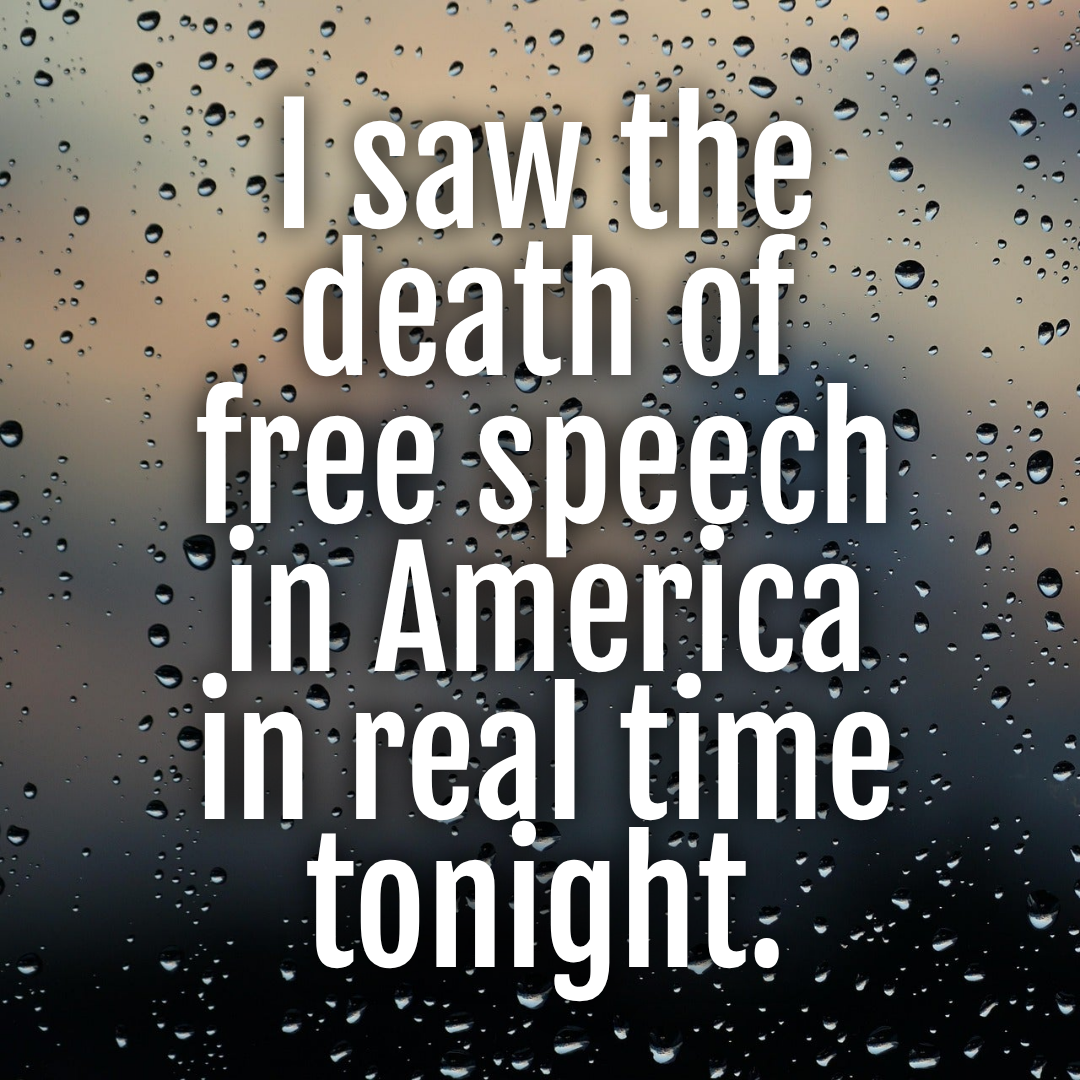
Original meme that says I saw the death of free speech in America in real time tonight.
Meme created by Janet Morrison

Shocked, but not surprised.

One more pillar of the Constitution of the United States of America taken down by the Trump Regime.

Right before our eyes.

They have no shame.

They will not stop.

Janet

#OnThisDay: September 11, 2001

Never forget.

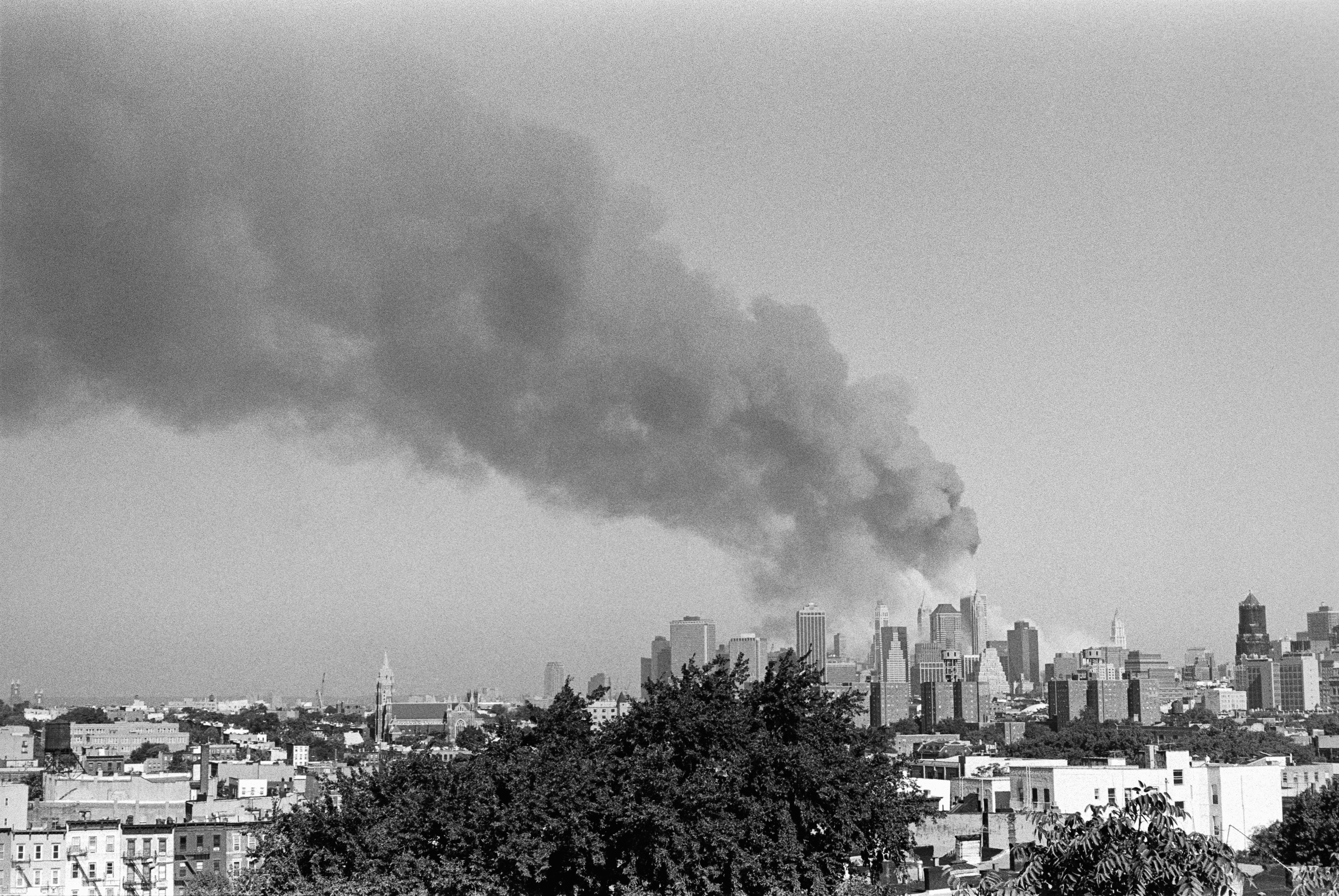
World Trade Center. Photo by Tomas Martinez on Unsplash

Never forget those who died in that terrorist attack.

Photo by Julien Maculan on Unsplash

Never forget the first responders who gave their lives on that day and over the 24 years since that day because of the service they rendered.

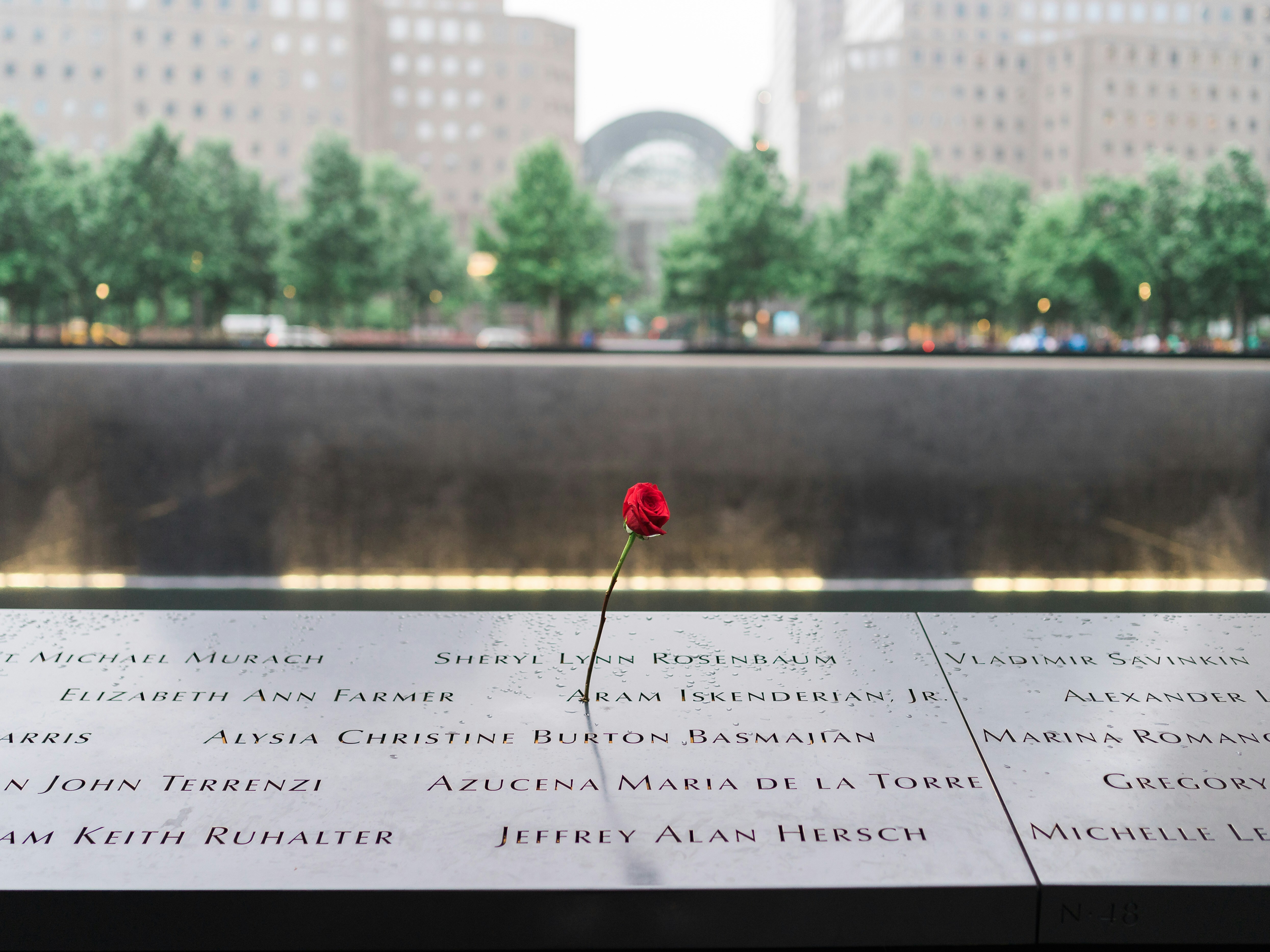
9/11 Memorial on site of the World Trade Center. Photo by Aaron Lee on Unsplash

Ncver forget that feeling of unity Americans felt after the attack.

Do what you can to bring that feeling of unity back.

Never forget the countries that came to our aid and wept by our sides after the attack.

Do what you can to regain that level of respect we had from other countries.

Janet

#OnThisDay: Galveston Hurricane of 1900

Until this year, I could not imagine a world in which a hurricane could sneak up on a country. I have been blessed to grow up in a country where meteorologists tracked weather systems and, with growing precision every year, could forecast where such a storm would make landfall and how wide an area would likely experience hurricane-force or tropical storm-force wind.

With a few exceptions, with the support of the National Weather Bureau, meteorologists have been able to predict within a margin of error how much rain and the wind velocity localities can expect from a hurricane.

The Trump Administration sees no benefit in science, and that includes the work of the National Weather Bureau. If the National Weather Bureau is dismantled, we will not be much better off than the people of Galveston, Texas were in 1900.

A NASA photo looking down on a hurricane
Note: Not the hurricane that hit Galveston in 1900, of course. Photo by NASA on Unsplash

Galveston, Texas, in 1900

Galveston, Texas was a thriving city of 37,700 people in 1900. It claimed to be the “third richest city in the United States in proportion to population.” The seaport was booming. Sixty percent of the cotton grown in Texas was being exported through the port at Galveston.

Victorian mansions and public buildings were being built with elaborate architecture. The banking industry was booming. Grand social events filled the calendars of the elite citizens. All the modern conveniences of the time could be enjoyed in Galveston.

Things couldn’t have been going better!

In fact, things were going so well that residents became complacent, ignoring the fact that their city was on an island in the Gulf of Mexico and it’s highest point was just nine feet above sea level.

September 8, 1900

Although the U.S. Weather Bureau issued a hurricane warning on September 4, most Galveston residents ignored it.

Accustomed to weathering tropical storms, the residents paid little attention to the downpours of rain on the morning of September 8, 1900, even as Isaac Cline, the chief meteorologist at the Galveston Weather Bureau went door-to-door to warn people of the imminent danger. By afternoon, though, the tide was rising at an alarming rate and the wind had picked up.

By mid-afternoon, much of the city was flooded, but the worst was yet to come. It is now estimated that sustained winds reached at least 145 miles per hour that evening and there was a fifteen-foot storm surge.

When the next morning came, the sea was calm but 3,600 houses and businesses were gone. Entire blocks closest to the beach had been wiped away, and more than 6,000 people had died.

With all transportation and communication with the mainland destroyed, Galveston was cut off from the outside world for days as the survivors faced the grim task of disposing of bodies.

After burials at sea turned out to be unsatisfactory, funeral pyres were put up along the beach and bodies were burned for weeks after the storm.

After the Galveston hurricane

A seventeen-foot seawall was constructed in Galveston, which saved the city during future hurricane.

On a wider scope, the hurricane drew focus on the need for improved weather forecasting and warning systems. Weather stations were established through the Caribbean, and ships started tracking storms.

Late-20th-century and early 21st-century technological advances have made hurricane tracking and route predictions more precise, yet Mother Nature is a force stronger than any system of predictions. Even with all the various computer models that predict the path a hurricane will take, they are so large and so powerful that there is still uncertainty.

No one predicted the speed with which Hurricane Hugo would plow across South Carolina and the southern piedmont of North Carolina 200 miles inland in 1989. And no one predicted the extent of flooding and damage Hurricane Helene would do more than 500 miles inland in September 2024.

Even with the best technology, we are still vulnerable to hurricanes, but the warning system we have had in place in the 21st century is light years ahead of the warnings that were possible in 1900.

One hundred and twenty-five years later, the September 8, 1900, hurricane that hit Galveston still holds the record as the worst natural disaster to ever hit the United States, in terms of lives lost.

In 2025, we must fight for the National Weather Bureau to remain intact so no city is walloped with little warning like Galveston was in 1900.

Speaking of hurricanes…


Hurricane Helene Update

As of Friday, 37 roads in North Carolina were still closed due to Hurricane Helene, which hit the mountains in the western part of the state on September 26, 2024. That count includes five US highways, two state highways, and 30 state roads.

Janet

“Bonus Army” Evicted from DC in 1932

I had never heard of the “Bonus Army” or this incident until I stumbled across it while looking for blog topics I could write about on or near — their anniversary dates. This one belonged on yesterday’s blog but got crowded out by the 157th anniversary of the ratification of the 14th Amendment to the U.S. Constitution.

Since the “Bonus Army” needed its own day on my blog, that’s today’s topic.


Why the name “Bonus Army”

As the federal government is prone to do, it came up with a plan to reward individuals who served in the military during World War I but there was a catch. They couldn’t receive their “bonus” payment until 1945 – nearly 30 years after their combat service.

Established by Congress in 1924, the so-called “Tombstone Bonus” would be paid to World War I veterans in 1945 to thank them for their service.

It brings to mind the case of soldiers who were in the American Revolution in the 1770s but were not eligible for a pension until 1832 when most of them were dead.

There seems to be a pattern here.


But then came The Great Depression

The stock market crashed in 1929, and by 1932 things were not getting any better.

Desperate for financial relief, 400 World War I veterans gathered in Portland, Oregon. Led by veteran Walter M. Waters, on May 17, 1932, they left Portland on a donated train and traveled to Iowa, from where they had to walk and hitchhike the remaining 900 miles to Washington, D.C. to make politicians acknowledge their dire straits.

“Bonus Army” participants demonstrating in front of an empty U.S. Capitol in summer of 1932. (Photo from Library of Congress; taken by Underwood & Underwood)

Other veterans learned of the movement and headed to Washington, D.C. By June 1, 1932, there were 1,500 veterans in the nation’s capital to plead with Congress and President Herbert Hoover to find a way to give them their bonus checks early.

The veterans camped out in various locations across Washington, D.C. The Anacostia Flats site was the largest of their shanty towns at 30 acres. It gained the name “Camp Bartlett” because it was John H. Bartlett, the former Assistant Postmaster General and former Governor of New Hampshire who owned the land and let the veterans camp there.

Anacostia Flats encampment in Washington, D.C. in 1932. (Photo from Library of Congress, from the Harris & Ewing Collection)

On June 1, D.C. Police Superintendent Brigadier General Pelham D. Glassford asked Congress for $75,000 to feed the veterans, but the request was denied.

In mid-June, the U.S. House of Representatives approved the immediate payment of the bonus, but the U.S. Senate rejected it. President Hoover had said he would veto the bill if it passed in both chambers.

Photo taken in 1932 at one of the Bonus Army encampments in Washington, DC. (Photo from Library of Congress; taken by Harris & Ewing, photographer)

Veterans kept coming to Washington to plead their case. By the end of July, 1932, it was estimated that up to 20,000 of them had arrived.


It did not end well

In an action that rattles one’s nerves even to read about it 93 years later, on July 28, 1932, President Hoover ordered the U.S. Army and local police to remove all the protesting veterans from Washington.

General Douglas MacArthur led the mission. George S. Patton, whose name we all know from World War II, also participated. In an ironic turn of events, one of the veterans expelled from the nation’s capital by Patton was Joe Angelo, the soldier who saved Patton’s life in World War I.

Some 3,500 U.S. Army infantry and cavalry troops were called up to rid the city of the marchers. Of that number, 800 were actively used in the mission while the other 2,700 were held in reserve.

Violence ensued as the marchers resisted, but they were no match for the fire power of the U.S. Army. Five tanks manned by soldiers with machine guns, troops using tear gas and bayonets, and troops with torches setting fire to the encampments was more than the unarmed veterans could overcome.

Some of them thought they would be safe at Camp Bartlett, since it was on private land and the order to evacuate had only mentioned federal lands. They soon learned that Camp Bartlett was to be cleared also.

General MacArthur threatened to have a civilian bystander arrested for shouting, “The American flag means nothing to me after this!” at the troops.

One of the marchers, William Hashka of Chicago, was shot and killed near the U.S. Capitol.


Excuses and reactions

In a statement that sounds all too familiar to us in 2025, President Hoover claimed that many of the marchers were not veterans. He said they were Communists and criminals.

Falling in line with Hoover, MacArthur said only ten percent of the marchers were veterans.

Vice President Charles Curtis was heckled about the incident while making a speech in Las Vegas on July 29. He responded with, “You cowards, I’m not afraid of any of you.”

Police Superintendent Glassford said on July 29 that the use of federal troops had caused the trouble and that it could have been handled peacefully.

Does any of this sound familiar to you in 2025?

Some newspapers across the nation endorsed Hoover’s actions, while others called it “sheer stupidity.”

In 1936, the World War I veterans received their bonus, but it took Congress overriding President Franklin D. Roosevelt’s veto to accomplish it.

During World War II, in 1944, Congress passed the G.I. Bill to assist veterans.


Until my next blog post

I hope you have a good book to read.

Don’t forget the people of Ukraine and western North Carolina – or the starving children in Gaza.

Janet

#OnThisDay: 14th Amendment Ratified in 1868

Today is the anniversary date for two events that warrant our attention. The 14th Amendment to the U.S. Constitution was ratified on July 28, 1868 – 157 years ago today.

And on July 28, 1932, U.S. President Herbert Hoover ordered the U.S. Army to remove the protesting World War I veterans from Washington, D.C.

To give each of those events their due attention, I will blog about the 14th Amendment today, and I will blog about the “Bonus Army” tomorrow.


The 14th Amendment

The Preamble to the U.S. Constitution

Until the recent past, we never heard much about the 14th Amendment to the U.S. Constitution, and many of us would have been hard pressed to have told you what it was about without looking it up.

Now it is front and center and will be a major issue before the U.S. Supreme Court when they reconvene this fall.

The 14th Amendment is known as “The Birthright Amendment.” It came about immediately after the Civil War to extend citizenship to formerly enslaved individuals; however, the words “formerly enslaved,” “slave,” “slavery,” “Africa,” “African” or any other such qualifiers do not appear in the document.

The Trump Administration wants to abolish the 14th Amendment. Trump claims that it only applies to the people who were slaves prior to the Civil War. If successful in proving that before the U.S. Supreme Court, it will mean that the children of undocumented immigrants will no longer be awarded U.S. citizenship.

That is a major political and legal issue, so it will be incumbent upon the U.S. Supreme Court Justices to weigh all aspects of the matter carefully. Regardless of the Court’s ruling, a lot of people are going to be angry.

People who do not want citizenship to be automatically granted to a baby born on U.S. soil argue that other countries have no such law.

Background information about the 14th Amendment can still be found at https://www.archives.gov/milestone-documents/14th-amendment.

It’s not just Section 1 of the 14th Amendment that makes Trump uneasy. I imagine Section 3 makes him and some politicians nervous in light of the January 6, 2021, attempted coup.


The text of the 14th Amendment

AMENDMENT XIV

Section 1.
All persons born or naturalized in the United States, and subject to the jurisdiction thereof, are citizens of the United States and of the State wherein they reside. No State shall make or enforce any law which shall abridge the privileges or immunities of citizens of the United States; nor shall any State deprive any person of life, liberty, or property, without due process of law; nor deny to any person within its jurisdiction the equal protection of the laws.

Section 2.
Representatives shall be apportioned among the several States according to their respective numbers, counting the whole number of persons in each State, excluding Indians not taxed. But when the right to vote at any election for the choice of electors for President and Vice-President of the United States, Representatives in Congress, the Executive and Judicial officers of a State, or the members of the Legislature thereof, is denied to any of the male inhabitants of such State, being twenty-one years of age, and citizens of the United States, or in any way abridged, except for participation in rebellion, or other crime, the basis of representation therein shall be reduced in the proportion which the number of such male citizens shall bear to the whole number of male citizens twenty-one years of age in such State.

Section 3.
No person shall be a Senator or Representative in Congress, or elector of President and Vice-President, or hold any office, civil or military, under the United States, or under any State, who, having previously taken an oath, as a member of Congress, or as an officer of the United States, or as a member of any State legislature, or as an executive or judicial officer of any State, to support the Constitution of the United States, shall have engaged in insurrection or rebellion against the same, or given aid or comfort to the enemies thereof. But Congress may by a vote of two-thirds of each House, remove such disability.

Section 4.
The validity of the public debt of the United States, authorized by law, including debts incurred for payment of pensions and bounties for services in suppressing insurrection or rebellion, shall not be questioned. But neither the United States nor any State shall assume or pay any debt or obligation incurred in aid of insurrection or rebellion against the United States, or any claim for the loss or emancipation of any slave; but all such debts, obligations and claims shall be held illegal and void.

Section 5.
The Congress shall have power to enforce, by appropriate legislation, the provisions of this article.


Hurricane Helene Update

Sign blocking travel by car, bike, or on foot on National Park Service property on Blue Ridge Parkway at Asheville, NC, June 10, 2025
Barricade on Blue Ridge Parkway beside entrance to Folk Art Center at Asheville, June 10, 2025

12 more miles of the Blue Ridge Parkway in North Carolina have reopened from Milepost 305.2 near Beacon Heights and U.S. 221 to Milepost 317.5 at U.S. 221 near the Linville Falls community!

The Linville Falls spur road, campground, picnic area, and visitor center remain closed, due to hurricane damage.

There were at least 57 landslides across almost 200 miles of the Blue Ridge Parkway in North Carolina. Recovery has been broken down into three phases. The 12-mile opening last week is one of 12 projects included in Phase 1. When that phase is completed this fall, some 48 miles of the Parkway will have been restored.

Phase 2 includes the repair of 21 landslides in eight areas which are mostly located between Milepost 318.2 and Milepost 323.4, south of Linville Falls. It is hoped that Phase 2 will be completed by the fall of 2026.

Phase 3 is in the planning stage. During that phase, repairs will be made to 23 sites between Milepost 336.7 and 351.9, which lies between Little Switzerland and Mount Mitchell. There is no published timeline for the work to begin or be completed in Phase 3.

I have driven the entire 252 miles of the Blue Ridge Parkway in North Carolina many times and its 207 miles in Virginia at least once, but I doubt I will live to see it fully rebuilt.

If you are planning a trip to the Blue Ridge Parkway, you can find current information at https://www.nps.gov/blri/planyourvisit/helene-impacts-and-recovery.htm. Just be aware that most of it in North Carolina is still closed.

As of Friday, of the 1,457 roads that were closed in western North Carolina last September due to Hurricane Helene, all but 34 are now completely open, which is the same as the prior week’s report. The NC DOT reports 42 roads have partial access.

I-40 at the Tennessee line is still lust opened with a total of two lanes and a 35-m.p.h. speed limit. A report I heard on TV last week said it will take years to fully reconstruct the interstate highway.


Until my next blog post

Keep reading everything you want to read – and some things you don’t want to read but need to read.

Remember the people of Ukraine and western North Carolina and the children in Gaza who are starving to death through no fault of their own.

Janet

Going forward as Americans

In yesterday’s blog post, A 4th of July like no other, I lamented the fact that I do not feel celebratory on this United States Independence Day.

Here are my thoughts on this 4th of July – the 249th birthday of America.

Purple letters spelling out freedom on a black background
Photo by Kristina V on Unsplash

Never take your freedom to read whatever you want to read for granted. People have died to protect that freedom, and there are people and organizations that think they have the right to take that freedom away from you.

Never take your freedom to practice the religion of your choice – or to practice no religion at all – for granted. People have died to protect that freedom, but there are some people who think they can force their warped brand of Christianity on all our citizens.

Never take your freedom of assembly for granted. People have died to protect that freedom, but there are people who want to limit our access to gathering if our ideas don’t align with theirs.

Never take your freedom to complain, grumble, criticize, question, and protest against your elected officials for granted. People have died while protesting and people have died to protect that freedom. If we lose that freedom, we have lost our democracy.

Never take your freedom to vote for granted. People have died to protect that freedom, but there are loud voices in our country today who want to put many hoops for us to jump through in order to vote. They want to make it such a cumbersome process that we will miss a step or just give up. They try to convince us that voter fraud is rampant, but investigations have proven it rarely happens.

Never take the freedom of the press for granted. People have died to protect that freedom. The freedom of the press is under attack by the President Donald J. Trump, by his press secretary Karoline Leavitt, and by Secretary of Defense Pete Hegseth. But they are wrong. The press is not “the enemy of the people!” It is incumbent upon each and every one of us to defend and protect the press. If we lose that precious freedom in the United States, we will most assuredly lose all our other freedoms.

Remember the people of Ukraine and western North Carolina.

Keeping silent is being complicit

Resist!

Rise up!

Speak up!

Speak out!

Get into good trouble!

That’s how Independence Day 2025 needs to be celebrated… while we still can.

Janet

A 4th of July like no other

Tomorrow marks the 249th birthday of the United States of America. It was on July 4, 1776 that our national Declaration of Independence was signed in Philadelphia.

Photo of dark clouds over the dome of the US Capitol Building
Photo by Kyle Mills on Unsplash

This has been a tough year so far. In the months leading up to July 4, I wasn’t sure how festive this year’s celebration would or could be. Many of us are embarrassed by the actions and words of the current US President, the US Congress, and the US Supreme Court.

Many of us are worried about the future of our country and its standing in the world. Many of us are worried about our financial security as individuals. Many of us are grieving for the rights and benefits we and the poorest of the poor in the world have lost at the hands of the Turmp Administration. People are starving and dying unnecessary of preventable diseases because the aid that the United States had funded and promised has been halted in the name of efficiency, waste, fraud, and diversity.

What should I blog about just hours before Independence Day?

A week or so ago, I decided to mark this Independence Day by posting “A Light and Lively Look at Independence Day in America.” I had the whole post written, illustrated, and scheduled for 5 a.m., July 4, 2025.

I included links to comedian Nate Bargatze’s skits on the iconic TV show, “Saturday Night Live” or “SNL.” Both skits featured Bargatze as General George Washington and four regular SNL cast members (Bowen Yang, Mikey Day, Kenan Thompson, and James Austin Johnson) as American soldiers under his command in 1776 and 1777.

Bargatze’s trademark deadpan delivery made the skits hilarious. I thought sharing links to video recordings of the skits would be a good way to remind Americans that we need to laugh at ourselves. We shouldn’t take ourselves too seriously.

But as the days went by this week, I had a nagging feeling that I could not in good conscience go forward with that post tomorrow. It didn’t feel right. We have nothing to laugh about on this Independence Day.

Our country is in a precarious place. Our democracy and everything we thought we knew about our country are crumbling in front of our eyes.

This is my 73rd Independence Day. Until this year, it has always been a happy day – a day to be proud of my country, a day to pick wild blackberries, a night to hold a sparkler with close adult supervision when I was a young child, a day to go to a parade, a day to eat hotdogs and hamburgers, a day to watch a fireworks display, a day to sing patriotic songs, a day to wave the flag, a day to celebrate our freedoms.

Not this year. Now, none of that feels right. Oh, we still have some freedoms, but the current U.S. President and his minions have them in a vice grip. They are tightening the screws more each day. Those freedoms are being crushed and trampled on.

The last straw for me was seeing “Alligator Alcatraz” on TV and hearing some Republicans in high places of power making jokes about it. They’re making jokes about how the alligators and pythons will keep the detainees in line.

They joke about how the human beings detained there — and yes, although they are here illegally, they are human beings – will have to learn to run in a zigzag fashion while being chased by alligators. They joke about how security will be a small expense because the alligators and pythons work for free. They are human beings with names and families and very few of them are criminals. Coming into the United States without the proper paperwork is not a felony. It is a misdemeanor.

Even with all that “free” security provided by wildlife, we are told that “Alligator Alcatraz” will cost the American taxpayers $450 million-a-year. Florida will pay that upfront and then be reimbursed by FEMA. Personally, I don’t think that was why the Federal Emergency Management Administration was intended for. Even so, the cost in money is beside the point.

This “Alligator Alcatraz” detention center looks like a concentration camp. The human beings will be kept in cages – just like the first Trump Administration kept detainees in the first time. The wire cages are inside tents, and the Trump Administration claims these tents can survive a category 2 hurricane. We might find out over the next five months if that claim is valid.

While in Florida to visit “Alligator Alcatraz” in the Everglades, Trump was asked by a reporter how long individuals would be held there. He gave a long and typically incoherent response that did not address the question at all. He talked about how he lives in Florida and will spend “a lot of time here…” and how he has redecorated the Oval Office. It was a bizarre response to a simple question, but in its bizarre-ness it was one of his typical nonsensical “weaves”

Where are the people who called President Joe Biden incompetent? Where are they now that we have a U.S. President who is incapable of forming a complete sentence or staying on topic?

But that is not my main point.

My thoughts today and each day this week as I anticipated the 4th of July are… disbelief and horror. I am horrified that the United States of America is constructing a concentration camp – just as it did during World War II. Then the camps were built to restrict the movement of people of Japanese descent. In 2025, they are for anyone with brown skin or a Spanish accent.

The photographs of the masked ICE agents are horrifying. They look exactly like the masked Boko Haram self-proclaimed jihadist militant group in Nigeria, except those thugs were black and most of the ICE agents are white. What they have in common in addition to their face coverings is a penchant for terrorizing people, including little children. What they appear to have in common is hate and a personal delight in inflicting pain and terror.

Police officers in the United States don’t wear face masks. People who are ashamed of what they are doing wear face masks. People who don’t want to be caught or recognized wear face masks. Have the dark face coverings of ICE agents in 2025 replaced the white hoods of the Ku Klux Klan? The sight of the masked ICE agents triggers that comparison in my mind, and the first word that comes to mind is “cowardice.”

What kind of person – mostly men – takes a job as an ICE agent? Who takes a job in which they have to trade their souls for a mask and a pair of handcuffs or wad of zip ties? Are they so filled with hate and racism that they enjoy terrorizing families and children?

And those ICE agents? They will, no doubt, say they were just following orders. If that lame excuse rings a bell, it is because that’s what Hitler’s henchmen cried at the Nuremberg Trials in 1945 and 1946.

I don’t recognize this America. I don’t understand this America. I cannot celebrate this America.

Janet