I write southern historical fiction, local history, and I've written a devotional book. The two novels I'm writing are set in Virginia and the Carolinas in the 1760s. My weekly blog started out to follow my journey as a writer and a reader, but in 2025 it has been greatly expanded to include current events and politics in the United States as I see our democracy under attack from within. The political science major in me cannot sit idly by and remain silent.
Aside from the inflammatory introductory remarks about our country being invaded by illegal aliens, the most troubling part is Section 3(b):
“No later than 60 days after the date of this proclamation, the Secretary of Homeland Security shall supplement existing enforcement and removal operations by deputizing and contracting with State and local law enforcement officers, former Federal officers, officers and personnel within other Federal agencies, and other individuals to increase the enforcement and removal operations force of the Department of Homeland Security by no less than 20,000 officers in order to conduct an intensive campaign to remove illegal aliens who have failed to depart voluntarily.”
“and other individuals” – That leaves the door open to just about anyone. As if the ICE officers we have already seen on video act like they have ever read the US Constitution or anything else.
What we have seen so far is men wearing sunglasses just above their masks. They appear to have no identification or warrants. They ride in unmarked vehicles. They show up in large numbers to arrest one individual. They slam the individual to the ground, face down, hand cuff/zip tie them, and shove them into the what sometimes resembles a SWAT armored vehicle. They drive off to an undisclosed location, leaving the person’s family members wondering where they are and what to do about it.
If animals were being treated like this, animal rights groups would be all over it. These are people, though, not animals.
Now, in addition to the 80,000 officers Homeland Security already has, they want “to increase the enforcement and removal operations force of the Department of Homeland Security by no less than 20,000 officers” by July 8.
How many more people will be picked up by mistake? How many more people will be shipped to a prison in a country not their own due to an “administrative error” or some such lame excuse?
I’m at a loss for words to convey how sick and frightening this is, and I am not an illegal alien.
I don’t recognize the United States of America. I don’t recognize the brutality with which the Trump Administration is attacking immigrants, freedom of speech, due process, education, libraries, museums, scientists, medical researchers, the environment, federal employees, farmers, and small businesses reliant on imported goods and materials.
This scorched earth approach to every facet of our government and economy doesn’t make sense to me… but I guess that’s what you get when you put a businessman in the White House.
If you voted for Trump, did you realize you were voting for a police state?
Hurricane Helene Update
As of Friday, 56 roads in North Carolina were still closed due to Hurricane Helen. That count includes five US highways, five state highways, and 46 state roads.
There is nothing new about the I-40 or Blue Ridge Parkway reconstruction project.
The nonprofit Orchard at Altapass opened this weekend! It is on a six-mile stretch of the Blue Ridge Parkway that is open near Little Switzerland. Put it on your itinerary. Hurricane Helene wiped out 400 of their apple trees, but they still have 2,500 and need people to support them this year.
The Hazard Mitigation Grant Program is underway in counties affected by Hurricane Helene. Under the program, as I understand it, property owners apply for consideration for acquisition, elevation, or land stabilization. Their property is evaluated for whichever category the owner prefers.
It is an effort to give homeowners the opportunity to secure their homes to mitigate damage from a future storm or to sell their land to be left vacant so there won’t be a structure there to be damaged or washed away if another major storm occurs. FEMA provides 75% of the funds and the State provides the remaining 25%. More than 400 property owners in five NC counties have submitted applications according to an online report by Karen Zatkulak of WLOS in Asheville on May 7. (I was not able to easily current statistics for the other 22 counties and Eastern Band of Cherokee Indians/Qualla Boundary that sustained damage from the hurricane.)
A new machine manufactured by Tigercat is operating in Haywood County, NC to convert wood into biocarbon. Since Hurricane Helene, an abundance of trees are lying on the ground over hundreds of square miles in western NC.
Twenty tons of wood debris can be reduced to 2,000 tons of biochar, which is “a carbon fertilizer that can revitalize soil and conserve water for long periods. The amount already made is now going to local farmers who lost their land during Hurricane Helene,” according to an online WLOS report by Ed DiOrio on May 6.
Until my next blog post, tomorrow
Read what you can
Get your news from reliable sources.
Don’t stop paying attention. Our country and our way of life hang in the balance.
Please overlook any errors. Writing a blog post at 1:00 a.m. is never a good idea. I couldn’t find an appropriate image to illustrate this post. All the officers in the free law enforcement photos online are identified as “Police” on their uniforms and their vehicles say, “Police.” I couldn’t find any free photos of masked men riding around in unmarked vehicles arresting people.
When I blogged The Importance of Marbury v. Madison Today on February 24, I didn’t intend to start an endless series of political and political science posts, but there seems to be no end to the chaos the Trump Administration is creating.
I don’t make this stuff up. I’m trying to put a human face on the madness. All the numbers are huge. The suffering is individual and collective. The grief for what the United States of America used to be is real.
Watching various politicians and representatives of the Republican Party interviewed or speaking as panelists on several Sunday morning news shows on TV only serve to reenforce my fear that worse days lie ahead for the United States of America. Through the voicing of their beliefs, they demonstrated that Republicans have lost their way. They have lost sight of the US Constitution. They have lost sight of the truth.
“Kristen Welker: Do you believe that President Trump is following orders of the courts right now?
“Sen. John Kennedy: Yes. And I don’t believe that President Trump will defy a federal judge’s order. If he does, I’ll call him out on it.”
I hope when Senator Kennedy catches up on the news from the last several weeks, he will indeed call out President Trump.
Here we go…
As of April 14, 2025, all grants with the Office on Violence Against Women have been terminated because the US Department of Justice has concluded that these grants “no longer effectuate the agency priorities.” This is an admission by the Justice Department that they used to “effectuate the agency priorities.” I conclude that it is no longer a priority of the US Department of Justice to address violence against women. As a result, on April 14, 2025, the American Bar Association immediately cancelled “all its upcoming trainings.” This apparently refers to training lawyers on how to effectively prosecute men who violently attack women and educating women who find themselves in a dangerous situation. No wonder President Trump said he would “take care of women.” It creeped me out when I heard him say that because we all know how he personally takes care of women, but this official DOJ warning to women is a whole other level. It’s no longer creepy; it’s frightening. To use a term that Trump’s macho hunter friends use, I guess it is now “open season” on women.
Photo by Mika Baumeister on Unsplash
The US Air Force has removed webpages, photos, videos, and biographies about several trailblazing female pilots, including retired Colonel Nicole Malachowski. She served in the Air Force for 21 years and was the first woman to pilot with the elite Thunderbirds team. Does anyone see a pattern here?
Col. Nicole Malachowski
According to a Washington Post report, “Thiry-eight of 43 experts cut last month from the boards that review the science and research that happens in laboratories at the National Institutes of Health are female, Black or Hispanic, according to an analysis by the chairs of a dozen of the boards. The scientists, with expertise in fields that include mental health, cancer and infectious disease, typically serve five-year terms and were not given a reason for their dismissal…. These scientists rate the quality of the science on the nation’s largest biomedical research campus, where 1,200 taxpayer-funded investigators lead laboratories focused on Parkinson’s disease, heart disease, cancer immunotherapy, and other diseases and treatments.” A pattern, or a coincidence?
ProposedUS Department of Health and Human Services budget cuts would slash 40% of the Centers for Disease Control and Prevention (CDC) and National Institutes for Health budget. I hope all the medical researchers and physicians who have lost their jobs due to Donald Trump will be able to find new opportunities in other countries where their knowledge and skills will be appreciated.
A doctor who is a US citizen born in Pennsylvania received one of the US Department of Homeland Security’s emails informing her that she has to leave the United States immediately. Maybe the new Department of Government Efficiency needs to investigate the top officials at Homeland Security. Seems like they’re making a lot of mistakes in who they’re trying to deport.
US Department of Homeland Security Kristi Noem has threated to prevent Harvard University from enrolling international students unless it gives her information on all of its student visa holders’ disciplinary records and protest participation. Harvard has been given an April 30, 2025, deadline or it will “face immediate lost of Student and Exchange Visitor Program (SEVP) certification.” It’s difficult to imagine Harvard University without any international students.
On Friday, Trump, who was partially elected because he claimed he would bring down the cost of eggs and other groceries, said, “You can have all the eggs. You watch, we have too many eggs. In fact, if anything, the prices are getting too low. So I just want to let you know that the prices are down.” Like he would know or care about the price of a dozen eggs!
In case you needed more proof that Donald Trump does not have a clue what Easter is about or who Jesus Christ is…
Looking out from the empty tomb on Easter morning Photo by Pisit Heng on Unsplash
Sunday was Easter Sunday, and President Trump chose the occasion to issue perhaps the most off-the-beam Easter greeting ever issued by anyone. I wonder if any Evangelical Christians read it. If they agreed with it and saw it as anything but disrespectful to God, then maybe they need to reevaluate their religious beliefs.
On Easter Sunday, Trump took to social media and wished “Radical Left Lunatics” a happy Easter. He attacked “weak and ineffective judges and law enforcement officials” for calling for the return to the US of Kilmar Abrego Garcia from El Salvador although the Trump Administration had already admitted that his deportation was an “administrative error.”
In light of the US Supreme Court’s unanimous ruling that the Trump Administration must bring Mr. Abrego Garcia back to the United States, in his Easter message, the President blasted the legal pushback as “an attack so violent that it will never be forgotten!”
Violent? It was a decision made by the highest court in our country. There was nothing violent about it. I believe the violence was perpetrated against Mr. Abrego Garcia when he was sent to an El Salvador prison against a court order.
And Trump remains obsessed with President Joe Biden. Constantly drumming into the American people the lie that every immigrant is a criminal, in his Easter greeting he once again claimed that Biden “purposefully” allowed “Millions of criminals to enter our Country, totally unvetted and unchecked” and called it “the single most calamitous act ever perpetrated upon America.”
In case you missed it, this is how Trump concluded his angry Happy Easter greeting to the American people:
“But to him [Biden], and to the person that ran and manipulated the Auto Pen (perhaps our REAL President!), and to all of the people who CHEATED in the 2020 Presidential Election in order to get this highly destructive Moron Elected, I wish you, with great love, sincerity, and affection, a very Happy Easter!!!”
Whoa! That is just bizarre yet, sadly, not surprising.
But the worst thing that’s been proposed yet
This somehow got in under my radar since February 25. Blackwater founder, Erik Prince and its former Chief Operation Officer Bill Matthews sent a proposal to Trump’s advisers before January 20.To say it is chilling and horrific and un-American, is not strong enough language. Words fail me.
In a nutshell, what I read in a New Republic article online last Thursday: For $25 million, Prince and Matthews’ new company, 2USV, will transport 12 million immigrants from America to the notorious prison in El Salvador in two years’ time.
But wait… there’s more… the US will buy part of the prison campus, declare it an American territory, and then the Administration can’t be accused of sending Americans or anyone else to a prison outside the United States.
Let that sink in.
No one outside the Trump Administration or Prince and Matthew’s orbit know what the status of this proposal is.
Keep in mind, it was just last week that Trump and the President of El Salvador discussed the possibility of sending more prisoners from America to El Salvador. Now we know that idea did not just come out of nowhere!
To deport 12 million people in 24 months, an average of 500,000 would have to be rounded up and transported every month. To facilitate this, 10,000 private citizens would be deputized. I’m not making this up.
If this were a novel or a movie, it would be labeled as horror.
Until my next blog post … tomorrow
I hope you’re reading a good book.
Pay attention to what’s happening at the hands of the Trump Administration. This is the time to do what you can to stand up for American democracy.
Remember the people of Ukraine, Myanmar, and western North Carolina.
Maundy Thursday is a day to ponder Christ’s Last Supper with His disciples. It is a day to remember Christ’s arrest and his betrayal at the hands of His disciples. It is a day to anticipate His brutal treatment and hideous crucifixion on the cross that we will remember tomorrow.
Maundy Thursday is a day to slow down and consider the sacrifice Jesus Christ made for each of us. The horrors He endured for us on “Good Friday” should weigh heavily on our hearts and minds today, tomorrow, and Saturday as we dare not let the joy of Easter Sunday creep into our thoughts yet.
I did not want to blog today. I did not want to rant and rave. I did not want to call out my fellow Americans for blindly following Donald Trump. I did not want to get all worked up and end up with a headache or high blood pressure or a stomach ulcer.
So that’s not what I’m going to blog about today. Instead, I am writing about some of my very deep concerns and try to put the pieces together of how in the world America got to this place of distrust and disagreement.
I never anticipated that writing my little blog this is supposed to be about my writing, my reading, and my love of studying history was going to consume all my time in 2025 or that a US President’s abuse of power would come to be all I can even think about.
I never thought I would be able to truly understand what happened in Germany in the 1930s, but I now have a crystal-clear understanding. It only takes an extreme level of evil in a handful of people and the brainwashing of enough of the population.
It comes on slowly.
Each thing that is said or done sounds bad when you see that one thing in isolation.
You convince yourself that good people will prevail.
Something else is said or done, and you start to realize that “good people” are believing the lies.
You eventually realize that too many of the “good people” and “good Christians” in particular aren’t who you thought they were.
You realize that too many of the white people in America have a deep-seated prejudice against all the non-white people.
You realize that the white people in America who fly the Confederate flag in their yard or put a Confederate flag sticker on their pick-up truck aren’t just stuck in the past. They aren’t just showing their pride that one of their ancestors fought on the wrong side in the American Civil War. No. They hate black people. They don’t just hate black people… they wish them harm. If this is not how they really feel, they need to realize that’s the impression they are giving to black people and people who think racial prejudices are a bad thing.
You realize that too many of the professing Christians have completely pushed aside the teachings of Jesus and have put a political leader above Christ and the good of the whole. You start hearing them say they truly believe that Trump was chosen and sent by God to save our country.
They hijack the American flag as theirs and theirs alone, along with the color red which used to be my favorite color. Now I’m afraid to wear red for fear someone will assume I’m a Republican.
You realize you cannot reason with the people who support the President of the United States. You cannot have a civil conversation with them. You can find no common ground with them because their world view is something you can’t comprehend.
This is not only tearing our country apart. It is tearing families apart.
“As a lifelong Presbyterian, I was taught that one should always strive to agreeably disagree”… to respect others’ points of view… to be able to calmly discuss our differences. Although we may not convince the other person to see things our way and they may not convince me to see things their way, the two of us should respect each other and in the end agree that we see things differently but we will still be friends.
The prejudices and hate were already there, but it became common during the 2016 presidential campaign that family gatherings for holidays or family birthdays and anniversaries are strained to the point that such gatherings only leave people with a sense of dread because they know there is always at least one person in the family who feels compelled to bring up politics at the table even though they know everyone in the group does not agree with them.
It seems to always be the family member with the most extreme right-wing opinions that will bring it up. They don’t bring it up for discussion. They bring it up to start an argument… an argument no one wins… and eventually everyone goes home and either dreads the next time they have to be together or vows they will just cut themselves off from the relatives they disagree with. It is impossible to find common ground anymore.
One thing we were taught in school about the American Civil War was that it often pitted “brother against brother.” Those words never made any sense to me because I couldn’t imagine being at such deep odds with my brother that we would be on opposing sides in a civil war. How can siblings raised by the same parents under the same roof be at odds over basic tenets of their faith and the basic tenets of the US Constitution?
I can’t believe my country has turned into a nightmare of a place where authoritarian fear-mongering reigns and the US Constitution is trampled every day and no one seems able to stop it.
I can’t believe I live in an America where people defending the US Constitution are openly belittled, made fun of, and shouted down on live TV by people who are willing to defend a US President to the death because their allegiance is to one man and not the US Constitution. I can’t believe it, but I see it every day.
Our “founding fathers” (and founding mothers, who get no credit!) warned us about totalitarianism, kings, and wannabe-kings, but after 249 years we didn’t think it could happen here.
I don’t recognize my country anymore.
As I commented to a blogger friend earlier this week, “I’m at the point now that I watch the world going on around me and on TV as if it’s 2024 and I wonder how they can ignore what is happening in real life. It reminds me of the feeling that one has when a parent dies and as you drive to the funeral home you want to roll down the car window and scream, “Don’t you know my ________ just died? How can you be going around business as usual as if nothing horrible has happened?”
My faith is in God. I’m not afraid to die because I know where my soul is going to spend eternity. I look forward to eternity! It is everything between now and then that I dread.
On the bright side, at least I don’t have to spend Easter with relatives with whom I disagree on politics and religion.
Are you as tired as I am of being bombarded with the news of the day? And yet I feel called to lay out 16 more instances today of not just cracks in our system of government but some basic failings and actions that fly in the face of the US Constitution and common decency. You can thank me now or you can thank me later for deleting three items from today’s list.
Many of the items on today’s list are not being covered in the media. I hear or read a snippet of a story, and then I look for more information and documentation. I use reliable sources, and I don’t deal in conspiracy theories.
I used to not know or care what political party someone else aligned with, but we live in an era now where that seems to be the first thing someone wants you to know about them. That literally wear in on their heads and post it in their yards. There is little tolerance for anyone who does not agree with them, so it is tempting to keep one’s mouth shut.
Our current situation in the US is exhausting everyone who treasures democracy. I am exhausted, but when I learn about something that blatantly runs contrary to the US Constitution and is so viciously forced on the American people, I can’t seem to stay quiet.
For good measure, I’m including a couple of things that you just might not have heard about. Lots of things are slipping under the news cycle radar because too much is happening too fast.
Each thing considered by itself might not seem so bad or dangerous, but when digested together patterns appear.
The Kremlin has confirmed that Russian President Valdimir Putin has gifted Donald Trump with a portrait he commissioned by a Russian artist. US Special Envoy to the Middle East, Steve Witkoff, was giddy talking about it on TV. After all, Witkoff’s diplomatic experience could fit on the head of a pin with room left over. His qualifications for being US Special Envoy to the Middle East – which apparently includes Moscow? – are that he is an American billionaire real estate investor. The portrait? Who knows better how to flatter and gain the confidence of Donald Trump than ex-KGB Agent Vladimir Putin?
The Associated Press reported, “The White House’s Office of Management and Budget has proposed gutting the State Department’s budget by almost 50%, closing a number of overseas diplomatic missions, slashing the number of diplomatic staff, and eliminating funding for nearly all international organizations, including the United Nations, many of its agencies and for NATO headquarters, officials said. The proposal, which was presented to the State Department last week and is still in a highly preliminary phase, is not expected to pass muster with either the department’s leadership or Congress, which will ultimately be asked to vote on the entire federal budget in the coming months.” It depends on if Congress grows a spine. Stay tuned!
Trump has cancelled almost all 1,200 current grants issued by the National Endowment for the Humanities to reappropriate the money to his pet project of a garden of statues of 250 people in American history he deems heroes. I shudder to think whom he would choose for the honor… and whom he will not select. It takes no imagination to come up with both lists. It’s just too bad for the individuals and organizations who were promised funds for their projects and now the rug has been pulled out from under them. Did you enjoy the PBS film series The Civil War, by Ken Burns? Guess where Burns got some of his funding. This is an insidious way for Trump to kill the Public Broadcasting System (PBS). He wants to pull all federal funds from PBS and now he has moved money from a major source of funding for much of the system’s programming. According to the website for the National Endowment for the Humanities, it is an independent federal agency. I guess it isn’t “independent” anymore.
It should be no surprise that US Secretary of Health and Human Resources Robert F. Kennedy, Jr. chose David Geier, a person without a medical degree, to conduct a study of possible links between vaccines and autism. Geier his late father published six papers claiming there is a connection between the two. Geier has a Bachelor of Arts degree in biology. The Maryland Board of Physicians charged him with practicing medicine without a license. Anyone want to bet on what Geier’s conclusion will be?
A glimmer of Congressional backbone? US House and US Senate versions of a bi-partisan Trade Review Act of 2025 have been introduced which would give Congress the authority to end a tariff ordered by the President after 60 days.
It should have come as no surprise that North Carolina’s request for an extension of 100% matching funds for Hurricane Helene recovery was denied, since US Secretary of Homeland Security Kristi Noem has said she wants to eliminate the Federal Emergency Management Agency (FEMA). NC Governor Josh Stein received the news, ironically, while he was in Avery County with country music star and North Carolina native Eric Church at the groundbreaking for a 40-home development for people who lost their homes in the storm. Eric Church’s foundation spearheaded the project. North Carolina suffered $60 billion in damage from Hurricane Helene last September, and the need for assistance is still great. In February, the State of Georgia’s request for an extension from FEMA was also denied. “Senior Official Performing the Duties of FEMA Administrator” (yes, that is his official title, according to the FEMA website) Cameron Hamilton said in his denial communication to Gov. Stein that the request was “not warranted.” The hurricane recovery aid to NC will continue as a 90% match to what the state spends.
On April 3, US Secretary of Agriculture Brooke Rollins declared 112 million acres of national forests to be in an emergency situation due to their high risk of wildfires and hazardous tree conditions, allowing them to be open for logging. That’s 59% of our national forest acreage. The emergency designation allows the US Forest Service to bypass environmental laws. Trees in our national forests are logged, so that’s not anything new; however, the 59% percent is troubling and declaring an emergency situation so environmental regulations can be ignored also concerns me.
Trump issued a National Security Presidential Memorandum (NSPM-4) which gives the Department of Defense authority to take control of federal lands to carry out military operation to repel invasions and seal the border. This includes national wildlife refuges and national forests. Indian reservations are excluded. The military can designate those areas as National Defense Areas, closing off public access indefinitely. Using “national security” to override environmental protections and civilian control of public lands can then easily be applied elsewhere. All Trump needs to do is call something a “national emergency.” This is a very slippery slope in the hands of a man who has absolutely no appreciation for nature or the American citizens.
Trump and Musk shut down the Division of Environmental Health Science and Practice at the Centers for Disease Control and Prevention (CDC). To put a human face on this… Dr. Erik Svendsen, Director of the division, is known for his studies of the effects of the chlorine spill that resulted from a train wreck in 2005 a Graniteville, South Carolina. When the office was suddenly closed by the Trump Administration, Svendsen had to end his participation in a childhood lead investigation in Milwaukee, Wisconsin, and notify his employees who were working in western North Carolina where Hurricane Helene caused the worst flooding in the state’s history. Water and sewer infrastructure had been ripped apart in September and the area is still dealing with the environmental damage. Too bad! And too bad for state and local health departments across the country that depended on the expertise of Dr. Svendsen and his staff. Too bad for the localities across the nation that were being aided in children’s lead poisoning issues. The division was also in charge of the national asthma control program and other important environmental health tracking networks. The division helped states struggling to make sure private wells are properly built and free of contamination. It was Dr. Svendsen’s division in 2023 that helped health officials in North Carolina unravel a connection between children eating a certain type of applesauce and elevated lead levels in their blood. That work a few years ago resulted in Dr. Svendsen’s division launching efforts that identified 500 additional cases nationally. The result was a national recall of the applesauce polluted with a South American cinnamon high in lead content. An article about this CDC division’s closure in The State newspaper in Columbia, SC quotes Louisiana Sanders, a resident of Graniteville and former SC Department of Health and Environmental Control board member, as saying, “This is going to set us back another 20 or 30 years.”
US Secretary of State Marco Rubio struck a deal with Guyana, a neighbor and enemy of Venezuela, to share intelligence information and come to the aid of Guyana if it is invaded by Venezuela. Venezuela wants the oil resources in Guyana. In response, on April 11, Venezuela’s President Nicolas Maduro called Rubio an “imbecile.” I almost missed reading about this whole thing. We might need to just be aware.
Deportations on steroids: There have been quite a few heartbreaking and frightening stories about actions and inactions of the US Government over the last 12 weeks. (Has it only been 12 weeks since January 20th?) The most heart-wrenching stories so far have been about deportations. People being kidnapped on the street and forced into unmarked vans. University students forced out of the country because their visas are inexplicably revoked. American citizens receiving emails in the middle of the night telling them they have seven days to leave their country. (There are no instructions for just which country they are supposed to escape to. They are being told their “paroles” have been revoked. These are American citizens who have never sought a “parole” because, after all, they were born in the US and have always lived in the US.) One American citizen who received one of those emails from Homeland Security is an immigration attorney! The report I read said that the Trump Administration is revoking the parole of 532,000 Cubans, Haitians, Nicaraguans, and Venezuelans who came to the US under a Biden-era humanitarian parole program. The immigration attorney in Massachusetts does not fall into any of those categories.
I wish I could share with you the details about what happened to an Australian who has lived in the US for more than five years on a work visa, but I can’t write several thousand words about it. I invite you to do an online search and read the gory details for yourself. In a nutshell, he took his sister’s ashes to scatter them in Australia in March. When his return plane landed in Houston, Texas, he was detained, called names, accused of being a drug dealer, and was put on a flight back to Australia after 36 miserable hours of detention. Everything he owns except two changes of clothes are at his home in the US. He is barred from returning to the US for five years. The details are scary, but they can be found at https://www.theguardian.com/ if you want to read them. I’ve only heard his side of the story, but it appears he was denied due process of law. There is an alarming pattern that the Trump Administration only wants due process when it is a member of the administration who needs due process. The rest of us, not so much.
In an apparent effort to ward off Trump taking back the Panama Canal, an agreement has been quietly reached in which US troops will be able to deploy to a bunch of bases along the canal.
The National Museum of African America History and Culture opened nine years ago. It has been praised for exhibiting the good and the bad in African American history. But Trump said the museum is part of a “widespread effort to rewrite our nation’s history.” I have learned that one of his recent Executive Orders in which he attacked museums and national parks stated, “Museums in our nation’s capital should be places where individuals go to learn ‒ not to be subjected to ideological indoctrination or divisive narratives that distort our shared history.” Trump says there are exhibits in the Smithsonian museums that make America look bad. He singled out the National Museum of African American History and Culture. Slavery is part of our national history, Mr. Trump, whether you like it or not. It is an ugly part of our history, but you cannot change the fact that it existed. The museums of the Smithsonian Institution are the envy of the world. At least they were until Trump came along.
This pales in comparison to Trump’s numerous threats to our democracy, but it deserves inclusion on my list. Michigan Democrat Governor Gretchen Whitmer arrived for a private appointment with President Trump on April 9 to discuss her concerns about the effects the tariffs will have on her State. Instead of being taken into the Oval Office for their meeting, she was blindsided by being ushered into the room for the signing of an Executive Order calling for the investigation of two high level people in the Biden Administration, Chris Krebs and Miles Taylor. Trump, who has never before had a kind word to say about Whitmer, took that opportunity before cameras to praise the Governor and thereby humiliate her in a public setting and set her up for knee-jerk criticism from her own political party. Can anyone say, “Con man?”
Every time Trump, White House Press Secretary Leavitt, or anyone else in Trump’s orbit or on TV calls a judge “rogue,” like Leavitt did yesterday, they are putting all judges at risk. They are not only undermining our justice system, they are encouraging their followers and listeners to pick up a gun or make a bomb to intimidate or murder a judge or someone in a judge’s family. We all need to value and stand up for the rule of law and freedom of the press. We could lose both in the blink of an eye.
Until my next blog post
I hope you have time to read a good book, and I hope you can concentrate enough to read it. I can’t.
Perhaps next week will be the week I only blog once instead of the recent four or five times. We can hope!
Remember the people of Myanmar, Ukraine, Kentucky, and western North Carolina.
This is a long blog post. Don’t blame me, blame Trump. If not for him, I would still be blogging just one day a week or occasionally skipping a week.
I am horrified that yesterday the President of the United States of America and the President of El Salvador sat in the Oval Office of the White House and agreed that Kilmar Abrego Garcia CANNOT be returned to the United States even though he was sent to an El Salvador prison by mistake without due process. The Sixth Amendment to the US Constitution guarantees everyone in the US to due process. That’s not just citizens. That’s anyone. President Nayib Bukele of El Salvador said returning Mr. Garcia to the US would be the same as smuggling a terrorist into another country. As Bukele voiced this ridiculous excuse, Trump smiled and nodded his head in agreement. (Have you noticed that Trump only smiles when showing delight in someone else’s misery?) The White House (i.e., Secretary of State Marco Rubio and White House Advisor Stephen Miller) chimed in saying no court in the US has the authority to conduct foreign policy, that only the President has that power. Last week, the US Supreme Court ordered Mr. Garcia’s return to the US because he was sent to a prison in El Salvador due to a clerical error, so this whole display of an egregious abuse of Presidential power was directly aimed at the US Supreme Court. What we have here is a Constitutional Crisis.
Furthermore, on a hot mic at that same news conference, Trump said to the El Salvador President/Dictator, “The homegrowns are next. You gotta build about five more places.” They were both enjoying the moment and laughing. “Home-grown” means US-born. And the US Vice President, the US Secretary of State, and the US Attorney General were complicit in their silence. No US President has ever voiced a desire to send American citizens to prisons in another country. The way Trump throws around threats that many individuals and groups should be “locked up,” we are left to understand that he now plans or at the least contemplates sending anyone he considers to be a criminal to a prison in another country. Make no mistake: Trump’s words were aimed at any American citizen who dares to disagree with him or criticize him. Don’t take Trump at his word, look into his intent. Don’t make excuses for him. Don’t kid yourself. We no longer have a normal Executive Branch in the US Government. Trump’s words yesterday were in direct conflict with the “cruel and unusual punishments inflicted” phrase in the Eighth Amendment to the US Constitution and were chilling on multiple levels.
Do you know why Trump has found a new ally and friend in President Nayib Bukele? Bukele “is the iron-fisted president of El Salvador (2019– ), who has unabashedly styled himself as the “world’s coolest dictator” and the country’s “philosopher king.” (https://www.britannica.com/biography/Nayib-Bukele)
On Sunday night, Trump jumped on social media and pretty much ordered the Federal Communications Commission to go after CBS because he did not like the news segments on “60 Minutes” that night about Ukraine and Greenland. Quoting from Trump’s post, “Hopefully, the Federal Communications Commission (FCC), as headed by its Highly Respected Chairman, Brendan Carr, will impose the maximum fines and punishment, which is substantial, for their unlawful and illegal behavior.” He said CBS should lose its license. I watched the segment about Ukraine. Scott Pelley, interviewed President Zelensky of Ukraine. As an American citizen, it looked like an excellent and honest interview in which Zelensky invited Trump to visit Ukraine and go wherever he wanted to in the country and see for himself the condition in which the country is. Zelensky said that Russia invaded Ukraine – which the whole world knows is true – but apparently, Trump can’t tolerate anyone saying anything negative about his buddy in Moscow. (And, no, Mr. Trump… Russia’s bombing of Sumy, Ukraine on Palm Sunday morning was not an accident.) Threats to revoke FCC broadcast licenses is Step One, my friends, of Donald Trump shutting down the free press in the United States of America. He ended his Sunday night social media rant with the words, “Make America Great Again!” in all caps. In yesterday’s press conference, Trump lashed out at CNN’s Kaitlin Collins as follows: “You said if the Supreme Court said someone needed to be returned, you’d abide by that,” Collins reminded him. Trump cut her off and it looked like he wasn’t going to address her question, but then he said, “Why don’t you just say, ‘Isn’t it wonderful that we’re keeping criminals out of our county? That’s why nobody watches you anymore.” You have no credibility.” The truth of the matter is that Kaitlin Collins is not afraid of Donald Trump. He is afraid of her because someone deep down he knows she does her research, she knows the US Constitution, and she will fight for freedom of the press with her last breath. His total disdain for the First Amendment to the US Constitution could not be more obvious. His total disdain for the First Amendment to the US Constitution could not be more obvious.
The Wall Street Journal reported on April 11, 2025, that the Trump Administration spent $154 billion more since the inauguration on January 20 than the Biden Administration spent in the same period last year.
Colonel Susannah Meyers, commander of the US Pituffik Space Base in Greenland was fired after not sharing Vice President J.D. Vance’s enthusiasm for the United States taking control of Greenland. She made the mistake of telling Vance that a US takeover did not reflect the community.
In my blog on Saturday, I wrote about my concerns about the Trump Administration declaring 6,100 living immigrants in the Social Security database as being dead. Another new bit of news about the Social Security Administration (SSA) is the announcement on Thursday that it will be making all announcements in the future on X instead of via press releases or announcements on its website. This, coupled with the recent announcement that many local SSA offices are closing and business cannot be conducted via phone means X is just one more roadblock for people needing SSA services. I’m going out on a limb, but I think most people on Social Security are not on X. Those of us who used to be on Twitter cancelled our accounts when Elon Musk bought Twitter and changed the name to X – and we aren’t going back!
The new image of Trump was hung in a prominent place in the White House – a place traditionally reserved for portraits of the immediate past President. President Obama’s portrait was taken down and hung elsewhere, but instead of a portrait of President Biden being hung in its place, a rendition of a campaign image of Trump was put up. It’s a defiant, angry image of Trump with his fist in the air. Can anyone say, “Petty?” Can anyone say, “Tacky” in the truest Southern US sense of the word?
Stocks and Bonds out-of-whack. Stocks were up a little on Friday, April 11, but US Treasury Bonds were down. With the stock market losing in general and causing investors to wonder what the future holds, one would think they would be turning to the more stable bond market. But that’s not what was happening on Friday. When investors and other countries are hesitant to purchase US Treasury Bonds, that sent up a red flag that economic instability might be worse than we thought, if that’s possible. However, on Friday afternoon as Trump flew to Florida for yet another golf weekend, the 27-year-old blond ever-cheerful and perky cross-necklace-wearing White House Pres Secretary Karoline Leavitt enthusiastically encouraged reporters in the White House Press Room to, “Trust President Trump. He knows what he’s doing.” You can’t make this stuff up.
US Secretary of State Marco Rubio sent a memo to every US Embassy in the world instructing State Department employees to report their colleagues for any instances of “anti-Christian bias.” It is reported that accusations of such bias can be made anonymously, but they should be as detailed as possible. Trump created a task force by Executive Order in February to not only hunt down anti-religious bias in his Administration but also in the Biden Administration, so why did the Rubio memo specify “anti-Christian bias?” Call me a left-wing lunatic, but I think this smacks of fascism. Rubio is the son of immigrants from Cuba, and this is the way he thanks America?
The Associated Press reports that, “Some journalists are reporting that Trump Administration officials are refusing to engage with reporters who list their pronouns in their signature.” The New York Times reports that one reporter’s email received the following response from White House Press Secretary Karoline Leavitt: “As a matter of policy, we do not respond to reporters with pronouns in their bios.”
On Thursday, April 10, 2025, the US House of Representatives passed the SAVE Act. That Act, if also passed by the Senate, will require proof of citizenship for voter registration. Republicans (and, apparently, four rogue Democrats in the US House) just cannot get it through their heads or hearts that millions of noncitizens are voting, so they had to come up with a hardnosed solution to a problem that does not exist. On the face of it, it does not sound that oppressive. One way to prove citizenship is to produce your birth certificate; however, that birth certificate must be in your current legal name. If you are a woman who took your husband’s surname when you got married, your birth certificate is no longer proof of your citizenship. Your only saving grace is your passport. You can’t afford $130 for a passport? Too bad! The Republicans want to take us back to “the good old days” prior to 1920 when women could not vote in the United States. One might not be able to prove that the SAVE Act is unconstitutional because it does not include words like “sex,” “women,” or “female,” but it is definitely in opposition to the spirit of the 19th Amendment. How can it be interpreted otherwise when it is women who traditionally take their husband’s surname in the US? Voter suppression, plain and simple, under the guise of preventing non-citizens from voting.
While we are on the topic of voting… President Trump’s Director of National Intelligence, Tulsi Gabbard, voted in Hawaii last November even though she had sworn last June that her legal state of residence was Texas so she and her husband could take advantage of a homestead tax exemption in Texas. The excuse her office gave: she was trying to shield her address from public view for security reasons. Even if that is true, it did not make it legal for her to cast her vote in Hawaii. Can anyone say, “Voter Fraud?”
In my April 11, 2025, blog post, I expressed concern over the fact that 17 of the 300 student visas revoked by Secretary of State Marco Rubio were from four universities in North Carolina. It came to light on CNN on Saturday that the actual number is 525, but that number doesn’t make me feel any better. If the 525 figure is to be believed, that means three percent of them are from just four universities in North Carolina. Can that be possible? And if that is correct, why are North Carolina universities being targeted? Secretary Rubio sat in the Cabinet meeting on Friday and said they were only giving the boot to international students who came to America to “vandalize libraries,” but that couldn’t be further from the truth. First of all, the Trump Administration has already shown its disdain for libraries in his Executive Order a couple of weeks ago ordering the Institute of Museum and Library Services to be “eliminated to the maximum extent consistent with applicable law.” Second of all, it looks like any international student is at risk of being sent back home, which short-term and long-term will be a brain-drain and tragedy for the United States and for those individual students. But then on Sunday I learned that a student at Appalachian State University has been added to the list of international students in North Carolina whose visas have been revoked. Counting the Duke University alumnus and an alumnus on Optional Practical Training that’s 18 students at five universities in NC alone. In a TV interview on Sunday, Congressman Robert Garcia of California, who serves on the Homeland Security Committee, said the total number now is more than 800. The Trump Administration needs to come clean about the numbers and the fact that most of these students are being kicked out of the United States for only one reason: they are from another country. That is horrible, anti-education, and anti-American. It is also a hallmark of a Fascist regime. But any government that can declare living immigrants to be dead can kick foreign students out of the country for no reason – many of them just a couple of weeks before the end of a semester and graduation for some of them. That’s cruel, plain and simple. All under the guise of stamping out anti-semitism. Nothing could be further from the truth and anyone with common sense knows it. Thank you, Harvard University, for not caving in to the façade.
I will blog about more such happenings in America tomorrow.
Reminder: Go to https://speakupforjustice.law for more information and to register for the 12:00 Noon Eastern Time “Speak Up For Justice” event on Zoom. In part, the website states, “The Speak Up For Justice event seeks to bring the country together to voice support for the judiciary at a time when it is under unprecedented attack.”
Yesterday I posted a rare Saturday blog. Today, I post an even rarer Sunday blog.
This is going to be short, because I am very tired of pounding the keyboard to write about some of the bad things happening in America.
I’m posting this today so you will see it before Tuesday.
If you don’t remember the murder of the son of US District Judge Esther Salas’ son in 2020, please look it up. He was murdered because his mother was a judge. I won’t try to give the details of that story here.
I saw her interviewed on CNN yesterday. The interview made me aware of an effort taking place this Tuesday, April 15, to draw attention to the escalation of intimidation tactics against federal judges.
In a nutshell, pizzas are being delivered to the homes of federal judges and to the homes of their children and the name of Judge Salas’ murdered son are attached to those pizzas in some way. Keep in mind, these pizzas were not ordered by the judges or their family members.
The pizza deliveries are being done by people who want to control and/or destroy our judicial system. They are being done to convey the message, “We know where you live and we know where your children live.”
Go to https://speakupforjustice.law for more information and to register for the 12:00 Noon Eastern Time “Speak Up For Justice” event on Zoom. In part, the website states, “The Speak Up For Justice event seeks to bring the country together to voice support for the judiciary at a time when it is under unprecedented attack.”
Thank you for reading my blog! I hope I won’t have a reason to post again until tomorrow morning.
Today’s blog post is dedicated to my classmate who said, “This is a beautiful thing to watch.”
Today’s blog post is dedicated to everyone who told me, “We need a businessman in the White House.”
Today’s blog post is dedicated to all the evangelicals who voted for this fascism.
If you take offense at my referring to the Trump Administration as being fascist, file your complaint with Merriam-Webster, not me.
This is how the Merriam-Webster online dictionary defines Fascism: “a populist political philosophy, movement, or regime (such as that of the Fascisti) that exalts nation and often race above the individual, that is associated with a centralized autocratic government headed by a dictatorial leader, and that is characterized by severe economic and social regimentation and by forcible suppression of opposition.”
If legislating through Executive Orders is not dictatorial, I don’t know what it is. If the shoe fits….
The “red flag” was today’s headline on TV and online: “Thousands of immigrants declared dead, but they aren’t.”
I had planned to include today’s topic in a blog post sometime next week. It is a post that will contain a list of “highlights” of how things are going in the United States of America; however, the deeper I dived into what is going on at the Social Security Administration, the more concerned I became. It quickly became obvious that this deserved its own blog post.
I looked forward to a respite from the news and a break from blogging over the weekend. I made the mistake of turning on my desktop computer and the TV this afternoon.
If you have not been paying attention today, you might not know what has happened since Thursday… and this is MUCH MORE IMPORTANT than Trump lifting the tariffs from electronics coming from China. The electronics tariff news taking the spotlight today is there is distract you from something happening at the Social Security Administration that should make your blood run cold.
The price of your iPhone or the price of eggs could soon be the least of your worries.
The purpose of the Social Security Death Index (SSDI)
The purpose of the SSDI was to prevent the Social Security number of a deceased person to later be assigned to someone else.
That sounds like a good purpose, doesn’t it?
My deceased parents’ names are in that database. I don’t want their Social Security numbers being reassigned to someone else.
But then the Trump Administration came along…
This is how it went down, according to The Washington Post:
Social Security Administration (SSA) officials made the Trump Administration aware that they had concerns about the security of the Social Security Death Index (SSDI) database. They (SSA officials) were worried that people could be added to the SSDI without proper proof of death.
The Trump Administration chose to exploit that revelation.
Scott Coulter, the new chief information officer installed by Elon Musk and the folks at the US Department of Homeland Security wanted to use the database for nefarious purposes, so on
Greg Pearre, Associate Commissioner, Office of Systems Architecture at the Social Security Administration, who oversaw a staff of hundreds of technology experts, “clashed with Scott Coulter,” telling Coulter that it was “illegal, cruel and risked declaring the wrong people dead,” according to three people who had knowledge of the events.
Trump appointees did not appreciate Greg Pearre’s knowledge of the law.
The names of 6,100 living immigrants ranging in age from teenagers to octogenarians were declared dead by the Trump Administration and added to the Social Security Administration’s Death Master File, which is apparently being renamed “Ineligible Master File.” (This was done on April 8, 2025, as well as I can determine.)
On Thursday, April 10, 2025, security guards escorted Greg Pearre out of his office and out of the Social Security building in which he worked. A sad ending to anyone’s 25-year career.
No one should be okay with this!
If you are okay with this, may God have mercy on your soul. Your level of hate and bigotry and your disdain for the United States Constitution is greater than I can wrap my head around.
In the name of “Make America Great Again,” my deceased parents (and perhaps yours?) and everyone else who has had a Social Security number and died since the creation of the Social Security Administration in 1937 are on that list, lumped together with living immigrants that Donald Trump wants to rid our country of. (Forgive me for ending a sentence with a preposition, but the dismantling of American democracy is happening too fast for me to worry as much about grammar as I did three months ago.)
If the Trump Administration doesn’t like you (in other words, if you don’t financially support Donald John Trump, Sr. AND appropriately and publicly sing his praises), you, too, might just find your name on the new Death Index.
I just might find myself dead any day now. Literally or figuratively dead. And it really makes no difference which it is. If the wrong people discover my blog, it could happen to me. That’s the America in which I live in 2025.
Please don’t think any of this is okay.
Thank you, Greg Pearre, for trying to save the Social Security Administration. I’m sorry your valiant efforts resulted in you losing your job. At least you still have your integrity from your 25-year career in government service.
Thank you for The Washington Post’s reporters who were brave enough to go public with this story!
No, Mr. Trump, the press is NOT the “enemy of the people.” You are, Mr. Trump. You are.
In my March 24, 2025, blog post I said “no one wants to read a 3,000-word blog post.” I hope I was wrong, because today’s weighs in at 3,096 words, if you don’t count the words on the memes I created.
I’ve written more than 10,000 words in my four blog posts this week. If I could have added 10,000 words to my historical novel manuscript this week, I would be on Cloud 9 and much closer to publication than I am today. I didn’t work on my novel at all.
Unfortunately, I have “bigger fish to fry” now than completing my novel or my historical short stories. My country is in dire danger from within.
If you disagree with me or don’t know what I’m talking about, you are not paying attention.
My blog post today might make you mad and I hope it does!
The actions and inactions of the Trump Administration delineated below are just “off the top of my head.” It might look like I’ve been keeping a list since Inauguration Day, but I have not.
The most frightening part of this is that there are, no doubt, literally thousands of actions being carried out in locked-up government offices, museums, and libraries all over our country that I haven’t heard about… that have not been leaked out… that reputable news organizations have not been privy to or uncovered yet… that our President does not want us to know.
What has happened since Inauguration Day, January 20, 2025… in no particular order
A word here. A word there. A government agency here. A government agency there. Lies repeated ad nauseam.
Muzzle public television by cancelling their funding. Muzzle radio and television stations by reminding them that you can take away their broadcast licenses. “Plant” people in a press conference to ask ridiculous and programmed questions while banning certain reputable news organization such as the Associated Press from the room. My “favorite” so far was the “plant” who asked you on March 28, 2025, “What is a woman?” Your response made me want to vomit.
Your US Department of Agriculture orders 21 tractor-trailer trucks hauling nearly $1 million worth of food (more than 377,000 pounds) to turn around and not deliver the food to Tennessee food banks. The same thing happened in Ohio. How many other states? A US President has to be a certain level of evil to prefer to let tons of food rot than to be delivered to food banks for distribution to people who need that food to supplement what they’re struggling to pay for at the supermarket or corner store. Mr. Trump, you’ve not only never missed a meal, you’ve never had to give a thought to how to pay for the food you have eaten every single day of your life! You are literally taking food out of the mouths of children and old people in the name of “Make America Great Again.”
You shut down Voice of America. It was silenced for the first time in 83 years. It was broadcasting in 49 languages across the world – in accordance with Congressional funding — so people could hear the news in their own language and compare it to the propaganda their own governments were telling them. You claimed that Voice of America was “horrible.” You criticized it for reporting on the Covid-19 pandemic and for quoting people who disagree with you. Voice of America was also broadcasting what you were saying, Mr. Trump. It was telling people living under repressive regimes that in America it was okay to criticize the government. Oh… since it’s no longer okay to criticize the US President, I guess that message is no longer something we should brag about.
Ignore court orders day after day. Go after any judge, law firm, or attorney who dares to make a ruling or file a law suit not to your liking. Then have the Speaker of the US House of Representatives float the idea that US courts can be defunded and, therefore, shut down.
Put a host of incompetent people on your Cabinet, then fire thousands of government employees without regard to merit or risk to public health or safety.
Pardon 1,500 insurrectionists who stormed the US Capitol on January 6, 2021, chanted “Hang Mike Pence” broke windows, assaulted police officers, defecated on the floors and walls, broke into and trashed offices, and tried to prevent the certification of the November 5, 2020 Presidential Election results. Say they were “treated unfairly” and call them “patriots.” Say they were just a bunch of grandmothers touring the Capitol.
Grant clemency to people like Jason Galanis – you know, the guy who was sentenced to 14 years and five months in prison back in August 2017 for his role in a bond scheme that defrauded the Oglala Sioux tribe and pension fund investors out of tens of millions of dollars. Such notices of clemency take place in quiet, so how many have taken place since January 20th?
Shut down the United States Agency for International Development, which was the bastion of goodwill for us throughout the poorest parts of the world. Turn the US Departments of State and Defense into bully pulpits to intimidate and threaten our long-time allies.
Declare an invasion when there wasn’t one. Invoke war powers in a time of peace. Imprison peaceful protest organizers on university campuses. Turn professors and medical researchers away at the border.
Pay El Salvador millions of dollars to take your prisonerswithout due process. Some are dangerous gang members, but some… well, we just don’t like what they look like or their accent. Even when your spokesperson admits at least one of them (that father from Maryland) was sent to El Salvador due to an “administrative error” you claim there is no way to bring him back to the US? Until January 20th, we were the most powerful country in the world, but ten weeks later we can’t ask El Salvador to release someone from prison? You paid El Salvador to imprison these people. We don’t have to ask for any of our money back, Mr. President. Just ask for the prisoners we sent down there who aren’t guilty of any crimes and are not members of a gang to be released. The next plane load of gang members and collateral damage you send down there should be able to bring back the ones you shouldn’t have sent there. If you don’t have a phone, I believe your Secretaries of Homeland Security and Defense have cell phones and know how to text on Signal.
Arrest university students from other countries whether or not they participated in a protest against the genocide taking place in Gaza. Hurrah for the Columbia University students who chained themselves to locked campus gates on Wednesday to protest the arrest of Mahmoud Khalil! You renew my faith in today’s college students! The US Constitution protects the freedom of speech of everyone here – citizen or foreign student. Why were two students at North Carolina State University at Raleigh sent packing because Secretary of State Marco Rubio cancelled 300 student visas? One of them was a fourth-year chemical engineering student from Saudi Arabia who had never participated in a protest or written anything on social media or otherwise apparently said anything against Trump or the US Government. He has to complete his degree online from Saudi Arabia. I want to know what about that will “Make America Great Again” or anything else other than ensure that America will be hated by other countries.
Tell citizens the words they cannot put in writing or on government websites. Then tell them they cannot talk about things that are being discussed in Congress or on certain news networks. We’ve learned about 373 words, word combinations, and topics just this week.
Send masked ICE agents out in unmarked vans without identification or warrants to kidnap people walking their children home from school and take them away to who knows where. And at North Harbor Dairy in Hounsfield, New York, a third grader, a 10th grader, and an 11th grader were kidnapped by ICE agents in the same manner on March 24, 2025. There is speculation that they were taken to a detention center in Texas. Is this how you’re “making America great again” or “making America rich again” or “making America safe again” or “making America healthy again.” Call me dense, but I’m having trouble figuring out what kidnapping/arresting third graders is supposed to do for the United States. Instead of ICE making me feel safe, they are scaring the heck out of me!
Go after the National Park Service and world-renowned museums such as the Smithsonian Institution and tell them what they can and cannot exhibit.
Blackmail universities into caving to your racist whims in order to not lose federal grants. It seems you have a total lack of understanding of what a university is supposed to be. First, Columbia University. Now, it’s Harvard and Princeton under scrutiny. If professors, students, and researchers flee to other countries, it’s no skin off your teeth. After all, you told us years ago that you “love the uneducated.”
Appoint yourself as Chair of the Board of Directors of a beautiful facility such as the Kennedy Center for the Performing Arts and dictate from the Oval Office which artists should and should not be allowed to perform. You say it’s in bad shape. Please don’t tacky it up like you have the Oval Office!
Pick fights with long-established allies. Threaten to take other countries by saying you will use “any means necessary” to get control of them. (Sounds sort of like Russia invading Ukraine, doesn’t it?)
Tell the American people that they will not pay higher prices for goods and materials due to tariffs because the tariffed countries will pay the bill. (Does “Mexico will pay for the wall” ring any bells?)
Call Americans who attend town hall meetings held by the few members of Congress who are brave enough to face voters “paid troublemakers.” You simply cannot imagine that a citizen of the United States would do ANYTHING without being paid! On a basic level, that’s related to your comment about the soldiers who gave their lives fighting the Nazis and Japanese in World War II. You asked, “What was in it for them?” You were incredulous!
Have the Chairman of the Federal Communications Commission, Brendan Carr, launch an investigation into ABC (the American Broadcasting Company) and its parent company, Disney, because you think they’ve hired too many minorities and women? Or perhaps you’re mad because Disney is making children’s movies that feature princesses of color? (Carr wrote, “While Disney started as an iconic American company, it recently went all in on DEI.”)
Post on your Truth Social account on March 28, 2025: “People that get caught sabotaging Teslas will stand a very good chance of going to jail for up to twenty years, and that includes funders. WE ARE LOOKING FOR YOU!!!”
Excuse your Cabinet members and top security advisors for taking part in a text exchange about the impending bombing of the Houthis in Yelen on a less-than-secure app (Signal) while reminding us that Hillary Clinton used an insecure server for some of her emails as Secretary of State. Now we learn that Michael Waltz, national security adviser to the White House, and staff members were using gmail? If Hillary was wrong, why aren’t your people wrong?
While we were distracted by “Signalgate,” there was also another breakdown in security. Two spreadsheets detailing work down by the US State Department and USAID were sent to Congress and leaked online. This put workers operating under repressive regimes at danger after they had been assured their work and identities would be protected.
And you remained silent while First Buddy, Elon Musk – who is maybe in charge of the not-authorized-by-Congress Department of Government Efficiency, or maybe he’s not… no one seems to know – offered to pay two voters in Wisconsin $1 million each for signing an online petition promising to vote a certain way in the April 1, 2025, election of a hotly-contested State Supreme Court seat in Wisconsin. After the public started raising illegality issues, Musk took down his original online offer and posted different wording to make it sound not-quite-so-illegal. I’m sure votes have been bought before in the United States, but I don’t recall that it was publicly advertised in advance like Musk did this time. To announce such payments out loud for all to hear is a new low in American politics. He seems to work for you, but you couldn’t bring yourself to tell him not to pay voters? Or were you enjoying another $3.2 million weekend at Mar-a-Lago at taxpayers’ expense and didn’t hear about it? A judge tried to stop this before the $1 million payments could be made on Sunday night but, an hour before the payments were being issued, the Wisconsin Supreme Court voted unanimously to allow the payments! I would like to think that some people who voted for Trump would even think this isn’t right.
While countries around the world immediately sent teams of rescuers and aid workers to Myanmar and Thailand after last week’s devastating earthquake, the New United States of America sat idly by. The US “plans” to send three people to Myanmar. By the way, the tiny country of Vietnam already has 100 people helping in Myanmar. It is appalling that the Trump Regime is demonstrating on the world stage that they absolutely don’t care.
Before the election last November, you told us that if people voted for you “this time” they would “never have to vote again.” That was chilling to those of us who were paying attention. Even though the US Constitution bars a person from serving more than two terms, as a wannabe dictator, you said some interesting things on Sunday in an interview with NBC’s Kristen Welker. The Washington Post quoted you as saying, “there are methods which you could do it.” Also, “A lot of people want me to do it.” The newspaper reported, “Welker then mentioned a hypothetical plan where Vice President JD Vance would run in 2028 and ‘pass the baton.’ ‘Well, that’s one. But there are others, too,’ Trump responded. ‘I’m not joking,’ Trump said.”
Threaten to bomb Iran if it doesn’t adjust its nuclear program to your liking. (In our arrogance, Americans think that only America should have nuclear weapons, but look who has our nuclear codes: the insecure bully in the White House!)
With a strike of your pen, put tariffs on 185 countries (including a couple of uninhabited islands) and tell us the money from those tariffs will start pouring in and will quickly “Make America Rich Again.” I thought our nation was already rich. And why did you not raise tariffs on goods coming from Russia and Belarus?
You are so completely self-centered that you fire medical researchers and employees who quite possibly saved your life when you had Covid-19 and were whisked away via helicopter to Walter Reed Medical Center. Dr. Peter Stein approved the monoclonal antibodies treatment that just might have saved your life, Mr. President. How do you thank Dr. Stein four-and-a-half years later? You fire him. He was the Director of the Office of New Drugs at the Federal Drug Administration, and you just fired him in the name of “waste and fraud” in the Department of Health and Human Services.
You take advice from conspiracy theorist Laura Loomer, who said that the terrorist attack on the US on September 11, 2001, “was an inside job.”
Until Trump came along
Until you came along, we were one of the richest countries in the world. Until you came along, we were rich in things like readily coming to the aid of other countries. Until you came along, we were rich in allies and friends. Until you came along, other countries held us up as a beacon of freedom and the greatest democracy the world had ever know.
Until you came along.
Remind us every single day that everything that is wrong in America today is the fault of your predecessors, and only you can save us.
Sit in the Oval Office that you have tackied up (Southerners know what I mean!) to look as gaudy as your Mar-a-Lago resort and laugh. (Will we ever be able to repair its walls from all those nail holes? You’ve made the Oval Office look like a Frame shop!)
You have no sense of humor, but I imagine you are laughing with your minions and rich friends while this 249-year-old experiment in democracy called America disappears into the pages of history as a failed experiment that only children in other countries will read about years from now.
Whine, and tell the American people that we are victims. Tell us that the entire world has taken advantage of us and cheated us… even though America has been showered with blessings and resources and decades of peace on our soil that most people in the world can only dream of.
Has it only been 74 days? It seems like 74 years.
It is exhausting… and that’s what you want. You want us so tired that we can no longer speak out against your policies. You want us so distracted by a crumbling economy that we stop listening to you because we’re spending all our time wondering how to pay for groceries or car repairs. It’s easier for you to do your dirty work if we are too tired or distracted to keep up with the news.
People who know early- and mid-20th century world history know what comes next.
Mr. Trump, you might not get your comeuppance here on earth, but I wouldn’t want to be in your shoes on Judgment Day!
To my blog readers, until my next post and beyond
Pay attention, no matter how painful it gets. Get your news from a variety of reputable sources.
Don’t compromise your principles.
Read the US Constitution. It is a constitution, not a list of suggestions.
It’s time to stop agreeing to agreeably disagree when it comes to our American democracy. Right is right and wrong is wrong. It’s past time for us to be polite.
My next anticipated blog post will be on April 7 about the books I read in March along with a brief report on Hurricane Helene recovery in western North Carolina.
Remember the people of Myanmar, Thailand, Ukraine, and western North Carolina.
I hope you read my March 31, 2025, blog post. It was about the 298 words that The New York Times published on March 4, 2025, that the Trump Regime does not want US Government agencies to use.
PEN Americais a nonprofit organization that works to defend free expression in the United States and around the world through the advancement of literature and human rights. The PEN America list repeats most of the words on The New York Times list.
Photo by Aaron Burden on Unsplash
My blog post today draws your attention (I hope!) to the words and topics from PEN America that were not on the New York Times list. Here they are:
abortion
accessibility
autism
Black and latinx
Cancer Moonshot
continuum
Covid-19
definition
dietary guidelines/ultraprocessed foods
disabled
discussion of federal policies
diversity and inclusion
diversity/equity efforts
EEJ
EJ
entitlement
elderly
equitable
equitableness
evidence-based
fetus
fluoride
gay
H5N1/bird flu
hate
hispanic
ideology
indigenous people
inequity
intersex
issues concerning pending legislation
male dominated
marijuana
measles
minority serving institution
MSI
NCI budget
obesity
opioids
peanut allergies
promote
science-based
self-assessed
socioeconomic status
special populations
stem cell or fetal tissue research
topics of federal investigations
topics that have received recent attention from Congress
topics that have received widespread or critical media attention
understudied
vaccines
vulnerable
woman
PEN America’s comments
PEN America’s article, “Federal Government’s Growing Banned Words List Is Chilling Act of Censorship,” is self-described as “most assuredly incomplete.”
The article goes on to say, “These policies’ tentacles already extend beyond government websites, though removing HIV resources from the Centers for Disease Control and Prevention, regardless of whether they mentioned ‘gender ideology’ or other banned terms, is bad enough. Reports say scientists are self-censoring in hopes of improving their chances of getting government grants.
“That’s exactly the sort of response the administration is hoping for, and it will immeasurably limit the research and other work supported by the federal government, universities and more, on the public’s behalf.”
The PEN America article said these restrictions on words “represent a dystopian effort to control what Americans think and say, despite President Trump’s lip service to ‘freedom of speech and ending federal censorship.’ There’s nothing ‘free’ about banning words or ideas.”
Some of the abbreviations are elusive
I had to look up EEJ, EJ, MSI, and NCI budget. In case you’re not familiar with them either, I’ll save you the trouble.
EEJ is, apparently, electroejaculation. EJ is, apparently, environmental justice. MSI is either Microsoft Installer or Micro-Star International Co., Ltd, a Taiwanese multinational information technology corporation. NCI budget is the US National Cancer Institute budget.
My two-cents’ worth
I won’t take time to comment on each word, word combination, or topic, but the following from the list leave me gobsmacked, to borrow a British word:
autism – This is a real thing. Thousands of children and adults (and their caregivers) deal with it every day. You can’t erase it by erasing the name.
Cancer Moonshot – President Biden’s plan to try to find cures for cancer
Covid-19 – Outlawing the name of a pandemic doesn’t mean it didn’t happen.
dietary guidelines/ultraprocessed foods – So how are you going to “Make America Healthy Again” without dietary guidelines?
disabled – Sort of like autism… You can’t erase it, although Nazi Germany tried to.
discussion of federal policies -This just defies reason! Does it mean I can no longer blog about federal policies?
diversity and inclusion – Dog whistle for hiring people of color and women.
diversity/equity efforts – Ditto.
elderly – Okay. I’m 72 years old. That makes me a “baby boomer,” but doesn’t it also make me elderly?
evidence-based – Another one that defies reason.
fetus – Ditto!
fluoride – I know RFKjr. doesn’t want cities to put fluoride in their water, but come on!
gay – Please don’t outlaw this word. I have a friend whose name is Gay, and we’ve already found out voters didn’t like it when you had references to the Enola Gay taken down from the Department of Defense. Give it up!
H5N1/bird flu – So what are scientists and physicians to call it if not H5N1?
hate – I’m sorry, but some people are full of hate. Some of them live and work on Pennsylvania Avenue in Washington, DC.
hispanic – I’ll let people of Spanish descent handle this one.
indigenous people – I guess I should let indigenous people handle this one, too.
issues concerning pending legislation – What are you thinking?
male dominated – No, we wouldn’t want anyone to say that any levels of government or business are male-dominated, would we? (By the way, you forgot the hyphen.)
marijuana – What word are we supposed to call this plant?
measles – Been there, done that in the second grade. Wish there had been a vaccine then. I know researchers and physicians know it as rubella, but what’s wrong with laypeople calling it measles?
obesity – We have an obesity epidemic in America, so maybe you need to rethink banning this word.
opioids – We also have a opioids epidemic in America. Fentanyl is a synthetic piperidine opioid. Isn’t that the root of the President’s attacks on Mexico and Canada?
peanut allergies – Peanut allergies are a real thing.
science-based – Here we go again down the same path as evidence-based.
topics of federal investigations – Does this just apply to government employees or does it also apply to reporters?
topics that have received recent attention from Congress – Ditto.
topics that have received widespread or critical media attention – Does this just apply to government employees or can regular citizens no longer discuss amongst ourselves things we heard on the news or read online?
vaccines – I think I know who we have to thank for this one. After dedicating your entire adult life to outlawing vaccines, at least now you’ve convinced the powers that be to ban the use of the word.
vulnerable – The way things are going, I feel like most people living here now are vulnerable. When it applies to the majority of a population, does it qualify for a new word. “Vulnerable” is starting to lose its punch.
woman – I don’t know what to say about this one. First you ban the word, then it makes it easier to ban the woman.
If today’s list and the list I shared on March 31, 2025, don’t send a shiver down your spine, you must not have a spine.
Some of you are, no doubt, laughing at these lists and at me for being concerned about them.
Some of you are, no doubt, in denial. (“Surely, a United States President would not encourage or instruct US Government employees to “limit or avoid” these words or topics. That’s just silly!”)
Keep in mind that censorship was an important weapon in Nazi Germany before and during World War II. Censorship is not laughing matter. Censorship is not silly.
A brief message about western North Carolina and South Carolina fires
I failed to mention in my blog about Hurricane Helene recovery in western NC on March 26, 2025, that firefighters had poured in from across the United States to fight the numerous wildfires in our mountains. Some of the fires are in the exact areas that were hit so hard six months ago by the hurricane.
I understand that firefighters from Arizona, California, Colorado, Georgia, Idaho, Mississippi, Montana, New York, Oregon, South Carolina, South Dakota, Tennessee, Texas, and Wyoming have come to help North Carolinians fight these fires!
Thank you, each of you!
I learned on Sunday that FEMA had awarded Polk County a Fire Management Assistance Grant. It will cover up to 75% of eligible firefighting costs.
The North Carolina Department of Environmental Quality (I’m glad we still have one of those on the state level!) issued a Code Red Air Quality Action Day for Henderson, Transylvania, and Polk counties on Sunday due to extreme smoke.
Much-needed rain fell over the area on Sunday and Monday, alleviating the fire situation and allowing some 300 firefighters to take a break. The terrain is challenging and most of it is still littered by the millions (yes, millions!) of trees that came down during the hurricane. In addition to hampering firefighters in gaining access, the downed trees are feeding the fires.
As of yesterday afternoon, the Table Rock Fire in South Carolina was only 30% contained. Arson charges have been filed by the SC Forestry Commission against two 18-year-olds and a 19-year-old who were smoking cigarettes and, through their negligence, started the 13,000-acre Table Rock Fire. A juvenile suspect in the case has been charged and released into the custody of his parents. It is the largest fire in South Carolina’s history.
It renews my faith in some of my fellow Americans to know that in times of trouble, there are still people who will go to another state’s aid not caring whether most people in that state voted for a Republican or a Democrat.
The statewide burn ban in NC will be lifted at 8 a.m. today, except the ban still exists for fires within 100 feet of a residence.
Until my next blog post tomorrow
Pay attention to what’s happening.
Watch for my blog post tomorrow about words that the United States Department of Agriculture is not allowed to use now.
Keep reading reputable nonfiction and fiction.
Don’t compromise your principles.
Remember the people of Myanmar, Thailand, Ukraine, and western North Carolina.
Janet, a disgruntled political science major
P.S. No, I didn’t even mention the tariffs that took effect today. I can’t address everything.
Find a comfortable chair. This is another long blog post.
I’ve been mulling over today’s topic for several weeks. It’s one thing to erase history – and the Trump Administration seems to be doing an admirable job, if that’s what you want done.
And some people do want that done. As I voiced my displeasure with everything the Trump Administration has done in two short months a classmate, whom I’ve known for 65 years, told me “it’s a beautiful thing to watch.” His comment made me nauseous.
A taxidermied elephant on display at the Smithsonian Institution, Washington, DC. Photo by J. Amill Santiago on Unsplash
Several days ago, the Trump Administration (or should I say, Regime?) attacked the Smithsonian Institution and National Park Service. Both were targeted for having “divisive” and “anti-American” exhibits. “Divisive” and “anti-American” can be translated to mean that they have some exhibits about people of color and women of any color. It’s feeling more and more like 1931 in Germany around here.
I have a hunch the elephant pictured above that is displayed at the Smithsonian Institution will be safe, though, since the elephant is the mascot of the Republican Party.
Equally troubling to me as erasing history is the Trump Administration’s efforts to limit or perhaps erase perfectly good words from our vocabulary.
Photo by Kim Leary on Unsplash
People are disappearing, history is disappearing, and words are disappearing. Our allies are disappearing, and who can blame them?
Several weeks ago, a list of words was cobbled together that the Trump Regime wants US Government agencies to “limit or avoid.” The White House denies issuing a list, but they have left government agencies to use some of their own judgment in erasing specific words from their documents and websites. It seems that the hints they’ve been given are fairly loud as they are supposed to use Trump’s too-numerous-to-mention Executive Orders as their guide.
This is rich, coming from a President who has difficulty speaking in complete sentence. (Before you jump on me… I’m not being disrespectful; there is proof all over TV, video and audio clips, the internet, and the printed word.)
You can’t make this stuff up.
In case you missed it here is the list of 298 words and combinations of words that The New York Times published on March 4, 2025, that US Government agencies are supposed to “limit or avoid”:
accessible
activism
activists
advocacy
advocate
advocates
affirming care
all-inclusive
allyship
anti-racism
antiracist
assigned at birth
assigned female at birth
assigned male at birth
at risk
barrier
barriers
belong
bias
biased
biased toward
biases
biases towards
biologically female
biologically male
BIPOC
Black
breastfeed + people
breastfeed + person
chestfeed + people
chestfeed + person
clean energy
climate crisis
climate science
commercial sex worker
community diversity
community equity
confirmation bias
cultural competence
cultural differences
cultural heritage
cultural sensitivity
culturally appropriate
culturally responsive
DEI
DEIA
DEIAB
DEIJ
disabilities
disability
discriminated
discrimination
discriminatory
disparity
diverse
diverse backgrounds
diverse communities
diverse community
diverse group
diverse groups
diversified
diversify
diversifying
diversity
enhance the diversity
enhancing diversity
environmental quality
equal opportunity
equality
equitable
equitableness
equity
ethnicity
excluded
exclusion
expression
female
females
feminism
fostering inclusivity
GBV
gender
gender based
gender based violence
gender diversity
gender identity
gender ideology
gender-affirming care
genders
Gulf of Mexico
hate speech
health disparity
health equity
hispanic minority
historically
identity
immigrants
implicit bias
implicit biases
inclusion
inclusive
inclusive leadership
inclusiveness
inclusivity
increase diversity
increase the diversity
indigenous community
inequalities
inequality
inequitable
inequities
inequity
injustice
institutional
intersectional
intersectionality
key groups
key people
key populations
Latinx
LGBT
LGBTQ
marginalize
marginalized
men who have sex with men
mental health
minorities
minority
most risk
MSM
multicultural
Mx
Native American
non-binary
nonbinary
oppression
oppressive
orientation
people + uterus
people-centered care
person-centered
person-centered care
polarization
political
pollution
pregnant people
pregnant person
pregnant persons
prejudice
privilege
privileges
promote diversity
promoting diversity
pronoun
pronouns
prostitute
race
race and ethnicity
racial
racial diversity
racial identity
racial inequality
racial justice
racially
racism
segregation
sense of belonging
sex
sexual preferences
sexuality
social justice
sociocultural
socioeconomic
status
stereotype
stereotypes
systemic
systemically
they/them
trans
transgender
transsexual
trauma
traumatic
tribal
unconscious bias
underappreciated
underprivileged
underrepresentation
underrepresented
underserved
undervalued
victim
victims
vulnerable populations
women
women and underrepresented
Some of my thoughts on the subject
I considered using bold font to highlight my favorites/most angering/most ridiculous words on the list, but that would have been all 298 of them.
As a writer, words are my life. Words help me communicate. I’ll bet they help you, too. Without words, our communications would be extremely limited.
I haven’t read how Trump intends to enforce this or what punishments will be meted out to offenders. And who comes next? Writers? Reporters? Universities? Teachers?
Depending on your background, gender, or ethnicity, there are probably particular words on the list that strike a nerve with you.
Here are 51 that set me off
“Black” (capitalized) — I have Black friends. I don’t see anything wrong with the word “Black.” In fact, my great-grandmother’s surname was Black. My sister and I mentioned her in one of the Morrison genealogy books we published in 1996. I hope the Trump Administration will not ban our book, but we’re on a slippery slope when we start outlawing words.
“female,” “females,” “women,” and “biologically female”– Hmmm. Now those are intriguing words to put on a government’s “limit or avoid” list. I couldn’t help but notice that “male,” “males,” and “men” are not on the list, but “biologically male” is. Surely, it was an oversight on the part of the “biologically male” person who obviously wrote the list to not include “male,” “males,” and “men” on the list.
“mental health” – I have some relatives who struggle with mental health. I’m not sure what to do with this word combination now. Does the Trump Administration think by not using the words “mental health,” mental health issues will no longer exist? How wonderful it would be if we could just use a word and make a whole category of illness disappear!
“belong” – My mind jumped back to a trip to Scotland where I learned that there instead of saying, “She’s Campbeltown,” the locals would say, “She belongs to Campbeltown.” Since the plural form of the word isn’t on the list, maybe that use of it would be legal. Otherwise, Scots might want to think twice before visiting America. Oh… my bad…. They’ve all taken America off their bucket lists since January 20.
“pronoun” and “pronouns” – This is going to be challenging for English teachers, but it will simplify diagramming sentences.
“sex” and “chestfeed” – I don’t know what to say about these. I don’t want my blog to be flagged as obscene, but is “chestfeed” really a word? Is it actually a thing we need to be concerned about?
“systematically” – What?
“orientation” – I guess there will be no more orientation meetings for new government employees or college freshmen at schools that receive federal funds.
“trauma” – Some hospitals are qualified trauma centers, but I guess they won’t be much longer. Heaven forbid if they receive any federal funds.
Photo by Susan Wilkinson on Unsplash
“environmental quality” – You’ve got to be kidding, Trump! Just because you don’t want the citizens of the United States to have “environmental quality” doesn’t mean that the citizens of the United States don’t want “environmental quality.” Just because you want to drink contaminated water and breathe polluted air, Mr. Trump, doesn’t me the rest of us do. You can’t just outlaw the words “environmental quality” and make the whole concept of a healthy environment go away.
“disability,” and “disabilities,” – I shudder to think what will soon become of the Americans with Disabilities Act. It is that act that requires handicapped bathroom stalls, automatic doors to permit easy ingress and egress at government buildings, hotel rooms with bathrooms accessible to people in wheelchairs, etc. Need I keep going?
That leads me to “barrier” and “barriers” – which I think must be on the list because the Americans with Disabilities Act tries to prevent physical movement and communication barriers from remaining in place that make it difficult for blind, deaf, and people restricted to wheelchairs to do what they need to do. Have you ever wondered why you didn’t see many (or any?) ramps into public buildings in the 1950s, but now you do? They didn’t just happen. It wasn’t because architects started adding them out of the goodness of their hearts.
Photo by Joseph Akbrud on Unsplash
“race,” “racial,” “ethnicity,” and “gender” – The folks who create US Passports better get busy figuring out how to get around those questions.
“historically” – I assume this is targeting “Historically Black Colleges and Universities.” Take out the words “historically” and “Black” and it is going to be difficult to know which “colleges and universities” one is talking about. Oh… my bad… that’s the point!
“discriminated,” “discrimination,” and “discriminatory” – Are we no longer allowed to talk about or file lawsuits regarding discrimination? This is appalling!
“minority” – Lucky for the US Congress that this list, at least for now, only applies to the agencies in the Executive Branch of the government because, otherwise, they would have to come up with a new term for “Minority Whip” and “Minority Leader” in their official titles.
“expression” – Wipe that silly expression off your face!
“identity” – Seems like a legitimate word to me.
“prejudice” – Since we still have a US Department of Justice, so to speak, I guess the lawyers are going to have to find a new way to label the rulings on certain lawsuits. You see, the term “without prejudice” is a legal phrase. It is used by judges to indicate that a case can be revisited or that the verdict is not final.
I noticed it’s acceptable to use the word “racist,” but it’s not okay to use the words “anti-racist” or “anti-racism.” Interesting.
“Native American” – I think it should be left up to the indigenous peoples of America to tell the rest of us what they want to be called. I don’t think that she be left up to Donald Trump. When I was doing the research to write my vintage postcard book, The Blue Ridge Mountains of North Carolina, I learned that the Cherokee Indians in the Qualla Boundary in North Carolina prefer to be called Indians. The official name of the tribe there is Eastern Band of Cherokee Indians.
“tribal” is also on the list. That’s unfortunate because some tribes, such as the Eastern Band of Cherokee Indians have tribal courthouses and tribal councils. Please don’t tell them they can no longer use the word “tribal.” The US Government has already taken too much from them.
“bias,” “biased,” “biased toward,” “biases,” and “biases towards” are all on the list. I agree with “biases towards” being on the list because “towards” is incorrect grammar in the United States. I have a problem with the other four, though.
“allyship” – I must admit that was a new word for me. I looked it up and discovered that it refers to those of us in relatively advantaged groups who intentionally support or advocate for disadvantaged people. I hope I’m guilty of having done “allyship” in the past, and I hope I will continue to be guilty of it in the future! As a Christian, I am called on to do that.
That leads me to “advocacy,” “advocate,” and “advocates.” – Now that’s just sad. When you are in the hospital or a nursing home, you need an “advocate” to look out for your best interests. That can be a relative or a social worker or… hut oh….
My doctor says if I have osteopenia and I don’t exercise and eat a calcium-rich diet, I am “at risk” of developing osteoporosis. I assume the Department of Health and Human Resources can no longer “advocate” for “at risk” conditions and illnesses. That’s the least of our worries, though, with RFK, Jr. in charge of that department.
“equality,” “equity,” “inequalities,” “inequality,” “inequitable,” “inequities,” and “inequity” – Does anyone else see a blatant pattern here?
I noticed the word “justice” does not appear on the list. That’s nice, because that word is used in the Preamble of the US Constitution. Whew! That was a close call!
You know the words to the Preamble, don’t you, Mr. Trump?
“We the People of the United States, in Order to form a more perfect Union, establish Justice, insure domestic Tranquility, provide for the common defence, promote the general Welfare, and secure the Blessings of Liberty to ourselves and our Posterity, do ordain and establish this Constitution for the United States of America.”
I thought about highlighting my “favorite” words on the list, but before I knew it I had pulled out 50 of them. I’ll just leave it at that for today, but my new purpose in life is to make sure I use at least one word on the list every week in my blog. Heck, I might use more than one.
Some of my comments about specific words on the list were tongue-in-cheek, but I assure you that I take this very seriously.
In essence, Trump’s putting out the word that federal government agencies can read his myriad Executive Orders and surmise the words they need to “limit or avoid” pretty much makes their use on government documents and websites illegal.
No, there is no enacted law prohibiting the use of these words. However, one definition of “illegal” is “not sanctioned by official rules.” (Merriam-Webster’s Collegiate Dictionary, Tenth Edition, 2001.)
How do you ban books in the 21st century?
You make your citizens afraid to use words on an ever-growing list.
Just when you think things can’t get worse
PEN Americais a nonprofit organization that works to defend free expression in the United States and around the world through the advancement of literature and human rights. On March 21, 2025, the organization published a growing list of words being singled out by the Trump Administration as words Trumps doesn’t want us to use.
My blog post on Wednesday, April 2, 2025, will list the words identified by PEN America that did not appear on the March 4, 2025, New York Times list.
Arlington National Cemetery
With so much going on, and a couple of long blog posts in March, I waited until today to mention how the US Department of Defense is erasing history specifically on the Arlington National Cemetery website. US history seems to be in Trump’s cross-hairs.
Photo by Janne Simoes on Unsplash
Under the heading, “Arlington National Cemetery removed links to webpages about Black, Hispanic and female veterans,” Snopes.com (published March 14, 2025; updated March 15, 2025) verified that the following links had been removed from the Arlington National Cemetery website:
African American History, removed from the Notable Graves subsection;
Hispanic American History, removed from the Notable Graves subsection;
Women’s History, removed from the Notable Graves subsection;
African American History, removed from the Themes drop-down menu of the Education section; and
Civil War, removed from the Themes drop-down menu of the Education section.
This should be no surprise, since Trump has called veterans suckers and losers.
Until my next blog post
What are your “favorite” words on the list of 298 words I shared today?
I hope you have a good book to read.
Nurture your friendships and relatives.
Remember the people of Myanmar, Thailand, Ukraine, and western North Carolina.















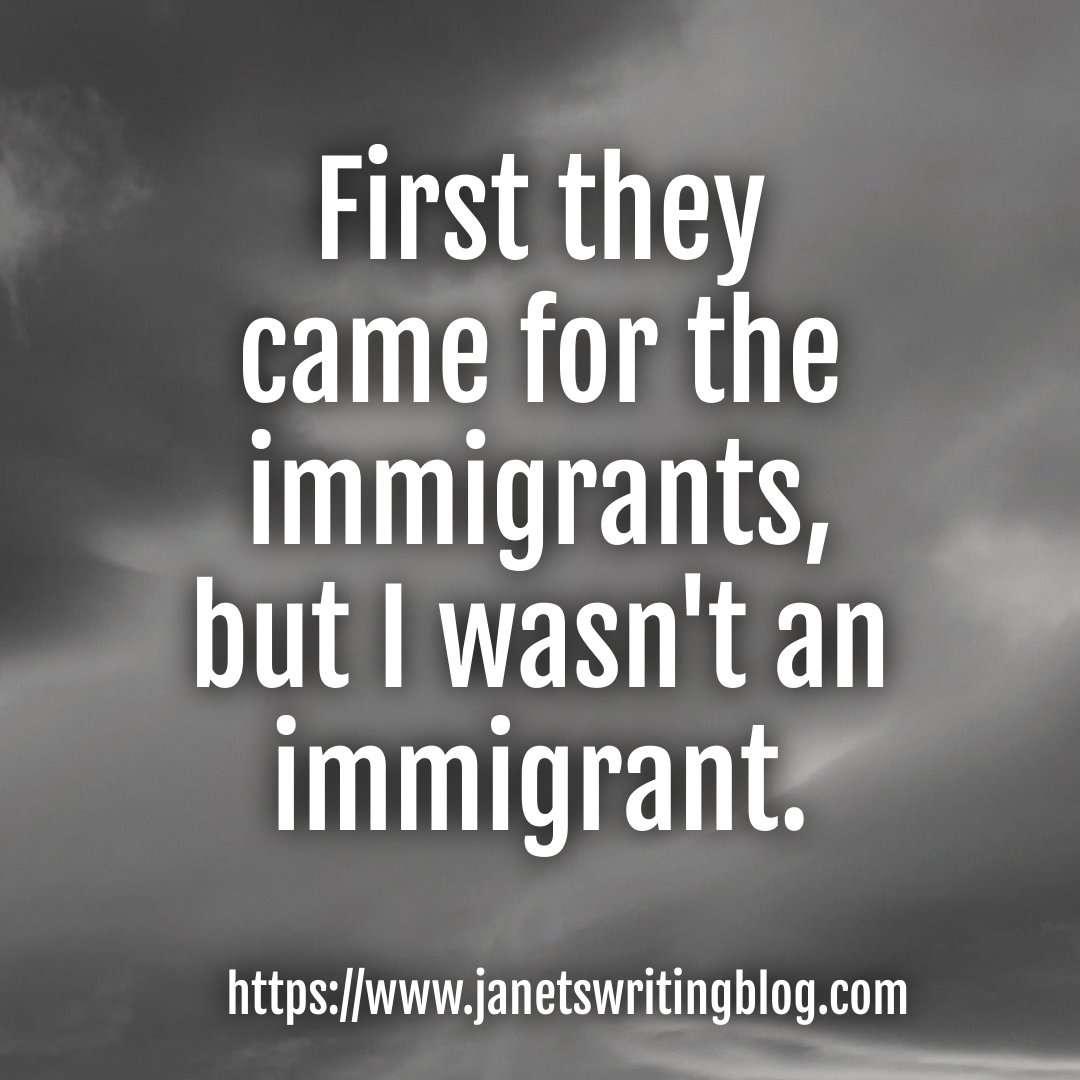

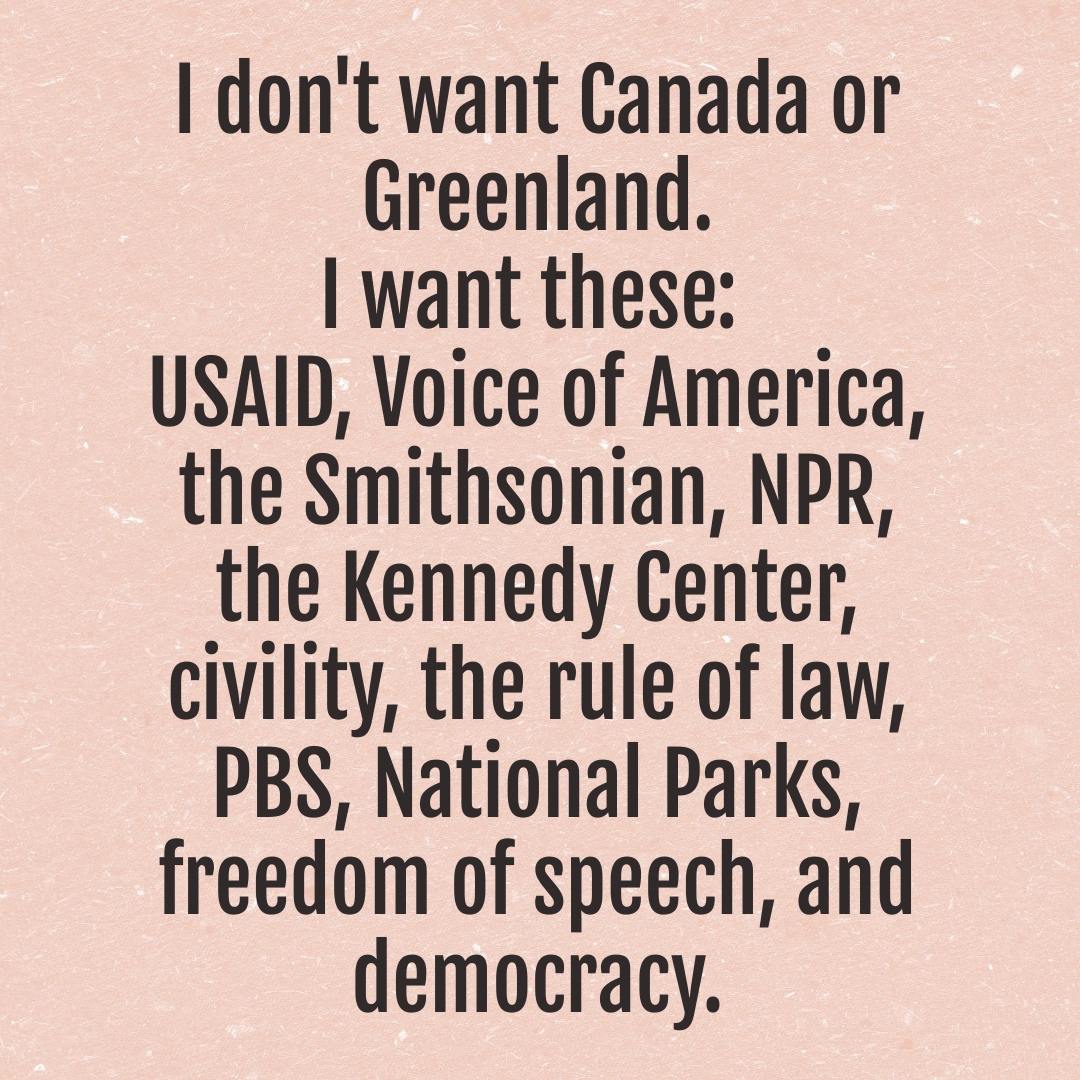


 Janet's Writing Blog
