I write southern historical fiction, local history, and I've written a devotional book. The two novels I'm writing are set in Virginia and the Carolinas in the 1760s. My weekly blog started out to follow my journey as a writer and a reader, but in 2025 it has been greatly expanded to include current events and politics in the United States as I see our democracy under attack from within. The political science major in me cannot sit idly by and remain silent.
It was on this date 156 years ago that African American men were given the right to vote when the 15th Amendment to the U.S. Constitution was ratified.
Section 1 of the 15th Amendment to the U.S. Constitution
You might be surprised to know that it was the Republicans who pushed for this amendment. Yes, the same party which today turns itself into a pretzel dreaming up ways to make it more difficult for citizens to vote is the party that fought to give black American men the right to vote in 1870. The irony!
The 15th Amendment did not address the fact that women of any skin color did not have the right to vote.
Section 1 of the 15th Amendment states: “The right of citizens of the United States to vote shall not be denied or abridged by the United States or by any State on account of race, color, or previous condition of servitude–.”
Although ratified in 1870, it would take the Voting Rights Act of 1965 before many black people were registered to vote. Laws varied by state and state legislatures – much like today – resorted to creative ways and wording in laws to restrict voting rights.
Popular opinion is that it was only southern states that restricted voting to white people, so I decided to do a little research into state laws prior to 1870. (Keep in mind that women were not given the right to vote by the U.S. Constitution until the 19th Amendment was ratified in 1920.)
I wanted to know if black men were allowed to vote in states outside the South before passage of the 15th Amendment in 1870. Out of curiosity, I randomly looked at New York, Ohio, Pennsylvania, and New Jersey.
In the State of New York, there was a mish-mash of voting rights for black men. In the 1820’s it was unlawful for a black person who did not own property valued at $250 or more to vote. Slave owners along the Hudson River (yes, even New Yorkers owned slaves!) did not let their slaves vote. Some black men in the state’s cities were able to vote.
Although the “Black Laws” in the state of Ohio were repealed in 1849, African Americans were still not allowed to vote. An informative article about the history of laws regarding African Americans in Ohio can be found here: https://eji.org/news/ohios-black-laws/.
What about Pennsylvania? Quoting from “The Disenfranchisement of Black Pennsylvanians in the 1838 State Constitution: Racism, Politics, or Economics? – A Statistical Analysis,” by David A. Latzko of Pennsylvania State University’s York campus, as found at https//:tupjournals.temple.edu: “In 1838, Pennsylvania’s voters approved a state constitution that restricted the right to vote to ‘white freemen.’ Blacks had voted for many years in some parts of the state, but under the new constitution Pennsylvania’s black males could no longer vote.”
I found the following information on https://libguides.njstatelib.org/votesforwomen/timeline: In 1807, a new law restricting voting was passed by the New Jersey General Assembly: “Whereas doubts have been raised, and Great diversities in practice obtained through-out the state in regard to the admission of aliens, females and persons of color, or negroes to vote in elections… Sec. 1. Be it enacted …That … no person shall vote in any state or county election… unless such person be a free, white, male … of the age of twenty-one years, worth fifty pounds proclamation money….”
New Jersey adopted a new State Constitution in 1844, and people of color were still not allowed to vote.
In the decades after the ratification of the 15th Amendment, racists in various states passed laws to make it hard for minorities to vote. Such things as poll taxes and literacy tests were codified.
This was still in the decades of Reconstruction following the Civil War. Most of the former slaves had not been allowed to learn how to read or write, so the passage of literacy laws was a not-so-subtle way to prevent many black people from voting.
My conclusion is that people of color have been discriminated against in every state in the United States of America. Our nation has a long and sorted history of dividing ourselves based on the color of our skin.
It is that 250-year history that has brought us to 2026 – a year in which the U.S. Constitution gives all citizens — regardless of skin color or gender – the right to vote. But women and people of color must remain vigilant in every State to guard our right to vote.
In 2026, various State legislatures and even the United States Congress are working behind the scenes as well as blatantly in public to make it more difficult for all citizens to exercise their right to vote. The so-called SAVE America Act is currently being batted back and forth between the U.S. House and U.S. Senate.
A segment of our society has been convinced by Conservatives that there is rampant voting by undocumented immigrants. Under the guise of putting an end to that problem — which has been proven not to exist — through passage of the SAVE America Act the Conservatives in Congress are working very hard to codify wording that will once again make it more difficult for many women and many people of color to vote.
The more things change, the more they stay the same. White men in America continue to be afraid of losing their power. It is a history much older and more widespread than the United States of America.
Janet
The government should be afraid of its citizens, not the other way around.
For those of you who are sick and tired of my political rants in my blog posts, I regret that Donald Trump and his ilk have put you in that state of mind. I do not apologize for the tone or the content of my political postings. As an American citizen, I feel it is my duty and obligation to use my First Amendment freedom of speech right to voice my opinions.
As I have stated before, it was never my plan when I started blogging more than a decade ago to take my blog in a political direction. I feel strongly about the direction Donald Trump is taking my country, and I cannot keep silent. I am obligated to speak out as I see him governing from a Fascist playbook.
The FCC and Stephen Colbert
Trump’s FCC Chair, Brendan Carr, is the Pam Bondi of the Federal Communications Commission. He is only in that position to do Trump’s bidding.
Photo by israel palacio on Unsplash
On Monday, Stephen Colbert of CBS’s “The Late Show with Stephen Colbert” was scheduled to interview James Talarico, a member of the Texas State House of Representatives. But there was a problem: Talarico is a Democrat.
Under the law, late night talk shows are not required to give equal time to Republican and Democrat politicians, but Trump and Carr are never bothered by laws they disagree with.
Colbert was told CBS would not air the interview. He said he was told he could not mention on his show on Monday night that the interview had been pulled. As only Stephen Colbert and Jimmy Kimmel can do, he talked about it and paid his respects Carr and the FCC.
This isn’t the first talk show to get in trouble for hosting Talarico. He appeared on “The View” on the ABC TV network a few weeks ago, and now “The View” is under investigation by the FCC.
I never have and never will watch Fox News, but from the little bit I’ve seen and heard of it I don’t think they abide by any equal-time rule. Perhaps Carr should turn his attention to Fox News even though it is Trump’s mouthpiece.
The appalling deportation case of Godfrey Wade
We have witnessed 13 months of abuses perpetrated by Immigration and Customs Enforcement (ICE) and many of those abuses victimized American citizens. Many of them were inflicted on immigrants who were going through all the proper channels to stay in the U.S. and/or seek citizenship.
Photo by Jason Leung on Unsplash
Godfrey Wade legally immigrated to the United States as a teenager more than 50 years ago. He went on to serve overseas in the United States Army. He was pulled over in Conyers, Georgia last fall for failing to use a turn signal. It was discovered that he had failed to appear for an ICE hearing in 2014 because ICE sent the hearing notices to the wrong address and Mr. Wade was not aware of the hearing date.
After being held in a detention center for more than five months and filing an appeal for his deportation order, Mr. Wade was deported to Jamaica. His family is appealing his deportation.
Who knew failing to use a turn signal could get you stopped by the police? That’s certainly not a law I see enforced in North Carolina. I can’t help but wonder if Mr. Wade was pulled over since he was black. It irritates me when other drivers do not use their turn signals, but I didn’t know anyone was ever stopped by police for the infraction.
Thank you for your military service, Mr. Wade, and Happy Black History Month.
Congressional Medal of Honor
Speaking of military service… yesterday in Rome, Georgia, Trump said he will “test the law” to award himself the Congressional Medal of Honor. It’s beside the point, I guess, that this is the nation’s award for military valor in action and Trump repeatedly dodged the draft during the Vietnam War, claiming bone spurs. He thinks he deserves it “for bravery” because he flew to Iraq once.
What a small, pitiful man. He tarnishes everything he touches.
According to https://www.cmohs.org/medal/design, “The U.S. Army and U.S. Navy have always had separate designs for their personnel. Until the U.S. Air Force introduced its design in 1965, all airmen received the Army design. The U.S. Marine Corps and U.S. Coast Guard receive the U.S. Navy design.”
I wonder which design Trump will demand to hang around his own neck. It will be another in a long line of beautiful and honorable things he will tarnish.
Black History Month
At a Black History Month event, Trump went off topic and ranted about “illegal aliens” committing the vast majority of crimes in the U.S. Of course, that’s not true. The truth never has interfered with anything Trump wanted to say.
Most crimes in our country are committed by U.S.-born people, mainly men.
The Board of Peace
Trump appeared to fall asleep (again) at the inaugural Board of Peace, which he invented after he changed the name of the Institute of Peace to the Trump Institute of Peace.
I’ve never seen anyone so rabid to put their name on everything. There’s no end to it. I look forward to the day his name is removed from the Kennedy Center for the Performing Arts.
Trump’s Arch of Triumph
I was encouraged yesterday to learn that Public Citizen, a watchdog organization has sued to try to stop construction of the 250-foot-tall Trump Arch of Triumph in Washington, DC because it will ruin the views of the Lincoln Memorial and other monuments as seen from Arlington National Cemetery.
Trump wants his arch to be the tallest in the world, of course. He operates under the illusion that bigger is always better, gold is never gaudy, and might is right.
Iran
Trump is itching to bomb Iran. I guess that’s what the Nobel Peace Prize Committee gets for not giving him that coveted prize. He’ll show them! He must take out his revenge on someone, and it’s not necessarily the person or people who slighted him.
The Epstein Files
As other countries, like Great Britain, show us that there is still such a thing as consequences for actions, here in the United States the U.S. Department of Justice seems incapable and uninterested in bringing charges against any of the men who abused little girls and teens. Trump feels sorry for former Prince Andrew for being arrested, but he cannot bring himself to express sorrow for the abused girls.
The U.S. Assistant Attorney General Todd Blanche says the lurid and disgusting photographs in the Epstein files are not enough proof to file charges against anyone. The U.S. Department of Justice has managed to “investigate” the case without taking testimony from any of the victims.
This is akin to recently reassigned U.S. Border Patrol official Gregory Bovino stating that the victims in the murder of Alex Pretti in Minneapolis were the ICE officers who pulled the triggers.
The Trump Administration is following the fascist playbook in thinking if they just tell us enough lies enough times, we will doubt our lying eyes and ears.
Yesterday when asked about former Prince Andrew’s arrest, Trump replied, “I’m the expert in a way because I’ve been totally exonerated.” The definition of “exonerated” is “to clear from accusation or blame.” Did he just admit wrongdoing? I didn’t realize he had been exonerated.
I’m sure there were a dozen other things I could have included in today’s blog post, but I’ve been distracted by the Winter Olympics and failed to take notes on the things Trump was doing.
I hope to have something uplifting to blog about next week. I just never know. The daffodils in my yard are blooming. Spring must be coming!
Janet
The government should be afraid of its citizens, not the other way around.
I have written about my Congressman before, and it has never been complimentary. It is not positive in today’s post. I try to keep an open mind, but I will be surprised if I ever have anything good to say about him.
What is my latest criticism of him? He doesn’t quite tell the truth when it comes to the SAVE America Act. The SAVE America Act passed in the U.S. House of Representatives and has gone to the U.S. Senate.
U.S. Capitol Photo by Caleb Perez on Unsplash
When my Congressman and most of the champions of the SAVE America Act try to summarize it, they say it is “just” voter ID. There is more there than meets the eye, though.
The SAVE America Act, if passed by the U.S. Senate as written for the House and, subsequently, signed into law by the President (which is a given), will require voters to show proof of U.S. citizenship.
My Congressman is proud to be a co-sponsor of the SAVE America Act. And now, to get to the title of today’s blog post, I will quote from Representative Mark Harris’ weekly email from February 14, 2026:
“Americans are required to show ID to board an airplane, open a bank account, and even enter Costco. So why are Democrats making a fuss over applying the same standard to federal elections?” He went on to call this “common sense.”
Photo by Marcus Reubenstein on Unsplash
There is simply something wrong with Mr. Harris’ paragraph: He is conflating a birth certificate with a Costco membership card. I have a Costco membership card, and I did not have to prove I was born in the United States to get it.
Mr. Harris made a serious mistake when he wrote, “applying the same standard to federal elections.” The examples he gave do not require the same standard (proof of U.S. citizenship) but we are heading toward a national requirement to have proof of citizenship in order to vote.
There is nothing wrong with that on the surface. I do not think non-citizens should vote. I also do not think more than a handful of non-citizens try to vote in the U.S. The proponents of the SAVE America Act are wielding it as a solution to a problem that does not exist.
The SAVE America Act is its proponents’ way of making it more difficult for poor and disabled people to vote. It adds unnecessary “hoops” for voters to jump through. For instance, if your current name does not match your birth certificate you must provide additional documentation to prove that you are the individual named on your birth certificate. If you don’t have easy access to transportation, gathering all your documentation and taking it to designated government offices is a burden.
I’ll let you in on a little secret… this requirement that you need to prove why you no longer go by your birth name is primarily a problem for married women. How many married women do you know who did not change their name when they got married? How many married men do you know who changed their name when they got married? I rest my case.
This will also cause anyone who was adopted to have to produce additional documentation.
To quote one of my Facebook friends, “this fuss the Democrats are making about the SAVE America Act is much ado about nothing.” She went on to explain that “it only costs $165 to get a passport.” She obviously trusts the Trump Regime. I don’t.
I was born in the United States to American citizens. At one time, I had a U.S. passport. A passport proves citizenship. I let my passport expire and have had no reason to spend $165 to apply for a new one. That amount of money is not easy for me to come by. I am not alone in that situation. It is impossible for wealthy members of Congress and wealthy citizens to imagine that.
I recently had to renew my driver’s license. To get a “Real ID,” I had to take my birth certificate, my expiring driver’s license, and two utility bills addressed to me at my current address to the Department of Motor Vehicles (DMV).
I tried to get an appointment at the DMV in October, but the first available appointment within 100 miles of my home was on December 31. True story. Perhaps it isn’t like that in your state, but that was my experience. My only option was to go to a DMV office, stand in line for hours, and be seen after everyone with an appointment had been seen – or be told to try again the next day. My health does not allow me to stand outside for hours, especially in the winter.
Photo by Element5 Digital on Unsplash
It remains to be seen if my “Real ID” will suffice to prove that I am qualified to vote in November 2026 or November 2028. This is an issue every American needs to pay close attention to as it works its way through the legislative branch of our federal government.
Janet
The government should be afraid of its citizens, not the other way around.
In my blog post last Friday, I promised a near future post about U.S. Attorney General Pam Bondi.
If you saw her performance last Wednesday in front of the U.S. House Judiciary Committee, you probably do not want to be reminded of it. I saw all of it that was televised, and I wish I could unsee and unhear it.
The audacity of Pam Bondi to prance into The Capitol and call members of Congress names! It was a circus but not an entertaining one. It was an embarrassment. Her body language alone was abhorrent, not to mention her trash mouth.
Photo by Simon Ray on Unsplash
It was a performance meant for one person only: Donald Trump. I am sure he thought it was a brilliant display. Even when she was reminded that it is her job and sworn duty to uphold the U.S. Constitution and to represent the United States of America (i.e., the people!) in all her dealings as U.S. Attorney General, she continued to call members of Congress derogatory names and refuse to look the Democrats on the committee in the eyes.
The hearing was supposed to be for Bondi to give U.S. Representatives some answers about the Epstein files and the recent and current operations of Immigration and Customs Enforcement (ICE). Instead, it was half pep rally for Trump and half demonstration of how sarcastic and snarky the current U.S. Attorney General can be when facing legitimate questions that make her squirm.
In case you missed the performance, when being asked questions by Republicans on the committee, Bondi smiled and gushed. She thanked them profusely for “asking that question.” When asked “a yes or no” question, she replied accordingly.
When asked questions by a Democrat on the committee, Bondi made a great show of shuffling the papers in front of her and looking down. She was suddenly busy, busy, busy. Instead of answering “yes or no” questions by Democrats, she deflected – usually by turning to that Congress member’s section in her three-ring binder so she could attack that Representative personally with a reference (true or not) to a vote that Representative made sometime in their career along with her editorial comments (true or false).
She repeatedly said, “Mr. Chairman, I refuse to get down in the gutter with these people.” She called one of them “a washed-up lawyer.” She hurled various insults at most of the Democrats. The fact that she had that three-ring binder at her fingertips was visible evidence of her disdain for every Democrat Congress member. She used the same binder when testifying before a U.S. Senate Committee.
She accused one member of the committee of being antisemitic, even though that member’s grandfather died in the Holocaust.
Even the BBC questioned why Bondi lost her temper in the hearing.
Early in the hearing, survivors of the sexual abuse at the hands of Jeffrey Epstein and his rich and political friends in high places were asked to stand where they were seated in the audience. Bondi never acknowledged their presence. Even when asked by at least one member of the committee to turn around and look at the survivors and family members of at least one victim who is now deceased, Bondi would not do it. She is apparently incapable of looking truth in the face.
Bondi cares not that she is now the U.S. Attorney General because she was confirmed for that position by the Congress of the United States. She has a particularly peculiar way of showing her appreciation for the misguided confidence they put in her after her shaky confirmation hearings last year in which she said she would not “weaponize” the U.S. Department of Justice. Yet, that is all she has done since assuming office. I have heard people who knew and respected her as the State Attorney General in Florida say they no longer recognize her as the person they used to know.
Her behavior was bizarre, to say the least. When asked a question about the Epstein files, she “answered” by touting the fact that the stock market reached and broke the 50,000 mark the day before, then bristled when a Democrat on the committee asked, “What does that have to do with the Epstein files?”
It was horrible to see and hear a U.S. Attorney General stoop to such childish and insulting behavior. Such behavior as demonstrated by Bondi would not be tolerated in a court of law, and it should not have been tolerated in the U.S. Capitol. She should have been held in contempt of Congress, but she wasn’t because the committee is chaired by a Republican – a very self-righteous Republican who does not have enough respect for the institution or his position in Congress to even wear a suit.
In “answering” one question, she waxed poetic about what a wonderful U.S. President Donald J. Trump is. It was gag-worthy and inappropriate.
The U.S. Attorney General is not supposed to be beholding to the U.S. President.
The person in that position is not supposed to be political.
The person in that position is not supposed to be a cheerleader or public relations representative for the U.S. President.
The U.S. Attorney General is not supposed to do the President’s bidding.
In just one year, Bondi has broken every time-honored rule – written and unwritten — governing her position.
Janet
The government should be afraid of its citizens, not the other way around.
Pull up a comfortable chair. This post is long, but I believe its length stands as proof of the chaos here just in the last week or two. I considered breaking it up between two days, but I think its length alone makes a point.
In case you are wondering why I did not blog yesterday about Wednesday’s performance for Donald Trump by Pam Bondi, I did not have time to digest it and spit it onto the page. That will come either tomorrow or on Monday of next week.
Oh, daily life pretty much goes on as usual except in cities being targeted by Immigration and Customs Enforcement. People must continue to work to support themselves and their families. Children need to continue to attend school. Life goes on, but life would be less stressful if we weren’t slammed every day with unnecessary crises.
I have taken the gloves off this week. Perhaps you noticed, if you’ve read my last four blog posts.
I know I irritate people who cling to Donald Trump, but I offer no apologies. Not because I see apologizing as a weakness (like Trump does), but because I refuse to apologize for standing up for the U.S. Constitution and the ideals upon which my country was formed.
As I tell the Trumpers who attack me on Facebook, you don’t have to read what I post. I have the right to post it and you have the right not to read it. If you want to convince me I’m a left-wing woke radical, don’t bother. I wear that moniker proudly.
I feel compelled to blog about more than a dozen things today that have me concerned or, at the least, intrigued.
Not a day passes without at least one piece of alarming news coming out of the Trump regime or from his followers. Most days there are so many pieces of alarming news that it feels like we Americans are being gut-punched by a fire hose.
That’s all part of the plan. That’s the only way they can ram Project 2025 down our throats and “take back” the “good old days” when blacks and women had no rights and few people spoke truth to power.
I try to keep up. I take notes. I pay attention. I get my news from various sources. But I cannot keep up. Things fall through the cracks. It’s overwhelming – which is all part of their plan.
Americans are weary. We are tired of the fire hose of hate and destruction. We. Are. Tired. That is part of their plan.
They are hellbent on confusing us with lies and throwing so much chaos at us 24/7 that we give up.
You will find that I freely refer to Republicans in this post. I hate to throw all Republicans under the bus, but I have lost my patience over the last 13 months. The Republican Party has blindly and completely embraced Donald Trump and everything he says and does, so I no longer feel the need to tiptoe around them.
If you are a Republican and have not removed yourself from that affiliation, I am left to assume that you agree with Donald Trump. It is his political party now. With rare exceptions, no one in the party has the gumption to challenge anything he says or does.
If you are a registered Republican and you have remained silent as Donald Trump has stomped all over the U.S. Constitution, torn down the East Wing of the White House, ordered masked men to round up people with Spanish accents – including children – and warehoused them, been found guilty of 34 felonies, bragged about grabbing women by their genitals, published racist words and images on social media, threatened our allies, taken Putin’s word over that of U.S. intelligence organizations, slapped his name on the John F. Kennedy Memorial Center for the Performing Arts (and announced its closure on July 4, 2026), and lied to your face about more things than you can count… then perhaps you need to do some soul searching.
Silence is complicity.
Full disclosure: I used to be a registered Republican. I’m not proud of that. I was young and misguided. I have voted for Republicans and I have voted for Democrats. I used to “vote for the person, not the party,” but those days are over for the foreseeable future. I cannot in good conscience cast a vote for a Republican in light of what the Republicans in the North Carolina General Assembly have done to destroy public education and what the Trump Administrations have done to every facet of our country.
Photo by Larry Alger on Unsplash
Hurrah for that Grand Jury!
The American people had a victory this week! A Grand Jury – made up of average Americans – refused to indict two U.S. Senators and four U.S. Representatives who participated in a video in which they merely stated the law: If you are in the U.S. military, you do not have to carry out an illegal order.
In fact, the Nazis who followed Hitler’s orders found at during the Nuremberg Trials that they didn’t have to carry out illegal orders. It is international law, not just U.S. law.
Donald Trump and Pam Bondi weaponized the U.S. Department of Justice when they tried to prosecute Senator Mark Kelly of Arizona, Senator Elissa Slotkin of Michigan, Rep. Jason Crow of Colorado, Maggie Goodlander of New Hampshire, Chris Deluzio of Pennsylvania, and Chrissy Houlahan of Pennsylvania for making a video in which they simply stated that members of the military do not have to follow illegal orders.
It infuriated Trump for these military veterans and lawmakers to remind the American public – not just military personnel – that there is a law of humanity in place. He ordered the U.S. Department of Justice, which he thinks is and treats as if it is his personal law firm, to go after those six members of Congress.
Trump called those six Democrat members of Congress “seditious” when the video aired. He wanted them to be executed for stating the law.
It would have been wonderful if the Republican members of Congress had shown outrage over Trump’s remarks. It would have been wonderful and encouraging if the Republican members of Congress had shown outrage over the attempted prosecution of their fellow lawmakers.
I believe we will see more such failures of the U.S. Department of Justice as it is headed by a woman who is only there to try to carry out Trump’s vindictive wishes.
FBI raid of Fulton County, Georgia, Elections Records
On January 28, 2026, the FBI raided the building where the voting records from Fulton County, Georgia, from the 2020 presidential election were housed. Some 656 boxes of ballots, ballot images, tabulators, and voter rolls were seized by the FBI and taken to an undisclosed location.
Even though voter registration records in the United States are public information and easily found on the Internet, it is creeper for the FBI to seize a county’s voter registration rolls.
The icing on the cake was that Trump spoke directly via telephone to the FBI agents who participated just minutes after the raid. That is not what the President of the United States is supposed to do. Until Trump assumed office in January 2025, the FBI was apolitical. The U.S. President is not supposed to direct, interfere with, or in any way get involved in the FBI investigations.
Fulton County filed suit against the Trump Administration to try to get the records back.
Until forced to this week, the Trump Administration gave no justification for the January 28, 2026, seizure, but Brad Raffensperger is running for Governor and Trump has endorsed his opponent.
You will recall that Trump called Georgia Secretary of State Brad Raffensperger on January 2, 2021 and asked Raffensperger to “find” him 11,780 votes. That action by Trump should have disqualified him to ever run for office again, but it didn’t.
Trump will never accept the fact that he lost the 2020 election to Joe Biden. His fragile ego cannot accept that he lost. “Loser” is one of the worst things he can think of to call someone.
Therefore, even though the Fulton County, Georgia votes were re-counted by hand twice after the initial count on election night in 2020, Trump thought he could pressure a state with a Republican Governor, a Republican Secretary of State, and a Republican Lt. Governor to cave and “find” him the votes he did not receive.
He accused the vote counters of cheating. He knows so little about how strictly ballots are counted, preserved, and transported that he made up lies about the containers holding the ballots and specifically two black women who helped count the votes.
So now the 2020 votes from Fulton County, Georgia, are who knows where. The Fulton County Board of Elections is responsible for the security of those ballots, but the Trump Administration has seized them and taken them to an undisclosed location.
As of February 9, Fulton County officials had not been told where the records they are responsible for were being held or what had been done with them or to them. As I write this on February 12, I cannot find that they have found out where those records are being held. The 2020 Fulton County voters don’t know what is being done with their personal information.
Last week, a federal judge ordered the FBI to unseal and reveal the warrant used on January 28 in Fulton County no later than Tuesday, February 10. Much to my surprise, the affidavits associated with the warrant were unsealed on Tuesday afternoon.
WSB-TV in Atlanta reported, “According to the documents, the FBI was told to investigate a discrepancy in the vote counts reported by Fulton County election officials, with the warrant alleging that there were missing ballot images from the 2020 election records.”
Here we are in 2026, still having to prove that Joe Biden won the 2020 election. Why are none of the Republicans who were elected in 2020 claiming that the election was rigged? Odd how that worked out. Only Donald Trump is crying “foul.”
If you think the seizure of the Fulton County, Georgia, voting records does not pertain to you because you don’t live there, just think how you would feel if the FBI seized the voting records of your county. If they can do it in Atlanta, they can do it anywhere.
FBI briefing
Election officials from all 50 states have been summoned to an FBI briefing on “preparations for the midterms” on February 25. The email from the FBI was said to be from Kellie Hardiman, “FBI Election Executive.” I believe this briefing is unusual.
ICE, Steve Bannon, November mid-term elections
In a related matter, last week former Trump bestie and jailbird Steve Bannon proudly announced that ICE agents will surround the polling places in November. Of course, ICE agents do not work for Steve Bannon. (Thank goodness!) But Trump and his minions are wasting no time in trying to scare voters away from the polls. They continue to operate under the delusion that undocumented immigrants vote. They spend a lot of their time focusing on remedies for problems that do not exist, like voter fraud.
ICE statistics
Trump took office on January 20, 2025, promising to immediately get rid of “the worst of the worst.” He often claims that immigrants are murderers, rapists, and dangerous gang members. “The worst of the worst.”
It is hard to get reliable statistics about the arrests made by Immigration and Customs Enforcement (ICE), but some interesting numbers have been reported by various news outlets this week. I’m sure these percentages could be off my two or three percentage points, but these are the numbers I have read:
From January 25, 2025 through January 31, 2026, 40% of those arrested and detained have no criminal records, 14% are violent criminals, and less than 2% are gang members.
I have heard more than one county sheriff say they can only keep an undocumented immigrant in custody for 48 hours. If ICE agents don’t come to pick those prisoners up in 48 hours, they must be released. Perhaps it would be a better use of ICE agents if they would pick up the undocumented immigrants already in local police custody instead of it taking five ICE agents to murder a nurse who has knelt in the aid of a woman said agents have shoved to the ground.
The New START treaty
Remember The New START treaty between the United States and Russia? It was signed in 2011. Trump let it expire on February 5 while he was waxing poetic at the 74th Annual Prayer Breakfast. With the treaty’s expiration, there’s no longer a cap on the number of nuclear weapons either country can have.
I’m not sure which part of that equation worries me more, since Trump’s finger is on “the red button.”
Does this fall under the red “Make America Safe Again” baseball cap?
The National Governors Association Annual Meeting
It came to light last week that Maryland Governor Wes Moore – the only black governor in the U.S. – had been uninvited to the 2026 National Governors Association (NGA) dinner at the White House on February 20. Governors of every state, commonwealth, and territory in the United States are automatically members. Their annual dinner at the White House is a time for all of the governors and their spouses to get together, share best practices on a non-partisan basis, and have dinner with the President of the United States, Cabinet members, and other government officials.
I jumped to the conclusion that this was another case of racism; however, according to the last report I read, Colorado Governor Jared Polis, also a Democrat, has also been uninvited
Gov. Moore serves as Vice Chair of the National Governors Association. He was elected to that position by a non-partisan vote.
It was reported by Reuters on Tuesday, February 10, that the NGA’s annual meeting with Trump has been cancelled. Brandon Tatum, CEO of the NGA, released a statement saying, “To disinvite individual governors to the White House sessions undermines an important opportunity for federal-state collaboration.” He also said, “At this moment in our nation’s history, it is critical that institutions continue to stand for unity, dignity and constructive engagement.”
White House Press Secretary Karoline Leavitt said the president “can invite whomever he wants to dinner and events here at the White House.” It seems that someone has forgotten that the White House belongs to the American people, not to any sitting U.S. President. Of course, that became blatantly clear the day Trump demolished the East Wing.
According to The New York Times, Trump did the uninviting.
Does this “Make America Great Again?”
The possible renaming of Penn Station
Trump claimed that it was U.S. Senator Chuck Shummer’s idea that Penn Station in New York City could be renamed for Trump. Shummer denied it.
White House Press Secretary Karoline Leavitt confirmed in Tuesday’s press briefing that it was Trump’s idea, not Shummer’s.
Ooops!
What they think is “fake outrage”
White House Press Secretary Karoline Leavitt told us to stop our “fake outrage” last Friday after the photograph of former President Barack Obama and former First Lady Michelle Obama with their heads on ape bodies was posted on Trump’s Truth Social account for 12 hours.
The only fake outrage I saw on display last week (and continuing this week) was Republicans who were in an uproar that a Puerto Rican performer, “Bad Bunny” was headlining the Super Bowl halftime show. They said he wasn’t American. They said only Americans should perform during the Super Bowl.
But Bad Bunny is American. Puerto Rico is part of the United States. Why else did Trump go there and throw rolls of paper towels at them in the aftermath of Hurricane Maria in 2017 during his first term in office? Did he understand then that Puerto Rico is a U.S. territory? By the way, that’s when he discovered that Puerto Rico is an island, but I digress.
Besides the point that Puerto Ricans are American citizens, perhaps the Republicans can explain why they were not outraged when Phil Collins of Great Britain performed in Super Bowl XXXIV, U2 from Ireland in Super Bowl XXXVI, Shania Twain from Canada in Superbowl XXXVII, Paul McCartney in Super Bowl XXXIX, and Coldplay in Super Bowl L? Do you want more examples of “foreigners” performing at the Super Bowl?
It appears that the Republicans’ outrage over Bad Bunny is the fact that his first language is Spanish and he chose to sing in Spanish for the Super Bowl on Sunday.
Music has no language. Music has a beat, a mood, a spirit, a way of tugging at your emotions no matter the language in which the words are sung.
Sadly, though, I don’t think the outrage about Bad Bunny was fake. I think they were dead serious.
They see Americans of European descent becoming a minority in a few years, and the only way they know to deal with it is to lash out, call names, and discriminate. That’s their modus operandi.
Trump posted his displeasure over Bad Bunny again during the Super Bowl. He whined because he couldn’t understand a word Bad Bunny sang. He claimed that “nobody” could understand it. It’s too bad Trump did not celebrate all the countries in the Americas, like Bad Bunny did. I guess Trump did not agree with the huge “The only thing more powerful than hate is love” sign during the performance. That is obviously a concept and core value that Trump cannot fathom.
The Make America Great Again alternative half-time show featured Kid Rock, whose song lyrics should be considered cringe-worthy by the MAGA crowd who claim to be “the party of family values.”
The Epstein Files
U.S. Secretary of Commerce Howard Lutnick can’t seem to get his story straight about his association with Jeffrey Epstein. He admits that he took his children to Epstein’s private island and residence in 2012. Lutnick had earlier said that he cut off all contact with Epstein in 2005, calling him “gross.”
Democrats in Congress are calling for Lutnick to resign.
Republicans used to call for the release of all the Epstein files, but Trump said last week that “it’s time to move on.” Nothing to see here.
The only person who has gone to prison for the raping of countless young girls on Epstein’s property is a woman.
Oh, the irony!
Speaking of irony… U.S. Olympic skier Hunter Hess
U.S. Olympic skier Hunter Hess dared to express his displeasure with ICE killing American citizens in Minneapolis. Hess is quoted as saying, “I think, for me, it’s more I’m representing my friends and family back home, the people that represented it before me, all the things that I believe are good about the U.S. If it aligns with my moral values, I feel like I’m representing it. Just because I’m wearing the flag doesn’t mean I represent everything that’s going on in the U.S.”
Trump took offense. He takes offense at anyone who speaks their mind if their opinions do not line up with his. When he is offended, he goes on the attack. It’s all he knows to do.
This was Trump’s response on Truth Social to what Hunter Hess said: “U.S. Olympic Skier, Hunter Hess, a real Loser, says he doesn’t represent his Country in the current Winter Olympics. If that’s the case, he shouldn’t have tried out for the Team, and it’s too bad he’s on it.”
That’s not all Trump wrote about Hess, but you get the point even though to read his social media posts you must meander your way through randomly-capitalized words. They must have had top-notch English teachers at those expensive private schools he attended.
In the old days, if a U.S. President with extremely thin skin wanted to call a citizen or member of the U.S. Olympic team a name, he probably just muttered under his breath, but today Trump puts everything out there in cyberspace for the world to see.
The wife of Deputy White House Chief of Staff Stephen Miller weighed in, too. She said that if you don’t love America you should be representing it in the Olympics. What she and other Republicans cannot grasp is that we who protest and voice our anger and disappointment and disgust at what the Trump Administration is doing… we do it BECAUSE we love America! They think we hate America. No, we love America and we mourn for what the Trump Administration has done to destroy this once beacon of freedom.
By the way, Mrs. Miller, the First Amendment gives us freedom of speech, just like it gives freedom of speech to you.
U.S. Senator Rick Scott of Florida also weighed in. He twisted Hunter Hess’s words. Hess did not say he did not want to represent the United States. Senator Scott has been quoted as saying that the United States is a “for freedom and democracy,” but he doesn’t think an American participating in the 2026 Winter Olympics has freedom of speech.
Trump’s supporters, of which Rick Scott is one, think it is all right for Trump to say derogatory things about the United States, its elected representatives, its member states, its cities, and segments of its population.
I guess that’s more accurately described as hypocrisy instead of irony.
National Park informational displays and signs
It’s not getting publicity by the major news outlets, but the underground reports almost weekly of informational displays and signage being removed from our National Parks. Any display or sign that conveys an unfortunate or evil piece of United States history is being removed.
Displays about the removal and abuse of indigenous peoples, displays about slavery, and displays giving scientific facts about climate change are especially being targeted and removed.
United States history is being rewritten and erased. I shudder to think of future school history books that will be adopted by right-wing state school boards.
The “Melania” film by Amazon
It seems that music composed by Jonny Greenwood for the Daniel Day-Lewis movie, “Phantom Thread,” was used in “Melania’ without permission. Greenwood and “Phantom Thread” director Paul Thomas Anderson have asked for that music to be removed from “Melania.”
Although Greenwood does not hold the copyright to that piece of music he composed, use of it without permission from Universal is a breach of his composer’s agreement.
This is not the first time members of the Trump family have used music without permission. They seem to have little or no respect for copyright law or related law.
A ray of light on tariffs
Reports indicate that Trump’s tariffs, which he said would “Make America Rich Again,” cost the average American family $1,000 in 2025 and will cost them $1,300 in 2026 if left in place.
In a slightly bi-partisan vote of 219-211 in the U.S. House of Representatives on Wednesday, the House adopted a resolution calling for Trump to remove tariffs on Canada.
In response, Trump threatened the six Republicans who voted for the resolution.
The Gordie Howe Bridge
Canada has built and paid for a bridge from Windsor, Ontario to Detroit, Michigan. Be sure to remember the phrase “and paid for.”
Those of us who live more than 500 miles from Detroit have not heard much about it.
The Gordie Howe International Bridge cost C$6.4 billion ($4.6 billion US) and was scheduled to open early this year. It is a grand bridge with six lanes for vehicular traffic plus bike lanes and pedestrian walkways. Government agencies in both countries worked together to select the name for the bridge.
Canada built the bridge “to make automotive trade between the two countries easier,” according to Forbes.
In a nutshell, the Ambassador Bridge, which opened in 1929, is currently the main automotive trade traffic carrier between the two countries, but the bridge’s owner (Detroit International Bridge Company) has been crossways with Canada for the last two decades or so. For instance, the company made plans to build another bridge right beside the Ambassador Bridge. The older bridge would be relegated to emergency traffic. Canada objected to that plan.
Canada proposed a new bridge to be built with the state of Michigan. and Canada sharing construction costs. Michigan declined, so Canada decided to finance construction of the Gordie Howe Bridge itself. During Trump’s first term in office, it was agreed that this would be a toll bridge and tolls collected would pay off the construction costs.
Fast forward to February 9, 2026. Trump posted on his social media outlet that he “will not allow this bridge to open until the United States is fully compensated for everything we have given them.” The “them” is Canada.
Here we go again. Trump trying to change the rules in the last quarter of the game. That is no way to conduct relationships with other countries – especially a wonderful neighbor country like Canada – and it’s no way to conduct business.
The oft-said line I heard during the 2016 presidential campaign, “We need a businessman in the White House” continues to ring hollow in my head.
And lest I forget to mention this…
The U.S. House of Representatives Oversight Committee subpoenaed former President Bill Clinton and former First Lady and U.S. Secretary of State Hillary Clinton to testify regarding the Epstein files. Committee Chair James Comer, a Kentucky Republican, just knew that the Clintons would refuse to come and could then be held in contempt of Congress.
But that’s not what happened. The Clintons agreed to come and testify in a public, televised hearing. After all, Rep. Comer talks a lot about transparency. It turns out that a public hearing is not what Rep. Comer had in mind, especially since he didn’t expect the Clintons to show up.
Democrats in Congress are taking note that this will set a precedent. Forcing a former U.S. President or the family of a former U.S. President to testify before Congress has never been done before. When will today’s Republicans learn to be careful what they wish for? Woe be unto Donald Trump and his family when the Democrats win control of the Congress!
Someone must have told Trump that turnabout could be fair play someday in the future, for he started talking about how much he has always liked bill Clinton and what “a very capable woman” Hillary Clinton is. He said, “I hate to see it in many way.”
Who knew that Trump though Hillary Clinton was “a very capable woman?” Is that why he encroached on her personal space from behind like a starving vulture in that President debate that I cannot unsee?
Who knew he held the Clintons in such high regard?
I try to learn something every day, but I didn’t see that coming.
Hillary Clinton is scheduled to testify on February 26 and Bill Clinton is scheduled to testify on February 27. Oversight Committee Chair Comer says their hearings will be taped and released “later.” In Comer’s mind, that qualifies as a “public” hearing.
I have some experience with public hearings and public informational meetings. Letting the public see and hear the hearing “later” does not meet the definition of “public hearing.”
Janet
P.S. Just so you know, we aren’t giving up. I just realized I forgot to even mention environmental issues!
The government should be afraid of its citizens, not the other way around.
For several weeks, the newsletters from my “representative” in the U.S. House of Representatives landed in my spam box. How apropos!
U.S. Capitol Dome Photo by Simon Ray on Unsplash
But then Saturday, February 7, 2026, rolled around and there it was! Right there in my inbox. The title of his newsletter jumped out at me… just as he and his pitiful staff intended: “Americans’ Safety Is In Jeopardy– Courtesy Of Democrats.”
I took the bait. I did not want to read his newsletter because he has never said or written a word that was worthy of the time it took for me to listen or read. But, I thought, Okay, what’s he preaching about this time?
In case you wonder why I chose the word, “preaching,” it is because he is a Southern Baptist preacher. He used to be the senior pastor of First Baptist Church in Charlotte. It’s unclear now as to why he is no longer on the staff there, but could it be the congregation got sick and tired of his far-right hypocrisy that runs counter to the teachings of Jesus Christ? I’m merely speculating. I know nothing of how grounded his congregants were in the New Testament.
Bear with me as I quote his newsletter from February 7:
“Dear Janet,
“Spot the hypocrisy: Democrats allowed the Obama administration to deport millions and raised no objections.
“An yet, when President Trump does the same, Democrats shut the government down because they want funding for the Department of Homeland Security (DHS) to end.
“DHS is not just Immigration and Customs Enforcement (ICE); it is: FEMA, ICE, U.S. Secret Service, etc. Democrats are willing to allow multiple vital organizations that provide SAFETY for Americans to be defunded.
“My Republican colleagues and I will not stand for this.”
My response to Representative Harris:
Dear Mark,
I assume I can call you Mark, since you addressed me by my given name. There is apparently no need to stand on ceremony.
Your gaslighting of your constituents continues to reach new lows. You forget that quite a few of us are old enough to remember the Obama Administration. Since you are unaware of the difference in deportations while Barack Obama was U.S. President and the deportations your constituents with eyes wide open have witnessed during the reign of Donald Trump, allow me to point out just a few of the differences:
Deportation agents under the Obama Administration did not hide behind masks;
Deportation agents under the Obama Administration did not drag American citizens from their cars and ship them off to detention centers hundreds of miles away;
Deportation agents under the Obama Administration did not break the car windows of American citizens;
Deportation agents under the Obama Administration did not murder American citizens who were driving cars; and
Deportation agents under the Obama Administration did not murder a nurse who was kneeling to come to the aid of a woman who had been knocked to the ground by masked, heavily armed, poorly trained deportation agents.
This list is just the tip of the iceberg.
So, Mark, I suggest you read 21st century U.S. History; read the U.S. Constitution that you swore to protect, defend, and uphold; read the oath of office you swore to uphold so help you God; and read the New Testament while you’re at it, if you can read. You are against public education, so that indicates to me that perhaps you never learned how to read.
By the way, most of your constituents were educated in public schools and public colleges and universities, so we know some history, we studied the U.S. Constitution, and we know how to think for ourselves. We know a puppet of Donald Trump when we see one.
And, Mark, when you are willing and able to speak the truth to me and to Donald Trump’s face, I’ll be happy to listen to you… but not until then.
Sincerely,
Janet, an angry citizen of North Carolina’s Eighth Congressional District
The government should be afraid of its citizens, not the other way around.
Just when we thought things couldn’t get worse…. last Friday morning came along.
Around midnight last Thursday night, Trump posted photos of former President Barack Obama and former First Lady Michelle Obama on his Truth Social (an oxymoron if there ever was one!) page with their heads superimposed on the bodies of apes.
I’m white, but even I recognize that dog whistle!
Before you Trump worshippers start attacking me, I know it is possible that Trump himself did not post that abhorrent photo on the Truth Social account that bears his name; however, he is ultimately responsible for everything that is posted on said account. Period. Full stop. No ifs, ands, or buts. He is responsible even though he will never own up to any of his responsibilities.
We’ve been subjected to various explanations from Trump and his highly-paid, snarky staff. We’ve been told he didn’t see it. We’ve been told it was funny. Karoline Leavitt, Trump’s spokesperson was so entertained by the incident that she could hardly control her giggles while pointing out that there was nothing wrong with it… it was all from “The Lion King”… and, after all, former Vice President Kamala Harris was portrayed as a turtle. The Vice President Kamala Harris tidbit offered by Ms. Leavitt was supposed to make us feel better?
It’s beside the point that there weren’t any apes in “The Lion King.” I really wish everyone associated with the making of “The Lion King” would sue Trump for copyright infringement. He loves lawsuits.
We were told that it was all just in good fun… that Trump was the King of the Jungle and all Democrats are supposed to bow down to him because we are lesser animals.
We were told that an unnamed member of Trump’s staff “accidentally posted” the picture of the Obamas as apes. How does one “accidentally” post something on the social media account of the President of the United States?
How does one “accidentally” post photographs of former President Barack Obama and former First Lady Michelle Obama portrayed as apes… well… anywhere? Did the unnamed Trump staffer accidentally create the image? Did he or she accidentally come across it while looking for disrespectful fake images of our black former President and First Lady?
Trump said he will not apologize because, “I didn’t make a mistake.”
I beg to differ. Did he not make a mistake when he hired the staffer who has permission to post on the president’s social media account? Did he not make mistake when he gave another human being permission to post to his social media account?
We were told that no harm was done, because it only took the White House staff 12 hours to remove the post. We are supposed to believe that no one working in the White House can figure out how to take down a social media post in less than 12 hours?
No, my friends. All of us are not stupid. All of us did not vote for this. All of us are not all right with this blatant display of racism.
Forget about the fact that the posting of this image was extremely childish. Forget the claim that it was all in good fun. Forget the claim that the rest of the post was serious and truthful.
When you get right down to it, this was nothing but blatant racism put on a social media platform for all the world to see, and there was absolutely nothing accidental about it.
If you can excuse any part of this horrific display of hate, then you are part of the problem. Go ahead and circle the Republican wagons. Go ahead and claim that somehow this makes America Great Again. You are only fooling yourself.
I hope I live long enough to see the day when this sham of a presidential administration is over. I hope I will be here to help pick up the pieces and reinstate the Constitution of the United States of America. I hope I live long enough to see evangelical Christians have a Paul on the Road to Damascus conversion experience and accept the fact that there is nothing Christian about this President whom they adore.
I am sick and tired of the excuses Trump’s followers and supporters give us no matter what he says or does. I’m beyond sick and tired of seeing his staff members wearing cross necklaces when the truth is not in them.
I’m sick and tired of everything about Donald Trump and his ilk.
This is what real class and integrity (two things Donald Trump will never have!) look like:
Former U.S. President Barack Obama Photo credit: Library of Congress
Former U.S. First Lady Michelle Obama Photo credit: Library of Congress
Janet
The government should be afraid of its citizens, not the other way around
I write this on Sunday afternoon during an ice storm. The worst of the storm is predicting over the next hours, but I will try to get this blog post written and posted before the power goes off. The events of this weekend in Minneapolis, Minnesota, and my government’s official response to it/explanation of it compel me to speak out.
We Will Not Be Silent, by Russell Freedman
The fact that we have a United States President that is hellbent on destroying the very foundations of our democracy is not bad enough. We have American citizens who are not only applauding the wrecking ball he has taken to the people of Minnesota; they are justifying what he is doing.
I am appalled at the number of Americans who are saying that Alex Pretti and Renee Nicole Good “got what they deserved.”
I am appalled at the number of Americans who can watch the same videos I’m seeing of Saturday morning’s murder in Minneapolis and not see what I see.
The video shows that the gun Mr. Pretti was legally carrying had been removed from him by a federal agent. Then four or five federal agents were all over him while he was held on the ground. Then, more than 10 shots were fired at him, and Mr. Pretti lay there dead. It appears that one of the federal agents fired five shots at Mr. Pretti, who was already lying motionless on the ground. Then, all the federal officers scattered.
The U.S. Government says Mr. Pretti was holding a gun when he approached to try to rescue a woman who had been shoved backwards to the ground by a federal agent, but what he held was a cell phone. They sprayed him with pepper spray or some other chemical because he was trying to shield the woman. He was trying to film the incident with his cell phone. He was not reaching for his gun.
He had a permit to carry a firearm. That is a right that Republicans hold as the most sacred right an American can have. They value it above our right to vote, above our right to worship, and above our right to assemble.
These are the same people who called 17-year-old high school drop-out Kyle Rittenhouse a hero for openly carrying a high-powered rifled down the street in Kenosha, Wisconsin in August 2020 during civil unrest. Rittenhouse fatally shot three people. Trump invited Rittenhouse to the White House so he could honor him as an American hero. A real patriot, according to Trump and his ilk. Rittenhouse was acquitted, claiming “self-defense.” He is now a darling of the Trump regime.
However, these same people are saying that Alex Pretti deserved to be shot to death because he was legally carrying a firearm – a firearm that was not in his hand. It was in a holster.
The “weapon” in his hand was a cell phone, but the federal agents did not want their actions recorded. They had to do something.
The U.S. Government says the federal agents were being threatened.
A federal agent should never feel threatened by a cell phone, unless that agent is doing something illegal or immoral.
Mr. Pretti was a 37-year-old ICU nurse at a Veterans Administration hospital. He had apparently gone into the street with his cell phone to observe and record the protest.
The U.S. Government immediately accused Mr. Pretti of being a domestic terrorist. That’s also what they immediately called Renee Nicole Good after they shot her in the face as she drove away from the ICE agents.
This is now a U.S. Government that does not want us to believe our own eyes. This is now a U.S. Government that does not want us to believe our own ears. This is a U.S. Government that wants us to forget every word of the Declaration of Independence and the United States Constitution.
But the thing that frightens me more than my government is my fellow American citizens who think this situation is just fine. They are the citizens who say, “Trump is just going after the worst of the worst. He is just going after the murderers and rapists. He is just going after the people who are here illegally.”
The people who say those things are the people who scare me. Those are the people who would say that Anne Frank got what she deserved. They are the ones who would have defended Hitler’s thugs and “brown shirts” in Germany in the 1930s and 1940s. They are the ones who would have said the Jews “got what they deserved.”
They are the ones who today are saying, Renee Nicole Good and Alex Pretti “got what they deserved.”
They are the ones who today are saying, “If you just do whatever an officer tells you to do, they won’t kill you.”
They are the ones who say, “The Holocaust never happened.”
They are the ones who will say, “Nothing happened in Minneapolis on January 24, 2025.”
Never in my first 72 years of life would I have thought this would be the state of things in the United States of America in 2026, but here we are. We have a segment of the population who truly believe, “If you just do whatever an officer tells you to do, they won’t kill you.”
My questions for them are as follows:
If an officer tells you to wear a yellow star on your clothing, would you willingly do that?
If an officer tells you to climb into a train boxcar, would you do that?
If an officer tells you to watch them abuse and arrest a peaceful protester and never say a word about it, would you stand idly by and never say a word?
If an officer uses your five-year-old child as bait to try to bring you out of your home so they can haul you and the child away to a detention center more than 1,000 miles away, would you be okay with that?
If an officer uses your neighbor’s five-year-old child as bait to try to bring your neighbor out of his or her home so they can haul them away to a detention center more than 1,000 miles away because they committed a misdemeanor, would you be okay with that?
Are you aware that it is a misdemeanor to be in the United States illegally?
Are you aware that being shot to death is not a legitimate “punishment” for committing a misdemeanor?
Are you aware that being shot to death is not a legitimate “punishment” for filming a peaceful protest?
Are you aware that being shot to death is not a legitimate “punishment” for coming to the rescue of a fellow citizen who has been shoved to the ground by a federal officer?
And yet, we have a convicted felon “serving” as President of the United States.
We live in a country today that honors felons and murders American citizens for coming to the aid of another citizen being physically abused.
The U.S. Government says that Alex Pretti interfered with a federal operation.
It appears to me in the video that Alex Pretti saw an unarmed woman being pushed backwards to the concrete sidewalk in Minneapolis. Mr. Pretti tried to record the incident with one hand while trying to protect the woman with his body and his free hand.
If the federal agents were properly trained instead of being given $50,000 signing bonuses, they would not have murdered Alex Pretti.
Mr. Pretti, being a trained nurse and an American citizen, saw an abuse of power and tried to do what any law-abiding citizen should do.
God, help us.
Janet
The government should be afraid of its citizens, not the other way around.
In addition to the Western Hemisphere, the document addresses Asia, Europe, the Middle East, and Africa – in that order.
Photo by The New York Public Library on Unsplash
Asia
As only a document coming out of the Trump White House can say, the Asia portion of the strategy begins with the words, “President Trump single-handedly reversed more than three decades of mistaken American assumptions about China: namely, that by opening our markets to China, encouraging American business to invest in China, and outsourcing our manufacturing to China, we would facilitate China’s entry into the so-called ‘rules based international order.’ This did not happen. China got rich and powerful, and used its wealth and power to its considerable advantage. American elites—over four successive administrations of both political parties—were either willing enablers of China’s strategy or in denial.”
That’s rich, coming from Trump who had so much of his Trump brand merchandise manufactured in China! And his daughter had her line of jewelry made in China! The Trump family took full advantage of the “mistakes” of precious U.S. Presidents and got richer and richer at the expense of the American factory worker.
The document goes on to state, “… the Indo-Pacific is already and will continue to be among the next century’s key economic and geopolitical battlegrounds. To thrive at home, we must successfully compete there—and we are. President Trump signed major agreements during his October 2025 travels that further deepen our powerful ties of commerce, culture, technology, and defense, and reaffirm our commitment to a free and open Indo-Pacific. America retains tremendous assets—the world’s strongest economy and military, world-beating innovation, unrivaled “soft power,” and a historic record of benefiting our allies and partners—that enable us to compete successfully. President Trump is building alliances and strengthening partnerships in the Indo Pacific that will be the bedrock of security and prosperity long into the future.”
Several hundred words later, the Asia section of the document ends with, “We will also harden and strengthen our military presence in the Western Pacific, while in our dealings with Taiwan and Australia we maintain our determined rhetoric on increased defense spending. Preventing conflict requires a vigilant posture in the Indo-Pacific, a renewed defense industrial base, greater military investment from ourselves and from allies and partners, and winning the economic and technological competition over the long term.”
It appears that Australia was thrown into that last paragraph as an afterthought.
Europe
The European section of the National Security Strategy begins by throwing Europe under the bus, as Trump likes to do. He is critical of every country, including his own. Nothing is good enough. After laying out some supposed statistics (I say supposed because, sadly, I don’t believe anything the Trump Administration says), the document says if the current trend in Europe continues, “the continent will be unrecognizable in 20 years or less. As such, it is far from obvious whether certain European countries will have economies and militaries strong enough to remain reliable allies.”
The paper goes on to address the threat Russia poses with its nuclear weapons and the need to “reestablish conditions of strategic stability across the Eurasian landmass, and to mitigate the risk of conflict between Russia and European states.
I find the following statement in the NSS interesting, considering the Trump Administration’s propensity to make it more difficult for U.S. citizens to vote and its blatant efforts to prompt states to gerrymander Congressional district lines to assure him of retaining the Republican majority in the U.S. House of Representatives.
That statement: “A large European majority wants peace, yet that desire is not translated into policy, in large measure because of those governments’ subversion of democratic processes. This is strategically important to the United States precisely because European states cannot reform themselves if they are trapped in political crisis…. Not only can we not afford to write Europe off—doing so would be self-defeating for what this strategy aims to achieve. American diplomacy should continue to stand up for genuine democracy, freedom of expression, and unapologetic celebrations of European nations’ individual character and history…. Our goal should be to help Europe correct its current trajectory. We will need a strong Europe to help us successfully compete, and to work in concert with us to prevent any adversary from dominating Europe…. We want to work with aligned countries that want to restore their former greatness.”
The document then addresses NATO and its future as “certain NATO members will become majority non-European.”
The Middle East
This section of the NSS begins by addressing energy and how the Middle East is not as important in that arena as it was for decades. It touts the fact that the U.S. is now an energy exporter. It also boasts that Trump has “revitalized” U.S. alliances in “the Gulf.” It says the threats to peace in the Middle East are not as strong as the news headlines indicate. It brags about the U.S. June 2025 Operation Midnight Hammer attack on Iran’s nuclear program.
Africa
The NSS document starts this section by criticizing past American policy in Africa as spreading liberal ideology. Instead, the Trump Administration seeks to partner with “select countries” to create trade to replace the foreign aid of the past.
This section of the document ends with, “The United States should transition from an aid-focused relationship with Africa to a trade- and investment-focused relationship, favoring partnerships with capable, reliable states committed to opening their markets to U.S. goods and services. An immediate area for U.S. investment in Africa, with prospects for a good return on investment, include the energy sector and critical mineral development. Development of U.S.-backed nuclear energy, liquid petroleum gas, and liquified natural gas technologies can generate profits for U.S. businesses and help us in the competition for critical minerals and other resources.
In other words, what’s in it for Trump? He can only see the world through the lens of business. That lens only sees how he can personally benefit financially.
I hate to have such a distrust for and poor perspective of a U.S. President. I don’t enjoy writing any of this.
What we have here in the United States is obviously a Wizard of Oz situation.
The White House quietly released the November 2025 National Security Strategy (NSS) and posted it on the White House website. Since it is the announcement of the official U.S. foreign policy, there is usually a bit of fanfare with its release, but not this year.
Most Americans will never hear about it, much less read it.
It begins with a letter signed by Trump but obviously written by someone else. Probably Stephen Miller. Why do I say that? Simple. It is written in complete sentences.
The letter
That letter is enlightening because it does list the “eight raging conflicts” Trump claims to have put an end to in “just eight months” this year. In case you’re having trouble keeping up with the wars Trump has ended, here’s the list as found in this letter: Cambodia & Thailand, Kosovo & Serbia, the Democratic Republic of Congo & Rwanda, Pakistan & India, Israel & Iran, Egypt & Ethiopia, Armenia & Azerbaijan, and Israel & Gaza, although Israel is not named in the letter. (He wouldn’t want to show the government of Israel in a bad light, would he?)
The letter is full of bluster and boasts of all the amazing things Trump has done and all the “weakness, extremism, and deadly failures” of the Biden Administration. As only Trump can boast, the letter states, “Over the past nine months, we have brought our nation — and the world – back from the brink of catastrophe and disaster.”
The NSS document
The NSS document itself contains 29 pages of details of what the United States wants and what the United States wants from the world.
Some of the introductory remarks would be laughable if they weren’t so sad. For instance, “We want to maintain the United States’ unrivaled ‘soft power’ through which we exercise positive influence throughout the world that furthers our interests” rings hollow considering the Trump Administration obliterated USAID.
The sudden obliteration of USAID not only resulted in the starvation of hundreds of thousands of children but also their preventable deaths by the withholding of medical treatments – not to mention how the cessation of the food aid programs hurt the American farmer terribly.
The paragraph that really made me gag, though, was this one:
“Finally, we want the restoration and reinvigoration of American spiritual and cultural health, without which long-term security is impossible. We want an America that cherishes its past glories and its heroes, and that looks forward to a new golden age. We want a people who are proud, happy, and optimistic that they will leave their country to the next generation better than they found it. We want a gainfully employed citizenry – with no one sitting on the sidelines – who take satisfaction from knowing that their work is essential to the prosperity of our nation and to the well-being of individuals and families. This cannot be accomplished without growing numbers of strong, traditional families that raise healthy children.” (Notice the subtle reference to “traditional families.”)
Dear Leader Kim Jong Un of North Korea couldn’t have written that paragraph better! Delete the words “American spiritual” and I would swear I was reading a translation of a statement by Kim or Xi.
A paragraph that sent chills down my spine, though, was this one: “We want to ensure that the Western Hemisphere remains reasonably stable and well-governed enough to prevent and discourage mass migration to the United States; …we want …; we want … ; and we want to ensure our continued access to key strategic locations. In other words, we will assert and enforce a “Trump Corollary” to the Monroe Doctrine;….”
It was “Trump Corollary” that got to me. Why does his name have to go on every cotton-picking thing?
The document goes on to delineate U.S. policy by region: The Western Hemisphere, Asia, Europe, the Middle East, and Africa.
Introductory remarks that preface the regional details include, “The United States is by every measure the most generous nation in history – yet we cannot afford to be equally attentive to every region and every problem in the world.”
The Western Hemisphere
Photo by The New York Public Library on Unsplash
The so-called “Trump Corollary” to the Monroe Doctrine involves making new partners and reconsidering our military presence in the Western Hemisphere. This seems to involve beefing up our Coast Guard and Navy presence “to control se lanes, to thwart illegal and other unwanted migration, to reduce human and drug trafficking, and to control key transit routes in a crisis.” It also includes “targeted deployments to secure the border and defeat cartels, including where necessary the use of lethal force to replace the failed law enforcement-only strategy of the last several decades.”
Also, “…as we prioritize commercial diplomacy, we will work to strengthen our security partnerships – from weapons sales to intelligence sharing to joint exercises.” This is in response to non-Western Hemisphere nations’ incursions of influence in recent years.
But the National Security Strategy goes on from there and seems to concentrate on the economy and what’s in it for United States companies. As a student of political science, it reads to me as a complete overhaul of the U.S. State Department and the responsibilities of our diplomats and State Department employees out in the field. This makes me cringe.
The U.S. “will reform our own system to expedite approvals and licensing – again, to make ourselves the partner of first choice. The choice all countries should face is whether they want to live in an American-led world of sovereign countries and free economies or in a parallel one in which they are influenced by countries on the other side of the world….
“All our embassies must be aware of major business opportunities in their country, especially major government contracts. Every U.S. Government official that interacts with these countries should understand that part of their job is to help American companies compete and succeed.
“The U.S. Government will identify strategic acquisition and investment opportunities for American companies in the region and present these opportunities for assessment by every U.S. Government financing program, including but not limited to those within the Departments of State, War, and Energy; the Small Business Administration; the International Development Finance Corporation; the Export-Import Bank; and the Millennium Challenge Corporation.
“We should also partner with regional governments and businesses to build scalable and resilient energy infrastructure, invest in critical mineral access, and harden existing and future cyber communications networks that take full advantage of American encryption and security potential.
“The aforementioned U.S. Government entities should be used to finance some of the costs of purchasing U.S. goods abroad. The United States must also resist and reverse measures such as targeted taxation, unfair regulation, and expropriation that disadvantage U.S. businesses. The terms of our agreements, especially with those countries that depend on us most and therefore over which we have the most leverage, must be sole-source contracts for our companies. At the same time, we should make every effort to push out foreign companies that build infrastructure in the region.”
The part about U.S. State Department – or any other U.S. Government employee – who interacts with countries in the Western Hemisphere to understand that it is “part of their job to help American companies compete and succeed” is a 180-degree change in the purpose U.S. Government employees. It is not part of the job of a State Department employee to promote American companies! At least, it wasn’t part of their job until last Friday. That is absolutely not the job of the U.S. diplomatic corps!
I suppose this being put in writing by the Trump Administration should come as no surprise. After all, the U.S. State Department no longer makes “peace agreements;” it makes “deals” because Trump has an overwhelming lack of understanding or appreciation for the traditional functions of government in a democracy.
Western Hemisphere Command
It was not a coincidence that we learned on Thursday or Friday that two U.S. military command centers will be moving to Fort Bragg here in North Carolina over the next year as a new “Western Hemisphere Command” has been announced.
Possible blog post tomorrow
If I can recover from reading the Western Hemisphere portion of the National Security Strategy, I will blog tomorrow about how it addresses Asia, Europe, the Middle East, and Africa.

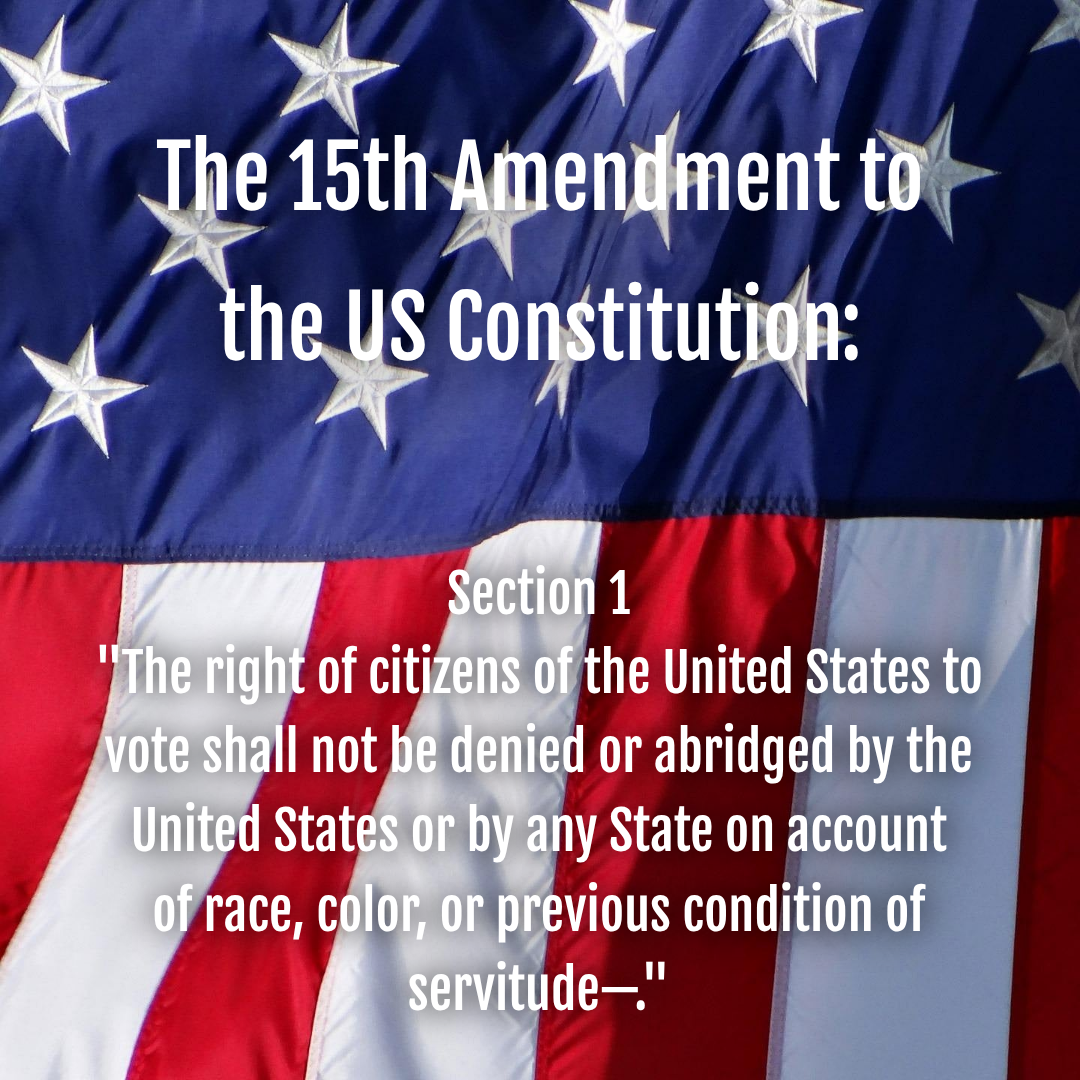





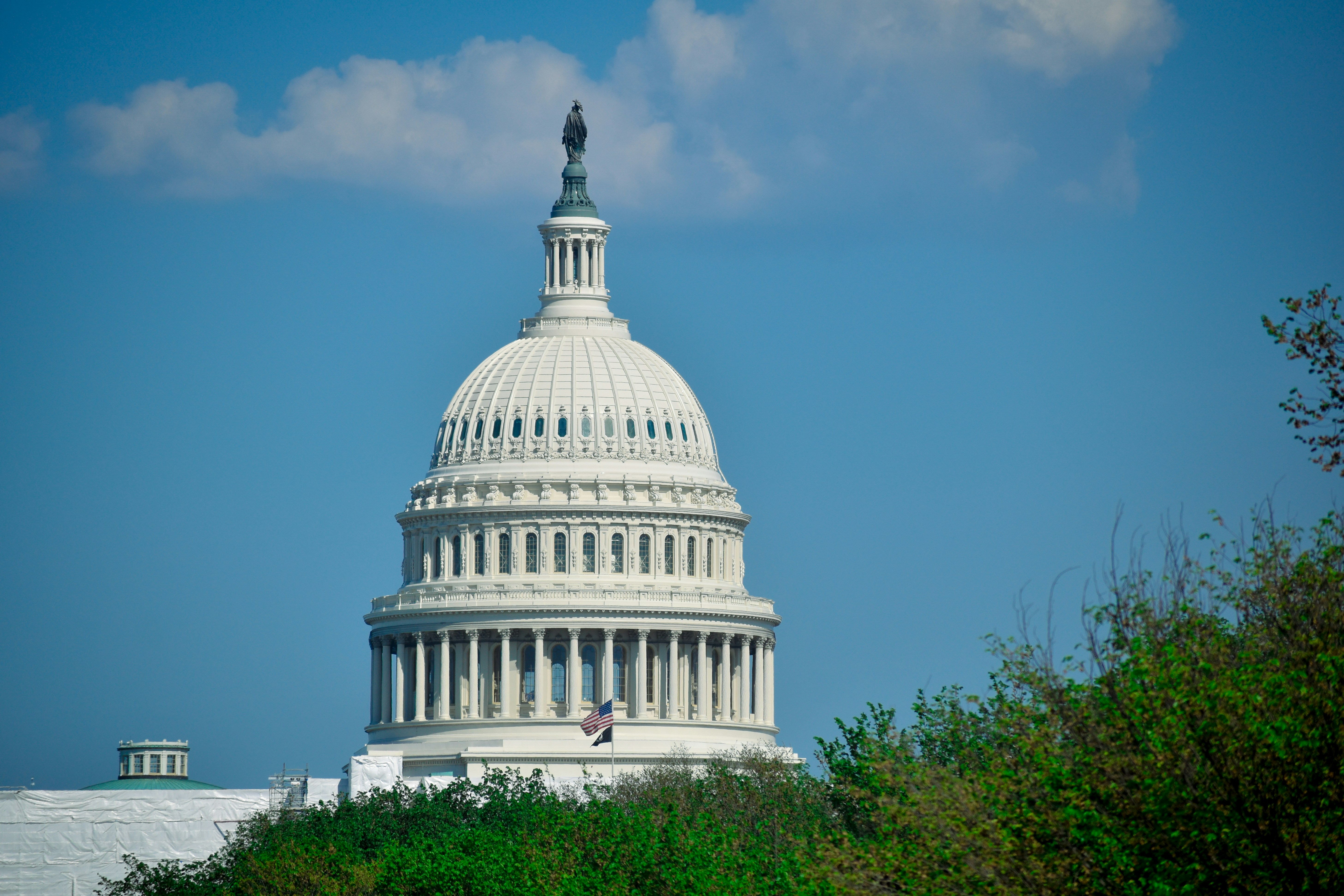

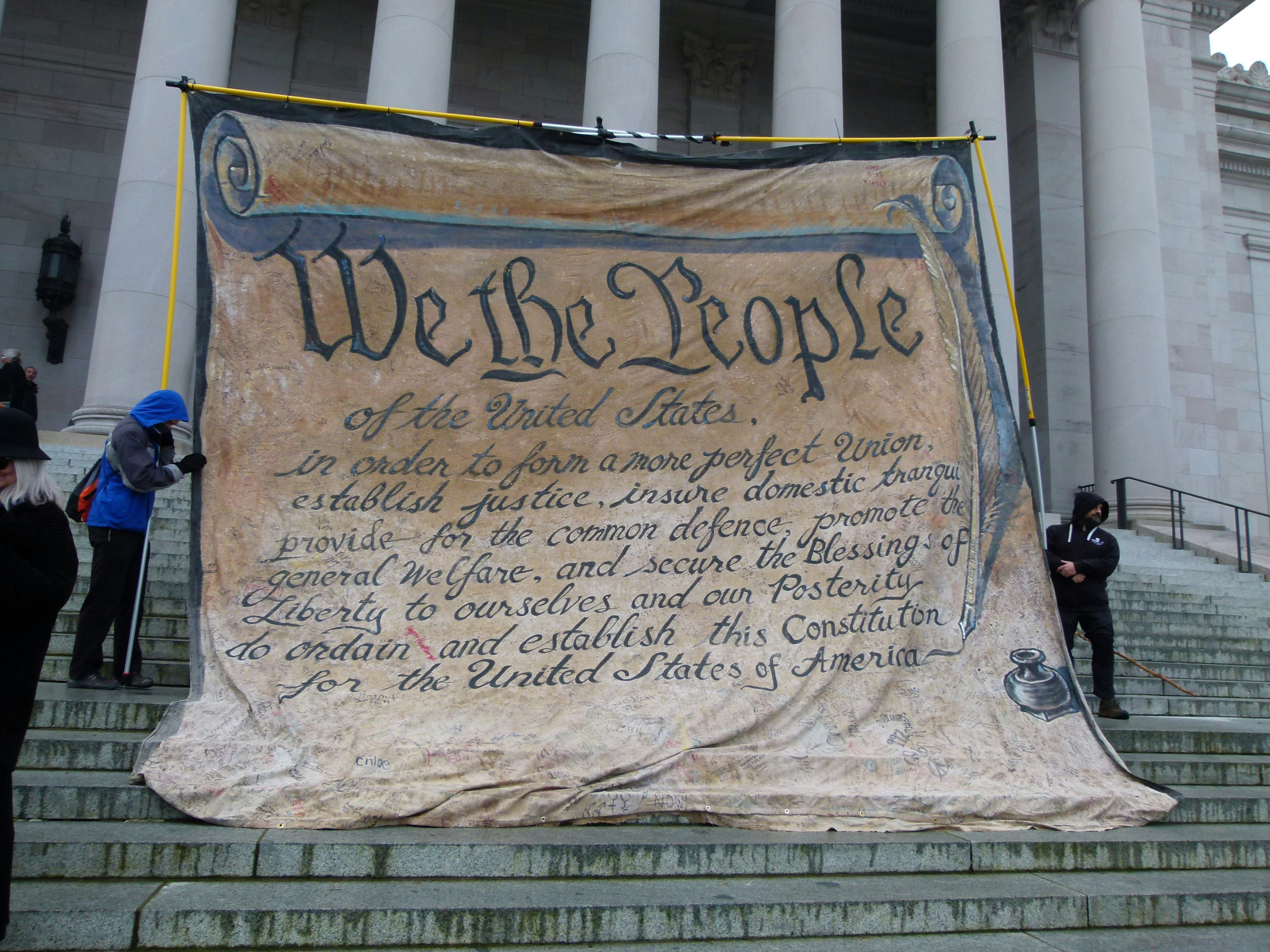

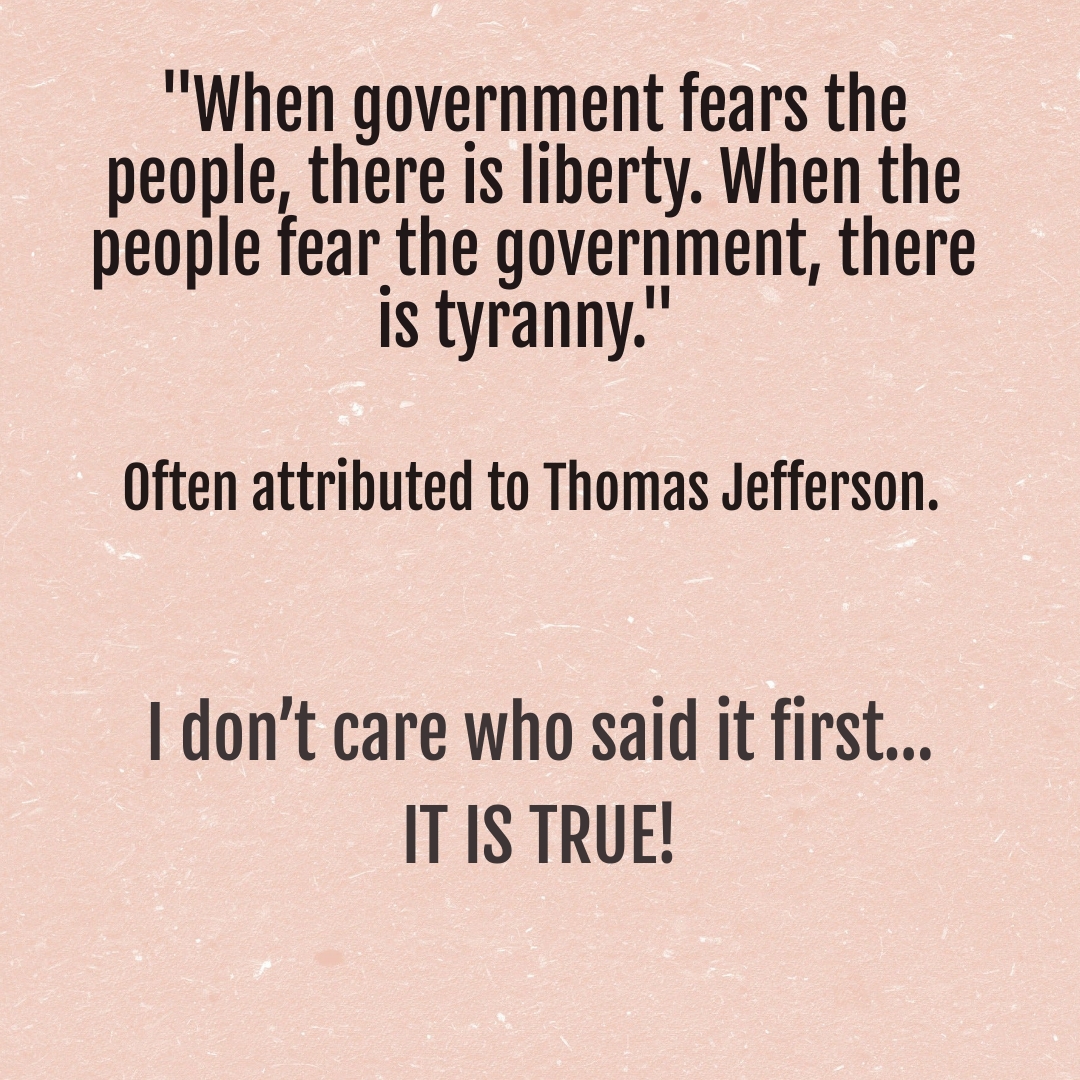


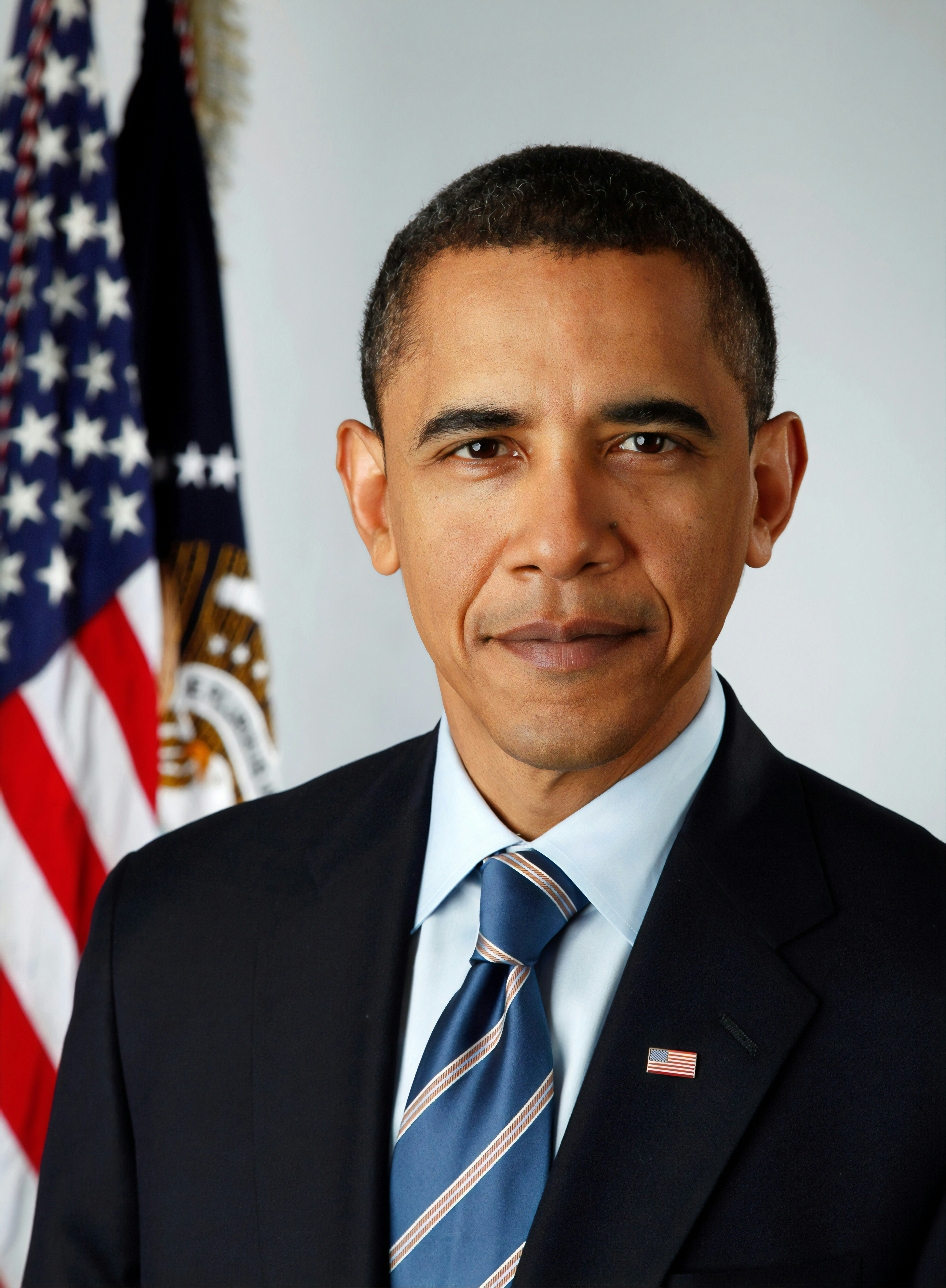
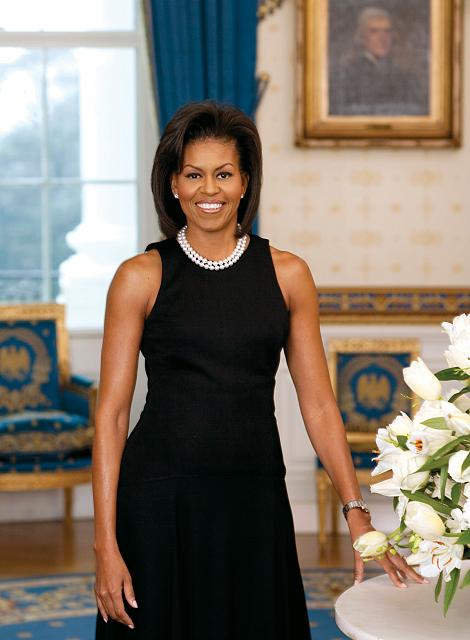

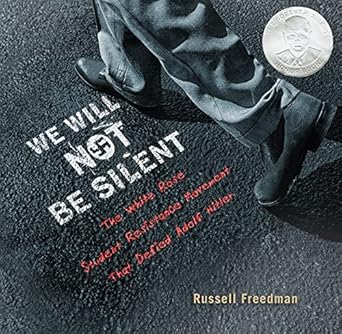


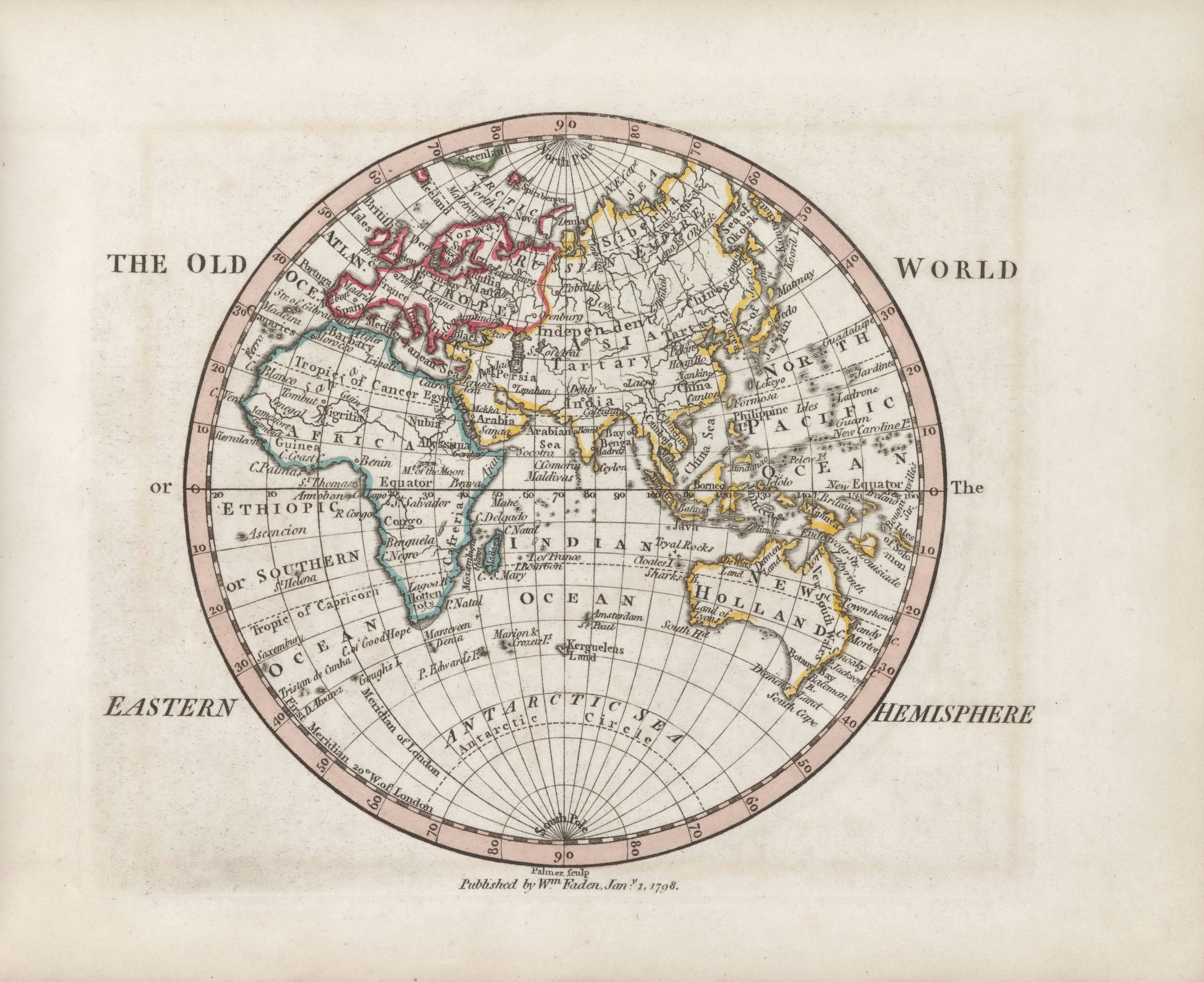


 Janet's Writing Blog