How do you decide what to read next?

My question for you today is, “How do you decide what to read next?”

Is it FOMO (fear of missing out)? Do you scan the NY Times Bestseller List every week and take your reading cues from it? Do you just read books in a certain genre and never dip your toes in something different to shake things up? For instance, instead of just reading western romance novels, do you ever check out a science fiction book from the library?

Photo by Susan Q Yin on Unsplash.

Do you gravitate to the “New Releases” section in your public library? Do you pick up a free copy of Book Page at the public library each month to learn about new books? Do you ask a librarian for recommendations? Do you and your friends tell each other about books you or they have enjoyed?

How I decide what to read

I got the idea for today’s topic from a blog post I read back in May: https://readingladies.com/2023/05/23/10-things-that-make-me-instantly-want-to-read-a-certain-book-toptentuesday/. It got me to thinking about how I decide what to read next. I honestly didn’t connect it with book banning at the time.

I recently divided my to-be-read (TBR) list into four categories: books about the craft of writing; books I need to read for historical research to enhance my historical fiction writing, novels and short story collections; fiction; and nonfiction books of general interest.

I listed the books in each category in the order in which I want or need to read them.

This was no easy task. There are more than 300 books on my TBR. Chances are, I won’t get to read all of them. You see, I add titles to my TBR faster than I can read the books already on the list. I console myself by thinking it’s a nice “problem” to have.

Everyone has preferences

I must admit, I don’t care for sappy romance, science fiction, horror, or fantasy, but I’ll march in the street to defend your right to read those genres. My “go to” genre is historical fiction – especially set in colonial and revolutionary America, but I also enjoy World War II historical fiction, some thrillers, and an occasional memoir.

I enjoy following a number of book review bloggers. I often learn of new authors or books that have slipped in under my radar.

More and more, I’m becoming a fan of certain authors. I try to stay on top of when their next novels will be published. Armed with that information, I get on the waitlist at the public library for those books as soon as they show up in the system’s online catalog.

The authors I tend to look for (in no particular order) include Sally Hepworth, Vicki Lane, Lelah Chini, Isabel Allende, Anna Jean Mayhew, Pam Jenoff, Diane Chamberlain, John Grisham, Kathleen Grissom, Kelly Rimmer, Mark de Castrique, Annette Saunooke Clapsaddle, Susan Meissner, Erik Larson, Barbara Kyle, Lisa Wingate, Anne Weisgarber, Aimie K. Runyan, John Hart, Jennifer Ryan, Kristin Hannah, Andrew Gross, Ann Patchett, Heather Morris, Mark Sullivan, Wiley Cash, Kathy Reichs, Jennifer Chiaverini, V.S. Alexander, Jodi Picoult, Kate Quinn, Ron Rash, Jamie Ford, Leah Weiss, and Kelly Mustian.

Whew! That’s 35, or about 25 more than I would have guessed! I’m sure I’ve left others off my list. Some authors come and go from my list.

Are any of those 35 names on your list of favorites?

Who are your favorite authors?

What’s your favorite genre?

Back to my original question

How do you decide what to read next? Is it based on the cover, an author you’ve read and liked before, the blurb on the back of the book, a positive review you read, the genre, or something else?

I’d like to hear your thoughts on this.

Since my last blog post

I’ve had a productive week. I haven’t put many words on paper, but I have done some on-site historical research for the historical novel I’m writing. Be sure to subscribe to my e-Newsletter if you want to read about where I went and why.

Until my next blog post

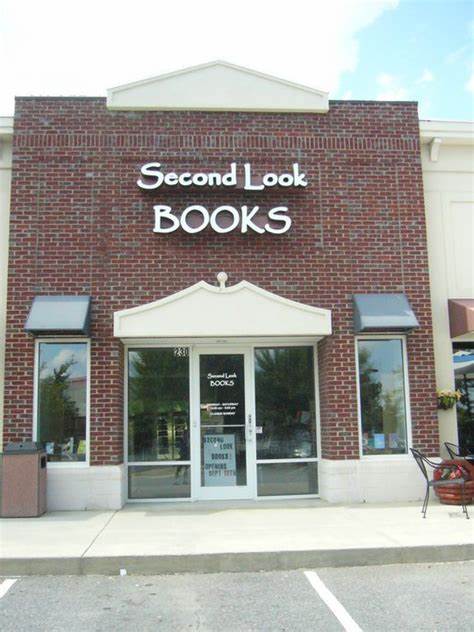
If you are going to be in the Charlotte area between 2:00 and 4:00 next Saturday afternoon, November 4, please drop by Second Look Books at 4519 School House Commons in Harrisburg for our Meet & Greet highlighting The Aunts in the Kitchen: Southern Family Recipes.

I hope you have access to so many good books that you don’t have time to read all of them.

My November e-Newsletter will be sent via email in a couple of days. If you have not subscribed to it, please do so by visiting https://www.janetmorrisonbooks.com and clicking on the “Subscribe” button. Just for subscribing, you’ll receive a downloadable e-copy of my American historical short story, “Slip Sliding Away.”

Make time for friends and relatives, even if you don’t agree with them about politics.

Remember the brave people of Ukraine as a cold winter is racing toward them and the innocent people in the Middle East. People in both these areas are the victims of dictators and terrorists.

And, of course, remember the people of Maine in light of last week’s mass shooting. When will the elected officials in the US learn that most Americans want tighter gun regulations? When is enough, enough?

Janet

How publishing a cookbook helped me as a writer

Since my main interests in writing are historical fiction and history, it would seem that publishing a cookbook has nothing to do with either one of those or my pursuit of a career as a writer. I beg to differ.

If one wants practice in proofreading, I recommend they proofread a cookbook. At least two typos got past my sister and me in the proofreading stages. Proofreading a cookbook is a humbling experience. It should serve me well in my next short stories and books.

The Aunts (A U N T S) in the Kitchen: Southern Family Recipes, by Janet and Marie Morrison
The Aunts in the Kitchen: Southern Family Recipes, by Janet Morrison and Marie Morrison

Proofreading a cookbook is part paying extreme detail to numbers and part writing directions in a concise yet thorough way. It means trying to put yourself in the shoes of someone making the recipe for the first time – or even a novice cook or baker.

Are the instructions not only correct in sequence of method but also clear enough to give the cook the best chance to follow the directions with ease instead of confusion and frustration? Are the recipes presented in a way to give the cook the best chance to be pleased with the final product?

Proofreading is tedious work and it is always a good idea to have a second set of eyes. In fact, if my sister and I had not worked together proofreading the 289 recipes in our cookbook, half the errors we found probably would have slipped past us.

A few words about the software I use

Is there a book in you that is begging to come out? Do you think self-publishing is not within your reach? That is where I was two years ago. I never expected to be able to format a book in a form acceptable for Amazon or any other self-publication platform.

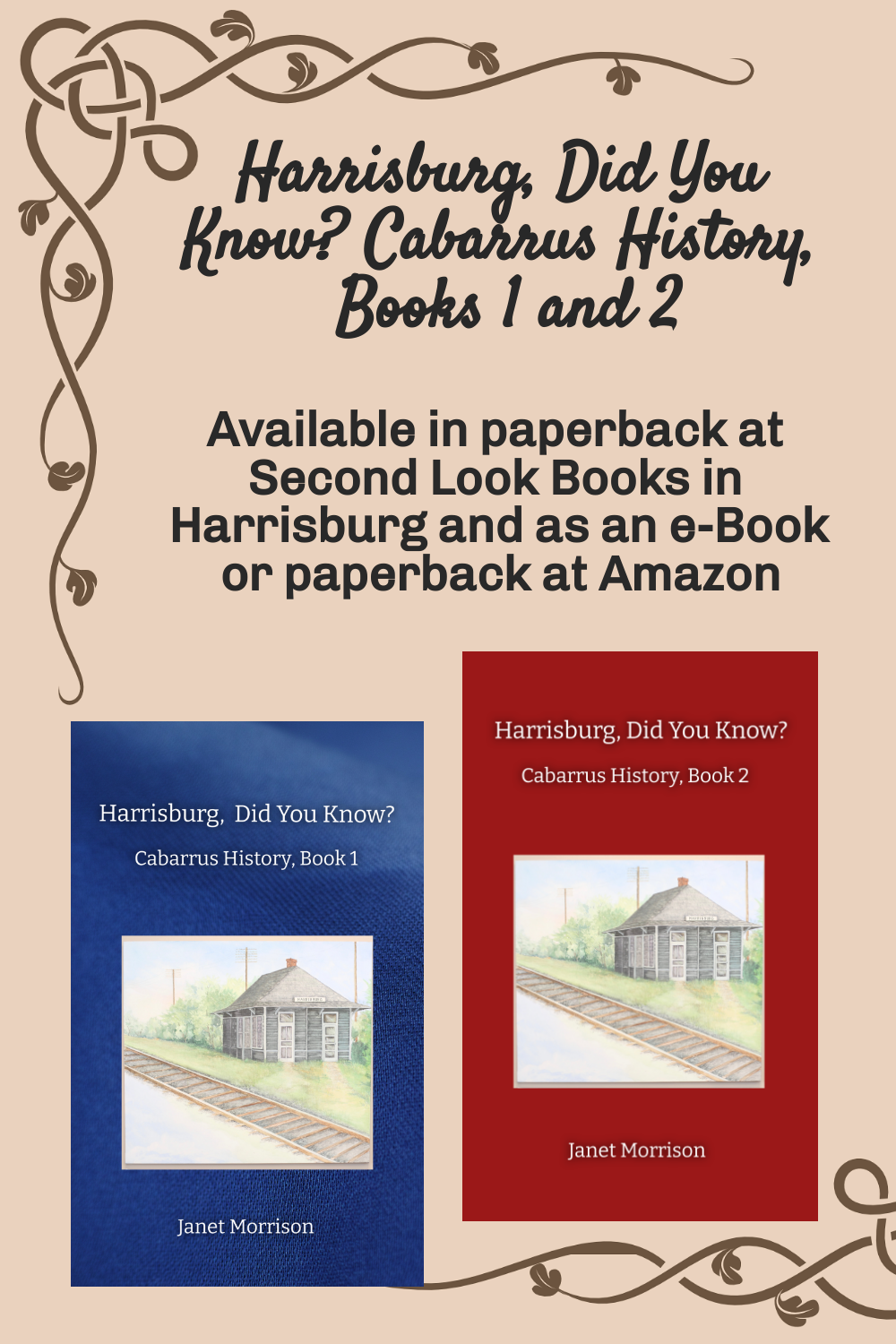
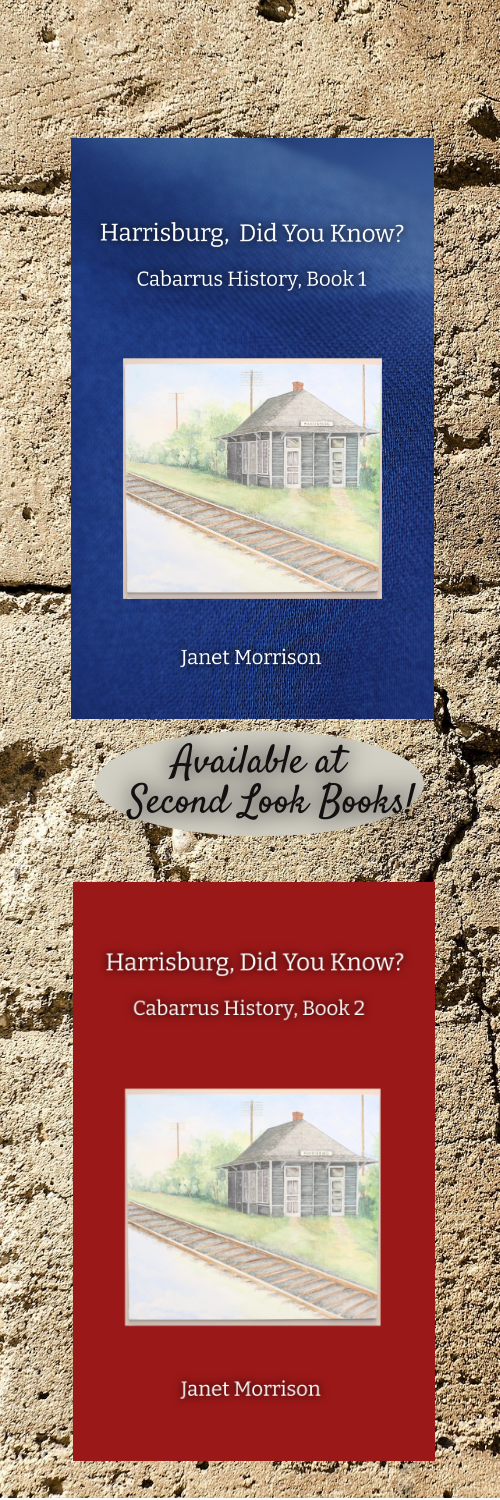
The Atticus.io app has enabled me to publish two local history books (Harrisburg, Did You Know? Cabarrus History, Books 1 and 2); two short stories (“Slip Sliding Away” and “Ghost of the Battle of Guilford Courthouse: An American Revolutionary War Ghost Story”); and a cookbook (The Aunts in the Kitchen: Southern Family Recipes) since last November!

BookBrush.com has made it possible for me to design the book covers for each of those books. I am not computer savvy, in the big scheme of things; however, I have been able to accomplish all this self-publishing in a little less than one year.

In addition, I have created memes for Facebook and bookmarks related to my books on BookBrush.com. That is just a fraction of what one can do through BookBrush.com tools.

Disclaimer: I am receiving no compensation in any form whatsoever for mentioning Atticus.io or BookBrush.com. I just want other writers who are considering going the self-publishing route to know about these tools I have used. What they have made possible for me has been life-changing.

The formatting and book design tools are not without challenges. There are learning curves with both but, if I can do it, anyone can do it.

The Atticus.io support team is extraordinary. Hands down, they are the best tech support group of people I have ever worked with. They have job security as long as I am self-publishing books!

Both BookBrush.com and Atticus.io have free workshops to help you understand how to use their various features.

Self-publishing is an education, and I have found it to be a beneficial introduction into the publishing world. It remains to be seen if any of my current projects (historical short stories, a devotional book, and historical novels) will be self- or traditionally-published.

Regardless of which path my current and future writing projects take, my self-publishing experience will serve me well. That definitely includes proofreading!

The rewards

So far, I have learned that by the time I paid for:

  • website redesign;
  • maintaining a website and blog;
  • the right to use Atticus.io and BookBrush.com;
  • printing bookmarks designed on BookBrush.com
  • printing and shipping costs for author copies;
  • books about the craft of writing;
  • online writing courses;
  • etc…

it can be difficult to break even financially.

I consider the two short stories I have self-published to be ways to get my name out there as an historical fiction writer. It all falls under the adage: “To make money, you have to spend money.” I offer one of my short stories as a gift to everyone who subscribes to my e-newsletter.

It is not easy to get established as a writer. It has been a winding road and at times a daunting endeavor; however, my reward already is to see my name as the author on the spine of several books.

If I accomplish nothing else, I am happy that someday my heirs will know that I had a dream to write and I persevered to realize that dream.

Since my last blog post

Some weeks I can’t remember what I’ve done since my last blog post. It isn’t until I look back over my to-do list and find items checked off as completed that I realize I am making steady progress in my writing.

I did research for a short story I’m writing; typed notes from The Author Estate Handbook, by M.L. Ronn and added to the list of the things I need to take care of before I update my will; researched Fort Dobbs State Historic Site near Statesville, NC, Shallow Ford on the Yadkin River, and Bethabara State Historic Site for the novel I am writing; and planned a trip to visit several sites pertinent to that novel.

I watched a BookBrush.com free presentation on Zoom about book marketing on Pinterest. It was a real eye-opener. Good news/bad news: Now I have a thousand new tasks to add to my to-do list.

Until my next blog post

If you want to write a book, do it!

I hope you have at least one good book to read this week. I have more than I can find time to read!

Make time for your friends and family.

Don’t forget to visit https://www.janetmorrisonbooks.com and subscribe to my e-newsletter.

Remember the innocent people of Ukraine and the Middle East. It is the innocent citizens who are so often caught in the middle and pay the ultimate price for the actions of dictators and terrorists.

Janet

How much Regional Accent and Dialect is Too Much in Historical Fiction?

When it comes to using dialect or regional accents in a novel, there are no definitive rules. It depends on the writer’s voice, the genre, and personal taste. Personal taste is where the rubber meets the road.

Too much of something like dialect in a novel sort of falls into the “I know it when I see it” category.

The rule of thumb

The rule of thumb is to avoid using it to the point of making the novel difficult to read. If the reader finds it exhausting to decipher the words, it means you have crossed that imaginary line. If the reader must wade through so much dialect that they are yanked out of the story, it means there is too much dialect.

Photo by Tim Mossholder on Unsplash

My experience with “y’all” in “Slip Sliding Away”

In my early drafts of my historical short story, “Slip Sliding Away,” I set the plot in the late 1700s. Something kept nagging at me, though. I wanted to use “y’all” in the story.

If you have read the story and you are from the southern part of the United States, you know the funeral scene with the intoxicated pallbearers struggling to get up the hill to the cemetery just screams out for the use of “y’all.”

There was a problem, though. My trusty resource for determining when a word came into common usage, English Through the Ages, by William Brohaugh, failed me! I did not find ‘y’all” in the book.

My second resource for such dilemmas is Merriam-Webster’s Collegiate Dictionary, Tenth Edition, for it tells when words came into common use. I looked up “y’all” and to my great disappointment, the dictionary just said, “var [variation] of you-all.”

I cringed. Why would anyone say, “You all” when there is a perfectly good contraction that just rolls off the southern tongue?

While I’m airing my grievances about the use and misuse of “y’all,” let me just say that if one is going to write the contraction, please put the apostrophe in the correct place. Don’t make me cringe by writing, “ya’ll.” I see it on all kinds of southern merch and it’s just not right. But I digress.

I turned several pages beyond “y’all” in the dictionary and looked up “you all.” First, I discovered it is hyphenated. Who knew? Then I learned that “you-all” was in common use in 1824. That information was helpful. It told me that I had to move my late-1700s story to 1824 or later.

I never did find anything definitive telling me when southerners started taking the easy way out by addressing two or more people as “y’all.” I figure that surely by the 1870s the word was in use, so I set the final draft of “Slip Sliding Away” in that decade.

Did you have any idea about the minutiae writers of historical fiction have to deal with? (Yes, I know. I’m not supposed to end a sentence with a preposition; however, it just seems awkward to write – or read – “Did you have any idea about the minutiae with which writers of historical fiction have to deal?” My mother was an English teacher, and I think she would agree with me on this one.)

What about the dialect in Where the Crawdads Sing, by Delia Owens?

After reading Where the Crawdads Sing, I found myself alone in the world in saying that novel contained too much dialect. Everyone else who read it absolutely loved it. I liked it, too, but I was distracted by the amount of dialect used. Maybe I had read too many articles and books about the craft of writing and I was just hyper aware of the dialect.

With more than 617,000 reviews with an average of 4.7 out of 5 stars on Amazon and 18 million copies sold worldwide, Where the Crawdads Sing is obviously an amazing novel. Apparently, Delia Owens knew exactly how much dialect to include in it to please millions of readers. I wish I were talented enough to have written it!

Since my last blog post

It was a busy week and I got to check off one big task that has been on my to-do list for months. On Friday, my church friend who took the cover photograph for my two local history books, Harrisburg, Did You Know? Cabarrus History, Book 1 and Harrisburg, Did You Know? Cabarrus History, Book 2, took photographs for the cover of the family cookbook my sister and I have been compiling for a couple of years. With the formatting finally completed, I felt safe in getting the cover designed. Look for an announcement regarding the publication of The Aunts in the Kitchen: Southern Family Recipes in a future blog post and in my November newsletter.

My sister and I took a day trip that was a combination Revolutionary War/genealogy trip. It was a wonderful day. I’ll tell you about in my November newsletter.

Speaking of my newsletter, you can find out about the cookbook, my various other writing projects, and the historical “field trips” I take if you simply go to https://www.janetmorrisonbooks.com and click on the “Subscribe” button. You will immediately receive a free downloadable copy of “Slip Sliding Away” as well as my future every-other-month newsletters. Thank you to all 42 of you who have taken the time to subscribe.

Until my next blog post

What do you have to say about the amount of regional accent or dialect in a novel? I would like to hear your thoughts on the topic.

Have you ordered my American Revolution e-ghost story?  “Ghost of the Battle of Guilford Courthouse: An American Revolutionary War Ghost Story” is available from Amazon, along with my other books: https://www.amazon.com/dp/B0CH7JCP11/.

Take time for friends and family.

Thank you for taking time to read my blog post. Y’all come back now, ya hear?

Remember the people of Ukraine, Maui, Libya,….

Janet

To Write or Not To Write Historical Short Stories? What do you think?

Calling all historical fiction fans: I need your help with something!

I mentioned in May 1, 2023 blog post, Some of the Books I Read in April 2023 that I was toying with the idea of writing some historical short stories related to the historical novel I’m working on. I’d read that suggestion in Writing Short Stories to Promote Your Novels, by Rayne Hall as a way to create interest in the characters in one’s novel before that book’s publication.

Since I need to grow my mailing list greatly before I publish the novel, it appears I’ll have plenty of time to write a few short stories. The process should produce various benefits to me and my potential readers.

Photo by Aaron Burden on Unsplash

In addition to my novel readers getting a head start in learning about some of the book’s characters and the 18th century world in which they live, such writing will help me flesh out the characters and get better acquainted with them. You and I can both get a good grasp on what makes them tick.

I’ve been brainstorming ideas for the stories. If it all works out like I envision, I will self-publish the stories in an ebook collection. My timeline is written in pencil with a big eraser nearby. If nothing else in the last year of self-publishing two local history books and trying to self-publish a family cookbook, I’ve learned that flexibility is a necessity.

Readers, what do you think? If you’re a fan of historical fiction, let me know what you think of this project. Would you enjoy getting acquainted with some of the characters in my novel(s) and the world in which they live in the 1760s and 1770s before getting to read the novel(s)?

Characters such as Elizabeth Steele who had tavern in Salisbury, North Carolina? George, who was a slave in The Waxhaws in South Carolina? Oliver McNair, who was educated at the College of William and Mary in Williamsburg, Virginia, and ended up in The Waxhaws? Betty Jackson’s story of family obligations in The Waxhaws?

Would you be interested in reading such short stories while I continue to work on my novels?

In the meantime… if you haven’t subscribed to my newsletter yet, please visit my website at https://www.janetmorrisonbooks.com and click on the “subscribe” button. In return, you’ll receive a free downloadable copy of my first historical short story, “Slip Sliding Away” and you’ll receive my e-newsletter every other month. Do it right now!

Since my last blog post

My research last week for my historical fiction writing focused on how food was cooked in the southern colonies in the 1760s and 1770s. I have a growing appreciation for how time consuming it was to prepare a meal then.

A funny thing happened to me at the public library the other day. I had been given some soft mountain mint and was eager to find a book with good information about how to root it. I typed, “how to grow mint” in the library system’s search engine. The response I received was, “Nothing found for how to grow mint. Did you mean ‘how to grow marijuana’? View 13 results.” It’s sort of a sad commentary that the system has no books about how to grow mint, but 13 books on how to grow marijuana. a sign of the times, I suppose. (Before you try to enlighten me, yes, the library had plenty of books about growing herbs. I just started by looking for one specifically about mint.)

Until my next blog post

Take time on this Memorial Day in the United States to remember and give thanks for those who gave their lives in the military service of our country.

I hope you have a great book to read.

Take time to enjoy friends and family.

Remember the people of Ukraine.

Don’t forget to give me some feedback about my short story plan!

Janet

Excitement the Week My New Book Arrived!

Promising to tell my blog readers about my journey as a writer, I have the privilege today of telling you about last week’s arrival of my new book, Harrisburg, Did You Know? Cabarrus History, Book 2.

My first copies of the local history book arrived on Sunday. That evening, I also finished drawing in black ink two maps of 1900s Harrisburg, NC on 11×17-inch paper. I’d drawn the maps in pencil years ago based on my memory and the recollections of Mr. Ira Lee Taylor. Mr. Taylor was born in the early 1920s and lived to be in his mid-nineties. He was a great resource for me when I was writing the local history column from 2006 through 2012.

Mr. Taylor’s memory of stores and other businesses such as the livery stable made it possible for me to include many buildings that were long gone by the time I was born in the 1950s.

Since the town experienced several road closures and the addition of a four-lane bridge over the railroad tracks due to the high-speed rail improvements about a decade ago, it’s important to have a record in the form of a map so the town’s earlier layout won’t be forgotten.

Monday morning, I took the two maps to have photocopies made. Since the owner of the local bookstore had told me that several people who purchased my first local history book had said they wished they had a map of the way the town used to look, I thought she’d be happy to have my two 11×17-inch maps to sell for maybe $2.50. That didn’t work out, which was disappointing.

On Monday and Tuesday, I got to give copies of my new book to several people who have been instrumental in helping me with details of local history. I mailed several of those to people who live out-of-town, but I got to deliver others in person.

I designed and had bookmarks printed to give away with each book. One side of the bookmark has pictures of both of the Harrisburg local history books and the other side has a photo of my “Slip Sliding Away” short story along with my website and QR code so people will know how to get a downloadable copy of my short story by subscribing to my newsletter.

Above, one side of my bookmark; below, the other side of my bookmark.

I also delivered copies of my first and second local history books to a local bookstore which already had two people on the waitlist for Book 2. After taking the books to the store, I posted announcements on three Facebook pages so people would know that my new book was available locally and on Amazon. I’ve enjoyed getting comments and replying to comments – some from people I know and some from people I’ve never met. It’s gratifying to know that people are enjoying both my books.

Wednesday gave me a break from all the book activity, as a cousin visited from New York with her two-year-old son. It was great to sit and visit and watch a very active toddler investigate parts of our house and yard.

On Thursday, I got to have lunch with three local people to talk about local history. It was interesting, and I learned some things I hadn’t known before. Don’t jump to any conclusions, though; I don’t have a third local history book in me!

Early in the week, I made the decision to give myself Thursday and Friday off from hawking my book. Being a native and lifelong North Carolinian, the “March Madness” of the Men’s and Women’s NCAA Basketball is something I’ve always blocked out time for on my calendar. Both of my NC State University teams got knocked out in the first round, but I’ll continue to watch the games the next three weekends.

Photo by Gene Gallin on Unsplash

On Saturday, I delivered more copies of Harrisburg, Did You Know? Cabarrus History, Book 2 to the bookstore in Harrisburg, so the shop is well-stocked for this week.

When not hawking books or watching basketball, I spent a good bit of time pouring over old deeds, plats, and maps as I tried to figure out exactly where I live in relation to the land purchased by my ancestors in the 1760s. I enjoy activities like that.

Until my next blog post

I’ll continue to publicize my books, and I’ll keep spreading the word that I now publish an electronic newsletter every other month for people who subscribe to it on my website: https://www.janetmorrisonbooks.com. I also give away a downloadable short story to subscribers. I appreciate those of you who have taken advantage of this opportunity.

I hope you have a good book to read. The right of people to read is under attack in some states within the United States, and that’s a frightening situation. It’s more important than ever for freedom-loving people everywhere to read, read, read. Support your local public library and your local bookstore! Don’t let anyone dictate what you can and cannot read!

I plan to get back to work on the book of family recipes I started compiling a few months ago before the history books demanded my time. That’s my next project, but I’m eager to also get back to writing my first historical novel.

Take care of each other.

Don’t forget the people of Ukraine. In particular, remember the 16,000 children who have been forced by the Russians to go to Russia in the last 14 months. Only 300 of the 16,000 have been able to get back to their homeland of Ukraine.

Janet

Three Compelling Books I Read in February 2023

After a couple of months of not getting to read much for pleasure, February turned out to be just what I needed to get back in the habit of reading. My favorite genre, historical fiction, really came through for me last month.

The Diamond Eye, by Kate Quinn

The Diamond Eye, by Kate Quinn

I listened to this historical novel on CD. I was spellbound from disc one until the very end of disc 11. I yearn to write historical fiction so vividly. I long to captivate readers with fiction based in an era not their own. Kate Quinn has established herself as a master of the art and craft of writing historical fiction.

The Diamond Eye is based on a true story. Mila Pavlichenko lives in the part of the Soviet Union that is now Ukraine. She works at a library and adores her young son. When World War II transitions to the invasion of Russia by Nazi Germany, Mila does the unthinkable. She becomes a sniper for the Russian Army. And she excelled at it.

After her official kill count reaches 300, Mila becomes a national heroine and is sent on a tour of the United States to drum up support for the fight against Hitler. There, she meets President and Mrs. Roosevelt. Eleanor Roosevelt, seeing a bit of her own independent nature in the sniper, befriends Mila.

The book follows Mila through the war and how she constantly has to prove herself because she’s a woman and not automatically taken seriously. She’s called the usual names that men who are threatened by strong women call them.

It is a stunning novel and reminded me why I enjoy reading historical fiction. Yes, it’s fiction because conversations are imagined, but reading well-written historical novels is an enjoyable way to learn a lot of history.


The Home for Unwanted Girls, by Joanna Goodman

The Home for Unwanted Girls, by Joanna Goodman

This is another gripping historical novel. I was so impressed by Saskia Maarleveld’s reading of The Diamond Eye, that I looked for other books she had recorded. That’s how I found The Home for Unwanted Girls. I thought that was an interesting way to find another good book!

The Home for Unwanted Girls is about an unwed mother in Quebec in the 1950s who is forced by her parents to give up her baby girl. The book shines a light on the ugly history of the orphanage system in Quebec at that time. When the orphanage is turned into an insane asylum and the orphans are forced to take care of the patients, the outcome for the girls seems hopeless.

This novel follows the life of one of those orphans and the 15-year-old mother who wanted desperately to keep her. The mother never gives up on finding her child, even though she is told the girl died.


The Escape Artist: The Man Who Broke Out of Auschwitz to Warn the World, by Jonathan Freedland

The Escape Artist, by Jonathan Freedland

This book was spellbinding! It tells the stories of 19-year-old Rudolf Vrba and Fred Wetzler who did the impossible in April 1944. They escaped from Auschwitz! The book tells how Vrba studied the precision with which the Nazis conducted searches and exactly how long the guards searched when a prisoner was unaccounted for. He and Fred worked with two accomplices to plan the escape of Vrba ad Wetzler. Their two accomplices were to stay behind while Vrba and Wetzler escaped to take the truth of what was happening at Auschwitz out into the world.

It’s a fascinating read. It follows Vrba and Wetzler after their escape. The eye-opening part of the book was the aftermath of their escape. They testified and provided written descriptions of the horrors of Auschwitz. Their testimonies matched to the nth detail; however, their words and their physical conditions of malnutrition fell on deaf ears.

Winston Churchill didn’t want to bomb the rail lines going into Auschwitz because England bombed in the daytime. President Franklin D. Roosevelt didn’t want to bomb because it would be a diversion from plans. Jewish organizations in Europe refused to believe what was happening at Auschwitz because it was just too extreme. How can people do such things to their fellow human beings?

Along with the tragic murdering of Jews at Auschwitz, the fact that world leaders who had the power and where withal to do something about it in fact chose not to act is a gut punch.

My general takeaway from the book is that one’s life and future can be determined by someone else’s snap decision. Decisions were made on a whim by guards at Auschwitz every day that determined who lived, who died, and who escaped.

It’s a book that will haunt me.


Since my last blog post

I continue to try to get the word out about my second local history book, Harrisburg, Did You Know? Cabarrus History, Book 2.

I also continue to ask people to go to my website, https://www.janetmorrisonbooks.com and subscribe to my newsletter. Subscribers receive a free downloadable copy of my first historical short story, “Slip Sliding Away: A Southern Historical Short Story.”

“Slip Sliding Away: A Southern Historical Short Story,” by Janet Morrison

Until my next blog post

I hope you have a good book to read. I know where you can get a good historical short story to read!

Take care of one another.

Remember the people of Ukraine.

Janet

I just wanted a proof copy of Harrisburg, Did You Know? Book 2

This should have been a very short blog post. Two or three paragraphs should have covered the story. Actually, if that had been the case, I would have chosen a different topic for the post. I hadn’t planned to blog about this today.

When I started writing my blog more than 10 years ago, I set out to chronicle my journey as a reader and a writer. It’s been a bumpy ride and there have been detours, successes, and obstacles. I’ve tried to share my ups and downs.

Just three weeks ago in my February 6 blog post, What does a month in the life of a would-be author look like?, I described a particularly trying month I’d experienced. The things I ranted about in that post eventually all worked out.

Today’s post is about last week’s stress. Last week’s stress has lapped right over into this week. I’d like to think there’s light at the end of this tunnel, but after what I’ve been through, it’s hard to be optimistic.

Photo by Brett Jordan on Unsplash

Today’s post falls in the category of “you can’t make this stuff up.”

Here’s the timeline as tracked on Amazon.com:

February 19

Having submitted the formatted copy of Harrisburg, Did You Know? Cabarrus History, Book 2 to Amazon for publication, I ordered a proof copy. After having some technical difficulties with several photographs in the book, I especially wanted to be sure they were going to be oriented correctly in the printed book.

I also ordered two paperback copies of Slip Sliding Away: A Southern Historical Short Story, but those two books had to be purchased as a separate order.

Amazon chose to combine the orders and deliver (or attempt to deliver) the three books to me via the United States Postal System, otherwise known as “carrier facility.”

February 21

9:11 pm      Order left carrier facility, Concord, NC.

This is when I had a feeling that things had gone awry. Since Amazon does not print books at its facility in Concord, NC, which is about 12 miles from my house, I wondered why Concord was the first point of transit. The first point of transit should have been Amazon – not the US Postal Service. My books are usually printed either of Columbia, South Carolina or Indianapolis, Indiana.

February 22

Unspecified time   Carrier picked up package in Columbia, SC (about 90 miles south of me.)

8:18 a.m.     Package arrived at Amazon facility, Concord, NC (about 15 miles north of me.) [This is great! Maybe my proof copy and the short stories will arrive today or tomorrow at the latest! Life is good!]

February 23

6:18 a.m.     Package arrived at carrier facility, Walkertown, NC (about 80 miles north of me.) [What?]

6:32 p.m.    Package arrived at carrier facility, Harrisburg, NC (Post office is five miles from me. I live on a Harrisburg mail route.) [I’m not sure how it traveled 75 miles in 14 minutes, but okay. Whatever.]

7:47 p.m.    Package arrived at carrier facility, Greensboro, NC (about 85 miles northeast of me.) [Wait a minute! Something’s not right.]

But I don’t want a refund. I want my books!

You know you’re in trouble when Amazon tells you on Thursday that you can request a refund if your package doesn’t arrive by Tuesday.

A refund won’t do me any good. I need to receive the proof copy before I can give Amazon the go ahead to start selling it. More importantly, I can’t order author copies to supply Second Look Books in Harrisburg until the book “goes live” on Amazon. Then, it takes about four weeks for me to receive the author copies, and my “Meet & Greet” at Second Look Books is scheduled for April 15.

February 24

5:19 a.m.     Package left Amazon facility, Concord, NC (about 15 miles northeast of me.)

9:21 a.m.     Package arrived at USPS distribution center, Charlotte, NC (about 18 miles west of me.)

February 25

3:15 a.m.     After spending 18 hours at the USPS distribution center in Charlotte, the package left.

3:20 a.m.     Five minutes later, it left again. (I’m not making any of this up!)

7:07 a.m.     After traveling about 15 miles, package arrived nearly four hours later at the USPS in Harrisburg, NC.

7:18 a.m.     Package is out for delivery “by 8 p.m. tonight.”

3:20 p.m.    Package arrives at my house! According to the back page, the books were printed in Columbia, SC on February 20, 2023. There was only one 2×4-inch gaping hole in the package right over the cover of the Harrisburg book. These books have seen parts of North Carolina I’ve never seen. As far as I know, I’ve never been to Walkertown. I looked it up. It’s between Winston-Salem and Virginia.

Alas, I had the books in my hands.

I quickly turned to page 465 in the Harrisburg book to make sure Carl Higgins’ B-26 bomber was shown correctly; but, no! In the image, the plane is heading straight up instead of to the left.

Various subheadings in the book appear at the bottom of one page instead of at the top of the next page, although I painstakingly made sure that none of the subheadings were at the bottom of a page when I submitted the formatted manuscript to Amazon. Likewise, all images were oriented in the correct manner when they left my computer.

And did I mention that the cover is dark brown instead of red?

Photo by Taylor Deas-Melesh on Unsplash

I discovered, though, that the errors (except for the color of the cover) were my fault due to my lack of technical knowledge. If I’d been more in tune with general computer technology, I would have realized that I had created a problem… all the problems in the way the book was printed… except for the brown cover on the red book.

I still hold Amazon and the USPS responsible for shipping my book all over North and South Carolina for nearly a week. The best I can figure, the USPS transported it around 425 miles to get it 90 miles from Columbia, SC to Harrisburg, NC. If I could have received it five days ago, I’d probably have all the problems worked out in the formatting by now and would still be on schedule for publication.

Instead of giving Amazon the go ahead on March 1 to publish my book, I’m now working to correct errors. Then, I’ll submit the revised version. Then, with a great sense of foreboding, I’ll pay to get ANOTHER proof copy of the Harrisburg book. And I’ll wait who know how long for it to arrive. Then, if it is in good order, I’ll order author copies. Then, I’ll wait four weeks for them to arrive. Will they arrive in time for the “Meet & Greet” at Second Look Books on April 15th?

If I were a betting person, I wouldn’t bet on it.

Since my last blog post

Besides following the day-to-day saga of the trip the proof copy of my book has been on, I did some yard work. It’s been unseasonably warm here in North Carolina. I was surprised to see two black snakes on Wednesday. I’ve never seen a snake in February (or March!) before. It’s unusual to see one in April.

My email provider is a company called Windstream. There are many things I’d like to say about Windstream, but I won’t. Suffice it to say that on Saturday night, just five hours after I received the awful proof copy of my Harrisburg Book 2, Windstream downloaded into my inbox the last 4,449 emails I had already received. As we say in the South, “Bless their hearts!” Again, you can’t make this stuff up.

Until my next blog post

I hope you have a good book to read. I plan to write about the books I read in February.

If you’re looking for a good historical short story, just visit https://www.janetmorrisonbooks.com and subscribe to my newsletter. You’ll be rewarded with a free e-copy of a short story I had fun writing, “Slip Sliding Away: A Southern Historical Short Story.”

Also, hurry and subscribe before March 1, in order to receive my first newsletter!

I hope to have a corrected copy of Harrisburg, Book 2 completed, submitted to Amazon, and have a new proof copy of it in my hands by the time I blog again on March 6. I can only hope.

Thank you for reading my blog!

Don’t forget the brave people of Ukraine who have been under unwarranted attack by Putin for a year.

Janet

DRUMROLL!  My Website is Redesigned!

In celebration of the unveiling of my newly-redesigned website, I’m announcing a giveaway! Who can pass up free stuff?

Today’s blog post will be short because I want you to spend some time exploring my website.

The home page of my redesigned website!

What’s free?

Just for visiting my website and clicking on the “Subscribe” button, I’ll send you a FREE E-Copy of one of my short stories:  “Slip Sliding Away: A Southern Historical Short Story.” It’s set in the southern Appalachian Mountains in 1875. I hope you’ll enjoy it.

This is the cover of the short story if you prefer to purchase it on Amazon.

Please rate or review the short story

If you like the story, please consider going on Amazon.com and rating it or even leaving a brief review. That would be great and I would truly appreciate it!

History in Photographs

History in Photographs page on my redesigned website!

One particular page on my website that I want to draw your attention to is “History in Photographs.” On that page you’ll find pictures of various historical sites and items that are representative of the 1700-1900 era of American history I’m most drawn to and prompted to write about.


Since my last blog post

In addition to my newly-designed website going “live,” I finally received a refund for the damaged copies of Harrisburg, Did You Know? Cabarrus History, Book 1 that I received in December. I emailed the company again and my request finally landed with the right person!

It was a great week!


Until my next blog post

Please visit https://www.janetmorrisonbooks.com and subscribe to my newsletter! I anticipate sending out the first newsletter in March and follow a schedule of every other month.

I hope you have a good book (or short story!) to read.

Thank you for reading my blog and for visiting my website. Don’t forget to SUBSCRIBE to my newsletter to get my free short story!

And as always, remember the suffering people in Ukraine, Turkey, and Syria.

Janet

How to (Possibly) Build an Author Platform? A New Perspective

Today’s blog post is a follow-up to my January 30, 2022 blog post, How can I attract readers when I write about my author’s platform? In spite of my rant last week in What does a month in the life of a would-be author look like? and a continuation of that craziness this past week, I’m feeling good now about my author’s platform.

Read on, to find out what has lifted my writing spirits.

Photo Credit: Emrecan Arik on unsplash.com

Colleen M. Story’s Perspective

The Writers in the Storm website came to my rescue again. Colleen M. Story wrote an article for it months ago while I was already trying to decide when to blog about this topic. Here’s the link to Ms. Story’s September 14, 2022 article: How Your Author Platform Helps You Do More Than Sell Books (writersinthestormblog.com).

Ms. Story hit on some important points and helped me not to feel quite so intimidated by the whole author platform thing. Her article touched on the “whys” and the “wherefores” of an author platform. It boils down to anything and everything you do to attract readers.

She talked about five ways an author’s platform can help your career. They all made sense. Then she listed 14 examples of things a writer can do to attract readers. I was happy to see “Blog” on the list, but the wheels fell off my wagon when I got to “YouTube site.” Yikes! Moving on down the list (because, after all, I can’t do all 14 of them) I came to “Newsletter.” I’ve toyed with that idea, but I haven’t attempted that avenue yet.

When my redesigned website gets up and running (soon!), I will start asking people to sign up for my email list/newsletter. More to come on that in the coming weeks.

Ms. Story also had “E-books” and “Social Media” on her list. I’ve mentioned my lack of comfort with social media in many blog posts. There’s certainly more work for me to do there.

On the E-book front, I’ve written a southern historical short story that I plan to give away as an e-book to everyone who signs up for my mailing list. Stay tuned for my announcement about that when my new website is ready.


Blog and Social Media: Is it Both or Either/Or?

Photo Credit: Elena Mozhvilo on unsplash.com

I recently listened to a Penny Sansevieri of https://www.amarketingexpert.com on this topic. It unburdened me! I learned that more and more authors don’t have a desire or the time to be on social media. Whew! What a relief! I’ve read and heard a thousand times that authors have to be active on social media.

I’ve tried to be active on Twitter. It’s just not my thing. It’s a chore. It’s something I have to put on my to-do list, but usually it gets pushed to another day. And Instagram? I created an account several years ago, but I’ve never used it. By that, I mean I’ve never logged in to my account a single time.

I enjoy putting things on Pinterest, but I’m more likely to pin a recipe than something writing-related. Last week I read a theory that Pinterest might be an author’s best friend when it comes to social media. I like Pinterest, so that was encouraging.

When Penny Sansevieri said I don’t have to do social media, I wanted to jump up and down. If I blog on a regular basis (check!), update my website (check! Being done!) and stay active on Pinterest (fairly easy!), all I need to add is a newsletter.

With that in mind, I looked back at the “Next Steps” section in my January 30, 2023 blog post. I was tempted to strike through numbers 5 and 6 (find out where my target reader hangs out and hang out there), but I’m pretty sure historical fiction fans hang out on Goodreads. I like Goodreads. I just need to get more serious about it.

My takeaways from the podcast were (1) Since I blog every week, I don’t have to have a presence on social media; (2) I need to upgrade my author website; (3) I must have a newsletter with updates on what I’m doing and teasers about what’s coming; (4) I need a magnet to attract people to my newsletter; (5) I must have information in the back of my books with links to my website, blog, and any social media I want to participate in; (6) I mustn’t overlook local events and local media; and (7) I need to engage with influencers.


Where do I go from here?

With the new advice from Penny Sansevieri’s podcast that I just need to choose those activities I’m comfortable with and focus on them, I don’t feel overwhelmed now. (Well, not completely overwhelmed.) I will stop feeling guilty for not Tweeting every day.   

You wouldn’t believe how much weight just got taken off my shoulders!


Photo Credit: Jacob Kiesow on unsplash.com

I’ve Been Part Way Down That Road Before

I could be the poster child for how not to build an author’s platform. I’ve given half-hearted effort in the past to everything on Kimberly Grabas’ list I shared in m January 30, 2023 blog post. I’ve let excuses like lack of technical expertise derail my good intentions.

Reading the articles I referenced today and two weeks ago and listening to the podcast I mentioned were extremely helpful. Those actions, plus taking Tim Grahl’s “Launch a Bestseller” course, prompted me to make a plan and set goals and deadlines for myself.

It’s all paid off. I put my nose to the grindstone last fall and self-published a 500-page local history book in November. I’ll have a revamped website later this month. Then I’ll be able to start compiling a mailing list. I’ll give away an e-short story. I expect to have my second local history book available by the first of April.


Since my last blog post

I’m still dealing with the problems I blogged about last week, but I’m trying not to be as upset about them. Several of you have reached out to me about the issues with suggestions and empathy. Thanks to each of you!

My sister and I continue to proofread the manuscript for Harrisburg, Did You Know? Cabarrus History, Book 2.

Harrisburg, Did You Know? Cabarrus History, Book 1 continues to sell well at Second Look Books in Harrisburg and on Amazon.

The daffodils are blooming, so spring must be on the way!


Until my next log post

Thank you for dropping by my blog. I truly appreciate the time you took to read my post today. If you have friends who might enjoy it, please tell them about it.

I hope you have a good book to read. I’m listening to The Home for Unwanted Girls, by Joanna Goodman. I recommend it. It’s historical fiction based on a real life experience and is set in 1950s Quebec. Saskia Maarleveld is the reader on the book on CD. She does wonderful work! I’m beginning to seek out books she’s recorded.

Remember the suffering people in Ukraine, Turkey, and Syria.

Janet

What does a month in the life of a would-be author look like?

In my first blog of the month I almost always write about the books I read the previous month. If I did that today, this would be my shortest blog post ever.

Near the end of this post, I’ll do just that; however, first I need to let off some steam.

If, after reading my blog post last week, How can I attract readers when I write about my author’s platform?, you thought it might be easy to build an author’s platform, just read today’s rant.


January 2023 from where I sit

January was a month filled with distractions and frustrations. The redesigning of my website has gone more slowly than I had hoped, mainly because I’m not very computer savvy. There were answers to technical questions I couldn’t readily figure out.

Plus, I had to learn a lot of technology in January so I can enable readers to subscribe to my email list and receive a free ebook, That’s still a work in progress because the good people at the very well-known email marketing service I’m using required me to fill out a long survey before they can answer two of my three basic questions. At least, they seemed basic to me.

I’m still not sure I’ve figured out how to give away the ebook. Maybe I’ll have to just reward my subscribers with a link to it so they can purchase it on Amazon for 99 cents. At least that remains an option.

Bless their hearts, the folks at the very well-known email marketing service I’m using are more interested in such things as my top three goals, how many subscribers I’ll be downloading (right now, it looks like zero), and what software I anticipate “integrating” with them. I’ve already asked them about Zapier, but they can’t answer me until I fill out the survey and tell them the best time to call me. I thought my question about Zapier was a yes or no question. Apparently, I was wrong.

Due to my moderate hearing loss and the fact that I just prefer having answers in writing, I much prefer answers in writing. I wish I’d gone with ConvertKit. Perhaps there’s still that option – which I told the good people at the very well-known email marketing service in my last email to them on Friday.

On an equally frustrating note, the very well-known print-on-demand company that prints my books has also forced me to learn more technology than I ever wanted to know. However, even with my best efforts in responding to each of their emails and supplying them with 20+ digital photographs, all the order numbers, etc. more times than I can remember since January 5, I have now given up on ever being reimbursed for the 14 damaged books I received on December 21, 2022 because there was no packing material in the boxes.

I worked my way up to a supervisor, but she has chosen not to respond to my latest plea for a refund. I paid the cost of printing, tax, and shipping for those books but I can’t sell them. And who wants to give away a damaged book that has your name on it as the author?

Harrisburg, Did You Know? Cabarrus History, Book 1 is selling very well at Second Look Books in Harrisburg, but I dread all future shipments of it and of Book 2, which I hope to have published by April. It sort of takes the fun out of being an author.

(By the way, don’t bother to send the very well-known print-on-demand company that prints my books photos of the condition the box is in when you receive damaged author copies or a photo of the inside of the box showing the four inches of empty space in which your $25 books were allowed to bounce around in while they were in transit for 600 miles from Indianapolis because the company doesn’t want to know such things. You have the benefit of learning from my silly assumptions that someone in the company would want to know why so many of the books they print arrive at the author’s home in unsellable condition. But if they don’t have to issue a refund to the author, I guess they really don’t need to know what the books arrived damaged.)

I spent the entire month of January formatting Harrisburg, Did You Know? Cabarrus History, Book 2, trying my best to learn how to giveaway an ebook via a very well-known email marketing service, and attempting to get a refund from the company that prints my books for 14 unsellable copies of Book 1. That left very little time for reading for pleasure, but numerous opportunities for screaming.

Photo by Simran Sood on Unsplash

What I read in January 2023

However, when I wasn’t screaming, I read part of The Shadow Box, by Louanne Rice. It was the January book for the Rocky River Readers book club. Time ran out and I didn’t get to finish it.

I tried to read one chapter in Black Raven, by Ann Cleeves every night. Unfortunately, I only got to do that for three nights before the ebook went back to the public library.

I read Chasing the Ripper: A Kindle Single, by Patricia Cornwell. She wrote it in 2014 about her research about Jack the Ripper after her book, Portrait of a Killer: Jack the Ripper – Case Closed was published. This 57-page Kindle Single was interesting even though I haven’t read her Portrait… book. Her Kindle Single is sort of a prelude to her 2017 book, Ripper: The Secret Life of Walter Sickert. The Kindle Single made me curious about the details Ms. Cornwell has pieced together lending credence to the theory that British artist Walter Sickert was indeed Jack the Ripper.

The other book I actually read in its very short entirety was The Boy, the Mole, the Fox and the Horse, by Charlie Mackesy. I can’t describe it better than the blurb on Amazon, so I’ll just quote it, in case you aren’t familiar with the wee book:   “From the revered British illustrator, a modern fable for all ages that explores life’s universal lessons, featuring 100 color and black-and-white drawings.”


What I’d thought about blogging about today

An alternative subject for today was the 89th anniversary of the ratification of the 20th Amendment to the US Constitution. I hesitated to write about that, since just two weeks ago I blogged about the ratification of the 24th Amendment in #OnThisDay: The US Constitutional Amendment that Put an End to Poll Taxes. Plus, I couldn’t seem to set aside enough quiet time to refresh my memory about the 20th Amendment enough to blog about it. Please take time to Google it and refresh your memory. That’s all I had time to do.


Until my next blog post

I hope you have a good book to read. I’m listening to The Diamond Eye, by Kate Quinn. I’m thoroughly enjoying it, and I hope to have time to finish listening to it.

Take time to relax. If you figure out how to do that while dealing with this technologically-mishandled world, please let me know your secret.

And in all seriousness, I remind you and myself not to forget the freezing, suffering, weary, much-abused-by-Putin-and-his-henchmen, and terrorized people of Ukraine.

My problems don’t hold a candle to what the Ukrainians are dealing with 24/7. Remembering that helps put my concerns in perspective. Come to think of it, I have nothing to scream about.

Janet