“If This House Could Talk” – historical essay

Today’s blog post is about the last story in my new book, Traveling Through History: A Collection of Historical Short Stories.

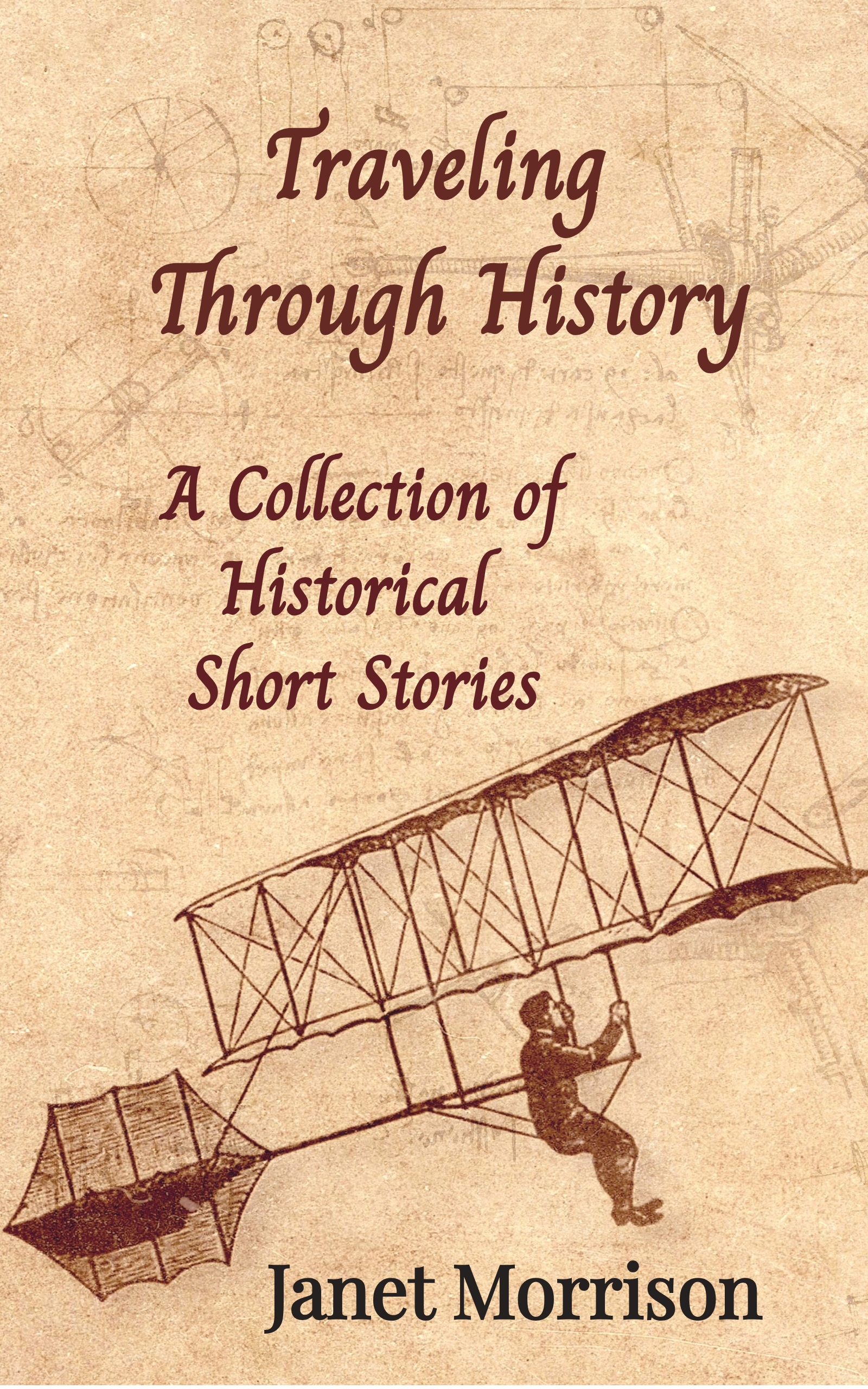
Traveling Through History: A Collection of Historical Short Stories, by Janet Morrison

The house

Actually, “If This House Could Talk” is more of an essay than a short story. It is written from the viewpoint of an old abandoned one-and-a-half-story wooden farmhouse that I saw a thousand times in my life.

That house fascinated me because it did not face the main road. It faced a dirt driveway that led to a couple of other houses. Often, when we would pass it, my father would point and say, “the old Snell place was over there.” I didn’t know any Snells and, as a child, did not care that they once “lived over there.”

It was only after I was an adult and discovered the 1777 estate papers of my Morrison 4th-great-grandparents that I discovered that Francis Snell taught my 3rd-great-grandfather in the 1770s. By then, I had also met a descendant of Mr. Snell’s who lived in Ohio.

Why is it that you don’t know what questions to ask your parents until after they are gone? But I digress.

The essay/story

“If This House Could Talk” is set in the 1970s, a few years before the house at the center of this essay was demolished. After doing some genealogical and Civil War research, I discovered some incredible things about the family that occupied that house in the mid-1800s.

I did not know the history of the house until I was researching the 72 men and boys from Rocky River Presbyterian Church in Cabarrus County, North Carolina, who were killed or died of disease during the Civil War.

“If This House Could Talk” gives that house an opportunity to tell us what it witnessed during that time as it reminisced about a much different time more than 100 years earlier. There were happy times and sad times for the family that house sheltered when it was young.

What kind of memories is your home making, in case a writer decides to let it talk years from now?

Links to the blog posts about the other 12 stories

I hope you have enjoyed reading about each of the stories in Traveling Through History: A Collection of Historical Short Stories over the last several months in my blog. If you like my book or know someone who might, tell them that they can get a print or electronic copy on Amazon or a print copy at Second Look Books in Harrisburg, NC.

In case you missed any of the 12 earlier blog posts about the stories in my book, here are the links: “The Tailor’s Shears” – Historical Short Story; “You Couldn’t Help But Like Bob” — historical short story; “To Run or Not to Run” – historical short story; “Making the Best of a Tragedy” – historical short story; “From Scotland to America” – historical short story; “Whom Can We Trust?” – historical short story; “Go fight, Johnny!” – historical short story; “A Letter from Sharpsburg” – historical fiction; “Slip Sliding Away” – historical short story; “Plott Hound Called Buddy” – historical short story; “Secrets of a Foster Child” – historical short story; and “Ghost of the Battle of Guilford Courthouse” – historical ghost story.

Update on Hurricane Helene recovery in North Carolina

As we get further away from September 2024’s Hurricane Helene, it is easy to forget how long it takes for a place and a people to recover from a natural disaster of such proportions. I have little new to report since my last update on February 2.

Hurricane Helene has dropped from the news cycles even here in North Carolina, except for an occasional reference, but I’m still trying to shine an occasional light on the recovery on my blog.

Via Facebook I keep up with some of the things Beloved Asheville has done and continues to do since the hurricane. As of last week, Beloved Asheville delivered its 140th new home to a family who lost their home in the flood. After living in an RV for 17 months, another family finally has a home. It might just look like a mobile home to a lot of people, but it is life-changing for this family. To learn more about Beloved Asheville, go to https://www.belovedasheville.com.

Several roads remain closed in the mountains due to the record-breaking rain (upwards of 30 inches in some places) during Hurricane Helene. For example, I read that Sampson Road in Watauga County reopened a couple of weeks ago after two sections were washed out during the storm. When a road “washes out” in the mountains, it often means that the road and all the soil beneath it slid down the mountainside. It is a feat of engineering to rebuild the roadbed so the road can be reconstructed. That is one reason why recovery takes so long in the mountains.

Portions of the Blue Ridge Parkway have not reopened since Hurricane Helene. I-40 at the North Carolina-Tennessee border remains just one lane in each direction with a 35 mile-per-hour speed limit. Highway construction is hampered by snow and ice in the winter months.

The National Park Service reported: “As of February 12, 2026, many sections of the Parkway remain closed due to winter weather, though recreation is authorized at your own risk in these areas. Specific closures include a bridge rehabilitation project from milepost 63.5 to 63.9, with detours in place. Visitors should exercise caution, as ungated sections may still be accessible but are subject to emergency closures.”

There were at least 57 landslides in the 269 miles of the Blue Ridge Parkway in North Carolina. Work is ongoing and has moved into Phase 2 in which repairs to 21 landslides between milepost 318.2 and 323.4 are underway, with completion expected by fall 2026. That includes the North Toe River Valley Overlook, Chestoa View Trail, and Bear Den Overlook.

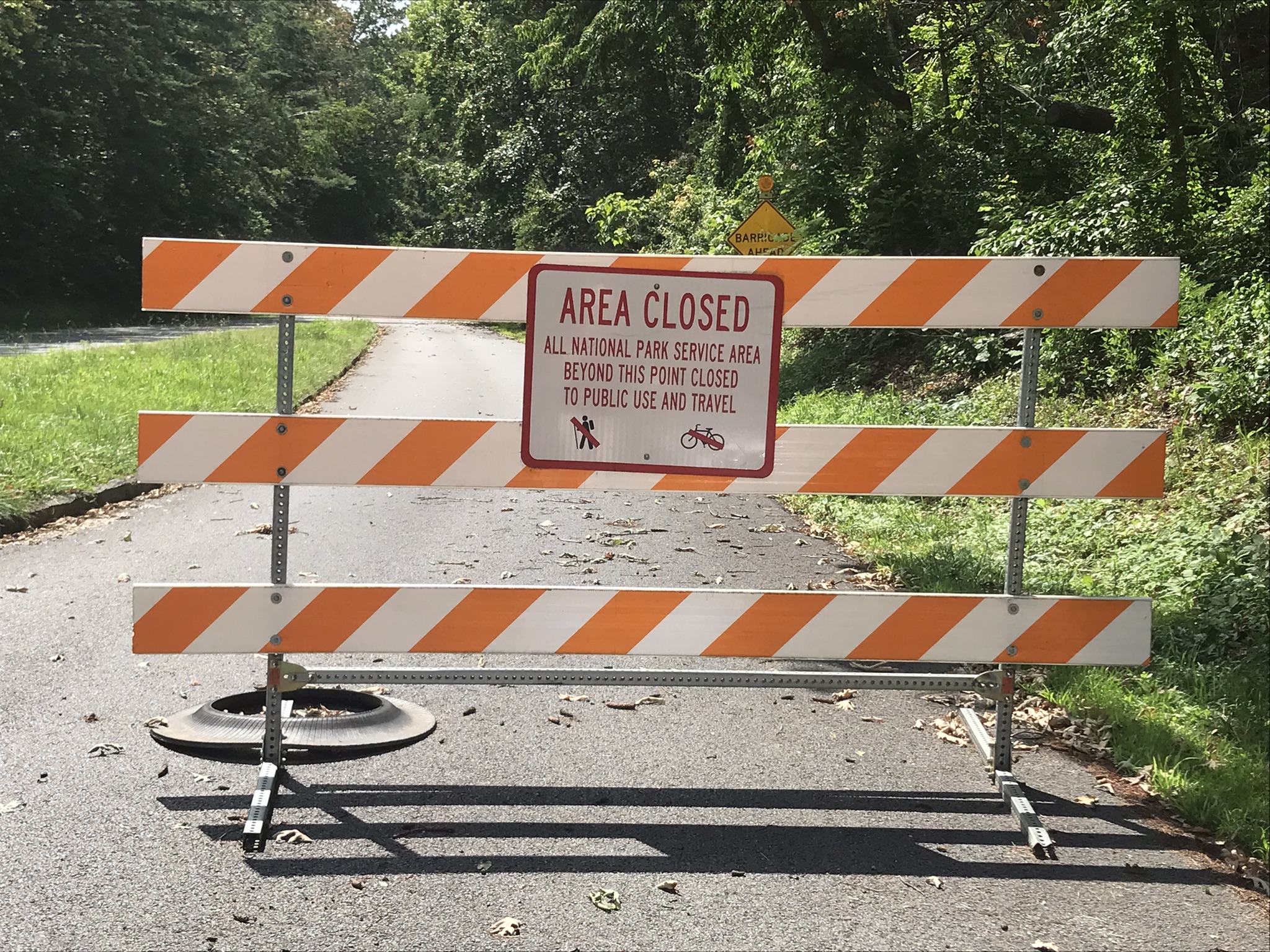
Sign blocking travel by car, bike, or on foot on National Park Service property on Blue Ridge Parkway at Asheville, NC, June 10, 2025
A road closure sign on the Blue Ridge Parkway in June 2025.

The thousands of us who are fans of the Blue Ridge Parkway can hardly wait for all of it to reopen. I’ve read hints that that might occur by the end of 2026.

One of my best vacations ever was a leisurely drive down the Blue Ridge Parkway from its beginning just southeast of Waynesboro, Virginia to its end near Great Smoky Mountains National Park in North Carolina. The wildflowers were spectacular and so varied all along the 469 miles!

Businesses in the affected areas continue to rebuild and reopen. Many had to relocate and many will not reopen. Brother Wolf Animal Rescue, which I have mentioned in earlier blog posts, is relocating to higher ground in Asheville. I understand that the town of Lake Lure is well on its way to reopening for the summer tourist season and the lake itself is expected to be back to full-pond stage in May.

The town of Chimney Rock, just a few miles up US-74 from Lake Lure, is still in recovery mode, as the little tourist village was almost wiped off the map by the hurricane.

Life in my part of the state quickly returned to normal after the hurricane, with only small pockets of flooding, but life and the landscape were changed forever in various hard-hit parts of the Appalachian Mountains in the western part of North Carolina.

Janet

The government should be afraid of its citizens, not the other way around.

I’m not just about politics

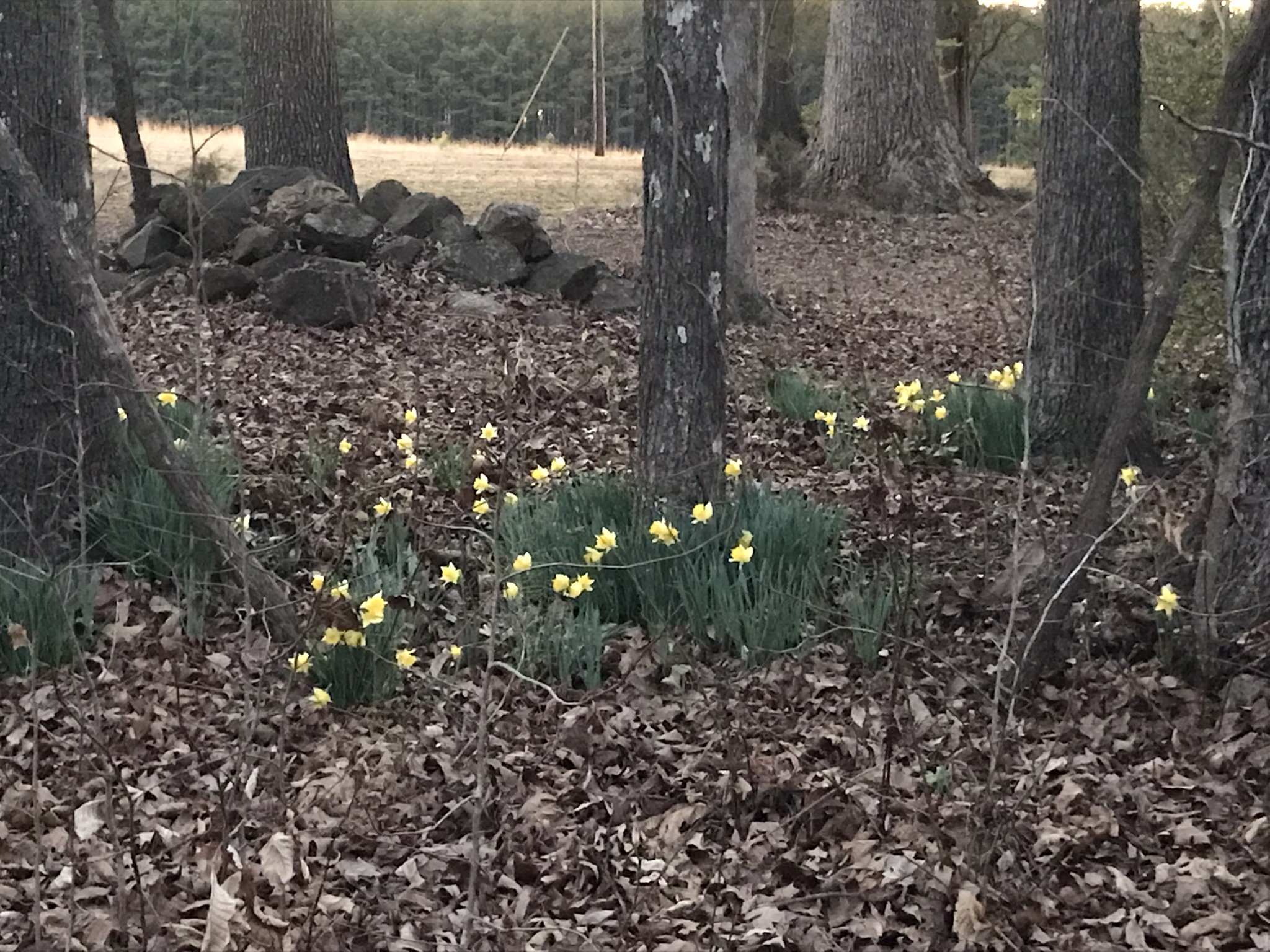
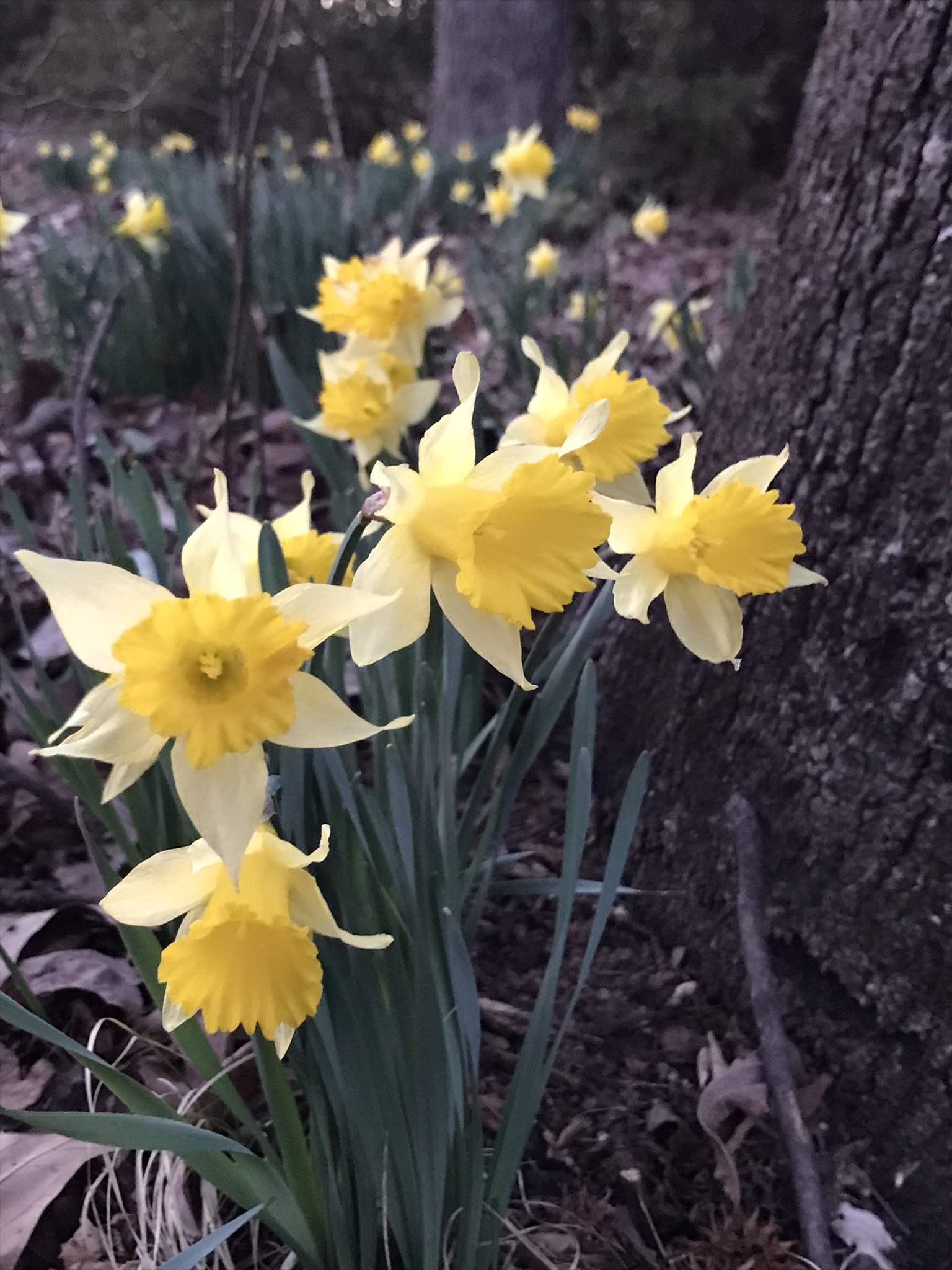
Spring is teasing us here in the southern piedmont of North Carolina. February is the month when our daffodils pop out of the ground and remind us that spring is coming.

As usual, though, winter is reluctant to give up its grip. The last two weeks of February this year brought us a record-breaking one-day foot of snow and two record-breaking high temperatures in the high 70s.

The day the first daffodils bloom is perhaps my favorite day of the year. That’s how much I don’t like winter!

Among my earliest memories is watching in February for that first daffodil blossom, running back into the house for a pair of scissors, and going back out into the yard to cut that flower.

I would take it in the house and my mother would share in my excitement as she reached in the kitchen cabinet for a little vase. We would put that vase and its precious flower in the center of the kitchen table to be enjoyed for days as more daffodils opened and joined it in a larger vase.

It was nearly 80 degrees here on Thursday and Friday. Today’s predicted high is 46 degrees.

This is what we expect in February and March. The electric blanket won’t come off my bed and be put away until mid-May. Just in case!

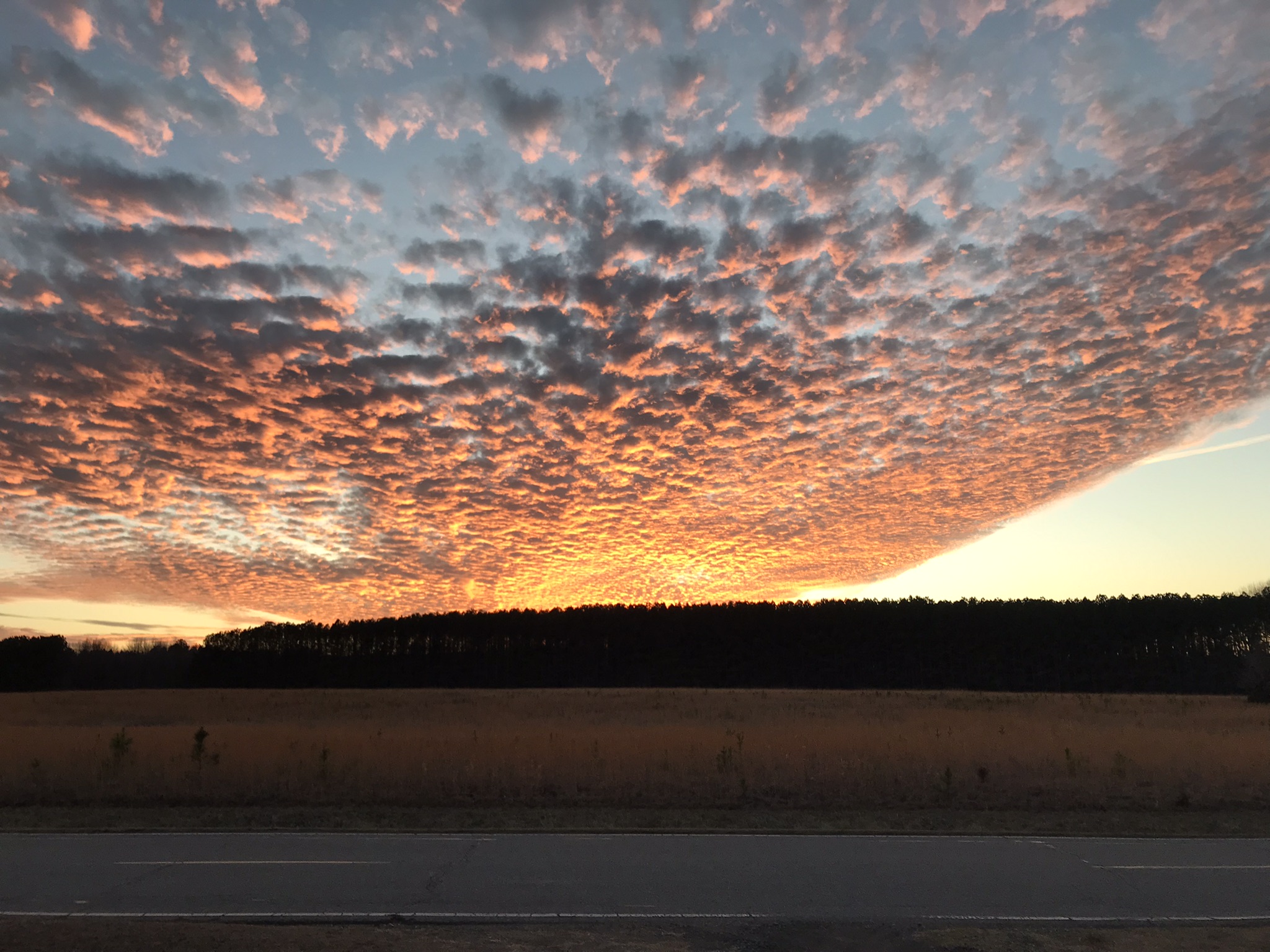
Sunset, February 20, 2026

Janet

P.S. The U.S. President’s State of the Union Address is scheduled for tonight. I have not yet decided if I can bear to watch it. The sitting President does not command my attention or respect; however, a part of me believes I should watch it so I will know what he says. It will anger me, but I suppose I will watch it as a concerned citizen.

The government should be afraid of its citizens, not the other way around.

To tariff or not to tariff? That is the question.

I celebrated the U.S. Supreme Court’s decision on Friday in the Learning Resources, Inc v. Trump case! FINALLY! Finally, the U.S. Supreme Court ruled to rein in Donald Trump’s overreach of presidential powers!

In a 6-3 decision, the U.S. Supreme Court ruled that the tariffs Trump has inflicted on other nations (and, ultimately, the American consumer!) over the last 13 months under the International Emergency Economic Powers Act (IEEPA) were illegal. The Court ruled that the IEEPA cannot be used to impose tariffs.

The Court reminded Trump that tariffs are a form of taxation, and taxation is a power of the U.S. Congress – not the U.S. President.

Trump did not take the Court’s decision well, to put it lightly.

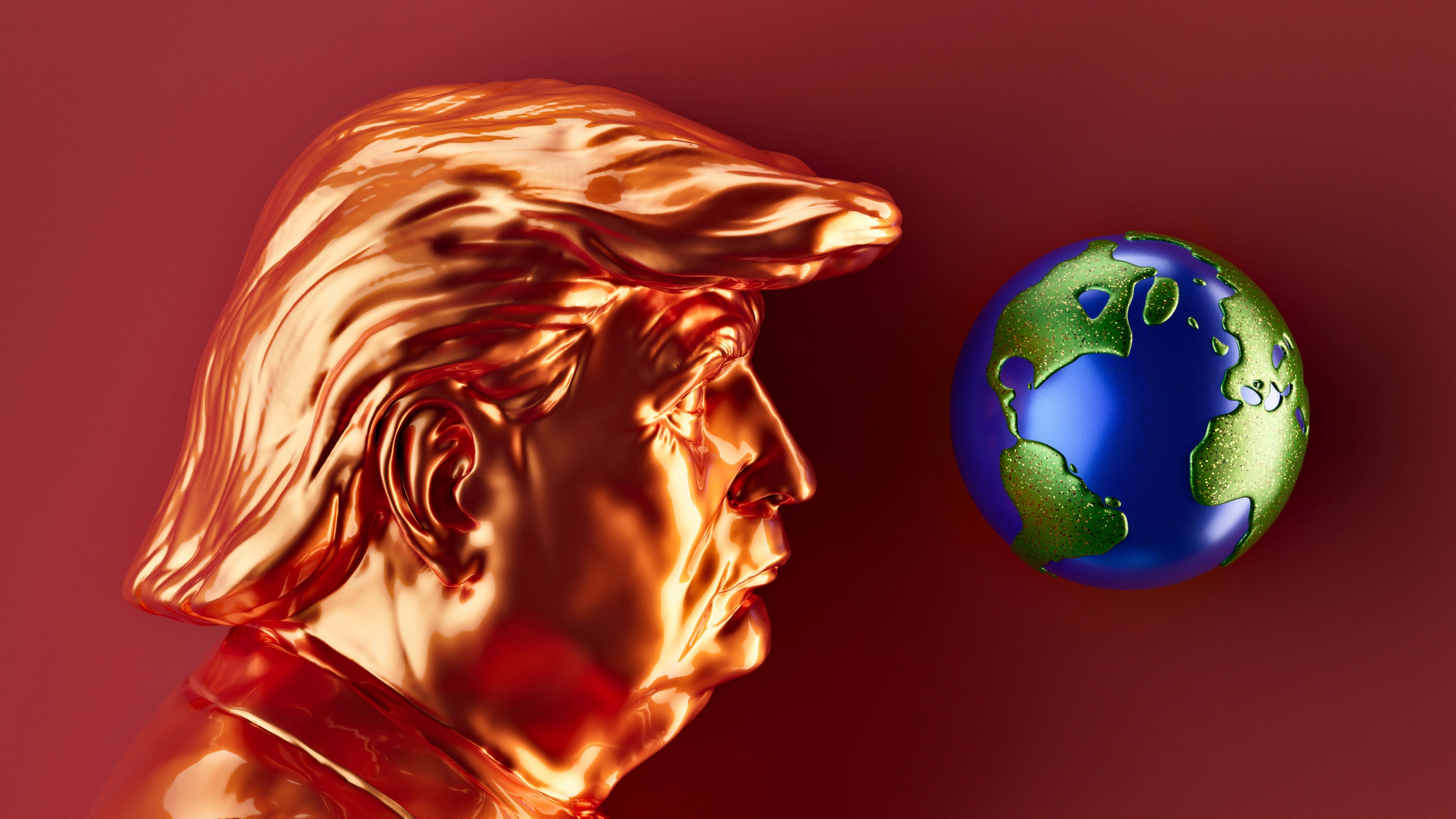
Photo by Igor Omilaev on Unsplash

Trump responded by making one of his typically rambling, long statements, calling the U.S. Supreme Court Justices derogatory names including, “fools and lapdogs for RINOs” (Republicans in Name Only). He accused them of being anti-American and under the influence of foreigners. He said they should be ashamed of themselves and their families should be ashamed of them. It went on and on from there. I cannot quote his entire rant here.

Following his statement, he held a press conference in which he refused to answer a question from CNN (calling the news network “fake news” because he is offended by the truth) and answered the questions posed by other reporters and journalists as vaguely as he chose.

The event was a display by Trump unlike any other statement and press conference by any other U.S. President in history. He was a toddler whose parents had said, “No,” but whose parents had then left him to his own devices and allowed him to vent his anger and frustration on the world stage. There are no guardrails on his words and temper.

His remarks would have been embarrassing; however, after 13 months, I will not be embarrassed by anything Trump says or does. I did not vote for him. I have not been shy about expressing my opinions about Trump and his childish incompetence, hatefulness, racism, and disregard for the U.S. Constitution.

I watched his entire public statement and press conference on Friday afternoon. In a word, it was horrible. In other words, it was painfully indicative of how Trump believes he is above the law and can do anything he wants to do. He said, “I can do anything I want to do.” It wasn’t the first time he has said that.

In addition to lashing out at individual U.S. Supreme Court Justices who had been appointed to the Court by Trump himself and from whom he expects loyalty to him instead of loyalty to the U.S. Constitution, he then twisted the ruling into a pretzel by quoting at length the dissenting opinion of Justice Brett Kavanaugh.

Although a dissenting opinion in a U.S. Supreme Court decision is not law – it is part of the minority opinion, — Trump clung to Kavanaugh’s words and later said that Kavanaugh is his “new hero.” (I can’t help but think back to Kavanaugh’s Senate confirmation hearings in 2018 after Trump nominated him. All I can remember from the hearings is Kavanaugh’s repeated, angry defense, “I like beer!” Not exactly “hero” material in my book.)

In the press conference, Trump said nothing will change. He will continue to impose any tariffs he desires. He announced a new 10% global tariff on top of all the existing tariffs. On Saturday, he announced the new global tariff will 15% instead of 10%.

There’s no telling what that global tariff will be by the time this blog post goes live on Monday, February 23. (I am writing it on February 21.) This new global tariff is imposed using Section 122 of the Trade Act of 1974. That Act allows the U.S. President to impose duties up to 15% for 150 days to deal with “large and serious” balance-of-payment issues. Friday and Saturday’s 15% global tariff takes effect today.

Trump indicated that he is exploring additional ways to get around the Learning Resources, Inc. v. Trump ruling. His Commerce Department, headed by Howard Lutnick of Epstein file fame, is investigating Trump’s options.

Trump’s tariffs on steel, aluminum, and motor vehicle imports were not affected by Friday’s Supreme Court ruling.

As only Trump can do, he portrays himself as the most pitiful victim in history and repeated on Friday that the United States is the most victimized country in history. As a 73-year-old American, I have never felt that the United States was a victim. I have counted it a privilege to have been born in and lived my entire life in the most blessed and prosperous country in the world.

For the first 72 years of my life, the United States was the “beacon on a hill.” It was the world’s symbol of freedom. It continues to be the world’s greatest experiment in democracy, but it is currently being tested from within like it has not been tested since the Civil War in the 1860s.

Just as people in the midst of a war or national crisis don’t know what the outcome will be, I don’t know how this greatest experiment in democracy will end. However, Friday’s 6-3 decision by the U.S. Supreme Court was the first ray of hope I have seen in 13 months.

Janet

The government should be afraid of its citizens, not the other way around.

Just what do “left-wing, radical, lunatic, woke” Democrats want from ICE?

I’ll just jump right in with a short list.

  1. ICE agents to have warrants before entering a private home – you know, like local police;
  2. ICE agents not wearing masks – you know, like local police;
  3. ICE agents to have name and ID number visible on uniform – you know, like local police;
  4. ICE agents to be relieved of duty during an investigation into their excessive use of force or firing their gun or murder – you know, like local police;
  5. ICE detainees to have access to adequate water, food, and medical care;
  6. ICE detainees to have the right to a lawyer – you know, like in a county jail or state prison;
  7. ICE agents to have and use body cameras – you know, like real police officers; and
  8. ICE agents to have standardized uniforms – you know, like real police officers, not mercenaries.
Photo by Kelly Sikkema on Unsplash

I’d love for my Republican friends to grab a red pen, then read and circle all the items they believe are “left-wing,” ‘radical,” or “lunatic.” Then, to honestly ask themselves which of the things on the list they want their local and state law enforcement officers to start or stop doing.

For starters, raise your hand if you want all local, state, and federal officers to wear masks.

I’ll wait, if you need to think about it….

Janet

The government should be afraid of its citizens, not the other way around.

“Go fight, Johnny!” – historical short story

Once-a-week since November 25, 2025, I have blogged about a different story in my new book, Traveling Through History: A Collection of Historical Short Stories. Today’s post is about the seventh story in the book in which my great-great-great-great-grandfather, John Calvin McElwee, tells his granddaughter (my great-great-grandmother) about his experience the day that the Revolutionary War came to his family’s doorstep.

The Battle of Kings Mountain took place near the border of North and South Carolina on October 7, 1780. Hearing the first shots of the battle fired, John, his father, and one of his brothers ran from their house to join the battle. John was just 15 years old.

John, his brother, and their father are not listed in all accounts of the Battle of Kings Mountain, since they were not members of an organized military company that took part in the battle; however, they are mentioned in various publications.

It was fun to imagine my great-great-grandmother as a little girl sitting on her grandfather’s lap as he told her about his work as a weaver and what happened the day of the battle.

The McElwee’s house was on land that became part of Kings Mountain National Military Park and, therefore, the U.S. Department of the Interior had a draftsman measure and draw the house in detail. Having that information made the house come alive for me and made it easy for me to visualize how the family lived. Unfortunately, the house was demolished around 1934 when the land was acquired by the U.S. Government for the park.

How fortunate I am to have access to drawings and floor plans for my McElwee ancestors’ house from the mid-1700s!

This story is more creative nonfiction than short story. I could have created conflict within the family to make it more of a historical short story, but I chose not to embellish the facts of the family in that way. I hope you will enjoy it anyway.

In case you missed them here are the links to my blog posts about the first five stories in my book: “The Tailor’s Shears” – Historical Short Story; “You Couldn’t Help But Like Bob” — historical short story; “To Run or Not to Run” – historical short story; “Making the Best of a Tragedy” – historical short story; “From Scotland to America” – historical short story; and “Whom Can We Trust?” – historical short story.

Where to purchase Traveling Through History: A Collection of Historical Short Stories

Traveling Through History: A Collection of Historical Short Stories, by Janet Morrison

You can find my new short story collection on Amazon in paperback (https://www.amazon.com/Traveling-Through-History-Collection-Historical/dp/B0FZSR6FPX/)  and e-book (https://www.amazon.com/Traveling-Through-History-Collection-Historical-ebook/dp/B0FZQBMC2Q/.)

You can find the paperback at Second Look Books in Harrisburg, NC, or ask for it at your local independent bookstore. Bookstores can order it from IngramSpark.

If you purchase my book and enjoy it, please give it a rating on Amazon and write a brief review of it for that site or Goodreads.com. Also, recommend it to your friends!

Word of mouth publicity is the best! Thank you!

Hurricane Helene Recovery Update

As of January 2, 2026, the North Carolina Department of Transportation has reopened 90% of the roads damaged by Hurricane Helene in September 2024. Some 270 bridges and 870 culverts have been repairs or replaced. Twenty-four roads in the state remain closed due to the hurricane and, of course, I-40 in the Pigeon River Gorge near the Tennessee line is still just one lane in each direction and a 35 mile-per-hour speed limit for months, if not years, to come.

The total monetary cost of damages is estimated by the NC Department of Transportation to be $4.9 billion. The State of North Carolina has spent $2.7 billion so far and has been reimbursed $411.46 million by the federal government.

Other states, take note.

Janet

“Making the Best of a Tragedy” – historical short story

The fourth story in my new book, Traveling Through History: A Collection of Historical Short Stories, is “Making the Best of a Tragedy: Elizabeth Steele’s Story.”

I learned of Elizabeth Steele (sometimes spelled Steel) a few years ago while doing research for the writing of my historical novels. What a fascinating woman!

I must choose my words carefully, because I don’t want to ruin the short story for you.

She was a Patriot during the American Revolution. In fact, she met General Nathanael Greene and the generous gesture she made for the American cause in the dining room of her tavern in Salisbury, North Carolina, as he was on his way to the Battle of Guilford Courthouse just might have made a difference in the ultimate outcome of the Revolutionary War.

The story tells of a tragedy that befell her husband at Fort Dobbs. A lesser woman would have been crushed by the trauma, but not Elizabeth Maxwell Gillespie Steele!

I can’t wait for you to read her story and become as enthralled with her as I am! She plays an important role in my first historical novel (tentatively titled The Heirloom) and she will have a part in the subsequent novels I have drafted and planned.

Grave marker for Elizabeth Steele at Thyatira Presbyterian Church in Rowan County, NC

It was an emotional experience for me when I visited her grave at Thyatira Presbyterian Church in Rowan County, North Carolina. I have spent so much time with her in my imagination and writing that I feel as though I know her and she is my friend and mentor. She, no doubt, has influenced some of my political rants on my blog!

If a woman on the frontier in the backcountry of North Carolina could do what she did in the 1700s, why should I do less for my country in the 2020s?

In case you missed them here are the links to my blog posts about the first three stories in my book: “The Tailor’s Shears” – Historical Short Story; “You Couldn’t Help But Like Bob” — historical short story; and “To Run or Not to Run” – historical short story.

Where to purchase Traveling Through History: A Collection of Historical Short Stories

You can find my new short story collection on Amazon in e-book (https://www.amazon.com/Traveling-Through-History-Collection-Historical-ebook/dp/B0FZQBMC2Q and paperback (https://www.amazon.com/Traveling-Through-History-Collection-Historical/dp/B0FZSR6FPX.)

Traveling Through History: A Collection of Historical Short Stories, by Janet Morrison

You can find the paperback at Second Look Books in Harrisburg, NC, or ask for it at your local independent bookstore. Bookstores can order it from IngramSpark.

Janet

Trump’s National Security Strategy – The Eastern Hemisphere

Yesterday, I primarily blogged (https://janetswritingblog.com/2025/12/10/trumps-national-security-strategy-the-western-hemisphere/) about the Western Hemisphere portion of the Trump Administration’s National Security Strategy which was released last Friday, although it bears a November 2025 date. It was quietly released and posted on the White House website: https://www.whitehouse.gov/wp-content/uploads/2025/12/2025-National-Security-Strategy.pdf. I encourage you to read the document and draw your own conclusions. Yours might not align with mine.

In addition to the Western Hemisphere, the document addresses Asia, Europe, the Middle East, and Africa – in that order.

Photo of a map of the Old World Eastern Hemisphere
Photo by The New York Public Library on Unsplash

Asia

As only a document coming out of the Trump White House can say, the Asia portion of the strategy begins with the words, “President Trump single-handedly reversed more than three decades of mistaken American assumptions about China: namely, that by opening our markets to China, encouraging American business to invest in China, and outsourcing our manufacturing to China, we would facilitate China’s entry into the so-called ‘rules based international order.’ This did not happen. China got rich and powerful, and used its wealth and power to its considerable advantage. American elites—over four successive administrations of both political parties—were either willing enablers of China’s strategy or in denial.”

That’s rich, coming from Trump who had so much of his Trump brand merchandise manufactured in China! And his daughter had her line of jewelry made in China! The Trump family took full advantage of the “mistakes” of precious U.S. Presidents and got richer and richer at the expense of the American factory worker.

The document goes on to state, “… the Indo-Pacific is already and will continue to be among the next century’s key economic and geopolitical battlegrounds. To thrive at home, we must successfully compete there—and we are. President Trump signed major agreements during his October 2025 travels that further deepen our powerful ties of commerce, culture, technology, and defense, and reaffirm our commitment to a free and open Indo-Pacific. America retains tremendous assets—the world’s strongest economy and military, world-beating innovation, unrivaled “soft power,” and a historic record of benefiting our allies and partners—that enable us to compete successfully. President Trump is building alliances and strengthening partnerships in the Indo Pacific that will be the bedrock of security and prosperity long into the future.”

Several hundred words later, the Asia section of the document ends with, “We will also harden and strengthen our military presence in the Western Pacific, while in our dealings with Taiwan and Australia we maintain our determined rhetoric on increased defense spending. Preventing conflict requires a vigilant posture in the Indo-Pacific, a renewed defense industrial base, greater military investment from ourselves and from allies and partners, and winning the economic and technological competition over the long term.”

It appears that Australia was thrown into that last paragraph as an afterthought.

Europe

The European section of the National Security Strategy begins by throwing Europe under the bus, as Trump likes to do. He is critical of every country, including his own. Nothing is good enough. After laying out some supposed statistics (I say supposed because, sadly, I don’t believe anything the Trump Administration says), the document says if the current trend in Europe continues, “the continent will be unrecognizable in 20 years or less. As such, it is far from obvious whether certain European countries will have economies and militaries strong enough to remain reliable allies.”

The paper goes on to address the threat Russia poses with its nuclear weapons and the need to “reestablish conditions of strategic stability across the Eurasian landmass, and to mitigate the risk of conflict between Russia and European states.

I find the following statement in the NSS interesting, considering the Trump Administration’s propensity to make it more difficult for U.S. citizens to vote and its blatant efforts to prompt states to gerrymander Congressional district lines to assure him of retaining the Republican majority in the U.S. House of Representatives.

That statement: “A large European majority wants peace, yet that desire is not translated into policy, in large measure because of those governments’ subversion of democratic processes. This is strategically important to the United States precisely because European states cannot reform themselves if they are trapped in political crisis…. Not only can we not afford to write Europe off—doing so would be self-defeating for what this strategy aims to achieve. American diplomacy should continue to stand up for genuine democracy, freedom of expression, and unapologetic celebrations of European nations’ individual character and history….  Our goal should be to help Europe correct its current trajectory. We will need a strong Europe to help us successfully compete, and to work in concert with us to prevent any adversary from dominating Europe…. We want to work with aligned countries that want to restore their former greatness.”

The document then addresses NATO and its future as “certain NATO members will become majority non-European.”

The Middle East

This section of the NSS begins by addressing energy and how the Middle East is not as important in that arena as it was for decades. It touts the fact that the U.S. is now an energy exporter. It also boasts that Trump has “revitalized” U.S. alliances in “the Gulf.” It says the threats to peace in the Middle East are not as strong as the news headlines indicate. It brags about the U.S. June 2025 Operation Midnight Hammer attack on Iran’s nuclear program.

Africa

The NSS document starts this section by criticizing past American policy in Africa as spreading liberal ideology. Instead, the Trump Administration seeks to partner with “select countries” to create trade to replace the foreign aid of the past.

This section of the document ends with, “The United States should transition from an aid-focused relationship with Africa to a trade- and investment-focused relationship, favoring partnerships with capable, reliable states committed to opening their markets to U.S. goods and services. An immediate area for U.S. investment in Africa, with prospects for a good return on investment, include the energy sector and critical mineral development. Development of U.S.-backed nuclear energy, liquid petroleum gas, and liquified natural gas technologies can generate profits for U.S. businesses and help us in the competition for critical minerals and other resources.

In other words, what’s in it for Trump? He can only see the world through the lens of business. That lens only sees how he can personally benefit financially.

I hate to have such a distrust for and poor perspective of a U.S. President. I don’t enjoy writing any of this.

Janet

Great publicity I got today in Spain!

Francisco Bravo Cabrera graciously featured me and my new book, Traveling Through History: A Collection of Historical Short Stories on his e-zine in Spain (LatinosUSA (English Edition/Masticadores) this morning at 8:00 a.m. Madrid Time!

Francisco Bravo Cabrera is a bit of a Renaissance man. He is an artist, a poet, a writer, and a musician. He is based in Valencia, Spain, but has also lived in Miami, Florida. His blog, JaZzArt en Valencia, can be found at https://paintinginvalencia.com/, and his work can also be found on https://www.fineartamerica.com.

I cut and pasted Francisco’s magazine article about my new book below, but two of the photographs did not copy. Here’s the link, if you want to see the original for yourself: https://latinosenglishedition.wordpress.com/?p=8436.

New Historical Fiction by Janet Morrison (Editor Francisco Bravo Cabrera)

Published by valenciartist on 3 de diciembre de 2025

(Photo: Janet Morrison/provided by Janet Morrison)

As a big fan of history and novels, there is no genre that fascinates me more than «historical fiction,» therefore I would like to feature today a historical fiction writer from North Carolina (US), Janet Morrison, who has just released a new book, Traveling Through History: A Collection of Historical Short Stories. I am sure it can easily be found in Amazon or in your neighbourhood book store.

I have asked Janet to bring us a synopsis of the 13 stories included in the book. And although she thought it a bit tricky, I think she has covered them in a concise way.

Traveling Through History: A Collection of Historical Short Stories, by Janet Morrison, will transport you from 17th century Scotland to 20th century America! The more than one dozen short stories are set in Scotland, Pennsylvania, Maryland, Virginia, North Carolina, and South Carolina.

Each story includes author’s notes, so you will learn what inspired the story, how the story is based in history but is a work of fiction.

There are stories set in Colonial America and the American Revolutionary War Era. One story is the fictitious letter an American Civil War soldier wrote to his parents. Another story follows a slave who contemplates escaping. A couple of the stories are set in the southern Appalachian Mountains – one during a blizzard in the 1870s and involves a dog and a bear during The Great Depression. There is one ghost story. In another story, a girl in foster care discovers the dignity a suitcase can bring. The final story in the book is told by an old farmhouse that remembers the family it sheltered in the 1800s.

+++

Janet Morrison’s educational background is in political science and history. She has worked as a local government administrator, a travel agent, and a newspaper columnist. She enjoys writing historical fiction and local history at her home in North Carolina. Her vintage postcard book, The Blue Ridge Mountains of North Carolina was published in 2015. Since then, she has published two local history books, a devotional book, and a cookbook. Janet uses her blog, https://www.janetswritingblog. com, as a platform to write about the books she reads, events in history, and politics. The most rewarding thing about her blog is that it has made it possible for her to make friends around the world. When she has spare time, she loves researching her genealogy and learning to play the dulcimer. Be sure to visit https://www. janetmorrisonbooks.com to learn more about her books and to subscribe to her newsletter.

+++++

I would like to thank Janet so much for her participation in today’s episode and to remind her that she is welcome here any time. I am sure that we will all enjoy reading this historical fiction book as well as the other books she has written.

AND

If you are a writer, a poet or an artist (in any of the arts) and would like to appear in our magazine LatinosUSA (English Edition), please contact me, Francisco Bravo Cabrera, editor: ArribaPamplona@gmail.com

(Editor: Francisco Bravo Cabrera)

CHEERS


Muchas gracias, Francisco, for giving me and my book such great publicity today!

Janet

Happy “No Kings” Day!

I’m not able to participate in a “No Kings” Protest today, but I will be there in spirit. I will continue to voice my protest via my blog.

Photo of a white crown suspended in air
Photo by Megan Watson on Unsplash

The Republican Congressional leaders attacked the demonstrations in advance, calling today’s demonstrations “The Hate America Rally.” Nothing could be further from the truth. It sounds like something a dictator would say.

In America, we have a First Amendment right of freedom of speech. We are free to demonstrate and protest.

Photo of a piece of paper coming out of a typewriter. The words, "Freedom of Speech' are typed on the paper.
Photo by Markus Winkler on Unsplash

Isn’t that what the insurrectionists on January 6, 2021, said they were doing: exercising their First Amendment right? Of course, they went beyond protesting when they tried to kill police officers and broke into the U.S. Capitol as they tried to prevent the certification of the November 2020 Presidential election.

Whatever bizarre or nasty thing Trump says, the Cabinet members all have to repeat. Even Secretary of the Treasury Scott Bessent jumped on that bandwagon to toe the party line.

The President said participants in “The Hate America Rally” are paid. He said their signs look professionally made and that is proof that they are being paid to protest.

Speaker of the House Mike Johnson said the participants are members of ANTIFA. Since ANTIFA is an acronym for Anti-Fascist, it seems to me that every American should be ANTIFA. Do you not find it worrisome that the U.S. President and Congressional leaders are against anti-fascists? It indicates to me that they are pro-Fascism. But we aren’t supposed to call them that. It makes them angry and they are offended when they are called Fascists although they claim to hate anti-Fascists.

The “Hate America” rally was held at Donald Trump’s urging on January 6, 2021. That’s the day his followers tried to stop the certification of the November 2020 Presidential election because their guy whined and said he won even though he didn’t win. He convinced them that the election was stolen. And now, almost five years later, he wants that election investigated again. He is so small, he cannot stand to be a loser.

Photo credit: Andra C. Taylor, Jr. on unsplash

The rioters that day physically attacked the police officers the Republicans claim they love and respect so much. They defaced the U.S. Capitol. They erected a gallows and chanted “hang Mike Pence!” They smeared their defecation in the halls of the U.S. Capitol and broke into the offices of U.S. Representatives. They broke things. They stole things. They made a wholesale attack on our form of government

That was the official “Hate America” Insurrection. I watched it live on TV in horror. I can’t imagine the level of hate for the United States those people held in their hearts. Then, the nail in the coffin was when Donald Trump pardoned them.

That is all I need to know about Donald J. Trump, Sr.

The people demonstrating today are doing so out of love for America. They are horrified to see how our democracy being chipped away daily with a sledgehammer.

They are horrified to see the National Guard used as a political pawn and weapon by their President.

They are sick and tired of being called “left wing radical lunatics” and worse by their President.

They are horrified to see masked ICE agents violently attacking people – citizens and non-citizens – and hauling them off to detention centers.

Photo by Mitchel Lensink on Unsplash

They are horrified that their President is ordering boats in the international waters of the Caribbean Sea to be blown to smithereens because they might be transporting drugs to America, and now their President threatens to launch a land attack on Venezuela – ignoring The War Powers Act.

They don’t like that their President is bailing out Argentina to the tune of $20 billion while the American farmer goes bankrupt due to the dismantling of USAID and the tariffs he has issued on China and other countries.

They are furious that public education and public health programs are under attack by the Trump Administration.

They are horrified to see the blatant hate for people of color, the objectifying of women, the homophobia, and the hate for transgender individuals demonstrated by the Trump Administration.

In anticipation for the peaceful “No Kings” demonstrations being held today, the Governors of Virginia and Texas mobilized their states’ National Guard members yesterday.

It’s a shame that the National Guard wasn’t called up to defend the members of Congress and the U.S. Capitol and our form of government on January 6, 2021.

White House Press Secretary Karoline Leavitt showed her true colors this week when she said, “The Democrat Party’s main constituency is made up of Hamas terrorists, illegal aliens, and violent criminals.”

Photo of the White House, Washingon, D.C.
The White House, Washington, D.C.

The fact that President Trump did not make a statement to reprimand her or disavow her comment, indicates that he agrees with her.

We have reached a dangerous time in our country when the person who was elected to be President of the United States – president of all 50 states – president of all citizens of the United States – thinks it is acceptable to call the citizens who are registered Democrats “Hamas terrorists, illegal aliens, and violent criminals.”

I resent being called a Hamas terrorist, an illegal alien, and a violent criminal, but the worst part of this is that such a thing can be said from the official communicator and spokesperson of the White House and no one in the Trump Administration or the Republican Party speaks out to condemn the remarks.

The First Amendment to the Constitution of the United States of America

And that, my friends, is one more reason why millions of Americans are protesting today. They are sick and tired of being sick and tired and being on the receiving end of a fire hose of attacks since January 20, 2025.

Janet

FEMA Emergency Management Performance Grants

Although Federal Emergency Management Agency (FEMA) emergency preparedness grants (Emergency Management Performance Grants) have always been distributed to states based on U.S. Census population figures, last week states were notified that they cannot access those funds until they adjust their population counts to reflect this year’s deportations of illegal aliens.

Photo of the FEMA sign and seal on the outside of a building
Photo by Andy Feliciotti on Unsplash

States were notified last Tuesday, September 30, that they must submit certification of their population as of that date. They must include their methodology and confirm that individuals deported by the United States are not included in that population count.

Keep in mind that the taking of a census is a function and responsibility of the federal government and states are not set up to conduct population counts. Funds will not be released to states until FEMA has reviewed and approved the methodology used and the population certification.

The opening paragraph on FEMA’s website last Friday (https://www.fema.gov/grants/preparedness/emergency-management-performance), which could not be updated to reflect the new policy due to the federal government shutdown, stated the following:

“The Emergency Management Performance Grant (EMPG) provides state, local, tribal and territorial emergency management agencies with the resources required for implementation of the National Preparedness System and works toward the National Preparedness Goal of a secure and resilient nation. The EMPG’s allowable costs support efforts to build and sustain core capabilities across the prevention, protection, mitigation, response and recovery mission areas.”

This new policy flies in the face of the purpose and objectives of the EMPG.

This new policy applies to all states but, reading between the lines, it is particularly aimed at states like North Carolina that have Democrat governors for those states are more likely to have so-called “sanctuary cities.”

However, North Carolina is growing in population and my hunch is that even after undocumented immigrants who have been deported are removed from the 2020 U.S. Census tally, North Carolina will be able to prove a net growth in population. In that case, this new Trump Administration policy just might backfire.

FEMA has not issued any guidelines telling states how these unprecedented state-conducted censuses are to be conducted or reported, which means the states are left to guess at how to go about this.

It leaves FEMA free to arbitrarily deny methodology used or to challenge population figures submitted. That is a probability coming from an administration that is accountable to no one.

Any administration that repeatedly withholds funds that were approved by the U.S. Congress cannot be trusted to ever release funds to Democrat-led states since we have been labeled “the enemy within.”

Janet