#OnThisDay: 15th Amendment Ratified, 1870

It was on this date 156 years ago that African American men were given the right to vote when the 15th Amendment to the U.S. Constitution was ratified.
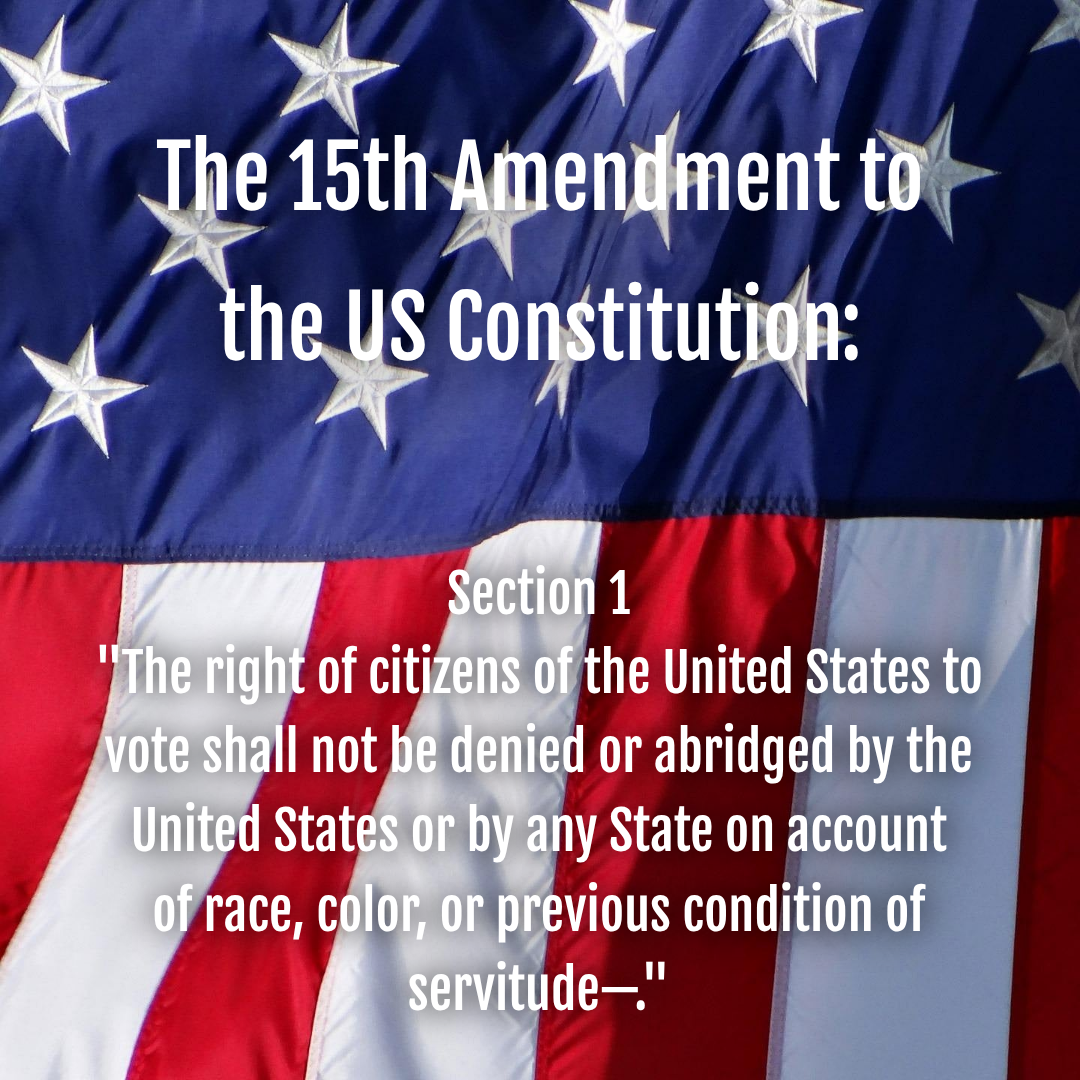
Against a background of the American flag, the words of Section 1 of the 15th Amendment to the U.S. Constitution: "The right of citizens of the United States to vote shall not be denied or abridged by the United States or by any State on account of race, color, or previous condition of servitude—"
Section 1 of the 15th Amendment to the U.S. Constitution

You might be surprised to know that it was the Republicans who pushed for this amendment. Yes, the same party which today turns itself into a pretzel dreaming up ways to make it more difficult for citizens to vote is the party that fought to give black American men the right to vote in 1870. The irony!

The 15th Amendment did not address the fact that women of any skin color did not have the right to vote.

Section 1 of the 15th Amendment states: “The right of citizens of the United States to vote shall not be denied or abridged by the United States or by any State on account of race, color, or previous condition of servitude–.”

Although ratified in 1870, it would take the Voting Rights Act of 1965 before many black people were registered to vote. Laws varied by state and state legislatures – much like today – resorted to creative ways and wording in laws to restrict voting rights.

Popular opinion is that it was only southern states that restricted voting to white people, so I decided to do a little research into state laws prior to 1870. (Keep in mind that women were not given the right to vote by the U.S. Constitution until the 19th Amendment was ratified in 1920.)  

I wanted to know if black men were allowed to vote in states outside the South before passage of the 15th Amendment in 1870. Out of curiosity, I randomly looked at New York, Ohio, Pennsylvania, and New Jersey.

In the State of New York, there was a mish-mash of voting rights for black men. In the 1820’s it was unlawful for a black person who did not own property valued at $250 or more to vote. Slave owners along the Hudson River (yes, even New Yorkers owned slaves!) did not let their slaves vote. Some black men in the state’s cities were able to vote.

Although the “Black Laws” in the state of Ohio were repealed in 1849, African Americans were still not allowed to vote. An informative article about the history of laws regarding African Americans in Ohio can be found here: https://eji.org/news/ohios-black-laws/.

What about Pennsylvania? Quoting from “The Disenfranchisement of Black Pennsylvanians in the 1838 State Constitution: Racism, Politics, or Economics? – A Statistical Analysis,” by David A. Latzko of Pennsylvania State University’s York campus, as found at https//:tupjournals.temple.edu: “In 1838, Pennsylvania’s voters approved a state constitution that restricted the right to vote to ‘white freemen.’ Blacks had voted for many years in some parts of the state, but under the new constitution Pennsylvania’s black males could no longer vote.”

I found the following information on https://libguides.njstatelib.org/votesforwomen/timeline: In 1807, a new law restricting voting was passed by the New Jersey General Assembly: “Whereas doubts have been raised, and Great diversities in practice obtained through-out the state in regard to the admission of aliens, females and persons of color, or negroes to vote in elections… Sec. 1. Be it enacted …That … no person shall vote in any state or county election… unless such person be a free, white, male … of the age of twenty-one years, worth fifty pounds proclamation money….”

New Jersey adopted a new State Constitution in 1844, and people of color were still not allowed to vote.

In the decades after the ratification of the 15th Amendment, racists in various states passed laws to make it hard for minorities to vote. Such things as poll taxes and literacy tests were codified.

This was still in the decades of Reconstruction following the Civil War. Most of the former slaves had not been allowed to learn how to read or write, so the passage of literacy laws was a not-so-subtle way to prevent many black people from voting.

My conclusion is that people of color have been discriminated against in every state in the United States of America. Our nation has a long and sorted history of dividing ourselves based on the color of our skin.

It is that 250-year history that has brought us to 2026 – a year in which the U.S. Constitution gives all citizens — regardless of skin color or gender – the right to vote. But women and people of color must remain vigilant in every State to guard our right to vote.

In 2026, various State legislatures and even the United States Congress are working behind the scenes as well as blatantly in public to make it more difficult for all citizens to exercise their right to vote. The so-called SAVE America Act is currently being batted back and forth between the U.S. House and U.S. Senate.

A segment of our society has been convinced by Conservatives that there is rampant voting by undocumented immigrants. Under the guise of putting an end to that problem — which has been proven not to exist — through passage of the SAVE America Act the Conservatives in Congress are working very hard to codify wording that will once again make it more difficult for many women and many people of color to vote.

The more things change, the more they stay the same. White men in America continue to be afraid of losing their power. It is a history much older and more widespread than the United States of America.

Janet

The government should be afraid of its citizens, not the other way around.

Mt. Pleasant Literary Festival – NY Times Bestselling Author Meagan Church

In yesterday’s blog post, https://janetswritingblog.com/2026/03/25/mt-pleasant-literary-festival-cathy-pickens-writers-workshop/) I introduced to you the second annual Mt. Pleasant (North Carolina) Literary Festival.

If you are a writer or you are curious about what makes a writer want to write, please read yesterday’s post and visit Cathy Pickens’ website, https://cathypickens.com/.

For the little village of Mt. Pleasant to attract famous authors is a feat for which the festival’s organizers deserve great praise. It started a couple of years ago as an idea. It has grown beyond their wildest imaginations. I can’t wait to see what the third annual festival holds in store for us in 2027!

This year’s festival attracted 16 authors. I’m still kicking myself that I was too late to register for Kate Quinn’s presentation on Friday night.

Mt. Pleasant Literary Festival 2026

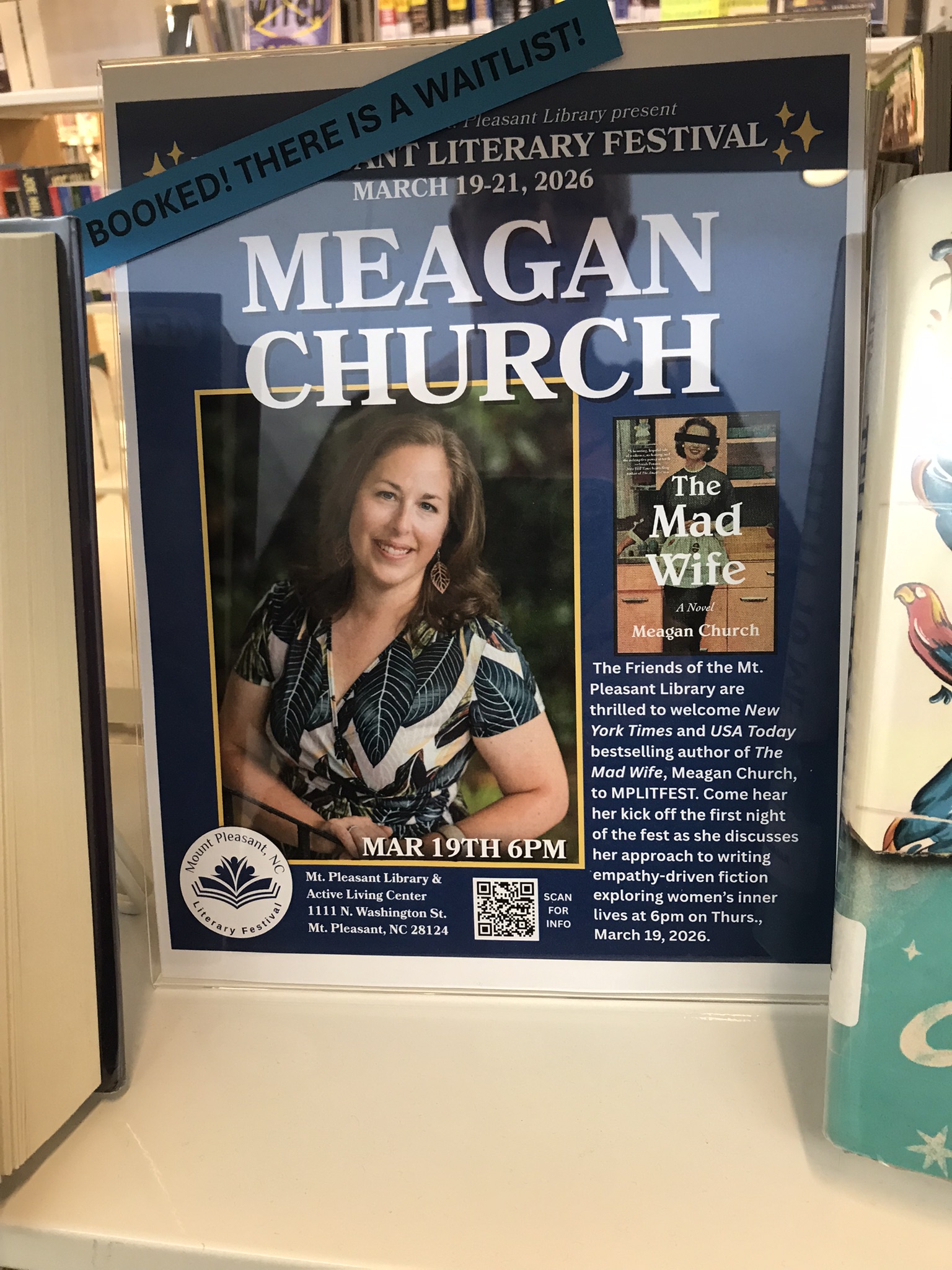
After Cathy Pickens’ Writer’s Workshop, I was excited to attend a presentation by New York Times Bestselling Author Meagan Church.

I thoroughly enjoyed hearing Meagan Church and seeing her in person on Thursday evening. I read her first two novels and blogged about them (The Girls We Sent Away in my September 2, 2024 blog post, Books I Read in August 2024 and The Last Carolina Girl in my May 1, 2023 post, Some of the Books I Read in April 2023.)

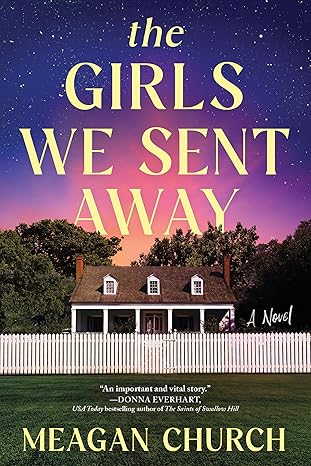
The Girls We Sent Away, by Meagan Church
The Last Carolina Girl, by Meagan Church

I have much less time to read now than I did several years ago. I unable to read much of Meagan’s Church New York Times Bestseller, The Mad Wife, before it had to go back to the public library. I’m on the waitlist again so I can finish it.

She mainly talked about The Mad Wife and what led her to do the research and write it. She talked about the history of the term “hysteria” and how it has always been relegated to women.

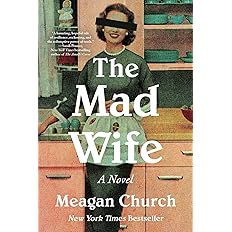
The Mad Wife, by Meagan Church

She talked about how nervous or excitable women and women with such ailments as multiple sclerosis were misdiagnosed through the years as “just being hysterical.”

The most gut-wrenching part of her talk was when she addressed how rampant lobotomies were in the first half of the 20th century and the gruesome ways one particular man used an ice pick through a woman’s eye socket to perform a lobotomy. This led many women in vegetative states which, unfortunately, was the objective.

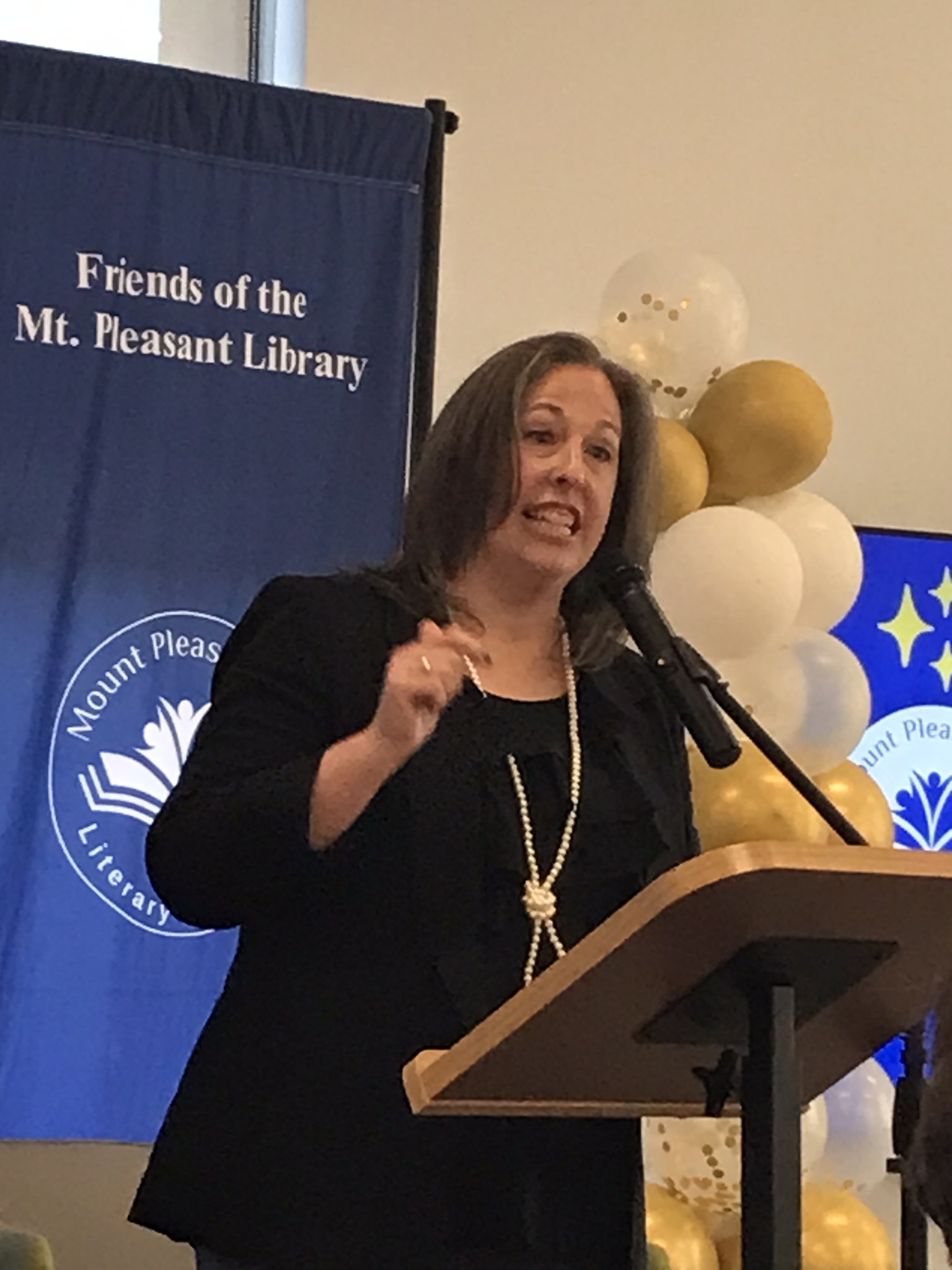
Meagan Church, during her presentation on March 19, 2026, at the Mt. Pleasant Literary Festival in Mt. Pleasant, North Carolina

She talked about how women have traditionally been omitted from medical studies – particularly drug studies – in spite of the fact that women tend to react differently biologically than men from certain drugs. She mentioned how women’s symptoms are often different from a man’s . It was only in the last 30 years that medical science began to acknowledge that and make a few exceptions in research.

It was a fascinating presentation, and the author and audience members were careful to avoid “spoilers” for those of us who have not read or finished reading the novel.

In a nutshell, Lulu is expected to be the perfect housewife in the 1950s in American suburbia. She collects Green Stamps (are you old enough to remember them? I am!) and tries to maintain her home just so for her husband, but cracks begin to appear in her life… and therein lies the story of The Mad Wife.

If you have not read any of Meagan Church’s books, I highly recommend them! Please visit her website, https://www.meaganchurch.com/.

Janet

The government should be afraid of its citizens, not the other way around.

The Cotton Economy of Cabarrus County

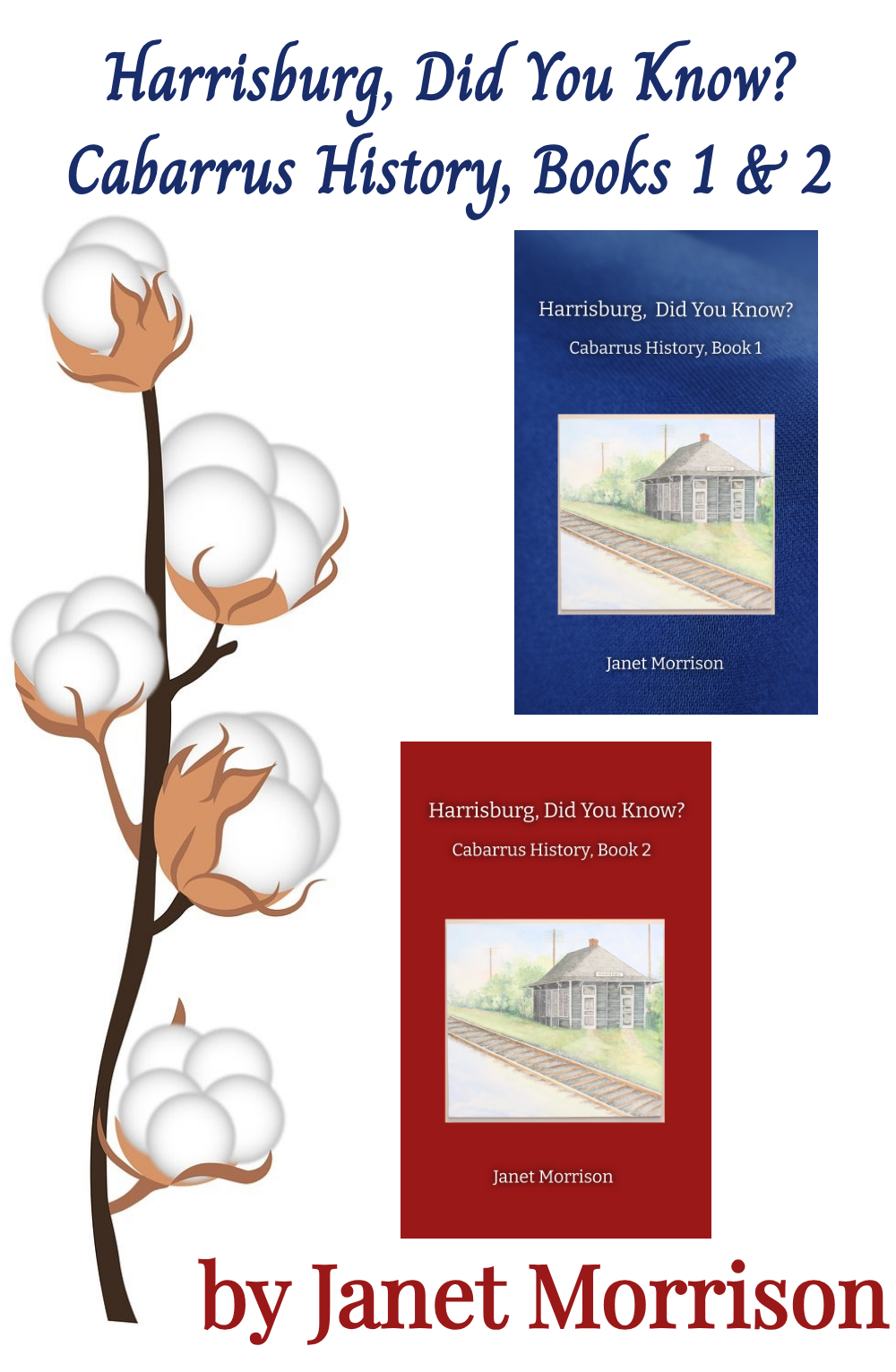
Last Tuesday, I blogged about the coming of the railroad to Harrisburg, North Carolina in 1854 (The Coming of the Railroad in 1854). After receiving several nice comments about the post, I decided to proceed with my plan to blog once-a-week about other topics I covered in my two books, Harrisburg, Did You Know? Cabarrus History, Book 1 and Harrisburg, Did You Know? Cabarrus History, Book 2.

One of my blogger friends who lives hundreds of miles from where I wrote my local history articles caught on to something I was hoping to convey: All history is local, but no history is just local.

The information contained in my two local history books does not just apply to Township One in Cabarrus County, North Carolina. Harrisburg and Township One have much local history that also applies to every small town in the United States.

Every town – big or small – in the United States started as just a collection of homes and perhaps a dirt crossroads. Roads expanded, railroads were built, family-owned grocery stores opened, electricity and telephone service eventually came. Even as Harrisburg’s history is unique to Harrisburg, it holds nuggets of the history and growing pains experienced by every town.

With that in mind, I hope a wider audience will get interested in my two history books. They are available in paperback and as e-book on Amazon and in paperback at Second Look Books in Harrisburg.

In 2009, I wrote a six-part series about “The Cotton Economy” for Harrisburg Horizons newspaper. Today’s blog post will hit on some of the details in those articles, for Cabarrus County, North Carolina was very much a cotton economy in much of the 20th century until textile mills moved to other countries.

Those six articles are in Harrisburg, Did You Know? Cabarrus History, Book 1.

Seventy years ago, most of the fields around Harrisburg, North Carolina were planted in cotton. Today, there is not a single cotton field in Cabarrus County, as far as I know.

As late as the 1960s some Harrisburg school children had to miss school for two or three weeks every fall because their families depended on them to pick cotton.

Eli Whitney invented the cotton gin, but that piece of machinery turned out to be a double-edged sword. The increase in cotton production the gin sparked in the 19th century resulted in an increase in the slave trade.

By 1850 the United States produced three-fifths of the world’s cotton. Unfortunately for the South, where the cotton was grown, most of it was shipped to New England or to England to be milled into fabric.

If you are of a certain age, you may remember buying towels and sheets manufactured by Cannon Mills. Headquartered in Kannapolis, NC by the mid-1910s the company was the largest towel manufacturer in the world, and in the 1960s was the world’s largest manufacturer of household textiles. Cannon had mills all over Cabarrus and other piedmont North Carolina towns.

For decades textile mills were the biggest employer in Cabarrus County. But Cannon Mills is no more. I see some “Cannon Mills” labels in some textile products today, but those manufactured in the 21st century were not made by the Cannon Mills I’m talking about.

The Cannon Mills I’m talking about was purchased by Fieldcrest in 1986 and then by Pillowtex in 1997. Over the years, the textile mills in Cabarrus County employed fewer and fewer people due to mechanization and manufacturing moving to other countries.

If memory serves me correctly, I believe at one time there were more than 20,000 people employed in the mills in Cabarrus County. When the 7,650 people who permanently lost their jobs when Pillowtex declared bankruptcy and ceased operations on July 30, 2003, it was the largest permanent lay-off in North Carolina history.

The first cotton mill built in Cabarrus County was not built by the Cannon family. It was the Locke Mill, which still stands at the corner of Church Street and McGill Avenue in Concord, NC. It was converted into condominiums around the turn of the present century.

As I told in Part I of my newspaper series, building that first mill was a formidable and risky undertaking. The spinning frames were shipped from Fishkill, New York by sea to Georgetown, South Carolina. From there, up the Pee Dee River to Cheraw, SC, and from Cheraw to Concord by six-horse wagons

The engine that ran the steam-powered plant was shipped by sea to Wilmington, NC and up the Cape Fear River to Fayetteville, NC. From there it was transported by horse and wagon. Locke Mill began operations in 1840.

As stated in Part I in my series, “When the 1850 US Census was taken, Concord Manufacturing Company reported that its steam-powered cotton factory employed 15 males and 55 females. The males were paid an average of $12.47 per month and the females were paid an average of $4.91 per month.”

But I have gotten way ahead of myself. Most of what I included in my six newspaper articles revolves around the little cotton gins that sprang up around Harrisburg in the 1800s.

By 1850, there was a water-powered cotton gin on McKee Creek here in Township One. It was located where present-day Peach Orchard Road crosses the creek and where there is now a plan to build a couple hundred houses. That is also where Robert and William Morrison’s grist mill was in the late 1700s and early 1800s.

Samuel Wilson’s cotton gin on McKee Creek was no small operation, even though that creek is too small to hardly be noticed today. According to the 1850 US Census, Mr. Wilson reported having processed 24,000 pounds of seed cotton valued at $30,000 the previous year.

To put that in perspective, that $30,000 would be well more than $1 million today!

Wilson’s cotton gin employed four men who were paid an average of $15 per month. The gin produced 1,080 bales of ginned cotton.

While some cotton gins were water-driven, others were powered by horses.

In his 1948 paper, “Some Sketches of Rocky River Church and Vicinity,” William Eugene Alexander explained how a horse-powered cotton gin worked. Quoting Mr. Alexander in part from my book, “ʻIt took four horses, hitched two abreast, and it took two boys to drive them…. There were no lint condensers to the gins, but the lint was blown out into the lint room like a snowstorm and a hand would gather it up in a basket and carry it to the cotton press in the gin yard, where it was baled.’” (Incidentally, it was late in the 20th century before “brown lung” was recognized as a disease caused by breathing cotton dust into one’s lungs.)

Mr. Alexander’s explanation continued, “ʻThe press was constructed with a large wooden screw pin, 10 or 12 inches in diameter. This press was probably 18 or 20 feet high, and was manipulated by means of long levers, to which a mule or horse was hitched for power.’”

This blog post is getting too long, so I will just mention some of the other cotton economy things I wrote about in the other five “installments” – all of which are found in Harrisburg, Did You Know? Cabarrus History, Book 1.

Photo of the front cover of Harrisburg, Did You Know? Cabarrus History, Book 1, by Janet Morrison
Harrisburg, Did You Know? Cabarrus History, Book 1,
by Janet Morrison

As is prone to happen from time-to-time in industry, friction developed between the cotton farmers and the owners of the cotton mills. Farmers struggled to get a fair price for their cotton. The Cotton States and International Exposition was held in Atlanta, Georgia in 1895. Special train fares were advertised in the newspapers for farmers wanting to attend the Exposition. Among those farmers was one of my great-grandfathers.

There was a case of suspected suicide in 1907 by a 13-year-old Harrisburg girl who worked in a cotton mill. In my research, I found a newspaper article from Durham, NC from 1899 in which it was reported that several mills there had adopted a policy of not hiring children under 12 years old.

In my research, I also found a deed of trust at the courthouse giving the details of the purchase of machinery in 1901 for the construction of a steam-powered cotton gin near the railroad tracks by Harrisburg Improvement Company. Until electricity came into the village years later, that gin ran on steam power generated by an old locomotive steam boiler.

Have I whetted your appetite to want to read more? Look for my books on Amazon and at Second Look Books!

Janet

“All history is local, but no history is just local.” ~ Janet Morrison

How bad does it have to get before we use the 25th Amendment?

We have a Secretary of Health and Human Services who does not believe in science or medicine, including time-honored and scientifically-proven vaccines.

We have a Secretary of Defense who mixes a conservative evangelical religion with a statement that the U.S. will show “no quarter” as the war in Iran continues. “Giving no quarter” is in violation of international law. If the U.S. starts slaughtering its prisoners of war, we have surely lost our humanity.

The U.S. has an all-volunteer armed forces made up of people of various religions and no religious beliefs. It is not the Secretary’s place to inflict his religious beliefs on the troops. If the Secretary is a Christian, as he claims to be, I would like for him to tell me where in the Bible it quotes Jesus as advocating giving no quarter to anyone.

We have a Director of National Intelligence who said that only the U.S. President – and not the intelligence community — can determine when there is an imminent threat to our national security. It is ultimately the President’s call, but her answer on Capitol Hill yesterday made it sound like she and the intelligence community have no part to play in the process.

We have a chairman of the Federal Communications Commission who warned TV networks that they run the risk of not having their broadcast licenses renewed if they continue to report the full picture of the war in Iran. He also wants them to concentrate on “patriotic” programming this year.

We have a Secretary of Education who thinks so little of public education that she vowed to shut down the Department of Education. Perhaps she should go back to her former career in pro wrestling administration.

We have a Secretary of the Interior who is okay with opening national parks for extensive logging and oil drilling while taking down informational park displays that tell not only the good but also the bad and the ugly of our nation’s history.

We have an Attorney General who has difficulty answering questions in a way that might not align with what the President wants her to say. In fact, every Cabinet Secretary has that same problem.

All these people were hand-picked by Donald Trump to “serve” in those positions of power and influence. They also had almost 100% approval of the Republicans in Congress.

We have a U.S. President who announced on TV that a member of Congress “will be dead by June” as he took it upon himself to reveal that Congress member’s devastating diagnosis of terminal cancer without that Congressman’s permission. The fact that he turned to Speaker of the House Mike Johnson and laughed was the icing on the cake! (Here’s a video clip, in case you missed it or don’t believe it: https://www.msn.com/en-us/news/politics/trump-appears-to-confuse-who-is-president/vi-AA1YRwG1?ocid=msedgntp&pc=U531&cvid=69baf386c77447a397c28662c1c9bfb8&ei=22.)

We have a U.S. President who clearly has no filter. If a segment of a thought or fantasy pops in his head, it comes out of his mouth or gets splattered all over his Truth Social account in all capital letters.

We have a U.S. President who has repeatedly called the war in Iran an “excursion” instead of an “incursion.”

On Monday, Trump said, “The President of the United States, Gavin Newscom, said that he has learning disabilities, dyslexia, everything about him is dumb.” That statement is wrong on so many levels, in addition to the fact that Trump called Gavin Newsom “the President of the United States.”

We have a U.S. President who orders shoes for his rich Cabinet members. That would have been ludicrous and inappropriate even if he had bothered to ask them their shoe size… which he did not.

We have a U.S. President who has “decorated” the Oval Office like a house of horrors… which, come to think of it… that’s what it is now.

Our closest ally, Great Britain, is now in the awkward position of advising their King not to visit the White House in April because the U.S. President might embarrass him. (I think we can guarantee that Trump will embarrass King Charles. Belittle and embarrass others is what he does best.)

We have a U.S. President who started a war without the blessing of Congress or seeking the support of the American people. Then, in the middle of a sticky situation in the Strait of Hormuz and a worldwide oil crisis, he begged our NATO allies for their help.

When our allies said, “No,” Trump said, “We don’t need NATO…. We do not need the help of anyone.” What an arrogant and short-sighted thing to say!

He said this was a test to see if NATO would ever help us. How ill-informed he is if he is not aware of NATO’s response after September 11, 2001!

Donald Trump said, “I can take Cuba…  It’s a failed nation…. I can do whatever I want to with it.” What an arrogant and egotistical thing to say about a sovereign nation, even if it is on the verge of collapse!

In case you are not informed about Trump’s latest “pay-to-play” scheme, which promises to put our national security at risk like never before, please read my blog post from yesterday, https://janetswritingblog.com/2026/03/18/more-telling-things-about-trump-administration/.

I hope I never again hear Americans say, “We need a businessman in the White House.”

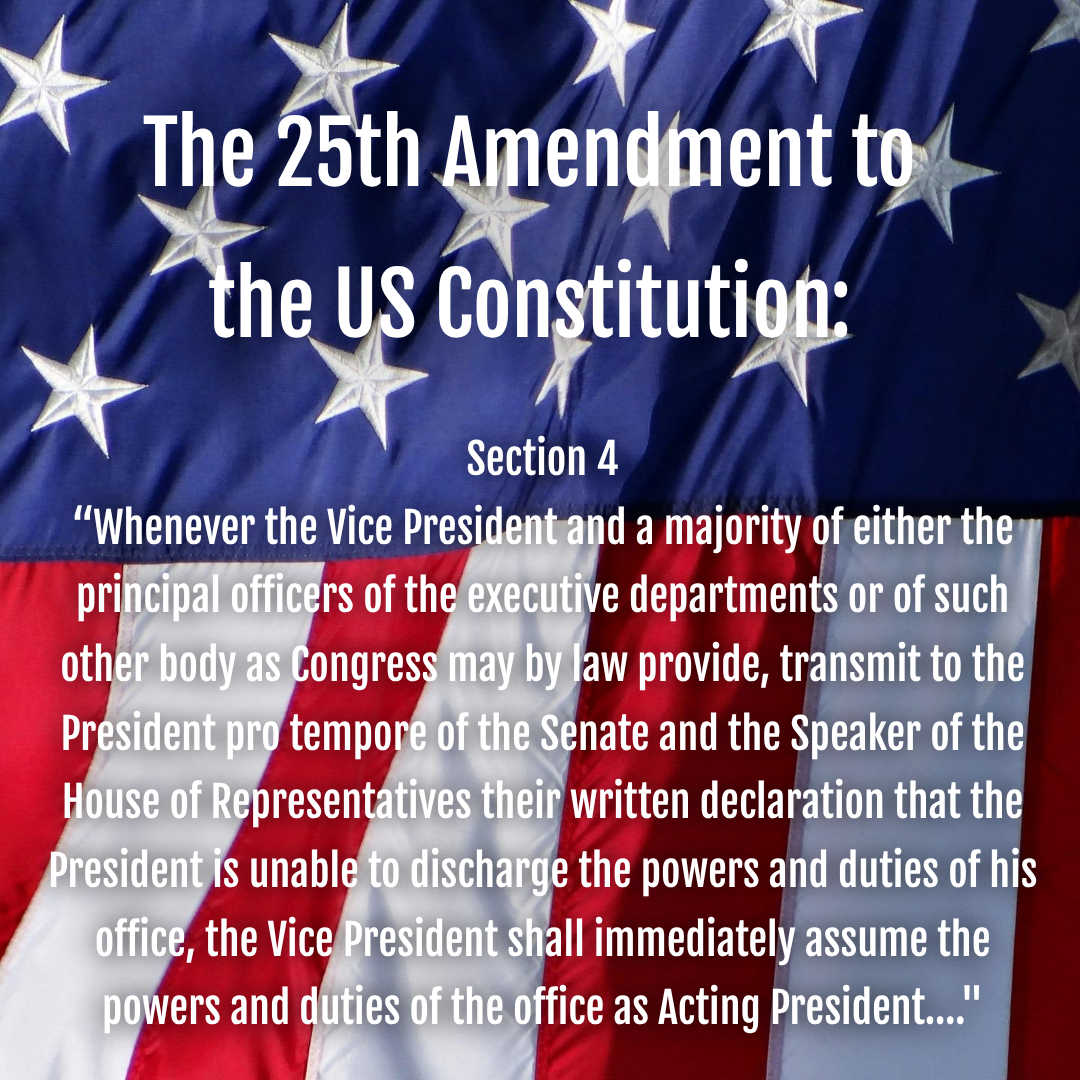
Just how bad does it have to get before we use the 25th Amendment?

If the 25th Amendment is not called for now, I shudder to think under what circumstances it would be put into force.

Part of Section 4, 25th Amendment to the U.S. Constitution

Of course, if we use the 25th Amendment now, we get J.D. Vance as our President. Vance was hand-picked by Donald Trump. Again, I shudder to think about that.

Perhaps that outcome is what is holding back everyone on both sides of the aisle from seriously pursuing the 25th Amendment.

Janet

The government should be afraid of its citizens, not the other way around.
More telling things about Trump Administration

Today’s blog post is a continuation of Sunday’s, Various telling things about Trump Administration, (which I meant to schedule for today but hit the “publish” button instead of the “schedule” button my mistake.)

As I said in Sunday’s blog, the nightly TV network news programs cannot cover everything in a half hour. Here are some things you might have missed hearing about.

Columns at what’s left of the White House

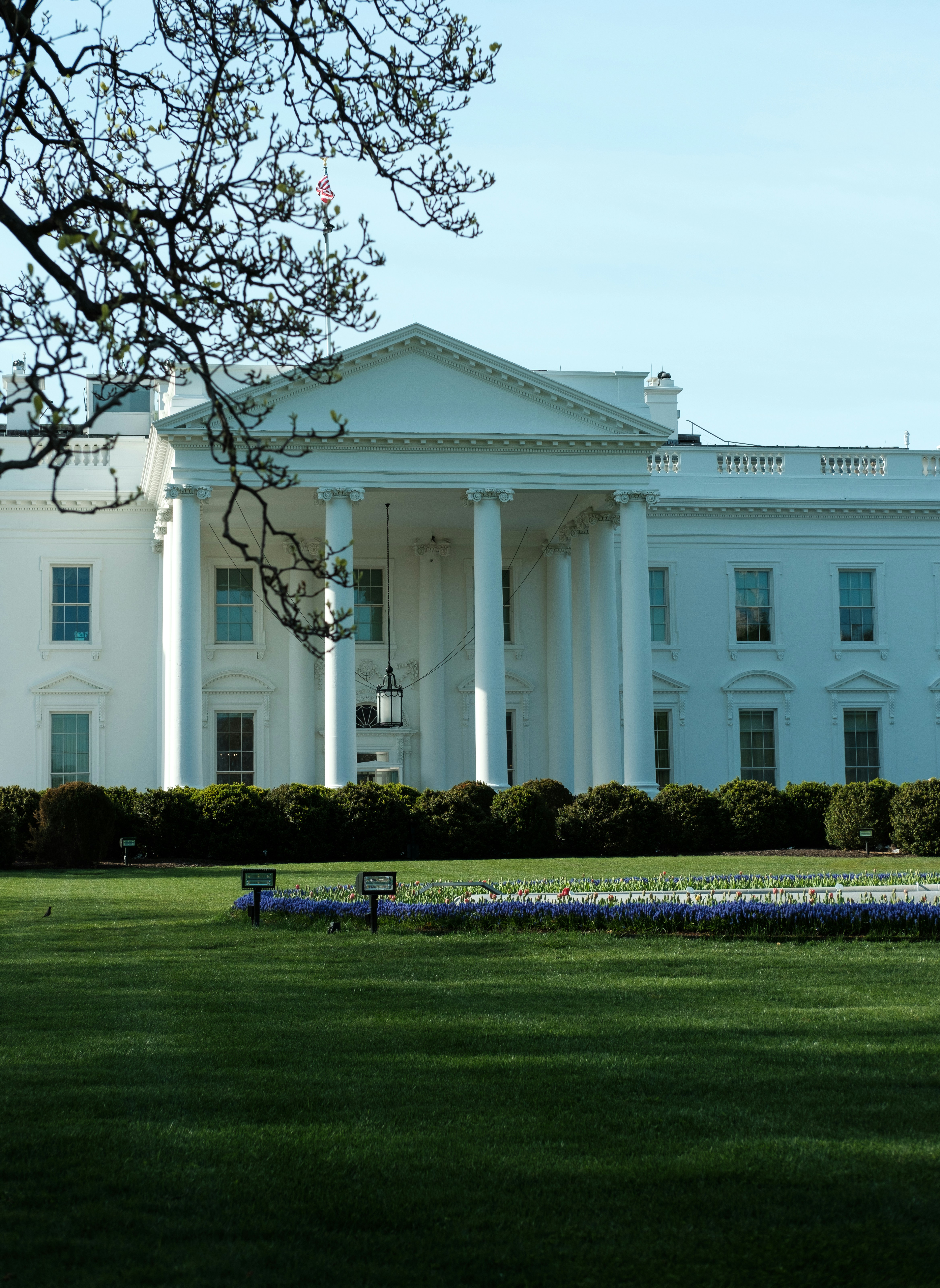
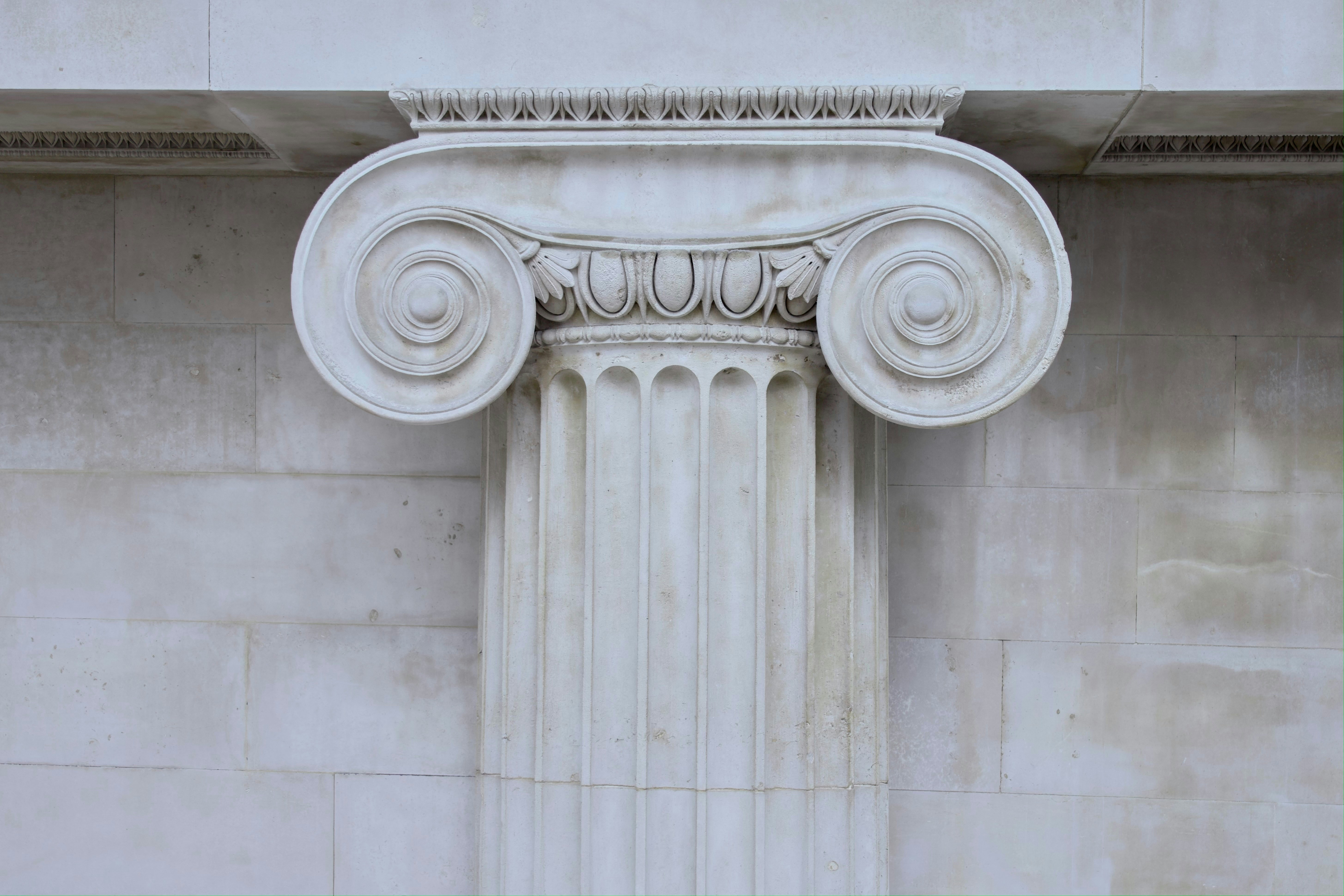
President Trump wants Corinthian columns on the new White House ballroom. Rodney Mims Cook, Jr., Trump’s appointee who chairs the Commission of Fine Arts, says there are Corinthian columns at the U.S. Capitol and the U.S. Supreme Court building, so he can’t imagine why the lowly Ionic columns were put on the White House 200 years ago.

The White House, Washington, DC. (Photo by Melo Liu on Unsplash)

Cook says he has not yet discussed with the President that the existing Ionic columns on the North Portico and South Portico of the White House should be replaced with Corinthian columns.

Example of an Ionic column. (Photo by Maik Winnecke on unsplash.com.)

As reported by The Washington Post, “The Corinthian would be inappropriate for the Executive Residence,” said Steven Semes, a professor emeritus of architecture at the University of Notre Dame and an expert in classical architecture, warning that it would ‘harm’ the original design of a building long known as the ‘People’s House.’

Example of a Corinthian column. (Photo by Ruben Hanssen on Unsplash)

“He added that the White House’s Ionic columns evoke ‘the character of dignity, grace and a kind of intimacy or domesticity,’ whereas Corinthian columns are ‘used to express the height of formality and monumentality’ for buildings such as the Capitol.”

The official White House response earlier this week was that there are no plans to replace the Ionic columns at the White House. How many times have we heard the Trump Administration say, “There are no plans,” only to see something like the East Wing of the White House become a pile of rubble?

The truth is not in these people.

Just you wait. We will wake up one morning to see piles of rubble where the Ionic columns now stand. Money is no object to the Trump Administration, unless you want to spend money to benefit human beings.

The wrecking ball being used at the White House is a metaphor for what the Trump Administration has done to our country and everything it stands/stood for.

Shoes

Perhaps the latest fiasco within Trump’s inner circle is that he decided to order wingtip shoes for each of the cabinet members (or, I’m assuming, only the male cabinet members), but he overlooked one detail. Shoe size.

 He (or one of his minions) guessed at what shoe size each person needed. It seems that Secretary of State Marco Rubio now must wear shoes several sizes too big. The pictures are laughable, but I doubt Secretary Rubio is laughing as he tries not to walk out of his gigantic shoes.

Do we not have one single department head in the Trump Administration who is brave enough to tell the President that they aren’t going to wear the shoes?

I read that he has also given these shoes to other VIPs and lawmakers he likes. I refuse to say the brand name and give the company any more free publicity.

It’s not enough that his people must mimic Trump’s every word; they must also wear the shoe brand he prefers, no matter what size they are.

It is more than a little jarring to know that in the middle of an illegal war, the U.S. President is thinking about buying shoes for his rich friends.

Has there ever been a more out-of-touch U.S. President?

The Kennedy Center for the Performing Arts

Since President Trump put his own name on The John F. Kennedy Center for the Performing Arts last year, numerous artists have cancelled their appearances in protest.

The John F. Kennedy Center for the Performing Arts, Washington, DC. (Photo by MIKE STOLL on Unsplash)

As a result, Richard Grenell, Trump’s appointed director of the facility, has now lost his job.

Trump could not let us think that the cancellations were a result of his naming the building for himself. It had to be someone else’s fault. It just had to be.

The beautiful, iconic living memorial to President John F. Kennedy will close on July 5 for two years for “renovations” and “upgrades.” I doubt it will resemble its old self when Trump gets through with it.

I choose to remember it the way it was. Trump can put his name all over it in flashing neon lights if he wants to, but it will always be remembered as it was in its original elegant form, and it will NEVER be thought of as “The Trump Center.”

Another baseball cap faux pas

It wasn’t enough that President Trump wore a baseball cap to the Dignified Transfer of the remains of the first five Americans killed in the war in Iran. Even after receiving criticism – or perhaps because he received criticism – for his inappropriate choice of head gear, he then used a photo of himself at the somber event to launch a “pay-to-play” scheme.

It begs the question, “Was the white “USA” baseball cap all part of a grander money-raising plan?”

It is inappropriate and disrespectful to our fallen military personnel and their families to use photographs of one of their flag-draped coffins and his baseball cap adorned head to raise money, and it is beyond the pale that he is using this photograph to offer donors national security briefings.

You didn’t know that? Please keep reading.

The soldiers killed in the first day of Trump’s war were Sgt. Declan Coady, 20, of West Des Moines, Iowa; Capt. Cody Khork, 35, of Winter Haven, Florida; Sgt. 1st Class Nicole Amor, 39, of White Bear Lake, Minnesota; Sgt. 1stt Class Noah Tietjens, 42, of Bellevue, Nebraska; Maj. Jeffrey O’Brien, 45, of Indianola, Iowa; and Chief Warrant Officer 3 Robert Marzan, 54, of Spotsylvania, Virginia.

Mr. President, they were human beings. They were part of our all-volunteer armed forces. They volunteered to put their lives on the line from the people of the United States of America. They swore to defend the United States Constitution. Unlike you, they took their pledge seriously.

And now, Mr. President, you use a photograph of yourself in a ridiculous baseball cap along with the top of one of their flag-draped coffins in a pay-to-play scheme.

The request was signed “President Donald J. Trump.” Never Surrender Inc. paid to send it out for him. By paying to play, donors were told they would have “National Security Briefing Membership.”

Let that sink in for a minute….

Here is part of the online report from Navy Times on https://www.navytimes.com/news/your-military/2026/03/14/trump-fundraising-email-uses-photo-of-march-7-dignified-transfer-of-deceased-soldier/ which includes quotes from the pay-to-play scheme:

“’I’m the strong commander who stares down tyrants, obliterates terrorists, and never backs down,’ Trump states in the email. ‘This is for patriots ready to stand with that kind of unbreakable strength. Not for the weak or the wavering.’

“The email promises donors a series of private national security briefings and updates on ‘threats facing America… border invasions, foreign adversaries, deep state sabotage, and every danger the fake news hides.’

“’You’ll get the inside scoop DIRECT from me, President Trump,’ the email continues, ‘the leaders who’s rebuilt the greatest military in history, and put America First like no one else.’”

This scheme goes way beyond being inappropriate. What national security briefing details does Trump and/or Surrender Inc plan to share with donors? This goes beyond stupid and reckless.

Add this scheme to the trash pile of never-ending Trump money-making schemes. We can only hope this scheme fails like many of his other schemes. I mean, you have to be pretty inept to bankrupt a gambling casino, don’t you?

Janet

The government should be afraid of its citizens, not the other way around.
The Coming of the Railroad in 1854

I wrote a local history column for Harrisburg Horizons newspaper from May 2006 through December 2012. Before you residents of Harrisburg, Pennsylvania get too excited, I will clarify that this free weekly newspaper existed in Harrisburg, North Carolina.

Of the 175 newspaper columns I wrote, six were a series of articles I wrote about “The Coming of the Railroad.” This is an important local topic for without the North Carolina Railroad there would be no Town of Harrisburg, NC today.

It’s hard to imagine the town without a railroad today, even though in an effort to establish “high-speed” rail between Charlotte and Raleigh, the at-grade railroad crossings in Harrisburg were replaced with bridges in 2013. That’s a story for another day.

Imagine a rural farming community in 1854, about halfway between Charlotte and Concord. Was everyone excited about the coming of the railroad? Farmers were probably not happy about the piercing whistles of the steam engines scaring their livestock, but they were possibly pacified by the fact that the depot planned for the community would give them a convenient way to sell their agricultural products.

Photo of a steam train
Photo by Claud Richmond on Unsplash. (NOT a photo of a Harrisburg, NC steam train.)

Prior to the coming of the railroad, it is said that it sometimes cost a farmer half his profits to transport his produce to market by wagon. Poor roads and distances to markets prohibited the transporting of perishables very far.

Although Charlotte has a population of a million people now, in 1854 it had a whopping 1,000. The State of North Carolina decided it would be good for the economy to construct a railroad from Goldsboro, in the eastern part of the state, to Charlotte in the southern piedmont.

The State sold bonds in New York City to finance the project. Ten thousand shares were sold at $100 each.

Goldsboro was chosen because it had rail service to the port at Wilmington, NC. A railroad from the south to Charlotte and one from the north to Danville, Virginia, which threatened to extend a line to Charlotte, would surely mean that goods from western North Carolina would be shipped to Virginia or to the port at Charleston, South Carolina.

It was understood from the beginning that much of the construction labor for the project would be undertaken by slaves of property owners living along the rail right-of-way. Some of the slave owners were paid on a yearly basis for supplying their slaves for the project.

I found it interesting that wrought iron T-rails manufactured in Wales were used in the initial construction of the 223-mile-long railroad. The rails weighed 60 pounds per yard and were brought in through the port at Charleston.

In the early 1850s, a steam locomotive needed on average a cord of wood (that’s a stack of wood eight feet long, four feet wide, and four feet high) and 1,000 gallons of water for every twenty-five miles. A tender could carry that much wood and water. That is what dictated the approximate distances between some train stations.

That’s how the little farming community of Harrisburg, North Carolina got a train depot and the designation as Harris Depot on maps.

If you are interested in learning more about the North Carolina Railroad and the ways the coming of the railroad and depot changed life in a farming community in the early 1850s, look for my book, Harrisburg, Did You Know? Cabarrus History, Books 1 and 2. Book 1 contains the first 94 local history articles I wrote, including the series about the railroad. Book 2 contains the other 84 local history articles I wrote, including more articles that reference the railroad.

Topics in the two books include such things as the blowing up of the King’s gun powder in 1771, a minuteman in the American Revolution, President George Washington’s 1791 visit, the 22-mile ring dyke the town sits in, general stores, family-owned groceries stores, education in the 1800s and three Rosenwald Schools, how the town got phone service and electricity, our Ukrainian doctor (Nicholas E. Lubchenko) who escaped from the Russian Army, the cotton economy of the area until the mid-20th century, Hurricane Hugo in 1989, floods, earthquakes, the building of roads and bridges, the changes necessitated by the high-speed rail project, mail service from the 1800s until the early 21st century, the construction of the Charlotte Motor Speedway and the running of the first World 600 NASCAR race in 1960… and much more.

Here are the links for purchasing the books on Amazon:

Photo of the front cover of Harrisburg, Did You Know? Cabarrus History, Book 1, by Janet Morrison
Harrisburg, Did You Know? Cabarrus History, Book 1,
by Janet Morrison

Book 1, in paperback: https://www.amazon.com/Harrisburg-Did-You-Know-Cabarrus/dp/1888858044/

Book 1, in e-book: https://www.amazon.com/Harrisburg-Did-You-Know-Cabarrus-ebook/dp/B0BNK84LK1/

Photo of front cover of Harrisburg, Did You Know? Cabarrus History, Book 2, by Janet Morrison
Harrisburg, Did You Know? Cabarrus History, Book 2,
by Janet Morrison

Book 2, in paperback: https://www.amazon.com/Harrisburg-Did-You-Know-Cabarrus/dp/B0BW2QMLHC/

Book 2, in e-book: https://www.amazon.com/Harrisburg-Did-You-Know-Cabarrus-ebook/dp/B0BXBQ1F79/

If you live in the Harrisburg, NC area, you can find the books in paperback, Tuesday through Saturday, at Second Look Books, 4519 School House Commons.

I hope my blog post today whetted your appetite for reading more about the history of our little town of 20,000 now. I imagine many of our local stories are similar to ones in your town’s history.

Janet

The government should be afraid of its citizens, not the other way around.

Various telling things about Trump Administration

I really try not to write about politics every day on my blog, but there are things happening that do not get coverage on the nightly news programs because there are just too many things for journalists to report on.

The First Amendment to the Constitution of the United States of America

There’s the war in Iran. There are shootings and terrorist attacks. There’s Punch the monkey and his stuffed animal from IKEA in Tokyo. There’s the Kīlauea volcano blowing its stack in Hawaii. There are the women who were abused by Jeffrey Epstein and his rich friends who apparently are not going to face consequences in the United States like they are in Great Britain.

In a 30-minute news broadcast, minus eight to ten minutes of commercials, a host of happenings fall on the editor’s floor. Today I will touch on a few of those.

Trump’s attitude about the war in Iran

President Trump wants other countries to police the Strait of Hormuz. We’ll see how that goes. He also wants the crews on oil tankers to just be brave and go through the strait. Easy for him to say.

He wants China, France, Japan, South Korea, the United Kingdom and “others” to send warships there to secure the two-mile wide passage. He says things will go “well” with the U.S. coordinating things.

The President said the U.S. may hit Iran’s Kharg Island a few more times “just for fun.” His cavalier attitude over putting American military personnel is harm’s way and spending U.S. tax dollars is deplorable. This is not a video game.

President Trump says he will know when the war is over because he “will feel it in his bones.” He started the war because he “had a feeling.” As a student of history, I don’t recall any other U.S. President approaching a war based on “feelings.”

Can you imagine the misogynistic outcry there would be if a female U.S. President ever said such a thing? She would be the last female U.S. President!

One day he calls the war “a war.” The next day he calls it “an excursion.” The objectives of the war change hourly.

If we get to have a Presidential election in 2028, I hope voters will remember the ramifications when we elect a President who is unable to communicate their objectives or their dependence on facts.

The FCC

After President Trump accused the news media of “intentionally misleading” the public in their coverage of the war in Iran, Federal Communications Commission Chair Brendan Carr threatened to revoke broadcasters’ licenses.

We’ve heard these threats before from the Trump Administration, as they try to dictate news coverage.

This is an attack on the free press and a major foundation of our nation. Countries like Russia, China, and North Korea have state-controlled television. We cannot allow this to happen in the United States! If you want to watch and listen to state-controlled TV, you can watch Fox News.

Carr warned that a network’s coverage of the war in Iran will be taken into consideration when their broadcast licenses come up for renewal. In a social media post, Carr warned them that they still had a chance to “correct course” and stop broadcasting “fake news” and distortions of the war.

Carr wrote, “The law is clear. Broadcasters must operate in the public interest, and they will lose their licenses if they do not.”

He accused broadcast networks of “running hoaxes.”

Carr doubled down on this in an interview with CBS News later on Saturday.

The trouble is that the law is left to interpretation now. Until recently, it was generally agreed that the news media should be free to report facts. Under the Trump Administration, they are being pressured to only report things that put Trump in a good light. This is what they have in autocracies like Russia, China, and North Korea.

Carr has encouraged broadcast networks to air “patriotic pro-America content” this year as we mark the 250th anniversary of the Declaration of Independence. But when a politically-appointed FCC Chair starts to dictate broadcast content, we and the First Amendment to the U.S. Constitution are under attack.

When the politician in power gets to decide the definition of “public interest,” freedom of the press is in peril.

We have not heard the last of this. If push comes to shove, I imagine we will see a case going before the U.S. Supreme Court.

I only took one Constitutional Law course in college, so I’m no expert; however, I know under the First Amendment to the Constitution it is illegal for the government to censor free speech.

Print media

The President criticized The Wall Street Journal for reporting last Friday that Iran had damaged five U.S. Air Force tanker planes in Saudi Arabia. It seems he did not want that reported to the public. He insisted that four of those planes had “virtually no damage and are already back in service.”

He is so thin-skinned that he takes honest journalism as a personal affront.

He called The New York Times and The Wall Street Journal “Lowlife ‘Papers’ and accused them of wanting the U.S. to lose the war. He called journalists “sick and demented people.”

Janet

The government should be afraid of its citizens, not the other way around.
Are you tired of winning?

Donald Trump told us that if he was elected U.S. President, Americans would get tired of winning.

Trump wanted the Nobel Peace Prize so much that he invented “wars” around the world so he could claim he ended them. These were wars no one had heard of until he said he had ended them. Singlehandedly, of course. He was so desperate for a trophy that FIFA created a gold one just for him.

After ending all those wars and only receiving accolades from FIFA, I guess his patience ran out in February. The war in Iran has taken the glaring lights of public attention off the Epstein files. Great Britain is punishing British men who abused the girls in Epstein’s orbit, but the United States is tap dancing around the issue. The FBI has not even interviewed the hundreds of accusers, and one cannot help but conclude that is at the direction of Trump. I’m not saying he started a war to take our attention off the Epstein files, but I believe it is serving his purposes.

Americans are being told by Trump every day that we won the war in Iran in the first hour. He has been unable to give us a consistent answer for why he started this war.

In a speech this week, Trump bragged about how he got to name this war “Operation Epic Fury.” He claimed he was given 20 names to choose from and he really loved the way “Operation Epic Fury” sounded. He was telling it like he was leading a high school pep rally, egging on the audience to laugh and cheer at his excellent naming skills.

One day he calls it “a war.” The next day he calls it “an excursion. (I thought an excursion was a side trip you could take on land as part of your vacation cruise package.) The next day, he said it was “a war and an excursion.” How can anyone call what Trump ordered to be done in Iran since February 28 an excursion?

WAH! WAH! WAH! — like the teacher being ignored in a cartoon. It is getting more difficult by the day to keep paying attention, and that’s what Trump is counting on.

At a cost to Americans of nearly $1 billion per day just for the military price, that is staggering – especially from an administration that gutted money for cancer research and so many heretofore valued things we depended on the U.S. Government to support “for the good of all” not just for us but for the good of people around the world.

And what did Trump’s Department of Government Efficiency accomplish last year, if the Department of Defense could spend $2 million of Alaskan king crab, $6.9 million on lobster tail, and more millions on rib-eye steaks in September alone? And the Department of Homeland Security could purchase more than 2,000 vehicles for Immigration and Customs Enforcement with “ICE” painted on the sides in huge letters… when everyone knows ICE vehicles display no identification?

The blood-thirsty rhetoric coming from the Trump Administration in the form of not just their words but the childish and extremely offensive way the White House has put out videos that make war look like a video game were a new low for Trump and his inner circle. Every time we think they can’t stoop lower… they hit a new low. There is no end to it.

Photo by Jeff Kingma on Unsplash

Trump said he will accept nothing short of an unconditional surrender by Iran, but when his press secretary was questioned about that she said that complete surrender will be whatever Trump decides to define it as. It has been hinted that Trump can just say Iran has surrendered, whether Iran has surrendered or not. That is no surprise, since Trump has never been bothered or worried over facts or the truth.

When questioned about the bombing of the girls’ school in Iran, Trump said Iran bombed it. He said Iran isn’t very accurate with its bombs. With all the evidence indicating that it was a Tomahawk missile, Trump’s explanation doesn’t hold water. If you are waiting for him to admit that the United States made a horrible mistake, don’t hold your breath. Several explanations have surfaced over why the school was bombed by mistake, but we do not have President who knows how to admit error or apologize for anything.

Can you seriously imagine any former U.S. President wearing a white “USA” baseball cap to Dover Air Force Base to accept the flag-draped coffins of Americans killed in war? I watched the “Dignified Transfer” live on television last Saturday. It is called the Dignified Transfer for a reason.

Trump showed his true colors by wearing a white USA baseball cap – part of his own brand’s merchandise – to the ceremony. Wearing the cap wasn’t bad enough. He did not remove the cap as the flag-draped coffins were presented in front of him. It was shocking to see but, since it was Donald Trump, it was not surprising.

Trump cannot tolerate criticism, so after being criticized for wearing a baseball cap to the Dignified Transfer on Saturday, he did not attend the Dignified Transfer on Monday night for Sgt. Benjamin N. Pennington.

Trump wants us to think that he has already moved on.

Yesterday, in yet another ludicrous attempt to make Americans think our attack on Iran was a fantastic idea and overwhelming success, Trump said on social media that America is going to make “a lot of money” since the price of oil has skyrocketed this week because we are the largest oil producer in the world. He is an insult to our intelligence… or at least to those of us who never voted for him.

Temple Israel in West Bloomfield, Michigan was attacked by a terrorist yesterday. A terrorist opened fire and killed the instructor in an ROTC classroom yesterday at Old Dominion University in Virginia.

There appears to have been a massive lack of foresight put into the decision to bomb Iran – and that just might be the biggest understatement of all time. Lack of foresight and lack of forethought are the hallmarks of the Trump Administration.

Who thinks you can poke a bear and not pay the consequences? Who thought we could poke the radical Islamists in the Middle East and not expect them to lash out at us and all their enemies?

Why didn’t Trump and his advisors consider that they might shut down the Strait of Hormuz?

Why didn’t Trump and his advisors consider that they had sleeper cells in the United States?

Why didn’t they take into account that the extremists who survive this war and the descendants of the extremists and innocent people killed in this war will dedicate themselves to terrorizing us?

The battle cry of Iran this week is “Death to America!” The battle cry of Iran has been “Death to America” for 47 years, so it is difficult to see what this war has accomplished.

Trump told us months ago that we had “obliterated” Iran’s nuclear war capabilities, but some days this month we’re being told it was their nuclear war capabilities that necessitated the current war. And Trump doesn’t understand why we cannot believe a word he says?

If Trump thinks bombing Iran in 2026 will not result in Islamic extremists retaliating against the U.S. and Americans for the rest of time, he clearly knows nothing about ideological extremism.

Perhaps today he will stop bragging about defeating Iran and get back to talking about how easy it would be for him to take over Cuba and Greenland. We get up in the morning and brace ourselves for whatever he said or did overnight and what he will do or say next. He is exhausting.

Americans, are you tired of winning yet?

Janet

The government should be afraid of its citizens, not the other way around.
#OnThisDay: New York Times v. Sullivan, 1964

Today is the sixty-second anniversary of the U.S. Supreme Court case, New York Times v. Sullivan. It is a landmark case regarding free speech. I give a simplified synopsis of the case in today’s blog post.

Photo by Ashni on Unsplash

The New York Times published an advertisement written in the form of an editorial. The purpose of the ad was to raise money for the defense of the Rev. Dr. Martin Luther King, Jr. in a perjury case.

In the ad, allegations were made against the police in Montgomery, Alabama. Although he was not mentioned by name in the ad, Montgomery’s Public Safety Commissioner L.B. Sullivan took offense at some of the statements in the printed advertisement. The ad criticized the Montgomery police for their treatment of civil rights protesters. Since they were subordinates of Sullivan, he believed his reputation was damaged by the allegations.

As required by Alabama law in libel cases, Sullivan requested in writing that the newspaper retract the information. The newspaper refused.

Sullivan sued The New York Times and a group of African American pastors for libel.

The Alabama Supreme Court ruled in favor of Sullivan and awarded him $500,000 in punitive damages.

The New York Times appealed and the case went to the U.S. Supreme Court.

In a unanimous decision, the Court ruled in favor of the newspaper. The decision raised the bar for defamation lawsuits. Justice William J. Brennan, Jr. wrote the opinion. The decision established that it is not sufficient for a public official to prove that statements written about them are false; they must prove malice.

Prior to The New York Times v. Sullivan, in libel law, “malice” meant knowledge or gross recklessness. It was accepted thought that a person would not knowingly disseminate false information unless they had bad intentions.

The ramifications of the ruling

New York Times v. Sullivan made it more difficult for public officials to prove that they have been libeled. The case established that the plaintiff must prove that the words in question were written with “actual malice” which is not an easy thing to prove.

Janet

The government should be afraid of its citizens, not the other way around.

War in Iran and My Second DIY Writing Retreat

Donald Trump and Israel started a war with Iran just after midnight Eastern Time on Saturday.          I say “Donald Trump” and not “the United States” because Trump did this without the blessing of the U.S. Congress. He did this after telling the American people that, if elected, he would not start a war.

This is the man who was furious over not being awarded the Nobel Peace Prize.

There must be “an imminent threat” against the American people for the U.S. President to take such an action. Democrat members of the U.S. Congress are furious and saying that intelligence reports indicated no such threat.

The U.S. Constitution gives the U.S. Congress the power to declare war. In this case, the Congress was not even informed that this was about to happen.

As I write this on Sunday night, Iran is retaliating by bombing numerous countries where the U.S. has military bases. Three U.S. military service members were killed and five seriously injured in a Iranian drone attack on a U.S. military base in Kuwait.

It has been reported that Lebanon has bombed Israel and Israel has bombed Lebanon.

No one knows what the near or far future holds as a result of this attack on Iran.

Trump says he joined Israel to take this action to save American lives – not today, but in the future. He expects the Iranian people, who are not organized and have few resources, to now waltz in and create a new government since the bombs have killed the supreme leader of Iran, the Ayatollah Ali Khamenei.

I don’t see that happening. It would be wonderful if the Iranians, who have suffered under a brutal regime for 47 years could take control of their government, but I fear they do not have the wherewithal to do that.

I see the U.S. mired in another endless war started on a whim by a man who dodged the draft five times during the Vietnam War.

By the time this blog post “goes live” eight hours from now at 5:00 a.m. Monday, Eastern Time, there is no telling what will have happened.

I’m a “night owl,” so I was still awake after midnight last Friday night when I learned that Trump and Israel had started this war in Iran. I had already planned my second DIY (Do It Yourself) Writing Retreat for Saturday afternoon.

It was difficult to turn off the TV and distract my brain from current events and focus on 1768 in North Carolina, but I managed to do that.

I needed to make a major change in my historical novel’s plotline. Research last week had uncovered a fact that changed the course of the story somewhat. That necessitated deleting many paragraphs, rewriting others, and juggling some scenes.

It was tedious work, but I committed to it for around six hours. The result was a net gain of 2,200 words – one of my most productive writing days. My word count stands at 60,000. I’m aiming for 90,000 words.

After accepting the fact last week that I am a binge writer and I cannot force myself to set daily business hours to work on my novel, freed me to stop feeling guilty for not working on it every day. I plan to schedule more DIY Writing Retreats in the near future as I continue to find a writing process that suits me.

I plan to blog about the last story – which is more of an essay – in my latest book, Traveling Through History: A Collection of Historical Short Stories, on Tuesday. I’ll just “wing it” after Tuesday, depending on what the coming days bring.

Janet

The government should be afraid of its citizens, not the other way around.