I write southern historical fiction, local history, and I've written a devotional book. The two novels I'm writing are set in Virginia and the Carolinas in the 1760s. My weekly blog started out to follow my journey as a writer and a reader, but in 2025 it has been greatly expanded to include current events and politics in the United States as I see our democracy under attack from within. The political science major in me cannot sit idly by and remain silent.
For starters, relax, no mention of politics in America in today’s post.
Second, where did October go? Or September, for that matter?
I only read two books in October, but they were both wonderful reads that gave me much to think about. It was great to get back in the groove and read some excellent historical fiction!
The Weight of Snow and Regret, by Elizabeth Gauffreau
Two weeks ago, on October 20th, I blogged about The Weight of Snow and Regret, an historical novel by Elizabeth Gauffreau. If you missed reading that post, please go back and read it now: The Weight of Snow and Regret.
The Weight of Snow and Regret, by Elizabeth Gauffreau
I don’t want you to miss it! Ms. Gauffreau’s novel will take you back to a time in our country when poor houses were available for people who did not have anywhere else to go. The book is populated by distinct characters who will tug at your heart.
After not finding any novels that held my attention for months, October was a much-needed dive back into reading for pleasure for me.
15,000 Kilometers, by Laleh Chini
In addition to reading Elizabeth Gauffreau’s new novel, I read Laleh Chini’s new book, 15,000 Kilometers. In case you are an American and kilometers don’t mean anything to you, 15,000 kilometers is more than 9,300 miles. The book is Laleh Chini’s husband’s memoir.
15,000 Kilometers, by Laleh Chini
Hassan was a teenager when he risked his life to escape Iran after the Shah of Iran was overthrown in 1979. Life under the Shah’s rule was not perfect, but things deteriorated rapidly during and after the revolution.
This book will take you along with Hassan every excruciating step of the way as he was determined to get to Canada and have a free life.
Hassan’s decision was gut-wrenching for himself and his parents, but he faced a bleak future if he stayed in his home country. He already had his eye on the lovely Laleh, who was from his hometown. He never gave up on his dream of reaching Canada and reuniting with Laleh.
He joined others who sought to escape Iran, and they bonded as they walked and ran to the border with Afghanistan, then braved the desert with very little food and water, always at the mercy of smugglers they had placed their lives in the hands of.
Then came two more countries! Hassan continued to do everything he needed to do to blend in and not draw attention to himself in one strange land after another.
Did Hassan make it to Canada? How did he and Laleh find one another again after so much terror and sacrifice? I don’t want to give that away. You must read the book to appreciate Hassan’s bravery and sacrifice and to see if he realized his dream.
The exquisite hand-drawn illustrations are a bonus in 15,000 Kilometers. There are wonderful detailed images of Hasson, the guards and other men he encountered, and some of the sights he saw along the way.
The words and the images in 15,000 Kilometers, by Laleh Chini, are a real treasure that reminded me how fortunate I was to be born in the United States. Even with all of America’s flaws and current challenges, I was blessed to be born and grow up in a free country.
Hurricane Helene Update
As of Friday, October 31, 31 roads in North Carolina were still closed due to Hurricane Helene’s wind, flooding, and landslides on September 26, 2024. That’s two fewer roads than were closed when I gave my last update two weeks ago. Friday’s count included five US highways, two state highways, and 24 state roads.
Future progress will probably be slow, as winter weather is already setting in in the mountains. I will give updates periodically as there is something new to report.
Sections of the Blue Ridge Parkway in North Carolina will remain closed for at least another year, and I-40 at the Tennessee line will continue to be just two lanes at 35 miles-per-hour for a couple more years while five miles of the highway are being rebuilt in the Pigeon River Gorge.
But western North Carolina is open for business and tourists this fall, although the elevations above 3,000 feet are well past their peak of fall color. Be aware that you might run into a detour, and you can’t drive the full length of the Blue Ridge Parkway.
If you visit western North Carolina, please drop by Blue Ridge Books in Waynesville and Highland Books in Brevard. Tell them I sent you. They sell my books!
I planned to write one of my #OnThisDay history blog posts today about the Treaty of 1818, which established the 49th parallel as the Canada-United States border from the Great Lakes, west. However, I couldn’t get very excited about that topic.
I’m sure it was a big deal in 1818, during President James Monroe’s first term in office, and I’m sure it meant a lot to the people in the border states and provinces in the two countries. I just couldn’t come up with much to say about it.
I’ll just say, “I think I can speak for all Americans when I say, ‘We love you, Canada.’”
With that said, I will jump into what I am excited to write about today: a book I finished reading Friday night.
The Weight of Snow and Regret, by Elizabeth Gauffreau
If you regularly read my blog, you know I used to blog the first Monday of each month about the books I read the previous month. Some months I read so many books, it took two posts to write about all of them.
Then, January 2025 came along. I read The Frozen River, by Ariel Lawhon, in January, but then I hit a dry spell. I became so distracted by politics that I found it impossible to find a novel that I could concentrate on long enough to get interested, much less finish reading.
Then came October, and the release of The Weight of Snow and Regret, by Elizabeth Gauffreau. Historical fiction is my “go to” genre for reading and writing, and I had yearned all year for another book that would grab me like Ariel Lawhon’s book.
The Weight of Snow and Regret, by Elizabeth Gauffreau
The Weight of Snow and Regret is written in a way that would not let me go. Ms. Gauffreau was inspired to write the book after learning about the Sheldon Poor Farm in Vermont, which closed in 1968.
The book is expertly researched, which made it possible for the talented writer that Ms. Gauffreau is to infuse every scene with a level of authenticity that puts the reader in the story.
Each resident at Sheldon has a distinct personality and way of speaking that makes them easy to remember and tell apart.
The main character, Hazel, is matron at the Sheldon Poor Farm. Her husband runs the farm. The reader can’t help but be drawn to Hazel as she has the overwhelming job of cooking, cleaning, and in all ways caring for the residents of this very real poor farm. She has a heart for the job, and as her backstory is revealed the reader learns why she is the way she is.
Every time I thought I could close the book, I found myself plunging into the next chapter to see what was going to happen next. Every time I thought life couldn’t get more difficult for Hazel… it got more difficult. Somehow, Hazel kept her sense of humor, and that comes through in the book.
This novel is set in the 1920s, 1940s, and 1960s. I usually don’t enjoy novels that move back and forth between decades, but Ms. Gauffreau pulled this off masterfully. I think it was the perfect way for this story to be told.
The characters in The Weight of Snow and Regret will stay with me for a long time. It’s that kind of story.
There were “poor houses” when I was a child for people who were too poor to live anywhere else and had no relatives willing to take them into their homes. This novel made me stop and wonder where those people go now. I guess they are the people who live under bridges on the streets and highways in the cities.
If you like to read historical fiction, I highly recommend The Weight of Snow and Regret, by Elizabeth Gauffreau.
Hurricane Helene Update
As of Friday, 33 roads in North Carolina were still closed due to the September 26, 2024, Hurricane Helene. That count included five US highways, two state highways, and 26 state roads, meaning two state roads opened since my last blog update two weeks ago.
Of course, sections of the Blue Ridge Parkway in North Carolina will remain closed for another year or more, and I-40 at the Tennessee line will continue to be just two lanes at 35 miles-per-hour for a couple more years while five miles of the highway are being rebuilt in the Pigeon River Gorge.
But western North Carolina is open for business and tourists this fall. Just be aware that you might run into a detour, and you can’t drive the full length of the Blue Ridge Parkway.
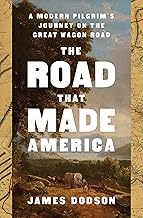
I only read one entire book in September. I pre-ordered it early in the summer and had great expectations that it would contain some information to supplement my research about the Great Wagon Road.
The Road That Made America: A Modern Pilgrim’s Journey on The Great Wagon Road, by James Dodson
The Road That Made America, by James Dodson
Perhaps I should have done more research into the book itself. It was not what I expected, but I read the entire book. I did not want to miss a morsel of new detail about the Great Wagon Road.
I will not write a review of this book, because it very well might be my fault that I expected too much from it. I know from experience that it is difficult to recover a high rating once someone has left a mediocre review.
For what Mr. Dodson set out to write, he did an excellent job. It just wasn’t what I hoped for or needed.
If you are looking for a travelogue that is about half set in Pennsylvania and pretty much peters out when he gets to the northern piedmont area in North Carolina, you would probably enjoy this book. The author tells where he ate, where he stayed, and who he met along the way. He met some old friends along the way and he gives background details of their years of friendship. There is an emphasis on the Civil War battlefields along or near The Great Wagon Road, so a Civil War buff would find that of interest.
It just wasn’t what I hoped would supplement my research for the historical novel series I’m writing.
My reading continues to suffer
I have been in a reading funk since January 20. Actually, it dates back to November 5, 2024. You can read between the lines and figure out why I have lost my desire to read. It is a sad and dangerous thing for a wannabe writer to stop reading.
My writing projects
This summer I finished writing and self-published I Need The Light! 26 Weekly Devotionals to Help You Through Winter and I Need The Light! Companion Journal and Diary. They are available on Amazon and you can look for them at your favorite bookstore.
If can even order the devotional book (and soon, the companion journal) from your favorite independent bookstore by going to https://www.janetmorrisonbooks.com, click on the book covers and place your order by using the Bookshop.org button.
I appreciate each of you who have ordered either or both books.
At the request of a distant cousin who is a very dedicated member of the Sons of the American Revolution, last week I set my short stories aside and wrote the honoring statements for four American Revolutionary War patriots and soldiers who are buried in Spears Graveyard of Rocky River Presbyterian Church in Cabarrus County, NC.
With that research and writing completed on Saturday evening, I turned my attention back to proofreading and editing my historical short stories. Stay turned for an announcement in a few weeks when I publish Traveling Through History: Historical Short Stories.
Hurricane Helene Update
As of Friday, 35 roads in North Carolina were still closed due to Hurricane Helene. That count included five US highways, two state highways, and 28 state roads, meaning three state roads opened last week.
Of course, sections of the Blue Ridge Parkway in North Carolina will remain closed for another year or more, and I-40 at the Tennessee line will continue to be just two lanes at 35 miles-per-hour for a couple more years while five miles of the highway are being rebuilt in the Pigeon River Gorge.
But western North Carolina is open for business and tourists this fall. Just be aware that you might run into a detour, and you can’t drive the full length of the Blue Ridge Parkway.
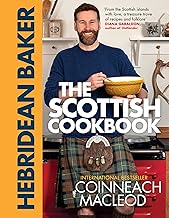
You know a reader is in trouble when the only book she read in the month of July was a cookbook!
The Scottish Cookbook: Hebridean Baker, by Coinneach MacLeod
The Scottish Cookbook: The Hebridean Baker, by Coinneach MacLeod
This was a fun read. I doubt I’ll try any of the recipes, but the recipes are interspersed with stories about the islands in the Outer Hebrides. They were interesting and the photographs brought back memories of my visit to Lewis and Harris.
Some of the recipes sounded interesting, but I was primarily drawn into the stories MacLeod shared. The photographs were beautiful and took me back to my wonderful trips to the Outer Hebrides and my dear friends on the Isle of Lewis.
More than a reading slump
Those of you who have followed my blog over the years have, no doubt, noticed that I have read very few books this year. In one or more blog posts I have blamed my slump on the current threats to our American democracy. That was not an idle excuse. It is very much the reason I have read almost no fiction in 2025. In conjunction with that same reason, I have spent an inordinate amount of time writing blog posts up to six times a week instead of my former usual of once a week.
However, this summer there has been a third reason for my lack of reading novels. If you subscribe to my newsletter, you know what I’m talking about.
I Need The Light! 26 Weekly Devotionals to Help You Through Winter
A couple of years ago, I started writing a devotional book. Imposter Syndrome set in, and I put it away.
Imposter Syndrome tells a person that they aren’t good enough. It says to a writer, “Who do you think you are? You can’t write a book!” It says to the writer of a devotional book, “You’ve got to be kidding! You have no formal religious training! You have no degrees in theology!”
Late this spring, I decided to publish my devotional book anyway. Due to the nature of the subject matter, I needed to get it out before winter set in.
Self-publishing a book requires one to jump out of the boat and into the water at the deep end of the pool without knowing how to swim.
I’ve done that before. I self-published two local history books, two historical short stories, and a cookbook through Kindle Direct Publishing (KDP). However, KDP being part of Amazon, I soon learned that bookstores are not interested in selling your books. Amazon is seen as a bookstore’s enemy.
You live and learn. It just takes some of us longer to learn than it takes others.
In the spring I started researching IngramSpark. A book self-published through IngramSpark can be ordered by bookstores and libraries!
Those of you who know me well, know that I am not computer literate. Those of you who know me very well know that I have memory problems that make it incredibly difficult to learn new things. Having to learn a new computer program, for instance, is just about my worst nightmare.
It was with more than a little apprehension that I created an account with IngramSpark and jumped into the deep end of a new pool.
My summer has been a whirlwind of learning new things, editing words I wrote a while back, and adding contemporary examples. I learned new marketing techniques and have tried my best to implement them.
In my July newsletter, I offered Advanced Review Copies (ARCs) for the first time in my life. There was a learning curve there as I had to create a special ARC book cover. I also learned who in my small circle were willing to accept a free ARC and who were not. The timing wasn’t right for some people. It is all part of the process. Writers are required to have thick skin.
I anticipate the release in early September of I Need The Light! 26 Weekly Devotionals to Help You Through Winter.
I Need The Light! 26 Weekly Devotionals to Help You Through Winter, by Janet Morrison
Be on the lookout for more specific announcements!
Hurricane Helene Update
As of Friday, of the 1,457 roads that were closed in western North Carolina last September due to Hurricane Helene, 34 remain closed, which is the same number reported for the last three weeks. The NC Department of Transportation reports 40 roads have just partial access, which is a decrease of two roads since the previous Friday.
In case you missed my weekly update on July 26, here’s a link to that blog post in which I gave the National Park Service’s three-phase plan for reopening the Blue Ridge Parkway: Books Banned at U.S. Department of Defense Schools.
Great Smoky Mountains National ParkAlert!
In a related story, on Saturday, US-441/Newfound Gap Road – the only road that crosses the entire Great Smoky Mountains National Park from Cherokee, North Carolina to Gatlinburg, Tennessee, was closed due to heavy rainfall causing the undercutting of a section of the road in Tennessee by Walker Prong Camp Creek between Mile Marker 12 and Mile Marker 13.
The entire road was closed for evaluation, but part of it in the North Carolina part of the park has reopened. There is no estimate of when the Tennessee portion of the road will reopen. The stated detour route is I-40, which is still just two lanes and 35 mph due to the massive damage done last September by Hurricane Helene.
Until my next blog post
I hope you have time and are in the mood to read a good book – fiction or nonfiction.
Remember the people of Ukraine, the starving children in Gaza, and the people of western North Carolina still reeling from the devastation caused by Hurricane Helene last September.
After my blog post for yesterday got too long for anyone to want to read, I split it up into two posts.
The books I write about today will sound familiar to those of you who follow my blog, but I think both warrant a revisit.
White Hoods and Broken Badges, by Joe Moore
White Robes and Broken Badges, by Joe Moore
If this book sounds familiar, it might because I blogged about it on October 7, 2024, in What I Read Last Month & a Hurricane Helene Update . I read it again last month because on my recommendation it was the June book for the book club I’m in.
It was sobering the first time I read it, but it was even more chilling to read it during Donald Trump’s second term in the White House. All the things Moore anticipated and predicted about a second Trump term are coming to fruition right before our eyes.
We are in a bad place in the United States, and we have the 2024 voters to blame. I’m beyond mincing words about the people who brought authoritarianism down upon us when they put on their red MAGA baseball caps and voted last fall.
After reading White Hoods and Broken Badges, I have a better understanding of just how deeply embedded in our government and all levels of law enforcement the Ku Klux Klan and all the various allied white supremacy and white nationalist people are.
Moore says whereas the KKK and militia groups like the Proud Boys used to not mix or associate with each other, now they have joined forces under a common cause: the destruction of our democracy. Their goal is a second civil war in the US, and it has already started. All it needed was the blessing of a second Trump term as US President.
Moore says that whereas it used to be that white supremacist tried to infiltrate law enforcement, now there are people in law enforcement who recruit them. Therein lies the KKK’s power. He writes about the part white nationalist groups played in the January 6, 2021, insurrection and how they fueled the mob attack on the US Capitol.
He went so far as to state, “It’s estimated that somewhere between half and three quarters of all self-identifying Republicans either identify as white nationalists or hold white nationalist beliefs. That means as much as 30 percent of the United States population wants to see the country burn.”
He knows whereof he speaks. As a confidential informant for the FBI, he infiltrated the KKK twice over a ten-year period. He and his family are living under assumed names.
Please read this book. The statistics I’ve cited are in the opening pages of the book. The book itself is a well-written account of Moore’s time infiltrating the KKK and the things he witnessed. You won’t be able to be complacent after reading it.
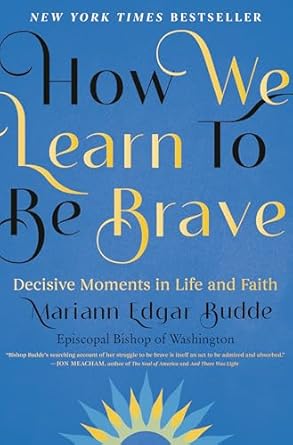
How We Learn to Be Brave: Decisive Moments in Life and Faith, by Mariann Edgar Budde.
How We Learn to Be Brave: Decisive Moments in Live and Faith, by Mariann Edgar Budde
I blogged about the fourth chapter in this book in my June 20, 2025 blog post, Reacting to the Cards You Are Dealt. I invite you to read that book and the post I wrote in response to reading the fourth chapter. I hope to eventually read the entire book.
Until my next blog post
Get a good book to read. Your local public library has lots of them, and a library card is free!
Don’t forget the people of Ukraine and western North Carolina.
This has not been a good reading year for me when it comes to fiction. You may recall that I did not read any novels in April and only read a couple of books in May. There are plenty of wonderful novels out there, I’m just not in a good place mentally right now to concentrate on a plot and enjoy them. The memory problems caused by Chronic Fatigue Syndrome are a daily frustration.
Nevertheless, my blog today is about two of the four books I read or attempted to read in the month of June. I will blog about the other two tomorrow.
My Name is Emilia Del Valle, by Isabel Allende
I thought this would be the historical novel that would rescue me from my drought of reading since January 20, but not even Isabel Allende could do that.
My Name is Emilia Del Valle, by Isabel Allende
I enjoyed the first half of the book, but then I was too distracted by current affairs to concentrate on the war in Chile in the 1890s. I wanted to see if Emilia would locate her biological father in Chile and, if she did, I wanted to see how that meeting took place and if they formed a relationship. (Spoiler alert: After that meeting took place, I began to lose interest in the rest of the plot.”
I cheered Emilia on because she was a female trying to be a writer. I cheered her n when she got a job as a reporter for The Daily Examiner in San Francisco, for that would unheard of for any newspaper in the US in the 19th century.
It was disappointing for me when I lost interest in the story. That’s not a reflection on the writing, for Isabel Allende is a wonderful novelist. Some of her other novels have held me spellbound. I think it just was not the right time for me to read this book.
Please don’t let my comments deter you from reading it.
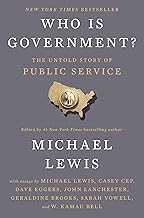
Who Is Government?: The Untold Story of Public Service, edited by Michael Lewis, with essays by Michael Lewis, Casey Cep, Dave Eggers, John Lanchester, Geraldine Brooks, Sarah Vowell, and W. Kamau Bell
This book pulled at my heartstrings, because in my early adult life I was a public servant. That was what I prepared myself for in six years of college. As is true for most public servants/government employees in the United States, I had little interest in politics.
If that statement sounds strange to you, then you have a misunderstanding of how government in the United States works.
If that statement sounds strange to you, you need to read Who Is Government?
Who Is Government? The Untold Story of Public Service, edited by Michael Lewis.
This book is a collection of stories about specific unsung heroes who work in our government. None of them wanted fame or fortune. You don’t know their names.
They were just doing their jobs, all the while dodging the arrows being shot at them daily by a general populous who choose to believe and perpetuate the myth that all government employees are incompetent and lazy.
The writers of Who Is Government? beg to differ with that long-standing misconception of government employees.
The essays in this book are about a government employees who did such things as:
Figuring out how to make “roofs” in coal mines so they would not collapse – a problem that has killed thousands of coal miners worldwide;
Figuring out an almost flawless way to run the National Cemetery Administration so that the 140,000 veterans and their families are interred annually are treated with the utmost precision and care as well as immaculately maintaining the final resting place for more than 4 million other veterans in our 155 national cemeteries;
Figuring out how to build the future Nancy Grace Roman Space Telescope “which will have a panoramic field of vision a hundred times greater than the Hubble Space Telescope” and will perform something called starlight suppression to enable us to see behind and around faraway stars;
Keeping track of every statistic imaginable, which is what the Consumer Price Index actually is – and it doesn’t just happen – it takes lots of government employees measuring things and keeping meticulous records that an individual could never do but all our lives are affected by that number;
Catching and arresting cyber criminals who are defrauding people or perpetuating pedophilia on the internet and the dark web;
Overseeing and accomplishing the digitalization so far of 300 million of the 13 billion government documents so that every American, regardless of their location, will have access to all the records housed by the National Archives and Records Administration;
Working in the US Department of Justice (I hope Olivia still has a job there!) in the antitrust section because she sees helping to enforce antitrust laws as a way to make sure one person’s American Dream does not “impede on other people’s American Dream”; and
Helping doctors find new treatments for rare deadly diseases. (I sincerely hope Heather still has her job, but I’m not optimistic.)
Each of the above stories is fascinating. Each one renews my faith in the United State Government and serves as a reminder that ours is a “government if the people, by the people, and for the people” as so eloquently stated by Abraham Lincoln in The Gettysburg Address.
As I stated a few paragraphs ago, the writers of Who Is Government beg to differ with that long-standing misconception of government employees being incompetent and lazy – that misconception that the Trump Administration and the teenagers working for Elon Musk latched onto with all their might and money this year. And thousands of hard-working, knowledgeable, dedicated, non-political government employees lost their careers.
The brain-drain and experience-drain that resulted from the massive firings and layoffs in the US Government and the trickle down through various state and local government programs won’t be recognized or calculated in its entirety for decades.
In many cases, we will never know what we lost. We will never know the cures for cancer or Alzheimer’s Disease that were missed because the researchers that were on the cusp of those discoveries were let go in the name of “government efficiency.”
We won’t be able to ever recover the beauty and plants and animals that have been and will be lost to mining and deforestation in the name of “government efficiency” and “Make America Great Again.”
If I sound bitter, it is because I am. If I sound unforgiving, it is because I am.
Who Is Government? should be required-reading for all Americans – or at least for everyone in Congress and in the Trump Administration. If they read it, they might not be so quick to paint all government employees with that “incompetent, inefficient, and lazy” brush.
I will close by quoting a paragraph in The Cyber Sleuth” essay in Who Is Government? written by Geraldine Brooks. That essay tells how effective Jarod Koopman and his cyber crime team at the Internal Revenue Service (IRS) have been in catching criminals ranging from bitcoin fraudsters to pedophiles.
This is my favorite paragraph in the book: “The next time a politician or a pundit traduces the IRS, or JD Vance suggests firing half the civil service and putting in ‘our people,’ consider whether a system that filled out its ranks with a new batch of political loyalists every four years would have the expertise of these dedicated lifelong civil servants.”
In 2016, many Trump supporters said, “We need a businessman in the White House.”
I might not be the sharpest knife in the drawer, but I’d like to know what business fires their employees without any consideration of their value or merit every four years just so they can hire all new people. I don’t think that business would last long. That business model makes no sense for a for-profit enterprise and it certainly makes no sense for the United States Government.
Hurricane Helene Update
As of Friday, of the 1,448 roads in North Carolina that were closed due to Hurricane Helene last September, 1,409 were fully open, 39 were closed, 50 had partial access, and one was closed to truck traffic. Eight roads reopened last week.
The statistics posted online by the NC DOT are a little difficult to follow as it is unclear in the chart by geographical divisions which roads are completely closed and which ones of partially closed, etc. Five US highways, three state highways, and 43 state roads are indicated on the chart without explanation of exact closure status.
I-40 is still just one lane in each direction with a 35-mph speed limit, and most the Blue Ridge Parkway in NC is still closed. That road is not included in the DOT chart since it is a federal park-maintained road.
Until my next blog post
Keep reading for pleasure.
Hold your family and friends close.
Remember the people of Ukraine and western North Carolina.
And remember the people of Texas where there was devastating flooding in the wee, dark hours of Friday morning. The death toll continues to rise as I write this, and there are still 11 missing from Camp Mystic along the Guadelupe River. From my Hurricane Helene update above, we know they have a long, difficult road ahead.
Many of my blog posts this year have been about the mess we’re in. American democracy is being challenged like no other time in recent history, if ever.
Some people have been known to say in the last six months that we could have another civil war in the United States. Perhaps you’ve thought it yourself or heard someone else say those words.
Series of Webinars Sponsored by The Carter Center
President Jimmy Carter
Photo by Library of Congress on Unsplash
This spring I watched a series of webinars sponsored by The Carter Center about our divided country. Panelists explored how we got to this place, how we can learn from other countries, what we can do to avoid what other countries have experienced, and where we can start.
The country that served as the example in the four webinars was Northern Ireland.
The facilitator for the webinars was the Rev. Dr. Gary Mason, a Methodist minister, peacemaker, and peacebuilder from Northern Ireland. Dr. Mason founded Rethinking Conflict in 2015. It seeks to model the principles of Northern Ireland’s Good Friday Agreement.
That agreement finally ended the conflict on Good Friday, April 10, 1998. Dr. Mason has taken this model to the Middle East and now, to the United States.
Dr. Mason spoke from personal experience growing up during “The Troubles.”
What if “The Troubles” happened in the United States?
British troops occupied Northern Ireland in August 1969. Everyone thought it would be over before Christmas, but there was an amazing amount of violence over the next 30 years. It was the longest occupation by the British Army in history.
To give Americans some perspective on the amount of violence that took place in Northern Ireland during “The Troubles,” Dr. Mason gave the following statistics: At that time, Northern Ireland had a population of 1.5 million. During The Troubles, nearly 4,000 were killed, 47,000 were injured, there were 37,000 shootings, 30,000 people went through the penal system, there were 22,000 armed robberies, and 16,000 bombings.
He extrapolated that out to compare with the population of the United States over a 30-year conflict. If we had such a civil war in the US, we could see 800,000 killed, 9 million injuries, 7 million shootings, 6 million political prisoners, 4 million armed robberies, and 3 million bombings.
Imagine that level of carnage in America. I can’t.
An estimated 618,000 Americans died in our Civil War in the 1860s. To bring it “home,” I’ve studied the local losses in my own church in that war. Out of a membership of 400 white members and 200 black enslaved members, the congregation lost 74 men in the war. I cannot imagine that number of deaths in this community.
Just like it, undoubtedly, took decades for my community to recover from the war, 27 years after the Good Friday Agreement, Dr. Mason says in Northern Ireland “we are still wrestling with the legacy of the conflict. It’s really the one piece of unfinished business of the peace process.”
Indeed, in the United States we’re still wrestling with the legacy of our civil war. Confederate statues were taken down, but Trump wants them put back in place. Confederate names were removed from US military installations, but now the names are being restored, albeit technically they are not being renamed for the Confederates.
For example, Fort Bragg here in North Carolina was originally named for Braxton Bragg, a Confederate Army General who owned slaves. His name was removed, all the signs and letterhead replaced to say “Fort Liberty” in June 2023, and then in February 2025, Fort Liberty was renamed Fort Bragg but this time for a decorated Private in World War II, Roland X. Bragg.
We are still wrestling with the legacy of our Civil War, so it is not surprising that 27 years after the fact, the people of Northern Ireland are wrestling with theirs.
In Northern Ireland, People Hated Each Other
When peace talks began in Northern Ireland, the people in the room hated each other. No wonder it took so many years for them to develop a peace agreement.
Is that where we are today in the United States of America?
In polite society, we generally get along with each other. But, as I wrote about in my April 17, 2025, blog post, Is your family getting together during Holy Week? Brace yourself!, it only takes one person making an inflammatory remark and a heated argument can break out even among a group of friends or a family gathering.
Do Americans hate each other?
I don’t hate anyone, but I hate what some individuals and groups are doing to our country.
I hate that the US Congress has relinquished its legislative responsibilities to a US President who is legislating via Executive Orders.
I hate that thousands of federal employees have been fired or forced to take early retirement.
I hate that medical research funds and researchers have been eliminated.
I hate that people are being shipped off to a prison in El Salvador without due process.
I hate when people are shipped off to a prison El Salvador by mistake, the US President says he is powerless to do anything about it.
I hate that USAID was halted and will result in people starving.
I hate that universities, museums, and libraries are being targeted and punished.
I hate that Moms for Liberty think they have the right to dictate which books should not be read.
I hate that the Heritage Foundation was able to slide Project 2025 into the White House while the Republican Presidential nominee denied having anything to do with it.
I hate that many of the most vocally hateful voices in this country come from people who claim to be Christians. They give Christianity and Christians a bad name.
So how do we get out of this mess?
If we take the peacemaking and peacebuilding experience of Dr. Gary Mason into consideration, since he has lived through a civil war, we will open avenues of communication with people with whom we disagree.
LEAPFROG: How to hold a civil conversation in an uncivil era, by Janet Givens, M.A.
Taking Dr. Mason’s advice, we will then calmly and sincerely ask the person or persons why they feel the way they do about the topic with which we know we disagree with them, and then we will respectfully listen to their story.
Hopefully, they will be equally curious about our story and allow us to explain our position and why or how we arrived at it. Without honesty by both parties and a genuine curiosity by both parties, and a real listening by both parties… it won’t be a successful conversation.
Then, we move on to another person with whom we disagree and repeat the process.
Hmmm. Sounds easy on paper?
No, it doesn’t even sound easy on paper, much less in real life.
Bottom line is, I don’t know how we get out of this mess.
It has been my experience that people who stand on the opposite end of the political spectrum from where I stand, are not interested in hearing my story. They tend to be loud, rude, and condescending. They tend to call names and belittle, like their political leader on Pennsylvania Avenue.
So I really don’t know how we will get out of this mess. When I consider having “that difficult conversation” with anyone I know who supports Trump, I honestly cannot imagine that I would be able to have a productive conversation with them about politics. Our worldviews and core beliefs about democracy are just that far apart.
A chilling perspective
I just reread White Robes and Broken Badges: Infiltrating the KKK and Exposing the Evil Among Us, by Joe Moore. I blogged about that book on October 7, 2024, in What I Read Last Month & a Hurricane Helene Update, and I will blog about it again on July 7.
White Robes and Broken Badges, by Joe Moore
Speaking from the unique place of having infiltrated the Ku Klux Klan twice for the FBI, Moore stated in his book, “The radical right cares nothing about process, only outcome. They’re not interested in a civil discussion to work out differences, because they are so consumed by ideology that it has hijacked their civility. They have a clear vision of what they want the country to look like, and democracy itself is the only thing standing in their way.”
That leaves us in a hopeless situation. I don’t want to be hopeless, but I admit I don’t know how to have a productive conversation about politics with anyone who supports Donald Trump.
Even when Donald Trump is no longer in office, the people who agree with his tactics will still be with us. Our mess is bigger than an election or two can clean up.
Until my next blog post
How do you think we can get out of this mess?
What have you tried? Did it work?
It is going to take all of us to get our country out of this mess. The politicians certainly aren’t going to save us!
Remember the people of Northern Ireland, Ukraine, and western North Carolina.
Janet
P.S. I wrote and scheduled today’s blog post before the United States bombed three nuclear facilities in Iran on Saturday night, Eastern Time.
I considered saving today’s topic for my July 7 planned blog post about the books I am reading in June, but I decided it deserved its own post.
Last week, I read the fourth chapter in How We Learn to Be Brave: Decisive Moments in Life and Faith, by Mariann Edgar Budde.
How We Learn To Be Brave, by Mariann Edgar Budde
If the author’s name sounds familiar, it is because she is the Bishop of the Episcopal Diocese of Washington, D.C. and the Washington National Cathedral. She spoke boldly in the worship service on President Trump’s Inauguration Day in January 2025, and was sharply criticized by Trump for her courage.
My sister read this book and encouraged me to at least read the fourth chapter before she returned it to the public library. She said it reminded her of me and some of my life experiences. I took time to read that 34-page chapter titled, “Accepting What You Do Not Choose.”
My story (well, part of it)
At the age of 25 I accepted the fact that I had a medical problem that was incurable but could be treated with a series of surgeries. It meant that I would never have a chance to have children. Less than ten years later I accepted the fact that I had chronic fatigue syndrome and fibromyalgia, neither of which can be cured and treatment of the symptoms is poor at best.
What I was able to accept has astounded my sister. She knows better than anyone else how much physical pain I tolerate and the fatigue that makes it difficult for me to get up and face each day. She says she has asked God, “Why Janet?” but I just find that odd because I have never asked God, “Why me?”
I admit that when I get frustrated over the memory problems that accompany chronic fatigue syndrome that cause me to make mistakes and have to repeat various tasks, I do sometimes ask God why life has to be so hard.
But I’ve never asked God why I had endometriosis, a ten-pound ovarian cyst, fibroid tumors, chronic fatigue syndrome, fibromyalgia, chronic corneal erosion, and so forth. Why would I do that? Stuff happens. God never promised us that life would be a bed of roses. He promised He would always be with us. Diseases happen. Accidents happen. No one has a perfect life, so why would I expect my life to be perfect?
My father was my example
My example was my father. He was just 61 years old when he was diagnosed with multiple myeloma. I had just started my sophomore year in college. He lived for almost five more years. The chemotherapy acted like fertilizer on his cataracts and he went blind. Blindness was harder for him to accept than his cancer because there was nothing he could do to fight blindness.
He insisted on having cataract surgery against his doctors’ recommendations, but it was unsuccessful. But in those five years of sickness and eventual legal blindness, I never once heard my father ask, “Why me?” That just was not the way he approached his medical diagnoses. He continued to work every day until his eyesight made it impossible for him to drive.
What Bishop Budd’s 4th chapter had to say
I read the fourth chapter in Bishop Budde’s book, and it was comforting. She writes from a place of physical pain that I did not know she had. The book gave me some things to think about. It is always helpful to listen to another person’s perspective.
Budde writes several pages about the Rev. Dr. Martin Luther King and how he accepted the life he was dealt. She writes about acting from a place of love and putting the other person ahead of ourselves. Instead of being like the Levite and the priest in the story of the Good Samaritan, we should strive to be like the Good Samaritan.
The Levite and the priest in the story saw the man who needed help, but they were afraid of what could happen to them if they stopped to help the man. But if we try to adopt the mindset of the Good Samaritan, when we see someone who needs help or an injustice, we should ask ourselves, “What will happen to them if I don’t act?”
That is the question I have asked myself daily since January 20, 2025. What will happen to my country, to my great-nieces, to their future children, if I don’t act?
With Episcopal Bishop Michael Curry’s words in mind from Prince Harry and Meghan Markle’s wedding ceremony, Budde writes, “When we choose love in response to what we wish we could change but can’t; when we choose love as our response to the world as it is, not as what we wish it were; when we choose love over denial, or anger, or cynicism and withdrawal, we share in God’s redeeming of our world. It doesn’t make the work any easier, but it gives our efforts a sense of purpose that can carry us through. Through our imperfect efforts, God’s grace shines through us in ways we may never know or fully understand.”
Budde closes the fourth chapter with the following words:
“Our lives are full of unforeseen choices, struggles, and callings. Sometimes we can overcome these obstacles, and sometimes we must make peace with them…. Accepting what we did not choose involves a leap of faith that God is present and at work in ways that we cannot comprehend…. This kind of acceptance is not passive or fatalistic, but rather a courageous choice at a decisive moment to embrace the places we are broken as an integral part of a courageous life.”
I didn’t feel courageous at age 24 but maybe I am at 72
I don’t consider that I was courageous in accepting my physical limitations. It never occurred to me that I had a choice, so what would have been the point of fighting or lashing out at God about them?
Another participant in a Chronic Fatigue Syndrome support group in the 1980s who every month angrily said, “I refuse to be sick! I’m not going to put up with this. The rest of you can be sick if you want to, but I refuse.” I don’t know what became of her. I hope she was able to find a place of acceptance and contentment.
There was another participant in the support group who presented herself as a wealthy middle-age woman who enjoyed playing tennis every day. She could no longer play tennis and it crushed her spirit. She committed suicide.
I did not choose to have Chronic Fatigue Syndrome since April 26, 1987, but here I am.
On the other hand, I did not choose to have Donald Trump as my President, and it is taking a degree of courage for me to express my concerns in my blog. I don’t personally know but a few of the people who read my blog. WordPress tells me that people in 81 countries have read my blog just in 2025. People who may wish me harm for my opinions might read my blog. A few trolls have read it and left unpleasant comments.
I’m happy to engage in a “conversation” about the topics in my blog, but when a comment turns into a personal attack or accusations about my credibility or motives, I draw the line and I delete them. I do not owe my time and limited energy to someone who merely wants to pick a fight.
The bottom line
“The bottom line” is that we do not choose many of the things that happen to us, but we can always choose how we react to them. Our experiences make us who we are. If I had not had some medical problems, I would not be the person I am today.
We can look for constructive and creative things to do when we have physical or career setbacks. If I had not been forced to give up my chosen career due to my health at the age of 34, I might not have taken a writing course at the age of 48.
If I had not taken that writing course, I would not have had the confidence to write a local history column for the newspaper at the age of 53 to 59. If I had not taken that writing course, I would not have started a blog at the age of 60.
If I had not written 175 local history articles for the newspaper, I wouldn’t have been able to self-publish them in two books (Harrisburg, Did You Know? Cabarrus History, Books 1 and 2). If I hadn’t wanted to publish those articles in book form, I wouldn’t have learned how to format a book on the computer so I could self-publish on Kindle Direct Publishing.
If I had not taken that writing course or published those two history books, I would not have published two short stories on Amazon… or a cookbook with my sister in 2023.
If I had not taken that writing course, I would not be writing an historical novel now at the age of 72.
If I had not had Chronic Fatigue Syndrome, Fibromyalgia, and Seasonal Affective Disorder and learned how to write and self-publish, I would not have just finished writing a devotional book. I hope to publish I Need The Light in August, so stay tuned!
God did not wish for me to have any of my physical maladies, but he gave me the Holy Spirit. The Holy Spirit gives me the gumption to get up every day (although some days I don’t get up until the afternoon) and to seek God’s will in my life.
It is through The Trinity — God, Jesus Christ, and the Holy Spirit — that I have the energy and creative motivation many days to read, write, interact with the friends I’ve made around the world through my blog, sometimes dabble in genealogy, and occasionally keep learning to play the dulcimer – a musical instrument I took up in middle age.
It is through The Trinity that I was given an interest in history and political science. It is those lifelong interests that compel me to pay attention to current events. The current events in my country are sources of much stress and concern.
I see the democracy in which I have thrived all my life under attack now from within. My government is turning against its citizens and the things we value. I did not vote for any of this, but the situation is the one I’ve been dealt.
It is up to me how I react.
Some days I wish I could just turn off the news. Some days I wish I could listen to the news and then just go about my business and not be concerned. Lots of people seem to be able to do that. I am not one of them. (I am simultaneously envious of them and frustrated with them!)
The reelection of Donald Trump has upended my little weekly blog (and, therefore, my life) into an almost daily report (some say “rant”) about the dismantling of our democracy. Nothing about 2025 is what I had planned for myself, but life happens.
Now you see
So now, 1,900 words later, you see why I decided to give the fourth chapter of Bishop Mariann Edgar Budde’s book, How We Learn to Be Brave: Decisive Moments in Life and Faith, its own blog post.
Some of you might think my life is too much of an open book. I get it. Some people don’t want anyone to know they have medical problems. I don’t share that information about myself to get your sympathy. That’s not what this is about. But perhaps someone else with health problems at a young age (or at any age) can take some measure of encouragement from my blog today or from the devotional book I will blog more about later.
It’s all about faith and where we get out courage to keep putting one foot in front the other. It’s about how we react to whatever comes our way.
What are your priorities?
What creative and constructive ways have you found to express yourself and react to the life you have been given?
It’s never too late to find your voice.
It has been my experience that when life circumstances close a door, God always opens a window… or even a bigger door.
Until my next blog post
Keep reading and paying attention to what’s happening in your country and the world. Being a citizen is not a spectator sport!
Remember the brave people of Ukraine, and don’t forget the people in western North Carolina who are still recovering from last September’s hurricane and record-setting flooding and landslides… as well as a new flood and landslide two days ago just over in Tennessee which has closed I-40 to all traffic (again) for a couple of weeks.
I usually blog about the books I read the previous month in my blog post on the first Monday in the next month, but on May 5 I blogged about the Cabarrus Black Boys blowing up King George III’s munitions shipment on May 2, 1771.
I felt compelled to blog about the US being added to the CIVICUS Monitor Watchlist on May 12. The rest of the story of the Cabarrus Black Boys needed another Monday post, and I blogged about Memorial Day on May26.
Therefore, here I am on the first Monday in June needing to report to you about the books I read in April and May. Fortunately for you, I didn’t get but two books read in those 61 days. I have a lot to say about both, so settle in.
My reading in April
I was too distracted by the dismantling of the US Government and its worthwhile programs and projects to read any fiction in April. I was unable in April to read or write any fiction. I missed both.
If you’ve been reading all or most of my blog posts over the last three months, you know the majority of my reading has been current events. You also know that I am distressed, angry, and depressed over the state of things in the United States.
It is that distress and depression from the daily flood of bad news from and about the US Government that prevented my reading any fiction. As of the end of April, I had read nothing for pure enjoyment since reading The Frozen River, by Ariel Lawhon and The Lion Women of Tehran, by Marjan Kamali in January and I Was Anastasia, by Ariel Lawhon in February.
That is the longest I’ve gone in my memory without reading a novel since I finally realized in 2001 that fiction can be as educational and thought-provoking as nonfiction.
Since I deal with Seasonal Affective Disorder in the fall and winter, this is my favorite time of year (except for the snakes reappearing in my yard after their winter hibernation!) Therefore, I should have been loving each day in April and May, feeling free and confident, and simultaneously reading two or three novels at any given time. Instead, Instead, I felt like I was living in a dark cave. I checked books out from the library, but many of them were returned unread. I was in a reading slump.
My reading in May
Worth Fighting For: Finding Courage and Compassion When Cruelty is Trending, by John Pavlovitz
I mentioned a few weeks ago that I was reading this book in April. I finished it in May. John Pavlovitz wrote this book in 2024. As I mentioned in an earlier blog post, he was a pastor but his congregation left him. They decided they didn’t agree with him about welcoming the stranger and caring for the poor, so he and the congregation parted ways.
This book was right down my alley, so it may or may not be to your liking.
Worth Fighting For, by John Pavlovitz
Mr. Pavlovitz points out that, “Fighting for the stuff that matters isn’t for the faint of heart. If courage and compassion were easy, we’d experience a lot more of them in the world…. Keep breathing, stay hydrated, and fight well!”
He writes, “As we go about the work of being compassionate human beings in days when cruelty is trending, there are two wounds we need to be constantly mindful of and sensitive to: the wounds of the world and the wounds we sustain attending to them.”
Also, “The only way humanity loses is if decent human beings allow the inhumanity to win, if they stop fighting, if they resign themselves to their circumstances.”
At the end of many chapters, Mr. Pavlovitz states a truth, asks a question, and then gives a strategy.” It took me several weeks to read the entire book because I stopped to give some thoughtful time to each of those. I did a lot of journaling. Some of it was soul searching. It was a helpful spiritual and ethical exercise.
He writes about righteous anger, and says, “…everyone believes their anger is righteous, their cause is just, and their motives are pure.” He goes on to say that Christians need to “aspire to … redemptive anger, focusing on what results from our responses, the fruit of our efforts and our activism: Do they bring justice, equity, wholeness? Are more people heard and seen and respected in their wake? Is diversity nurtured or assailed because of them?”
He says, “The beautiful collective outrage of good people is actually the antidote to hateful religion.”
As we continue through 2025, Mr. Pavlovitz has not been shy about voicing his concerns about the Trump Administration online and on social media. I think he has lost some of the optimism he held when he wrote Worth Fighting For a year ago. I’m right there with him on that!
He writes, “It’s easy to blame Donald Trump for the collective heart sickness we’ve seen here in recent years, but he didn’t create this cruelty – he simply revealed it and leveraged it to his advantage. He didn’t invent the malevolence that social media trolls revel in, but he did make it go mainstream. He didn’t pollute an entire party, but he set a precedent for open ugliness that scores of politicians have fully embraced in order to court his base – and that’s simply the ugliest truth about where we are in this moment: while those who serve as our representatives in the world continue to lower the depths of human decency, we, too, will continue to descend unless we resist it fully”
And all that just comes from the first 15% of the book.
He writes about the MAGA movement and how he wrestled with trying to figure out what made so many people fall for Donald Trump’s lies. I can identify with that. I’ve been trying to figure that out since 2016.
I gather from his more recent writings that he is not wasting anymore time on that.
The present situation and indications that the former United States as a democracy with a caring and compassionate population is rapidly becoming a hate-filled money-hungry nation turning its back on its long-time allies are the things we must focus on today.
I’m afraid it is. There is much about my country that I do not recognize in 2025.
I could write a lot more about and from Worth Fighting For, but I’ll leave it for you to read the book for yourself and do some soul searching.
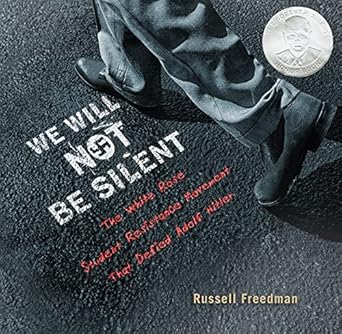
We Will Not Be Silent, by Russell Freedman
When I searched my county’s public library system for books about the White Rose resistance in World War II Germany, this was the only book I found. It is a book of fewer than 100 pages, but it packs a real punch. It is nonfiction.
We Will Not Be Silent, by Russell Freedman
The book follows the Scholl family and several friends of the older Scholl children. Each of the boys joined the Hitler Youth and each of the girls joined the League of German Girls; however, each one became disillusioned with the militarism and lack of socialization. The drills became drudgery and the propaganda got more and more irritating.
The older son and daughter were instrumental in the secret resistance movement called the White Rose. White Rose leaflets started appearing in a few mailboxes at the end of 1942. They started with just 100 copies and asked people who received them to pass them around and copy them. The leaflets told people to resist “wherever you may be… before it is too late….”
Those words are now especially chilling to me in the United States in 2025.
The name “White Rose” was arbitrarily chosen when it was started by four medical school students. It was decided from the start that their resistance would be nonviolent.
Eventually, 12 students were involved in the movement and three more leaflets were written. A Munich architect let them use his basement and duplicating machine at night. This enabled them to print thousands of copies. They fanned out individually to purchase small amounts of supplies so as not to create suspicion.
The third leaflet encouraged acts of sabotage anywhere possible.
The fourth leaflet called Hitler a liar. It ended with, “We will not be silent. We are your bad conscience. The White Rose will not leave you in peace.”
Hans Scholl and his fellow medical students were sent to the Russian front as medics, and Sophie Scholl had to work in a German munitions factory during her summer breaks from studying at the university.
Hans’ girlfriend got a larger mimeograph machine and started a White Rose branch in Hamburg. The network then spread to Berlin and Saarbrucken.
The fifth leaflet was titled, “Leaflet of the Resistance in Germany.” Philosophy Professor Kurt Huber got involved.
Hitler was losing the war. Germany lost 330,000 of 420,000 troops in the siege on Stalingrad. It was that battle that inspired Professor Huber to write the 6th leaflet.
Thousands of copies of Leaflet Six were made. Hans, Sophie, three of their named friends and others took turns as couriers. They carried backpacks and suitcases filled with leaflets to distant towns by train and mailed some so they’d have various postmarks.
Hundreds of copies were left in phone booths at night, on parked cars, etc. Always traveling alone, they hoisted their luggage up into overhead bins on the trains, then went to sit in another car so if their luggage was searched the police could not trace who put it there. (It was another day and time, for sure!)
While Professor Huber wrote the 6th leaflet, Hans and his friends Alex and Willi took turns painting anti-Nazi slogans on university walls and public buildings. They used black tar-based paint, so the slogans would be especially difficult to remove.
Trouble hit, though, when Hans and Sophie went into a classroom building to distribute the 6th leaflet. From a third-floor stairway balcony, Sophie dropped leaflets that floated down to the lobby where a janitor saw them. He looked up and saw her.
Sophie and Hans were arrested. Others were eventually arrested, including Christophe Probst. Hans and Sophie took full blame, hoping to save the others. They were tried on February 22, 1943. It was not a real trial, of course. It was just a show to root out opposition.
Sophie, Hans, and Christophe were sentenced to be beheaded by guillotine.
More White Rose participants were arrested and beheaded, but the Resistance grew, spurred on by the executions. Leaflets were smuggled into Sweden and Switzerland. By the end of 1943, British warplanes were dropping the leaflets by the tens of thousands.
The Voice of America broadcasted praise for the White Rose students.
The White Rose students who had not yet been executed were liberated from their prisons by Allied forces after Germany surrendered.
There is a memorial to the White Rose students in the square outside the main entrance to Munich University. It is a unique memorial of white ceramic tiles made to look like the White Rose leaflets. They give the appearance of leaflets dropped on the pavement.
In the entrance hall in that classroom building where Sophie and Hans were caught, there is a bronze bust of Sophie Scholl.
The White Rose Museum was founded in 1984 by the surviving White Rose members and relatives of those who lost their lives. It is housed in that same building and is staffed by volunteers from the White Rose Foundation.
One thing that was pictured in the book that was news to me was that prior to the development of the gas chambers at the concentration camps, the Nazis used mobile gas vans in which to exterminate disabled people. “The victims were locked in an airtight compartment into which exhaust fumes were piped while the van’s engine was running, resulting in death by carbon monoxide poisoning.” In the big scheme of the atrocities of the Nazis, I suppose that isn’t surprising. I just have an image in my mind now of these vans going all over the countryside to murder people who were physically unable to be herded into boxcars to be carried off to concentration camps.
Hurricane Helene Update
As of Friday, 51 roads in North Carolina were still closed due to Hurricane Helene. That five US highways, three state highways, and 43 state roads. That report is identical to the one from Friday, May 23.
I-40 near the Tennessee line is still just two lanes with a 35 mph speed limit, and most of the Blue Ridge Parkway in NC is still closed. It will be news when I can report otherwise on either one of them.
Last Wednesday, US Secretary of Transportation Sean Duffy announced that a little more than $400 million will be going to North Carolina to reimburse the State for highway repairs and reconstruction due to Hurricane Helene. This is wonderful news!
I reported in my May 28, 2025, blog post, Hurricane Helene Recovery Update about the denial of additional matching funds from FEMA, so it was especially good news from the Department of Transportation the next day.
Governor Josh Stein says that the requested funding from FEMA that was turned down will mean the State will have less money to spend to help small businesses and municipalities.
Until my next blog post
Read! Read! Read! Please don’t be one of those people who says, “I haven’t read a book since I graduated from high school.”
Keep friends and family close.
Don’t forget the people of Ukraine and western North Carolina.
Several of my recent blog posts have been 2,000 words or more, which is way beyond where I like them to be. These are uncertain and stressful times, and some topics I have been led to blog about could not be covered in a few words.
Alas, today will be a somewhat shorter post because I did not get many books read in February; however, I have a couple of special items to share about Hurricane Helene recovery in western North Carolina, so this post isn’t as short as I thought when I started writing it.
There were several books I attempted to read or listen to, but a lack of interest or inability to concentrate meant that those books were not finished.
I only completely read two books last month, so this section of today’s post will be short.
Words to Remember: So that you don’t forget yourself, by Becky Hemsley
Words to Remember : So you don’t forget yourself, by Becky Hemsley
I discovered poet Becky Hemsley on Instagram a few months ago. Many of her postings struck a chord with me, so I purchased one of her books of poetry, Words to Remember: So that you don’t forget yourself.
This book is jam-packed with poems that inspire. I repeatedly thought about my four great-nieces (ages 20 to 27) as I read the 74 poems in this book.
If you need encouragement or you know someone – especially a young woman – who needs to be reminded that they are good enough, give them a copy of this book.
One Big Happy Family: Heartwarming Stories of Animals Caring for One Another, by Lisa Rogak
One Big Happy Family, by Lisa Rogak
My sister happened upon this book and let me borrow it before she had to return it to the public library. What a jewel! (My sister and the book!)
This book contains 50 stories, one- to three-pages in length (including wonderful photographs) about unlikely animals who have bonded, become best friends, adopted orphans of other species, and shown a deeper understanding of empathy than a lot of human beings are capable of.
A few examples of these unlikely friends: a cat and a squirrel, a Springer Spaniel and lambs, a Border Collie and her Vietnamese pot-bellied piglets, a goat and a wolf, a cat and her chicks, a chicken and her Rottweiler puppies, a rabbit and her kittens, a bulldog and her baby squirrels, an orangutan and his lion cubs, a dog and his baby monkey.
Each story includes a “Family Fact” sidebar with an educational sentence or two about one of the species featured in that story. For instance, I learned that pigs like to roll around in the mud because they lack the ability to sweat to cool off. And I learned why Dalmatians are associated with fire trucks.
This would make a great gift for any animal lover and for a child. These delightful stories from around the world will make you laugh and smile. Just what the doctor ordered for your mental health in 2025!
This next is in the “I didn’t see that coming!” category…
Beowulf: A New Translation (translated by Irish poet Seamus Heaney)
Beowulf, translated by Seamus Heaney
Don’t laugh! Ann Patchett highly recommended this translation of Beowulf on Instagram on February 21, 2025. The said it was good to read when you can’t sleep because your mind is racing and worried about what’s going on. (I’m not sure now if that was a direct quote, but it is the jest of what she said.) I was pretty keyed up about what’s going on, so I decided to check it out of the public library.
Patchett seemed to be saying that reading this wonderful translation of this ancient work that I had to read in Old English as a high school student would renew my confidence that the monster will not eat me. In Beowulf, the monster (Grendel) is killed by Beowulf.
I was glad to learn that because after reading it in Old English in high school I had no idea what it was about. I didn’t even remember that it was a poem.
After bringing Seamus Heaney’s modern English translation of Beowulf home from the library, I struggled through around half of the 22-page Introduction. I eventually jumped ahead to the actual poem. If I could have read this translation as a teenager, I might have at least understood what the poem was about.
I did not read the entire translated version. Life is short. I needed something to take my mind off politics, but Beowulf wasn’t it.
In case you have a hankering to read Beowulf, this appears to be an excellent translation. The edition my county’s library system has is bilingual, with the Old English version on the left page and the translation on the facing page. It was published in the year 2000.
I gather from Patchett’s comments that the moral of this legend is that good wins over evil. I’ll try to keep that in mind as I navigate the minefield laid out by the Executive Branch of the US Government in 2025.
There are a couple of other books I started reading in March. I’ll finish them in April and tell you all about them in May.
Hurricane Helene Update
As I write this post late on Saturday night, areas from Texas to Missouri and Kentucky are experiencing major flooding. I would be remiss not to mention that flooding and the suffering of the people affected; however, as I have maintained since last September, I live in North Carolina and I will continue to blog about the Hurricane Helene recovery efforts in my state.
As of Friday, 139 roads in North Carolina were still closed due to Hurricane Helene. That count included nine US highways, 13 state highways, and 117 state roads. That’s an overall decrease of seven road since March 21.
Although the region received some rain last week, the weather turned unseasonably warm on Friday. Wildfires continued to be a problem.
I realized that I have failed to mention one 501(c)3 foundation that was born out of the devastation Hurricane Helene left in Mitchell and Yancey counties in North Carolina, so I’ll remedy that oversight today. First, I need to explain a word in the name of the foundation: hollers. If you look up the word “holler,” you will be told that the definition of that word is a loud shout (noun) or to give a loud shout (verb). That’s not what “holler” means as used by Rebuilding Hollers Foundation, based in Bakersville, NC. If you’re from the mountains of NC or anywhere close by, you know that a holler is the area at the foot of a mountain… as in “hills and hollers.” Now that you know what a holler is, here’s a link to the Rebuilding Hollers Foundation website: https://rebuildinghollers.org/page-18086. Six months after the storm and the flooding that resulted from 30 inches of rain, the need is still overwhelming.
I have reported a lot of bad news and scary news in my blog over the last couple of weeks, so I am delighted to share some uplifting news with you today! This next story makes my heart sing! Yancey County hasn’t received as much media attention as Buncombe County (where Asheville is) because that’s just the way it is when any natural disaster happens. For instance, New Orleans got most of the attention after Hurricane Katrina, although neighboring small towns on Mississippi’s coast were devastated. That’s just the way it is, but I recently learned about an amazing way the carpentry students at the only high school in Yancey County are actively aiding recovery after unprecedented destruction.
Photo by Chandler Cruttenden on Unsplash
The students in the Advanced Carpentry Class taught by Jeremy Dotts at Mountain Heritage High School in Burnsville, NC are building a tiny house to be given to someone impacted by Hurricane Helene. What a wonderful way a public high school is empowering students who were themselves affected by the hurricane! Thank you, Mr. Dotts, for teaching your students empathy and compassion while also teaching them carpentry skills! Here’s the link to a story a TV station in Raleigh-Durham did on the project: https://abc11.com/post/high-school-carpentry-students-turn-homebuilding-storm-victims/15903556/.
But that’s not the complete story, by any stretch of the imagination! I wanted to look deeper and I discovered that tiny house is just one part of the story. First, I found an article from 2022 about the carpentry program (https://www.ednc.org/the-construction-of-a-yancey-county-carpentry-program/) and then I found a website that gives details of how carpentry isn’t the only skill or trade the students in Yancey County can learn in high school and how course completions can transfer into credits at Mayland Community College. (https://mhhs.yanceync.net/page/skilled-trades/.)
Wouldn’t it be wonderful if every high school or at least every county in America could have a program like this? After all, everyone can’t excel in science or math. Some people excel in carpentry… and those of us who don’t have woodworking and construction skills rely on those who do every day of our lives.
Until my next blog post
I hope you have a good book to read. Find something to read that will calm your nerves and enable you to escape the stresses of life for at least a few minutes every day.
Savor your memories of and time with friends and family.
Remember the people of Myanmar, Thailand, Ukraine, and western North Carolina.











 Janet's Writing Blog