I write southern historical fiction, local history, and I've written a devotional book. The two novels I'm writing are set in Virginia and the Carolinas in the 1760s. My weekly blog started out to follow my journey as a writer and a reader, but in 2025 it has been greatly expanded to include current events and politics in the United States as I see our democracy under attack from within. The political science major in me cannot sit idly by and remain silent.
As I said in last week’s blog post in which I wrote about three books I read last month, I read a variety of genres in November. I hope you will find something of interest in the three books I’m blogging about today.
The Plot to Kill Hitler: Dietrich Bonhoeffer: Pastor, Spy, Unlikely Hero, by Patricia McCormick
The Plot to Kill Hitler: Dietrich Bonhoeffer: Pastor, Spy, Unlikely Hero, by Patricia McCormick
This book is a painful reminder of the evil wrought by Adolf Hitler and how a dictator like Hitler demands complete allegiance from all who live in their realm. It is specifically about the life of Dietrich Bonhoeffer. I have read quotes from Bonhoeffer, references to him in sermons, and things about him. This 150-page book pulls it all together from his childhood in the lap of luxury, to his struggles with the great questions of life and ethics, to the courage he demonstrated in the face of pure evil in Nazi Germany.
In The Plot to Kill Hitler, Patricia McCormick weaves together the many strands of history that resulted in some unlikely people finding a shared sense of right and wrong and the courage to stand up against the genocide of the Jews. Several attempts to murder Hitler failed for various reasons before the authorities put all the clues together in an effort to identify all the conspirators.
The parallels between Hitler and a recent past US president who is seeking reelection are startling and impossible to miss. I highly recommend this book.
If Patricia McCormick’s name sounds familiar to you, it might be because I wrote an entire blog post about Sold, by her, on November 13, 2023: One of the Most Banned Books in the US: Sold, by Patricia McCormick. Reading Sold prompted me to look for what else she has written.
The Exchange After the Firm (The Firm Series Book 2), by John Grisham
The Exchange: After The Firm, by John Grisham
The Exchange is the latest novel by John Grisham that all his fans are talking about. We get to re-engage with Mitch and Abby McDeere from The Firm. Mitch and Abby have tried to put the terrible memories of how things ended in Memphis behind them. Mitch swore he’d never return to that city but the head of the law firm’s health is failing and he needs Mitch to take a case in Libya. As one would expect, things do not go well. (If they did, it wouldn’t be a very interesting novel!)
If you read The Firm and have enjoyed scores of Grisham’s other novels, you’ll certainly enjoy The Exchange.
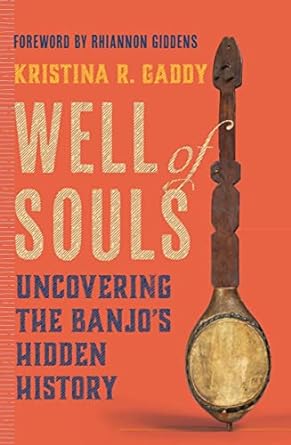
Well of Souls: Uncovering the Banjo’s Hidden History, by Kristina R. Gaddy. Foreword by Rhiannon Giddens
Well of Souls: Uncovering the Banjo’s Hidden History, by Kristina R. Gaddy
I was drawn to this book for two reasons. First, I needed to learn more about the history of the banjo because there is an early African-American constructed banjo in the historical novel series I am working on. In fact, a segment on the Public Broadcasting System’s “History Detectives” years ago about the early African-American banjos was one of two initial sparks that inspired me to write the novels I’ve been working on for more than a decade.
Second, when I saw that Riannon Giddens had written the foreword, I knew I had to read the book. If you have not discovered the musical talent of Riannon Giddens, please look for her music on YouTube and her CDs. My favorite concert of hers on YouTube is with Francesco Turrisi from October 4, 2019: https://www.youtube.com/watch?v=Ignhso0iv9U.
Since my last blog post
I continue to hone my skills at creating memes on Bookbrush.com to use for pins on Pinterest to publicize my writing. I enjoy doing it, but it consumes more of my time than I would like. I’m trying to create enough ahead each day to enable me to schedule at least one every day through the end of December when things tend to get hectic with holiday activities. I’d rather be writing than creating memes and pins, but it seems to go with the territory. No two days are the same, which keeps me motivated.
Until my next blog post
I hope you have at least one good book to read. I’m enjoying Dangerous Women, a political thriller by Mark de Castrique. It’s the second book in his Ethel Crestwater series.
Dangerous Women, by Mark de Castrique
Maybe it’s just me and/or the age I am, but it seems like there’s a lot of sickness going around. I wish you well.
It is seldom that a character in a book grabs me by the throat and won’t let me go, but that’s exactly what happened the moment I started reading Sold, by Patricia McCormick.
Sold, by Patricia McCormick
In case you don’t know, this is one of the most banned books in the United States. Knowing that makes me furious and heart-broken.
Sold, by Patricia McCormick was a National Book Award Finalist for Young People’s Literature.
This book is categorized as a YA (Young Adult) book. I think it should be required reading for “young adults” which includes teens. In fact, I think it should be required reading for ‘tweens.”
If a girl is old enough to be sold into the sex trade, by golly she is old enough to read this book!
I have blogged about book banning several times recently, and I will probably blog about it in the future. It is a practice I do not understand. It is a practice I abhor. It is a practice that, if left unchallenged, will destroy our democracy. Organizations such as Moms for Liberty are trying to take our liberty away under the guise of looking out for children.
Where I come from, you don’t look out for children by taking books away from them. If your narrow-minded self wants to take books away from your own children, you have the right to do that. However, you don’t have the right to take books away from all children.
According to PEN America, Sold, by Patricia McCormick is tied for the sixth most banned book in the United States. It is banned in 11 school districts in six states.
In Sold, Lakshmi, a 12-year-old girl in Nepal is sold by her stepfather. She is taken to India where she is locked in a brothel. She is tricked into thinking that if she works in the brothel long enough, she will eventually be able to pay off the “debt” she owes the madam.
This, of course, is a myth. It works sort of like the tenant farmer system in the United States. The farm owner keeps adding charges to the tenant’s account, so the tenant never gets out of debt. In Sold, the madam keeps adding charges for clothes, make up, electricity, etc. to Lakshmi’s account. Lakshmi thinks part of the money she is earning is going to her mother. She wants her mother to be able to replace the thatched roof on their house with a tin roof. Of course, none of the money she’s earning is being sent to her mother.
This book is written in a short pieces. Each piece gives the reader another glimpse into the miserable life Lakshmi endures.
There is a satisfying ending, in case you shy away from books that don’t resolve in a way you wish; however, most girls like Lakshmi do not experience a happy ending.
The author’s note at the end of the book gives the following statistics (among others) for the time of its writing (2006):
“Each year, nearly 12,000 Nepali girls are sold by their families, intentionally or unwittingly, into a life of sexual slavery in the brothels in India. Worldwide, the U.S. State Department estimates that nearly half a million children are trafficked into the sex trade annually.”
“It won’t happen to my child.”
If you don’t want your 12-year-old daughter to know there is such a thing as sex trafficking, that’s your prerogative. Bury your head in the sand and hers, too, while you’re at it.
That does not mean she won’t fall victim to this sickening crime one day.
Don’t you owe it to her to tell her there are dangerous people out there who are very charming — some are even women — but don’t have her best interest at heart? Just because she doesn’t know sex trafficking exists doesn’t mean she won’t learn about it the hard way.
Since my last blog post
I’ve worked to make my books more visible on Pinterest. Since a free workshop about Pinterest for authors offered by Bookbrush.com helped me realize that Pinterest is a search engine and not social media, I’ve tried to utilize the platform more than I have in the past to publicize my writing. Visit my boards and pins on Pinterest at https://www.pinterest.com/janet5049/.
I found another local independent bookstore that takes self-published books that are published by Kindle Direct Publishing on consignment! I hope to be able to announce in a future blog post that The Aunts in the Kitchen: Southern Family Recipes is available at Main Street Books in Davidson, North Carolina!
I continued to try to get back on Facebook, but there are several forces beyond my control working against me – including the iCloud. All this nearly six-month long saga started with a data breach at Windstream. I miss being able to publicize my blog, website, books, and short stories on Facebook.
Until my next blog post
If Sold is not on the shelf for circulation in your local library system, request that the system purchase it. That is exactly what I did. I hope it will soon be available in the Cabarrus County Public Library system.
Look for other often-challenged or banned books and make a point to buy them or check them out of the library. Together, we can make a statement louder than that of Moms for Liberty – just like voters across the nation did in last Tuesday’s local school board elections.
Spend time in person or virtually with friends and family, even if they have views that are different from yours. Try to find a way to engage them in conversation about those topics. Try to understand why they believe what they believe.
Last, but not least… remember the people of Ukraine and the Middle East who are victims of dictators, terrorists, and wars they didn’t ask for.
Being the first Monday in November, it’s time for me to blog about some of the books I read in October. Although October seemed to fly by, it also seems like a long time since I listened to the first book on my reading list for the month. Time is a steady yet elusive thing.
The First Ladies, by Marie Benedict and Victoria Christopher Murray
The First Ladies, by Marie Benedict and Victoria Christopher Murray
I liked the format of this novel, as it alternated telling the story of the friendship of Eleanor Roosevelt and Mrs. Mary McLeod Bethune. Thoroughly researched by the two authors who teamed up for this joint writing project, the book tells about many of the behind-the-scenes events, conflicts, and efforts to fight racism in the United States during the first half of the 20th century.
I listened to the book on CD. I only got midway through disc 7 of 12 before I decided I knew the jest of the story and had too many other books vying for my attention for me to finish this novel. The writing is engaging and the personalities of the two protagonists shine through on every page. It was just a little long for my liking just now.
I was glad that Mrs. Mary McLeod Bethune voiced that she had found racial discrimination in the northern states and not just in the southern states. It was obvious that Eleanor Roosevelt relegated the sin of racial discrimination to southern democrats. Mrs. Roosevelt’s presumption is a fallacy that still thrives in the United States today.
I was delighted that Mrs. Bethune’s college education at Scotia Seminary in Concord, North Carolina was mentioned at least twice in the first half of the book. Now Barber-Scotia College, the historically black college is on the verge of extinction as it has lost its accreditation and most of its students. Founded in 1867, it was the first historically black institution of higher education for women.
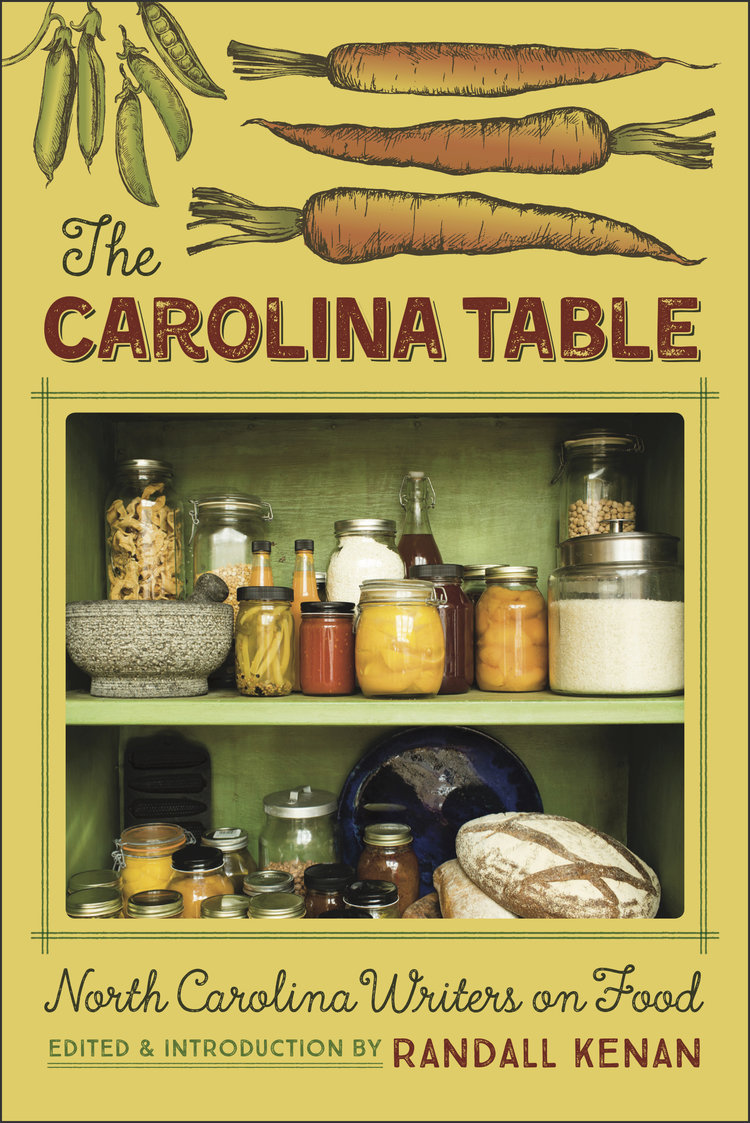
The Carolina Table: North Carolina Writers on Food
The Carolina Table: North Carolina Writers on Food, edited and introduction by Randall Kenan
This is a fun little 180-page book edited by Randall Kenan in which 32 writers with a connection to North Carolina wrote about their memories of food. Some wrote about a particular recipe they recalled from childhood, while others wrote about family traditions associated with a particular dish.
I enjoyed being able to pick up this book and read a story or two at a time when my reading time was limited.
The Bone Hacker: A Temperance Brennan Novel, by Kathy Reichs
The Bone Hacker: A Temperance Brennan Novel, by Kathy Reichs
The Bone Hacker is Kathy Reichs’ latest novel in the Temperance Brennan Series. This one is set on the islands of Turks and Caicos instead of the forensic anthropologist’s usual locations in Charlotte or Montreal. I sort of missed the familiarity of specific places and streets in Charlotte but, on the other hand, it was interesting to vicariously visit a very different setting.
I didn’t get into this story as much as I usually do with Kathy Reichs’ books, but I think I was just distracted by too many projects. I don’t want to leave a negative perception of the book.
Sold, by Patricia McCormick
Sold, by Patricia McCormick
I read one other book in October, but it deserves its own blog post. I plan to write about Sold, by Patricia McCormick next Monday.
Since my last blog post
I sent out my latest e-newsletter on November 2. You should have received it via email if you subscribed to it through my website (https://janetmorrisonbooks.com) before November 1.
If you have not subscribed, you missed reading about my “field trip” to Kings Mountain National Military Park, Kings Mountains State Park, and the cemetery at Bethany Associate Reformed Presbyterian Church near Clover, South Carolina. I love it when family history and American history are woven together!
Second Look Books in Harrisburg, NC hosted a Meet & Greet for my sister and me on Saturday afternoon. We got to chat with several long-time friends and we met two distant cousins. One of them came all the way from Winston-Salem just to meet us and thank us or the Morrison genealogy book, The Descendants of Robert & Sarah Morrison of Rocky River, we published in 1996! What a pleasant surprise!
Until my next blog post
Keep reading! Let children see you reading so they’ll see it as a pleasurable activity.
Value time with friends and family. A visit from cousins who live in New York City was wonderful yesterday. We picked up where we left off in July.
Remember the brave people of Ukraine and the people in the Middle East who are suffering due to terrorists.
Although September gave me 30 days in which to read, I had more books on my list to read than time allowed. Nevertheless, I enjoyed the three novels and the one nonfiction book I managed to squeeze into my schedule.
You Can Run, by Karen Cleveland
You Can Run, by Karen Cleveland
Karen Cleveland is a former CIA analyst. She writes spy thrillers now. You Can Run, like the other books of hers I have read, Need to Know (see my April 2, 2018 blog post: More March 2018 Reading) and The New Neighbor (see my October 10, 2022 blog post: Spy Thriller, WWI Novel, Nonfiction, and Historical Mystery Read Last Month are real page turners. When you read one of her books in bed at night, don’t plan on getting any sleep. You’ll have to read “just one more chapter.”
In You Can Run, the protagonist, Jill, works for the CIA. She is being blackmailed. To save the life of her young son, she does something illegal. She spends the rest of the novel looking over her shoulder. Saying she spends the rest of the novel “looking over her shoulder” hardly does the plot justice. One bad thing after another happens, as she and her family and others get pulled deeper into the spiral and they can’t get out. No matter what you do, do not under any circumstances read the “Epilogue” until you have finished reading the entire book, including the last chapter. The “Epilogue” will ruin the story for you. I didn’t see it coming!
The Wind Knows My Name, by Isabel Allende
The Wind Knows My Name, by Isabel Allende
I usually don’t enjoy novels that flip back and forth between protagonists, and when I got to page 67 in the large print edition of The Wind Knows My Name, I was so invested in Samuel Adler that I was quite jolted when a turned the page and found myself reading about a new protagonist.
But… Isabel Allende is a masterful writer, and I was soon just as invested in the little girl who illegally crossed the Rio Grande and into the United States on her father’s tired back. The story of that little girl took me directly to the Mexican-US border of today and the desperation the “illegal aliens” experience in their home countries. How desperate must they be to risk their lives to try to get themselves – or even only their children – into the United States?
And how desperate did Samuel Adler’s mother feel when she put her young son on a train to get him away from the clutches of the Nazis and to relative safety in England?
In The Wind Knows My Name, Isabel Allende weaves compelling stories about these individuals and then makes a connection between the characters. I recommend everything that Isabel Allende writes.
And on top of that, she is a very nice person. She donated an autographed copy of one of her novels to the Friends of the Harrisburg Library for our autographed book sale a decade or so ago.
Falling, by T.J. Newman
Falling, by T.J. Newman
Falling is T.J. Newman’s debut novel, and it’s a good one! My sister read it and recommended it to me and our book club.
I recently read that one of the keys to writing good fiction is to give the protagonist an impossible choice. Falling fits that perfectly. In a nutshell, a commercial airline pilot is forced to decide whether to crash the plane and save his wife and children, or not crash the plane and let his wife and children be murdered.
This novel takes you minute-by-minute through the scenario. There are red herrings and there is a surprise twist. The author is a former flight attendant, so she knows the inside of a commercial jet and protocols well.
What will the pilot decide to do?
According to her “About the Author” page on Goodreads.com, Universal Pictures is making a movie based on the novel.
The Author Estate Handbook: How to Organize Your Affairs and Leave a Legacy, by M.L. Ronn
The Author Estate Handbook: How to Organize Your Affairs and Leave a Legacy, by M.L. Ronn
I mention this book in case other writers out there are interested in its topic. By reading the book, I discovered that I have done some things right but I’ve overlooked other things I need to take care of before I die.
The author explains how an author’s estate is different from everyone else’s estate. As an author, you own “intellectual property.” You own copyrights that will live on for 70 years after your death. If those things are not properly addressed in your will, you are leaving a mess for your heirs.
I’m not just talking about published books here. If you blog, your blog posts are “intellectual property,” so you need to tell your heirs what you want done with your blog when you die.
Each chapter lists specific tasks you need to take care of, if you’re a writer. I highly recommend this book to writers.
Since my last blog post
Our first shipment of author copies of The Aunts in the Kitchen: Southern Family Recipes arrived and the book is now available at Second Look Books in Harrisburg, NC as well as on Amazon! Plans are being made to have a book event on November 4 at the bookstore! Stay tuned.
I got the new Covid vaccine and am happy to report I had no ill effects. Those people who insist on belittling Covid 19 have obviously not known someone who has died from the virus or been severely sickened by it. I’m growing weary of Covid jokes by the fortunate few who have escaped it or have not known someone who has or is suffering through it. I thought we had gotten beyond the jokes, but I learned differently last week.
Until my next blog post
Have you ordered my American Revolution e-ghost story? “Ghost of the Battle of Guilford Courthouse: An American Revolutionary War Ghost Story” is available from Amazon, along with my other books: https://www.amazon.com/dp/B0CH7JCP11/. Don’t let October slip past you without reading my ghost story!
“Ghost of the Battle of Guilford Courthouse: An American Revolutionary War Ghost Story,” by Janet Morrison
Have you ordered The Aunts in the Kitchen: Southern Family Recipes? I think it would be a wonderful present for a friend’s birthday or other special occasion, but it’s impossible for me to be objective. If you’re in the Charlotte area, it’s available at Second Look Books, 4519 School House Commons in Harrisburg. If not, you can find it at https://www.amazon.com/dp/B0CJLKFDPR/.
The Aunts in the Kitchen: Southern Family Recipes, by Janet Morrison and Marie Morrison
Don’t forget to subscribe to my e-newsletter at https://www.janetmorrisonbooks.com and receive a free downloadable copy of my southern historical short story, “Slip Sliding Away.”
Make time for your friends and family.
Remember the people of Ukraine and Israel. Terrorism cannot be tolerated.
Here it is, the first Monday in September. Where did the summer go? We still have some warm – probably even hot – days ahead, but school is back in session, today is Labor Day in the United States, and for all practical purposes, today marks the unofficial end of summer. I always hate to see it go, but that’s just me.
I read an assortment of books in August, and today I’ll tell you about them. I hope at least one of them will pique your interest. If you’ve read any of them, I’d like to know how you liked them.
The Paris Agent, by Kelly Rimmer
The Paris Agent, by Kelly Rimmer
I get excited when Kelly Rimmer writes a new book. She’s one of my go-to authors when it comes to historical fiction. The first novel of hers that I read was The Things We Cannot Say. I blogged about that novel September 9, 2019 (#BringBackOurGirls.) The next month I read Before I Let You Go (see my October 7, 2019 blog post: Thrillers and a Dark Novel I Read Last Month.)
I listened to Rimmer’s novel, Truths I Never Told You in March 2021, but I failed to blog about it after I finished it. I blogged about The Warsaw Orphan in my July 12, 2021 post, 4 Other Books I Read in June 2021. I read The German Wife by her last August and blogged about it on September 5, 2022 (Four of Eight Books Read in August 2022).
I didn’t realize I’d read six of Kelly Rimmer’s novels until I did a search of my blog posts. I guess you could say I like her writing.
I listened to The Paris Agent on CD from the public library. In her latest historical novel, Kelly Rimmer weaves a story involving two timelines. I usually don’t care for books that yank me back and forth between two different eras, but The Paris Agent was masterfully written and the format worked for me.
Noah Ainsworth was a British spy in France during World War II. In 1970, he is still struggling to make sense of his memories and the gaps in his memories caused by a head injury in the line of duty. His daughter, Charlotte, is determined to unravel the bits and pieces of his memory, official records, and memories of her father’s contemporaries.
The book takes the reader on a journey of questions, hope, love, misunderstandings, dead ends, and answers. As with Rimmer’s other novels, I recommend this one.
Darkness Visible: A Memoir of Madness, by William Styron
Darkness Visible: A Memoir of Madness, by William Styron
You might be familiar with the author William Styron. He wrote Sophie’s Choice, which was made into a movie. What you might not know is that he had a life-altering battle with severe depression.
Darkness Visible: A Memoir of Madness is the story of his depression. I have relatives who have and still are battling depression. It is a serious illness and deserves a more serious-sounding name. I have heard depression described by the people in the throes of their battles and I have read about it, but nothing has brought the wide scope of symptoms the disease can cast on a person’s mind and body like this book did.
Being a professional writer, Mr. Styron was able to express some of the things he endured with style and grace and carefully-chosen words. It is not a pleasant subject, but it is an illness that affects more people than we probably realize.
I encourage you to read this book, especially if someone you love is suffering with depression. Each case is unique, so the symptoms Mr. Styron had are not necessarily the symptoms your loved one has. But maybe reading this memoir will enlighten you and help you understand just a little of what your friend, co-worker, or relative faces every day as they try to put on a happy face and act like nothing is wrong.
Don’t ever belittle anyone who is depressed. Don’t ever say, “He is just depressed.” Don’t tell a depressed person to “just snap out of it.” Don’t ever minimize their suffering. Mr. Styron gives hope in the end. He got the professional help and medication he needed, and now he can look back on that horrible time and write about it.
Blowback: A Warning to Save Democracy From the Next Trump, by Miles Taylor
Blowback: A Warning to Save Democracy From the Next Trump, by Miles Taylor
I was reading this book on August 14, 2023 – the day the indictments came down from Fulton County, Georgia against Donald Trump and 18 others. The author, Miles Taylor, worked in the Department of Homeland Security in the Trump Administration. He hoped from the beginning that Donald Trump would “rise to the occasion” or that some adults would influence him. Neither happened.
Taylor thought by staying in the administration but publishing warnings under the pseudonym “Anonymous” he could bring enough exposure to the corruption in the Trump White House to prompt Congress and others in high positions of authority in the government to reign in the extremist radical ideas Trump espoused. It didn’t work out that way, and in October of 2020, Taylor went public and Trump was openly out for revenge.
Among other things, as “Anonymous,” Taylor had made it known that behind Trump’s back various Cabinet members were saying how incompetent he was.
Taylor explains in the prologue that “blowback” is the term used in national security circles “to describe unintended consequences, the failure to anticipate the repercussions when we make a choice.” Hence, the title of his book.
He says our generation of Americans will be known by future generations by the words, “They did not listen.”
He wrote the book to warn the American public about what is at stake if Trump is elected in 2024 or a more competent Trump-wannabe is ever elected. He addresses the various “guardrails” in place to safeguard our democracy and how they were weakened by the actions of Trump and his supporters.
I know what I write here won’t change any minds. Mr. Taylor probably knows his book won’t change any minds. The people who still support Trump apparently aren’t going to change their minds no matter what he says, does, or is convicted of. And they will go to the polls in 2024 and vote for him again even as they must hold their noses to shield themselves from the stench of his behavior – behavior they would not tolerate from their own family members or an employee.
If you want an inside look at what went on in the White House during the Trump Administration, you might be interested in this book. It is incumbent upon every American to pay attention to what has happened, what is happening, and what will continue to happen in the political arena. It is our responsibility. After all, ours is, to quote the Gettysburg Address, “…government of the people, by the people, and for the people….” We are the government.
Educate yourself before you vote. The depth of Trump’s incompetence illustrated by example after example in this book is mind blowing. From asking if hurricanes really spin to wanting to tell people in the path of a Category 4 hurricane to stay home and ride it out, to suggesting that fire trucks could be parked near the border with Mexico so cows could climb the ladders on the trucks to get over the border wall and graze along the Rio Grande…. You can’t make this stuff up.
Mastering Suspense, Structure & Plot: How to Write Gripping Stories That Keep Readers on the Edge of Their Seats, by Jane K. Cleland
Mastering Suspense Structure & Plot, by Jane K, Cleland
In this book about the craft of writing, Ms. Cleland starts out by remind writers to know their readers and give them what they want. She suggests that a writer look at six or more bestsellers in their genre and then analyze them based on such things as sexual content, violence, setting, and pace. She writes about the overarching thematic question posed at the beginning of a novel that must be answered by the end of the book. In terms of structure, she writes about linear and nonlinear structure, and she recommends that a writer select the best structure for the story they’re telling.
In the section of her book about creating suspense, she gives numerous examples of how that can be done. She says “The most common way to create suspense is to let your reader share a character’s anxiety.” It’s easier said than done, but she offers a lot of pointers.
In talking about settings, Ms. Cleland encourages writers to only include the things your point-of-view character sees, hears, touches, smells and only the kinds of places that character would go.
In the fifth chapter, Ms. Cleland writes about how to layer in two subplots. This was a helpful chapter for me, as I have a couple of subplots in one of the novels I’ve drafted. I hope I’ve woven them in appropriately.
She writes about isolating your characters. Each person reacts differently to be physically or socially isolated. She touches on red herrings and how to use them.
You get the picture. If you’re still learning the art and craft of writing fiction, I recommend Jane K. Cleland’s book.
Since my last blog post
I edited one of my short stories, created the cover for it on Bookbrush.com, finished formatting it on Atticus.io, and submitted it to Amazon for publication as an e-book only. It should be available today for $2.99. The name is “Ghost of the Battle of Guilford Courthouse: An American Revolutionary War Ghost Story.” I’m not a believer in ghosts, but please read the Author’s Note at the end of the story to find out what prompted me to write a ghost story.
Ghost of the Battle of Guilford Courthouse: An American Revolutionary War Ghost Story, by Janet Morrison
My sister and I finished proofreading the recipes in and wrote the introduction for The Aunts in the Kitchen: Southern Family Recipes. Getting the photography done for the front and back covers is next on our list. We hope to have the paperback and e-book available on Amazon by November.
I finished writing my September newsletter. I hope you’ve subscribed. It comes out every other month. When you visit my website, https://www.janetmorrisonbooks.com, you can click on the subscribe button and receive a free downloadable copy of my short story, “Slip Sliding Away.”
Until my next blog post
I hope you’re reading a book that is so engrossing you didn’t want to put it down to read my blog.
Don’t forget to order “Ghost of the Battle of Guilford Courthouse: An American Revolutionary War Ghost Story” on Amazon!
Make time for friends and family. They won’t always be here.
Remember the people of Ukraine, Maui, and Florida.
Although it’s already the seventh day of the month, it’s the first Monday of August. Therefore, it’s time for me to tell you about some of the books I read in July. I didn’t read as many books as I do some months, but I read one by Jennifer Coburn that I’m eager to tell you about.
Cradles of the Reich, by Jennifer Coburn
Cradles of the Reich, by Jennifer Coburn
If you follow my blog, you know my favorite genre is historical fiction. I happened upon the title of this book quite by chance and was prompted to investigate it. I checked it out of the public library and read it on my Kindle.
Cradles of the Reich, by Jennifer Coburn is a wonderful piece of historical fiction research and writing. It brought to my attention a secret baby breeding scheme conducted in Nazi Germany in the 1930s and 1940s. It started in 1935 and was called Lebensborn, which translates in English as Spring of Life.
In an effort to bring about the master white race Hitler dreamed of, young German girls and women were put in maternity homes where they had sex with German Army officers and other officials of the Third Reich.
There were at least 10 such Lebensborn homes were also where pregnant girls and young women who were not married were taken to be cared for and indoctrinated about the Reich, to be wined and dined, to be trained to be perfect German women, and to deliver their babies to be put up for adoption.
Cradles of the Reich follows the lives of three diverse girls and women whose paths cross in one of those maternity homes. The chapters move from one character to another, which at times pulled me out of the story.
A statement the author makes in her “Author’s Note” in the back of the book sent a chill down my spine as I immediately thought of the loss of autonomy women in the United States have experienced in 2023: “It is my hope that this novel about three German women provides fodder for discussions about the social environments that allow women’s bodies to be politicized and commoditized.”
Along those same lines, I found the following words in her “Dear Reader” section in the back of the book where she addressed questions early readers of the novel had asked her to be a chilling reminder of how it is incumbent upon us to stay vigilant: “Writing about man’s inhumanity to man was sobering…. But once I learned about this horrific program, I felt compelled to write about it because the most effective way to prevent the rise of fascism is to recognize its early warning signs. A key move in every dictator’s playbook is to control women’s reproductivity either by mandatory abortion or forced childbirth.”
I would add that it doesn’t have to be a dictator; it can be the US Supreme Court or a state legislature. Such government actions are insidious and usually presented under the guise of being for your own protection or for the protection of someone else.
Silver Alert, by Lee Smith
Silver Alert, by Lee Smith
I heard Lee Smith interviewed about her new novel on “Friends and Fiction” on Facebook on May 24, 2023. I love to hear Lee Smith’s buttery southern accent. It was hilarious to hear her tell what inspired the novel and the fun she had writing it.
The book is about a senior citizen in Florida taking a road trip with a much younger woman.
It hurts me to write my honest reaction to Silver Alert. There were so many “F-bombs” in the first two chapters that I decided to just return it to the library. The language distracted from the story and was excessive. I was very disappointed in Lee Smith’s latest novel. She is a better writer than this book demonstrates.
Granted, there are people out there who have such a limited vocabulary that they depend on expletives and F-bombs to communicate with others. Lee Smith is not one of those people.
52 Small Changes for the Mind, by Brett Blumenthal
52 Small Changes for the Mind, by Brett Blumenthal
I must be losing it! I read this book. It all sounded new to me. I took some notes. Last week I found I’ve read the book and taken notes not once but twice before. Perhaps three times will be the charm.
The book contains a lot of sound advice that ideally the reader will put into practice one small change every week for a year. I keep reading the entire book in a few days. That must be why it’s not sticking with me.
Books I read to help my writing:
The Idea: The Seven Elements of a Viable Story for Screen, Stage, or Fiction, by Erik Bork. This book is about how the idea is at the core of all writing.
The Idea: The Seven Elements of a Viable Story for Screen, Stage, or Fiction, by Erik Bork
Blog2Book, by Cathy Fyock. This book tells a blogger how to take their blog posts and turn them into a book. I’m not sure that will be the case for me. I write about too many different topics.
Blog2Book: Repurposing Content to Discover the Book You’ve Already Written, by Cathy Fyock
Since my last blog post
I enjoyed the discussions my blog post sparked last week. I’ll get off my soapbox now and let everyone calm down. Just don’t forget to keep you eyes and ears open for future developments as we try to keep our right to read.
I’ve also gotten back to work on a Christian devotional book I’m writing. The tentative title is I Need The Light: 26 Devotionals to Help You Through Winter. I hope to have it out by the fall of 2024.
Just when I thought I was getting the ramifications from Windstream’s data breach sorted out, last week I received a letter telling me that all my personal and medical data had potentially been compromised in a data breach at MOVEit and Maximus, a company that stores Medicare records. It took them two months to let the specific Medicare patients know. I guess I need to just accept it as part of life in the 21st century.
Until my next blog post
Keep reading everything you want to read. I hope you hurried through my blog post today because you have a book you’re eager to return to. I’m listening to The Paris Agent, by Kelly Rimmer.
June turned out to be a strange month of reading for me. If my blog post last week didn’t convince you of that, just wait until you read today’s post.
Yellowface, by R.F. Kuang
Yellowface, by R.F. Kuang
I heard R.F. Kuang interviewed about her new novel on “Friends and Fiction” on Facebook on May 24, 2023 – the same night Lee Smith was a guest. The New York Times called it, “a blistering satire about publishing.”
This novel might appeal more to writers than “normal” readers. It’s about two young women who barely know one another. One is an outrageously successful author, while the other on is living hand to mouth. When the successful writer chokes to death, the other writer steals her unfinished manuscript and gets it published under her name. No one will be the wiser… or will they?
One of the threads throughout the book is racism. Not the usual way we tend to think of racism: white versus black. The racism running through this book is white versus Asian.
There was an unexpected twist at the end of the book.
I Will Find You, by Harlan Coben
I Will Find You, by Harlan Coben
It had been a while since I’d read a Harlan Coben novel, so I decided to give his new one a try. I listened to it on CD. The nine discs last just a little more than 10 hours, so I was able to set aside time to listen to one disc per day.
In this novel, David Burroughs is wrongly imprisoned for killing his three-year-old son. But did his son really die? After five years in prison, David is determined to find his son.
Time Management for Writers, by Sandra Gerth
Time Management for Writers, by Sandra Gerth
I needed this! I have all the time in the world, and yet I don’t seem to get anything accomplished. This little gem of a book gave me some practical suggestions and a systematic way to organize my time. I read it the first week in June, so I’ve had almost month to work out some new scheduling ideas. I say “almost a month” because I spent five days in Georgia to attend the wedding of one of my great-nieces.
The book addresses such time killers as email and social media and recommended that those things only be checked twice a day. It suggested “bundling” similar tasks such as working on the content for several blogs on the same day, selecting the photographs to illustrate those posts another time or day, and scheduling the blogs another time.
I’ve always given myself goals for when to complete certain tasks involved in writing a book or short story, but this book was a strong reminder that I need to be serious about those “deadlines” and be accountable to someone else for meeting those goals.
If you feel overwhelmed, this book might help you even if you aren’t a writer.
Grow Your Own Herbs: The 40 Best Culinary Varieties for Home Gardens, by Susan Belsinger and Arthur O. Tucker
This is a book I checked out from the public library to look for some specific information I need for the historical novel I’m writing. I decided to include it in today’s blog post because some of my readers might be interested in the book.
I you have any interest in growing herbs and using them in your kitchen, I recommend this book. It contains detailed information for growing, harvesting, and using 40 herbs. It includes recipes for herb butters, pastes, oils, and vinegar infusions.
The 180-page section about those 40 herbs is beautifully illustrated and organized in a way that makes it easy to find specific information you’re looking for. It made me wish I could grow all 40 of them! Unfortunately, I don’t have much of a green thumb when it comes to growing herbs.
Three books I won’t elaborate on because I read them for research purposes:
The Ultimate Guide to Old-Fashioned Country Skills, edited by Abigail R. Gehring
Edible Paradise: How to Grow Herbs, Flowers, Veggies and Fruit in Any Space, by Vera Greutink
How to Write a Series: A Guide to Series Types and Structure plus Troubleshooting Tips and Marketing Tactics, by Sara Rosett (Kindle) – This was a second reading of this book. I read it the first time in December 2021 and wrote about it in my January 3, 2022 blog post, Books Read in December 2021.
Books I didn’t finish reading in June and why:
Loyalty, by Jodi Picoult
I made the mistake of requesting this novel on CD from the public library. I eagerly popped the first disc into my CD player and settled back to enjoy another Jodi Picoult novel. Unfortunately, right off the bat, the narrator in his Italian accent (which should have been – and maybe was – a good match for a story set in Sicily) immediately read a list of the characters in the book along with their occupations or how they were related to the other characters.
After listening to a seemingly endless cast of characters whose names I’d never be able to understand or remember, I stopped the CD before getting to the first chapter.
I should have counted the characters. I’m guessing there must have been 20 or so.
Reading the novel might be easier than listening to it, but I don’t plan to try.
The Castle Keepers, by Aimie K. Runyan, J’nell Ciesielski, and Rachel McMillan
This book is a collection of three novellas written by Aimie K. Runyan, J’nell Ciesielski, and Rachel McMillan. When I first read about the book, I was under the conception that each author wrote one novella, and perhaps that’s true. My surprise, upon getting the book from the public library was to learn that it is not revealed which author wrote which novella in the collection.
The book follows one family. The first novella takes place in 1870. The second novella is set in 1917, and the last one is set in 1945. Most of the reviews I read mentioned that the first two novellas were better than the third one.
Due to the small print and my attention being pulled to historical research, I ended up returning this book to the public library unread. Maybe I can give it another try at a later date.
The Lost English Girl, by Julia Kelly and The Midwife of Auschwitz, by Anna Stuart
I returned these two historical novels to the public library after realizing I wasn’t going to have time to read them, even though the Julia Kelly book was large print. Maybe another time will work for me to read and enjoy them.
Since my last blog post
I was able to send out my Janet Morrison Books July 2023 Newsletter after overcoming some technical issues. I hope you received your issue via email. If you have subscribed, please visit http://www.janetmorrisonbooks.com and click on the “subscribe” button. As a bonus, you’ll receive a downloadable copy of “Slip Sliding Away: A Southern Historical Short Story” I enjoyed writing.
Yardwork keeps calling my name, but with the heat index of around 100 to 106 degrees F. nearly every day, I have to pick and choose the time of day and length of time I work. Progress has been at a snail’s pace.
I’ve been working on several historical short stories.
Until my next blog post
I hope you have a good book to read – one that will whisk you away from the stresses in your life, entertain you, educate you, and give you a new perspective. I’m reading Cradles of the Reich, an historical novel about part of Hitler’s plan for creating a master race, by Jennifer Coburn.
Cradles of the Reich, by Jennifer Coburn
Spend time with friends and family. Remember the treasure they are, even if they don’t agree with you about politics.
I love the months in which I get to read so many books that it takes me more than one blog post to tell about them! May was one of those months. Today’s post is about the last two books I read in May. I hope at least one of them will appeal to you.
One Thought Scares Me, by Richard Dreyfuss
In One Thought Scares Me, Richard Dreyfuss presents his thoughts about how democracy has been eroded in the United States by the removal of the study of government (or civics) in our public schools. He pinpoints this quiet removal as happening 50 years ago, so it was after I graduated from high school.
One Thought Scares Me, by Richard Dreyfuss
I remember hearing a few years ago that in North Carolina the high school American History curriculum would begin with the Presidency of George Washington. I’ve wondered since then how the Presidency of George Washington would make any sense to a student who didn’t know that it followed an American Revolution.
If an American knows nothing about the Declaration of Independence – why it was written, who wrote it, when it was written, who we were declaring our independence from — and most importantly, how the signers of it risked their very lives by signing it – then they will not know what political conditions the early American settlers lived under.
If an American knows nothing about the American Revolution – why it happened, when it happened, who we were rebelling against, etc., then that American will not value what it means to be an American citizen. If they don’t know what those who came before us suffered through just to gain the right to vote, they will not value their right to vote. They will feel no obligation to vote.
If an American knows nothing about the Bill of Rights – why those ten rights were spelled out in the United States Constitution and what they are – then they won’t know when a US President or the US Congress or their State Legislature is taking away one or more of those rights.
If an American knows nothing about US history, they won’t know that July 4th is more than just a day off from work when you eat burgers and hotdogs and shoot off fireworks.
In order to be a good citizen of the United States of America, you must know the history of the country. As Mr. Dreyfuss points out in his book, it was the system of public education in the United States in the early 1800s that made it possible for every child to learn to read and write. It made it possible for every child to learn the Pledge of Allegiance, to learn about colonial times, to learn about the American Revolution, to learn about the ugliness of slavery, to learn about the Civil War, and to learn about all the wars American have fought around the world in the name of freedom.
My two-cents’ worth: If you take that out of the public schools – and if you disrespect public education and public school educators the way the North Carolina General Assembly continues to do – then you lose the level playing field on which our country was built and you lose what binds us together as a nation.
Seeking the Historical Cook: Exploring Eighteenth-Century Southern Foodways, by Kay K. Moss
Reading this book after taking the Open Hearth Cooking Class at Hart Square Village on May 20 was very beneficial. The hands-on class was invaluable to me in writing historical fiction, and the book made a lot more sense to me having had the class.
Seeking the Historical Cook, by Kay K. Moss
The book covers how to interpret historical “receipts” as recipes were called in the American Colonial Era, and the importance of incorporating an 18th century mindset when using the old recipes. Ms. Moss and her books are a goldmine for anyone doing research on frontier life in the Carolinas.
This book is illustrated and very detailed in cooking instructions, including the importance of getting the hot coals just right and judging the heart, cooking/baking time, and always having hot water on-hand.
Cyberspace fiasco since my last blog post
To say it was a frustrating week would be an understatement. My email service was disrupted for about 24 hours Tuesday into Wednesday. My Facebook account was hacked on Thursday. My LinkedIn account was hacked on Saturday. My Evernote account was hacked on Sunday.
Would be writers like me are told we must have a vast social media presence if we want to ever get published. We must have followers in the thousands and tens of thousands.
After what I’ve been through over the last few days, I’ve decided to remove myself from Facebook, LinkedIn, and Evernote. Each of those accounts had unique passwords. It bothers me that hackers can take control of my stuff without any problem; however, when I try to get an account back I must provide all sorts of documentation to prove that I am me. Life is short. I don’t foresee ever having time again for Facebook, LinkedIn, or Evernote. I’ll miss some things about Facebook, but the other two won’t be missed at all. Just for good measure, I’ll no longer be on Twitter either. It was a hassle anyway. I won’t miss it a bit.
If not having 40,000 followers on Facebook, Twitter, LinkedIn, etc. means I’ll never get my novels published, I guess that’s the price I’ll pay.
If you receive notification via Facebook when I’ve posted a blog, you’ll no longer receive those notifications because as of last Thursday, I have no control over my Facebook account. In fact, you won’t be notified about today’s post. Someone else, apparently in Beijing, has control of my account now. Facebook indicated it would take them 48 hours to verify that I am Janet Morrison. It’s been longer than that, so I guess they’re still just playing games with the hacker in Beijing. I regret that I didn’t get to tell my acquaintances on Facebook goodbye.
My blog is protected through a whole different server, etc., so I plan to continue to blog every week and treasure the lifeline it has become.
I envy Harper Lee and her manual typewriter. She got to just hide away in Alabama and write To Kill a Mockingbird with no worries about cyberspace. There’s something appealing about that era.
Speaking of birds… the three neighborhood cats must have miserable home lives because they want to stay in our yard all the time stalking our wild birds. In my spare time last week, I had to construct a barricade to try to prevent the cats from getting to the nest of baby Carolina Wrens in the hanging basket on my porch.
I hope you have at least one good novel or non-fiction book to entertain and educate you.
With the smoke from the wildfires in Canada dissipating, we on the east coast of the US look forward to clear skies and some sunshine.
In case you’re planning a trip to Great Smoky Mountains National Park, Cherokee, or the Blue Ridge Mountains this year, be sure to pick up a copy (paperback or for Kindle) of my vintage postcard book, The Blue Ridge Mountains of North Carolina. I packed as much natural history and human history into the postcard descriptions as Arcadia Publishing would allow. I think you’ll find it entertaining and painlessly educational.
The Blue Ridge Mountains of North Carolina, by Janet Morrison
Don’t forget the people of Ukraine. Believe me… I know my life — even with all my cyberspace problems — is easy compared to their suffering. I truly know that.
I’ve already blogged about two of the books I read in May (The Bill of Obligations, by Richard Haass on May 8 and Why We Sleep: Unlocking the Power of Sleep and Dreams, by Matthew Walker, Ph.D. on May 22.) That leaves me five more books to blog about today and next Monday.
As I’ve said before, I’m not a book reviewer. I just enjoy sharing my thoughts and takeaways from some of the books I read. In doing so, I hope I’ll introduce you to a book or two you’d like to read.
The Soulmate, by Sally Hepworth
If you follow my blog, you know I’m a fan of Sally Hepworth’s novels. She’s one author from whom I eagerly await her next release. Of course, then I’m sad because I know I’ll have to wait perhaps a year for her next book.
The Soulmate, by Sally Helpworth
I listened to The Soulmate on CD. Pippa, Gabe, and their two young daughters live on a cliff on the coast of Australia. Their backyard turns out to be a popular place for people to commit suicide, but Gabe has a gift for “talking people down.” But one day a woman is teetering at the edge of cliff and things go very, very wrong.
Who is the woman? Did she jump or did Gabe push her?
Over the course of the book, you learn how some of the characters know each other, unbeknownst to Pippa. Bipolar Disorder is a contributing factor in why one character behaves the way he does.
It is a story of loyalty, trust, turning a blind eye, what can happen when we aren’t honest with those we love, and how you can’t be responsible for a loved one’s actions – no matter how much you love them.
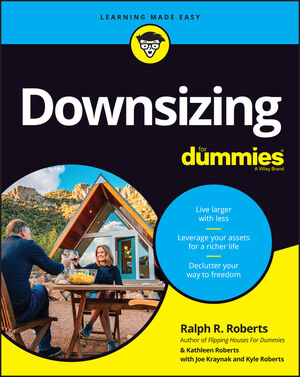
Downsizing for Dummies, by Ralph R. Roberts
Don’t laugh. If you’re fortunate to live long enough and accumulate enough stuff, this could happen to you. I read this book with my niece and nephew in mind. Someday they’re probably going to be left to pick up my pieces, and I want to make that task as painless and quick as possible.
Downsizing for Dummies, by Ralph R. Roberts
This book helps you evaluate your current situation and brainstorm about what kind of future you’d like to have if given that choice. Sometimes an illness or event can throw the best laid plans to the wind, but it’s best to have a plan in mind and make as many preparations as possible for the last phase of your life.
Readers of my blog will remember that I went through a decluttering phase last year. I had good intentions of continuing that process, but I gradually lost my enthusiasm. Hopefully, reading this book will be the impetus I need to get back on track getting rid of the things I no longer need – the things my niece and nephew shouldn’t have to deal with when I’m gone or incapacitated.
The book recommends that you take one room – or one closet – at a time and evaluate each item. Have separate boxes for “throw away,” “donate,” “sell,” and “give away.” Everything else (which theoretically will be very few things) fall into the “keep” category. They should be organized and put back in the closet or room.
I know… easier said than done. I was raised by parents who were young adults during The Great Depression, so I grew up with the mantra, “Don’t throw anything away because you never know when you might need it.” It was more an unspoken rather than a verbalized way of life, and it’s difficult to stop such old habits.
Downsizing for Dummies is really a common-sense book. It also contains some basic information about wills, trusts, and how long certain documents should be saved or how some of them can be scanned and stored in electronic form.
Secret Lives, by Mark de Castrique
Secret Lives, by Mark de Castrique
This is a spy thrilled by North Carolina author Mark de Castrique. In Secret Lives, Ethel Crestwater operates and boarding house that caters to government agents. One of her boarders, Jonathan, is murdered in her front yard.
Since 75-year-old Ethel has a background in spying, she jumps right in to solve the crime. Her sidekick is her double-cousin, Jesse, who attends college. His expertise is computers.
It turns out Bitcoins are involved and there’s a lot more going on than murder. No one is without suspicion. There are red herrings and it’s hard to tell the good guys from the bad guys.
Mr. de Castrique masterfully weaves the story and ties up all the loose ends.
Since my last blog post
In last Monday’s blog post, I asked for feedback about the possibility of my writing short stories about some of the characters in my planned historical novels. I appreciate all the feedback I received. It gave me some things to think about as I proceed with my plans. Thank you to each of you who responded on my blog and on Facebook.
Until my next blog post
I hope you have lots of good books to read!
Spring weather is finally here in North Carolina! Enjoy the season, wherever you are.
Does this sound like an odd topic for a blog about my journey as a reader and a writer? Please keep reading.
Just as reading The Bill of Obligations, by Richard Haass, prompted me to dedicate an entire blog post to that one book a couple of weeks ago Taking a look at The Bill of Obligations, by Richard Haass, I’ve since read a book that deserves its on post: Why We Sleep: Unlocking the Power of Sleep and Dreams, by Matthew Walker, Ph.D.
Why We Sleep: Unlocking the Power of Sleep and Dreams, by Matthew Walker, Ph.D.
This is a fascinating book! Who wants to read about sleep? We all should. Most of us don’t get it right. I’ll just hit on some of the highlights or items I found most interesting – or frightening – in the book.
Studies have proven that humans need eight hours of sleep a day. The last two hours of our sleep is when our brains get a memory boost. When we jump start our day by getting up after just six hours of sleep, our concentration and physical limits suffer. Getting less than six hours of sleep is equivalent of going without sleep for 24 hours.
Dr. Walker states, “You do not know how sleep-deprived you are when you are sleep deprived.” Driving while sleep-deprived is as dangerous – or even more dangerous – than driving while impaired by drugs or alcohol. Falling asleep at the wheel for two seconds at 30 mph, your vehicle can completely change lanes. An alcohol-impaired driver’s reactions are slow, but a sleeping driver has no reaction.
Dr. Walker says we should not fool ourselves into thinking we can force ourselves to stay awake while driving by turning up the music or opening a car window. Those – and all other such coping practices we’ve probably all used more times than we want to admit – are all myths.
He says we are also only kidding ourselves when we think we can “catch up” on our sleep on the weekend. If we’ve lost sleep during the week, it takes more than three nights of eights of sleep for our brain to get back to the level of performance it had early in the week.
Although professional athletes team decision-makers can be told how important it is for players to get eight hours of sleep a day in order to be at peak physical and mental performance, few athletes get the sleep they need. Furthermore, getting adequate sleep after a game is even more important than it is prior to a competition because sleep is necessary for a body to recover from the toll a game takes on a body.
Also, Dr. Walker says that getting adequate sleep for several nights or a week prior to getting an influenza vaccine is necessary for a person to get the full immune benefits from the shot.
The second category of findings that grabbed my attention is that a lack of sleep is fast being recognized as a key factor in whether a person will develop Alzheimer’s Disease. He cautions that sleep is not a “magic bullet” against Alzheimer’s Disease, but there are some interesting associations.
A study found that those people with the most amyloid deposits in the frontal part of the brain also had the least deep end-Rem sleep and, therefore, had the least sleep state in which new memories are cemented.
The lymphatic system sanitizes the brain during sleep. Amyloid protein is removed – as well as tau – in this process which takes place in the last two hours of an eight-hour sleep cycle. Amyloid and tau are associated with Alzheimer’s Disease. This becomes a vicious cycle if you’re not getting enough deep sleep: more amyloid and tau build up leads to Alzheimer’s Disease, which leads to more amyloid and tau buildup, which leads to worsening of Alzheimer’s Disease, etc.
Dr. Walker addresses those individuals who claim they can get along well – even perfectly – on as little as four or five hours of sleep a day. He says they are only fooling themselves. He points out that US President Ronald Reagan and British Prime Minister Margaret Thatcher both made such claims. They both ended up with Alzheimer’s Disease.
The book also talks about sleep and its relation to cancer, cardiovascular disease, diabetes, and obesity. He says, “Sleep is the bedrock for health.” Sleeping less than six hours a day increases one’s chances of heart trouble by 400%.
The third area of study explained in the book that struck a chord with me was the section about melatonin, electric lights, LED lights, and the short-spectrum blue lights given off by our electronic devices.
The advent of the electric light bulb enabled humans to change night into day in many respects. By doing so, we’ve forced our naturally-made melatonin (which signals our bodies that it’s time to start winding down because it’s getting dark and it’s time to go to sleep) to be delayed by several hours.
Dr. Walker warns of the harm looking at an electronic tablet late at night is doing more damage to our sleep patterns than we realize. If we look at a tablet until 11:00 pm and then go to bed, our natural melatonin might not kick in for two or three more hours instead of when it should have kicked in – say around nine or ten o’clock.
Have I gotten your attention?
I hope I have hit on some things that made you stop and think. Do you get adequate sleep?
I don’t. I haven’t had a night of restorative sleep since I became ill with chronic fatigue syndrome in 1987. My circadian rhythm is way out of rhythm. I paid for a number of appointments with a sleep specialist a few years ago. Dr. Walker’s book reiterates everything she told me. She told me to dim the lights for 90 minutes before going to bed, to keep my distance from a TV during that time, and to not under any circumstances use the computer or my tablet before going to bed.
The instructions Dr. Daley gave me were tough, but they worked. Eventually, after working on my bad habits for months, I was able to usually go to sleep by 1:00 a.m. instead of 3:00 or 4:00 a.m. I gradually fell back into old habits, though, and now I rarely fall asleep before 2:00 a.m. It’s a daily battle for me to fall asleep. Once I’m asleep, it’s equally as difficult to wake up.
Listening to Dr. Walker’s book – parts of it several times – has reminded me about the damage I’m doing to my health – to my brain, heart, and other organs – in the short term and in the long term.
It won’t be easy, but I must once again train myself to stop sabotaging my health.
I don’t expect or even aspire to ever being someone who goes to bed by 10:00 p.m. so I can wake up refreshed by 7:00 a.m. My physical maladies will never allow me to have restful sleep, but some of my late-night habits aren’t helping matters.
I need to get back to the light dimming practices, etc. that Dr. Daley recommended so I’ll at least have a chance to get eight hours of sleep every day.
Since my last blog post
Being a writer of historical fiction gives me excuses to do things I wouldn’t otherwise do. If I’m going to have characters in my 18th century novels cooking in a fireplace, I need to know what that was like. I spent the day on Saturday at Hart Square Village near Vale, North Carolina, learning how to cook over an open fire in an 1800s kitchen (which wasn’t easy after only three hours of sleep!).
If you want to hear about my adventure, sign up for my newsletter by visiting my website (https://www.janetmorrisonbooks.com) and clicking on the “Subscribe” button. I’ll write about Saturday’s experience in my Janet Morrison Books Newsletter in July. It was quite am enjoyable day, but I was happy to come home that afternoon to my electric kitchen appliances!
Until my next blog post
I hope you have a fascinating book to read. Please consider reading Dr. Walker’s book, if you tend to not get a full eight hours of sleep every night.


















 Janet's Writing Blog