Taking a look at The Bill of Obligations, by Richard Haass

Once in a while I come across a book that hits on so many points of importance that I decide to devote an entire blog post to it. The Bill of Obligations: The Ten Habits of Good Citizens, by Richard Haass, falls into that category.

The Bill of Obligations: The Ten Habits of Good Citizens, by Richard Haass

Dr. Haass is president of the nonpartisan Council on Foreign Relations. A diplomat and policymaker, he served in The Pentagon, State Department, and White House under four presidents – Democrats and Republicans.

Here’s a quote from the book jacket: “As Richard Haass says, ‘We get the government we deserve. Getting the one we need, however, is up to us.’ The Bill of Obligations gives citizens across the political spectrum a plan of action to achieve it.”

In the chapter titled “Rights and Their Limits,” Dr. Haass states that the aim of his book “… is to focus on another, often overlooked dimension of citizenship. I am speaking here of obligations, of what citizens owe one another and the country,” and not the rights of individuals. The book focuses on what citizens should do, not what they are required to do.

Dr. Haass draws a distinction between responsibilities and obligations. Responsibilities can be shirked. He says, “What makes obligations so important is that the ability of American democracy to endure and deliver what it can and should to its citizens depends on their being put into practice.”

He points out that, “Placing obligations at the core of citizenship is necessary because the protection and promotion of political and economic rights inevitably lead to disagreements.” He likens obligations fueling a democracy to the gasoline that fuels an engine.

Dr. Haass maintains that democracy in the US “has come to focus almost exclusively on perceived rights and is breaking down as a result.”

This book was being written during our time of transition from the Trump Administration to the Biden Administration, and the “peaceful transition of Power” enjoyed by the US for more than 200 years was in question. He wrote, “What we don’t yet know is whether what happened in late 2020 and early 2021 was an aberration or a precedent.”

Although some Americans have predicted that we’re heading for a second civil war, Dr. Haass is of the opinion that the more likely scenario is something similar to “The Troubles” in Northern Ireland where paramilitary groups target public places frequented by those people they oppose. Unlike a civil war, such violence has no set beginning and no set end because no one is in charge.

Dr. Haass reminds us that democracy is difficult. It requires informed participation from its citizens. From its leaders “it asks for good faith and restraint, and a willingness to put the collective interest before politics, party, or personal gain.”

My take on that

In my opinion, we’ve lost all of that. Too many people refuse to watch the news on TV “because it’s all bad” and few people read a newspaper now or seek out alternative news sources such as National Public Radio. Too many people say they aren’t interested in politics. It’s too easy to just say all politicians and government employees are bad people or lazy.

I’ve worked in the business world and in the government. It was my experience that government employees were more dedicated and conscientious than the ones I worked with in the business world. Let’s just stop jumping on the bandwagon of throwing everyone and everything associated with our democracy “under the bus.”


Back to Dr. Haass’ book

Dr. Haass writes about how technology has changed politics in an important way. It happened without our even being aware. Whereas political parties used to have some control over who ran for office, now anyone with enough money and technical communications savvy can run for office.

Extremists can rally vocal followers and spread their views (and their lies) through social media in ways unheard of or imagined just a couple of decades ago. The person with the loudest voice gets the attention, even if that person holds narrow or extreme views.

The book talks about how, like me, the author grew up in the 1950s and 1960s. We were taught in school that America was “a melting pot.” More and more, though, Dr. Haass says instead of a melting pot, we’re “a loose collection of separate pots” now. We live in “Red” states or “Blue” states, and few live in “Purple” states. There are divisions on every turn.

He goes on to write about history, values, and obligations not being taught in school.

The second part of Dr. Haass’ book addresses what he calls The Bill of Obligations. He writes about what he means by each one, but I’ll just list them for you here:

  1. Be Informed
  2. Get Involved
  3. Stay Open to Compromise
  4. Remain Civil
  5. Reject Violence
  6. Value Norms
  7. Promote the Common Good
  8. Respect Government Service
  9. Support the Teaching of Civics
  10.  Put Country First

Dr. Haass’ Conclusion

Quoting from the “Conclusion” chapter of the book: “The central argument of this book is that American democracy will endure only if obligations join rights at the core of a widely shared understanding of citizenship.” It won’t happen overnight, but the rewards will be reaped years from now.

Dr. Haass proposes that we turn our attention to making the ten obligations a priority because all the “hot button” issues vying for our attention will not be solved or resolved if they aren’t debated in a vibrant democracy.

In the end, Dr. Haass sounds the alarm: “The reality that January 6, and the subsequent revelations about efforts to impound voting machines and discount legally cast ballots, has failed to shock the body politic into its senses, has failed to stir us into action to protect and preserve this democracy, challenges the conventional wisdom that crises are automatic precursors of change. We get the government and the country we deserve. Getting the one we need, however, is up to us.”

My Conclusions

Regardless of your political leanings, I hope you’ll take the opportunity to read The Bill of Obligations. There’s much food for thought in this small book. My hope is that reading it will prompt each of us in the US to be better citizens and more-informed about our democracy.

For the most part, I agree with Dr. Haass’ Bill of Obligations. I’m not as optimistic as he is, though. I recently said something to a university sophomore about January 6. She didn’t know what I was talking about!


Since my last blog post

I’ve been diagnosed as having bronchitis and asthma. Instead of sending out my newsletter on Monday, I finally got it together and emailed to my subscribers on Thursday. I’ve fallen woefully behind in reading the posts by the bloggers I follow.

My illness forced me to miss an author event by John Hart. I didn’t think Mr. Hart should have to compete with my hacking and coughing.


Until my next blog post

I hope you have a good book to read.

Don’t take good health and supportive friends and family for granted.

Remember the brave people of Ukraine.

Thank you for dropping by my blog.

Janet

Some of the Books I Read in April 2023

April was a busy month, but I found time to read a variety of books. As is my habit, I’ll take the opportunity of the first Monday in May to blog about what I read in April. I hope you’ll find a book or two of interest.


Time’s Undoing, by Cheryl A. Head

Time’s Undoing, by Cheryl A. Head

This new novel alternates between the mysterious death of Robert Lee Harrington in 1929 and his journalist great-granddaughter’s persistent search for answers in 2019. I don’t usually enjoy novels written in alternating timelines, but this one worked.

Mr. Harrington is a master craftsman in carpentry in Birmingham, Alabama in 1929. A Black man, he is seen as too flamboyant by the white population. He takes pride in his work and his nice car. He presses his luck and, when he is in the wrong place at the wrong time, things go terribly wrong.

Harrington’s great-granddaughter, Meghan McKenzie, comes along 90 years later. She’s a reporter for the Detroit Free Press. In conjunction with working on a Black Lives Matter report, Ms. McKenzie decides to go to Birmingham to try to uncover the details of her great-grandfather’s death.

The danger McKenzie is in escalates the closer she gets to the ugly truth.

To be honest, I bristled two or three times when McKenzie made blanket statements about white southerners. I was, in fact, tempted early on to stop reading the book; however, I’m glad I stuck with it. Perspective is everything, and I can’t expect the young black reporter from Detroit to see things the way I do.

In fact, it would be unrealistic. I think it’s human nature for us to make blanket statements about people who don’t look like we look or who live in different regions (or countries) from where we live. Assumptions are made about the South and white southerners. Likewise, southerners make assumptions about people who live in other parts of the country.

The deeper I got into the novel, the more I was drawn into the characters and the story. I’m not a fast reader, but I read the second half of the book in two days because I couldn’t wait to see what McKenzie would find out and if she would survive to tell her great-grandfather’s story.


Code Name Sapphire, by Pam Jenoff

Code Name Sapphire, by Pam Jenoff

In this historical novel, Pam Jenoff pulls bits and pieces from World War II history in Europe and weaves a story that will keep you on the edge3 of your seat.

Micheline heads the fictitious Sapphire Line in the resistance in Belgium. The network, whose mission is to get downed Allied airmen safely o9ut of German-occupied Belgium, is loosely based on or inspired by such real operations as the Comet Line.

Micheline’s brother, Matteo, is heavily involved in the Sapphire Line. He is still in love with a woman from his past. Will they reconnect even during the war?

Hannah is a Jew who escaped from Nazi-occupied Belgium once, but the ship she is on with other refugees is turned away from the harbor in Havana. Is she returned to Belgium? Does she work with the Sapphire Line? Does she make Matteo forget about his long-lost love?

Lily is Hannah’s cousin. Lily is the only family Hannah has to turn to for help while she tries to figure out how to escape to America.

But, as in all good fiction, nothing goes as planned. Everything that can go wrong seems to go wrong.

Who will betray friends or relatives? Who will survive? You just might be surprised!


The Last Carolina Girl, by Meagan Church

The Last Carolina Girl, by Meagan Church

The author of this novel is an editor I found last October on Reedsy.com. Being from North Carolina, the title grabbed my attention. I pre-ordered the book to help support this author. The book was released on March 7, 2023, but I didn’t get a chance to read it until April.

(Rule #1 for supporting a new book:  Review it as soon as it is released to boost sales and attention for the book. The first 30 days after a book’s release is the most important time to support it and its author as far as the Amazon algorithms are concerned.) My apologies to Meagan Church for missing this window of opportunity. I really need to do better.

Back to the book… Leah Payne is a 14-year-old orphan from Supply in Brunswick County, North Carolina. The neighborhood couple who take her in try to do the best thing for her… or do they? Arrangements are made and she is taken to Matthews in Mecklenburg County, North Carolina. She dreams of a foster family there who will love her, perhaps even provide for her a bed and bedroom of her own.

But when she arrives in Matthews in 1936, she doesn’t receive the welcome she is expecting.


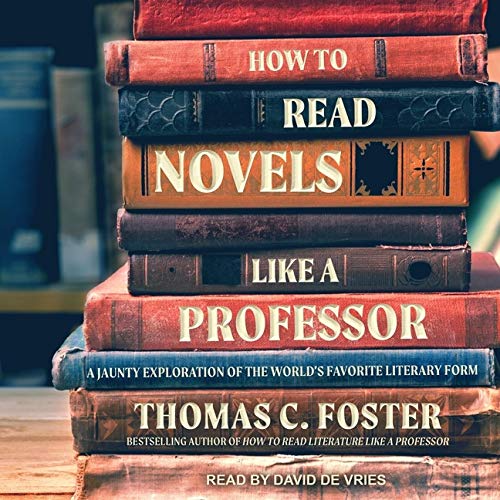
How to Read Novels Like a Professor: A Jaunty Exploration of the World’s Favorite Literary Form, by Thomas C. Foster

How to Read Novels Like a Professor, by Thomas C. Foster

The title intrigued me. As I read the first four chapters, I took some notes. There were a number of succinct statements about writing.

There was insight about how important the first sentence, first page, and first chapter are if an author wants to snag the interest of a reader.

The author set forth some humorous “laws” of writing, including “The Law of Bogus Locales,” “The Law of Look Who’s Talking,” and “The Law of Narrative Unreliability.”

Another example is “The Law of the Conservation of Character” which the author explained as “Thou shalt not burden the punter with needless character development.” He went on to translate that as follows: “If fiction writers are any good, they only tell you as much as you absolutely need to know.”

By the time I’d read the first half of the book, I found myself skipping pages. I decided it’s just possible that I don’t want to read novels like a professor. I want to read them as a reader.


The Light We Carry: Overcoming in Uncertain Times, by Michelle Obama

The Light We Carry, by Michelle Obama

I listened to this book on CD. It was read by the author, which made it extra enjoyable. This is a book of common sense and encouragement. Mrs. Obama talks about her childhood and how her parents instilled in her and her brother the merit in hard work and the value of a dollar. They instilled in the two children the value of standing up for yourself and your beliefs. She talks about the value of friendships and family. Those are the important things in life. She talks about always trying her best and often being criticized and misconstrued.

People who don’t approve of President and Mrs. Obama probably wouldn’t like this book, but they probably wouldn’t bother to read it. That would be their loss. I found the content of the book to be honest and uplifting. Hearing Mrs. Obama read it herself was a bonus.


Other books I read in April

I read Natural Color, by Sasha Duerras part of my research so I can write authentic historical fiction. I might have the main character in The Heirloom know a bit about using items in nature to dye fibers, yarn, or fabric.

Writing Short Stories to Promote Your Novels, by Rayne Hall struck a chord with me. If you’re writing a novel, too, then you might want to take a look at this book. In a nutshell, it takes you through a step-by-step model to assess the kind of book you’re writing. Then you brainstorm for ideas of a short story or multiple short stories you can write that have a connection to your novel. By publishing those short stories, you not only introduce your potential novel readers to your style of writing and your genre, you can also introduce them to one or more of the characters in your novel. It really got the gears in my head turning!

How to Find Book Reviewers: How to Get Reviews the Easy Way, by Werner Stejskal gave me some ideas for finding book reviewers I’ve not stumbled upon yet. I tend to shy away from book titles that include the word “easy,” but I decided to read this one.

Book Review Banzai: The Unknown Author’s Ultimate Guide to Getting Amazon Reviews, by Jason Ladd, Julie Gwinn, and Tom Morkes. Are you picking up on a pattern here? Book reviews on Amazon are extremely important, especially for authors just arriving on the literary scene. (Hint, Hint!)


Since my last blog post

Amid some fairly substantial computer problems, my sister and I took a trip to beautiful Asheville, North Carolina. I wrote all about it in my May newsletter. A highlight for me was visiting Hart Square Village in Vale, North Carolina. The village is a source of inspiration for my historical fiction writing.

That’s just a little of what you’re missing if you haven’t subscribed to my mailing list/newsletter. Here’s the link to my website where you can subscribe: https://janetmorrisonbooks.com/subscribe/. I plan to send out an e-newsletter every other month.


Until my next blog post

I’ll try to do a better job of writing book reviews on Amazon and Goodreads.com.

I hope you have a good book to read. Perhaps one of the books I read last month has piqued your interest.

Wherever you live, you’re probably experiencing a change of seasons. Here in North Carolina, we’re entering my favorite time of the year – seasonal allergies and all!

Make time for friends, family, and a hobby.

Remember the brave people of Ukraine.

Thank you for dropping by my blog.

Janet

What I Read in March 2023 & My Thoughts about Book Banning

After reading three good historical novels in February, I was disappointed that I didn’t get to read as much in March. That’s just the way it goes. As I try to do every month when I blog about the books I read the previous month, I repeat that I am not a book reviewer. I merely like to share with you what I read. Perhaps your interest will be piqued and you’ll decide to read some of the books I’ve enjoyed.


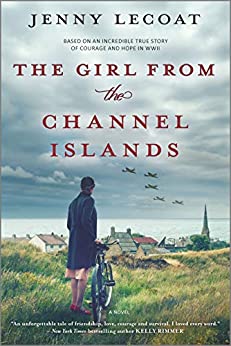
The Girl From the Channel Islands, by Jenny Lecoat

The Girl From the Channel Islands, by Jenny Lecoat

I listened to this historical novel on CD borrowed from the public library. I enjoy listening to a disc late at night, even though I have to deal with an occasional scratch on the disc which causes me to miss bits of the story.

Hedy Bercu, the protagonist in this novel, flees Austria in 1938 to escape the Nazis. She thinks she’ll be safe in Great Britain’s Channel Islands but, as World War II drags on and the islands are occupied by Germany, Hedy lives in constant fear that the wrong people will discover that she is Jewish.

The author, Jenny Lecoat, was born in the Channel Islands 16 years after some members of her family were deported by the Nazis and taken to concentration camps due to their resistance activities. This is Ms. Lecoat’s debut novel. I look forward to reading whatever she has in store for us next.


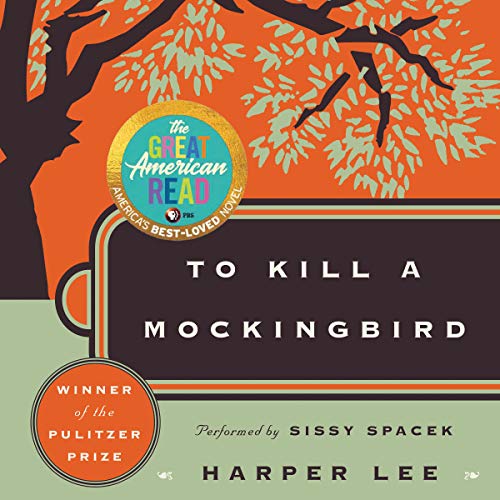
To Kill a Mockingbird, by Harper Lee

To Kill a Mockingbird, by Harper Lee

Although Banned Books Weeks is six months away, the increasing attacks on books in the United States prompted me to reread Harper Lee’s masterpiece. Instead of reading it in printed form this time, I decided to listen to Sissy Spacek’s performing of it on CD. I haven’t quite finished it, but I decided to include it in today’s post so The Girl From the Channel Islands wouldn’t have to stand alone.

It baffles me why people in 2023 want to ban To Kill a Mockingbird from school and public library shelves because it portrays the discrimination black people suffered in the 1920s or 1930s and, because at the same time, it portrays a white lawyer defending a black man who has been wrongfully arrested and charged.

I am against all book banning. One only needs to look at what happened in Germany in the 1930s to see what the results are.

If you don’t want your child to read a certain book, that’s your prerogative; however, you don’t have the right to dictate what anyone other than yourself and your children read.

Just because you are offended by a word in a book doesn’t make it a bad book. If you think you can erase the history of slavery, prejudice, and civil war in the United States by removing those references from books, you are mistaken.

If you think by removing sex education from school curriculum you will end all teen pregnancies, you’re only fooling yourself.

People who are afraid of knowledge and try to force their fears on the masses are the most dangerous people in the world.


Since my last blog post

I’ve tried to start overcoming the toll the challenges of the last eight months have taken on my limited energy.  Getting my two local history books published and working toward the publication of a family cookbook have been fun, challenging, frustrating, draining, and rewarding — all at the same time. April 25 will mark the 36th anniversary of when I first became ill with Chronic Fatigue Syndrome. Please don’t laugh. It’s a real illness. I have pushed myself too much since last July to accomplish some long-term dreams to get my local history writings published, and now I’m paying the price.

I’ll continue to push myself because that’s what I do and I don’t know how to live otherwise; however, in the coming weeks I’ll try to be a little kinder to myself and take some time to smell the roses.


Until my next blog post

I’ll start preparing for my Author Meet & Greet scheduled for April 15 at Second Look Books in Harrisburg, North Carolina.

I’ll reevaluate the family cookbook my sister and I have compiled. I’ve encountered a problem in the formatting for a paperback edition, so it might just be an e-book. That would be disappointing.

I hope you have a good book to read. If you’ve purchased Harrisburg, Did You Know? Cabarrus History, Book 1 and Book 2, I hope you’re enjoying them.

If you’ve subscribed to my newsletter and, therefore, downloaded a free copy of my southern historical short story, “Slip Sliding Away,” I hope you’ve enjoyed that small sample of my fiction writing.

Remember the three children and three adults murdered in that private school in Nashville, Tennessee. Remember how your local, state, and national politicians vote on assault-style weapons designed for war when the next election rolls around.

Remember the people of Ukraine.

Janet

Three Compelling Books I Read in February 2023

After a couple of months of not getting to read much for pleasure, February turned out to be just what I needed to get back in the habit of reading. My favorite genre, historical fiction, really came through for me last month.

The Diamond Eye, by Kate Quinn

The Diamond Eye, by Kate Quinn

I listened to this historical novel on CD. I was spellbound from disc one until the very end of disc 11. I yearn to write historical fiction so vividly. I long to captivate readers with fiction based in an era not their own. Kate Quinn has established herself as a master of the art and craft of writing historical fiction.

The Diamond Eye is based on a true story. Mila Pavlichenko lives in the part of the Soviet Union that is now Ukraine. She works at a library and adores her young son. When World War II transitions to the invasion of Russia by Nazi Germany, Mila does the unthinkable. She becomes a sniper for the Russian Army. And she excelled at it.

After her official kill count reaches 300, Mila becomes a national heroine and is sent on a tour of the United States to drum up support for the fight against Hitler. There, she meets President and Mrs. Roosevelt. Eleanor Roosevelt, seeing a bit of her own independent nature in the sniper, befriends Mila.

The book follows Mila through the war and how she constantly has to prove herself because she’s a woman and not automatically taken seriously. She’s called the usual names that men who are threatened by strong women call them.

It is a stunning novel and reminded me why I enjoy reading historical fiction. Yes, it’s fiction because conversations are imagined, but reading well-written historical novels is an enjoyable way to learn a lot of history.


The Home for Unwanted Girls, by Joanna Goodman

The Home for Unwanted Girls, by Joanna Goodman

This is another gripping historical novel. I was so impressed by Saskia Maarleveld’s reading of The Diamond Eye, that I looked for other books she had recorded. That’s how I found The Home for Unwanted Girls. I thought that was an interesting way to find another good book!

The Home for Unwanted Girls is about an unwed mother in Quebec in the 1950s who is forced by her parents to give up her baby girl. The book shines a light on the ugly history of the orphanage system in Quebec at that time. When the orphanage is turned into an insane asylum and the orphans are forced to take care of the patients, the outcome for the girls seems hopeless.

This novel follows the life of one of those orphans and the 15-year-old mother who wanted desperately to keep her. The mother never gives up on finding her child, even though she is told the girl died.


The Escape Artist: The Man Who Broke Out of Auschwitz to Warn the World, by Jonathan Freedland

The Escape Artist, by Jonathan Freedland

This book was spellbinding! It tells the stories of 19-year-old Rudolf Vrba and Fred Wetzler who did the impossible in April 1944. They escaped from Auschwitz! The book tells how Vrba studied the precision with which the Nazis conducted searches and exactly how long the guards searched when a prisoner was unaccounted for. He and Fred worked with two accomplices to plan the escape of Vrba ad Wetzler. Their two accomplices were to stay behind while Vrba and Wetzler escaped to take the truth of what was happening at Auschwitz out into the world.

It’s a fascinating read. It follows Vrba and Wetzler after their escape. The eye-opening part of the book was the aftermath of their escape. They testified and provided written descriptions of the horrors of Auschwitz. Their testimonies matched to the nth detail; however, their words and their physical conditions of malnutrition fell on deaf ears.

Winston Churchill didn’t want to bomb the rail lines going into Auschwitz because England bombed in the daytime. President Franklin D. Roosevelt didn’t want to bomb because it would be a diversion from plans. Jewish organizations in Europe refused to believe what was happening at Auschwitz because it was just too extreme. How can people do such things to their fellow human beings?

Along with the tragic murdering of Jews at Auschwitz, the fact that world leaders who had the power and where withal to do something about it in fact chose not to act is a gut punch.

My general takeaway from the book is that one’s life and future can be determined by someone else’s snap decision. Decisions were made on a whim by guards at Auschwitz every day that determined who lived, who died, and who escaped.

It’s a book that will haunt me.


Since my last blog post

I continue to try to get the word out about my second local history book, Harrisburg, Did You Know? Cabarrus History, Book 2.

I also continue to ask people to go to my website, https://www.janetmorrisonbooks.com and subscribe to my newsletter. Subscribers receive a free downloadable copy of my first historical short story, “Slip Sliding Away: A Southern Historical Short Story.”

“Slip Sliding Away: A Southern Historical Short Story,” by Janet Morrison

Until my next blog post

I hope you have a good book to read. I know where you can get a good historical short story to read!

Take care of one another.

Remember the people of Ukraine.

Janet
What does a month in the life of a would-be author look like?

In my first blog of the month I almost always write about the books I read the previous month. If I did that today, this would be my shortest blog post ever.

Near the end of this post, I’ll do just that; however, first I need to let off some steam.

If, after reading my blog post last week, How can I attract readers when I write about my author’s platform?, you thought it might be easy to build an author’s platform, just read today’s rant.


January 2023 from where I sit

January was a month filled with distractions and frustrations. The redesigning of my website has gone more slowly than I had hoped, mainly because I’m not very computer savvy. There were answers to technical questions I couldn’t readily figure out.

Plus, I had to learn a lot of technology in January so I can enable readers to subscribe to my email list and receive a free ebook, That’s still a work in progress because the good people at the very well-known email marketing service I’m using required me to fill out a long survey before they can answer two of my three basic questions. At least, they seemed basic to me.

I’m still not sure I’ve figured out how to give away the ebook. Maybe I’ll have to just reward my subscribers with a link to it so they can purchase it on Amazon for 99 cents. At least that remains an option.

Bless their hearts, the folks at the very well-known email marketing service I’m using are more interested in such things as my top three goals, how many subscribers I’ll be downloading (right now, it looks like zero), and what software I anticipate “integrating” with them. I’ve already asked them about Zapier, but they can’t answer me until I fill out the survey and tell them the best time to call me. I thought my question about Zapier was a yes or no question. Apparently, I was wrong.

Due to my moderate hearing loss and the fact that I just prefer having answers in writing, I much prefer answers in writing. I wish I’d gone with ConvertKit. Perhaps there’s still that option – which I told the good people at the very well-known email marketing service in my last email to them on Friday.

On an equally frustrating note, the very well-known print-on-demand company that prints my books has also forced me to learn more technology than I ever wanted to know. However, even with my best efforts in responding to each of their emails and supplying them with 20+ digital photographs, all the order numbers, etc. more times than I can remember since January 5, I have now given up on ever being reimbursed for the 14 damaged books I received on December 21, 2022 because there was no packing material in the boxes.

I worked my way up to a supervisor, but she has chosen not to respond to my latest plea for a refund. I paid the cost of printing, tax, and shipping for those books but I can’t sell them. And who wants to give away a damaged book that has your name on it as the author?

Harrisburg, Did You Know? Cabarrus History, Book 1 is selling very well at Second Look Books in Harrisburg, but I dread all future shipments of it and of Book 2, which I hope to have published by April. It sort of takes the fun out of being an author.

(By the way, don’t bother to send the very well-known print-on-demand company that prints my books photos of the condition the box is in when you receive damaged author copies or a photo of the inside of the box showing the four inches of empty space in which your $25 books were allowed to bounce around in while they were in transit for 600 miles from Indianapolis because the company doesn’t want to know such things. You have the benefit of learning from my silly assumptions that someone in the company would want to know why so many of the books they print arrive at the author’s home in unsellable condition. But if they don’t have to issue a refund to the author, I guess they really don’t need to know what the books arrived damaged.)

I spent the entire month of January formatting Harrisburg, Did You Know? Cabarrus History, Book 2, trying my best to learn how to giveaway an ebook via a very well-known email marketing service, and attempting to get a refund from the company that prints my books for 14 unsellable copies of Book 1. That left very little time for reading for pleasure, but numerous opportunities for screaming.

Photo by Simran Sood on Unsplash

What I read in January 2023

However, when I wasn’t screaming, I read part of The Shadow Box, by Louanne Rice. It was the January book for the Rocky River Readers book club. Time ran out and I didn’t get to finish it.

I tried to read one chapter in Black Raven, by Ann Cleeves every night. Unfortunately, I only got to do that for three nights before the ebook went back to the public library.

I read Chasing the Ripper: A Kindle Single, by Patricia Cornwell. She wrote it in 2014 about her research about Jack the Ripper after her book, Portrait of a Killer: Jack the Ripper – Case Closed was published. This 57-page Kindle Single was interesting even though I haven’t read her Portrait… book. Her Kindle Single is sort of a prelude to her 2017 book, Ripper: The Secret Life of Walter Sickert. The Kindle Single made me curious about the details Ms. Cornwell has pieced together lending credence to the theory that British artist Walter Sickert was indeed Jack the Ripper.

The other book I actually read in its very short entirety was The Boy, the Mole, the Fox and the Horse, by Charlie Mackesy. I can’t describe it better than the blurb on Amazon, so I’ll just quote it, in case you aren’t familiar with the wee book:   “From the revered British illustrator, a modern fable for all ages that explores life’s universal lessons, featuring 100 color and black-and-white drawings.”


What I’d thought about blogging about today

An alternative subject for today was the 89th anniversary of the ratification of the 20th Amendment to the US Constitution. I hesitated to write about that, since just two weeks ago I blogged about the ratification of the 24th Amendment in #OnThisDay: The US Constitutional Amendment that Put an End to Poll Taxes. Plus, I couldn’t seem to set aside enough quiet time to refresh my memory about the 20th Amendment enough to blog about it. Please take time to Google it and refresh your memory. That’s all I had time to do.


Until my next blog post

I hope you have a good book to read. I’m listening to The Diamond Eye, by Kate Quinn. I’m thoroughly enjoying it, and I hope to have time to finish listening to it.

Take time to relax. If you figure out how to do that while dealing with this technologically-mishandled world, please let me know your secret.

And in all seriousness, I remind you and myself not to forget the freezing, suffering, weary, much-abused-by-Putin-and-his-henchmen, and terrorized people of Ukraine.

My problems don’t hold a candle to what the Ukrainians are dealing with 24/7. Remembering that helps put my concerns in perspective. Come to think of it, I have nothing to scream about.

Janet
I absorbed history, poetry, tidying, and craft of writing books last month

“They” say a writer must read a lot if they aspire to be good at their craft. I can’t argue with that, but the last couple of months have not been conducive for me t,o get a lot of reading done. I’m learning that some months a writer has to concentrate on their writing and the business or being a writer. Otherwise, no one will know I’ve written anything.

I hope you’re not on book marketing overload from my recent blog posts and Facebook postings. There’s more to come for I have more projects in the works. You’ve been warned!

Since it’s the first Monday in the month, I’ll tell you about the books I read in December. Unfortunately, there wasn’t a novel in the bunch.


Threshold: Poems, by Ray Griffin

Threshold: Poems, by Ray Griffin

I received this book of poetry early in December. In such a busy month, I was grateful to have an excuse to steal away every night for some quiet moments to read poetry.

In this collection of poetry, Mr. Griffin touches on many facets of life. Some poems embrace the beauty of the natural world as it is observed and enjoyed today, and some stem from the writer’s reflections on a life well lived.

Many of those memories are also rooted in special times in the Appalachian Mountains and the beaches on the east coast of America, but there are also pieces that bring to life memories of trips in the western states and the unique wonders that part of the that area hold. There are sweet poems of the love of a life partner as well as verses that pay tribute to and bring to mind memories of departed parents. One poem reveals the poet’s feelings of guilt for not being with his parents when they died.

There are poems that express one’s feelings after a cancer diagnosis. There are poems about the current war in Ukraine and wars in the past.

This collection of heart-felt poems will pull at your heartstrings. Some bring a smile, while others bring a tear to your eye. However, the poet almost always brings you to a positive state of mind in the final lines of each. I regretted coming to the end of the book. I wanted more poems, but at least for the time being I’ll have to be satisfied with re-reading a few of the poems each day until Mr. Griffin graces us with additional verses from his heart.

Threshold is Ray Griffin’s third book of poetry. His second book, Winsome Morning Breeze, was published in 2020. Both books are available on Amazon or look for them or request them at your favorite bookstore. Here’s the Amazon link to Threshold: Poems by Ray Griffin: https://www.amazon.com/THRESHOLD-RAY-GRIFFIN/dp/B0BLQYMR11/ .


Writing Vivid Dialogue: Professional Techniques for Fiction Authors, by Rayne Hall

Writing Vivid Dialogue, by Rayne Hall

I tend to have more trouble writing narrative than writing dialogue. At least that’s what I think. I found this book helpful, though.

One issue briefly addressed in this book was that of authenticity versus political correctness. When writing dialogue for someone in the 18th or 19th and even in the 20th century, some characters, to be authentic to their time and place, would use words that are offensive to our 21st century ears. This most often comes into play in racist remarks, but it is also an issue when writing the words of a character who is misogynistic. Should the writer shy away from such words because they are not politically correct today? That is something each writer has to decide for herself or himself.


The Battle of Cowan’s Ford: General Davidson’s Stand on the Catawba River and its place in North Carolina History, by O.C. Stonestreet IV

The Battle of Cowan’s Ford, by O.C. Stonestreet IV

This little book about our regional history in the southern piedmont of North Carolina made me aware of some details about the Battle of Cowan’s Ford in the American Revolutionary War. I recommend it to anyone interested in the American Revolution or North Carolina history.

In case you didn’t know, General William Davidson was killed in the battle. The nearby town of Davidson and Davidson College are named for him.

When Duke Power Company created Lake Norman in 196_, the site of the battle was covered by the lake. As a tip of the hat to history, I suppose, Duke’s hydroelectric dam near the site of the ford and the battle was named Cowan’s Ford Dam. That’s little consolation to history buffs.


How to Write Short Stories and Use Them to Further Your Writing Career, by James Scott Bell

How to Write Short Stories and Use Them to Further Your Writing Career, by James Scott Bell

This book was a tremendous help to me in my writing career status. Until reading it, I planned to publish a book of four or five short stories in 2023. It was going to be my way of introducing you to my fiction writing.

A few months ago, I started reading advice for novice fiction writers that/which said I needed to give away my writing in order to attract readers. No one wants to be told to give away things they’ve worked hard to create. I’m no exception. However, in reading James Scott Bell’s book, I finally had an epiphany!

I started thinking in terms of making my historical short stories available free of charge as e-books. The more I researched my options and the length of the stories I’ve written, a new plan materialized. My current plan is to self-publish Slip Sliding Away as an historical novelette in February.

Mr. Bell’s book prompted me to look into Kindle Direct Publishing’s “Select” program. That program will give me the opportunity to publish Slip Sliding Away on Amazon for 90 days. The novelette will be free for five of those days and probably for 99 cents the other 85 days.

I will alert you to that publication and it’s five free days in a blog post in February, so stay turned!


Joy at Work: Organizing Your Professional Life, by Marie Kondo and Scott Sonenshein

Joy at Work, by Marie Kondo and Scott Sonenshein

You’re probably familiar with Marie Kondo’s bestseller, The Life-Changing Magic of Tidying Up:  The Japanese Art of Decluttering and Organizing. Joy at Work: Organizing Your Professional Life, is the third book in her “The Life Changing Magic of Tidying Up” series.

Much of this book didn’t apply to my situation since I work at home and I’m basically my own boss. The main thing I took away from the book was how to go about tidying up my emails and my electronic and paper documents.

It remains to be seen if I’ll follow through and put those recommendations into practice. I need to give it a try.


#OnThisDay: As a result of the oil crisis that started in 1973, the US Congress enacted the 1974 Emergency Highway Energy Conservation Act. The act imposed a 55 mile-per-hour speed limit nationwide in an effort to decrease gasoline usage. It was not well received.


Since my last blog post

I’ve formatted more than 62,000 words for Harrisburg, Did You Know?  Cabarrus History, Book 2. It’s on schedule for self-publication on Amazon later this month. Watch for an announcement.

Harrisburg, Did You Know?  Cabarrus History, Book 1 can be purchased in Harrisburg at Gift Innovations (4555 NC Hwy. 49) or Second Look Books (4519 School House Commons.) If those locations aren’t convenient for you, look for the paperback and the e-book on Amazon at https://www.amazon.com/Harrisburg-Did-You-Know-Cabarrus/dp/1888858044/

While you’re at Gift Innovations, look for my vintage postcard book, The Blue Ridge Mountains of North Carolina. (It’s also available in paperback and e-book from Amazon at https://www.amazon.com/Ridge-Mountains-Carolina-Postcard-History-ebook/dp/B00NB5FJIO/.)

My website is being redesigned. Watch for an announcement about it soon.

I’ve designed the cover for my historical e-novelette, Slip Sliding Away, and will decide soon if I should also publish it in paperback.


Until my next blog post

I hope you have a good book to read. I hope to read at least one novel this month.

Make time for family, friends, and a hobby.

Remember the freezing but very brave people of Ukraine.

Janet
Murder Mystery, Marketing, Second Marriages, Frozen Embryos, & Short Stories Galore Read Last Month!

As usual, I enjoyed reading a variety of books in October. By reading my blog post today, I hope you’ll discover a new book or new author to add to your TBR (To Be Read list.) There’s something here for almost everyone.


Under the Southern Sky, by Kristy Woodson Harvey

Under the Southern Sky, by Kristy Woodson Harvey

Right off the bat, this novel got into the hot button topic of frozen embryos. Parker’s wife, Greer, with whom he’d frozen those embryos has died of cancer.

Their marriage appeared to be a match made in heaven. Amelia, the proverbial girl next door during their childhoods, is a reporter researching frozen embryos for a story.

Will Amelia and Parker get together? Can Amelia overcome the idea in her head that Greer was perfect? Surely, she can’t compete with Parker’s memory of his perfect deceased wife. Or can she?
When Amelia approaches Parker with her idea of being the surrogate to give birth to one or more of those frozen embryos how will he respond? How will their families react? How will Greer’s father react?

I enjoyed the frozen embryos aspect of the novel. The on again, off again friendship and romance of Amelia and Parker was sappier than what I like to read, but that’s just me. The dynamics of their relationship are complex and they have to grapple with a lot of emotional baggage.

If you’re looking for a southern beachy story with a hefty dose of what happens to forgotten or abandoned frozen embryos, I think you’ll love this novel by Salisbury, North Carolina native Kristy Woodson Harvey.

I read this novel for the October 24th meeting of Rocky River Readers Book Club at Rocky River Presbyterian Church. We had a good discussion. Everyone read the entire book, which is a good sign. We were in agreement that the ending was predictable, but it was a good book club selection.


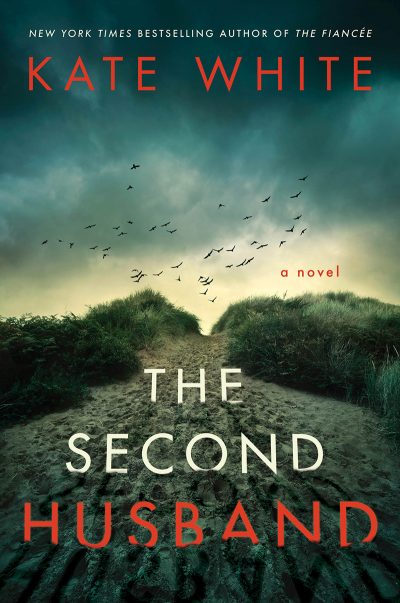
The Second Husband, by Kate White

The Second Husband, by Kate White

This is a murder mystery with a chilling twist. Did Emma’s second husband kill her first husband?

Emma’s 37-year-old husband is killed in an alley in the Soho section of New York City. The crime is not solved.

A few months later, Emma meets Tom through a work connection. They marry. Life is good. In fact, it’s perfect until the day a police detective shows up to ask some leading questions.

Suddenly, Emma feels like she’s Suspect #1 in Derrick’s murder. But she knows she’s innocent. She didn’t kill him and she didn’t hire a hitman.

Then, her suspicions turn to Tom.

I learned of this book by reading a review of it on the Linda’s Book Obsession blog on June 28 of this year. Thanks for bringing the book to my attention, Linda! Here’s the link to her review: Linda’s Book Obsession Reviews “The Second Husband” by Kate White, Harper, June 28, 2022 – Linda’s Book Obsession: (lindasbookobsession.blog)

I think this novel would be a good choice for a book club.


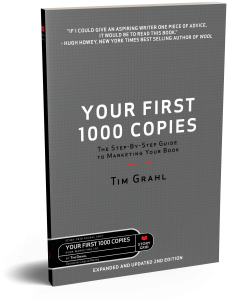
Your First 1,000 Copies, by Tim Grahl

Your First 1000 Copies, by Tim Grahl

I give this nonfiction book about marketing for writers 10 stars on a scale of 1 to 5. I took copious notes. There are so many pointers in this book for someone in my position as I’m anticipating releasing several books in the coming 12 months.

Mr. Grahl has helped many authors launch their books. He’s been through the process enough times and recently enough that he knows what works and what doesn’t work. If you’re a writer hoping to publish a book – whether via the traditional publisher route or by self-publishing – you can benefit from reading this book.


Distant Flickers: Stories of Identity and Loss

Distant Flickers: Stories of Identity & Loss

Eight writers contributed short stories for this special anthology about identity and loss.

The book includes two short stories by Elizabeth Gauffreau, whose website and blog I wrote about in my September 26, 2022 blog post, Do you know about these 5 book bloggers?

Other authors featured in Distant Flickers are Donna Koros-Stramella, Keith Madsen, Carol LaHines, Jim Metzner, Joyce Yarrow, Rita Baker, and Amy E. Wallen.

Distant Flickers grew out of a spark of inspiration provided by a group of writers known as Telltale Authors. Each story ties into the subtitle. The topics are varied. There are secrets, loss, and identity issues. Each author writes in a way to pull you into the story. Soon you find yourself empathizing with the main character.

The name of that group gives me a perfect segway into the name of the other book of short stories I read in October….


Tell Tale, by Jeffrey Archer

Tell Tale: Stories, by Jeffrey Archer

Since I’m putting together a book of historical short stories, I’ve wanted to get back to reading more short stories. I need to get a handle on just what makes a good short story, right?

Although Jeffrey Archer is better known for his novels, I wanted to read some of his short stories. I found his stories in Tell Tale to be very entertaining.

My favorite stories in the collection were “The Road to Damascus,” “Who Killed the Mayor?” and “The Holiday of a Lifetime.”

Mr. Archer used a clever literary device in “The Holiday of a Lifetime.” He wrote three different endings for the story and encouraged the readers to select the one they preferred. What fun!


Until my next blog post

Thank you for taking the time to read my blog post today!

I hope you have a good book to read and will find time to read it. If you have nieces, nephews, children, or grandchildren, it’s important for them to know you enjoy reading. They want to be like you.

If you live in the USA, vote tomorrow, unless you voted early. Our very democracy is on the ballot.

Don’t forget the people of Ukraine.

Janet

Spy Thriller, WWI Novel, Nonfiction, and Historical Mystery Read Last Month

In addition to the three novels I blogged about last week, in September I read three other novels and one nonfiction book. It’s my pleasure today to blog about those four books. I hope at least one of them will appeal to you enough that you’ll decide to read it. Support your local public library and your local independent bookstore!


The New Neighbor, by Karen Cleveland

The New Neighbor, by Karen Cleveland

I read Need to Know, by Karen Cleveland in March 2018 and blogged about it in my April 2, 2018 blog post, More March 2018 Reading. I really enjoyed that novel, so I don’t know what it took me more than four years (has it really been four years since 2018?) to read another of her books.

The New Neighbor is a spy thriller. The main character and most of her neighbors on a quiet cul-de-sac work for the CIA. She’s been trying to identify and take down a spy who is working against the United States for 18 years of her career. The code name for this person is “The New Neighbor,” so it’s a constant play on words throughout the book – Is the new neighbor the actual new neighbor on the cul-de-sac, or is it one of her long-time neighbors and friends on the cul-de-sac, or is it someone who lives who knows where, or is it …?

I look forward to reading another of Karen Cleveland’s novels as soon as I pare down my current reading list. She is a former CIA Analyst.


Switchboard Soldiers: A Novel of the Heroic Women Who Served in the US Signal Corps in World War I, by Jennifer Chiaverini

Switchboard Soldiers, by Jennifer Chiaverini

This historical novel made me aware of the first women to serve in the United States Army. It was World War I and General John Pershing needed efficient telephone operators who were fluent in both English and French to serve throughout France – including the front lines.

It was taking male soldiers one minute to connect a call. That was unacceptable, so General Pershing did a radical thing. He put out a call for qualified female telephone operators. More than 7,600 women responded. The women could connect a phone call in ten seconds.

They proved themselves just as qualified and dedicated as any male American soldiers and were credited in helping the Allies win World War I. It’s a shame their story hasn’t been told for more than a century, but author Jennifer Chiaverini has down a wonderful job telling us their story now.

I learned in the Author Notes at the end of the book that, although they were considered soldiers in the US Army during World War I, took the oath of office, were issued uniforms, had to go through the rigorous gas mask training, had to obey all rules and regulations of the US Army, etc. – after the war they were not considered military veterans and were not eligible for any veterans’ benefits until 1977 when President Jimmy Carter proclaimed them to be veterans. Of course, by then fewer than 60 of the 7,600 women were still alive to enjoy any of the benefits.

The other novels by Ms. Chiaverini that I’ve enjoyed are Mrs. Lincoln’s Dressmaker (which I read in April 2013 before I started regularly blogging about the books I read); Resistance Women (see my September 2, 2019 blog post, 3.5 of the 5.5 Books I Read in August 2019; and Mrs. Lincoln’s Sisters (see my August 10, 2020 blog post, Two Other Books I Read in July 2020.)


Listening Well: Bringing Stories of Hope to Life, by Heather Morris

Listening Well, by Heather Morris

If you’ve been reading my blog for a while, you know I’ve read three excellent novels by Heather Morris.

To refresh your memory, I blogged about her first novel, The Tattooist of Auschwitz in my November 15, 2018 blog post, Many Good Books Read in October!; I blogged about her second novel, Cilka’s Journey, in my December 2, 2019 blog post, I stretched my reading horizons in November; and I blogged about her third novel, Three Sisters, in my January 3, 2022 blog post, Books Read in December 2021.

In Listening Well, Ms. Morris writes a lot about her life. She grew up in New Zealand and now lives in Melbourne, Australia. She writes about her growing up years as a way to tell us about the elders in her family and how they – especially her great-grandfather – taught her to listen.     

She recommends that we all practice listening actively and then she sets about to give practical tips of how to listen to elders and how to listen to children. She also encourages us to listen to ourselves and trust ourselves because if we can trust ourselves and be a friend to ourselves, we can be a good friend to someone else.

She writes about listening to Lale Sokolov, the tattooist of Auschwitz, and what an honor it was to listen to him.

Ms. Morris says that all too often we listen to someone only to think of what we can say and how we can turn the conversation about us and not the other person.

This is a good read. I imagine most of us can learn something from it.


Second Street Station: A Mary Handley Mystery, by Lawrence H. Levy

Second Street Station, by Lawrence H. Levy

I wanted to read this book because it is a categorized as historical mystery. I read about 60% of it. It was a bit of stretch for there to be a female detective in the 1890s, but I was willing to suspend disbelief and go along with it.

It was a bit of a stretch to think of Thomas A. Edison being a criminal, but I kept reading. Where the wheels fell off the wagon for me, though, was when Mary Handley was able to watch the trajectory of ricocheting bullets and roll out of their way.

Since there had been no reference to Mary Handley having such superpowers, I felt completely pulled out of the story at that point. I read a few more pages and decided to move on to other library books that were needing my attention. It suddenly felt like historical fiction meets sci-fi.

If the book had been publicized as such, that would have been fine – and probably would make an interesting genre; however, that wasn’t a direction I expected “historical mystery” to take. I’ve since read several reviews online that were also thrown off by this part of the novel.

All that being said, though, I hesitate to be critical of a novel since I’ve yet to publish one of my own. I have much to learn about writing historical fiction. If you enjoy historical mysteries, give Second Street Station a try and let me know what you think of it. I’d like to be proven wrong in my assessment.


Since my last blog post

I took a free 3-Day online “How to Write a Series” course offered by Carissa Andrews of The Author Revolution. It was very helpful. And did you hear me say it was free? It will probably be offered again next year, so if you aspire to write a book series, I recommend you check out The Author Revolution online.

The historical fiction series I’m working on just might be five books instead of four. Book 2, The Doubloon is written and put away. Book 1, The Heirloom is my work in progress. Books 3-5, The Betrayal, The Revolution, and The Banjo are in various states of being outlined. My body is telling me I should have started this project decades ago.

I continued to format the local history newspaper articles I wrote from 2006 through 2012 for publication as two Kindle books. Look for future announcements about Harrisburg, Did You Know?- Book 1 and Harrisburg, Did You Know? – Book 2.

I started working through the video modules in Tim Grahl’s “Launch a Bestseller” course last week. The modules have already helped me understand the marketing tasks I need to do beginning seven to nine months before I publish my first novel.

In terms of marketing, I’ll have to condense some of those early tasks into just a couple of months or so for Harrisburg, Did You Know? – Book 1 and The Aunts in the Kitchen.

Me thinks I have too many irons in the fire!


Until my next blog post

Today I start taking the five-week online “Sticky Blogging – Master Class: “Attract Your True Fans” Course. Who knows? Perhaps in the coming weeks and months I’ll write better blog posts. Maybe I’ll come up with more interesting and eye-catching post titles.

I hope you have a good book to read.

Remember the brave people of Ukraine, the grieving people of Uvalde, and the devastated people of Florida.

Janet

Three Novels I Can’t Wait to Tell You About!

I read some interesting and thought-provoking books in September. In today’s blog post, I’ll share my reactions to three of the novels I read. I hope you’ll be inspired to add one or more of them to your reading list.


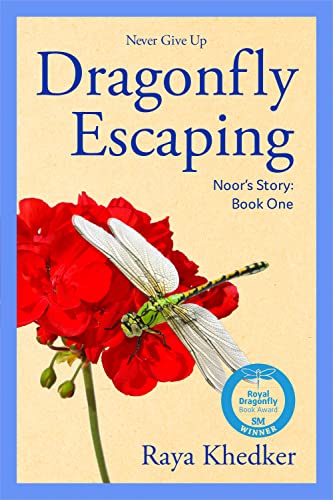
Dragonfly Escaping, Noor’s Story: Book One, by Raya Khedker

Dragonfly Escaping: Noor’s Story: Book One, by Raya Khedker

I learned about this novel through the Jennifer Tar Heel Reader book blog. After reading Jennifer’s review of the book, I went on Twitter to find out a little more about the author.

On Twitter I found a discussion about the book’s cover. I chimed in that I liked the cover, and the author and I enjoyed several days of messaging to one another about the struggles of writing and publishing.

The story immediately grabbed my attention and I knew I was hooked and would have to keep reading to find out what happened to Noor Zulfiker. Noor is bound in an arranged marriage to Rajat, an older man who is a physician and her parents think will be quite a catch for their daughter. But Noor is in love with a young man named Chirag Jagdev. Chirag isn’t rich and his financial future isn’t potentially as bright as the doctor’s.

There is physical abuse, so very soon the reader really starts pulling for the teenage Noor and hoping Rajat gets his comeuppance.

This book shines a light on the emotional and physical abuse the women in India are subjected to by men. Noor is abused from all directions and desperately wants to leave India. It is raw and unrelenting in this first novel of a planned series about Noor.

If you like exotic locations, Dragonfly Escaping takes place in New Dehli and Lima over a span of 1979 to 1992, with connections and references to Spain and Canada thrown in for interest.

If you aren’t put off by reading about an abusive relationship, I recommend this novel by Raya Khedker. It’s her debut novel and it was released in January 2022. Lo and behold, Dragonfly Hunting: Noor’s Story: Book Two, was released last week – on September 27 – so I’m already playing catch-up!

I look forward to whatever Raya Khedker and Noor have in store for us in Book Two.

Raya Khedker was born in India and currently lives in the United States.


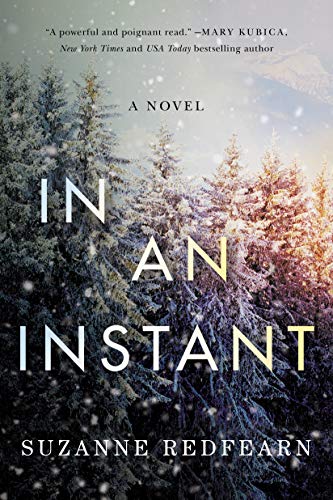
In an Instant, by Suzanne Redfearn

In an Instant: A Novel, by Suzanne Redfearn

This novel is written through the eyes of Finn, a 16-year-old girl. Spoiler alert: She’s alive in the beginning of the book but is soon dead. Probably 95% of the book is told through Finn’s eyes and ears as she moves about at will and reports how everyone reacts to her death and the other related events. It is a clever format.

The story is compelling. It delves into each person’s reaction to the incident that takes Finn’s life. It’s about family dynamics, friendships, and how individuals react to a traumatic situation. Each of us knows how we think or hope we’d react in a given circumstance, but do we truly know how we’d react when push comes to shove?

On the negative side, I had to suspend disbelief throughout a sizeable segment of the book as, although all the characters were in a situation of total darkness, they were able to move about and see everything clearly.

Also, I think the author gave Fen a vocabulary and level of understanding that a typical 16-year-old doesn’t have. And, speaking of vocabulary, I find the overuse of expletives offensive and it cheapens the writing. This becomes especially noticeable when one is listening to a book. It was excessive and pulled me out of the story. John Grisham is a reasonably successful novelist even though it is his policy and practice to not use curse words or raunchy language in his books. If John Grisham can have a lucrative writing career without using foul language, perhaps others should follow his example.

I thought the Easter dinner scene was forced. Why would a family that showed absolutely no religious inclinations suddenly put a tremendous emphasis on a traditional Easter ham dinner?

All that said, I reiterate that In an Instant is a gripping story and the premise of a person’s spirit being able to continue to roam the earth and see and hear intimate conversations and activities of family and friends is a bit unsettling and gives much food for thought.


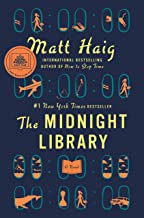
The Midnight Library, by Matt Haig

The Midnight Library, by Matt Haig

When Nora Seed “decides to die,” she finds herself in The Midnight Library. Her school librarian from long ago is there to explain to Nora that The Midnight Library isn’t exactly the afterlife. It’s an endless library of books – each one giving you the chance to undo your regrets and do something different. It’s between life and death. Disgusted at first to be there, Nora eventually appreciates the opportunities it provides.

The novel involves the theory or idea of parallel universes and allows Nora to move from one life to another and experience or re-experience an occupation or family situation.

The lesson this novel teaches is that every decision we make has an outcome. A different decision at any given time could have changed the course of our lives.

I didn’t know what to expect when I checked out the book on CD. I thoroughly enjoyed listening to it to see what Nora’s next experience would be and how it was all going to turn out for her.

The only irritation I felt in listening to the book was the fact that the British reader pronounced “library” the way the English do, turning this three-syllable word into a two-syllable word.” It’s like fingernails on a chalkboard to me. If you’re too young to understood the analogy, I’m afraid I can’t help you.


Since my last blog post

Here in the southern piedmont of North Carolina, it rained sideways all day on Friday and felt more like winter than autumn as what was left of Hurricane Ian passed through after making its third landfall near Georgetown, South Carolina. We came through it unscathed, though, and for that I’m relieved and thankful.

I’ve been working on my genealogy. I knew that three of my 16 g-g-g-grandmothers were Neelys. Last week I found their father’s will and discovered they were sisters. I guess that means I’m my own cousin. Small gene pool here in the 1700s!


Until my next blog post

My heart goes out to all the people severely affected by Hurricane Ian in Cuba, all over Florida, and the east coast of the US.

Today I’m excited to begin taking a three-day online workshop about writing a book series. It’s sure to help me as I continue to work on The Heirloom and its sequel, The Doubloon.

I hope you have a good book to read this week.

Don’t forget the brave people of Ukraine.

Janet

The Other Four Books Read in August 2022

There are lots of good books out there. Today’s blog post is about four of the eight books I read last month. In case you missed it, last Monday I blogged about the other four in Four of Eight Books Read in August 2022.


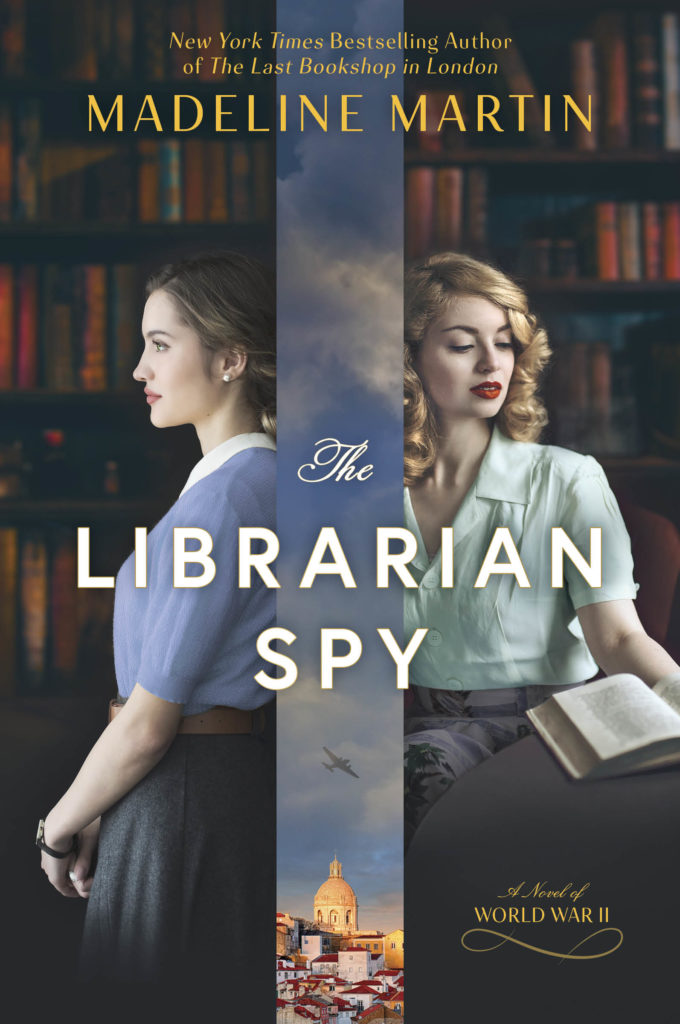
The Librarian Spy, by Madeline Martin

The Librarian Spy, by Madeline Martin

This novel follows two women during World War II. One is involved in the French Resistance. The other one is a librarian from the Library of Congress in Washington, DC who has been sent to Lisbon, Portugal to help secure and copy newspapers from the cities under Germany’s control. The copies are sent to the US to help the Allies’ cause in the war.

The chapters alternate between Ava’s story and Elaine’s story. My only complaint is that as soon as I was invested in one’s story, the next chapter would begin and I had to switch mental gears to the other one. I don’t like that in a novel, but it seems to be the trend now in historical fiction. Otherwise, Ava and Elaine each have compelling stories and you’ll want to cheer them on.

I was immediately invested in each of the two main characters as soon as I read their opening chapters. The deeper into their stories you get, the more you are anxious (not eager, but anxious) to see what happens to them next.

This novel made me stop and think about the danger both women were in all the time. They had to guard their words at all times because they never knew when a stranger – or even an acquaintance – nearby might overhear something that could aid the enemy.

I can’t imagine living under that level of stress not just for days or weeks on end but for years on end. Not only that, but they were living the war on a daily basis and had no way of knowing when it would end. That’s a luxury we have when reading historical fiction. We know the exact day and sometimes the very hour at which a war will be declared over.


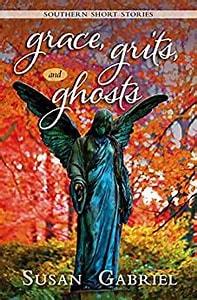
Grace, Grits and Ghosts: Southern Short Stories, by Susan Gabriel

Grace, Grits and Ghosts: Southern Short Stories, by Susan Gabriel

I purchased this ebook some months ago and finally got around to reading it. I’m so glad I did. It is a collection of short stories, some of which grew out of Susan Gabriel’s novels.

Hoping to publish short stories myself, I was curious to see the book’s layout. Also, I hadn’t read any of Ms. Gabriel’s novels, so I was eager to find out about her writing style and to discover her writer’s “voice.”

And what a writer’s “voice” she has! If you enjoy southern fiction, you’ll love how Ms. Gabriel writes. Her voice, especially in “The Secret Sense of Wildflower,” comes through so strongly that I can still hear it in my head days after finishing the book. It’s told through the eyes of a young girl who has witnessed too much in her life, but tells the story with a wit, bluntness, and insight that I loved.

She even used the idiom, “as all get out” in that last story in the book, which couldn’t help but make me laugh out loud. You might recall my blog post about that idiom from March 29, 2021: #Idiom: As All Get Out.

The book includes an introduction in which Ms. Gabriel writes about how she was determined to never write southern fiction. I had to smile at that. There are nine stories of varying lengths, so it is an easy book to read if you can only find a few minutes at a time for a book; however, you’ll find yourself turning the page to see what the next story is and, before you know it, you’ve read three more stories.

The short stories in this book were varied in topic. “Reunion at the River” was about seven women who had been abused by the same man several decades ago and how they gather at the secluded mountain home of one of their number every year for a reunion and attempt to heal.

As a southern short story writer wannabe, I gained valuable ideas from this book about how to create an ebook of short stories. I don’t have published novels to draw on like Ms. Gabriel had, but I love the way she pulled the stories together and ended the book with information about her other books, her desire to get feedback from her readers, and her all-important contact links.


Subtract: The Untapped Science of Less, by Leidy Klotz

Subtract: The Untapped Science of Less, by Leidy Klotz

Jan Edmiston, General Presbyter of the Presbytery of Charlotte, recommended this book in her July 8, 2022 blog, https://achurchforstarvingartists.blog/2022/07/08/books-im-loving-this-summer/. Edmiston’s takeaway from reading the books was, “Why this book can change the culture: We in the Church (and world) have been taught that being better means adding things. Sometimes we are better when we subtract things.”

In the book, Mr. Klotz pleads with us to stop thinking of subtraction as a negative thing. Sometimes less is better. When you’re attempting to declutter your life, your home, your email in-box, the landscape, or even the atmosphere – the air we breathe, couch it in words that don’t have negative implications.

He gives examples throughout the book. One of the simple ones that stuck with me was when he and his young son were building a bridge with Legos. One of the bridges pillars was taller than the other. Human nature usually prompts us to add to the shorter pillar to make them even; however, his toddler son removed one of the blocks in the taller pillar.

Mr. Klotz encourages us to adopt that approach in all aspects of our lives. Another example he mentioned several times is the editing that writers must do. Fiction writers are told to make every word count. Make every sentence earn its keep. Edit out words, phrases, sentences, paragraphs – even scenes – that don’t move the story forward. That’s a painful thing to do!

He also encourages us to focus on people. Focus on the things that will improve lives. The winner isn’t the person with the most stuff at the end of life.


L.E.A.P.F.R.O.G.: How to hold a civil conversation in an uncivil era, Third Edition, by Janet Givens, M.A.

LEAPFROG: How to hold a civil conversation in an uncivil era, by Janet Givens, M.A.

Janet Givens has come out with a third edition of her book, L.E.A.P.F.R.O.G.: How to hold a civil conversation in an uncivil era, and I highly recommend it to anyone who wants to improve their skills of having a difficult conversation.

Be it a difficult conversation with a friend or a stranger, a relative or an employer or employee this book will help you have a more productive dialog.

The goal of this book is not to tell you how to convert the other person to your way of thinking, but rather to help you go into a conversation with an open mind and genuine curiosity about why the other person sees a particular issue or situation differently than you.

For more details about this new third edition of the book, please read my August 22, 2022 blog post, L.E.A.P.F.R.O.G. by Janet Givens


Since my last blog post

In addition to reading books and writing, I’ve worked on genealogy. I’ve also blown the dust off the local history newspaper columns I wrote from 2006 through 2012. It’s amazing how much I’ve forgotten since 2006. I hope people will enjoy reading my articles as much as I’ve enjoyed rereading some of them this week.

Since 2012 I’ve wanted to put all the articles into a book. I’m typing them in Word and formatting them ready to download the document into Atticus. Atticus is the writing software I’m using that will enable me to export the document ready for electronic publication on Amazon.

The cover is still holding up publication of the cookbook my sister and I are compiled for electronic publication.

I’ll keep you posted on both projects.


Until my next blog post

Don’t forget to read my September 5, 2022, blog post, Four of Eight Books Read in August 2022, in case you missed it.

I hope you have a good book to read.

Spend time with family and friends.

Remember the people of Ukraine, Uvalde, Highland Park….

Janet