Books Read in May 2020

To have had 31 days, the month of May passed leaving me feeling like I didn’t read very much. Actually, I read a lot. There were several books I started but didn’t finish. That’s what left me feeling as if I didn’t read much. There are always more books to be read than I have time to read. What a fortunate situation!

The books I chose to read in May were all over the place. Three of them turned out not to be what I expected, which is always disappointing.

A Conspiracy of Bones, by Kathy Reichs

This is Kathy Reichs’ latest novel and I thoroughly enjoyed it. Set in Mecklenburg and Lincoln counties in North Carolina and Lake Wylie, South Carolina, the book features Reichs’ well-known protagonist, forensic anthropologist Temperance Brennan.

A Conspiracy of Bones, by Kathy Reichs

Temperance is at odds with the new Mecklenburg County medical examiner. Against the medical examiner’s wishes and orders, Temperance pursues the case of a body found in Lincoln County. There are gory details about the state of the body, but the story line concentrates on who killed the man and why.

In the process of solving the crime, Temperance faces bodily harm and attempts on her life. She has a knack for going where she shouldn’t go and getting into all sorts of situations. Fairly early on, Temperance suspects the larger case involves child pornography. Is she correct, or is this a red herring Ms. Reichs included just to throw us off track?

Cutting for Stone, by Abraham Verghese

After listening to this book for three hours and having 21 more hours remaining – and reading a synopsis of it – I decided I couldn’t concentrate long enough to listen to the rest of it. The synopsis revealed a plot that sounded better suited for a series of books. I just couldn’t finish it.

Cutting for Stone, by Abraham Verghese

The prose was vivid, explicit, beautiful, and at times humorous. During the Covid-19 pandemic, it was just another book I couldn’t concentrate enough to see it through.

Big Lies in a Small Town, by Diane Chamberlain

After Cutting for Stone, this book was a delight. It is the eighth book I’ve read by Diane Chamberlain. I’m tempted to say it’s my favorite of the eight, but that might just be because I just finished it.

Big Lies in a Small Town, by Diane Chamberlain

Set in Edenton, North Carolina in 1940 and 2018, it is a story of racial discrimination, rape, child neglect, trust, jealousy, revenge, and love.

Ms. Chamberlain weaves an intriguing tale of a woman coming from “up North” to paint a large mural on the wall of the post office in Edenton. There is backlash because a local male artist had applied for the job. When a local black high school student is invited by the artist to assist her in the project, tongues in the small town wagged.

Decades later, an artist who is serving a prison term for a crime her boyfriend committed is chosen to get early parole if she will restore the mural. This leads to the discovery of several bizarre aspects of the mural. The restoring artist sets out to find out what became of the original artist and why she included the strange items and images in the mural. Add to this the suspense of an almost impossible deadline for the restoration and opening of an art museum, and you have the ingredients for a beautifully written mystery.

Writing Vivid Plots:  Professional Techniques for Fiction Authors (Writer’s Craft Book 20), by Rayne Hall

This book probably won’t interest you unless you are learning the craft of fiction writing. If you are a student of fiction writing, though, I recommend the book.

Writing Vivid Plots helped me in two specific ways. It explained the important differences in plotting a serial and a series. It also had a short chapter about the difference in plotting a novel and plotting a short story.

By the way, a serial is a story broken into different installments that should be read in order. A series is a group of books having the same characters but which usually stand on their own and can be read in any order.

Long Bright River, by Liz Moore

As often happens lately, I can’t remember what prompted me to get on the waitlist for this book at the public library. I don’t know what I was expecting, but this wasn’t it. How it had been described to me must have left something out. A true representation of the book wouldn’t have led me to want to read it.

Long Bright River, by Liz Moore

This is Liz Moore’s fourth novel and the first of hers I’ve read. The book is well-written. In fact, listening to it held my attention. What I wasn’t prepared for, though, was the way the book left me feeling hopeless against the drug abuse problem in our world.

Michaela “Mickey” Fitzpatrick is a Philadelphia police officer. She tires of all the murders in her district. It seems that most of prostitutes. Every time another murder call comes in, she holds her breath for fear that this time it was her sister, Kacey. Their childhoods weren’t happy. There was little love in the family. The two sisters, once so very close, went their separate ways.

The overriding story is that of family drama, but it’s all wrapped up in the opioid crisis. I never lost interest in the book, as I wanted to know what happened to Kacey. Also, there was Mickey’s son, Thomas. Or was he her son? In the end there was some hope that Kacey would stay clean and never start using drugs again, but it left me with scant hope.

This novel left me rather depressed about the outlook for Kacey, Mickey, and the two children they had between them in the end. In that respect, the book is probably a true reflection of family life when a member is addicted to drugs. It’s also a true reflection of how every member of a family is affected when one member is abusing drugs – and what an empty feeling is left when that person dies as a result of their addiction.

I’m glad I listened to the book. After I finished listening to it, I read a review in which the writer talked about how confusing it was to try to read a book with no quotation marks. Ditto that for me. I wouldn’t have stuck with a physical copy of the book.

Commonwealth, by Ann Patchett

Having read State of Wonder, The Dutch House, and Bel Canto by Ann Patchett, I looked forward to reading Commonwealth, her novel published in 2016. Commonwealth never drew me in. I was listening to it, which I think probably made it more difficult for me to keep all the characters straight.

Commonwealth, by Ann Patchett

I couldn’t identify with any of the characters, so I never felt invested in the story. It started in California at a christening party where every one got drunk. This is not my life experience, so right off the bat I couldn’t identify with these people. Then, it jumped 50 years later with all the same family members, including a raft of cousins.

The book just didn’t appeal to me. I listened to it for three and a half hours but wasn’t motivated to listen to another seven hours.

The Tea Girl of Hummingbird Lane, by Lisa See

It amazes me how time passes. If someone had asked me when I started reading The Tea Girl of Hummingbird Lane, by Lisa See, but had to return it to the public library before I got even halfway through it, I would have guessed, “Sometime last year.” The joke is on me, though, for when I looked back through my blog posts to see if I referenced reading part of this book, I was stunned to find that it was exactly three years ago! In my blog post on June 2, 2017, I commented that the book had fascinated me “in how it shed light on some of the superstitions held by the Chinese.” Here’s the link to that post: https://janetswritingblog.com/2017/06/02/you-need-to-read-these-books/.

The Tea Girl of Hummingbird Lane, by Lisa See

I also wrote in that blog post: “The novel follows a young Chinese girl who is painfully aware from birth that she is not valued because she is female. Her family has to walk for hours to pick tea leaves for a meager amount of income. It is a difficult life. Her mother is the local midwife and she tells her daughter that she must follow in her footsteps in that occupation. There is a ray of hope, though, because her school teacher tells her that she can leave the harsh mountain environment and make something of herself. I look forward to checking the book out again in order to see how her life turns out!”

Three years later, I checked out the MP3 edition of the book and listened to it on my tablet. There is so much more to the book than my first impressions. I can’t believe it took me three years to return to it. Although the early part of the book was familiar to me, I listened to it from start to finish.

This is a rich story that follows Li-Yan throughout her life. She is intellectually gifted, but life places many stumbling blocks in her path. She falls in love and has a child – a girl. Having a child out of wedlock in China in 1995 was taboo, and out of shame Li-Yan puts her baby in a cardboard box along with a tea cake and leaves the box near an orphanage.

Li-Yan’s life continues to be full of strife, but she never stops loving her baby and wondering where she is and what her life is like. Learning that she was adopted by an American couple and raised in the United States, she could only hope she had a good life.

The novel also follows the life of Li-Yan’s baby, now named Haley. Through an interesting turn of events, Haley becomes interested in tea, which leads her back to her homeland.

My description of The Tea Girl of Hummingbird Lane is woefully inadequate. The novel is described on Lisa See’s website, http://www.lisasee.com/books-new/the-tea-girl-of-hummingbird-lane/, as “A powerful story about two women separated by circumstance, culture, and distance, The Tea Girl of Hummingbird Lane is an unforgettable portrait of a little known region and its people and a celebration of the bonds of family.”

Since my last blog post

Civil unrest has erupted in cities all over the United States in response to last Monday’s death of Mr. George Floyd at the hands of a Minneapolis, Minnesota police officer who used excessive force against Mr. Floyd which resulted in Mr. Floyd’s death. I am sad, and I am angry. I believe that most law enforcement officers are good people, but there is a growing problem in America of white police officers using excessive force against people of dark skin. It is indicative of a deep-seated racial prejudice.

The events of this past week and conversations I’ve had with other bloggers and friends on Facebook have been eye-opening. I know that some of my Facebook friends – many of whom I have known since first grade – are prejudiced. They have shown their true colors since Donald Trump was elected president in 2016, and it has surprised and saddened me to learn these things about the people I thought I knew. I have come to realize that the America that I was taught as a young student to see as “a melting pot” is not a melting pot at all. It never was. It is a myth that has been perpetuated for more than 200 years.

America is at a crossroads. We each have a choice to make. Are we going to bury our heads in the sand and pretend we are fine and everyone around us is fine? Or are we going to stand up for the abused? When we see injustice, are we going to turn our heads and keep silent? If so, nothing will ever change. Until those of us with lighter skin recognize that we have benefited and profited from our white privilege, nothing will change. Until we speak up against injustice, nothing will change.

Until my next blog post

I hope you have a good book to read.

If you are a writer or other artist, I hope you have productive creative time.

Thank you for taking the time to read my blog post today.

Stay safe. Stay well. Wear a face mask as a show of respect for others.

Let’s continue the conversation OR Our call to action

Examine your life, as I will continue to examine mine. Ask yourself if you truly see others as your equal. Examine your beliefs and look for the myths among them. After taking an honest inventory of your “philosophy of life,” take action. Register to vote. Write letters to your elected officials – local, state, and national – and tell them where you stand. Tell them the changes you want to see. Tell them what bothers you about the status quo. Perhaps more importantly, even during this Covid-19 pandemic, reach out to people who don’t look like you. Find common ground from which you can begin an honest conversation.

If you want some tips about how to have that difficult conversation, I recommend LEAPFROG: How to hold a civil conversation in an uncivil era, by Janet Givens. I wrote about this book in my blog post on April 13, 2020, https://janetswritingblog.com/2020/04/13/leapfrog-and-the-immoral-majority/.

LEAPFROG: How to hold a civil conversation in an uncivil era, by Janet Givens, M.A.

Janet

#OnThisDay: 1787 US Constitutional Convention

In doing the research necessary to refresh my memory enough to write today’s blog post, I discovered just how close the United States came to failing in the 1780s. As a younger student of history, I didn’t grasp the fragility and gravity of the situation. In an effort to stabilize and save the new nation, a constitutional convention was called for in the spring of 1787. Today’s blog post will attempt to give you an idea about what necessitated that convention which opened 233 years ago today.

It was a contentious time. It was a time of trial and error as the former colonists, who had just won a war for independence from Great Britain against all odds, faced the difficult work of creating a nation and there was no guide book for them to follow.

The Articles of Confederation

The Continental Congress agreed on “Articles of Confederation” in November 1777. The document formed more of an alliance than a nation. The Articles gave Congress the power to wage war, conduct diplomacy, and arbitrate disputes between the various states. Each state had one delegate. Going to war required nine of the 13 votes in favor. All 13 states had to ratify the Articles of Confederation in order for them to go into effect. Any amendments also required unanimous votes.

Congress could not, under the Articles of Confederation, enact laws. In fact, it had to rely on the states to recruit soldiers for the Continental Army. States were free to regulate trade and enact laws and the Congress had no power over them.

State boundaries needed to be established and states needed the authority to maintain authority within those boundaries. The Articles of Confederation left too much to chance and interpretation.

How could the 13 states go about forming a union with only the Articles of Confederation holding them together? They feared creating a Congress strong enough to interfere with issues within the individual states. After all, they knew what life was like under a strong central government. In today’s vernacular, they would have said, “Been there. Done that.” They knew what they didn’t want in a national government, but it wasn’t easy to agree on what they wanted or needed.

Photo by Juliana Kozoski on Unsplash

Small states wanted a federal government that could control westward expansion. They feared that, without a strong central government, states like Virginia and New York would prosper financially from selling their western lands and, therefore, become more solvent and more attractive to settlers than the smaller states.

Virginia and New York eventually relinquished their claims on “western lands.” That was enough to persuade Maryland to ratify the Articles of Confederation on February 2, 1781 –finally making ratification of the Articles unanimous and complete.

Territories

To begin to address the problems associated with western expansion, Congress started establishing temporary territories that could later become states. I’ll get into some of the details of how that was carried out in a blog post planned for July 13, 2020 on the anniversary of the adoption of the third Northwest Ordinance in 1787.

State Constitutions

By the end of 1776, 10 states had adopted constitutions. Connecticut and Rhode Island still operated under their charters. Massachusetts didn’t adopt a state constitution until 1780.

Most of the state constitutions began with a stated bill of rights. A free press, freedom of religion, the right to petition, trial by jury, and due process under the law were the items most states included in their constitutions. Most of them made it clear that the people wouldn’t stand for hereditary offices. In other words, there would be no American aristocracies.

In reaction to the royal governors the states’ residents had suffered under, the state constitutions limited executive power. They limited who could vote: only white men who owned enough property to support a family. It was believed if a man had a landlord, he would not be free to vote his own mind. Several states restricted those men who could serve in their legislatures to the very wealthy.

After the Revolutionary War

Although the Americans won the war for independence, they had paid a big price in deaths and the economy. The new country had no silver or gold mines to back an economy. Fortunately, many British and other European merchants offered American businessmen credit because they were eager to reestablish trade with their former clients. However, the British blocked America from trading with the West Indies. That restriction was instrumental in plunging American merchants into debt in the years after the war.

Photo by Ibrahim Rifath on Unsplash

A recession followed the war while the new country tried to get on its feet. There were economic inequalities between the “haves” and the “have-nots,” so not much has changed in two and half centuries.

Frustration increased as states racked up debt and taxed citizens. In Massachusetts, South Carolina, and New Hampshire farmers began to mobilize much as the Regulators had prior to the revolution. They went so far as to block county courts from meeting so farm foreclosures could not be processed. Some states chose to forgive debts in an attempt to avoid armed conflict. Seven of the 13 states started printing paper money.

Conservatives started having misgivings about the outcome of the war. They saw many states as being too democratic, and they started calling for a Constitutional Convention.

James Madison’s input

James Madison was turned to for advice. He had studied state governments and concluded a popular majority could govern every bit as tyrannically as a monarch. He said that the rich minority should be protected from the poorer majority.

Conventional wisdom of the day was that a republic had to be small so representatives could really know their constituents. Madison bucked that theory. To quote from Pulitzer Prize winning historian Alan Taylor’s book, American Revolutions: A Continental History, 1750-1804, Madison thought that if voters had a larger population from which to elect their leaders, “the purest and noblest characters” would be elected to office. (I wonder if he would still hold to that belief today.)

Madison met with Alexander Hamilton and 10 other “nationalists” in September 1786 to draft an appeal to Congress to call for a constitutional convention. Congress wanted the Articles of Confederation to remain but agreed to call a convention to write amendments. Congress also stipulated that the amendments would have to be approved by Congress and each state legislature.

The nationalists feared that the country would plunge into anarchy and the result would either be a monarch or a splintering of states into several confederations.

What happened 233 years ago today?

A Constitutional Convention was scheduled to open on May 25, 1787 in Philadelphia with the purpose of revising and strengthening the Articles of Confederation. However, what happened over the next four months was the drafting of the United States Constitution.

Every state except Rhode Island sent delegations to the convention. James Madison convinced George Washington that he should attend as a Virginia delegate. As a group, the 55 delegates were elitists. More than half of them held college degrees. More than half of them owned slaves. None represented the populist views of the farmers and other citizens of modest means.

Independence Hall in Philadelphia, PA. Photo by Alejandro Barba on Unsplash

The convention was held in what is now known as Independence Hall. On the first day, George Washington was unanimously elected to preside over the group. The doors and windows were kept shut and they agreed to a strict code of secrecy. No outsiders were allowed inside.

What transpired over the next four months?

Delegates came and went as the weeks went by. In fact, all 55 were never in attendance at the same time. Though multiple delegates came from each state, each state was allowed only one vote. Just as seems to be the rule instead of the exception with American politicians in 2020, they talked a good talk about “the common good,” but they all fought for their own state’s interests.

“The Virginia Plan” was presented on May 29. It called for a bicameral legislature with both houses having a number of representatives based on population. It called for a powerful national government with an executive branch and a judicial branch in addition to the legislative branch. Smaller states didn’t like the Virginia Plan.

The “New Jersey Plan” was presented in mid-June. Under that plan, there would be only one legislative body and much of the government would continue as it was under the Articles of Confederation.

Believing both plans were weak, Alexander Hamilton presented is own plan on June 18 in a five-hour harangue. He maintained that Great Britain had the best government in the world and that America should copy it. Under Hamilton’s plan, the electoral college would elect the president and senators and they would serve for life! Only the House of Representatives would be elected by popular vote of the people. Congress would not have the power to override a presidential veto. All state governors would be appointed by the national government.

For the next month, the delegates debated the Virginia Plan and the New Jersey Plan, not thinking the majority of citizens would accept the British model championed by Alexander Hamilton. They were essentially deadlocked until Benjamin Franklin and the Connecticut delegation presented a plan whereby there would be a bicameral legislature. Each state would have equal representation in the Senate, but representation in the House would be based on population. That compromise plan was adopted on July 16 by a vote of five to four. The Massachusetts delegation could not agree on which way to vote.

The following day, July 17, seven of 10 delegations voted against Hamilton’s idea that the national government should be able to veto state laws. They also voted to prohibit states from issuing paper money.

Another point of contention for the convention was slavery. Slaves made up about four percent of the population of northern states and about 40 percent of the population of Southern states. Southern delegates wanted a national government strong enough to protect their property rights but not strong enough to emancipate slaves.

Photo by Hussain Badshah on Unsplash

Since virtually all the delegates regarded blacks as inferior to whites, the debates came down more to regional interests than the morality of slavery. The compromise that was struck was the “three-fifths clause” which said that three-fifths of slaves would count in the allocation of congressional seats and presidential electors. In essence, it meant that a slave was considered to be only three-fifths of a person.

In August, 1787, as the hot and humid Philadelphia summer dragged on, there was heated debate over the future of the slave trade. The Georgia and South Carolina delegates wanted to continue to bring slaves from Africa, but the upper-southern states had more slaves than they needed. They wanted to be able to sell their slaves to planters in the Lower South when the African slave trade ended.

But the South Carolina and Georgia delegates valued continued slave trade more than they valued the national union. They threatened to pull out of the convention. By doing so, they called the bluff of Northern delegates who prospered from the slave trade through their shipping and shipbuilding interests. The Northern delegates wanted the national government to enact “navigation acts” that would favor northern vessels over foreign ones and would increase shipping costs for Southerners.

Slave-holding states lobbied for a fugitive-slave clause under which northern states were required to return runaway slaves to their owners. Euphemisms were used in the constitution they were drawing up in order to avoid using the words “slaves” or “slavery.”

The United States Constitution, therefore, protected slavery through the three-fifths clause, the “fugitive-slave clause, and by approving the slave trade for an additional 20 years. These compromises proved to be short-sighted. They appeared necessary to preserve the union, but they set the United States on a long-term racial division that still exists 233 years later.

The convention spent more time figuring out the national legislative branch than it did the executive branch. It was assumed that George Washington would be the first U.S. President, so the constitution created a strong executive. Both houses of Congress would need a two-thirds majority vote to override a Presidential veto. The president and vice-president would be elected to four-year terms and could be reelected indefinitely. State legislatures would choose the electoral college and that group would elect the president and vice-president.

Not much time was spent on the judicial branch. A Supreme Court would be created and Congress would have the power to create courts that would serve subordinately to it. It was made clear that state laws and courts would be trumped by U.S. laws, treaties, and the U.S. Constitution.

US Constitution signed on September 17, 1787

After numerous heated debates, 39 of the 42 delegates who had hung in there that long, signed the Constitution on September 17, 1787. The governor of Virginia refused to sign it. Fellow-Virginian George Mason said he’d rather chop off his hand than sign it. Alexander Hamilton wasn’t pleased with the final document, but he signed it because he feared the alternative was anarchy.

As difficult as the convention had been, the hard work lay ahead as each state had to ratify the Constitution. It would take a year to accomplish that, but that is a story for another day and another blog post.

Since my last blog post

I’ve spent more time reading nonfiction than fiction. My brain is tired. I’m listening to Long Bright River, by Liz Moore.

Until my next blog post

I look forward to concentrating on reading fiction in the coming days.

I hope you have a good book to read.

If you’re a writer or other artist, I hope you have quality creative time.

Thank you for taking time to read my long blog post today. It was longer than I wanted it to be, but I concluded that anyone truly interested in the topic would read it and anyone not interested in the topic wouldn’t read it no matter how short or long it was. I hope I judged correctly.

Let’s continue the conversation

What jumped out at you in today’s blog post? What surprised you?

Janet  

#OnThisDay: Plessy v Ferguson, 1896

I had originally considered writing about the 40th anniversary of the eruption of Mount Saint Helens today, but then I was reminded that it was on this day in 1896 that the United States Supreme Court handed down a decision that changed the course of American history. The case was Plessy v. Ferguson.

Plessy v. Ferguson was one of the cases we studied in the constitutional law class I took in college. The decision in this landmark case sanctioned segregation in the United States.

What happened after the American Civil War?

The Thirteenth, Fourteenth, and Fifteenth Amendments to the United State Constitution were intended to guarantee the civil rights of African Americans in the years after the Civil War and forevermore. Some states found ways around the intent of those amendments by instituting such things as a poll tax that many former slaves could not afford to pay and literacy tests that former slaves who had been denied an opportunity to learn to read or write couldn’t possibly pass.

The result of the poll taxes and literacy tests was the disenfranchisement of black men. (This just applied to men because women didn’t gain the right to vote until 1920.)

Racially-segregated public schools were the legal norm in some states in the post-Civil War years and into the 1960s. Narrow interpretation of the U.S. Constitution made these state laws possible.

The Louisiana Separate Car Act

The Separate Car Act took effect in Louisiana in 1890. It dictated that railway companies had to provide separate cars for blacks and whites and made it against the law for anyone of either race to enter a car designated for the other race.

Photo by Gemma Evans on Unsplash

Creole professionals in New Orleans organized the Citizens’ Committee to test the constitutionality of the Separate Car Act. They hired Albion Tourgée as legal counsel. Mr. Tourgée had a record as a reformer. They wanted to find a person of mixed race to serve as plaintiff in a test case. They maintained that the act could not be applied on a consistent basis because it did not define the “white” and “colored” races.

Who was Plessy in Plessy v Ferguson?

Homer Adolph Plessy was seven-eighths white and one-eighth African American. He bought a ticket to take the East Louisiana Railroad from New Orleans to Covington, Louisiana. He boarded a passenger car for whites. When he refused to move to a car for African Americans, he was arrested.

Mr. Plessy was found guilty and appealed the decision.

Who was Ferguson in Plessy v Ferguson?

John H. Ferguson was the judge when Mr. Plessy was tried in U.S. District Court.

Counsel for Mr. Plessy argued that the Louisiana Separate Car Act violated the Thirteenth Amendment to the U.S. Constitution – the amendment that prohibited slavery.

The Fourteenth Amendment of the U.S. Constitution states the following in section 1: “All persons born or naturalized in the United States… are citizens of the United States and of the State wherein they reside. No State shall make or enforce any law which shall abridge the privileges or immunities of citizens of the United States; nor shall any State deprive any person of life, liberty, or property, without due process of laws; nor deny to any person within its jurisdiction the equal protection of the laws.”

Counsel for Mr. Plessy argued that the Act violated this amendment because it did not provide African Americans “equal protection of the laws.” Judge Ferguson dismissed that claim, too.

The case was appealed to the Louisiana State Supreme Court where Judge Ferguson’s ruling was upheld.

Plessy v Ferguson

The U.S. Supreme Court agreed to consider the case, which was titled Plessy v Ferguson and oral arguments were heard April 13, 1896. The court’s 7 to 1 decision with one associate justice not voting, was rendered 124 years ago today on May 18, 1896.

U.S. Supreme Court Building
Photo by Bill Mason on Unsplash

The majority opinion in the case

Associate Justice Henry Billings Brown wrote for the majority. He wrote that the Louisiana Separate Car Act didn’t violate the Thirteenth Amendment because it did not reestablish slavery or servitude. He wrote that the act wasn’t in violation of the Fourteenth Amendment because the amendment only addressed the legal equality of whites and blacks and did not address social equality. Justice Brown maintained that the law in question in Louisiana provided equal cars for the two races. He backed up his statement for the court’s majority by citing various states’ courts that allowed for racially-segregated public schools. He wrote: “If one race be inferior to the other socially, the Constitution of the United States cannot put them upon the same plane.” Furthermore, he wrote that the intention of the Louisiana law in question was to preserve “public peace and good order” and was “reasonable.”

The minority opinion in the case

Associate Justice John Marshall Harlan of Kentucky, as the only dissenter, wrote in the minority statement that the majority of the Supreme Court had ignored the purpose of the Separate Car Act. To Justice Harlan, it was obvious that the purpose of the act was “under the guise of giving equal accommodation for whites and blacks, to compel the latter to keep to themselves while traveling in railroad passenger coaches.” He argued that “Our Constitution is color-blind” and does not see or tolerate citizens being divided by class. He said the act affected the free movement of both races and, therefore, violated the equal protection clause of the Fourteenth Amendment.

Stating his dissent to the decision in the strongest possible terms, Justice Harlan wrote, “in my opinion, the judgment this day rendered will, in time, prove to be quite as pernicious as the decision made by this tribunal in the Dred Scott Case.” (In the Dred Scott case in 1857, Chief Justice Roger B. Taney wrote that African Americans were not entitled to the rights guaranteed by U.S. citizenship.)

By the way, Associate Justice John Marshall Harlan came to be called “The Great Dissenter” because in the 34 years he sat on the U.S. Supreme Court (1877 until his death in 1911) he was often the dissenting voice, particularly in cases involving civil rights.

The separate but equal doctrine

Although the words, “separate but equal” do not appear in the majority or minority opinions in Plessy v Ferguson, that doctrine was a result of the case. The “separate but equal” doctrine made possible the continuation of racially-segregated public schools for decades.

The Brown v Board of Education of Topeka landmark U.S. Supreme Court case in 1954 ruled that separate but equal public schools were unconstitutional; however, in the county in which I lived in North Carolina, voluntary school integration was not instituted until 1965, and integration wasn’t mandatory until the following school year. Brown v. Board of Education of Topeka essentially overturned Plessy v Ferguson.


Since my last blog post

I’ve continued to work on a short story around the May 20, 1775 Mecklenburg Declaration of Independence.

Until my next blog post

Be safe. Be well. Be positive. Be creative and productive.

I hope you have a good book to read. I’m listening to Commonwealth, by Ann Patchett.

Let’s continue the conversation

I attended an all-white school until the seventh grade. That year, integration was optional. Only three black students attended the school of first through eighth grades. The year I was in the eighth grade, the public schools in our county were fully-integrated. Looking back on it now, I don’t know what all the fuss was about.

How about you? Did you attend a racially-segregated school? Please feel free to share your experience in the comments below and on my Facebook pages where I post my blog.

Thanks for dropping by!

Janet

My Historical Short Stories

Upon completion of a fiction writing course I took in 2001 through the continuing education department of Queens University of Charlotte, I was afforded the opportunity to join the Queens Writers Group. The group thrived under the guidance of Queens University writing instructor Judith H. Simpson.

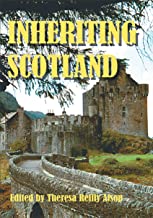
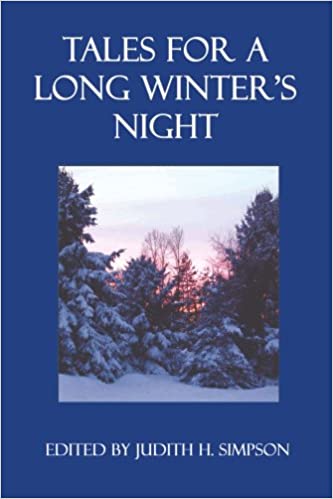
Before Judy’s death and the subsequent disbanding of the Queens Writers Group, I got to write historical short stories that were published in two books:  Inheriting Scotland, edited by Theresa Reilly Alsop in 2002 and Tales For a Long Winter’s Night, edited by Judith H. Simpson in 2003. Both books were self-published in paperback and printed on-demand.

Look for "The Tailor's Shears" in this book of short stories
Inheriting Scotland, edited by Theresa Reilly Alsop

Inheriting Scotland

For a story to be considered for inclusion in Inheriting Scotland, I had to choose an item that had been hidden away in Lochar Castle in Scotland centuries ago and write a short story around that item’s history when it is discovered in the 21st century. The item I selected was the tailor’s shears. My story, “The Tailor’s Shears,” is set in 1703 and begins on page 177.  Inheriting Scotland is available in paperback and Kindle edition from Amazon.com.

Tales for a Long Winter’s Night

Imagine my surprise when Judy told me that she had selected my story, “Slip-Sliding Away!” to be the lead story in Tales for a Long Winter’s Night! She praised the strength of my story and gave my writing ego a boost. My story is set in the foothills of the Blue Ridge Mountains in North Carolina in the year 1771.

I got the idea for “Slip-Sliding Away” from an oral history story about the funeral of President Andrew Jackson’s father. In my story, why did Daniel die? And why was his funeral so funny? This book is available in paperback from Amazon.com, and my story begins on page 3.

The short story about which I'm proudest.
Tales for a Long Winter’s Night, edited by Judith H. Simpson

It was a thrill to see something I’d written in print for the first time! I had fun writing the two stories and have toyed with the idea of writing several more historical short stories for self-publication in book form. I hold the rights to both stories, so I can publish them as I wish.


What’s next for me?

My semi-confinement due to my fractured leg and subsequent pulmonary embolism seemed like the perfect opportunity for me to pursue the idea of writing a collection of short stories. On February 29 I started working on a couple of short stories. I plan to write several stories set in America in the 18th and 19th centuries.

It’s not been easy to get my creative juices running during this new normal in which we find ourselves. Slowly, though, I’ve gotten back into doing the historical research necessary for the writing of historical fiction. Although I take creative license in imagining some relationships and all conversations, I try to make the setting and the people as true to life as I can based on my research.

Most recently, I’ve enjoyed reading and rereading some documents and various books that offer background information for the Mecklenburg Declaration of Independence. Signed by 27 men of some standing in old Mecklenburg County, North Carolina (made up of the present counties of Cabarrus, Union, and Mecklenburg) on May 20, 1775, it predates the national Declaration of Independence by more than a year.

I’ve written a rough draft of a story set in May 1775 in Mecklenburg County from the perspective of a couple who feared that war with Great Britain was inevitable.

You’ll be the first to know when I’m ready to self-publish a collection of my stories! I think it will be a good way to “get my name out there” before I finish editing my historical novel. Self-publication will be a learning experience for me and one that I will gladly share on my blog. Stay tuned!

Since my last blog post

In addition to researching and writing a short story, I’ve been for physical therapy twice. It’s strange to put on a mask and enter a place of business where the receptionist and therapist are wearing masks and to try to make small talk when there’s nothing happening except the COVID-19 pandemic. It’s slowly sinking in that things will never go back to the way they were in 2019.

Restaurants in North Carolina are still open only for take-out or delivery. Banks are open on reduced hours. Essential businesses like grocery stores and pharmacies remain open for pick-up and delivery. As of May 8 at 5:00 pm, a few stores opened in the state, but there are restrictions on how many people can be inside a store at any time. As of Friday, we in North Carolina entered “Phase One” of reopening for business. Gatherings of more than 10 people are prohibited.

Each of the 50 states in the US have their own rules and regulations for reopening businesses and getting people back to work. It is a confusing hodge-podge of conflicting and restrictions. I don’t think anyone knows just how bad this pandemic is and will continue to be for years to come until a vaccine is developed and made available worldwide.

Until my next blog post

Be creative. Be careful. Stay safe. Stay well.

I hope you have a good book to read. Last night I finished listening to Big Lies in a Small Town, by Diane Chamberlain.

Let’s continue the conversation

Do you like to read short stories? Would you consider purchasing a book of my short stories? (Don’t worry. I won’t hold you to it!)

Janet

A Variety of Books Read in April 2020

When April ended last Thursday, I was surprised to find that I’d read seven books during the month. Whether it was a result of the pandemic or the tedium of the last weeks of the 13 weeks I couldn’t walk, I don’t know. I just know I couldn’t seem to concentrate to read or listen to much fiction. I had better luck reading nonfiction books.

If you’ve read my blog for a while, you know that I get most of my books from the public library. The public libraries here closed suddenly in mid-March. Some books I wanted to read were not available from the public library in downloadable form. Waitlists for e-books filled up quickly as people realized it would be weeks or months before they could once again check out physical books.

What I discovered last month was that, in addition to reading books about the craft of writing, it was a good time to tackle my to-be-read (TBR) list. That list is made up of several hundred books I didn’t read when they were published. Some of the books on the list are books I realized months or years after their publication that I had become interested in them.

I read seven books in April. Here are my thoughts about them.


Sycamore Row, by John Grisham

I finally got around to listening to Sycamore Row, by John Grisham. What a treat! It was entertaining and funny.

A humorous legal thriller by John Grisham
Sycamore Row, by John Grisham

This book takes us back to the fictional Ford County, Mississippi that Mr. Grisham first wrote about in A Time to Kill. Sycamore Row is a story of inheritance, family greed, a non-relative who inherits everything in Seth Hubbard’s will, and some questionable lawyers. Everyone in town gets interested after it is revealed that Mr. Hubbard’s estate exceeded $20 million.

The path to justice in Sycamore Row runs from Mississippi to Alaska and back to Mississippi. There are surprised witnesses and in the end the reader learns the significance of the sycamore tree.


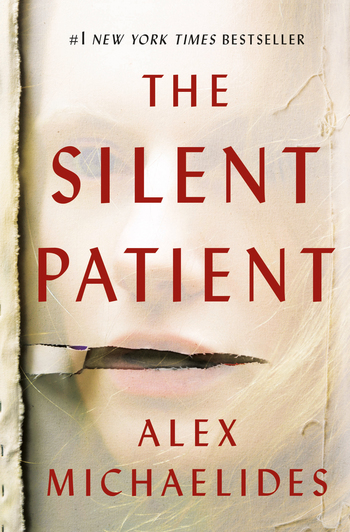
The Silent Patient, by Alex Michaelides

The Silent Patient, by Alex Michaelides had been on my to-be-read (TBR) list since I heard all the hype about it when it was published last year. This was reinforced when the movie adaptation was publicized. Yet, I didn’t read it until a couple of weeks ago. Or, rather, I listened to it. I regretted not reading it earlier.

The Silent Patient, a psychological thriller by Alex Michaelides
The Silent Patient, by Alex Michaelides

The silent patient is Alicia, who murdered her husband, Gabriel, and immediately stopped talking. The narrator throughout most of the novel is Theo, a psychoanalyst who sets out to help Alicia.

In the midst of Theo’s quest to get Alicia to talk – and ultimately, to tell why she killed her husband, Theo discovers vulgar emails his wife of nearly nine years has exchanged with another man.

The Silent Patient was Alex Michaelides’ debut novel. This psychological thriller will keep you turning pages (or speeding up the rate at which the audiobook is being read to you.”

Alicia is a famous artist in London. Her new-found notoriety as a killer makes the price of her paintings skyrocket as she is safely tucked away in a secure facility being analyzed. As the story unfolds, the focus transitions from Alicia to Theo himself and his psychological state. He visits his former therapist, Ruth, who guides Theo through his own feelings of inadequacy. She encourages him to leave his wife.

Then Alicia becomes the temporary narrator in Part 2, Chapter 13. She reveals how much she hates the rifle Gabriel inherited from his father. She describes the days leading up to her shooting Gabriel five times.

A new twist to the story is revealed. At this point, you’re only halfway through The Silent Patient. A lot is packed in this book of only 336 pages (or less than nine hours of listening.)

In case you haven’t read it, I won’t spoil the rest of the story for you.


Everything Happens for a Reason:  And Other Lies I’ve Loved, by Kate Bowler

I read a little about this book online and immediately got on the waitlist for the ebook at the public library.

The author, Kate Bowler, was raised an Anabaptist in a section of Manitoba, Canada containing numerous Mennonite communities. She learned early on that Jesus lived and taught the virtues of a simple life. Around the age of 18, Ms. Bowler started hearing about the “prosperity gospel” that many televangelists were preaching. It seemed that everyone was being attracted to this new idea that Jesus wants His followers to be wealthy.

Ms. Bowler describes the “prosperity gospel” as follows: “The prosperity gospel is a theodicy, an explanation for the problem of evil. It is an answer to the questions that take our lives apart:  Why do some people get healed and some don’t?….The prosperity gospel looks at the world as it is and promises a solution.”

In her mid-twenties, Ms. Bowler interviewed “the prosperity gospel’s celebrities” and then wrote a history of the movement. What she found was that the prosperity gospel encourages its leaders to buy private jets and mansions. What she also found were people seeking a way to escape the lives they were living. Some wanted the high life, but most wanted relief from some kind of pain.

Something else Ms. Bowler found was that a part of her sought an escape, even as she cringed at the guarantees the prosperity gospel made. She came to believe God would make a way for her and hardships would merely be detours; however, she no longer believes that.

As a new mother, Ms. Bowler was diagnosed with cancer, and she was told, “Everything happens for a reason” and “God is writing a better story” until she didn’t want to hear it again. It made her feel like everyone had a theory about why she had cancer.

“I wish this were a different kind of story. But this is a book about befores and afters and how people in the midst of pain make up their minds about the eternal questions:  Why? Why is this happening to me? What could I have done differently? Does everything actually happen for a reason? If I accept that what is happening is something I cannot change, can I learn how to let go?” – Kate Bowler

I sort of got mired down in the details in rest of the book and eventually lost interest in finishing it. I could not identify with all her “Why me?” thoughts and questions. I’ve had my share of physical problems, but I’ve never asked God, “Why me?” I tend to think, “Why not me?” Jesus never promised us a perfect life. He promised to be with us throughout our lives, no matter what happens.

Kate Bowler teaches at the Duke Divinity School.


The Whistler, by John Grisham

In my blog post on April 6, 2020, https://janetswritingblog.com/2020/04/06/eight-books-i-read-in-march-2020/ , I said, “A John Grisham novel has never disappointed me.” That statement probably still holds. I listened to The Whistler in April, but I didn’t get “into” it like I have the other Grisham books I’ve read. Let’s just say it was probably my fault and not Mr. Grisham’s.

The Whistler, by John Grisham

Much of April I seemed weighed down mentally by all the news about the coronavirus-19 pandemic. Many days I had trouble concentrating enough to read. I was trying to listen to The Whistler during one of those reading slumps. I would probably enjoy it more if I read it or listened to it during normal times.


Revolutionary Characters: What Made The Founders Different, by Gordon S. Wood

I minored in history in college, and this book reminded me of a history text book. In other words, it told me more than I wanted to know about each of the men the author sees as founders of America. Each chapter was about a different man, and one of them surprised me. I would have liked the book better if Mr. Wood had included several women.

Revolutionary Characters: What Made The Founders Different, by Gordon S. Wood

I’m planning to write a blog post on June 29 about some of the founders of America, so I’ll save my other comments about this book until that time.

I won’t hold you in suspense until then, though. The founder I was surprised to find on Mr. Wood’s list of eight men was Aaron Burr.

Stay tuned for more on this topic in a couple of months, just before the 4th of July.


Writing Vivid Settings: Professional Techniques for Fiction Authors, by Rayne Hall

I’m sure many of you couldn’t care less about the techniques fiction authors use to write vivid settings. If you’re a fiction fan, you just want the settings in the books you read to be so vivid that they put you there.

I took copious notes from this book, and I believe I learned more than a few things that will improve my writing skills. The book addresses ways to include all the senses in one’s writing, varying sentence structure, using weather for intensity, light to set mood, and detail for realism – but not too much detail, and using similes for world building – but not too many of them. The book gets into deep point-of-view, opening scenes, fight scenes, scary scenes, love scenes, night scenes, indoor scenes word choice, and research.

I highly recommend this book for anyone learning to write fiction.


Fiction Pacing: Professional Techniques for Fiction Authors, by Rayne Hall

I also found this book by Rayne Hall to be helpful. In it, she addresses varying the pace throughout a novel. She writes about how the length of sentences and paragraphs can either speed up the action or slow it down. Even word length enters into that, along with how to craft dialogue.

The book talks about how to use (and not use) techniques like flashbacks and memories, euphonics, strong verbs, and descriptions to control the pace in fiction.

Ms. Hall has written numerous writing craft books and I look forward to reading more of them.


Since my last blog post

X-rays last week showed good healing of my fractured tibial plateau so, after 13 long weeks, I was finally allowed to start putting some weight on my right leg. I feel like I’d been set free! I can now go anywhere my walker and I can go. I haven’t tried steps yet! It’s great to be able to go outside, even if we are still under a state-at-home order in North Carolina. I’m thrilled just to be able to walk outside!

Until my next blog post

Read a good book, if you have the luxury of time and concentration. I’m currently listening to A Conspiracy of Bones, by Kathy Reichs.

Be creative. If you are a writer or other artist, I hope you have productive creative time.

Stay safe and well. Listen to the medical professionals. We’re all in this together. The life you safe might be mine!

Let’s continue the conversation

If you’ve read The Whistler, by John Grisham, what did you think about it?  What have you read lately that you would recommend to the rest of us? Have you supported an independent bookstore recently? If you want to give a shout-out to an independent bookstore, feel free to do so in the comments below or the comments on my Facebook page when I post this blog post later today.

Thanks for stopping by!

Janet

An Adventurer’s Personality? Who, me?

I recently took a free online personality test. It was an interesting way to spend a few minutes. It sized me up fairly well on some counts, but I still haven’t figured out how it arrived at the assessment that I have an adventurer’s personality.

The article I read talked about how a writer’s writing process should be designed based on his or her personality. With that in mind, I took the test on https://www.16personalities.com/free-personality-test and had the following results:

1.  I’m 92% an introvert when it comes to how I interact with my environment. The only surprise there was that it wasn’t 100%!

2.  I spend 55% of my mental energy observing.

3.  I’m slightly more feeling than thinking by nature when making decisions or planning.

4.  I’m evenly split between being “judging” and “prospecting” when it comes to my work, planning, and decision-making tactics.

5.  I am 79% turbulent and 21% assertive in my confidence in my abilities and decisions. The test website said this is my identity and “this tract underpins all others.” That’s spot on!

The “bottom line” was that I have the personality of an adventurer. Say what? I read on because I really don’t see myself as an adventurer. Here’s the introduction to the explanation:

“Adventurer personalities are true artists, but not necessarily in the typical sense where they’re happy out painting little trees…. Rather, it’s that they see aesthetics, design and even their choices and actions to push the limits of social convention. Adventurers enjoy upsetting traditional expectations with experiments in beauty and behavior – chances are, they’ve expressed more than once the phrase, ‘Don’t box me in!’”

It goes on to say that adventurers seem unpredictable and they like risky behaviors.

A ski jumper
Photo by Maarten Duineveld on Unsplash

Risky behaviors? The examples given are gambling and extreme sports. No way! I don’t even know how to purchase a lottery ticket, and the most extreme sport I’ve played is basketball.

The website says adventurers don’t take biting criticism well. Yes, that’s me, and it doesn’t bode well for me as I try to get my novel published.

Someone having a trantrum
Photo by Lacie Slezak on Unsplash

It said adventurers need to take “time each day to understand their motivations” to allow them “to use their strengths to pursue whatever they’ve come to love.”

It seems, according to the website, I’m charming, sensitive to others, imaginative, passionate, curious, and artistic. I don’t know about charming.

An adventurer’s weaknesses

Now we’ll explore my supposed weaknesses. Apparently, according to the website, I’m fiercely independent, unpredictable, easily stressed, overly competitive, and have fluctuating self-esteem. I’m not sure about being unpredictable. I am independent and easily stressed, but I don’t see myself as overly competitive. Am I?

It says I’m spontaneous and not a good planner. That couldn’t be further from the truth. I love to plan trips down to the nth degree! As I mentioned in my blog post last week, https://janetswritingblog.com/2020/04/20/support-an-independent-bookstore-please/, I plan my blog post topics a year in advance. I make lists. I don’t always follow through with those lists, but I continue to make them. I’m a planner.

Other traits of adventurers

The website says adventurers abide by “live and let live,” but they need lots of personal space and freedom. Yes, that’s me.

It says adventurers make fun parents. I’ve always said God knew what He was doing when he didn’t give me children. I have never had the patience a good parent needs.

In career, it says adventurers are experimenters and trendsetters. That’s so not me! It says in the workplace, an adventurer does not like rules and is a risk taker. That’s not me at all! As a supervisor, it says an adventurer doesn’t like controlling others and often jumps right in to work on a project with subordinates. I think that was the kind of manager I was.

What prompted me to take the personality test

The free online personality test on https://www.16personalities.com/free-personality-test was recommended by writing coach Jacqueline Myers in her guest post on Janice Hardy’s March 26, 2020 blog, http://blog.janicehardy.com/2020/03/write-happy-4-little-letters-that-will.html.

Quoting from Janice Hardy’s introductory remarks about Jacqueline Myers:  Ms. Myers “coaches writers using a proprietary methodology that helps them overcome their debilitating creative blocks so they can write un-put-down-able books.”

This is very much an over simplification of Ms. Myers’ assessment of an introvert such as myself, but she recommends that writers who are introverts need peace and quiet and uninterrupted writing time. Introverts can’t be rushed when they’re writing. We like plans and outlines.

Thinking about myself, I agree with the uninterrupted part; I easily lose my train of thought if I’m interrupted. However, I usually have music or even the TV playing in the background while I work.

Ms. Myers recommends that an introvert “find a critique partner who understands you and your work. Make sure it’s someone you trust, who will be gentle and honest with you.” I haven’t looked for a critique partner because I have trouble concentrating on the details in someone else’s writing — and I don’t always see the big picture. I would be a terrible critique partner.

After stating her thoughts about many types of writers, Ms. Myers said, “…writers read, study, and listen to writing experts who may or may not be able to help. What we don’t recognize is that we each have our own magical method within us. But instead of trusting and embracing it, we think someone else must have a better system. When we let go of all the complicated and contradictive writing advice out there and tap into our own innate writing process, we can effortlessly write in a way that touches, informs, and entertains our audience.”

I’m still in the phase of reading “how-to” books about writing. I’m constantly learning more about the craft of writing, but I think I have to find my own writing process through trial and error. Sometimes I read conflicting advice but not often.

My conclusion

I will, no doubt, continue to read writing advice written by experts. I will, no doubt, continue to cobble that advice together into future #FixYourNovel blog posts. I will, no doubt, continue to second guess myself and doubt my abilities and talents. When all is said and done, though, I will settle into my unique writing process. Perhaps some day I will trust myself to write the way I want to write and what I want to write.

More about the 16personalities.com personality test

The 16 personalities website goes on to explore “why,” “how,” and “what if?” If you want to learn (or verify) which personality type you are and why you are the way you are, this is a free online test. I am in no way recommending or endorsing the website. In addition to the free test, you can purchase other personality packages on the website. I took the test for fun and that’s as far as I’m going.

Since my last blog post

Since last Monday’s blog post, I’ve accomplished very little. I’ve done some reading and worked on some future blog posts.

I’ve spent more time reading the blogs of other people than I’ve spent reading books. I learn a lot from other bloggers. Like books, many blogs can transport the reader to another world. I follow blogs of artists, poets, photographers, writers, book reviewers, cooks, storytellers, traveloguers, psychologists, pastors, quilters, political commentators, and others who blog about whatever is on their minds. The bloggers I follow live all around the world, and I enjoy the different perspectives each of them offers.

Until my next blog post

Read a good book.

I hope you have productive and creative time. If you’re a writer and you’re struggling with the writing process, perhaps you’re trying to fit a round ball in a square hole. Perhaps you’ve read “how to write” books and articles until you can’t read any more. Perhaps, like me, you just haven’t been able to get your mind off the pandemic long enough to concentrate on finishing that book you started writing a decade ago. Maybe this will be our week to “get our mojo back,” “get back in the groove,” or “get back in ‘the zone.'”

Stay safe and well. Continue to take necessary precautions during this COVID-19 pandemic. If your job is not considered “essential” during this time of staying at home, I hope you find rest. If you have lost your job due to the pandemic, I hope you have adequate food and shelter.

Let’s continue the conversation

Have you taken a personality test? Did it jibe with the way you see yourself? Have you taken the test I wrote about today? If so, did you agree with the findings?

If you’ve been in an artistic slump lately but found your way out of it, please share what you think triggered your motivation to get creative again.

Janet

Support an Independent Bookstore. Please!

This isn’t what I had planned to blog about today, but after receiving an email from an independent bookstore in the small western North Carolina town of Sylva last week, I decided it was time for me to put in a plug for independent bookstores.

Some of us (including myself!) are guilty of ordering books from big online stores. By doing so, we might save a little money, but during this time of pandemic it just might be more important for us to order our books online from an independent bookstore.

If you’ve followed my blog for long, you know I’m a supporter of public libraries. I still am and always will be; however, the public libraries are closed now for an indefinite length of time. I still borrow e-books and some downloadable audiobooks from the public library, but many books are not available in those formats.

City Lights Bookstore & Cafe, Sylva, NC
City Lights Bookstore & Café, Sylva, North Carolina, in December 2014

Today I’m highlighting City Lights Bookstore in Sylva, North Carolina. Chris Wilcox and his staff there would really appreciate your ordering a book or two (or more!) from his shop,   https://www.citylightsnc.com/.

The website states: “Selling new and used books, cards, gifts, journals, maps, and more since 1985.

Nestled in the Appalachian Mountains in western North Carolina, Sylva is a fairly small town. Although the county seat of sparsely-populated Jackson County, the downtown business district in only a few blocks long.

The town heavily depends on the summer tourist season and the faculty and students of nearby Western Carolina University. But classes are online now and the students have gone home until further notice.  With the summer tourist season looking doubtful this year, the independent businesses in places like Sylva need our support.

Chris is trying to stay in business, but he really needs our help. He and his shop hold a special place in my heart because City Lights was one of the first bookstores to carry my vintage postcard book when it was published in 2014. When I visited the shop, Chris invited me to autograph the copies he had in stock. That made me feel so good!

If you live in the Sylva area, Chris is offering curbside service on Tuesdays through Saturdays from 10:00 a.m. until 6:00 p.m. (except for siesta time from 3:30 until 4:00.) The store is closed for browsing to help curb the spread of Coronavirus-19, but you can browse on the shop’s website:  https://www.citylightsnc.com/ and place your order for delivery via the United States Postal Service.

I love the stated goal of City Lights Bookstore:  “Our goal is to share the literature of the region with the world, and the world of books with our community.”

https://www.citylightsnc.com/

In addition to the books other independent bookstores carry, City Lights Bookstore has a wonderful selection of regional books, fiction and nonfiction, from the Appalachians, including books about The Eastern Band of Cherokee Indians.

Fighting this pandemic is a marathon, not a sprint. If you are able, please support City Lights Bookstore this week and every week or two. It would be a shame if City Lights Bookstore or any other independent bookstore went out-of-business due to the pandemic.

Chris has made it easy for you. If you want to order a book from his shop or set up a private wishlist, all you have to do is submit your email address through his website and verify that you’re a human being. He’ll then send you an email with a special link for you to use to set up an account. Easy peasy!

Chris has no idea I’m blogging about his shop today. I bet he’ll wonder what’s going on when he starts to receive book, journal, and map orders from my blog readers! His shop is closed on Mondays, but I imagine you can go ahead and create an account online and place your order.

If you’re ever in Sylva, drop by City Lights Bookstore and tell Chris that Janet Morrison sent you even though he probably doesn’t remember my name. It’s not like my vintage postcard book, The Blue Ridge Mountains of North Carolina was a bestseller! City Lights Café is located downstairs and is a good place to grab lunch.

Since my last blog post

I’ve been somewhat at loose ends. There are numerous books I could have read and just as many writing projects I could have worked on. It took most of the week, but I finally settled on concentrating on reading books about the craft of writing. Those books held my interest longer than any novels I picked up.

I reworked my “editorial calendar” for my blog for the next 12 months. More than a few topics in my #FixYourNovel series needed to be rescheduled for later this year and even into 2021.

Until my next blog post

If you’re fortunate enough to have an independent bookstore in your town, do what you can to keep it in business. If you don’t, I invite you to visit Sylva, North Carolina’s City Lights Bookstore online: https://www.citylightsnc.com/. I know you’ll find something you want to order.

I hope you have a good book to read. Who knows? Maybe I’ll get my mind back on reading fiction. Or maybe I’ll put some of the writing techniques I learned last week into practice and make some progress on my novel or the short stories I’m writing.

I hope you have creative time.

I hope you stay safe and well. Please stay at home if your job allows that during this pandemic. Follow the rules, if not for yourself, do it for the rest of us. You can do this.

Let’s continue the conversation

If you know of an independent bookstore that’s struggling during this pandemic, please give us the name and location along with website details, if possible, in the comments below or in the comments when I post this on my Facebook page, Janet Morrison, Writer. That way, my readers and I will discover some independent bookstores all over the world!

Janet

LEAPFROG and The Immoral Majority

Two books I read in March worked hand-in-hand. I hadn’t anticipated that, so it was a pleasant surprise. I mentioned them in passing in last week’s blog post, https://janetswritingblog.com/2020/04/06/eight-books-i-read-in-march-2020/.

The two books are The Immoral Majority: Why Evangelicals Chose Political Power over Christian Values, by Ben Howe and LEAPFROG: How to hold a civil conversation in an uncivil era, by Janet Givens, M.A.

I read Ben Howe’s book first. It addressed something that has dumbfounded me:  How can Christians come down on opposite ends of the spectrum about Donald Trump? How do many evangelicals continue to support him when his speech, Tweets, and actions are in total contrast to the teachings of Jesus Christ?

I took copious notes while reading The Immoral Majority and thought I’d write a blog post about it. Then, I read LEAPFROG, by Janet Givens. I was immediately struck by how the two books could work together. This is probably the longest blog post I’ve written. If the topic interests you, I hope you’ll have time to read it.


The Immoral Majority: Why Evangelicals Chose Political Power over Christian Values, by Ben Howe

How can Christians see Donald Trump so differently?
The Immoral Moral Majority: Why Evangelicals Chose Political Power over Christian Values, by Ben Howe

In the introduction to this nonfiction book author Ben Howe relates a story from 2012 when the Chick-Fil-A restaurant chain came under attack for its charitable foundation’s support of several organizations the Huffington Post labeled as anti-gay. Mr. Howe and a gay friend set out to make a video to show that Chick-Fil-A was a good company that did not discriminate against anyone due to their sexual orientation.

About the same time, a man in another state went to a Chick-Fil-A restaurant with video camera in hand to prove that Chick-Fil-A was a horrible company. A video he made of an exchange with the employee at the drive-through window went viral. Ben Howe more or less led a campaign to give that man “what he deserved.” The result of the campaign resulted in the man losing his job and having trouble finding employment for years to come.

In telling that story, Mr. Howe concludes: “It’s not really whether the punishment fits the crime; it’s more about the decisions of those who react to the crime and whether they are carrying out justice or simply joining the wrongdoer in being wrong.”

He asks the reader to imagine what happens when you put millions of self-righteous people together. An echo chamber develops.

“This is a book about what happens when the people who believe they have the moral high ground find themselves on the low road.” ~ Ben Howe

Feeling under attack, evangelical Christians in the United States had to decide whether to cling unflinchingly to Biblical principles or to act “according to Christ’s example.” As a group, they clung to principles and turned their backs on Christ’s example. The result was the election of Donald Trump in 2016.

Mr. Howe theorizes that the shift started with Jerry Falwell, Jr.’s January 2016 endorsement of Trump for US president. Although a few evangelical leaders spoke out against Trump, Falwell held sway over the majority. Just as Jerry Falwell, Sr. had helped launch the “Moral Majority” movement in 1980, his son was instrumental in urging evangelical Christians to support Trump in 2016.

The difference was, in 1980 Christians were encouraged to influence politics, but in 2016 Christians were, in Mr. Howe’s words, “being forcefully changed by politics.” In his campaign, Trump played on people’s fears. He told Christians they were being persecuted by the government and the Internal Revenue Service, and he promised to put an end to it.

People like Dr. Ben Carson maintained that Trump was a chess pawn in God’s hands and we needed faith that God knew what He was doing. Franklin Graham also took the pragmatic approach, saying God had always used imperfect people to work out His plans.

Trump campaigned as the one and only person who could save America. He mocked (and continues to mock) people who follow Christ’s admonition that we should pray for our enemies. By offering such counter-Christian ideas, Trump was able to win the U.S. presidency via the Electoral College, even though he did not win the popular vote.

In his book, Mr. Howe presents a chronology of how the old “Moral Majority” lost their way and set their sights on the political power Trump promised them instead of the power, grace, and eternal life Jesus Christ promised them. They somehow – which still puzzles me – fell for Trump’s showmanship and voted for him by the millions. He was that new shiny object that sounded so appealing to so many.

Mr. Howe says the real shift happened on June 20, 2016 when Trump “held a meeting with a thousand value-centric conservative leaders.” Endorsed at the meeting by such respected Christian leaders as Mike Huckabee, Dr. Ben Carson, and Dr. James Dobson, Trump was able to silence his evangelical naysayers and capture the hearts and minds of enough Christians to put himself in the White House.

The irony is that Hillary Clinton, Trump’s opponent in the 2016 presidential race, was and is a practicing Methodist. Trump supporters somehow believed that Trump was elected because God is in power; however, the same people believed the world would end if Clinton were elected. I can’t get my head around their belief that the all-powerful God would delight in Trump’s election but that same God would be held powerless if Hillary Clinton were elected.

All this and I’ve only touched on the introduction and first chapter of Mr. Howe’s book. I admit that I just skimmed through the rest of the book.

In subsequent chapters Mr. Howe writes about such topics as how Trump has been compared to King Cyrus of Persia in the 6th century B.C; people who criticized President Trump’s character; the influence of social media in the vitriol in today’s politics; the belief of many Trump supporters that you’re either pro-choice or you’re pro-Trump – there’s no middle ground; political correctness; desire for revenge; racism and the perception of racism; us against them; abortion; gun policy; defense of the indefensible; excusing the inexcusable; separation of church and state; and choosing between immoralities/the lesser of two evils.

On page 161, Mr. Howe states:  “By directly defying their stated desire, ignoring the character of Donald Trump, and creating a ‘Christian’ culture that has become divisively self-interested and bitterly self-righteous, these leaders have taught their flocks to value the things of the world, rather than the things of Christ.”

And on page 205:  “There simply is no pulling of a lever in a voting booth that will deny God His purpose when He pursues it, nor is there any pulling of the lever that will earn His allegiance to your ‘side.’”

Mr. Howe concludes that God will accomplish His plan regardless of who the U.S. president is. I agree.

“If you wish to be all that Donald Trump and his ilk are not, then the greatest service you could do for the world is to love them despite themselves. Love doesn’t require agreement. It doesn’t require compromise. It doesn’t require surrender or shedding of values. It only and ever required the simple truth that we are stuck together. And if things are going to get better, you cannot wait for others to do it first.” ~ Ben Howe

In the current political climate in the United States, the loudest voices to the “far right” seem to think, “If you don’t agree with me politically, you have no right to live.” This must stop!


LEAPFROG: How to hold a civil conversation in an uncivil era, by Janet Givens, M.A.

How we can learn to agreeably disagree.
LEAPFROG: How to hold a civil conversation in an uncivil era, by Janet Givens, M.A.

 “If it is our desire to live in a civil society, we must be willing to engage in a dialogue with those with whom we disagree.” ~ Janet Givens, M.A.

Ms. Givens titled her book LEAPFROG — an acronym of four verbs, Listen, Empathize, Assess, and Paraphrase that help us listen, while the nouns Facts, Respect, Observation, and Gratitude “guide us as we present our ideas in a way that will increase the likelihood that we will also be heard.”

Ms. Givens dedicated a chapter to each of the four verbs and four nouns. In a nutshell, here are snippets from the chapters about Assess, Facts, and Respect:

Assess – Ms. Given wrote, “Assess, as I’m using it here, simply means ‘pause and think’ while you ask yourself, “Is this a conversation I am able to have at this time?’ This is more important than you realize.” Are you and the other party coming to the conversation with curiosity and compassion?

Facts – Ms. Givens wrote, “… since understanding is our goal, we must ignore facts. For now. They have their place in any conversation, of course, but first, receptivity, a willingness to hear them, must exist. On both sides.” She gives “a question to ponder before moving on” at the end of each chapter. At the end of the chapter about facts she wrote: “Think back to your last political conversation. Or, your last Town Hall meeting. Or, your last family feast that ended badly. What went wrong?”

Respect – I love Ms. Givens’ chapter about respect. She wrote, “When we forget our common humanity, we create a chasm between us that is hard to bridge. Respect serves as a bridge to cross that chasm,” while “blame lets us abdicate responsibility for our discomfort by putting it on the other.” We’re all biased, whether we realize it or not.

In conclusion, Ms. Givens wrote about human beings’ need for social interaction. She calls difference “the source of all creativity. Indeed, think of difference as the beginning of all learning, Then, consider a disagreement as a difference of opinion that creates an enlightening and stimulating mystery, one which can be solved, together.”

She then lists her concerns about where our society is heading if we continue to be at such odds politically like we have not been since the American Civil War.

Ms. Givens asks many questions for our consideration throughout the book and at the end of her book. I think most people would benefit from reading LEAPFROG: How to hold a civil conversation in an uncivil era. I’ve just hit a few high points in my blog post. For more information about Ms. Givens’ work or to contact her, go to https://janetgivens.com/.


How the two books helped me

I approached The Immoral Moral Majority: Why Evangelicals Chose Political Power over Christian Values, by Ben Howe with the following mindset: I’m a Christian, a member of the Presbyterian Church (USA), and I have been guilty of being critical of Christians who continue to support Donald Trump. I wanted the book to explain their rationale to me. I’m still trying to understand it.

While I was still contemplating the theories, Mr. Howe gave in his book, I read LEAPFROG: How to hold a civil conversation in an uncivil era, by Janet Givens, M.A., and it really opened my eyes and made me evaluate my opinions.

It helped me see that I tend to listen to the cable news channels I agree with. When I read or listen to “the other side” I approach them with a biased ear and eye. Ms. Givens’ book helped me acknowledge my biases. Overcoming those biases is a work in progress.

If you disagree with my politics, that is your right. I respect your right to disagree; I just don’t understand it. As an American and a Presbyterian I will defend your right to believe what you believe and vote as you feel led to vote. That doesn’t mean I understand how you got there. When the Trump presidency is over, I hope we, as Americans, will once again be able to agreeably disagree.

In the current political climate in the United States, the loudest voices to the “far right” seem to think, “If you don’t agree with me politically, you have no right to live.” This must stop!

I still haven’t had that difficult conversation with anyone whose political views are far from mine, but I will read and re-read Ms. Givens’ book so I’ll be better-equipped to Listen, Empathize, Assess, and Paraphrase when that opportunity presents itself. I’ll have that conversation someday, when the other person and I are ready to approach it with Facts, Respect, Observation, and Gratitude.


Since my last blog post

Due to the COVID-19 pandemic, my next appointment with my orthopedic doctor has been rescheduled for a week later, which means I’ll have 13 weeks without putting any weight on my right leg instead of 12. I’m disappointed but that’s a small price for me to pay.

Until my next blog post

Please rest your eyes. If you read this lengthy blog post of mine today, you need to rest your eyes.

I hope you have a good book to read.

I hope you have some creative time.

I hope you stay safe and well. It has been a year like most of us have never seen before and it will, no doubt, continue to be so. I hope you will find something positive to do as we all journey through this pandemic.

Let’s continue the conversation

Have you read either of these two books? How did they affect you? Have you acknowledged your biases? Have you had that difficult conversation with someone? How did it go? Has the COVID-19 pandemic changed your thinking about politics and your fellow citizens whose views are very different from yours?

Janet

Eight Books I Read in March 2020

Looking back over the list of books I read in March makes me realize how March 1 seems like a lifetime ago. The world has changed so much since then. It’s difficult to even remember what “normal” was. What a blessing it was, though, for me to have books to help me through the last five weeks of this Coronavirus-19 pandemic.

As days and weeks passed, I found it progressively difficult to concentrate. How about you?

Inheritance:  A Memoir of Genealogy, Paternity, and Love, by Dani Shapiro

This book caught my attention by having “genealogy” in the title. Genealogy is one of my hobbies.

Inheritance
Inheritance: A Memoir of Genealogy, Paternity, and Love, by Dani Shapiro

As the title indicates, this book is a memoir. Dani Shapiro grew up thinking her father was her father and her mother was her mother, and her half-sister was her half-sister. A DNA test she took at the age of 54 rocked her world. Her biological father was someone other than the Daddy who had loved and raised her.

Although firmly believing or more accurately, knowing, she was Jewish, Ms. Shapiro had throughout her life defended that fact because her fair complexion and blue eyes made her look more Swedish than Jewish.

In this poignant memoir, Dani Shapiro takes you on a rollercoaster ride as she seeks answers to her questions of “Who?”, “Where?”, and “Why?” as she feels like her entire life has been a lie. The DNA test linked her to a man who had a 98% chance of being her first cousin.

Without spoiling the book for you, I’ll close by saying that Ms. Shapiro searched for her biological father’s identity, but she was beyond relieved when the 93-year-old sister of her father (the father who raised her) listened to her story and still embraced her as her niece.

Part III of the book reveals some surprising things about the Farris Institute in Philadelphia where Ms. Shapiro’s parents went for infertility treatments.

Bel Canto, by Ann Patchett

Having read State of Wonder and The Dutch House, by Ann Patchett, and knowing that her 2001 novel,Bel Canto, had received much acclaim, I was eager to check it off my to-be-read list.

Bel Canto
Bel Canto, by Ann Patchett

Based on the 1996 hostage situation at the home of an ambassador in Peru, Bel Canto is a novel with a host of characters. They’re in Peru for a birthday party honoring Katsumi Hosowaka, a prominent Japanese businessman who just happens to be a big fan of opera singer Roxane Coss. Ms. Coss was performing at the party.

Peruvian officials are trying their best to influence Hosowaka to build an electronics factory in their country. It turns out Hosowaka does not intend to build a factory there. He just wants to hear Roxane Coss sing.

The party and concert are going well for a while, but then armed terrorists burst into the banquet hall and demand to speak with the Peruvian president.

The president is home watching soap operas on TV and refuses to talk to the terrorists. Since the terrorists are already in big trouble, they have nothing to lose by staying at the party and holding the attendees hostage.

The story unfolds from there. The Red Cross negotiates the release of the women – except for Ms. Coss. One of her musicians dies from not having insulin.

As happens in many hostage situations, relationships develop between the terrorists – many of whom are teens or younger – and their captives. In fact, a romance develops between Hosowaka and Coss, as well as between Gen. Watanabe and Carmen, a young female terrorist.

A sense of normalcy develops as many of the hostages adjust surprisingly easily to their new daily reality which is radically different from their former lives. (Sounds a lot like our new normal, doesn’t it?)

Does the Peruvian government eventually take control of the situation? I won’t address that, in case you want to read the book.

Ann Patchett was awarded the Orange Prize for Fiction and the PEN/Faulkner Award for fiction for Bel Canto.

Call the Nurse: True Stories of a Country Nurse on a Scottish Isle, by Mary J. MacLeod

I was drawn to this book because it is set in the Scottish Hebrides. Though set on an unidentified island, the stories transported me back to Lewis and Harris, two islands that I visited in the Outer Hebrides in the 1990s.

Call the Nurse, by Mary J. MacLeod
Call the Nurse: True Stories of a Country Nurse on a Scottish Isle, by Mary J. MacLeod

The stories are humorous and sad. They reflect how in many ways people are the same all over the world, yet islanders are by nature and necessity a little different.

The book begins with Ms. MacLeod, her husband, and their two sons vacationing on the island and deciding to sell their home in England and move to the island. The house they managed to purchase (after being approved by the factor and members of this remote community) is beyond rustic.

The native islanders are slow to embrace incomers. Outsiders are eyed with suspicion. Ms. MacLeod gradually gains the confidence of the residents as she serves as nurse. This includes using psychology in some cases as she is thrown into some different situations..

I could picture these people and the stark landscape through Ms. MacLeod’s descriptive writing and my own travel experience.

It brought to mind a Gaelic term used on the Isle of Lewis which translates  to “white settlers” in English. It has nothing to do with races or the color of one’s skin. Any non-Isle of Lewis native who moves to the island is considered a “white settler.” At least, that’s the way it was in the 1990s.

Winter Garden, by Kristin Hannah

After enjoying The Nightingale and The Great Alone, by Kristin Hannah, I expected to like Winter Garden. It turned out not to be what I expected.

The premise of the novel is that the owner of a large orchard is dying. His two adult daughters, who have nothing in common except their parents, meet to try to make some decisions about the future of the family business. Neither of them have ever gotten along with their mother who now displays many signs of mental illness.

I listened to half of this book before throwing in the towel. I’m slightly curious about how things turned out, but not curious enough to listen to six or seven more hours of cussing and arguing. It just wasn’t what I expected from Kristin Hannah. It was published in 2010, a few years before Ms. Hannah found her true writing voice and talent in The Nightingale.

The Litigators, by John Grisham

After deciding to suspend all the physical books I had on request at the public library, due to the fear of bringing COVID-19 germs into the house (and before the public library here closed to the public on March 16, 2020, I  downloaded an MP3 version of The Litigators, by John Grisham. A John Grisham novel has never disappointed me.

John Grisham's novel, The Litigators
The Litigators, by John Grisham

The Litigators is an entertaining novel about two bumbling attorneys who create the “boutique” law firm of Finley & Figg in Chicago. Published in 2011, this legal thriller is hilarious! It was perfect timing for me to read it during these uncertain COVID-19 times.

Finley & Figg think they’ll hit the big time and make a boatload of money handling a class action lawsuit against a cholesterol reduction drug manufacturer.

The Litigators was Grisham’s 25th published novel. In an interview with The Wall Street Journal, he indicated that editors had deleted the humor he’d written in his earlier books. To read that October 28, 2011 newspaper interview, go to https://blogs.wsj.com/speakeasy/2011/10/28/john-grisham-gets-the-last-laugh-on-the-law/.

Long Road to Mercy, by David Baldacci

I read A Minute to Midnight, by David Baldacci in January and wrote about it in my February 3 blog post, https://janetswritingblog.com/2020/02/03/three-books-i-read-in-january-2020/ A Minute to Midnight is Baldacci’s latest book and the second in his Atlee Pine series. I enjoyed A Minute to Midnight and was eager to read Long Road to Mercy in order to get more backstory about Atlee Pine.

Long Road to Mercy, by David Baldacci

The name of the book comes from a traumatic event in Atlee Pine’s childhood when someone broke into the bedroom of Atlee and her sister, Mercy, in the middle of the night and kidnapped and murdered Mercy. Atlee works for the FBI in a small office in Arizona. She has dedicated her life to tracking down Mercy’s killer in order to find out why he did it and why he took Mercy and not Atlee.

It’s great to see a female protagonist in a legal thriller!

The Immoral Majority: Why Evangelicals Chose Political Power over Christian Values, by Ben Howe

I read this book because I wanted to know the answer to that question. I’ll write about it in my blog post next week.

Leapfrog: How to Hold a Civil Conversation in an Uncivil Era, by Janet Givens, M.A.

This is an enlightening book that guides the reader through a systematic way to prepare for and have a conversation with someone with whom he or she disagrees. It’s aimed at those difficult conversations that we don’t know how to have with our friends and relatives whose political views, for instance, are in total conflict with your own views.

It was serendipitous that I read the Ben Howe book referenced above and the Janet Givens book in the same month.

Tune in to my blog post next week to read my thoughts on these two books.

Since my last blog

I continue to make one faux pas after another on my Android tablet. On Wednesday, I put an advertisement for my blog on my church’s Facebook page by mistake. That was embarrassing. It took me a while to figure out how to delete the post.

No doubt, no one at my church was surprised at my Wednesday mistake. A couple of weeks ago I tuned into Facebook Live for the first time. I inadvertently broadcast a live view of my lap and the inside cover of my tablet for 11 seconds. I did eventually figure out how to delete that. A little bit of computer knowledge is a dangerous thing!

On the positive side, I got involved with the Masks for Front Line Heroes Facebook group – a local group that started here in the Harrisburg, North Carolina community. I can’t sew right now, but I raided my stash of 100% cotton fabric and sewing supplies to donate to the people who are making masks for local medical personnel to use when their N95 masks run out. It gave me a good feeling to know I was making a tangible contribution to the fight against the Coronavirus-19 pandemic!

Until my next blog post

I hope you are safe, well, and able to practice social distancing. It looks like we’re in for some rough weeks and months ahead here in the United States.

I hope you have a good book to read. I’m listening to Sycamore Row, by John Grisham. I’m taking the opportunity the pandemic has provided to work on my lengthy to-be-read list.

If you’re a writer or other artist, I hope you’re being creative.

Please stay at home if your job allows that. Follow the rules, if not for yourself, do it for the rest of us. You can do this. I’ve been confined indoors at my house since January 27 except for doctor’s appointments and that February 26 return to the hospital. After being confined for 10 weeks, my advice to others is, “Make the best of it. We’re all in this together.”

Stay safe!

Janet

#FixYourNovel #5 – Authentic Details Nail Time and Place

I had a bit of fun last week in posting a five-part series about my bizarre accident in January and the equally strange ensuing weeks. I hope you enjoyed my tale of woe.

Today it’s back to work, though, on the craft of writing. This post is geared toward writers, but I think we can all learn how to communicate our thoughts more vividly whether in the written word or in our conversations.

Photo by Aaron Burden on Unsplash

Advice from Barbara Kyle

In her email on March 27, 2020, author and writing coach Barbara Kyle gave some welcomed advice for writers having trouble concentrating on their writing during the coronavirus-19 pandemic. She recommended that writers use this time to do research, if they’re having difficulty producing creative words on the page.

In my recent weeks of confinement due to my fractured leg, I’ve worked on some blog posts in advance. That’s the case with today’s post as I continue my sporadic #FixYourNovel series.

Time and place

The more a writer knows about the geography, demographics, history, culture, and people of her story’s location and time period, the better. You don’t have to tell everything you know. In fact, please don’t! You do need to draw from your first-hand knowledge and research to discern which details to give the reader.

Example:  The historical novel I’m working on

The historical novel I’m still editing is set in the backcountry of the Carolinas at the close of the 1760s. Specifically, the story is set in present-day Lancaster County, South Carolina and present-day Cabarrus, Mecklenburg, and Rowan counties in North Carolina.

Without knowing what I was preparing myself for, I’ve soaked in the history of this region all my life. My study of local history, colonial American history, and my own family’s history have grounded me in the time and place in which my novel manuscript is set.

Have you heard of en.esosounds.net? (Pardon the pun!)

I recently discovered a helpful website (http://en.ecosounds.net/) as I was trying to add local flavor to the sounds my characters were hearing as they rode along a dirt road in July of 1769. It was a cold, dreary, blustery day as I was trying to transplant my mind and ears to a hot and humid piedmont Carolina day in July. Since I grew up in a rural area there, I know in my head the sounds I want to share with my reader. Putting those sounds on the page can be a challenge. I have to assume my reader is not familiar with the mid-summer sounds in rural South Carolina.

Something I found beneficial as I wrote the sounds my characters were hearing in the countryside on that hot July day in 1769 was this website:  en.ecosounds.net. On that site you can listen to recorded sounds form various localities. Listening to a couple of those recordings was the perfect backdrop for me to listen to while I edited that particular scene.

Borrowing the wisdom of Barbara Kyle again

In her book, Page-Turner:  Your Path to Writing a Novel that Publishers Want and Readers Buy, Ms. Kyle writes about the importance of using “concrete” words and images in one’s writing. Here’s a quote from chapter seven:

“For example, let’s say you’re describing a man in clothes that are damp from rain. If the reader is given just the appearance of those clothes, the man could be across the room, but if they read that the man’s sweater gives off the musty, wet-dog smell of damp wool, they’re right next to him.”

Ms. Kyle goes on to explain that including sensory details in our writing pulls on the reader’s emotions and thereby makes the writing more memorable for the reader.

Barbara Kyle’s website is https://www.barbarakyle.com/, in case you want to know more of what she has to offer writers.

A case of serendipity

I love when serendipity happens. I had been working on this blog post on March 3 when I changed gears and stopped to read some blogs. I follow Joanna Penn’s Creative Penn blog. I read her March 2, 2020 blog post, ”Opportunities in Audiobook Publishing with Michele Cobb.” (Here’s the link to it: thecreativepenn.com/2020/03/02/opportunities-in-audiobook-publishing-with-michele-cobb/.)

Michele Cobb is executive director of the Audio Publishers Association, the publisher of AudioFile magazine, and a consultant for the audiobook business at Forte Business Consulting.

In an interview Joanna Penn did with Ms. Cobb, they discussed the speed at which audiobooks have caught on around the world and the trend that audiobooks are the thing of the future as people like to listen to books while driving, cooking, crafting, or doing any number of other things.

The thing that jumped out at me from the interview was the following quote from Michele Cobb:

“And when you create specifically for the audio format, you might have multiple narrators, you might have music, you might have sound effects, and you may never want to put that experience into a print format because it wouldn’t work with your eyes.”

Joanna Penn added, “Actually, enhanced ebooks are audiobooks with all the sound effects.”

Maybe such ebooks exist. I haven’t listened to one yet.

I couldn’t help but think about my experience of listening to meadow and forest sounds on en.ecosounds.net while editing that scene in my book. How the book listening experience could be enhanced if there were sound effects on an audiobook! The possibilities are limitless.

In the meantime, a writer still needs to hone her skills in writing sensory details. I think we’ll always have printed books, even if eventually the only “printed” format of books is electronic. If the prose is particularly beautiful, I want to read it over and over again. If I were writing this in 2040 or even 2030, perhaps I’d say, “I want to listen to it over and over again.”

My head is swimming as I try to imagine an audio of my novel with the buzzing of flies and bees, and the chirping of native birds playing in the background as my written words are being read.

I guess you could say I’m “old school.” I just started listening to books on CD a year or so ago, and more recently started downloading MP3 books onto my tablet. In the interview with Joanna Penn, Michele Cobb said that of the CD versus digital books being published today, 4% are on CD and 96% are digital!


Since my last blog post

I’ve sat in my chair with my fractured leg elevated on a stool. My chair is by a south-facing window through which I can watch a variety of birds at one of our birdfeeders. Over the last couple of weeks I’ve watched the maple tree go from bare limbs to tiny red buds that blossomed into green leaves.

Dogwood blossoms. Photograph by Janet Morrison

I’ve watched a dogwood tree transition from bare limbs to tiny buds to gorgeous white blooms. I’ve watched as the goldfinches almost overnight went from their drab winter US Army greenish brown to their brilliant yellow and black feathers. The Ruby-Throated Hummingbirds are due back from Central America any day now, so it’s time to put out our hummingbird feeders. Many of our azaleas are in full bloom.

Azalea. Photograph by Janet Morrison.

I am blessed to live where I do. Sunshine streams through my south-facing window every morning. I can see the road on which an occasional car, truck, bicycle, moped, or green John Deere tractor passes. I can see the Carolina blue sky and puffy white clouds. I can see the pollen piling up on my red pick-up truck. I can see my brother’s pine tree farm.

I can see the open meadow across the road that is now harvested for hay to feed local cattle. In my mind’s eye, I can still see the rows of soybeans Uncle Ross used to grow there, but I especially remember the years he planted red clover to replenish the soil – and how the red heads of the clover swayed in a soft summer breeze when I was a child.

What more could a person have than what I have outside my window?


Until my next blog post

I hope you stay safe and well as we all journey through this coronavirus-19 pandemic. We truly are all in this together.

I hope you have a good book to read or listen to while you live under “stay-at-home orders.”

Please tell your friends about my blog.


Let’s continue the conversation

As recently as a couple of years ago I did not like listening to books. Now audiobooks make up probably 75% of my reading.

What about you?

What are the pros and cons of audiobooks?

Have you listened to an ebook that included sound effects?

Janet