I write southern historical fiction, local history, and I've written a devotional book. The two novels I'm writing are set in Virginia and the Carolinas in the 1760s. My weekly blog started out to follow my journey as a writer and a reader, but in 2025 it has been greatly expanded to include current events and politics in the United States as I see our democracy under attack from within. The political science major in me cannot sit idly by and remain silent.
I mentioned in my September 6, 2021 blog post, Books Read in August 2021 (a.k.a. What to Do When You Can’t Afford Writing Courses) that I’m taking C.S. Lakin’s “8 Weeks to Writing a Commercially Successful Novel” online course. In today’s blog post, I’m excited to tell you about some of the things I’ve learned and accomplished in the last two weeks.
Don’t let the title fool you!
The name of the course doesn’t mean you can write a novel in eight weeks! Ms. Lakin just means the course lasts eight weeks. The course is intense. It covers a year’s worth of material. If I learn as much each of the next six weeks as I learned the last two, week, my head might explode.
The first week’s lesson about scenes and “high moments” was worth the price of the entire course. (No, I’m not getting any type of compensation for saying that!)
Photo credit: Elijah Hiett on Unsplash.com
The structure of popular novels has changed in the last few years due to the influence TV and movies have had on our attention spans. The narrative-rich novels I loved so much by such authors as James Michener aren’t what readers want now. There are exceptions, of course, but this course is about the new norm. Scenes should just cover a capsule of time, yet every scene must serve a purpose and end with some type of change.
The second lesson was about microtension. I didn’t know what that was, so there was plenty to learn.
I’m still trying to grasp the many aspects of microtension. It seems to be just about anything that’s unexpected in a scene or even down to the sentence level. Ms. Lakin’s lecture about microtension was longer than an hour, so you would be correct to assume that I’ve over-simplified it here.
A bit of decluttering
In my recent struggle about what I was supposed to be doing or writing, I sought God’s guidance. One night I dreamed that I was going through a life’s accumulation of stuff and discarding or setting aside items to either donate or recycle. Most items were being discarded. When I woke up, I had clarity and felt like God was telling me to get rid of the clutter in my life. Sometimes you need to get rid of the old to make room for the new.
One bit of clutter I got rid of was a stack of Writer’s Digest magazines. I’d kept them because there were some good articles in them. Years passed and the magazines became a stack and there was no easy way to find a particular article when I needed it.
Photo credit: Bernd Klutsch on Unsplash.com
I’ve gone through 55 of the 58 issues of the magazine that were taking up space on a bookshelf and tore out the articles I wanted to keep. I’ve organized the articles by topic in three 3-ring binders. (You see, I’m old school and I like paper)
A few of the categories in those binders are Character, Setting, Plotting, Structure, Point-of-View, Scene, Author Brand, Author Website, Writing Business, Genre, Editing, Self-Publishing, Pacing, Theme, Publishing Options, and Queries. There are many more categories, but you get the point.
With that project done – except for some articles that haven’t found a home yet among my topics — I’m able to easily find my notes on a particular aspect of writing to reread helpful items. Many other articles are saved on my computer. (See, I’m not completely old school!)
Since my last blog post
I continue to delve more deeply into my chosen genre, historical fiction. The novel I’m writing now could qualify as the blended genre, historical mystery. I’m analyzing recent historical mystery bestsellers, looking for such things as how and when backstory is given, how much microtension I can identify, scene length, and chapter length. All the while, looking to see how each scene builds to a high moment.
However, the ideas I have for two or three additional novels are not mysteries, so I hesitate to label the first book (and myself) in the historical mystery genre. I don’t want to be pigeon-holed and then have readers disappointed (or angry) when my other books aren’t mysteries. I know I’m getting ahead of myself on this, but it’s something I need to be aware of. It’s all part of the process.
Update on Whitney Plantation
This is a follow-up to my August 16, 2021 blog post: How the Word is Passed – Part I.
The Whitney Plantation near Wallace, Louisiana was greatly damaged by Hurricane Ida and is closed indefinitely. If you are inclined to help with the repairs, you can do so by visiting https://www.whitneyplantation.org/.
Two days ago, we marked the 20th anniversary of the September 11, 2001 major terrorist attacks on the United States.
Photo credit: Jack Cohen on unsplash.com
It was on September 11, 2001 that we Americans lost our innocence. It was the day we learned that the Atlantic and Pacific Oceans could not protect us. We learned that we were naïve and vulnerable. Our lives changed forever.
There have been numerous shows on TV over the last week in remembrance of 9/11 as it is called in the U.S. It has been gut-wrenching to watch the sights and sounds of that day in New York City, the countryside in Pennsylvania, and the Pentagon in Washington, DC over and over again. Every photograph puts me right back in that day.
The days just before 9/11
We’d had a busy and beautiful weekend. We celebrated the 250th anniversary of the founding of our church with a play and Dinner in the Grove. Descendants of all our former pastors had been invited for the weekend of festivities and had come from several states. I had written the play that was performed on Saturday afternoon.
Our oldest living former pastor, who was in his 90s, came from Virginia to preach the sermon on Sunday morning. Several hundred people enjoyed Dinner in the Grove after the Sunday morning worship service.
Before leaving with his grandson that afternoon, that old pastor insisted on making the trek to the spring between the church and the manse to take one last drink of cool water from the spring he’d last visited more than 60 years before. I held my breath as his grandson held him by his belt as the old man bent down double to get his mouth to the water flowing out of the pipe coming from the springhouse.
It was a glorious weekend!
Our brother and sister-in-law were here from Georgia for the festivities and were staying for a few days. I was tired on Sunday night, so I didn’t set the alarm to get up at any certain time for the morning of 9/11. I planned to sleep until I woke up – whatever the time. I had no plans for that day.
9/11
I was sound asleep when my sister woke me up saying, “The World Trade Center is on fire!” I struggled out of bed and went to the family room where she and my brother and sister-in-law were watching the ABC TV network.
My brother and I stood in the middle of the room, watching in horror as the fire consumed the top floors of one of the twin towers when an airliner came out of nowhere and plunged into the other tower. My brother and I looked at each other, and I said, “That was no accident.”
I knew instantly that life had just changed forever, but I didn’t really know the depths of those changes for a long time.
Within a few minutes, we knew another plane had been hijacked and forced to crash in Pennsylvania. Yet another hijacked plane crashed into the Pentagon.
My immediate reactions were digestive problems all that day. My stomach was in knots. What was going to happen next?
The aftermath
All air traffic over the United States was grounded as quickly as possible. Planes were ordered to land at the nearest airport. People ended up not where they had intended to go. Some of the people who had traveled more than 1,000 miles to participate in the celebration at our church had to rent cars and drive home because they didn’t know when they’d be able to get on a plane to fly home. Did they even want to get on another plane with such uncertainty about how and why the hijackings on 9/11 had taken place? I wouldn’t have wanted to.
It was reported on TV that 25,000 body bags had been ordered to recover the bodies of the people killed at the World Trade Center. It was a number I couldn’t get my head around. But what was even more difficult to comprehend as the day went by was that there weren’t going to be many bodies. Nothing remained except dust.
People posted photographs of their loved ones who had been in one of the towers that morning. We saw the pictures on TV. People frantically hoped their relatives and friends had escaped the buildings. Maybe they were injured and had amnesia. Maybe they were unconscious and unidentified in a hospital. People held out hope against all odds. But most of them had to accept that the person they loved so much had not survived.
The remains are still being analyzed 20 years later. In fact, the remains of one of the victims was identified just last week through DNA testing. Many families are still waiting for that official report.
I didn’t personally know anyone who was in the World Trade Center that day, but in the days and weeks after the tragedy we were told the stories of the special lives the victims had led. We learned of their small or unborn children who suddenly became orphans that morning. We learned of the young widows and widowers whose hearts had been torn out with the death of their spouses. Lives that held so much promise. So much intellect and talent wiped out in the blink of an eye.
For weeks after 9/11, we watched on TV as the rubble was removed. One thing I remember is that there was nothing to laugh about for months. The late-night TV talk shows that had depended on making fun of politicians or events in the news no longer had anything to poke fun at. And if they had dared, their disrespect would not have been gladly received by their audiences. It just didn’t seem appropriate to laugh about anything for months following 9/11. That made a lasting impression on me.
Peter Jennings stayed on the air for hours and what turned out to be days on end to inform us about what was happening.
For a long time after that, we knew if regular programming was interrupted for a special report, it probably wasn’t going to be good news. It was something that affected everyone, and it made me hold my breath in anticipation. It was before “breaking news” became something said on cable news every 15 minutes that usually turns out to be something you heard yesterday. And it wasn’t a high-speed chase 3,000 miles away involving a sports celebrity.
There were countless stories of heroism. Not just the first responders, but everyday people. For instance, the people on the plane headed for the White House or US Capitol. Passengers overtook the hijackers and forced the plane down in a field in Pennsylvania to save further devastation and death in Washington, DC. I was prompted to wonder what I would do in such a situation. Would I cower in fear or demonstrate bravery?
It seems quaint now, but in the months and possibly several years following 9/11, all Americans pulled together. All our little differences were forgotten. We were one country. We all rallied under our beautiful flag. We were kind to one another. The exception was that Americans of the Muslim faith were all suspect. They were vilified by some people. That was a sad result of the attack and it has persisted for 20 years.
The entire world came to our aid with moral support and tears. In our “hour of need,” other countries put their arms around us and held us up.
It was a time like no other I experienced before or since.
The mere mention of 9/11 brings to my mind images of those burning buildings, collapsed buildings, dazed survivors running for their lives, first responders rushing toward and into the towers, smoke settling over and shrouding Manhattan, the hole in the ground in Pennsylvania, the ugly hole gouged out of the Pentagon, employees fleeing the White House which was possibly the intended target of the plane that crashed in Pennsylvania. I can’t erase those images. Maybe I’m not supposed to be able to forget. I should never forget those who died that day – the sacrifices they made and the sacrifices their families made.
I now understand why my parents forever remembered Pearl Harbor on December 7 and why my great-grandfather always noted the anniversary of the Battle of Richmond in his daybooks.
I could be the poster child for how hard it is to learn the art and craft of fiction writing. It requires not only reading good fiction to see how certain things are done well but also lots of study and practice.
My first blog every month is traditionally about some of the books I read the month before. Usually, I’ve read five or more novels and I’m eager to write about them; however, in August I concentrated on reading books about the art and craft of writing fiction.
Not being able to afford to take the best writing courses in August, I prioritized the books I needed to read to bone up on such things as characterization and emotion in fiction. Between the books I had purchased through the years (most of them used books or inexpensive e-books) and the books I could borrow from the public library, I identified 18 books and two workbooks I wanted to work through before I attempt to finish polishing the historical novel I’m writing.
In August, I read the following books about the art and craft of writing:
Making It in Historical Fiction, by Libbie Hawker;
Writing Deep Point of View, by Rayne Hall;
Writing the Intimate Character: Create Unique, Compelling Characters Through Mastery of Point of View, by Jordan Rosenfeld; and
The Plot Thickens: 8 Ways to Bring Fiction to Life, by Noah Lukeman (pertinent chapters);
Breathing Life into Your Characters, by Rachel Ballon, Ph.D.
Also, I’m about 50% through Breathing Life into Your Characters: How to Give Your Characters Emotional & Psychological Depth, by Rachel Ballon, Ph.D. I’m working through a few pages each day and doing the many writing exercises provided. It has helped me immensely in rewriting and expanding my characters’ biographical sketches.
Online Sources
There are also many free resources online. There are bloggers with much more writing experience than I who give wonderful tips and advice. There are free online interviews with authors. Check the websites of independent bookstores for scheduled author events. Some are in person, but most seem to still be virtual.
I hope virtual author events will continue after the pandemic. They’re a wonderful way for readers and aspiring writers to get to hear authors. Many of us wouldn’t get to hear them otherwise. At least one good thing has come out of the pandemic!
Once in a while an excellent opportunity comes along that doesn’t cost an arm and a leg. Such was the six-hour “Writing from the Heart” free webinar I got to watch several weeks ago. (See my August 9, 2021 blog post, 2 Environment- and History-Related Booksto find out some of the topics covered by that webinar.)
Online course: “8 Weeks to Writing a Commercially Successful Novel”
In light of the critique the first 50 pages of my novel manuscript received in July (See my July 26, 2021 blog post, How My First 50 Pages Stood up for Critique), I needed to take C.S. Lakin’s online writing course, “8 Weeks to Writing a Commercially Successful Novel.” I must have read the course description a dozen times, but I couldn’t afford to take it.
Then, out of the blue, on August 4, Ms. Lakin offered a $200 discount on the course. That discount made all the difference in the world. I registered for the course, which starts today!
I’m excited about the skills I will learn in the next eight weeks. I’ll keep you posted. Today’s lesson is about high moment and character change.
Since my last blog post
In addition to the writing books I listed above, in August I read Seven Things That Steal Your Joy: Overcoming the Obstacles to Your Happiness, by Joyce Meyer. It not only helped me with my personal life, it gave insight into the inner conflicts some of my characters struggle with.
Until my next blog post
I hope you have one or more good books to read. Thanks to my cousin, Jerome Williams, I’m reading Maisie Dobbs, by Jacqueline Winspear.
There are many sources of conflict and concern in our world. Let’s all try to find something to be thankful for and joyful about every day.
Today’s blog post is the last in a three-part series about some of the things I learned by reading How the Word is Passed, by Clint Smith. At the end of today’s post, I’ll include links to the other two.
Today I share with you some of the things I learned about Galveston Island, Gorée Island, and the Epilogue in the book.
There was just too much information in this book to give it appropriate time in one or two blog posts. Needless to say, I highly recommend the book. I’m just hitting the high points in my blog posts.
Galveston Island
I did a double take when I read the following words at the beginning of the chapter about Galveston Island: “The long-held myth goes that on June 19, 1865, Union general Gordon Granger stood on the balcony of Ashton Villa in Galveston, Texas and read the order that announced the end of slavery.”
So soon after Juneteenth 2021, I couldn’t get past the word “myth.” What in the world could Mr. Smith mean by calling this a myth?
After rereading the opening sentence to make sure I hadn’t misread it, I had to keep reading. My curiosity had been piqued.
Mr. Smith continued with the following: “Though no contemporaneous evidence exists to specifically support the claim, the story of General Granger reading from the balcony embedded itself into local folklore…. It is an annual moment that has taken a myth and turned it into a tradition.”
I read on for several pages before I had a clue why Mr. Smith was calling any part of the Juneteenth celebration a myth. What I learned was something I’d never heard, and we’d do well to learn about the aftermath of June 19, 1865 in Texas.
Now that I have your attention, you’ll need to read Mr. Smith’s book to learn the rest of the story. I don’t want to steal all Mr. Smith’s thunder in my blog post.
Gorée Island
Gorée Island is off the coast of Senegal on the west coast of Africa. The native translator who accompanied Clint Smith to the island admitted he felt guilty for never having visited the Slave House. He explained his confliction over realizing that if his ancestors had been captured and taken to the United States as slaves, he would be an American. His ancestors weren’t captured. It gave him a confused feeling.
Over the centuries, Gorée Island was colonized and renamed by a variety of European countries. It was important in the slave trade from the 1500s until 1848 when France abolished slavery in its colonies.
The author just wanted to see where the Slave House was. He didn’t want the full tour, but that’s what he got. He was shown two tiny rooms where African captives were held while waiting to be shipped to America. There was a room that was more like a dungeon where captives who were rebellious were supposedly kept. Mr. Smith was reminded of the Red Hat cell block he’d seen at Angola Prison.
The Slave House has become a symbol of slavery. Bonbarer Joseph Ndiaye, the curator of the facility from 1962 until 2009, came up with the concept of the Door of No Return. I remember seeing pictures of the Door of No Return, but I didn’t remember the name of the island where it was.
The Door of No Return is the focal point at the Slave House. It is presented as the door through which the captives being held inside the Slave House passed just before being loaded on slave ships bound for the United States.
Since Gorée Island is the only chapter in Mr. Smith’s book set in Africa, he addressed the African end of the slave trade. I learned more than I had known about that. Based on what Mr. Smith was told by Eloi Coly, the curator and site manager of the Slave House at the time of the author’s visit, I learned why some African tribal chiefs decided to capture other Africans and use them as currency for what they wanted from the Europeans and Americans. I invite you to read Mr. Smith’s book if you want to learn more about that.
I found it interesting that Mr. Smith found parallels between Senegal and the United States. Just as towns in the U.S. are struggling to change street names from Confederate generals’ names to more appropriate names, in Dakar, Senegal, there is a move afoot to replace the names of streets bearing French colonial names to the names of African heroes.
And just as there is conflict over the removal of Confederate statues in the U.S., in Senegal there is a statue in the ancient capital of Governor Louis Faidherbe, but being an independent country since 1960, perhaps it’s time to take down statues of people associated with colonialism.
Mr. Smith talked to the history teacher at a boarding school for girls on Gorée Island to get his perspective about teaching about slavery in a school in Africa. They also discussed reparations. The teacher has some interesting things to say on that topic.
Epilogue
In the Epilogue, Mr. Smith wrote about how talking to his grandparents born in 1930 (if memory serves me right) and 1939 and hearing their stories as an adult made racial injustice and segregation real to him in a way that textbooks and old black-and-white photographs could not. His grandfather’s grandfather was a slave.
Mr. Smith expressed how jolting it is to realize how recently, in the big scheme of things, slavery was and school segregation was. He is 33 years old. I’m 68 years old. I was in the seventh grade when the schools in my county in North Carolina were optionally desegregated. At the end of that school year, the Black school was closed.
When Mr. Smith wrote his grandmother’s memories of the white children riding by them as they waited for their bus to the Black school, I was right there in my memories. When she told him the white children would throw things at them and hurl racial insults at them through the school bus windows, I was right back on my school bus on Peach Orchard Road at present-day John Bostar Road in the early- to mid-1960s.
I didn’t throw anything and I didn’t yell out the bus window because I was raised better than that. But there were white students on my bus who did those things, and I remember being embarrassed at the time because I knew it was wrong. I can remember it clearly nearly 60 years later, and I wasn’t even one of the victims.
Like Mr. Smith said in his Epilogue of the people who shouted insults in Little Rock and the people who threw things at his grandmother who was born in 1939, some of them are still alive. Likewise, the people on my school bus back in the 1960s and the children they called “the N word” out the bus window are also still alive. It wasn’t that long ago.
Since my last blog post
I keep studying books about the art and craft of writing. I’m working my way through Breathing Life into Your Characters: How to Give Your Characters Emotional & Psychological Depth, by Rachel Ballon, Ph.D.
This blog series about How the Word is Passed has created some good discussion. Every comment is appreciated. I hope you’ve gained some new insight into how we present our history in the United States. The book has reminded me that things aren’t always as they seem. Anything we read – even in history books – should prompt us to look deeper into the sources of information. Always search for the truth.
A case in point: The story from history that I originally based the ending of my historical novel on turned out to be a myth. Not wanting to perpetuate a lie, I had to drastically rewrite my book – and that process continues.
I hope you have a good book to read and a hobby to enjoy.
Note: September starts on Wednesday. It is Library Card Sign Up Month, Be Kind to Editors and Writers Month, National Literacy Month, and Read a New Book Month. Wow! Lots of literature-related things to celebrate in September!
You do know that library cards from your local public library in the United States are free, don’t you? That free library card can open up a whole new world to you. All you have to do is ask for it. Maybe the best things in life are free!
Last week’s blog post, Things I Learned from How the Word is Passed – Part I covered some of the things I learned about Monticello Plantation and the Whitney Plantation from How the Word is Passed: A Reckoning with the History of Slavery Across America, by Clint Smith. Today I share with you some of the things I learned about Angola Prison, Blandford Cemetery, and New York City from the book.
There was just too much information in this book to give it appropriate time in one or two blog posts, so I’ll wrap this up next Monday. Needless to say, I highly recommend the book. I’m just hitting the high points in my blog posts.
Angola Prison
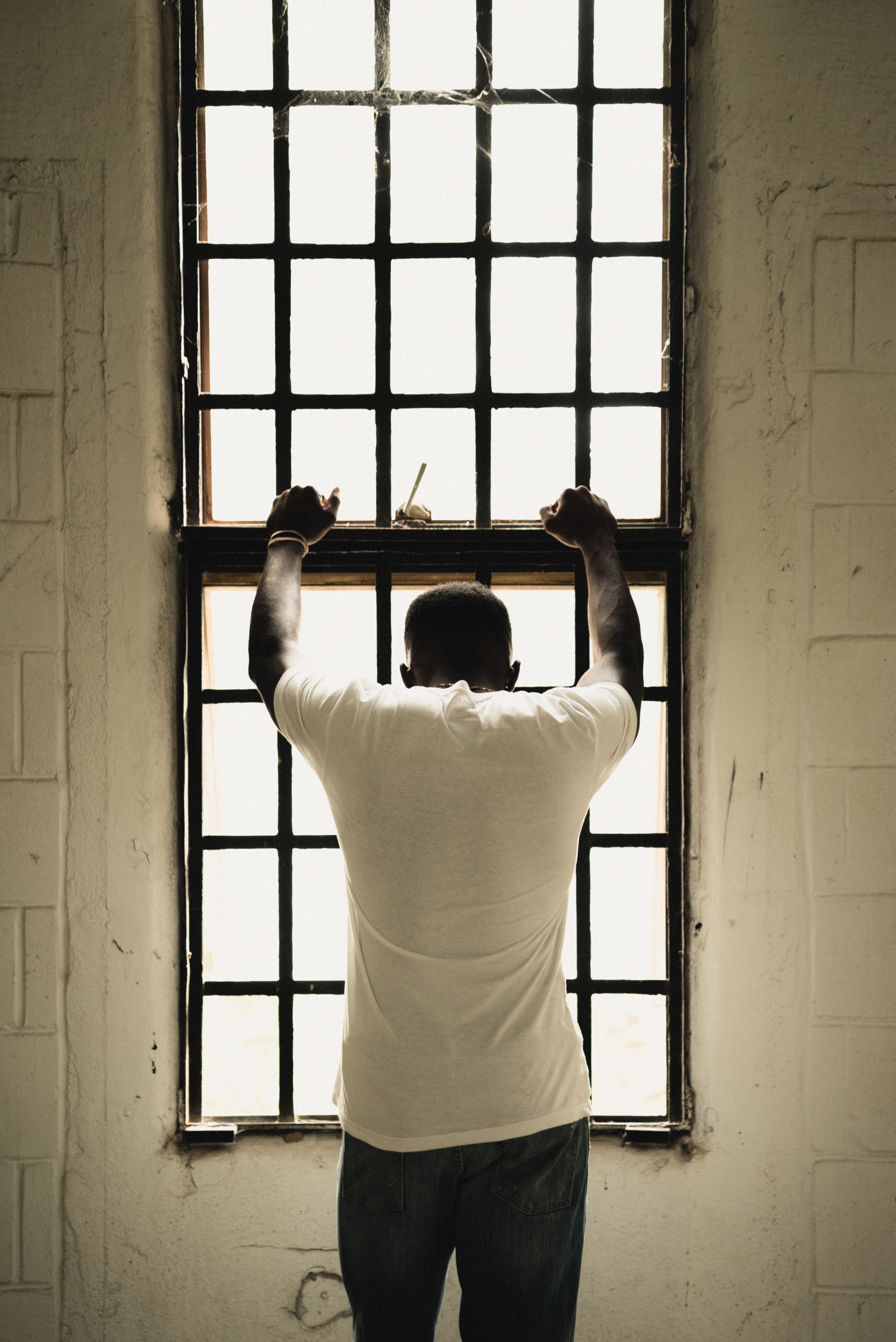
The Louisiana State Penitentiary is known by many as Angola Prison. The author was accompanied to the prison by a Black man, Norris, who spent almost 30 years imprisoned there for a crime he didn’t commit. He wants to show people the connection between Whitney Plantation and Angola Prison.
Norris said if we want to end mass incarceration, we must get at the history of it, the reason it still exists, and what that looks like.
Photo credit: Karsten Winegeart on unsplash.com
After the Civil War there was a change in policy in Louisiana not to require unanimous jury convictions. It was meant to funnel Blacks into the convict leasing system. Convict leasing partly replaced the labor force lost when slavery ended. The 13th Amendment to the U.S. Constitution allows involuntary servitude as a punishment for crimes committed. Under the convict leasing program, prisoners (mostly Black) could be rented out to individuals and companies. Railroads, plantations, and businesses took advantage of the program. Due to the program, most Angola inmates leased out lived no more than six years because the leasing assignments were often gruesome.
The book goes into more detail about how the laws governing juries changed over the decades, not always to the good.
The author (and I) found it interesting that the tour of Angola Prison begins in the gift shop. A gift shop at a state penitentiary. Such things as shot glasses, sunglasses, and T-shirts with the name of the prison on them are sold.
There is no mention in the prison museum that the place used to be a plantation.
I visited the prison’s website last week and was struck by how it is presented as a tourist destination. I don’t know about you, but when I go on a vacation it never occurs to me to work an operational prison tour or prison rodeo – I’m not making that up! – into my agenda.
Blandford Cemetery
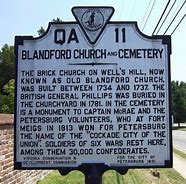
Blandford Cemetery is in Petersburg, Virginia. It started as the cemetery for Blandford Anglican Church. It was deconsecrated in 1806 when the congregation decided to move to a more central location. After the Civil War a group of southern women were distressed over how their dead soldiers weren’t being honored like the Union soldiers. There was a 15-year effort to dig up Confederate dead and send them home for reburial, but 30,000 of the 32,200 could not be identified and they remain at Blandford.
Historical marker at Blandford Church and Cemetery, Petersburg, Virginia
The City of Petersburg gave the Ladies Memorial Association the abandoned church as a focal point for the cemetery. They commissioned Tiffany Studios to design stained-glass windows but couldn’t afford the usual $1,700 per window price. They couldn’t afford the $300 per window discounted price, so they went to the Confederate and border states and told them to raise the money. Saints are depicted in 11 of the 13 windows. There are state seals and inscriptions tying the Confederate dead to such things as “the Army of Heaven” in the case of South Carolina.
Before leaving Blandford, the author had an opportunity to talk to the woman in charge there. She seemed uncomfortable fielding his questions and appeared to be uncomfortable that a stack of flyers advertising a Memorial Day event hosted by the Sons of Confederate Veterans that was easily visible on the counter.
This chapter also included some facts and theories about Robert E. Lee.
The author closes the chapter by wondering if we’re all “just patchworks of the stories we’ve been told. What would it take – what does it take – for you to confront a false history even if it means shattering the stories you have been told throughout your life? Even if it means having to fundamentally reexamine who you are and who your family has been? Just because something is difficult to accept doesn’t mean you should refuse to accept it. Just because someone tells you a story doesn’t make that story true.”
To me, that is the unspoken theme of the book.
New York City
Like me, you might have wondered why there is a chapter about New York City in How the Word is Passed.
This chapter is a real eye-opener! As with all the other chapters, I learned more from this chapter than I can possibly include in this blog post.
The author went to the National Museum of the American Indian for a walking tour about slavery and the Underground Railroad. The guide began by telling participants that many things she was going to tell them would make them uncomfortable but that would be all right. We learn by having our beliefs and our misinformation questioned. (I loved this woman already and I wasn’t even there!)
The tour included lots of general facts about slavery. The guide explained that slavery in the United States was different from slavery throughout world history. Historically, people were enslaved after taken prisoners of war or in payment of a debt. These enslavements were usually for a limited time and rarely involved the descendants of the enslaved. Slavery in the U.S. was based on racism and the widely-held belief in Europe that Africans were genetically inferior or subhuman. Skin pigmentation was the defining factor
Owning land and things was a European concept. The Dutch brought the first African slaves to the U.S. (present-day New York City). Eventually, some of the slaves were freed and given land. They weren’t gifted land due to the benevolence of the Dutch, though. The Dutch wanted Blacks to serve as a buffer between them and the Indians.
The British took over New York City in 1664. “According to historian David Brion Davis, around 40 percent of households in British Manhattan owned enslaved people. The practice of keeping female slaves in town to care for homes and white children and sending male slaves outside the city for agricultural work resulted in the slaves not having many children. In turn, this made the transatlantic slave trade more necessary for economic purposes.
In 1712, there was a slave uprising in New York. In it, 25 to 50 slaves killed nine white people. The result? “More than seventy Black people were arrested, forty-three brought to trial, and twenty-three executed – some hanged and others burned at the stake.”
Just before the American Revolution, there were 3,000 slaves in New York City and another 20,000 within 50 miles of Manhattan.
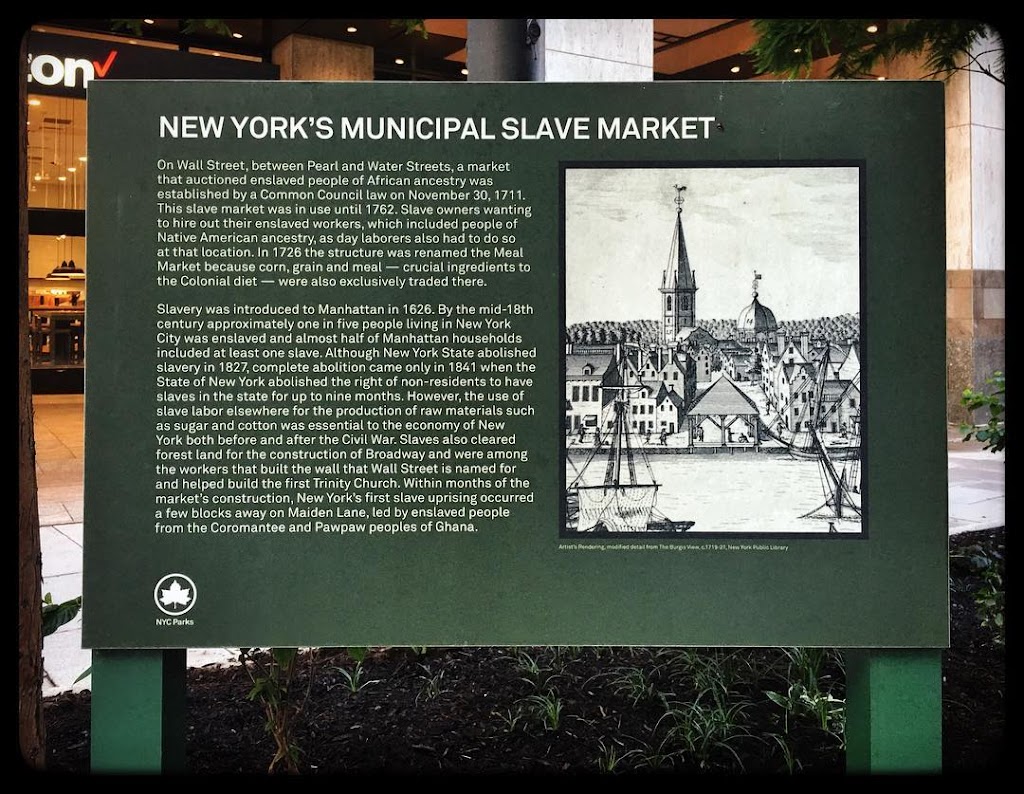
The second largest slave market in the United States was on present-day Wall Street between Pearl and Water Streets in Manhattan, New York City. Did you know that? I certainly didn’t! (The largest slave market in the country was at Charleston, South Carolina.)
Thinking about the banks he could see from the site of the slave market, Mr. Smith delved a little deeper. He discovered the predecessors of several of the largest banks in the United States had accepted slaves as collateral for debts.
The author’s tour guide said, “ʻOne of the biggest lies we are still telling in this century – and I know because I’m trying to combat it – [is that] during the Civil War we were the good guys, right? New York City was good. Everybody else in the South, they were bad.’”
I think that’s a good place for me to stop sharing what Mr. Smith had to say about New York City, although I could go on about such things as the Underground Railroad, a huge slave and free Black cemetery that’s been built over, and the predominately Black village that was destroyed so Central Park could be built.
Since my last blog post
I continue to work on biographical sketches of the characters in my novel. I’ve taken a couple of days off from my writing project this week. I tend to get too serious about my self-inflicted to-do lists. I’m trying to lighten up on myself.
Friday night I worked on genealogy, one of my favorite hobbies. I found lots of interesting information on Ancestry.com. Now, all (Ha ha!) I have to do is make sure I can duplicate the research these other people have done before I add it to my family tree. The problem with genealogy is with every new generation you discover, you want to add another one. This hobby is never finished.
Until my next blog post
I hope you have a good book to read.
My blog post next Monday with be about Galveston Island, Goree Island, and the Epilogue in How the Word is Passed, by Clint Smith.
My skill doesn’t lie in reviewing books. Most of the books I read, however, do make me think. Many of them prompt me to question the way I’ve seen the world all my life. To my mind, that’s a sign of a great book.
I promised myself to lighten up on my reading in July. In a way, I did. I didn’t read as many books as I usually do in a month’s time. I didn’t lighten up on the content of what I read. The books I read in July were all “heavy” in topic and were not the kind of books you want to read while on vacation at the beach or in the mountains. At least, I don’t. Since I wasn’t going anywhere in July, these books suited me just fine.
Three of the books I read in July had to do with race. I read a book about the caste system in America, and I read a book about the Confederate monuments and how they’ve brought out the worst in some of us. (See my August 2, 2021 blog post, _2 Books about Racial Injustice.)
I read a book about how various venues present either an honest or a skewed image of the history of Black Americans and how many white Americans treated or interacted with them. All three books were thought-provoking to say the least.
How the Word is Passed: A Reckoning with the History of Slavery Across America, by Clint Smith
What a book! I found myself taking copious notes, which slowed down my reading considerably. There were so many little gems of insight in the book, I couldn’t stop taking notes.
The author allotted individual chapters to how the story of slavery is told at Monticello Plantation, the Whitney Plantation, Angola Prison, Blandford Cemetery, Galveston Island, New York City, and Gorée Island.
How the Word is Passed: A Reckoning with the History of Slavery Across America, by Clint Smith
Before starting to read the book, I didn’t know how it was organized. The way each chapter was written about how the story of slavery is told at these various locations was powerful.
Today’s blog post will cover some of the things I learned about Monticello Plantation and the Whitney Plantation. I’ll save Angola Prison, Blandford Cemetery, and New York City for my next blog post. Galveston Island, Goree Island, and the Epilogue will highlighted in my August 29, 2021 blog post.
Monticello Plantation
Tours available and displays at Thomas Jefferson’s home, Monticello, have changed dramatically since the house and grounds were opened for tours in 1923. In the beginning, the tour guides were Black men dressed as house slaves. They had to play a role. Today, tour guides do their own research, plan their remarks, and shadow other guides. There are several tours. One is about slavery on the plantation.
The author was struck by the fact that his tour guide referred to Jefferson’s slaves as “human beings.” To say Jefferson gifted his children and grandchildren with human beings doesn’t sound as palatable to our ears as saying he gifted them with slaves. The tour guide went out of his way to impress upon visitors that the slaves were human beings.
Although Jefferson wrote the Declaration of Independence (“all men are created equal”), he owned 400 or so slaves over his lifetime and even until death. He wrote eloquently about equality but, as a politician, could not speak out against slavery. When it got down to it, Jefferson didn’t consider his slaves as being human beings.
That leads us to the matter of his relationship with Sally Hemings. There is now a Sally Hemings Exhibit at Monticello. It has received a range of reactions from visitors. I suppose I knew this at one time but I’d forgotten that Sally Hemings and Jefferson’s wife, Martha, were half-sisters.
The Whitney Plantation
I hadn’t heard of the Whitney Plantation in Wallace, Louisiana, an hour west of New Orleans. It’s off the beaten path and not the kind of place one just happens upon and decides to visit. How is the story of slavery told (or, the word passed) at Whitney Plantation? In a rather shocking way.
There are 55 ceramic dark heads of black men on metal stakes.
In 1804, slaves in Haiti rebelled and defeated the French. They founded the first “Black-led republic in the world.” After this defeat, Napoleon Bonaparte sold the Louisiana Territory to the United States (while Thomas Jefferson was president) for $15 million (= four cents per acre.) If not for the success of the revolt in Haiti, Napoleon probably wouldn’t have sold Louisiana to the United States!
In 1811, there was a slave uprising in Louisiana. Within 48 hours the armed (knives, machetes, muskets) rebellion was put down. It had been led by a mixed-race slave driver, Charles Deslondes. He was captured and to say they made an example of him would be a gross understatement. To quote from the book, “His hands were chopped off, the bones of his legs were shattered with bullets, and he was burned over a bale of hay. Many of the rebels were slaughtered on-site, their heads cut off and posted on stakes that lined the levee, a warning to other enslaved people that this was the price to pay for rebellion.”
How is it that I’ve never heard or read about this?
John Cummings purchased Whitney Plantation in 1999 and invested almost $10 million in it over the next 20 years. He donated it in 2019. It is now a non-profit.
There is high poverty in the area, which is 90% Black. The area is known as “Cancer Alley” due to the high incidence of cancer caused by the petroleum plants nearby. As quoted in the book, Rev. Dr. William J. Barber II said of the area, “ʻThe same land that held people captive through slavery is now holding people captive through this environmental injustice and devastation.”
At Whitney, they utilize the late-1930s Federal Writers’ Project to help them tell the stories of slaves using their own words. According to the book, “The voices and stories of enslaved people are the foundation of how visitors experience the Whitney.” The author’s point about this was that through the Federal Writers’ Project, former slaves got to tell their stories in their own words. The author theorizes that by allowing such former slaves as Frederick Douglass and Harriet Tubman to tell their stories, they consciously not only denied most average or common slaves (the ones who did not escape) the chance to tell their stories but also thereby made sure those slaves who did not escape would be looked down upon as not trying “hard enough.”
This is part of the insidiousness of white supremacy – to shine a light on the exceptions and place “blame on those who cannot, in the most brutal circumstances, attain superhuman heights. It does this instead of blaming the system, the people who built it, the people who maintained it.”
There is a Wall of Honor at Whitney with the names, country of origin, and date or year of slaves at the plantation.
Sexual violence is also addressed at Whitney. The rape of female slaves by white owners was about power. The owners knew the female slaves were powerless to refuse their advances. To really understand slavery, the sexual violence against women must be included in the equation.
The trade in slaves’ bodies is also addressed in this chapter. Medical schools like Harvard, and the Universities of Maryland, Pennsylvania, and Virginia often bought Black corpses on the black market for research.
Did you know all this about Whitney Plantation? I didn’t. And to think, I considered skipping that chapter because I’d never heard of that plantation!
Since my last blog post
I had a rollercoaster week with my novel. In studying point-of-view, I wrestled with which one to use. In my draft of the novel, I was apparently head jumping as I changed the story’s point-of-view character occasionally at scene or chapter breaks. I thought that was acceptable, but not when you’re writing in third person intimate.
I considered rewriting the book in first-person, but that would be a real challenge for several reasons. I spent hours studying various points-of-view and the rules governing each. I find these rules maddening. I took a walk to clear my brain overload because I thought some fresh air and exercise would result in mental clarity. Then, I took a second walk. Sometimes this works, but sometimes it doesn’t. I went back through my manuscript scene-by-scene and determined how every scene could be changed into Sarah’s point-of-view or which parts could be modified to be part of the trial. I concluded third person intimate is still going to work best for this novel.
In the process of digging deeper into point-of-view, I stumbled upon several articles and YouTube videos about the Rashomon Effect. I realized I’m already using it in my trial scenes, and now I know what it’s called.
On Tuesday evening I watched and listened to an interview with author James Tate Hill. Mr. Hill lost his vision as a teen. In addition to his just-released memoir, Blind Man’s Bluff, Mr.Hill has written a novel, Academy Gothic, which was awarded the Nilsen Literary Prize for a First Novel. It always gives my writing a boost to hear an author speak or be interviewed. This interview was online and was hosted by Flyleaf Books in Chapel Hill, NC.
I’m slowly working my way through Breathing Life into Your Characters: How to Give Your Characters Emotional and Psychological Depth, by Rachel Ballon. I purchased it years ago and should have read it and taken it to heart then. I’m glad I rediscovered it. It’s really putting me through the paces and will help my writing on many levels. It has a 4.5 out of 5 stars rating on Amazon. I don’t know why it doesn’t have a 5 out of 5.
Until my next blog post
If you can get your hands on a copy of How the Word is Passed: A Reckoning with the History of Slavery Across America, by Clint Smith this week, please do so. I can’t imagine you will regret reading it.
I hope you have How the Word is Passed or another good book to read.
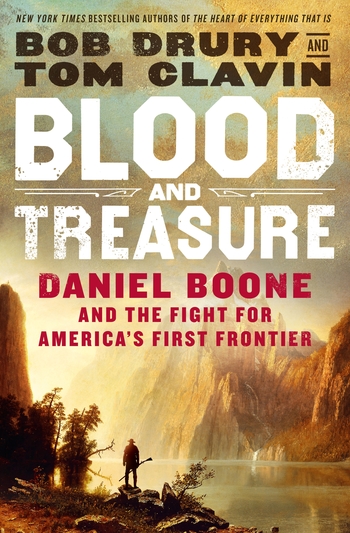
At first, I didn’t see any connection between Finding the Mother Tree: Discovering the Wisdom of the Forest and Blood and Treasure: Daniel Boone and the Fight for America’s First Frontier. Aside from both being nonfiction books, having extraordinarily long titles, and having sub-titles, what could they possibly have in common?
The answer is the environment and American history.
My Thoughts While Reading Finding the Mother Tree
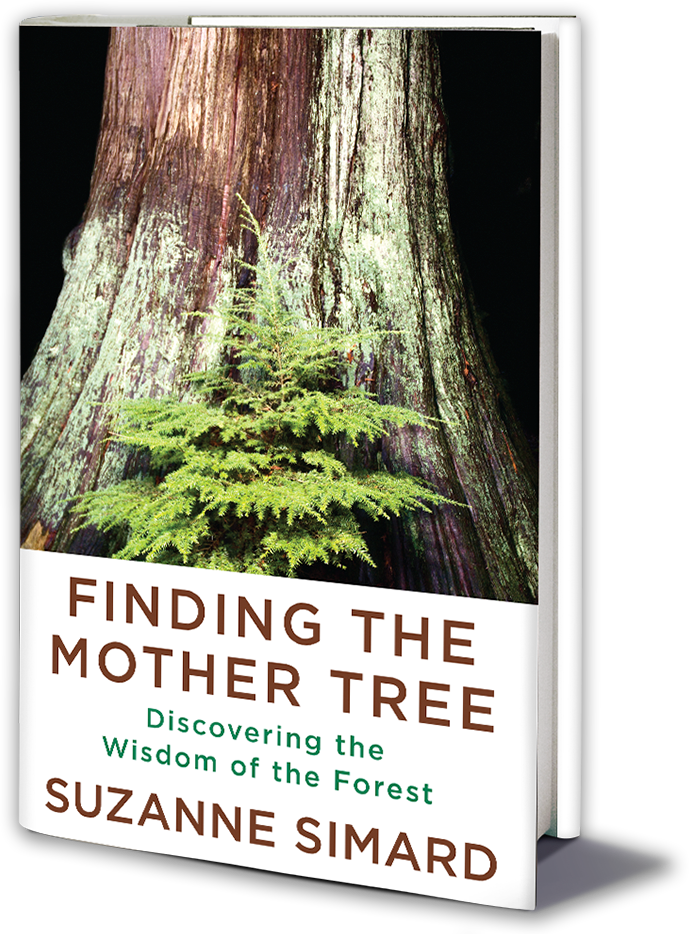
Finding the Mother Tree, by Suzanne Simard
Finding the Mother Tree: Discovering the Wisdom of the Forest, by Suzanne Simard, affected me in ways I didn’t anticipate. In today’s blog post, I’’’ share what the book is about and the thoughts reading it brought to my mind.
I consider myself somewhat an environmentalist, so I was intrigued by the title of this book. The author grew up in a British Columbian family with generations of history in the logging industry. Although her father chose a different career path than his ancestors, Ms. Simard was drawn to the forest from an early age.
This book had more the flavor of a memoir than I expected. Ms. Simard’s life story and the details of how she learned about and became fascinated by the intricacies of the forest flora was interesting, but at times became a little too into the minutiae for me. I was more interested in what she discovered than how she learned it. But that’s just me.
What we can’t see from above ground is a network of roots, rocks, soils, bugs, moisture, and fungi which all work together to produce and support the trees we see. There is an unseen highway system of sorts that is necessary for a healthy forest.
The crux of the book is about how the logging industry has changed so drastically over the decades and centuries that our ancestors would not recognize its policies and procedures today. In the name of progress and economics, we are now “cutting off our noses to spite our faces” so to speak.
In times past, people had the good sense to leave the oldest trees to produce, nourish, and nurture seedlings so those seedlings could grow up to someday be the oldest and best trees in the forest. Unfortunately, clear cutting has become the trend now. In the process, the oldest trees are removed along with the rich ecosystems they support and maintain. Often, a different species of seedlings are planted in nice even rows equidistance from each other so to better count and, theoretically, easier to harvest. Although most trees are valuable (I’m not convinced about sweet gum trees, although they do produce shade), the single species tree farms do not replace he forests that were destroyed to make them possible.
How my ancestors practiced tree cutting
I couldn’t help but think of my own Morrison great-grandfather and grandfather as I read this book. Logging and hand-tree felling were a dangerous undertaking. My great-grandfather survived the American Civil War, but was killed in 1886 when a limb fell out of a tree he was cutting down for lumber to finish building the kitchen in the house he had built for his wife and four children. My grandfather, who was just 14 years old at the time, witnessed the accident and had to run home to tell his mother what had happened. How do you recover from seeing something like that?
Among other things, though, my grandfather owned and operated a sawmill – another very dangerous occupation in the early decades of the 20th century. As I read Finding the Mother Tree, I could picture my grandfather sizing up trees individually before deciding which one(s) should be cut. No doubt, he had orders for lumber for particular purposes and that played an important part in dictating which trees were cut and planed.
Back to tree farms
The way the system is set up, one gets a sizeable property tax break on the acres he owns that are farmed. The problem with that policy is that there are no incentives to let acreage lie fallow or just continue as woodland. Unless a person is uncommonly wealthy, he or she can’t afford to pay property tax on land that’s not producing an income today or long-range.
The result is that woodlands, meadows, and old fields in our area are disappearing at an alarming rate. Old farmland is sold, bulldozers are brought it, and every tree and shrub are destroyed. Usually, most of the wood is hauled off to demolition landfills. Numerous dump trucks filled with what used to be a forest passed by my house last week, making way for yet another housing development. What a waste! Wildlife are killed or forced to look for new habitats. Their options for new habitats are shrinking by the day.
Back to those property tax breaks
The farming that qualifies land for the tax breaks mentioned above can take several different routes. One of them, if the owner doesn’t wish to raise usual crops or cattle, is to follow guidelines set by the government and turn it into a tree farm. In our area, that pretty much means the land is clear cut and pine seedlings are plugged into the ground at specific intervals in neat rows in order to make counting them and harvesting them easier (in other words, cheaper.)
When the day comes that the land no longer meets the requirements to be designated a farm – or the land is sold, the owner must pay back taxes for six years (I think I’m right) on the property as if it hadn’t been a farm. A tree farm is a 30-year or so commitment.
The system is a Catch-22 situation. The landowner can’t afford to pay property tax on his or her acreage, so they decide to turn it into a tree farm. In order to qualify as a tree farm, the landowner must follow the rules set down by the government. There are schedules that recommend when the trees should be thinned out and dictate when the trees must be harvested. In order to be harvested, the trees must be set in rows of a certain width to accommodate the heavy machinery that will harvest the trees. Once the decision is made to have a tree farm to make property taxes affordable, the die is cast. Goodbye, Mother Trees.
My takeaways from reading Blood and Treasure
Blood and Treasure, by Bob Drury and Tom Clavin
Daniel Boone is one of those icons of the American frontier that carries a lot of myth. People of a certain age can remember the TV series, “Daniel Boone” from the 1960s. As I recall, the opening lines of the show’s theme song were, “Daniel Boone was a man. He was a big man.”
According to Blood and Treasure: Daniel Boone and the Fight for America’s First Frontier, by Bob Drury and Tom Clavin, Daniel Boone stood five feet eight inches tall. That’s about an inch taller than I am. Hmmm.
One of the myths about Daniel Boone is that he always wore a coon skin cap. According to Blood and Treasure, he hunted raccoon and other wildlife and traded in peltry and hides, but he never wore a coon skin cap. Hmmm.
It makes one question everything broadcast on television.
You might be thinking that reading Blood and Treasure shattered my fascination with Daniel Boone, but that’s not the case. In many ways, the book increased my admiration of him while making him more of a human than a bigger than life TV character.
The book is beautifully written. I would describe it as being creative nonfiction. By that, I mean it’s not just a recitation of facts. The writing puts you right there with Boone and his family. I was amazed to realize how many hundreds of miles Boone traveled. He was rarely home, but he and Rebecca managed to have 10 children.
If memory serves me right, two of their children were killed by Indians. One daughter, Jemima, along with two of her young girl friends, were captured by Indians. Boone and a posse of his fellow Yadkin Valley, North Carolina residents tracked them for weeks and hundred of miles.
The book is extremely detailed in telling of Boone’s many long hunting trips and his efforts to lead other pioneers to settle in Kentucky. He was an easy-going man and he tried to live peacefully with the Indians. Of course, that isn’t an easy thing to do when you’re invading someone else’s hunting grounds. Boone was captured by the Indians twice but lived to tell about both events.
But how do Finding the Mother Tree and Blood and Treasure connect?
Both books give a glimpse of how the world used to be. They show how Native Americans held a spiritual reverence for nature. How different our planet would be today if every generation had respected trees and wildlife like some people did several centuries ago.
If economics had never trumped common sense, the “clear cutting” of our forests never would have happened. Once clear cutting is not just sanctioned but encouraged – and in some cases required – by the government (as in the case of tree farms), there’s not much one can do about it.
If you want to know what happens when the mother trees are all gone, just look around any area that used to be woodlands but is now an industrial park or housing development. At least that’s the case in the piedmont of North Carolina.
Progress on my writing journey since my last blog post
I reviewed my list of books I have about the art and craft of writing. I had already prioritized them by topic. Since blogging last Monday, I mapped out daily reading goals. I have 18 books and two workbooks to try to read and work through by mid-February. I hope I’m not putting too much pressure on myself with that self-imposed goal date. This leaves very little time for reading novels, but I’m sure I’ll work some of those in, too.
I’m in the process of writing biographical sketches (again) for each of the characters in my novel manuscript. I’m going into much more detail this time about their backstories. In fact, I’ve thought of so much backstory, I might turn it into a novel to precede the one I’ve been working on for years. It’s been fun. No, I mean it. I enjoy that.
On Thursday and Friday afternoons I got to watch six hours (total) of a free online webinar for writers. It was called “Writing from the Heart” and included 10 presenters who were writers, writing coaches, and one literary agent. I took copious notes which I’m sure to revisit along my journey to publication.
The sections of the webinar I got the most from were the ones about conflict, setting achievable goals, establishing a writing ritual and daily writing schedule that can’t be interrupted, using positive affirmations to squelch that voice in the back of my head that tells me I can’t write a novel, the four core elements of every scene, and 10 scenes that all novels need. It was a lot to take in in two days but time well-spent. The fact that it was free of charge was the icing on the cake.
Until my next blog post
I’ll continue writing biographical sketches for my characters and dreaming up backstory for them. A root canal is on my schedule for this week. I also hope to get to bring my dog home from the hospital. He has pneumonia again, but not as severe as in March.
I’ll continue studying the art and craft of writing fiction. I hope you have a good book to read, too.
There was a common theme in two books I read in July. They weren’t books I read for pleasure. They were books I read because I knew I should read them. I needed to open my eyes.
I needed to remove those rose-colored glasses through which one sees old southern plantations like “Tara” of Gone With the Wind fame, where white slave owners and slaves were all just one big happy family. The only bad guys in most of those stories were the occasional evil-minded heavy-handed overseer.
That’s the fiction we’ve grown up reading. It’s the fiction we’ve grown up watching on TV and on the big silver screens in movie theaters. But it’s fiction.
There’s nothing particularly wrong in settling down to read Gone With the Wind, but it isn’t a history book. It’s fiction. Too often we let fiction color our perceptions of how things were “in the good old days.” They weren’t “good old days” for everyone.
It’s like watching reruns of The Andy Griffith Show or Father Knows Best and yearning for life to return to how it was in the 1950s and 1960s. But life wasn’t good for everyone in those decades. If you were in the white majority then in the United States, you probably have pretty good memories of those decades. If you are a person of color who grew up or were an adult in that era, your memories are probably tainted by incidents and even everyday occurrences that were meant to “keep you in your place.”
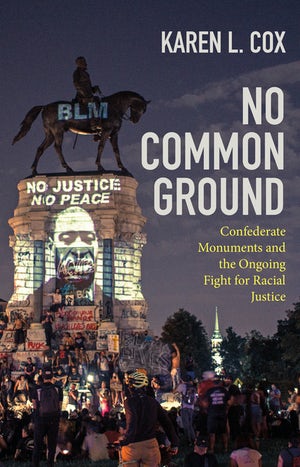
Two of the books I read in July were No Common Ground: Confederate Monuments and the Ongoing Fight for Racial Justice, by Karen L. Cox and Caste: The Origins of Our Discontents, by Isabel Wilkerson. Racial injustice is the common thread the two books share. They weren’t pleasant reading, but they were enlightening and enriching reading. I highly recommend both.
No Common Ground: Confederate Monuments and the Ongoing Fight for Racial Justice, by Karen L. Cox
Karen L. Cox is a history professor at the University of North Carolina at Charlotte. During the shut-down days of the Covid-19 pandemic, I heard her interviewed online. I immediately got on the waitlist at the library for her latest book, No Common Ground: Confederate Monuments and the Ongoing Fight for Racial Justice. Due to that same pandemic, the library was very slow to receive the book order. Nevertheless, it was well worth the wait.
No Common Ground: Confederate Monuments and the Ongoing Fight for Racial Justice, by Karen L. Cox
Written by a history professor, the 178-page text is indexed and thoroughly annotated with source notes and references. There is an extensive bibliography.
As the opening words of the inside fold of the book jacket states, “When it comes to Confederate monuments, there is no common ground. Polarizing debates over their meaning have intensified into legislative maneuvering to preserve the statues, legal battles to remove them, and rowdy crowds taking matters into their own hands. These conflicts have raged for well over a century—but they’ve never been as intense as they are today.”
The day I started reading No Common Ground, July 9, 2021, was the day a video clip on the news on TV shows a crane removing a statue of Robert E. Lee sitting on his horse, Traveler, from its place in Richmond, Virginia. It was noted that a statue of “Stonewall” Jackson would come down next.
We’ve seen many such news reports over the last couple of years as more and more people are realizing that these statues that many of us thought of as just part of the landscape and markers of our history were, in fact, very offensive to our fellow citizens of color.
Dr. Cox’s book examines the history of Confederate monuments and the mindset of the generations of southerners who erected them. Her book brings that history forward to the points of disagreement those statues represent today.
The book explains how Ladies Memorial Associations sprang up throughout the former Confederate states immediately after the Civil War. They were groups of white southern women who led the way in raising awareness and money to bring home the bodies of many Confederate soldiers who had died on battlefields far from home. Theirs was seen as “holy work.”
Those organizations morphed into the United Daughters of the Confederacy (UDC) in 1894. It was the UDC that is responsible for the majority of Confederate monuments. The organization’s main purpose was educating children about their revisionist version of the history of the Confederate States of America, and erecting ever-taller, ever-larger monuments in public places such as county courthouse lawns ran a close second.
As Jim Crow laws gained authority in the 1890s and the lynching of black citizens became more common, the UDC dedicated more and more monuments. Fiery speeches and big celebrations accompanied those dedication ceremonies and they drew huge crowds.
Robert E. Lee thought the constructing of great Confederate monuments was “antithetical to a peaceful reconciliation” after the Civil War, but some southerners were undeterred. Lee died in 1870, and as soon as Reconstruction ended in 1877 state legislatures got involved in building statues of Lee.
A 109-foot tall $36,474 (an estimated $945,000 in today’s dollars) monument to Lee was unveiled in 1884 in New Orleans at the World’s Industrial and Cotton Centennial Exposition. Not to be outdone, the city of Richmond unveiled its massive statue of Lee sitting atop his horse, Traveler, in 1890.
The Confederate monument building really came into its own around 1895 and continued until World War II, only interrupted during that time by the World War I years. Between 1900 and 1940, more than 550 Confederate monuments were erected.
No Common Ground doesn’t end there, but I’ll stop there. I wanted to share some of the things I learned about the history of the Confederate monuments that have been much in the news in the last several years as there’s been a push to tear them down. If you’ve paid attention, you already know about those recent events.
I read No Common Ground because I wanted to know the history of the Confederate monuments. The more I learn, the more I know there’s really no place for them in our world today. They were built more out of hate than honor. They were built as tangible symbols of white supremacy, and such symbols should not be tolerated today.
I hope I’ve shared enough from the book to make you want to read it. When you know better, you (should) do better.
Caste: The Origins of Our Discontents, by Isabel Wilkerson
If you are serious about figuring out what’s at the root of our discontents in today’s society in the United States, read this book.
Caste: The Origins of Our Discontents, by Isabel Wilkerson
I’d never thought about our having a caste system in the United States. That was something they had in India, but not here! But the more I got into Isabel Wilkerson’s book, Caste: The Origins of Our Discontents, the more I thought she made a very good point. We don’t call it a caste system, and we don’t like to talk about having a class system, but I believe Ms. Wilkerson is correct in her deductions after her extensive research.
This is a hard pill for most of us to swallow. We like to think of America as being a beacon of liberty and individual freedoms. Compared to many other nations, it is; however, follow Ms. Wilkerson as she methodically lays out her thesis and you will, possibly, also conclude that we have our own brand of a caste system here. It’s not as rigid and blatant as the caste system in India, but it is written on our souls.
Those of us who are Caucasian don’t want to be told we’re racist. Even the most “woke” and antiracists among us, though, must admit that we have enjoyed countless privileges that were and continue to be afforded us simply due to the light hues of our skin and the texture of our hair.
I shuddered as I read parts of Ms. Wilkerson’s book. She related stories of terror, abuse, torment, and murder that have occurred throughout our nation’s history – but were not included in those written histories. The shameful acts of discrimination and physical violence against people of color in the United States continue today. It is incumbent upon all of us to speak out against it.
Once you know injustices are happening, you simply can’t turn a blind eye. It’s easy to use the excuse, “What can one person do?” We must move beyond the excuses and find ways to fight injustice.
As many state legislatures in the United States are enacting laws to make it harder for people to vote, it is our obligation to make it known to lawmakers and our fellow citizens that this isn’t right.
Be an informed citizen. The state legislators who are pushing laws of voter suppression don’t advertise it. They usually work quietly and, literally, under the cover of darkness. Before you know it, it’s done. It’s the law.
They use that favorite lie that there is rampant voter fraud. The truth is that there is rampant voter suppression. Creating US Congressional districts “with surgical precision” as was done in North Carolina needs to be held up to the light. The only case of fraud perpetrated in the 2018 election in North Carolina was perpetrated by a candidate’s campaign – and that candidate was a member of the political party that cries first and loudest about voter fraud.
What will you say when your grandchildren ask you what you did to stop racial injustice?
Since my last blog post
I’ve received many supportive and conversation-starting comments about last Monday’s blog post. I appreciate the interest that post created and every comment.
I’ve studied setting in fiction writing – setting in general and rural pioneer setting in particular. I’m making my way through C.S. Lakin’s book, Layer Your Novel.
Until my next blog post
I plan to continue to study setting and scene construction.
I hope you have a good book to read. If you can get your hands on a copy of Caste: The Origins of Our Discontents, by Isabel Wilkerson, I highly recommend it.
Those of you who have been reading my blog for years know that (for years) I’ve promised to get my historical novel finished, critiqued by a professional, and published. You also know that I failed to take that second step until this year.
Since this is called “Janet’s Writing Blog” and is supposed to be about my journey as a writer, I promised somewhere in a blog post that I would report in my blog all the good, bad, and ugly of writing a novel. That includes the important part of getting a professional to critique my work. Hence, today’s post is about the ugly.
Photo credit: Pim Chu on unsplash.com
In mid-July I decided to go for it! After reading several of her books about the craft of writing, I hired C.S. Lakin to critique the first 50 pages of my 303-page manuscript. I’m pleased to announce that I’ve received her detailed evaluation of those 50 pages. I hate it for Ms. Lakin but, as they say, “Somebody had to do it.”
The Good News
The good news is that Ms. Lakin liked five things about those 50 pages. To be specific,
she thought I had an intriguing premise and story idea;
she liked my couching this murder mystery/theft in the American colonial era;
she liked how I showed Sarah (my protagonist) shaking her fist in the air in pain as her dream is shattered;
she liked how the walls closed in on Sarah as the first rain drops of a sudden downpour pelted the windows; and
she liked how Sarah felt clammy, her heart raced, and everything started going black.
The Not-as-Glowing, Yet Much-Needed News
I don’t know where to begin. Ms. Lakin made numerous detailed comments and asked many questions throughout my manuscript. Proverbial red ink was all over the 50 pages. So much negative (yet constructive) criticism was difficult to swallow all in one evening. Having found out earlier in the day that I need a root canal and a crown on a back molar, receiving the critique was the ending of a not-so-perfect day.
I’ve heard that every writer goes through the anguish of being told their work is lacking no good. The initial read-through of the critique comments left me wondering if I even knew how to write a coherent sentence.
That was last Monday. After having a brief pity party, though, I got back to work.
On Tuesday, I reread Ms. Lakin’s comments and started forming a plan of what I needed to do in order to improve as a fiction writer. This is what I came up with, in no particular order:
Photo credit: unsplash.com
I need to reread C.S. Lakin’s book, Layer Your Novel: The Innovative Method for Plotting Your Scenes. I’d read the first third of the book some time ago, but rereading it in light of her critique made the book make more sense to me;
I need to study how to demonstrate emotion in my writing. In my manuscript draft I relied too much on the reader “hearing” the tone and emotion in the dialogue and descriptions I wrote. Sometimes I told what emotions a character was feeling instead of describing those emotions and how those emotions were affecting them physically. I need to work on what the characters are thinking;
I need to put more time into making the setting of the story come alive so the reader will visual the time and place to a greater degree;
I need to put more effort into getting into my point-of-view characters’ heads and show their reactions and what they’re feeling;
I need to study story structure and the framework of a successful novel;
I need to move some scenes around because some of them appear to be a bit early in the overall scheme of things;
I need to work on pacing because some scenes seem rushed;
I need to study deep point-of-view;
I haven’t spent enough time in the book showing Sarah striving to overcome the inciting incident – which was the premise of the book that I described to Ms. Lakin in my one-page synopsis. In other words, I’m waiting too long into the story to have Sarah actively put a plan of action in place. Her efforts along those lines should be “well underway” before page 50;
I haven’t adequately explained the purpose of some of the secondary characters;
Ms. Lakin recommends that I take her Emotional Mastery course;
Some of the dialogue sounds too modern; however, I don’t want to fall into the easy trap of using dialect that is expected in novels set in the South – especially the dialect that we’ve all been conditioned to expect slaves to have used. I’m adamant that the Black characters – free or enslaved – in my novel will be portrayed as the human beings they were and not mythical stereotypes;
I need to pay attention to scene breaks and chapter breaks. For instance, Ms. Lakin said when skipping ahead several hours or days, it’s best to start a new chapter;
I need to be sure every scene advances the plot;
I need to remove the predictable, mundane, and boring lines and paragraphs;
I need to explain why William had a will in order for his widow to inherit anything, including her own kitchen utensils. In the colonial era, a wife didn’t automatically inherit anything from her husband or the lives they’d built together. If particulars weren’t spelled out in the husband’s will, the wife was legally left with nothing;
I need to explain why Sarah couldn’t just free a slave on a whim. Manumission papers or a statement of granting freedom in a will were necessary, but that only becomes evident later in the novel;
I have too much dialogue in the manuscript;
Ms. Lakin recommends that I take her course, The Ten Key Scenes That Frame Up Your Novel;
Ms. Lakin recommends that the best course for me to take is her 8 Weeks to Writing a Commercially Successful Novel. Before taking this course, I need to read Layer Your Novel: The Innovative Method for Plotting Your Scenes and The 12 Key Pillars of Novel Construction, both by C.S. Lakin;
Although I’ve already written 303 pages and almost 90,000 words, Ms. Lakin encouraged me “to put off writing a whole novel until you get these key elements of fiction writing under your belt. It takes time and practice and effort, but it’s really the best advice I can give you at this point.”
What I’ve done since making that list on Tuesday afternoon
It is said that ignorance is bliss. A couple of weeks ago I knew I had much to learn about writing fiction, but I didn’t know how much I didn’t know or have a good grasp on. Bliss is over now. Reality has set in.
I’ve visited Ms. Lakin’s website to read about the courses she offers and how much they cost.
I’ve looked at my bookshelves and my library of e-books. I own many books about the art and craft of writing. Some of them, I’ve not read. Some of them, I need to read again. Those are on my “to-be-read” list now alongside some novels I’ve been on the waitlist for at the public library for a while. I’ve listed those books (along with writing books I can borrow from the library) in the order in which I think I need to read them.
I started rereading Layer Your Novel: The Innovative Method for Plotting Your Scenes, by C.S. Lakin, as a result of number 20 on the above list. The assignment at the end of the first chapter is to write what each scene is about on index cards. The purpose of that exercise is to make it possible for you to lay out all the scenes in order on a table. By doing that, you can see the natural sections of the plot.
Photo Credit: Kelly Sikkema on unsplash.com
In light of number 21 on the above list, my doing this exercise now is getting the cart before the horse; however, reading that assignment prompted me to look at all 68 scenes in my current draft. With all of Ms. Lakin’s comments swimming around in my head, I was able to readily pick up on some problem scenes as I reviewed the entire manuscript.
I made notes to remind myself to rewrite some scenes in Sarah’s (my protagonist’s) point-of-view instead of a secondary character’s point-of-view. There were some “aha” moments when I thought of new plot twists or thought some early scenes could better take place later in the story or vice versa. It refreshed the entire story in my mind.
Photo credit: Daniel McCullough on unsplash.com
As Ms. Lakin recommended in number 21 in the above list, I need to learn more about the key elements of fiction writing before tackling the entire novel. Ms. Lakin compares constructing a novel with building a house. In order to hold up, both must have a solid foundation. And solid foundations require careful planning, skill, practice, and an eye for detail.
What’s My Next Step?
In the near future I’ll dedicate more time to my writing. I’ll read everything I can about constructing a novel, constructing a scene, emotion, deep point-of-view, description of time and place, and speech in the backcountry of South Carolina in 1769.
I’m afraid this means I won’t get to read as much fiction and nonfiction about contemporary issues as I’d like. I will need to read certain types of fiction to see how successful authors construct a novel.
This week’s plan: Delve deeper into setting and description of setting. The question before me this week: How can I write about the setting of my novel more vividly and succinctly in order to plunge my reader into the Carolina backcountry in 1769?
Until my next blog post
Next week I plan to blog about two books I read in July that enlightened me about some issues of racial injustice and some of the lessons I’ve been taught that just weren’t true.
I hope you have a good book to read.
If you’re an aspiring author, I hope you get good advice and roll with the punches like I’m learning to do. It’s definitely a journey.
I changed my topic for today’s blog post several times. In fact, I had it pretty much written and ready to go last Monday. Everything changed on Tuesday morning, when I checked for comments on my blog.
Last Tuesday, one of my blog readers who is Jewish left a heartfelt comment about what I had written about Pam Jenoff’s historical novel, The Woman with the Blue Star, in my July 12, 2021 blog post, 4 Other Books I Read in June 2021.
That reader has more intimate knowledge of the Holocaust than I have and, through an acquaintance who lived in the Krakow sewers, says that the premise of Ms. Jenoff’s book is impossible. I read Ms. Jenoff’s novel as a work of fiction, knowing the story was not true. I didn’t think about the possibility that some readers would be offended by the premise of the book. Prior to reading the novel, I wasn’t aware that some of the Jews in Poland had to hide for their lives in the nasty city sewers. For Ms. Jenoff’s bringing that fact to my attention, I am grateful.
This comment and my response to it served is a reminder about historical fiction – and it’s important to me as a fan of the genre and also a writer of it.
The Woman with the Blue Star, by Pam Jenoff
In fairness to Pam Jenoff, I heard her interviewed about her process in writing this novel. She did extensive research. It is a fact that some Jews took refuge in the sewers in Poland. There were many anti-Semitic people in Poland, but there were also sympathetic Poles who risked their lives to try to save Jews.
I heard Ms. Jenoff interviewed about this novel some weeks ago. I wish I’d taken some notes, so I could share them with you and with the reader who contacted me last week.
Admitting my own bias
I have lived my entire life in North Carolina. Two older ladies were friends of my family. By older, I mean older. Sisters, they were born in 1883 and 1888. Their father fought for the South in the American Civil War. Those sisters drilled it into me that it was “the War Between the States” and not “the Civil War.” That statement was always followed quickly with, “There was nothin’ civil about it.”
That really made an impression on me and even recently I’ve referred to the American Civil War as “the War Between the States.” I’ve written it that way in various things I’ve written and self-published.
I now see my bias. In the future, I will refer to it as “the American Civil War” or “the US Civil War.” It was a war between the Confederate States of America and the United States of America. For me to call it anything else is to twist history and reveal my bias.
I think it was Oprah Winfrey who said, “When you know better, you do better.” Those are words I try to live by. I hope I never get too old to learn new things and new ways to look at things.
The unwritten pact between fiction author and reader
A reader of historical fiction should always keep in mind that they’re reading fiction. Fiction is made up. It’s a story created in the author’s mind; however, there is an unwritten pact between the author and the reader. There should be enough factual information – whether in event or time and place – that the reader can trust that the story is plausible.
It is incumbent upon the writer of historical fiction to do due diligence in research. I heard author Sharyn McCrumb speak a few years ago about her research and writing methodology. As an aspiring historical fiction writer, I was impressed with all she said.
One thing Ms. McCrumb said, though, stood out and remains in the back of my head. I think about it as I’m doing my research, and I think about it every time I hear someone say they don’t read historical fiction. They often go on to say they only read history books.
Ms. McCrumb’s statement that stood out to me that evening was that (and I paraphrase) some historical fiction is better researched than some history books.
History books and their bias
We only need to stop and think about some of the history textbooks we had 50 or 60 years ago. (I can’t speak for the content of current school curriculum history textbooks.) Aside from the recitation of dates of birth and death of persons of alleged import and the dates of battles and the like, much of the way history was presented to students depended upon the author’s point-of-view. Textbooks are usually written from the winner’s perception.
For example, the textbooks I had as a student presented the white settlers’ “conquering” of the frontier as a positive thing. No time was spent trying to view the 1600s to the present through the eyes of a Native American. If the Cherokee Trail of Tears was even mentioned, it was only in passing.
Some Southerners still maintain that the American Civil War was fought over “states’ rights.” (Many of those same people still refer to that war as “the War of Northern Aggression.”) I have relatives who still maintain that as the truth and will argue me down that it had nothing to do with slavery. Some people learned certain things about the Civil War and no facts today will change their minds.
If we are to be true students of history, I believe we should read both sides of the story. Both sides are tainted by the personal experience of the writer but, by the same token, both sides of the story probably contain some truth.
The antebellum American South has been romanticized to the hilt by such novels as Gone With the Wind. Confederate generals have been portrayed as dashing and religious Southern gentleman who fought for the honor of hearth and home. In some cases, that’s who they were. But they were basically fighting to maintain the status quo. Even if they didn’t own slaves, they didn’t have any quarrel with the institution of slavery. The economy was built upon it. What would happen if there were no slaves? They couldn’t imagine such a world.
Renowned historical novelist James Alexander Thom wrote a book called The Art and Craft of Writing Historical Fiction. In it, he wrote the following: “History contains many errors because each person sees the same incident differently or remembers it differently. History textbooks are biased depending on the agenda of the writer, the publisher, the state, the school board.”
What James Alexander Thom wrote about historical fiction
The Art and Craft of Writing Historical Fiction, by James Alexander Thom
Here are four quotes from The Art and Craft of Writing Historical Fiction, by James Alexander Thom:
“But fiction is not the opposite of truth. Fiction means ‘created by imagination.’ And there is plenty of evidence everywhere in literature and art that imagination can get as close to truth as studious fact-finding can.”
“Most early American white men thought women should be seen but not heard. As a historical novelist, you might wish to make your hero ‘politically correct’ by today’s standards, but if you do that, you’ll be lying to your readers.”
“To be really good historical novelists, though (and that’s what I want us to be), we have to take our obligation to historical truth just as seriously as the historians do theirs. But we don’t have to bear the burden of being the authority on every factual detail. Our disclaimer is right there on the cover: a novel.”
“But here’s the key: Whether your historical story is ancient or recent history, what you want to do is re-create it in full – live, colorful, smelly, noisy, savory, painful, repugnant, scary, all the ways it actually was – and then set the reader down smack in the midst of it.”
Time will tell what my blog will be about next Monday. I hope you’ll come back next week to find out.
I’ll continue to read and write historical fiction. Mr. Thom says good historical novelists are respected by historians. That’s what I aspire to be.
Let me know what you like or don’t like about my blog. I’m especially trying to reach people who like reading historical fiction and have an interest in Early American history. I also enjoy exploring current events and discussing them with people from around the world. It amazes me every week to see that people from around the world have read my blog. In that respect alone, I think blogging and the internet are wondrous avenues for the sharing of ideas.
You never know. A comment you make about one of my blog posts might stop me in my tracks and force me to dig a little deeper into a subject or even admit I’ve been wrong.
Thank you for reading my blog. All comments, opinions, criticisms, and corrections are welcome.