#OnThisDay: Plessy v. Ferguson, 1896 & Lessons for Us

Plessy v. Ferguson is one of those landmark U.S. Supreme Court cases we would like to forget. Put it behind us. Consider it ancient history from the 19th century.

Not so fast.

We have something to learn from Plessy v. Ferguson today, 130 years after the ruling.

Background

To refresh your memory from history or political science class, Homer Plessy was a man of mixed race. That meant, under the law in the United States, he was considered Black. Though reportedly seven-eighths white, he was not permitted to ride in a “whites-only” railroad car in New Orleans. The Louisiana State Legislature had passed a Separate Car Act in 1890. That law required separation train cars for white and Black passengers.

In 1891, a group of Black men in New Orleans formed “Citizens’ Committee to Test the Constitutionality of the Separate Car Law.” Bolstered by a May 15, 1892 ruling by the Louisiana State Supreme Court in favor of the Pullman Company, the Committee decided to test the law in interstate travel. On June 7, 1892, Mr. Plessy purposely took a seat in a whites-only rail car on the East Louisiana Railroad to test the law.

What happened to Mr. Plessy

Mr. Plessy was arrested for boarding a “whites-only” train car. His defenders in court argued that the Separate Car Act of 1890 violated the 13th and 14th Amendments to the U.S. Constitution.
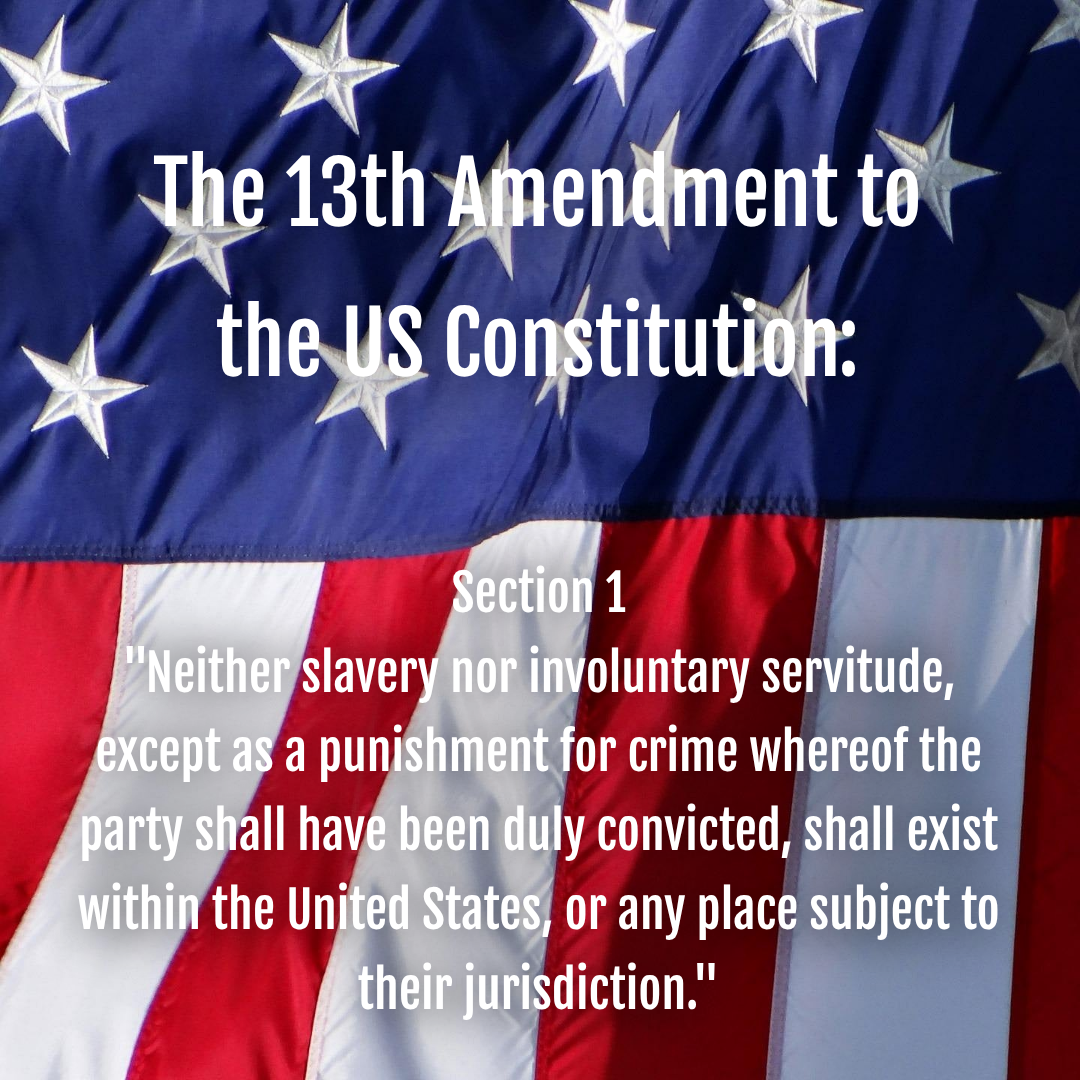
Section 1, 13th Amendment
to the U.S. Constitution

When Mr. Plessy’s case went to District Court, the judge was John H. Ferguson. Judge Ferguson denied a request to dismiss the case and then ruled that the Louisiana Separate Car Act of 1890 was constitutional because the State had the authority to regular public accommodations.

The Louisiana Supreme Court upheld the lower court’s decision, and Mr. Plessy took his case to the U.S. Supreme Court. Surely, that august body would see that the Louisiana law was unjust, discriminatory, and unconstitutional.

After all, the 13th Amendment had abolished slavery in the United States in 1865, and Section 1 of the 14th Amendment, which was ratified in 1866, not only extended citizenship to former slaves but also state, “No State shall make or enforce any law which shall abridge the privileges or immunities of citizens of the United States; nor shall any State deprive any person of life, liberty, or property, without due process of law; nor deny to any person within its jurisdiction the equal protection of the laws.”

Mr. Plessy and his lawyers maintained that the Separate Car Act on 1890 was unconstitutional under the last phrase in Section 1 of the 14th Amendment.
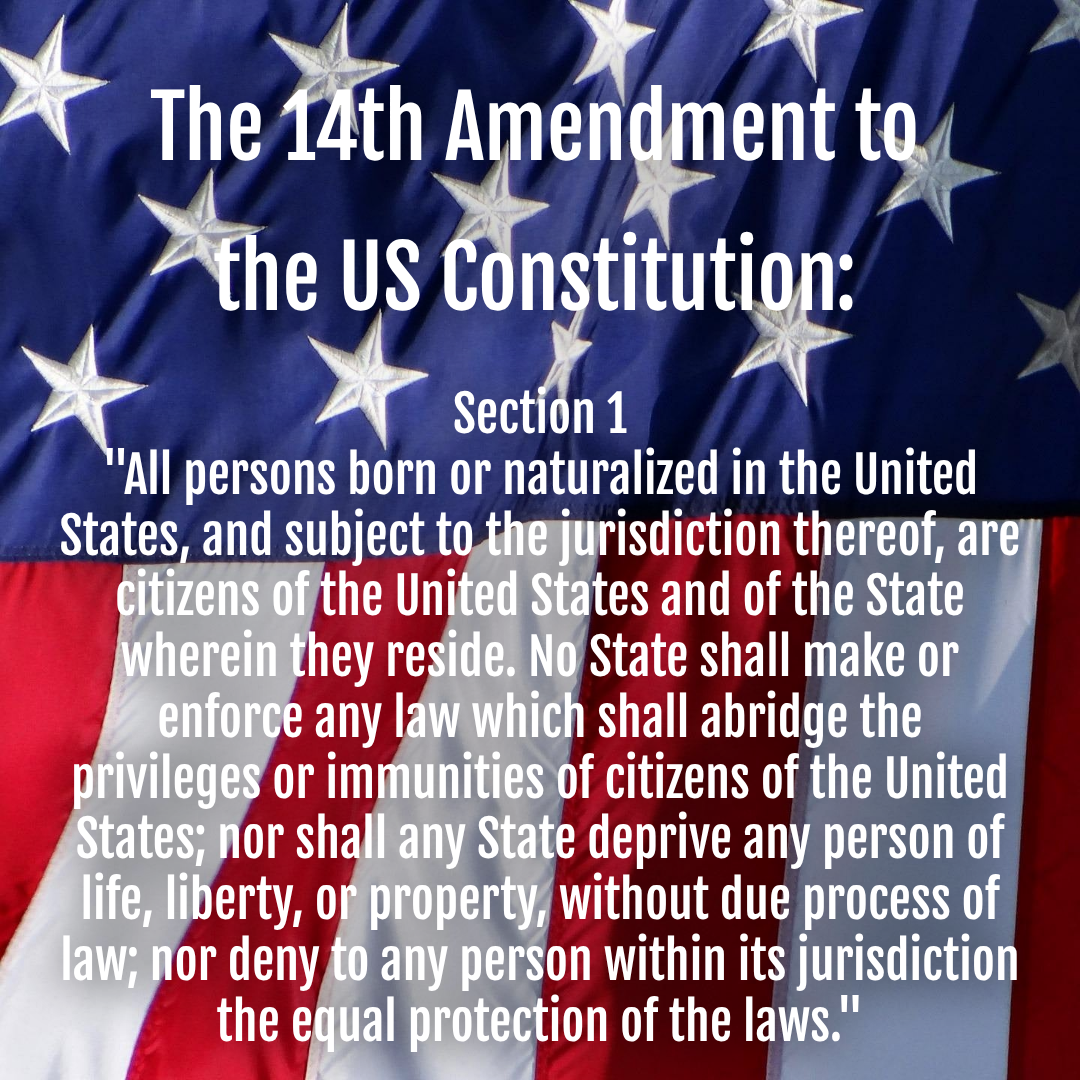
Section 1, 14th Amendment
to the U.S. Constitution

The ruling

In a 7-1 decision, the U.S. Supreme Court ruled on May 18, 1896, that the State law in Louisiana was constitutional because it provided “separation but equal” accommodations for white and Black passengers.

That famous “separate but equal” wording is what took the United States down a terrible road of discrimination for the next 70 years.

It paved the way for “Jim Crow” laws. It made racial segregation in public education, in public conveyances, restaurants, lodging, etc. lawful.

The “separate but equal” doctrine stood until the Brown v. Board of Education U.S. Supreme Court case in 1954 and the Civil Rights Acts in the 1960s. (The Brown v. Board of Education ruling, ironically, was handed done in a 9-0 decision on May 17, 1954, just one day shy of the anniversary of the Plessy v. Ferguson decision.)

We all know now that “separate but equal” was never equal; it was just separate. That doctrine became the umbrella and shield for untold acts of discrimination and violence until the late 1960s.

Who cast the dissenting vote?

Associate Justice John Marshall Harlan was the lone dissenter in the Plessy v. Ferguson ruling. Although he came from a slave-holding family in Kentucky, Justice Harlan often cast the dissenting vote in civil rights cases that went before the U.S. Supreme Court. He sat on the Court from 1877 until 1911.

Lessons to be learned from Plessy v. Ferguson in 2026

If I had penned this blog post a couple of years ago, it probably would have ended there. Just a nice little history lesson. Just the facts of the case and the final ruling.

But I’m writing this in mid-May 2026, and that 1896 U.S. Supreme Court case has taken on a whole new significance.

As in 1896, in 2026 we have a U.S. Supreme Court majority who tend to be constitutional textualists or literalists, meaning they usually view the Constitution and laws as the people at the time of a law’s enactment would have interpreted it and not necessarily taking into account the spirit of the law.

In my six years of studying political science in college, I was taught to study the time and letter of the law but to look for the spirit of the law.

I offer a current example of how some people now want to interpret the 14th Amendment as applying only to the people who had been slaves prior to and during the American Civil War. They argue that the 14th Amendment does not grant citizenship to everyone who just happens to be born in the United States. They don’t want the 14th Amendment to apply to the children of undocumented immigrants. Trust me. We have not heard the last of that argument.

Just a couple of weeks ago, the U.S. Supreme Court essentially dismantled the Voting Rights Act of 1965. As a result, state legislators are falling all over each other to redraw Congressional District boundaries. They feel emboldened to eliminate majority Black or Democrat districts before this November’s mid-term elections.

This is history repeating itself. The hurried gerrymandering and shifting of Congression District lines in 2026 is in many ways a mirror image of the Jim Crow laws of the late 1800s.

Why is it that we don’t learn from history? Or perhaps a more accurate question is “Why do we only learn how to repeat the harmful things from our history?”

The Roberts court is taking us down a road of easier corruption in politics (Citizens United v. Federal Election Commission, 2010), less accountability for the U.S. President (Trump v. United States, 2024), and an attempted erasure of all the progress our country made in racial relations and equality in the 60 years following the Voting Rights Act of 1965 (Louisiana v. Callais, April 29, 2026).

The racial discrimination the U.S. Supreme Court is fomenting by its Louisiana v. Callais decision a couple of weeks ago is far-reaching and should send chills done the spine of every American.

The lesson for us to learn from the last 16 years of U.S. Supreme court decisions, un-checked Presidential powers, and a U.S. Congress that acts more like a lap dog than a co-equal branch of the federal government is that our rights and the “guarantees” we have in our laws and U.S. Constitution are no more secure than the paper they are written on.

Every week I learn that more protected federal lands set aside generations ago for wildlife and the preservation of the natural world are being trashed by our own elected officials. It’s being done quietly, of course, because they don’t want us to know. If they were proud of what they’re doing, they’d be making grand announcements.

I assumed the East Wing of the White House would be there forever. I assumed national parks and wildlife refuges were permanently protected.

The U.S. Constitution is a living and breathing document. It will always be up for discussion, debate, and amending. That’s the beauty of it, but it also makes it fragile and vulnerable to the whims of Presidents and others who wish to test it.

The Preamble to the U.S. Constitution

Democracy is more fragile than I realized.

Janet

The government should be afraid of its citizens, not the other way around.

Two US Supreme Court Rulings in 1898 and 2025

There is so much we can learn from history! Today’s headlines often mirror events that happened years ago.

You get a bonus blog post from me this week. As I explained yesterday, what I wanted to say this week amounted to more than anyone wants to read in one sitting.

Today’s post is about a couple of US Supreme Court rulings. Tomorrow’s post is about Hurricane Helene recovery in western North Carolina six months after the storm

United States v. Wong Kim Ark, 1898

My sister made me aware of the United States v. Wong Kim Ark US Supreme Court case. This ruling about American birthright came down in 1898.

The 14th Amendment was ratified on July 9, 1868 – 30 years before the Wong Kim Ark case. The wording of the 14th Amendment seems straightforward, but our current US President wants to do away with it.

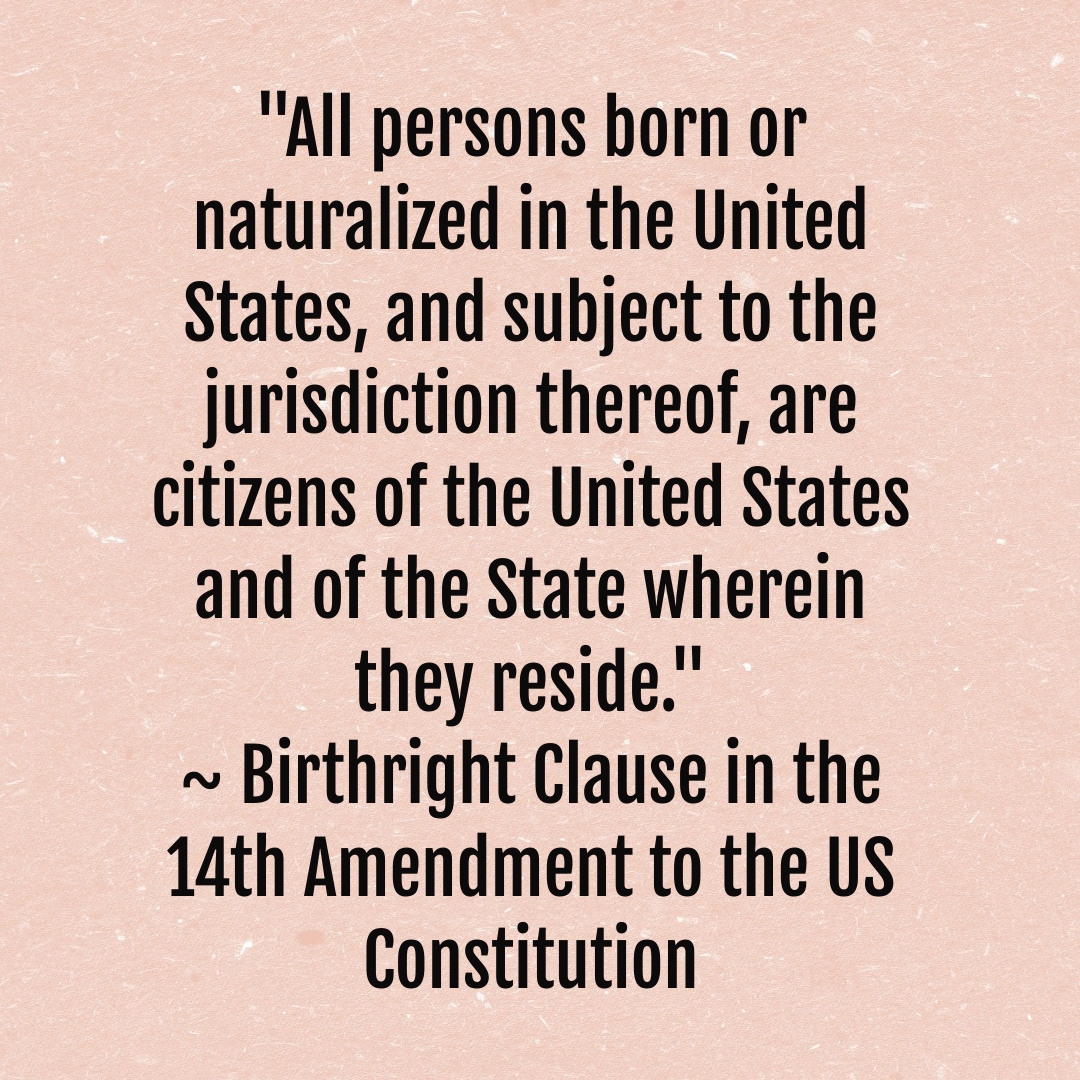
The first clause of the 14th Amendment to the US Constitution reads as follows: “All persons born or naturalized in the United States, and subject to the jurisdiction thereof, are citizens of the United States and of the State wherein they reside.”

Let’s take a step back and see what prompted Mr. Wong Kim Ark to take his complaint all the way to the US Supreme Court.

Who was Wong Kim Ark and what was this Court Case about?

Wong Kim Ark was born in San Francisco, California in 1873. His parents were subjects of the Emperor of China but were permanently residing in the United States. The family still lived in San Francisco in 1890 when Wong Kim Ark took a trip to China.

He returned to his home in San Francisco on July 26, 1890. He lived there and worked as a laborer as a US citizen. In 1894 he took another trip to China but, when he returned to the US in August 1895, he was denied entry on the grounds that he was not a US citizen.

A lower court ordered him to be released because he was a US citizen. The United States appealed the lower court’s decision, and the case went to the US Supreme Court.

Justice Horace Gray delivered for the majority in the 6-2 ruling by the US Supreme Court. In his statement he indicated that the Chinese Exclusion Act of 1882 had no relevance in this case.

The Chinese Exclusion Act was the first law of any significance that limited immigration into the United States. The Act was the result of violent acts committed against Chinese workers. It prohibited Chinese laborers from entering the US for ten years. Exceptions included merchants, teachers, students, travelers, and diplomats.

Justice Gray wrote, “It is conceded that, if he is a citizen of the United States, the acts of Congress, known as the Chinese Exclusion Acts, prohibiting persons of the Chinese race, and especially Chinese laborers, from coming into the United States, do not and cannot apply to him.”

As in most cases that reach the level of the US Supreme Court, there is more here than meets the eye. Having taken one Constitutional Law course in college does not qualify me as a Constitutional scholar, so I’ll just leave it at that.

If you wish to delve more deeply into the United States v. Wong Kim Ark decision, you may do so. I just found it serendipitous that the anniversary of this case fell during a time when the 14th Amendment to the US Constitution is under fire.

Why is the 14th Amendment under attack by Trump?

It is obvious that the president does not want children of undocumented Hispanic immigrants who are born in the US to automatically have US citizenship as guaranteed by the 14th Amendment.

The White House appears to be arguing its case on https://www.whitehouse.gov/presidential-actions/2025/01/protecting-the-meaning-and-value-of-american-citizenship/. It seems short-sighted to me for Trump to “show his hand” on this matter since it is destined to go before the US Supreme Court if he insists on pursuing his contempt for the 14th Amendment.

We have not heard the last of this.

A March 5, 2025 US Supreme Court ruling to consider

On March 5, 2025, we saw only five of the nine US Supreme Court Justices vote that the United States should be required to honor its promises of $2 billion in foreign aid through the now-possibly-defunct United States Agency for International Development (USAID). The slim majority decision gave me a sigh of relief but immediately angered me because the vote should have been 9-0.

Photo by Isak Engström on Unsplash

What is it in the life experiences of Associate Justices Alito, Kavanaugh, Thomas, and Gorsuch that influenced them to vote in the negative? What made those four men believe that funds authorized by the US Congress and promised to other countries and organizations should not be honored? Should not be paid?

What makes those four men think the United States should not be a country of its word? I really want to know.

Justice Alito argued in an eight-page dissent that resembled a pro-MAGA social media post that a US District Court Judge could not compel the US Government to spend money authorized by Congress. He essentially went after Judge Amir Ali, the lower court judge who had ruled in the case.

From what I have read, I think his anger is misplaced. It is the US Constitution that gives Congress the authority to allocate money. If Mr. Alito has a problem with that, perhaps he should have stated his disfavor with the Constitution instead of against Judge Amir Ali.

I certainly hope Justice Alito was not lashing out at Judge Ali because Judge Ali was born in Canada. I hope he wasn’t lashing out at Judge Ali because he was appointed by President Joe Biden. And I certainly hope he wasn’t lashing out at Judge Ali because he is a Muslim.

Perhaps I’m looking for a “there” when there’s no “there” there, but the current US Supreme Court in general seems to be in Trump’s pocket. This is the same group of Justices that ruled in 2024 that nothing a US President does is illegal.

I pray we haven’t heard the last of this!


Arlington National Cemetery

With so much going on, and a couple of long blog posts in March, I waited until today to mention how the US Department of Defense is erasing history specifically on the Arlington National Cemetery website. US history seems to be in Trump’s cross-hairs.

Under the heading, “Arlington National Cemetery removed links to webpages about Black, Hispanic and female veterans,” Snopes.com (published March 14, 2025; updated March 15, 2025) verified that the following links have been removed from the Arlington National Cemetery website:

          African American History, removed from the Notable Graves subsection;

          Hispanic American History, removed from the Notable Graves subsection;

          Women’s History, removed from the Notable Graves subsection;

          African American History, removed from the Themes drop-down menu of the Education section; and

          Civil War, removed from the Themes drop-down menu of the Education section.

This should be no surprise, since Trump has called veterans suckers and losers.


The latest US Department of Defense blunder

It seems to me that our Department of Defense (DoD) needs to spend less time erasing history and more time holding top secret war plans in a secure location (which until the Trump Administration was the policy) and much less time holding top secret war plan meetings via text messages.

Thank you, Jeffrey Goldberg, editor-in-chief of The Atlantic magazine, for being a true patriot and not leaking the plans for the United States bombing the Houthis in Yemen last week. Leaking the plans that you were texted would have put US military personnel is grave danger. Were you included on the text list by mistake, or is there someone in the DoD who wanted this information leaked to a journalist?

I wonder who DoD Secretary Hegseth will text top secret information to next.


Until my next blog post

I hope you have a good book to read.

Hold your family close.

Remember the people of Ukraine and western North Carolina.

Janet

#OnThisDay: Gideon v. Wainwright

I should have kept my notes from studying the Gideon v. Wainwright US Supreme Court case when I took Constitutional Law as a senior political science major in college. Fifty years later, I remembered the Gideon case as the one that gave individuals charged with a crime in the United States the right to legal counsel, but I was more than a little fuzzy on the details. Hence, today’s post necessitated my doing some research.

Who was Wainwright?

Louie L. Wainwright was the Secretary of Florida Department of Corrections from 1962 to 1967.

Who was Gideon?

Clarence Earl Gideon had an eighth-grade education. He reportedly ran away from home while a middle school student. He was no stranger to the law throughout his life as he was jailed or in prison more than once for committing nonviolent crimes.

So how in the world did his name get attached to a landmark US Supreme Court case in 1963?

Photo by Jon Tyson on Unsplash

Earlier charges against Gideon bear no bearing on the Gideon v. Wainwright case. The pertinent background facts in the determination of this case are as follows:

Gideon was charged with breaking and entering with intent to commit a misdemeanor after allegedly breaking into a pool hall in Panama City, Florida in June 1961 with intent to commit a misdemeanor. At that time (I do not know the current Florida laws) that charge constituted a felony. Gideon asked the judge in that case to appoint legal counsel from him because he could not afford an attorney. Florida law only permitted for free legal counsel in capital offense cases at that time.

After the judge was forced under state law to deny Gideon’s request, Gideon represented himself in the trial. Despite doing a commendable job considering his education and background, he was found guilty and sentenced to five years in prison.

On the grounds of his constitutional rights having been violated, Gideon filed a petition with the Florida Supreme Court. The state court denied the petition.

Against all odds, Gideon then filed a handwritten petition with the United States Supreme Court and the justices agreed to hear the case. What Gideon was calling into question was the interpretation of the last clause in the Sixth Amendment to the US Constitution.

The Sixth Amendment was ratified with the following wording in 1791 and has never been amended:

“In all criminal prosecutions, the accused shall enjoy the right to a speedy and public trial, by an impartial jury of the State and district wherein the crime shall have been committed, which district shall have been previously ascertained by law, and to be informed of the nature and cause of the accusation; to be confronted with the witnesses against him; to have compulsory process for obtaining witnesses in his favor, and to have the Assistance of Counsel for his defence.”

The US Supreme Court agreed to hear Gideon’s case in part to determine if the 1942 Betts v. Brady case should be reconsidered. In Betts v. Brady, the US Supreme Court had ruled that persons charged with a felony in a State Court was not guaranteed legal counsel under the Due Process Clause of the Fourteenth Amendment.

The Outcome of Gideon v. Wainwright

The US Supreme Court unanimously overturned the Betts v. Brady decision. The Court found the Court had ignored precedent set by Powell v. Alabama (1932) when it decided Betts v. Brady.

Justice Hugo Lafayette Black wrote the opinion for the Court. In part, he stated that “reason and reflection require us to recognize that in our adversary system of criminal justice, any person hauled into court, who is too poor to hire a lawyer, cannot be assured a fair trial unless counsel is provided for him.”

Justice Black went on to say that the ideal of a fair trial cannot be met if a poor defendant is not granted the right of legal counsel.

Therefore, today we have the perseverance of Clarence Earl Gideon and a decision by the US Supreme Court 61 years ago today on March 18, 1963 for the right individuals in the United States have to free legal counsel to defend them in-person in a trial whether it be in a state or federal district case, if they cannot afford to hire an attorney.

Being in the Bill of Rights, the right to a fair trial is fundamental in the United States. This is a right people in such countries as Russia, China, and North Korea cannot imagine.

Remember that when you vote in November.

Until my next blog post

I hope you have at least one good book to read this week.

Don’t forget to visit https://www.janetmorrisonbooks.com to subscribe to my e-newsletter and to read about the books and short stories I have written.

Remember the people of Ukraine, Gaza, and all the other places in the world where innocent people are suffering.

You and I do not have to agree on politics but, at least for now, I am free to state my opinions. I hope you are free to state yours.

Janet