
This is a long blog post. Don’t blame me, blame Trump. If not for him, I would still be blogging just one day a week or occasionally skipping a week.
- I am horrified that yesterday the President of the United States of America and the President of El Salvador sat in the Oval Office of the White House and agreed that Kilmar Abrego Garcia CANNOT be returned to the United States even though he was sent to an El Salvador prison by mistake without due process. The Sixth Amendment to the US Constitution guarantees everyone in the US to due process. That’s not just citizens. That’s anyone. President Nayib Bukele of El Salvador said returning Mr. Garcia to the US would be the same as smuggling a terrorist into another country. As Bukele voiced this ridiculous excuse, Trump smiled and nodded his head in agreement. (Have you noticed that Trump only smiles when showing delight in someone else’s misery?) The White House (i.e., Secretary of State Marco Rubio and White House Advisor Stephen Miller) chimed in saying no court in the US has the authority to conduct foreign policy, that only the President has that power. Last week, the US Supreme Court ordered Mr. Garcia’s return to the US because he was sent to a prison in El Salvador due to a clerical error, so this whole display of an egregious abuse of Presidential power was directly aimed at the US Supreme Court. What we have here is a Constitutional Crisis.

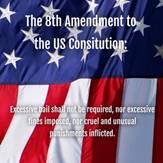
- Furthermore, on a hot mic at that same news conference, Trump said to the El Salvador President/Dictator, “The homegrowns are next. You gotta build about five more places.” They were both enjoying the moment and laughing. “Home-grown” means US-born. And the US Vice President, the US Secretary of State, and the US Attorney General were complicit in their silence. No US President has ever voiced a desire to send American citizens to prisons in another country. The way Trump throws around threats that many individuals and groups should be “locked up,” we are left to understand that he now plans or at the least contemplates sending anyone he considers to be a criminal to a prison in another country. Make no mistake: Trump’s words were aimed at any American citizen who dares to disagree with him or criticize him. Don’t take Trump at his word, look into his intent. Don’t make excuses for him. Don’t kid yourself. We no longer have a normal Executive Branch in the US Government. Trump’s words yesterday were in direct conflict with the “cruel and unusual punishments inflicted” phrase in the Eighth Amendment to the US Constitution and were chilling on multiple levels.
- Do you know why Trump has found a new ally and friend in President Nayib Bukele? Bukele “is the iron-fisted president of El Salvador (2019– ), who has unabashedly styled himself as the “world’s coolest dictator” and the country’s “philosopher king.” (https://www.britannica.com/biography/Nayib-Bukele)
- On Sunday night, Trump jumped on social media and pretty much ordered the Federal Communications Commission to go after CBS because he did not like the news segments on “60 Minutes” that night about Ukraine and Greenland. Quoting from Trump’s post, “Hopefully, the Federal Communications Commission (FCC), as headed by its Highly Respected Chairman, Brendan Carr, will impose the maximum fines and punishment, which is substantial, for their unlawful and illegal behavior.” He said CBS should lose its license. I watched the segment about Ukraine. Scott Pelley, interviewed President Zelensky of Ukraine. As an American citizen, it looked like an excellent and honest interview in which Zelensky invited Trump to visit Ukraine and go wherever he wanted to in the country and see for himself the condition in which the country is. Zelensky said that Russia invaded Ukraine – which the whole world knows is true – but apparently, Trump can’t tolerate anyone saying anything negative about his buddy in Moscow. (And, no, Mr. Trump… Russia’s bombing of Sumy, Ukraine on Palm Sunday morning was not an accident.) Threats to revoke FCC broadcast licenses is Step One, my friends, of Donald Trump shutting down the free press in the United States of America. He ended his Sunday night social media rant with the words, “Make America Great Again!” in all caps. In yesterday’s press conference, Trump lashed out at CNN’s Kaitlin Collins as follows: “You said if the Supreme Court said someone needed to be returned, you’d abide by that,” Collins reminded him. Trump cut her off and it looked like he wasn’t going to address her question, but then he said, “Why don’t you just say, ‘Isn’t it wonderful that we’re keeping criminals out of our county? That’s why nobody watches you anymore.” You have no credibility.” The truth of the matter is that Kaitlin Collins is not afraid of Donald Trump. He is afraid of her because someone deep down he knows she does her research, she knows the US Constitution, and she will fight for freedom of the press with her last breath. His total disdain for the First Amendment to the US Constitution could not be more obvious. His total disdain for the First Amendment to the US Constitution could not be more obvious.

- The Wall Street Journal reported on April 11, 2025, that the Trump Administration spent $154 billion more since the inauguration on January 20 than the Biden Administration spent in the same period last year.
- Colonel Susannah Meyers, commander of the US Pituffik Space Base in Greenland was fired after not sharing Vice President J.D. Vance’s enthusiasm for the United States taking control of Greenland. She made the mistake of telling Vance that a US takeover did not reflect the community.
- In my blog on Saturday, I wrote about my concerns about the Trump Administration declaring 6,100 living immigrants in the Social Security database as being dead. Another new bit of news about the Social Security Administration (SSA) is the announcement on Thursday that it will be making all announcements in the future on X instead of via press releases or announcements on its website. This, coupled with the recent announcement that many local SSA offices are closing and business cannot be conducted via phone means X is just one more roadblock for people needing SSA services. I’m going out on a limb, but I think most people on Social Security are not on X. Those of us who used to be on Twitter cancelled our accounts when Elon Musk bought Twitter and changed the name to X – and we aren’t going back!
- The new image of Trump was hung in a prominent place in the White House – a place traditionally reserved for portraits of the immediate past President. President Obama’s portrait was taken down and hung elsewhere, but instead of a portrait of President Biden being hung in its place, a rendition of a campaign image of Trump was put up. It’s a defiant, angry image of Trump with his fist in the air. Can anyone say, “Petty?” Can anyone say, “Tacky” in the truest Southern US sense of the word?
- Stocks and Bonds out-of-whack. Stocks were up a little on Friday, April 11, but US Treasury Bonds were down. With the stock market losing in general and causing investors to wonder what the future holds, one would think they would be turning to the more stable bond market. But that’s not what was happening on Friday. When investors and other countries are hesitant to purchase US Treasury Bonds, that sent up a red flag that economic instability might be worse than we thought, if that’s possible. However, on Friday afternoon as Trump flew to Florida for yet another golf weekend, the 27-year-old blond ever-cheerful and perky cross-necklace-wearing White House Pres Secretary Karoline Leavitt enthusiastically encouraged reporters in the White House Press Room to, “Trust President Trump. He knows what he’s doing.” You can’t make this stuff up.
- US Secretary of State Marco Rubio sent a memo to every US Embassy in the world instructing State Department employees to report their colleagues for any instances of “anti-Christian bias.” It is reported that accusations of such bias can be made anonymously, but they should be as detailed as possible. Trump created a task force by Executive Order in February to not only hunt down anti-religious bias in his Administration but also in the Biden Administration, so why did the Rubio memo specify “anti-Christian bias?” Call me a left-wing lunatic, but I think this smacks of fascism. Rubio is the son of immigrants from Cuba, and this is the way he thanks America?
- The Associated Press reports that, “Some journalists are reporting that Trump Administration officials are refusing to engage with reporters who list their pronouns in their signature.” The New York Times reports that one reporter’s email received the following response from White House Press Secretary Karoline Leavitt: “As a matter of policy, we do not respond to reporters with pronouns in their bios.”
- On Thursday, April 10, 2025, the US House of Representatives passed the SAVE Act. That Act, if also passed by the Senate, will require proof of citizenship for voter registration. Republicans (and, apparently, four rogue Democrats in the US House) just cannot get it through their heads or hearts that millions of noncitizens are voting, so they had to come up with a hardnosed solution to a problem that does not exist. On the face of it, it does not sound that oppressive. One way to prove citizenship is to produce your birth certificate; however, that birth certificate must be in your current legal name. If you are a woman who took your husband’s surname when you got married, your birth certificate is no longer proof of your citizenship. Your only saving grace is your passport. You can’t afford $130 for a passport? Too bad! The Republicans want to take us back to “the good old days” prior to 1920 when women could not vote in the United States. One might not be able to prove that the SAVE Act is unconstitutional because it does not include words like “sex,” “women,” or “female,” but it is definitely in opposition to the spirit of the 19th Amendment. How can it be interpreted otherwise when it is women who traditionally take their husband’s surname in the US? Voter suppression, plain and simple, under the guise of preventing non-citizens from voting.

- While we are on the topic of voting… President Trump’s Director of National Intelligence, Tulsi Gabbard, voted in Hawaii last November even though she had sworn last June that her legal state of residence was Texas so she and her husband could take advantage of a homestead tax exemption in Texas. The excuse her office gave: she was trying to shield her address from public view for security reasons. Even if that is true, it did not make it legal for her to cast her vote in Hawaii. Can anyone say, “Voter Fraud?”
- In my April 11, 2025, blog post, I expressed concern over the fact that 17 of the 300 student visas revoked by Secretary of State Marco Rubio were from four universities in North Carolina. It came to light on CNN on Saturday that the actual number is 525, but that number doesn’t make me feel any better. If the 525 figure is to be believed, that means three percent of them are from just four universities in North Carolina. Can that be possible? And if that is correct, why are North Carolina universities being targeted? Secretary Rubio sat in the Cabinet meeting on Friday and said they were only giving the boot to international students who came to America to “vandalize libraries,” but that couldn’t be further from the truth. First of all, the Trump Administration has already shown its disdain for libraries in his Executive Order a couple of weeks ago ordering the Institute of Museum and Library Services to be “eliminated to the maximum extent consistent with applicable law.” Second of all, it looks like any international student is at risk of being sent back home, which short-term and long-term will be a brain-drain and tragedy for the United States and for those individual students. But then on Sunday I learned that a student at Appalachian State University has been added to the list of international students in North Carolina whose visas have been revoked. Counting the Duke University alumnus and an alumnus on Optional Practical Training that’s 18 students at five universities in NC alone. In a TV interview on Sunday, Congressman Robert Garcia of California, who serves on the Homeland Security Committee, said the total number now is more than 800. The Trump Administration needs to come clean about the numbers and the fact that most of these students are being kicked out of the United States for only one reason: they are from another country. That is horrible, anti-education, and anti-American. It is also a hallmark of a Fascist regime. But any government that can declare living immigrants to be dead can kick foreign students out of the country for no reason – many of them just a couple of weeks before the end of a semester and graduation for some of them. That’s cruel, plain and simple. All under the guise of stamping out anti-semitism. Nothing could be further from the truth and anyone with common sense knows it. Thank you, Harvard University, for not caving in to the façade.
I will blog about more such happenings in America tomorrow.
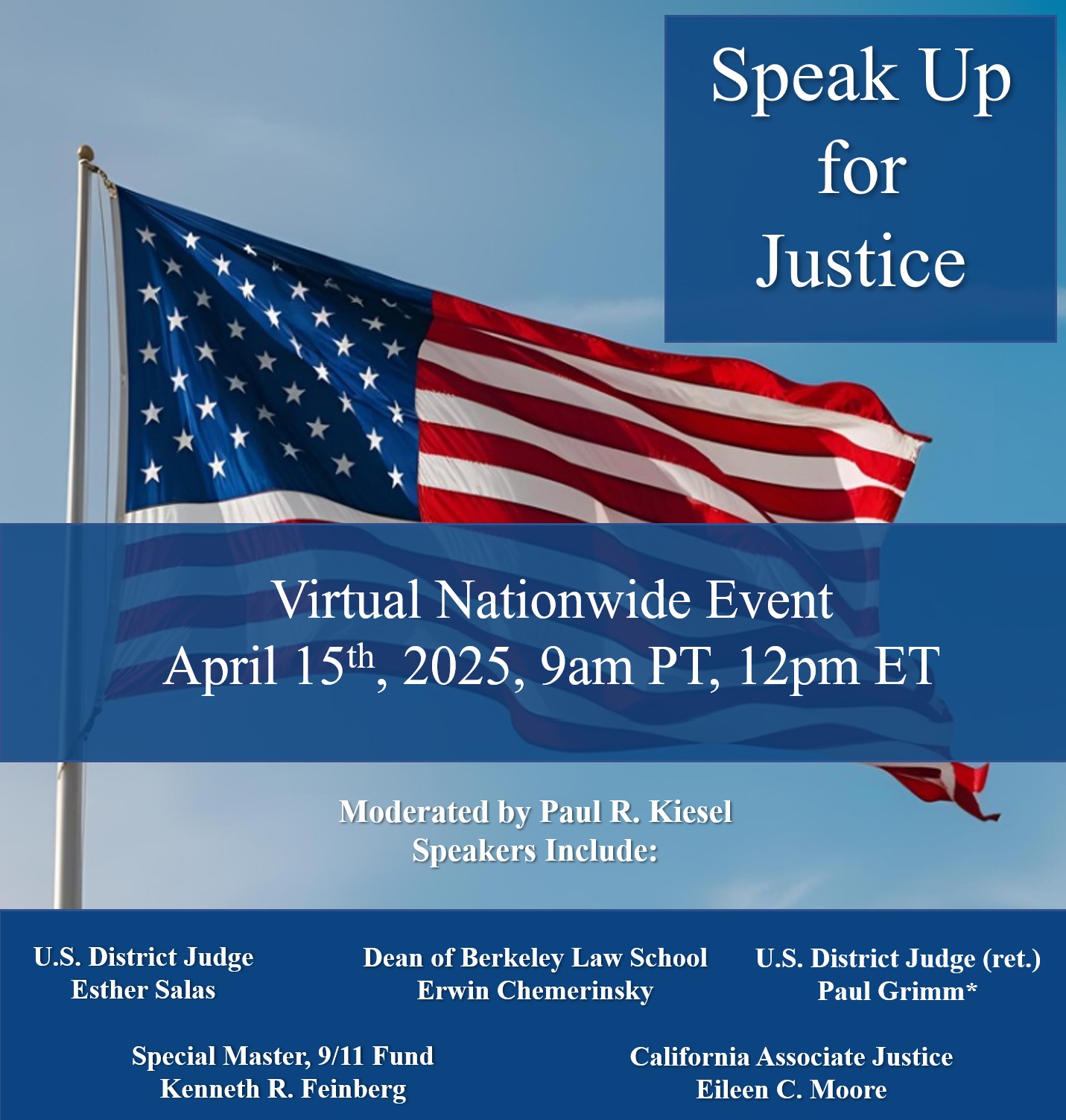
Reminder: Go to https://speakupforjustice.law for more information and to register for the 12:00 Noon Eastern Time “Speak Up For Justice” event on Zoom. In part, the website states, “The Speak Up For Justice event seeks to bring the country together to voice support for the judiciary at a time when it is under unprecedented attack.”
Janet



 Janet's Writing Blog
