Trump’s National Security Strategy – The Eastern Hemisphere

Yesterday, I primarily blogged (https://janetswritingblog.com/2025/12/10/trumps-national-security-strategy-the-western-hemisphere/) about the Western Hemisphere portion of the Trump Administration’s National Security Strategy which was released last Friday, although it bears a November 2025 date. It was quietly released and posted on the White House website: https://www.whitehouse.gov/wp-content/uploads/2025/12/2025-National-Security-Strategy.pdf. I encourage you to read the document and draw your own conclusions. Yours might not align with mine.

In addition to the Western Hemisphere, the document addresses Asia, Europe, the Middle East, and Africa – in that order.
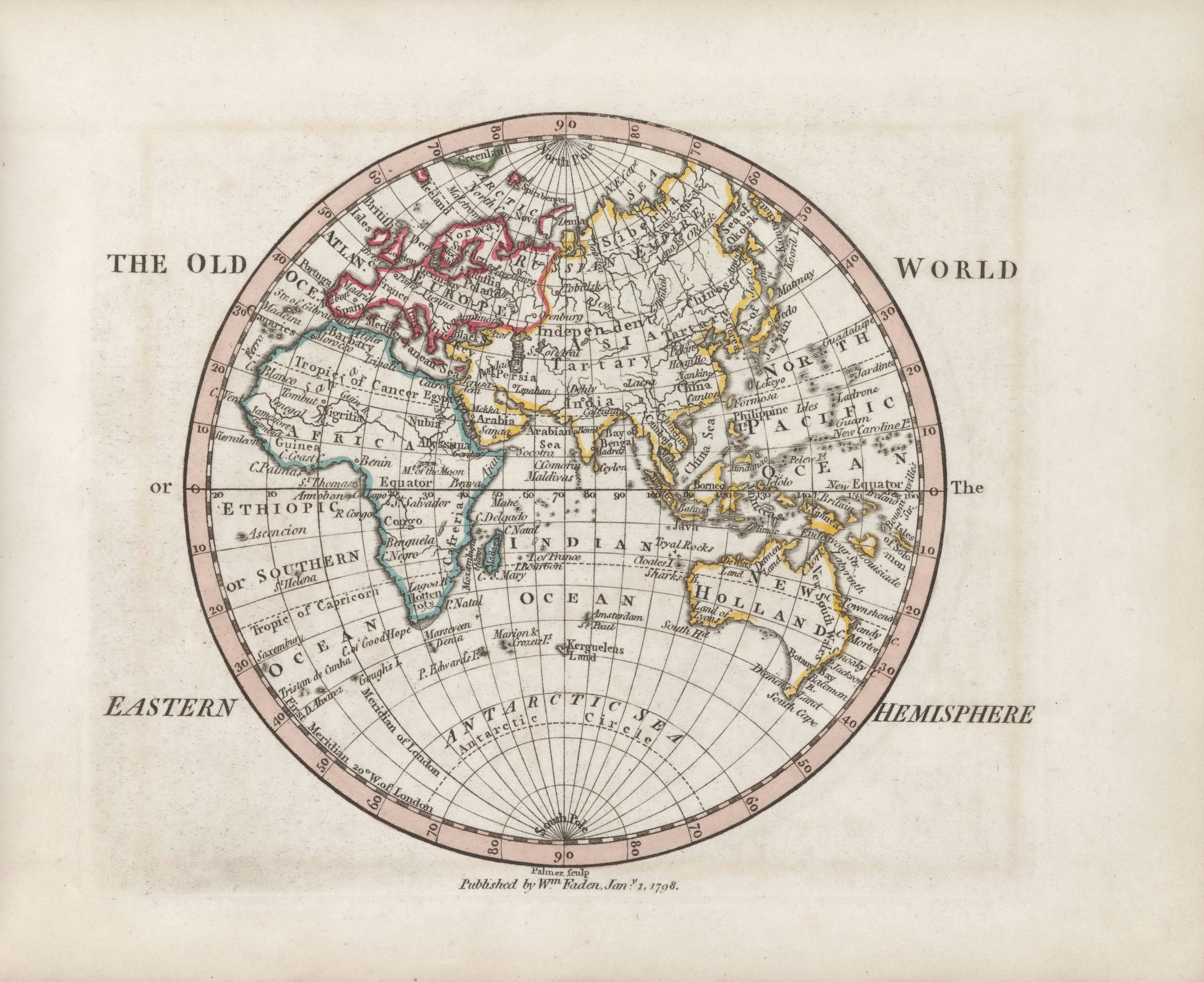
Photo of a map of the Old World Eastern Hemisphere
Photo by The New York Public Library on Unsplash

Asia

As only a document coming out of the Trump White House can say, the Asia portion of the strategy begins with the words, “President Trump single-handedly reversed more than three decades of mistaken American assumptions about China: namely, that by opening our markets to China, encouraging American business to invest in China, and outsourcing our manufacturing to China, we would facilitate China’s entry into the so-called ‘rules based international order.’ This did not happen. China got rich and powerful, and used its wealth and power to its considerable advantage. American elites—over four successive administrations of both political parties—were either willing enablers of China’s strategy or in denial.”

That’s rich, coming from Trump who had so much of his Trump brand merchandise manufactured in China! And his daughter had her line of jewelry made in China! The Trump family took full advantage of the “mistakes” of precious U.S. Presidents and got richer and richer at the expense of the American factory worker.

The document goes on to state, “… the Indo-Pacific is already and will continue to be among the next century’s key economic and geopolitical battlegrounds. To thrive at home, we must successfully compete there—and we are. President Trump signed major agreements during his October 2025 travels that further deepen our powerful ties of commerce, culture, technology, and defense, and reaffirm our commitment to a free and open Indo-Pacific. America retains tremendous assets—the world’s strongest economy and military, world-beating innovation, unrivaled “soft power,” and a historic record of benefiting our allies and partners—that enable us to compete successfully. President Trump is building alliances and strengthening partnerships in the Indo Pacific that will be the bedrock of security and prosperity long into the future.”

Several hundred words later, the Asia section of the document ends with, “We will also harden and strengthen our military presence in the Western Pacific, while in our dealings with Taiwan and Australia we maintain our determined rhetoric on increased defense spending. Preventing conflict requires a vigilant posture in the Indo-Pacific, a renewed defense industrial base, greater military investment from ourselves and from allies and partners, and winning the economic and technological competition over the long term.”

It appears that Australia was thrown into that last paragraph as an afterthought.

Europe

The European section of the National Security Strategy begins by throwing Europe under the bus, as Trump likes to do. He is critical of every country, including his own. Nothing is good enough. After laying out some supposed statistics (I say supposed because, sadly, I don’t believe anything the Trump Administration says), the document says if the current trend in Europe continues, “the continent will be unrecognizable in 20 years or less. As such, it is far from obvious whether certain European countries will have economies and militaries strong enough to remain reliable allies.”

The paper goes on to address the threat Russia poses with its nuclear weapons and the need to “reestablish conditions of strategic stability across the Eurasian landmass, and to mitigate the risk of conflict between Russia and European states.

I find the following statement in the NSS interesting, considering the Trump Administration’s propensity to make it more difficult for U.S. citizens to vote and its blatant efforts to prompt states to gerrymander Congressional district lines to assure him of retaining the Republican majority in the U.S. House of Representatives.

That statement: “A large European majority wants peace, yet that desire is not translated into policy, in large measure because of those governments’ subversion of democratic processes. This is strategically important to the United States precisely because European states cannot reform themselves if they are trapped in political crisis…. Not only can we not afford to write Europe off—doing so would be self-defeating for what this strategy aims to achieve. American diplomacy should continue to stand up for genuine democracy, freedom of expression, and unapologetic celebrations of European nations’ individual character and history….  Our goal should be to help Europe correct its current trajectory. We will need a strong Europe to help us successfully compete, and to work in concert with us to prevent any adversary from dominating Europe…. We want to work with aligned countries that want to restore their former greatness.”

The document then addresses NATO and its future as “certain NATO members will become majority non-European.”

The Middle East

This section of the NSS begins by addressing energy and how the Middle East is not as important in that arena as it was for decades. It touts the fact that the U.S. is now an energy exporter. It also boasts that Trump has “revitalized” U.S. alliances in “the Gulf.” It says the threats to peace in the Middle East are not as strong as the news headlines indicate. It brags about the U.S. June 2025 Operation Midnight Hammer attack on Iran’s nuclear program.

Africa

The NSS document starts this section by criticizing past American policy in Africa as spreading liberal ideology. Instead, the Trump Administration seeks to partner with “select countries” to create trade to replace the foreign aid of the past.

This section of the document ends with, “The United States should transition from an aid-focused relationship with Africa to a trade- and investment-focused relationship, favoring partnerships with capable, reliable states committed to opening their markets to U.S. goods and services. An immediate area for U.S. investment in Africa, with prospects for a good return on investment, include the energy sector and critical mineral development. Development of U.S.-backed nuclear energy, liquid petroleum gas, and liquified natural gas technologies can generate profits for U.S. businesses and help us in the competition for critical minerals and other resources.

In other words, what’s in it for Trump? He can only see the world through the lens of business. That lens only sees how he can personally benefit financially.

I hate to have such a distrust for and poor perspective of a U.S. President. I don’t enjoy writing any of this.

Janet

Trump’s National Security Strategy – The Western Hemisphere

What we have here in the United States is obviously a Wizard of Oz situation.

The White House quietly released the November 2025 National Security Strategy (NSS) and posted it on the White House website. Since it is the announcement of the official U.S. foreign policy, there is usually a bit of fanfare with its release, but not this year.

Most Americans will never hear about it, much less read it.

It begins with a letter signed by Trump but obviously written by someone else. Probably Stephen Miller. Why do I say that? Simple. It is written in complete sentences.

The letter

That letter is enlightening because it does list the “eight raging conflicts” Trump claims to have put an end to in “just eight months” this year. In case you’re having trouble keeping up with the wars Trump has ended, here’s the list as found in this letter: Cambodia & Thailand, Kosovo & Serbia, the Democratic Republic of Congo & Rwanda, Pakistan & India, Israel & Iran, Egypt & Ethiopia, Armenia & Azerbaijan, and Israel & Gaza, although Israel is not named in the letter. (He wouldn’t want to show the government of Israel in a bad light, would he?)

The letter is full of bluster and boasts of all the amazing things Trump has done and all the “weakness, extremism, and deadly failures” of the Biden Administration. As only Trump can boast, the letter states, “Over the past nine months, we have brought our nation — and the world – back from the brink of catastrophe and disaster.”

The NSS document

The NSS document itself contains 29 pages of details of what the United States wants and what the United States wants from the world.

Some of the introductory remarks would be laughable if they weren’t so sad. For instance, “We want to maintain the United States’ unrivaled ‘soft power’ through which we exercise positive influence throughout the world that furthers our interests” rings hollow considering the Trump Administration obliterated USAID.

The sudden obliteration of USAID not only resulted in the starvation of hundreds of thousands of children but also their preventable deaths by the withholding of medical treatments – not to mention how the cessation of the food aid programs hurt the American farmer terribly.

The paragraph that really made me gag, though, was this one:

“Finally, we want the restoration and reinvigoration of American spiritual and cultural health, without which long-term security is impossible. We want an America that cherishes its past glories and its heroes, and that looks forward to a new golden age. We want a people who are proud, happy, and optimistic that they will leave their country to the next generation better than they found it. We want a gainfully employed citizenry – with no one sitting on the sidelines – who take satisfaction from knowing that their work is essential to the prosperity of our nation and to the well-being of individuals and families. This cannot be accomplished without growing numbers of strong, traditional families that raise healthy children.” (Notice the subtle reference to “traditional families.”)

Dear Leader Kim Jong Un of North Korea couldn’t have written that paragraph better! Delete the words “American spiritual” and I would swear I was reading a translation of a statement by Kim or Xi.

A paragraph that sent chills down my spine, though, was this one: “We want to ensure that the Western Hemisphere remains reasonably stable and well-governed enough to prevent and discourage mass migration to the United States; …we want …; we want … ; and we want to ensure our continued access to key strategic locations. In other words, we will assert and enforce a “Trump Corollary” to the Monroe Doctrine;….”

It was “Trump Corollary” that got to me. Why does his name have to go on every cotton-picking thing?

The document goes on to delineate U.S. policy by region: The Western Hemisphere, Asia, Europe, the Middle East, and Africa.

Introductory remarks that preface the regional details include, “The United States is by every measure the most generous nation in history – yet we cannot afford to be equally attentive to every region and every problem in the world.”

The Western Hemisphere

Photo of an Old World drawing of the western hemisphere
Photo by The New York Public Library on Unsplash

The so-called “Trump Corollary” to the Monroe Doctrine involves making new partners and reconsidering our military presence in the Western Hemisphere. This seems to involve beefing up our Coast Guard and Navy presence “to control se lanes, to thwart illegal and other unwanted migration, to reduce human and drug trafficking, and to control key transit routes in a crisis.” It also includes “targeted deployments to secure the border and defeat cartels, including where necessary the use of lethal force to replace the failed law enforcement-only strategy of the last several decades.”

Also, “…as we prioritize commercial diplomacy, we will work to strengthen our security partnerships – from weapons sales to intelligence sharing to joint exercises.” This is in response to non-Western Hemisphere nations’ incursions of influence in recent years.

But the National Security Strategy goes on from there and seems to concentrate on the economy and what’s in it for United States companies. As a student of political science, it reads to me as a complete overhaul of the U.S. State Department and the responsibilities of our diplomats and State Department employees out in the field. This makes me cringe.

The U.S. “will reform our own system to expedite approvals and licensing – again, to make ourselves the partner of first choice. The choice all countries should face is whether they want to live in an American-led world of sovereign countries and free economies or in a parallel one in which they are influenced by countries on the other side of the world….

“All our embassies must be aware of major business opportunities in their country, especially major government contracts. Every U.S. Government official that interacts with these countries should understand that part of their job is to help American companies compete and succeed.

“The U.S. Government will identify strategic acquisition and investment opportunities for American companies in the region and present these opportunities for assessment by every U.S. Government financing program, including but not limited to those within the Departments of State, War, and Energy; the Small Business Administration; the International Development Finance Corporation; the Export-Import Bank; and the Millennium Challenge Corporation.

“We should also partner with regional governments and businesses to build scalable and resilient energy infrastructure, invest in critical mineral access, and harden existing and future cyber communications networks that take full advantage of American encryption and security potential.

“The aforementioned U.S. Government entities should be used to finance some of the costs of purchasing U.S. goods abroad. The United States must also resist and reverse measures such as targeted taxation, unfair regulation, and expropriation that disadvantage U.S. businesses. The terms of our agreements, especially with those countries that depend on us most and therefore over which we have the most leverage, must be sole-source contracts for our companies. At the same time, we should make every effort to push out foreign companies that build infrastructure in the region.”

The part about U.S. State Department – or any other U.S. Government employee – who interacts with countries in the Western Hemisphere to understand that it is “part of their job to help American companies compete and succeed” is a 180-degree change in the purpose U.S. Government employees. It is not part of the job of a State Department employee to promote American companies! At least, it wasn’t part of their job until last Friday. That is absolutely not the job of the U.S. diplomatic corps!

I suppose this being put in writing by the Trump Administration should come as no surprise. After all, the U.S. State Department no longer makes “peace agreements;” it makes “deals” because Trump has an overwhelming lack of understanding or appreciation for the traditional functions of government in a democracy.

Western Hemisphere Command

It was not a coincidence that we learned on Thursday or Friday that two U.S. military command centers will be moving to Fort Bragg here in North Carolina over the next year as a new “Western Hemisphere Command” has been announced.

Possible blog post tomorrow

If I can recover from reading the Western Hemisphere portion of the National Security Strategy, I will blog tomorrow about how it addresses Asia, Europe, the Middle East, and Africa.

I invite and encourage you to read the complete NSS document for yourself and not to take my word for it at: https://www.whitehouse.gov/wp-content/uploads/2025/12/2025-National-Security-Strategy.pdf.

Janet