The Importance of Marbury v. Madison Today

This is a timely anniversary date that landed in my lap!

The US Supreme Court heard the arguments for the Marbury v. Madison case on February 11, 1803, and handed down its decision 222 years ago today on February 24, 1803. That’s a quick turn around compared to today’s Supreme Court!

A photo of the US Supreme Court building.
The US Supreme Court Building.
(Photo by Tim Mossholder on Unsplash.)

It isn’t often that one hears a reference made to this US Supreme Court case, but a news commentator on TV mentioned it just 11 days ago and another one mentioned it four or five days ago. I chose Marbury v. Madison for today’s blog post when I created my 2025 editorial calendar last year. Talk about serendipity! Little did I know last fall what a place we would be politically today.

In a nutshell, Marbury v. Madison established the right of the courts to determine constitutionality of the actions of the Executive and Legislative branches of government in the United States.

The three branches of the federal government are equal; however, the Judicial branch has the authority to rein in the other two branches when they take actions deemed to be in conflict with the United States Constitution.

Photo of a top spinning in perfect balance.
And image of what balance looks like. (Photo by Christophe Hautier
on Unsplash.)

Until January 20, 2025, I took Marbury v. Madison for granted. I will never take it for granted again.

When I started writing today’s post a week ago, I copied what the National Archives website said about Marbury v. Madison and saved it as a Word document in case the National Archives website disappeared. (The USAID website disappeared for a while before being moved to the US State Department website. Incidentally, as I wrote this paragraph on Friday afternoon, a judge ruled that the Trump Administration can proceed to dismantle USAID.) Trump fired the National Archivist about 10 days ago. We historians fear that he or Elon will torch the National Archives. That’s one way to erase history, but I digress. (It is a real fear, though.)

Back to Marbury v. Madison

Quoting the National Archives website (https://www.archives.gov/milestone-documents/marbury-v-madison) because I cannot state the case’s background any better: “In 1801, outgoing President John Adams had issued William Marbury a commission as justice of the peace — but the new Secretary of State, James Madison, refused to deliver it. Marbury then sued to obtain it. With his decision in Marbury v. Madison, Chief Justice John Marshall established the principle of judicial review, an important addition to the system of “checks and balances” created to prevent any one branch of the Federal Government from becoming too powerful.”
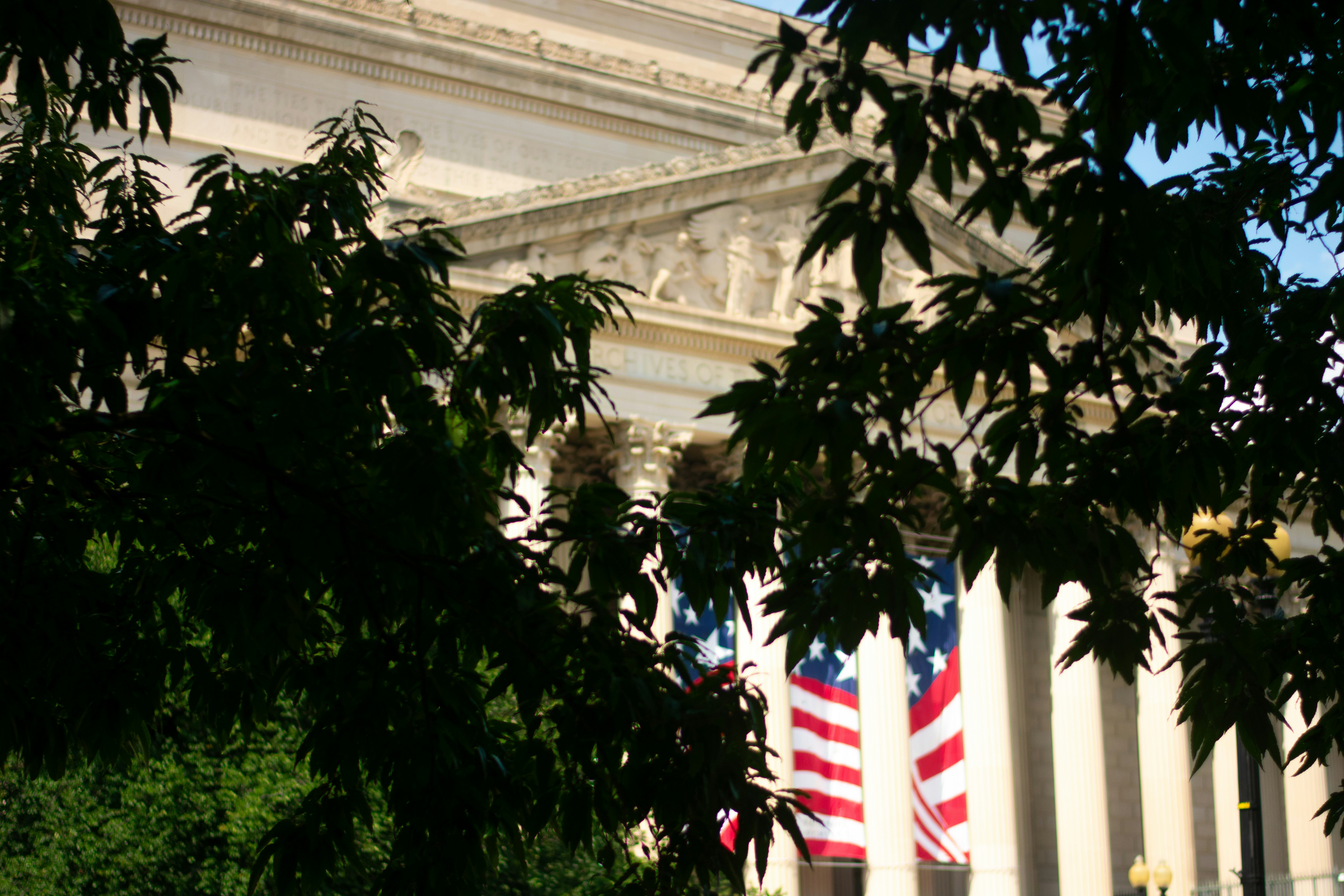
Photo of the National Archives building in Washington, DC
US National Archives, Washington, DC. (Photo by Juliana Uribbe on Unsplash.)

Also, quoting from the National Archives website: “‘A Law repugnant to the Constitution is void.’ With these words written by Chief Justice Marshall, the Supreme Court for the first time declared unconstitutional a law passed by Congress and signed by the President.”

I think some folks living and working on Pennsylvania Avenue in Washington, D.C. need to read up on this. We now have a US President who wrote on social media nine days ago, “He who saves his Country does not violate any Law.” It’s up for debate whether he is doing anything to save our country, but the frightening thing is that he has put in writing that he is above the law.

He also said that when it comes to agencies of the Executive Branch only he and the US Attorney General can interpret laws. That might be in conflict with the principle established by Marbury v. Madison.

It is the US Supreme Court that will ultimately decide if the US President does anything that is unconstitutional.

The US Constitution gave the President the power to veto an act of Congress and appoint federal judges with the advice and consent of the US Senate, and it gave Congress the power to impeach the President or a judge. The powers of the Supreme Court were not spelled out in such detail. When Marbury v. Madison came along in 1803, Chief Justice Marshall – who strongly believed that the Supreme Court was equal in power to the Executive and Legislative branches – led the court in seizing the opportunity to establish the principle of Judicial Review.

The US Supreme Court’s authority to declare federal or state laws unconstitutional has never been seriously challenged. I hope that will still be true in 2029.

In case you’re wondering what happened to William Marbury…

With the decision made in the Marbury v. Madison case, the Secretary of State was directed to deliver to William Marbury his commission as a justice of the peace for the county of Washington, in the District of Columbia.

In the big scheme of things, I wonder if the parties involved in this case had any idea going into it that it was destined to be a landmark decision.

In conclusion

I still have freedom of speech and I will continue to use my blog as a platform to share my opinions and my research into the US. Constitution. Those of you who have been reading my blog for more than 10 years know that is nothing new. I just feel more compelled now to blog about the US Constitution.

The words of the preamble to the US Constitution with a slightly blurred image of the American flag in the background.
Preamble to the Constitution of the United States of America

My college major was political science, and I regret that I only took one Constitutional Law course. In fact, I was so intimidated by the subject that I procrastinated taking the required course until my final quarter. (The university was on the quarter system then instead of the semester system.)

As it turned out, the course was fascinating and I wished I’d taken it earlier so I would have had time to take more constitutional law courses. I readily admit that one constitutional law course does not a constitutional law expert make, but I’m trying to shine a light on the document.


Hurricane Helene Update

As of Friday, 155 roads in North Carolina are still closed due to Hurricane Helene, including Interstate 40 near the Tennessee line. That is a decrease of 14 in the last week, inspite of snow and some sub-zero wind chills. This week’s count consists of 1 interstate highway (I-40), 11 US highways, 17 state highways, and 126 state roads. (To give some perspective, it has now been five months since the hurricane.)

I failed to report in last Monday’s blog post that Eric Church’s foundation, Chief
Cares, has purchased land in Avery County, NC and hopes to place 40 modular homes to house families that lost their homes due to Hurricane Helene. A road must be built and water and sewer lines installed. Church and his foundation hope to secure land in adjoining counties so they can provide more housing for hurricane victims. Church and fellow-country music singer Luke Combs organized and spearheaded a concert at Bank of America Stadium in Charlotte last October to raise money for hurricane relief.

The work of Brother Wolf Animal Rescue and The 21st Century Packhorse Librarian continue and will appreciate your support for the foreseeable future.

Jake Jarvis of Precision Grading in Saluda continues to work in the area every day free-of-charge with his heavy earth-moving equipment. He has built bridges, reconstructed driveways and private roads, and excavated places for homes to be rebuilt. The last couple of weeks have been challenging due to ice, snow, and high winds.


Until my next blog post

I hope you have a good book to read. Next Monday I plan to blog about the books I’ve read in February.

Value your freedoms, family, and friends.

Remember the people of Ukraine and western North Carolina.

Janet

Books Read in January and Hurricane Helene Update

January turned out to be a good reading month for me, and I have much to report on Hurricane Helene recovery in western North Carolina. I’ll jump right in and tell you about some of the books I read.


The Frozen River, by Ariel Lawhon

Photo of front cover of the book The Frozen River, by Ariel Lawhon.
The Frozen River,
by Ariel Lawhon

My sister recommended that I read this historical novel. Finally, when it was chosen as the January read for the book club we’re in, I checked it out. I immediately fell in love with the way Ariel Lawhon writes.

The novel is set in Maine in the 1700s. The story switches from one decade to another, not necessarily in chronological order. That’s not my favorite way to read a story, but this one worked better for me than others I’ve read.

The story is inspired by Martha Ballard, a real-life midwife in Maine at that time. As Lawhon explains in her author’s notes at the back of the book, she did take creative license in some areas to make it a more manageable story. That said, the book is well-researched and in the author notes Lawhon explains why the book sometimes deviates from the facts. After all,… it is fiction!

The novel includes murder, rape, attempted rape, young love, vengeance, lying, under-handed business dealings, the unique lifestyle along a river that freezes over in winter, and the birth of numerous babies. There is conflict between Martha Ballard and a young, inexperienced physician who moves to the town. There are court cases, and there are judges of questionable character. There is a lot going on in this novel!

As an aspiring novelist, I plan to read The Frozen River again just to study how it is written.

I highly recommend The Frozen River to anyone who likes to read historical fiction set in 18th century America.


The Lion Women of Tehran, by Marjan Kamali

Photo of front cover of book, The Lion Women of Tehran, by Marjan Kamali
The Lion Women of Tehran,
by Marjan Kamali

This novel follows the friendship of two people through the 1950s, 1960s, and 1970s against the backdrop of what was happening in Iran. Iran went from being under the rule of the Shah to being under the rule of the Ayatollah Ruhollah Khomeini.

For those of you who might not have lived through those three decades… It was under the Ayatollah Ruhollah Khomeini that women lost all their rights. The radical Islamic view that women are put on earth for one purpose – to wait on and obey men and bear their children – is what Iran has turned into. They are not to be seen. It wasn’t enough that they had to wear the hijab in public. As of a couple of weeks ago, windows in their homes through which it would be possible for a man to see them were outlawed. Let that sink in!

Back to the novel… In The Lion Women of Tehran, we see two young girls become friends although Ellie is from a privileged family and Homa is from a poor family. Ellie, in fact, defies her mother’s wishes that she not befriend someone from the poor part of town.

Ellie and Homa share their dreams of attending college and becoming professionals in a modern Iran. Homa even aspires to get a law degree and someday be a judge. This is a reasonable aspiration for a girl in Iran at that time. Girls are seeing women have jobs they\ had been excluded from until the somewhat enlightened time of the early 1960s.

The book follows the ups and downs of Ellie and Homa’s friendship and the challenges of the cultural and governmental restrictions on women and free speech.

Spoiler Alert: When the novel comes to an end, one of the two – women now – has escaped to the United States. The aspiring lawyer has been raped in prison for protesting injustice and she reaches out to her now-estranged friend in America to help her get her teenaged daughter out of Iran.

The Lion Women of Tehran had an especially chilling affect on me because I was reading during the first week of Trump’s second administration when we were witnessing what it looks like when a country’s leader daily pushes the limits of the power of the office he or she holds – even in a democracy.  

This is the second novel I’ve read by Marjan Kamali. In October 2019, I read The Stationery Shop. (See my November 4, 2019 blog post, A New Favorite Novel? in which I told how impressed I was with Marjan Kamali’s writing.)


How to Stand Up to a Dictator, by Maria Reesa

Photo of the front cover of the book, How to Stand Up to a Dictator: The Fight for Our Future, by Maria Reesa
How to Stand Up to a Dictator: The Fight for Our Future, by Maria Reesa

I wish I could take credit for reading I Was Anastasia and How to Stand Up to a Dictator in the same month, but I was at the mercy of the waitlists at the public library. Sometimes things just fall into place through no effort of our own!

After hearing Maria Reesa interviewed on NPR and learning that she had written a book, I immediately got on the waitlist for it at the public library.

Maria Reesa is from The Philippines. She was awarded The Nobel Peace Prize in 2021 for her courageous work at a journalist.

In her book, How to Stand Up to a Dictator, Reesa writes from her own experience. She was arrested for reporting the truth – a truth that ex-President Rodrigo Duterte of The Philippines did not want people to know.

Meticulously written, the book points out how in many ways what happens in politics in The Philippines eventually happens in politics in the United States. That was a revelation for me, but the examples she gave painted a compelling picture.

Near the end of the book, Reesa gives the 10-Point Plan to Address the Information Crisis that she and fellow-2021 Nobel Peace Prize recipient Dmitry Muratov presented at the Freedom of Expression Conference, Nobel Peace Center, Oslo, Norway, on September 2, 2022.

In a nutshell, points 1-3 call on transparency and a consideration for human rights by tech companies, right to privacy of citizens to be beefed up, and public condemnation of attacks on journalists.

Points 4 through 9 are directed at the European Union, and point 10 calls on the United Nations to “Create a special Envoy of the UN Secretary-General focused on the Safety of Journalists (SESJ) who would challenge the current status quo and finally raise the cost of crimes against journalists.”

Reesa calls on young people to put their phones down and focus on the people they love. She writes, “You find meaning by choosing where to spend your precious time.” We can all benefit by taking that to heart. She told a high school audience that they can’t find meaning on social media.

She writes about how social media can easily be hijacked by individuals and elected officials with ill intent, and how misinformation spreads like wildfire while fact-checking and retractions never spread as quickly or easily as lies.

Reesa says if the rest of the world wants to know what unbridled social media will do to their country, all they need to do is look at what happened in The Philippines.

In 2012, Reesa cofounded a digital only news website in the Philippines called Rappler. Rappler has exposed corruption and manipulation in government and in technology companies.

She warns, “the Philippines is ground zero for the terrible effects that social media can have on a nation’s institutions, its culture, and the minds of its populace. Every development that happens in my country eventually happens in the rest of the world – if not tomorrow, then a year or two later.”

She goes on to say, “This book is my attempt to show you that the absence of rule of law in the virtual world is devastating.” She warns us, “Don’t become a Monster to Fight a Monster. Embrace Your Fear.”


Blogging for Authors, by Barb Drozdowich

Photo of front cover of the book Blogging for Authors, by Barb Drozdowich
Blogging for Authors,
by Barb Drozdowich

Reading this book made me aware of some ways I’m falling down on the job when it comes to my blog. The author says that an author’s blog is “… by far the most important method of communicating with your readers.” She also says, “… you want readers to be able to Google the genre they read and find your site in a search.”

Since I write local history and historical fiction, there’s a slim-to-none chance someone will find my blog by typing either of those topics in a search engine. Just for fun, I tried.

I have tried to blog about historical events to convey my lifelong foundation in the study of history and my ability to do historical research. I’ve blogged about the craft of writing as I continue to learn more about it every day. I hope I’ve been successful, but now I might need to consider how to express how those things are converging in my effort to write my first historical novel. Stay tuned!


Hurricane Helene Update

As of Friday, 171 roads in North Carolina are still closed due to Hurricane Helene, including Interstate 40 near the Tennessee line, but that’s a decrease of 12 since the Friday before. That count consists of one interstate, 12 US, 19 state highways, and 139 state roads. There is no estimate for when the Blue Ridge Parkway in North Carolina will be fully reopened.

WLOS in Asheville reported that the Biltmore Estate donated at least 40 hotel rooms of furniture to the Habitat for Humanity Restore to resell. All proceeds from items sold at a Habitat for Humanity Restore, of course, funds new home construction.

WLOS is also reporting a new partnership in Haywood County between Mountain Project and Habitat for Humanity as others to build 10 homes specifically for families impacted by Hurricane Helene.

Verizon has partnered with ForgiveCo, a public benefit corporation, to pay off $10 million in debts owed by 6,500 people in the 39 North Carolina counties impacted by Hurricane Helene. A Verizon spokesperson said the company thought they needed to do more than restore customers’ telephone service. The debt forgiveness recipients were randomly selected.

The newspaper in Boone, The Watauga Democrat, reported that NC Gov. Josh Stein announced a joint $30 million small business grant program with Dogwood Health Trust to support small businesses affected by Hurricane Helene.

Businesses with annual revenue up to $2.5 million are eligible for grants up to $50,000 from the Western North Carolina Small Business Initiative Grant Program. Dogwood Health Trust, a private foundation, created the Western North Carolina Small Business Initiative last fall in response to the Hurricane Helene disaster.

Businesses in the 28 counties and the Eastern Band of Cherokee Indians covered by President Biden’s federal disaster declaration or in Dogwood Health Trust’s 18-county footprint and that meet revenue requirements are eligible to apply for a grant.

Governor Stein announced that the State of North Carolina is awarding $3 million to Baptists on Mission and $3 million to Habitat for Humanity NC for their housing repair initiatives in the western part of the state.

Photo of a man using a power saw to cut a piece of lumber
Photo by Greyson Joralemon on Unsplash

The Boone newspaper reported stated: “In the wake of Helene, impacted businesses lost $13 billion in revenue. These grants will help businesses make payroll, pay operating expenses, and stabilize the local economy as tourism slowly ramps up again.”

The work of Brother Wolf Animal Rescue and The 21st Century Packhorse Librarian continue and will appreciate your support for the foreseeable future.

Jake Jarvis of Precision Grading in Saluda continues to work in the area every day free-of-charge with his heavy earth-moving equipment. He has built bridges, reconstructed driveways and private roads, and excavated places for homes to be rebuilt.

It is said that no good deed goes unpunished. After doing what he thought was due diligence, Mr. Jarvis was scammed out of $77,000 he paid for a bulldozer in Texas. He wanted a larger bulldozer so he could help more people. A friend of his has set up a GiveSendGo fundraiser to help Mr. Jarvis replace the money he pulled out of savings for the bulldozer which never was delivered.


Until my next blog post

I hope you have a good book to read. If you’re a fan of historical fiction, I highly recommend The Frozen River. If you are concerned about the role of social media in our world and particularly in our politics, I highly recommend How to Stand Up to a Dictator.

It has been a tough week since last Monday’s blog post. The airplane and helicopter collision in Washington, DC; the Medivac plane crash in Philadelphia; wildfires in some of the Hurricane Helene-ravaged parts of western North Carolina;….

Remember the people of Ukraine and all the places where people are suffering through no fault of their own.

Janet

#OnThisDay: 4th Anniversary of the Attempted Coup

What happened in Washington, DC four years ago today is too important for me to overlook for this blog.

          Just like September 11, 2001 is forever etched in my mind, so too is January 6, 2021. There are some things you just cannot unsee.

          On September 11, 2001 I stood in front of my TV in horror as I watched the second plane crash into the World Trade Center. On January 6, 2021 I stood (yes, stood!) in front of my TV in horror as I watched insurrectionists storm the US Capitol at the encouragement of Donald Trump.

          Until 2021, the meeting of the US Congress to certify the electoral votes in the recent presidential election was a mundane, rubber-stamp kind of meeting. Most citizens weren’t even aware that such a meeting took place. It usually received no more than a brief mention on TV news broadcasts.

Photo by Andra C Taylor Jr on Unsplash

          Until 2021.

          I will never forget the images of the rioters storming the US Capitol, bashing in windows, attacking police officers, calling for the hanging of Vice President Mike Pence, breaking into offices to break and steal whatever they could, and eventually breaking into the chambers of the House of Representatives to pillage.

          All that at the invitation and encouragement of a sitting US president who could not accept defeat at the ballot box and refused for several hours to call for the rioters to stop.

          What a disgrace!

          I fully expect the certifying of the 2024 presidential election results to go smoothly and peacefully today. Joe Biden won in 2020. It is a sad truth that Donald Trump won in 2024. I accept the 2024 election results, although my heart cannot accept the fact that half the country wanted a man with such a void of moral character to once again occupy the White House.

Photo by Brendan Beale on Unsplash

Hurricane Helene Update:

          Three months ago, I naively thought as time passed my Hurricane Helene Updates in my weekly blog posts would decrease in length. I knew recovery would take years, but I misjudged how many stories of recovery I would continue to read about and want to share with you.

          Some updates are daunting, but others shine a light on the undaunted spirit of humanity. In 2025, I will continue to share with you not only how our government agencies but also individual human beings rise to the occasion in the aftermath of disasters.

          Today is the 147th anniversary of the birth of American poet Carl Sandburg, so I’ll take this opportunity to catch you up on what happened to the grounds at his home in Flat Rock, NC during Hurricane Helene in September. The Carl Sandburg Home National Historic Site is closed indefinitely except for a hiking trail which reopened on December 23. The trail from the main parking lot to the home sustained severe erosion and damage during the storm. It is my understanding that the house itself is okay, but it will remain closed until the park’s main sewer line and other infrastructure repairs and rebuilding can take place. There is no estimated reopening date for the home. The site averages 150,000 visitors annually.

          From a post I saw on Facebook on Thursday: “Boone, NC officials have confirmed that 62 members of the Pennsylvania Amish community have completed the construction of 12 tiny homes in western North Carolina in under 48 hours. The total cost of the project was over $300,000, all of which was donated by the Amish community.” It snowed in Boone on Friday, and much of the mountainous part of NC was under a winter storm warning yesterday and all day today. All this week will be very cold.

          As of December 25, Brother Wolf Animal Rescue https://www.bwar.org/had moved into its temporary location, and as of December 30 the 501(c)3 organization which has save more than 100,000 animals since 2007, had raised 91% of the $1.5 million it hoped to raise by the end of 2024 to fund the first phase of rebuilding its facility in a new location in Asheville. Its old facility was completely wiped out in the September flood.

          The 21st Century Packhorse Librarian reported the following for the last three months of 2024:  738 brand new books were donated from the Amazon wish list and “thousands upon thousands” of gently-used books were donated and distributed to the homes that needed them most. The work continues! https://981theriver.com/news/228822-woman-brings-free-books-to-appalachia-as-modern-packhorse-librarian/

          As of Friday, 185 roads in NC, including a portion of I-40 near the Tennessee line, remained closed due to the damage wreaked by Hurricane Helene.

          Most of the Blue Ridge Parkway remains closed, with no estimate of when it will be fully reopened.

          Three inches of rain in parts of the mountains last week caused additional flooding and the washing away of several temporary bridges.

          The NC Department of Transportation will use a federal grant to launch a pilot program to strategically place “drones-in-a-box” in preparation for future natural disasters. The drones will be remotely launched after a storm to assess damages and to deliver such emergency supplies as insulin. The program will begin in Lumberton, NC, which is in the eastern part of the state and prone to flooding from Atlantic hurricanes.

Until my next blog post

If you visited my blog today expecting to find out which books I read in December, please come back next week for that information.

I hope you have a good book to read.

Hold your family close.

Remember the people of Ukraine and western North Carolina.

Janet

That’s a lot of Tea! Plus, a Hurricane Helene Update

Today is the 251st anniversary of the Boston Tea Party. If you’re like me, you will be surprised to read just how much tea ended up in Boston Harbor on December 16, 1773.

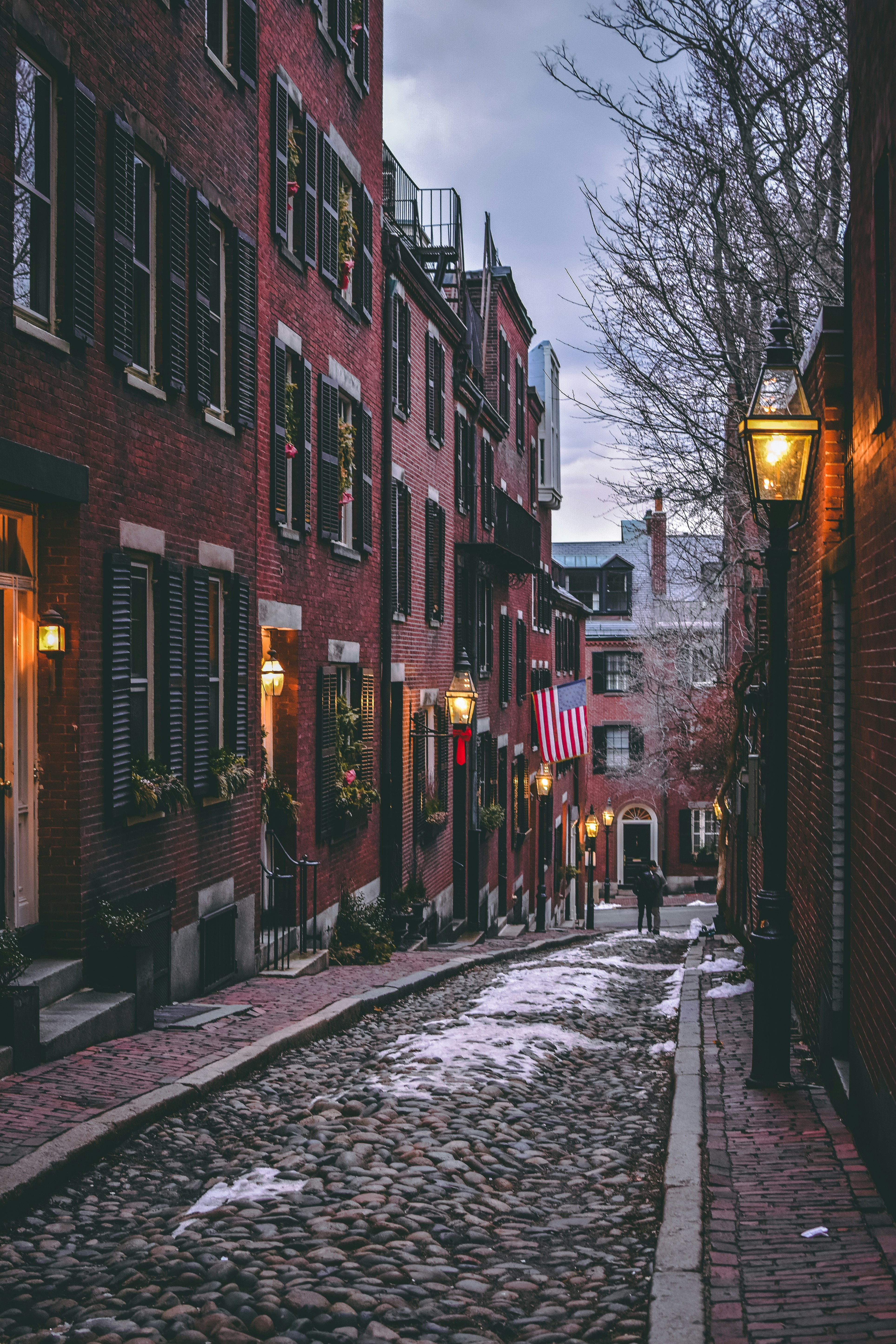
Photo of Acorn Street in Boston with brick sidewalks and cobblestone narrow street
Photo by Tiffany Chan on Unsplash

A little background

Great Britain was in debt in the 1760s, so Parliament passed a succession of acts to inflict taxes on the American colonists to generate money for the British coffers.

Photo of the tower on a castle with the Union Jack flying on a flagpole at the top.
Photo by Andrik Langfield on Unsplash

My ancestors in Scotland had been subjected to the Hearth Tax in the 1690s, so they were no strangers to the lengths Parliament would take to ring money out of its subjects. (In the 1690s in Scotland a person had to pay a tax “if smoke rose from their chimney.” Hence, it was called the Hearth Tax.) Forgive me if I’m not completely objective in writing about the Boston Tea Party.

The Stamp Act in 1765 began what became a domino effect until by the early 1770s the colonists were in an uproar over “taxation without representation.” Britain maintained that the taxes were fair exchange for the mother country’s fighting wars such as the French and Indian War to protect the colonists. (Actually, I think they were fighting to keep control over the thirteen colonies, but I digress.)

The “Boston Massacre” occurred on March 5, 1770 because residents did not appreciate the presence of British soldiers on their streets.

In other words, one thing led to another.

Fast forward to December 1773

On December 15, 1773, Dartmouth, a ship operated by the East India Company (a British company) was moored in Boston Harbor. It was known that the ship was laden with tea from China. Brits and British immigrants loved (and still love!) their tea. They were drinking more than one million pounds of tea every year, so the Tea Tax was a lucrative money-maker for Great Britain.

The colonists were no dummies. They started smuggling tea in from The Netherlands. In fact, did you know that John Hancock and Samuel Adams were in on it? (I don’t remember ever being taught that in school.)

Things were going well until the price of Dutch tea increased to the point that it was no cheaper than the tea being brought in by Great Britain with the tax included in the equation.

It was not just out of the goodness of their hearts or their dislike for taxation without representation that John Hancock and Samuel Adams objected to the tax on tea.

John Hancock had inherited his uncle’s shipping business. Samuel Adams was a provocateur. As a leader in the Sons of Liberty organization, he was more than a rabble-rouser; he was a serious political theorist. It was people like Adams who encouraged moderates to resist the British taxes. One source I read indicated that Adams might have helped plan the Boston Tea Party.

The Sons of Liberty protested the arrival of the East India Company’s ship, Dartmouth. It was soon joined by ships Beaver and Eleanor at Griffin’s Wharf in Boston Harbor. The tea they carried was from China, but the shipping costs and taxes would go to Great Britain.

A meeting was held at the Old South Meeting House where a vote decided that the ships would not be unloaded and the cargo would not be stored, sold, or used. When Governor Thomas Hutchison ordered the tea tariff to be paid and the tea to be unloaded, local residents refused to comply.

On the night of December 16, 1773, men disguised as Native Americans boarded the three ships and threw 342 chests of tea into the water. (My apologies to the Native Americans. It’s sad that more than once in the American Revolution the white guys chose to disguise themselves as Indians. It happened right here in Cabarrus County in 1771.)

Meanwhile, back in Boston… the men hacked into the chests to ensure the tea would mix with the water once thrown overboard. It took more than 100 men almost three hours to do the deed. More than 90,000 pounds of tea was dumped in Boston Harbor that night!

The moral of the story: Tariffs don’t always turn out the way politicians think they will. Just sayin’.

Hurricane Helene Update

Just to give you an idea about the recovery situation 81 days after the storm hit western NC…

Roads: Interstate 40 is still closed near the TN line. As of Friday, of the 1,329 roads that were closed in September due to Hurricane Helene, 189 remain closed. That’s down from 270 from a week ago!

Blue Ridge Parkway: There is still no estimated date for all the parkway in NC to be reopened.

Housing: Temporary housing from FEMA continues to arrive so displaced people can move out of hotels. The Amish continue to build tiny houses for the people who cannot yet move back into their homes. Individuals and companies have donated RVs and campers for the people needing housing. With more than 125,000 homes damaged or destroyed, the recovery will take years.

Books: The 21st Century Packhorse Librarian continues to collect new books to give away to the children and adults who lost all their books in the storm. Look for her on Facebook and Instagram. Here’s a good article about the founder, Kristin Turner: https://981theriver.com/news/228822-woman-brings-free-books-to-appalachia-as-modern-packhorse-librarian/.

Lake Lure: The US Army Corps of Engineers, AshBritt Environmental, and local contractors continue to remove debris from the lake. A Colonel with the Army Corps of Engineers indicated on Saturday that their work will take more than six additional months. More than 17,143 cubic yards of debris have been removed from the lake, over 15,900 cubic yards of debris have been removed from the right-of-way, and more than 9,680 tons of sediment and silt have been removed from the town of Lake Lure. When all storm debris has been removed from the lake, sediment removal will begin.

Old Orchard Creek General Store: After being severely damaged by the flood, the Old Orchard Creek General Store reopened on Saturday! It is a landmark in the small town of Lansing in Ashe County, NC. Look for their website, and find them on Facebook and Instagram.

Help of all kinds has poured into western North Carolina from all over the United States. Thank you!

Until my next blog post

I hope you have a good book to read.

If you haven’t already done so, please visit https://www.janetmorrisonbooks.com and subscribe to my weekly email newsletter. You’ll receive a free downloadable copy of my historical short story, “Slip Sliding Away.”

Treasure your time with friends and family.

Remember the people of Ukraine and western North Carolina.

Janet