I write southern historical fiction, local history, and I've written a devotional book. The two novels I'm writing are set in Virginia and the Carolinas in the 1760s. My weekly blog started out to follow my journey as a writer and a reader, but in 2025 it has been greatly expanded to include current events and politics in the United States as I see our democracy under attack from within. The political science major in me cannot sit idly by and remain silent.
For those of you who are sick and tired of my political rants in my blog posts, I regret that Donald Trump and his ilk have put you in that state of mind. I do not apologize for the tone or the content of my political postings. As an American citizen, I feel it is my duty and obligation to use my First Amendment freedom of speech right to voice my opinions.
As I have stated before, it was never my plan when I started blogging more than a decade ago to take my blog in a political direction. I feel strongly about the direction Donald Trump is taking my country, and I cannot keep silent. I am obligated to speak out as I see him governing from a Fascist playbook.
The FCC and Stephen Colbert
Trump’s FCC Chair, Brendan Carr, is the Pam Bondi of the Federal Communications Commission. He is only in that position to do Trump’s bidding.
Photo by israel palacio on Unsplash
On Monday, Stephen Colbert of CBS’s “The Late Show with Stephen Colbert” was scheduled to interview James Talarico, a member of the Texas State House of Representatives. But there was a problem: Talarico is a Democrat.
Under the law, late night talk shows are not required to give equal time to Republican and Democrat politicians, but Trump and Carr are never bothered by laws they disagree with.
Colbert was told CBS would not air the interview. He said he was told he could not mention on his show on Monday night that the interview had been pulled. As only Stephen Colbert and Jimmy Kimmel can do, he talked about it and paid his respects Carr and the FCC.
This isn’t the first talk show to get in trouble for hosting Talarico. He appeared on “The View” on the ABC TV network a few weeks ago, and now “The View” is under investigation by the FCC.
I never have and never will watch Fox News, but from the little bit I’ve seen and heard of it I don’t think they abide by any equal-time rule. Perhaps Carr should turn his attention to Fox News even though it is Trump’s mouthpiece.
The appalling deportation case of Godfrey Wade
We have witnessed 13 months of abuses perpetrated by Immigration and Customs Enforcement (ICE) and many of those abuses victimized American citizens. Many of them were inflicted on immigrants who were going through all the proper channels to stay in the U.S. and/or seek citizenship.
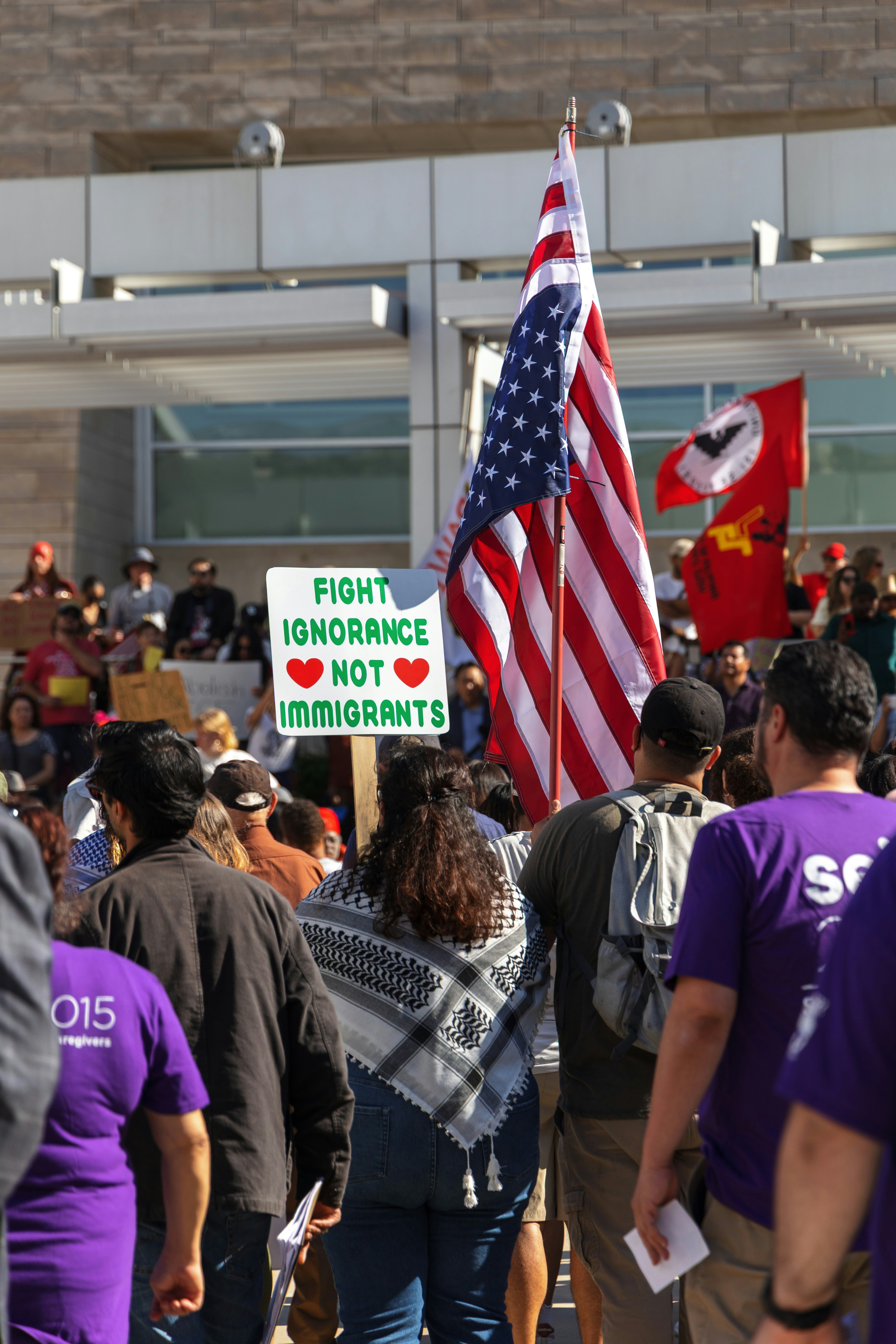
Photo by Jason Leung on Unsplash
Godfrey Wade legally immigrated to the United States as a teenager more than 50 years ago. He went on to serve overseas in the United States Army. He was pulled over in Conyers, Georgia last fall for failing to use a turn signal. It was discovered that he had failed to appear for an ICE hearing in 2014 because ICE sent the hearing notices to the wrong address and Mr. Wade was not aware of the hearing date.
After being held in a detention center for more than five months and filing an appeal for his deportation order, Mr. Wade was deported to Jamaica. His family is appealing his deportation.
Who knew failing to use a turn signal could get you stopped by the police? That’s certainly not a law I see enforced in North Carolina. I can’t help but wonder if Mr. Wade was pulled over since he was black. It irritates me when other drivers do not use their turn signals, but I didn’t know anyone was ever stopped by police for the infraction.
Thank you for your military service, Mr. Wade, and Happy Black History Month.
Congressional Medal of Honor
Speaking of military service… yesterday in Rome, Georgia, Trump said he will “test the law” to award himself the Congressional Medal of Honor. It’s beside the point, I guess, that this is the nation’s award for military valor in action and Trump repeatedly dodged the draft during the Vietnam War, claiming bone spurs. He thinks he deserves it “for bravery” because he flew to Iraq once.
What a small, pitiful man. He tarnishes everything he touches.
According to https://www.cmohs.org/medal/design, “The U.S. Army and U.S. Navy have always had separate designs for their personnel. Until the U.S. Air Force introduced its design in 1965, all airmen received the Army design. The U.S. Marine Corps and U.S. Coast Guard receive the U.S. Navy design.”
I wonder which design Trump will demand to hang around his own neck. It will be another in a long line of beautiful and honorable things he will tarnish.
Black History Month
At a Black History Month event, Trump went off topic and ranted about “illegal aliens” committing the vast majority of crimes in the U.S. Of course, that’s not true. The truth never has interfered with anything Trump wanted to say.
Most crimes in our country are committed by U.S.-born people, mainly men.
The Board of Peace
Trump appeared to fall asleep (again) at the inaugural Board of Peace, which he invented after he changed the name of the Institute of Peace to the Trump Institute of Peace.
I’ve never seen anyone so rabid to put their name on everything. There’s no end to it. I look forward to the day his name is removed from the Kennedy Center for the Performing Arts.
Trump’s Arch of Triumph
I was encouraged yesterday to learn that Public Citizen, a watchdog organization has sued to try to stop construction of the 250-foot-tall Trump Arch of Triumph in Washington, DC because it will ruin the views of the Lincoln Memorial and other monuments as seen from Arlington National Cemetery.
Trump wants his arch to be the tallest in the world, of course. He operates under the illusion that bigger is always better, gold is never gaudy, and might is right.
Iran
Trump is itching to bomb Iran. I guess that’s what the Nobel Peace Prize Committee gets for not giving him that coveted prize. He’ll show them! He must take out his revenge on someone, and it’s not necessarily the person or people who slighted him.
The Epstein Files
As other countries, like Great Britain, show us that there is still such a thing as consequences for actions, here in the United States the U.S. Department of Justice seems incapable and uninterested in bringing charges against any of the men who abused little girls and teens. Trump feels sorry for former Prince Andrew for being arrested, but he cannot bring himself to express sorrow for the abused girls.
The U.S. Assistant Attorney General Todd Blanche says the lurid and disgusting photographs in the Epstein files are not enough proof to file charges against anyone. The U.S. Department of Justice has managed to “investigate” the case without taking testimony from any of the victims.
This is akin to recently reassigned U.S. Border Patrol official Gregory Bovino stating that the victims in the murder of Alex Pretti in Minneapolis were the ICE officers who pulled the triggers.
The Trump Administration is following the fascist playbook in thinking if they just tell us enough lies enough times, we will doubt our lying eyes and ears.
Yesterday when asked about former Prince Andrew’s arrest, Trump replied, “I’m the expert in a way because I’ve been totally exonerated.” The definition of “exonerated” is “to clear from accusation or blame.” Did he just admit wrongdoing? I didn’t realize he had been exonerated.
I’m sure there were a dozen other things I could have included in today’s blog post, but I’ve been distracted by the Winter Olympics and failed to take notes on the things Trump was doing.
I hope to have something uplifting to blog about next week. I just never know. The daffodils in my yard are blooming. Spring must be coming!
Janet
The government should be afraid of its citizens, not the other way around.
Find a comfortable chair. This is another long blog post.
I’ve been mulling over today’s topic for several weeks. It’s one thing to erase history – and the Trump Administration seems to be doing an admirable job, if that’s what you want done.
And some people do want that done. As I voiced my displeasure with everything the Trump Administration has done in two short months a classmate, whom I’ve known for 65 years, told me “it’s a beautiful thing to watch.” His comment made me nauseous.
A taxidermied elephant on display at the Smithsonian Institution, Washington, DC. Photo by J. Amill Santiago on Unsplash
Several days ago, the Trump Administration (or should I say, Regime?) attacked the Smithsonian Institution and National Park Service. Both were targeted for having “divisive” and “anti-American” exhibits. “Divisive” and “anti-American” can be translated to mean that they have some exhibits about people of color and women of any color. It’s feeling more and more like 1931 in Germany around here.
I have a hunch the elephant pictured above that is displayed at the Smithsonian Institution will be safe, though, since the elephant is the mascot of the Republican Party.
Equally troubling to me as erasing history is the Trump Administration’s efforts to limit or perhaps erase perfectly good words from our vocabulary.
Photo by Kim Leary on Unsplash
People are disappearing, history is disappearing, and words are disappearing. Our allies are disappearing, and who can blame them?
Several weeks ago, a list of words was cobbled together that the Trump Regime wants US Government agencies to “limit or avoid.” The White House denies issuing a list, but they have left government agencies to use some of their own judgment in erasing specific words from their documents and websites. It seems that the hints they’ve been given are fairly loud as they are supposed to use Trump’s too-numerous-to-mention Executive Orders as their guide.
This is rich, coming from a President who has difficulty speaking in complete sentence. (Before you jump on me… I’m not being disrespectful; there is proof all over TV, video and audio clips, the internet, and the printed word.)
You can’t make this stuff up.
In case you missed it here is the list of 298 words and combinations of words that The New York Times published on March 4, 2025, that US Government agencies are supposed to “limit or avoid”:
accessible
activism
activists
advocacy
advocate
advocates
affirming care
all-inclusive
allyship
anti-racism
antiracist
assigned at birth
assigned female at birth
assigned male at birth
at risk
barrier
barriers
belong
bias
biased
biased toward
biases
biases towards
biologically female
biologically male
BIPOC
Black
breastfeed + people
breastfeed + person
chestfeed + people
chestfeed + person
clean energy
climate crisis
climate science
commercial sex worker
community diversity
community equity
confirmation bias
cultural competence
cultural differences
cultural heritage
cultural sensitivity
culturally appropriate
culturally responsive
DEI
DEIA
DEIAB
DEIJ
disabilities
disability
discriminated
discrimination
discriminatory
disparity
diverse
diverse backgrounds
diverse communities
diverse community
diverse group
diverse groups
diversified
diversify
diversifying
diversity
enhance the diversity
enhancing diversity
environmental quality
equal opportunity
equality
equitable
equitableness
equity
ethnicity
excluded
exclusion
expression
female
females
feminism
fostering inclusivity
GBV
gender
gender based
gender based violence
gender diversity
gender identity
gender ideology
gender-affirming care
genders
Gulf of Mexico
hate speech
health disparity
health equity
hispanic minority
historically
identity
immigrants
implicit bias
implicit biases
inclusion
inclusive
inclusive leadership
inclusiveness
inclusivity
increase diversity
increase the diversity
indigenous community
inequalities
inequality
inequitable
inequities
inequity
injustice
institutional
intersectional
intersectionality
key groups
key people
key populations
Latinx
LGBT
LGBTQ
marginalize
marginalized
men who have sex with men
mental health
minorities
minority
most risk
MSM
multicultural
Mx
Native American
non-binary
nonbinary
oppression
oppressive
orientation
people + uterus
people-centered care
person-centered
person-centered care
polarization
political
pollution
pregnant people
pregnant person
pregnant persons
prejudice
privilege
privileges
promote diversity
promoting diversity
pronoun
pronouns
prostitute
race
race and ethnicity
racial
racial diversity
racial identity
racial inequality
racial justice
racially
racism
segregation
sense of belonging
sex
sexual preferences
sexuality
social justice
sociocultural
socioeconomic
status
stereotype
stereotypes
systemic
systemically
they/them
trans
transgender
transsexual
trauma
traumatic
tribal
unconscious bias
underappreciated
underprivileged
underrepresentation
underrepresented
underserved
undervalued
victim
victims
vulnerable populations
women
women and underrepresented
Some of my thoughts on the subject
I considered using bold font to highlight my favorites/most angering/most ridiculous words on the list, but that would have been all 298 of them.
As a writer, words are my life. Words help me communicate. I’ll bet they help you, too. Without words, our communications would be extremely limited.
I haven’t read how Trump intends to enforce this or what punishments will be meted out to offenders. And who comes next? Writers? Reporters? Universities? Teachers?
Depending on your background, gender, or ethnicity, there are probably particular words on the list that strike a nerve with you.
Here are 51 that set me off
“Black” (capitalized) — I have Black friends. I don’t see anything wrong with the word “Black.” In fact, my great-grandmother’s surname was Black. My sister and I mentioned her in one of the Morrison genealogy books we published in 1996. I hope the Trump Administration will not ban our book, but we’re on a slippery slope when we start outlawing words.
“female,” “females,” “women,” and “biologically female”– Hmmm. Now those are intriguing words to put on a government’s “limit or avoid” list. I couldn’t help but notice that “male,” “males,” and “men” are not on the list, but “biologically male” is. Surely, it was an oversight on the part of the “biologically male” person who obviously wrote the list to not include “male,” “males,” and “men” on the list.
“mental health” – I have some relatives who struggle with mental health. I’m not sure what to do with this word combination now. Does the Trump Administration think by not using the words “mental health,” mental health issues will no longer exist? How wonderful it would be if we could just use a word and make a whole category of illness disappear!
“belong” – My mind jumped back to a trip to Scotland where I learned that there instead of saying, “She’s Campbeltown,” the locals would say, “She belongs to Campbeltown.” Since the plural form of the word isn’t on the list, maybe that use of it would be legal. Otherwise, Scots might want to think twice before visiting America. Oh… my bad…. They’ve all taken America off their bucket lists since January 20.
“pronoun” and “pronouns” – This is going to be challenging for English teachers, but it will simplify diagramming sentences.
“sex” and “chestfeed” – I don’t know what to say about these. I don’t want my blog to be flagged as obscene, but is “chestfeed” really a word? Is it actually a thing we need to be concerned about?
“systematically” – What?
“orientation” – I guess there will be no more orientation meetings for new government employees or college freshmen at schools that receive federal funds.
“trauma” – Some hospitals are qualified trauma centers, but I guess they won’t be much longer. Heaven forbid if they receive any federal funds.
Photo by Susan Wilkinson on Unsplash
“environmental quality” – You’ve got to be kidding, Trump! Just because you don’t want the citizens of the United States to have “environmental quality” doesn’t mean that the citizens of the United States don’t want “environmental quality.” Just because you want to drink contaminated water and breathe polluted air, Mr. Trump, doesn’t me the rest of us do. You can’t just outlaw the words “environmental quality” and make the whole concept of a healthy environment go away.
“disability,” and “disabilities,” – I shudder to think what will soon become of the Americans with Disabilities Act. It is that act that requires handicapped bathroom stalls, automatic doors to permit easy ingress and egress at government buildings, hotel rooms with bathrooms accessible to people in wheelchairs, etc. Need I keep going?
That leads me to “barrier” and “barriers” – which I think must be on the list because the Americans with Disabilities Act tries to prevent physical movement and communication barriers from remaining in place that make it difficult for blind, deaf, and people restricted to wheelchairs to do what they need to do. Have you ever wondered why you didn’t see many (or any?) ramps into public buildings in the 1950s, but now you do? They didn’t just happen. It wasn’t because architects started adding them out of the goodness of their hearts.
Photo by Joseph Akbrud on Unsplash
“race,” “racial,” “ethnicity,” and “gender” – The folks who create US Passports better get busy figuring out how to get around those questions.
“historically” – I assume this is targeting “Historically Black Colleges and Universities.” Take out the words “historically” and “Black” and it is going to be difficult to know which “colleges and universities” one is talking about. Oh… my bad… that’s the point!
“discriminated,” “discrimination,” and “discriminatory” – Are we no longer allowed to talk about or file lawsuits regarding discrimination? This is appalling!
“minority” – Lucky for the US Congress that this list, at least for now, only applies to the agencies in the Executive Branch of the government because, otherwise, they would have to come up with a new term for “Minority Whip” and “Minority Leader” in their official titles.
“expression” – Wipe that silly expression off your face!
“identity” – Seems like a legitimate word to me.
“prejudice” – Since we still have a US Department of Justice, so to speak, I guess the lawyers are going to have to find a new way to label the rulings on certain lawsuits. You see, the term “without prejudice” is a legal phrase. It is used by judges to indicate that a case can be revisited or that the verdict is not final.
I noticed it’s acceptable to use the word “racist,” but it’s not okay to use the words “anti-racist” or “anti-racism.” Interesting.
“Native American” – I think it should be left up to the indigenous peoples of America to tell the rest of us what they want to be called. I don’t think that she be left up to Donald Trump. When I was doing the research to write my vintage postcard book, The Blue Ridge Mountains of North Carolina, I learned that the Cherokee Indians in the Qualla Boundary in North Carolina prefer to be called Indians. The official name of the tribe there is Eastern Band of Cherokee Indians.
“tribal” is also on the list. That’s unfortunate because some tribes, such as the Eastern Band of Cherokee Indians have tribal courthouses and tribal councils. Please don’t tell them they can no longer use the word “tribal.” The US Government has already taken too much from them.
“bias,” “biased,” “biased toward,” “biases,” and “biases towards” are all on the list. I agree with “biases towards” being on the list because “towards” is incorrect grammar in the United States. I have a problem with the other four, though.
“allyship” – I must admit that was a new word for me. I looked it up and discovered that it refers to those of us in relatively advantaged groups who intentionally support or advocate for disadvantaged people. I hope I’m guilty of having done “allyship” in the past, and I hope I will continue to be guilty of it in the future! As a Christian, I am called on to do that.
That leads me to “advocacy,” “advocate,” and “advocates.” – Now that’s just sad. When you are in the hospital or a nursing home, you need an “advocate” to look out for your best interests. That can be a relative or a social worker or… hut oh….
My doctor says if I have osteopenia and I don’t exercise and eat a calcium-rich diet, I am “at risk” of developing osteoporosis. I assume the Department of Health and Human Resources can no longer “advocate” for “at risk” conditions and illnesses. That’s the least of our worries, though, with RFK, Jr. in charge of that department.
“equality,” “equity,” “inequalities,” “inequality,” “inequitable,” “inequities,” and “inequity” – Does anyone else see a blatant pattern here?
I noticed the word “justice” does not appear on the list. That’s nice, because that word is used in the Preamble of the US Constitution. Whew! That was a close call!
You know the words to the Preamble, don’t you, Mr. Trump?
“We the People of the United States, in Order to form a more perfect Union, establish Justice, insure domestic Tranquility, provide for the common defence, promote the general Welfare, and secure the Blessings of Liberty to ourselves and our Posterity, do ordain and establish this Constitution for the United States of America.”
I thought about highlighting my “favorite” words on the list, but before I knew it I had pulled out 50 of them. I’ll just leave it at that for today, but my new purpose in life is to make sure I use at least one word on the list every week in my blog. Heck, I might use more than one.
Some of my comments about specific words on the list were tongue-in-cheek, but I assure you that I take this very seriously.
In essence, Trump’s putting out the word that federal government agencies can read his myriad Executive Orders and surmise the words they need to “limit or avoid” pretty much makes their use on government documents and websites illegal.
No, there is no enacted law prohibiting the use of these words. However, one definition of “illegal” is “not sanctioned by official rules.” (Merriam-Webster’s Collegiate Dictionary, Tenth Edition, 2001.)
How do you ban books in the 21st century?
You make your citizens afraid to use words on an ever-growing list.
Just when you think things can’t get worse
PEN Americais a nonprofit organization that works to defend free expression in the United States and around the world through the advancement of literature and human rights. On March 21, 2025, the organization published a growing list of words being singled out by the Trump Administration as words Trumps doesn’t want us to use.
My blog post on Wednesday, April 2, 2025, will list the words identified by PEN America that did not appear on the March 4, 2025, New York Times list.
Arlington National Cemetery
With so much going on, and a couple of long blog posts in March, I waited until today to mention how the US Department of Defense is erasing history specifically on the Arlington National Cemetery website. US history seems to be in Trump’s cross-hairs.
Photo by Janne Simoes on Unsplash
Under the heading, “Arlington National Cemetery removed links to webpages about Black, Hispanic and female veterans,” Snopes.com (published March 14, 2025; updated March 15, 2025) verified that the following links had been removed from the Arlington National Cemetery website:
African American History, removed from the Notable Graves subsection;
Hispanic American History, removed from the Notable Graves subsection;
Women’s History, removed from the Notable Graves subsection;
African American History, removed from the Themes drop-down menu of the Education section; and
Civil War, removed from the Themes drop-down menu of the Education section.
This should be no surprise, since Trump has called veterans suckers and losers.
Until my next blog post
What are your “favorite” words on the list of 298 words I shared today?
I hope you have a good book to read.
Nurture your friendships and relatives.
Remember the people of Myanmar, Thailand, Ukraine, and western North Carolina.
There is so much we can learn from history! Today’s headlines often mirror events that happened years ago.
You get a bonus blog post from me this week. As I explained yesterday, what I wanted to say this week amounted to more than anyone wants to read in one sitting.
Today’s post is about a couple of US Supreme Court rulings. Tomorrow’s post is about Hurricane Helene recovery in western North Carolina six months after the storm
United States v. Wong Kim Ark, 1898
My sister made me aware of the United States v. Wong Kim Ark US Supreme Court case. This ruling about American birthright came down in 1898.
The 14th Amendment was ratified on July 9, 1868 – 30 years before the Wong Kim Ark case. The wording of the 14th Amendment seems straightforward, but our current US President wants to do away with it.
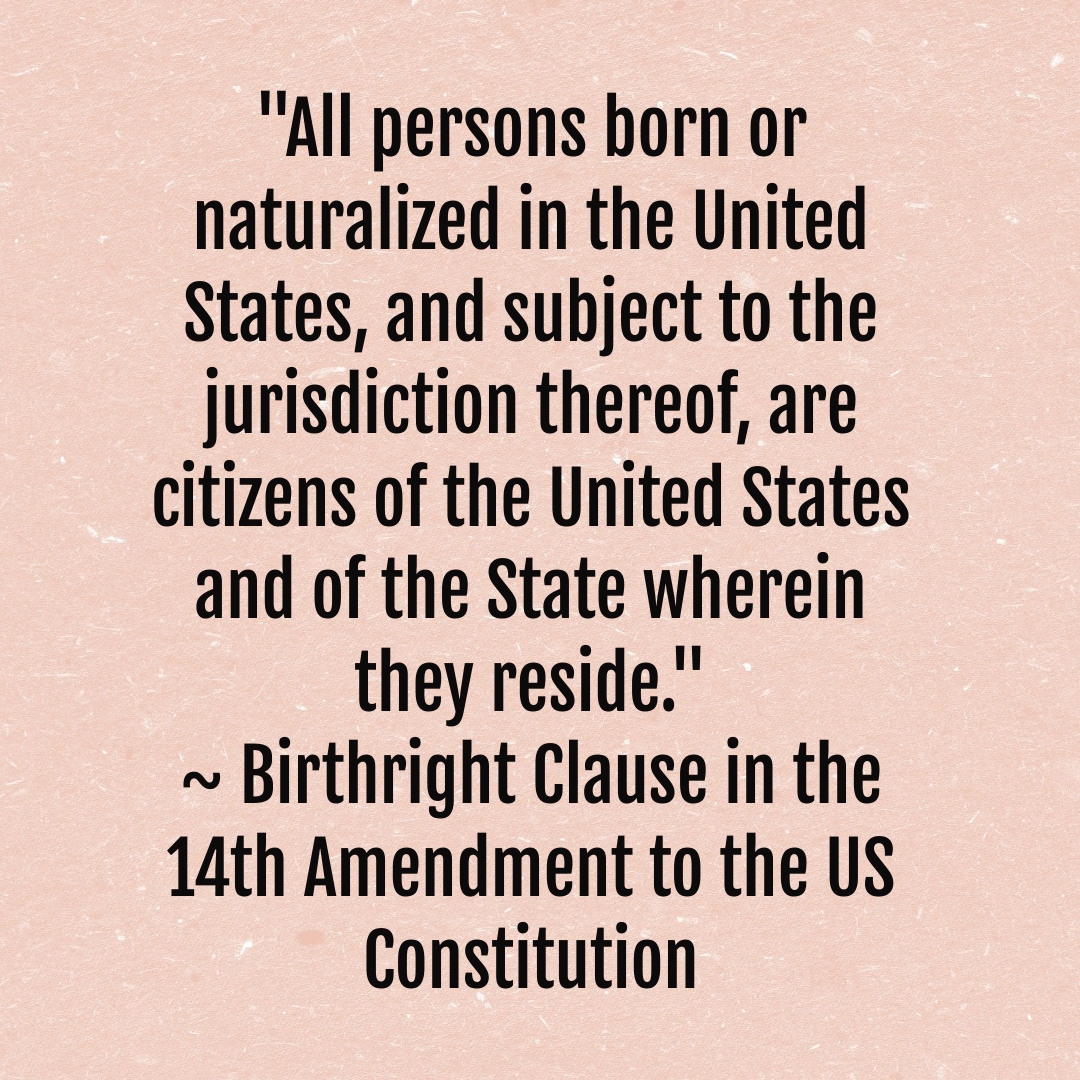
The first clause of the 14th Amendment to the US Constitution reads as follows: “All persons born or naturalized in the United States, and subject to the jurisdiction thereof, are citizens of the United States and of the State wherein they reside.”
Let’s take a step back and see what prompted Mr. Wong Kim Ark to take his complaint all the way to the US Supreme Court.
Who was Wong Kim Ark and what was this Court Case about?
Wong Kim Ark was born in San Francisco, California in 1873. His parents were subjects of the Emperor of China but were permanently residing in the United States. The family still lived in San Francisco in 1890 when Wong Kim Ark took a trip to China.
He returned to his home in San Francisco on July 26, 1890. He lived there and worked as a laborer as a US citizen. In 1894 he took another trip to China but, when he returned to the US in August 1895, he was denied entry on the grounds that he was not a US citizen.
A lower court ordered him to be released because he was a US citizen. The United States appealed the lower court’s decision, and the case went to the US Supreme Court.
Justice Horace Gray delivered for the majority in the 6-2 ruling by the US Supreme Court. In his statement he indicated that the Chinese Exclusion Act of 1882 had no relevance in this case.
The Chinese Exclusion Act was the first law of any significance that limited immigration into the United States. The Act was the result of violent acts committed against Chinese workers. It prohibited Chinese laborers from entering the US for ten years. Exceptions included merchants, teachers, students, travelers, and diplomats.
Justice Gray wrote, “It is conceded that, if he is a citizen of the United States, the acts of Congress, known as the Chinese Exclusion Acts, prohibiting persons of the Chinese race, and especially Chinese laborers, from coming into the United States, do not and cannot apply to him.”
As in most cases that reach the level of the US Supreme Court, there is more here than meets the eye. Having taken one Constitutional Law course in college does not qualify me as a Constitutional scholar, so I’ll just leave it at that.
If you wish to delve more deeply into the United States v. Wong Kim Ark decision, you may do so. I just found it serendipitous that the anniversary of this case fell during a time when the 14th Amendment to the US Constitution is under fire.
Why is the 14th Amendment under attack by Trump?
It is obvious that the president does not want children of undocumented Hispanic immigrants who are born in the US to automatically have US citizenship as guaranteed by the 14th Amendment.
A March 5, 2025 US Supreme Court ruling to consider
On March 5, 2025, we saw only five of the nine US Supreme Court Justices vote that the United States should be required to honor its promises of $2 billion in foreign aid through the now-possibly-defunct United States Agency for International Development (USAID). The slim majority decision gave me a sigh of relief but immediately angered me because the vote should have been 9-0.
What is it in the life experiences of Associate Justices Alito, Kavanaugh, Thomas, and Gorsuch that influenced them to vote in the negative? What made those four men believe that funds authorized by the US Congress and promised to other countries and organizations should not be honored? Should not be paid?
What makes those four men think the United States should not be a country of its word? I really want to know.
Justice Alito argued in an eight-page dissent that resembled a pro-MAGA social media post that a US District Court Judge could not compel the US Government to spend money authorized by Congress. He essentially went after Judge Amir Ali, the lower court judge who had ruled in the case.
From what I have read, I think his anger is misplaced. It is the US Constitution that gives Congress the authority to allocate money. If Mr. Alito has a problem with that, perhaps he should have stated his disfavor with the Constitution instead of against Judge Amir Ali.
I certainly hope Justice Alito was not lashing out at Judge Ali because Judge Ali was born in Canada. I hope he wasn’t lashing out at Judge Ali because he was appointed by President Joe Biden. And I certainly hope he wasn’t lashing out at Judge Ali because he is a Muslim.
Perhaps I’m looking for a “there” when there’s no “there” there, but the current US Supreme Court in general seems to be in Trump’s pocket. This is the same group of Justices that ruled in 2024 that nothing a US President does is illegal.
I pray we haven’t heard the last of this!
Arlington National Cemetery
With so much going on, and a couple of long blog posts in March, I waited until today to mention how the US Department of Defense is erasing history specifically on the Arlington National Cemetery website. US history seems to be in Trump’s cross-hairs.
Under the heading, “Arlington National Cemetery removed links to webpages about Black, Hispanic and female veterans,” Snopes.com (published March 14, 2025; updated March 15, 2025) verified that the following links have been removed from the Arlington National Cemetery website:
African American History, removed from the Notable Graves subsection;
Hispanic American History, removed from the Notable Graves subsection;
Women’s History, removed from the Notable Graves subsection;
African American History, removed from the Themes drop-down menu of the Education section; and
Civil War, removed from the Themes drop-down menu of the Education section.
This should be no surprise, since Trump has called veterans suckers and losers.
The latest US Department of Defense blunder
It seems to me that our Department of Defense (DoD) needs to spend less time erasing history and more time holding top secret war plans in a secure location (which until the Trump Administration was the policy) and much less time holding top secret war plan meetings via text messages.
Thank you, Jeffrey Goldberg, editor-in-chief of The Atlantic magazine, for being a true patriot and not leaking the plans for the United States bombing the Houthis in Yemen last week. Leaking the plans that you were texted would have put US military personnel is grave danger. Were you included on the text list by mistake, or is there someone in the DoD who wanted this information leaked to a journalist?
I wonder who DoD Secretary Hegseth will text top secret information to next.
Until my next blog post
I hope you have a good book to read.
Hold your family close.
Remember the people of Ukraine and western North Carolina.





 Janet's Writing Blog