My long-awaited trip to the Blue Ridge Mountains

I have been wanting to go to the mountains in western North Carolina for months, not to sightsee but to try to support some small businesses. My sister and I were in the mountains for three days last week. We were on a mission.

I tend to plan trips in detail. Sometimes things go as planned, but I have a poor track record when it comes to selecting restaurants in advance.

Our first stop on Tuesday was Montreat. The Presbyterian Church USA has its conference facilities there, and the place is near and dear to our hearts. The town suffered much landscape and street damage from the flood that accompanied Hurricane Helene last September. We knew from Facebook that Lake Susan had been completely cleaned out and restored. It was good to see people enjoying the lake again. Recovery work in Montreat continues.
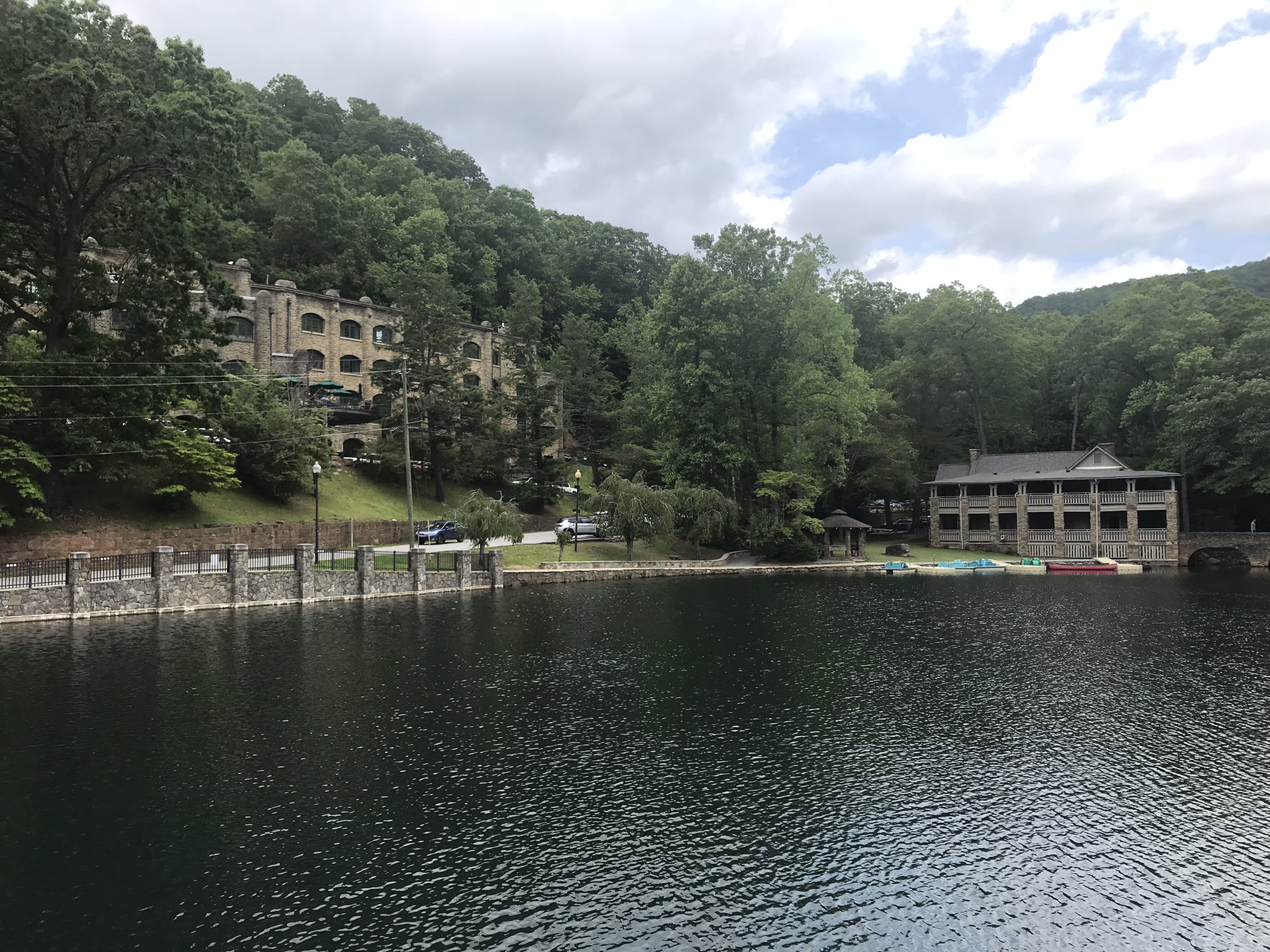
Photo of a calm Lake Susan at Montreat, NC
Lake Susan, Montreat, NC June 10, 2025

We planned to eat lunch at a small diner in Swannanoa. I had read online that it had been owned and operated by the same family for 30 years. Unfortunately, when we got there, the sign on the door said they were closed for the week. Maybe The Breakfast Shop will be open the next time we’re in the area.

We drove back to Black Mountain and ate lunch at the Black Mountain Bistro, so we were still able to patronize a local business. Lunch there is always good.

We continued back through Swannanoa on US-70. The little town of Swannanoa had a lot of damage from the flood. Recovery will take a long time. One thing we noticed along US-70 for many miles is that there is still much dirt by the curb – a sign that street and highway crews have had much more pressing work to do than to get the dirt from the curb. The state of things indicates that every rain washes more dirt and debris into the highway. It wasn’t a major issue. It was just something we don’t normally notice.

US-70 become Tunnel Road in Asheville, and from Tunnel Road we were able to access a couple of miles of the Blue Ridge Parkway. At the entrance to the wonderful Folk Art Center on the parkway we were faced with this signage.
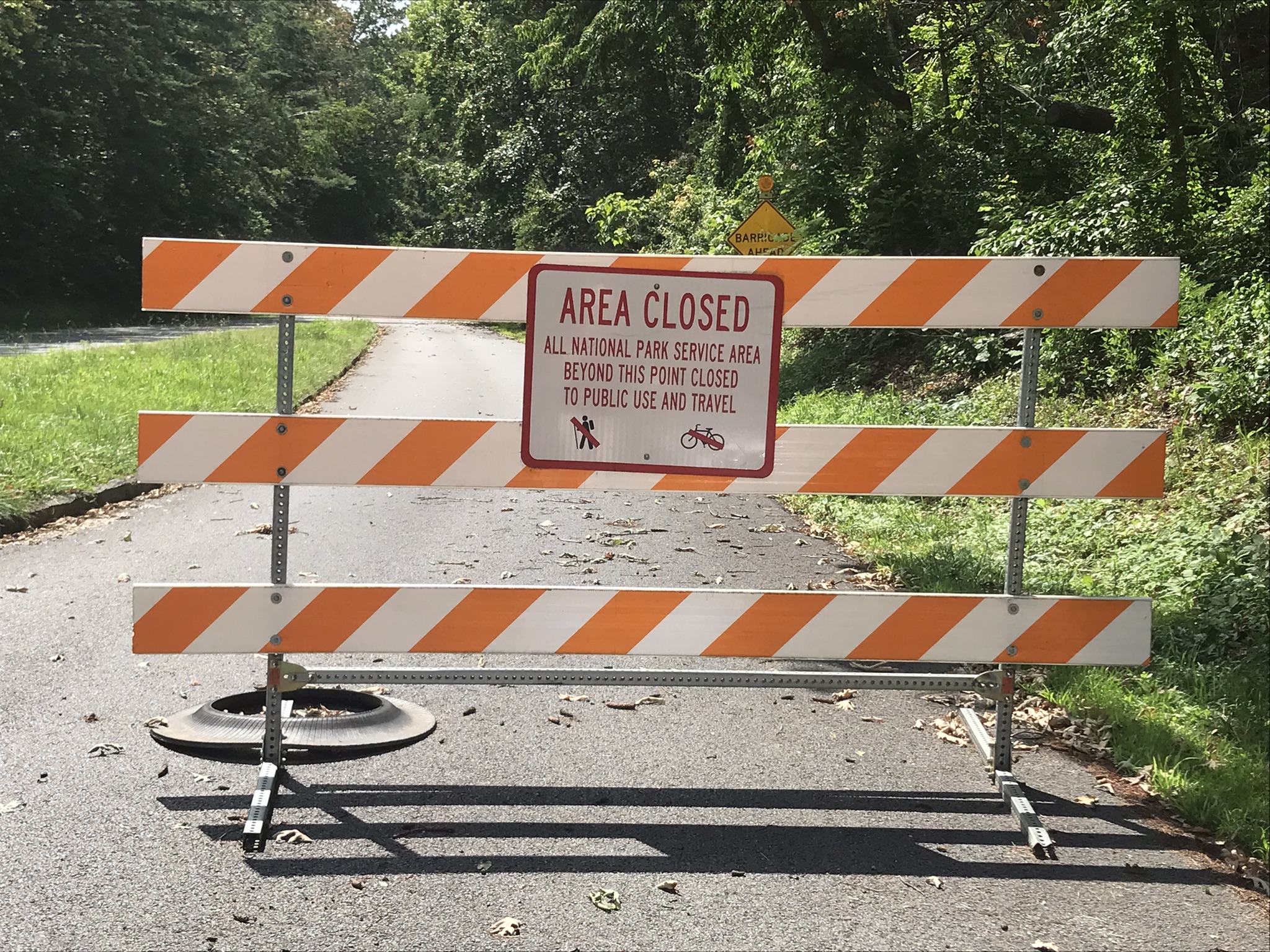
Sign blocking travel by car, bike, or on foot on National Park Service property on Blue Ridge Parkway at Asheville, NC, June 10, 2025
Barricade on Blue Ridge Parkway beside entrance to Folk Art Center at Asheville, June 10, 2025

It was sad to see the parkway closed. In the distance, we could see work being done and we met a dump truck hauling away storm debris.

We bought a couple of items at the Folk Art Center. Artisans from the Southern Appalachian Mountains sell their handcrafted merchandise there. There are quilts, blown-glass, leatherwork, woodwork, pottery, Christmas ornaments, and pottery.

Photo of the Folk Art Center on the Blue Ridge Parkway at Asheville, NC
Folk Art Center on Blue Ridge Parkway at Asheville, NC, June 10, 2025

From Asheville, we took Interstate 26 west through Weaverville to Mars Hill, where we had reservations for the night. We had never been to Hot Springs in Madison County, so we set out to have dinner at a small restaurant there, Smoky Mountain Diner. My mouth was watering for local trout, but the restaurant was closed for a private party.

We returned to Mars Hill. By then, it was getting late and we’d had a long day. “Plan B” was Stackhouse Restaurant in downtown Mars Hill, but when the hostess told us it would be a 45-minute wait we reluctantly settled for sandwiches at Subway. Not a good substitute for local mountain trout or a burger at Stackhouse.

So, Day One was more than a little disappointing. We were beginning to wonder if our trip was going to help the local economy at all.

On Wednesday we took US-19E through Burnsville to NC-226A to Little Switzerland. We went into downtown Burnsville. Recovery work was still being done on at least one street, and tree damage was obvious. Some roads that turned off US-19E were still closed, and we could only imagine the extent of tree and infrastructure damage.

There was lots of storm damage visible along NC-226-A and many asphalt patches in the highway. As was true on our entire trip, damage wasn’t constant, but was especially noticeable where there had been landslides or near creeks where there was obvious flood damage.

Here are a series of random photos I took on June 11, 2025, where we could safely pull off the highway as we drove from Mars Hill, NC to Little Switzerland, NC.

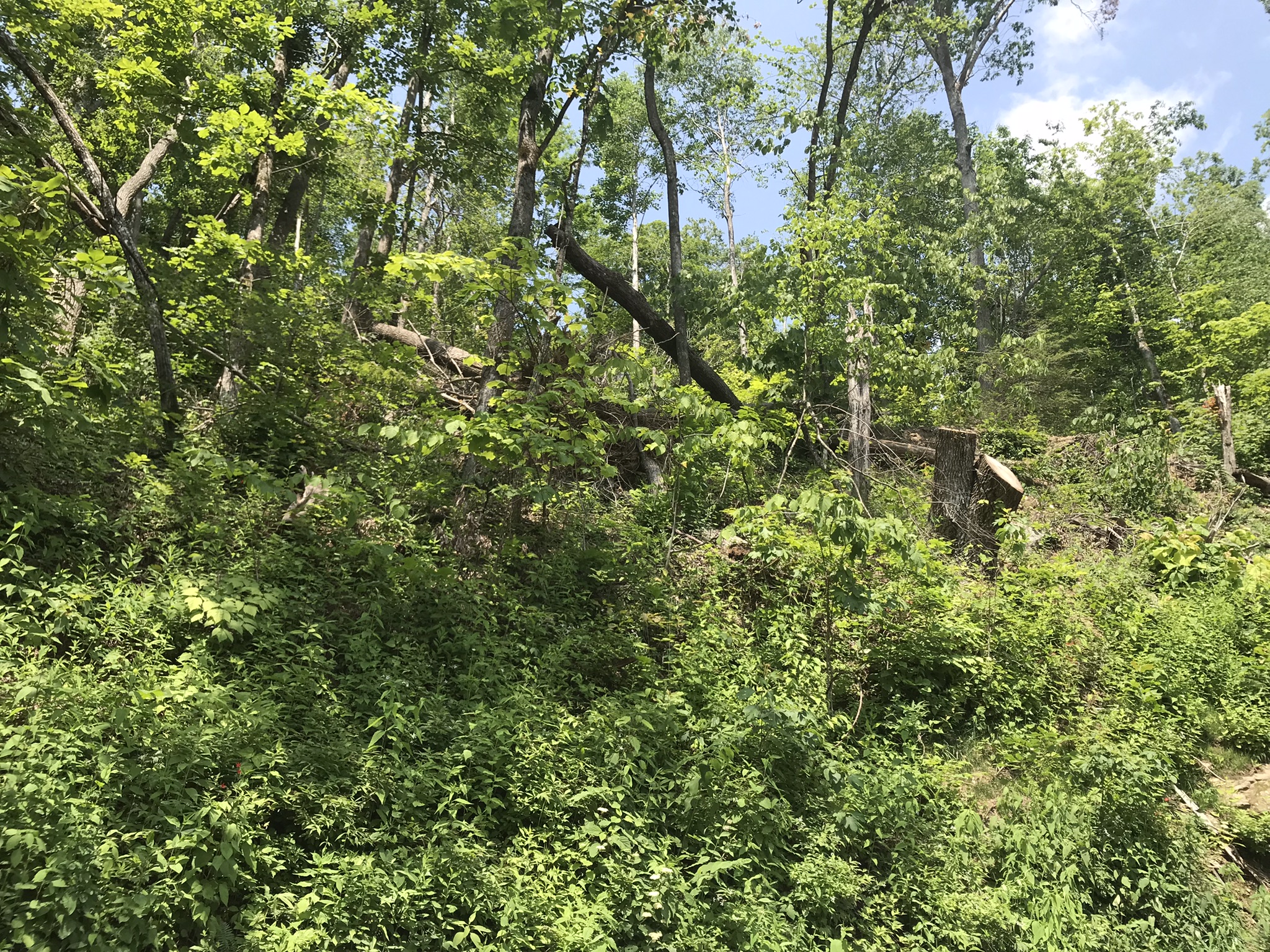
Photo of where a stream flooded area beside the road
Area beside a creek with obvious major repairs having been done.
Photo of trees down on the mountainside between Mars Hill and Little Switzerland, NC on June 11, 2025
Example of tree damage on the side of a mountain, although by far not the worst we saw.
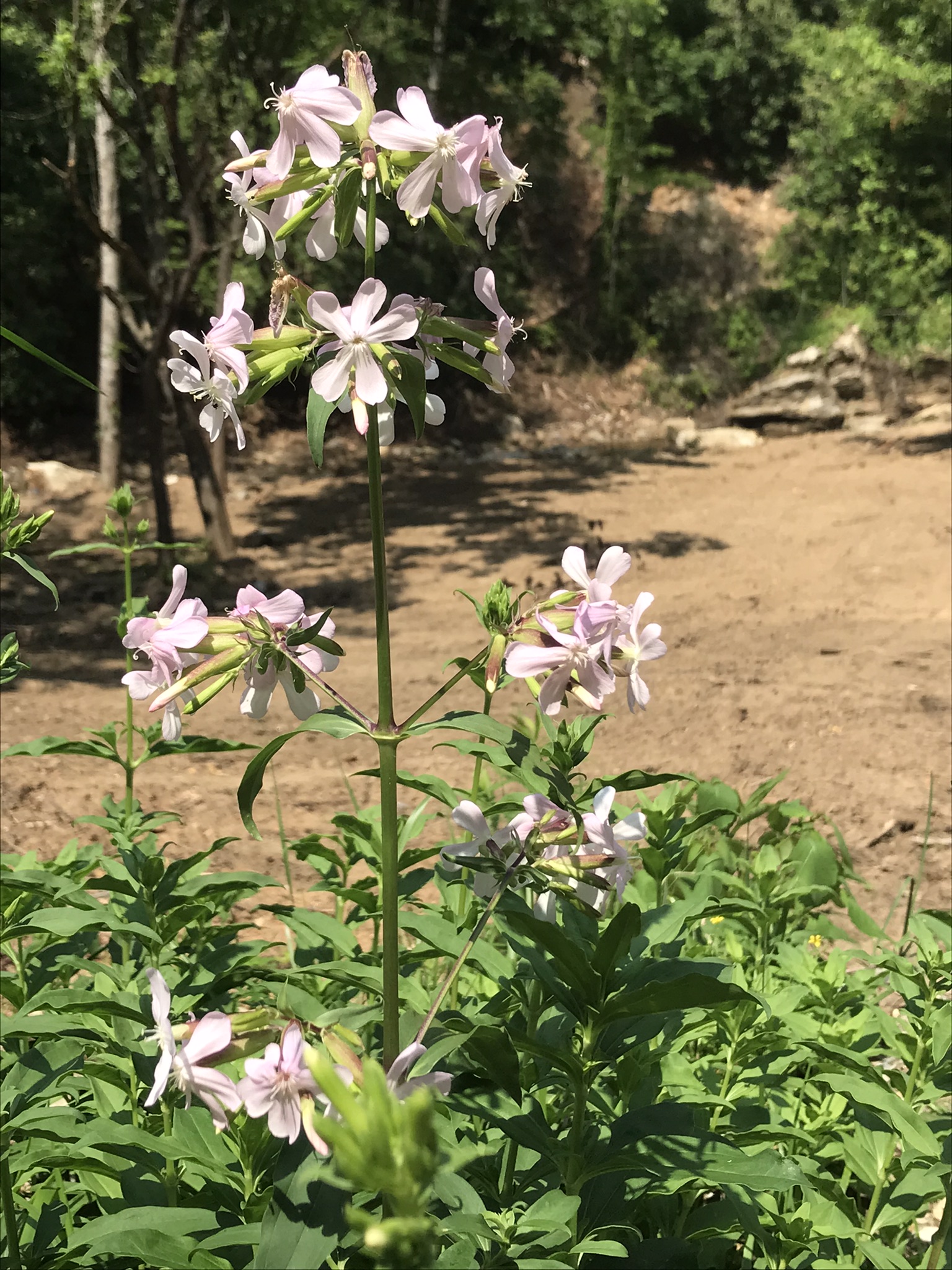
Photo of a pink wildflower in the midst of flood damage on June 11, 2025
A sign of hope: a wildflower blooming in the midst of Hurricane Helene flood damage on June 11, 2025
Photo of tree damage from Hurricane Helene wind in forest
Tree and underbrush damage by the roadside.
Photo of a little stream and the damage it did in Hurricane Helene with  a small landslide across the road from the stream.
Small stream, but evidence of major creek bank repairs and reseeding.

Throughout the three days we were amazed at the massive water damage still visible along what were once again tiny creeks and branches. It is amazing what 30 inches of rain in a couple of days can do to little mountain streams!
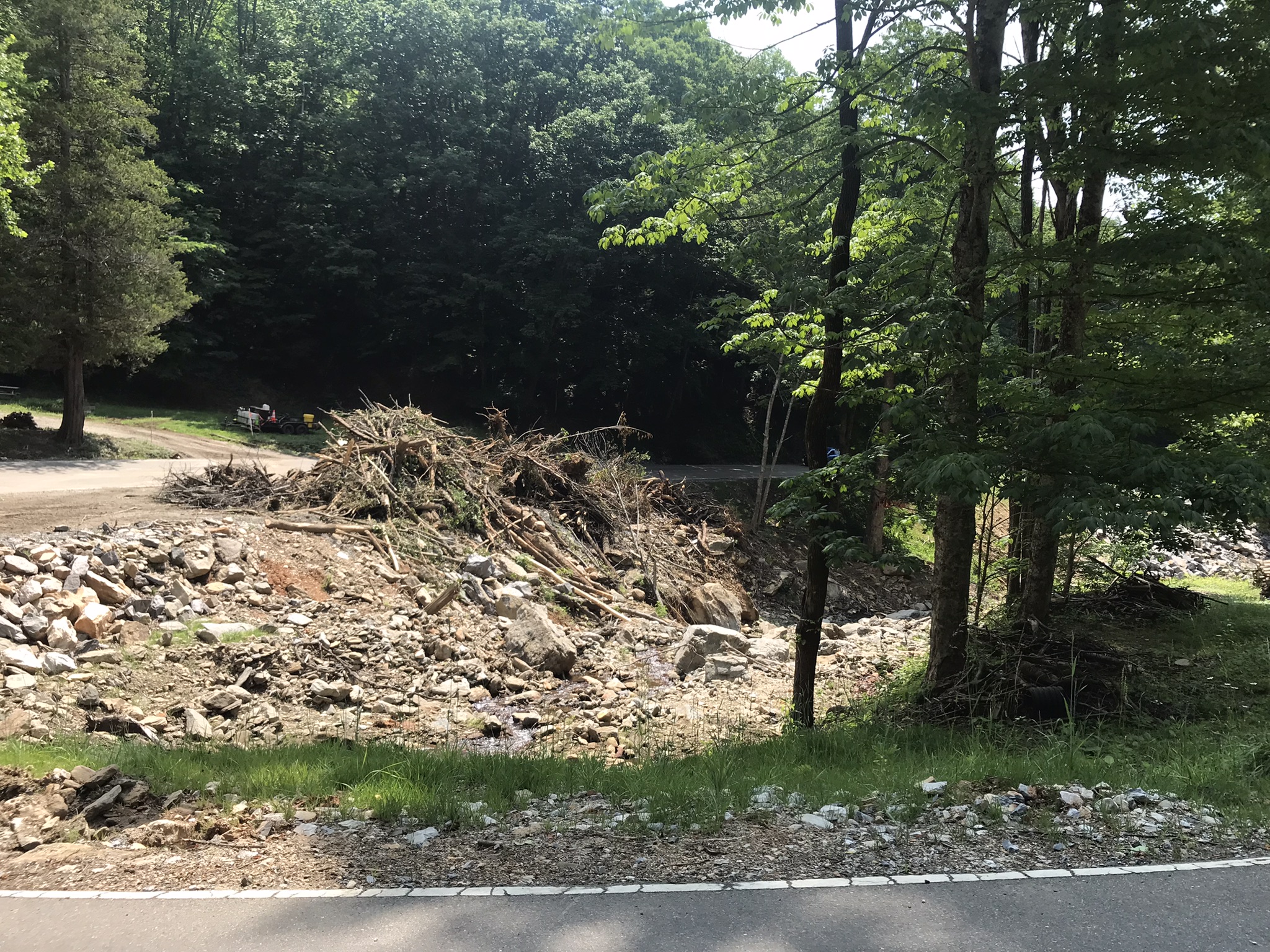
Photo of debris from Hurricane Helene piled beside the highway between Mars Hill and Little Switzerland, NC, June 11, 2025
Storm debris waiting to be hauled away.
Photo of little stream and tree debris left 9 months after Hurricane Helene June 11, 2025
Tiny stream now, but look at the damage it did last September.
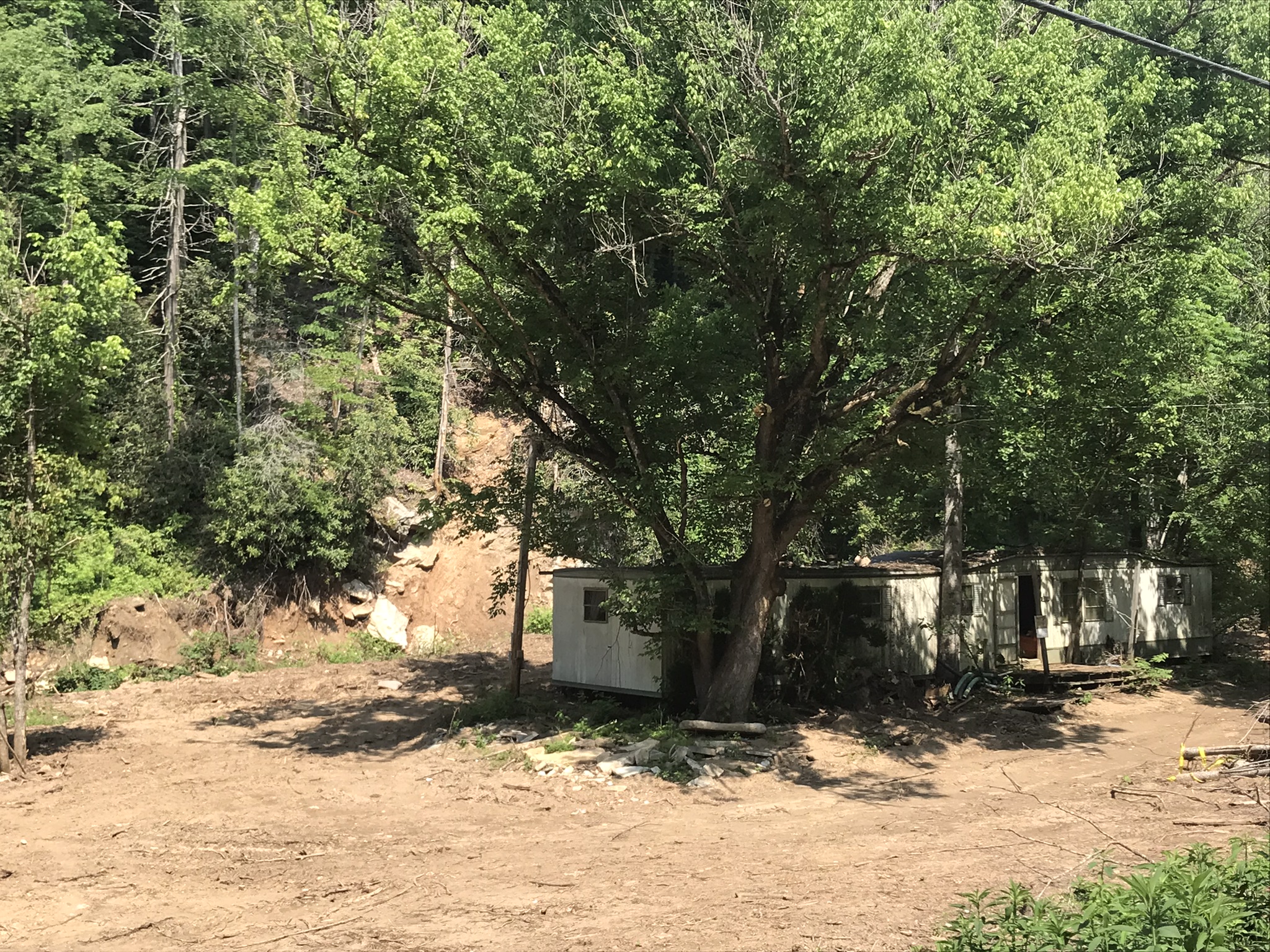
Photo of the ruins of a home destroyed by the Hurricane Helene flooding
The remains of a home surrounded by evidence of the flood and a small landslide in the background.

We ate lunch, as planned (success at last!) at Little Switzerland Café. We had eaten there before. It is a good place to get soup, a sandwich, or homemade quiche. It is a short distance off the Blue Ridge Parkway near the Orchard at Altapass. The address of the orchard is Spruce Pine, but it is out in the country, right on the parkway.
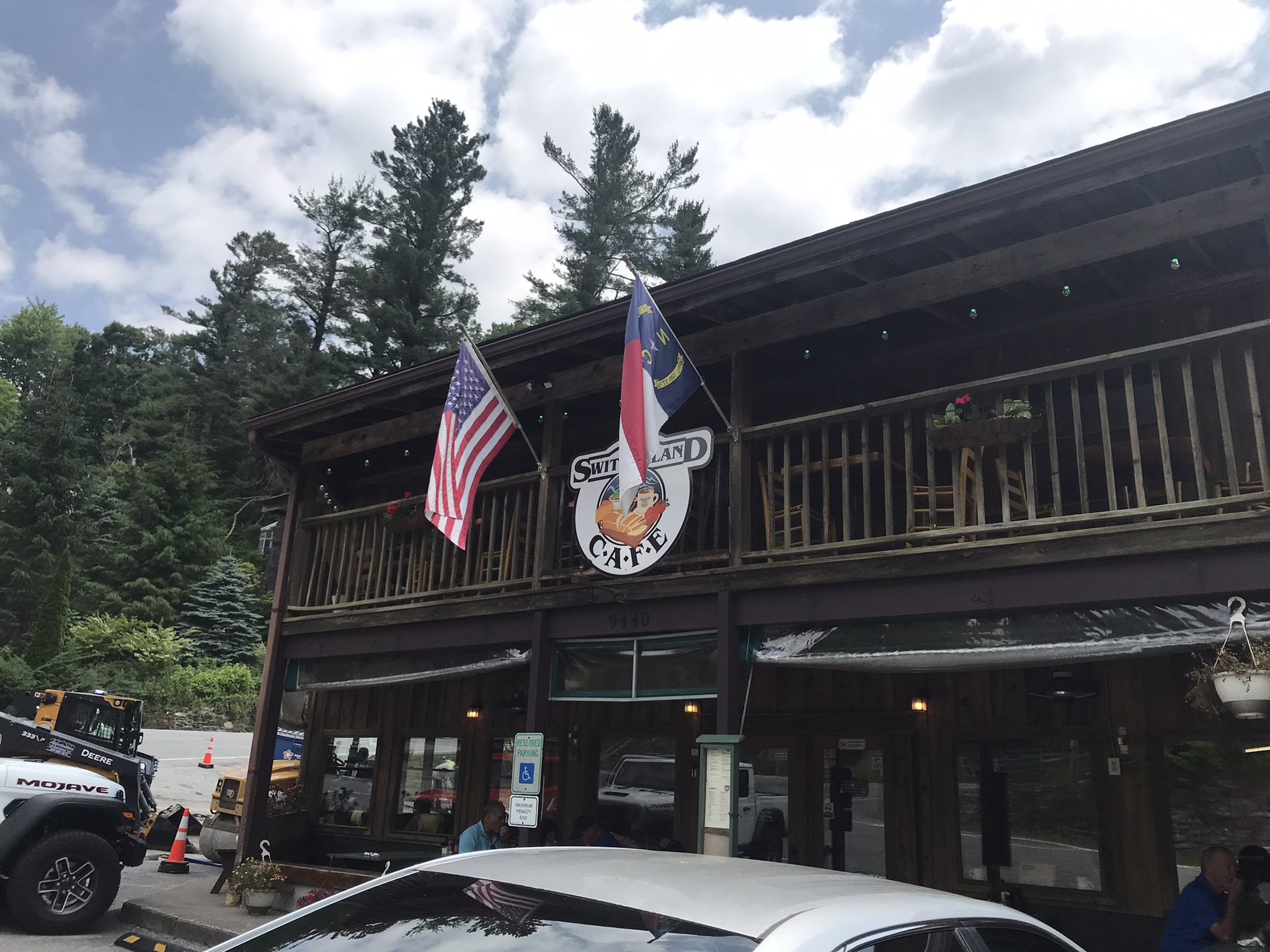
Photo of wo-story Little Switzerland Cafe in Little Switzerland, NC, June 11, 2025
Little Switzerland Cafe, Little Switzerland, NC, June 11, 2025

After lunch we had planned to visit the orchard. There is a general store there and walking trails, but the Blue Ridge Parkway was unexpectedly closed there. When I checked online a few days before our trip, the National Park Service website hade indicated that a couple of miles of the parkway were open there and the orchard was accessible. Apparently, more damage occurred or was discovered and the website couldn’t keep up. That’s understandable.

As is stated on https://altapassorchard.org/, “The mission of the Altapass Foundation, Inc. is to preserve the history, heritage, and culture of the Blue Ridge Mountains; protect the underlying orchard land with its apples, wetlands, butterflies, and other natural features; and educate the public about the Appalachian experience.

Please take eight minutes to watch this 2023 PBS NC video clip, “How an apple orchard is preserving Appalachian views | State of Change: Seeds of Hope” about The Orchard at Altapass: https://www.youtube.com/watch?v=3bTKjLipjGI, so you can see why we wanted to visit it again and why you should include it on your itinerary the next time you’re in the area.

The orchard was planted by the Clinchfield Railroad at the lowest pass through the Blue Ridge Mountains for 100 miles. The railroad constructed 18 tunnels in 13 miles of track beside and below the present-day orchard and opened in 1908. Some of the trees in the orchard are still producing apples at nearly 100 years old. Hurricane Helene killed hundreds of the apple trees, but thousands survived.

From there, we made our way to Newland, Linville, Grandfather Mountain, and Boone, where we had reservations for the night. Along the way, especially where we crossed or drove beside mountain streams, the ravages of Hurricane Helene were visible.

We ate supper at Mike’s Inland Seafood in Boone. We discovered it on our last visit, which was exactly two weeks before the hurricane hit and Boone was flooded. We drove around the college town and were amazed at how the town and Appalachian State University campus have been almost completely cleaned up and restored since last September. From what we saw, someone who did not know there had been a flood would not be able to tell there was one less than a year ago unless they veer off the main streets.

Photo of a side street in Boone being repaired June 11, 2025
A side street in Boone being repaired on June 11, 2025. That’s part of Rich Mountain in the background.

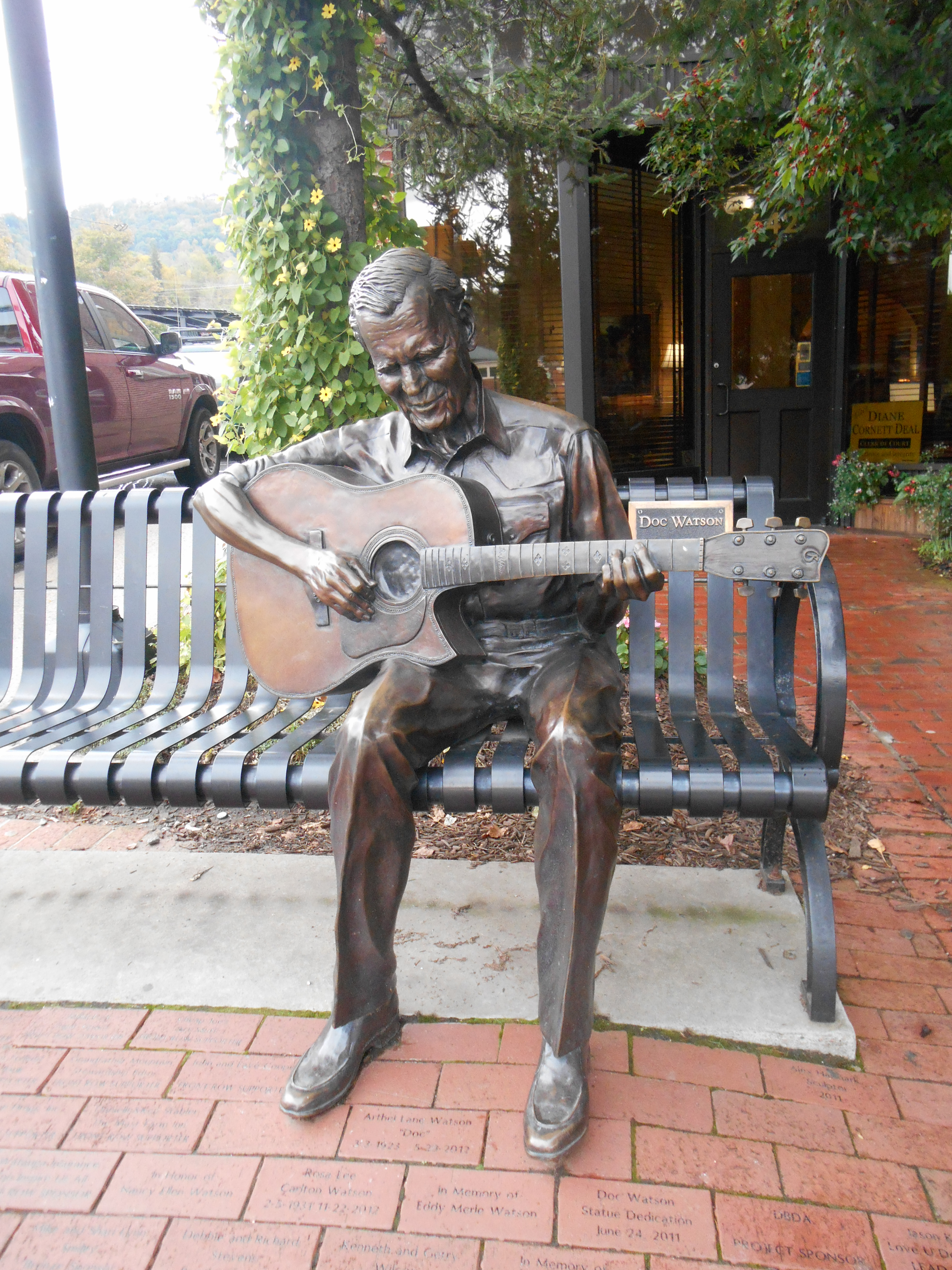
We enjoyed walking up and down King Street in Boone. We bought “Go Mountaineers! And Boone tee-shirts and postcards. My sister just happened to be reading a book about Watauga County musician, Doc Watson, so it was nice to stop and see his statue again at the corner of King and Depot Streets.

Alex Hallmark, a sculptor from nearby Blowing Rock, designed the statue of the blind musician seated and playing his guitar. A black steel bench was designed to fit the seated statue, so visitors can stop and sit awhile next to Doc. When we arrived, a mother and her little girl were sitting with Doc and enjoying ice cream cones. I wanted to take a picture, but I did not want to intrude.

We walked and shopped for a few minutes and I took this picture later.
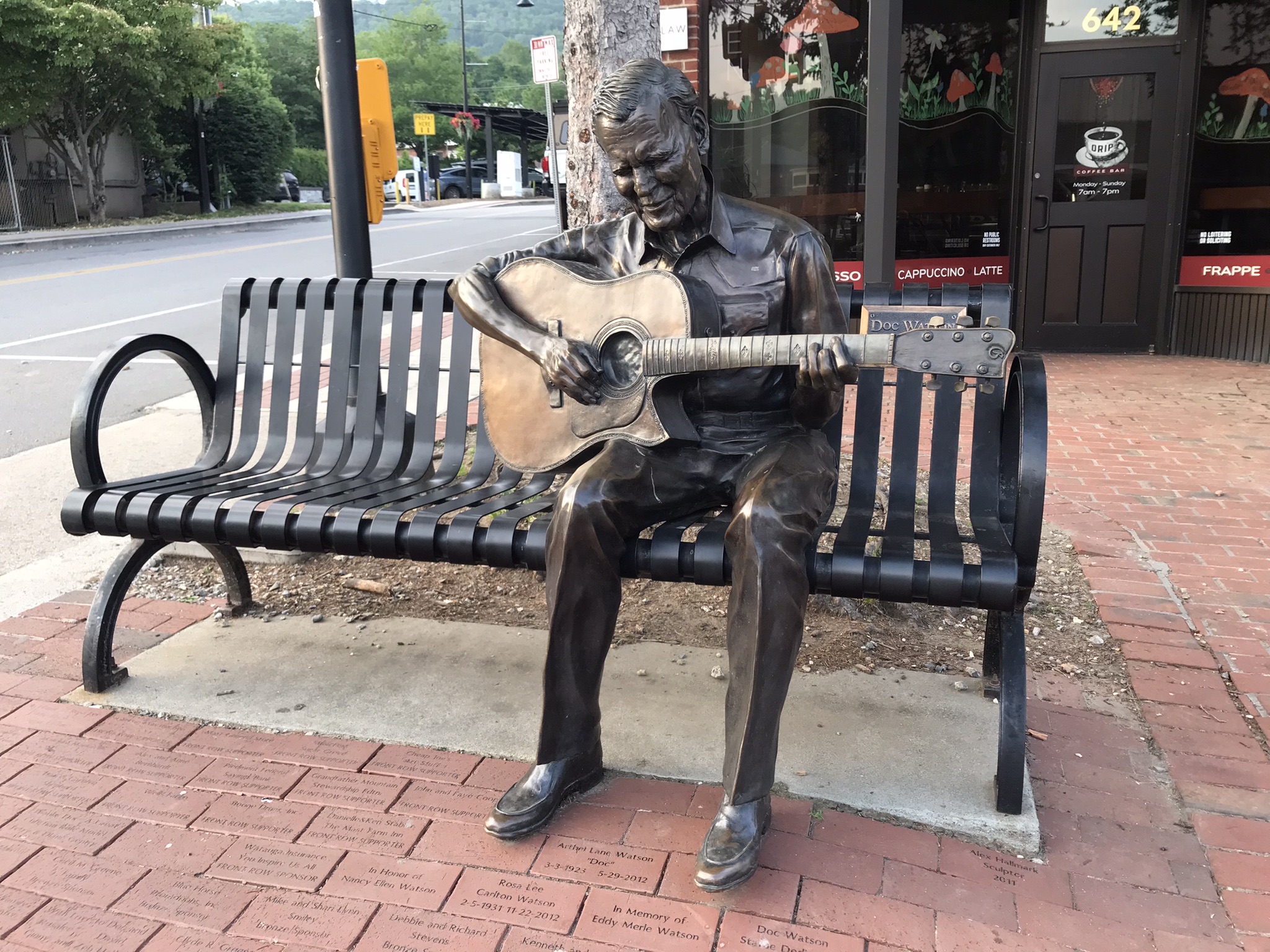
Statue of Doc Watson at corner of King and Depot streets in Boone, NC, June 11, 2025

Thursday was the day that really made our trip worthwhile. From Boone, we drove to West Jefferson. We can’t go to West Jefferson without stopping by the Ashe County Cheese store. We purchased some of the cheese made at the factory across the street from the store along with some jams and jellies made especially for Ashe County Cheese Company. We looked at the fudge counter but resisted temptation.

There were jars at the cash registers at the Ashe County Cheese Company store for monetary donations to the Ashe Food Pantry, Inc. The organization accepts online donations at https://ashefoodpantry.org/ or a check can be mailed to Ashe Food Pantry, Inc., P. O. Box 705, Jefferson, NC 28640.

From West Jefferson, we headed north on NC-194 toward Lansing. We passed through Warrensville where I had planned for us to stop at The Baker’s Addict Bakery on our way back from Lansing, but we made a spontaneous decision to come home another way. My apologies to The Baker’s Addict Bakery. We’ll be sure to stop by on our next trip to northwestern North Carolina.

The little community of Lansing was hit extremely hard by Hurricane Helene. The community was left isolated for weeks and weeks after the storm. The little creek that flows beside NC-194/Big Horse Creek Road appears to be just a nice little bubbling brook last Thursday morning. There is a lovely park there and we delighted in seeing a group of young girls skating on the sidewalk in the park. We assumed they were local girls and we were so glad to see them having fun again after the natural disaster they lived through. The way it flooded all of the little business district last September was hard to imagine.

Park in Lansing, NC on June 11, 2025. Beautiful bright green grass and a mountain in the distance.
The park in Lansing, NC

There are just several businesses there, and we tried to support each of them. We had never been to Lansing before, so our knowledge of the businesses there came from the internet.

Photo of part of business district that is only on one side of the main street in Lansing, NC on June 11, 2025
Part of the business district in Lansing, NC, June 11, 2025

Our first stop was at The Squirrel and The Nut. It is a delightful shop that specializes in locally-made handcrafted items and vintage items. I had looked at the rope bowls and was trying to decide what to buy – those or a quilted item or a vintage pitcher or a hand-painted necklace. My sister had done the same thing. For some reason, those rope bowls kept calling my name.

I returned to the display and was contemplating which ones to buy. About that time, my sister stopped beside me and picked up one of the bowls. The shop owner noticed us and explained why there were several color variations on the insides and outsides of the bowls. I had noticed that on the price tags was handwritten: “Suggested donation” along with a dollar amount. What I did not notice on the tag was where it was printed: “Helene Bowl.”

As I studied two of the bowls, the shop owner said, “Those rope bowls survived the hurricane. They were in the mud. The woman who made them lost a lot of her supplies and finished products in the flood. It was five months before she could bring herself to try to wash the mud out of those bowls. The discolorations were caused by other rope bowls fading on the ropes bowls during the flood.” By then I was tearing up. I went to the cash register with two of the rope bowls and my sister followed with another rope bowl and the vintage pitcher we had both picked up and considered.

Photo of our white, red, and orange rope bowls that survived Hurricane Helene in Lansing, NC
Our Hurricane Helene rope bowls made by The Infinite Daisy, Lansing, NC.

The larger of the two I purchased had been designed and made to be a dough proofing bowl, but the shop owner cautioned me that it probably shouldn’t be used for a food product considering its history. I was so emotional, I could scarcely say anything as the shop owner wrapped my bowls in tissue.

There was a hint of a strain in the shop owner’s voice as she told us about the items she lost in the flood and the bookcase that she knew she was going to need to discard. She said it just takes a while to come to grips with such losses.

She smiled and told us of the vintage cabinet radio she purchased the week before and laughed about how her partner struggled to carry it into the shop and place it exactly where she wanted it beside the front window.

Before we left, she recommended the dress shop two doors down and lunch at The Liar’s Bench at the end of the row of old businesses. We told her we had already planned to eat lunch there, so that worked out great.

We stopped in the little clothing store and I bought a pretty, soft, pastel yellow tee-shirt with various wildflowers on the front. I was tempted to buy a wristlet/crossbody purse, but I did not need it. It would have been perfect for our great-niece’s wedding last February.

We visited Old Orchard General Store, where Marie purchased a book to give to a friend and I bought a loaf of locally-made Country Multigrain Sourdough sliced bread made by Stick Boy Bread in nearby Boone. That bread is delicious! I should have bought more than one loaf!

We ate turkey BLT croissant sandwiches and drank the best sweet tea I’ve had in I don’t know when at The Liar’s Bench at 144 S. Big Horse Creek Road. It was a one-man operation and there were just four other customers the entire time we were there. The sign said they have live music every Friday night.
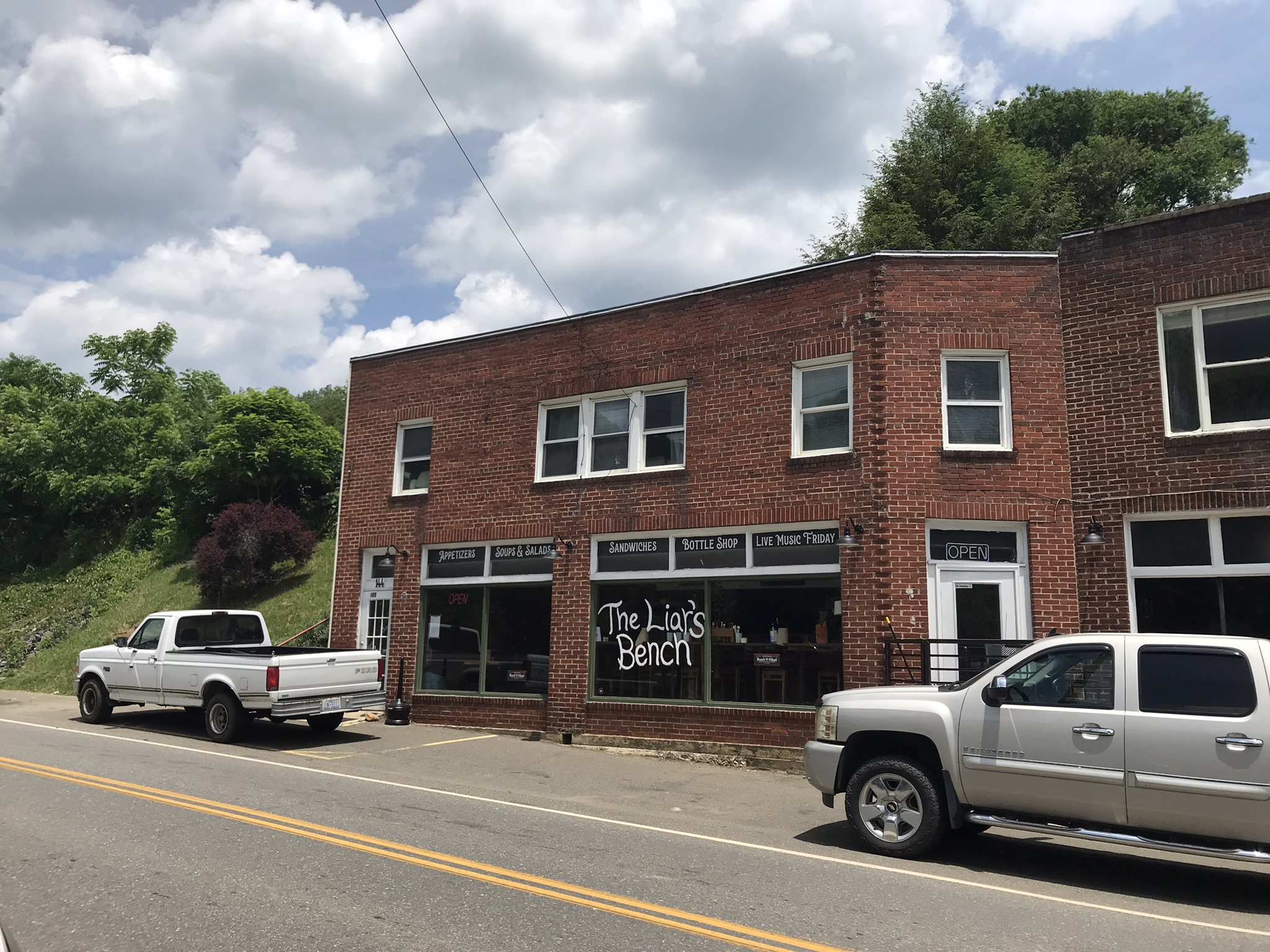
Photo of the exterior of the two-story red brick building that houses The Liar's Bench Restaurant in Lansing, NC
The Liar’s Bench Restaurant in Lansing, NC

The sandwiches were delicious, but I felt compelled to tell the cook/cashier how good the tea was. He laughed and said, “I was afraid I’d ruined it. I put in four cups of sugar.” We were afraid to ask him how much tea he had sweetened with four cups of sugar! I told him it was perfect and my sister and I left with take-out cups of more iced tea for our trip home.

My sister asked him if the flood waters got in all the businesses along the road. He pointed out the window to a stop sign and said, “It got up to there. It was really bad.” His voice nearly broke. There was a sorrow in his voice and a sadness in his eyes. One couldn’t help but notice.

Photo of some of the character in the dining room at The Liar's Bench Restaurant in Lansing, NC. A sign "The Liar's Bench" on the concrete block wall. The plaster is painted green, but much of the plaster has crumbled off the concrete blocks. There is a frog figurine and a sign, "Live Music Fridays."
Lots of character inside The Liar’s Bench Restaurant in Lansing, NC.

It was obvious that the people in the little community of Lansing, North Carolina, have had a traumatic experience and already a difficult nine-and-a-half-month recovery.

My sister overheard one of the other restaurant customers saying, “I have 1,100 tomato plants, and if he doesn’t open and take them to sell, I don’t know what I’m going to do. I don’t want to take them all the way to West Jefferson.” Apparently, she is hoping another local business will reopen in time for her to sell her tomato plants.

After lunch, we decided to take NC-194 north to US-58 in Virginia instead of heading back to the bakery in Warrensville. I hate we missed giving the little bakery some business, and we wished we had stopped on our way to Lansing; however our spontaneous change in routing turned out to be a very interesting decision.

First of all, we unknowingly missed that NC-194 makes a 90-degree turn, so we happily continued straight on S. Big Horse Creek Road. Since we had never been in that part of Ashe County before, we did not realize we had missed a turn.

Sometimes a missed turn can lead to trouble, but sometimes it takes you on a bit of an adventure. Looking back on the route we took from Lansing, we know that God was looking out for us. We could have easily come to a road closing or worse, but we did not.

After returning home, I pulled up the map online and figured out exactly where we went after leaving Lansing. We continued north on S. Big Horse Creek Road for many miles. It became Big Horse Creek Road. We then took Mud Creek Road which took us into Virginia and to US-58/Highlands Parkway a few miles east of Damascus, Virginia.

We stopped at Tuckerdale Baptist Church in the community of Tuckerdale, NC because it was such a beautiful, peaceful place. A calm little creek ran between the church and the road. There is a one-lane steel bridge over the creek to the church. A huge poplar tree between the creek and the sanctuary provides shade for much of the parking lot. That tree is well over 100 years old. What a story it would have if it could talk!

Photo of Tuckerdale Baptist Church in Ashe County, NC. A white frame church with stained glass windows and a white steeple.
Tuckerdale Baptist Church, Tuckerdale, NC.
Photo of a new concrete one-lane bridge over Big Horse Creek to parking of a church on NC-194 north of Lansing, NC
A new one-lane bridge across Big Horse Creek to the parking lot of Tuckerdale Baptist Church at Tuckerdale NC.

We saw storm damage all along the way on the above referenced roads. Damage to the landscape and to houses was sobering. There were some houses that had been completely gutted by the flood waters. Their remains stood guard beside and above the little stream of water that had destroyed them as if daring the creek to rise again.

Bridges had been replaced, and there were numerous cases where we saw new bridges across the streams and creeks giving the people who live on the other side of the water access to the highway. We saw that time after time after time. We saw where the flood waters had gouged out the sides of the mountains.

We saw some tree debris that has not yet been picked up. It brought back memories of Hurricane Hugo here in 1989 and six months of tree debris lining the streets of Charlotte until it could all eventually be picked up.

We saw dump trucks hauling tree debris all three days in the mountains. It is overwhelming to realize those trucks have been hauling away debris for more than 200 days… and the work remaining to be done is massive. We saw staging areas where tree debris is piled high. Some of it has been converted into mulch… mountains of mulch.

We saw more places than I can estimate where trees are down all up and down the mountainsides. We saw where there were landslides. I have seen photos of the tree damage along the Blue Ridge Parkway, but I now have a better idea of how hundreds of miles along the parkway must still look. And it would be impossible for all those trees to ever be sawed up and removed, even if the National Park Service budget and workforce had not been slashed. It is literally thousands and thousands of trees and huge rhododendrons that were destroyed or badly damaged by the storm.

We reached a point where the pavement ended and we wondered if we were still on the state highway. Little did we know… we weren’t! I guess we were on Mud Creek Road by then. In a couple of miles, we got to paved road again.

One of the sights we happened upon after crossing into Virginia was this historical marker about the Virginia Creeper Railroad at Whitetop. The Virginia Creek Recreational Trail is the path that’s visible in the photographs below. The trail’s southern terminus is at Whitetop.

Photo of what appears to be an old train station at Whitetop, Virginia. The walking trail runs beside the building.
Virginia Creeper Trail alongside the old Whitetop, Virginia, train station.

It was a quiet, peaceful place. There were a couple of houses in sight, but we didn’t see anyone. There was a rabbit enjoying the trail, but I couldn’t get a picture of it. I didn’t want to disturb it.

“Virginia Creeper” Railroad historical marker at Whitetop, Virginia, with a little of the Virginia Creeper Recreational Trail visible beside the sign.

Even after we got on US-58 between Damasus and Independence in Virginia, the damage continued. I knew the southwestern part of Virginia was heavily damaged by Hurricane Helene, but I didn’t know to what extent.

All along US-58, we saw trees down here and there and we could tell where what looked like a quiet little stream last Thursday had been a raging river last September. The first part of US-58 that we were on was a very winding mountain road – the kind I love to drive on! –with many switchbacks and 90-degree curves posted with “Speed Limit 15” signs.

Photo of orange daylilies blooming along the roadside.
Orange daylilies blooming along a roadside

A highlight on all three days of our trip was the profusion of old-timey orange daylilies here and there along roadsides and by highways. The largest patches of them were where I could not safely get a picture. We had never seen so many of them as we did on this trip!

At Independence, Virginia, we took US-21 by Sparta, North Carolina, and got on Interstate 77 to come home.

It was a trip we had anticipated for many months, and we really did not know what to expect. We put 500 miles on the car and visited some places in our own state that we’d never been to before. We are already hoping to return to that area and other parts of the mountains of North Carolina before the year is over. Those restaurants and shops will still need our support. Next time, we’ll look for a sign telling us that NC-194 hangs a right in Lansing!

In conclusion

After we returned home and had time to reflect on what we saw on our trip, we realized that in addition to the natural and physical damage we saw, we don’t know about the losses we did not see. We don’t know what we did not see because it was there no more. We don’t know about the houses and businesses we did not see because they were washed away in the flood.

We don’t know about the people we did not see at the restaurants and shops because they did not survive the hurricane.

We’ll never know who and what we did not see.

If our time in The Squirrel and The Nut in Lansing had been the only stop we made on our trip, it would have been worth it. My sister and I did not “need” those rope bowls or the vintage pitcher. We’re in that stage of life when we are getting rid of stuff instead of buying more stuff!

Photo of our white, red, and orange rope bowls that survived Hurricane Helene in Lansing, NC
Our beautiful and priceless Hurricane Helene rope bowls made by The Infinite Daisy, Lansing, NC.

Those three rope bowls now have a place of honor in our family room. Knowing they literally survived the mud produced by Hurricane Helene makes them priceless works of art. Don’t you agree?


Hurricane Helene Update

As of Friday, 49 roads in North Carolina were still closed due to Hurricane Helene. That count included five US highways, three state highways, and 41 state roads.


Until my next blog post

Keep reading good books.

Hold your family and friends close.

Remember the people of Ukraine and western North Carolina.

Janet

Books Read in January and Hurricane Helene Update

January turned out to be a good reading month for me, and I have much to report on Hurricane Helene recovery in western North Carolina. I’ll jump right in and tell you about some of the books I read.


The Frozen River, by Ariel Lawhon

Photo of front cover of the book The Frozen River, by Ariel Lawhon.
The Frozen River,
by Ariel Lawhon

My sister recommended that I read this historical novel. Finally, when it was chosen as the January read for the book club we’re in, I checked it out. I immediately fell in love with the way Ariel Lawhon writes.

The novel is set in Maine in the 1700s. The story switches from one decade to another, not necessarily in chronological order. That’s not my favorite way to read a story, but this one worked better for me than others I’ve read.

The story is inspired by Martha Ballard, a real-life midwife in Maine at that time. As Lawhon explains in her author’s notes at the back of the book, she did take creative license in some areas to make it a more manageable story. That said, the book is well-researched and in the author notes Lawhon explains why the book sometimes deviates from the facts. After all,… it is fiction!

The novel includes murder, rape, attempted rape, young love, vengeance, lying, under-handed business dealings, the unique lifestyle along a river that freezes over in winter, and the birth of numerous babies. There is conflict between Martha Ballard and a young, inexperienced physician who moves to the town. There are court cases, and there are judges of questionable character. There is a lot going on in this novel!

As an aspiring novelist, I plan to read The Frozen River again just to study how it is written.

I highly recommend The Frozen River to anyone who likes to read historical fiction set in 18th century America.


The Lion Women of Tehran, by Marjan Kamali

Photo of front cover of book, The Lion Women of Tehran, by Marjan Kamali
The Lion Women of Tehran,
by Marjan Kamali

This novel follows the friendship of two people through the 1950s, 1960s, and 1970s against the backdrop of what was happening in Iran. Iran went from being under the rule of the Shah to being under the rule of the Ayatollah Ruhollah Khomeini.

For those of you who might not have lived through those three decades… It was under the Ayatollah Ruhollah Khomeini that women lost all their rights. The radical Islamic view that women are put on earth for one purpose – to wait on and obey men and bear their children – is what Iran has turned into. They are not to be seen. It wasn’t enough that they had to wear the hijab in public. As of a couple of weeks ago, windows in their homes through which it would be possible for a man to see them were outlawed. Let that sink in!

Back to the novel… In The Lion Women of Tehran, we see two young girls become friends although Ellie is from a privileged family and Homa is from a poor family. Ellie, in fact, defies her mother’s wishes that she not befriend someone from the poor part of town.

Ellie and Homa share their dreams of attending college and becoming professionals in a modern Iran. Homa even aspires to get a law degree and someday be a judge. This is a reasonable aspiration for a girl in Iran at that time. Girls are seeing women have jobs they\ had been excluded from until the somewhat enlightened time of the early 1960s.

The book follows the ups and downs of Ellie and Homa’s friendship and the challenges of the cultural and governmental restrictions on women and free speech.

Spoiler Alert: When the novel comes to an end, one of the two – women now – has escaped to the United States. The aspiring lawyer has been raped in prison for protesting injustice and she reaches out to her now-estranged friend in America to help her get her teenaged daughter out of Iran.

The Lion Women of Tehran had an especially chilling affect on me because I was reading during the first week of Trump’s second administration when we were witnessing what it looks like when a country’s leader daily pushes the limits of the power of the office he or she holds – even in a democracy.  

This is the second novel I’ve read by Marjan Kamali. In October 2019, I read The Stationery Shop. (See my November 4, 2019 blog post, A New Favorite Novel? in which I told how impressed I was with Marjan Kamali’s writing.)


How to Stand Up to a Dictator, by Maria Reesa

Photo of the front cover of the book, How to Stand Up to a Dictator: The Fight for Our Future, by Maria Reesa
How to Stand Up to a Dictator: The Fight for Our Future, by Maria Reesa

I wish I could take credit for reading I Was Anastasia and How to Stand Up to a Dictator in the same month, but I was at the mercy of the waitlists at the public library. Sometimes things just fall into place through no effort of our own!

After hearing Maria Reesa interviewed on NPR and learning that she had written a book, I immediately got on the waitlist for it at the public library.

Maria Reesa is from The Philippines. She was awarded The Nobel Peace Prize in 2021 for her courageous work at a journalist.

In her book, How to Stand Up to a Dictator, Reesa writes from her own experience. She was arrested for reporting the truth – a truth that ex-President Rodrigo Duterte of The Philippines did not want people to know.

Meticulously written, the book points out how in many ways what happens in politics in The Philippines eventually happens in politics in the United States. That was a revelation for me, but the examples she gave painted a compelling picture.

Near the end of the book, Reesa gives the 10-Point Plan to Address the Information Crisis that she and fellow-2021 Nobel Peace Prize recipient Dmitry Muratov presented at the Freedom of Expression Conference, Nobel Peace Center, Oslo, Norway, on September 2, 2022.

In a nutshell, points 1-3 call on transparency and a consideration for human rights by tech companies, right to privacy of citizens to be beefed up, and public condemnation of attacks on journalists.

Points 4 through 9 are directed at the European Union, and point 10 calls on the United Nations to “Create a special Envoy of the UN Secretary-General focused on the Safety of Journalists (SESJ) who would challenge the current status quo and finally raise the cost of crimes against journalists.”

Reesa calls on young people to put their phones down and focus on the people they love. She writes, “You find meaning by choosing where to spend your precious time.” We can all benefit by taking that to heart. She told a high school audience that they can’t find meaning on social media.

She writes about how social media can easily be hijacked by individuals and elected officials with ill intent, and how misinformation spreads like wildfire while fact-checking and retractions never spread as quickly or easily as lies.

Reesa says if the rest of the world wants to know what unbridled social media will do to their country, all they need to do is look at what happened in The Philippines.

In 2012, Reesa cofounded a digital only news website in the Philippines called Rappler. Rappler has exposed corruption and manipulation in government and in technology companies.

She warns, “the Philippines is ground zero for the terrible effects that social media can have on a nation’s institutions, its culture, and the minds of its populace. Every development that happens in my country eventually happens in the rest of the world – if not tomorrow, then a year or two later.”

She goes on to say, “This book is my attempt to show you that the absence of rule of law in the virtual world is devastating.” She warns us, “Don’t become a Monster to Fight a Monster. Embrace Your Fear.”


Blogging for Authors, by Barb Drozdowich

Photo of front cover of the book Blogging for Authors, by Barb Drozdowich
Blogging for Authors,
by Barb Drozdowich

Reading this book made me aware of some ways I’m falling down on the job when it comes to my blog. The author says that an author’s blog is “… by far the most important method of communicating with your readers.” She also says, “… you want readers to be able to Google the genre they read and find your site in a search.”

Since I write local history and historical fiction, there’s a slim-to-none chance someone will find my blog by typing either of those topics in a search engine. Just for fun, I tried.

I have tried to blog about historical events to convey my lifelong foundation in the study of history and my ability to do historical research. I’ve blogged about the craft of writing as I continue to learn more about it every day. I hope I’ve been successful, but now I might need to consider how to express how those things are converging in my effort to write my first historical novel. Stay tuned!


Hurricane Helene Update

As of Friday, 171 roads in North Carolina are still closed due to Hurricane Helene, including Interstate 40 near the Tennessee line, but that’s a decrease of 12 since the Friday before. That count consists of one interstate, 12 US, 19 state highways, and 139 state roads. There is no estimate for when the Blue Ridge Parkway in North Carolina will be fully reopened.

WLOS in Asheville reported that the Biltmore Estate donated at least 40 hotel rooms of furniture to the Habitat for Humanity Restore to resell. All proceeds from items sold at a Habitat for Humanity Restore, of course, funds new home construction.

WLOS is also reporting a new partnership in Haywood County between Mountain Project and Habitat for Humanity as others to build 10 homes specifically for families impacted by Hurricane Helene.

Verizon has partnered with ForgiveCo, a public benefit corporation, to pay off $10 million in debts owed by 6,500 people in the 39 North Carolina counties impacted by Hurricane Helene. A Verizon spokesperson said the company thought they needed to do more than restore customers’ telephone service. The debt forgiveness recipients were randomly selected.

The newspaper in Boone, The Watauga Democrat, reported that NC Gov. Josh Stein announced a joint $30 million small business grant program with Dogwood Health Trust to support small businesses affected by Hurricane Helene.

Businesses with annual revenue up to $2.5 million are eligible for grants up to $50,000 from the Western North Carolina Small Business Initiative Grant Program. Dogwood Health Trust, a private foundation, created the Western North Carolina Small Business Initiative last fall in response to the Hurricane Helene disaster.

Businesses in the 28 counties and the Eastern Band of Cherokee Indians covered by President Biden’s federal disaster declaration or in Dogwood Health Trust’s 18-county footprint and that meet revenue requirements are eligible to apply for a grant.

Governor Stein announced that the State of North Carolina is awarding $3 million to Baptists on Mission and $3 million to Habitat for Humanity NC for their housing repair initiatives in the western part of the state.

Photo of a man using a power saw to cut a piece of lumber
Photo by Greyson Joralemon on Unsplash

The Boone newspaper reported stated: “In the wake of Helene, impacted businesses lost $13 billion in revenue. These grants will help businesses make payroll, pay operating expenses, and stabilize the local economy as tourism slowly ramps up again.”

The work of Brother Wolf Animal Rescue and The 21st Century Packhorse Librarian continue and will appreciate your support for the foreseeable future.

Jake Jarvis of Precision Grading in Saluda continues to work in the area every day free-of-charge with his heavy earth-moving equipment. He has built bridges, reconstructed driveways and private roads, and excavated places for homes to be rebuilt.

It is said that no good deed goes unpunished. After doing what he thought was due diligence, Mr. Jarvis was scammed out of $77,000 he paid for a bulldozer in Texas. He wanted a larger bulldozer so he could help more people. A friend of his has set up a GiveSendGo fundraiser to help Mr. Jarvis replace the money he pulled out of savings for the bulldozer which never was delivered.


Until my next blog post

I hope you have a good book to read. If you’re a fan of historical fiction, I highly recommend The Frozen River. If you are concerned about the role of social media in our world and particularly in our politics, I highly recommend How to Stand Up to a Dictator.

It has been a tough week since last Monday’s blog post. The airplane and helicopter collision in Washington, DC; the Medivac plane crash in Philadelphia; wildfires in some of the Hurricane Helene-ravaged parts of western North Carolina;….

Remember the people of Ukraine and all the places where people are suffering through no fault of their own.

Janet

A Look Back at 2024 & a Hurricane Helene Update

The year 2024 has been a difficult one for many people. It has been stressful for most of us, but I’m better off than a lot of people. Here’s a brief review of 2024 from my viewpoint in North Carolina.

Travel: My sister and I took advantage of the Covid-19 pandemic being over and vaccines continuing to be available – along with relatively good health – and we took trips to Great Smoky Mountains National Park and Cherokee in the western part of NC as well as a long-anticipated return trip to the Outer Banks of NC in the early part of the summer.

Welcome Sign at Great Smoky Mountains National Park
#BlackBears in #GSMNP
Black Bear, perhaps two years old, photographed in Great Smoky Mountains National Park
Elk, photographed in Great Smoky Mountains National Park
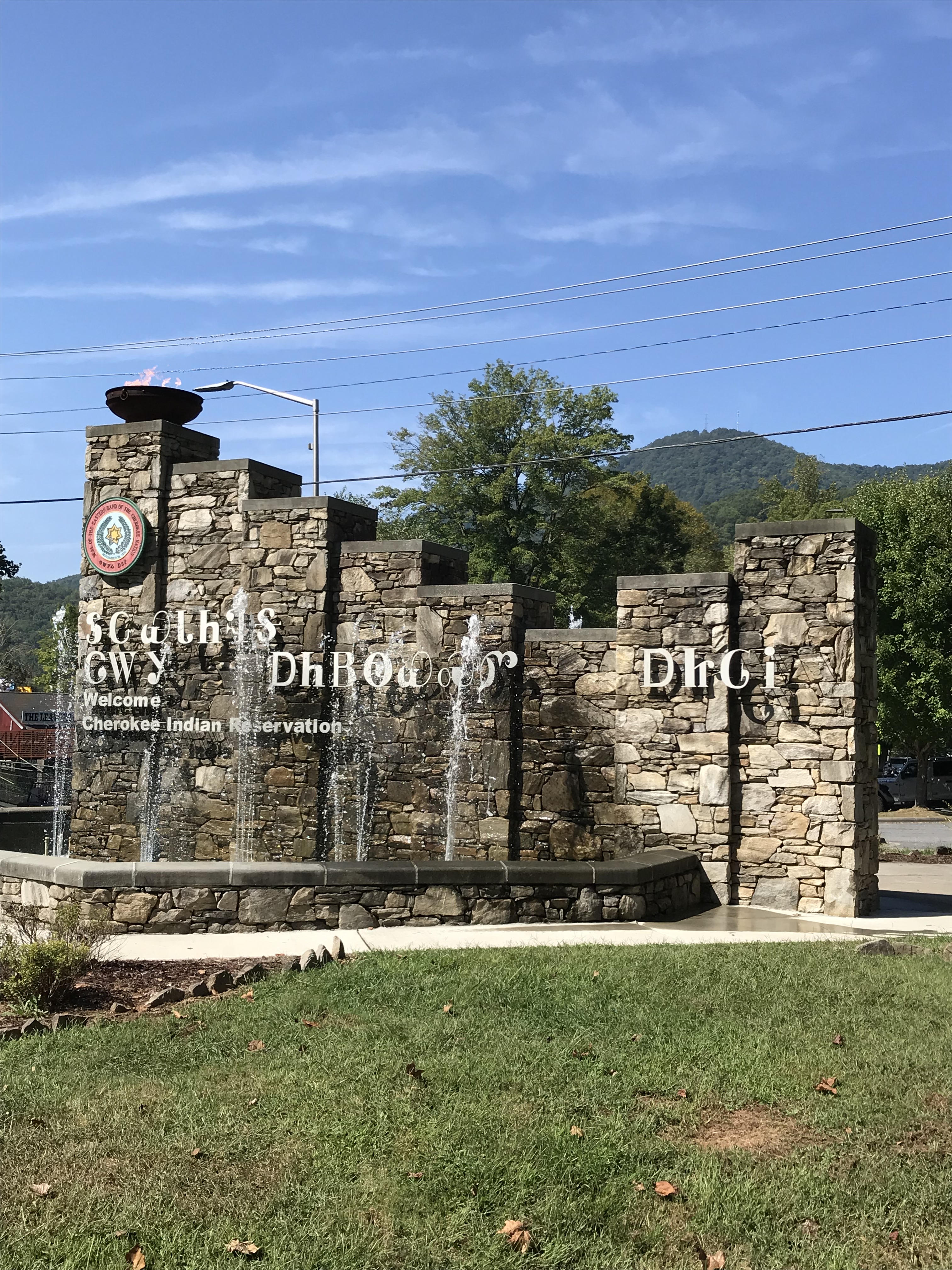
Welcome sign at Cherokee, NC
Welcome sign at Cape Hatteras National Seashore

We visited Boone and the campus of our alma mater, Appalachian State University, just two weeks before much of western NC was ravaged by Hurricane Helene. We continue to count our blessings that we did our traveling in the months and weeks before the hurricane.

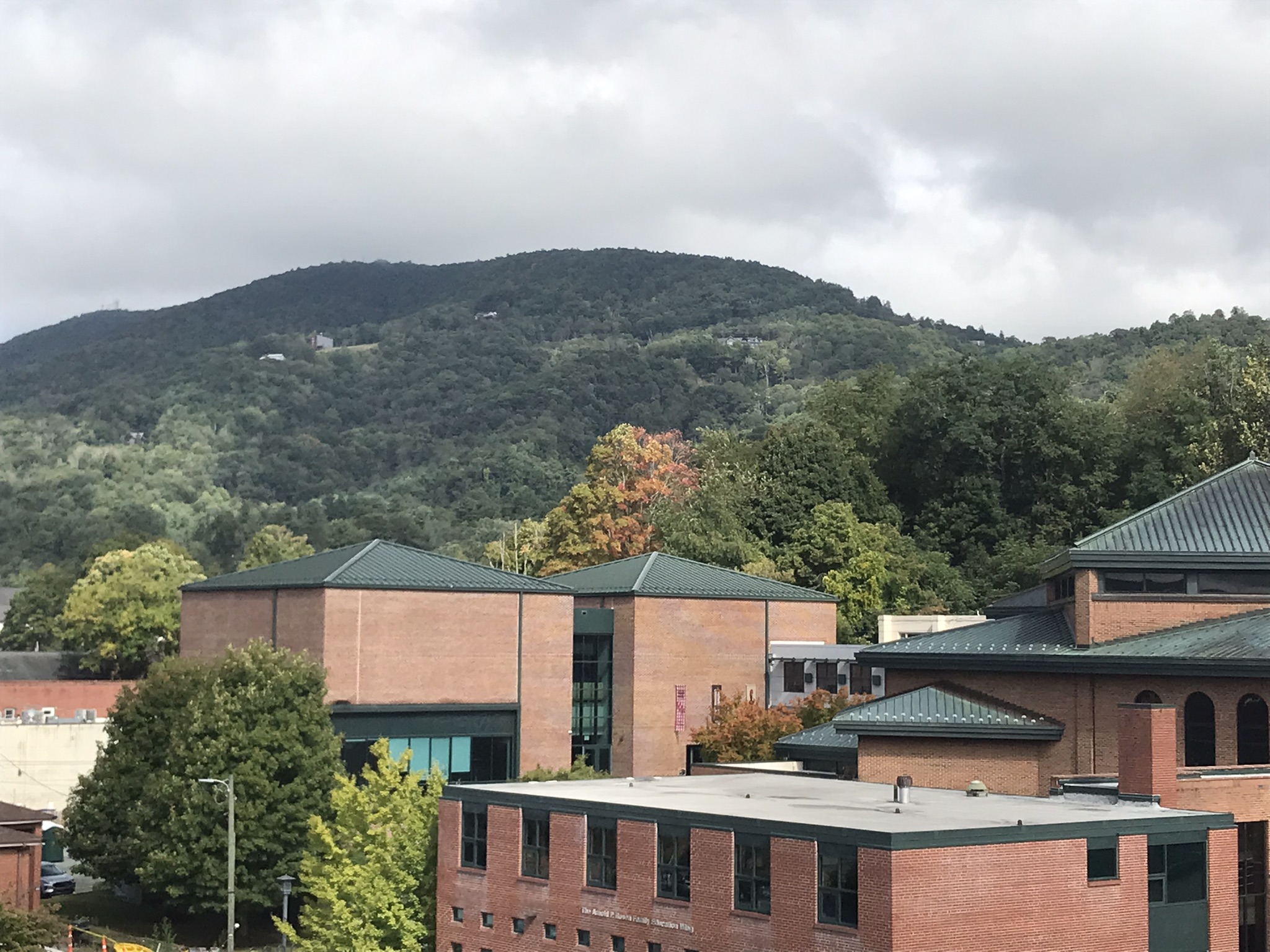
A view of Rich Mountain from the Appalachian State University campus

Hurricane Helene: September brought a “perfect storm” of days of heavy rain followed by Hurricane Helene to western North Carolina. It is the most destructive storm to hit the state in recorded history. The statistics and photographs are impossible to get one’s head around.

Of the 1,329 roads that were closed due to the flooding and landslides on September 25-26, 183 of them remain closed as of Friday, including Interstate 40 near the border with Tennessee.

I saw a video made on Wednesday of several miles of US-19 in Ramseytown, NC. You can’t even tell there was ever a road there, and it is unimaginable that the little Cane River running alongside it is capable of rising so high and doing so much damage.

Last week, 10,000 tulip bulbs were delivered to Swannanoa, NC – a gift from the head of a bulb company in The Netherlands. Next April, Swannanoa will look quite different than it has since September 25th!

A hint of what to expect in Swannanoa next spring! Photo by Krystina Rogers on Unsplash

People from all over the US and world have pulled together to help western NC begin to recover from the September storm. I’ve tried to highlight examples in my weekly blog posts. I’m not equipped to show the full picture. I’ve merely tried to keep a light shining on the situation as it disappears from the news headlines.

US Presidential Election: We survived a US Presidential campaign that seemed to last for a decade. Now we’ll get to see if our democracy and our country’s long-standing ties with other countries will survive the results.

Award for my local history books: I received The North Carolina Society of Historians Journalism Award of Excellence for Harrisburg, Did You Know? Cabarrus History, Book 1 and Harrisburg, Did You Know? Cabarrus History, Book 2 in November.

My Writing: I’ve made a lot of progress over the last couple of months on my devotional book, I Need The Light: 26 Weekly Devotionals to Help You Through the Cold Months. Work continues on my historical novel with the working title The Heirloom. Stay tuned!

If you haven’t subscribed to my e-newsletter yet, please click on the “Subscribe” button on my website: https://www.janetmorrisonbooks.com. You’ll receive a free downloadable copy of my historical short story, “Slip Sliding Away” and my e-newsletters.

In November I changed my newsletter from a several-page every-other-month format to a short weekly email.

Social Media: Technology is still pulling me into the 21st century, but I’m kicking and screaming. My new endeavor this year was Instagram. I try to share quotes I like (many of them from books I’ve read), information about my website and blog, as well as publicity for my books. I’m trying not to not come across too salesy.

Until my next blog post

I hope you have a good book to read.

I hope you’ve had an enjoyable holiday season so far.

Remember the people of Ukraine and western North Carolina where it is mighty cold for the next several months.

Happy New Year!

Janet

Who says you can’t go home again? Revisiting a university campus

When I was a freshman at Appalachian State University in 1971, there were 7,800 students. Before I graduated four years later, the university chancellor had announced that enrollment would be permanently capped at 10,000.

Fast forward to the 2024-2025 academic year, and Appalachian has more than 21,000 students. I visited the campus last week, and I can testify to that!

View of Rich Mountain from Appalachian State University Campus

The campus is in a valley at the foot of beautiful Rich Mountain and Howard’s Knob. It’s where Daniel Boone camped sometimes and the mountain is supposedly named for one of his friends with the surname Rich.

Photo of outside of Belk Library and Information Commons
A view of Belk Library and Information Commons

My sister and I were treated to a tour of Belk Library and Information Commons during our visit last week. Marie, being a Library Science major alum of ASU, she was particularly interested to see the great leaps in technology the library offers since her student days there in the mid-1960s.

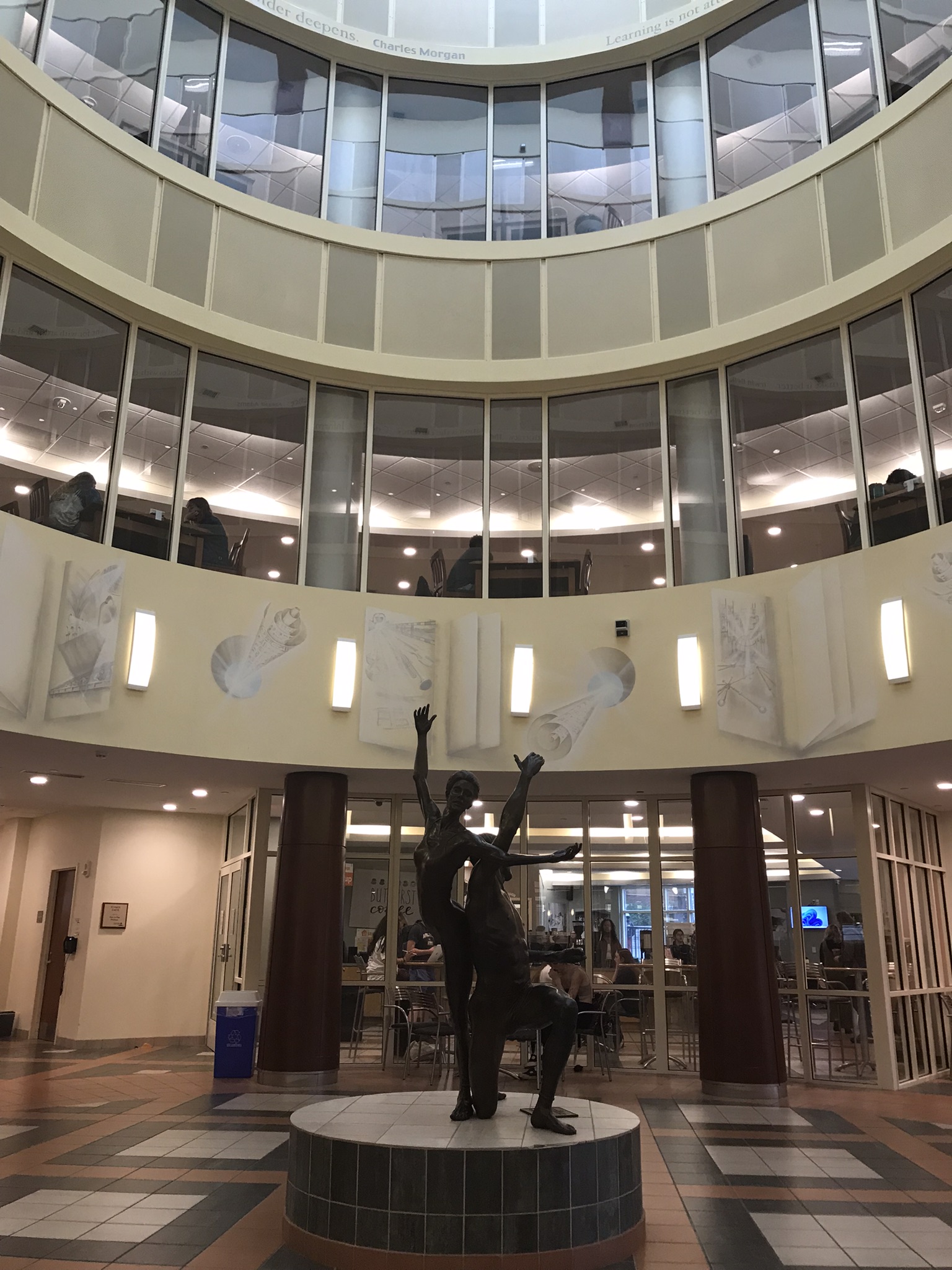
Photo of lobby at main entrance to Belk Library and Information Center
Lobby at main entrance to Belk Library and Information Center

3-D printers in the library’s Makerspace

One of the statues outside the library

Photo of statue of little boy lying on his stomach and reading Jack Tales
Statue outside library. The little boy is reading Jack Tales.

The library where I spent many hours reading materials that various professors would put on reserve there for on-site-only reading has been converted to classrooms.

Anne Belk Hall (formerly, Belk Library in the 1970s

The building where I majored in Political Science in the 1970s has been replaced by one of many parking decks on campus. Parking decks weren’t needed when my sister and I were students. Very few students could afford to have a car. We walked everywhere we went and thought nothing of it, since none of our friends had a car.

All four of the dormitories I lived in while a student are still there – even East Residence Hall, which I suppose is now the oldest dormitory on campus.

Whereas almost all students back in the day lived in dormitories, most of them now live in apartments. The town of Boone is covered in apartments and restaurants, and much of the old charm of the college town is gone. In the 1960s and 1970s, all the students were on a meal plan and ate in the cafeteria. There was no money for eating out except for the occasional going in together in the dorm on a Saturday night and ordering a pizza.

When someone in the dorm had a birthday, their friends would chip in and buy a square Pepperidge Farms cake at the Winn-Dixie just off campus.

The downtown Boone business district hasn’t changed as much as the campus and the rest of the town in 50 years. Mast General Store still beckons shoppers and The Appalachian movie theater has been refurbished and still offers students and the public the latest in movies as well as other cultural programs. I doubt admission is still 50 cents, though.

My favorite memory of The Appalachian Theater was going to see “Dr. Zhivago” there for 50 cents and having to sit on the front row. Talk about feeling like you are in the middle of the action! (And in the middle of a blizzard in Russia!)

The student infirmary where I worked the night shift on Fridays and Saturdays my last three months on campus was in the former hospital. The nurse I worked with was very compassionate. We were rarely very busy. If we had no patients coming in by around 2:00 or 3:00 a.m., she would let me take a nap. It wasn’t easy to sleep, though, because the pipes carrying the heat from the campus heat plant to the radiators were constantly banging above my head.

When my shift ended 7:00 a.m. I would trudge through the snow to my dorm where I would immediately fall into bed. Minimum wage was around $2.00 an hour then, but that $32 I made on those 10 to 12 weekends was a Godsend and helped me start socking away money to pay for graduate school.

The Daniel Boone Inn still draws crowds of repeat diners for family-style old-time country and mountain cooking. I couldn’t afford to eat there as a student, but my friends took me out for dinner there on my last Saturday on campus at the end of winter quarter in 1975. We enjoyed a huge meal of fried chicken, mashed potatoes and gravy, country ham, green beans, corn, slaw, stewed apples, and cornbread as we watched snow falling outside.

I wrapped up all the leftover fried chicken on the serving platter and took it to the student infirmary when I went there to work at 11:00 that night. It was, of course, my last night to work there. The nurse I worked with and I would drool over the Kentucky Fried Chicken commercials on our little black-and-white TV every weekend night, so I thought it was apropos for me to take fried chicken for the two of us to munch on that night. The joke was on both of us, as she showed up that night with a bucket of Kentucky Fried Chicken! We ate chicken until we were about to explode! What memories!

I didn’t get to eat at the Daniel Boone Inn last week. At this point in my life, I just don’t need to pig-out on so much food. But I have the memories of that night in 1975 with my friends, the nurse at the infirmary, and all that fried chicken!

Until my next blog post

I hope you have a good book to read. I’ve read some good ones already this month!

If you haven’t already purchased a copy, I invite you to buy The Blue Ridge Mountains of North Carolina, the vintage postcard book I wrote for Arcadia Publishing. If you’ve spent time in the Appalachian mountains, no doubt these postcards will trigger some memories for you. The book is available as an e-book and in paperback from Amazon.

Make time for friends and family, and make sure they all have a copy of my book!

Don’t forget the people of Ukraine.

Janet

Independent Bookstores are the Best!

If you haven’t visited an independent bookstore lately, do yourself a favor and look one up this week.

Foggy Pine Books

NC Mountains Oct. '18 003
Foggy Pine Books in Boone, NC

I had the pleasure of visiting Foggy Pine Books in Boone, North Carolina last week. It is the quintessential small town/college town independent bookstore. Located at 471 W. King Street in downtown Boone just a block or so from the campus of Appalachian State University, it has an excellent selection of books ranging from the classics to the current bestsellers. There are several cozy areas in the shop that invite customers to curl up in a comfortable chair with a good book.

My vintage postcard book, The Blue Ridge Mountains of North Carolina, was not among the handful of Arcadia Publishing books on the shelf; however, Christina promised to read my book and consider ordering it. Next time you’re in Boone, drop by Foggy Pine Books and ask for it by name.

Mary Ruthless purchased the bookstore in 2016 when the owner of the former Black Bear Books retired. It seems that Mary couldn’t stand the thought of Boone not having a bookstore. I’m so glad she rescued the shop. Foggy Pine Books is in a different location from where it started and is conveniently located on the main street with free parking at the side of the building.

In addition to buying a book, I purchased a couple of bookmarks at Foggy Pine Books. One bookmark is imprinted with the words, “She believed she could so she did.” I will explain the significance of those words to me in one of my blog posts in November.

Dan’l Boone Inn

A trip to Boone wouldn’t be complete without eating at Dan’l Boone Inn. Established in 1959, the restaurant is in what used to be the area’s hospital at the corner of King and Hardin Streets. The menu for lunch and dinner are the same, as is the price.

Fried chicken, country-style steak, mashed potatoes, gravy, green beans, slaw, corn, biscuits, and baked apples are served family style after you’ve eaten your tossed salad. What appears to be way more food than you can possibly eat soon disappears and you’re given extra napkins to wrap up the country ham biscuits to take with you.

The dessert choices were all tempting, but I opted for the chocolate cake. It was as delicious as the rest of the food. The country ham biscuits were my dinner that night. Two country ham biscuits were all I needed that night after such a big lunch.

Tribute to Doc Watson

NC Mountains Oct. '18 005
Statue of the late Doc Watson, musician, in Boone, NC


I just had to take a picture of this statue of local legendary musician Doc Watson. He was from Deep Gap, which is a community a few miles east of Boone. He took blindness in stride and had a family and a successful career as a musician and singer. The statue is on King Street in downtown Boone.

Blue Ridge Parkway

Autumn temperatures arrived a few weeks late this year, so there wasn’t much fall color in the trees in Boone or on the Blue Ridge Parkway; however, after a side trip to Ashe County Cheese in West Jefferson, the two-day vacation in the mountains was made complete by a drive on the Blue Ridge Parkway. I love driving in the mountains, so a road trip on the Parkway is always relaxing. The day was crystal clear after rain the day before, so the views were spectacular.

NC Mountains Oct. '18 007
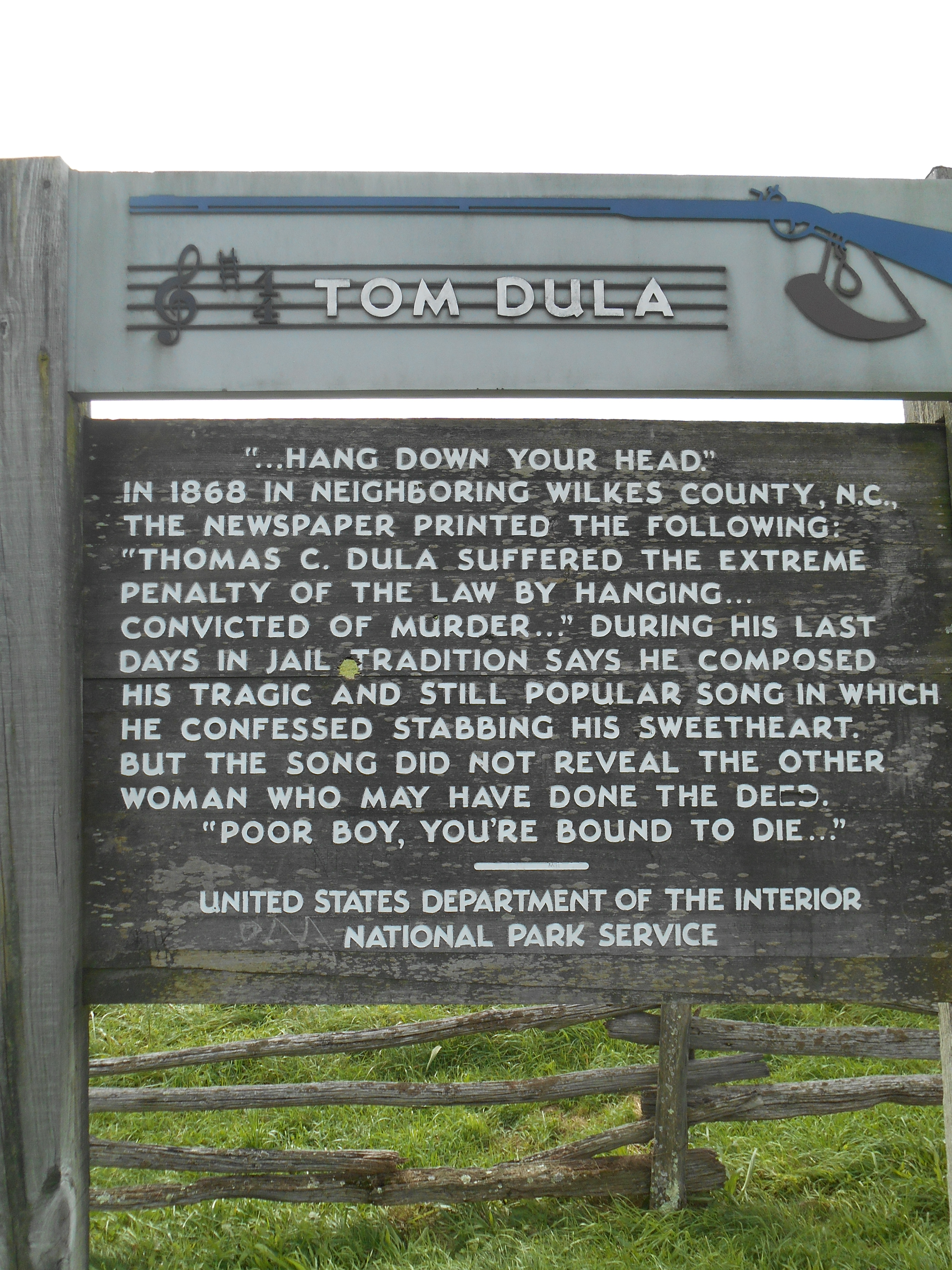
Sign at an overlook on the Blue Ridge Parkway

The sign gives an explanation of the legend of Tom Dula and is located at one of the overlooks on the Blue Ridge Parkway. This murder and love triangle in Wilkes County, North Carolina in the 1860s was made famous in the 1960s by a folk song recording by the Kingston Trio.

Until my next blog post

Don’t forget to visit an independent bookstore such as Foggy Pine Books in Boone, North Carolina as soon as you can.

NC Mountains Oct. '18 004
Foggy Pine Books, Boone, NC

I hope you have a good book to read. I’m finishing My Dear Hamilton: A Novel of Eliza Schuyler Hamilton, by Stephanie Dray and Laura Kamoie today.

If you’re a writer, I hope you have productive writing time.

Thank you for reading my blog. You could have spent the last few minutes doing something else, but you chose to read my blog. I appreciate it! I welcome your comments.

Let’s continue the conversation.

What’s your favorite independent bookstore? What is it about the atmosphere and feel of an independent bookstore that the big box stores can’t offer? Please share the names and locations of independent bookstores you have enjoyed visiting so the rest of us can patronize them.

Janet

Book release & newspaper interview

What an exciting day! The Blue Ridge Mountains of North Carolina was released today by Arcadia Publishing and I had my first newspaper interview about the book!

Jesse Campbell of The Mountain Times in Boone interviewed me for an article to be published on August 28 in that weekly newspaper that covers Ashe, Avery and Watauga Counties. You can’t beat free publicity like that!

This morning I participated in the filming of a pilot for a TV series about single pastors. The interim pastor of Rocky River Presbyterian Church is the Rev. Eleanor Norman. She was chosen as one of several single pastors in the US for inclusion in the pilot. Some of us gathered this morning in the sanctuary to give Eleanor an audience for a Scripture reading, sermon, and other remarks as directed by the producer. It’s fun to do something out of the ordinary. My only other TV experience was being an extra in a funeral scene the first season of the TV series “Homeland.” The pilot filmed this morning will never air. It will only be used to try to sell the idea to a network.

I’m going to the monthly meeting of Rocky River Readers Book Club tonight at Rocky River Presbyterian Church for a discussion of I Am Malala, by Malala Yousafzai, the Pakistani teen who was shot in the face just for wanting an education. Attending the book club meeting will be the perfect way to end what has been quite a day.