I write southern historical fiction, local history, and I've written a devotional book. The two novels I'm writing are set in Virginia and the Carolinas in the 1760s. My weekly blog started out to follow my journey as a writer and a reader, but in 2025 it has been greatly expanded to include current events and politics in the United States as I see our democracy under attack from within. The political science major in me cannot sit idly by and remain silent.
Since November 25, I’ve blogged once-a-week about one of the stories in my new book, Traveling Through History: A Collection of Historical Short Stories. The fifth story in the book is “From Scotland to America: A 1762 Immigration Story.”
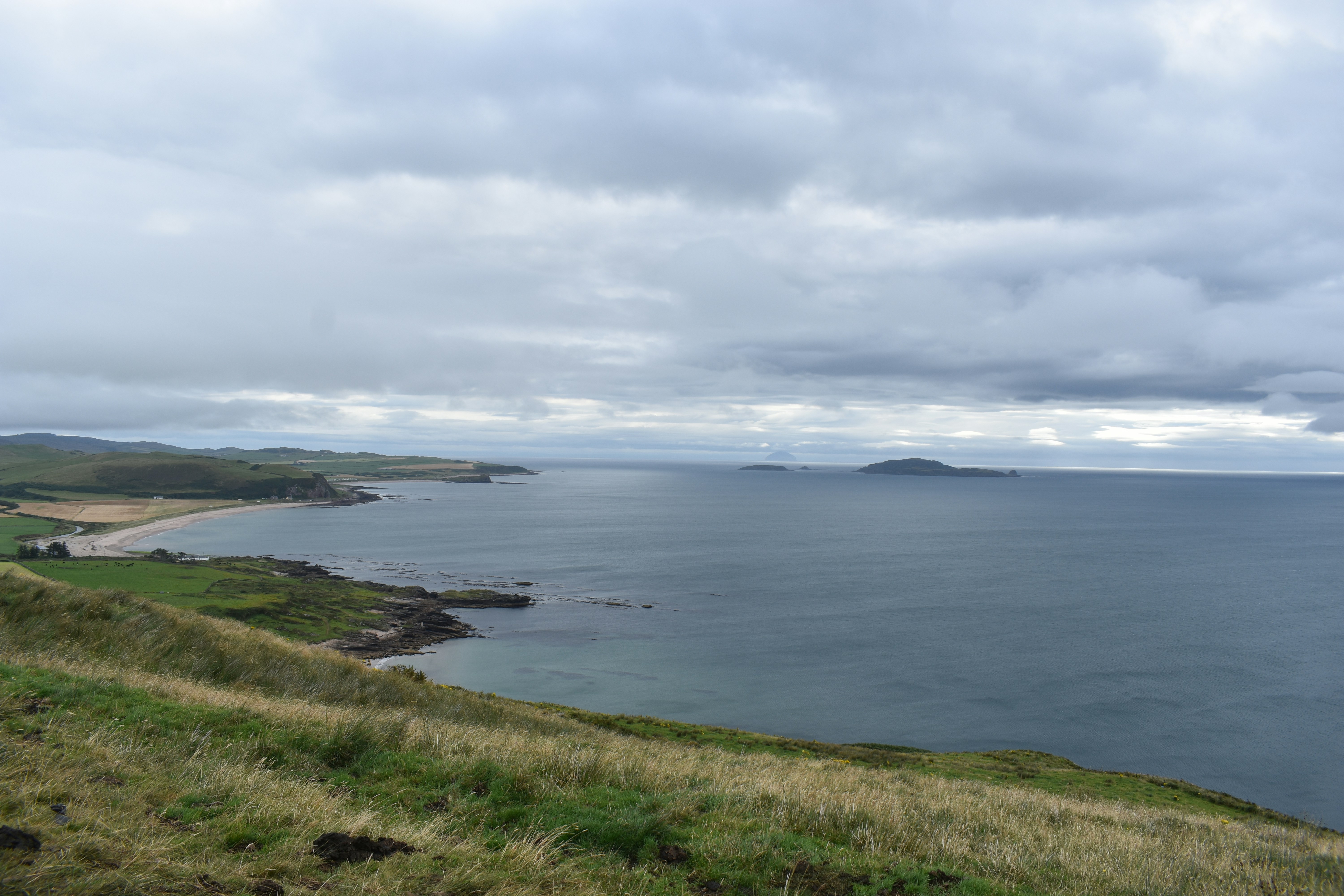
Somewhere on the Kintyre Peninsula of Scotland. Photo by Andrew Hall on Unsplash. (Andrew, we might be cousins!)
I know baptismal dates and marriage dates for my ancestors in Campbeltown and Southend, Scotland, but I don’t know when the three brothers set sail to America. I don’t know how long they lived in Pennsylvania before taking the Great Wagon Road south to the Rocky River Community in present-day Cabarrus County, North Carolina, but I had fun imagining their journey for this short story.
I’m privileged to live on a little piece of land that has passed down through seven generations to my sister and me from the 1760s. We’ve been to Scotland and visited the farms where they were tenants of the Duke of Argyll in the late 1600s and early 1700s. I feel a bond with them. Writing “From Scotland to America” was one small way for me to pay homage to them. I grew closer to them as I pondered their lives, what they saw, what they did, how they must have marveled at “the New World” and how they must have missed their homeland and living by the sea.
This story is entirely fiction except for their names, where they lived in Scotland, and from whom my great-great-great-great-grandfather purchased his first piece of land in North Carolina.
The three brothers came from a place where no common people owned their own land, so it must have been an unimaginable accomplishment to come to America and purchase land. That was something none of their ancestors could have done!
You can find the paperback at Second Look Books in Harrisburg, NC, or ask for it at your local independent bookstore. Bookstores can order it from IngramSpark.
Don’t forget to look for my other books, all available on Amazon: I Need The Light! 26 Weekly Devotionals to Help You Through Winter; I Need The Light! Companion Journal and Diary; The Aunts in the Kitchen: Southern Family Recipes (compiled along with my sister, Marie); Harrisburg, Did You Know? Cabarrus History, Book 1; and Harrisburg, Did You Know? Cabarrus History, Book 2.
The following genealogy books that my sister and I compiled are available through my website (https://www.janetmorrisonbooks.com): Descendants of John & Mary Morrison of Rocky River; Descendants of James & Jennet Morrison of Rocky River; and Descendants of Robert & Sarah Morrison of Rocky River.
By the way, don’t forget the people of Ukraine and their struggle to remain a free and independent nation.
When late October rolls around, I think of my great-great-great-great-grandfather’s estate sale held on October 29, 1777.
I knew nothing about it until a few years ago, but what a treasure trove of information his estate papers held! If you aren’t interested in history or your ancestors, you probably won’t read this post. That’s all right. Perhaps a few of you will be curious enough to keep reading.
I have a special bond with my fourth-great grandfather because I live on a little sliver of the land he purchased when he got to North Carolina from Scotland in the 1760s. I walk on the same dirt he walked on. I see some of the species of wild animals he saw. I cross the same creeks he crossed. I belong to the same church he belonged to. His blood flows in my veins.
John Morison (he wrote his name with one “r”) was baptized in the Lowland Church of Scotland in Campbeltown on the Kintyre Peninsula in 1726. He and his two younger brothers came to Pennsylvania for an unknown length of time before purchasing land and settling in North Carolina in the 1760s.
John wrote his will on August 30, 1777, “being very sick & weak in body, though in perfect mind & memory.” In his will, he outlined provisions for his pregnant wife, their eight living children, and their unborn child. In less than a week, John was dead.
Although he had left such things as land, livestock, money, some farm implements, and saddles to his wife and children and the spouses of his eldest daughters, there were things that needed to be settled up through an estate sale.
Defying the fact that John’s estate sale was held in the middle of the American Revolutionary War, all the little scraps of paper and receipts from the settling of his estate survived and are preserved at the State Archives of North Carolina.
Along with all those tiny pieces of paper which indicate everything from the purchase of “burial liquor” to the educating of his children, are page after page of the record of his October 29, 1777, estate sale.
It amazes me that when combined, John’s will and estate sale tell us everything the man owned. Being the first person in his family’s history to own a piece of land, it is astounding!
He wasn’t a man of great wealth, compared to the aristocracy, but to have come from where he came from I believe he did quite well for himself and his family. He would, no doubt be amazed to know that some of his 7th-great-grandchildren now reside on some of the land he purchased in the 1760s and 1770s.
I promised you a blog post about his estate sale, so let’s get to it.
The sale
Robert Harris, Jr. served as clerk. Mr. Harris had beautiful penmanship and was meticulous in his duties that day. He wrote down every item, who bought it, and how many pounds, pence, or shillings they paid.
Photo by Sam Carter on Unsplash
Items sold at the estate sale included eight horses; 19 sheep; 25 head of cattle; 17 hogs and a parcel of pigs; three hives of bees; 17 geese and ganders; 25 pounds of wool; a parcel of books; a great coat; two straight coats and jackets; one pair of blue britches; a pair of old buckskin britches; and a fur hat. (Oh, how I’d love to know the titles of that “parcel of books!”)
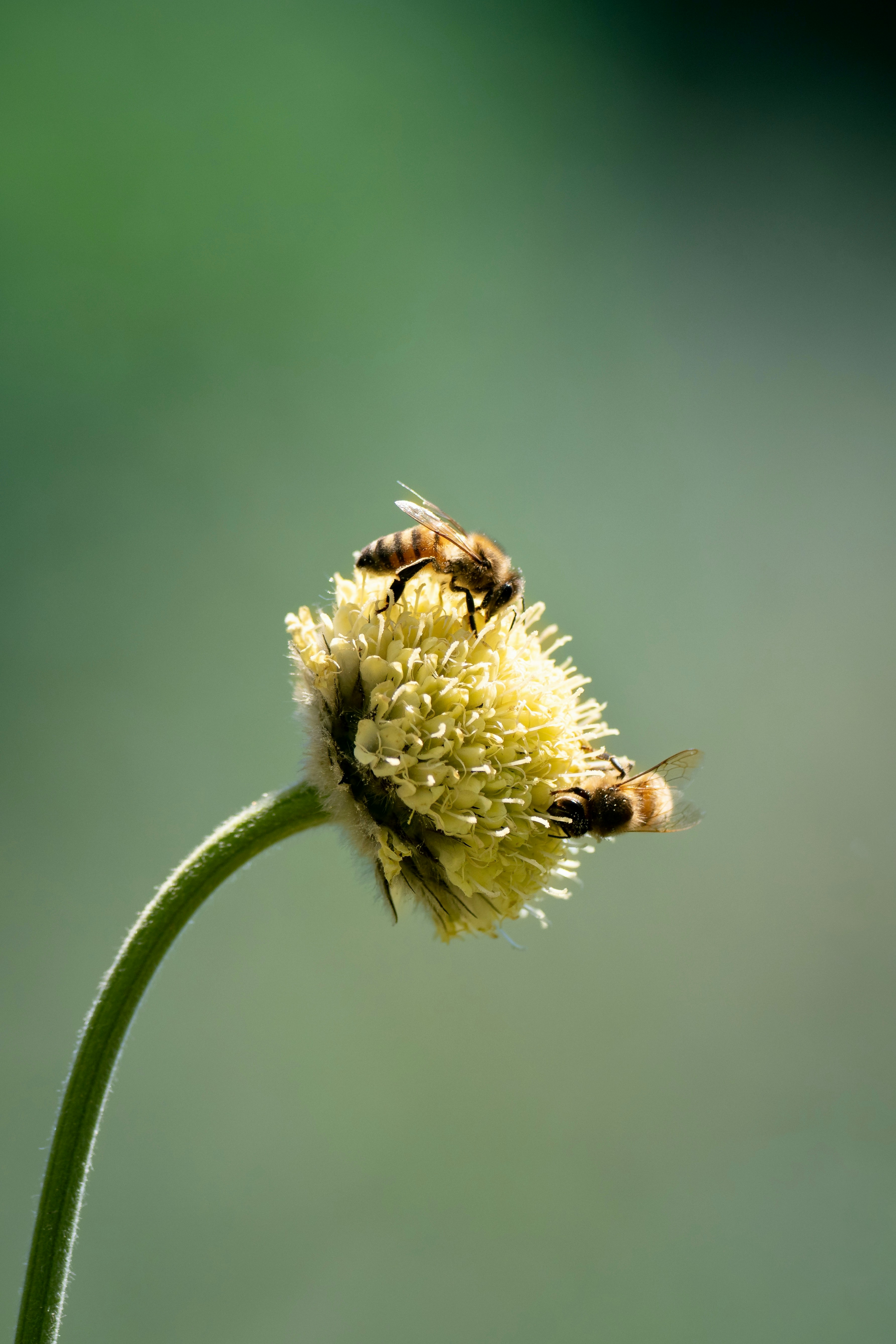
Photo by Claudia Wolff on Unsplash
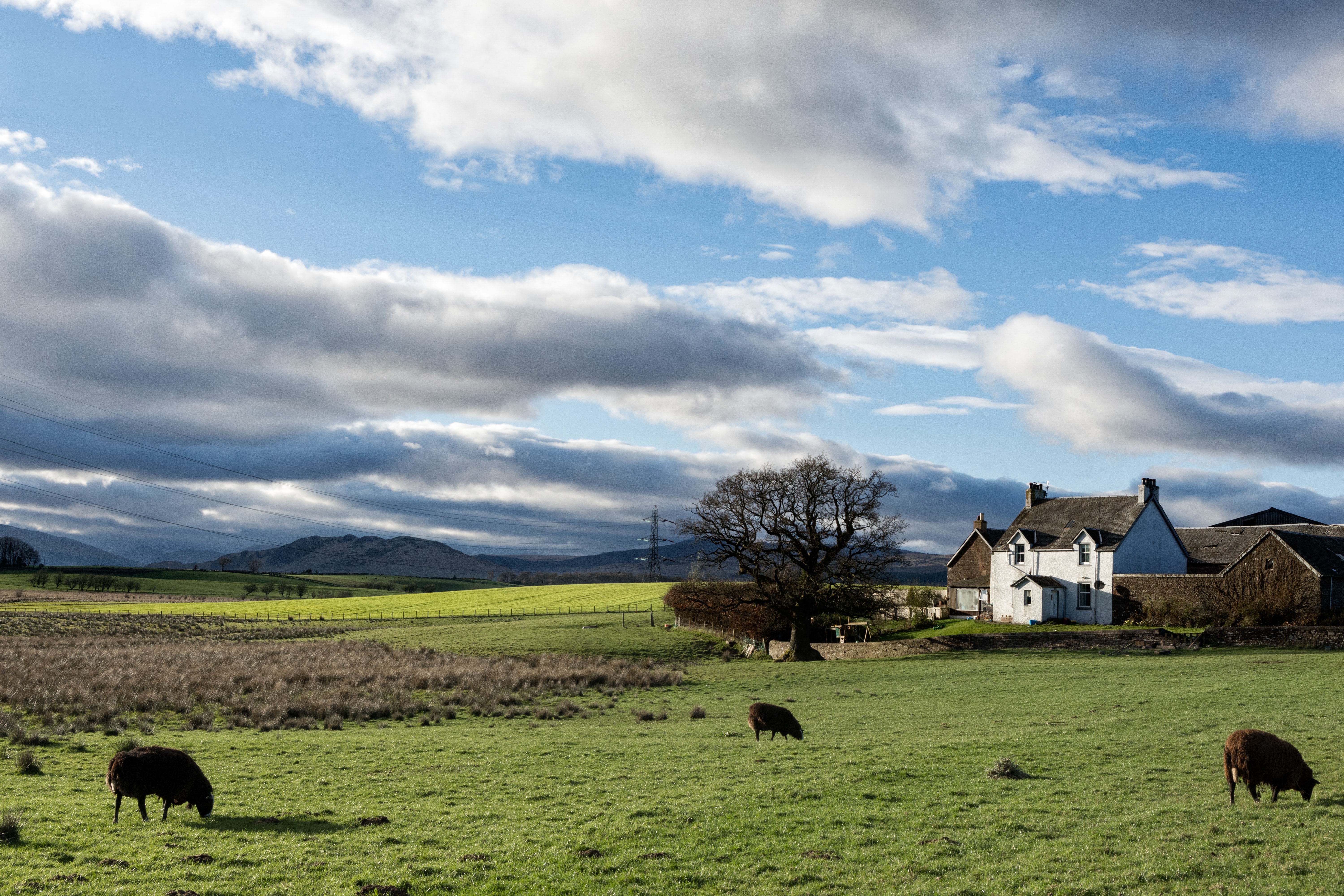
Photo by Sies Kranen on Unsplash
Also, four saddles; five bells and collars; five other collars; six bridles; two sets of horse gears; an “M” branding iron; three augurs; a drawing knife; nailing and stone hammers; a broadax; three weeding hoes; two maulrings; a wedge; a clivish; a sprouting hoe; a mattock; two falling axes; three spinning wheels; two horse trees and hangings; a cutting knife and stone; a sythe and cradle; four sickles; a flax brake; a pair of wool cards; and a pair of cotton cards.
Photo by chris robert on Unsplash
Also, barrels for flour, rice, beef, and salt; a tapper vessel; two cedar churns; oak and walnut chests; two smoothing irons; a looking glass; one whiskey keg; and various other tools, household items, and pieces of furniture.
Other items included 6.5 pounds of iron and 14.5 pounds of steel. Steel as we know it today had not yet been developed. In 1777, steel was the name for sharpening rods used to sharpen knives and other cutting edges.
Half a wagon?
The most puzzling record in John Morrison’s estate papers is that John Springs bought half a wagon and half the wagon implements. Since no one bought the other half, it has been speculated that Mr. Springs knew that John’s wife, Mary, needed the use of the wagon but also needed the proceeds from the sale of the wagon and implements. After all, Mary was a widow with seven children still at home and a baby on the way. Perhaps Mr. Springs made a verbal agreement to let Mary Morrison keep the wagon even though he paid half the value of the wagon at the estate sale.
Another possibility is that John Morrison had bought the wagon and implements from John Springs but had only paid half the bill at the time of his death. Mr. Springs, instead of saddling Mary Morrison with the additional debt of the unpaid balance chose to simply pay her husband’s estate the half that John still owed. When Mary Morrison died in 1781, there is no mention of a wagon in her will or her estate sale.
Lots of ammunition!
Other intriguing items sold at John Morrison’s estate sale were the 17 pounds of gun powder and 55.5 pounds of lead. That’s more gun powder and lead than a farmer needed. So why did John Morrison have so much of both?
John wrote his will on August 30, 1777. By September 3, he was dead. It is speculated that he was stockpiling munitions for the patriots’ cause in the American Revolution and that he was shot by Tories, but we will never know for certain.
Robert Burns was born on January 25, 1759 in Ayrshire, Scotland.
A friend of mine from Campbeltown, Scotland, asked me if I liked to read the poems of Robert Burns. I had to admit that I couldn’t understand most of them.
Although written in English, and I’m an English speaker, the English Robert Burns used in the second half of the eighteenth century in Scotland was a far cry from the English I use and speak as an American in 2022.
I love to hear the soft, lilting tongue of Lowland Scots spoken. It’s lovely. It’s, no doubt, the way my Morrison ancestors spoke, for they were lowlanders and not Gaelic-speaking highlanders.
It’s lovely to hear a Scottish accent, whether highlander or lowlander; however, the heavier the accent, the harder it is to understand some words. In addition to that, the Scots have words for things that we don’t use in America.
When it comes to reading something written in Scots, some words just don’t translate well to my ears. That brings me back to Robert Burns.
Photo credit: Gary Ellis on unsplash.com
“Auld Lang Syne”
The most famous poem associated with by Robert Burns is, no doubt, the one that’s sung on New Year’s Eve. The words of “Auld Lang Syne.” The Scottish pronunciation is ‘o:l(d) lan’ səin. I must admit, this doesn’t help me at all. My source was quick to point out that we should note that Syne is pronounced like an s and not like a z. The rough translation is Long, long ago; or old long time; or good old time.
It seems that it’s an ancient song and in 1788 Robert Burns was the first person to write down the words. That was when he submitted the words to the Scots Musical Museum.
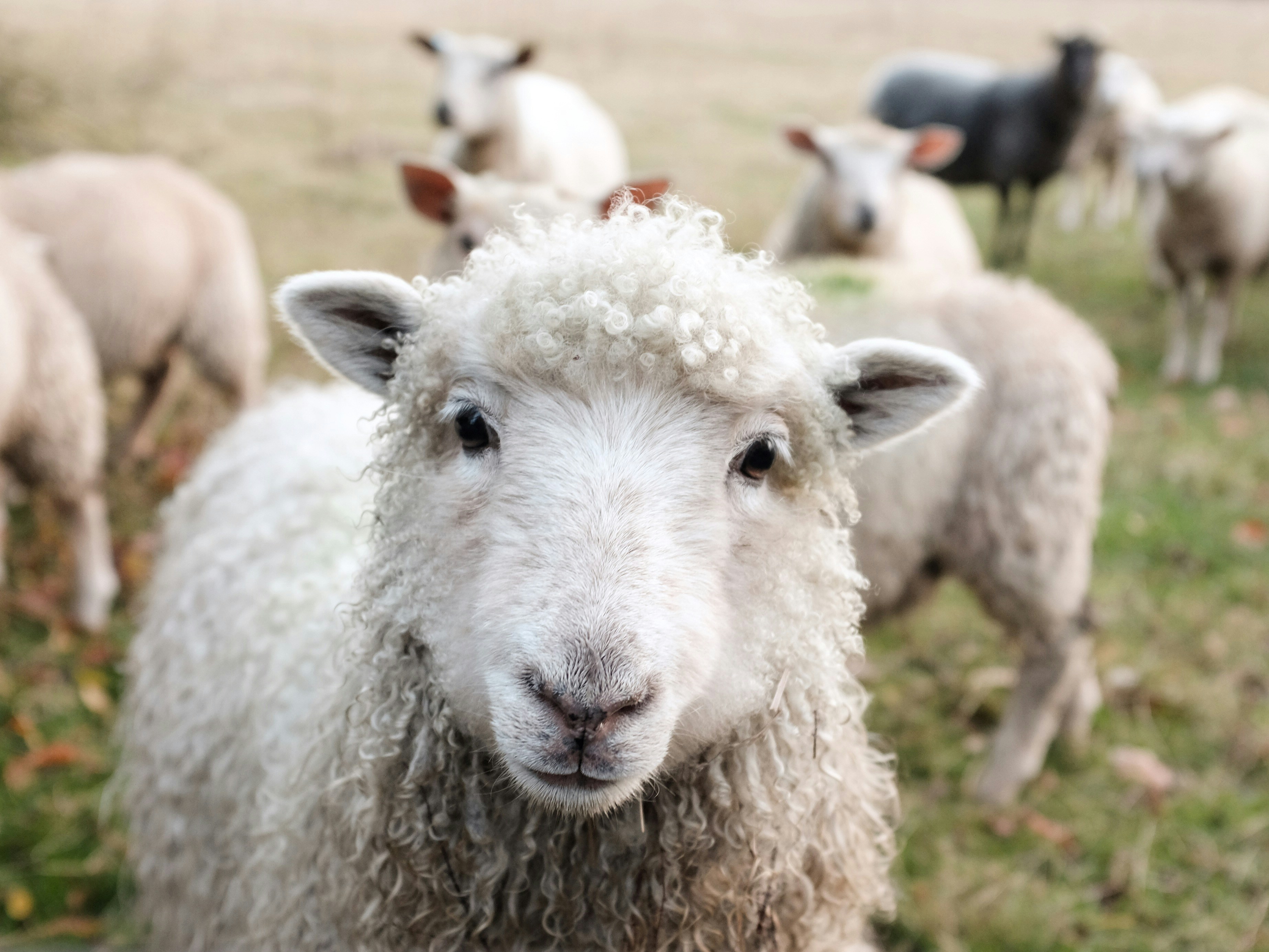
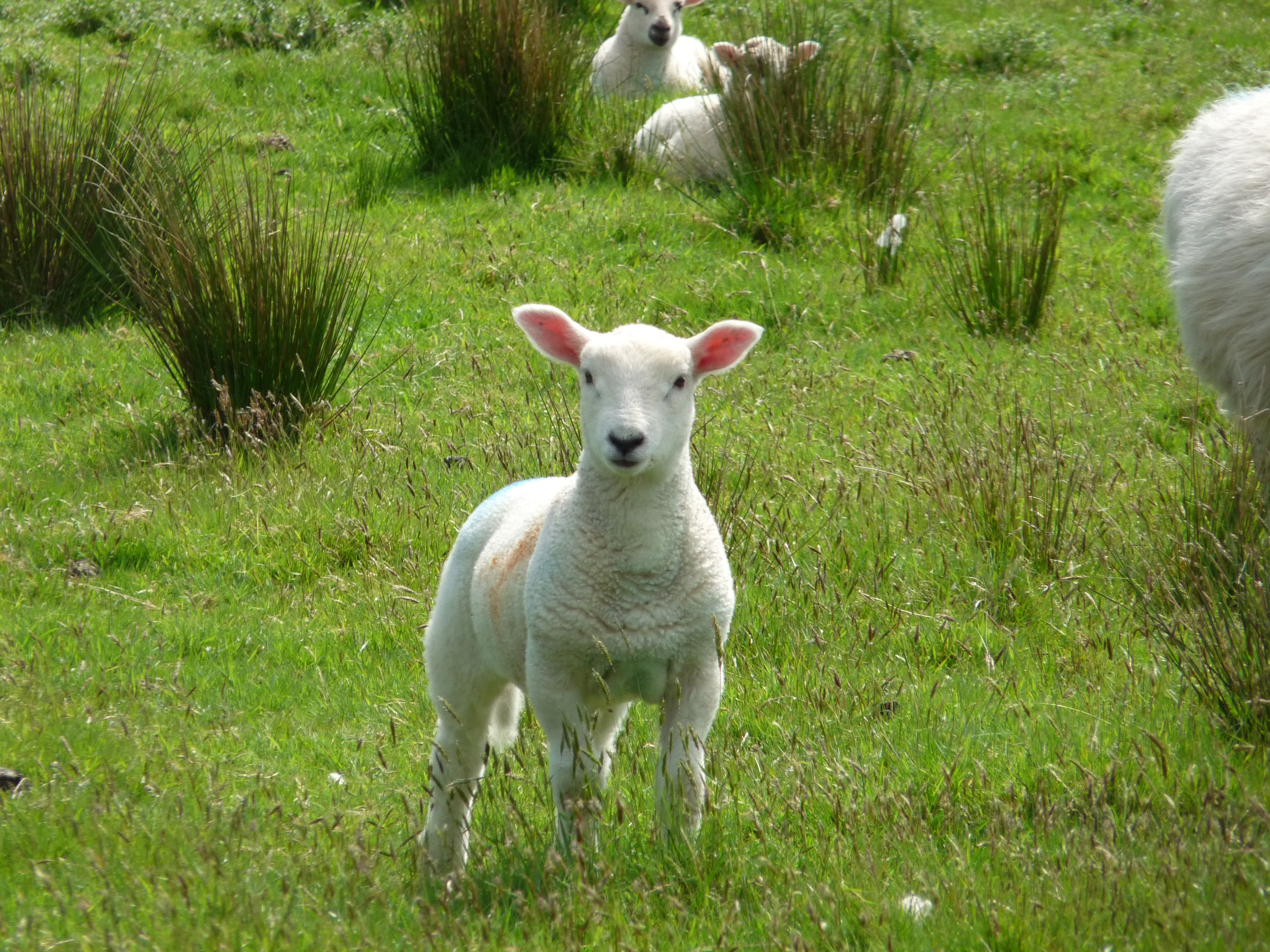
Scottish Lamb. Photo credit: Gibbon Fitzgibbon on unsplash.com
A modern translation of “Auld Lang Syne”:
Should old acquaintance be forgot,
And never brought to mind?
Should old acquaintance be forgot,
And long, long ago.
Chorus
And for long, long ago, my dear
For long, long ago,
We’ll take a cup of kindness yet,
For long, long ago.
And surely you’ll buy your pint-jug!
And surely I’ll buy mine!
And we’ll take a cup of kindness yet,
For long, long ago.
Chorus
We two have run about the hills
And pulled the daisies fine;
But we’ve wandered manys the weary foot
Since long, long ago.
Chorus
We two have paddled in the stream,
From morning sun till dine;
But seas between us broad have roared
Since long, long ago.
Chorus
And there’s a hand, my trusty friend!
And give us a hand of yours!
And we’ll take a deep draught of good-will
For long, long ago.
Chorus
Oh, My Love is Like a Red, Red Rose
Photo credit: Serafima Lazarenko
“Oh, My Love is Like a Red, Red Rose” is my favorite Robert Burns poem – partly because it’s more understandable than most of his – and because the sentiment is beautiful. Here are the words:
O my Luve is like a red, red rose
That’s newly sprung in June;
O my Luve is like the melody
That’s sweetly played in tune.
So fair art thou, my bonnie lass,
So deep in luve am I;
And I will luve thee still, my dear,
Till a’ the seas gang dry.
Till a’ the seas gang dry, my dear,
And the rocks melt wi’ the sun;
I will love thee still my dear,
While the sands o’ life shall run.
And fare thee weel, my only luve!
And fare thee weel awhile!
And I will come again, my luve,
Though it were ten thousand mile.
You can find it sung by various artists on YouTube.
Happy 263rd Birthday, Robert Burns
Scottish Bagpiper. Photo credit: Lynda Hinton on unsplash.com
It’s a tradition that many Scottish organizations, such as the Robert Burns Society, celebrate the bard’s birthday with a fancy dinner. This involves a bagpiper “piping in” the traditional Scottish dish, haggis. I’ve never been to one of those dinners.
When I visited Scotland, I was determined to have as many Scottish experiences as possible. I ate haggis. Now I can say, “I’m a haggis eater,” which you’re supposed to say with a deep voice and much gusto.
I’ve eaten haggis. I don’t have to do that again, if you get my drift.
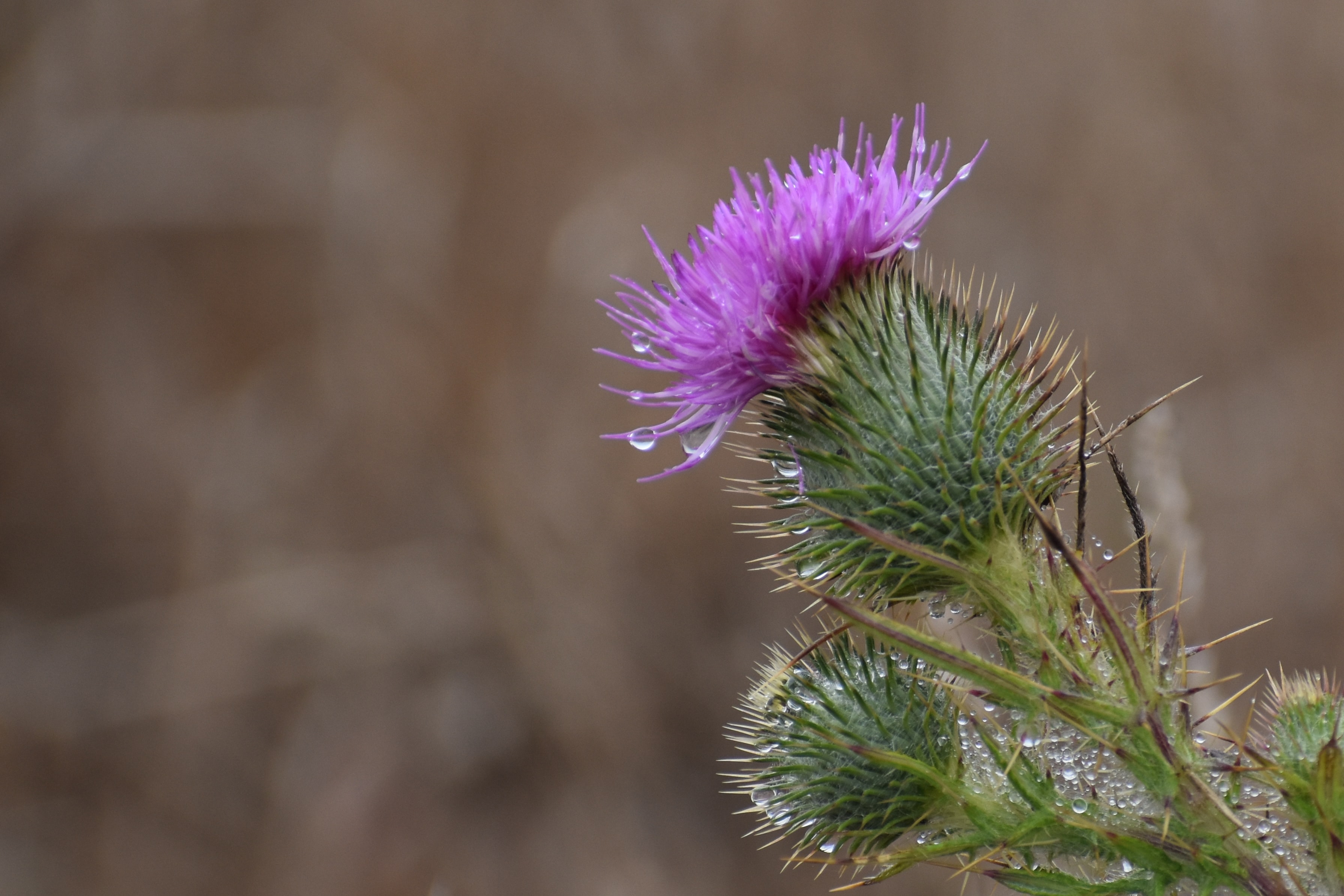
Thistle. Photo credit: Elisa Stone on unsplash.com
Since my last blog post
A blogger friend of mine, Francisco Bravo Cabrera, is a man of many talents. He paints, he writes poetry, he makes music, he puts together extraordinary art history videos, and he shares his talents on his blog. Here’s the link to one of his recent posts: https://paintinginvalencia.wordpress.com/2022/01/16/jazzart-phase-iii/.
Since I blogged last Monday, I learned that he has launched a new endeavor by joining Fine Art America. Here’s a link to Francis’ Fine Art America page where you can view and purchase examples of his digital art on a vast variety of items ranging from wall canvas to notecards: Francisco Bravo Cabrera Art | Fine Art America. Best of luck with this new opportunity, Francis!
I started writing the scenic plot outline for what I want to be “Book One” in my planned novel series. The scene-by-scene “outline” now stands at more than 3,700 words. I’m considering the working title, The Heirloom. The manuscript I’ve been blogging about for years with the working title of either The Doubloon or The Spanish Coin will be “Book Two.”
My blog post last week was “liked” and commented on by an honest-to-gosh published novelist, D. Wallace Peach. Her comment made my day and encouraged me that I’m on the right track with novel structure. Thank you, Diana!
My decluttering project at home continues. I went through bags, drawers, and boxes of old craft supplies. It felt good to discard dried-up fabric paint, craft glue, and sundry supplies I know I’ll never use. Usable items I’m no longer interested in or motivated to use will be donated to several people and a re-sell organization. The process freed up a drawer in a chest of drawers, making room for more things I probably should throw away or donate.
I worked on my next three blog posts.
I also did some reading. I gave When Ghosts Come Home, by Wiley Cash, another chance and loved it. More on that in my February 7, 2022 blog post.
Oh – and I actually got to spend some time on genealogy, one of my most rewarding hobbies.
In spite of some health concerns within my family, the Covid-19 pandemic, natural disasters, and the threat of war in eastern Europe, I had a good week. For me, 2022 is getting off to a productive start.
Until my next blog post
I hope you have a good book to read and a hobby to enjoy.
Stay safe and well, and let me know what you’ve been doing.
Janet
Highland “Coo.” Photo credit: James Toose on unsplash.com
Occasionally, I like to present samples of my writing in this blog. My blog post on May 23, 2017 was “No Place for a Preacher’s Son?” (No Place for Preacher’s Son?) The “no place for a preacher’s son” was the Pioneer Mill community in Township One of Cabarrus County, North Carolina in the 1870s.
Gold Fever!
The reason for Pioneer Mill being a “boom” place in the 1800s was due to the development of a gold mine there. Gold was first discovered in the United States in Cabarrus County in 1799.
“Gold fever” soon took hold of the region and numerous gold mines were developed in Cabarrus County in the early 1800s. In fact, so much gold was found in the area that in 1837 a branch of the United States Mint was opened in Charlotte in adjoining Mecklenburg County
I heard about the Pioneer Mill Gold Mine when I was a young child. I knew where it had been. I should have asked “the older generation” some questions about it, but now that generation is gone.
Finding myself in “the older generation,” I researched the gold mine in order to write a two-part series about it for the now defunct Harrisburg Horizons newspaper in 2012. Today’s blog hits the highlights of those newspaper articles.
After the 1799 discovery of gold on John Reed’s land in Township Ten, everyone in Cabarrus County probably started searching for gold on their property. The date that gold was first discovered at Pioneer Mill is unknown, but the 1869 Branson Business Directory described the mine as “among the earliest discovered mines in the State.
The land on which the Pioneer Mill Mine was worked in the 1800s was purchased in the 1760s by James Morrison, an immigrant from Campbeltown, Scotland. It passed down to his son, John. John and his wife, the former Mary McCurdy, had 11 children. Their youngest child, Robert Harvey Morrison, was born in 1817.
Robert Harvey Morrison remained on the family land and was quite prosperous. The stately two-story house at the entrance to the present-day Cedarvale subdivision on Morrison Road was the home he built for his family of eight children.
Mineral Rights
From a deed registered in Cabarrus County, we know that in 1853 Robert H. Morrison sold the mineral rights on his 640 acres of land to Collett Leventhorpe of Rutherford County, North Carolina and Richard H. Northrop of Albany, New York for $5,000.
In June of 1854, Messrs. Leventhorpe and Northrop, both identified as being of Rutherford County, sold the mineral rights and mining machinery to Francis Rider of New York City for $475,000.
Mr. Rider was identified as the president of the Pioneer Mill Mining Company, “an association incorporated in pursuance of the provisions of an act of the Legislature of the State of New York” that authorized the formation of “Corporations for Manufacturing, Mining, Mechanical or Chemical purposes Passed February 17th 1848.”
I requested a copy of the incorporation papers of the Pioneer Mill Mining Company from the State Archives of New York State, but the researchers there were unable to find a record of the company.
Geology
Ebenezer Emmons served as State Geologist in North Carolina from 1851 until 1863. Dr. Emmons described the veins of gold at the Pioneer Mill Mine in an undated report, “Geological Report of the Midland Counties of North Carolina” as a fine example of veins of gold coming off a foot-wall.
An electronic copy of the Emmons report can be found online through the University of North Carolina’s Documents of the South Collection at http://docsouth.unc.edu/nc/emmonsml/emmons.html. He wrote, “In some instances the segments are so distinct that on being removed the lode seems to have run out, but on working back to the foot-wall, another segment is encountered.”
“Foot-wall” is the rock underlying a mineral deposit. The report noted that the Pioneer Mill Mine was in syenite granite.
I have heard it said that in the days of dirt roads and horse-drawn wagons, when horses’ hooves clacked along the road at the intersection of Morrison Road and Pioneer Mill Road, there was a hollow sound that led to speculation that there was an old mine shaft under the roadway.
Dr. Ebenezer Emmons wrote that the Pioneer Mill Mine was in a cluster of interesting mines for which he held great expectations, although the Pioneer Mill Mine was the only one in the cluster in operation at the time of the report.
He described it as “twelve miles east of Concord, and situated upon the eastern border of the sienitic [also spelled syenite] granite, and in a belt upon which there are numerous veins carrying both gold and copper. The vein fissure in the granite is between sixteen and seventeen feet wide. Its direction is N.70°E. The true vein stone is quartz from eight to thirty inches thick, both sides of which is bounded by the killas.”
“Killas” is a Cornish mining term for metamorphic rock strata of sedimentary origin altered by heat from intruding granite.
The Emmons report indicated that there were four veins of gold on the Robert Harvey Morrison plantation. The first vein was a mile south of the Pioneer Mill Mine. Dr. Emmons found refuse ore rich in gold around an old shaft at that vein which was in quartz interspersed with “sulphurets.”
The second vein was a mile east and resembled the first. The third was a vein of gold in combination with copper pyrites. The fourth vein was of quartz and iron pyrites in the northeast part of the plantation. All four veins generally ran northeast.
Dr. Emmons reported that the Pioneer Mill Mine ground 30-40 bushels of ore daily, although he noted that at 11 revolutions per minute, the Chilean millstones in operation were not set at the proper speed for the ore being ground.
The report listed 14 totals of bushels ranging from 38 bushels to 154 bushels and the corresponding yield in gold in dollars. (It is not known if these were weekly totals over a period of time or exactly what time frame is covered by the list.) The list totaled 1,677 bushels of ore producing $5,674 in gold. That was in mid-19th century dollars, when gold was valued at $18.93 per troy ounce.
The Pioneer Mill Mine employed 15-20 men from 18 to 20 days-a-month. The cost of operating the mine was $400 per month. Dr. Emmons noted that the mine had nearly gone under after incurring too much debt, but under a new agent who was more attentive to the machinery and who had started using mercury in the Chilean mill the mine started turning the handsome profit detailed above.
Part of a gold ore grinding stone from the Pioneer Mill Gold Mine.
Dr. Emmons wrote that the Pioneer Mill Mine would have had truly impressive profits had it had machinery capable of grinding 100 bushels of ore per day.
The glory days of the Pioneer Mill Mine ended with the American Civil War in 1861. It took decades for our local economy to recover from the years of the War and Reconstruction. With the passage of time, it ceased to be cost effective to mine for gold in Cabarrus County.
According to the Carolina Watchman newspaper on September 17, 1891, the Pioneer Mill Mine was then owned by Mr. E.C. Black “and he is making some nice finds. He has found several large nuggets; one worth $50, another $12 and still another $37.”
Needless to say, I was thrilled to find Dr. Emmons’ report for without it we would know almost nothing about the Pioneer Mill Mine. Driving through the Pioneer Mill community today, one would never guess that 160 years ago it was a gold mining boom town.
Until my next blog post
I hope you have a good book to read. Just for fun, I’m reading Hardcore Twenty-Four, by Janet Evanovich. All the books I requested at the public library in November (or earlier) have become available to me at the same time. I have three that have come to my Kindle and one traditional book at the library. Time will tell if I’m able to get them read in the time I have allotted by the library system.
If you’re a writer, I hope you have quality writing time.
Did you know that the State Archives in Raleigh is the repository of the original copies of some estate sale records dating back to the 1700s when Cabarrus County was part of Mecklenburg County, North Carolina? These fascinating records for persons known to have lived in the area that later became Cabarrus County are also accessible on microfilm in the local history room at the main branch of the Cabarrus County Public Library in Concord, NC.
John Morrison’s Estate Sale
My great-great-great-great-grandfather, John Morrison, died in 1777 in old Mecklenburg County. A native of Campbeltown, Scotland, he lived his last thirteen years in the vicinity of the present-day Cabarrus-Mecklenburg County line. His estate papers provide a record not only of his possessions but also the names of many local people. I’m very proud to say that he was a farmer.
Robert Harris, Jr. served as clerk at John’s estate sale on October 29, 1777 – exactly 240 years ago today. Mr. Harris made note of every item sold, who bought it, and how many pounds, pence, or shillings they paid.
Buyers
The buyers were James Moore, Joseph Robb, Evan Shelby, Isaac Sellers, John Robinet, John Murphy, Francis Miller, William Driskill, James Alexander, James McCall, John and James McGinty, Joseph Bigger, Hugh Kimmons, Archibald McCurdy, John Springs, John Carothers, Joseph Calbreath, Alexander Allen, Benjamin and Robert Cochran, Steven Pritchet, Peter Borris, Robert Harris, James Stafford, John Ross, Alexander Finley, James Finney, Hector McClain, Samuel Montgomery, William Wylie, and John Finley.
Most of the surnames listed above are no longer found in our community because many families moved west in the 1790s and early 1800s. Some of the buyers lived in the area that remained in Mecklenburg County after the formation of Cabarrus in 1792, so some of the names are probably from the Mint Hill area.
Summary of Items Sold at Estate Sale
Items sold at the estate sale included eight horses; 19 sheep; 25 head of cattle; 17 hogs and a parcel of pigs; three hives of bees; 17 geese and ganders; 25 pounds of wool; a parcel of books; a great coat; two straight coats and jackets; one pair of blue britches; a pair of old buckskin britches; and a fur hat.
Also, four saddles; five bells and collars; five other collars; six bridles; two sets of horse gears; an “M” branding iron; three augurs; a drawing knife; nailing and stone hammers; a broadax; three weeding hoes; two maulrings; a wedge; a clivish; a sprouting hoe; a mattock; two falling axes; three spinning wheels; two horse trees and hangings; a cutting knife and stone; a sythe and cradle; four sickles; a flax brake; a pair of wool cards; and a pair of cotton cards.
Also, barrels for flour, rice, beef, and salt; a tapper vessel; two cedar churns; oak and walnut chests; two smoothing irons; a looking glass; one whiskey keg; and various other tools, household items, and pieces of furniture.
Other items included 6.5 pounds of iron and 14.5 pounds of steel. Steel as we know it today had not yet been developed. In 1777, steel was the name for sharpening rods used to sharpen knives and other cutting edges.
Half a wagon?
The most puzzling record in John Morrison’s estate papers is that John Springs bought half a wagon and half the wagon implements. Since no one bought the other half, it has been speculated that Mr. Springs knew that John’s wife, Mary, needed the use of the wagon but also needed the proceeds from the sale of the wagon and implements. After all, Mary was a widow with seven children still at home and a baby on the way. Perhaps Mr. Springs made a verbal agreement to let Mary Morrison keep the wagon even though he paid half the value of the wagon at the estate sale.
Another possibility is that John Morrison had bought the wagon and implements from John Springs but had only paid half the bill at the time of his death. Mr. Springs, instead of saddling Mary Morrison with the additional debt of the unpaid balance chose to simply buy back that half of the wagon and implements. When Mary Morrison died in 1781, there is no mention of a wagon in her will or her estate sale.
Lots of ammunition!
Other intriguing items sold at John Morrison’s estate sale were the 17 pounds of gun powder and 55.5 pounds of lead. That’s more gun powder and lead than a farmer needed. So why did John Morrison have so much of both?
John wrote his will on August 30, 1777. By September 3, he was dead. It is speculated that he was stockpiling munitions for the patriots’ cause in the American Revolution and that he was shot by Tories, but we will never know the real story.
My sources
The sources I relied on for writing this blog post are as follows: John Morrison’s Mecklenburg County estate papers on file at the State Archives of North Carolina in Raleigh, NC; What Did They Mean By That? – A Dictionary of Historical Terms for Genealogists, by Paul Drake, 1994; and Descendants of John & Mary Morrison of Rocky River, by Alice Marie Morrison and Janet Sue Morrison, 1996.
The Descendants of John & Mary Morrison of Rocky River, by Alice Marie Morrison and Janet Sue Morrison
I regret that Marie and I did not know about the existence of John and Mary Morrison’s estate papers when we compiled and published Descendants of John & Mary Morrison of Rocky River in 1996.
Until my next blog post
I hope you have a good book to read. If you’re a writer, I hope you have productive writing time.











 Janet's Writing Blog