Blowing up the King’s gunpowder in 1771

My blog today is about my favorite local history story. It was 254 years ago last Friday – May 2, 1771, that a group of teenage boys and young men from Rocky River Presbyterian Church in present-day Cabarrus County, North Carolina, decided to blow up a shipment of King George III’s gunpowder.

The Regulator Movement in Rowan and Alamance counties to our north was reaching a boiling point in April 1771. Word reached the settlement of Scottish immigrants at Rocky River that a shipment of gunpowder was coming from Charleston, South Carolina to Charlotte and on to Salisbury, North Carolina. That gunpowder was destined to be used to put down the Regulators.

The Regulator Movement never took hold in present-day Cabarrus County (which was part of Mecklenburg County), but there was a strong and growing anti-Royal government sentiment here. Destruction of that gunpowder shipment would be detrimental to the government.

Nine teenage boys and young men from Rocky River decided to take matters into their own hands. They found out the munitions wagon train of three wagons would camp for the night of May 2 at the muster grounds near or along the Great Wagon Road in what is now Concord, North Carolina.

They blackened their faces to disguise themselves and sworn an oath on a Bible that they would never tell what they were about to do and would never reveal the names of the participants. They set out for the militia muster grounds some nine miles away and surprised the teamsters and guards. They had no desire to harm those men, so they led them and their animals to a safe distance away.

The gunpowder and blankets were gathered into a pile, and a train of gunpowder was laid. James White, Jr., fired his pistol into the trail of gunpowder. The resulting explosion was heard some nine miles away in the vicinity of Rocky River Presbyterian Church. Some people thought it was thunder, while others thought it was an earthquake.

Photo by Vernon Raineil Cenzon on Unsplash

The nine perpetrators made their way home, cleaned themselves up, and said nothing about their overnight adventure.

The Battle of Alamance took place on May 6, 1771, and the Regulator Movement was effectively put down by the royal government. Governor William Tryon proclaimed on May 17, 1771, that he would pardon the rebels if they would turn themselves in by May 21.

That deadline was extended until May 30. Some of the perpetrators headed for Hillsborough to turn themselves in, but they were warned along the way that it was a trick. Governor Tryon planned to have them hanged. Some returned to the cane brakes of Reedy Creek, not far from the church, while others fled to Virginia and Georgia.

In a trail which began on May 30, 1771, twelve Regulators were found guilty of high treason. Six were hanged.

Perhaps news of that trial reached Rocky River or maybe half-brothers James Ashmore and Joshua Hadley simply feared that one of the other gunpowder perpetrators would disclose their identities. For whatever reason, Ashmore and Hadley went independently to tell Colonel Moses Alexander what they knew. Imagine their surprise when they ran into each other on Colonel Alexander’s front porch!

James Ashmore pushed his way into the Colonel’s house and told him he was ready to talk. He was taken to Charlotte on June 22, 1771, where he gave a sworn deposition before Thomas Polk, a Mecklenburg County Justice of the Peace.

Ashmore revealed the names of the other eight young men who had conspired and carried out the attack. The search for the men began in earnest. Several of them narrowly escaped capture, and their stories and more details of the progression of the case through the colony’s royal government at included in my book, Harrisburg, Did You Know? Cabarrus History, Book 1, which is available from Amazon in e-book and paperback and at Second Look Books in Harrisburg, NC.

William Tryon became Governor of New York and Josiah Martin was appointed Governor of North Carolina. Twenty-nine “inhabitants of Rocky River & Coddle Creek Settlement” (including my great-great-great-great-grandfather) signed a petition asking Governor Martin to pardon the perpetrators, but the request was denied.

Photo by Kate Remmer on Unsplash

For nearly a year, the women of Rocky River Presbyterian Church provided food and clothing for the perpetrators who hid in the cane brakes along Reedy Creek. Rev. Hezekiah James Balch prayed openly for the young men’s safety from the church’s pulpit. Their identities remained a well-kept secret.

The young men were fugitives until independence was declared. After the Mecklenburg Declaration of Independence was issued on May 20, 1775, followed by the Mecklenburg Resolves eleven days later, all county citizens were considered to be in rebellion.


Back to the present

Yesterday was “May Meeting” at my home church, Rocky River Presbyterian in Cabarrus County, North Carolina. It wasn’t a “meeting.” It was more like an annual homecoming. It dates back to 1757. It is held on the first Sunday in May. The 11:00 a.m. worship service includes The Lord’s Supper/communion.

After the worship service, we all gather around a long wire “table” for Dinner in the Grove except on the occasional year now like yesterday when it rains or has poured rain all night and we have to eat inside the fellowship hall. Everyone brings their best and favorite homemade dishes and it is the biggest feast you can imagine.

Imaging May Meeting 1771

The more I study and contemplate the blowing up of the King’s munitions wagon train by members of Rocky River Presbyterian Church on May 2, 1771, the more I try to travel back in my mind’s eye to May Meeting 1771.

Everyone for miles around knew that the King’s gunpowder had been blown up on Thursday night. Everyone probably had a pretty good idea who among them had participated in the act of civil disobedience.

I imagine the hushed conversations under the large oak, scalybark hickory, red cedar, and poplar trees in the former church grove a couple of miles from our present sanctuary where the congregation met in a log church.

Local people were, no doubt, coming to grips with which side they were going to attach their allegiances in the inevitable coming war. Most, as it turned out, would choose to be patriots. After all, they had left Scotland and some had left Ireland in search of a better life, and they were pretty sure the King of England was not offering them a better life. He was placing more and more taxes and tariffs on them.

On Sunday, May 5, 1771, I imagine individual men carefully approached one or two men they knew they could trust and then they made quiet comments about the gunpowder explosion while they roughed the hair on the heads of their little boys who were too young to know the gravity of the situation.

I imagine many of the individual women did the same with their trusted friends while they small daughters clung to their long skirts.

And I’m sure the teenagers huddled in their usual groups and talked about what had happened on Thursday night. There was, no doubt, speculation about which of their friends had taken part in the attack.

I can imagine them quietly calling the roll, so to speak, and speculating about why Robert Davis was not at church that day. Or why were Ben Cochran and Bob Caruthers in serious conversation away from the crowd? Had they taken part? How much trouble were they really in? What was going to happen to the boys and young men who were guilty? How would they be punished?


Hurricane Helene Update

As of Friday, 56 roads in North Carolina were still closed due to Hurricane Helene. That count included four US highways, four state highways, and 48 state roads.

This from https://governor.nc.gov/news/press-releases/2025/05/01/governor-stein-announces-55-million-grants-have-been-distributed-nearly-3000-western-north-carolina: “Governor Josh Stein announced that the Dogwood Health Trust, the Duke Endowment, and the State of North Carolina have distributed $55 million to 2,812 small businesses through the Western North Carolina Small Business Initiative. These grants are supporting western North Carolina businesses impacted by Hurricane Helene and bolstering regional economic recovery. More than 7,300 businesses applied.

“’These grants will go a long way in helping western North Carolina’s beloved small business owners keep their doors open after Helene,’” said Governor Josh Stein. “’But the volume of unfunded applications makes it crystal clear – more help is desperately needed. I’m ready to work with the legislature to deliver support for small businesses that power our mountain economy.’”

After being closed for seven months, Morse Park at Lake Lure, NC partially reopened last weekend. The 720-acre lake itself remains drained as storm debris, silt and sediment are still being removed.

The village of Chimney Rock, NC was nearly wiped off the face of the earth by Hurricane Helene. It had been hoped that the town and Chimney Rock State Park would open by Memorial Day, but that’s not going to be possible. The security checkpoint will continue until further notice. You must have a pass to enter and travel through the village on the temporary road. NCDOT is working on a temporary bridge in the village to help restore access to the state park. The park has not announced a reopening date. The notice I read last Wednesday night from the Village indicated that construction of a new US-64/US-74A/NC-9 has begun.


Until my next blog post

Get a good book to read.

Don’t forget the good people of Ukraine, Myanmar, and western North Carolina.

Janet

My DIY Writer’s Retreat & a Hurricane Helene Update

I read about various writers’ retreats and they sound wonderful, but I don’t have the money or necessarily the energy to participate in them. Therefore, I decided to have my own private Do-It-Yourself (DIY) Writer’s Retreat a couple of weeks ago.

It went so well that I intend to do more DIY retreats in the future.

I planned a schedule for it to last on a Thursday through Saturday. It was going to be three days for me to do nothing but write. Specifically, except for writing a blog post, I planned to work on my historical novel, The Heirloom (tentative title).

As I blogged on September 30, 2024 in Best laid plans…, life happens. None of the three days went exactly as planned, but overall, it was a productive time for me.

I learned on Day 1 that by the time I had written an hour that morning and five hours that afternoon, it had been a big mistake for me to schedule three more hours of writing that night. Hence, my schedules for Friday and Saturday were amended. Lesson learned!

Photo by Kaitlyn Baker on Unsplash

On Day 3, I needed to take a break from writing and burn some of the limbs picked up after Hurricane Helene. My writing and that project are both works in progress. Such is life when one lives on several acres of big trees out in the country.

However, in those three days I added 6,000 words to my 35,000-word manuscript in addition to writing a 2,100-word blog post for October 7. Not bad for me, after accomplishing very little on the novel so far in 2024.

I took a Resilient Writers “Book Finishers Boot Camp” online class leading up to my DIY Writer’s Retreat. The class emphasized the importance of writing consistently and measuring writing goals on a weekly basis by whatever measuring stick one chooses.

Word-count goals never worked well for me, so I took a suggestion from the class and have started setting scene goals for myself. They are flexible and based on looking ahead at my calendar. Some weekly goals are higher than others, but the point is to have an end date insight for completing the first draft. In fact, the class instructed participants to have a projected completion date and a “life happens” completion date additional weeks or months down the road.

My ideal rough draft finish date set on September 18 is November 30, 2024. My realistic rough draft finish date set on that same day is January 11, 2025. So far, I’m just one scene behind schedule, with seven of my remaining 30 scenes completed. I admit, though, that no weeks since September 18 have gone as planned. These dates aren’t deadlines, they are self-imposed goals.

It has been fun (and hard work) to get back into the heads of my characters. I “talk” to Sarah, my main character, during my daily walks and ask her what she has for me that day. The great thing is that sometimes she answers!

Hurricane Helene Update on Western North Carolina

Since I live in North Carolina, I decided to give western NC recovery updates in my weekly blog. I hoped today’s update would be much shorter than last week’s, but the recovery efforts are still beyond comprehension 25 days after the disaster.

Weather conditions: Parts of the mountains received the season’s first snow last Tuesday and freeze warnings as some people are still sleeping in tents.

Statistics: As of last Tuesday, 92 people were still unaccounted for in NC. The death toll from Hurricane Helene stands at 95 in the state, but that number will surely rise.

Roads: As of Friday, October 18, 670 roads in western NC had been reopened, but more than 500 remained closed, according to WNCN in Raleigh. There are more than 6,900 sites where roads and bridges were destroyed, according to the NC Department of Transportation.

Electricity: As of last Thursday, 8,400 homes and businesses were still without power in five counties. Helicopters and off-road vehicles are being used to install power poles in some otherwise inaccessible areas.

Water system in Asheville: Water is slowly being restored in Asheville. Due to low water pressure where the system is in operation, residents are still under a Boil Water Notice. As of Saturday, the city reported that the treatment of water in the North Fork Reservoir will be a long process to deal with the high level of sediment resulting from the flooding.

The Rocky Broad River in Chimney Rock was restored to its original channel last week with the help of the US Army 101st Airborne Division.

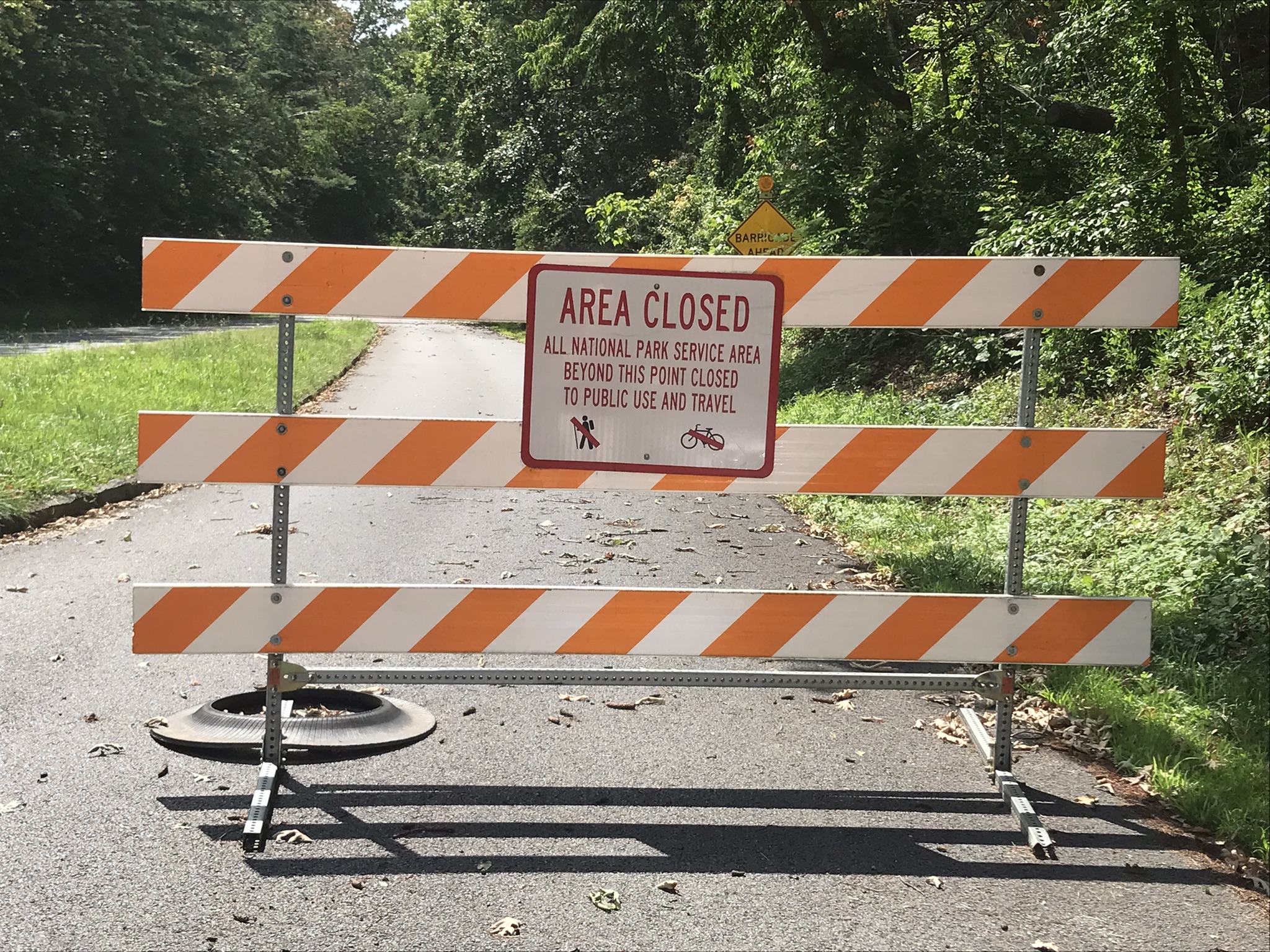
Blue Ridge Parkway: The Blue Ridge Parkway remains closed in North Carolina, with tens of thousands of trees down and across the roadway and more than 30 rock and mudslides. There is no estimated reopening date for the beautiful parkway.

Public School Systems: Just to give you an idea about the recovery situation 25 days after Hurricane Helene hit western NC…

Avery County. Schools are scheduled to reopen on November 6.

Ashe County. Schools are scheduled to reopen on October 29.

Buncombe County. Schools are scheduled to reopen on October 25.

Watauga County. Schools are scheduled to reopen on October 24.

Colleges and universities:

Appalachian State University in Boone: The campus reopened for students to return as of 5:00 p.m. on Friday. Classes resumed in all but one classroom building on October 16.

Asheville-Buncombe Technical Community College: Closed until at least October 28.

Blue Ridge Community College: Reopening today.

Lees-McRae College in Banner Elk: Classes will be conducted online through November 4.

Montreat College: Started welcoming students back to campus yesterday.

Warren Wilson College: As of last Thursday, planning to welcome students back to campus on October 27. Roof and other repairs will continue over the coming months.

IV Bag Manufacturer:  Through the US Department of Health and Human Services, President Biden invoked the Defense Production Act so the company will have priority access to specific material needed so Baxter can get back to production.

Convoy of Farm Supplies from Ohio

A convoy of trucks pulling trailers of hay and other farm supplies from Ohio arrived in Deep Gap, Watauga County, on Tuesday! Thank you, Ohioans! The videos were heart-warming! I read of hay bales also coming in from Pennsylvania. Thank you, Pennsylvanians!

Fundraising Concert

The Avett Brothers from here in Cabarrus County and another North Carolinian, Scotty McCreery, have been added to the lineup for the October 26 “Concert for Carolina” at Bank of America Stadium in Charlotte. The concert is sold-out, but can be live streamed for $25.

Tourism: Autumn is the peak tourism season in the mountains. Some towns are accessible now and encouraging tourists to come and support the local economy. Those invitations are accompanied by words of caution to travel to the towns you know are ready for you and don’t venture out in the countryside where your presence will be a hindrance to recovery efforts. If you want to visit our beautiful mountains, do your research online or call your destination to learn about current conditions.

The Biltmore Estate announced on Friday that it will reopen for visitors on November 2

Until my next blog post

I hope you have at least one good book to read this week.

Don’t take family and friends for granted.

Remember the people of Ukraine and western North Carolina.

Janet

By the way… if you have not signed up for my e-Newsletter, please visit https://www.janetmorrisonbooks.com, click on “Subscribe,” and enjoy a free downloadable copy of my “Slip Sliding Away” short story which is set in the Appalachian Mountains. Then, look forward to my November e-Newsletter!

19 Blue Ridge Mountains Trivia Answers

How many of the Blue Ridge Mountains trivia questions I asked in last week’s blog, https://janetswritingblog.com/2019/08/11/19-blue-ridge-mountains-trivia-questions/, were you able to answer?

#BlueRidgeMtnsOfNC #PostcardBook
The Blue Ridge Mountains of North Carolina by Janet Morrison

I indicated that all the answers could be found in the vintage postcard book I wrote, The Blue Ridge Mountains of North Carolina. These trivia questions (and the answers supplied in today’s blog post) are my way of celebrating the fifth anniversary of the publication of the book by Arcadia Publishing on August 25, 2014.

Here are the questions and answers

1.  Why was Grandfather Mountain named a member of the international network of Biosphere Reserves in 1992?  Because it supported 42 rare and endangered species. Just on that one mountain!

2. What does Linville Falls in North Carolina have in common with Niagara Falls?  They are both caprock waterfalls, meaning the top layer of rock is harder that the underlying stone. Erosion causes the waterfall to migrate upstream over time. It is believed that Linville Falls was once 12 miles downstream from its present location.

3.  How did Edwin Wiley Grove make his fortune which enabled him to build the Grove Park Inn in Ashevile, North Carolina?  He sold Grove’s Tasteless Chill Tonic.

4.  What part did the Civilian Conservation Corps (CCC) play in the construction of the Blue Ridge Parkway during The Great Depression?  The men who were members of the CCC assisted with the paving and landscaping of the Blue Ridge Parkway. What a magnificent gift they left us!

5.  When George W. Vanderbilt purchased Mt. Pisgah in 1897, what grand plan did the mountain become part of temporarily?  The 125,000-acre Biltmore Estate. (It’s no longer part of the estate.)

6.  What groups of people were housed at Assembly Inn in Montreat, North Carolina in 1942?  290 Japanese and German internees.

7.  Jerome Freeman bought 400 acres of land in Rutherford County, North Carolina that included the Chimney Rock around 1870 for $25. How much did the State of North Carolina pay for Chimney Rock Park in 2007?  $24 million.

8.  What new breed of hunting dog was developed by a German pioneer family in the late 1700s in the Plott Balsams subrange of the Blue Ridge Mountains?  The Plott Hound, which just happens to be the official State Dog of North Carolina.

9.  What is an early 20th century feat of engineering on the Newfound Gap Road in Great Smoky Mountains National Park?  The road crosses over itself. This example of a helix is called “The Loop.”

10.  How fast can a black bear run?   30 to 35 miles per hour.

11.  It is illegal in Great Smoky Mountains National Park to willfully get within how many feet of a black bear?  150 feet.

12.  What is the name of the 57,000 acres of land purchased by the Cherokee in the 1800s and held in trust by the United States Government?  Qualla Boundary

13.  Is Qualla Boundary technically a reservation? No, a reservation is land that the United States Government gives to an American Indian tribe. The Cherokees purchased their land.

14.  Did the Cherokee people lived in tipis in the 1700s and 1800s?  No, they lived in houses.

15.  What forest contains one of the largest groves of old-growth trees in the Eastern United States?  Joyce Kilmer Memorial Forest

16.  What hydroelectric dam was used in the 1993 Harrison Ford movie, The Fugitive?  The Cheoah Dam

17.  What is the tallest dam east of the Rocky Mountains in the United States?  Fontana Dam.

18.  One of the oldest postcards in my book is of Cullowhee Normal School in the mid- to late-1920s. What is the name of that school today?  Western Carolina University.

19.  Started in 1935, the Blue Ridge Parkway’s “missing link” was completed in 1987. What is the connecting one-fourth-mile long piece that filled the “missing link” called? The Linn Cove Viaduct.

How did you do?

How many of the 19 questions did you answer correctly? I hope you enjoyed trying to answer the questions and seeing the answers today. If you want to learn more about the mountains of North Carolina and eastern Tennessee, please ask for The Blue Ridge Mountains of North Carolina, by Janet Morrison, at your local bookstore, online at Amazon.com, or purchase it directly from the publisher at https://www.arcadiapublishing.com/. It’s available in paperback and as an ebook.

The contract I signed with Arcadia Publishing was for five years, so you’d better get a copy of the book while it’s still being published. I don’t know if my contract will be extended.

Since my last blog post

I’ve finally gotten into a rhythm for writing the scene outline according to C.S. Lakin’s template. It sounds backward to be writing the scene outline after writing the book, but the questions asked in the template, along with five questions I added after reading a couple of articles by Janice Hardy, are making every scene in the book stronger. It’s slow going, but well worth the time and effort.

Due to technical problems, I was unable to include images of any of the postcards from my book in today’s blog post.

Until my next blog post

If you’d like to follow me on Twitter, @janetmorrisonbk. If you’d like to follow my business page on Facebook, it’s Janet Morrison, Writer.

I hope you have a good book to read. I’m reading The Nickel Boys, by Colson Whitehead and still listening to Resistance Women, by Jennifer Chiaverini.

If you’re a writer, I hope you have quality writing time.

Thank you for taking the time to read my blog. You could have spent the last few minutes doing something else, but you chose to read my blog.

Let’s continue the conversation

Feel free to let me know in the comments section below or on Twitter or Facebook how you did on the trivia questions. If you have any other comments or questions for me about the Blue Ridge and Smoky Mountains, I’ll welcome and try to answer them.

Janet

19 Blue Ridge Mountains Trivia Questions

August 25, 2019 will mark the fifth anniversary of the publication of my vintage postcard book, The Blue Ridge Mountains of North Carolina. To mark this milestone, I’m testing your knowledge of some of the interesting facts I included in the book.

#BlueRidgeMtnsOfNC #PostcardBook
The Blue Ridge Mountains of North Carolina by Janet Morrison

The book covers the 23 westernmost counties in North Carolina and the three counties in eastern Tennessee in which a portion of the Great Smoky Mountains National Park is located. If you have the book, you have my permission to cheat. That’s only fair to those of you who purchased my book. I’ll ask a few questions. You’ll find the answers in my blog post on August 19, 2019.

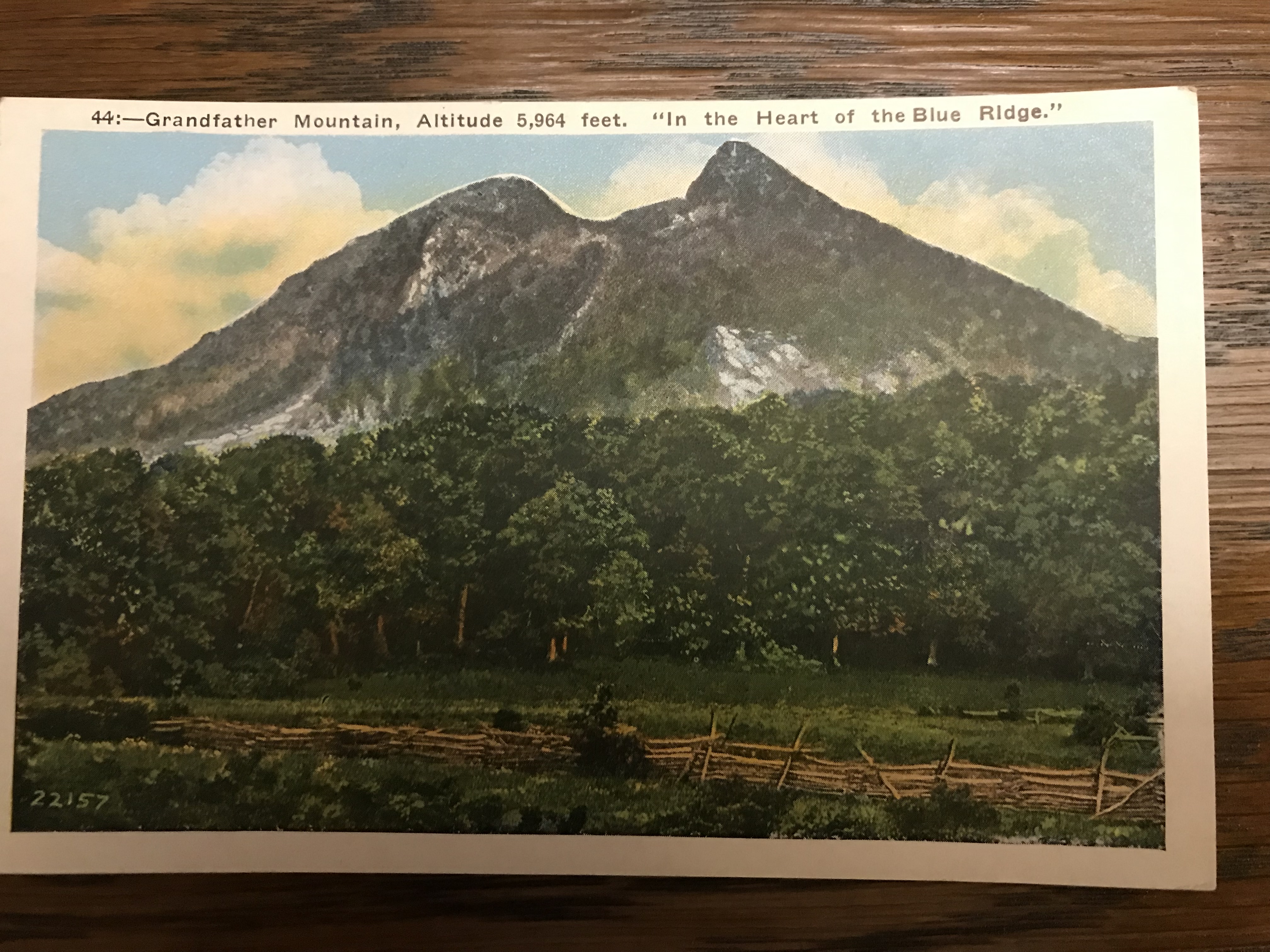
Although most of the original postcards are in color, they appear in black and white in both of the book’s formats. I tried to include pictures of several of the postcards in today’s blog post, but due to technical problems I was only able to post one vintage postcard image.

Here are the questions:

1.  Why was Grandfather Mountain named a member of the international network of Biosphere Reserves in 1992?

#GrandfatherMtn #GrandfatherMountain
Grandfather Mountain, North Carolina

2. What does Linville Falls in North Carolina have in common with Niagara Falls?

3.  How did Edwin Wiley Grove make his fortune which enabled him to build the Grove Park Inn in Ashevile, North Carolina?

4.  What part did the Civilian Conservation Corps (CCC) play in the construction of the Blue Ridge Parkway during The Great Depression?

5.  When George W. Vanderbilt purchased Mt. Pisgah in 1897, what grand plan did the mountain become part of temporarily? 

6.  What groups of people were housed at Assembly Inn in Montreat, North Carolina in 1942?

7.  Jerome Freeman bought 400 acres of land in Rutherford County, North Carolina that included the Chimney Rock around 1870 for $25. How much did the State of North Carolina pay for Chimney Rock Park in 2007?

8.  What new breed of hunting dog was developed by a German pioneer family in the late 1700’s in the Plott Balsams subrange of the Blue Ridge Mountains?

9.  What is an early 20th century feat of engineering on the Newfound Gap Road in Great Smoky Mountains National Park?

10.  How fast can a black bear run?  

11.  It is illegal in Great Smoky Mountains National Park to willfully get within how many feet of a black bear?

12.  What is the name of the 57,000 acres of land purchased by the Cherokee in the 1800s and held in trust by the United States Government?

13.  Is Qualla Boundary technically a reservation?

14.  Did the Cherokee people lived in tipis?

15.  What forest contains one of the largest groves of old-growth trees in the Eastern United States? 

16.  What hydroelectric dam was used in the 1993 Harrison Ford movie, The Fugitive?

17.  What is the tallest dam east of the Rocky Mountains in the United States?

18.  One of the oldest postcards in my book is of Cullowhee Normal School in the mid- to late-1920s. What is the name of that school today?

19.  Started in 1935, the Blue Ridge Parkway’s “missing link” was completed in 1987. What is the connecting one-fourth-mile long piece that filled the “missing link” called?

In case you’d like to take the easy way out and find the answers to all these questions in one book, you may order The Blue Ridge Mountains of North Carolina, by Janet Morrison, in paperback or e-book from Amazon.com, request it at your local bookstore, or order it directly from https://www.arcadiapublishing.com/. Time is short. I’ll supply the answers in my blog post next Monday, August 19.

The contract I signed with Arcadia Publishing was for five years, so you’d better get a copy of the book while it’s still being published.

Since my last blog post

I discovered that the links that I had on my blog to my presence on several social media networks were not working properly, except for the one to my Pinterest account. Therefore, I removed the links to Facebook, Twitter, and LinkedIn. I’ll announce in a future blog post when those links are up and running again.

Until my next blog post

If you’d like to follow me on Twitter, @janetmorrisonbk. If you’d like to follow my business page on Facebook, it’s Janet Morrison, Writer. If you’d like to follow me on LinkedIn, go to https://www.linkedin.com/in/janet-morrison-writer.

I hope you have a good book to read. I’m reading Searching for Sylvie, by Jean Kwok.

If you’re a writer, I hope you have quality writing time.

Thank you for taking the time to read my blog. You could have spent the last few minutes doing something else, but you chose to read my blog.

Let’s continue the conversation

Please don’t include any of the trivia answers in your comments. If you want to indicate how many of them you think you know the answers to, you may indicate that number or the numbers of the questions you think you can answer.

Read my book or read my blog post next Monday for all the answers.

Janet

Another author event scheduled

I’m scheduled to talk about The Blue Ridge Mountains of North Carolina to the Presbyterians who are residents of Aldersgate in Charlotte on October 20 and have a book signing. I look forward to seeing some friends and making new ones that day.

Another door prize has arrived for my Book Launch Party! I received two complimentary adult tickets for Chimney Rock State Park, valued at $30. I have six door prizes for the event. Perhaps more will come before September 21.

I placed copies of my book on consignment yesterday at White Owl Antique Mall and Design Center in Concord, North Carolina. When in Concord, drop by and support this local business.

In my “spare time,” I have put Christmas items on my online craft shop on Etsy.com. Look for Hickory Ridge Crafts on that site to see the things that my sister and I have made.

We are also continuing to organize the history room/church library in the new building at Rocky River Presbyterian Church. The official opening is next weekend.

There’s never a dull moment around here!

Door prizes for my Book Launch

Another door prize arrived in the mail today for my September 21, 2014 book launch for The Blue Ridge Mountains of North Carolina. Add two adult passes to Chimney Rock to the list!

Other door prizes I’ve secured so far are as follows: two adult VIP passes for a two-day Hop On/Hop Off Historic Tour by Gray Line Asheville, two $25 gift cards from Bogart’s Restaurant and Tavern in Waynesville, a complimentary pass for a family of four to Linville Caverns, and two tickets for a 2015 performance of Horn in the West and admission to Hickory Ridge Museum in Boone.

The public is invited to my book launch and book signing at 3:00 on Sunday afternoon, September 21, 2014 in the new fellowship hall at Rocky River Presbyterian Church, 7940 Rocky River Road, Concord, NC.

Be sure and come at 3:00 and plan to stay for the hour as door prize drawings will be held every few minutes. My book will be available for $20.