
I don’t usually blog on Sunday, but the political science major in me couldn’t let this day pass without a mention. (Actually, it’s more than a mention, so bear with me.)

The Federalist Papers are a collection of 85 articles and essays written by Alexander Hamilton, James Madison, and John Jay in laying the groundwork for support for the United States Constitution.
Federalist No. 10 was written by James Madison and published November 22, 1787 in the New York Daily Advertiser under the pseudonym Publius.
Federalist No. 10 spells out Madison’s theories about the dangers of factionalism and how rule by majority faction can be prevented. He advocated for a large republic as the best route to prevention.
Often touted as the most important of the 85 Federalist Papers. No. 10 laid a foundation that was foundational to the U.S. Constitution.
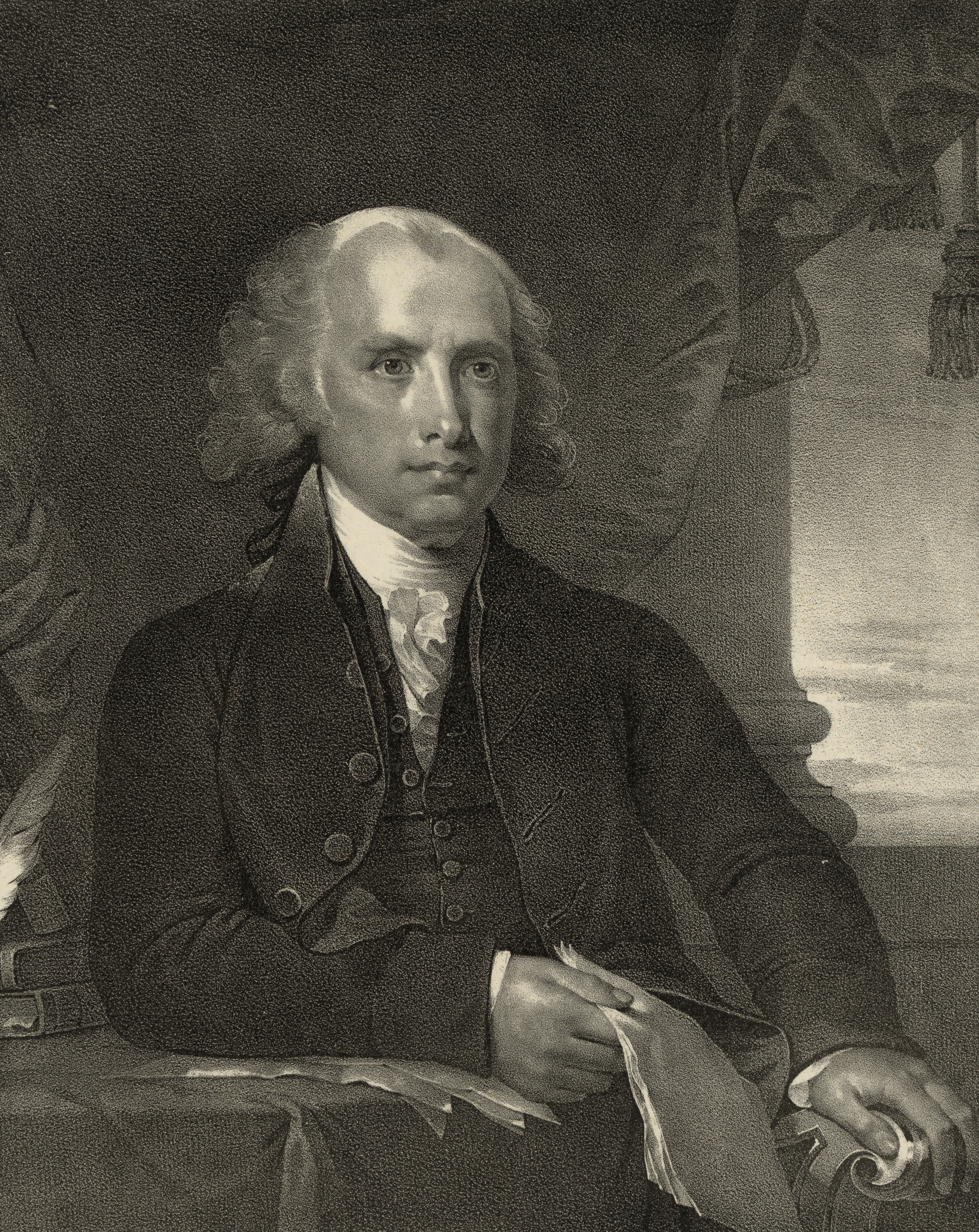
Photo from Library of Congress on Unsplash
No. 10 was addressed “To the People of the State of New York.” It spells out how governments that have allowed factions to wield too much influence have perished.
Madison describes a faction as follows in No. 10: “By a faction, I understand a number of citizens, whether amounting to a majority or a minority of the whole, who are united and actuated by some common impulse of passion, or of interest, adverse to the rights of other citizens, or to the permanent and aggregate interests of the community.”
The key phrase here is “adverse to the rights of other citizens.” This gets to the concept of the common good – something that has been imperiled under the Trump Regime.
Madison goes on to present his theory of “curing the mischiefs of faction: the one, by removing its causes; the other, by controlling its effects. There are again two methods of removing the causes of faction: the one, by destroying the liberty which is essential to its existence; the other, by giving to every citizen the same opinions, the same passions, and the same interests.” He points out that neither option is acceptable.
In Federalist No. 10, Madison writes that the man’s self-love and the fallibility of man’s ability to reason are interconnected and one influences the other. He writes about how it is only natural for people to have different interests and stations in life that dictate their interests. The property owner has different interests from the person who owns no property. The creditor and the debtor have different interests and perspectives. Madison maintains that “The latent causes of faction are thus sown in the nature of man….”
He goes on to write: “No man is allowed to be a judge in his own cause, because his interest would certainly bias his judgment, and, not improbably, corrupt his integrity. With equal, nay with greater reason, a body of men are unfit to be both judges and parties at the same time; yet what are many of the most important acts of legislation, but so many judicial determinations, not indeed concerning the rights of single persons, but concerning the rights of large bodies of citizens? And what are the different classes of legislators but advocates and parties to the causes which they determine?”
Madison concludes “that the causes of faction cannot be removed, and that relief is only to be sought in the means of controlling its effects.” He writes that if the faction is in the minority, the republic will defeat it. If the faction is in the majority, “the form of government, on the other hand, enables it to sacrifice to its ruling passion or interest both the public good and the rights of other citizens. To secure the public good and private rights against the danger of such a faction and at the same time to preserve the spirit and the form of popular government, is then the great object to which our inquiries are directed.”
Madison explains that by republic he means “a government in which the scheme of representation takes place, opens a different prospect, and promises the cure for which we are seeking.” He is a proponent of a large republic for he sees that in a large republic it will be more difficult for a faction to rule.
His words are, “Extend the sphere, and you take in a greater variety of parties and interests; you make it less probable that a majority of the whole will have a common motive to invade the rights of other citizens; or if such a common motive exists, it will be more difficult for all who feel it to discover their own strength, and to act in unison with each other Besides other impediments, it may be remarked that, where there is a consciousness of unjust or dishonorable purposes, communication is always checked by distrust in proportion to the number whose concurrence is necessary.”
My take after working on this blog post
This brings to my mind the chaos of politics here in the United States over the last couple of years in which the Make America Great Again faction has, through its leader, pushed its agenda down our throats with total disregard for the common good… until the mid-term elections on November 3, 2026.
The people have spoken this month, by electing representatives who have promised to put the brakes on the MAGA faction. That faction’s leader has trashed America’s standing in the world, has divided the world and our country’s citizens into “winners” and “losers” – in other words, into his friends and his enemies.
Perhaps in the end James Madison was correct. As I re-read what he said about a large republic being better equipped to protect against rule by a faction, I couldn’t help but think how close the United States came to losing our way since the 2024 election.
MAGA’s leader has severed our long-standing alliances and has cuddled up to Vladimir Putin, Xi Jinping, and Kim Jong-Un. He came home from China a few days ago and praised the cleanliness of the city he visited there and compared it to several cities in America he described as dirty and dangerous. What kind of leader praises another country while denigrating his own country?
Trump loves authoritarians and the way citizens of authoritarian governments have no choice but to follow orders. (He even noticed how clean the guardrails were along a highway in China, never acknowledging that forced labor was responsible for that.)
He called Putin “my friend.”
Well, I’m here to say that Putin is not a friend of the American people or any freedom-loving people. He continues to bomb the innocent people of Ukraine, including their schools and hospitals. Any tyrant who does that is no friend of the United States. Trump speaks only for himself and his own greedy personal interests.
MAGA’s leader is still in the White House. Even with a Democrat majority in the U.S. Senate and the U.S. House of Representatives in 2027 and 2028, he will continue to push his presidential powers to and beyond their limits – just like he always had.
When the president of a country has no respect for or acknowledgement of the laws of his or her own country or for international law, there cannot be a good outcome.
Janet
The government should be afraid of its citizens, not the other way around.


