#OnThisDay: Battle of Great Bridge, Virginia, 1775 & a Hurricane Helene Update

There are so many battles and skirmishes that were fought during the American Revolution that most of us have never heard of!

The blowing up of the King’s shipment of munitions in present-day Cabarrus County, North Carolina in May 1771 comes to mind. But that event has been blogged about here in Mays of the past and will, no doubt, show up on my blog in future May posts.

The little-known battle I blog about today is the Battle of Great Bridge which took place 249 years ago today in Virginia.

I’d never heard of it until I happened upon it in The American Book of Days, Fourth Edition, by Stephen G. Christianson. The day that reference book was weeded from the public library’s collection and sold for almost nothing was a profitable day for me. I have relied on this book for many of my #OnThisDay blog post ideas. I still question the wisdom of the library staff deciding this was not a useful book, but the public’s loss was my gain. But I digress.

Let’s move on now to the importance of the Battle of Great Bridge and some information about the free black man who displayed heroics in the battle.

A little backstory
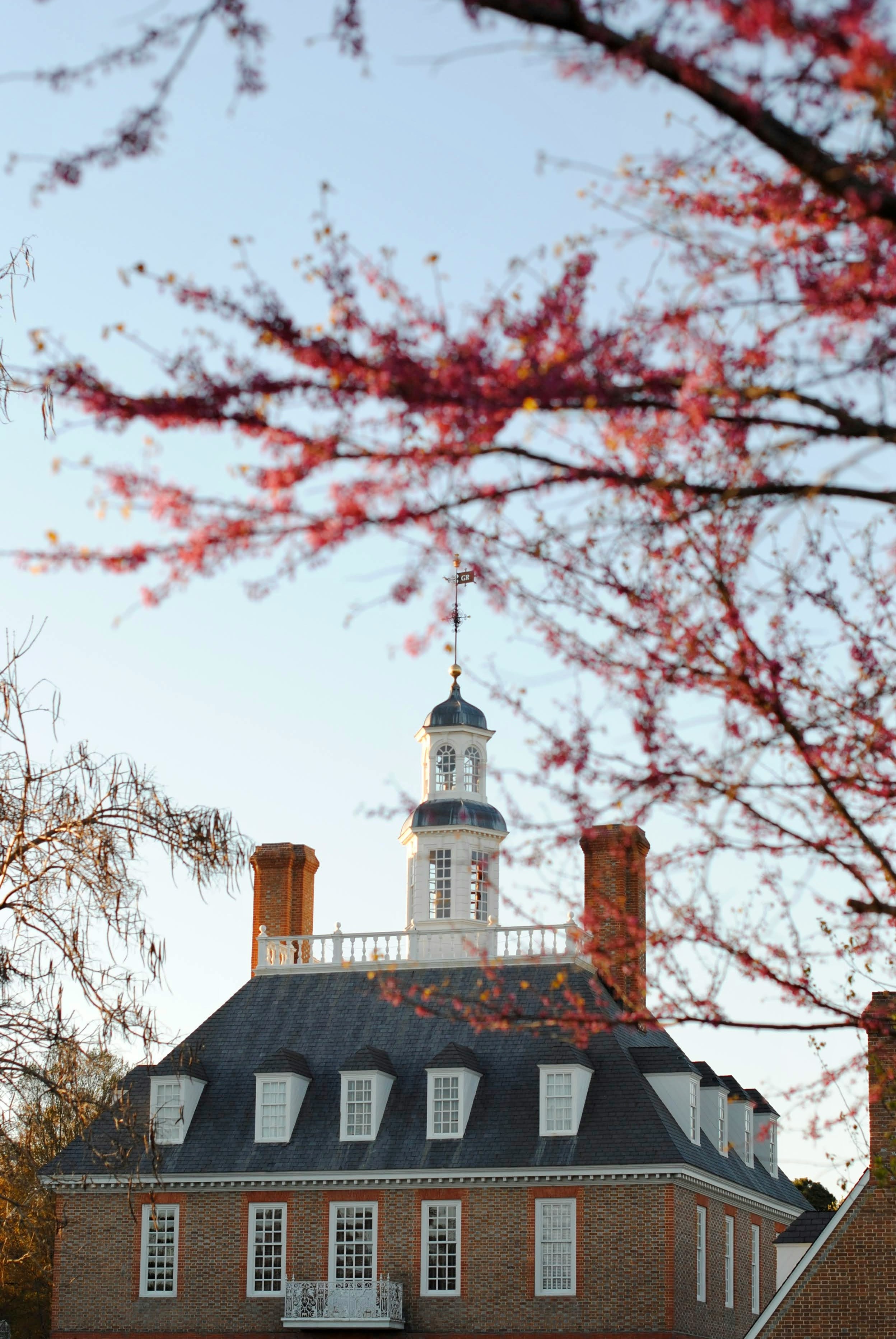
Governor’s Palace in Williamsburg, Virginia Photo by Michaela Murphy on Unsplash

Fearing a rebellion, Virginia’s Royal Governor, John Murray, the Earl of Dunmore, ordered the seizure of the gunpowder stored in Williamsburg. Word spread quickly and militias converged on the town. Lord Dunmore fled to Norfolk.

Great Bridge spanned the Elizabeth River, was the primary approach to Norfolk, and was surrounded by the Great Dismal Swamp. The swamp greatly limited accessibility to Norfolk.

Lord Dunmore ordered the construction of a stockade on the north side of the Great Bridge. Patriots grouped on the south side. Skirmishes ensued for days leading up to the battle.

Battle of Great Bridge

Although the Battle of Great Bridge lasted only a half hour on December 9, 1775, it was the first Patriot victory in the Revolutionary War.

It is said that this battle forced Lord Dunmore to leave Virginia along with his soldiers.

Four days after the battle, the Virginia Convention adopted a statement of independence.

Photo from a reenactment (obviously!) by British soldiers

Waves of British soldiers bore down on the Patriots. According to the website of the battle’s museum, https://gbbattlefield.org/learn-the-history, the patriots were joined by reinforcements and ordered to hold their fire until the British were within 50 yards.

Billy Flora

The website states, “It is historically significant to note that the last among the Patriots to retreat was Billy Flora, a free black man. Before retreating into the Patriot breastwork, he ran back to take up a plank of the bridge amid a shower of musket balls to slow the British advance.”

The significance of the Battle of Great Bridge

The museum’s website also states, “In winning the battle of Great Bridge on December 9, 1775, the Patriots effectively denied the British Norfolk, the finest seaport between New York and Charleston.”

How different the war might have unfolded if the British had captured the port at Norfolk!

Hurricane Helene Update on Western North Carolina

Just to give you an idea about the recovery situation 74 days after the storm hit western NC…

Roads: Interstate 40 is still closed near the TN line. As of Friday, of the 1,329 roads that were closed in September due to Hurricane Helene, 270 remain closed. In fact, that’s four more than indicated in last week’s NC Department of Transportation report. (Perhaps I miscalculated the total last week.)

Blue Ridge Parkway: There is still no estimated date for all the parkway in NC to be reopened.

A fresh fir Christmas Wreath from Avery County, NC: I was going to repeat the information I shared last week about a Christmas tree farm in western North Carolina, in case you missed my last blog post. I wanted you to have a chance to order a wreath or a tabletop Christmas tree from the Avery Family’s Trinity Tree Company in Newland, NC. HOWEVER… I have some great news! They have received so many orders they’ve had to shut down their online store! I’m so glad to get to end this week’s Hurricane Helene update on a good note!

The wreath my sister and I ordered was delivered nine days ago. It’s beautiful and smells great!

Here’s our wreath…

Our fir Christmas wreath from the Avery Family’s Trinity Tree Company, Newland, NC

(If you wish to still support the Avery Family as they are just two months into their years of recovering the family farm and business since they lost 60,000 trees to the hurricane, you can “order” a virtual tree or make a recovery gift on their website: https://www.averychristmastrees.com/. It takes about 15 years to grow a Christmas tree, so it will be long time before this family farm is back on its feet.

Since my last blog post

I continue to work on the devotional book and the historical novel I’m writing. I’m still adjusting to trying to post something on Instagram every day but Sundays. The world of social media is challenging and consumes more of my time than I’d like.

Photo of the Instagram icon image
Photo by Alexander Shatov on Unsplash

Until my next blog post

Read something uplighting or enlightening every chance you get. Support your local public library and your local independent bookstore, if you’re fortunate enough to have either one.

Subscribe to my weekly email newsletter at https://www.janetmorrisonbooks.com.

Treasure your time with friends and family.

Remember the people of Ukraine and western North Carolina.

Janet

This Writer Needed a Change of Scenery — Part III

Between the piedmont of North Carolina and the Outer Banks there are many interesting places to visit. Here’s a sampling of the places my sister and I stopped to enjoy in the northeastern coastal plain on our way to and from the Outer Banks a month ago.


Somerset Place State Historic Site and Lake Phelps

On the way, we visited Somerset Place State Historic Site (https://historicsites.nc.gov/all-sites/somerset-place) again and ate a picnic lunch at Pettigrew State Park (https://www.ncparks.gov/state-parks/pettigrew-state-park) on Lake Phelps. Somerset Place is a restored plantation.

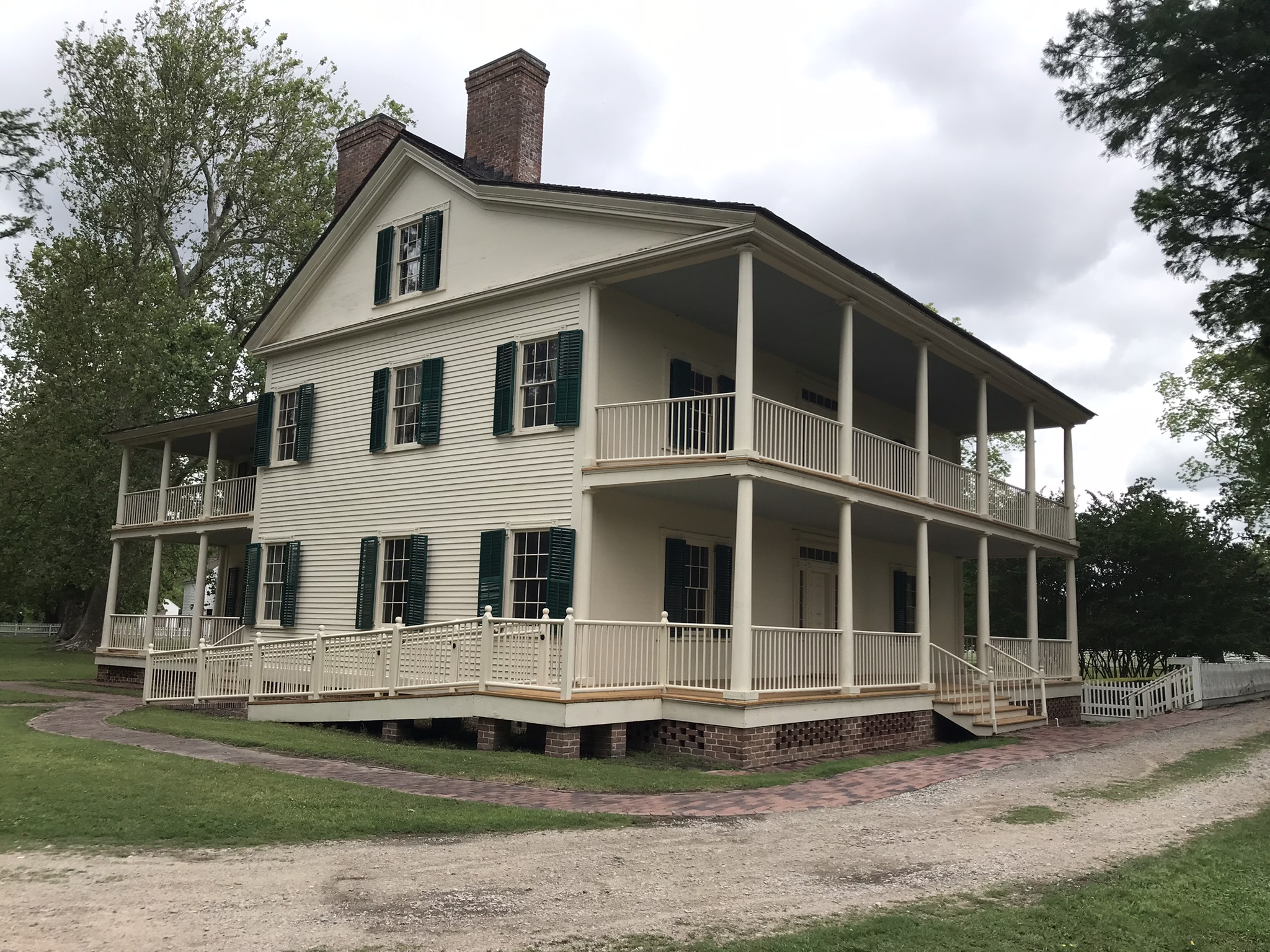
Somerset Place Plantation House

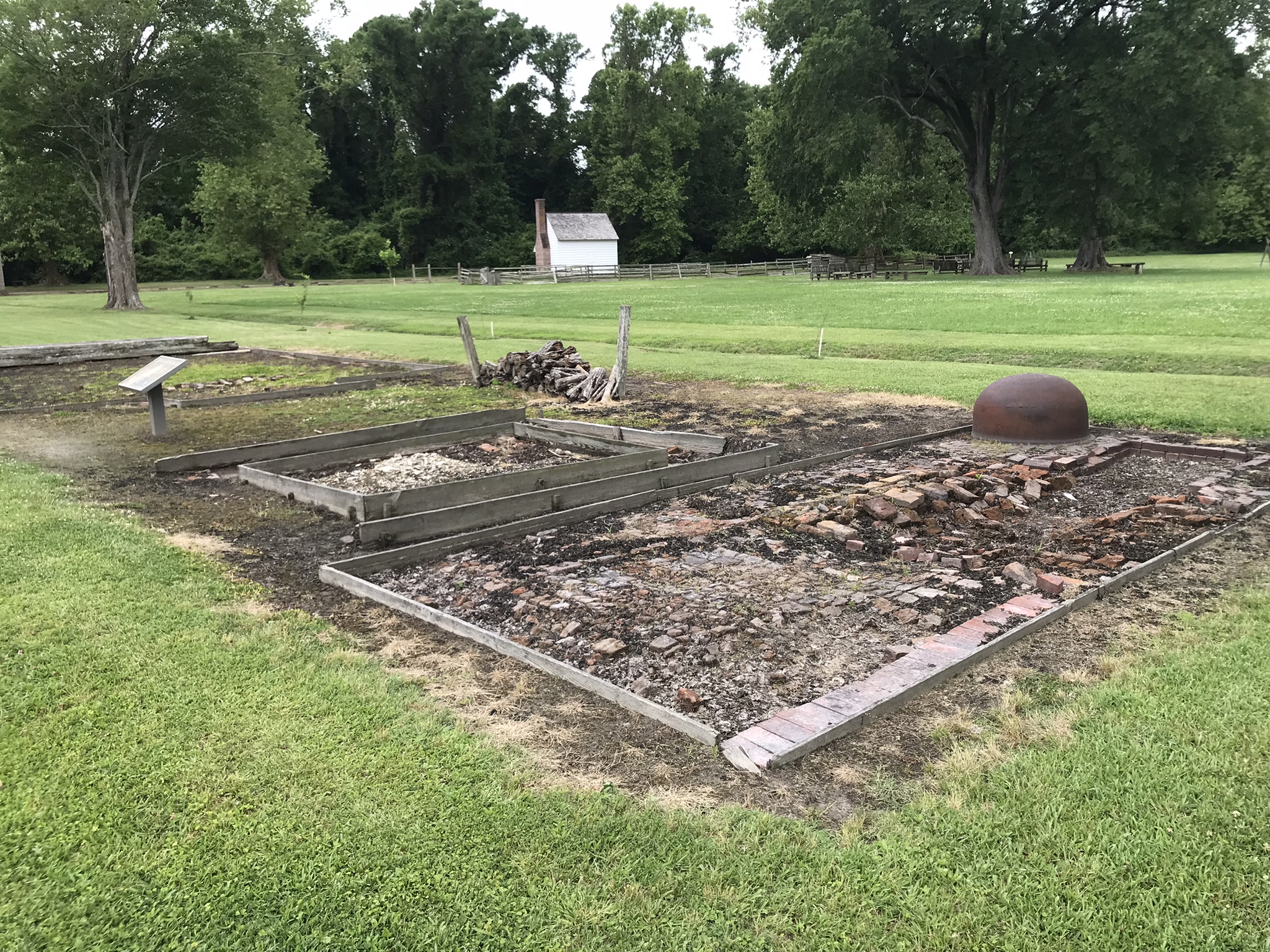
The plantation house was not open for tours on this trip, but we were more interested in seeing some of the slave buildings. The foundations of some of the buildings used by the Africans who were enslaved there in the 18th and early 19th centuries have been excavated. Several have been identified as buildings that were used by the slaves to prepare their midday and communal Sunday meals.

Excavated foundations of buildings at Somerset Place

There was also an on-site jail, stocks, and descriptions of the punishment meted out to some of the slaves who attempted to escape.

Plantation hospital at Somerset Place

Below is a photo of a building called Old Sucky’s House. It is a reconstruction of one of the many dormitory-like structures at Somerset Place that housed as many of 26 people. Old Sucky Davis was known as a matriarch among the hundreds of slaves that were held at Somerset Place.

Old Sucky’s House (Reconstructed) at Somerset Place
Interior of Kitchen House at Somerset Place

Needless to say, Somerset Place was a somber first stop on our trip. If you want to learn more about this plantation, I highly recommend Somerset Homecoming: Recovering a Lost Heritage, by Dorothy Spruill Redford with Michael D’Orso.

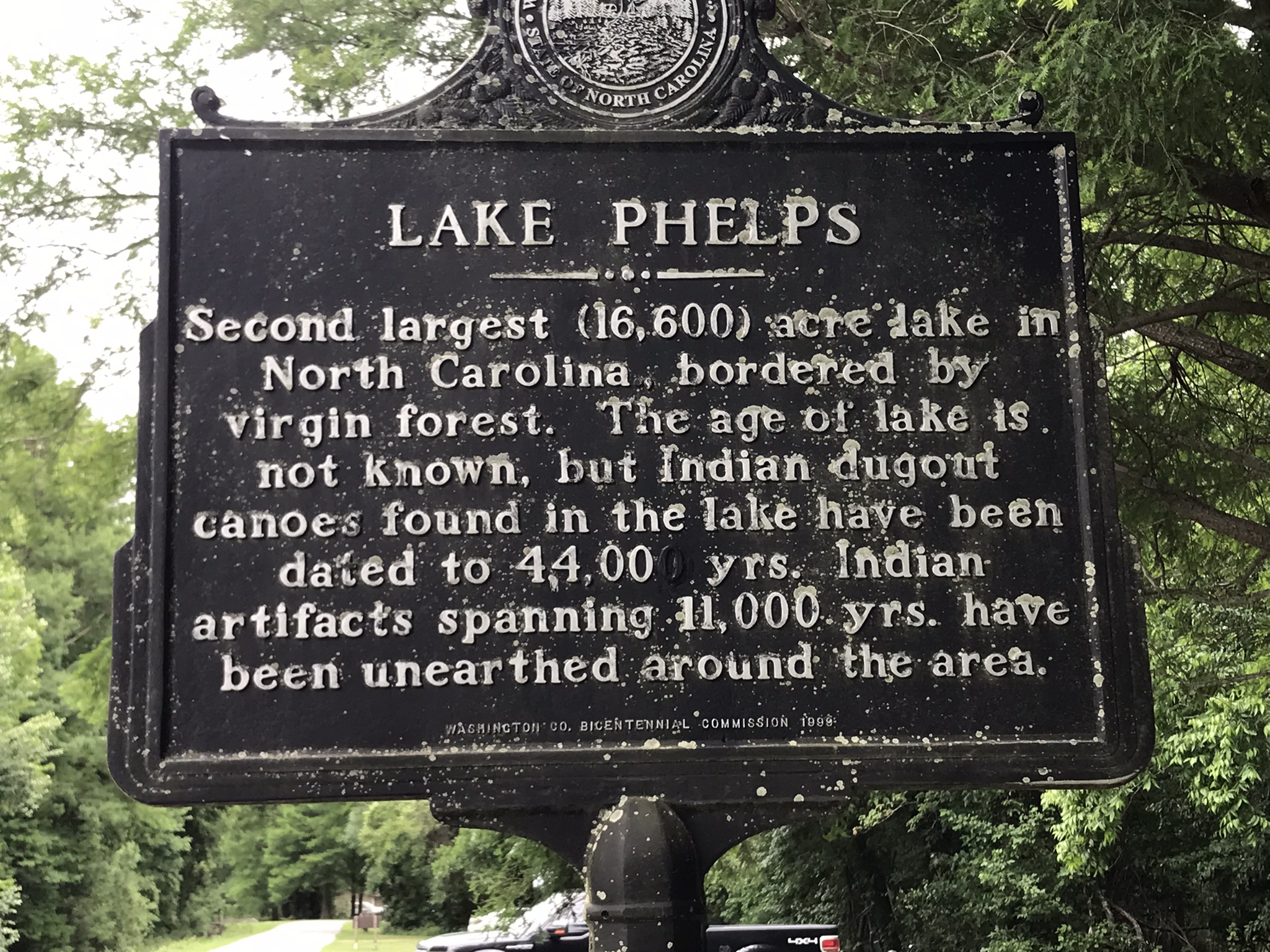
Sign condensing history of Lake Phelps
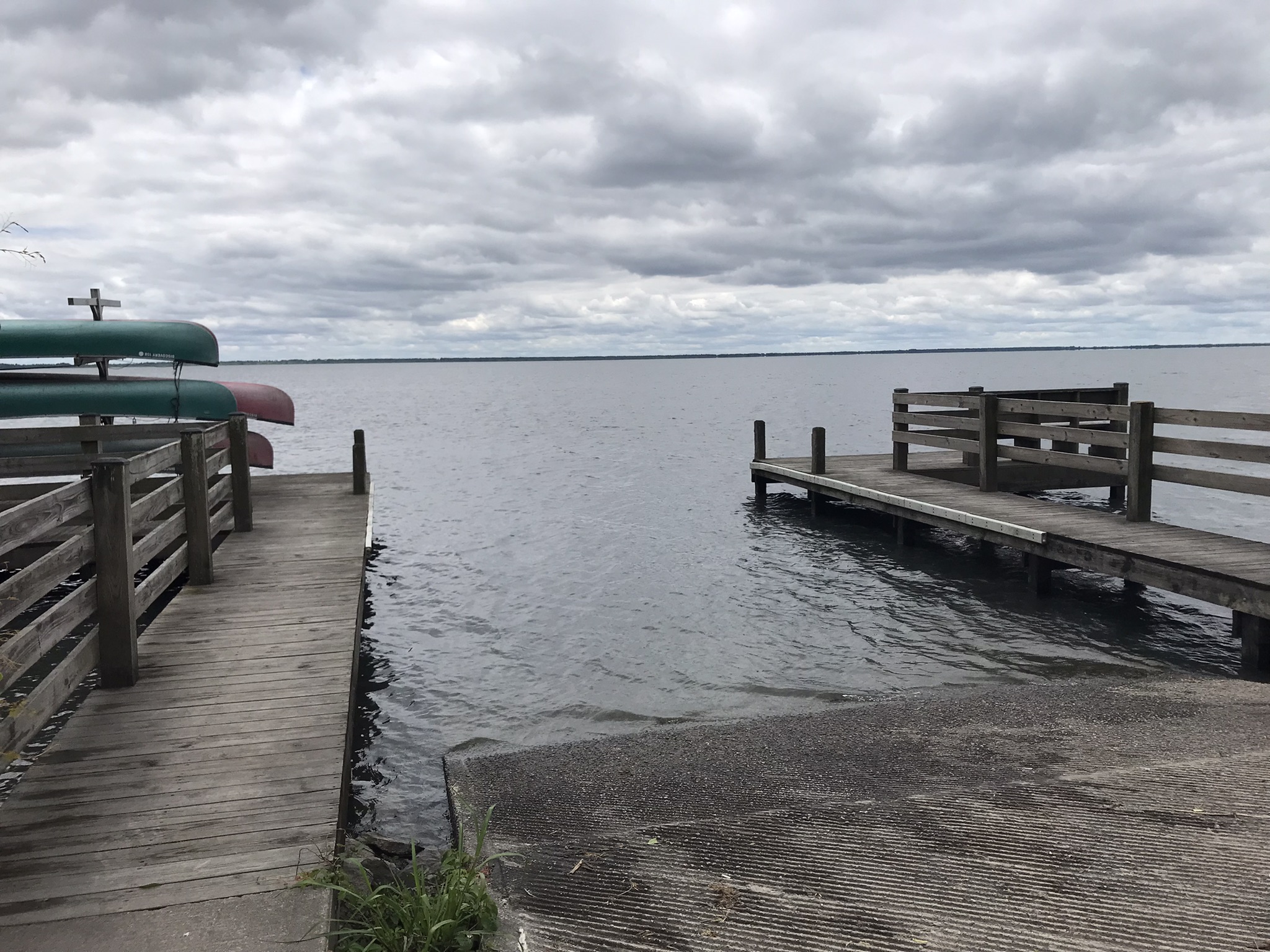
A view of Lake Phelps

Pocosin Lakes National Wildlife Refuge

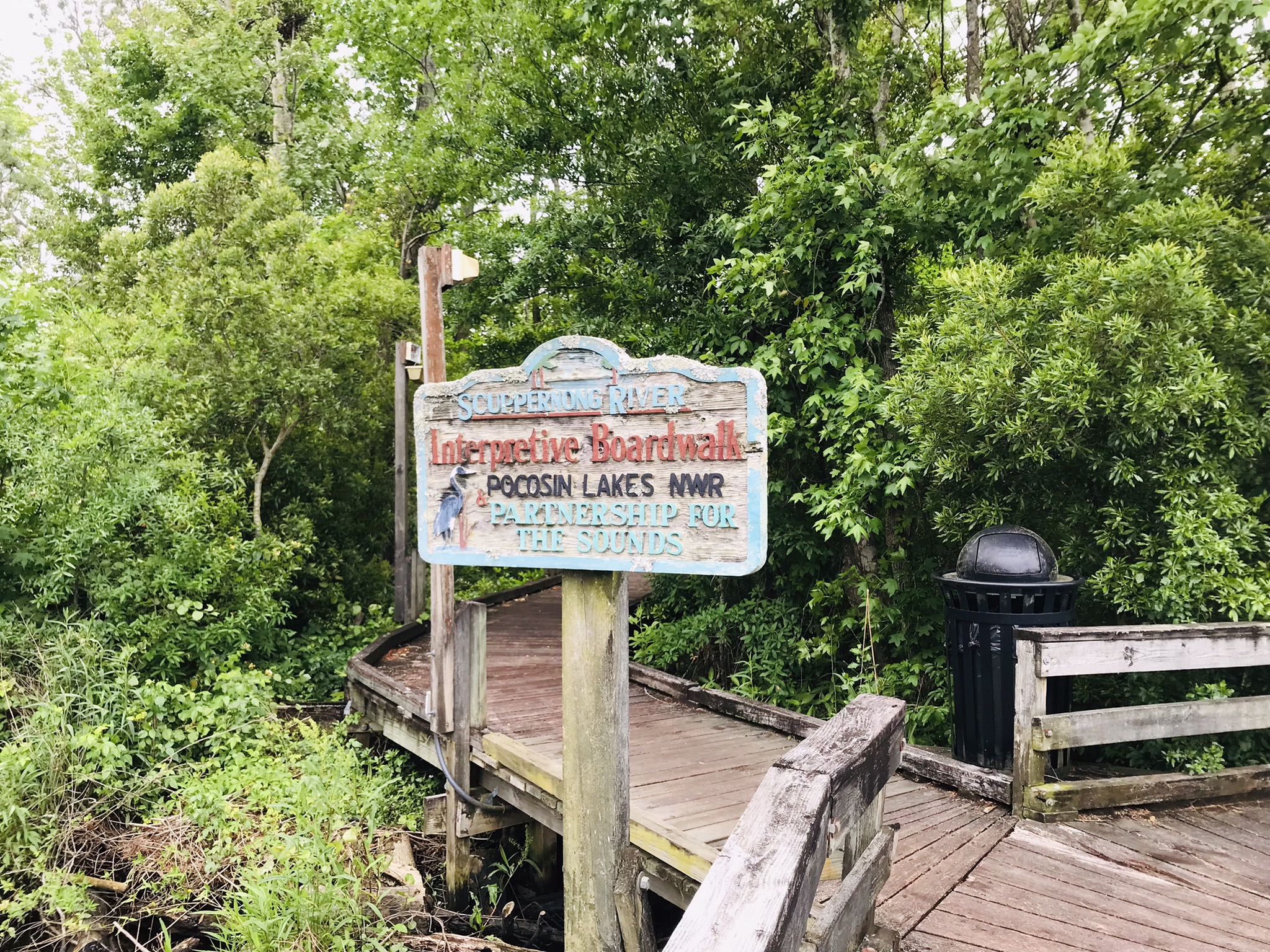
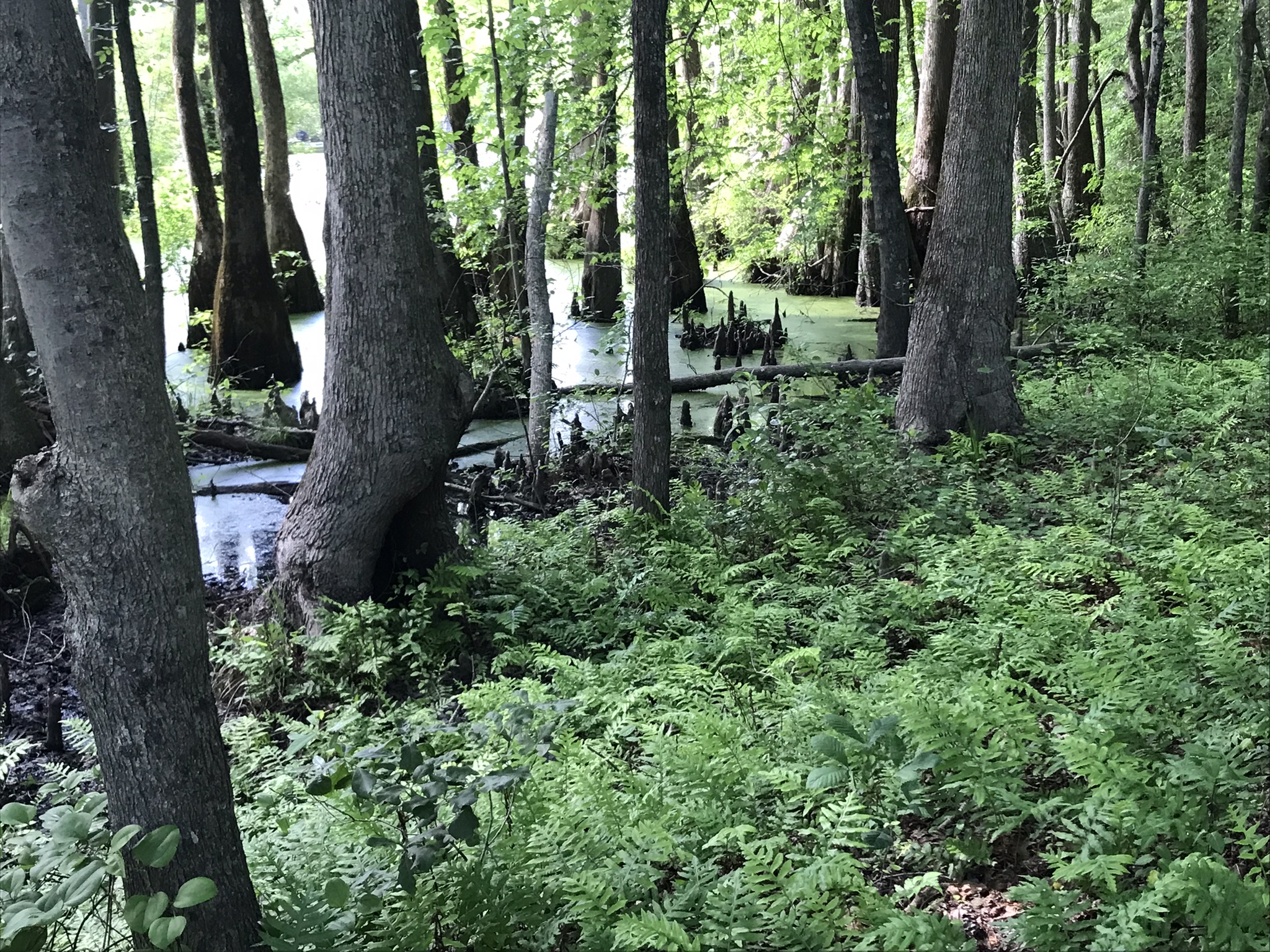
Our next stop was the visitor center for Pocosin Lakes National Wildlife Refuge on the Scuppernong River in Columbia, NC. This is on the Inner Banks on the Albemarle-Pamlico Peninsula in the northeastern part of the state. In case you are not familiar with the word “pocosin,” it is derived from a Native American word that means “swamp on a hill.”

Welcome Center at Pocosin Lakes National Wildlife Refuge

The refuge has a sponge-like organic soil called peat. It varies in depth there from two inches to 12 feet, and it takes 100 years for one inch of peat to be created. Tree stumps four feet in diameter have been found there which indicates there was once a white cedar and cypress swamp forest there.

See the turtle?

Peat can burn underground and even as it floats on water. Some peat fires here have burned for months on end. As one can imagine, it is difficult to extinguish such a fire. The pond pine and some other plants there depend on fire for their propagation. The heat from fire is necessary for the pond pine cones to release their seeds.

Interpretive Boardwalk at Pocosin Lakes National Wildlife Refuge

Wild irises were in bloom the day of our visit. More than 100,000 ducks, geese, and swans over-winter on the refuge. The refuge and surrounding area are home to an estimated 8,000 black bears. To learn more about the refuge, visit https://www.fws.gov/refuge/pocosin-lakes/about-us.

Wild Irises at Pocosin Lakes National Wildlife Refuge

On the way home, we visited Jarvisburg Historic Colored School, the Great Dismal Swamp Canal (https://dismalswampwelcomecenter.com/), Merchant’s Millpond State Park (https://www.ncparks.gov/state-parks/merchants-millpond-state-park), and Sylvan Heights Bird Park (https://www.shwpark.com/) – three places I’d never made time for before.


Jarvisburg Historic Colored School

First, we stopped at Jarvisburg Historic Colored School at Jarvisburg, NC. (Yes, that’s the official name. I’m not being disrespectful.) Established in 1868, the school building is on the National Register of Historic Places. Unfortunately, it was closed for restoration. (That was a recurring theme on our trip!)

Jarvisburg Historic Colored School, under restoration

Great Dismal Swamp

We saw just a miniscule part of the Great Dismal Swamp, a portion of which is in Virginia. It once covered a million square miles. The canal was created by slave labor in the 1700s. It is unimaginable the miserable work that was in the heat and humidity of northeastern North Carolina, not to mention the poisonous snakes, alligators, and mosquitoes.

Dismal Swamp Canal (a.k.a, Lake Drummond Canal)

Constructed about 1805, the canal is now part of the Intracoastal Waterway and is listed on the National Register of Historic Places. There were five boats and small yachts moored at the landing near the visitor center when we arrived. One was from Maine, one was from Toronto, and one was from Washington State.

Boats and small yachts moored at Great Dismal Swamp Canal Visitor Center

Across the canal is the Dismal Swamp State Park. It has a visitor center and walking trails. Exhibits in the visitor center include wildlife, early Native American, commercial logging in the swamp, and the swamp’s participation in the Underground Railroad during the American Civil War.

Dismal Swamp State Park entrance at canal drawbridge

Unfortunately, every acre of the Great Dismal Swamp has been logged at least once.

When we were leaving the walking trails on the other side of the drawbridge, we got to see a small vessel cross through. The canal traffic has right-of-way over pedestrians, but we were entertained by seeing both ends of the bridge rise while the middle section of it swung to the side.

Dismal Swamp Canal Drawbridge in Operation

Merchant’s Millpond State Park

Along Cypress Point Trail in Merchant’s Millpond State Park
A view of Lassister Swamp at Merchant’s Millpond State Park

Merchant’s Millpond State Park is just a few miles west of the Great Dismal Swamp Canal. There is a 19.5-foot dugout canoe from the 1800s on display in the visitor center.

View of Spanish Moss hanging on trees at Merchant’s Millpond State Park
Cypress trees at Merchant’s Millpond State Park

We thoroughly enjoyed walking on the trail there. It was quite something to see. The park includes 3,500 acres, the millpond, and Lassiter Swamp. We did not see any of the native alligators, but that’s okay.

Boat ramp at Merchant’s Millpond State Park
Sky and clouds reflected in water at Merchant’s Millpond State Park

Sylvan Heights Bird Park

East African Crowned Crane

The last destination on our trip before visiting a friend in the Raleigh area was Sylvan Heights Bird Park at Scotland Neck, NC. The Sylvan Heights Bird Park and adjacent Sylvan Heights Avian Breeding Center just might be North Carolina’s best keep secret! In today’s blog post I’m sharing just a small fraction of the photos I took at the park.

Green Peafowl
Demoiselle Crane

It was a perfect last stop on our trip home from the 120-mile string of barrier islands that form the outer coast of North Carolina. Here’s a bit of the history of the park and avian breeding center…

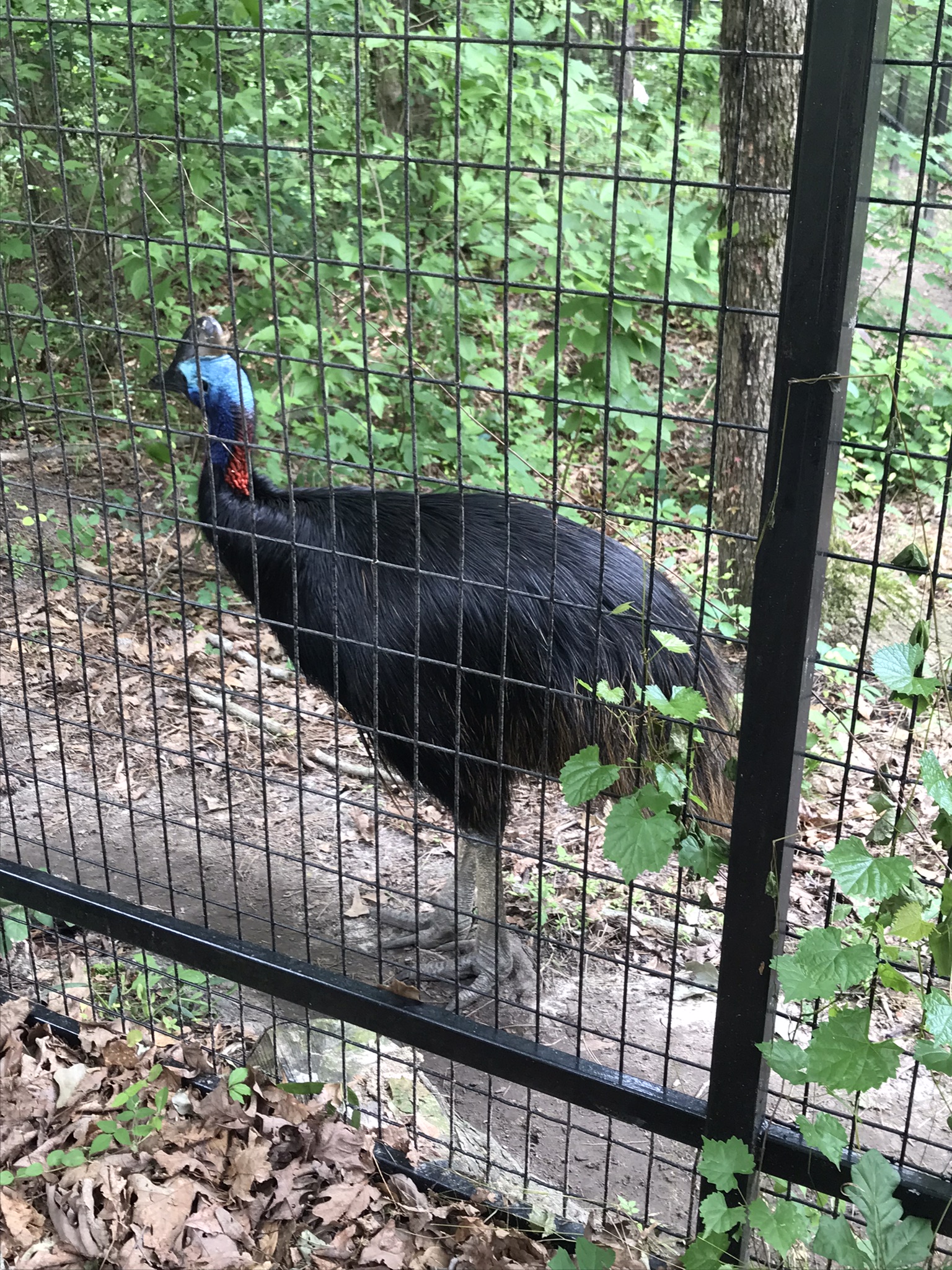
Southern Cassowary

Mike and Ali Lubbock moved to the United States from England in 1981. They had extensive waterfowl knowledge and founded Sylvan Heights Waterfowl in the mountain town of Sylva, NC.

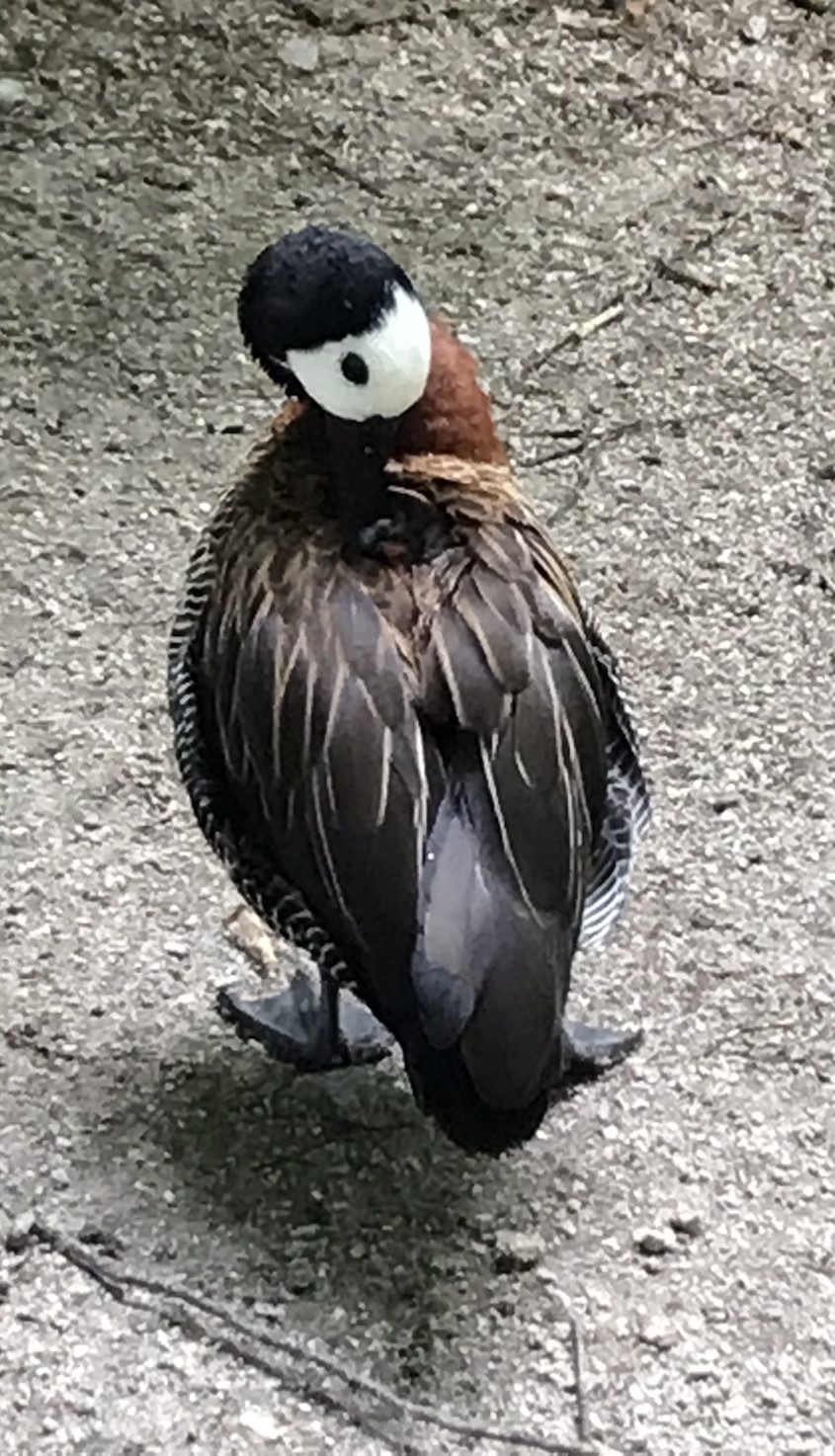
White-faced Whistling Duck

In 1989 the internationally-known aviculturist Lubbocks moved their entire collection and operation to Scotland Neck in northeastern North Carolina where they founded the Sylvan Heights Avian Breeding Center. Today, the center cares for more than 2,500 individual birds, including more than 1,000 hatchlings every year.

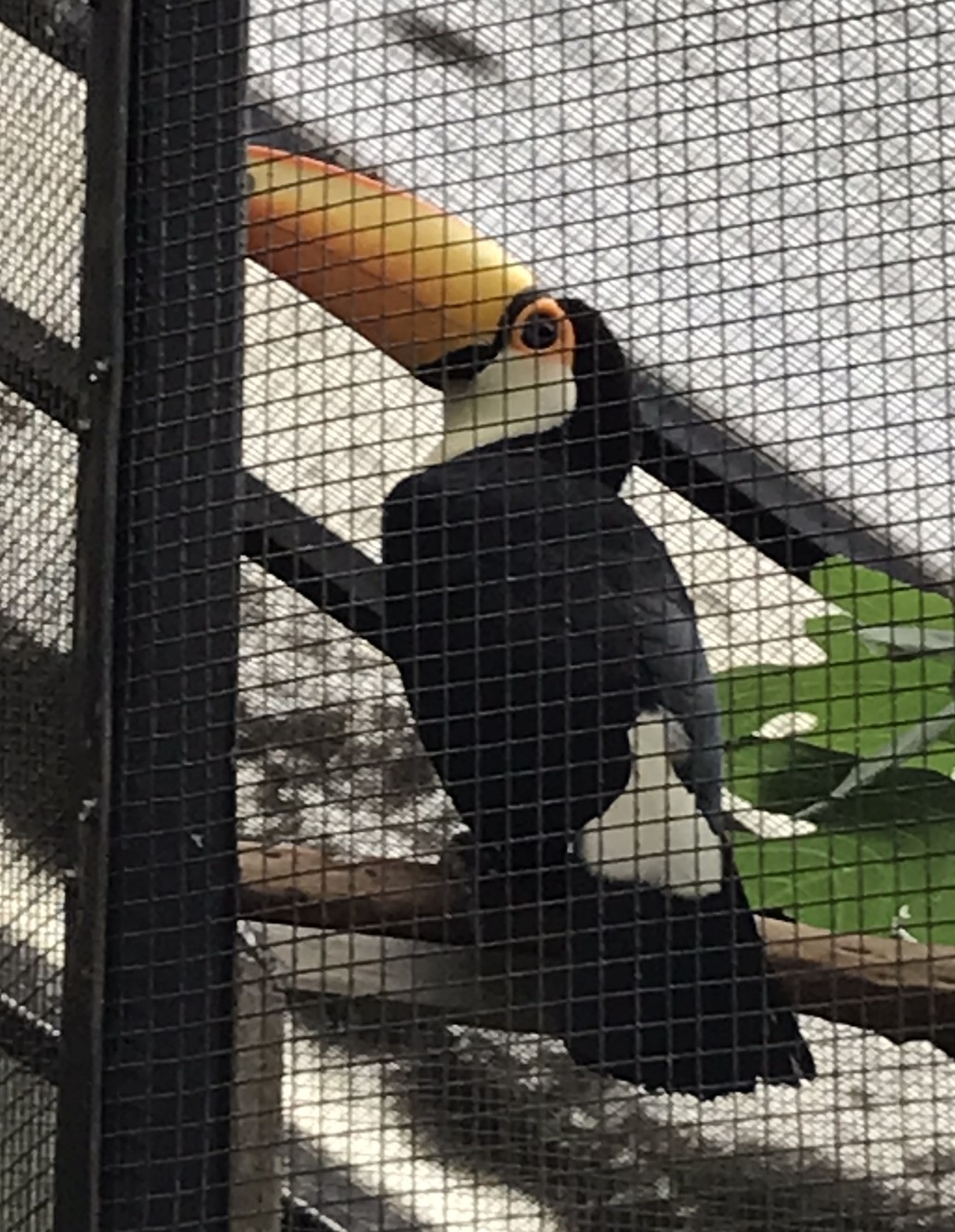
Toco Toucan

The center is an avicultural training site for biologists with an interest in conservation. Professionals from zoos from across the United States go there to learn advanced avian husbandry techniques.

Blue-throated Macaw

Quoting from the website, “Sylvan Heights is home to breeding populations of some of the world’s rarest waterfowl. In some cases, fewer than 250 individuals of these species remain in the wild, and the collaborative captive breeding programs taking place here may be their last barrier against extinction.”

Himalayan Monal – The National Bird of Nepal

Sylvan Heights Bird Park opened in 2006. The park “seeks to advance conservation of waterfowl and wetlands, to act as a local educational resource for avian biology and wetlands ecology, and to serve as an international center for avicultural training and research.”

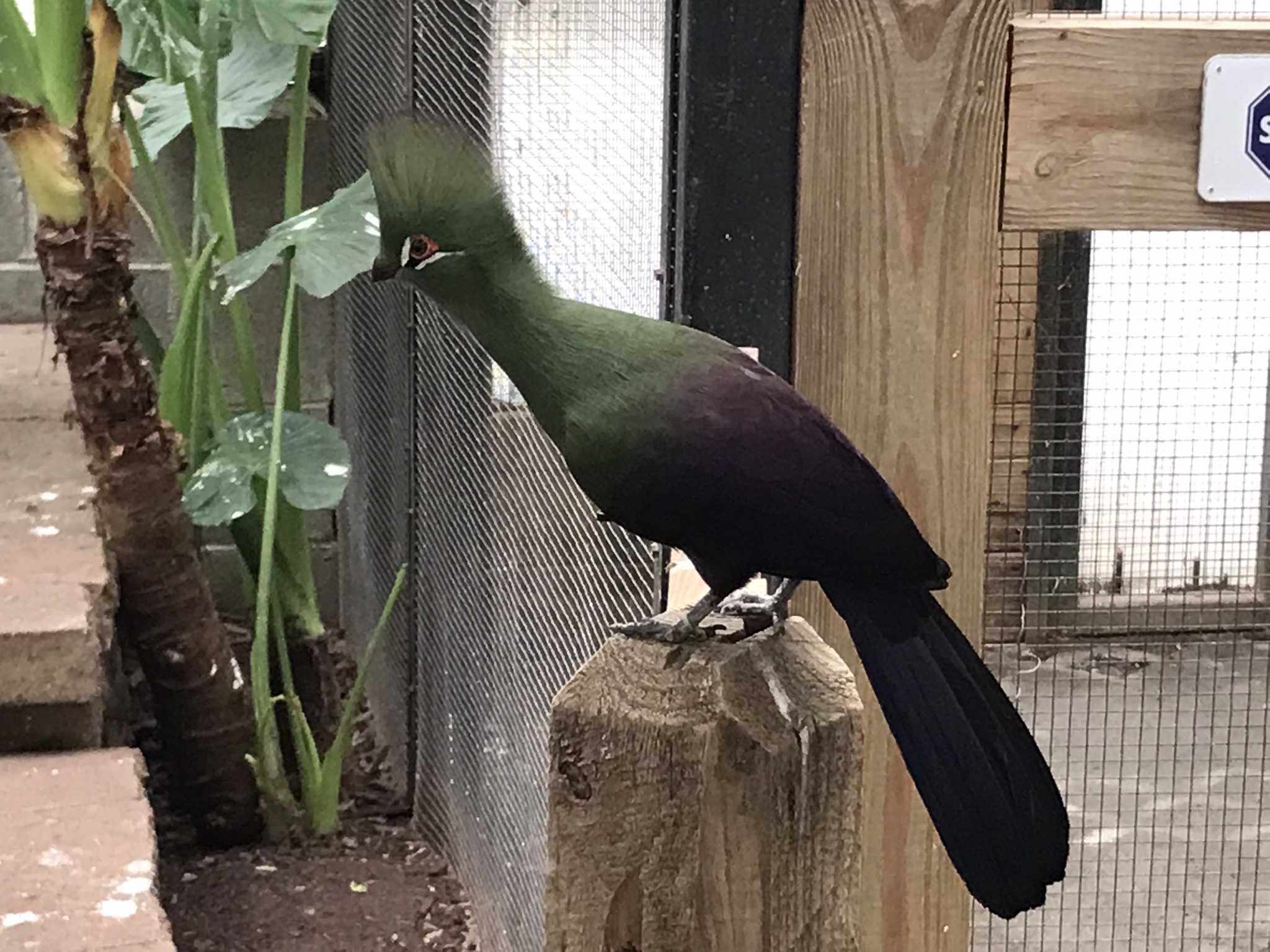
Guinea Turaco (Underneath side of its wings are bright red!)

Sylvan Heights has the largest collection of exotic and rare waterfowl in the world. It houses more than 3,000 birds representing 140 species. Together, the park and the breeding center form the world’s largest waterfowl collection and the second largest collection of birds in the country.

Scarlet Ibis

The Sylvan Heights Avian Breeding Center is not open to the public, due to the nature of its work, but the park is open year-round.

Wetland Bridge in Sylvan Heights Bird Park

Whew! This trip had been on my “bucket list” since before the Covid-19 pandemic. I needed a change of scenery, and this trip delivered! Each day held the promise of walking, enjoying the beauty of nature, peace and quiet, relaxation, and learning something new. What more could someone desire?

Are northeastern North Carolina and the Outer Banks now on YOUR bucket list?


Until my next blog post

In case you missed my two blog posts about that trip, here are the links: https://janetswritingblog.com/2024/05/27/this-writer-needed-a-change-of-scenery-part-i/ and https://janetswritingblog.com/2024/06/03/this-writer-needed-a-change-of-scenery-part-ii/.

Unfortunately, my publisher did not let me compile books of vintage postcards from either the piedmont or coastal plain of North Carolina because the company was not set up to market regional books, but don’t let that stop you from purchasing my vintage postcard book, The Blue Ridge Mountains of North Carolina. Please look for it on Amazon!

My book!

I hope you have a good book to read.

Remember the people of Ukraine.

Janet