War in Iran and My Second DIY Writing Retreat

Donald Trump and Israel started a war with Iran just after midnight Eastern Time on Saturday.          I say “Donald Trump” and not “the United States” because Trump did this without the blessing of the U.S. Congress. He did this after telling the American people that, if elected, he would not start a war.

This is the man who was furious over not being awarded the Nobel Peace Prize.

There must be “an imminent threat” against the American people for the U.S. President to take such an action. Democrat members of the U.S. Congress are furious and saying that intelligence reports indicated no such threat.

The U.S. Constitution gives the U.S. Congress the power to declare war. In this case, the Congress was not even informed that this was about to happen.

As I write this on Sunday night, Iran is retaliating by bombing numerous countries where the U.S. has military bases. Three U.S. military service members were killed and five seriously injured in a Iranian drone attack on a U.S. military base in Kuwait.

It has been reported that Lebanon has bombed Israel and Israel has bombed Lebanon.

No one knows what the near or far future holds as a result of this attack on Iran.

Trump says he joined Israel to take this action to save American lives – not today, but in the future. He expects the Iranian people, who are not organized and have few resources, to now waltz in and create a new government since the bombs have killed the supreme leader of Iran, the Ayatollah Ali Khamenei.

I don’t see that happening. It would be wonderful if the Iranians, who have suffered under a brutal regime for 47 years could take control of their government, but I fear they do not have the wherewithal to do that.

I see the U.S. mired in another endless war started on a whim by a man who dodged the draft five times during the Vietnam War.

By the time this blog post “goes live” eight hours from now at 5:00 a.m. Monday, Eastern Time, there is no telling what will have happened.

I’m a “night owl,” so I was still awake after midnight last Friday night when I learned that Trump and Israel had started this war in Iran. I had already planned my second DIY (Do It Yourself) Writing Retreat for Saturday afternoon.

It was difficult to turn off the TV and distract my brain from current events and focus on 1768 in North Carolina, but I managed to do that.

I needed to make a major change in my historical novel’s plotline. Research last week had uncovered a fact that changed the course of the story somewhat. That necessitated deleting many paragraphs, rewriting others, and juggling some scenes.

It was tedious work, but I committed to it for around six hours. The result was a net gain of 2,200 words – one of my most productive writing days. My word count stands at 60,000. I’m aiming for 90,000 words.

After accepting the fact last week that I am a binge writer and I cannot force myself to set daily business hours to work on my novel, freed me to stop feeling guilty for not working on it every day. I plan to schedule more DIY Writing Retreats in the near future as I continue to find a writing process that suits me.

I plan to blog about the last story – which is more of an essay – in my latest book, Traveling Through History: A Collection of Historical Short Stories, on Tuesday. I’ll just “wing it” after Tuesday, depending on what the coming days bring.

Janet

The government should be afraid of its citizens, not the other way around.

A New Favorite Novel?

A New Favorite Novel?

What a great time I had reading books in October! Many books are published in the fall of the year. I’d been on the waitlist for months for some of those books as well as others. Of course, they all became available at the same time. “Too many books, too little time” kicked in big time!

Today’s blog post is about what is possibly my new favorite book and one of the other books I read in October. My blog post next Monday will catch you up on the other books I read last month.

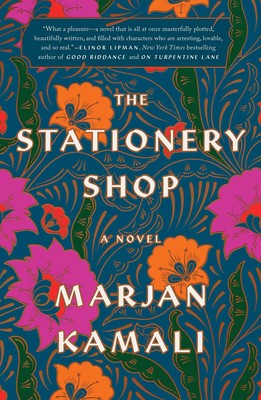
The Stationery Shop, by Marjan Kamali

I can’t say enough about this book! It just may be my new favorite novel. This is a story that will stay with me forever. It is a tragic story in many ways, but oh how lovely! I listened to it on CD. Mozhan Marno did a superb job reading it.

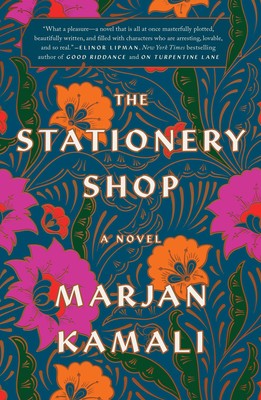
The Stationery Shop, by Marjan Kamali

This historical novel takes us back to 1953 in Tehran, Iran. There is a chance meeting between a young man and a young woman in a stationery shop where books are also sold. Since the young man’s mother has already selected the woman she wants her son to marry, she is none too happy when he announces his plans to marry this woman of lower economic status he met at the stationery shop.

Marjan Kamali includes just enough 20th century Iranian history to set the stage for this story of love, betrayal, and a never-ending love between two people. You will discover connections between different characters as you read. It is a rich book, beautifully written.

I’m eager now to read Marjan Kamali’s debut novel, Together Tea, and I can’t wait to see what she writes for us next!


The Ragged Edge of Night, by Olivia Hawker

This book was a big surprise. I read that Olivia Hawker had a new book, One for the Blackbird, One for the Crow, coming out on October 8. I’m on the waitlist at the library for it. One for the Blackbird, One for the Crow sounded interesting, so I looked to see what else she had written.

I listened to her first book, The Ragged Edge of Night, on CD. It was beautifully written, and I learned from the notes at the end of the book that it was based on a true story from Ms. Hawker’s husband’s family. It was beautifully read by Nick Sandys and the author, Olivia Hawker.

The Ragged Edge of Night, by Olivia Hawker

This book contained some of the most moving and beautiful prose of any novel I’ve read. The premise of the book is that Elisabeth Herter, a widow with three children, is looking for a man to help her with the responsibility of raising her three children. Along comes Anton Starzmann, a former Franciscan friar who has been stripped of his occupation and his school by the Nazis in 1942 Germany.

Elisabeth and Anton start corresponding. They meet in person and agree to marry. Anton cannot father children due to an injury, but that suits Elisabeth just fine. They will marry, be companions, and raise her children. These are desperate times.

That’s the plot, and it’s a beautiful story. What struck me about The Ragged Edge of Night was how Olivia Hawker wrote Anton’s gut-wrenching fear that Hitler and the Nazis were entrenched until the end of time so beautifully that I was brought to tears. Through her writing, Ms. Hawker put me in Hitler’s Germany. Even though I knew Hitler was brought down in the end, she put me in 1942 when I had no way of knowing that.

That’s what good historical fiction does. It puts you in the story and in the time and place, so you don’t know what the future holds.

I wish I could quote extensively from the book in order to give you the true flavor of the prose, but I’ll settle for the following few sentences from Anton’s point-of-view as he implores God to help him make sense of what is happening in Germany in 1942. This prose I found so beautiful is in chapter six. Here’s a chopped-up transcript from that chapter:

“The bells will ring, even after The Reich has fallen. Everything that is in me that is sensible, everything that is rational can’t believe it’s true. The Reich will never fall…. But when in moments of quiet, in my stillness of despair, I dare to ask what yet may be…. Christ Jesus, I always believed you were merciful, but this is a monstrous cruelty to make me dream of a time when evil may fall…. I cannot help but know it, against all sense, I believe somewhere beyond the ragged edge of night, light bleeds into this world.”

From Chapter 6, The Ragged Edge of Night, by Olivia Hawker

I hope those six sentences I pulled out of a long prayer I transcribed from the CD entice you to read the book. Writers are advised to put the reader in the scene. This, to me, is a prime example of just that.

My only criticisms of the CD are (1) Every time the children in the story spoke, it was at full blast and (2) Some of the audio segments were longer than 30 minutes. The wide range of volume is an irritating and uncomfortable situation for people who are hearing-impaired. The excessively long audio segments present a problem on some CD players. More than once when I couldn’t listen to the end of a segment, I had to listen to the entire segment a second time in order to get to the end of it.


Since my last blog post

A fibromyalgia flare has knocked the props out from under me as we transition from summer into winter. (I think we often just skip right over fall here in North Carolina.) Eye pain has forced me to listen to books more than read them.

As you know, listening to books is not my reading format of choice. It’s going better than I expected, though. In fact, I believe listening to the CD recording of The Ragged Edge of Night possibly gave me a richer reading experience than I would have had if I’d read the words myself. That astounds me and gives me a new appreciation for audio books.

I want to read The Stationery Shop and The Ragged Edge of Night again. It’s rare that I find a book that I want to read a second time.


Until my next blog post

I hope you have a good book to read. I’m listening to Heads You Win, by Jeffrey Archer­­­­­­­­­­­­­­.

If you’re a writer, I hope you have productive writing time.

Thank you for reading my blog. You could have spent the last few minutes doing something else, but you chose to read my blog. Don’t be shy – share this blog post on social media.


Let’s continue the conversation

I’m always interested to know what my blog readers are reading. Please share that in the comments below or on my social media platforms.

Janet