How do we get out of this mess?

Many of my blog posts this year have been about the mess we’re in. American democracy is being challenged like no other time in recent history, if ever.

Some people have been known to say in the last six months that we could have another civil war in the United States. Perhaps you’ve thought it yourself or heard someone else say those words.


Series of Webinars Sponsored by The Carter Center

Photo of President Jimmy Carter
President Jimmy Carter Photo by Library of Congress on Unsplash

This spring I watched a series of webinars sponsored by The Carter Center about our divided country. Panelists explored how we got to this place, how we can learn from other countries, what we can do to avoid what other countries have experienced, and where we can start.

The country that served as the example in the four webinars was Northern Ireland.

The facilitator for the webinars was the Rev. Dr. Gary Mason, a Methodist minister, peacemaker, and peacebuilder from Northern Ireland. Dr. Mason founded Rethinking Conflict in 2015. It seeks to model the principles of Northern Ireland’s Good Friday Agreement.

That agreement finally ended the conflict on Good Friday, April 10, 1998. Dr. Mason has taken this model to the Middle East and now, to the United States.

Dr. Mason spoke from personal experience growing up during “The Troubles.”

If you are interested in watching the four “Why are we divided?” webinars, here’s the link: https://georgiadrn.org/divided-webinar/.


What if “The Troubles” happened in the United States?

British troops occupied Northern Ireland in August 1969. Everyone thought it would be over before Christmas, but there was an amazing amount of violence over the next 30 years. It was the longest occupation by the British Army in history.

To give Americans some perspective on the amount of violence that took place in Northern Ireland during “The Troubles,” Dr. Mason gave the following statistics: At that time, Northern Ireland had a population of 1.5 million. During The Troubles, nearly 4,000 were killed, 47,000 were injured, there were 37,000 shootings, 30,000 people went through the penal system, there were 22,000 armed robberies, and 16,000 bombings.

He extrapolated that out to compare with the population of the United States over a 30-year conflict. If we had such a civil war in the US, we could see 800,000 killed, 9 million injuries, 7 million shootings, 6 million political prisoners, 4 million armed robberies, and 3 million bombings.

Imagine that level of carnage in America. I can’t.

An estimated 618,000 Americans died in our Civil War in the 1860s. To bring it “home,” I’ve studied the local losses in my own church in that war. Out of a membership of 400 white members and 200 black enslaved members, the congregation lost 74 men in the war. I cannot imagine that number of deaths in this community.

Just like it, undoubtedly, took decades for my community to recover from the war, 27 years after the Good Friday Agreement, Dr. Mason says in Northern Ireland “we are still wrestling with the legacy of the conflict. It’s really the one piece of unfinished business of the peace process.”

Indeed, in the United States we’re still wrestling with the legacy of our civil war. Confederate statues were taken down, but Trump wants them put back in place. Confederate names were removed from US military installations, but now the names are being restored, albeit technically they are not being renamed for the Confederates.

For example, Fort Bragg here in North Carolina was originally named for Braxton Bragg, a Confederate Army General who owned slaves. His name was removed, all the signs and letterhead replaced to say “Fort Liberty” in June 2023, and then in February 2025, Fort Liberty was renamed Fort Bragg but this time for a decorated Private in World War II, Roland X. Bragg.

We are still wrestling with the legacy of our Civil War, so it is not surprising that 27 years after the fact, the people of Northern Ireland are wrestling with theirs.


In Northern Ireland, People Hated Each Other

When peace talks began in Northern Ireland, the people in the room hated each other. No wonder it took so many years for them to develop a peace agreement.

Is that where we are today in the United States of America?

In polite society, we generally get along with each other. But, as I wrote about in my April 17, 2025, blog post, Is your family getting together during Holy Week? Brace yourself!, it only takes one person making an inflammatory remark and a heated argument can break out even among a group of friends or a family gathering.


Do Americans hate each other?

I don’t hate anyone, but I hate what some individuals and groups are doing to our country.

I hate that the US Congress has relinquished its legislative responsibilities to a US President who is legislating via Executive Orders.

I hate that thousands of federal employees have been fired or forced to take early retirement.

I hate that medical research funds and researchers have been eliminated.

I hate that people are being shipped off to a prison in El Salvador without due process.

I hate when people are shipped off to a prison El Salvador by mistake, the US President says he is powerless to do anything about it.

I hate that USAID was halted and will result in people starving.

I hate that universities, museums, and libraries are being targeted and punished.

I hate that Moms for Liberty think they have the right to dictate which books should not be read.

I hate that the Heritage Foundation was able to slide Project 2025 into the White House while the Republican Presidential nominee denied having anything to do with it.

I hate that many of the most vocally hateful voices in this country come from people who claim to be Christians. They give Christianity and Christians a bad name.


So how do we get out of this mess?

If we take the peacemaking and peacebuilding experience of Dr. Gary Mason into consideration, since he has lived through a civil war, we will open avenues of communication with people with whom we disagree.

The core advice from How to Have That Difficult Conversation in Uncivil Times, by Janet Givens is that we start by finding common ground to break the ice with people we need to have that difficult conversation with. Surely, there is something you and they have in common. (See my August 22, 2022, blog post, <em>L.E.A.P.F.R.O.G.: How to hold a civil conversation in an uncivil era</em>, <em>Third Edition, </em>by Janet Givens.)

Photo of cover of L.E.A.P.F.R.O.G.: How to hold a civil conversation in an uncivil era, by Janet Givens
LEAPFROG: How to hold a civil conversation in an uncivil era, by Janet Givens, M.A.

Taking Dr. Mason’s advice, we will then calmly and sincerely ask the person or persons why they feel the way they do about the topic with which we know we disagree with them, and then we will respectfully listen to their story.

Hopefully, they will be equally curious about our story and allow us to explain our position and why or how we arrived at it. Without honesty by both parties and a genuine curiosity by both parties, and a real listening by both parties… it won’t be a successful conversation.

Then, we move on to another person with whom we disagree and repeat the process.

Hmmm. Sounds easy on paper?

No, it doesn’t even sound easy on paper, much less in real life.

Bottom line is, I don’t know how we get out of this mess.

It has been my experience that people who stand on the opposite end of the political spectrum from where I stand, are not interested in hearing my story. They tend to be loud, rude, and condescending. They tend to call names and belittle, like their political leader on Pennsylvania Avenue.

So I really don’t know how we will get out of this mess. When I consider having “that difficult conversation” with anyone I know who supports Trump, I honestly cannot imagine that I would be able to have a productive conversation with them about politics. Our worldviews and core beliefs about democracy are just that far apart.


A chilling perspective

I just reread White Robes and Broken Badges: Infiltrating the KKK and Exposing the Evil Among Us, by Joe Moore. I blogged about that book on October 7, 2024, in What I Read Last Month & a Hurricane Helene Update, and I will blog about it again on July 7.

Photo of book cover for White Robes and Broken Badges by Joe Moore
White Robes and Broken Badges, by Joe Moore

Speaking from the unique place of having infiltrated the Ku Klux Klan twice for the FBI, Moore stated in his book, “The radical right cares nothing about process, only outcome. They’re not interested in a civil discussion to work out differences, because they are so consumed by ideology that it has hijacked their civility. They have a clear vision of what they want the country to look like, and democracy itself is the only thing standing in their way.”

That leaves us in a hopeless situation. I don’t want to be hopeless, but I admit I don’t know how to have a productive conversation about politics with anyone who supports Donald Trump.

Even when Donald Trump is no longer in office, the people who agree with his tactics will still be with us. Our mess is bigger than an election or two can clean up.


Until my next blog post

How do you think we can get out of this mess?

What have you tried? Did it work?

It is going to take all of us to get our country out of this mess. The politicians certainly aren’t going to save us!

Remember the people of Northern Ireland, Ukraine, and western North Carolina.

Janet

P.S. I wrote and scheduled today’s blog post before the United States bombed three nuclear facilities in Iran on Saturday night, Eastern Time.

L.E.A.P.F.R.O.G.: How to hold a civil conversation in an uncivil era, Third Edition, by Janet Givens

As the American society becomes increasingly polarized on politics, racial justice, abortion, gun rights, public education, and free speech on social media, this is a book we can all benefit from reading. You can benefit even more by discussing the book with a group.

The book I’m referring to is the Third Edition of L.E.A.P.F.R.O.G.: How to hold a civil conversation in an uncivil era, by Janet Givens. Ms. Givens is a sociologist and Gestalt psychotherapist.

L.E.A.P.F.R.O.G.: How to hold a civil conversation in an uncivil era, by Janet Givens, M.A.

Although my opening paragraph referred to the polarization of America, this book is intended to help people have any difficult conversation, whether it’s a disagreement you’ve had with your spouse or co-worker, a difference of opinion over a belief with a fellow church member, a conversation you need to have with a family member in the grips of substance abuse, or an honest discussion you want to have about a larger issue with a group, this book will help you get there.

How I learned about the book

Janet Givens and I had connected through our blogs. I was pleased last year when she invited me to participate in a Zoom group to read and discuss an earlier edition of the book. It was a small group – Ms. Givens, six others from across the United States, and me.

Ms. Givens told us up front that she wanted to make some changes in the book and publish a new edition. She wanted our input. It was a wonderful experience to be in such a group. We bonded through our monthly virtual meetings and I miss them now that the purpose that brought us together is completed.

In appreciation for our involvement, Ms. Givens sent each of us a copy of this year’s new edition. I’ve neglected to follow up with a review of the book for several months, for which I’m embarrassed. The best excuse I can concoct is that life and numerous library book due dates I was up against constantly took my attention away from L.E.A.P.F.R.O.G. It’s a poor excuse. I apologize, Janet. (By the way, I was known as “the other Janet” in the small group of eight.)

New introduction

This Third Edition of L.E.A.P.F.R.O.G.: How to hold a civil conversation in an uncivil era has a completely new introduction. Sometimes I’m tempted to skip a book’s introduction, but please be sure to read this one. You’ll learn why Ms. Givens wrote the book, how she envisioned it being used, and she asks several questions for you to consider before launching into the meat of the book.

It used to be Americans could agree to disagree with each other over various issues, but that has become the exception rather than the rule. In this “uncivil era” it can seem impossible to civilly discuss issues with someone with whom you hold differing views.

That’s the backdrop for the book. The title is an acronym for Listening, Empathy, Assessment, Perspective, Facts: Forget them for now; Respect, Observation, and Gratitude. Each of those gets its own chapter. The chapters should be read in order for it is in that order in which one should approach any “difficult conversation.”

Ms. Givens is quick to point out in the introduction that one shouldn’t go into such a conversation with the purpose of converting the other person to their way of thinking. Something our Zoom group discussed on several occasions was the need for both/all parties discussing a difficult or divisive topic to be genuinely curious about why the other person has an opinion not like their own.

In her acknowledgements at the back of the book, Ms. Givens indicated that the Zoom group was instrumental in the birth of her “Perspective” chapter and in the reworking of the “Respect” chapter. Let’s look at those chapters.

Perspective

The fourth chapter in the earlier editions of the book was titled “Paraphrase.” Readers were encouraged to listen to the other person with empathy, assess their own state of mind to make sure they were mentally in the right place to have the conversation, and then paraphrase what they thought they heard the other person say.

In this new edition, Ms. Givens replaced “Paraphrase” with “Perspective.” (You’ll also notice in earlier editions most of the chapter titles were action words like Listen, Empathize, Assess, Paraphrase, and Observe. The new chapter titles are mostly nouns, such as Listening, Empathy, Assessment, Perspective, Facts: Forget them for now, Respect, Observation, and Gratitude.) They’re presented more as concepts instead of calls to action.

In the “Perspective” chapter, Ms. Givens invites us to think about perspective – ours and the other person’s. In doing that we will probably listen more carefully to the other person and maybe see the other person’s perspective. I might not change my mind by listening to your perspective, but I might gain a level of understanding of why you think what you think and even a clearer understanding of my own thinking.

The ”Perspective” chapter also addresses unconscious bias. For instance, an experience we had in childhood can affect how we see an issue today. You don’t need to use that as an excuse though. Once we recognize a bias, we can change.

Respect

In the reworked “Respect” chapter, Ms. Givens enlightens the reader to think of respect as something each individual deserves because that’s the foundation of society. Respect isn’t something to be meted out after we’ve judged the other person.

She addresses “othering” – the “us versus them” mindset. One way to move toward genuinely respecting the other person is to tell them you hear them and you think you understand. Then, look for what you have in common. Find something positive to say.

A call to action

I hope my blog post today will prompt you to look for L.E.A.P.F.R.O.G.: How to hold a civil conversation in an uncivil era, Third Edition wherever you purchase books. You can also order it from the author at https://janetgivens.com/. I also recommend that you request that your local public library system purchases the book. Ask for it at your local independent bookstore if you don’t see it on the shelf.

Rare is the person who can’t benefit from reading it. Putting into practice the ideas Ms. Givens presents in her book will surely result in a more civil exchange of ideas within the United States or wherever you live – even if it’s just one person at a time.

Since my last blog post

I was struggling with a short story I was writing. It just wasn’t coming together. I did some brainstorming and the pieces finally felt into place. I hope to self-publish a collection of my historical short stories. I’ll keep you posted on my progress on that project.

I’ve completed my work to-date on two branches in my family tree. My sister helped me figure out these two lines. Both lines had some squirrelly dates and connections. We’re more than ready to move on to another family line and hope for less confusion!

Work has slowed on our The Aunts in the Kitchen family cookbook. I keep procrastinating getting the photograph made for the cover of the e-book. I can’t make it myself.

Our computer guy came and got our margins corrected in Word. It’s frustrating for a writer to not be able to set one-inch margins, especially since that’s the default setting. I’m back in business now typing my short stories and formatting them in Word ready to download into Atticus. I’m a happy camper once again!

I’m trying to participate on Twitter again, with limited success. If you’d like to follow me, I’m @janetmorrisonbk.  (Think Janet Morrison book.) Just don’t expect me to Tweet every day or comment on what you post in a timely manner. I’m terrible at social media.

Until my next blog post

I hope you have a good book to read or listen to. I’m reading The Librarian Spy: A Novel of World War II, by Madeline Martin and Booth, by Karen Joy Fowler. I have other books checked out and two more ready to be picked up at the library. I can’t read fast enough!

Life is short. Spend time with family and friends, and make time for a hobby.

Don’t forget the people of Ukraine, Uvalde, and Highland Park, etc. and the people in Kentucky whose lives have been turned upside down by flooding.

Janet

4 Books Read in May 2022

I read a somewhat odd combination of books last month. I’m sharing my thoughts about them in today’s blog post.


The Last Green Valley, by Mark Sullivan

This historical novel is based on the story of a real family. In light of the current Russian invasion of Ukraine, I think this was the perfect time for me to read it.

a novel of Ukraine
The Last Green Valley, by Mark Sullivan

With the backdrop of the history of the Holodomor (“The Horror”) of 1932-33 during which Joseph Stalin starved to death more than four million Ukrainians, the book demonstrates a deep-seated anger between Russia and Ukraine. After World War II, Stalin sent millions to work camps (including many to Siberia) and they were never heard from again. This history puts this year’s Russian invasion of Ukraine in perspective. No wonder Ukrainians would rather die than live under Putin’s thumb! They’ve tasted freedom, and they aren’t going back!

During World War II, Ukrainians were caught between Stalin and Hitler. That is where The Last Green Valley begins with the Martel family.

The Martels are of German ancestry and they live in Ukraine in the early- to mid-1940s. They’ve survived Stalin’s attempt to starve them. Now, World War II rages on and the Martels are between the proverbial rock and a hard place. Do they take their chances with Stalin’s Russian Army or do they trust Hitler’s troops to guide them safely out of Ukraine? They choose the Germans and there begins the family’s horrendous trek across Ukraine, Hungary, and Poland.

This book is a novel of the human spirit, faith in God and in our fellow human beings. It is also a book of man’s inhumanity to man. In the end, it is also a story of the dream called America.

The book’s “Afterword” will refresh your memory about Ukrainian-Russian history.

You might recall that I read Mark Sullivan’s novel, Beneath a Scarlet Sky, in December 2019 and blogged about it on January 13, 2020: The Other Books I Read in December 2019. I tried listening to The Last Green Valley last May and wrote about that experience in my May 14, 2021 blog post, 3 Books I Tried to Listen To in May. I found reading it to be a much better experience than trying to listen to it on CD. It’s great to have options.


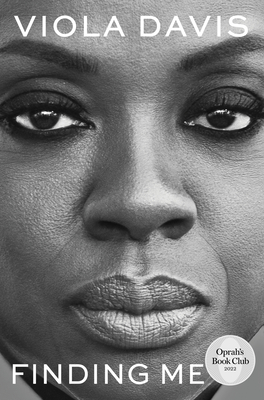
Finding Me: A Memoir, by Viola Davis

I rarely read a memoir, but I was drawn to Finding Me: A Memoir, by actor Viola Davis. I’ve admired her acting talents since seeing the movie, “The Help,” or perhaps before on TV, but I had no idea how bad her childhood was until I read her new book.

Finding Me, by Viola Davis

Ms. Davis grew up in a poor, abuse-filled home in a predominantly white town in Rhode Island. Her father regularly beat her mother and the children were unable to shut out the noise of those beatings. There were rats in the house they rented and extensive times when there was no electricity of hot water. She writes about how hard it is for a poor child to compete in school when they have no way to stay clean and they’re always hungry. These are things I’ve never faced in my entire life. I’m incredibly blessed.

A few key teachers, mentors, the Upward Bound program, and her first taste of theater pulled Ms. Davis out of that deadend environment and enabled her to see where her talents lay. And we are all now reaping the benefits of her incredible journey.

She writes about the racism she experienced in Rhode Island and New York City. She was accepted at Juilliard in New York City, where they tried to train all acting students to be white actors. There was only other other Black person in her class at Juilliard and only 30 Black students in the entire student body of 856 (all disciplines.)

The students at Juilliard were forbidden to perform anything but opera, ballet, and the European classics.  They were told singing Gospel music, playing jazz, participating in tap or modern dance, etc. would “ruin your instrument.”

Ms. Davis writes about a life-changing and life-affirming experience she had after her second year at Juilliard when she was awarded a scholarship to travel to The Gambia with a group led by Chuck Davis, an African dance choreographer out of the North Carolina School of the Arts.

She continued two more years at Juilliard and graduated from that prestigious fine arts school, but her heart and soul were opened by the beautiful innate talent she saw and heard in The Gambia, and it was really through that experience that she found herself.

In later life, her father got himself under control and Ms. Davis was able to have a loving relationship with him and her mother that she had been denied as a child.


The Rowan Story, 1753-1953: A Narrative History of Rowan County, North Carolina, By James S. Brawley

I was delighted to be able to check out a copy of this book from the Cabarrus County Public Library. It contains many tidbits of information that will enrich the historical novel I’m writing.

The Rowan Story, 1753-1953: A Narrative History of Rowan County, North Carolina, By James S. Brawley

The novel I’m writing now actually comes before the one I wrote first. Now, Book One is Book Two, since the one I’m working on now needs to be Book One. I got so involved in imagining the backstory for the first one I wrote, I decided that backstory needed to be a book of its own. Will either book ever be published? That remains to be seen, but I enjoy the process of writing and doing the research.

What does any of this have to do with Rowan County? In Book One, Sarah and her brother and their father leave the mountains of Virginia and travel down The Great Wagon Road. A stopover in Salisbury in Rowan County turns into the family settling down there. Book Two finds Sarah living in The Waxhaws settlement in Lancaster County, South Carolina.


Slow Dancing with a Stranger: Lost and Found in the Age of Alzheimer’s, by Meryl Comer

This is probably the saddest book I’ve ever read. At its publication in 2014, the author’s husband had had early onset Alzheimer’s Disease for nearly 20 years. He was diagnosed at the age of 58 and had been a physician and medical researcher at the National Institutes of Health in Washington, DC.

Slow Dancing with a Stranger, by Meryl Comer

The author is an advocate for more research into Alzheimer’s Disease and is pushing for more studies of people before they show signs of the disease. Her hope is that such studies will help researchers to discern how to diagnose the illness earlier – while the patient can still have a good quality of life.

She writes in detail how the disease not only destroyed her husband’s life and stole his personality, his ability to control bodily functions, his ability to talk or communicate in any way, his ability to swallow except for droppers of water, etc. She also details the care she provided 24/7 and the caregivers she hired to assist her. The toll it took on her was incalculable.

I’m glad I read it. When I started reading it, I thought it would be a book I’d recommend to my family members who are dealing with the early stages of the disease in their mother. By the time I finished the book, I thought their reading it would only be profoundly depressing at this early stage in their journey.

An online search revealed that the author’s husband died in 2020.

Since my last blog post

I took a week off from writing my blog last week. Since my last blog post of May 23, there was yet another mass shooting in a school in the United States. This one was in Robb Elementary School in Uvalde, Texas. In addition to two teachers, 19 precious children were massacred.

We have to find the courage to stop the madness in the United States of America. Until the National Rifle Association and its clones/wannabes stop financing political campaigns, nothing will change. Until elected officials on Capitol Hill and in the state legislatures develop backbones, nothing will change. Their “thoughts and prayers” ring hollow.

Until my next blog post

I hope you have at least one good book to read or write. I received a complimentary copy of the hot-off-the-presses 3rd edition of LEAPFROG: How to hold a civil conversation in an uncivil era, by Janet Givens. I look forward to reading this edition and seeing the changes Ms. Givens made from an earlier edition I read.

Find time to relax and enjoy a hobby.

This afternoon I’ll watch/listen to the fourth in a series of four free webinars about writing a book proposal offered by Chad R. Allen. The three sessions so far have been very helpful.

Remember the people of Ukraine and the people of Uvalde, Texas.

Janet

#Idiom: As all get out

My first blog post about an idiom was on January 25, 2021. It was #Idioms: Reading the Riot Act. Today’s blog post is about the idiom “as all get out.” It’s an expression I don’t hear as much as I used to.

When was it first used?

Other people have researched this, and I’ll rely on their findings. It appears that the expression

“as get out” was first used by American writer Joseph C. Neal in his Character Sketches in 1838.

In that piece, he wrote, “We look as elegant and as beautiful as get out.”

“As get out” sounds odd today because we know the expression as “as all get out.” Without the “all,” it just sounds strange. Or, perhaps you’ve never heard the expression before, so it sounds strange to you either way.

What does it mean?

The idiom “as all get out” is used to describe something taken to it’s extreme.

When it became “as all get out”

Credit goes to American author Mark Twain for adding the word “all” to the expression. In the 38th chapter of Huckleberry Finn, Huck, Tom Sawyer, and Jim are working on a coat-of-arms. Tom says to Huck, “We got to dig in like all git-out.” Of course, Twain wrote in dialect in that novel.

It would be interesting to know if Twain coined the new phrase. Perhaps people were already saying, “All get out” and Twain just incorporated it into his writing in 1884.

Some examples of how the idiom is used

It was cold as all get out.

Photo credit: Kelly Sikkema on unsplash.com

The track stars ran fast as all get out.

Photo credit: Jonathan Chng on unsplash.com

The red velvet cake was good as all get out.

Photo credit: Estefania Escalante Fernandez on unsplash.com

As language loses its color

As I commented at the beginning of this blog post, I don’t hear “all get out” as much as I used to. I’m afraid English becomes a less colorful language as we lose such expressions. That’s why I chose “all get out” for my topic today.

Is “all get out” an expression you’re familiar with? Is it an idiom that’s used all across the United States? Have those of you who live in other English-speaking countries heard this expression?

Since my last blog post

It looks and feels more like spring by the day, but there’s a possible hard freeze in the weather prediction for later in the week. That will be a shame, since my peonies have sprouted and the blueberry bushes are in bloom. It’s my favorite time of the year.

I stirred up a bit of a hornet’s nest on Facebook by posting a meme I borrowed from someone else. It is about the gun problem we have here in the United States. Just by saying “gun problem,” I’ve probably offended some people. I don’t know what else to call it. One of my high school classmates and a fellow church member have responded by educating me about the intricacies of firearms and gun registration.

At first, I was taken aback and wished I hadn’t posted the meme, but as days passed and I reflected on the issue and got deeper into the discussion I was glad I’d done it. Without being my intention, it has turned into “that difficult conversation” Janet Givens’ Zoom discussion group is addressing this year in monthly meetings. The basis for our meetings is Ms. Givens’ book, LEAPFROG:  How to Hold a Civil Conversation in an Uncivil Era.

How do you have “that difficult conversation” with someone with whom your opinion or world view differs greatly? How do you have “that difficult conversation” with someone when you suddenly find yourself in the middle of a discussion that you and the other party or parties maybe weren’t in the best mood to have?

People rarely react to anything I put on Facebook, so it was shocking when this particular meme created as much discussion as it has continued to have since I posted it on Thursday. Lessons I’ve learned: Fact check memes before you post them, and don’t post anything controversial unless you’re ready to defend your viewpoint and calmly listen to the viewpoints of others.

I returned to church yesterday for the first time in 14 months. It felt great going back into the sanctuary in which I’ve worshipped my entire life and in which my ancestors have worshipped since 1861, and it brought tears to my eyes.

Until my next blog post

I hope you have at least one good book to read this week. As usual, I’m reading several at the same time. My mood and library due dates determine which one I pick up.

I hope you have time to follow your passion this week and spend some relaxing time on a hobby.

It’s now been more than two weeks since I got my second Covid-19 vaccination. I look forward to getting out in public more than I have in the last 14 months.

Note: Get ready for April. It’s D.E.A.R. Month (Drop Everything and Read Month), so let’s all give it our best shot starting on Thursday!

Janet

4 Other Books I Read in February 2021

Last week I blogged about four of the books I read last month. Today, I write about the other four books I read in February.


The Unwilling, by John Hart

The Unwilling, by John Hart

John Hart being a southern piedmont North Carolina writer, I looked forward to his new novel, The Unwilling. It did not disappoint. I listened to it on CD. It is a slice of American history when we were divided over the Vietnam War.

It is a riveting story about three brothers. Two were in the military and served in Vietnam. One didn’t survive the war, and the other one came home with problems for the rest of his life. Their youngest brother, Gibby, is the main character. At 18 years old, he is struggling to find his way in life. His mother is over-protective, and his father is a police detective in Charlotte. His parents want him to stay away from the middle brother, Jason, but Gibby can’t help but idolize him and is drawn to hang out with him. This leads to untold trouble.

The seedy, corruptive underbelly of the prison systems comes into play in a gruesome way. This novel is not for the squeamish, but the story really drew me in, and I couldn’t stop listening to it because I wanted to know what was going to happen next to Gibby and Jason. If you like a coming-of-age story wrapped in a police thriller, set in the winding down years of the Vietnam War, with some troubled family dynamics and prison time thrown in, this should be your next read.

Mr. Hart’s inspiration for this novel was Hugh Thompson, the US Army helicopter pilot credited with stopped the My Lai Massacre on March 16, 1968. It is not a war story per se but is the story of what a soldier sees and does that follows him or her home — the things those who have not been there cannot imagine; but more than that, it is a story of a small city in which the evil one fears isn’t always faraway but sometimes just up the street.


Southern Writers on Writing, edited by Susan Cushman

Southern Writers on Writing, edited by Susan Cushman

This delightful book is a collection of 26 essays by Southern writers, each giving their unique take on writing and how The South influences their writing.

One of my favorite essays in the book is “Southern Fiction: A Tool to Stretch the Soul and Soften the Heart,” by author Julie Cantrell.

Ms. Cantrell hails from Louisiana and writes vividly in her essay about the extremes of life in her home state. I love what she writes about Southern fiction about halfway down page 53 in the book:

“In literature, the South works as a lure by tapping all the senses. When we set a story here, we not only deliver a cast of colorful characters, we share their sinful secrets while serving a mouth-watering meal. We draw readers in with soul-stirring music and landscapes that would make anyone want to disappear beneath the mossy oaks. The South offers a fantasy, a place where time slows and anxieties melt like the ice in a glass of sugar cane rum.”

On page 54, Ms. Cantrell writes: “Many in life say the earth is our mother. If that’s the case, then the South is the lap into which we all crawl to hear her story…. The South is nothing less than a sanctuary for story. It is the porch swing, the rocking chair, the barstool, the back pew. It is everything that made me and shaped me and saved me. As a southern writer, I aim only to invite my readers to enter this sacred space.”

And then I read “The Burden of Southern Literature,” by Katherine Clark. She concisely explained how Southern literature came to be – how the South was looked down on after the Civil War and why would anyone want to read about such a place? Southern writers were weighed down by the region’s history. Writers like William Faulkner struggled to “strike a chord with a national audience.” Then, Faulkner and other southern writers learned to embrace the South and their southern-ness.

Ms. Clark writes on page 56, “Now, at the beginning of the twenty-first century, the writer in the South is not plagued by the burden of southern history, but by the burden of southern literature. Our literary tradition is revered all over the world and has produced many of the best writers to come out of our country. Southern literature is the strongest tradition in American literature, and one of the greatest gifts that American culture has given the world.”

What the southern writer is left with today is the burden not so much of the history of the South, but the wealth of literature that has come out of the South. To paraphrase Ms. Clark, it is inspiring and intimidating. I can vouch for that!

I also liked what Ms. Clark writes about not wallowing in what she calls, “southern-ness.” Here’s a little of what she writes on the topic:

“Whereas 100 years ago, writers had to learn to embrace the differences of the South, nowadays the tendency can be to positively wallow in the eccentricities and grotesqueries of the southern experience, usually of an earlier era. We shouldn’t be wallowing in southern-ness, and we don’t need to embrace it either, because that’s been done. That’s a given now, thanks to our great literary ancestors. Our job today is not to stick to the foundation they laid for us, but to use it as a springboard launching us in the new and different directions demanded by a changing culture.”

River Jordan, another author contributing to Southern Writers on Writing, writes the following about how she can tell when she’s reading the work of a southern writer and when she’s reading the work of New York writer: “…when I read a writer from say New York I think, oh, they are so smart. I could swear I actually hear their brain ticking. But when I read a southern writer I can feel their heart beating. That’s how I know it’s southern. By the heartbeat.”

Ms. Jordan also writes the following about the danger of southern writing disappearing as our lifestyles change: “When the porches all finally disappear, when the backyard steps are replaced with the kind of yards manicured to perfection, then the days of real southern writers will shift and slip away. Assimilation will be complete and southern will be no more.”

I hope she’s wrong, but I worry about the assimilation. I worry as I hear aspects of southern accents disappearing. I worry when I notice that my great-nieces in metro Atlanta sound much less southern than I do.

Speaking of southern accents, the next contributor in Southern Writers on Writing is Lee Smith. I love to hear her talk. Her contribution to the book is from her book, Dimestore: A Writer’s Life, which I thoroughly enjoyed reading five or six years ago. Ms. Smith is southern through-and-through, and her writing oozes “southern.”

About writing, Ms. Smith writes, “Whether we are writing fiction or nonfiction, journaling or writing for publication, writing itself is an inherently therapeutic activity. Simply to line up words one after another upon a page is to create some order where it did not exist, to give a recognizable shape to the chaos of our lives.”


30 Short Stories, by Laleh Chini

30 Short Stories, by Laleh Chini

My blogger friend, Laleh Chini, just keeps writing books. You may recall in last week’s blog post (4 Books I Read in February 2021) I told you about her new novel, Soroosh. Also, I’ve blogged about her book Climbing Over Grit in my November 5, 2018 blog post, Many Good Books Read in October!

Laleh is a fantastic storyteller. 30 Short Stories is her new picture book. I don’t often read picture books now, but I just had to purchase and read Laleh’s. Although written for children, this book can be enjoyed by people of all ages. Each of the 30 stories teaches a life lesson. My favorite was the last story in the book, “Racism.” In it, Laleh relates a story of how as a Muslim from Iran she experienced racism in a store in Canada, where she has lived for decades. It’s heartbreaking.

In the spirit of cultural acceptance and respecting and valuing people, no matter their ethnicity or religion, I recommend this book to everyone who is open to seeing that people are just people. We need to take a step back and stop making snap judgments about people just because they are of a different culture than ours.


Greenlights, by Matthew McConaughey

Greenlights, by Matthew McConaughey

From TV interviews, I know that actor Matthew McConaughey is a good storyteller. Wanting to hear his book in his own voice, I got on the waitlist for the CD edition of Greenlights at the public library as soon as it showed up on the online catalog.

I must admit that listening to Greenlights on CD was probably not the best way to read the book. Mr. McConaughey is an enthusiastic storyteller, and he relates many very entertaining stories in Greenlights; however, as a good storyteller is prone to do, Mr. McConaughey varies the volume of his voice greatly as he spins a yarn. This can create discomfort while listening to the book on CD.

I read a review on Goodreads.com that gave the book a very high rating and recommended listening to it instead of reading it but with the caveat that it should be listened to in a quiet environment. That’s good advice. I would also say you shouldn’t attempt to listen to it with headphones or earbuds. Also, trying to listen to it in one room while someone is trying to sleep in the next room is not a good idea. Just sayin’.

I also admit that I have moderate hearing loss, but I don’t think that was the root of the problem I had in listening to Greenlights. If I set the volume to a comfortable level for the shouting, I could not hear much of the rest of the book. This meant I couldn’t hear the near-whisper parts at all. I had to constantly adjust the volume, so the CD edition of the book was a great disappointment.

Early on, the book talks about Mr. McConaughey’s home life as a child and teen. His parents had a volatile relationship, which couldn’t help but have a profound effect on him. He relates some very funny experiences he had as an exchange student in Australia. In fact, that was my favorite part of the book. He tells interesting and humorous stories about his world travels and how he more or less fell into the occupation of actor.

The overriding theme of the book is that we should learn from all life’s experiences. Don’t let the obstacles in life keep you down. Learn from them and keep going.

If you’re a Matthew McConaughey fan, you’ll enjoy reading the book. Listening to it? Maybe not so much.


Since my last blog post

I’m still reading good books and working on my historical novel manuscript for a partial critique by a professional editor.

I got my second Moderna Covid 19 shot on Saturday. I’m grateful that I live in a country where such things are available, and I’m grateful to all the people who worked to develop and distribute the vaccine. I had some unpleasantness for about 48 hours after the shot, but it surely beats contracting a bad case of Covid-19.

On Wednesday night, I enjoyed participating in the third virtual gathering of a group discussing Janet Givens’ book, LEAPFROG: How to have a civil conversation during an uncivil era. We had an interesting conversation about racial prejudice and our common humanity. I mentioned Ms. Givens’ book in my blog posts on January 18, 2021 ( Fictional Characters Can Take on Lives of Their Own), on December 14, 2020 (Favorite Books Read in 2020), and on April 13, 2020 (LEAPFROG and The Immoral Majority.)


Until my next blog post

I hope you have a good book to read. I’m listening to In the Garden of Beasts, by Erik Larson, and I’m reading Cicely Tyson’s memoir, Just As I Am. Other library books are piling up and calling my name. What a wonderful “problem” to have!

I hope you have some time for creativity and hobbies this week.

Wear a mask and get vaccinated as soon as that’s possible for your age and location so we can rediscover “normal.”

Janet