Inauguration Day and Martin Luther King, Jr. Holiday

Sometimes what I want to say in a blog post flows smoothly from my brain, through my fingers, and onto the keyboard. Other times, I struggle. I have struggled with today’s post. I have lost track of how many edits and rewrites I’ve done over the last couple of weeks.

Photo of a pair of hands typing on a laptop computer keyboard
Photo by Kaitlyn Baker on Unsplash

Today’s post is a bit long, but please bear with me and read it to the end.

A blog isn’t a monologue. A blog is meant to be a conversation. It is a way for the blogger and the reader to connect.

Common Ground

You and I might not agree on some things. We might not agree on many things. I hope we agree on the most important things. When we disagree, I hope we can find that common ground.

I assume we all love our families, we want the next generation to have a happy and peaceful life, we want the best for all people, we want the best for whatever country we live in, we want a roof over our heads and enough food to keep us healthy, and we want to find and fulfill our purpose.

Photo of a blue metal cargo container with the words Common Ground printed on the side in white letters
Photo by Hill Country Camera on Unsplash

I assume we all want to know the truth. Lies being spread at lightning speed across the internet and social media platforms serve no constructive purpose. Lies told by either side of the political spectrum or by foreign entities undermine the common good and the very fabric of our society.

Hail to the Chief

I have watched every US Presidential Inauguration since 1961 except the one in 2017 and today’s. I was in the second grade when John F. Kennedy was inaugurated in 1961. Tim Jenkins’ mother brought a small black-and-white portable TV to our classroom so we could watch the festivities.

I was too young to grasp or understand President Kennedy’s speech, but I still remember being in awe to see Presidents Kennedy and Eisenhower wearing top hats! Those hats told my seven-year-old brain that I was seeing something very important take place. The images that day made a lasting impression on me!

In case you don’t know what a top hat is, here’s the best free image of one that I could find to include in my blog post. The statue has nothing to do with Presidents Eisenhower or Kennedy. It is merely to illustrate the top hats like they wore for the 1961 Presidential Inauguration.

Black-and-white photo of the statue of a man wearing a top hat
Photo by Remy Gieling on Unsplash

It’s time to have a difficult conversation.

The person I voted for didn’t always get elected, but I accepted the results of every election. I wasn’t afraid that any of those US Presidents would do irreparable damage to our democracy until the 2016 election.

I respect the Office of the United States President; however, I do not automatically respect the person who holds the office. Mr. Trump has shown us what he is.

I do not think a person who treats people with disrespect, who goes out of his way to spread untruths, who brags about sexually assaulting women, who has paid off a porn star with whom he had an affair, and who makes fun of disabled people should have been under consideration for US President.

I do not think a person who belittled John McCain’s more than five years as a prisoner of war in North Vietnam and said, “I like people who weren’t captured,” who tried to overturn the results of the 2020 election, who wants to be a dictator today (but “only for one day,” so he says), who admires and praises dictators, who said there were “good people on both sides” in Charlottesville should have been under consideration for US President.

I do not think a person  who encouraged his supporters to go to the US Capitol on January 6, 2021 to protest the verification of the November 2020 election, who sat idly by for hours before telling the rioters to go home, who was convicted of 34 felonies should have been under consideration for US President.

I do not think a person and who appears to base most decisions either on revenge or how he and his friends can benefit financially should have been under consideration for US President.

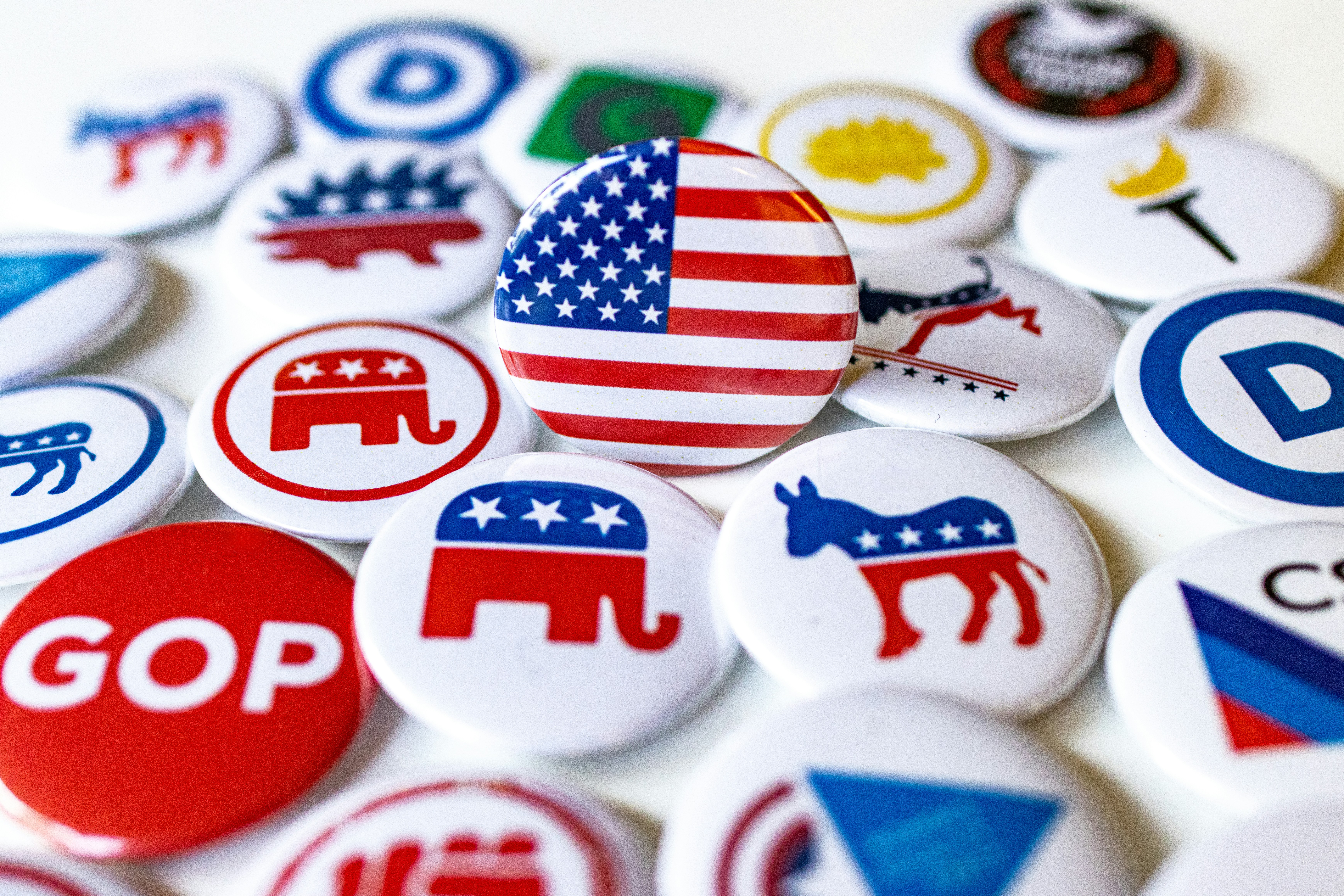
Photo of a scattered pile of various political party campaign buttons
Photo by Marek Studzinski on Unsplash

It grieves me that this is the best the Republican Party – “the party of family values” — could do, but it grieves me exponentially more that this is the best half the voters could do in November. They might be disappointed tomorrow when the price of eggs doesn’t plummet. That seemed to be what the majority of voters based their choice for US President on.

The most baffling part for me is that some Christians seem to believe that Donald Trump is almost the second coming of Christ. When I hear him talk and see his actions, I do not hear or see anything that remotely reflects the teachings of Jesus Christ.

I have tried to understand why anyone would vote for Donald Trump over a black woman who has seven years of experience as a District Attorney, has six years of experience as a state attorney general, has four years of experience as a US Senator, has four years of experience as US Vice-President, and speaks in complete sentences.

I’m left to assume that there were three qualities that she could not overcome: She is black, she is a woman, and she speaks in complete sentences. Her opponent has no such resume, although his companies have filed for bankruptcy six times. 

Surely, that’s not it

I must have misread the American people. Surely, they did not vote for Donald Trump just because he is white, male, and rarely speaks in complete sentences. Surely, they voted for him in spite of his deeply flawed character. But why? I sincerely want to understand what happened in November.

I thought enough people would remember the chaos of 2017-2021 and not want that again. I thought enough people would want our country to take the high road and vote for decency. I thought enough people would conclude that democracy is more precious than the economy and that only by everyone having a shot at the proverbial American Dream can our economy thrive.

I was wrong. It all started to make more sense this weekend when I saw people more concerned over losing Tiktok than they are over the risk of losing our democracy.

Photo of a hand holding a cell phone. The Tiktok symbol is on the cell phone's screen.
Photo by Olivier Bergeron on Unsplash

A Glimpse at the future

Brace yourself for the Executive Orders and Congressional actions that will, no doubt, commence today. Pay attention! Stop saying, “I don’t watch the news because it’s too depressing.”

We were given some teasers yesterday about ten Executive Orders planned for issuance today. If you like pollution, you’ll be happy.

Are you aware of what happened on January 3, 2025? A bill (H.R. 191) was introduced in the House of Representatives to repeal the Inflation Reduction Act of 2022. You can follow its progress and see who sponsored and co-sponsored it at https://www.congress.gov/bill/119th-congress/house-bill/191/all-info.)

Just so you know… it was the Inflation Reduction Act of 2022 that enabled Medicare to negotiate the price of drugs in an incremental way over the next years. Did you think in November that you were voting to repeal the law that capped the price of insulin for seniors at $35 per month?

And Virginia Foxx, the US Representative from North Carolina’s 5th Congressional District, has been rewarded for being a staunch Trump supporter. She is the new Chair of the US House Rules Committee.

If you don’t know her by name, you’ll recognize her as the 81-year-old woman in many of Donald Trump’s photo ops. She’s the one who told a reporter to “Shut up!” when the reporter asked Representative Mike Johnson a question about the part he might have played in the attempt to overturn the 2020 election.

Virginia Foxx voted not to certify the 2020 election. She called the 1998 murder of Matthew Shepherd “a hoax.” Her spokesperson, Aaron Groer, said in 2009, “Virginia’s not here to become a Washington insider or part of the good ol’ boy network,” but apparently in 2025 she’s been accepted.  

The House Rules Committee used to be known as “the Speaker’s Committee” because for a long time the Speaker of the House served as its chair. It is the House Rules Committee that controls which bills reach the chamber floor for consideration.

Nine of its members are from the majority party and four are from the minority party. It seems like the deck is stacked against whichever party is in the minority

The Martin Luther King, Jr. Holiday

It is unfortunate that this Inauguration Day coincides with the official Martin Luther King, Jr. Holiday. Nothing should overshadow the accomplishments of Dr. King today. His life and values are in stark contrast with those of the man being inaugurated as the US President today.

Photo of The Rev. Dr. Martin Luther King, Jr.
The Rev. Dr. Martin Luther King, Jr.
Photo by Unseen Histories on Unsplash

Dr. King preached and worked for societal change and reform through non-violent means, while the man being inaugurated today encouraged rioters on January 6, 2021, and continues to encourage division and violence through his rhetoric.


Until my next blog post and thereafter

I know you might decide that you can no longer follow my blog due to today’s post. I’ll hate to see you go, but please understand that I feel strongly about the fragility of our democracy, and I believe that God expects me to use my platform – small as it is – to speak out. My parents taught me through their words and their example “to stand on my own two feet.”

I have ancestors who fought in the American Revolutionary War. I owe it to them and to my great-nieces and their future children to stand up for our democracy.

I will continue to pray that our democracy will be recognizable in 2029 and beyond. For the sakes of my future great-great-nieces and great-great-nephews, I pray that my gut inclinations turn out to be very, very wrong.

You know where I stand. It’s your turn, if you want to join in this difficult conversation. Let’s see what conclusions we can draw together.

Support investigative journalists. True journalists are not the enemy of the people even though Donald Trump has called them that. True journalists stand in the gap between politicians and citizens.

Remember the people of Ukraine, western North Carolina, and Los Angeles County.

Janet

#OnThisDay: 4th Anniversary of the Attempted Coup

What happened in Washington, DC four years ago today is too important for me to overlook for this blog.

          Just like September 11, 2001 is forever etched in my mind, so too is January 6, 2021. There are some things you just cannot unsee.

          On September 11, 2001 I stood in front of my TV in horror as I watched the second plane crash into the World Trade Center. On January 6, 2021 I stood (yes, stood!) in front of my TV in horror as I watched insurrectionists storm the US Capitol at the encouragement of Donald Trump.

          Until 2021, the meeting of the US Congress to certify the electoral votes in the recent presidential election was a mundane, rubber-stamp kind of meeting. Most citizens weren’t even aware that such a meeting took place. It usually received no more than a brief mention on TV news broadcasts.

Photo by Andra C Taylor Jr on Unsplash

          Until 2021.

          I will never forget the images of the rioters storming the US Capitol, bashing in windows, attacking police officers, calling for the hanging of Vice President Mike Pence, breaking into offices to break and steal whatever they could, and eventually breaking into the chambers of the House of Representatives to pillage.

          All that at the invitation and encouragement of a sitting US president who could not accept defeat at the ballot box and refused for several hours to call for the rioters to stop.

          What a disgrace!

          I fully expect the certifying of the 2024 presidential election results to go smoothly and peacefully today. Joe Biden won in 2020. It is a sad truth that Donald Trump won in 2024. I accept the 2024 election results, although my heart cannot accept the fact that half the country wanted a man with such a void of moral character to once again occupy the White House.

Photo by Brendan Beale on Unsplash

Hurricane Helene Update:

          Three months ago, I naively thought as time passed my Hurricane Helene Updates in my weekly blog posts would decrease in length. I knew recovery would take years, but I misjudged how many stories of recovery I would continue to read about and want to share with you.

          Some updates are daunting, but others shine a light on the undaunted spirit of humanity. In 2025, I will continue to share with you not only how our government agencies but also individual human beings rise to the occasion in the aftermath of disasters.

          Today is the 147th anniversary of the birth of American poet Carl Sandburg, so I’ll take this opportunity to catch you up on what happened to the grounds at his home in Flat Rock, NC during Hurricane Helene in September. The Carl Sandburg Home National Historic Site is closed indefinitely except for a hiking trail which reopened on December 23. The trail from the main parking lot to the home sustained severe erosion and damage during the storm. It is my understanding that the house itself is okay, but it will remain closed until the park’s main sewer line and other infrastructure repairs and rebuilding can take place. There is no estimated reopening date for the home. The site averages 150,000 visitors annually.

          From a post I saw on Facebook on Thursday: “Boone, NC officials have confirmed that 62 members of the Pennsylvania Amish community have completed the construction of 12 tiny homes in western North Carolina in under 48 hours. The total cost of the project was over $300,000, all of which was donated by the Amish community.” It snowed in Boone on Friday, and much of the mountainous part of NC was under a winter storm warning yesterday and all day today. All this week will be very cold.

          As of December 25, Brother Wolf Animal Rescue https://www.bwar.org/had moved into its temporary location, and as of December 30 the 501(c)3 organization which has save more than 100,000 animals since 2007, had raised 91% of the $1.5 million it hoped to raise by the end of 2024 to fund the first phase of rebuilding its facility in a new location in Asheville. Its old facility was completely wiped out in the September flood.

          The 21st Century Packhorse Librarian reported the following for the last three months of 2024:  738 brand new books were donated from the Amazon wish list and “thousands upon thousands” of gently-used books were donated and distributed to the homes that needed them most. The work continues! https://981theriver.com/news/228822-woman-brings-free-books-to-appalachia-as-modern-packhorse-librarian/

          As of Friday, 185 roads in NC, including a portion of I-40 near the Tennessee line, remained closed due to the damage wreaked by Hurricane Helene.

          Most of the Blue Ridge Parkway remains closed, with no estimate of when it will be fully reopened.

          Three inches of rain in parts of the mountains last week caused additional flooding and the washing away of several temporary bridges.

          The NC Department of Transportation will use a federal grant to launch a pilot program to strategically place “drones-in-a-box” in preparation for future natural disasters. The drones will be remotely launched after a storm to assess damages and to deliver such emergency supplies as insulin. The program will begin in Lumberton, NC, which is in the eastern part of the state and prone to flooding from Atlantic hurricanes.

Until my next blog post

If you visited my blog today expecting to find out which books I read in December, please come back next week for that information.

I hope you have a good book to read.

Hold your family close.

Remember the people of Ukraine and western North Carolina.

Janet

4 Other Books I Read in January 2021

My custom is to share with you my thoughts about the books I read during one calendar month in my first blog of the following month. Last Monday’s post, My thoughts on Stones from the River, by Ursula Hegi, was about the novel Stones from the River, by Ursula Hegi. In today’s post, I’ll tell you what I thought about the other four books I read in January. It’s a nice mix of fiction and nonfiction books.

After the attempted coup at the US Capitol on January 6, it was difficult to concentrate. My reading suffered, but my writing time suffered even more. I was surprised at the end of the month to discover I’d read five books.

I ran into some problems while trying to insert images of the books I’m blogging about today. Ironically, (or not?) the message I got when I tried to copy the publisher’s image of The Spy and the Traitor said “for security reasons” I was not allowed to use it. I had to laugh. I could download it to my computer, but I couldn’t insert it in today’s blog post. It’s recommended that all blog posts have images, so I’m disappointed to present a post today that has no illustrations.


The Spy and the Traitor: The Greatest Espionage Story of the Cold War, by Ben MacIntyre

On a scale of one-to-five stars, I give this nonfiction book six stars. The research that backs up this detailed account of the life of double-agent Oleg Gordievsky is stunning. The book reads like a spy novel but is all the more riveting because the reader knows it is true.

I learned about this book when I saw a list of the top five books of 2020 that Bill Gates recommended. This one sounded intriguing, and it didn’t disappoint.

Oleg Gordievsky started out as a KGB agent. Fascinated by the West, though, he read and learned all he could about Great Britain. He also read works of such Soviet dissidents as Aleksandr Solzhenitsyn, even though reading those works or having them in your possession was against the law in the Soviet Union. Gordievsky’s world opened up when he landed an assignment in England. It is there that he became a double agent and became the crown jewel in Great Britain’s MI6 spy network.

I learned how close we came to nuclear war in 1983 when the Soviet Union misinterpreted a NATO war game with the code name ABLE ARCHER 83. The book says on page 181, “Both Reagan and Thatcher understood the Cold War in terms of a Communist threat to peaceful Western democracy; thanks to Gordievsky, they were now aware that Soviet anxiety might represent a greater danger to the world than Soviet aggression.”

It is not common for an individual spy to have a profound impact on world history, but Oleg Gordievsky falls into that category. As the book says of Gordievsky on page 183, “…he opened up the inner workings of the KGB at a pivotal juncture in history, revealing not just what Soviet intelligence was doing (and not doing), but what the Kremlin was thinking and planning, and in so doing transformed the way the West thought about the Soviet Union. He risked his life to betray his country, and made the world a little safer.”

The story is far from over at that point, and the book takes the reader on an edge-of-your-seat nail-biting ride. Will Gordievsky be outed? Will Great Britain succeed in smuggling him out of the Soviet Union? What happens to his wife and daughters? Who turns out to be an American double agent? Is that spy still alive and, if so, where is he? Is Gordievsky still alive and, if so,  where is he?

All these questions and more are answered in the book, but I don’t want to spoil the fun for you. I highly recommend The Spy and the Traitor: The Greatest Espionage Story of the Cold War, by Ben MacIntyre. I listened to the book on CD while keeping a print copy in front of me. That made it easier for me to keep up with the unpronounceable Russian names.


My Grandmother Asked Me to Tell You She’s Sorry, by Fredrik Backman

Told from the point-of-view of seven-year-old Elsa, this is another somewhat quirky novel from Fredrik Backman. I think it was clever for Mr. Backman to give us a novel told from a child’s viewpoint. It was an interesting read, but not one of my favorite novels.

I listened to this book on CD. My favorite part of the book turned out to be the first disc, as it included Elsa’s feisty grandmother before she died. It was funny. Elsa’s grandmother wasn’t a typical grandmother or a typical old woman. She delighted in upsetting the powers that be. She thrilled at dragging Elsa into her various escapades.

Since both of my grandmothers died before I was born, I had trouble identifying with Elsa. I don’t have a firm grasp of the personalities of either of my grandmothers; however, since they were farm wives and were born in the second half of the 19th century, they probably didn’t resemble Elsa’s grandmother in any way, shape, or form.

Of course, the reason for this novel was not to entertain the reader with the antics of an old lady. It was to show the ramifications of a life lived as this woman lived it. This woman lived her entire life insulting people, but somewhere deep down inside she wanted to apologize. The burden of making those apologies fell on her granddaughter.


Step into the Circle: Writers in Modern Appalachia, edited by Amy Greene and Trent Thomson

This is a book of profiles about nine writers of present-day Appalachia written by writers of present-day Appalachia. It is beautifully illustrated with photographs of the writers and the mountains from which they came. The writers highlighted are Wendell Berry, Crystal Wilkinson, Ron Rash, Adriana Trigiani, Silas House, George Ella Lyon, Frank X. Walker, Marie Junaluska, and Lee Smith.

Some of these writers were familiar to me, while others were not. I was glad to learn about each of them; however, the book did not live up to its promise as far as I was concerned. At least one of the “profiles” turned out to be more about the profiler than the writer being profiled. Therefore, the book ended on a sour note for me. Nevertheless, it’s worth checking out of the public library and giving it your attention.

The book addresses the influence of an author’s geographic upbringing and the importance of writing the truth that one knows. The importance of Appalachian writers to write the truth in order to dispel the myths about the people of Appalachia is an overriding theme.

The most interesting profile for me was that of Marie Junaluska, a Cherokee language teacher and translator.


The Fix, by David Baldacci

I’m attempting to whittle away at the 300 books on my To Be Read list (TBR.) I thought it might be a good idea to try to read one book from my TBR each month. But then I did the math and discovered that, at that rate, it will take me 25 years to read those 300 books. That doesn’t sound doable because I would be 103 years old by then. Also, I tend to add more than one book to my TBR each month, so the list is literally never-ending.

The Fix has been on my TBR for several years. It is the third in David Baldacci’s Amos Decker series. Labeled a thriller, I found The Fix to be more of a spy mystery. It did not keep me on the edge of my chair anxious to see what happened next. Perhaps it just wasn’t the right time for me to read this book, since I had trouble concentrating all month.

I’ve listened to many novels in the last year or two, which is quite a change for me. A lot depends on the professional recording reader. In addition to that, something that jumped out at me in listening to The Fix was how the “he said/she said” tags can distract. When reading a print book, our eyes often leap over those tags. In listening to The Fix, I was very distracted by them. There were several readers – male and female. When I female voice read a line, it was terribly jarring to have the male reader follow it by saying, “she said.” It reminded me that I was listening to a book – and that’s not a good thing. I’m not sure what the remedy is for this, but it continually took me out of the story in this novel.


National Grammar Day in the USA

No, that’s not the name of a book. Today is National Grammar Day in the United States It gives me an opportunity to share with you something I learned recently from a blog post.

I took courage from reading Melissa Donovan’s December 15, 2020 blog post. She opened my eyes to the difference between grammar rules and grammar guidelines. Here’s a link to her blog post: Grammar Guidelines Versus Grammar Rules | Writing Forward.

If grammar grabs your attention, please take time to read Ms. Donovan’s blog post. Like me, you might be surprised to learn that some things you think are grammar rules are just guidelines. You must follow the rules, but you don’t have to follow the guidelines. I wish someone had told me that years ago.

I have stressed over some guidelines because I thought they were rules. One of my favorites is that you should never end a sentence with a preposition. It turns out that rule of earlier centuries is now a guideline. Hurrah! I’ve twisted myself into a pretzel on occasion trying not to break that guideline because I thought it was a rule. What I’ve ended up with are awkward sentences. From now on, I’ll end sentences with a preposition when it makes better sense to do so.

And, by the way, you probably noticed that I used the numeral “4” in my blog post title today instead of “four.” I was taught to write out numbers one through nine in a written document – and always when it is the first word in a title or sentence — and to use numerals for 10 and higher.

I learned recently though, that when writing the title of a blog post, I should always use numerals because they make a bigger impact. They help my SEO (Search Engine Optimization). In those mysterious algorithms of cyberspace, they help my blog posts move up and get seen. They grab a person’s attention. That’s what “they” say.

Bear with me, folks. I’m in my 60s (or sixties?) and I’m trying to learn new things and adapt to the world of technology. When I was born, black and white television, black and white photography, and manual typewriters were cutting edge. And Caribbean was pronounced Ca-rah-be-in.


Since my last blog post

I’ve continued to read and I have some excellent books to share with you in March when I blog about the books I read in February. I have been entertained and educated by these books, and the month is just one-week old. I’ve read two historical novels this week that I can’t wait to tell you about.

I tried my hand at a new recipe for no-knead whole wheat sandwich bread. It held much promise in the beginning, but it turned out the size of half-of-a-sandwich bread. It tastes okay, but looks pitiful. I was disappointed but had to laugh.

We came within a few miles of having snow on Saturday night but only got rain. That’s the way it often is in the piedmont of North Carolina.


Until my next blog post

I hope you have at least one good book to read this week – one that will not only entertain you but also educate you. Our learning should never end.

Wear a mask and get the Covid-19 vaccination as soon as it’s your turn and you can get an appointment.

Stay safe, and be respectful of others’ desire to stay safe and well.

Janet

#Idiom: Reading the Riot Act

Just so you’ll know, I wrote this blog post, except for the “Since my last blog post” and “Until my next blog post” a month or more ago when I had no idea there would be an attempted coup at the US Capitol in Washington, DC on January 6, 2021. There had been rumors of political demonstrations in support of the man who lived in the White House until he moved to Florida on January 20, but I had no idea it would be a day of insurrection against the United States of America.

#Insurrection #FailedCoup
Photo Credit: Little Plant on Unsplash.com

The word “riot” does not adequately describe what happened on January 6, 2021. The word “riot” is far too tame to use in talking about that event. What happened that day outside and inside the US Capitol was not a riot; it was an act of domestic terrorism, an insurrection, and attempted coup incited by the man poorly-holding the office of president of the United States at the time.

Nevertheless, the following gives some of the background for the “Reading the Riot Act” idiom.

Reading the Riot Act

Have you ever wondered where the idiomatic expression, “reading the riot act” and its variations originated? I’ve heard the expression all my life, but I couldn’t have given a definitive answer if asked about its origins. As I’ve said before, the evolution of the English language fascinates me, so this will probably be the first of many blog posts I’ll write about idioms.

Another reason for my interest in idioms is, as a writer of historical fiction, I must be careful not to use a word or phrase in a story set at a time before that particular word or phrase came into usage. For many years, I’ve relied on English Through the Ages, by William Brohaugh, to guide me in the use of individual words and their meanings through time. Published by Writers Digest Books in 1997, this is an invaluable resource for writers of historical fiction.

However, I’ve recently come to know the book, The American Heritage Dictionary of Idioms: The Most Comprehensive Collection of Idiomatic Expressions and Phrases, by Christine Ammer. That collection of idioms and idiomatic expressions has opened my eyes to a whole new aspect of my need to be mindful of the use of words and phrases as I write fiction mostly set in America in the 18th and 19th centuries.

I’ve been surprised over and over again by the advent of some familiar idioms. And it’s made me feel old to find so many have only just come into general use during my lifetime. English is an ever-changing and evolving language.

What’s an Idiom or Idiomatic Expression?

An idiom or idiomatic expression is a group of words in usage whose meaning is not self-evident by considering the individual words.

If you’re familiar with the expression, “reading the riot act,” you probably know its meaning. According to The American Heritage Dictionary of Idioms: The Most Comprehensive Collection of Idiomatic Expressions and Phrases, by Christine Ammer, to read the riot act means to “warn or reprimand forcefully or severely.

It is thought that the first use of the figurative phrase “read the riot act” in print was in William Bradford’s Letters in 1819. This idiom has been in common use since the early 1800s, but exactly what was the riot act that inspired the expression?

The Riot Act of 1714

There was much unrest in Britain early in the eighteenth century. There were riots in 1710, 1714, and 1715, and the existing laws were inadequate to control the situation. The Riot Act of 1714 gave local officials a proclamation that was part of an Act of Parliament to read to a group of 12 or more people who were illegally assembled.

Here’s the wording of the proclamation that had to be read:

“Our Sovereign Lord the King chargeth and commandeth all persons, being assembled, immediately to disperse themselves, and peaceably to depart to their habitations, or to their lawful business, upon the pains contained in the act made in the first year of King George, for preventing tumults and riotous assemblies. God Save the King!”

You may recall the reading of Miranda Rights I blogged about on December 21, 2020 — Who said the world would end today? — . In like manner of police officers reading the Miranda Rights to a crime suspect in the United States today, a magistrate, mayor, bailiff, sheriff, or justice of the peace in Britain had to read the Riot Act in an effort to break up an unruly crowd. But that’s where the similarity ends.

The Riot Act of 1714 mandated that the people had an hour to disperse or otherwise be charged with a felony. The punishment for noncompliance was the death penalty! That was also the punishment for anyone interfering with the reading of the proclamation.

In actuality, if an assembled group’s rabble rousing escalated, the authorities didn’t have to wait an hour before making arrests.

What precipitated the Riot Act of 1714 ?

Parliament passed the Riot Act in 1714 – the same year George I became King of Britain – and it took effect in August 1715. The Crown feared that Jacobites (Scottish Roman Catholics – mostly Highlanders — who wanted to return James II of England and VII of Scotland and his descendants to the throne in London) would overthrow the government. In fact, the Jacobites invaded England in 1715 and again in 1745. They were eventually defeated at the Battle of Culloden. If the Jacobites had been successful, Roman Catholicism would have become the official religion throughout Britain. But I digress.

Was the Riot Act of 1714 always effective?

Of course not. I found the following two examples:

(1)        There’s conflicting information regarding the act’s effectiveness in 1839 at the Newport Rising. Some reports say the mayor was able to read the entire proclamation, while other reports say he was shot was attempting to read it from a hotel window; and

(2)        It is thought that the last time a sheriff tried to read the Riot Act was at the Battle of George Square in Glasgow, Scotland. People were protesting for shorter work hours on January 31, 1919. There was a confrontation with police. While the sheriff attempted to read the Riot Act, the piece of paper was grabbed out of his hands by protestors. That was apparently the proverbial last straw for the Riot Act of 1714.

According to the UK Parliament website, The Riot Act of 1714 was repealed in 1973, but it hadn’t been enforced in more than a half century. A version is still on the books in Canada.

Since my last blog post

I checked several weeks ago to see just how many blog posts I’d written. Much to my surprise, today’s post is my 500th. Yes, five hundredth! Thank you to those of you who have stuck with me through thick and thin since my first blog in 2010.

Joseph R. Biden has been sworn in as President of the United States, and Kamala Harris has been sworn in as the first female and the first person of African and Asian descent to the office of Vice President of the United States. I think the world took a collective sigh of relief at 11:49 a.m. Eastern Standard Time on January 20, 2021. I know I did!

I had a bit of a health scare last week, which prompted me to get an appointment on Saturday for a Covid-19 test at a local pharmacy. I’m feeling much better now, so I’m fairly confident that the results will come back “negative.” Better safe than sorry, though. I was pleased with how easy it was to schedule the test. Too bad it’s not as easy and timely to schedule an appointment to receive the vaccine. I believe that’s improving, though, here in the United States.

Until my next blog post

I hope you have a good book to read or a good book to write.

Find your passion and make time to pursue it in a creative way.

Wear a mask and get the Covid-19 vaccine as soon as you can.

Thank you for dropping by my blog today.

Janet

Fictional Characters Can Take on Lives of Their Own

In the aftermath of January 6, 2021, today’s topic seems frivolous; however, life goes on and I’m trying to stay true to the purpose of my blog. I want to write about the reading and the writing of books. I don’t want to dwell on politics in my blog postings even though it dominates my thinking.

Happy Birthday, A.A. Milne!

Today is Alan Alexander Milne’s birthday, or to put it more accurately, this is the 139th anniversary of the birth of British author A.A. Milne. He was, of course, the creator of Winnie the Pooh. A stuffed bear Milne named Winnie the Pooh has entertained children and adults since the book by that name was published October 14, 1926.

Photo Credit: Annie Spratt on Unsplash.com

Did you know that Milne originally called Christopher Robin’s stuffed bear Edward? There’s an interesting World War I story there, if you want to look it up. There’s a connection with a black bear from Canada named “Winnie” for Winnipeg.

In addition to Winnie the Pooh, there are numerous other fictional characters that have taken on lives of their own. Here’s a short list: Superman, Huck Finn, Tom Sawyer, Mother Goose, Little Orphan Annie, Friar Tuck, Robin Hood, Atticus Finch, Nancy Drew, Harry Potter, Darth Vader, Hawkeye Pierce, Mary Poppins, Gandalf, The Joker, Forrest Gump, Frankenstein, Sherlock Holmes, Spider-Man, Bugs Bunny, James Bond, Cinderella, Mickey Mouse, Goofy, Snow White, The Hulk, The Grinch, Indiana Jones, Paul Bunyan, Spock, Archie Bunker, King Kong, Popeye, Charlie Brown, Big Bird, Yoda, Kermit the Frog, Shrek, Porky Pig, Lassie, and even the GEICO Geiko.

The list could go on and on. I’m sure I’ve overlooked some of the characters from the last decade or two that someone from a younger generation would readily name.

My point is that it takes great care and imagination to create a fictional character that will strike such a chord with the general audience that their name and/or image becomes an icon. As a writer, I can’t imagine creating such a character.

Did Harper Lee know in her gut that Atticus Finch would go down in history as the iconic wise father and lawyer that he was? I doubt it.

I’ve read that Mickey Mouse went through several revisions before Walt Disney settled on the iconic figure we think of today. Charles Schulz adjusted Charlie Brown’s features before developing the Charlie Brown we all know and love. No doubt, the same is true for many of the other characters listed above.

And which came first? The image or the character in words? I imagine there’s a combination of both in the above list.

Since my last blog post

On January 13, I started participating via Zoom in a discussion of Janet Given’s book, LEAPFROG: How to have a civil conversation during an uncivil era. Janet is a blogger friend of mine, and she invited me to join this group sponsored by the Lorain Historical Society in Ohio. The timing couldn’t be better. Too bad the entire American citizenry aren’t participating. In conjunction with this discussion on Zoom, I’m re-reading Ms. Givens’ book, one chapter per month. I invite you to read it, too. Until the group’s next Zoom meeting, I’m practicing listening.

Now that anyone 65 years old or older in the US is eligible to receive the Covid-19 vaccine, I’ve been checking my county’s online scheduling tool numerous times every day. I haven’t been able to grab an appointment yet, but I’ll persevere. In the meantime, yesterday I was able to schedule my two doses in March through one of our local hospital systems.

Until my next blog post

I hope you have a good book to read or write. I’m listening to The Fix, by David Baldacci.

Make time to care for yourself during these stressful times.

Wear a mask out of respect for others.

Let’s all practice listening to each other. Really listening.

Janet

Other Books Read in December 2020

I saved two books I read in December for today’s blog post, not wanting to make last week’s post too long. One is a new novel and the other was from my to-be-read (TBR) list. I continue to add more books to my TBR than I check off. That’s just the way it is. My TBR hovers around 300, give or take 10-20 books. I need to ignore the number. Stressing over it isn’t beneficial.

The following two books transported me to England and Mississippi in December without leaving the Covid-19-free safety of my home.

Then She Was Gone, by Lisa Jewell

The first book I read by British author Lisa Jewell was The Family Upstairs in November 2019. I didn’t particularly enjoy listening to that book because one of the characters had a limited vocabulary. By that, I’m referring to the fact that the character used “the f-word” to such excess that I found it distracting. (Here’s the link to my blog post about the books I read in November 2019: Four Other Books I Read in November 2019.) Nevertheless, I decided to give Lisa Jewell another chance, so I listened to her new novel, And Then She Was Gone. I’m glad I did.

Then She Was Gone, by Lisa Jewell

Then She Was Gone is a cleverly-developed psychological thriller. A little girl disappears shortly after her tutor is let go. The little girl’s mother never gives up hope of finding her daughter. Many years later she is introduced to a young girl. She is the spitting image of her missing daughter. I was hooked by this story early on, and I wanted to see it through to the end. The longer I listened to this book, the more I was eager to see what would happen next.

Having a female predator made this novel different from the norm. We just don’t expect a woman to fill that role in real life or in fiction. Did the tutor have something to do with the little girl’s disappearance? If so, why did she do it? There are some surprises in the end that made me wish I had time to reread the book from the beginning to look for bits of foreshadowing I possibly missed the first time.

The Appeal, by John Grisham

This novel by John Grisham has been on my TBR for years. I finally got around to reading it. Actually, I listened to it. Michael Beck does such a good job recording John Grisham’s books, I’ve come to prefer to listen to his novels instead of reading the printed word.

The Appeal deals with a number of trials and appeals. The main one is an appeal filed after a jury in Mississippi finds a chemical company guilty of causing a cluster of cancer cases. The owner of the company decides to “purchase” a seat on the Mississippi State Supreme Court.

This book shines a bright light on the problems that can be created by making judgeships elected positions. When a judge is put in the position of needing to raise money for his or her campaign, it opens the door for all kinds of corruption. Mr. Grisham usually has a point he wants to get across, and I believe that was the one that stood out in The Appeal.

There is also a moral dilemma revealed near the end of the book.

Since my last blog post

Since my last blog post, insurrectionists and domestic terrorists stormed the US Capitol on January 6, 2021. I’m so angry and stunned that I’m still searching for words to attempt to describe how I feel. I’ve tried very hard the last four years not to make comments about politics in my blog posts; however, what happened last Wednesday, January 6, 2021, in Washington, DC was done at the direction and encouragement of Donald J. Trump, Sr., the sitting president of the United States of America.

It was a failed coup. There is no punishment for Trump and his enablers that is equal to their crimes.

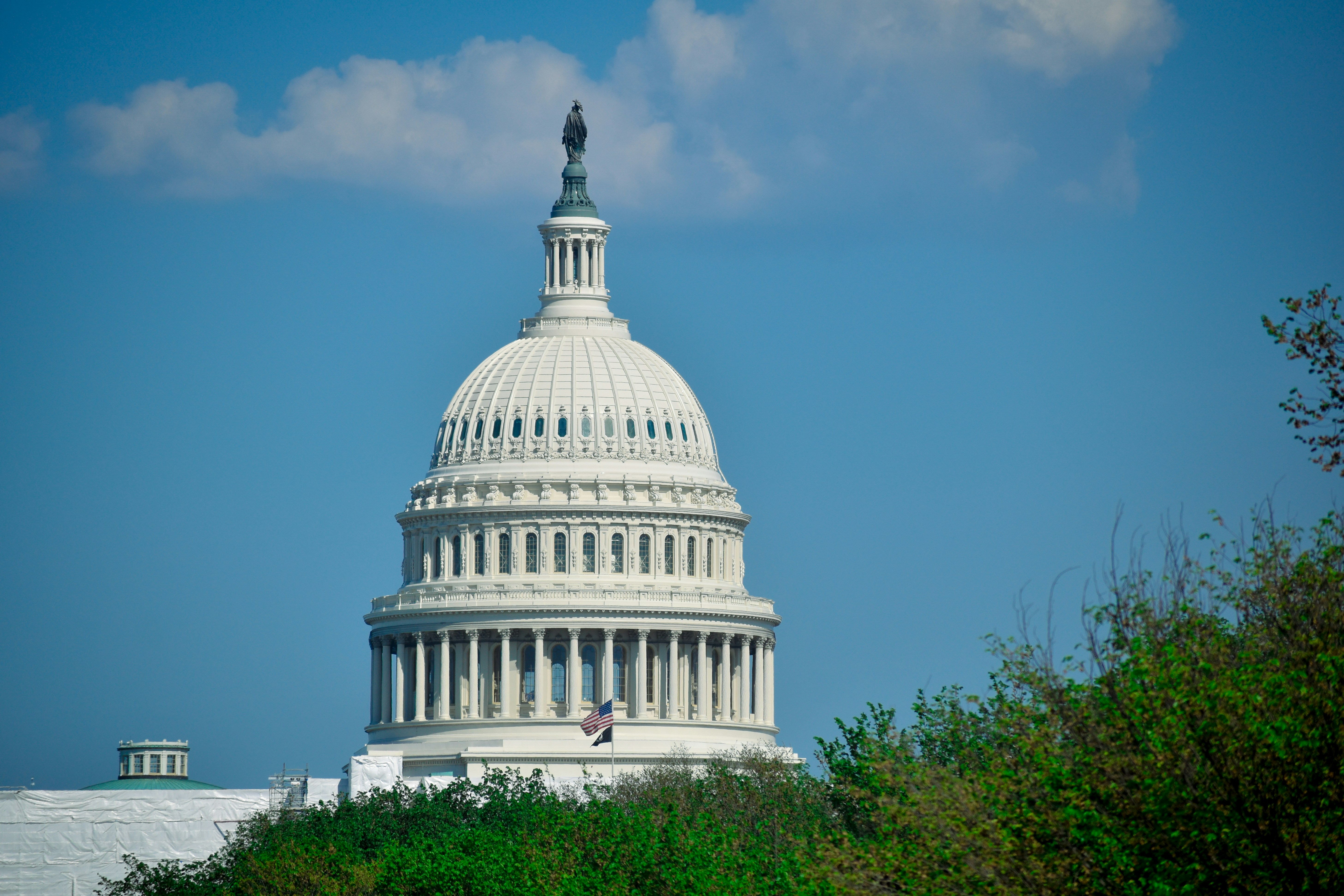
The United States Capitol Photo credit: Ajay Parthasarathy on unsplash.com

I can almost forgive the people who voted for Trump in 2016. With time, maybe I’ll be able to completely forgive them. For the people who voted for him again in November 2020, you knew exactly what you were voting for and you got it on January 6. Unfortunately, we all got it on January 6—and we didn’t deserve it. As a Christian, I’m supposed to forgive you. Let’s just say I’m a work in progress. May God have mercy on my soul. May God have mercy on you.

Until my next blog post

I hope you have a good book to read or a good one to write – or both.

Make time to do something you’re really passionate about. For me, that’s writing.

Wear a mask, and get the Covid-19 vaccination as soon as you’re eligible. That’s still a few weeks or months away for me.

Thank you for taking the time to read my blog post today.

Janet