Blowing up the King’s gunpowder in 1771

My blog today is about my favorite local history story. It was 254 years ago last Friday – May 2, 1771, that a group of teenage boys and young men from Rocky River Presbyterian Church in present-day Cabarrus County, North Carolina, decided to blow up a shipment of King George III’s gunpowder.

The Regulator Movement in Rowan and Alamance counties to our north was reaching a boiling point in April 1771. Word reached the settlement of Scottish immigrants at Rocky River that a shipment of gunpowder was coming from Charleston, South Carolina to Charlotte and on to Salisbury, North Carolina. That gunpowder was destined to be used to put down the Regulators.

The Regulator Movement never took hold in present-day Cabarrus County (which was part of Mecklenburg County), but there was a strong and growing anti-Royal government sentiment here. Destruction of that gunpowder shipment would be detrimental to the government.

Nine teenage boys and young men from Rocky River decided to take matters into their own hands. They found out the munitions wagon train of three wagons would camp for the night of May 2 at the muster grounds near or along the Great Wagon Road in what is now Concord, North Carolina.

They blackened their faces to disguise themselves and sworn an oath on a Bible that they would never tell what they were about to do and would never reveal the names of the participants. They set out for the militia muster grounds some nine miles away and surprised the teamsters and guards. They had no desire to harm those men, so they led them and their animals to a safe distance away.

The gunpowder and blankets were gathered into a pile, and a train of gunpowder was laid. James White, Jr., fired his pistol into the trail of gunpowder. The resulting explosion was heard some nine miles away in the vicinity of Rocky River Presbyterian Church. Some people thought it was thunder, while others thought it was an earthquake.

Photo by Vernon Raineil Cenzon on Unsplash

The nine perpetrators made their way home, cleaned themselves up, and said nothing about their overnight adventure.

The Battle of Alamance took place on May 6, 1771, and the Regulator Movement was effectively put down by the royal government. Governor William Tryon proclaimed on May 17, 1771, that he would pardon the rebels if they would turn themselves in by May 21.

That deadline was extended until May 30. Some of the perpetrators headed for Hillsborough to turn themselves in, but they were warned along the way that it was a trick. Governor Tryon planned to have them hanged. Some returned to the cane brakes of Reedy Creek, not far from the church, while others fled to Virginia and Georgia.

In a trail which began on May 30, 1771, twelve Regulators were found guilty of high treason. Six were hanged.

Perhaps news of that trial reached Rocky River or maybe half-brothers James Ashmore and Joshua Hadley simply feared that one of the other gunpowder perpetrators would disclose their identities. For whatever reason, Ashmore and Hadley went independently to tell Colonel Moses Alexander what they knew. Imagine their surprise when they ran into each other on Colonel Alexander’s front porch!

James Ashmore pushed his way into the Colonel’s house and told him he was ready to talk. He was taken to Charlotte on June 22, 1771, where he gave a sworn deposition before Thomas Polk, a Mecklenburg County Justice of the Peace.

Ashmore revealed the names of the other eight young men who had conspired and carried out the attack. The search for the men began in earnest. Several of them narrowly escaped capture, and their stories and more details of the progression of the case through the colony’s royal government at included in my book, Harrisburg, Did You Know? Cabarrus History, Book 1, which is available from Amazon in e-book and paperback and at Second Look Books in Harrisburg, NC.

William Tryon became Governor of New York and Josiah Martin was appointed Governor of North Carolina. Twenty-nine “inhabitants of Rocky River & Coddle Creek Settlement” (including my great-great-great-great-grandfather) signed a petition asking Governor Martin to pardon the perpetrators, but the request was denied.

Photo by Kate Remmer on Unsplash

For nearly a year, the women of Rocky River Presbyterian Church provided food and clothing for the perpetrators who hid in the cane brakes along Reedy Creek. Rev. Hezekiah James Balch prayed openly for the young men’s safety from the church’s pulpit. Their identities remained a well-kept secret.

The young men were fugitives until independence was declared. After the Mecklenburg Declaration of Independence was issued on May 20, 1775, followed by the Mecklenburg Resolves eleven days later, all county citizens were considered to be in rebellion.


Back to the present

Yesterday was “May Meeting” at my home church, Rocky River Presbyterian in Cabarrus County, North Carolina. It wasn’t a “meeting.” It was more like an annual homecoming. It dates back to 1757. It is held on the first Sunday in May. The 11:00 a.m. worship service includes The Lord’s Supper/communion.

After the worship service, we all gather around a long wire “table” for Dinner in the Grove except on the occasional year now like yesterday when it rains or has poured rain all night and we have to eat inside the fellowship hall. Everyone brings their best and favorite homemade dishes and it is the biggest feast you can imagine.

Imaging May Meeting 1771

The more I study and contemplate the blowing up of the King’s munitions wagon train by members of Rocky River Presbyterian Church on May 2, 1771, the more I try to travel back in my mind’s eye to May Meeting 1771.

Everyone for miles around knew that the King’s gunpowder had been blown up on Thursday night. Everyone probably had a pretty good idea who among them had participated in the act of civil disobedience.

I imagine the hushed conversations under the large oak, scalybark hickory, red cedar, and poplar trees in the former church grove a couple of miles from our present sanctuary where the congregation met in a log church.

Local people were, no doubt, coming to grips with which side they were going to attach their allegiances in the inevitable coming war. Most, as it turned out, would choose to be patriots. After all, they had left Scotland and some had left Ireland in search of a better life, and they were pretty sure the King of England was not offering them a better life. He was placing more and more taxes and tariffs on them.

On Sunday, May 5, 1771, I imagine individual men carefully approached one or two men they knew they could trust and then they made quiet comments about the gunpowder explosion while they roughed the hair on the heads of their little boys who were too young to know the gravity of the situation.

I imagine many of the individual women did the same with their trusted friends while they small daughters clung to their long skirts.

And I’m sure the teenagers huddled in their usual groups and talked about what had happened on Thursday night. There was, no doubt, speculation about which of their friends had taken part in the attack.

I can imagine them quietly calling the roll, so to speak, and speculating about why Robert Davis was not at church that day. Or why were Ben Cochran and Bob Caruthers in serious conversation away from the crowd? Had they taken part? How much trouble were they really in? What was going to happen to the boys and young men who were guilty? How would they be punished?


Hurricane Helene Update

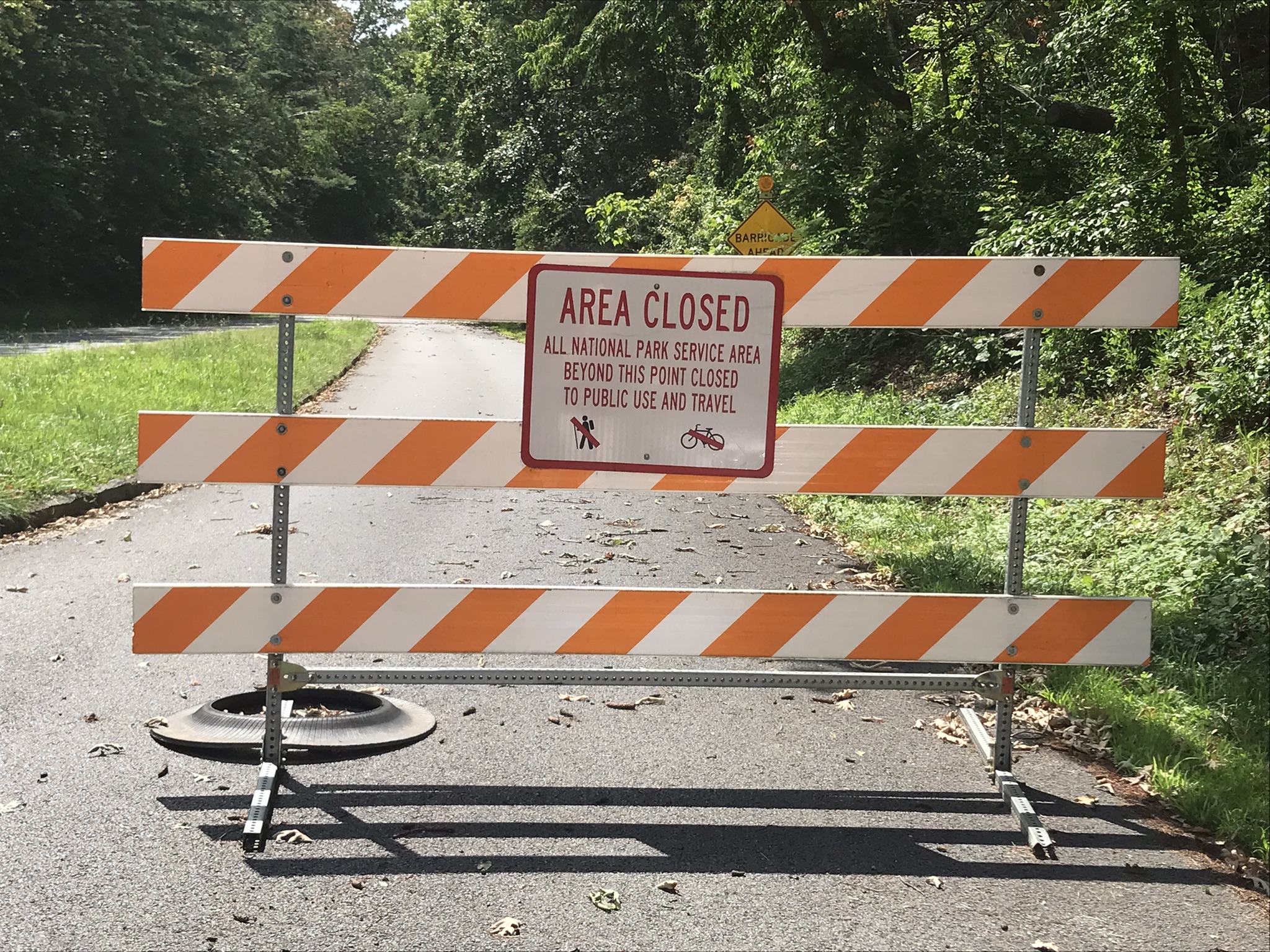
As of Friday, 56 roads in North Carolina were still closed due to Hurricane Helene. That count included four US highways, four state highways, and 48 state roads.

This from https://governor.nc.gov/news/press-releases/2025/05/01/governor-stein-announces-55-million-grants-have-been-distributed-nearly-3000-western-north-carolina: “Governor Josh Stein announced that the Dogwood Health Trust, the Duke Endowment, and the State of North Carolina have distributed $55 million to 2,812 small businesses through the Western North Carolina Small Business Initiative. These grants are supporting western North Carolina businesses impacted by Hurricane Helene and bolstering regional economic recovery. More than 7,300 businesses applied.

“’These grants will go a long way in helping western North Carolina’s beloved small business owners keep their doors open after Helene,’” said Governor Josh Stein. “’But the volume of unfunded applications makes it crystal clear – more help is desperately needed. I’m ready to work with the legislature to deliver support for small businesses that power our mountain economy.’”

After being closed for seven months, Morse Park at Lake Lure, NC partially reopened last weekend. The 720-acre lake itself remains drained as storm debris, silt and sediment are still being removed.

The village of Chimney Rock, NC was nearly wiped off the face of the earth by Hurricane Helene. It had been hoped that the town and Chimney Rock State Park would open by Memorial Day, but that’s not going to be possible. The security checkpoint will continue until further notice. You must have a pass to enter and travel through the village on the temporary road. NCDOT is working on a temporary bridge in the village to help restore access to the state park. The park has not announced a reopening date. The notice I read last Wednesday night from the Village indicated that construction of a new US-64/US-74A/NC-9 has begun.


Until my next blog post

Get a good book to read.

Don’t forget the good people of Ukraine, Myanmar, and western North Carolina.

Janet

That’s a lot of Tea! Plus, a Hurricane Helene Update

Today is the 251st anniversary of the Boston Tea Party. If you’re like me, you will be surprised to read just how much tea ended up in Boston Harbor on December 16, 1773.

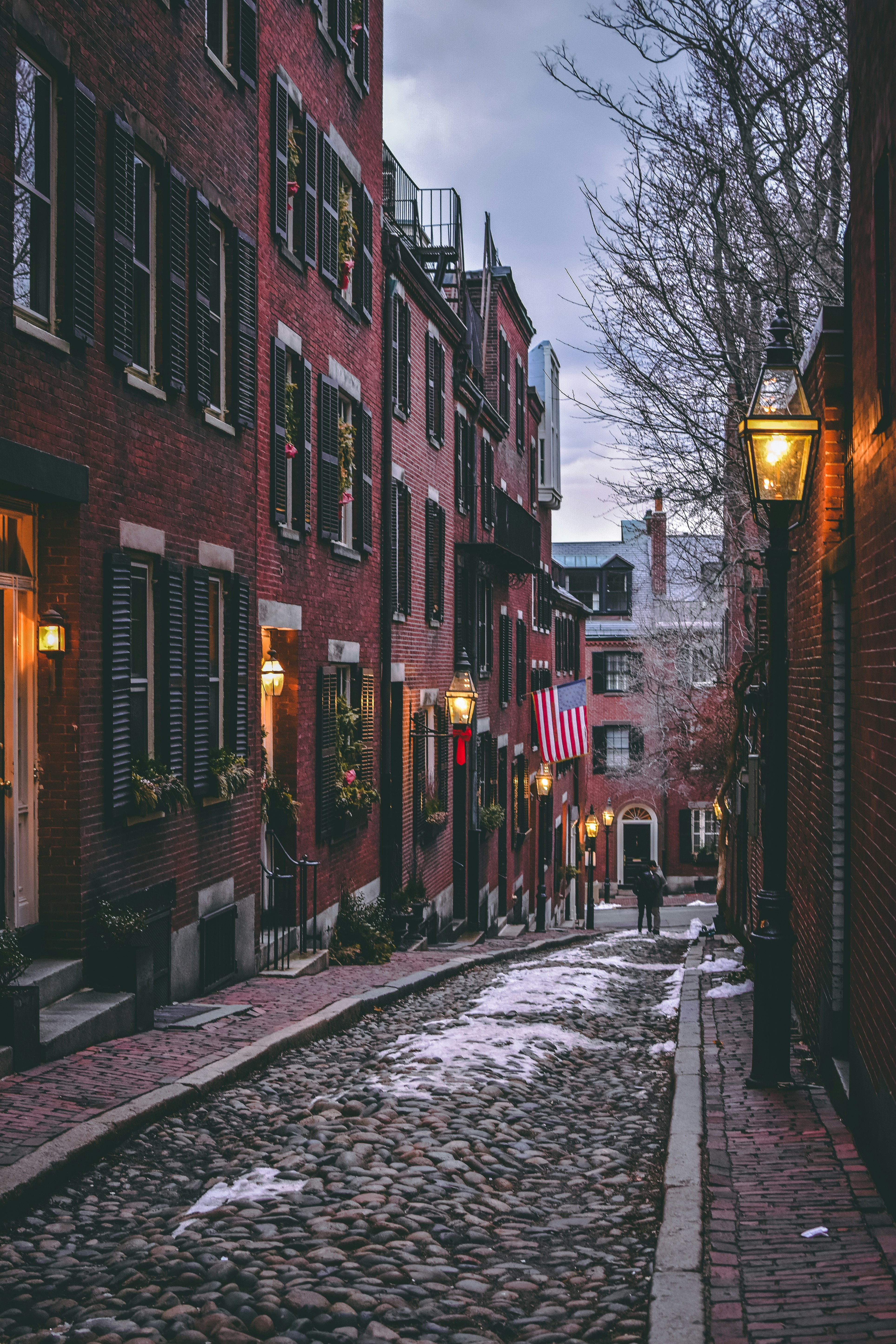
Photo of Acorn Street in Boston with brick sidewalks and cobblestone narrow street
Photo by Tiffany Chan on Unsplash

A little background

Great Britain was in debt in the 1760s, so Parliament passed a succession of acts to inflict taxes on the American colonists to generate money for the British coffers.

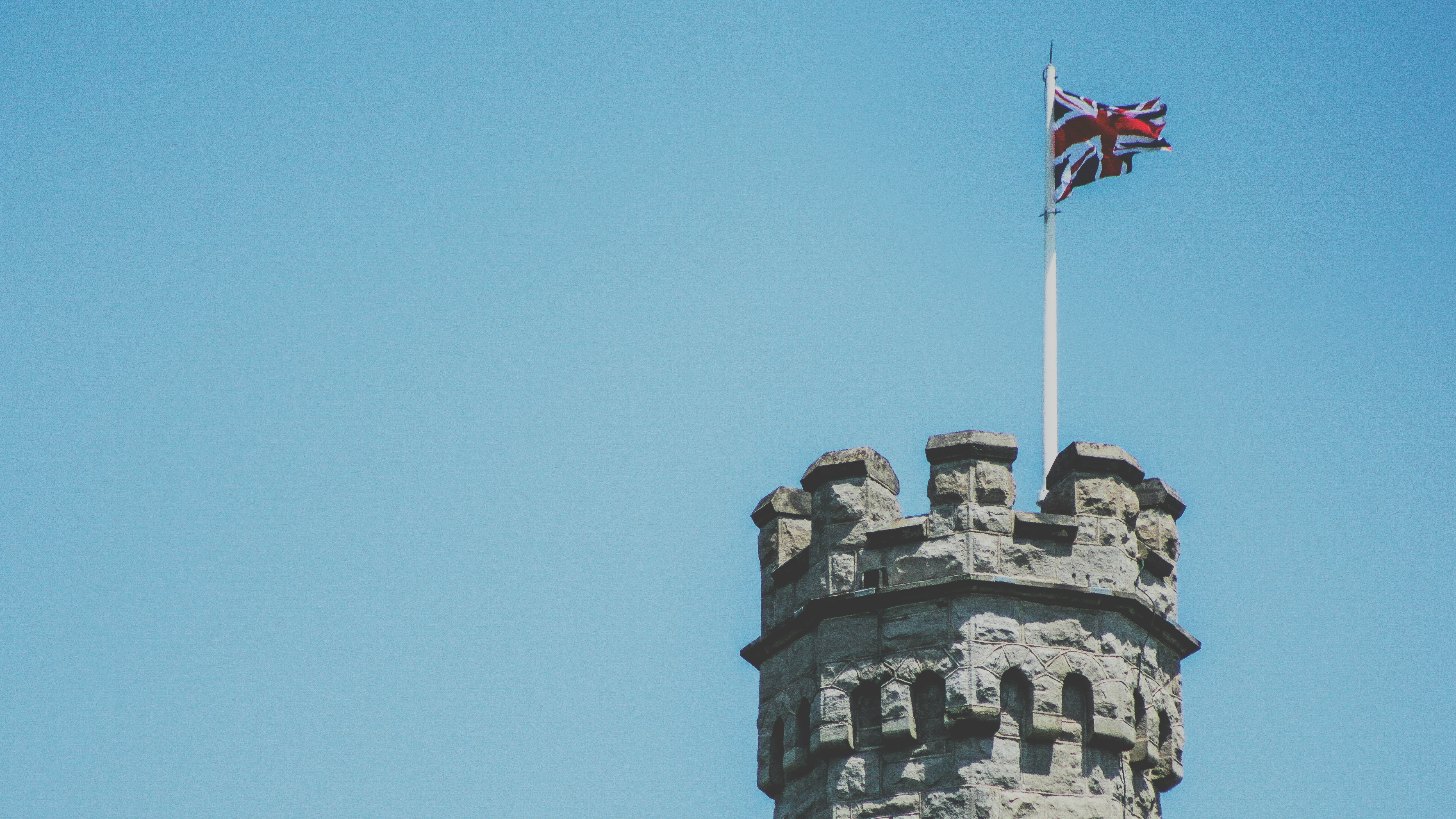
Photo of the tower on a castle with the Union Jack flying on a flagpole at the top.
Photo by Andrik Langfield on Unsplash

My ancestors in Scotland had been subjected to the Hearth Tax in the 1690s, so they were no strangers to the lengths Parliament would take to ring money out of its subjects. (In the 1690s in Scotland a person had to pay a tax “if smoke rose from their chimney.” Hence, it was called the Hearth Tax.) Forgive me if I’m not completely objective in writing about the Boston Tea Party.

The Stamp Act in 1765 began what became a domino effect until by the early 1770s the colonists were in an uproar over “taxation without representation.” Britain maintained that the taxes were fair exchange for the mother country’s fighting wars such as the French and Indian War to protect the colonists. (Actually, I think they were fighting to keep control over the thirteen colonies, but I digress.)

The “Boston Massacre” occurred on March 5, 1770 because residents did not appreciate the presence of British soldiers on their streets.

In other words, one thing led to another.

Fast forward to December 1773

On December 15, 1773, Dartmouth, a ship operated by the East India Company (a British company) was moored in Boston Harbor. It was known that the ship was laden with tea from China. Brits and British immigrants loved (and still love!) their tea. They were drinking more than one million pounds of tea every year, so the Tea Tax was a lucrative money-maker for Great Britain.

The colonists were no dummies. They started smuggling tea in from The Netherlands. In fact, did you know that John Hancock and Samuel Adams were in on it? (I don’t remember ever being taught that in school.)

Things were going well until the price of Dutch tea increased to the point that it was no cheaper than the tea being brought in by Great Britain with the tax included in the equation.

It was not just out of the goodness of their hearts or their dislike for taxation without representation that John Hancock and Samuel Adams objected to the tax on tea.

John Hancock had inherited his uncle’s shipping business. Samuel Adams was a provocateur. As a leader in the Sons of Liberty organization, he was more than a rabble-rouser; he was a serious political theorist. It was people like Adams who encouraged moderates to resist the British taxes. One source I read indicated that Adams might have helped plan the Boston Tea Party.

The Sons of Liberty protested the arrival of the East India Company’s ship, Dartmouth. It was soon joined by ships Beaver and Eleanor at Griffin’s Wharf in Boston Harbor. The tea they carried was from China, but the shipping costs and taxes would go to Great Britain.

A meeting was held at the Old South Meeting House where a vote decided that the ships would not be unloaded and the cargo would not be stored, sold, or used. When Governor Thomas Hutchison ordered the tea tariff to be paid and the tea to be unloaded, local residents refused to comply.

On the night of December 16, 1773, men disguised as Native Americans boarded the three ships and threw 342 chests of tea into the water. (My apologies to the Native Americans. It’s sad that more than once in the American Revolution the white guys chose to disguise themselves as Indians. It happened right here in Cabarrus County in 1771.)

Meanwhile, back in Boston… the men hacked into the chests to ensure the tea would mix with the water once thrown overboard. It took more than 100 men almost three hours to do the deed. More than 90,000 pounds of tea was dumped in Boston Harbor that night!

The moral of the story: Tariffs don’t always turn out the way politicians think they will. Just sayin’.

Hurricane Helene Update

Just to give you an idea about the recovery situation 81 days after the storm hit western NC…

Roads: Interstate 40 is still closed near the TN line. As of Friday, of the 1,329 roads that were closed in September due to Hurricane Helene, 189 remain closed. That’s down from 270 from a week ago!

Blue Ridge Parkway: There is still no estimated date for all the parkway in NC to be reopened.

Housing: Temporary housing from FEMA continues to arrive so displaced people can move out of hotels. The Amish continue to build tiny houses for the people who cannot yet move back into their homes. Individuals and companies have donated RVs and campers for the people needing housing. With more than 125,000 homes damaged or destroyed, the recovery will take years.

Books: The 21st Century Packhorse Librarian continues to collect new books to give away to the children and adults who lost all their books in the storm. Look for her on Facebook and Instagram. Here’s a good article about the founder, Kristin Turner: https://981theriver.com/news/228822-woman-brings-free-books-to-appalachia-as-modern-packhorse-librarian/.

Lake Lure: The US Army Corps of Engineers, AshBritt Environmental, and local contractors continue to remove debris from the lake. A Colonel with the Army Corps of Engineers indicated on Saturday that their work will take more than six additional months. More than 17,143 cubic yards of debris have been removed from the lake, over 15,900 cubic yards of debris have been removed from the right-of-way, and more than 9,680 tons of sediment and silt have been removed from the town of Lake Lure. When all storm debris has been removed from the lake, sediment removal will begin.

Old Orchard Creek General Store: After being severely damaged by the flood, the Old Orchard Creek General Store reopened on Saturday! It is a landmark in the small town of Lansing in Ashe County, NC. Look for their website, and find them on Facebook and Instagram.

Help of all kinds has poured into western North Carolina from all over the United States. Thank you!

Until my next blog post

I hope you have a good book to read.

If you haven’t already done so, please visit https://www.janetmorrisonbooks.com and subscribe to my weekly email newsletter. You’ll receive a free downloadable copy of my historical short story, “Slip Sliding Away.”

Treasure your time with friends and family.

Remember the people of Ukraine and western North Carolina.

Janet